• Nobel Museum

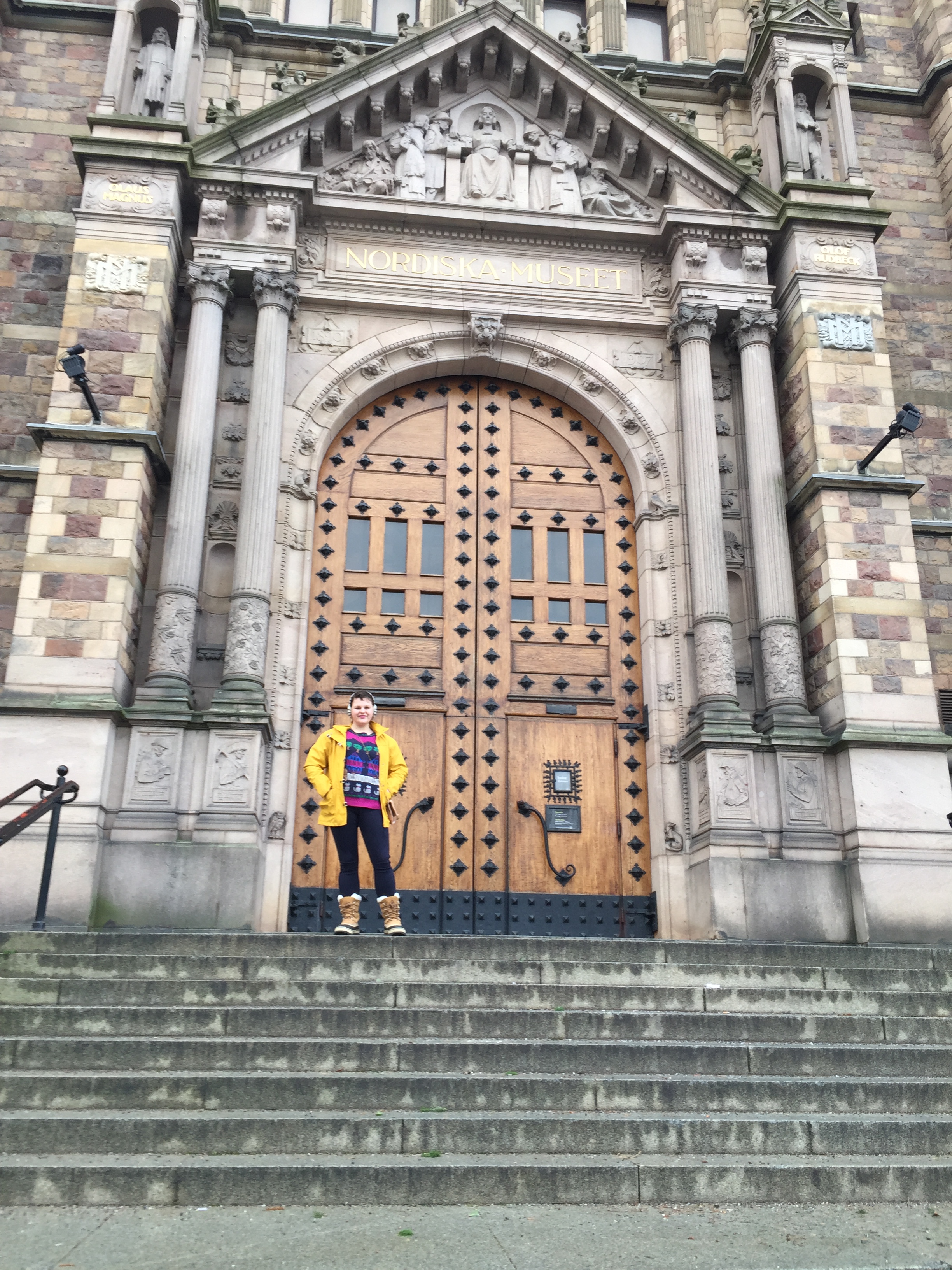
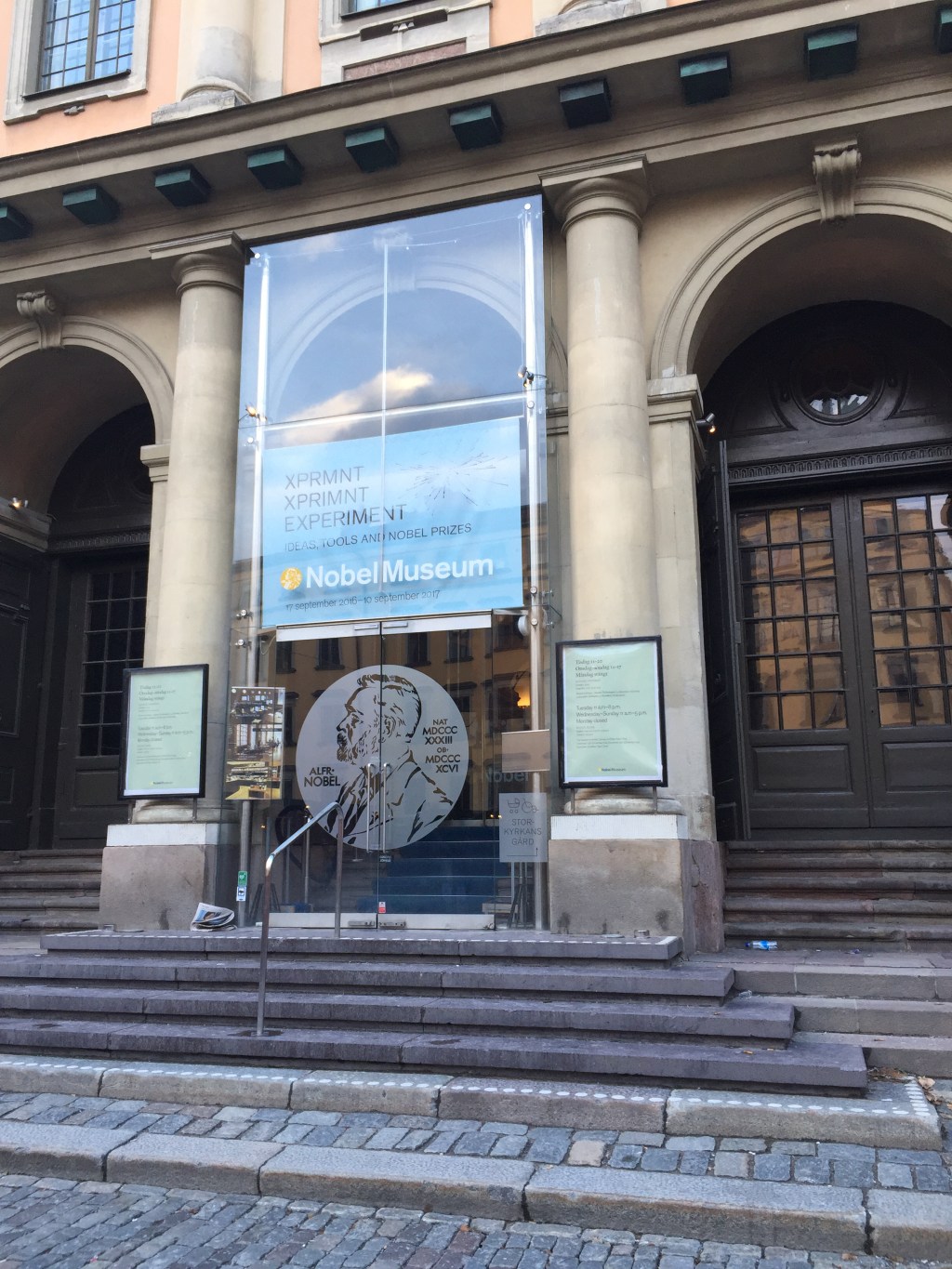
    I am so excited to write this post on the Nobel Museum. Mainly because I rarely think that digital technology in a museum is a highlight. For this museum, however, it not only made sense, but, was utilized very effectively. The museum opened in 2001 and is roughly divided into two sections – one on Alfred Nobel and one on the Nobel laureates.

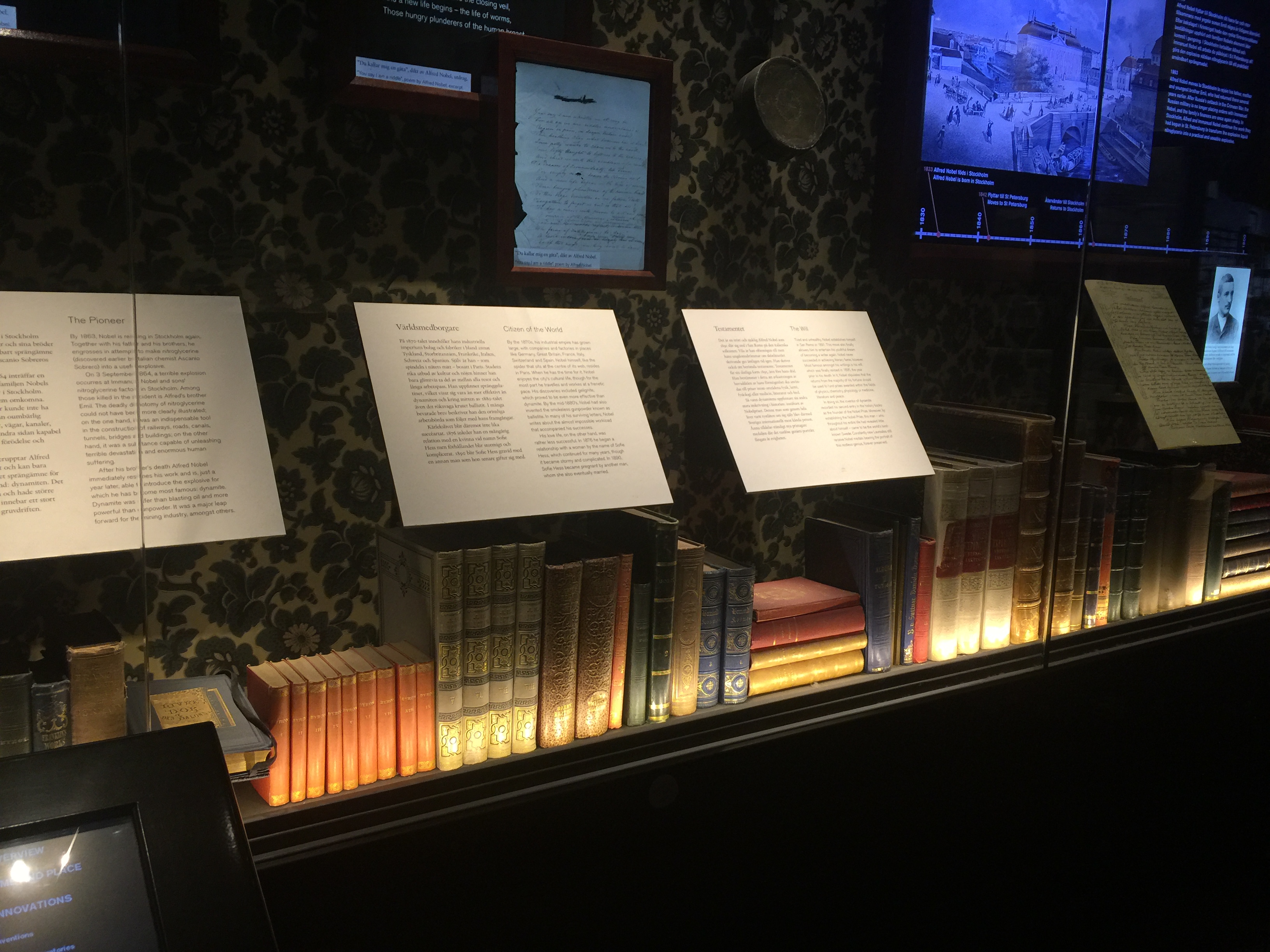
    We started our visit in the section on Nobel. This was a traditional museum display with thematic panels and objects locked behind glass cabinets. It was thoughtfully organized and showcased a range of objects including books belonging to Nobel and a copy of his will. Although the original will is in the museum’s collection, it is too fragile to display. In this room visitors can learn all about Nobel and why the prize was established.

    img_3516
    Nobel Museum

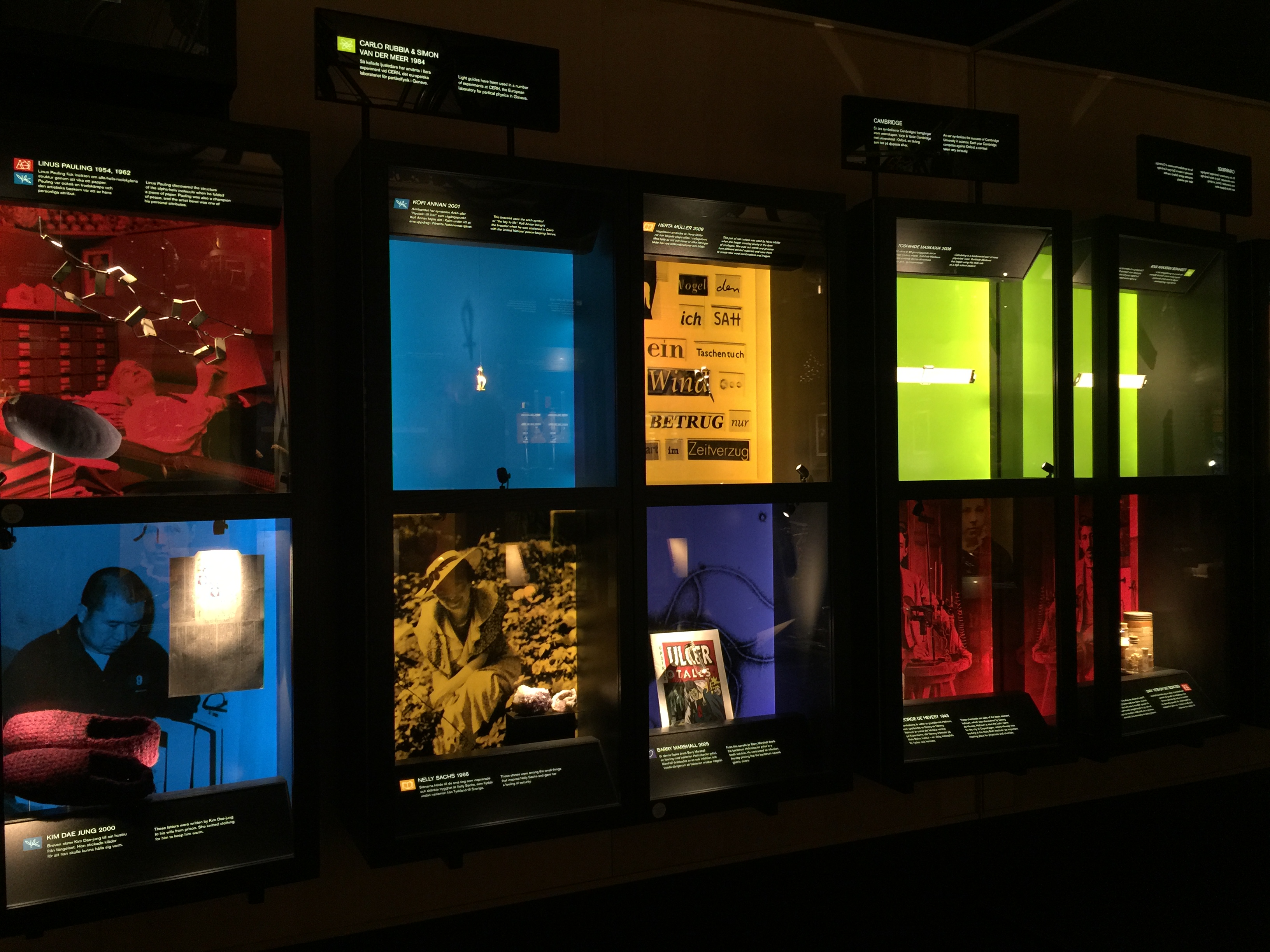
    There are two other permanent displays that focus on the Nobel laureates and their inventions. My favourite room relied quite heavily on digital technology. The room contained different coloured cubes displaying an array of objects belonging to laureates that had been donated to the museum. These ranged from nail scissors to test tubes – all with a very fascinating story. Rather than crowding the space with labels, there were three large touch screen computers each displaying some of the objects. Selecting an object unlocked its story.

    There were two highlight objects. The first was a small vial belonging to Australian doctors Barry Marshall and Robin Warren. They won the prize in medicine for discovering the bacterium Helicobacter pylori and its connection to stomach ulcers. Marshall drank fluid from this vial essentially infecting himself to prove a point.

    img_3508
    Nobel Museum

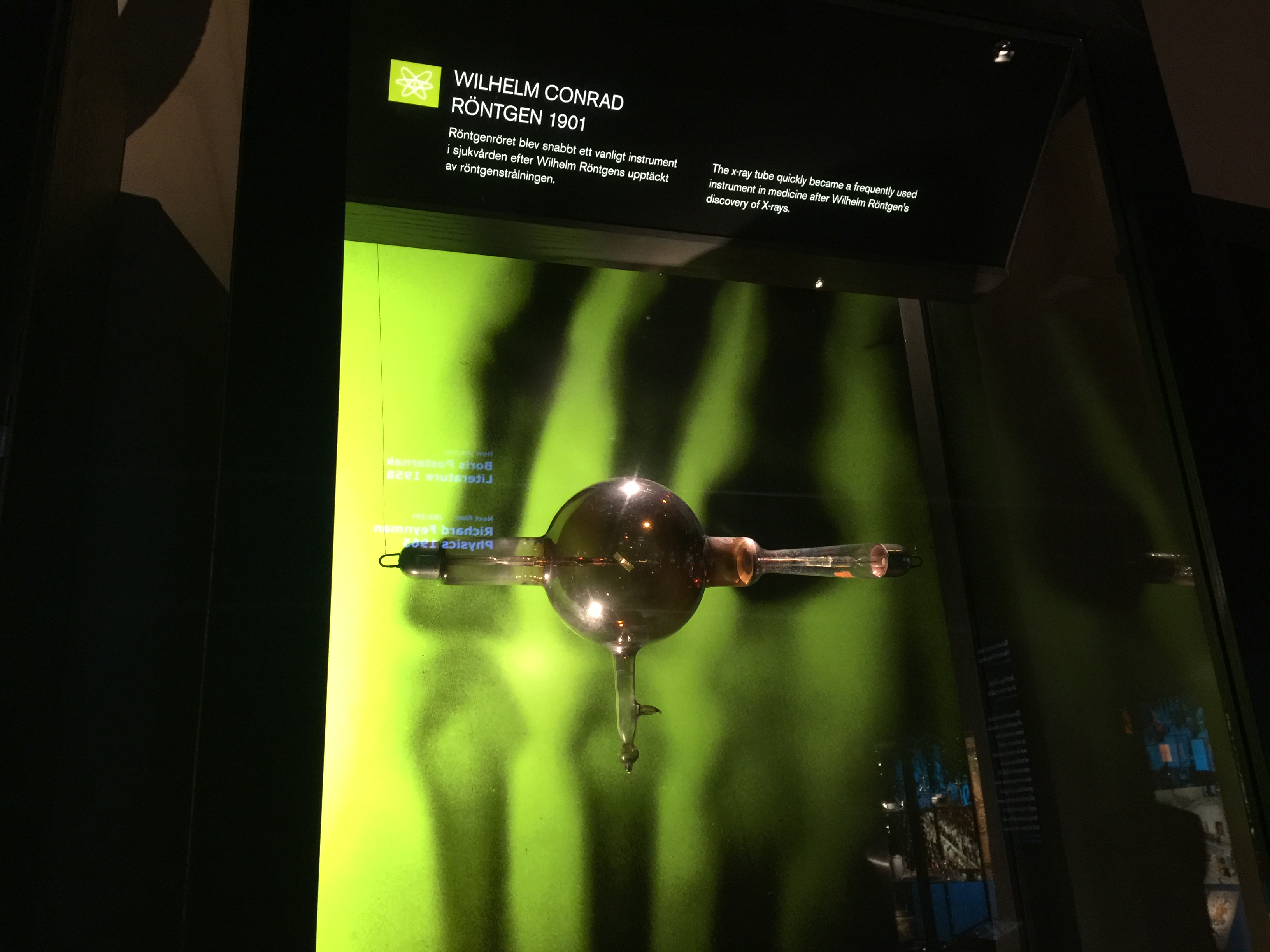
    The other highlight object was an X-ray tube belonging to Wilhelm Conrad Roentgen. I catalogued around twenty of these tubes during my internship at Trainor/Owen. They are truly fascinating objects.

    img_3511
    Nobel Museum

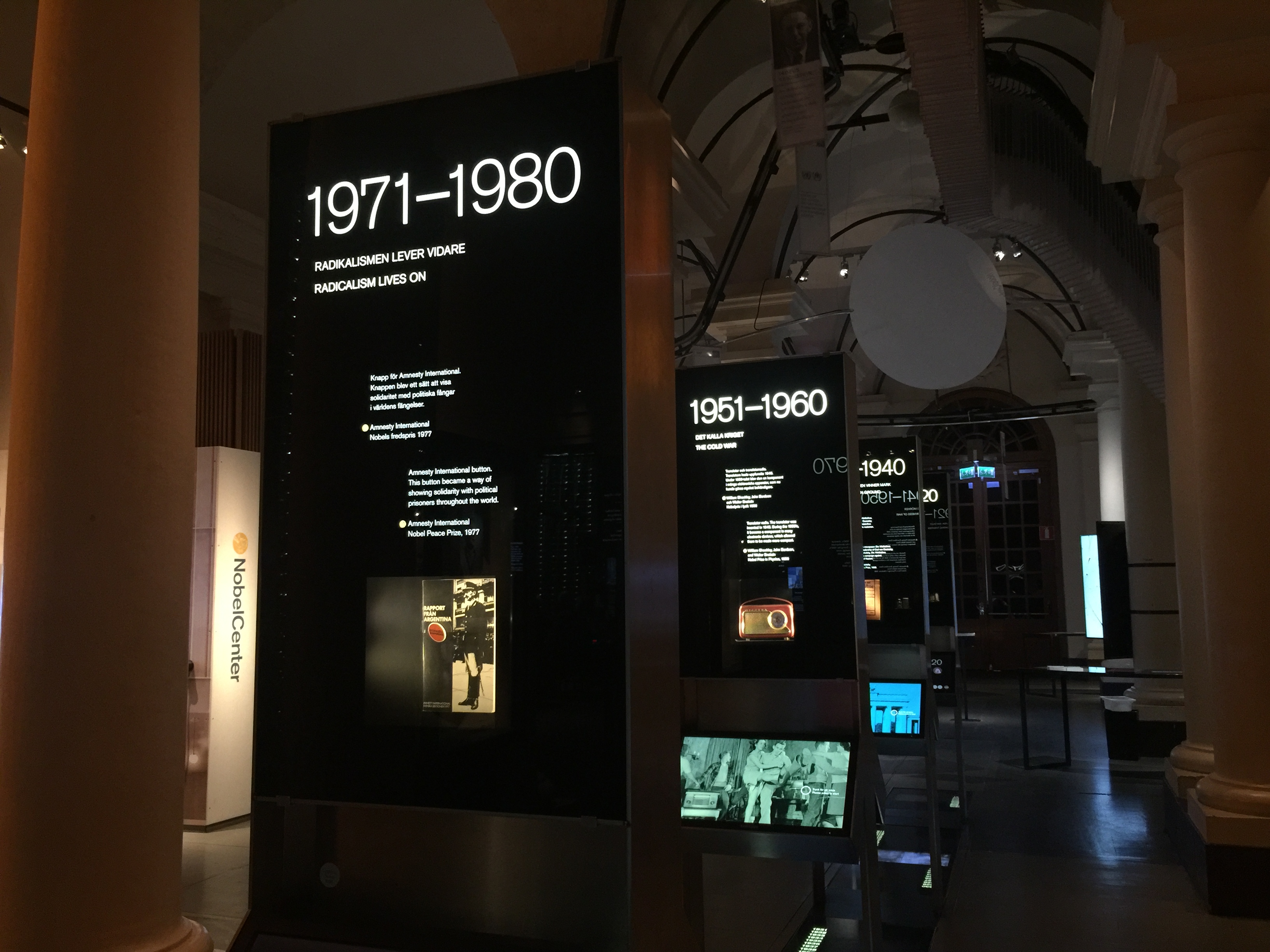
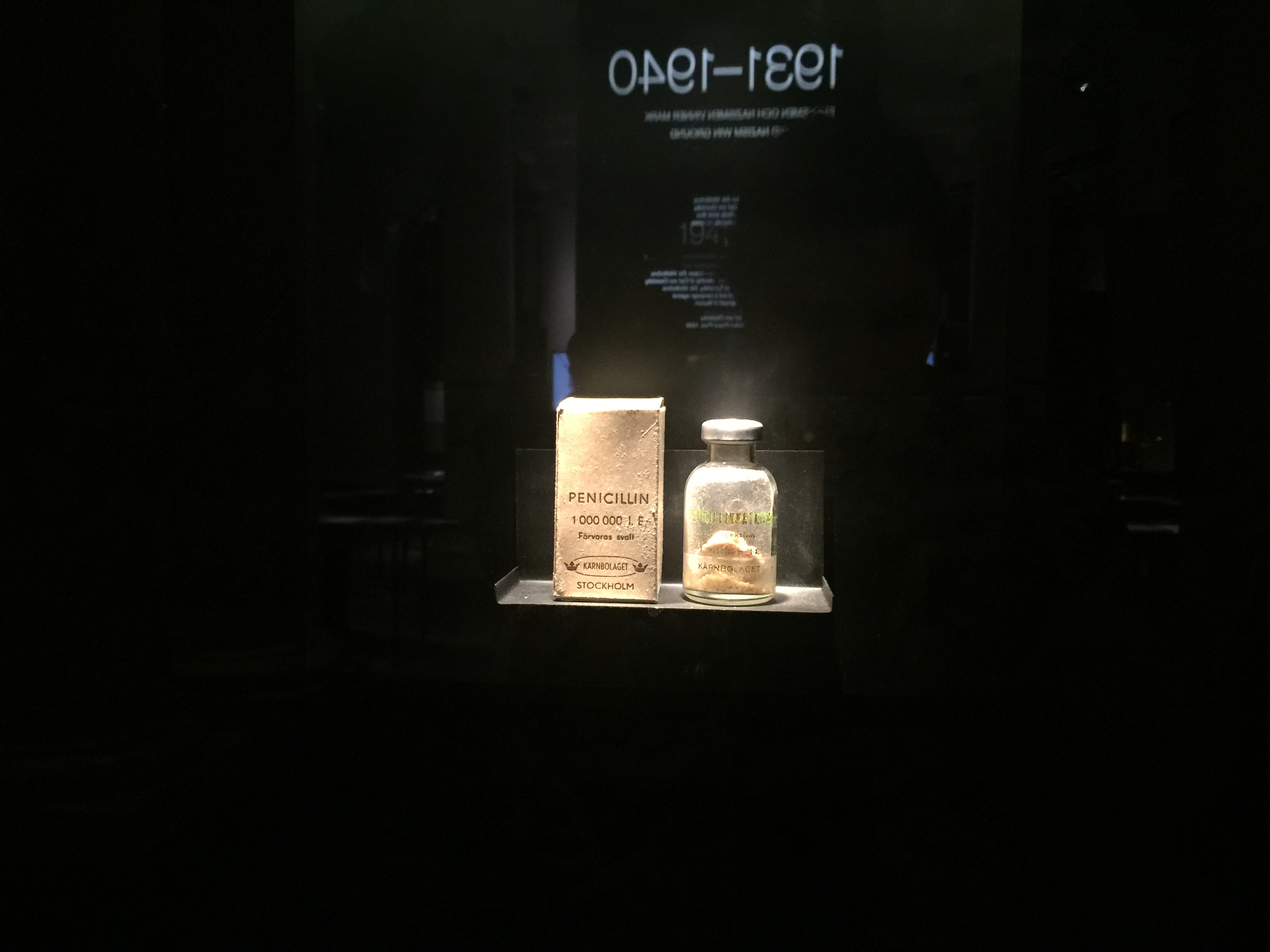
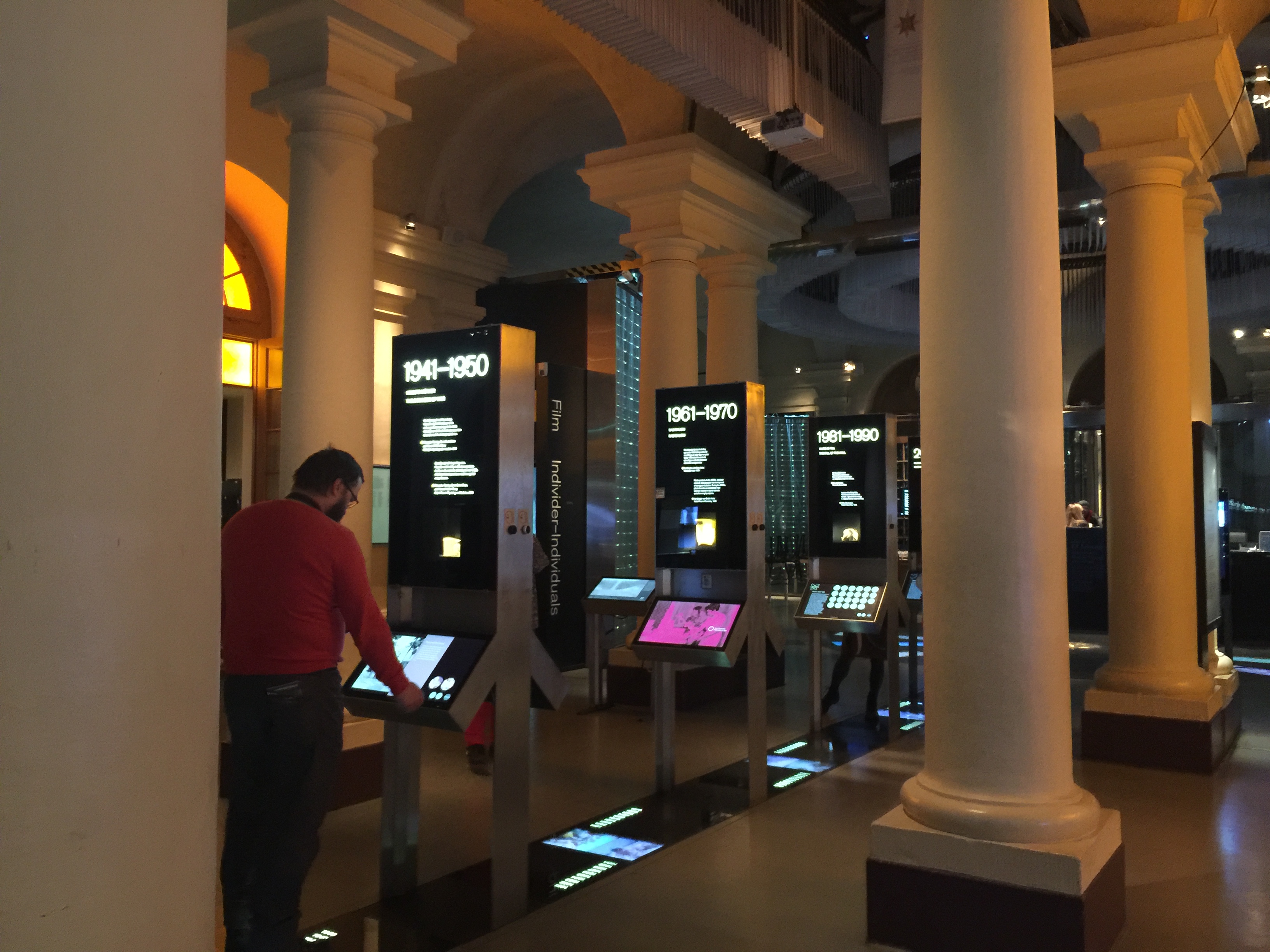
    The exhibition that relied almost entirely on digital technology was in the middle of the museum. It consisted of six large panels with computers attached. Each panel covered a ten year period. There was some text and one object providing visitors with a highlight of each decade. On the touch screen computers were the six, originally five, prize categories – medicine, chemistry, physics, literature, peace, and economics. The latter was added in the 1970s.

    img_3520
    Nobel Museum
    img_3521
    Nobel Museum
    img_3526
    Nobel Museum
    img_3529
    Nobel Museum

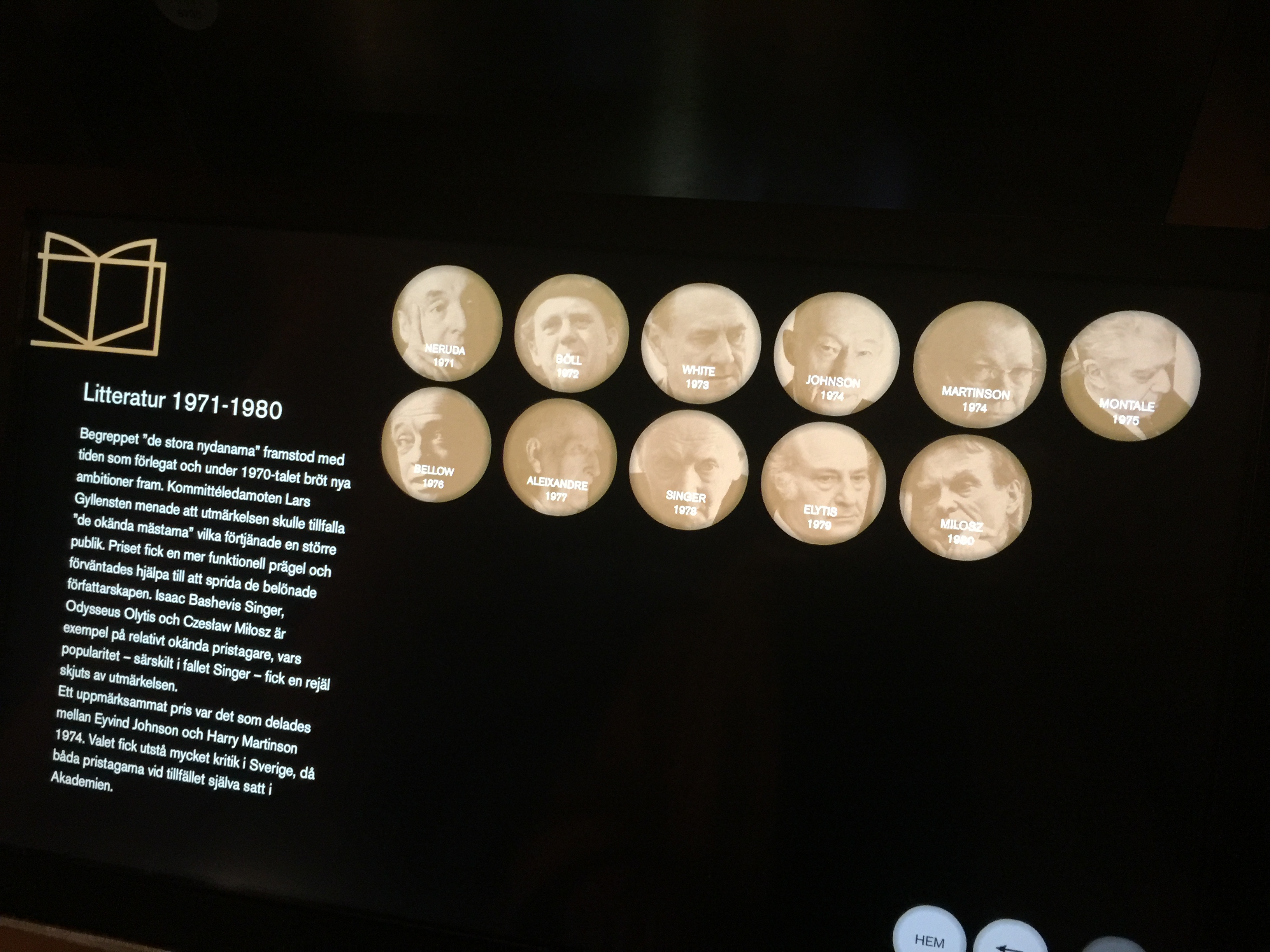
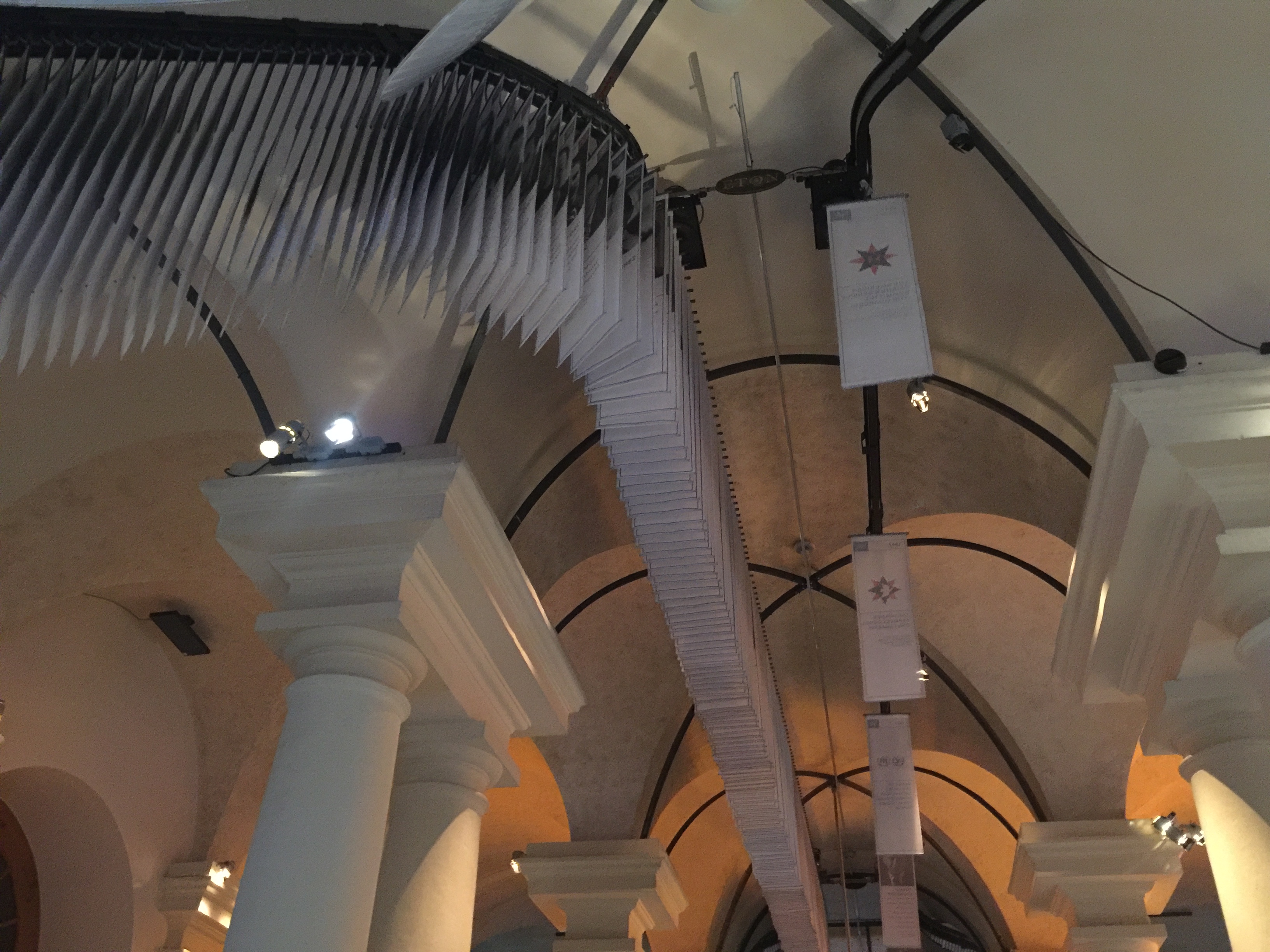
    After selecting the category, a list of every individual who won the prize in that decade was displayed. On selecting an individual, more information was provided regarding what they invented and how it contributed to their field. I spent around 30 minutes going through some of the screens. As it would be virtually impossible to have a physical display on each of the laureates, I thought this was a compact yet effective way to tell their stories. Whilst you are in this space make sure you look above. Banners displaying information on each of the laureates travel around the ceiling of the space on a conveyor belt.

    img_3524
    Nobel Museum

    Finally, there was a temporary exhibition space. Right now, the exhibition is titled ‘Experiments’. During the day it is an active laboratory allowing visitors the opportunity to contribute to an experiment. In this space was another reminder of my internship. A machine constructed by Marie and Pierre Curie to test radioactivity levels. There were a few other experiments represented in the space.

    This exhibition further proves that digital technology needs to be integrated with, rather than added to, an exhibition. Otherwise it seems superfluous and can be very annoying. Whilst I have seen many examples of well-integrated technology, I have never seen it on this scale. A great museum to see for those of you wondering what a museum may look like with limited objects.

  • Swedish History Museum

    If you are interested in Viking history then this museum is a must. It holds one of the largest collections of Viking-related objects in the world. On display is only a fraction of this collection which is pretty hard to believe considering the exhibition was massive. I am going to review the Viking exhibition and then more generally discuss the rest of the museum.

    From a design perspective, the Viking exhibition was, in my opinion, very effective. Small display cases were organized logically throughout the space highlighted by spotlights. The entire exhibition was easy to navigate and allowed visitors to select their own path. There were some thematic panels covering the history of the Viking Age. These were not crucial to read, however, as objects were displayed thematically not chronologically. This meant you were free to focus on one or two particular themes and were not locked into following a didactic narrative. I actually think this worked really well considering I wasn’t visiting to learn the definitive history of the Viking Age. The following were five themes that I found to be most intriguing.

    img_3205
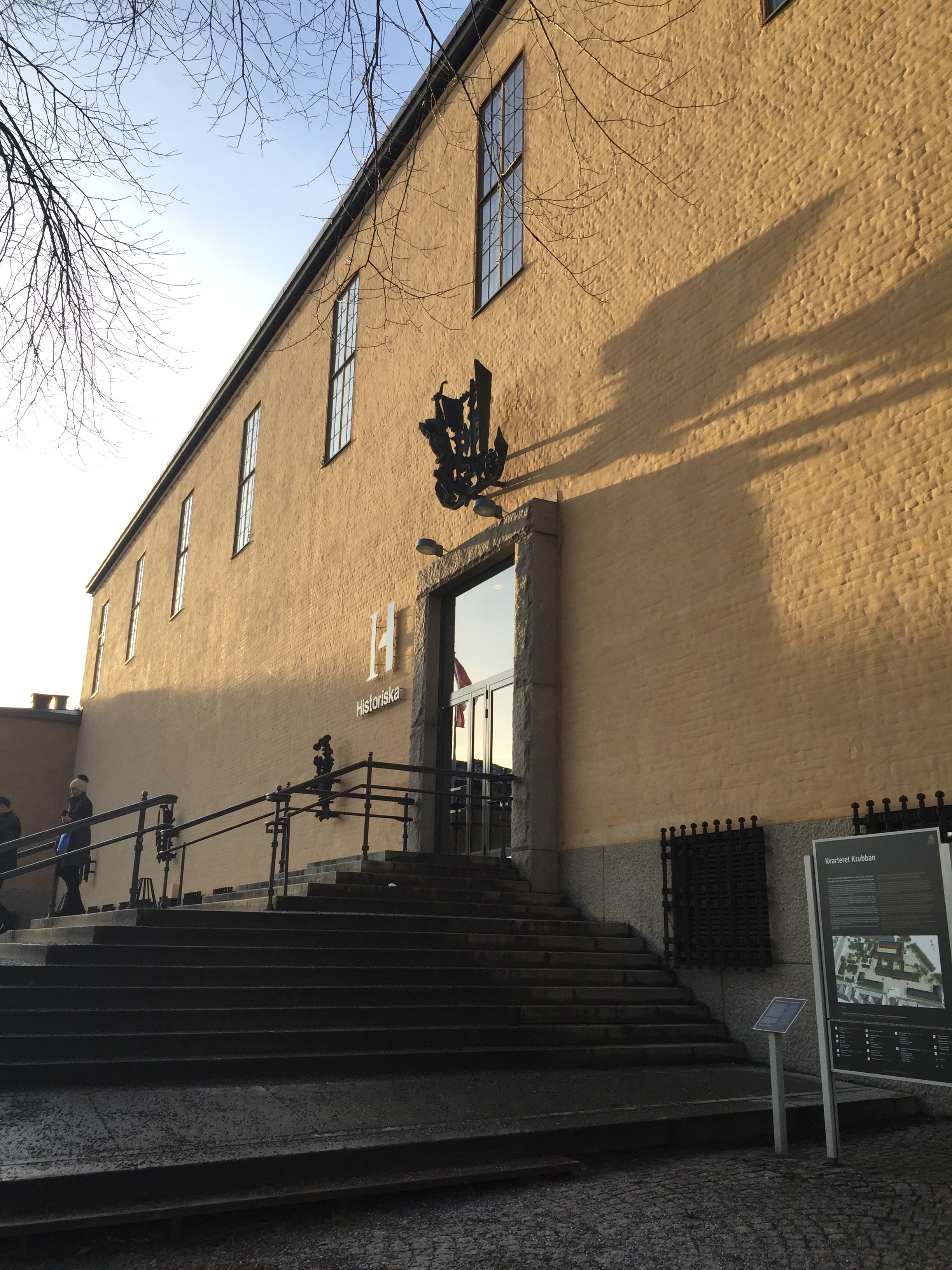
    Swedish History Museum Entrance

    1. Children

    Quite a few of the objects on display were excavated from the Viking settlement of Birka. This display case was very interesting as it contained an array of children’s toys and jewellery found at their burial sites. Children could hold important social positions within a Viking Age community. Today, their status can be determined from what objects were included in their burial pits. On the lower shelf of the case was a duck carved out of wood. It was quite an emotionally-charged object.

    img_3235
    Duck Toy

    2. Beauty

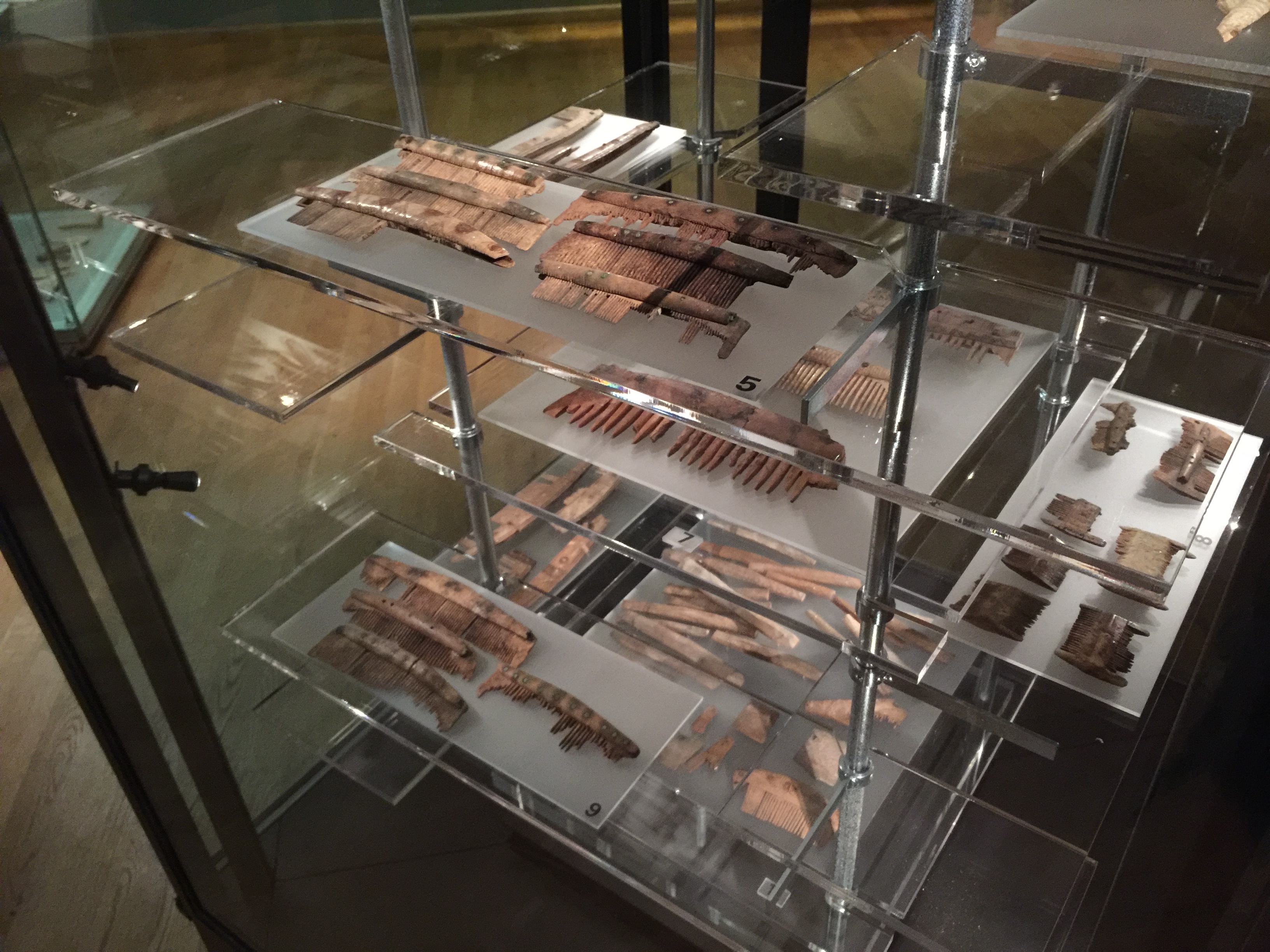
    This theme was accompanied by a very brief panel. Essentially it stated that appearances were very important in the Viking Age for both men and women. I selected this theme because I liked the objects on display. There were around twenty wooden combs, many of which still had all their teeth. It is amazing to think these objects have been so well preserved and continue to exist almost in their entirety.

    img_3251
    Combs

    3. Jewellery and Dress

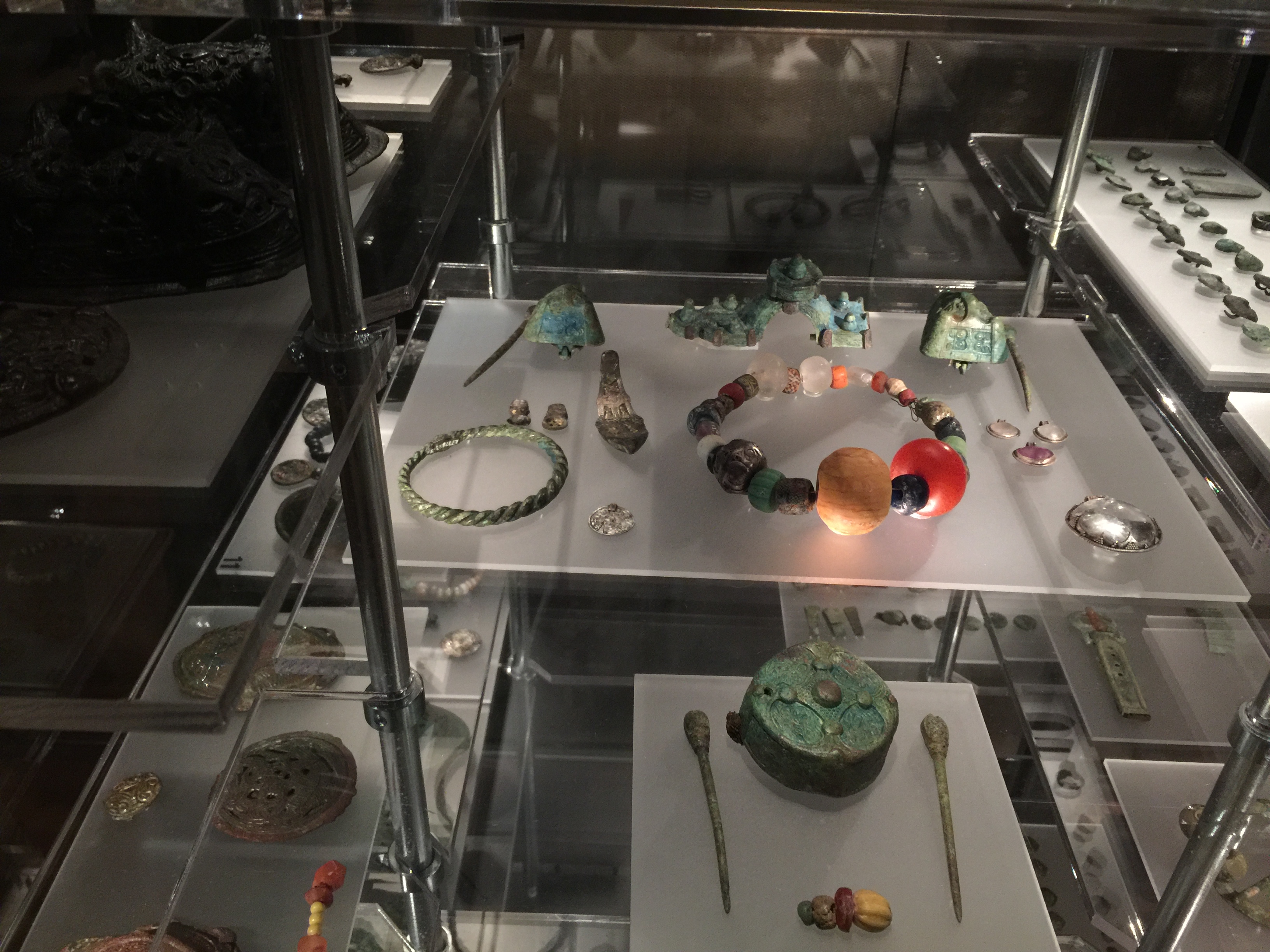
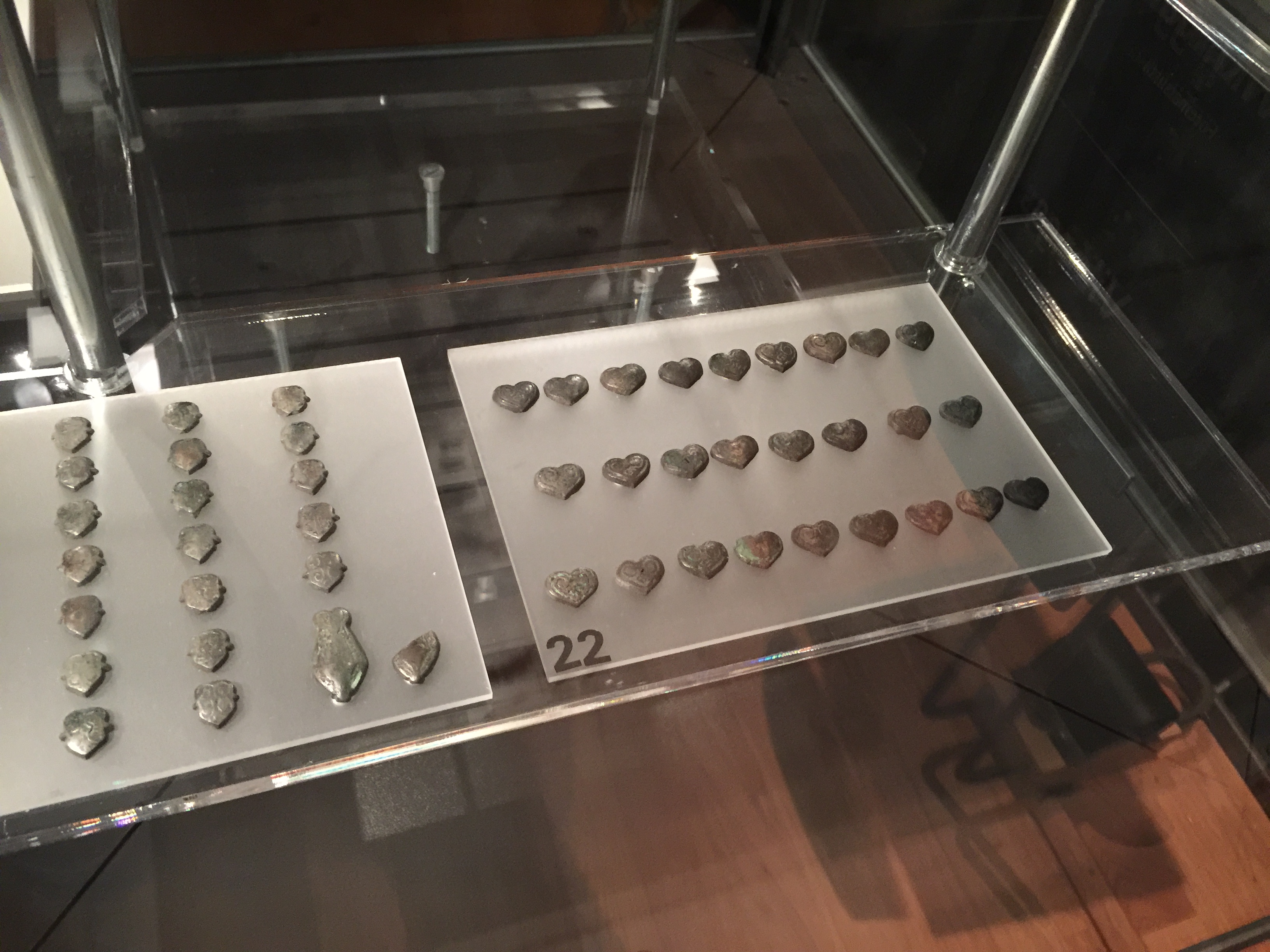
    Jewellery has been discovered in all Viking burial sites excavated around Sweden. My absolute favourite object was in this display case – a beautiful multi-coloured necklace. Green, red, orange, brown, grey, and white beads were joined together and attached to a black piece of leather. Considering the other objects in the case were once copper that has oxidized, the colours stood out. On another shelf were an array of small silver metal hearts. Similar to the beads, they were once attached together to form a necklace. Basically, there were a lot of beautiful intricate objects found in this case.

    img_3247
    Jewellery
    img_3244
    Jewellery

    4. The Princess from Birka

    A great display that showcased how powerful women could be in the Viking Age. All of the objects in this display case were retrieved from the burial site of the so-called Princess from Birka. These included a key, indicating her influence over an estate , a bronze bowl from Ireland, extravagant jewellery, and a whalebone board used to press linen. The jewellery was particularly impressive as seen below. Women could definitely rise to prominent positions in the Viking Age. It was interesting to learn that if a woman was buried with a key, this often indicated they controlled an estate and were quite wealthy.

    img_3259
    The Princess from Birka

    5. Weapons

    Last, but not least, was the theme of weapons. Swords are displayed vertically in a glass case allowing visitors to see both sides. I thought it was a great move on behalf of the exhibition design team. Being able to walk around a display case and see an object from a variety of perspectives allows for much closer observations.

    img_3263
    Weapons

    The rest of the museum covered other periods of Swedish history. Difficult issues were tackled including the effects of the slave trade on Sweden. The History Unfolds exhibition in particular covered such issues in “an attempt at making visible how history is created and used, and how it in turn has influenced and still influences our view of society” (Swedish History Museum, 2016).

    There was a lot to see in the one museum and it was quite overwhelming tackling the entire museum at once. Ideally, it would be great to return and focus on one exhibition at a time. Nevertheless, we retained as much information as we possibly could from one visit and left with a clearer understanding of Sweden’s past.

  • The Royal Palace

    The Royal Palace in Stockholm was built in 1754 and is one of the largest palaces in Europe. Originally, a fortress was established on the site in the 11th century protecting the waters surrounding Stockholm. In the 16th century, the fortress was transformed into a Renaissance-style castle that served as the residence of the Swedish Royal Family. Its first inhabitant was King Gustav Vasa. A huge fire destroyed the Palace in 1697 reducing the entire building to rubble. The new Roman baroque Palace, completed in 1754, is what can be seen today. It is a very geometric building with four entrances each with its own character. These are masculine, feminine, civilian, and royal. The Swedish Royal Family no longer reside in the Palace, however, it still functions as offices for the King and Queen and the Royal Court. From time to time, there are also dinners and special events. That was a very brief overview of the history of the Palace!

    img_3109
    The Royal Palace

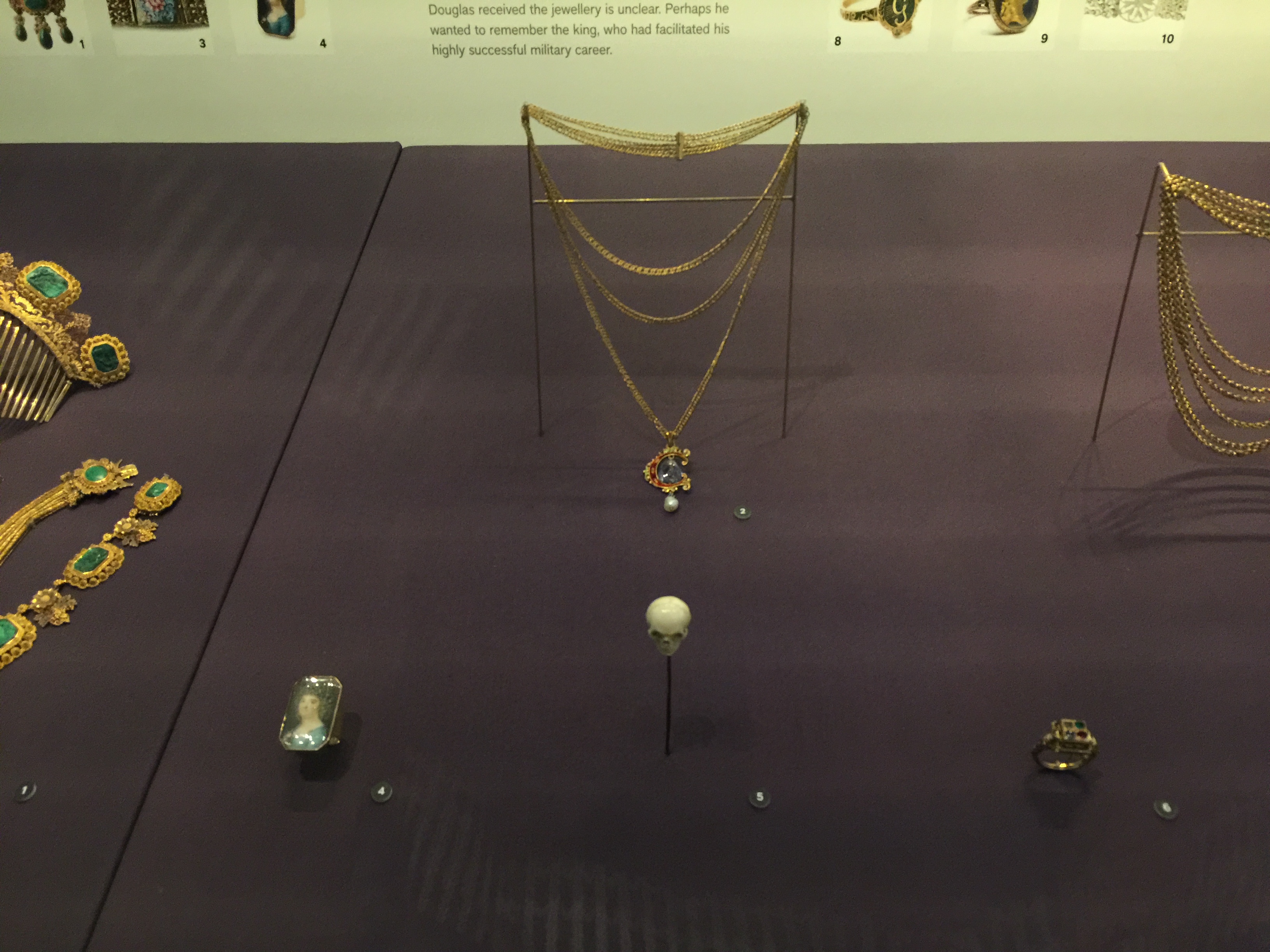
    Our time at the Palace began with a visit to the Treasury. Inside a vault are two rooms with the Swedish Crown Jewels on display. If you own a smartphone, you are able to download an audio guide tour. I found that the tour was interesting, but, I did not listen to all stops. As the space was quite small, I felt as though the audio guide was problematic and could very easily cause congestion.

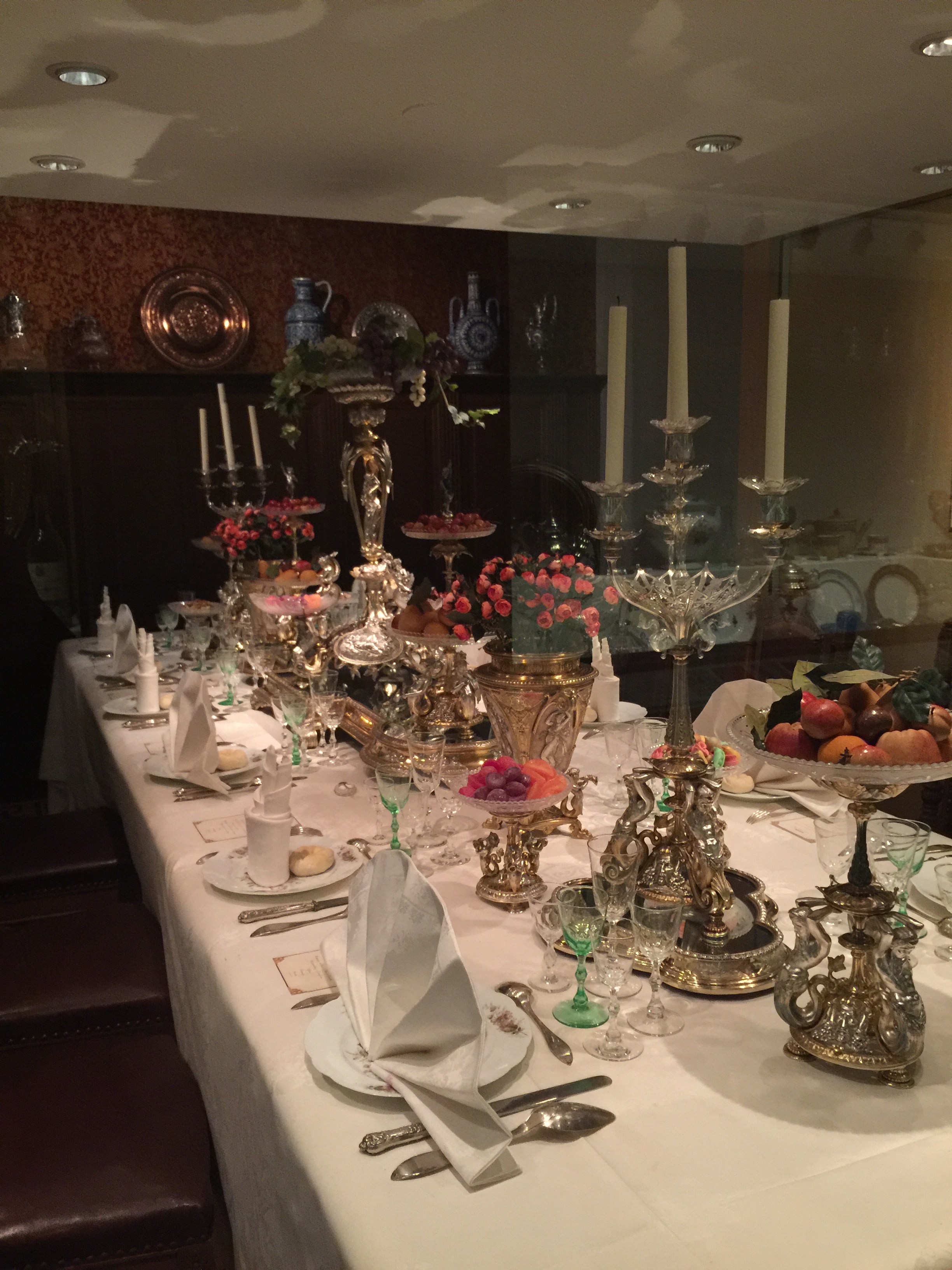
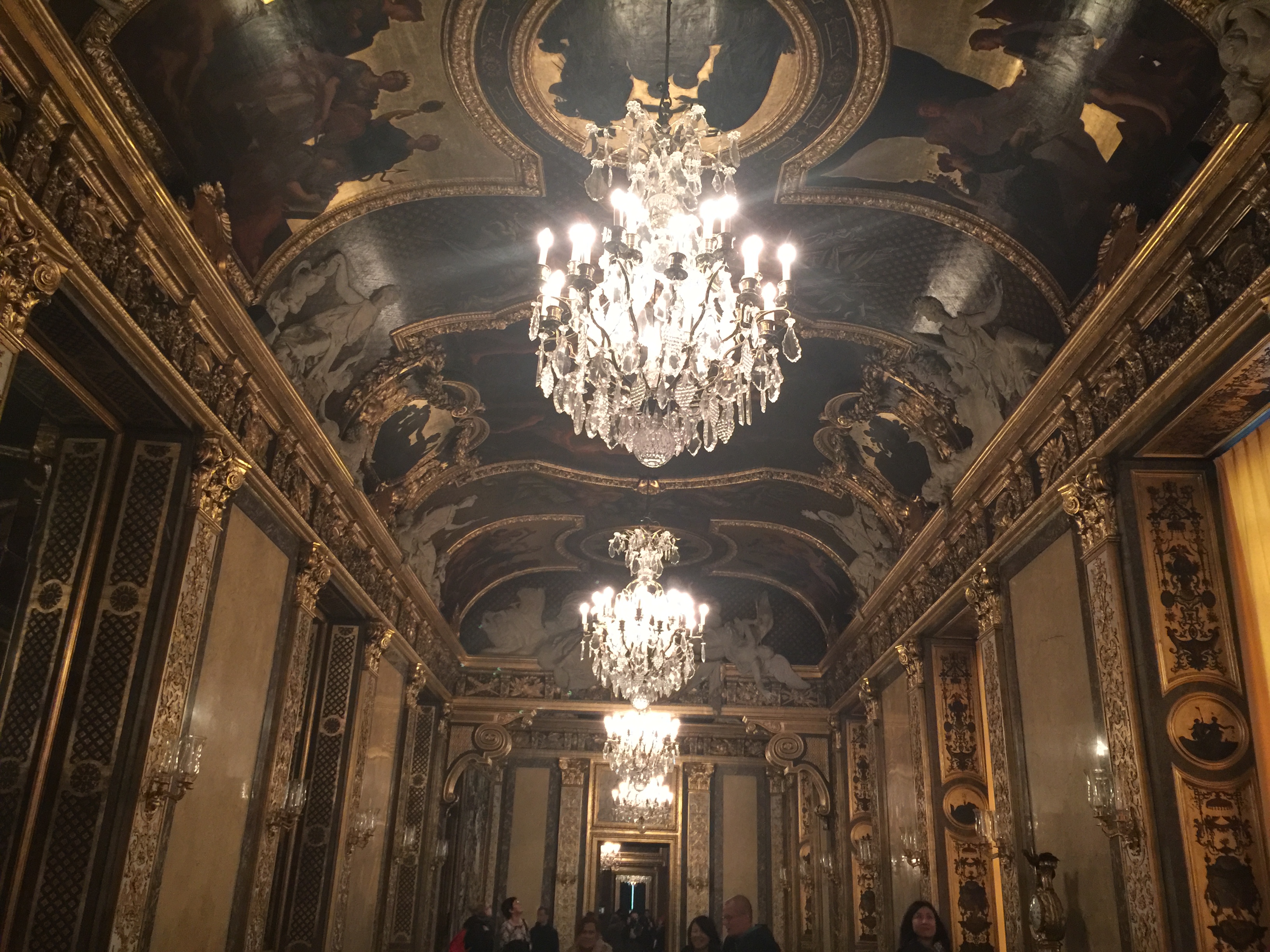
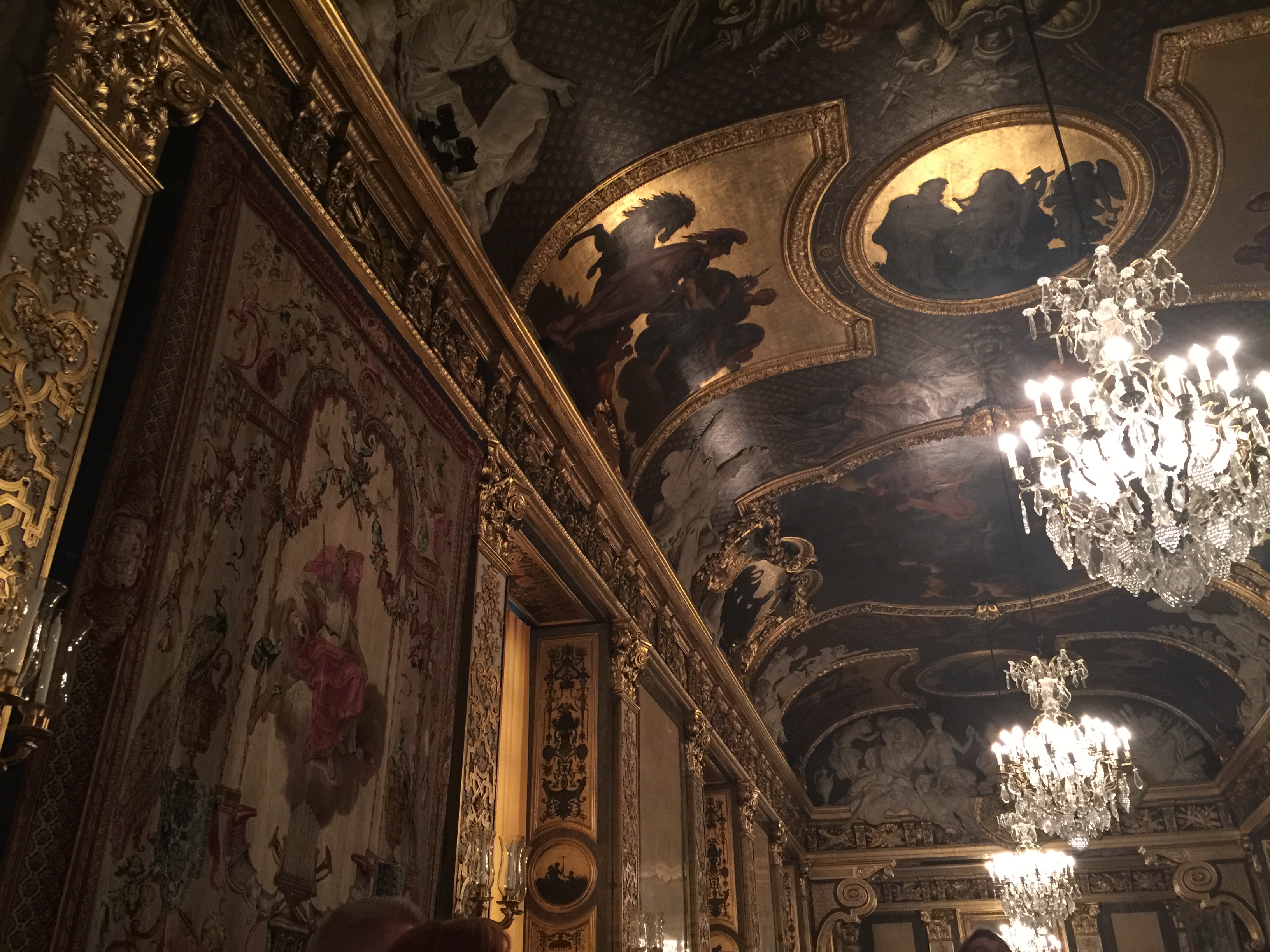
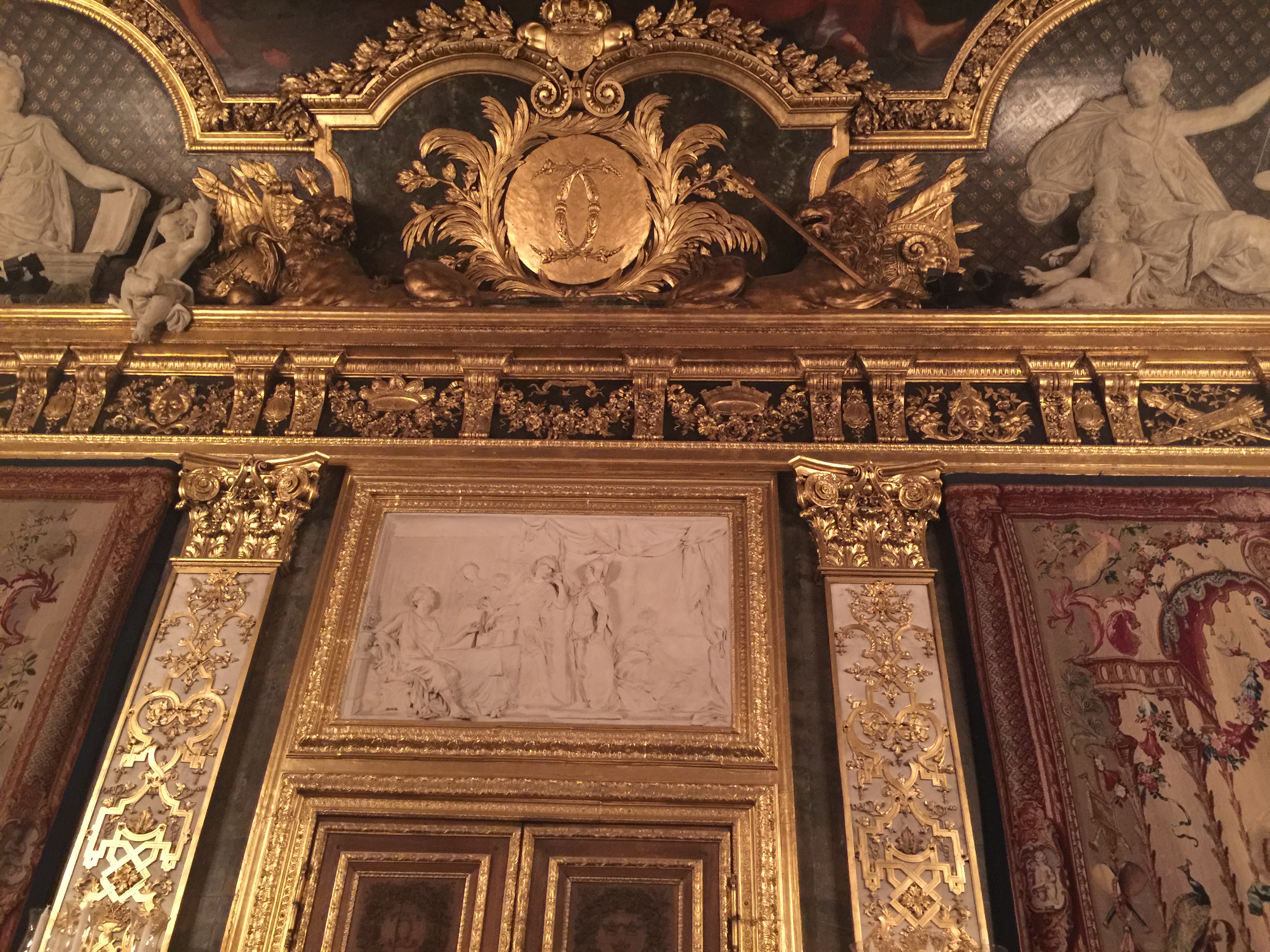
    After the Treasury we joined a guided tour of the State Apartments. Considering the rooms had little interpretive material available, a guided tour was definitely a good way to go. The tour lasted around 45 minutes and our guide, Eric, was very knowledgeable. A highlight was the Gallery (photographs below). This ornate room is designed in a Baroque style with ceiling murals depicting the numerous wars between Sweden and Denmark. Without a guide, we would have never noticed some of these details.

    img_3142
    The Royal Palace
    img_3148
    The Royal Palace
    img_3151
    The Royal Palace

    Another part of the tour I enjoyed was hearing about the current Royal Family. I know a tiny bit about the Danish Royal Family because of Princess Mary. As for Sweden, I knew absolutely nothing prior to this visit. Overall, the tour provided a great overview of everything royal.

    img_3131
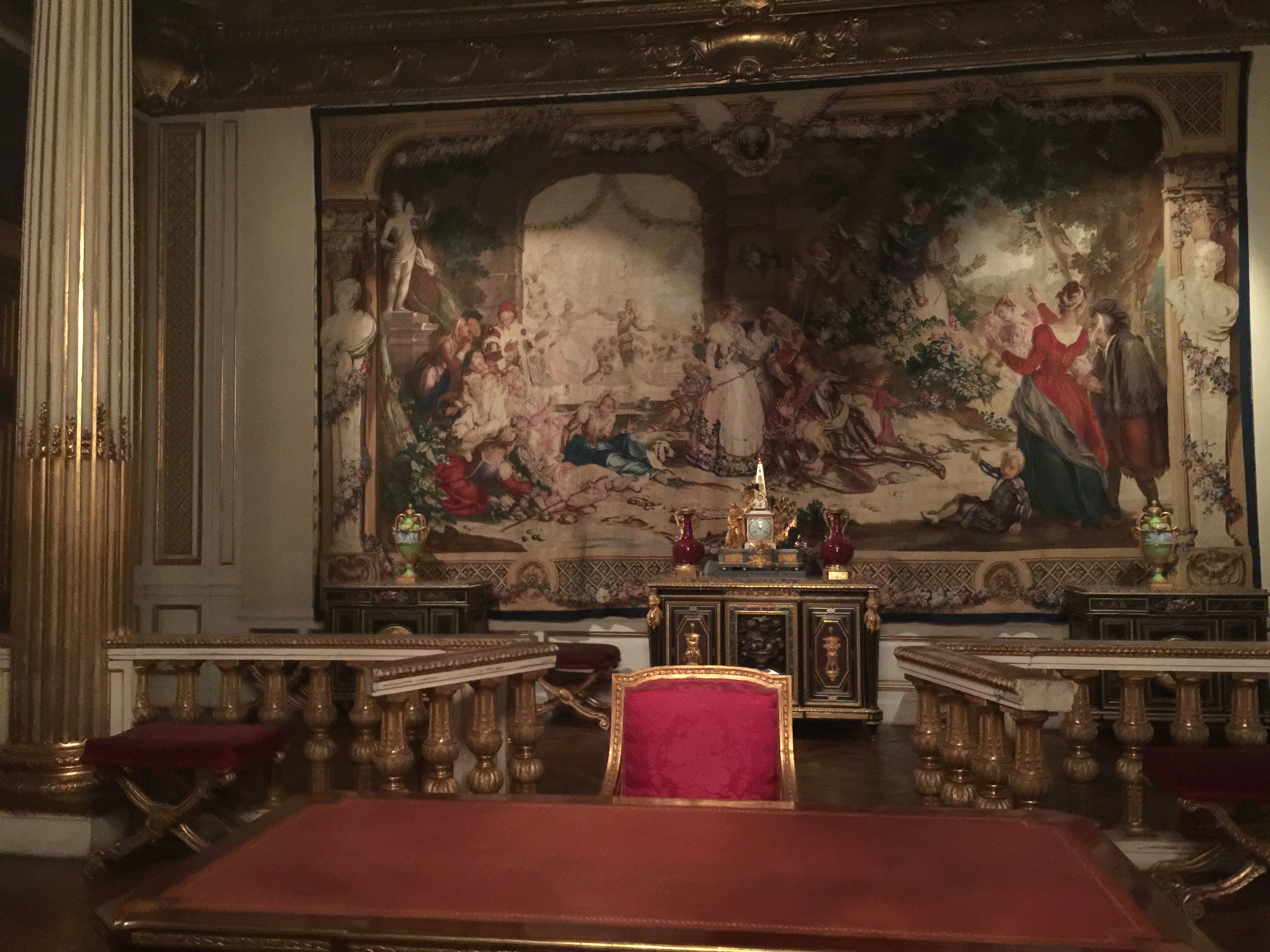
    King’s Chamber
    img_3126
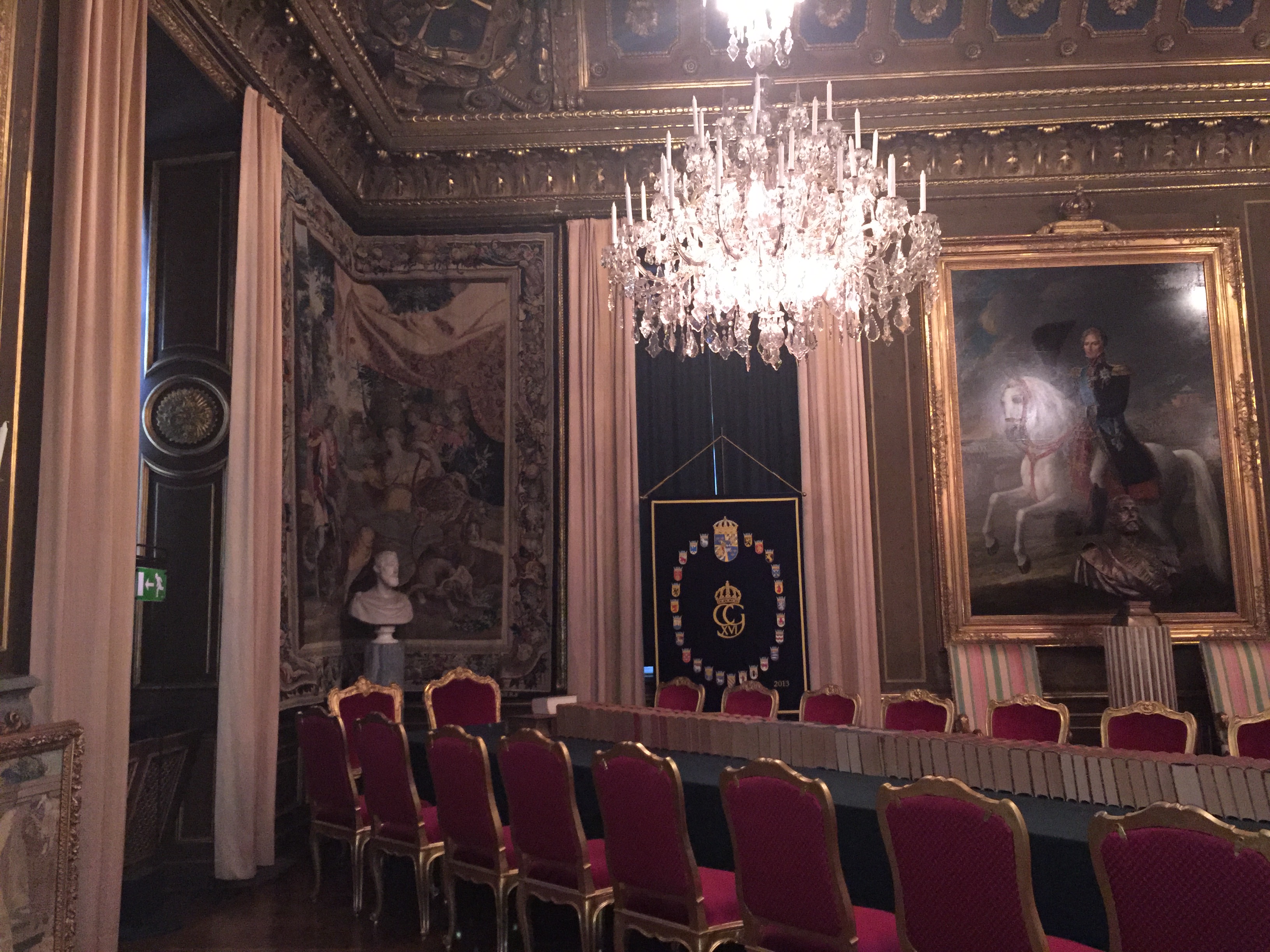
    Dining Room now Council Chamber Room

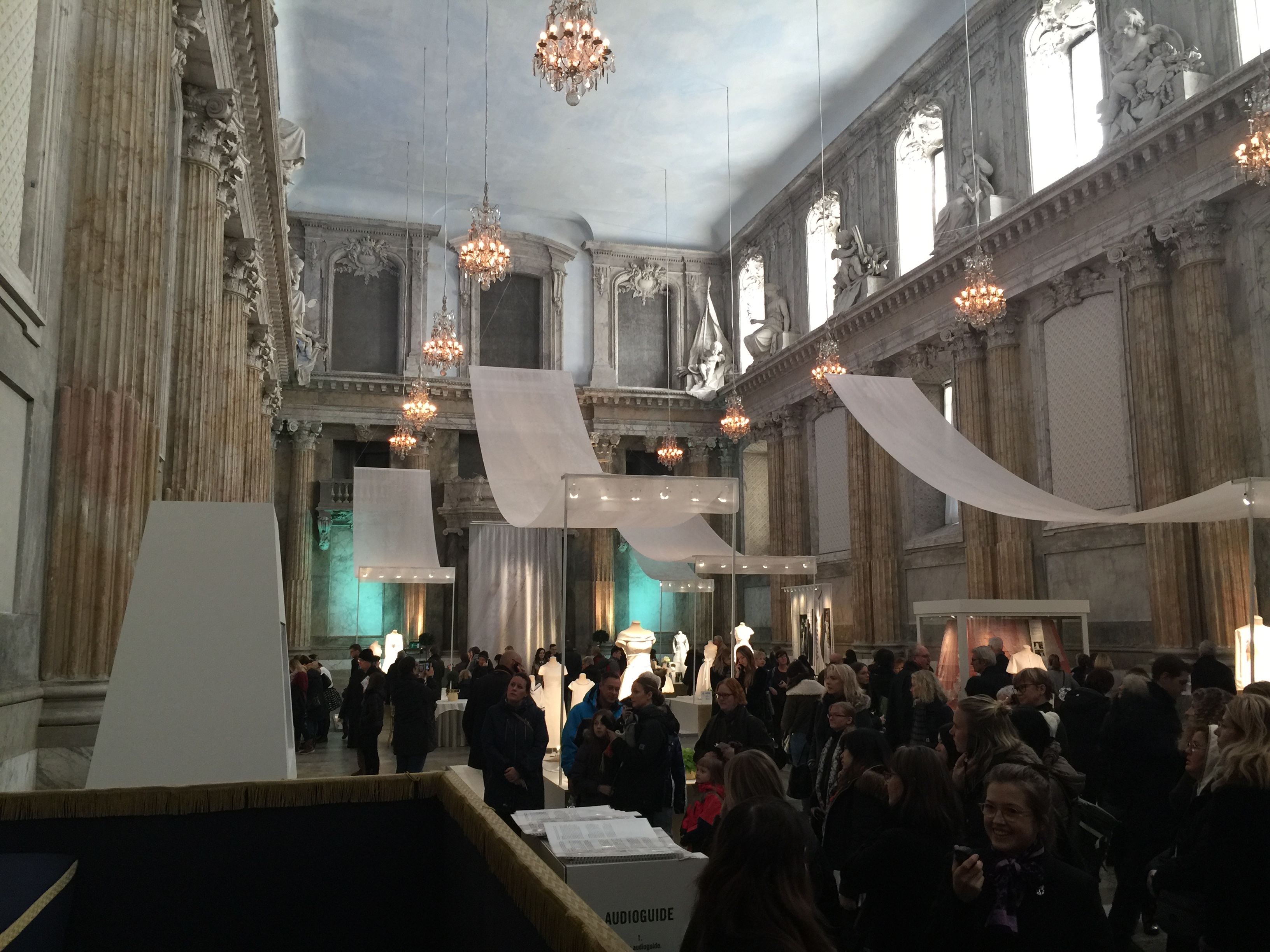
    Before ducking outside and watching the Changing of the Guard, I walked through the current exhibition ‘Royal Wedding Dresses’. This exhibition commemorates forty years since the current King and Queen were married. The setting for the exhibition is amazing – inside the Palace’s Hall of State. Imagine a large white marble room equipped with a throne and adorned with columns. Large white sheets hung from the ceiling above the five wedding dresses on display.

    img_3189
    Wedding Dress of Crown Princess Victoria
    img_3192
    The Royal Palace

    The dresses were worn by Queen Silvia, Crown Princess Victoria, Princess Madeleine, Princess Sofia and Princess Lilian. The display for each dress included a mannequin wearing the dress and a small glass box containing the corresponding shoes and handbag. Veils were displayed in a separate area. What struck me was how each dress was so simple and elegant. I was expecting pretty elaborate textiles. The veils were pretty extravagant including very fine lacework.

    There was an audio guide for this specific exhibition along with some thematic panels. I do feel as though the exhibition may have benefitted from slightly more interpretation. What worked well was starting the exhibition with a video showing the various wedding ceremonies. You could firstly see the dresses on the screen before walking around and seeing them on display. It was also a wise idea to display the dresses separately on raised platforms. Even though the exhibition was incredibly busy, the crowd was dispersed around the dresses. It was a very aesthetically beautiful exhibition and worked well in the space.

    I like balancing these types of sites with, for example, more general history museums. For this reason, we dedicated our afternoon to the Swedish History Museum. Watch this space for my next review!

  • Vasa Museum

    Greetings from Stockholm! We arrived yesterday after a long train ride from Copenhagen. This is my first time in the city and, so far, I am very impressed. There are quite a few museums here that we will explore over the next few days. On the agenda for today was a walking tour of the old city – Gamla Stan – and the Vasa Museum – Sweden’s most popular tourist attraction.

    img_2970
    Vasa Museum

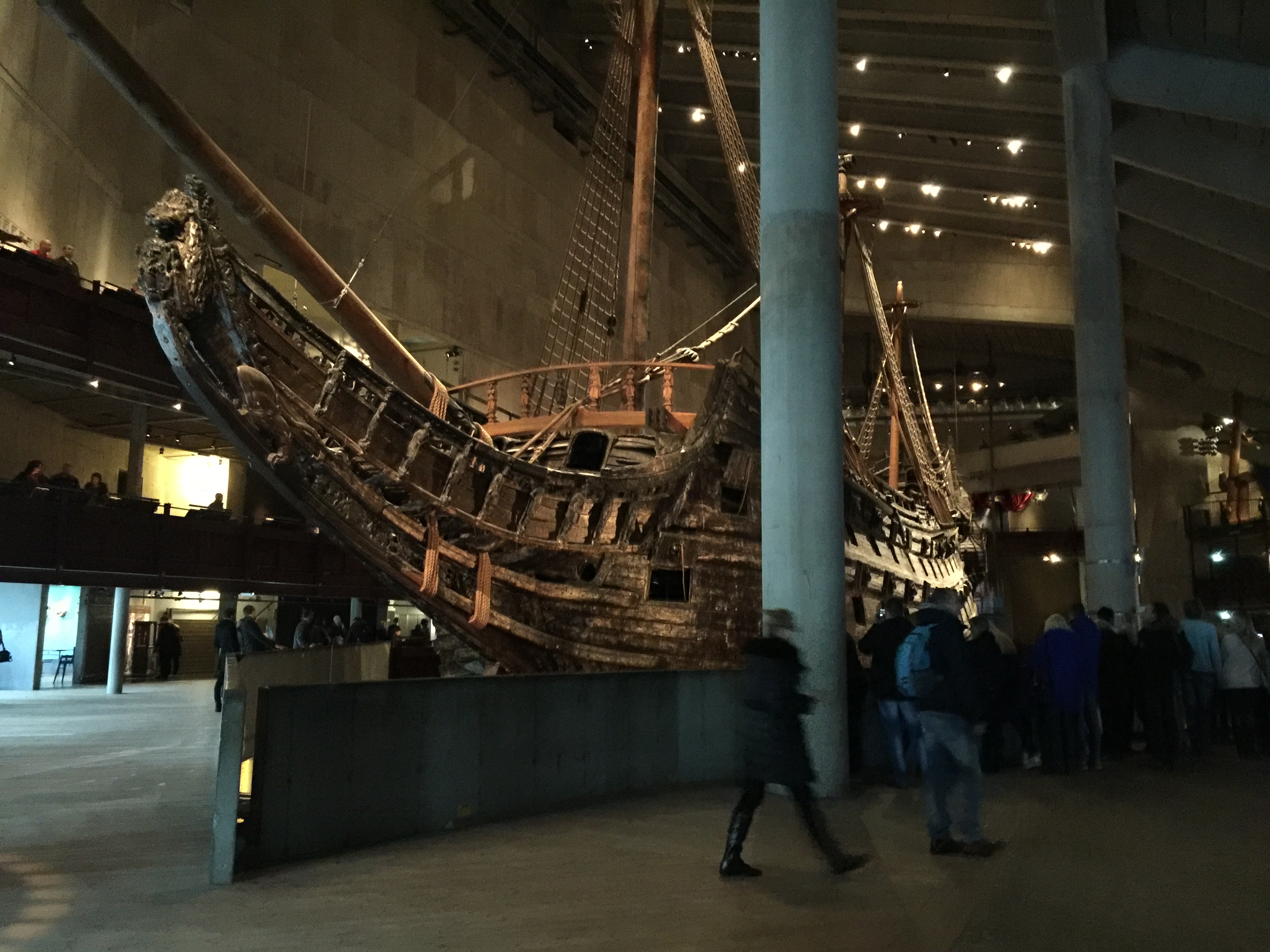
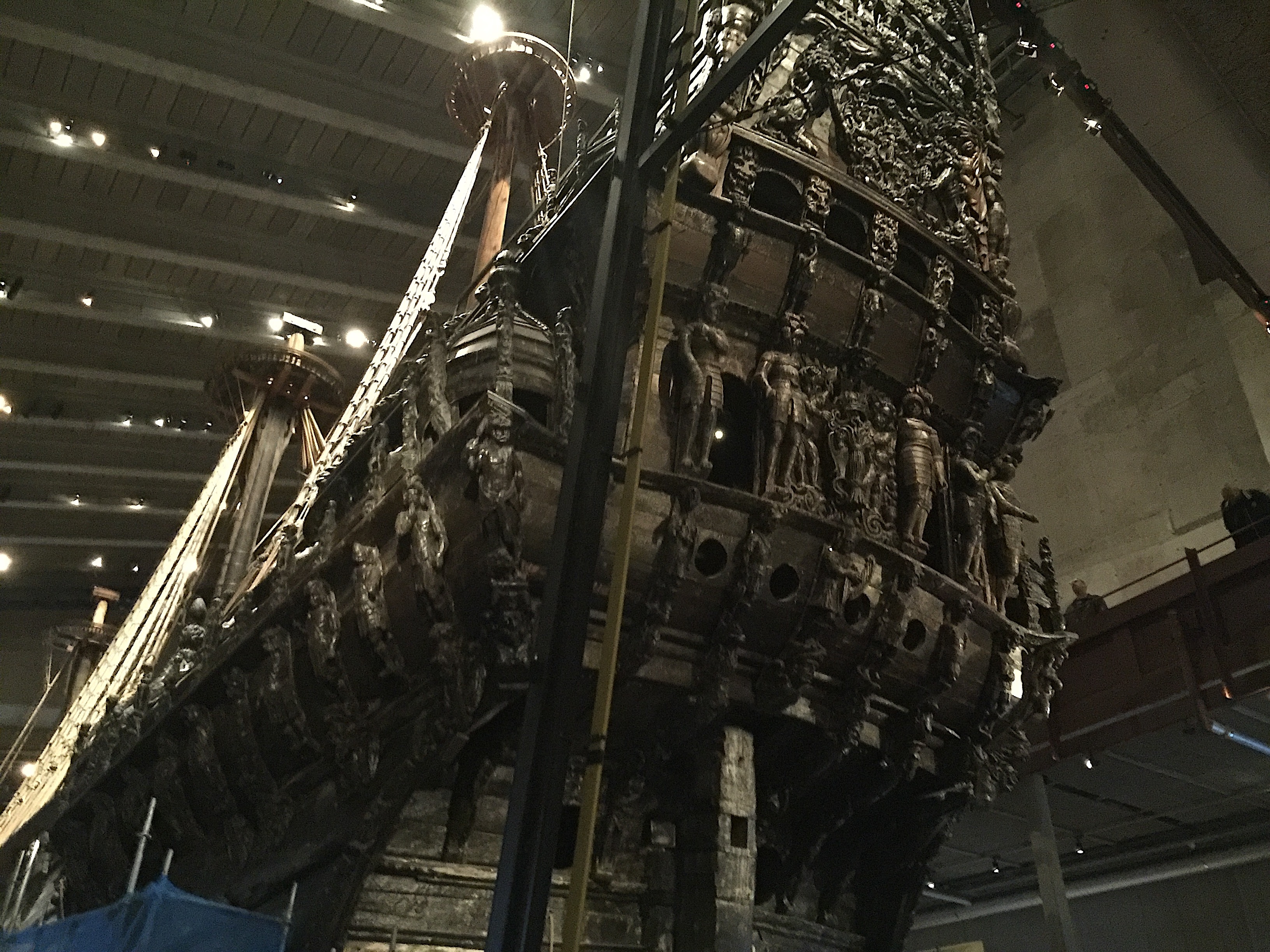
    Let me take a moment to set the scene for the Vasa Museum. During the 17th century King Gustav II Adolf of Sweden hoped to transform the country into a feared military power. The Vasa was one of the four warships commissioned by the King and was designed by Dutch shipwright Henrik Hybertsson. Its maiden voyage on 10 August 1628 ended in disaster. Within minutes of setting sail, the entire ship sunk in the harbour. Twenty-three lives were lost. Although the exact reason behind the ship’s sinking remains unknown, many have blamed its design.

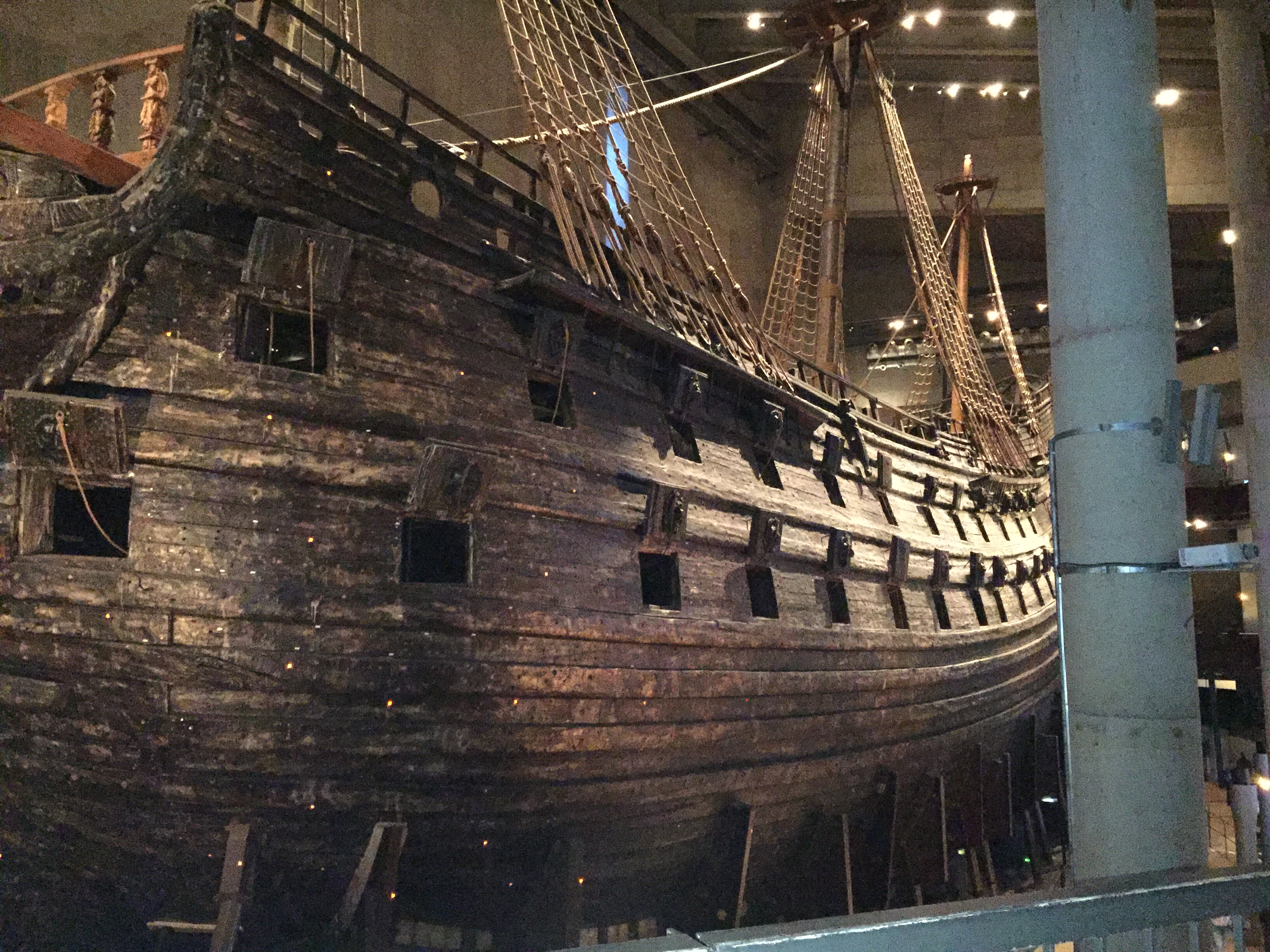
    The ship remained on the sea bed for just over 300 years. In 1961, the ship was salvaged and moved into its new home. What can be seen in the museum today is 98% original. This basically means that the whole ship was preserved on the sea bed and salvaged with great care. It is magnificent and absolutely dominates the museum space.

    img_3069
    Vasa Museum

    The design of the museum complements the ship. There are six levels containing exhibitions and ship-viewing platforms. I really enjoyed the exhibitions Life on Board, Face to Face, and Preserve Vasa.

    1. Life on Board

    Located on level 5, Life on Board is a small exhibition showcasing some of the objects found on board the ship. Highlights include scraps of clothing and a pair of intact stockings. They were able to survive the wreck as they were locked away in a sailor’s chest/cask. On display in a small window is one of the only gold objects to be found in the wreck. It is a ring that belonged to Vice Admiral Erik Jönsson. There were quite a few more objects on display and some thematic panels. Overall, it provided an interesting insight into what the shipwreck has revealed about life in 17th century Sweden.

    img_3053
    Vasa Museum

    2. Preserve Vasa

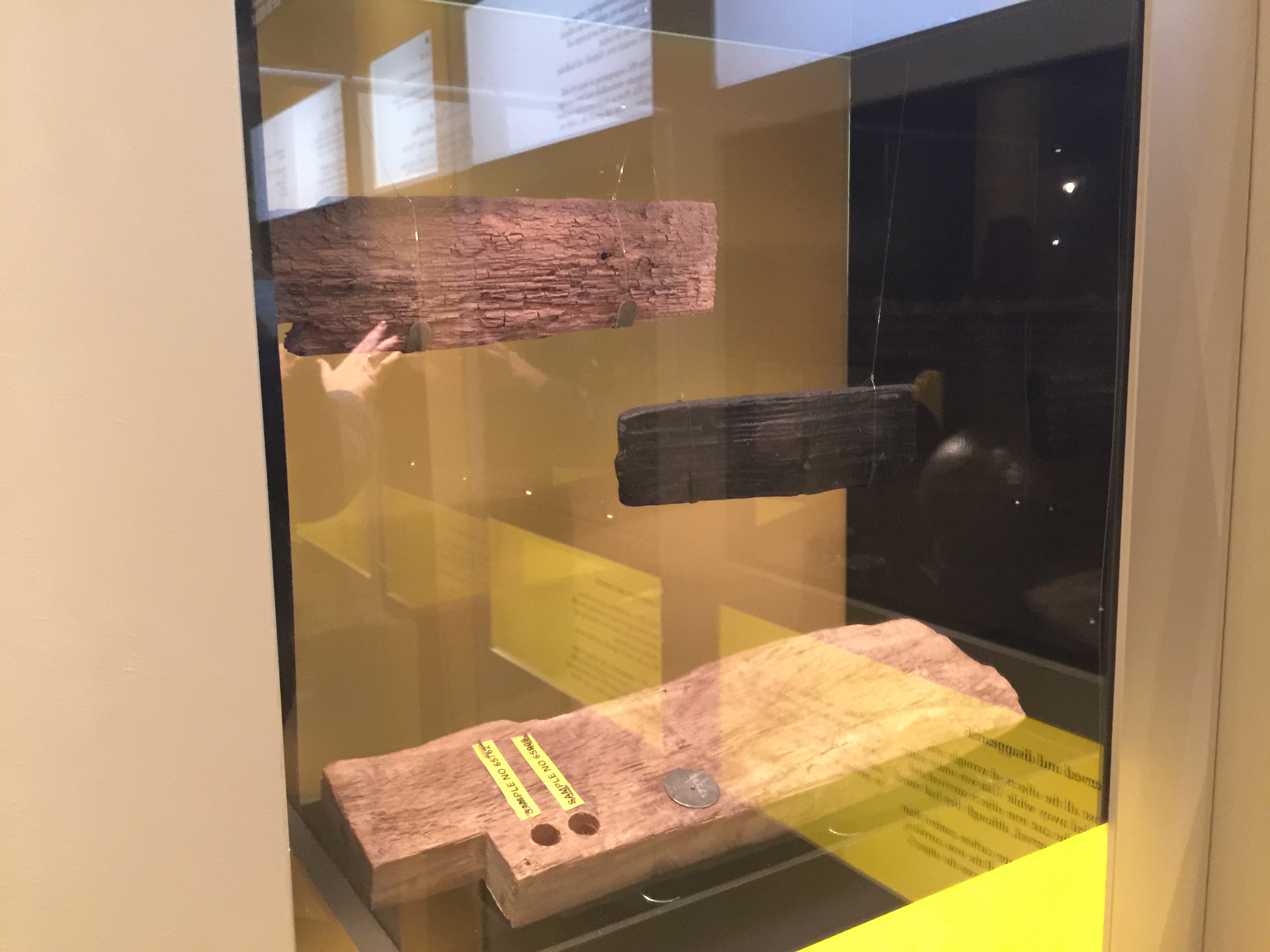
    Both Preserve Vasa and Face to Face are on level 2. I think it’s great when museums reveal some behind-the-scenes tips and tricks for visitors to appreciate. The entire Preserve Vasa exhibition traced how the ship had been naturally preserved for 300 years and how it is preserved today. Conservation techniques such as freeze drying are explored and displayed. The section I found most informative was titled ‘Why Conserve?’ On display are three pieces of wood – one which has not been conserved, one conserved by impregnation with PEG, and one preserved by chemicals and freeze-dried. It was a great way to physically show the importance of conservation and what may occur if incorrect techniques are applied.

    img_3081
    Vasa Museum

    3. Face to Face

    This exhibition is, in a way, designed to honour the twenty-three victims of the shipwreck. It tried to answer questions such as “how can the skeletons bring us closer to the men and women from the Vasa? Who were they? How did they look? What had they experienced?”

    By analyzing skeletal remains, an attempt has been made to reconstruct how they may have looked. It was interesting to see how much information could be ascertained from the remains themselves. After discovering this basic information, each skeleton was provided with an identity. This included a name, occupation, diet, etc. Whether this was respectful or not is still being internalized.

    The great thing about this museum is that you can legitimately spend the entire time viewing the ship from a variety of vantage points. I could have spent the entire afternoon observing the ship closer and seeing all its details up-close. The exhibitions are worth visiting if you are searching for something extra to add to your experience.

    img_3027
    Vasa Museum
    img_3013
    Vasa Museum
    img_2989
    Vasa Museum
  • Viking Ship Museum

    Situated a short walk away from the Roskilde Domkirke is the Viking Ship Museum. I would highly recommend anyone visiting Denmark to see this museum. Although quite simple and small, the ships it has on display are magnificent.

    img_2848
    Viking Ship Museum

    The museum is separated into two sections. One section contains workshops and the other, a more traditional museum space. As it is winter, there isn’t much construction going on so we only walked through the workshops to visit the cafe. When I first visited the museum in 2013, however, they were partway through building a replica warship. The museum is where the ruins of the Viking ships are housed along with a few information panels and a dress-up section.

    img_2840
    Viking Ship Museum

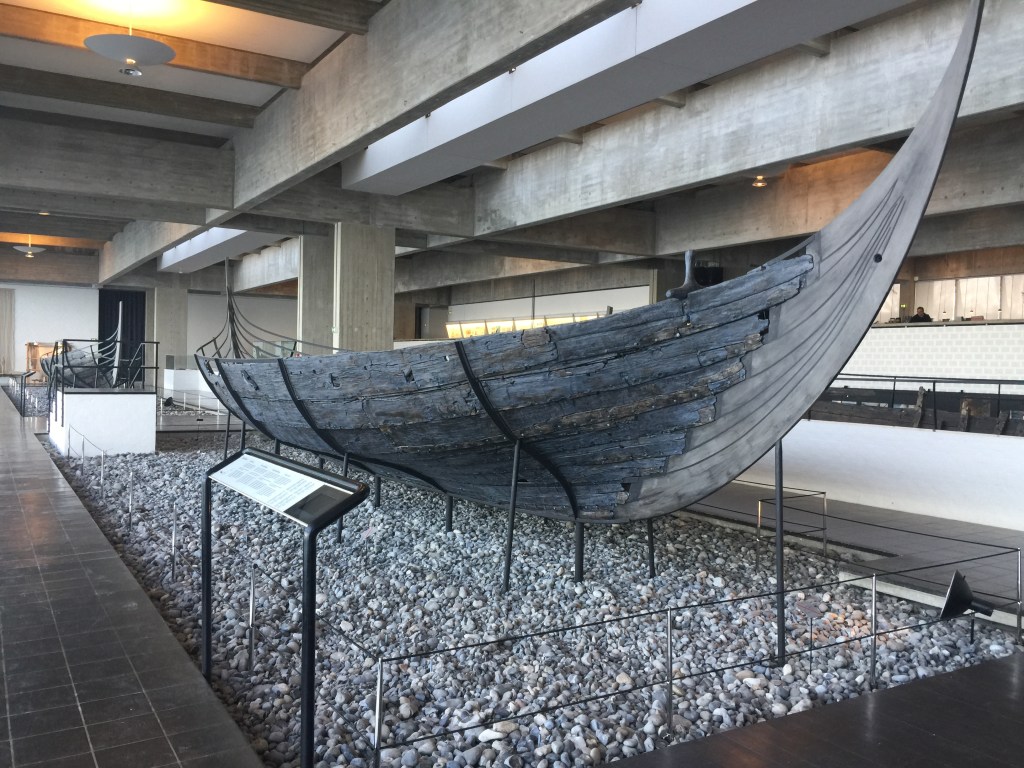
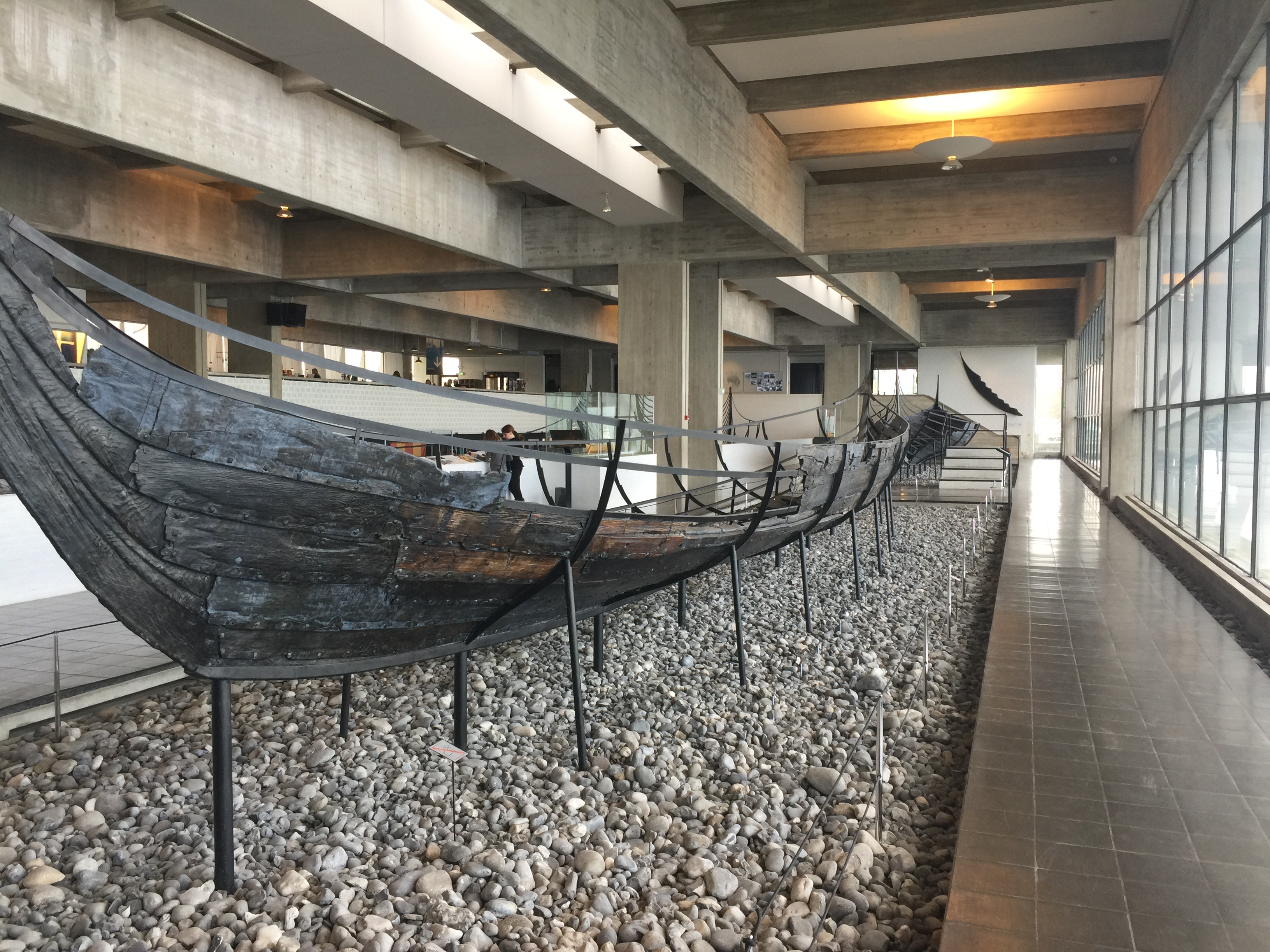
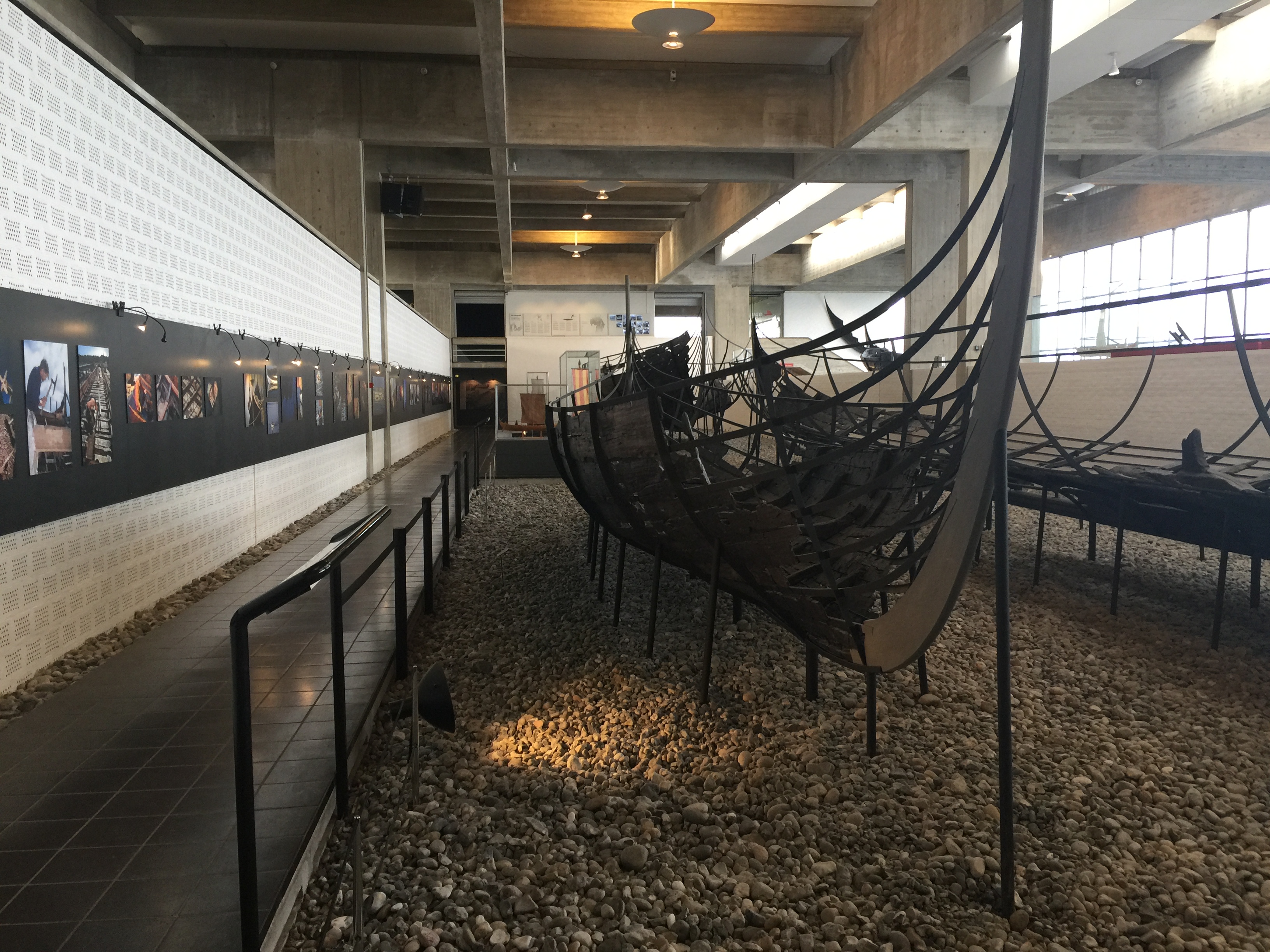
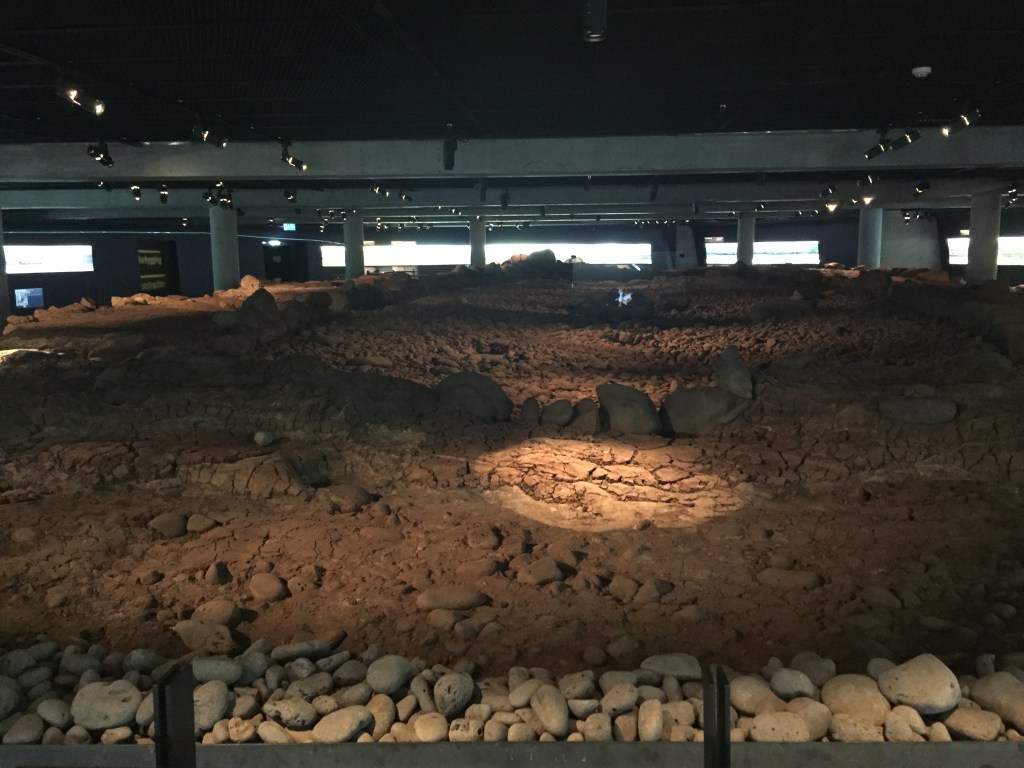
    The middle of the museum space is designed to showcase the surviving parts of the five excavated ships. These were utilized for trade, voyages, and warfare throughout the Viking era. Along the entire length of the room is a glass wall allowing visitors to look out over the sea. A very fitting design element for this museum. As for the objects, each ship has been pieced back together as best as possible and held in a black metal ship skeleton. These are rested over a bed of different coloured rocks. The display was minimalistic, but, very effective.

    img_2852
    Viking Ship Museum

    In terms of thematic panels and object labels, each ship is accompanied by a small exhibition label with quick facts and a more lengthy description of its former purpose and use. The amount of text in this area was just right. Visitors are not overwhelmed by information and you could spend the majority of your time admiring the objects.

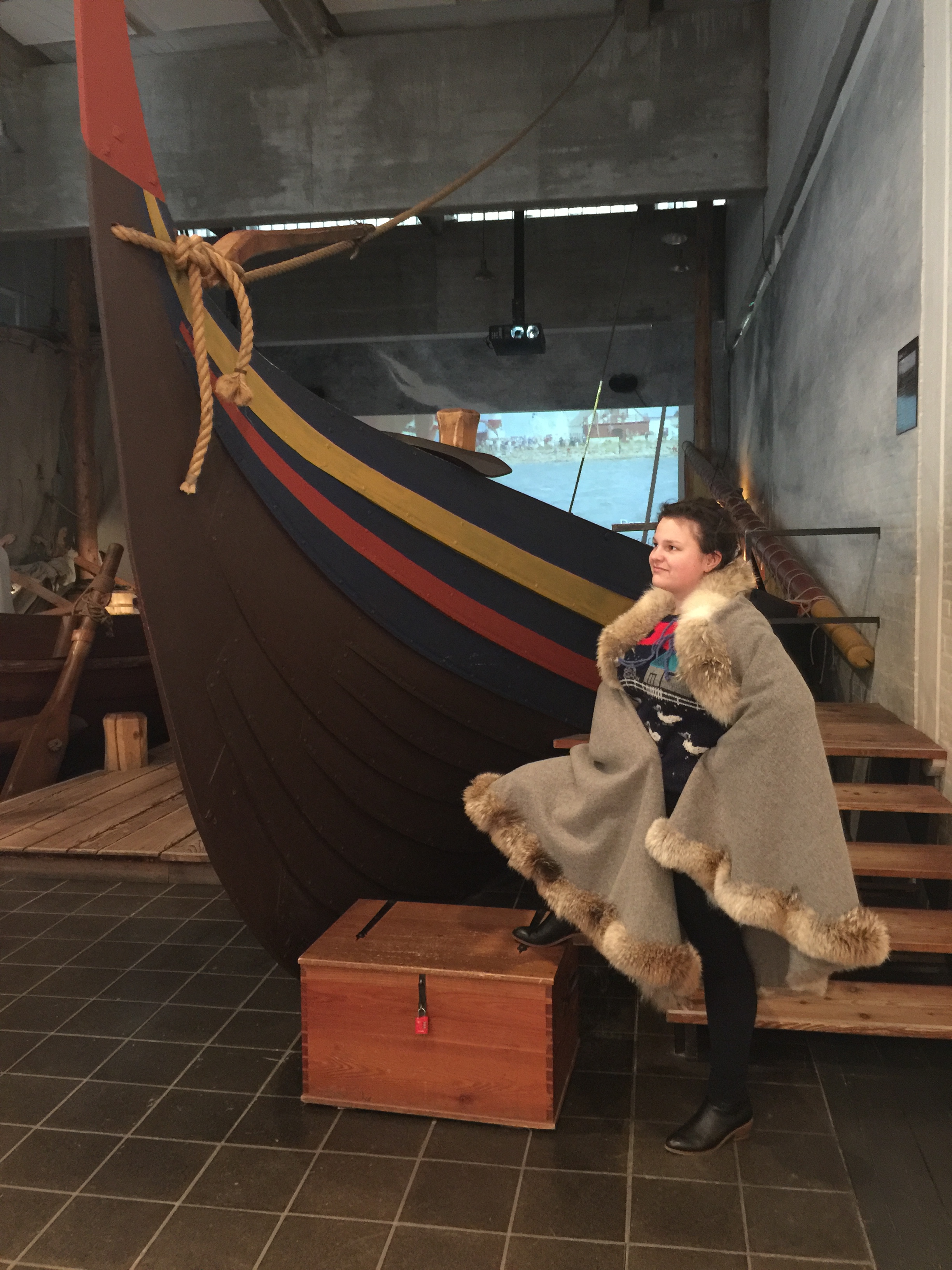
    My second favourite part of the museum was the dress-up corner. I was very happy to see clothing provided not just for children, but also, adults. Sometimes we do want to have a little fun in the museum space. In this section was also a replica boat for visitors to step inside.

    img_2857
    Viking Ship Museum

    Finally, the rest of the museum consisted of a variety of displays on Viking life. This section was more text-heavy. It also did not contain any objects so was a bit tiresome to walk through.

    This is the first museum from Scandinavia where I feel the desire to rate the gift shop. It was a very solid gift shop. Lots of cute little Viking-related objects as well as some beautiful homewares and clothing from Denmark. A great shop to buy some souvenirs for yourself or others!

  • Domkirke

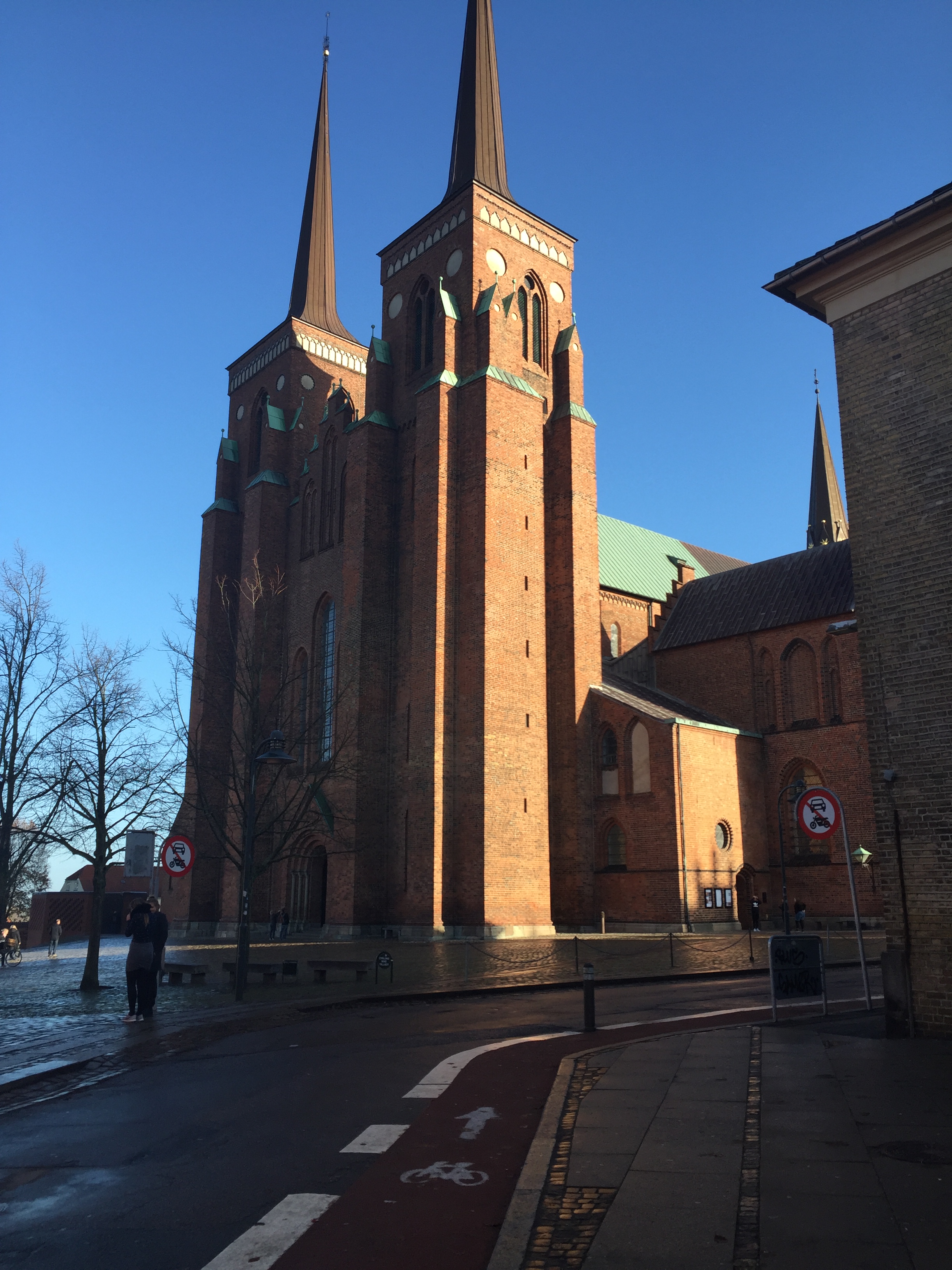
    Roskilde is a small city approximately twenty minutes by train from Copenhagen. It was founded in 980 by Harold Bluetooth and served as a very important site during the Viking era. Today it is home to many historic sites and museums including the Unesco World Heritage Listed Domkirke (Cathedral) and the Viking Ship Museum. It is quite a lovely day trip from Copenhagen and a great place to visit if you are interested in anything Viking-related.

    img_2816
    Domkirke

    In 2012, the Domkirke was inscribed on the World Heritage List as a cultural site. According to Unesco, its significance is due to the following:

    “Roskilde Cathedral is an outstanding example of the early use of brick in the construction of large religious buildings in Northern Europe. Because of the successive addition of chapels and porches to commemorate Danish royalty since the 16th century, it is also an exceptional example of the evolution of European architectural styles in a single structure.” (Unesco, Roskilde Cathedral, 2012)

    The site meets two of the ten criterion for world heritage listing. For those of you unaware of these criteria follow this link for more information: http://whc.unesco.org/en/criteria/.

    1. Criterion ii – to exhibit an important interchange of human values, over a span of time or within a cultural area of the world, on developments in architecture or technology, monumental arts, town-planning or landscape design.

    A limestone version of the Cathedral was completed in 1080. Almost a century later, the lime was replaced by red bricks that still exist today. It is considered to have had a great influence on the spread of brick in Northern Europe during this time period.

    img_2832
    Domkirke

    2. Criterion iv -to be an outstanding example of a type of building, architectural or technological ensemble or landscape which illustrates (a) significant stage(s) in human history.

    From 1080 onwards the Cathedral was adapted to suit various architectural styles. In particular, porches have been added to the Cathedral that served as mausoleums for the Danish royal family. Speaking of which, there are 39 kings and queens of Denmark buried within the Cathedral’s walls. Eerily enough, preparations have recently been completed for the death of the current queen, Margrethe II.

    img_2822
    Domkirke

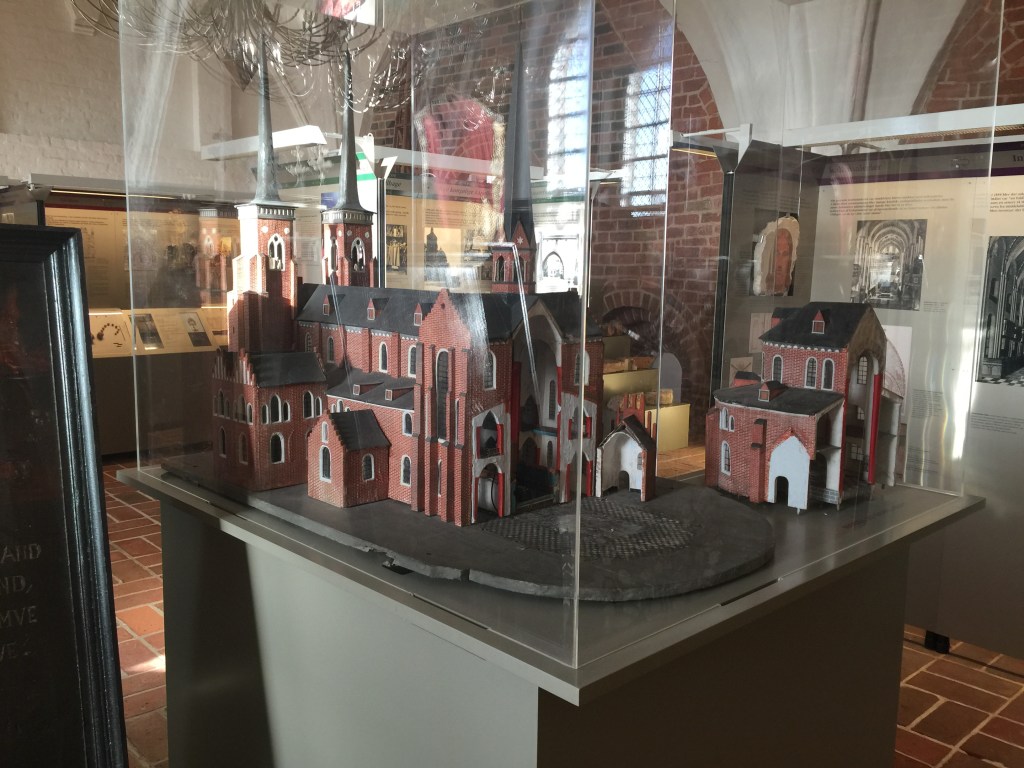
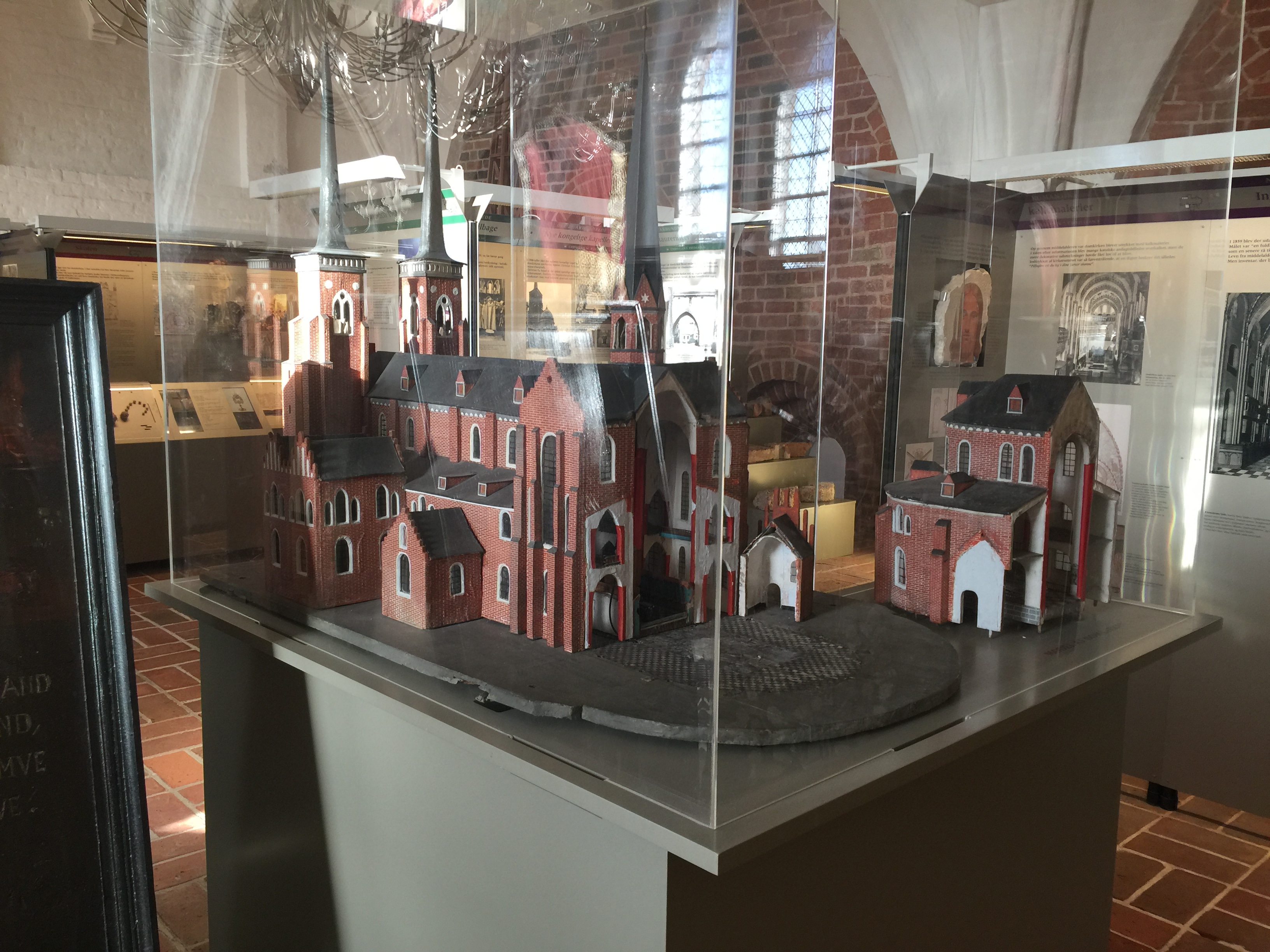
    On entering the Cathedral we found the front-of-house staff to be very welcoming and helpful. We were guided briefly around the Cathedral stopping to see a 16th century clock strike the hour. The clock depicts St Michael slaying the dragon and still works on its original mechanism! After wandering around and exploring the crypts we went upstairs to the small museum. We didn’t spend long inside, it wasn’t very enticing. There were some very nice models of the Cathedral including one showing the various additions to the Cathedral over time.

    img_2829
    Domkirke

    You can definitely appreciate why it has been inscribed on the World Heritage List. I usually don’t go into cathedrals anymore because I reached my limit a few years ago. I made an exception considering it is World Heritage Listed and such an important site when considering the royal history of Denmark.

  • Design Museum Denmark

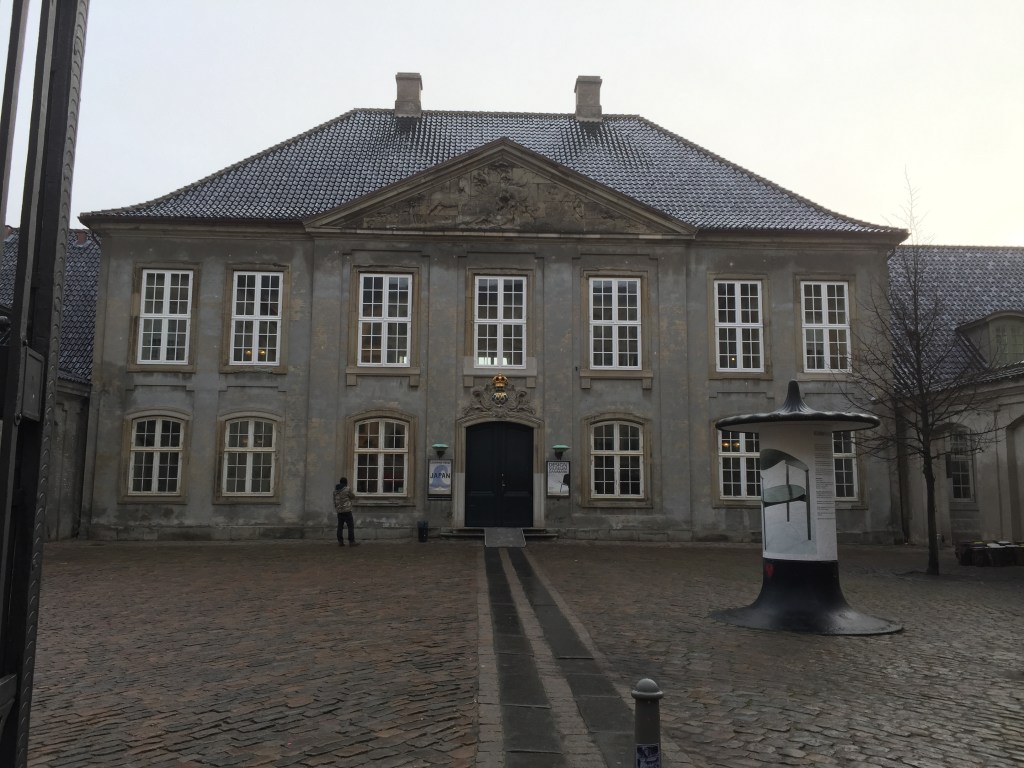
    The following is part 2 of yesterday’s museum adventures. I’ll start by saying we didn’t really plan on visiting the Design Museum. I stumbled across it whilst googling what to see around the Medical Museion. What’s pretty cool is that the Design Museum is housed in part of the former Frederiks Hospital. Its collection includes furniture, textiles, and art. The mention of textiles caught my eye so I added it to our itinerary. Not only does it contain one of Denmark’s largest textile collection, but, they have made a great effort to place the majority of pieces on display.

    The museum itself is beautifully designed. The grey marble floors and spacious display areas allow it to feel very accommodating. The entire museum is on one floor and you must walk through each section to see the next. Although we weren’t there to see the Japanese design exhibition, we walked through and were pleasantly surprised to learn the similarities between Japanese and Danish design. 

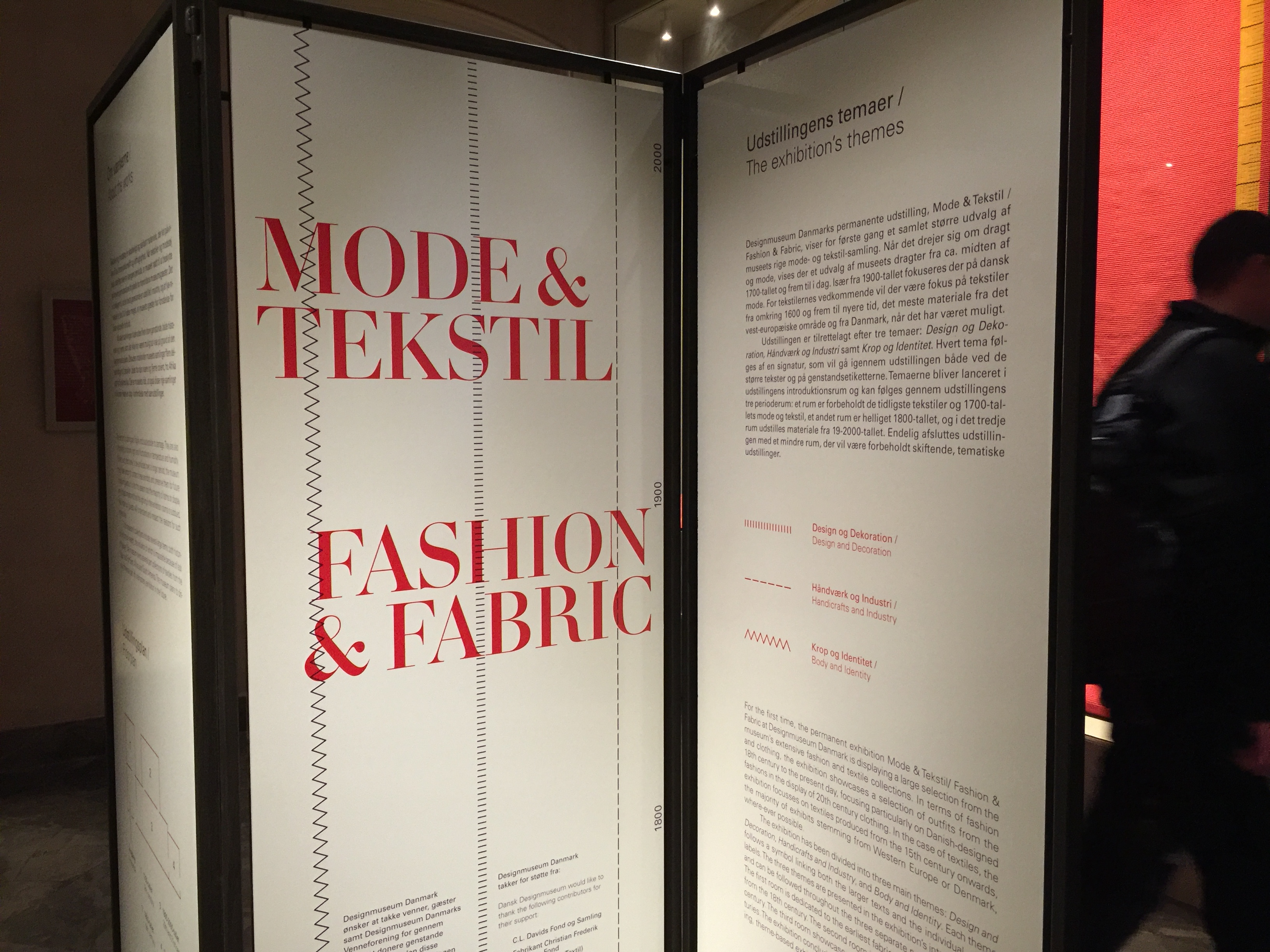
    The textile display starts right at the end of this space. You first encounter a folding screen which states the title of the exhibition and the themes it will cover. In total, there are three themes – design and decoration, body and identity, and handcrafts and industry. Each theme has its own printed stitch pattern that repeats itself throughout the exhibition indicating what thematic panels belong to which theme.

    img_2538
    Design Museum Denmark

    To be honest, I spent more time closely observing the textiles on display as opposed to reading every panel. For this reason, I am going to write about my favourite textiles.

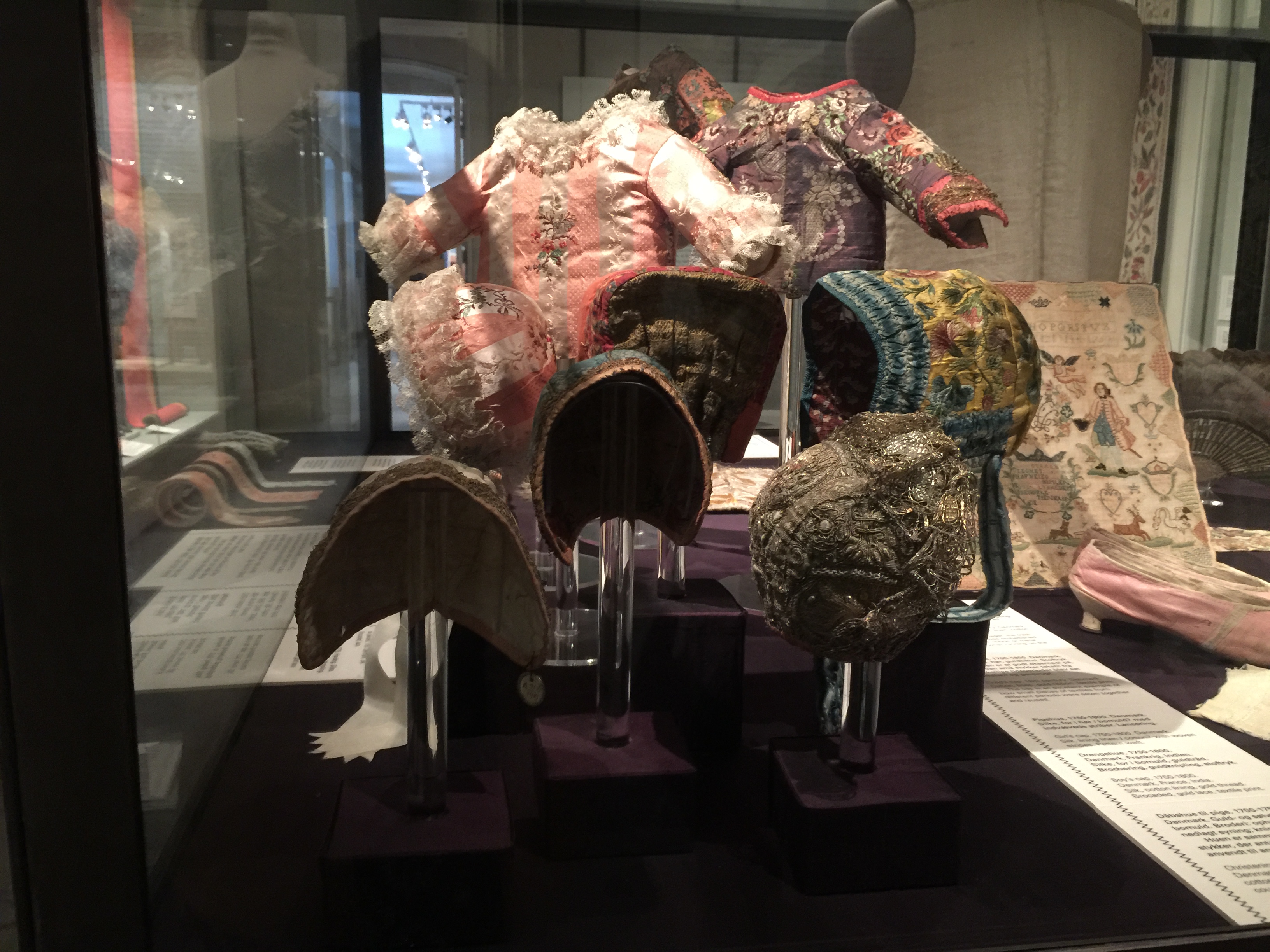
    1. Children’s Caps Circa 1700s

    Inside the first room was a selection of children’s caps all so delicately embroidered. One had been sewn together utilising different fragments of fabric that I later discovered were from a variety of different time periods. Another was a girl’s christening cap from 1750 covered in a very fine layer of silk. I really liked how they were displayed all together. You could appreciate each individual cap and the entire collection simultaneously.

    img_2553
    Children’s Caps Circa 1700s

    2. Samplers

    In the same room as the caps were quite a few embroidered samplers. They ranged from quite basic to stunning. My favourite was the one pictured below. It was stitched in Denmark circa 1757. There is so much detail stitched into the satin backing including the figure of a woman and numerous animals. It amazes me how the colours of the thread remain so vibrant. As it was in a pull out drawer and stored away from constant light, hopefully these colours will continue to be protected.

    img_2581
    Samplers

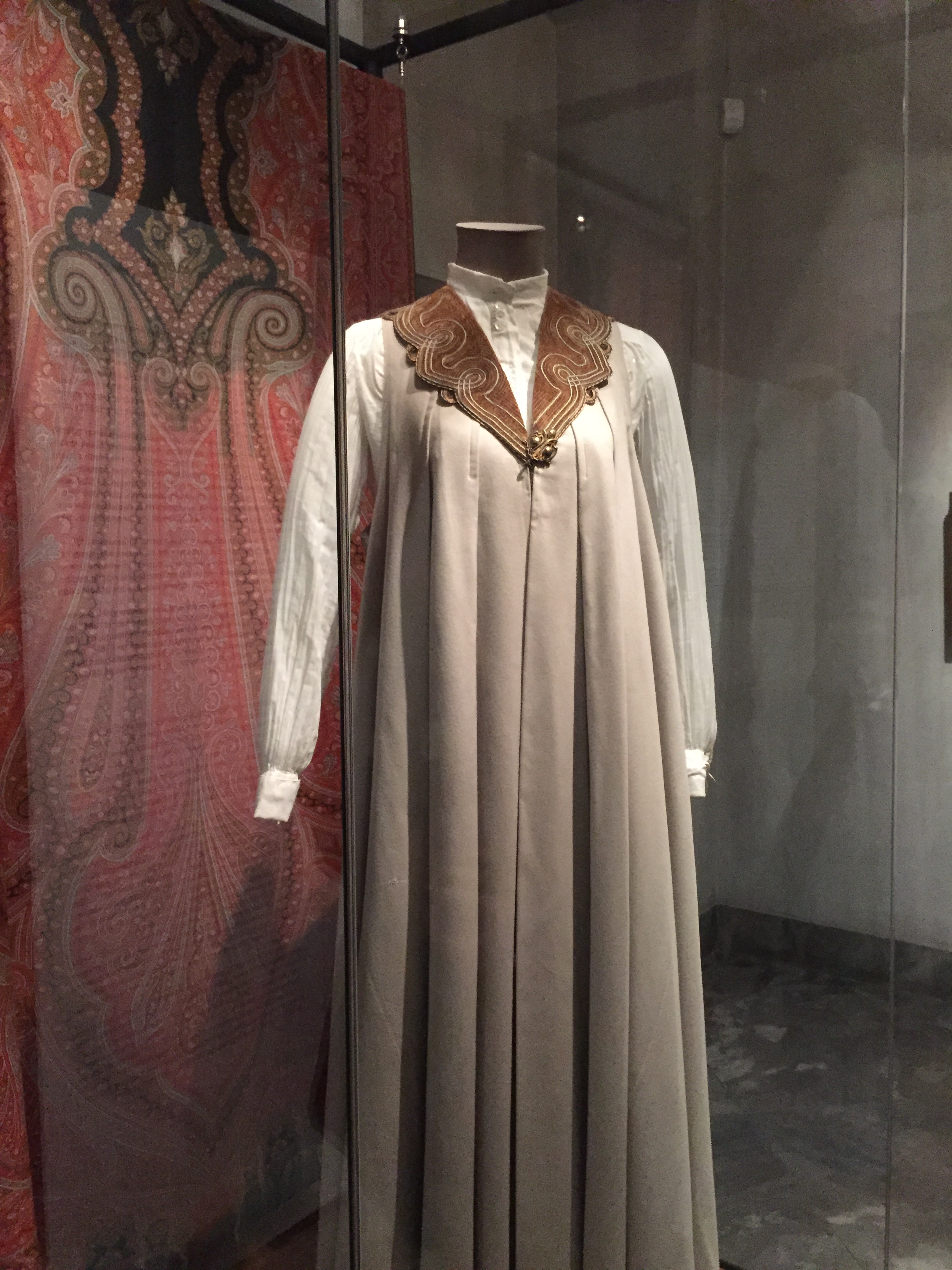
    3. Reformist Dress: Design Au Bon Marche Paris

    What appeared to be a very plain item of clothing was actually one of the most significant on display. This dress was worn during the reform movement in the 19th century to protest clothing such as laced corsets. It is, therefore, meant to be loose-fitting and less restrictive than the clothing of previous decades. This specific dress was manufactured in Denmark by the department store Magasin du Nord.

    img_2600
    Reformist Dress

    4. Silk Ribbons

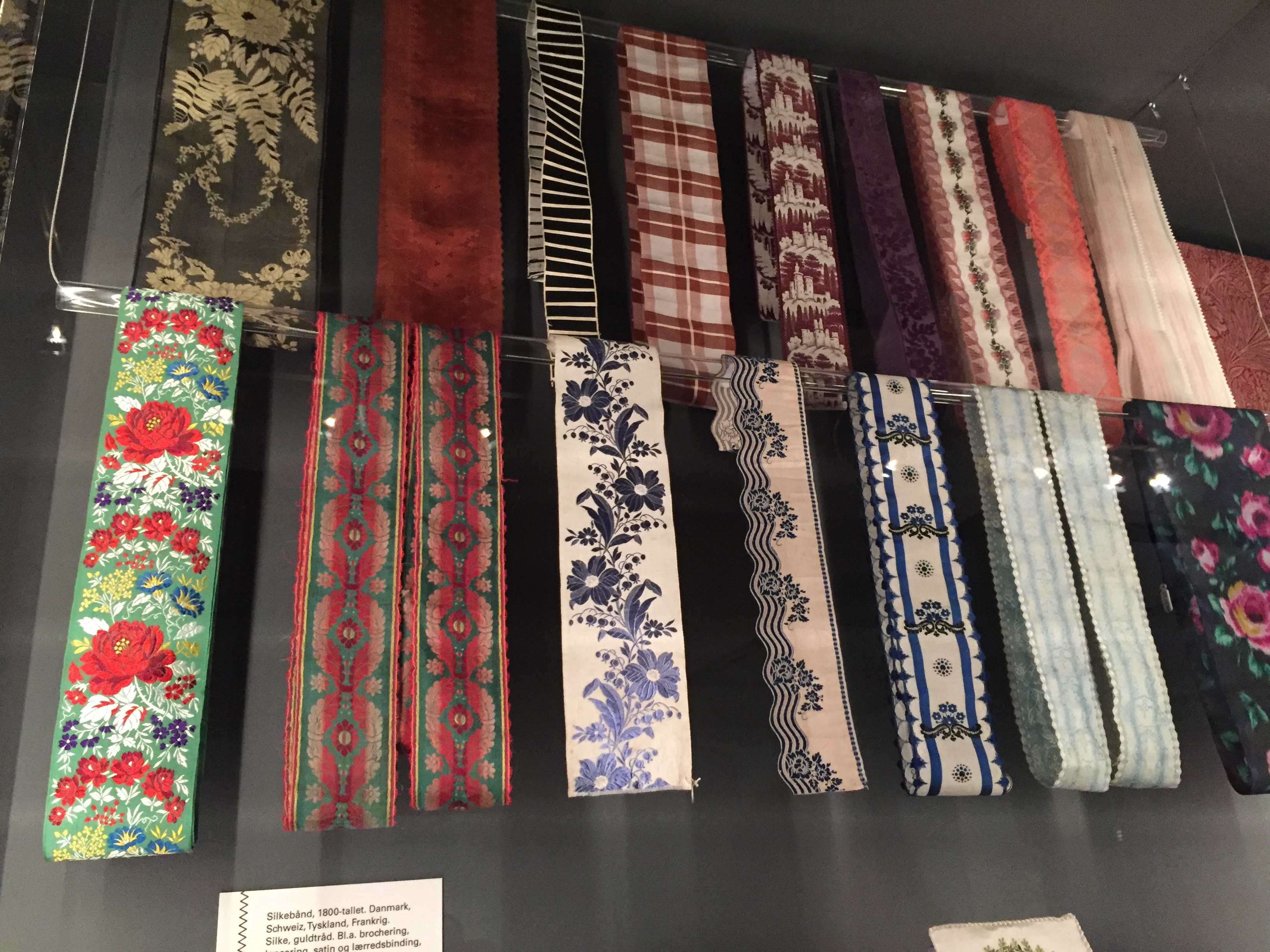
    This display of ribbons was, aesthetically, very effective. They shared one label that literally read “silk ribbons 19th century”. Whilst not exactly the most informative label, I enjoyed looking at each piece of ribbon and seeing how it had been made and the different stitches that covered its surface. The first ribbon in the second row, green with large red flowers and other flower motifs, was particularly beautiful.

    img_2603
    Silk Ribbons

    5. Dress 1950s

    Similar to the caps and ribbon, I have selected this dress because of how it was displayed. Rather than placing the dress on a mannequin and moving on, more thought has gone into the display as a whole. For example, the hat has been suspended from the roof and rests just above the dress. You can begin to picture someone actually wearing the hat with the dress, enhancing both its appearance and contribution to the outfit as a whole.

    img_2610
    Dress 1950s

    The Design Museum did have other displays focusing on furniture and homeware. Whilst I thought those exhibition spaces were also well designed, it was the textiles that I found to be most interesting. Considering the variety of content and the way in which it has been displayed, this is a must-see museum if you are visiting Copenhagen.


  • Medical Museion

    We have had such an amazing day seeing some of the wonderful sites in the city and, most importantly, museum-hopping. Although we visited the Design Museum first, I am too excited to write about the Medical Museion. Since they are such different places, both deserve their own blog entry. The Medical Museion, founded in 1907, is a museum and research centre for the University of Copenhagen. It was opened to the public in 1918 and houses one of the largest medical collections in the world.

    img_2737
    Medical Museion
    img_2636
    Medical Museion Entrance

    There is quite a lot to cover in this blog post so I will try and keep things brief. In order to do so, I am going to only cover the exhibition spaces that I found to be most interesting.

    1. Pharmacy

    This part of the museum showcases a fully constructed dispensary from the Royal Frederik Hospital Pharmacy. I have to admit that I love seeing re-constructed pharmacies. It satisfies my appreciation of medicine, organization, and history. If you are ever in Heidelberg and go to the castle there is a great pharmacy museum there as well. Anyway, we spent quite a while in this room observing all the different medicines in bottles and cabinets. There is also an array of pharmaceutical apparatus on display including a set of old brass scales.

    IMG_2650.JPG
    Pharmacy

    2. The Body Collected

    This exhibition was extremely confronting. Even though I volunteer at the Museum of Human Disease and have worked with pathological specimens, none of this prepared me for what was on display. There are six separate areas, each with their own theme and objects. The purpose of the whole exhibition is to showcase the historical collection of the museion. What made it so confronting was that the original collection consisted primarily of human foetuses. Jars of unborn children filled an entire wall. I was first horrified and extremely uncomfortable, then spent the rest of the day wondering about the ethics of this display. Needless to say, I will be researching this further! We moved very quickly along to see some bone specimens and body parts infected with certain diseases. There is an old mortuary table in the centre of the exhibition space next to a touch screen showing how the specimens on display had been prepared. The final section of this exhibition allows visitors to interact with digital specimens displayed on a computer screen.

    img_2653
    The Body Collected
    img_2663
    The Body Collected
    img_2673
    The Body Collected

    3. The Auditorium

    As we moved from The Body Collected into the Auditorium I saw some very familiar anaesthetic machines. I almost squealed with excitement! One of them had all the attachments in place which looked fantastic.

    On entering the Auditorium I was immediately enthralled. It was established in 1787 and functioned as a lecture hall until approximately 1942. It has a similar vibe to the Old Operating Theatre in England. It is amazing to think of the knowledge that has been disseminated in this room over time and how the nature of surgery has transformed.

    img_2690
    The Auditorium
    img_2691
    The Auditorium
    img_2692
    The Auditorium

    4. Psychiatry Room

    Each exhibition space was slightly different to the rest. In the Psychiatry Room, the objects were arranged to appear as they would in a storeroom. Visible storage is the new ‘it’ thing, in some ways returning to the cabinet of curiosity days. Straitjackets are displayed inside archival grade boxes and share shelf space with old medication boxes and gloves. In the centre of the room is an old psychiatric ward door and chair with restraints. I had a few issues with this display that I will discuss later.

    img_2735
    Psychiatry Room

    5. The Royal Frederik’s Hospital 1757-1910

    This is yet another space that contained anaesthetic apparatus – an ether mask and vaporizer! At one end of this space was a large cabinet sparsely filled with objects. A sort of advent calendar-esque card was available with an image of each object printed on little squares. Lifting the squares provides more information on the objects along with their basic details. Next to the cabinet were a couple of display cases. One contained an amputation kit from the nineteenth-century that I thought was particularly interesting. Seeing some of the objects inside the kit made me feel quite nauseous. Nevertheless, medical kits are a fantastic way to gain an understanding of what tools were required to complete various procedures.

    img_2729
    The Royal Frederik’s Hospital 1757-1910
    img_2722
    The Royal Frederik’s Hospital 1757-1910

    6. Balance and Metabolism

    Last but not least is the exhibition on balance and metabolism. A highlight object from here is the 18th century cupping kit used in the process of blood letting. The exhibition space consists of four large glass tubes filled with objects in the centre of the room. Surrounding the tubes are glass cases fixed to the walls containing objects such as books.

    IMG_2719.JPG
    Balance and Metabolism

    That was a super quick walk through the museion. As each space was so different, I thought it was a great way to compare and contrast different exhibition designs. I personally loved the rooms with re-constructions and those that were divided into themes. I did think there were a lot of topics that could have been better teased out inside the museion. For example, the visible storage for psychiatry was a bit disappointing. There are so many complex issues that could have been discussed alongside the objects. It would have also been great to have a section on the ethics of display.

    Medical museums will continue to fascinate me. How issues of disease and health are communicated to a wide audience is always so intriguing. These museums are still continuing to evolve and striving to attract new audiences. Their future is, to me, just as perplexing as their past.

    Stay tuned for my review of the Design Museum!

  • Det Kongelige Bibliotek – Royal Danish Library

    After arriving in Copenhagen at 6.00 am this morning we thought it was absolutely necessary to start our trip with a danish and a visit to Det Kongelige Bibliotek (The Royal Library). Nicknamed “The Black Diamond”, this library is a beautifully designed space seamlessly combining the old and the new. The old section of the library was completed in 1906. An extension was added in 1999 consisting of black marble and glass, hence the nickname. It is believed to hold every book published in Denmark dating back to 1482. Currently there is a small exhibition on treasures from The Royal Library where many of the earliest books are on display.

    We spent some time inside the library sheltering from the rain. Personally, I was very excited to see the North Reading Room. I had heard it resembled something out of Hogwarts. So we went searching for a place where I could project my inner Hufflepuff. Before seeing the room in its entirety, your first taste comes from what you can see through glass inserts in a wooden door. What immediately captured my attention were green lamps lining wooden tables in the middle of the room. Surrounding these tables, against the walls, were bookshelves holding what appeared to be a wide variety of texts.

    img_2442
    Det Kongelige Bibliotek Entrance
    img_2424
    Det Kongelige Bibliotek Reading Room

    There is something so special about a well-designed library. I have often seen The Royal Library, and this North Reading Room in particular, appear on ‘top 20 library’ lists. This is not only because it has such a wonderful old reading room, but also, its contemporary sections were just as enticing.

    img_2430
    Det Kongelige Bibliotek

    My favourite part of the new building was the escalator from the ground to the first floor. At the top of the escalator is a massive mural by painter Per Kirkeby. It works really well within the space and adds a lovely touch of colour. Travelling in the opposite direction, a large glass wall allows you to see outside to the harbour and buildings on the water’s edge.

    img_2429
    Det Kongelige Bibliotek

    There were a few exhibitions dotted around the library. The vast majority did not have English labels. Thankfully, we live in the digital age so I was able to use ‘trustworthy’ Google Translate. One exhibition was on the fan letters written to director and actor Ebbe Langberg. I know absolutely nothing about Langberg, but, the exhibition was eye-catching. Displayed in front of a large black and white photography of Langberg and a fan were a dozen or so handwritten fan letters. I thought that the letters were very effectively displayed in the case. The labels on the top shelf were slightly difficult to read. Otherwise, it was a fun display. Even without translating the labels I could appreciate the exhibition layout and design elements.

    img_2436
    Det Kongelige Bibliotek Love Letters
    img_2440
    Det Kongelige Bibliotek Love Letters

    We really enjoyed our afternoon exploring the library. I hope to have a good rest tonight so I can enjoy some more cultural sites tomorrow!

  • The Calyx: Sweet Addiction

    Sweet Addiction is the inaugural exhibition of the new Calyx venue in the Royal Botanic Gardens. For a small fee, you can step inside one of the most beautifully curated exhibition spaces to learn the history and art of chocolate. It is a truly aesthetically pleasing and informative space that once you enter, you’ll find difficult to leave. There were four main aspects of the exhibition that are worth mentioning.

    1. Layout of the Exhibition

    The exhibition was easy to navigate. This was mainly due to the fact that it was effectively separated into distinct areas through the placement of large exhibition panels. These panels displayed both photographs and text. Whilst there was a didactic way to follow the exhibition, it also allowed for a more free-form wander. You could select which path to follow depending on whether you were interested in the panels or more interested in seeing the plants.
    img_1799
    The exhibition panels creating a new space within the exhibition

    2. Aesthetics

    There have been a few times when I have walked into an exhibition space and was immediately amazed by how it appeared. The audio guide said it best – this is a living art gallery. The plants add such natural beauty to the exhibition space. They are not simply there because it is the Royal Botanic Gardens, but, they have been curated very thoughtfully. For example, my favourite part of the exhibition was the green wall that was filled with hidden messages and surprises. Right at the end of the exhibition space, the wall has an arrangement of flowers that mimic chocolates in a chocolate box. It is not until you read the panel (or this blog sorry for spoilers) that you realize their significance. You can see from the photograph below what it looks like!

    img_1776
    What you see as soon as you enter the exhibition
    img_1852
    Sweet Addiction
    img_1847
    Sweet Addiction

    Another exhibition design element that was wonderful to see were jars filled with various ingredients displayed on shelves. These represented the different additives that can go into chocolate. Something so simple worked so well. My favourite was the jars of citrus fruit that looked so colourful and fresh.

    img_1894
    Sweet Addiction

    3. Integration of Content

    As my friend Emma stated, the exhibition successfully integrates messages of sustainability, history, mechanical processes and botanical elements. All of these themes were well interwoven and supported each other in creating a larger story of chocolate.

    This was achieved particularly well in the final stages of the exhibition. Shelving units with the ingredient jars, thematic panels on some relevant historical topics, an outline of the mechanical processes involved in manufacturing chocolate, and fun fact cacao pods you could lift to find interesting snippets of information were all included in the same space. I loved the pod titled Bad Medicine? Underneath was the fact that “chocolate was once prescribed for dysentery, flatulence, gout and even smallpox.” If you listen to the audio guide whilst weaving through the different areas you can also hear about issues of sustainability surrounding the farming of cacao.

    img_1891
    Sweet Addiction

    Even the information on the other exhibition panels was well organized. Each panel was divided into different segments so you could focus on one or two quotes, or on paragraphs of information. The use of visuals was fantastic with my favourite being the timeline of the chocolate bar. Of course, the section on Aztecs was also a highlight. I felt the panels had just the right amount of text and, combined with the audio guide, provided a great overview.

    img_1820
    Sweet Addiction

    4. Audio Guide

    Whoever narrated the audio guide, well done. Nothing is worse in a museum than listening to an annoying voice on an audio guide. Anyway, this audio guide was great. Each section was about 2 minutes max meaning you weren’t lingering in the same place for too long. There were options to hear further information or continue with the tour. I thought the information complemented what was on the panels and did not just simply repeat the same stories etc.

    Overall, the exhibition was an absolute delight. It was curated to be a calming environment that honestly makes you want to stay and read/listen more. The only advice I would give is to try and avoid it on a really hot, humid day. The sun was beaming down on us for the majority of our time inside and this paired with the humid conditions inside the room meant it was a little uncomfortable. There are, however, plenty of spots to sit in the shade.

    Just when you think it can’t get better, you can help yourself to some quality Lindt chocolate at the end. It is truly an exhibition that you will leave content.

    img_1788
    Sweet Addiction