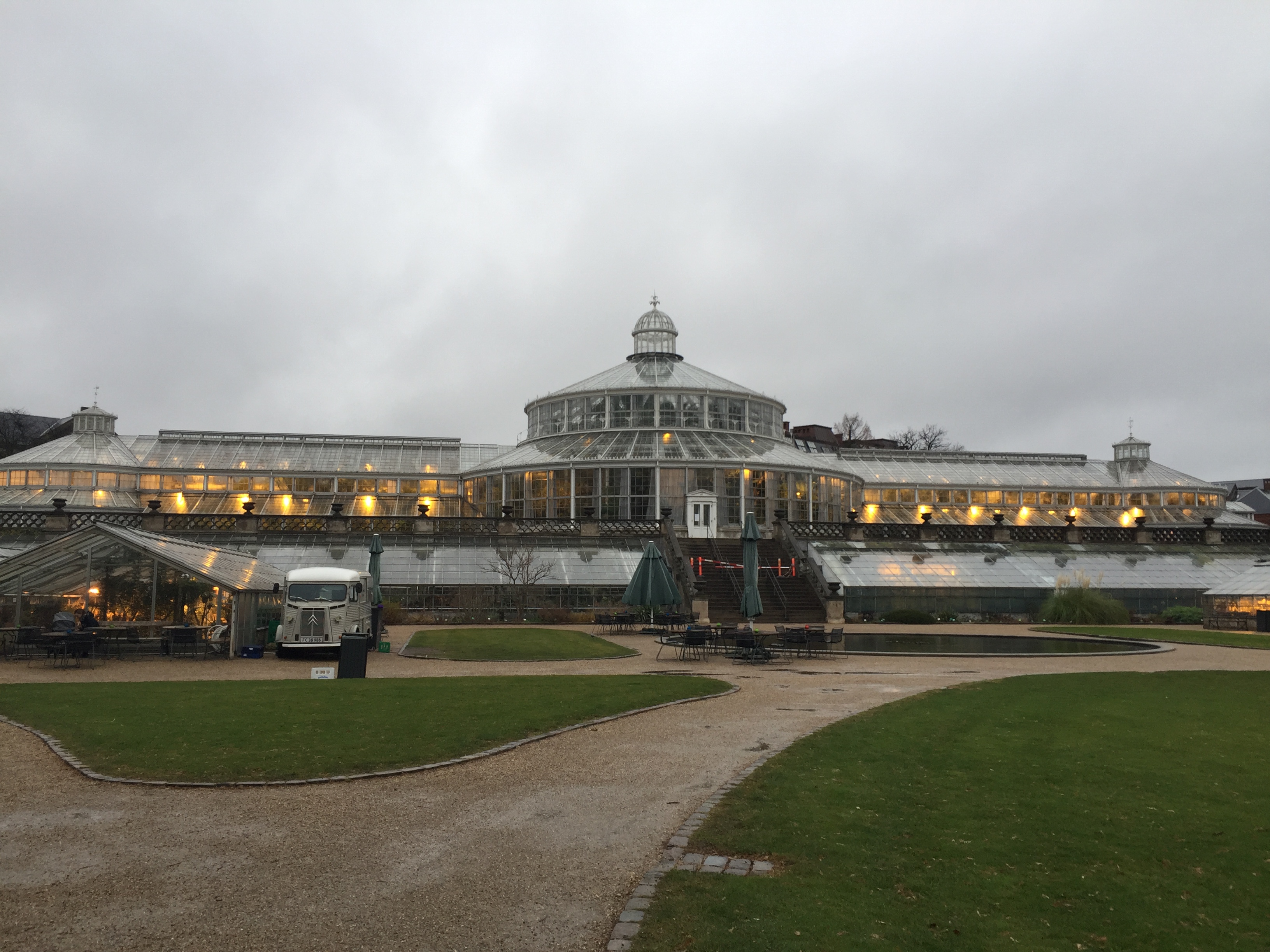
What an absolutely intense year this has been. I finished my Masters, became a curator, travelled to America & Scandinavia, participated in the Open Palace Programme in England, and enjoyed another fantastic year exploring museums and heritage in Sydney. Here is a month by month (very short) summary of 2016.
January
In January this year I was back home in Queensland. For a month I interned with the RD Milns Antiquities Museum, researching the World War I antiquities souvenir market. It was my role as an exhibition research intern to gather as much information as possible about the Anzacs and their connection to some of the objects in the RD Milns collection.
Antiquities Museum
February
February was an exciting month as I travelled to Orlando, Miami, and Nashville. Highlights included the Vizcaya Museum, Hermitage Museum, Graceland, and the Civil Rights Museum. Nothing, however, could compare to seeing the Everglades. This natural World Heritage Site was beyond words, beautiful for its starkness and wildlife.
Everglades
March
I moved back to Sydney and started my second semester at the University of Sydney. I visited the Biennale exhibitions on Cockatoo Island and in the Museum of Contemporary Art. According to my blog posts for this month, I also visited the Art of the Brick at the Powerhouse Museum.
April
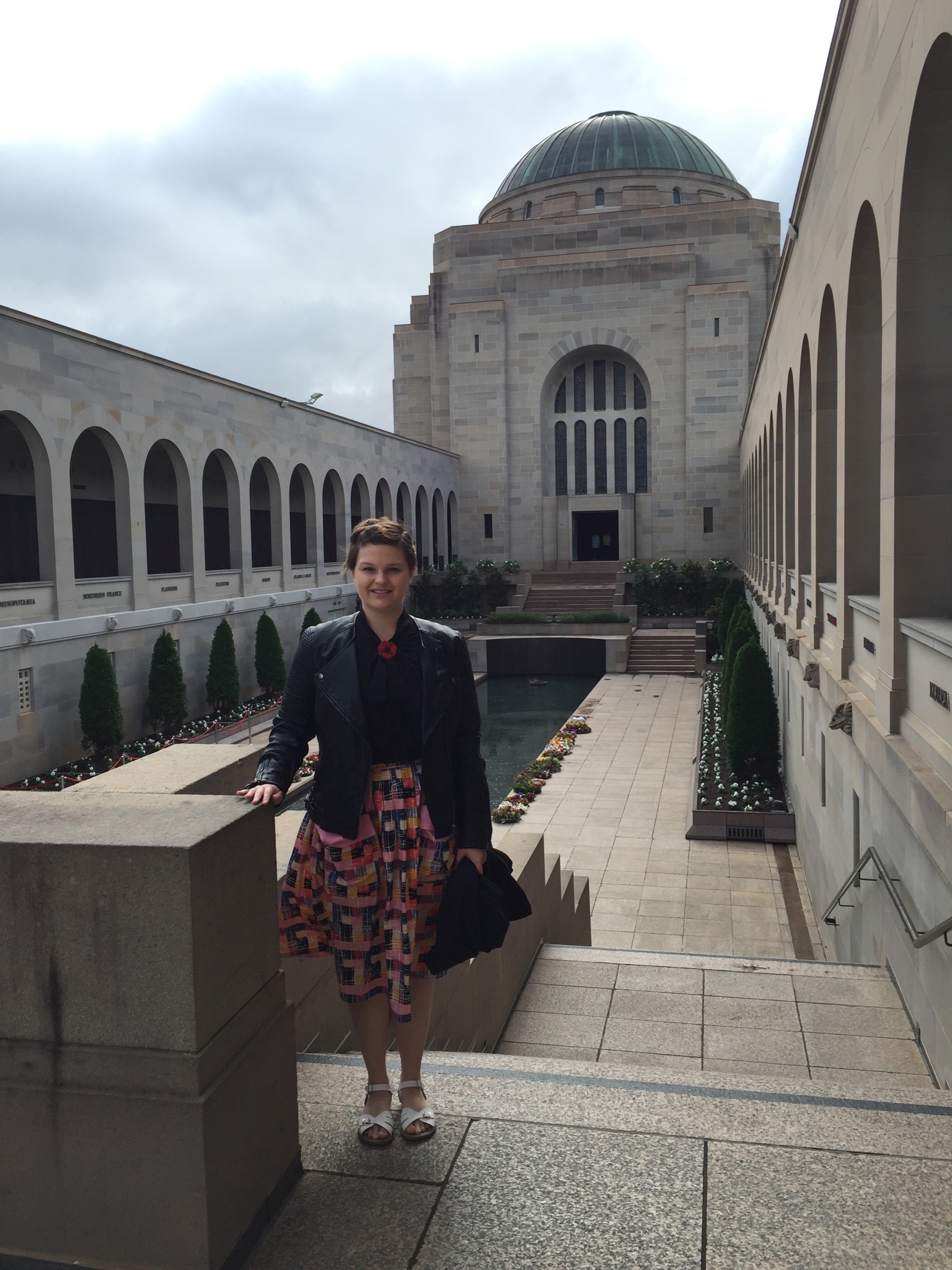
In April I went on my first road trip to Canberra to see the Australian War Memorial and the National Museum of Australia. I was incredibly impressed with the new exhibition at the War Memorial. Their integration of digital technology into the exhibition space was fantastic.
National War Memorial
May
May was a month of exploring exhibitions in Sydney through my university courses. We visited Hyde Park Barracks, the Australian Museum for their VR experience, and the Art Gallery of New South Wales.
June
Melbourne!!! I visited my amazing supervisor from the Geoffrey Kaye Museum and saw her new exhibition From Snake Oil to Science. I also visited the Melbourne Museum and the National Gallery of Victoria.
Geoffrey Kaye Museum
July
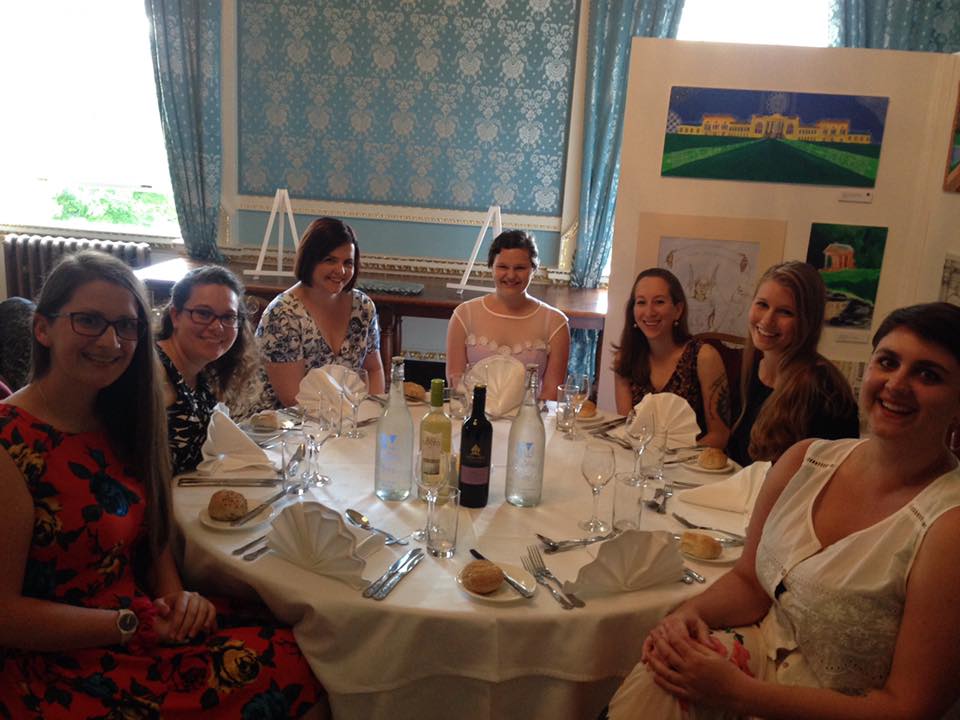
July was a fantastic month as I set off for the Open Palace Programme in England. Needless to say it was an amazing experience and I met such a wonderful group of like-minded individuals. Definitely a month to remember!!
Open Palace Program
August – September
August and September were spent catching up on the uni work I had missed whilst overseas. I did visit the State Library of Queensland in September to see their new exhibition. It was also during these months that I became a curator.
October
October consisted of two trips down to Melbourne. I attended and presented at the ICOMOS Conference on the topic of creating an audio guide. One weekend later I attended a writing medical history masterclass at the Geoffrey Kaye Museum. I finished my internship at the Trainor/Owen Archives (and will return to volunteer in the New Year).
November
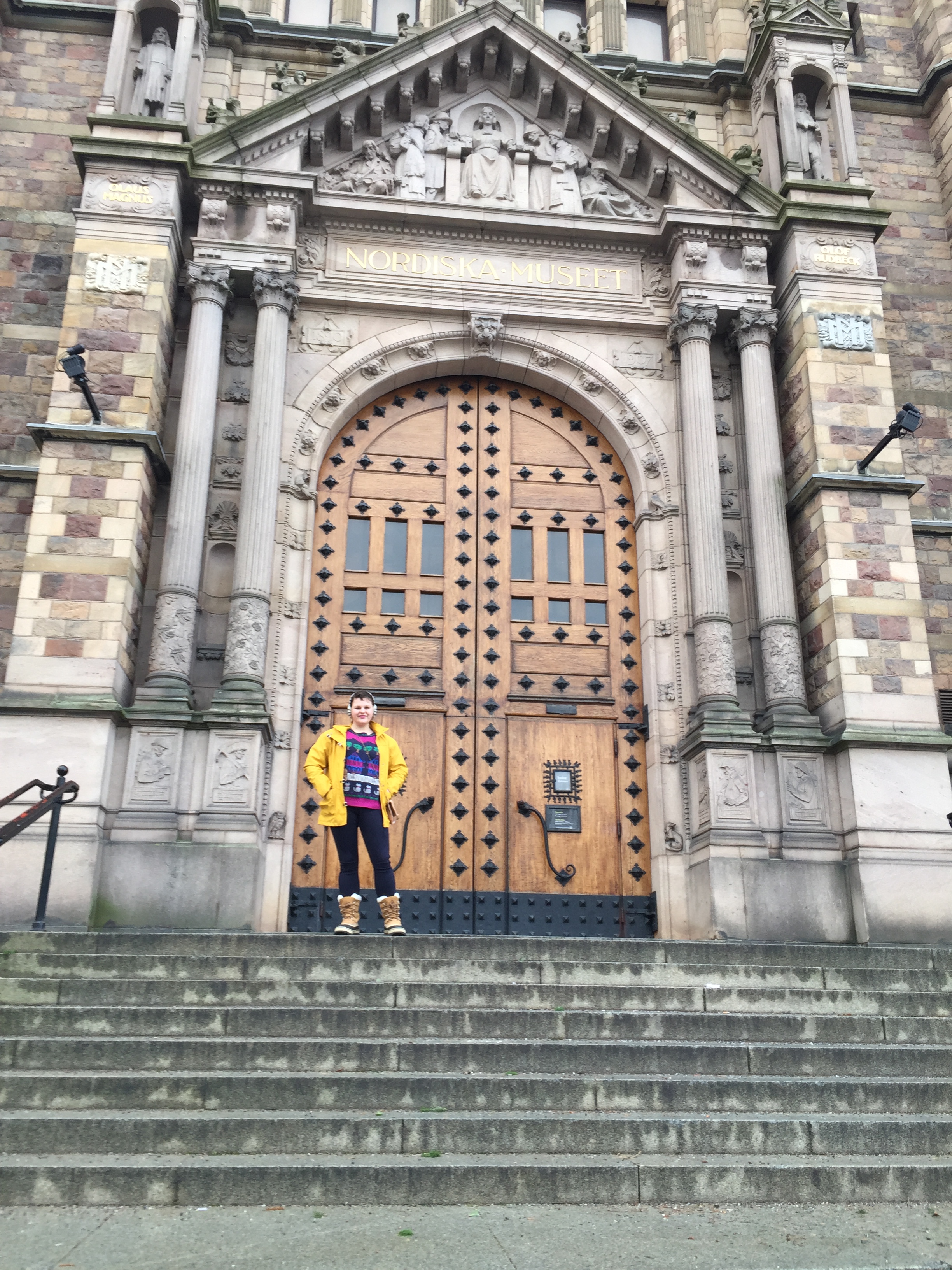
Almost at the end of the year now. After finishing my Masters of Museum and Heritage Studies I travelled to Sweden, Denmark, and Iceland to celebrate. I ticked seeing the Northern Lights off my bucket list and visited some incredible museums. The Nordic History Museum and Vasa Museum were definitely my favourites.
Nordic Museum
December
To round off the year I have explored a lot more of Sydney, started a new job at the Powerhouse Museum, and enjoyed having a bit of a break from study.
This will be my last post for 2016. I am going to a couple of exhibitions when I go home for Christmas but I’ll save those posts for the New Year.
Hi, my name is Ziggy Potts and, as a fellow Museum and Heritage Studies student, Rebecca has kindly allowed me to review the new Egyptian Mummies exhibition currently on at the Powerhouse Museum. Whilst this is, in no ways does this review address all aspects, it reflects some of the things that made an impression on me and my overall experience.
The new summer blockbuster Egyptian Mummies exhibition at the Powerhouse Museum is a collaborative effort with the British Museum. It showcases 6 mummies from the British Museum collection, using new scientific research methodologies to discover more about the lives of these people, their health and the processes of mummification. Each of the showcased mummies has been carefully chosen in order to reveal various aspects of the mummification process, religious belief and family life.
Of the six displayed only two, Tamut and the young child from Hawara, have been previously displayed as part of the Ancient lives, new discoveries exhibition at the British Museum from 2014 to 2015. Whereas previously, only x-rays and physical unwrapping of mummies could be used to learn more about their lives, new CT scans allow for individual profiles to be developed, including their height, likely age, geographic area, when they lived and their social standing. Overall, these profiles not only shed light on the evolution of the process of mummification but also the various roles each god had in the process. For instance, whilst Anubis is the most important funerary god, Bes was a household god responsible for protecting a family from evil spirits and Taweret in protecting women in pregnancy and childbirth.
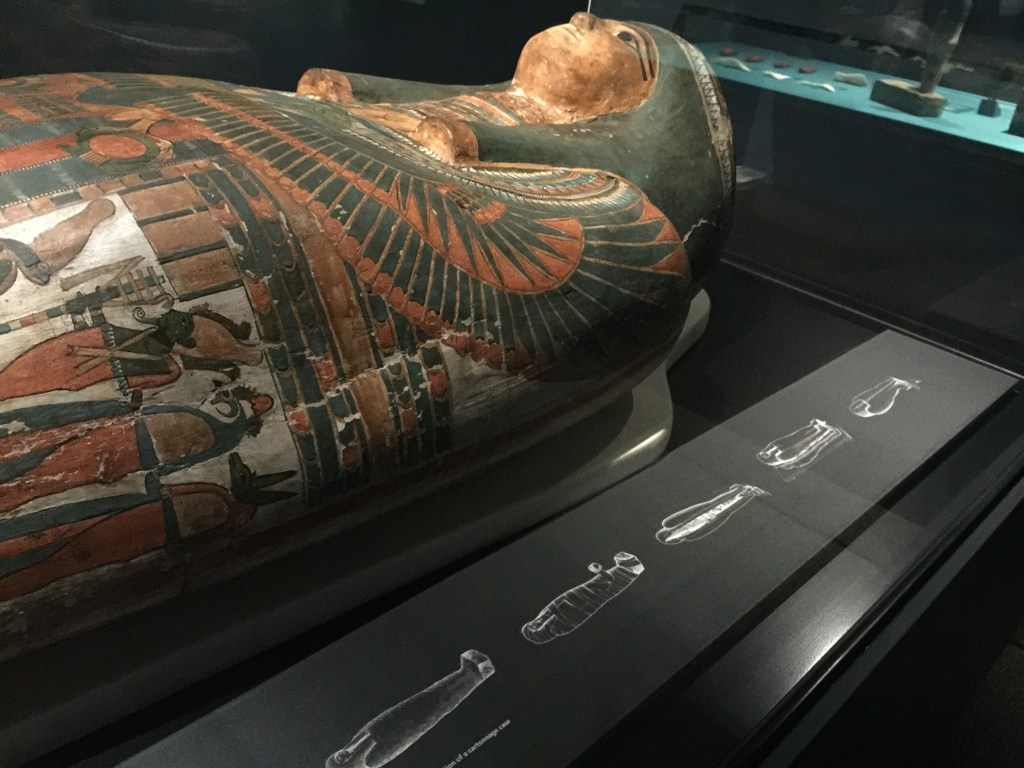
Egyptian Mummy
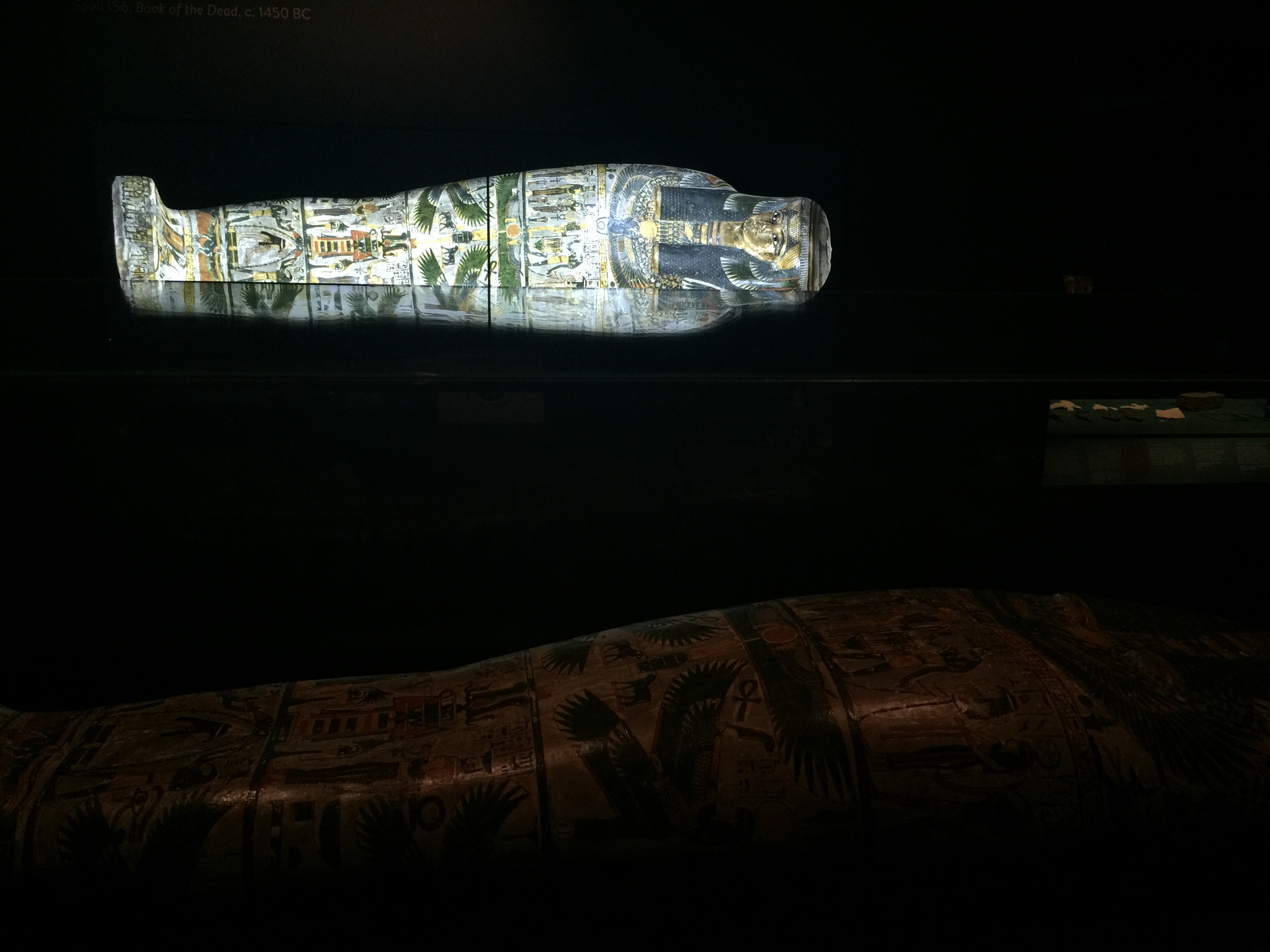
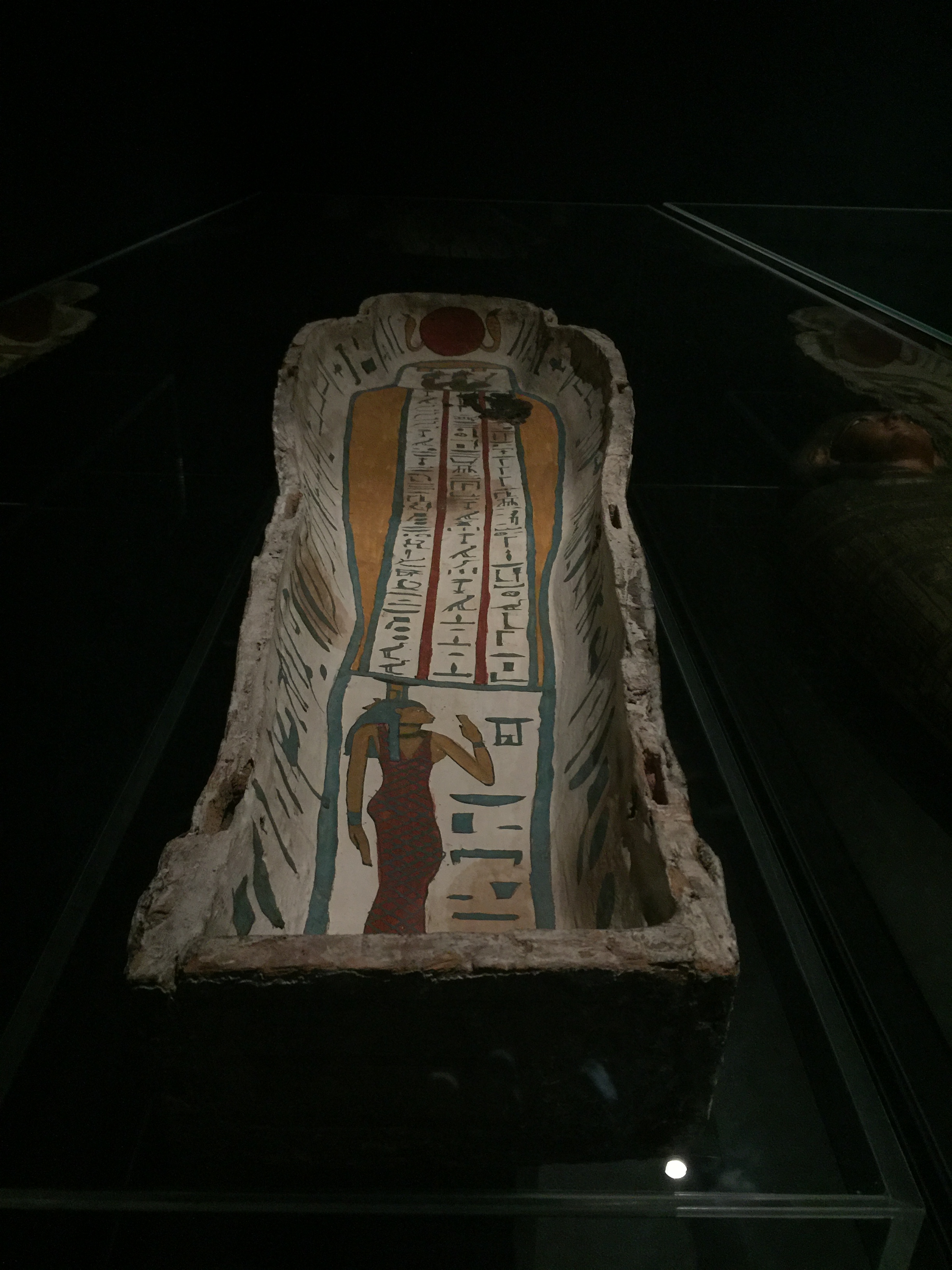
The exhibition itself starts in a dark room where a short video is presented giving context to the exhibition, including the six mummies on display and the important discoveries new medical technology like CT scans have had on learning more about Ancient Egypt, the people, religion and way of life. From here, the layout is a mix between linear progression and open plan. You head down a dark corridor to a series of open plan rooms, with two or so areas dedicated to each individual. I found this layout to be quite useful, as each area focused on a specific part of each sarchophagus, be it the actual wrapped mummy, the inner coffin where the body was placed or the larger decorative sarcophagus itself. Around this focal point placed in the centre of the room, the walls showcased various funerary depictions, amulets, family life and the function and significance of a number of gods as part of these facets of life.
Inside Sarcophagus
Within each defined area, there were digital interactives with touch controls where the visitor could move their finger in a circular motion to rotate and unwrap a digital representation of the physical mummy on display. This gave more information for how the individual profile was developed, including their height, age based on fusion of bone, as well as any identifiable health issues. I found this especially interesting as I previously had no idea how widespread dental decay and abscesses were in Ancient Egypt.Another interesting point was learning (in a fair amount of detail considering the limitations of exhibition panels) how interconnected the actual processes of mummification were with religion and how the developed and changed through the centuries. For example, the incision made to remove the internal organs was often covered with a metal plate decorated with the eye of
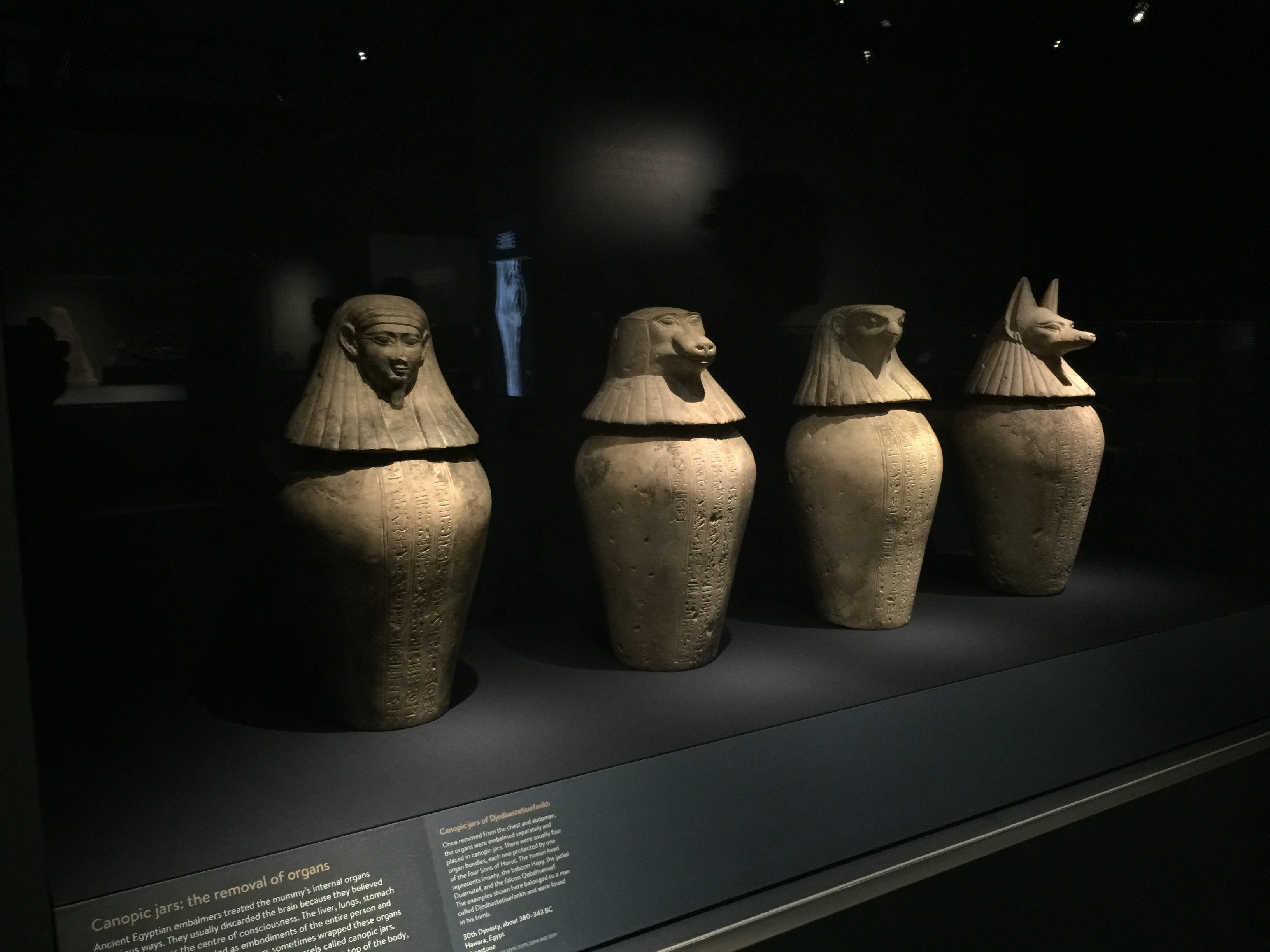
Another interesting point was learning (in a fair amount of detail considering the limitations of exhibition panels) how interconnected the actual processes of mummification were with religion and how the developed and changed through the centuries. For example, the incision made to remove the internal organs was often covered with a metal plate decorated with the eye of wedjat, a symbol of protection and restoration to ensure the body remained whole for use in the afterlife. The removed organs, which included the stomach, intestines, liver and lungs were then placed in separate canopic jars capped with representations of the four sons of Horus; Imsety, Duamutef, Hapi, Qebehsenuef. This was done to magically protect the organs of the deceased so they could still make use of them in the afterlife. Into the Graeco-Roman period, however, the organs were increasingly kept in the bodies and the outer coffin decorations increasingly reflective of Roman culture, illustrating increasing Romanisation within Egypt.
Canopic Jars
Similarly, the exhibition highlighted the use of the cartonnage from the 9th to 8th centuries BCE, as a cheaper alternative to wooden coffins. This was a highly decorative wrapping of plaster, linen and glue. Firstly, a mud and straw core was used as a mould, followed by a layer of plaster and several wrappings of linen. Another layer of plaster was then applied for decoration whilst, the mud and straw mould was removed via an opening in the back, through which the mummy was placed inside. Even though it does take a fair while to move throughout the exhibition (it took me 2 hours), the presented information was very comprehensive and, as I moved through the exhibition, reference to previous information not only reinforced but complemented what I had already read to create a comprehensive and self-reflexive learning experience.
Other technology such as Visible -induced Infrared Luminesence and Infrared Reflectography, both use light reflection to determine the dyes and paints used in decoration. This facilitated digital reconstruction of the various scenes depicted and thereby explain the varying religious significance of the depicted figures throughout and their function within the ancient Egyptian rituals of mummification. This can also be seen in the use of CT scan data to 3D print various amulets placed in and on the body, each then presented individually as to their significance within the process. For instance, a scarab amulet was placed over the chest and inscribed with a spell to prevent the owners heart from revealing misdeeds to the gods in the hall of judgement.
Overall, I found the exhibition highly informative with a layout that clearly divided the space between the 6 mummies with an important balance reached between the use of digital interactives and the information. The former added to but did not detract from the information or general experience.
One note though: If you don’t seek such an intense learning experience or do not have the time, the gift shop does offer a complete book on the exhibition, including all images presented in the exhibition with the accompanying information for only $30.
This post was written by Ziggy Potts. His email is: zpot4628@uni.sydney.edu.au.
A huge thanks to Ziggy for his interesting post on the Egyptian Mummies exhibition. I saw the exhibition a couple of days ago now and wanted to add my own thoughts which are below.
My two cents:
I saw the exhibition the other day so thought I’d add on to this post. I’m going to touch on two components of the exhibition: the smelling boxes and ethics of display. In England, earlier this year, we visited the Ashmolean to see their exhibition Storms, War and Shipwrecks: Treasures from the Sicilian Seas. It was a great display on sea voyages equipped with a smelling box. You opened a little door and guessed what you were smelling. This included wine, oil, and I can’t remember the other. Ancient Lives had a couple of similar interactives that complemented the digital components that Ziggy spoke about. As opposed to having each individual smell separate, they were lumped in together. Onion, herbs and spices all in the one box. I made the mistake of smelling the contents and leaving the station with a headache. Way too strong! Cool, but way too intense.
Onto the ethics of display. It amazes me that the mummies are human remains yet are often not displayed with dignity and respect. Sure there are a whole raft of issues as to why, but it still saddens me. This exhibition was the first serious attempt at displaying mummies respectfully and still generating intrigue and mystery. The fact that each individual mummy, when known, is named and provided with a biography is fantastic!
In no way did this type of display wreck a traditional display of mummies. Sure, they were still on display and taken from their final burying point. However, the lessons they can teach and the insight they can share with the public on life in ancient Egypt is truly remarkable. Treating their remains as significant and not cramming them all into a room for people to gawk at is a valiant attempt at taking ethics seriously. According to Christine Quigley, in her work on Modern Mummies, people should first and foremost be aware that they are viewing human remains.
The Sydney Observatory is currently running tours to complement the new exhibition at the Powerhouse Museum, Egyptian Mummies: Exploring Ancient Lives. The tour runs for approximately one hour and takes place in the observatory’s planetarium. This review is going to be short purely because the tour was short and I want that to be the focus, not the entire observatory.
Sydney Observatory
The tour starts with a forty minute documentary on Ancient Egypt and mummification. It was a bit like the documentaries you watch in eighth grade ancient history – a lot of re-enactments and dramatic music. It was kitschy but I quite enjoyed it. I was glad to have the opportunity to brush up on my general knowledge of Egypt. As my friend Alice pointed out, the video also had a great connection to the exhibition at the Powerhouse. Both observe how medical advancements have increased knowledge of mummies and mummification. The video covered how DNA can be extracted from a mummy and what this evidence may reveal.
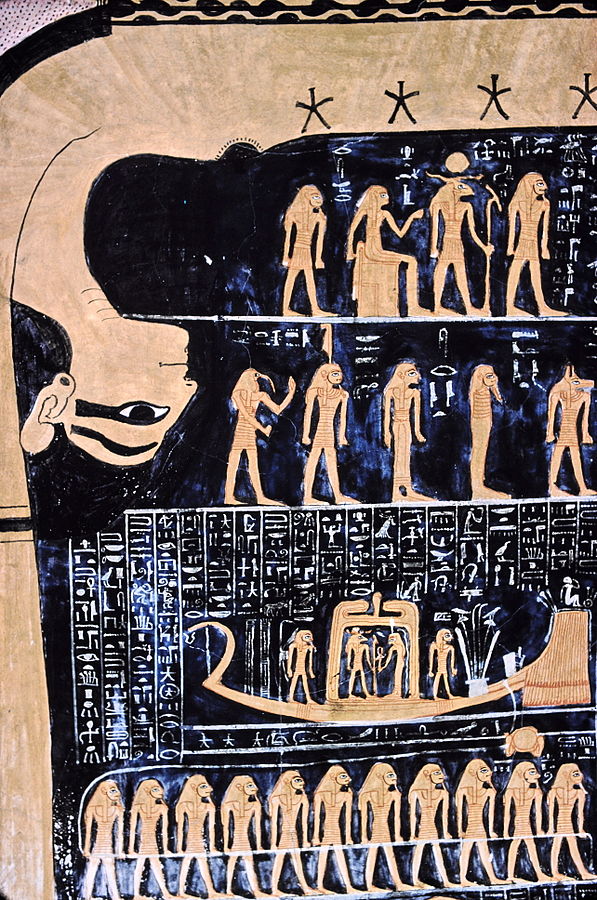
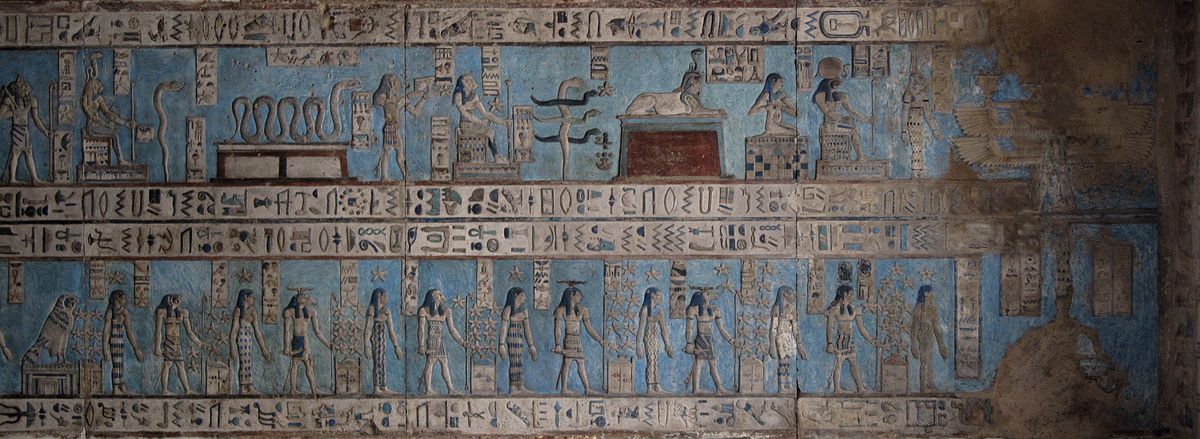
After the video, we were taken on a tour of the night sky in Ancient Egypt, around 1200 BCE. At various stages the video of the sky was paused and Egyptian mythology of the stars, sun, and moon was explained. This was accompanied by the corresponding hierogyphs. For example, we learnt how the milky way was imagined as a goddess who swallowed the sun during the night. The name of the goddess appeared in the centre of the screen in hierglyphs. This part of the tour went for around 15 minutes.
Nut, Egyptian Goddess of the Sky (by Hans Bernhard – Own work, CC BY-SA 3.0, https//commons.wikimedia.org/w/index.php?curid=6428319)
Ancient Egypt is a fascinating topic by default. I thought this tour added a new layer of interpretation – it is quite different to what has been done before. I would recommend you see the exhibition at the Powerhouse and then take this tour.
Speaking of the Powerhouse, watch this space early next week for a guest post on this exhibition!
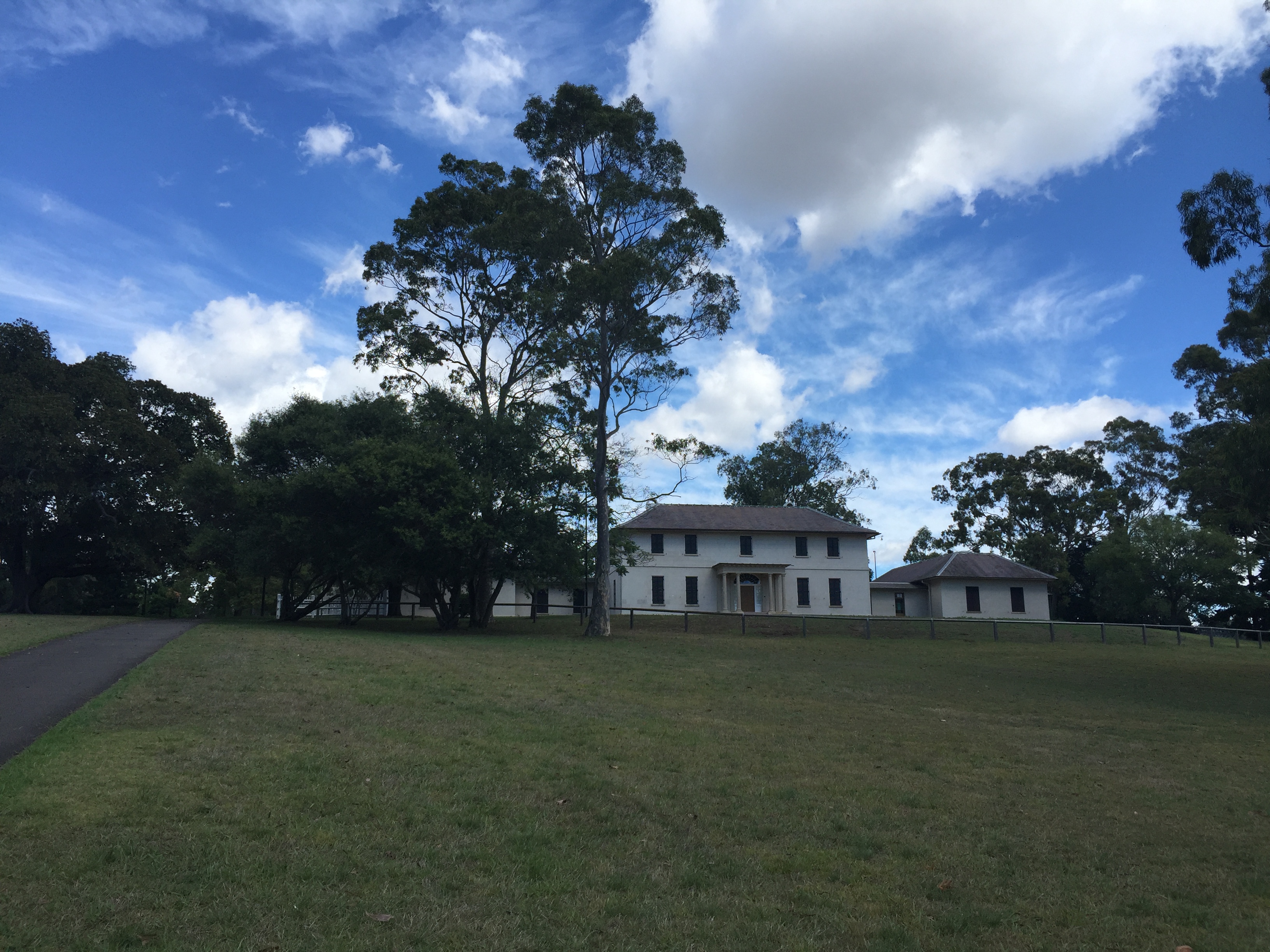
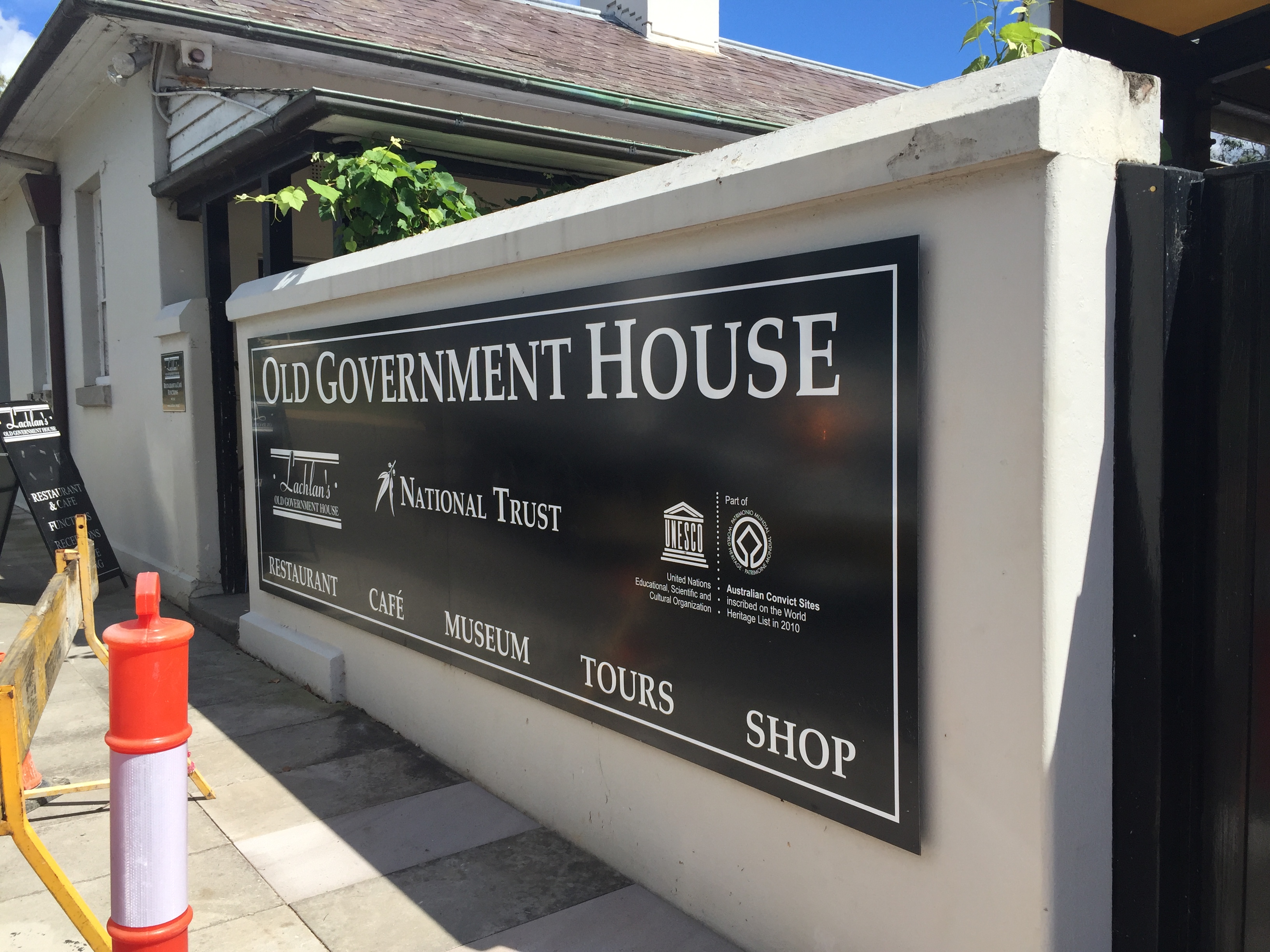
Now that I’m no longer studying, I don’t feel guilty leaving the house. I have seen more of Sydney in the past two weeks than I have during my 18 months of study. To kickstart my weekend I visited Old Government House in Parramatta. Before even entering the house I was surprised to see it has been World Heritage Listed. Currently, there is an exhibition At Home: Modern Australian Design. My visit consisted of a tour around the grounds and house followed by a walk through the exhibition with my friends who are exhibition volunteers, Rachelle and Vanessa.
Old Government HouseOld Government House
The house is the former country residence of the first ten governors of New South Wales. It is the oldest public building in Australia. From the outside, the building looks so quaint. Similar to Rouse Hill House it is built in a Georgian style, meaning very symmetrical (think a Wes Anderson film in building form). According to the website it now houses “the nations premier colonial furniture collection”. This will become very important when I discuss the exhibition.
The tour was nice lasting around 40 minutes. I was lucky to be the only person on the tour. We began outside the front of the house where my guide explained the layers of history hidden within the architecture. For example, it was originally a small sandstone house built by convicts for Governor Hunter consisting of four rooms (two on the ground level and two on the top level). Extensions were eventually added over time. We then moved inside to explore the dining room, withdrawing room, servants quarters, kitchen, and bedrooms. Unlike Rouse Hill, the house has been patched up and I must say this was a big plus.
An embroidery table inside the Breakfast Room
A section I really liked was the Governors office which had a glass covered excavation pit in the middle. Through the glass you were able to see the original foundations of the house. As discussed with Vanessa and Rachelle this seems to be done at a lot of historic houses and museums. A trend that I think can be done well and effectively.
Old Government House
When the tour finished I was free to see the exhibition At Home. Pieces of furniture and home decor were distributed throughout the house mixing in with the colonial furniture. I was disappointed that this did mean some of the colonial furniture had been taken off display. Considering it has the largest collection I was left wanting more.
Sometimes the fusion of old and new worked. Other times it did not.
Old Government House
Seeing a huge black modern chair behind the Governors desk was, to me, not aesthetically pleasing. When the old and new worked together it really worked well. There was a beautiful hanging light in the children’s bedroom that suited the room and enhanced its interpretative capacity. Another highlight was a room filled with textiles that you were able to touch. Whilst there was not a lot of interpretation, only a small sign at the door presenting basic facts, I don’t like a lot Interpretation in a house museum. I enjoy wandering around and seeing the house free from large obvious distractions.
Old Government HouseOld Government House
It is a very interesting house to visit for a perspective on Australian colonial history. I actually really enjoy house museums. It’s an experience to not only learn about the history but walk in the footsteps of that history. We visited some amazing Civil War houses in Nashville earlier this year which really sparked my interest.
Tomorrow I am off to the Sydney Observatory for a tour of the Egyptian Skies which complements the Ancient Lives exhibition. A very heritage-filled weekend!
I briefly mentioned this in a previous post but now that it’s 100% confirmed and I have a nice little piece of paper to prove it, I can officially say that I’ve mastered my masters.
I started this blog in mid-2015 with the intention of continuing it throughout my study. According to my first blog post: “In July this year I’m moving to Sydney and beginning a very exciting stage of my life – a postgraduate degree in the area I love the most. I don’t want to forget this experience, so I want to put it on the internet and share it with whoever else wants to listen.”
It has been such an intense 18 month degree that involved moving my life across the border between Queensland and New South Wales, living in a new environment, and balancing jobs and internships with study. It has all been completely worth the hard work. Especially considering I’ve met some amazing people who are insanely supportive.
There is a slight possibility that I will be tackling another degree next year so watch this space.
I am so excited to see how this blog evolves. I have some exciting things planned for 2017 and I cannot wait to share. This does include FINALLY attending a Museums Australia Conference! There will be a couple more posts before the end of 2017. I also plan on opening an Instagram account for this blog that will go live in January. It will be a great opportunity to share more of my photographs.
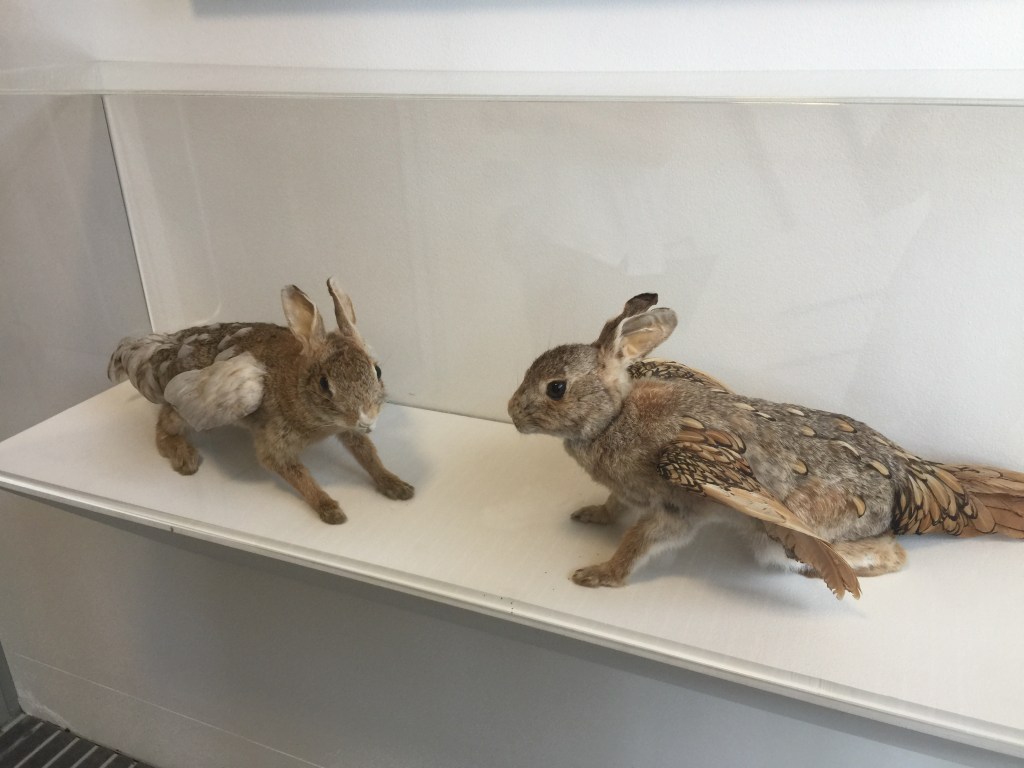
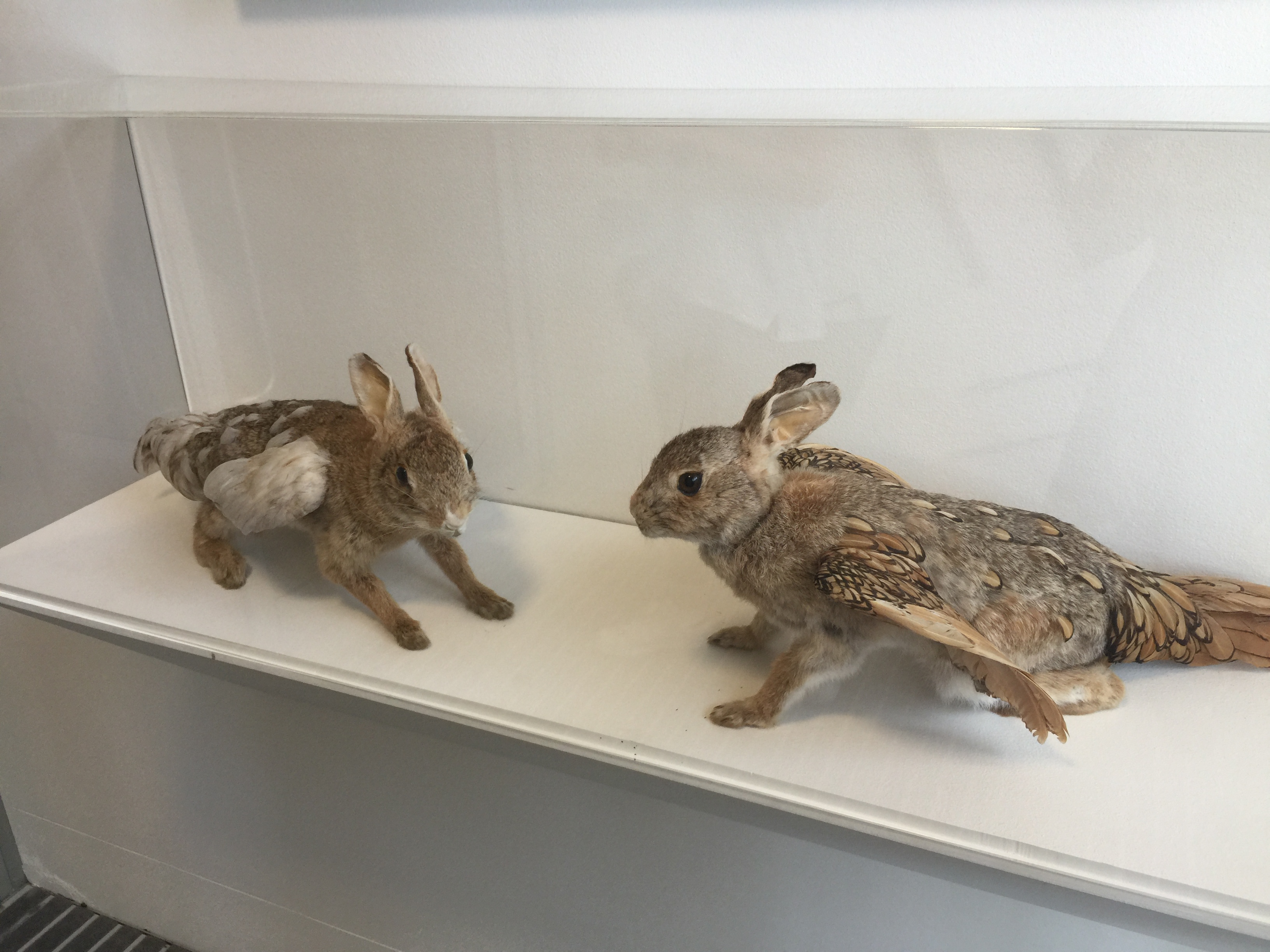
The second stop on our adventure was Hawkesbury Regional Museum. I finally witnessed the flabbit – a local myth first “sighted” in 1985. There is plenty of flabbit merchandise available for purchase.
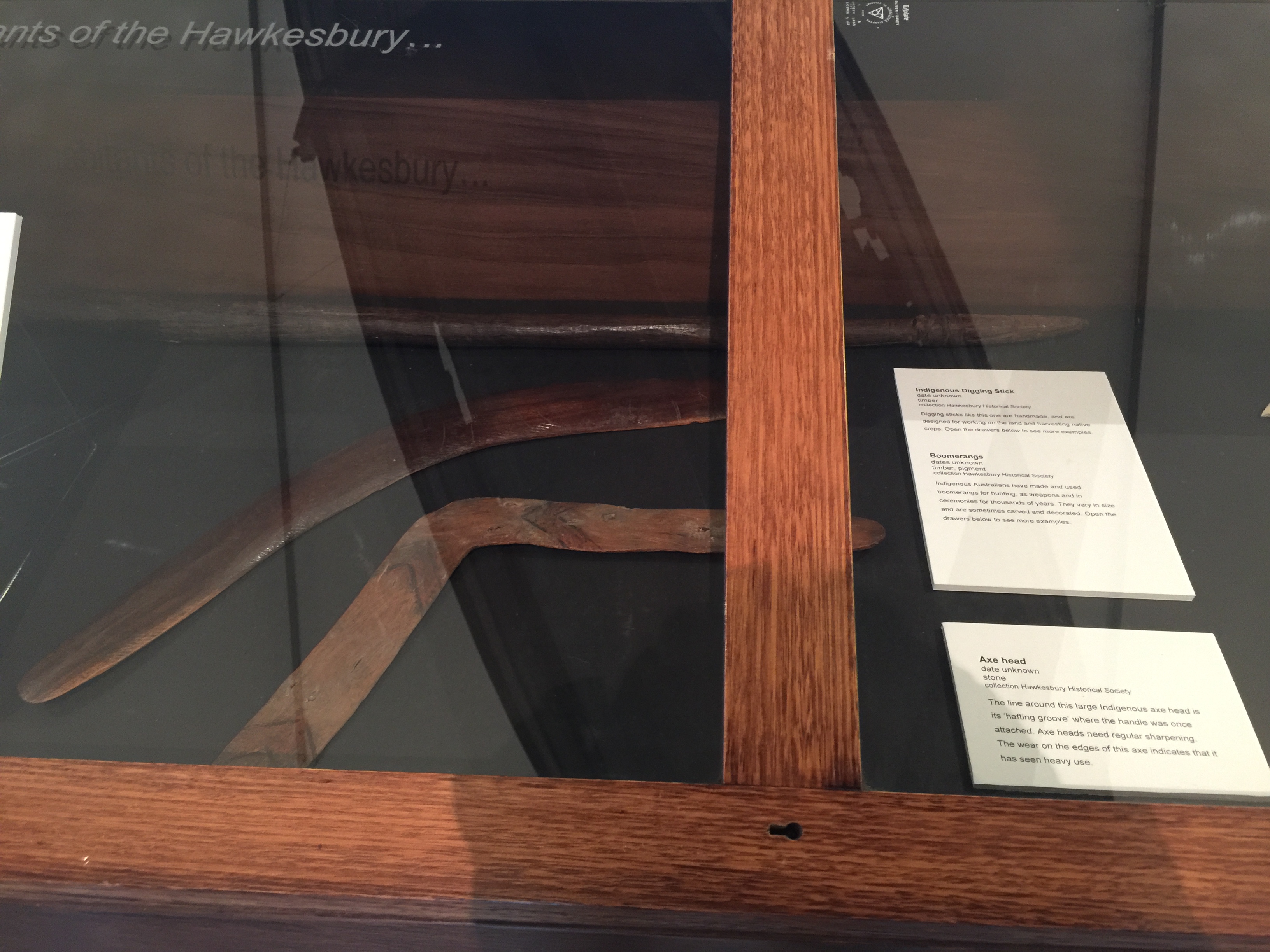
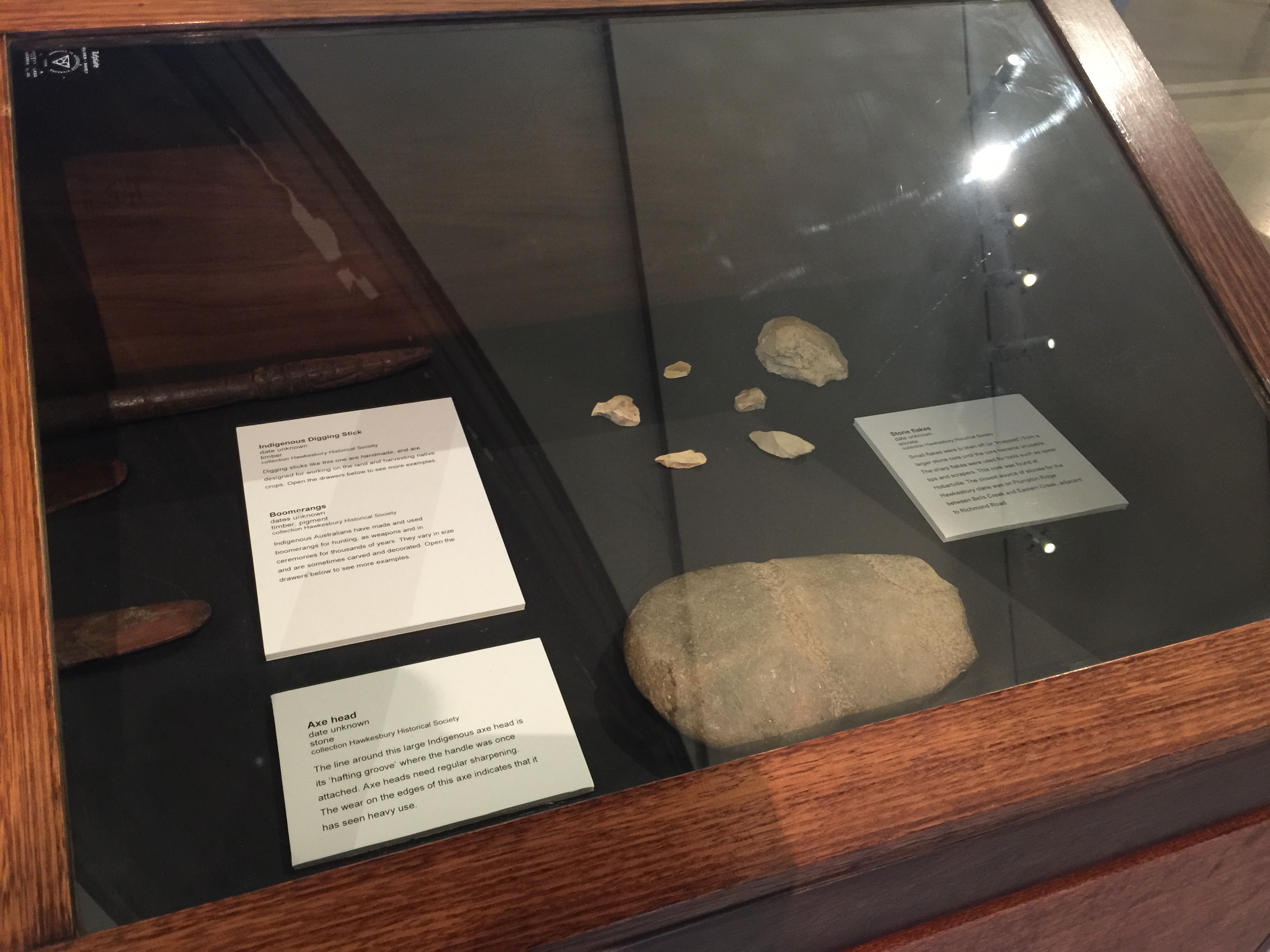
There were three highlights that I will focus on. Firstly, and without bias at all, was the exhibition curated by Imogen herself! I was very lucky to gain an insider’s perspective! It was great hearing about how the display was curated and the surprise finds along the way. The case contains objects and information on the original inhabitants of the Hawkesbury region, the Darug People. These objects include stone tools, boomerangs, and digging sticks. Each object is accompanied by a label providing an ideal amount of information – just more than a snapshot, yet very informative.
Hawkesbury Regional MuseumHawkesbury Regional MuseumHawkesbury Regional Museum
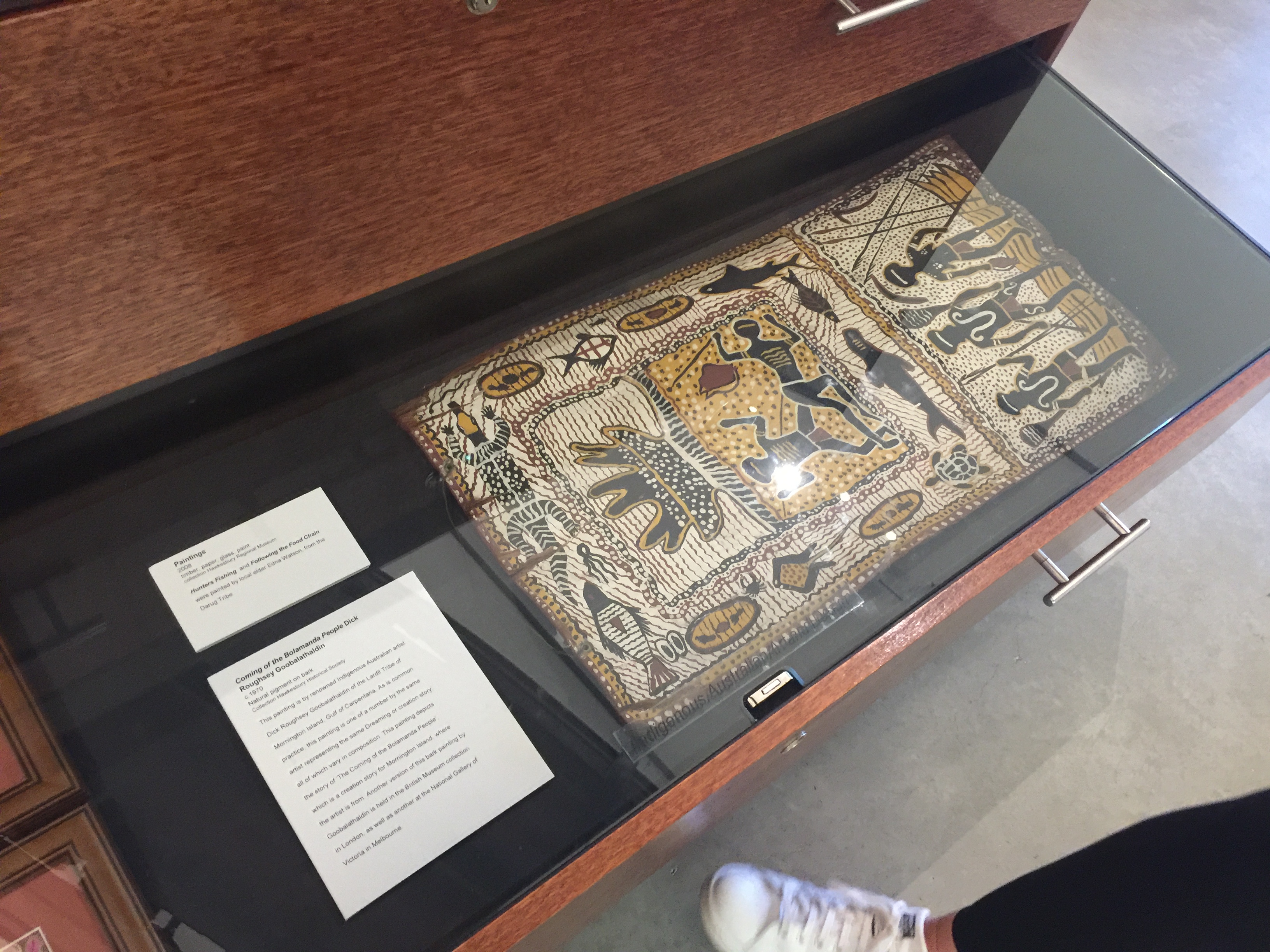
Beneath each of the main display windows are two drawers that contain additional objects. A highlight object is a bark painting by Dick Roughsey depicting a creation story. Other bark paintings by Roughsey can be found in the British Museum and the National Gallery of Victoria. It is a very significant piece of Indigenous art displayed alongside two other paintings from 2008.
Hawkesbury Regional Museum
Another highlight of the display case is the use of technology. An iPad rests next to the case playing an Indigenous acknowledgment on loop. As this is the first case you see on entering the exhibition space, it provides a fascinating and important introduction to the space.
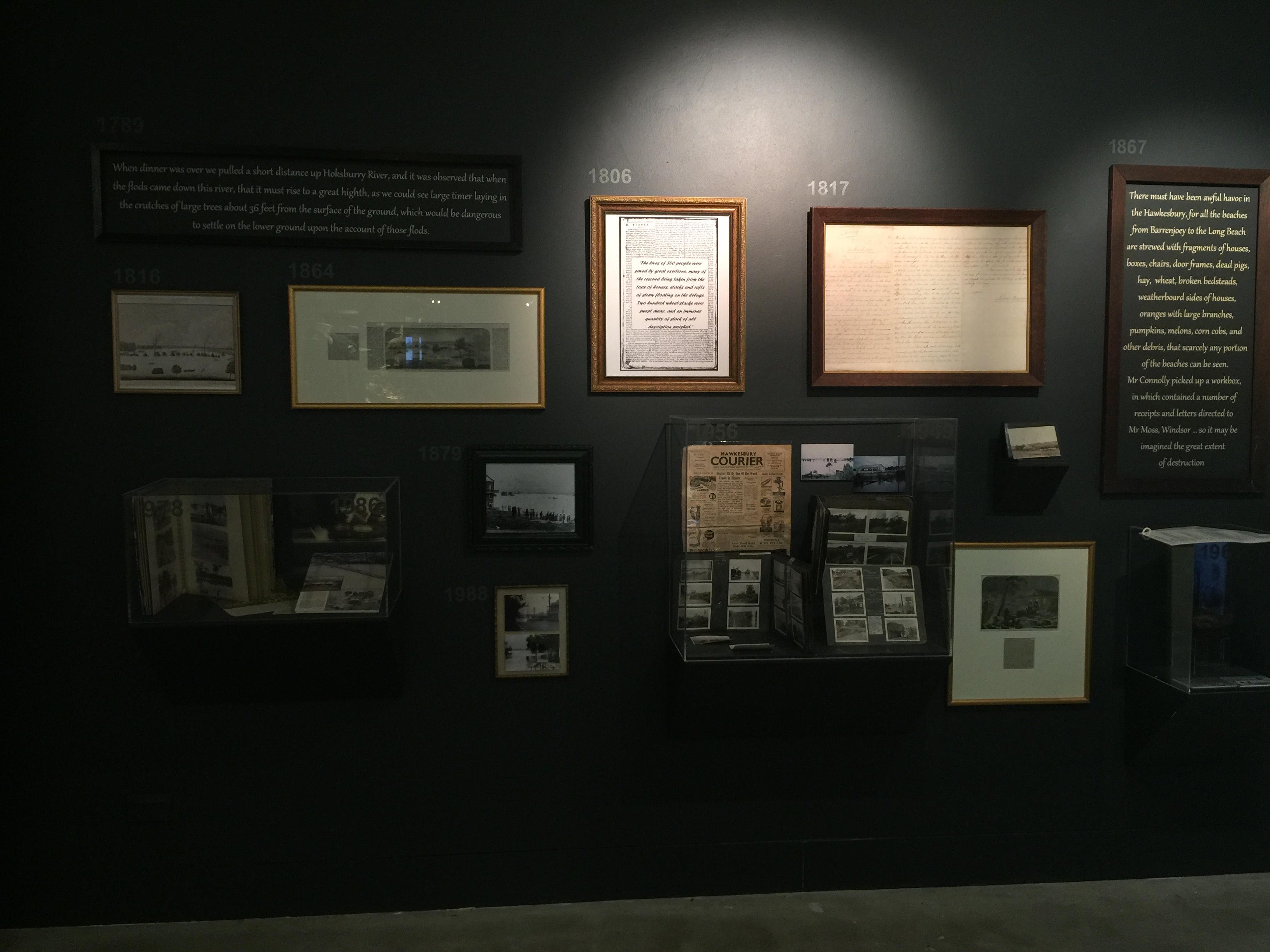
The second highlight was the exhibition Flood! From a design perspective, it was very effective. For example, here is one of the walls in the exhibition space.
Hawkesbury Regional Museum
I really like how the photo frames and glass boxes have been positioned on a plain black background. The wall doesn’t appear cluttered yet it is still eye-catching.
The main aim of the exhibition is to thematically cover the history of floods in the area. There are multiple materials utilised to tell these stories. These include engravings, photography, and film. As well as following the history of floods in the area, the exhibition also showcases the history of flood rescue. It made direct and clear links between the past and the present which was a real strength of the exhibition.
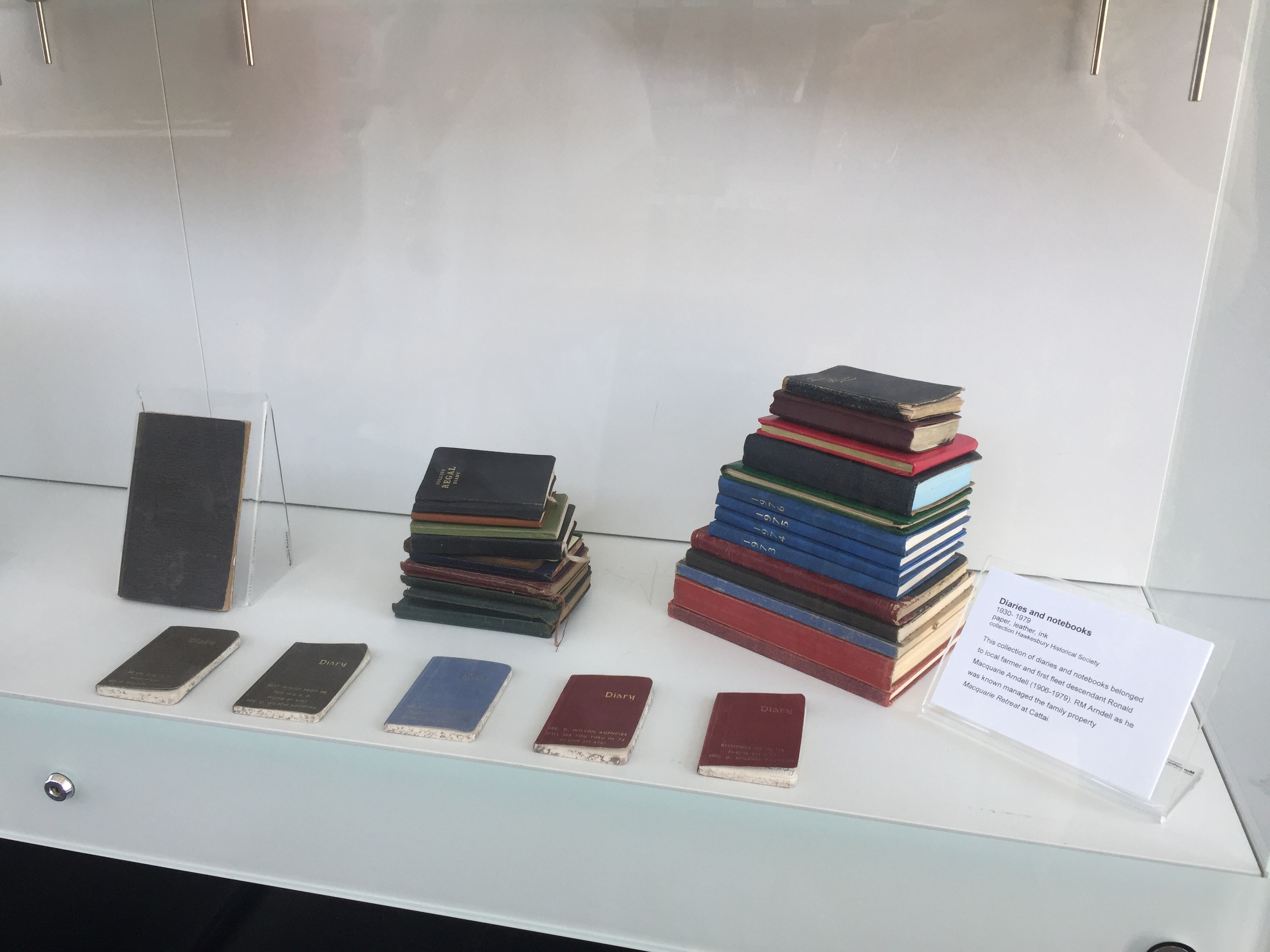
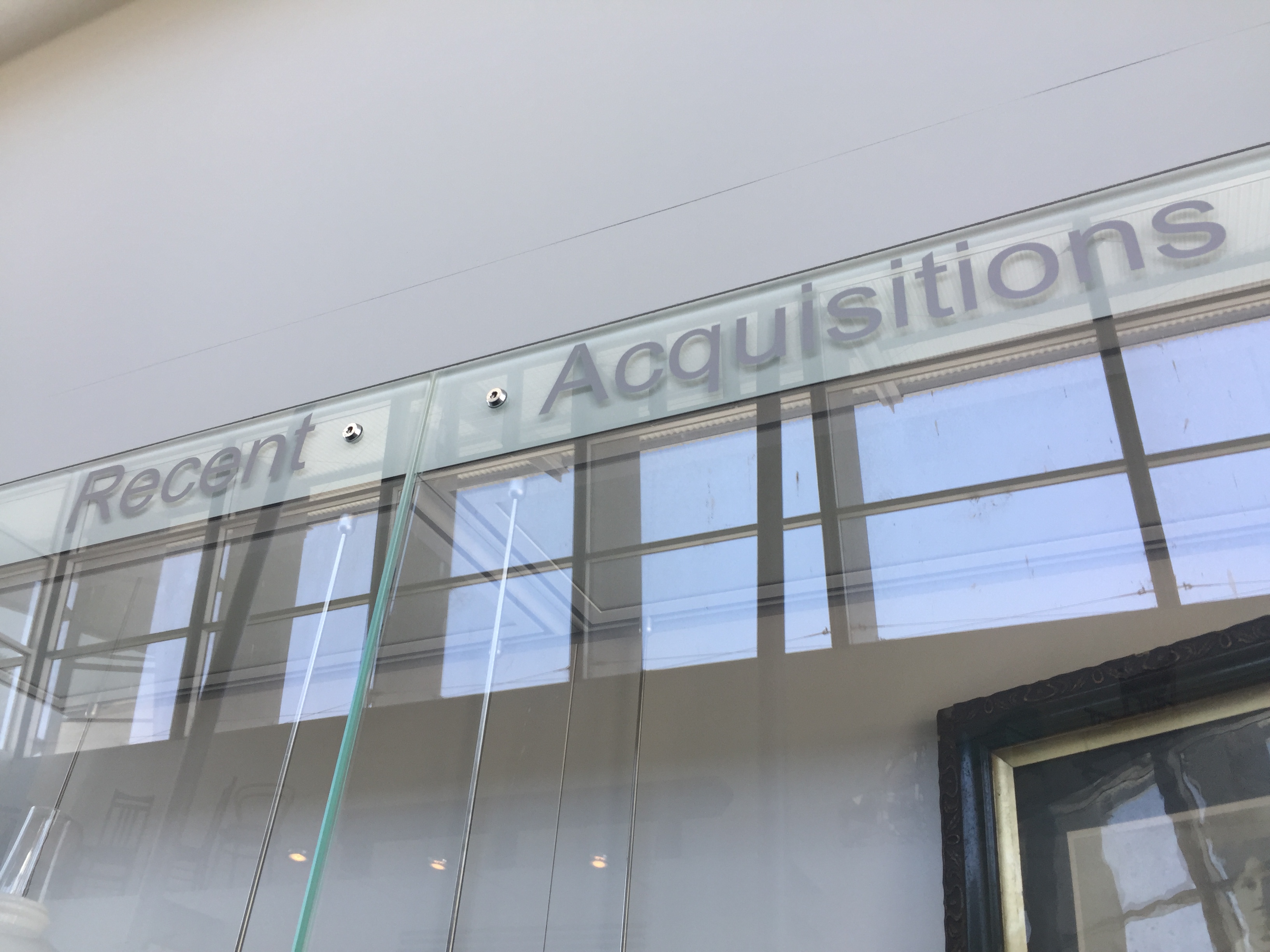
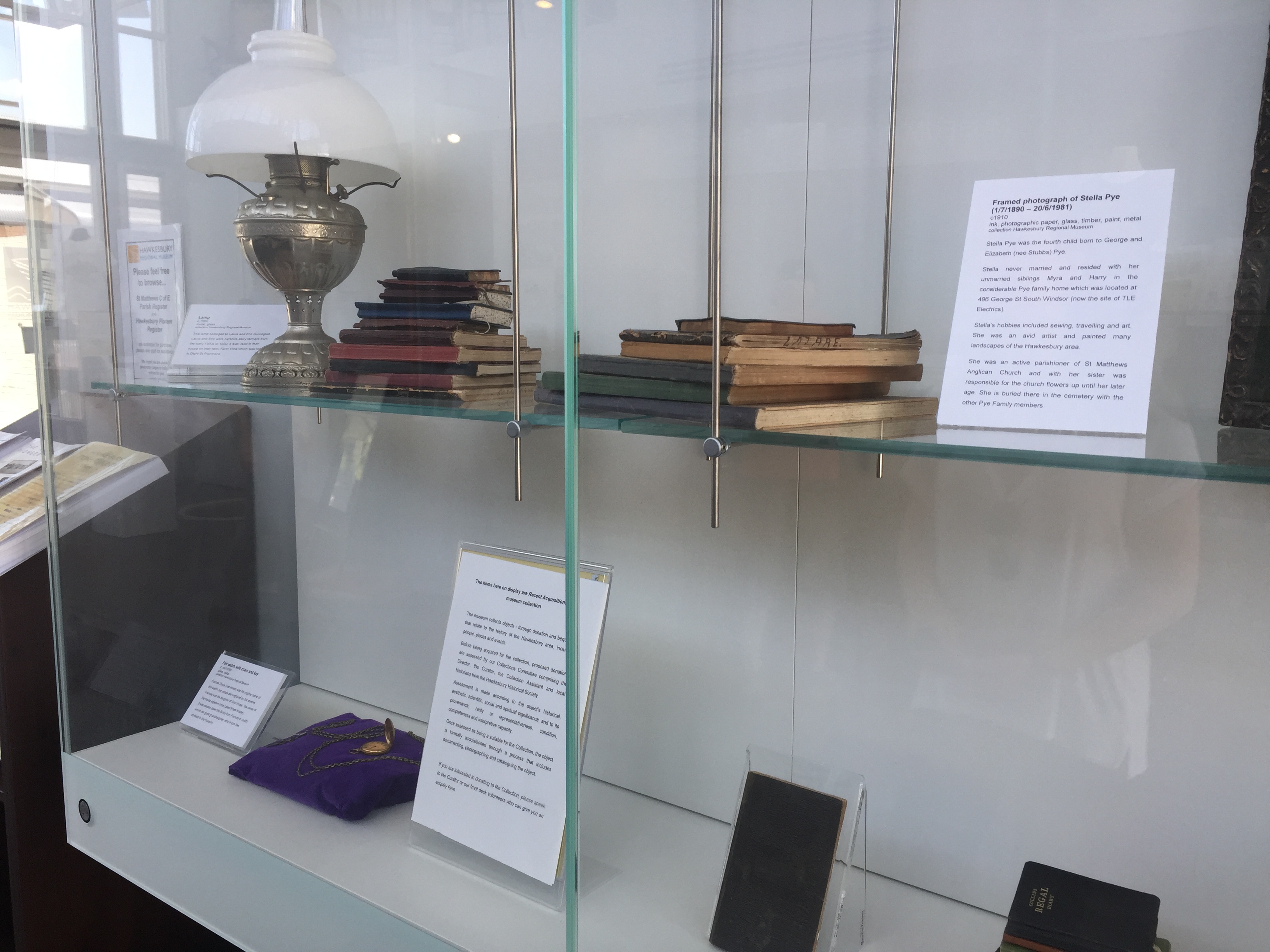
Last but not least, the third highlight was the recent acquisitions display in the museum foyer. I have visited a few museums that highlight their recent acquisitions. This, however, was a fully curated case with information such as provenance and significance acompanying each object. It was a great way to see the types of objects that continue to be donated and welcomed into their collection. It was as if you were seeing the museum’s collection policy literally on display.
Hawkesbury Regional MuseumHawkesbury Regional MuseumHawkesbury Regional Museum
Thank you again to Imogen for a wonderful day exploring north-west Sydney and for being my guide at Hawkesbury!
I am hoping to visit a couple more exhibitions before the Christmas season well and truly begins. I could not think of a better way to farewell 2016!
Now that I’ve finished my Masters (yay!!!!) I am free to explore more of Sydney and its wonderful museums and heritage sites. Today was a particularly fantastic day exploring Rouse Hill House & Farm and Hawkesbury Regional Museum with my amazing friend Imogen. Make sure you check out her guest post on Manly Museum & Art Gallery! (Manly Museum & Art Gallery – Guest Post) This post will focus on Rouse Hill House & Farm.
Front of Rouse Hill House
We were very lucky to be the only two on the 11 o’clock tour. We were even luckier that our tour guide, Marnie, was incredible. She was unbelievably passionate, eager to share stories, and drove us from the visitor centre to the house in a buggy. Considering how hot the weather was today, we were especially grateful for the latter!!
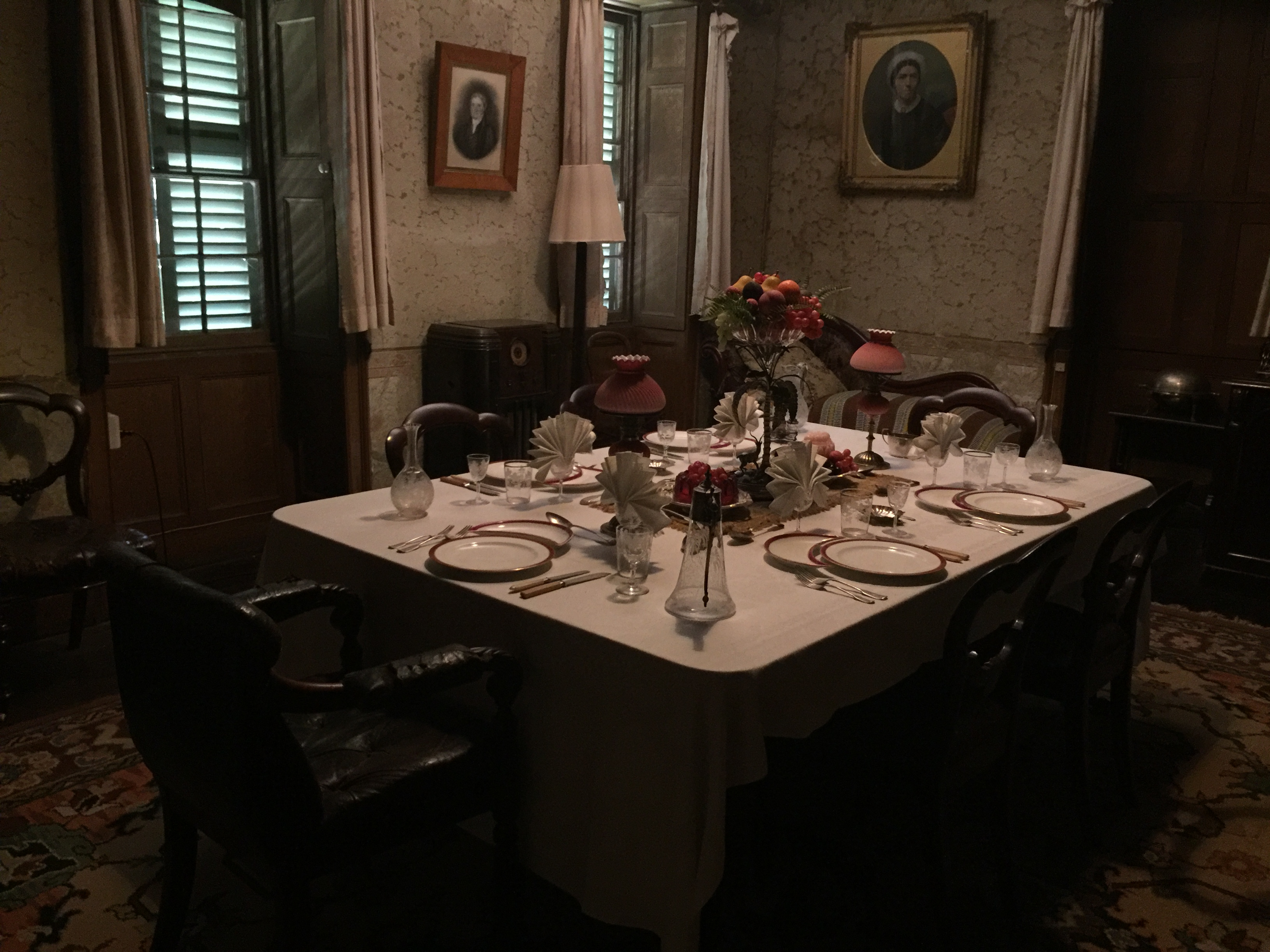
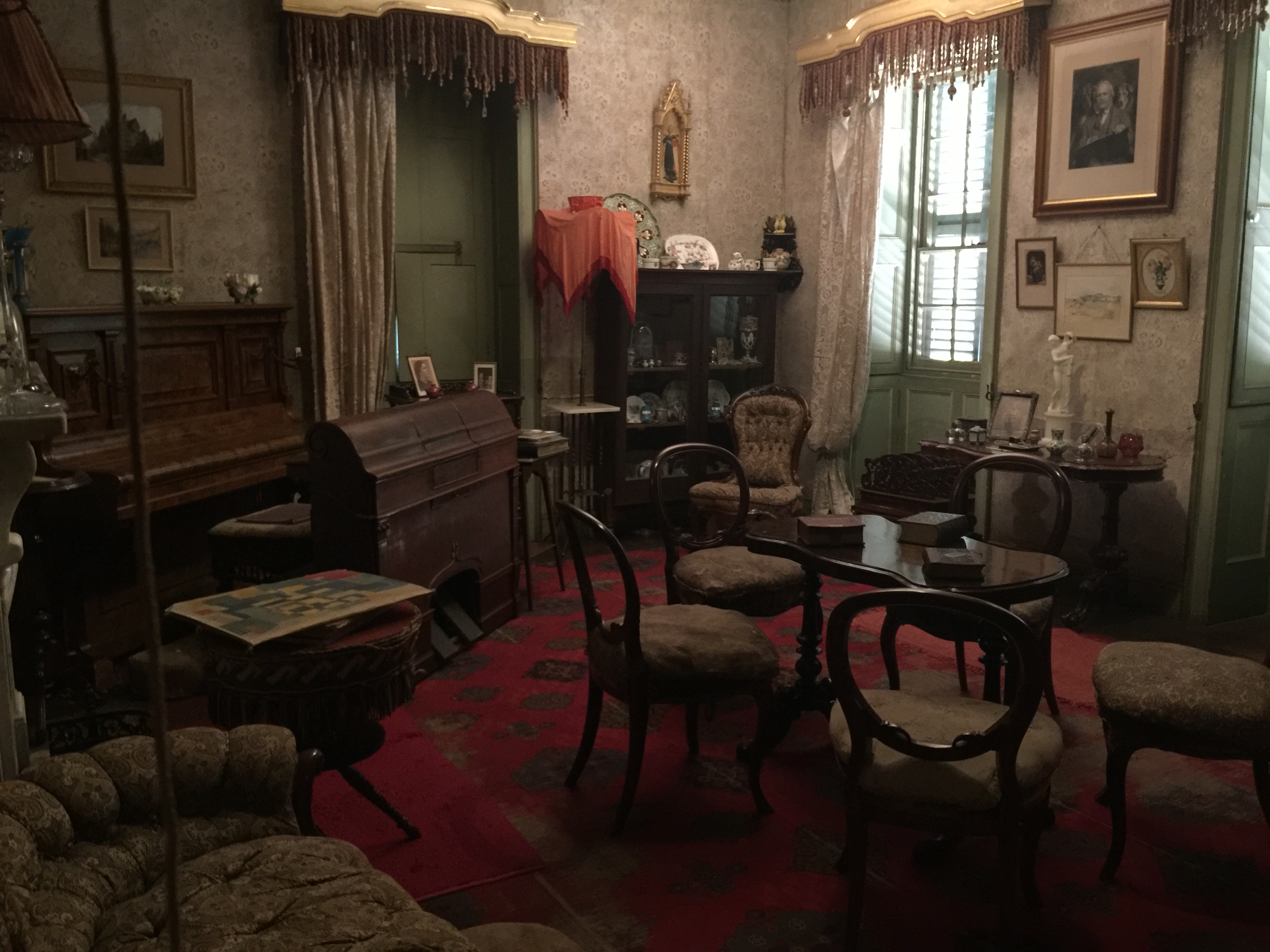
For those of you who have never heard of Rouse Hill House & Farm here is a very quick overview. It was originally built in 1813 by Richard Rouse and was subsequently owned and lived in by six generations. Rouse came to Australia as a free settler and rose through the ranks very quickly to become Superintendent of lumberyard at Parramatta. At its peak, the house was a social hub welcoming personalities such as Banjo Patterson. In some rooms you can find 19th century furniture mixed in with trinkets and television sets from the 1950s. Both the house and its land have many stories to tell, including those of the original Indigenous inhabitants and those concerning the Great Depression. On the tour we visited the house, stables, and woolshed.
Living RoomDining HallLadies Withdrawing RoomOutdoor Entertaining AreaStables
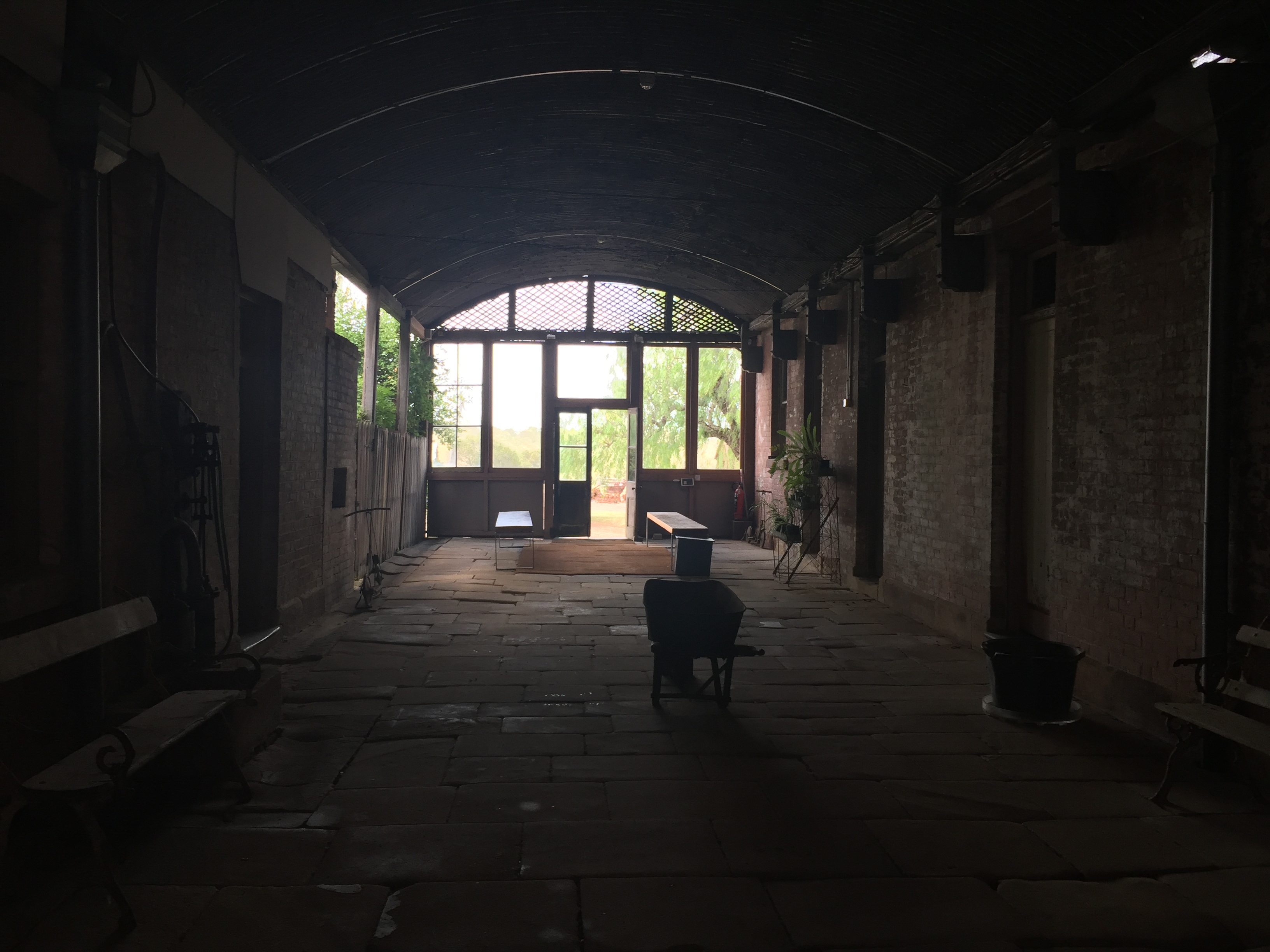
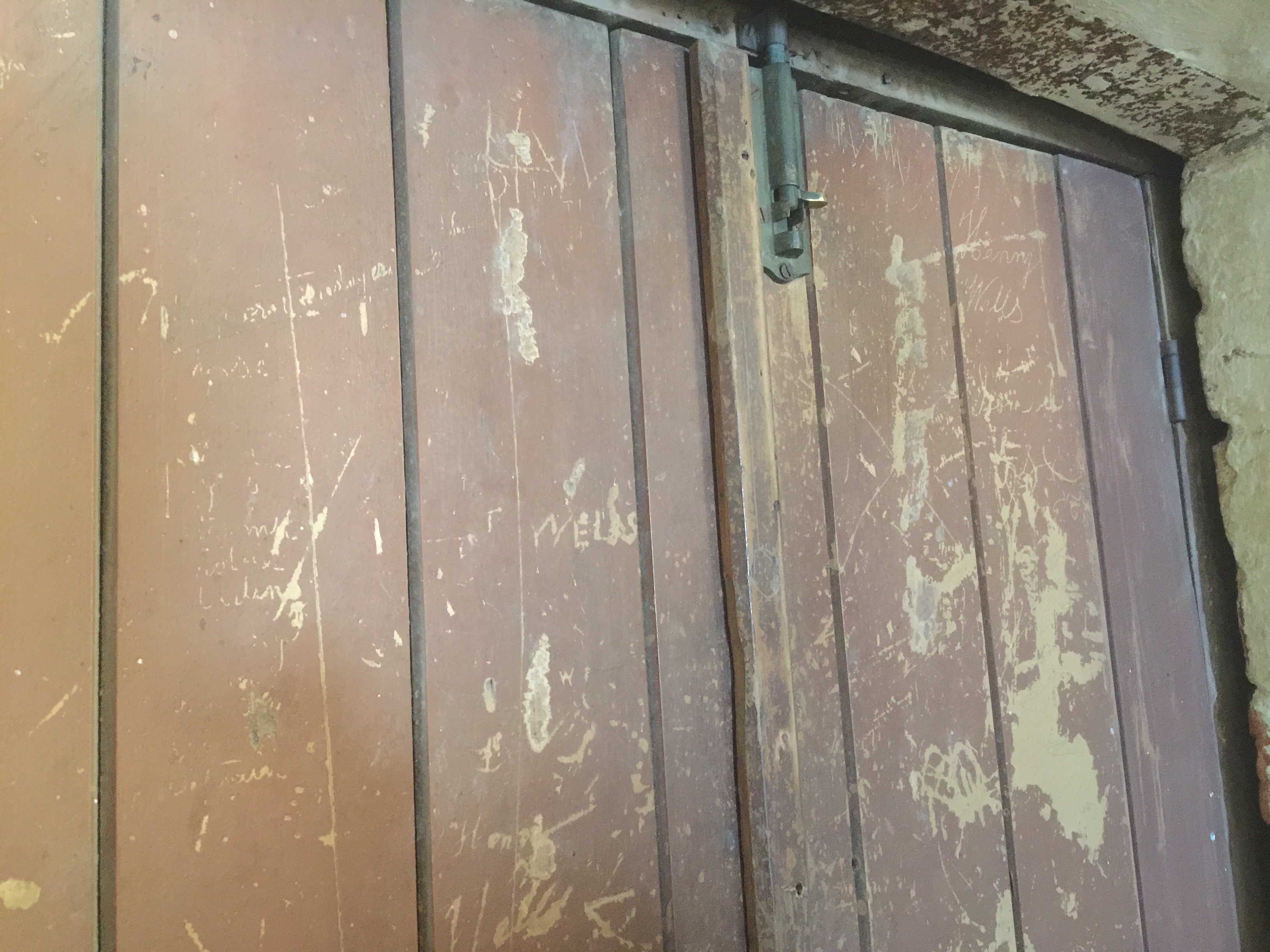
Marnie began her tour in the gardens covering the basic history of the house and its tenants. We were then guided through the ground level which included the living room, dining room, and ladies withdrawing room. We could not access the top level, however, it will soon be opened to the public. In each room Marnie pointed out a few objects and told us a couple of interesting stories. We then walked through the outdoor entertaining area and into the stables. The latter was probably my favourite part of the tour. The stables have been pretty well preserved. It was great to see some 19th century graffiti from two stable boys who etched their names into a wooden door. No photographs of these individuals survive yet their names will remain attached to the house.
Graffiti on the stable door
Whilst I can appreciate their “letting the house take its natural course and not interfering too much” attitude it was, in my opinion, problematic. There are a few ways you can approach heritage. For example, you can knock it down, do it up, or leave it alone. Each site or place requires a slightly different treatment plan so I want to talk specifically about Rouse Hill. Whilst I think leaving the rooms as they have been for generations is all well and good, there are parts of the house in need of love and care. For example, parts of the ceiling have fallen off and have been left exposed. I think a balance could be struck here without ruining the atmosphere and history. It was too “one end of the heritage spectrum” for me. There will definitely be people who disagree with me on that statement.
After the wonderful tour, Marnie recommended we use the computers in the visitor centre to view the top level rooms and explore the ground floor rooms in more depth. Both Imogen and I agreed this was a great use of technology. Especially considering you could zoom in on some objects to discover more information. In saying that, it would have been great to include more information on the objects as most were quite vague. I’m sure this is a work in progress.
Rouse Hill House & Farm
We would like to thank Marnie for our tour and for bringing the history of the house to life. Although this was the only interpretation available, if you can get a good guide it can be all you need.
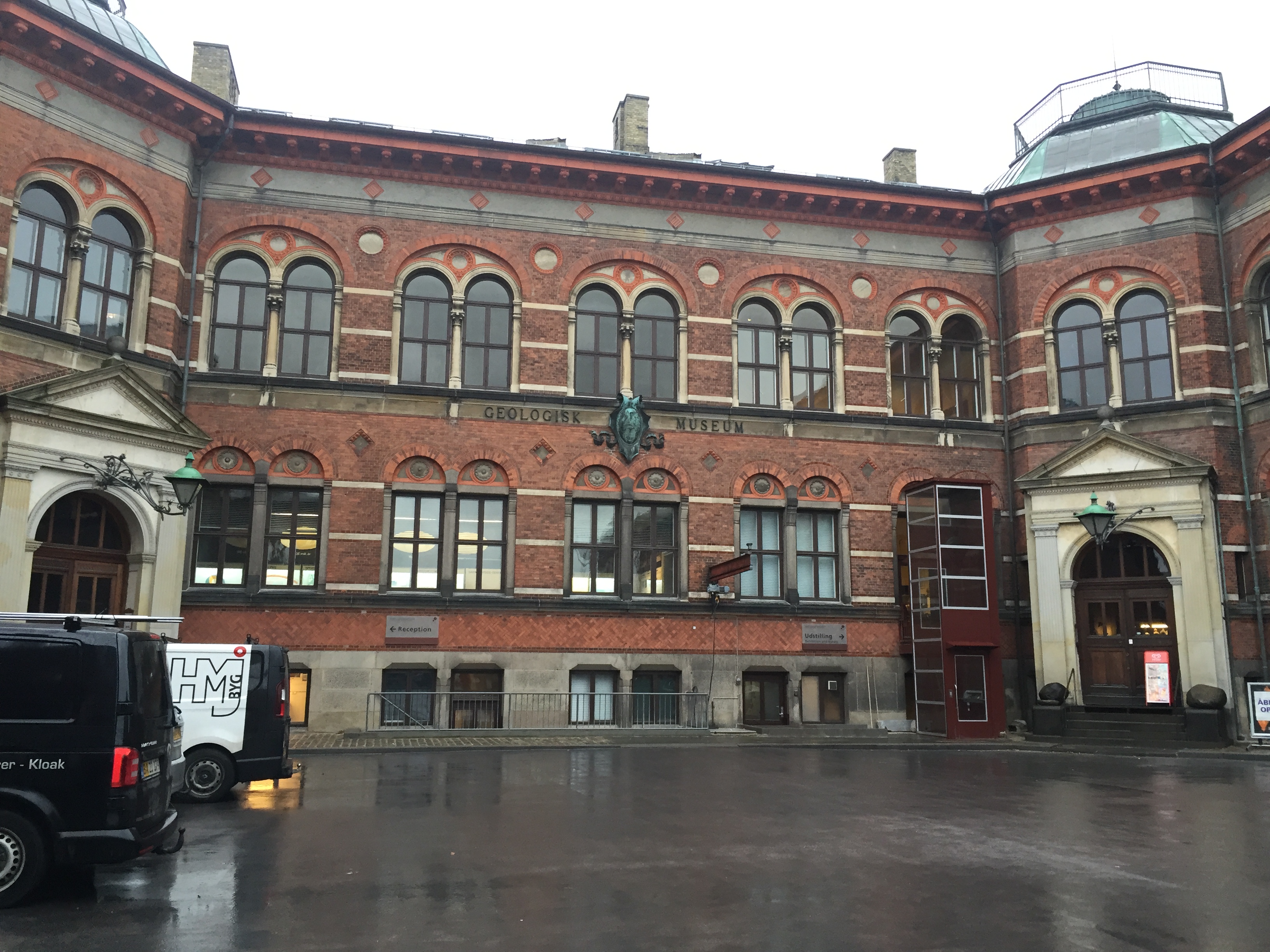
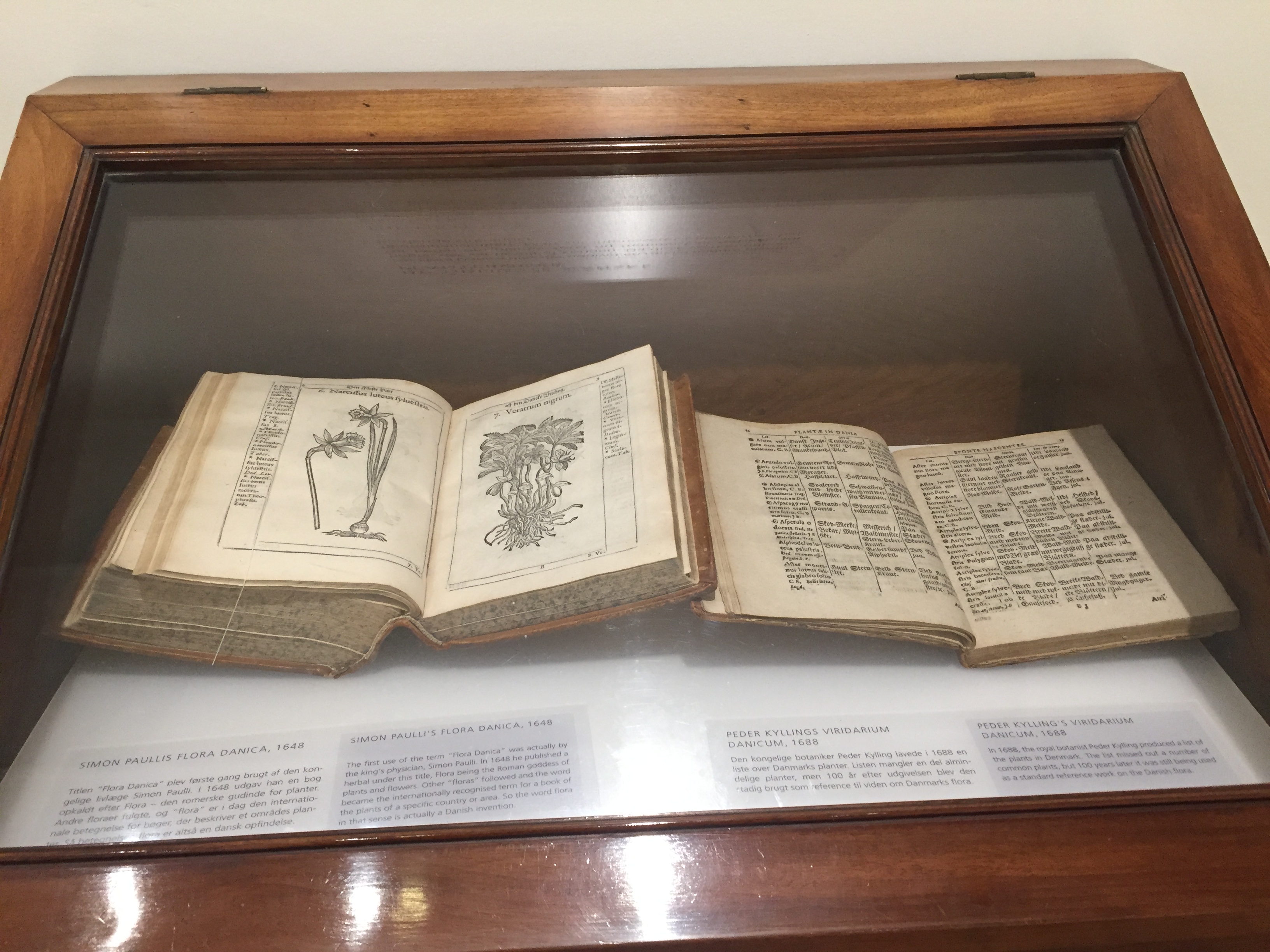
Tucked inside the Royal Botanic Gardens in Copenhagen is the Geological Museum. Our motivation for visiting was to see the exhibition Flora Danica – a display of hand-drawn and coloured botanical prints. These were showcased alongside contemporary interpretations by Danish artists.
Geological Museum
It was a very small exhibition, which isn’t a criticism. In fact, it was compact and communicated a lot of information without inducing fatigue. The exhibition’s name comes from a Danish encyclopedia of plants published in the 18th century. There were a couple of highlights that I would like to mention.
Geological Museum
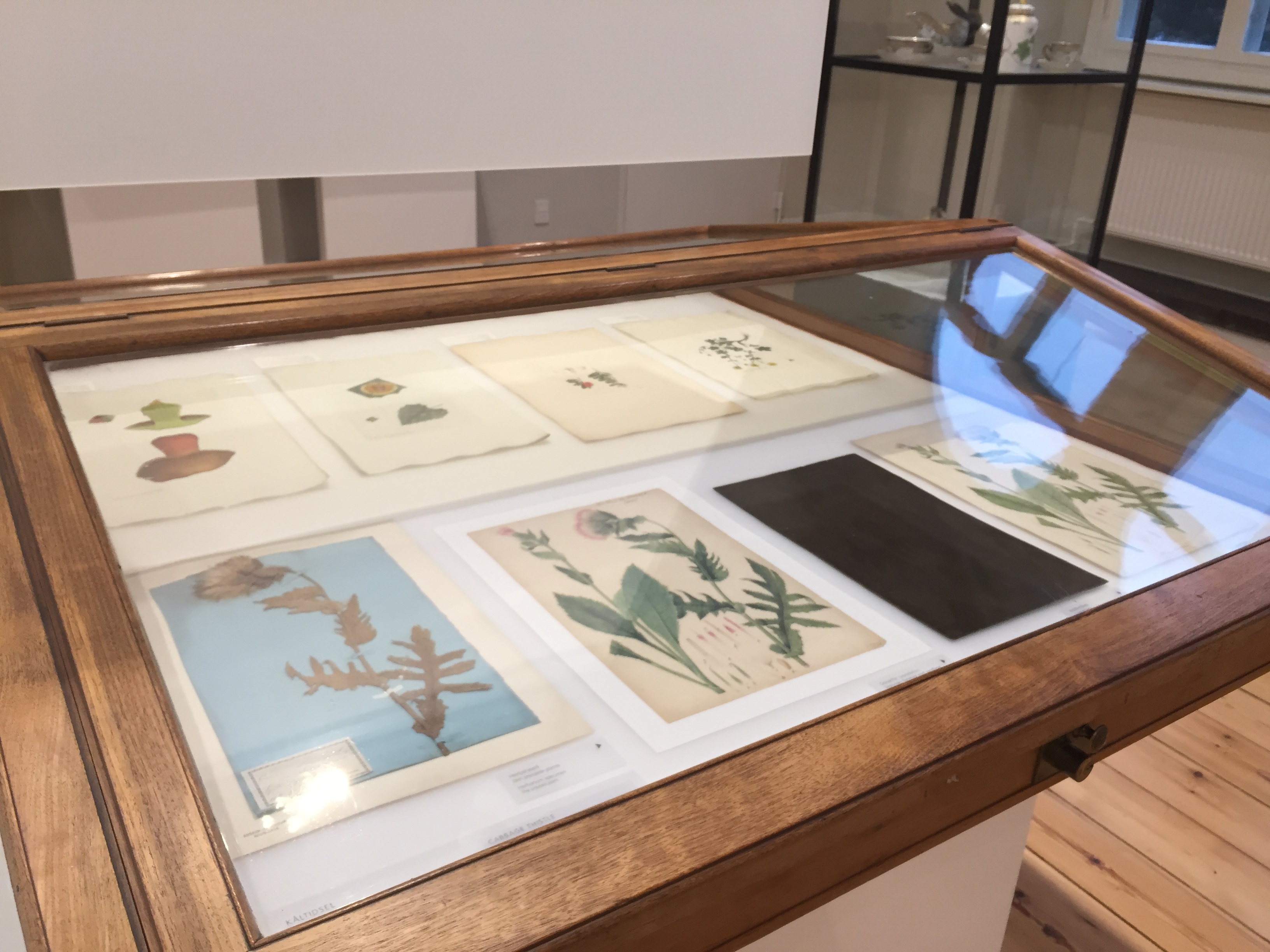
My favourite part of the exhibition was a small display on the process from drawing to engraving. Firstly, a plant would be collected. Then it could be hand-drawn. Next came engraving this illustration into a sheet of copper that could be repeatedly utilised to reproduce the image. Beneath the thematic panel were beautiful old wooden display cases containing an array of objects that showcased this entire process. From left to right was the plant, drawing, engraving, and reproduction. It was displayed very nicely and complemented the panel text.
Geological Museum
Another great design element was the glass case of copper plates. These plates were never published. No one knows why exactly they were excluded from the final publication. According to the text panel, the plates have been locked away for over 130 years and this is the first time they have been placed on display. Having them displayed vertically in a glass case has allowed visitors the opportunity to see both sides of the plate.
One last thing about the exhibition, although containing very little text, it was great to see a reference to medicine. Just inside the front door was a panel containing an image of Professor Ole Borch from Copenhagen University. It depicted him and his students learning about medicinal plants. The information above the image explained how Flora Danica was published for, first and foremost, medical practitioners. Therefore, every plant in the book was believed to have therapeutic value.
Geological Museum
Overall, the exhibition was quaint – minimalistic and rustic. I recommend you combine this exhibition with a stroll through the Botanic Gardens and the Botanisk Have.
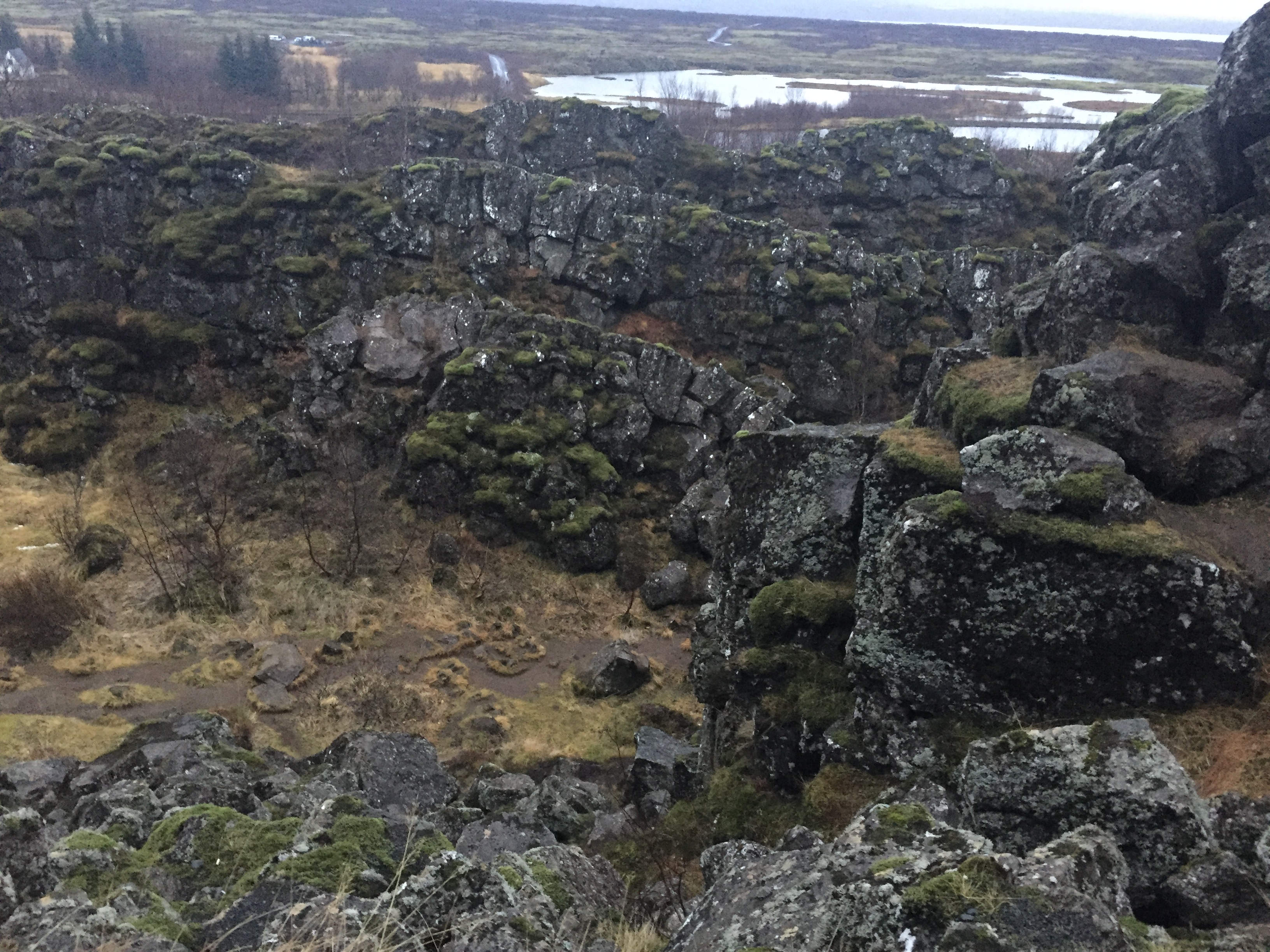
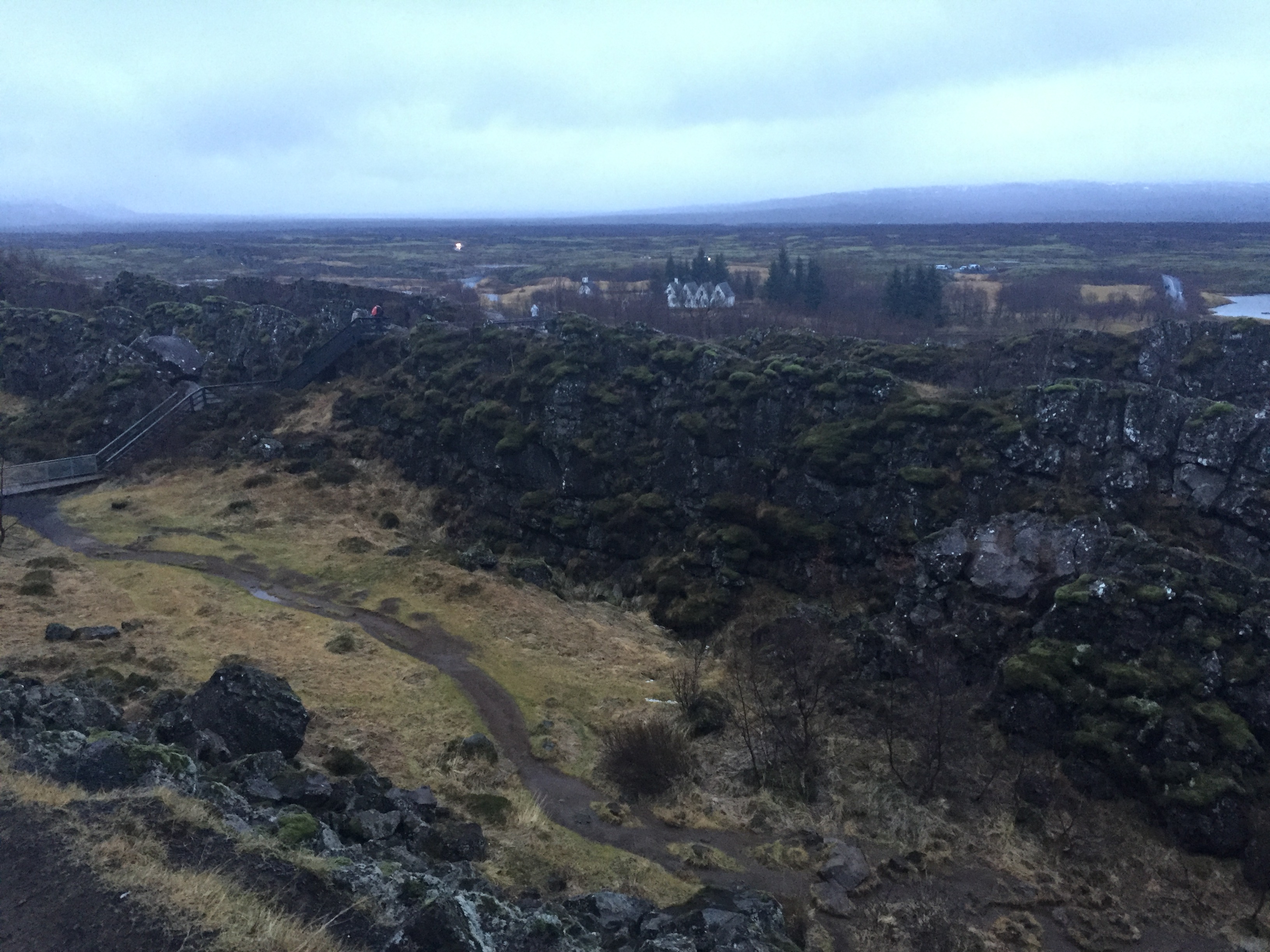
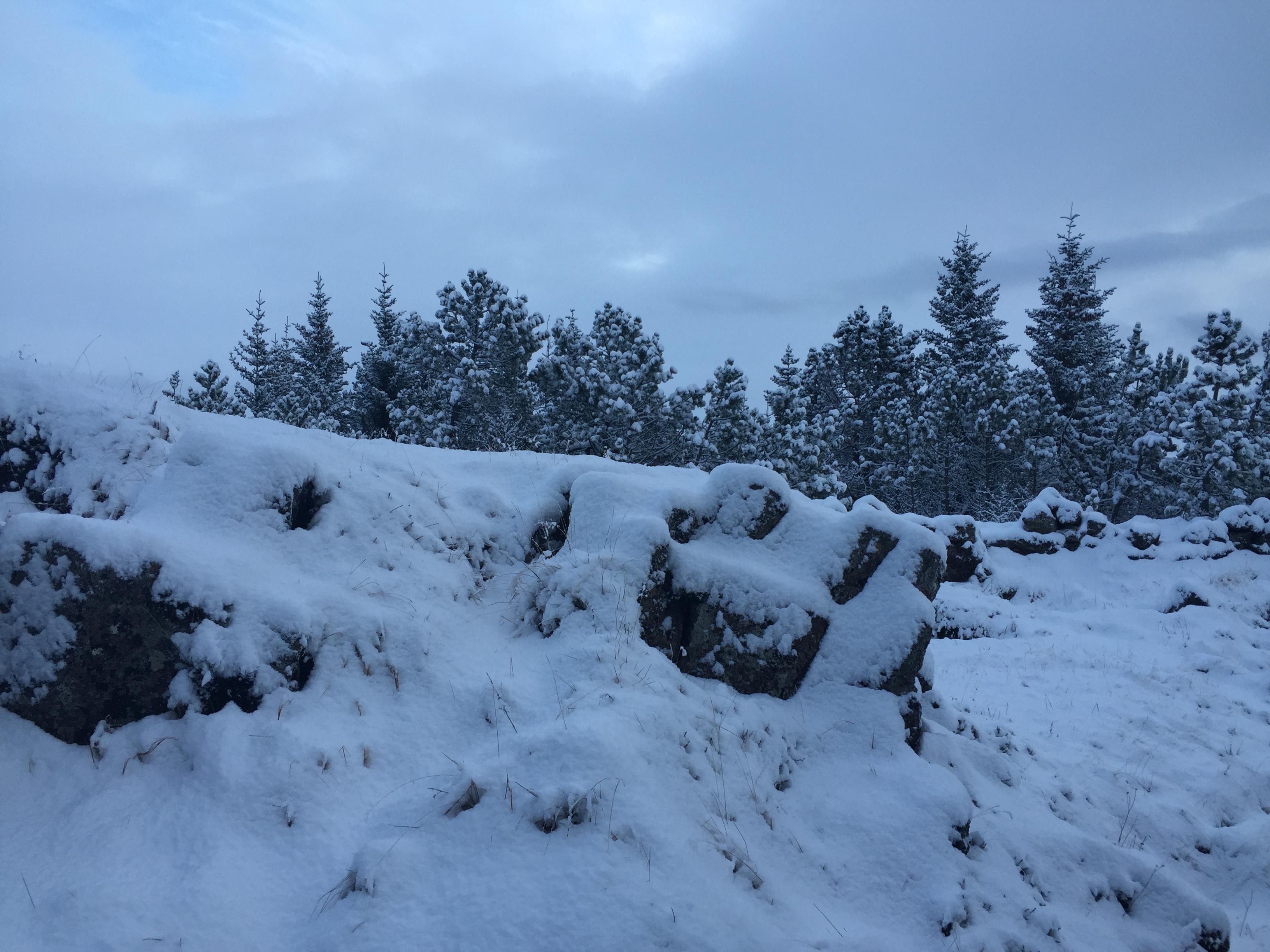
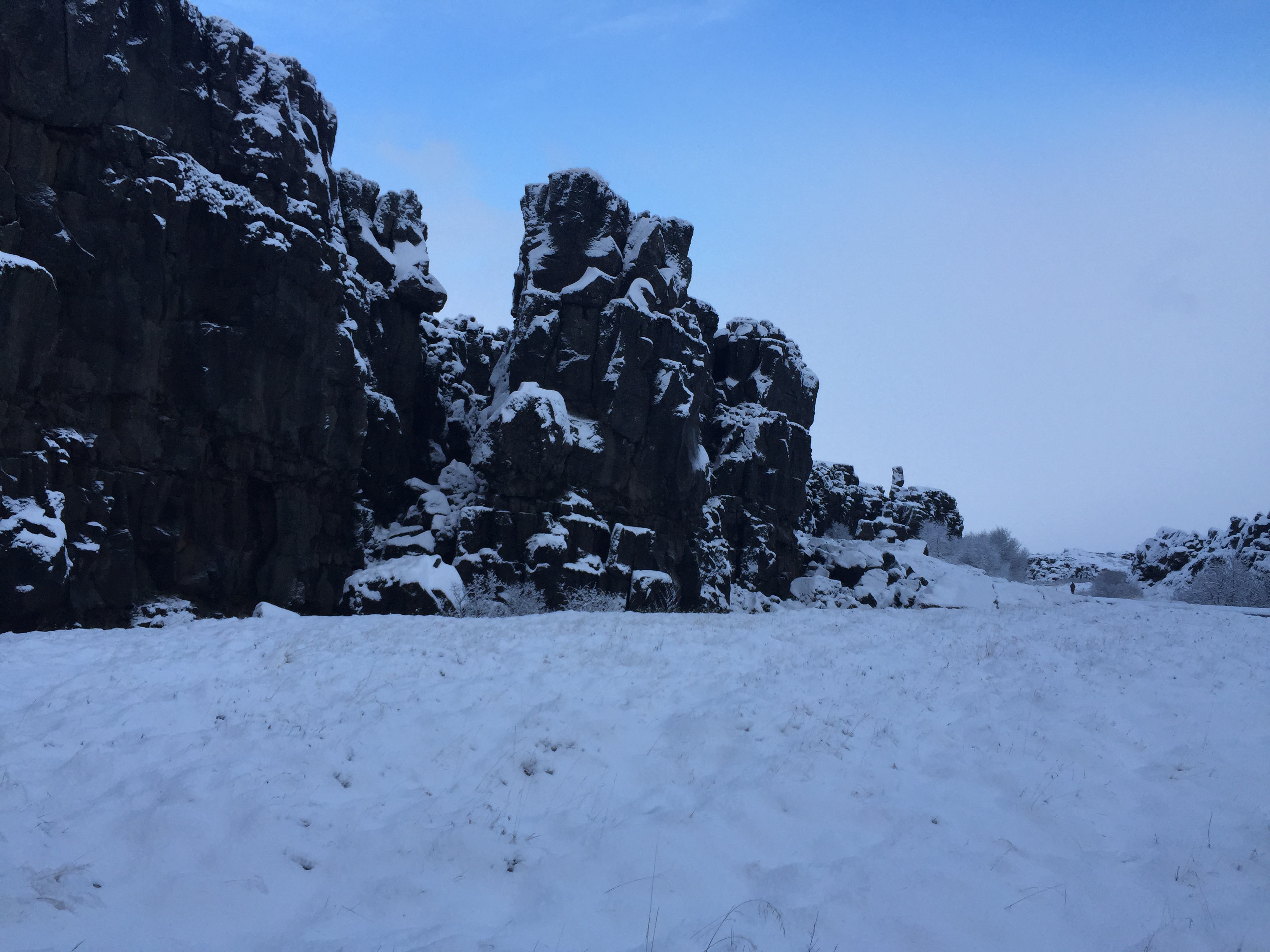
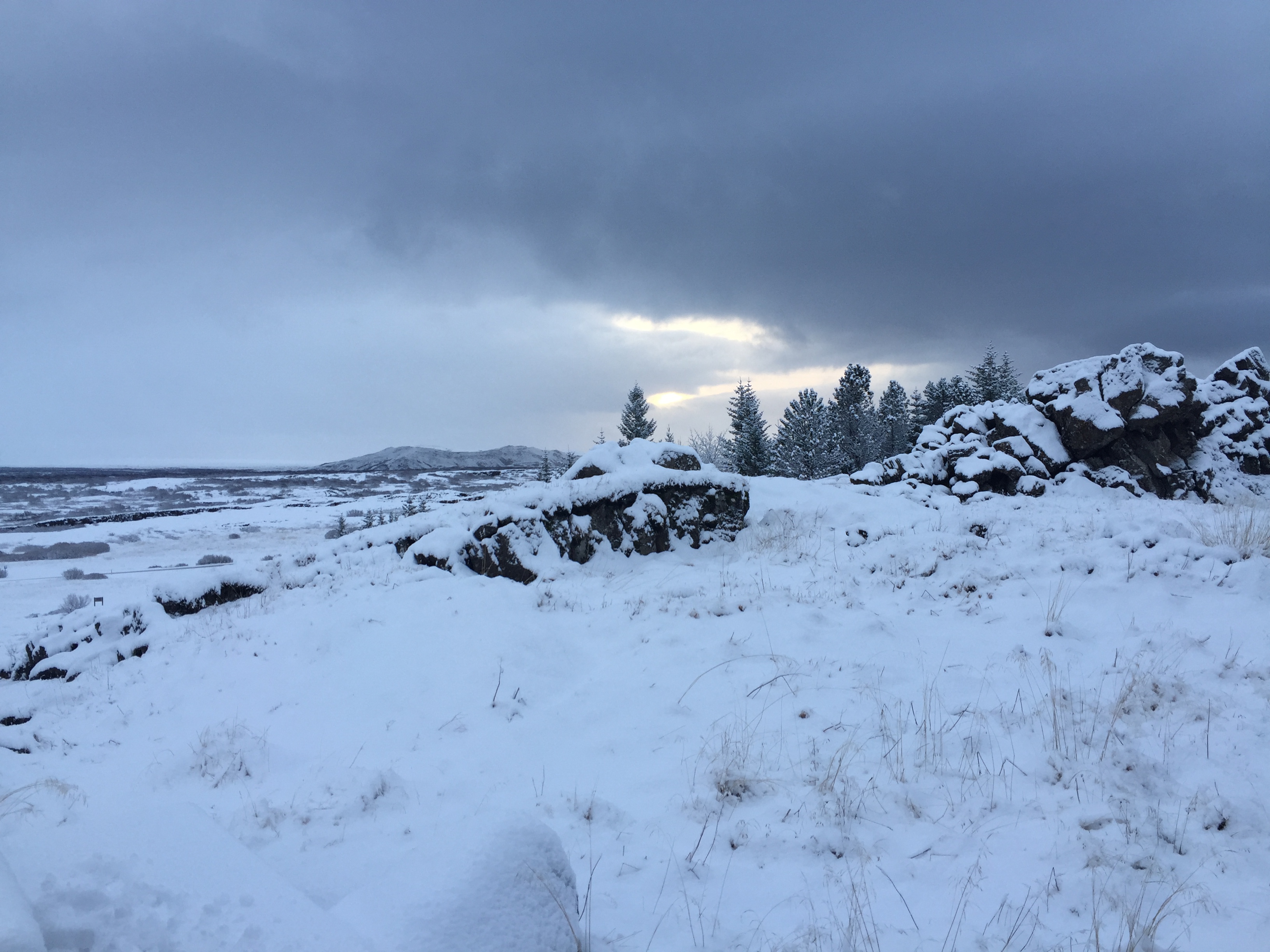
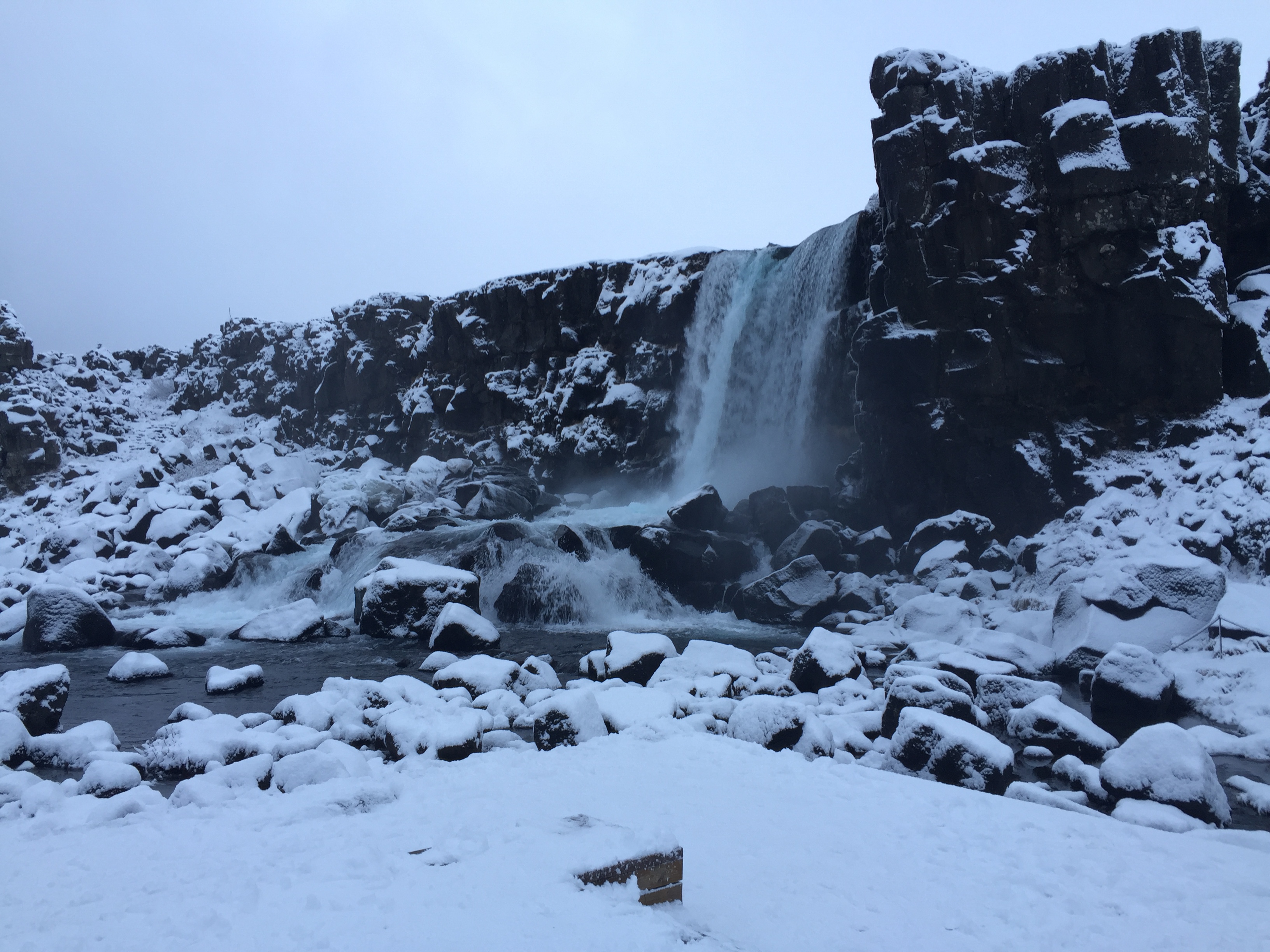
Whilst we did visit Þingvellir National Park yesterday, I was waiting until after our second visit to write a post. This natural and cultural World Heritage Site is where you can see the North American and Eurasian Plates slowly separating. The result of this process is spectacular.
Between 930 and 1798 AD, Þingvellir was home to the open air parliamentary assembly that would gather in the space yearly. Here they would set laws and settle civil disputes. On top of this, the park is in an active volcanic area. According to UNESCO: “The National Park is enclosed by a varied belt of mountains on three sides, featuring grass-covered lava fields, and Lake Þingvallavatn lies at its southern end. This outstanding scenery gives the area its unparalleled value.”
Similar to other heritage sites I’ve reviewed, I am going to go through the criteria it’s been listed under and why.
Criterion (iii) – to bear a unique or at least exceptional testimony to a cultural tradition or to a civilization which is living or which has disappeared.
It has been listed under this criteria as the landscape is a reflection of medieval Norse/Germanic culture. There is evidence of this settlement within the park including the assembly ground and booths.
Criterion (vi) – to be directly or tangibly associated with events or living traditions, with ideas, or with beliefs, with artistic and literary works of outstanding universal significance. (The Committee considers that this criterion should preferably be used in conjunction with other criteria).
It is regarded as a “shrine for the Icelandic identity”. This is because it has a strong connection to medieval Norse/German governance, appears in many 12th century Icelandic sagas, and was a focal point during the fight for independence during the 19th century.
We’ve visited the park on both a Golden Circle and Game of Thrones tour. During the former, we had a lovely view over the park. There were a few signs along the viewing platform, but, the main form of interpretation was found in the visitor centre. There was a short film and some information on the park that allowed for a sense of its history and significance. Apart from the centre we also joined our guide on a quick overview tour.
Today we visited the park to see something much more specific. I am a massive Game of Thrones fan. I did know that quite a bit of the series has been filmed in Iceland. What I didn’t know is that there were scenes filmed in Þingvellir. More specifically, the scenes filmed on the journey to the Eyrie. When The Hound and Arya, and Sansa and Little Finger, visit Lysa Arryn they walk through a canyon and the Bloody Gate. These were the scenes filmed in the park. It is one of the most beautiful landscapes I have ever seen in my life.
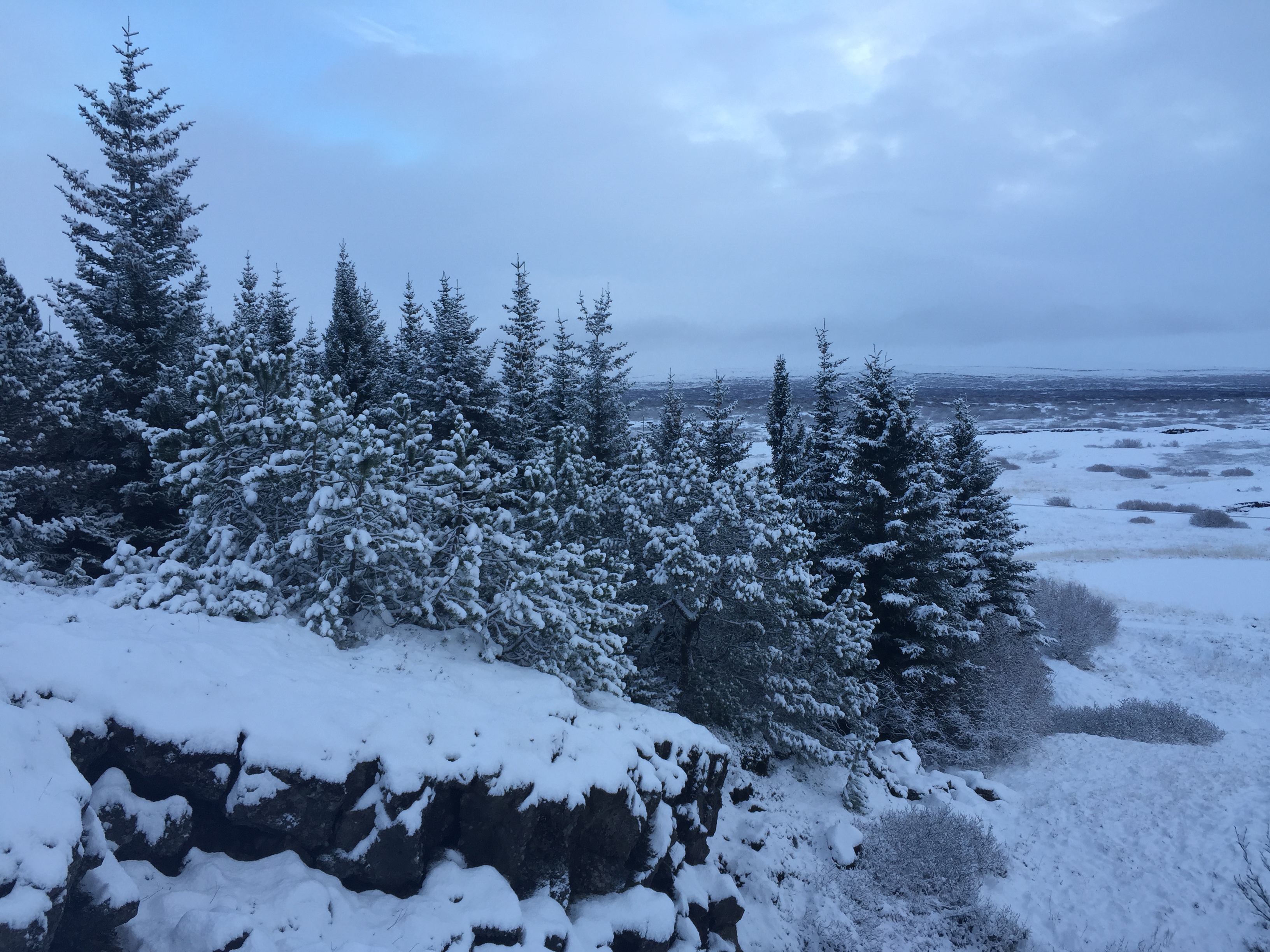
If you are visiting I would recommend that you read a bit about the park beforehand so you can appreciate it in full. We were so lucky to see the landscape both with and without snow. A picture paints a thousand words so to finish this post here are some of my favourite photographs that can only slightly capture the beauty.
Before delving into this review I wanted to quickly talk about the amazing night we had chasing the Northern Lights or Aurora Borealis. Seeing this natural phenomenon has been at the top of my to-do list for a while. We booked a tour with the knowledge that the lights are very temperamental. Luckily for us, the lights were on and were actually quite intense. It was such a beautiful experience and the absolute highlight of the entire trip!
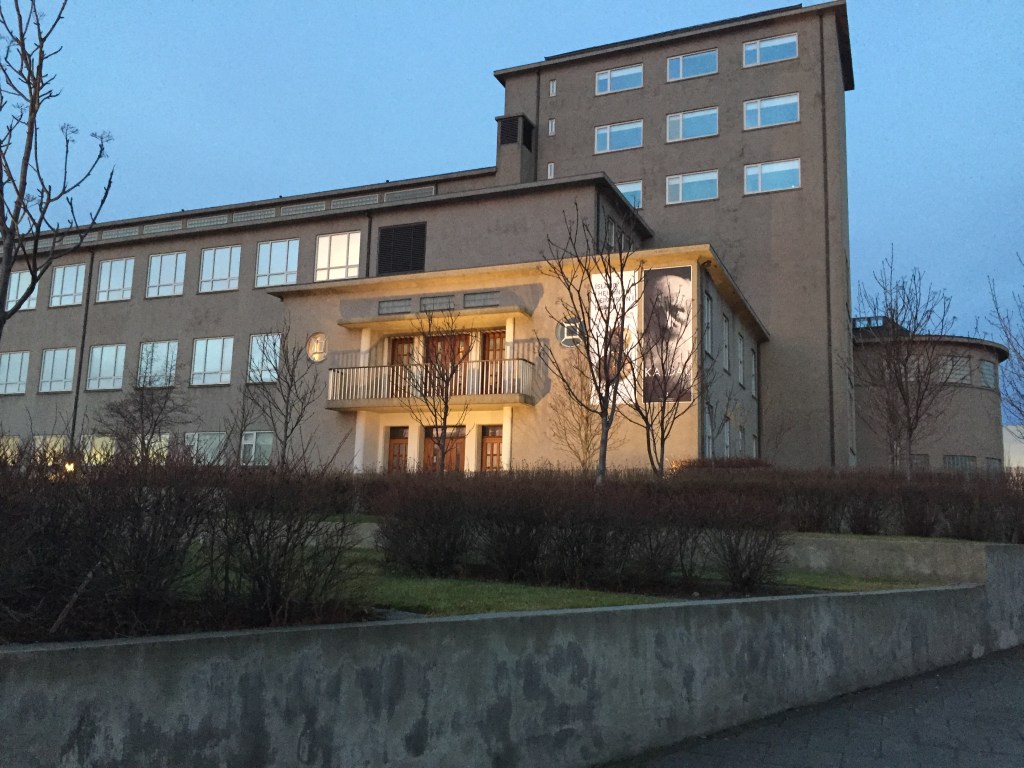
Moving on now to the National Museum of Iceland. I am always a little wary of national museums. I think they are fascinating to visit in that they display a highly curated and usually politically-charged image of a country. They are usually one of two things – a grand narrative or a collection of different stories. I would say the National Museum of Iceland fits nicely into the former category. Both, in my opinion, are problematic. On one hand, a grand narrative often neglects stories. On the other hand, including many stories can leave me feeling very confused. Whilst not normally a fan of national museums, I really wanted to see how Iceland presented their history. I also hoped to learn a thing or two along the way.
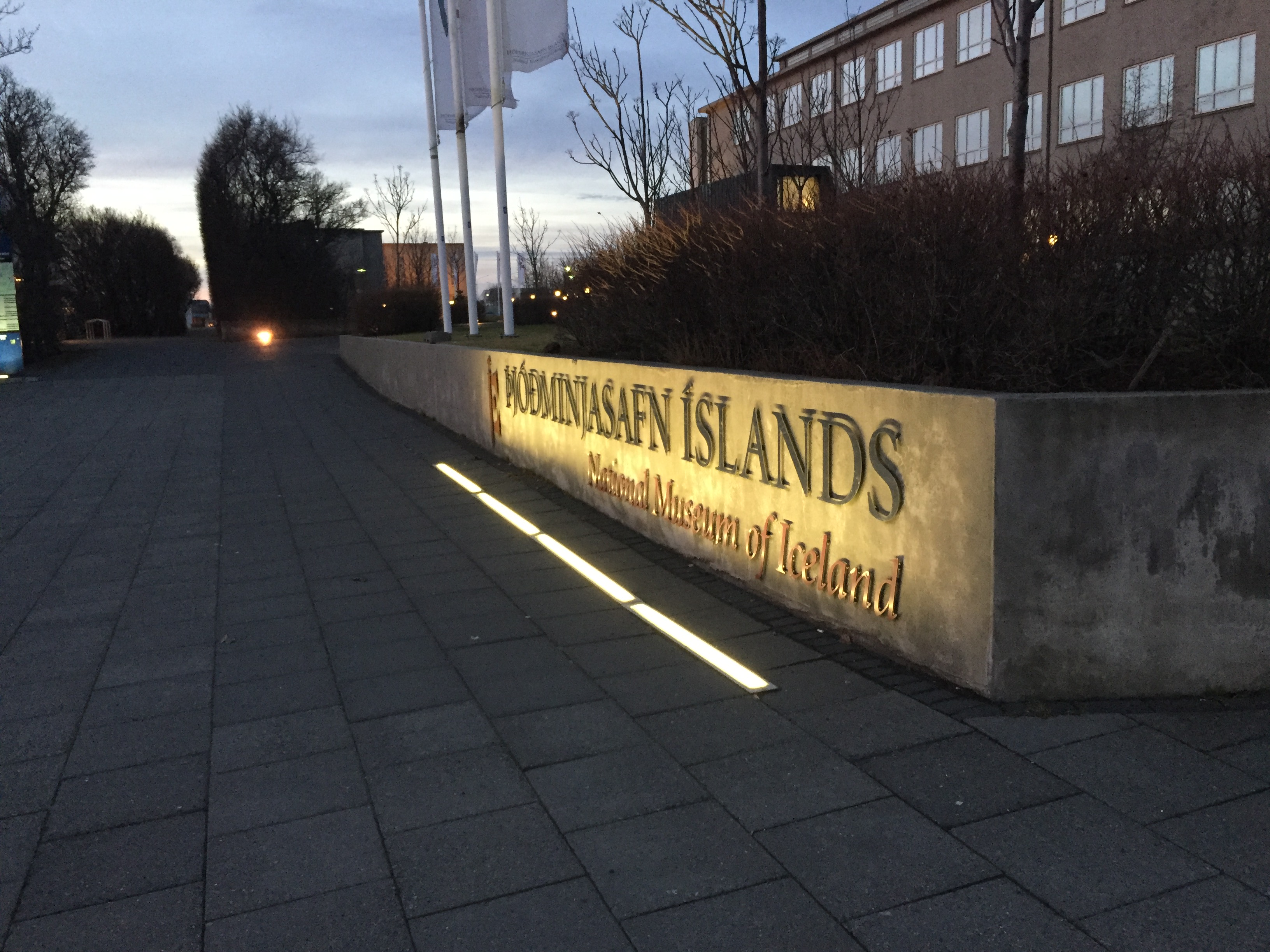
The National Museum of Iceland Entrance
The museum is spread over two floors. It’s a mish-mash of chronological and thematic displays which was quite disorientating. To provide more structure to our visit, we followed the recommended highlight objects on our brochure. In total there are seven highlight objects distributed throughout both levels of the museum.
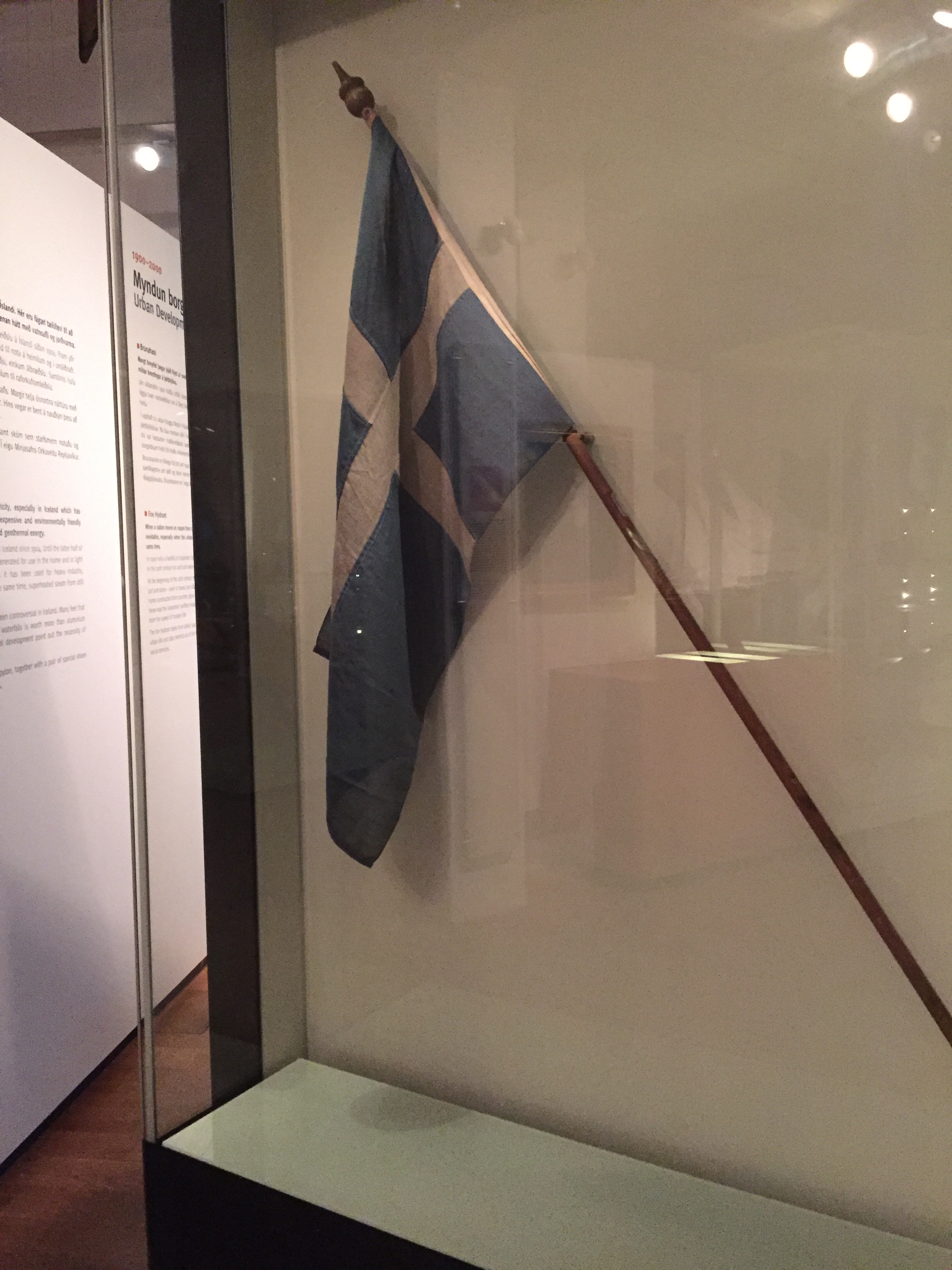
1. The Blue and White
According to the object label, this flag symbolises Icelandic history in the 20th century. Iceland was under Danish control until approximately 1944. Before they were granted their own flag in 1915, Iceland had to fly the Danish flag (pictured below). The Icelandic flag has a red border around the white cross representing volcanic fire.
The Blue and White
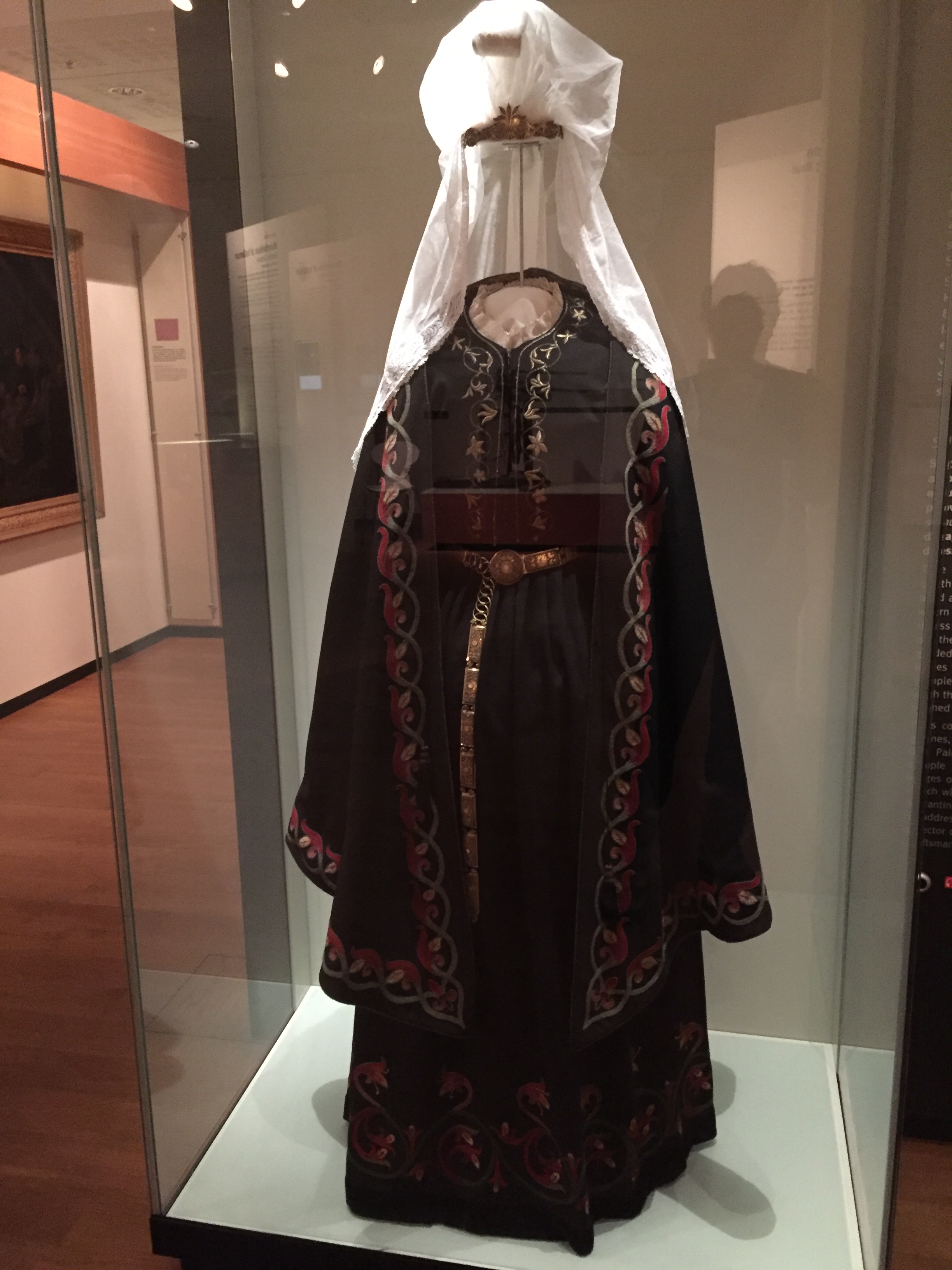
2. Skautbúningur Costume from 1860
I was very excited to see a textile as a highlight object. This dress signifies a change in traditional festive costumes for women. It was designed by Sigurdur Gudmundsson and introduced in 1859.
Skautbúningur Costume from 1860
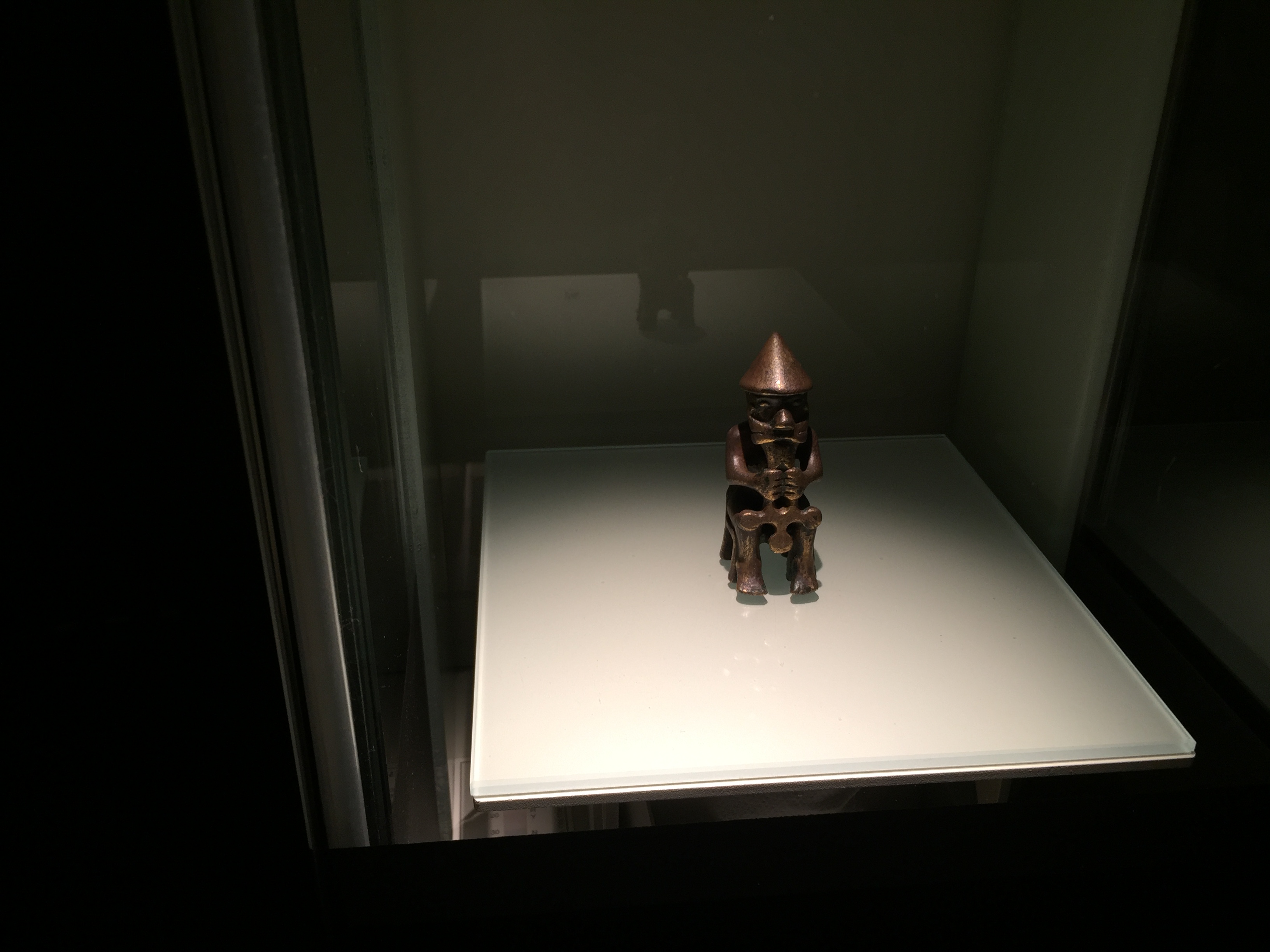
3. Pór or Christ?
An interesting religious object, the meaning of which has been debated. It either represents the Norse god pór (Thor) or Christ. The confusion comes from the fact the figure is holding something that looks similar to both a hammer and a cross. Between 800 and 1000 AD Pagan worship co-existed with Christian worship in Iceland.
Pór or Christ?
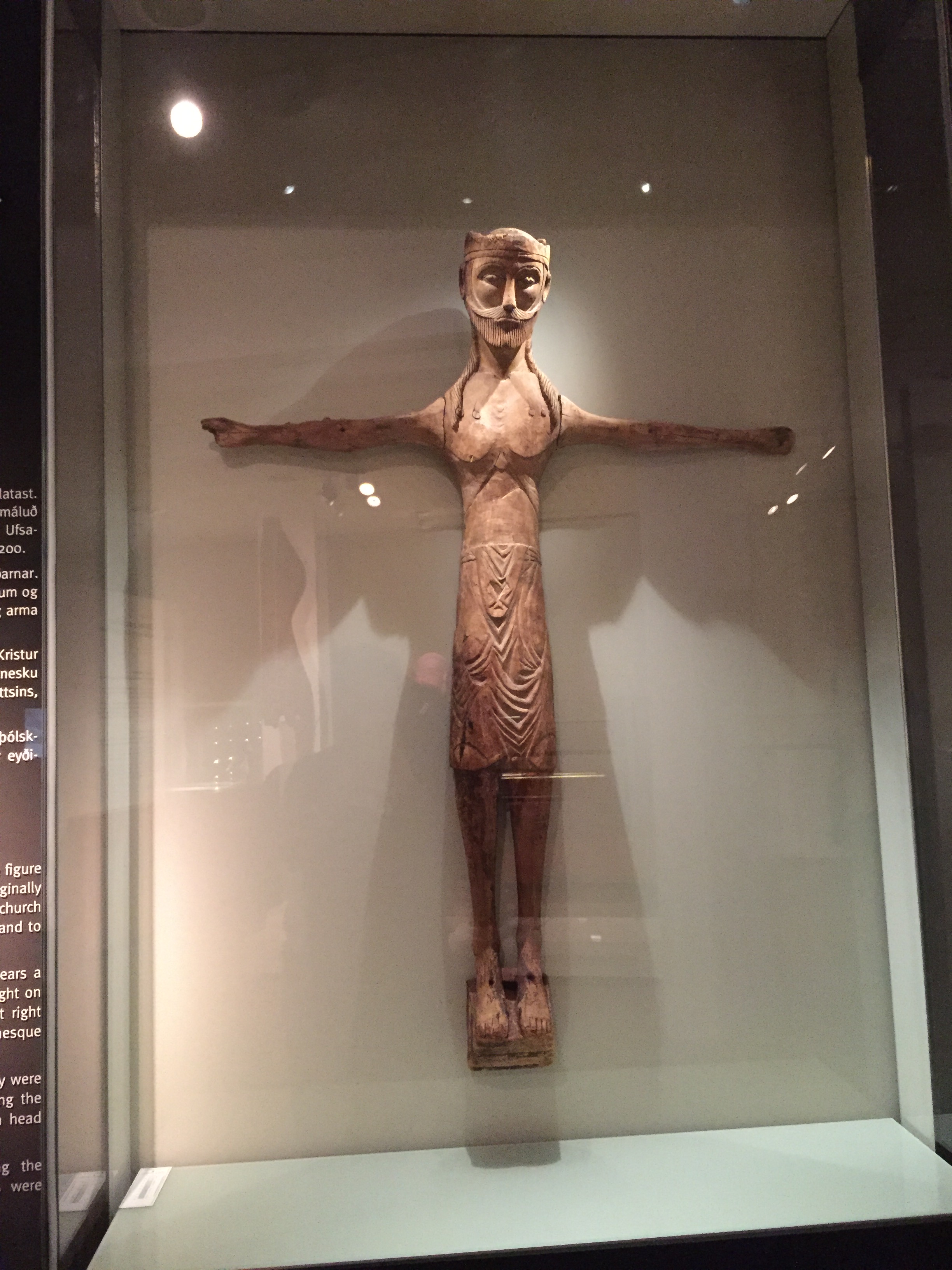
4. Christ the King
I couldn’t quite gauge why this object was so significant from the object label. It is essentially a cross that was displayed in a Catholic Church around 1200 AD. I am assuming its significance comes from the fact it survived the Reformation unlike many other Catholic objects.
Christ the King
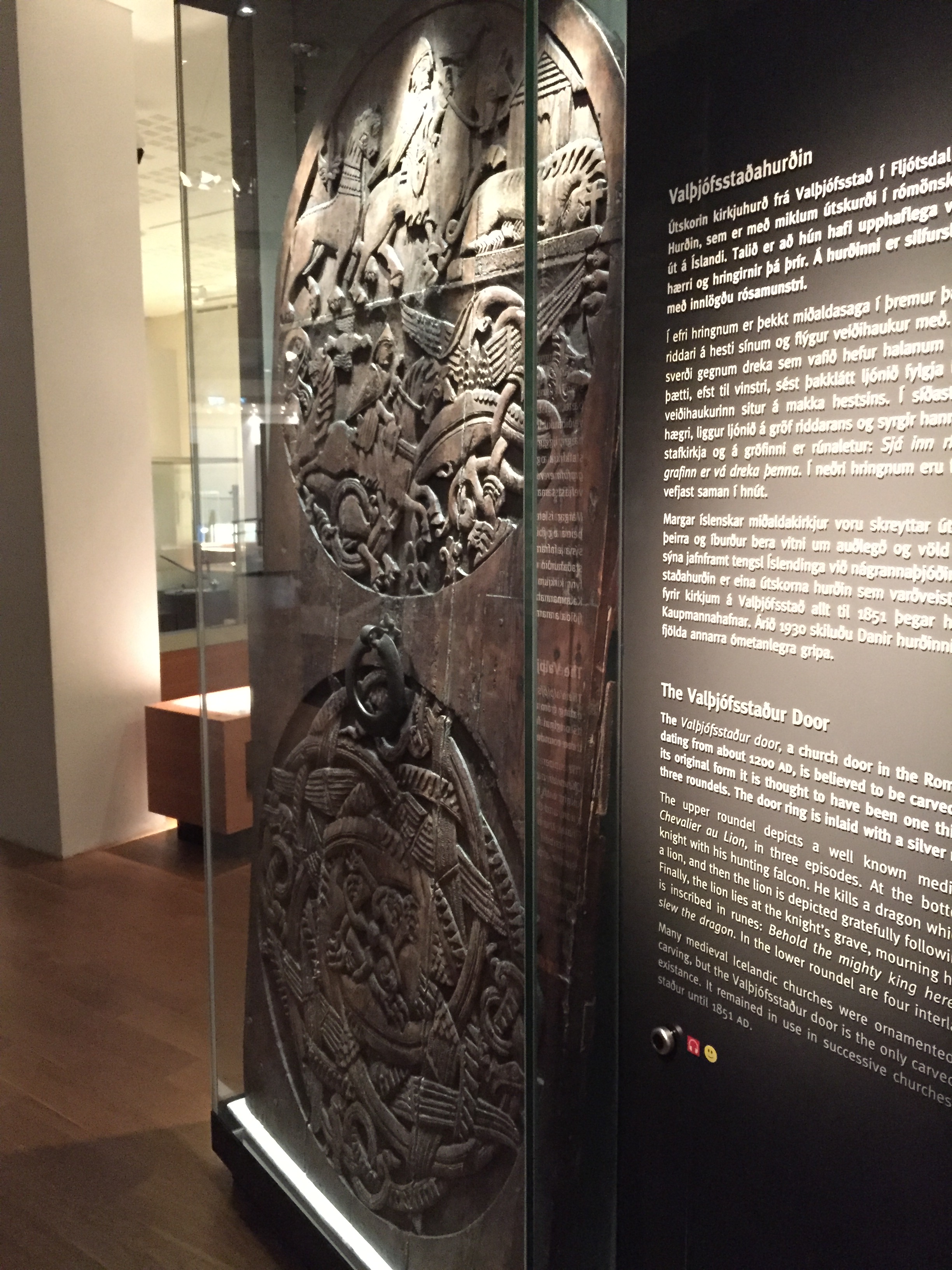
5. The Valpjófsstadur Door
If I have learned anything from this museum it’s that the role of religion has been almost central to the history of the country. This door, carved in Iceland, depicts the medieval tale of Chevalier au Lion. It would have once stood as the entrance door to a medieval church. Its significance comes from the fact it is the only surviving carved wooden door from this time period in Iceland.
The Valpjófsstadur Door
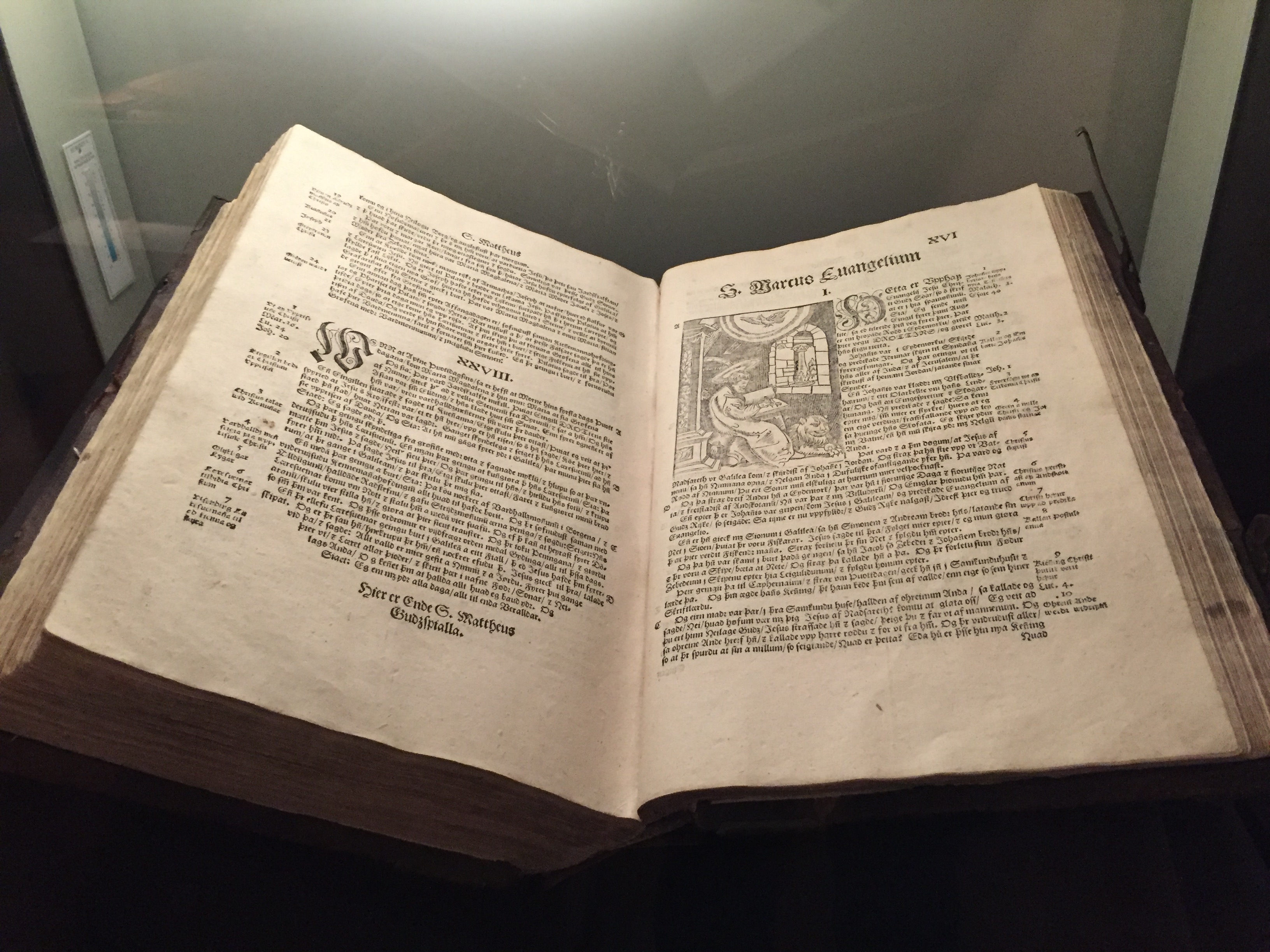
6. Gudbrandur’s Bible
This Bible was the first book printed in Iceland that was widely distributed. Around 500 copies were printed. It continued to be utilised up until the nineteenth-century. It still has its original binding which is pretty special.
Gudbrandur’s Bible
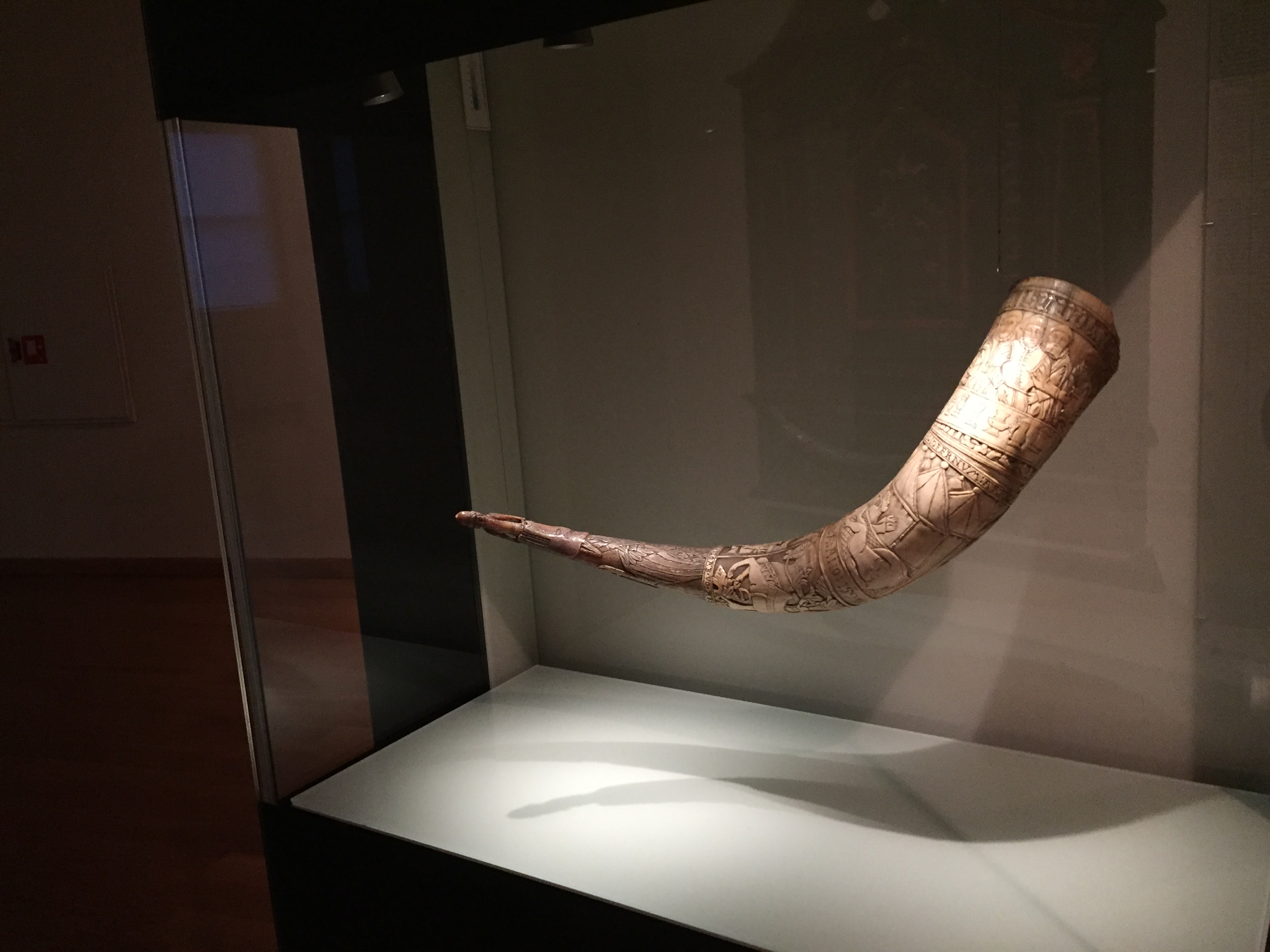
7. Drinking Horn
This horn was carved by farmer Brynjólfur Jónsson of Skard in 1598 AD. Jónsson is generally considered to be the first Icelandic craftsman nationally recognised for his works. The horn is only one of three surviving objects created by Jónsson and can shed light on the life of farmers in 16th century Iceland.
Drinking Horn
From an exhibition design perspective, I was very impressed by the display cabinets that were equipped with motion sensor lights. This act of preventative conservation would benefit the objects on display by reducing their time in direct light during quiet periods.
It was very interesting to see how the identity of Iceland had been curated in the museum. The heavy focus on nation building and religion were particularly intriguing. I thought the section on the 1703 census was curated well with a short video accompanying a variety of objects that aided in telling the story. In summary, this census was the first ever taken of an entire country.
For the next few days we will be leaving the city and exploring some of the beautiful landscapes Iceland has to offer. Hopefully I will have time to write a post on the World Heritage Site Thingvellir Þingvellir!








 It has been such an intense 18 month degree that involved moving my life across the border between Queensland and New South Wales, living in a new environment, and balancing jobs and internships with study. It has all been completely worth the hard work. Especially considering I’ve met some amazing people who are insanely supportive.