• Scandinavia!
    In exactly eleven and a half days, (not that I’m counting) I leave for what I hope will be an amazing holiday in Scandinavia. We are starting in Denmark, moving on to Sweden, and finishing in Iceland. My aim is to visit as many museums and heritage sites as possible! I’ve spent the last few weeks researching what these wonderful locations have on offer. Here is a quick overview of what to expect.

    1. Denmark

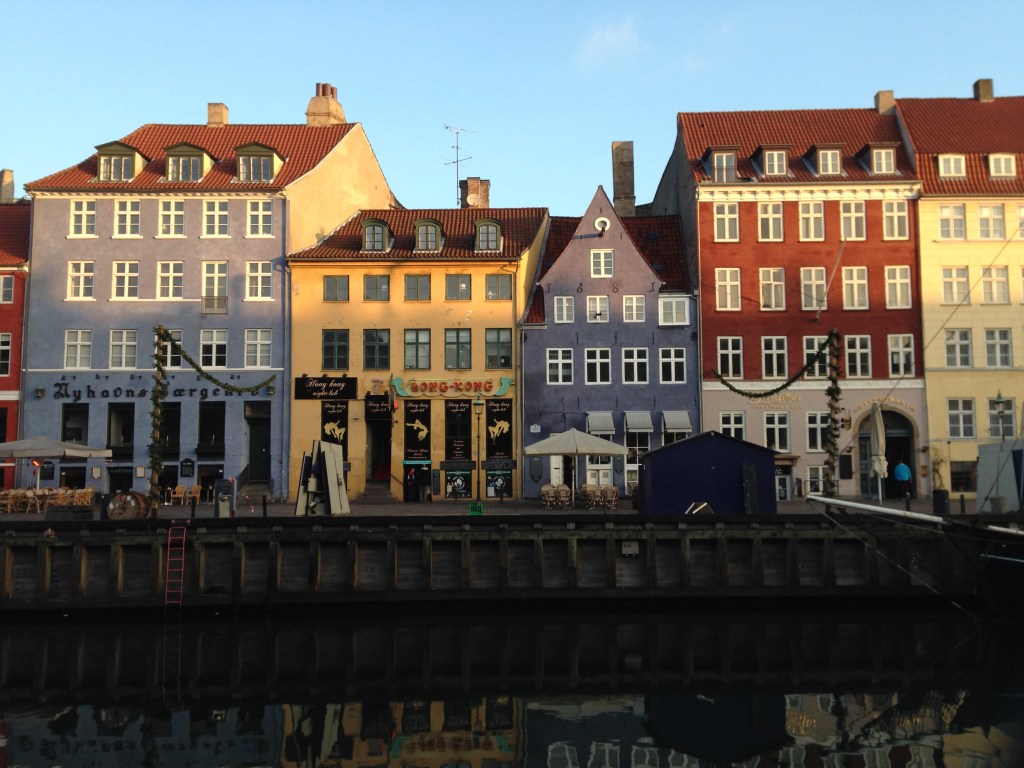
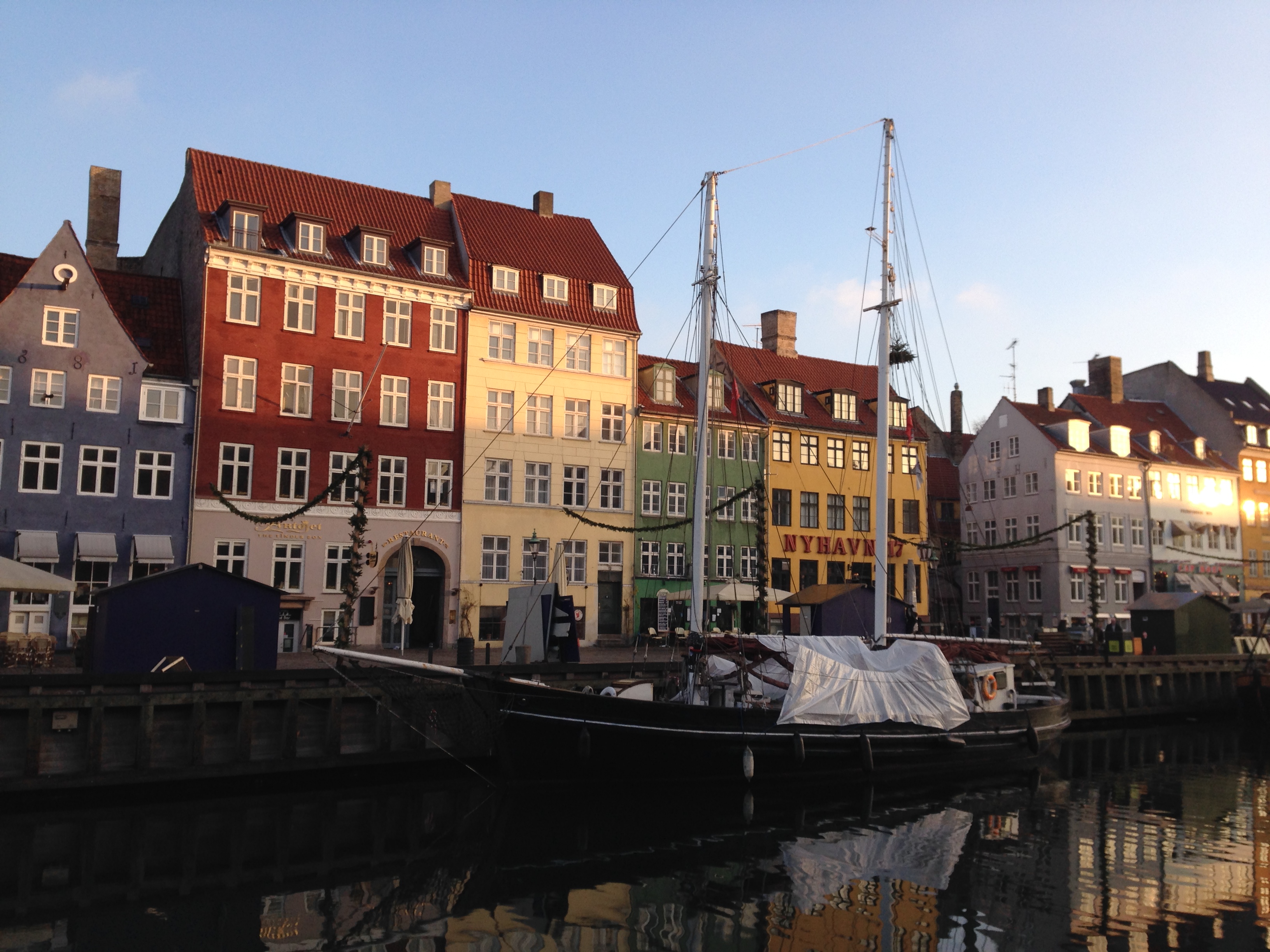
    I first visited Denmark in 2015 and instantly fell head over heels. It is such a beautiful city with plenty of museums and heritage sites. This time, I am going to focus on just a couple of museums and spend the rest of my time in the city exploring new areas and eating copious amounts of pastries. We will aim to visit:

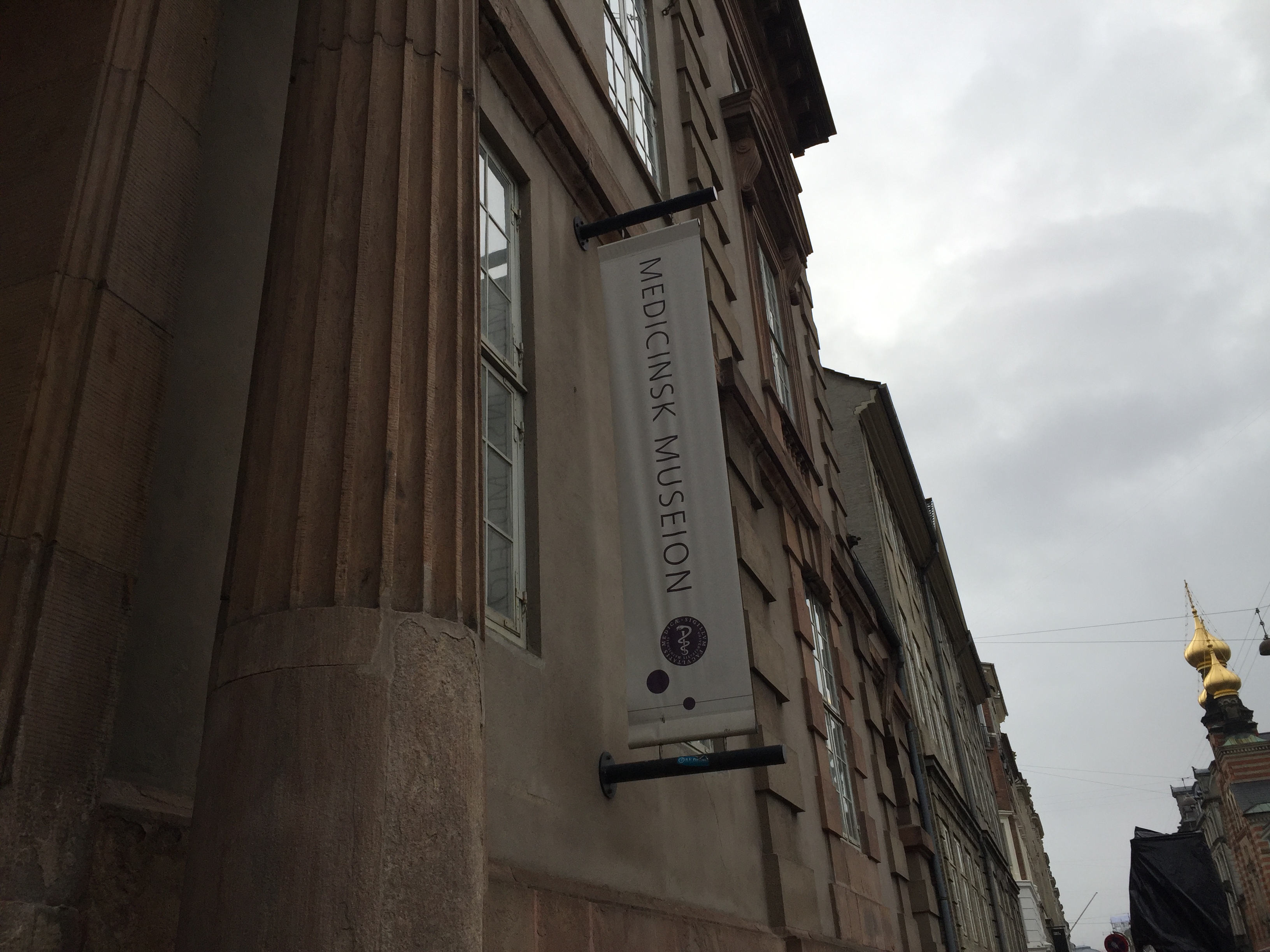
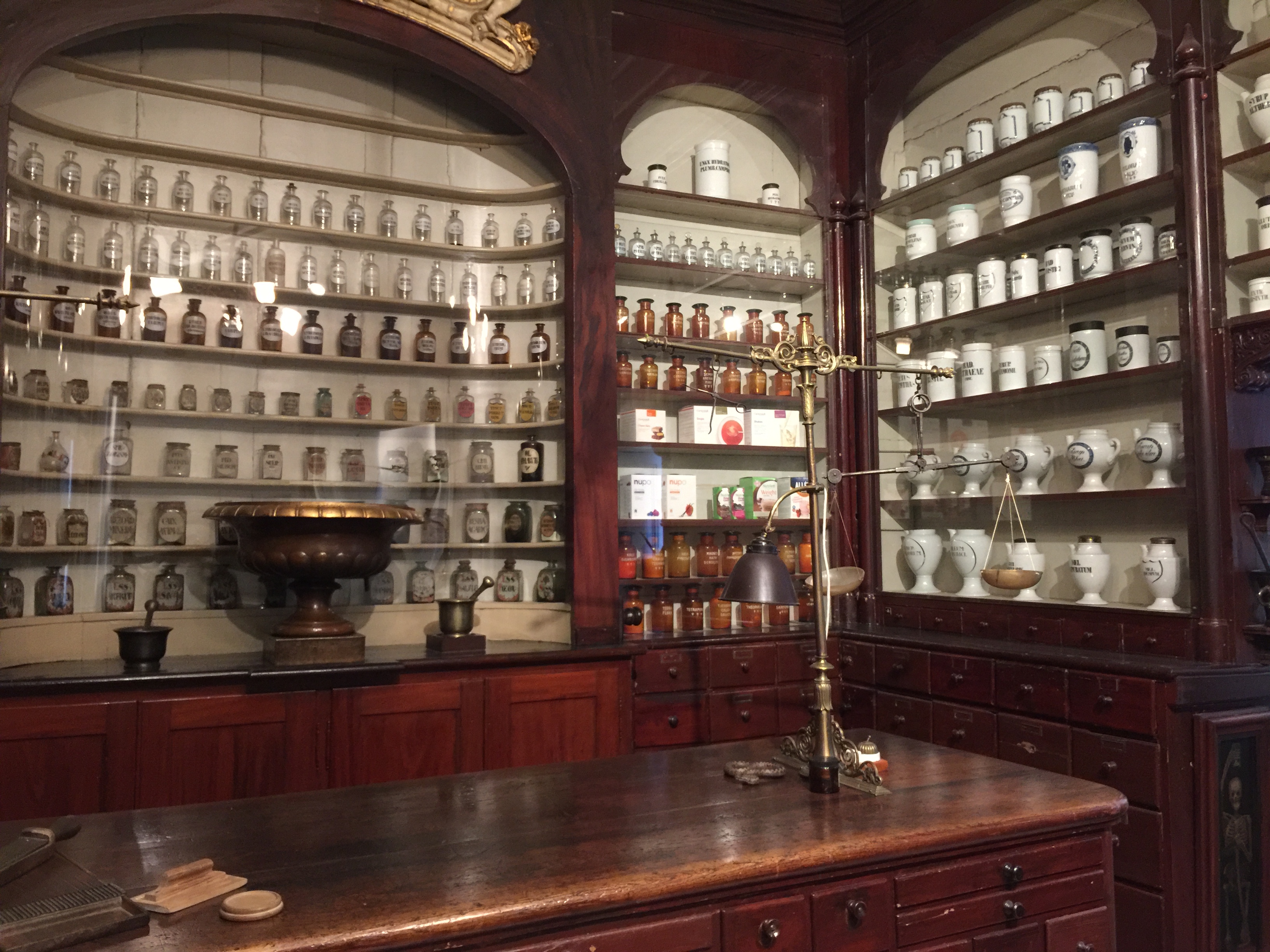
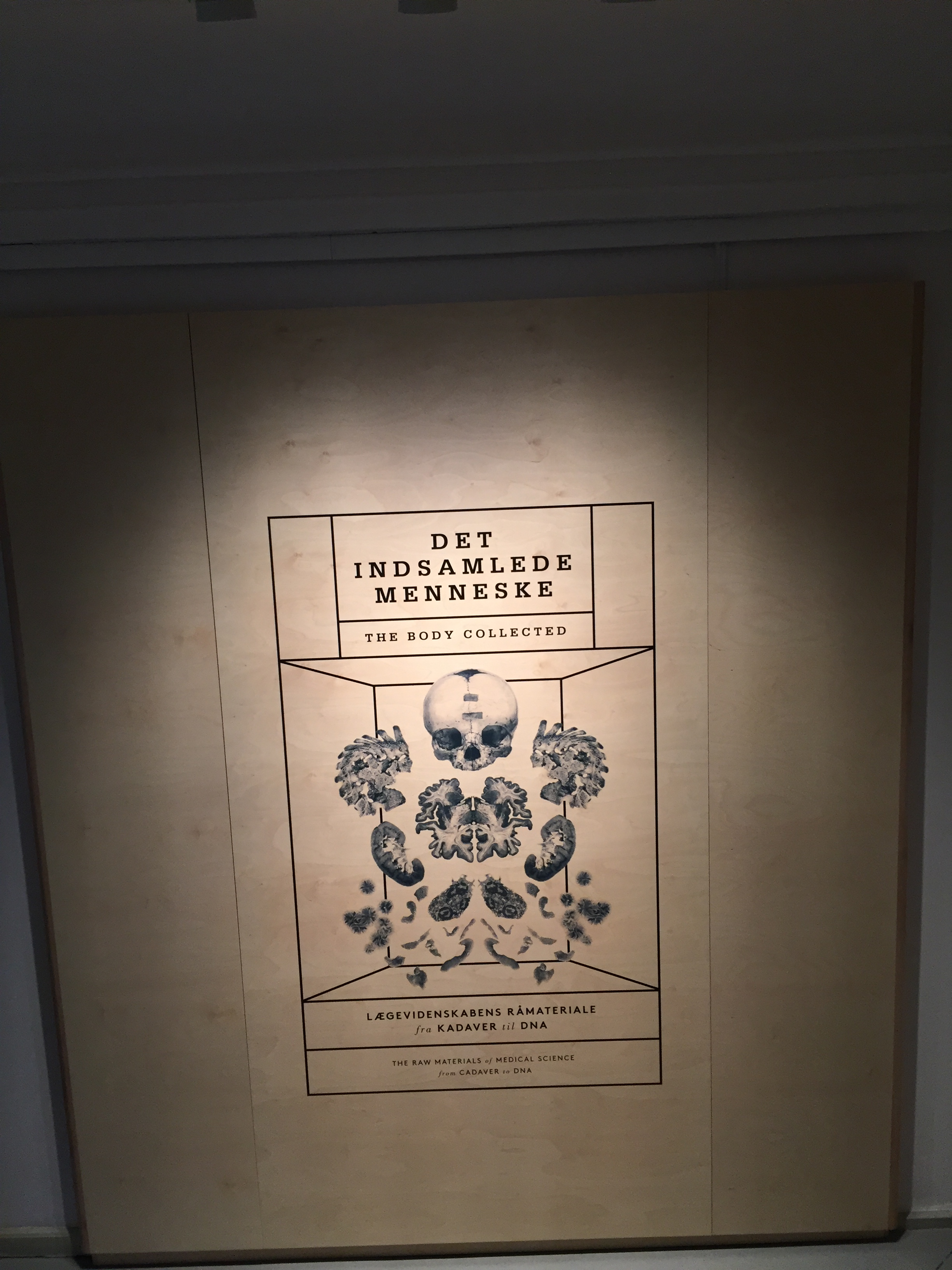
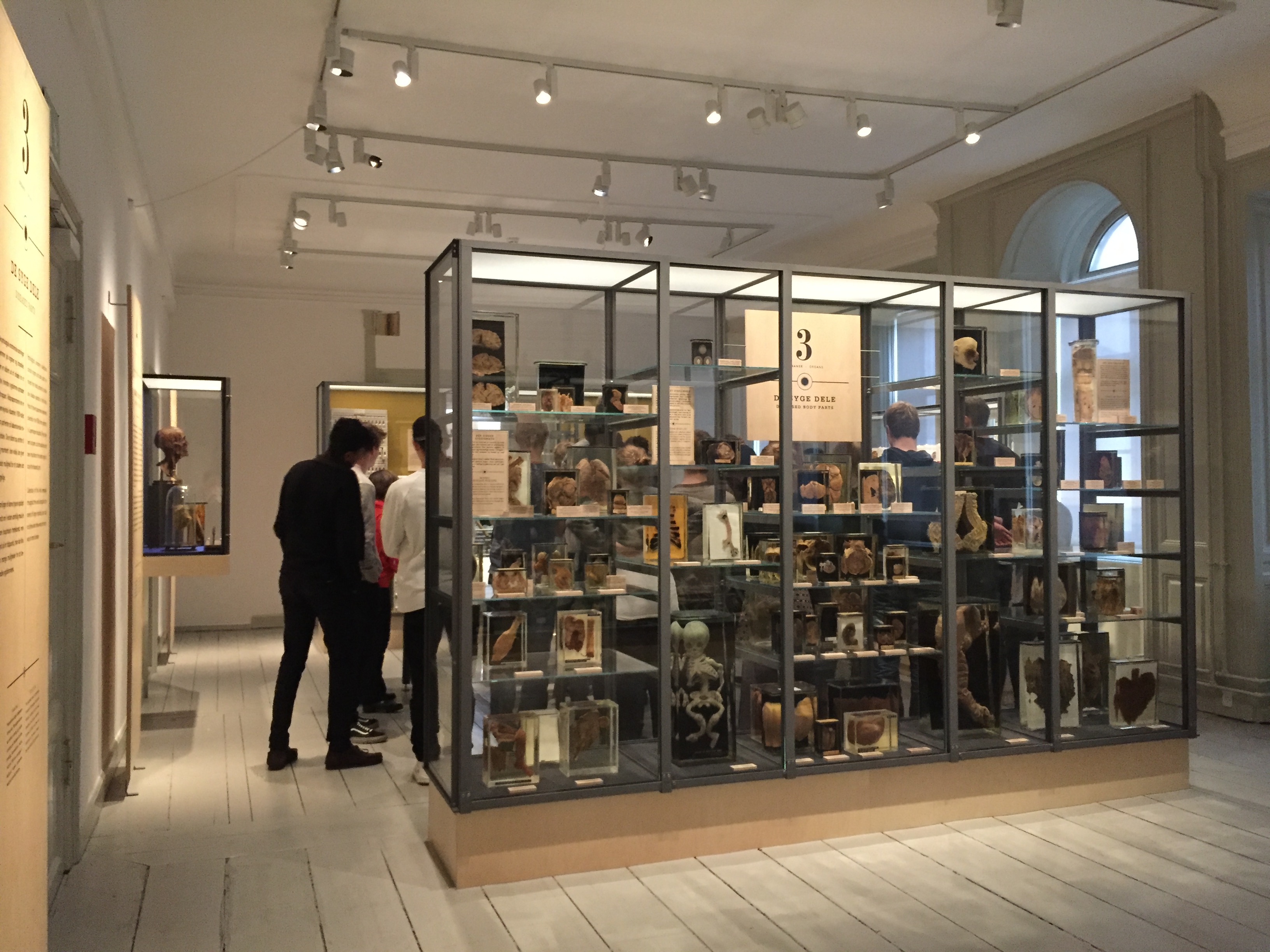
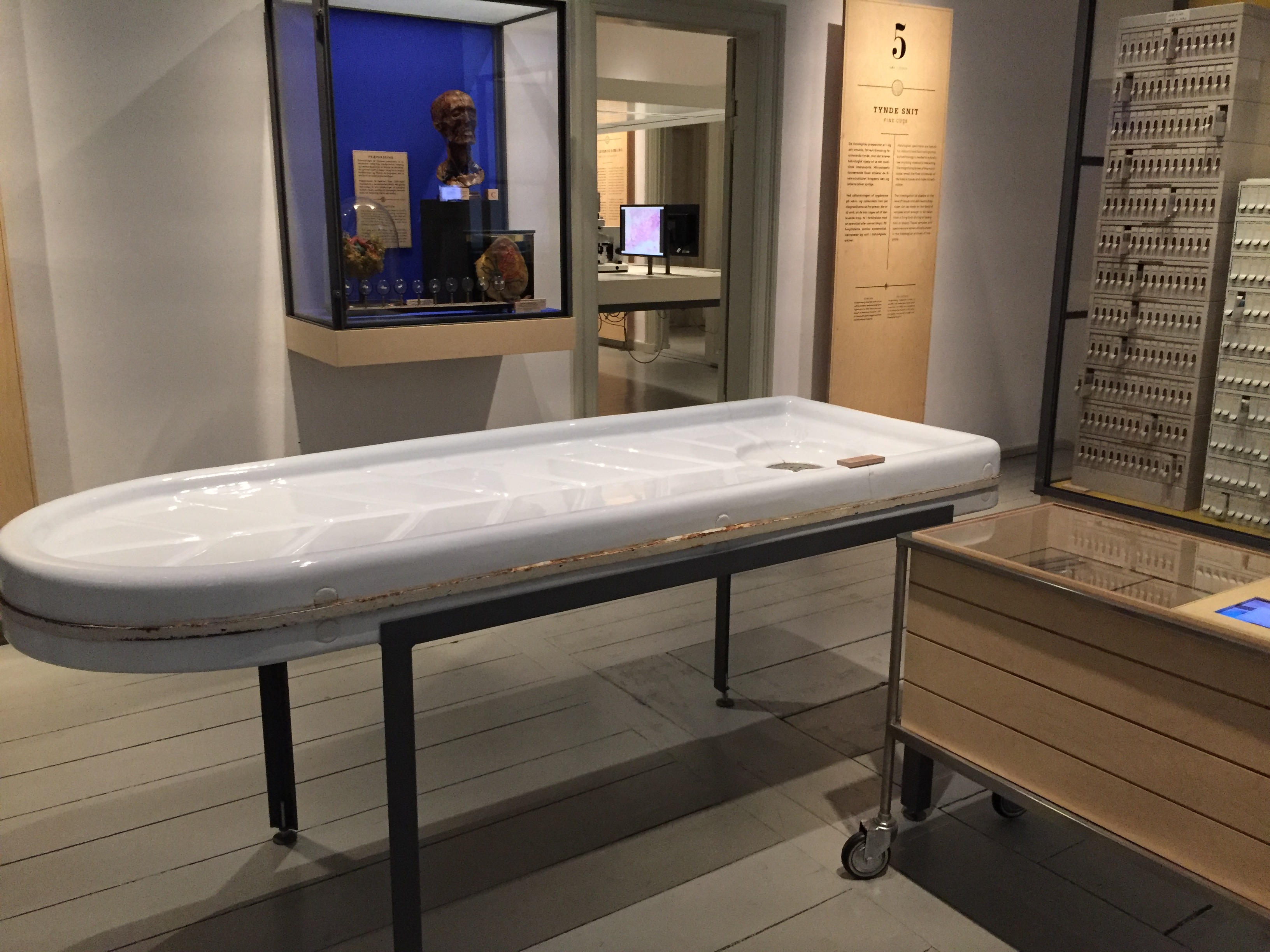
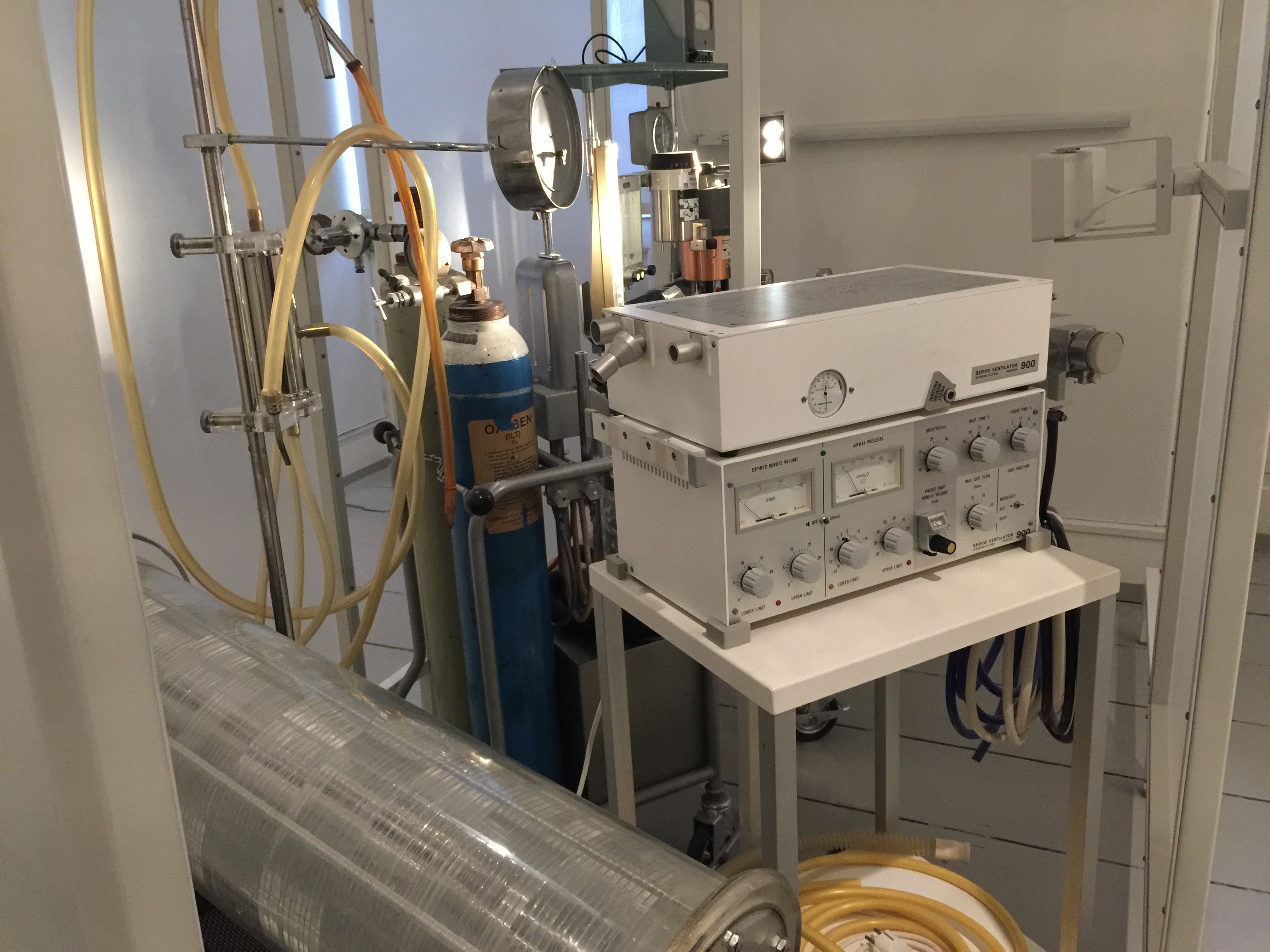
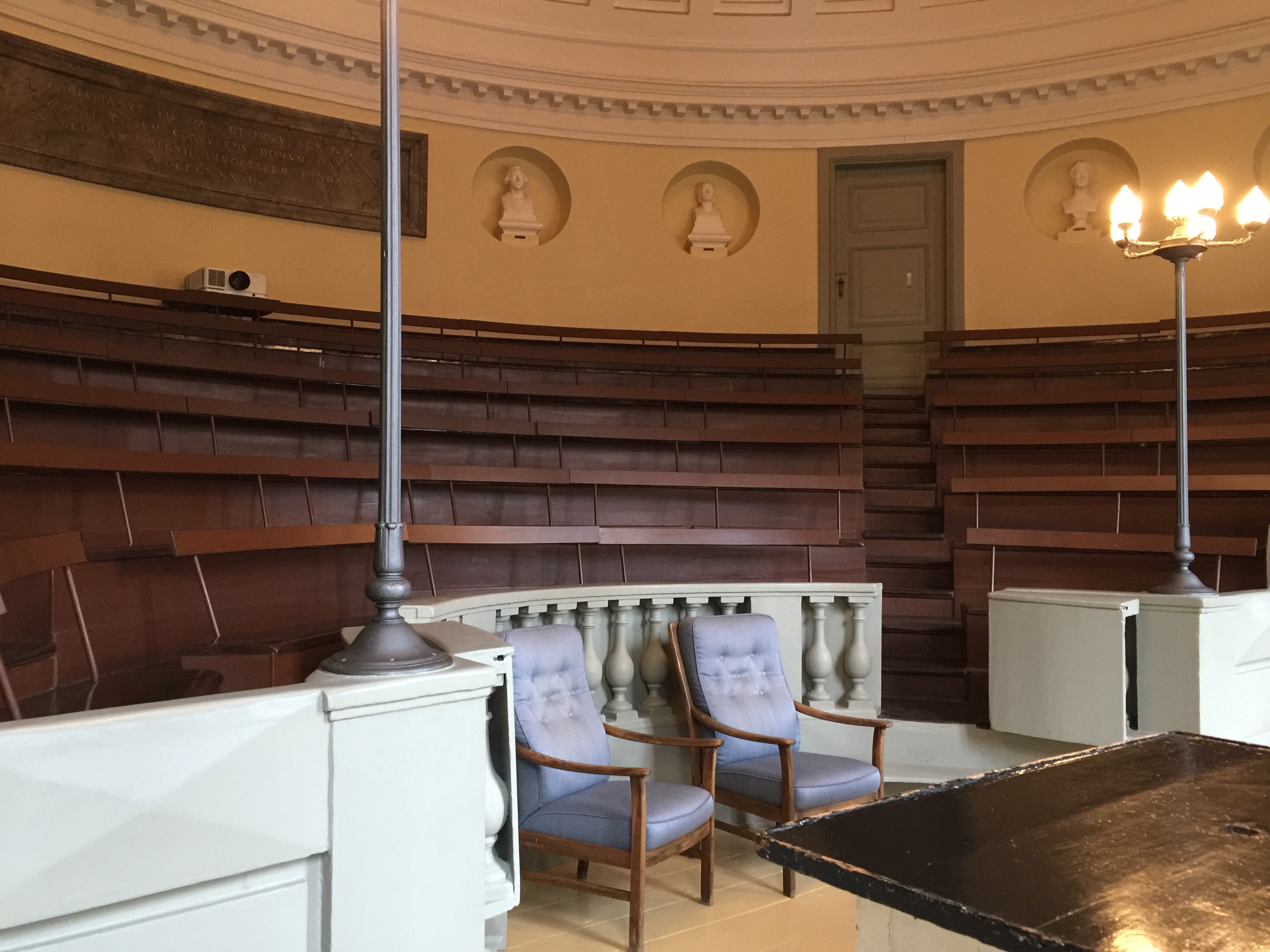
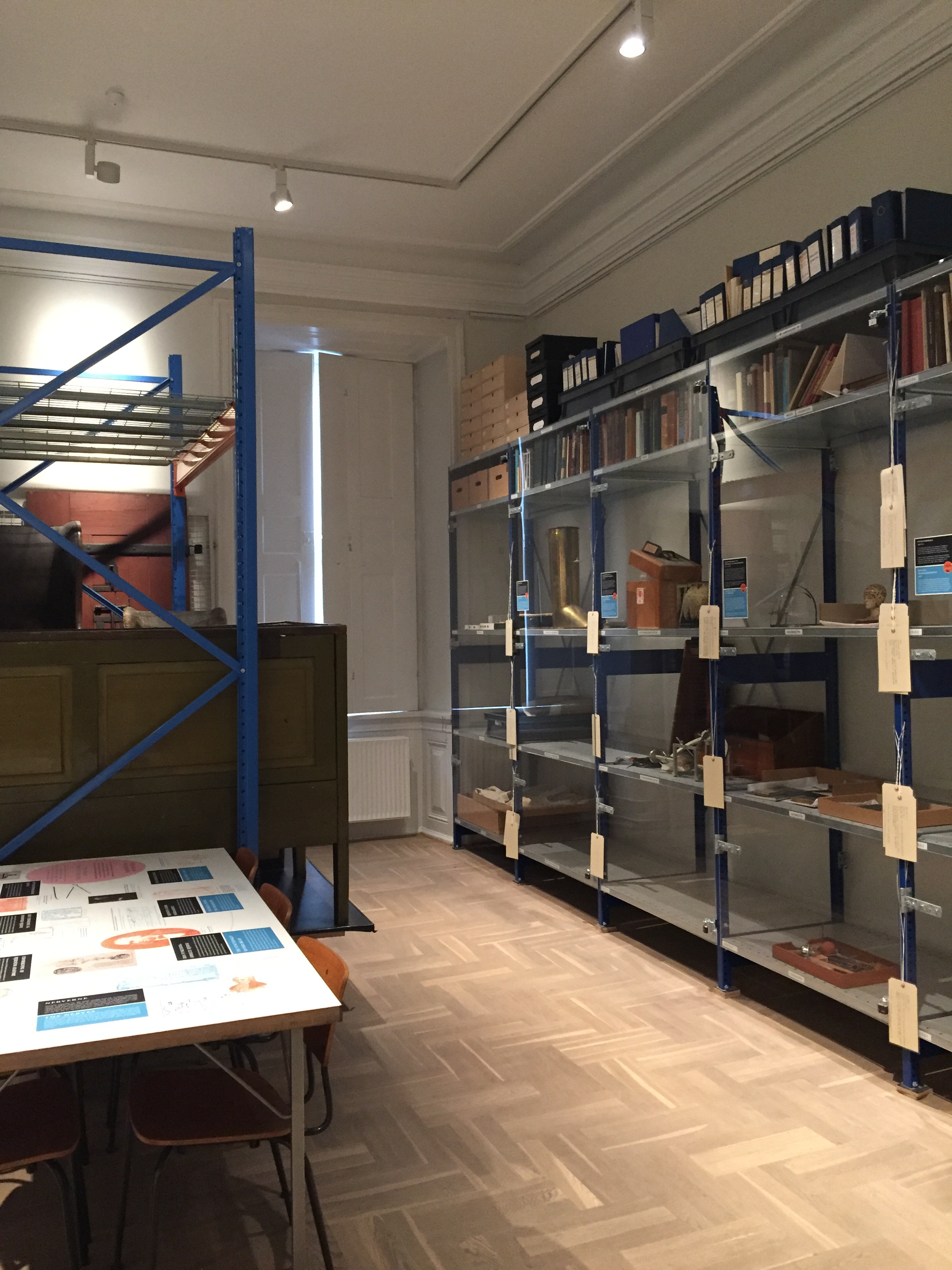
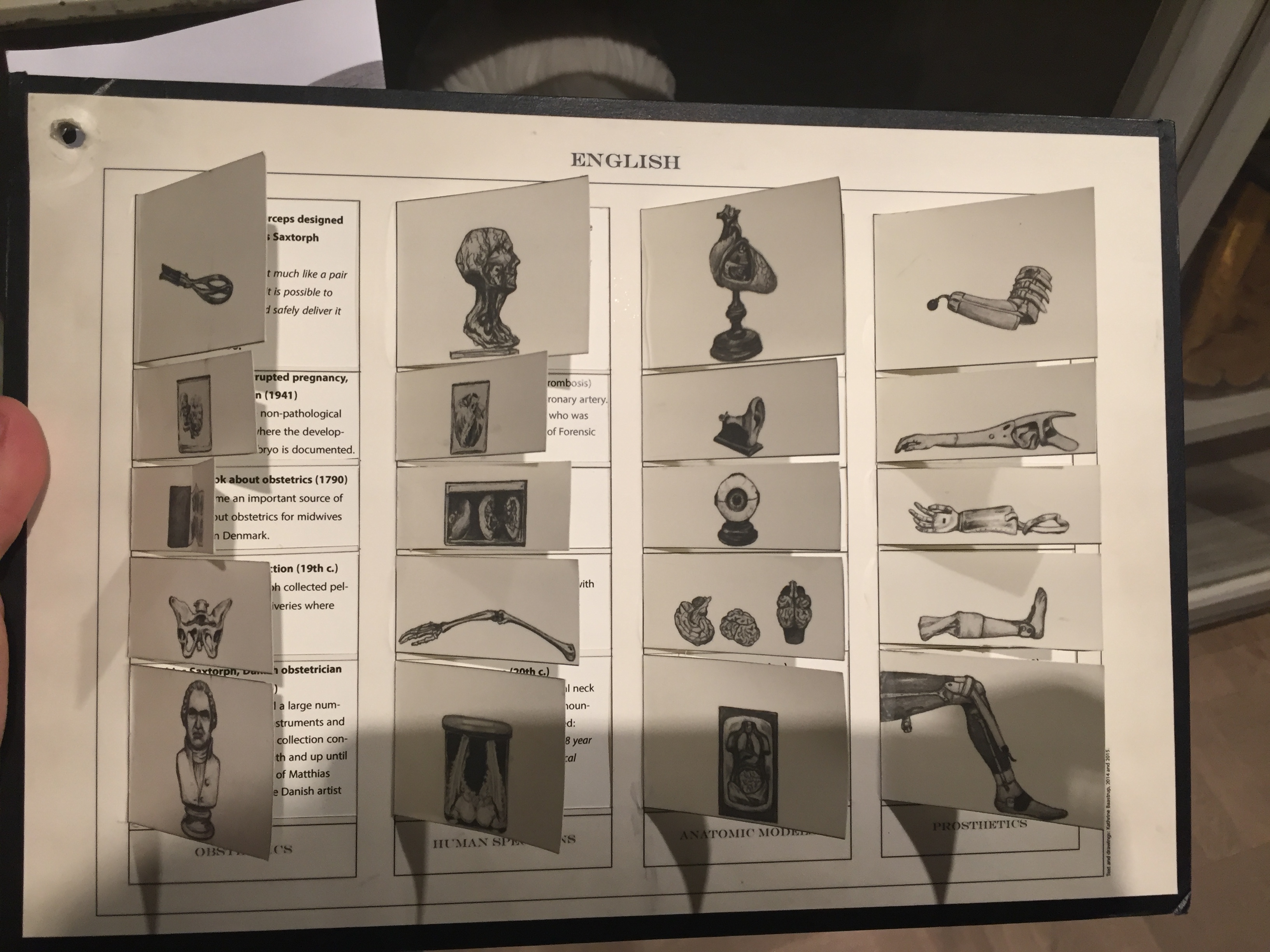
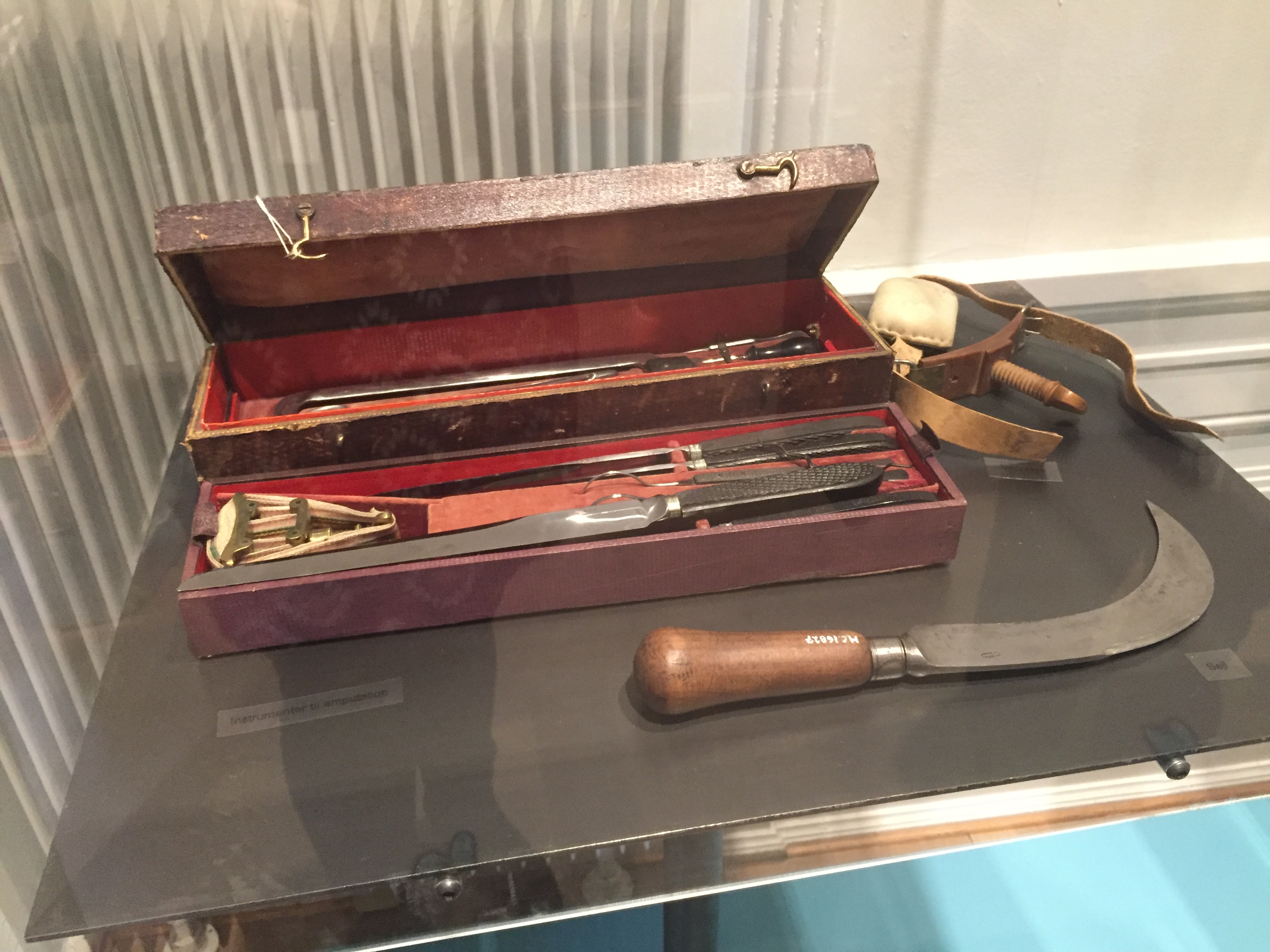
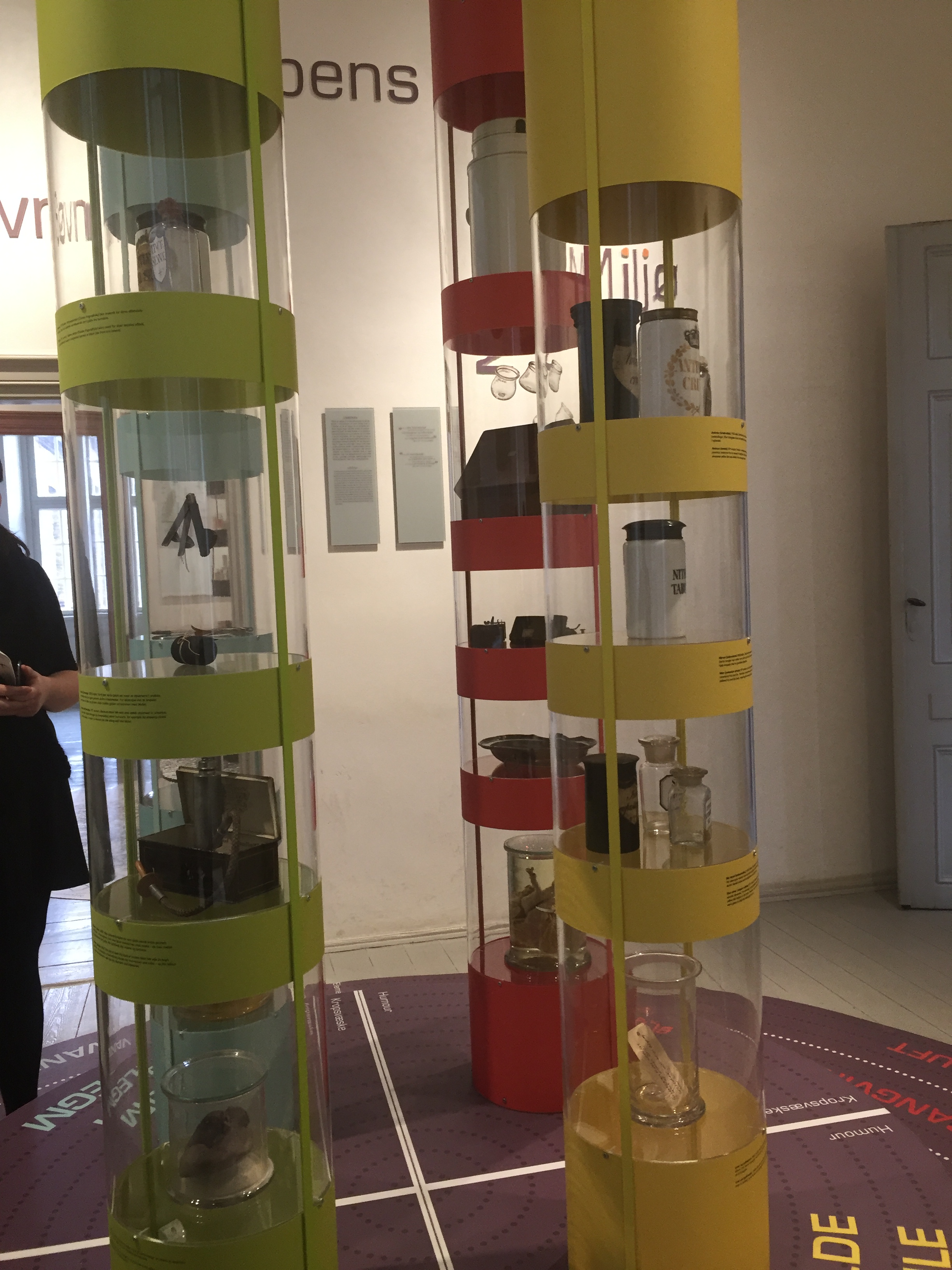
    • Medical Museion – I’m obviously incredibly excited to see the main medical museum of Copenhagen
    • Viking Ship Museum – I visited this museum in 2015 and will hopefully have time to return
    • Roskilde Cathedral – Similar to the Viking Ship Museum, we will only visit if we have time
    Nyhavn 4.jpg

    2. Stockholm

    We are planning on visiting quite a few museums in Stockholm. This will be my first visit and I am very excited to experience such a diverse range of museums! On the agenda is:

    • Vasa Museum – showcasing the only fully intact 17th century ship
    • Swedish History Museum – pretty self-explanatory what this one covers
    • Nobel Museum – permanent and temporary exhibitions on Nobel Prize winners
    • Nordic History Museum – a broader look at Nordic culture
    Riddarholmen_from_Stockholm_City_Hall_tower.jpg
    By Benoît Derrier from Stockholm, Sweden (Stockholm) [CC BY-SA 2.0 (http://creativecommons.org/licenses/by-sa/2.0)%5D, via Wikimedia Commons

    3. Iceland

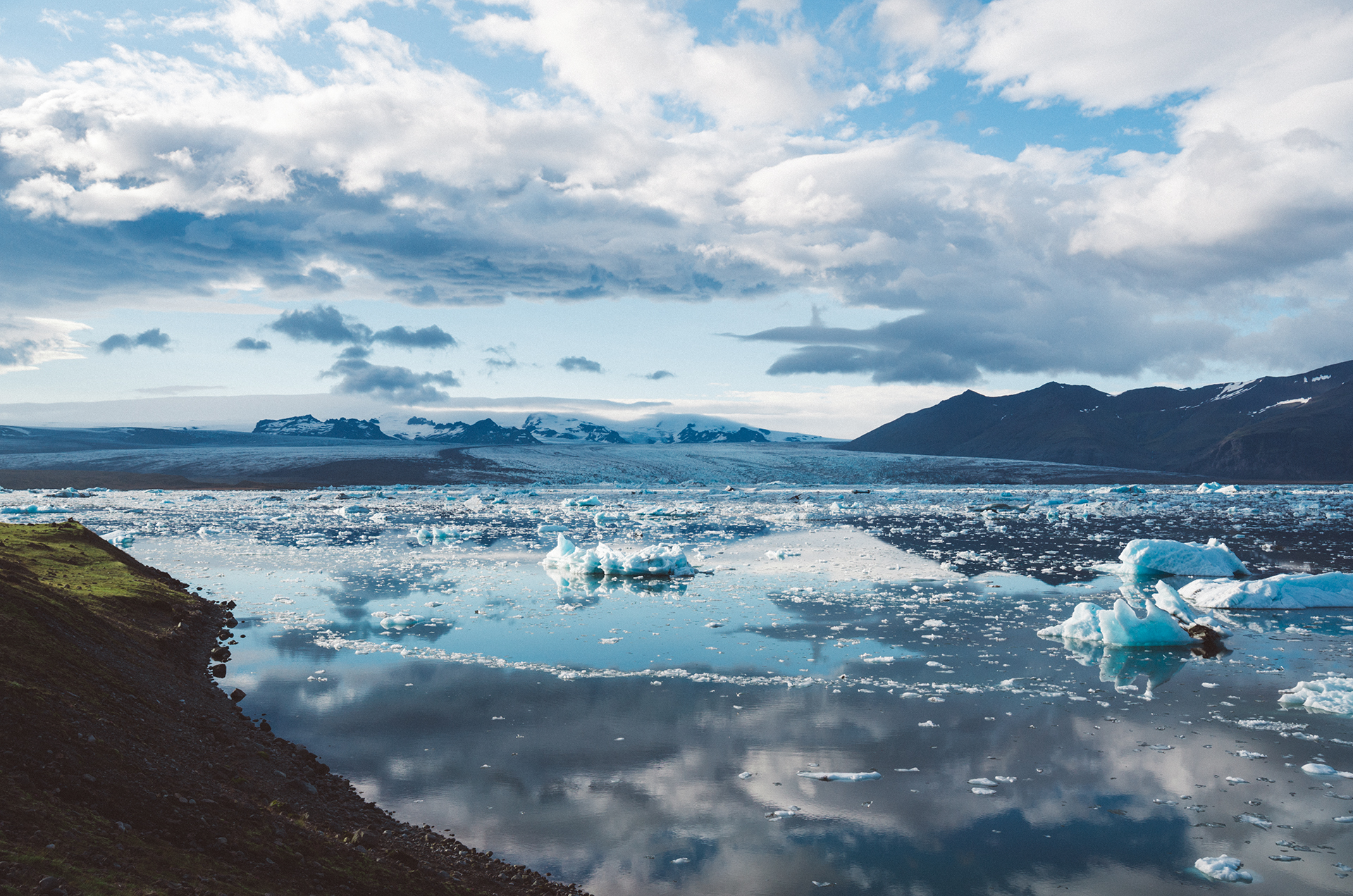
    Fingers crossed we have the opportunity to witness the Northern Lights!! Iceland has been on the top of my travel list for some time now. With stunning scenery second to none and an amazing array of woollen sweaters, this should be a whole lot of fun. We have planned:

    • Þingvellir National Park – material ruins of the first open-air assembly place for the whole of Iceland – circa. 930
    • Iceland National Museum – I love seeing how a country represents itself in a museum space
    climate-cold-glacier-iceberg.jpg

    We also have a few tours booked in each location. If I have time, I will write on these as well. I am really looking forward to sharing the beauty and wonder of Scandinavia!

  • Planting Dreams – Guest Post

    It is time for another fantastic guest post! As always, happy reading.

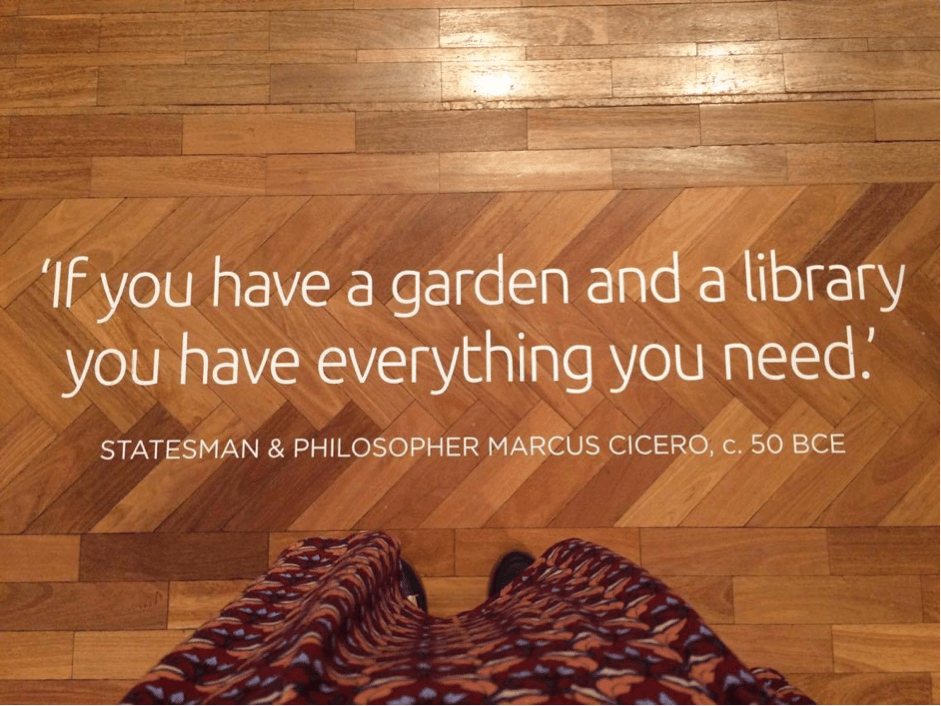
    Hello! I’m Rachelle, a Museum & Heritage Studies student and long-time floral enthusiast. When I learned that the State Library of New South Wales was combining two of my favourite things and mounting the exhibition ‘Planting Dreams’, I was immediately enthused. I came to the exhibition expecting to indulge both my love of history and all things botanic, but what I found was a thoughtful, inclusive and comprehensive mapping of the natural world in relation to Australia’s social history.

    As I said, the exhibition was highly comprehensive and covered a broad range of topics, so I’ll keep my synopsis brief and give the highlights. The most significant aspect of Planting Dreams, for me, was the interweaving of Indigenous viewpoints and stories of colonial tension. At no point did this feel ‘tacked on’, but rather thoughtfully integrated into the exhibition despite the focus on colonial Australian history. Additionally, the scope of the exhibition was impressive, managing to integrate personal relationships with nature, the role of plants during wartime, the impact of digital technologies on our interaction with the natural world, poetry and art, and colonialism. One aspect that was completely absent from the exhibition, which I felt should have been included, was sustainability and conservation.

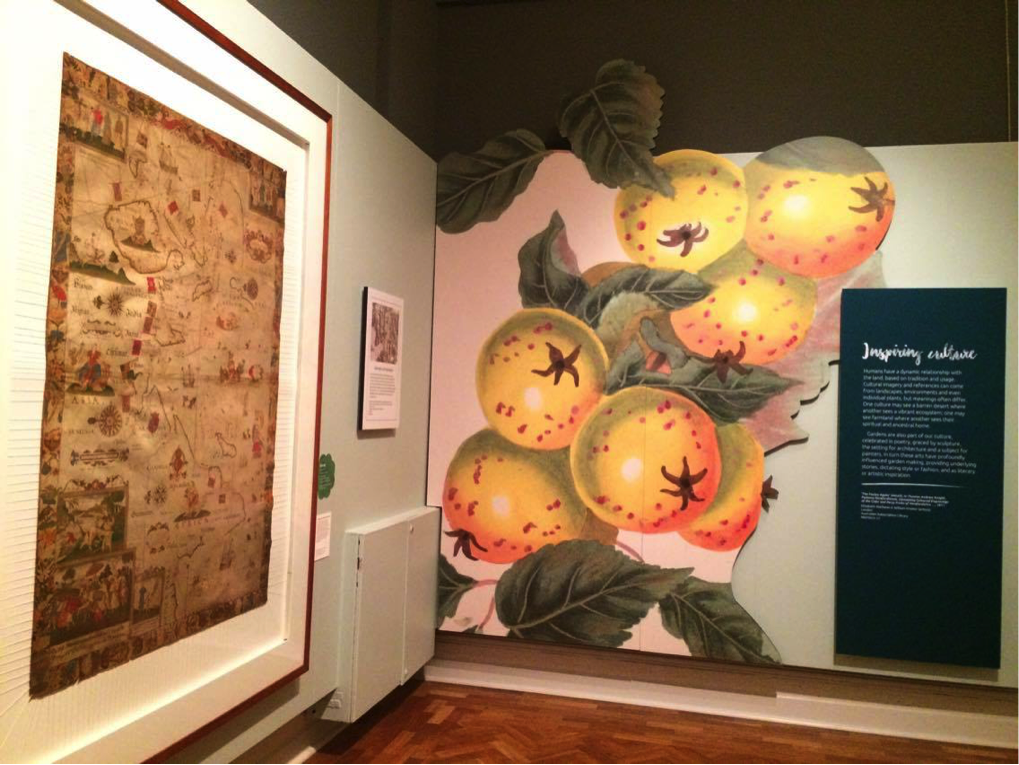
    Exhibition Fruit

    In relation to digital technology, Planting Dreams integrated a number of multi-media aspects, perhaps as a way to reference the influence of new media on gardening today. Beautiful scenes from spectacular gardens across Australia were shown in large scale on flat screens, and audio devices were located throughout the gallery that, when pulled from the wall and placed against the ear, played sound grabs from interviews with curators, historians, and Indigenous people.

    Although these technologies were integrated well into the exhibition, they could have been used more effectively and creatively. While the digital screens added depth to the photographs it would have been nice to see movement on the screens, such as rustling leaves or a running stream, and hear nature sounds, like birds calling or water trickling. I think it was a missed opportunity that could have added a whole new immersive dimension to the exhibition.

    In contrast, an aspect of the exhibition that was executed wonderfully was the opportunity it provided for visitors to engage on different levels depending on their level of interest and the time available to them, while still covering the main themes. The text throughout ranged from short quotes in very large front to text which became incrementally longer, with greater detail, so that visitors could choose how much information they wanted to consume. There was also thinking activities for children peppered throughout the displays. Different learning styles and preferences were accommodated, including tactile learners.

    The main activity in the exhibition was a ‘garden’ collectively created by visitors. Individuals were invited to sit at a table with craft supplies and follow the instructions to make a paper flower and help the garden grow. This space is time-lapse photographed to document the flowering of the garden over time, so when this is released see if you can spot me sit down, attempt to follow the instructions and make a flower, then give up half way through and move on.

    Overall, Planting Dreams was a beautiful exploration of how humans interact in different ways to the natural world around us and how botanic history can in many ways be synonymous with our social history.

    This post was written by Rachelle Ayoub. Her email is: rachelle-ayoub@hotmail.com.

    Thank you to Rachelle for a wonderful and engaging post! It sounds like a fascinating exhibition that covers so many interesting themes. After reading your review, I am excited to see how these themes interact and intertwine with each other in the exhibition space. Planting Dreams closes 15 January 2017.

    Just to remind everyone, if you would like to write for Curate Your Own Adventure send through a quick summary of where you’d like to review and why to curateyouradventure@gmail.com.

  • Australian Museum – Jurassic Lounge

    Last night was an amazing opportunity to experience a museum not only outside normal hours, but, from a whole different perspective. I have visited the Australian Museum prior to the Jurassic Lounge event and can confidently say that people dressed up as zombies and Eleven from Stranger Things don’t normally walk the halls. I will preface the entry by stating two facts about myself: 1. I love Halloween, 2. I don’t have a problem with museums wearing different hats to try and attract new audiences. In fact, I think the opposite.

    14922942_10153911722611722_1533552375_o
    Jurassic Lounge

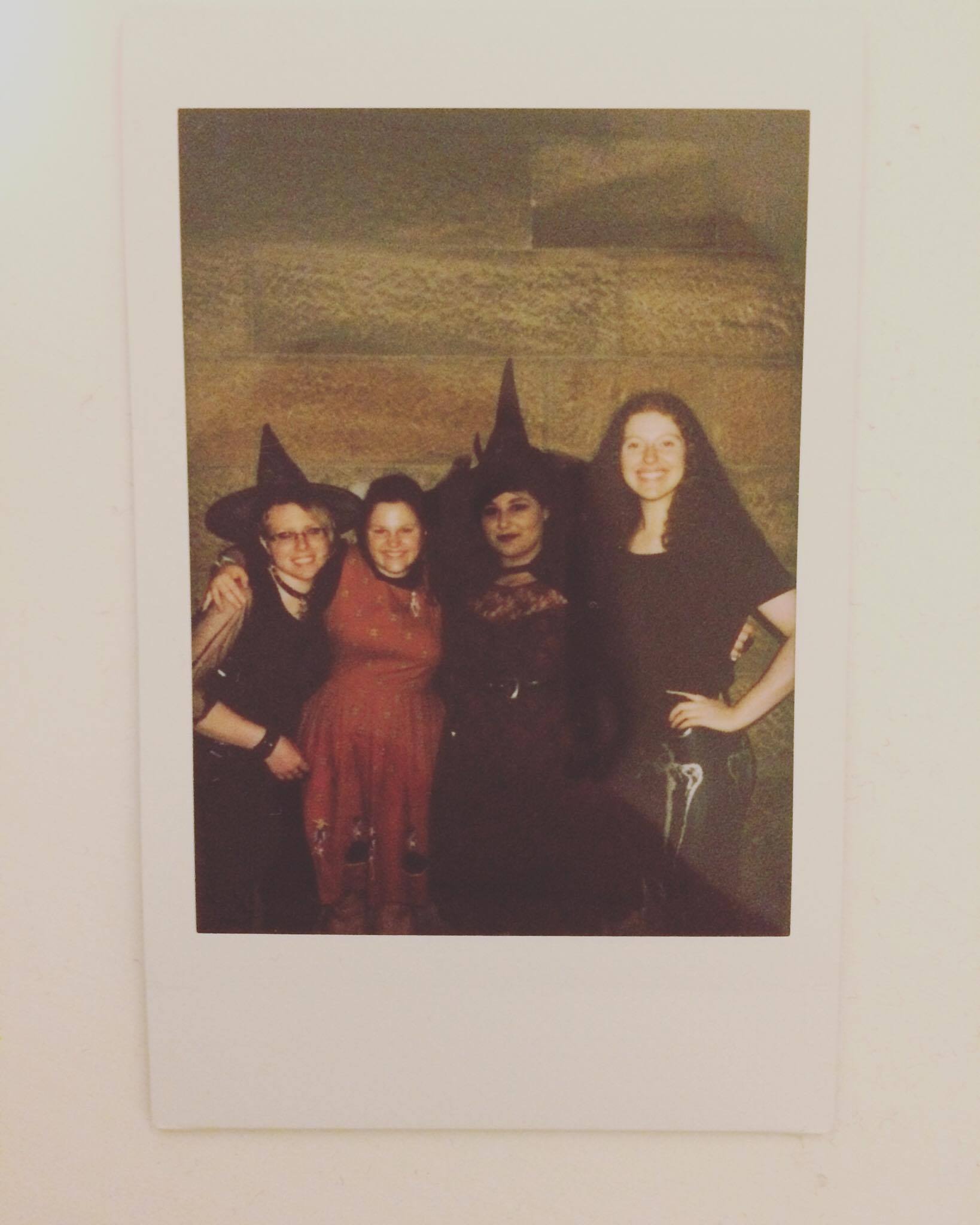
    Before delving down that rabbit hole, here is some information about what myself and some friends (shout out to Vanessa, Rachelle, and Emily) did last night and how we enjoyed Jurassic Lounge. Basically, the whole of the Australian Museum was transformed for Halloween with light shows, music, and special events on every floor. Every exhibition was open which was probably the most exciting thing for me to experience. A true night at the museum.

    We started by visiting the new Spiders exhibition. There is heaps of information and interactives available in the exhibition space. I personally enjoyed seeing the live spiders. Speaking of live spiders, towards the end of the exhibition was spider milking. Probably the most dramatic part of the night was seeing the seemingly dead spider wake up from its anaesthetics and try to run away. Luckily, it was captured. They are pretty remarkable animals and as long as they stay away from my bathtub I am content.

    14881206_10157670868440261_1631370583_o
    Jurassic Lounge
    14813148_10157670868225261_646460773_o
    Jurassic Lounge

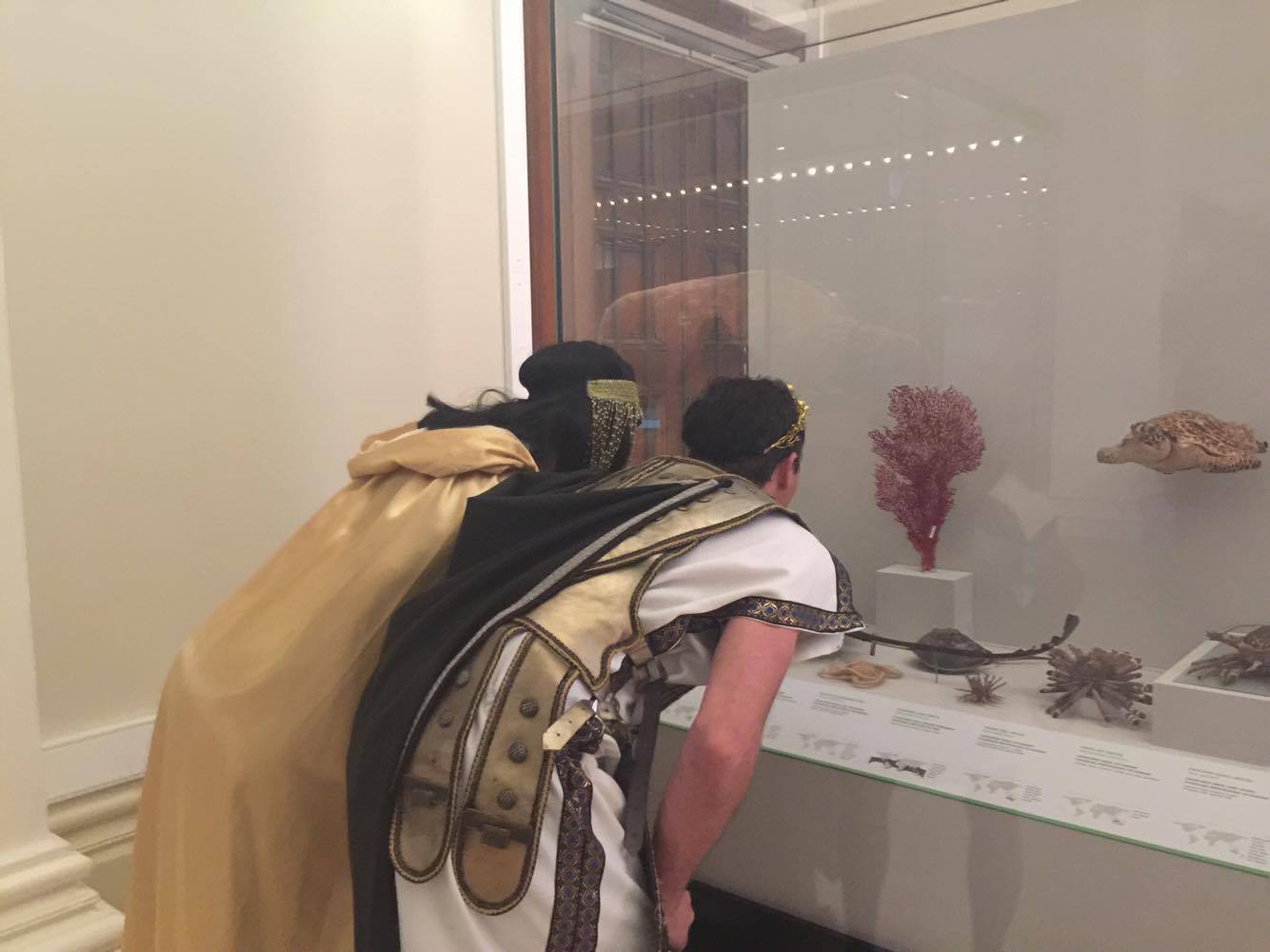
    After spider milking, we had a quick walk around the Wild Planet exhibition where we spotted Cleopatra and Julius Caesar inside.

    14813430_10157670866985261_2120756699_o
    Jurassic Lounge

    Next on the agenda was listening to a couple of ghost stories. The ghost tour company founded by Jack Sim in Brisbane is starting tours in Sydney that look pretty interesting. For my sixteenth birthday I went with his company on a ghost tour of Toowong Cemetery. It was quite scary but mostly filled with interesting historical facts so well worth doing!

    I was then determined to visit the “Plan your own Funeral” craft station where I made a mummy. You could also create your own tombstone and add it to the miniature cemetery. Last, but not least, we visited the Canyon Road murder mystery room where we watched a live performance of a Wolf Creek-style murder.

    That provided a very quick summary of the night!

    Going back to a point I made in the introduction, what I noticed was that a large majority of visitors were actually walking around the exhibitions, reading the panels, commenting on the displays etc. Saying that these events commercialize the museum at the expense of education, risk oversimplifying what happens during the event. Rather than being pure entertainment, or purely educational, these nights occupy a sort of gray area. I am very glad I went and saw a different side of the Australian Museum. These events do raise much broader and more difficult questions such as what is the role of the museum?

    If I have learnt anything from the last 18 months of my Masters degree it’s that placing museums in a pigeon-hole is not only impossible, but, can be dangerous. There is great potential out there for museums to venture down new and creative paths, tackle controversial issues, and reinvent themselves. Each museum has a different set of agendas etc so some ideas might not work as well for some. With that knowledge, it is always exciting to see the next step a museum may take and think about what exactly is the museum of the future.

  • Shipyard Stories – Cockatoo Island

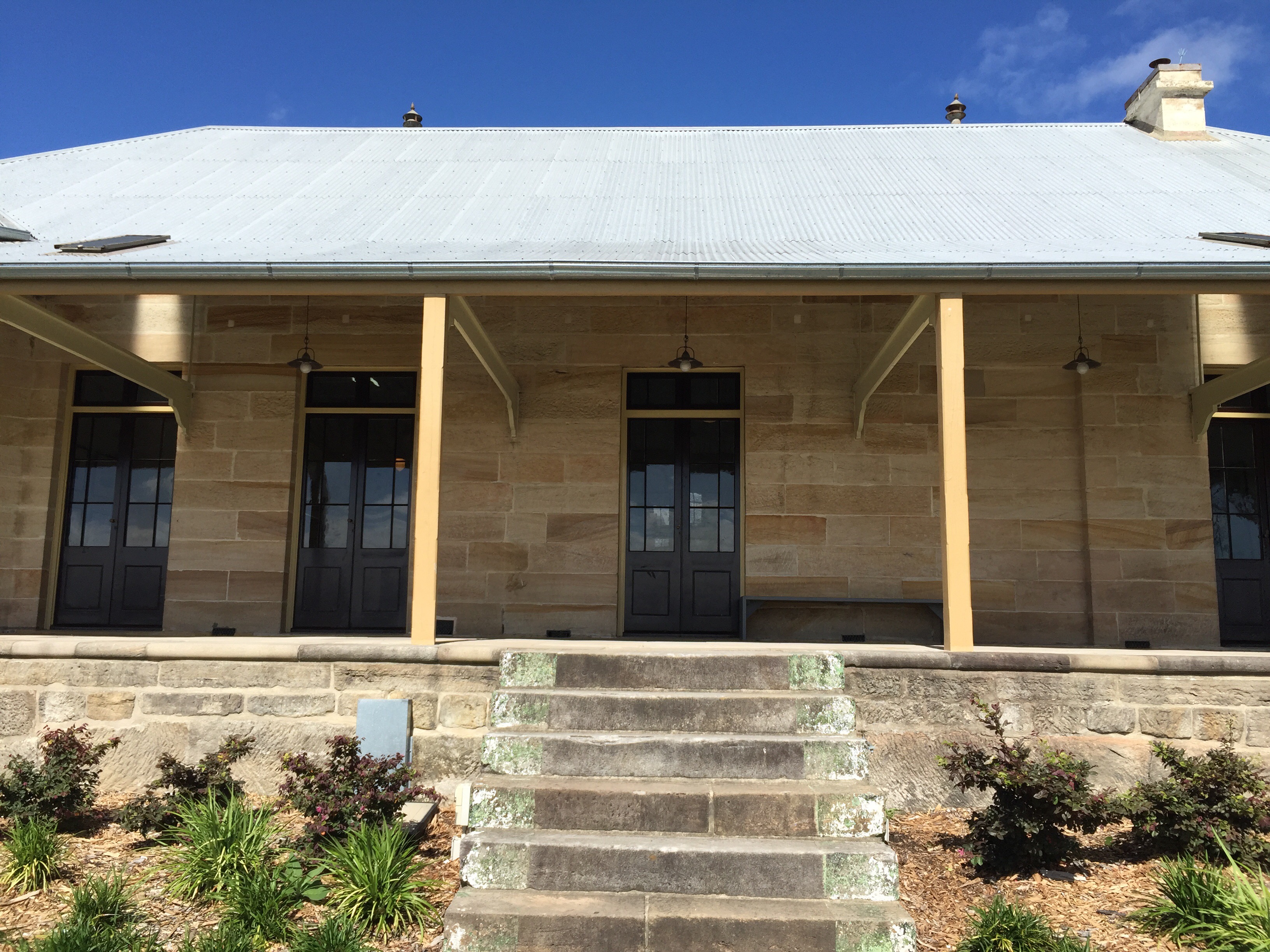
    Although I have been working on Cockatoo Island for just over a year now, I’ve never truly taken the time to walk through the Shipyard Stories exhibition. The exhibition is set in a beautiful sandstone structure that was originally the superintendent’s house from 1839 to 1859. Its various rooms have been recently transformed into gallery and museum spaces.

    A quick history of the house. It was built by Charles Ormsby, the first superintendent, in 1840. He was a pretty awful individual. When he was fired, the second and final superintendent, Gother Kerr Man, moved in along with his twelve children. Needless to say the house required an extension and was transformed into the large building it is today.

    Cockatoo Island

    What I enjoyed most about this exhibition was the level of collaboration between the curators and those who worked on the island in the shipyard from the 1960s to the 1990s. What was excellent to see at the end of the exhibition was a book where people could add their own stories and experiences. I flicked through some of the entries and what has been documented is amazing. I think including the community in this way will yield some great and diverse insights that could potentially be incorporated into our tours or other exhibitions in the future.

    Cockatoo Island

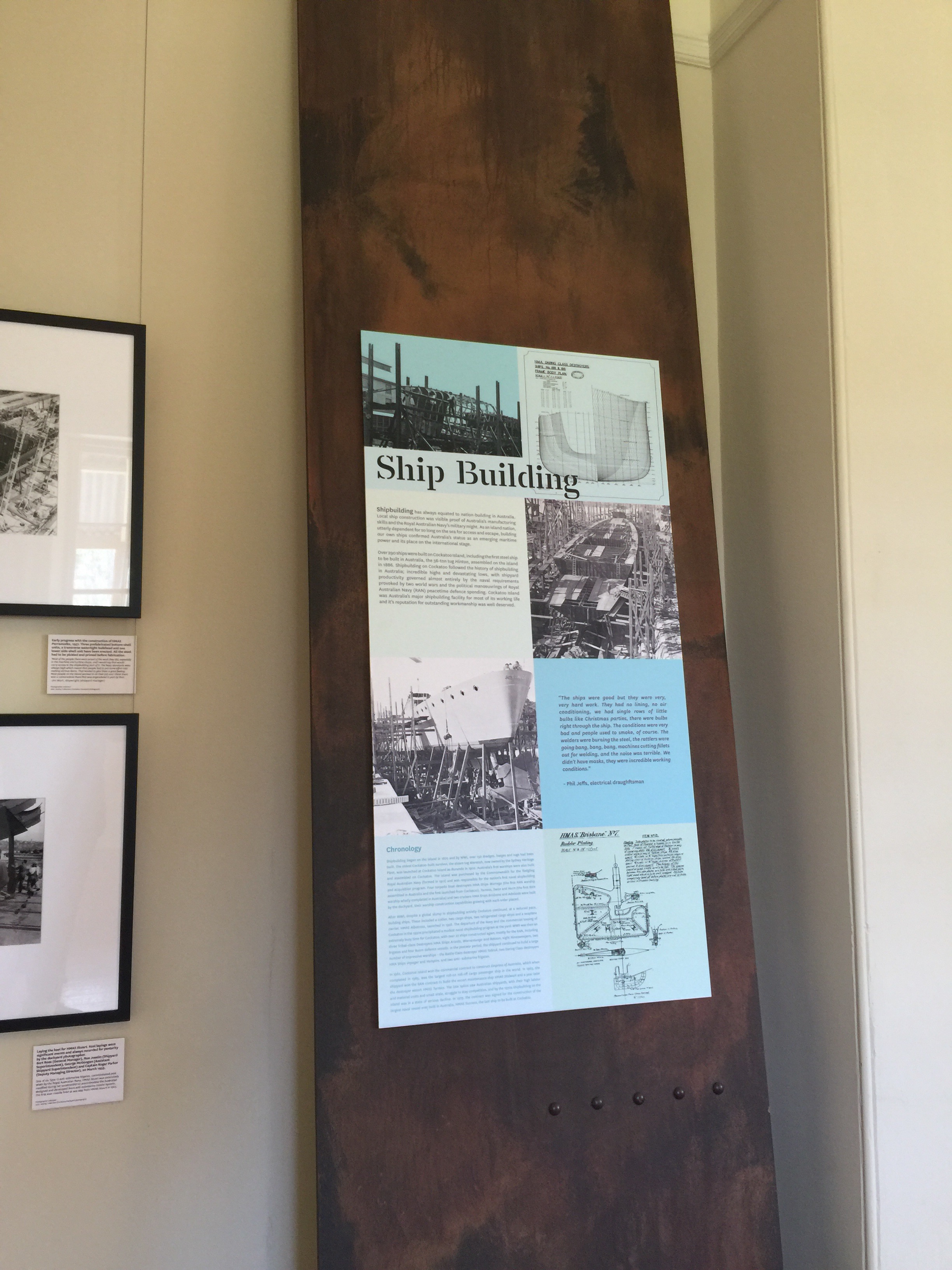
    What else was interesting to see were the thematic panel boards and display cases manufactured from parts of old machinery and ships left on the island. To provide some context, Cockatoo Island was a shipyard from the convict era until 1992. In 1992, the Australian Government withdrew their building contract and the island was abandoned. Ten years later the Sydney Harbour Federation Trust took ownership of the island. A wonderful team of volunteers have since followed including some who once worked in the shipyard. They have done amazing work restoring old machines and utilising scraps etc to create the panels and cases for this display. It was an addition to the exhibition space that had great impact.

    Cockatoo Island

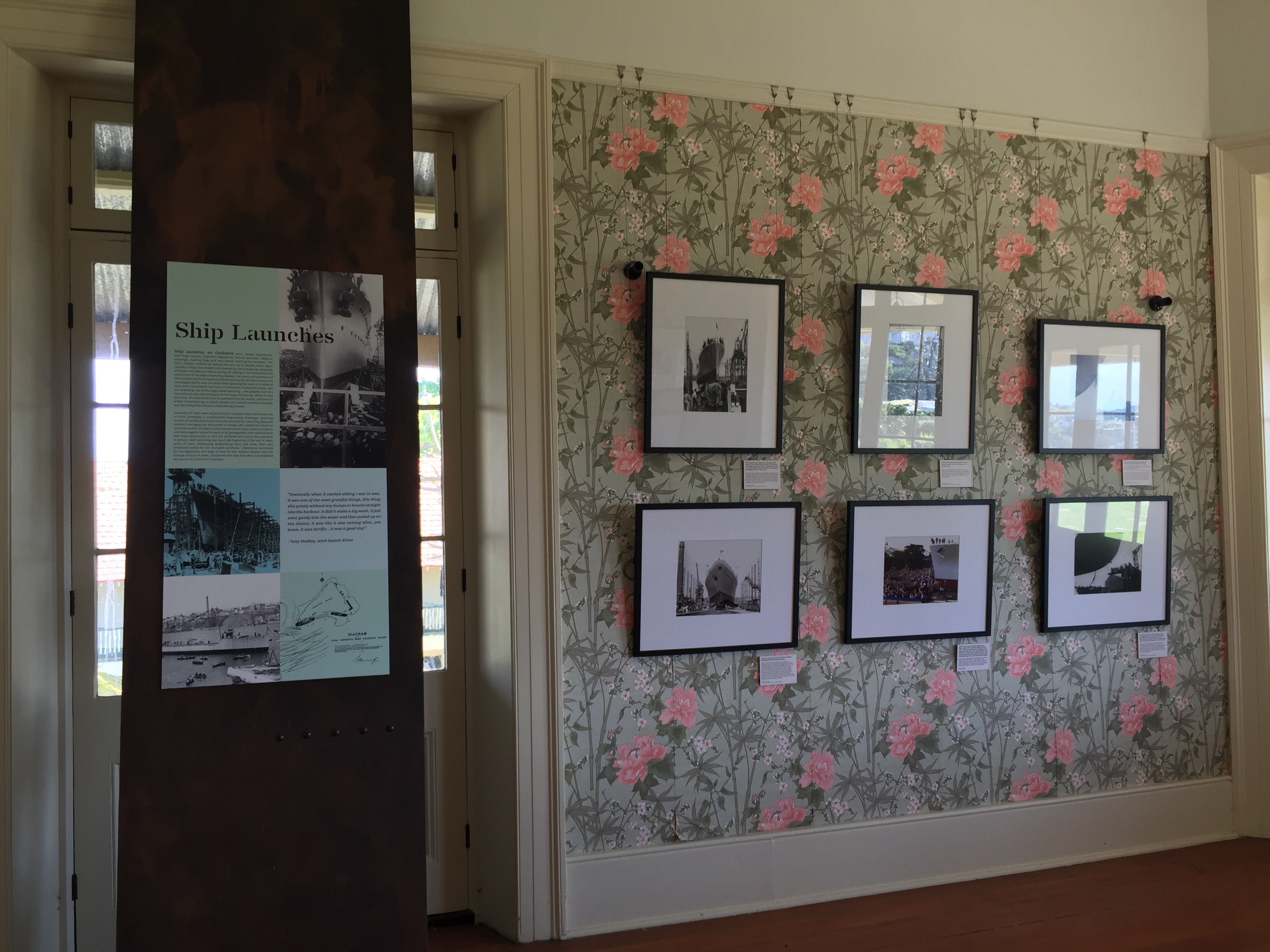
    Each room in the house was uncluttered and easy to manoeuvre with photographs hanging down the wall and, at most, one display case in the corner. The photographs were a fascinating mix shedding light on both work on the island and also, more broadly, life on the island. There was even a little display concerning love on the island.

    In a couple of the rooms were audio visual displays. One was a loop of archival film footage of the shipyard. The other room had a projection of still photographs. I didn’t spend much time in these rooms as I enjoyed walking through the house and seeing the photographs on the walls. I found the timeline near the beginning to be very helpful in contextualising the photographs and some of the panels. It was also lovely and colourful so catches your eye on entering the space.

    Cockatoo Island

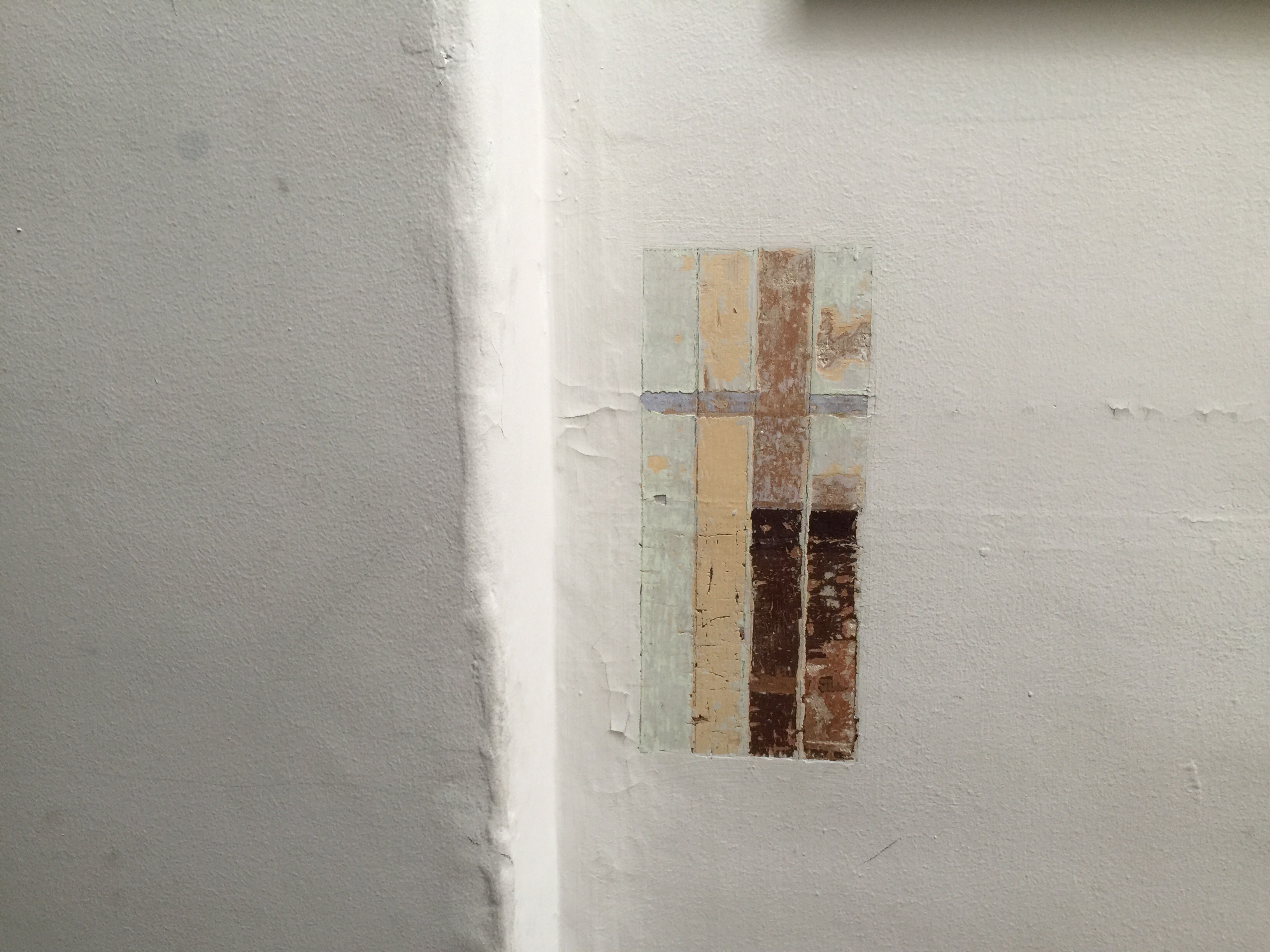
    Two more things to mention before wrapping up this post. I got way too excited seeing some areas of wall that had been scraped to reveal the different layers of paint colour. I remember learning about this technique at Brighton in the Regent Town House. The original cream colour now covers the walls.

    Cockatoo Island

    Finally, one of the rooms contains contemporary paintings or visual memoirs by Bill Nix who worked on the island during the 1960s and 70s. His work captures aspects of his time on the island including the areas he worked and the machinery he used. They depict how he viewed the island both then and now. It added another method of interpretation to the exhibition and, in the space of one room, communicated the significance of this era continuing today.

    As the convict buildings on the island are what draw crowds in, it was great to see this other history represented and displayed. It’s a nice exhibition if you find yourself on the island wanting to actually see what life was like when it was a shipyard. Even if you’re not interested in shipbuilding history, there will be at least one photograph that ignites your imagination.

    Cockatoo Island
  • Internship at the Trainor/Owen Archives

    Today marked the last day of my twenty-day internship at the Trainor/Owen Archives within the Australian and New Zealand College of Radiologists. I am so grateful I had the opportunity to intern with another medical collection! This post is basically going to summarize what I did over the past twenty days/ten weeks. To start, I would like to say a huge thank you to my supervisor Eva Stokes-Blake for her support. It has been a very valuable internship for learning archive-specific skills and I hope to apply and develop these further in my new job.

    Throughout the internship, my main role was to catalogue all objects in the collection. This included not only objects held in the archives, but also, those scattered around the College. In total, there were just over 400 individual objects. These were all described, measured, photographed, and categorized. On top of this, I also compiled a mini condition report for each object. In the near future, these objects will be uploaded to the online database system, eHive. I am so excited to see the collection digitized and displayed to a wider audience.

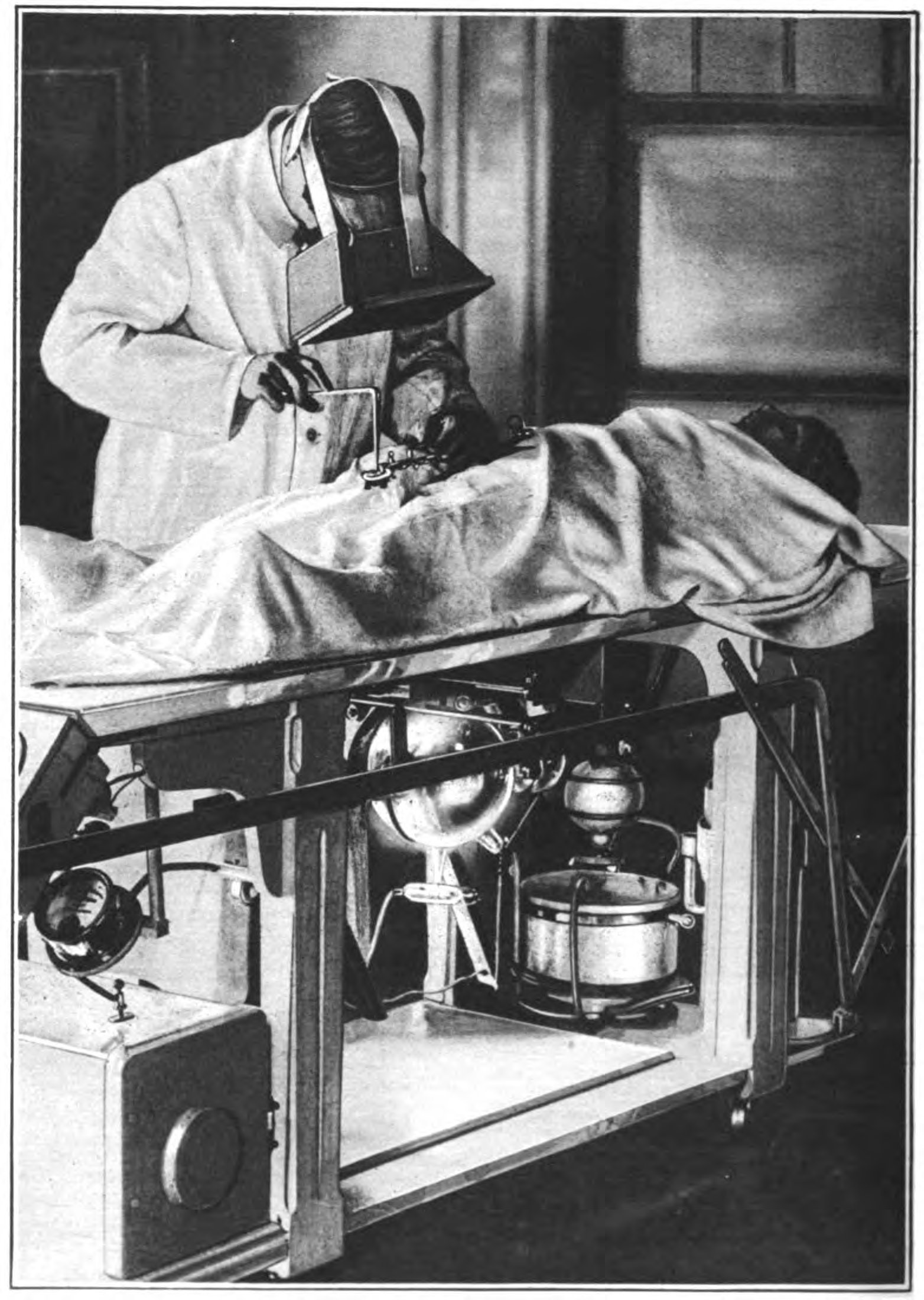
    Over the last two days of my internship, I curated a small exhibition titled “Tools of the Trade”. On display are a range of radiology kits from the 1900s to the 1960s. My favourite kit is the silver slide and developer kit on the top shelf. This is mainly because its inscriptions were all in German and I was able to translate quite a large chunk of the information booklet. A great way to refine my German skills while at work! I had a lot of fun developing this exhibition, especially selecting the objects and theme.

    SAM_1812_Fotor.jpg
    My Exhibition Case

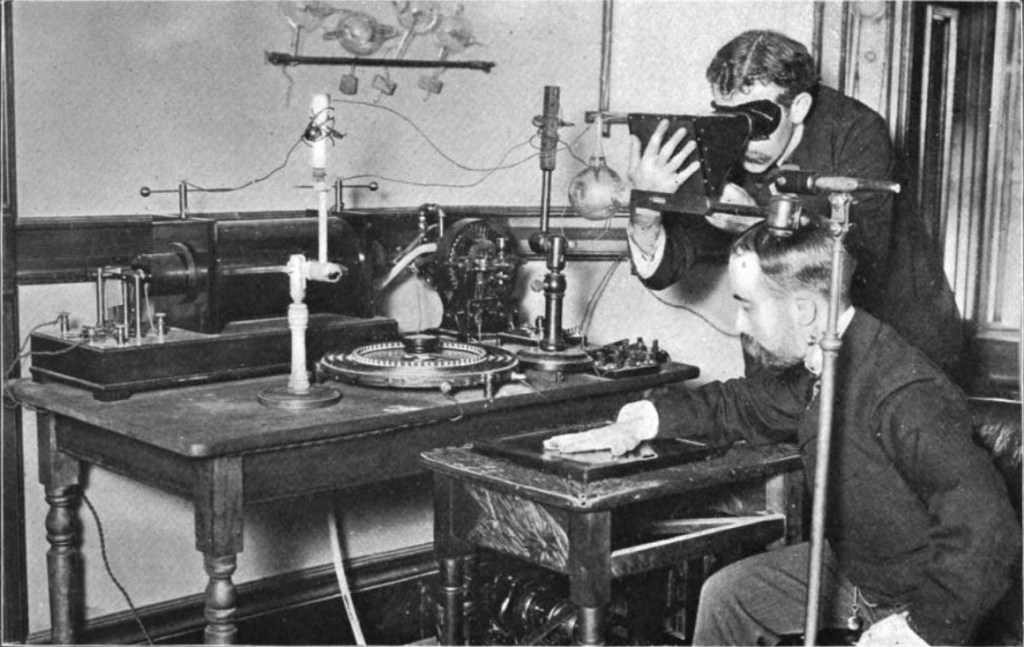
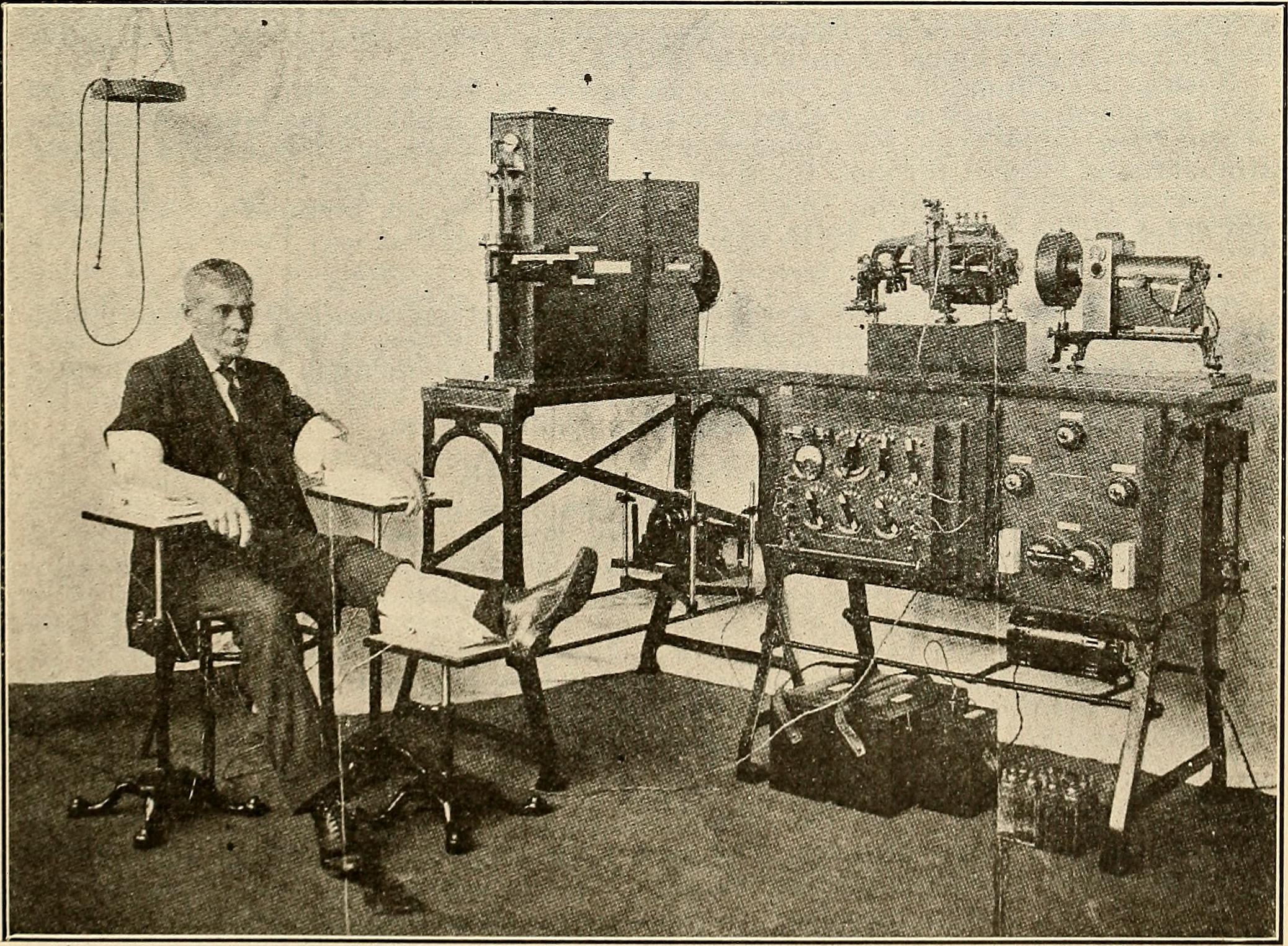
    I started this entry with a photo which is amazing for a couple of reasons. It is not from the collection, but, one I found online. After working with a historic radiology collection, I can now identify a few of the objects. The man standing is looking through a fluoroscope. These machines passed X-ray beams through a body part and transmitted the image to a monitor. It essentially allowed for a live-stream of your bones. The other reason I love the photograph is because it shows how some of the objects were used/stored. It is so interesting to see glass X-ray tubes hanging at the back of the photo. I’ve included a few more historic photos because they wonderfully communicate the history of the profession and the types of objects I was handling.

    Principles_of_electro-medicine,_electrosurgery_and_radiology_-_a_practical_treatise_for_students_and_practitioners._With_chapters_on_mechanical_vibration_and_blood_pressure_technique_(1917)_(14574279559).jpg
    World_War_One,_France;_a_radiographer_wearing_protective_Wellcome_L0050611.jpg
    World War I Radiographer in France
    WW1_fluoroscope_operation.jpg
    Fluoroscope Operation in World War I
    X-ray_treatment_of_tuberculosis_1910.jpg
    X-ray Treatment of Tuberculosis – 1910

    Where to from here?

    I have a major essay to complete on an aspect of my internship. I am hoping to focus on a few particular objects in the collection and what light they can shed on the development of the College and of the specialty. I’ve also made the decision to return to the archives as a volunteer. I am going to see my project through to the end which should be really exciting!

    Until then, I have a lot of University work and other work to get through. It is going to be an intense couple of weeks. I am ready to get through the work and enjoy a nice holiday at the end!!

    Images (in order of appearance):

    • (By William J. Morton – Downloaded 2007-12-23 from William J. Morton and Edwin W. Hammer (1896) The X-ray, or Photography of the Invisible and its value in Surgery, American Technical Book Co., New York, fig. 54 on Google Books, Public Domain)
    • By Internet Archive Book Images [No restrictions], via Wikimedia Commons
    • Via Wikimedia Commons
    • By J. P. Hoguet [Public domain], via Wikimedia Commons
    • By Noble M. Eberhardt [Public domain], via Wikimedia Commons
  • Manly Museum & Art Gallery – Guest Post

    I am so excited to share with you the first guest blog post on Curate Your Own Adventure. Happy reading!

    Hello! My name is Imogen, and I was lucky enough to be asked by my good friend Bec to write a guest post here on Curate Your Own Adventure. I have just graduated from the Master’s program in Museum and Heritage Studies at Sydney University, and continue to indulge my love for museums in Sydney and further afield.

    I feel lucky that despite the fact that I have always lived in Sydney, and have visited museums and exhibitions for as long as I can remember, I continue to discover great museums, galleries, and other cultural spaces in my hometown. Over the recent October long weekend, I spent time house-sitting in Manly, one of the largest and most popular beachside suburbs in Sydney. I took this opportunity to visit the Manly Museum and Art Gallery. Despite the fact that I was born in Manly and spent much of my childhood there, I had never visited nor had I ever heard much about it. Of course, I felt obliged to visit and went to explore. The Museum is conveniently located within a two-minute walk of the Manly Wharf, the most popular gateway for visitors to the area, and sits next to the Sealife Aquarium, another popular spot for visitors.

    The fact that I had been largely unfamiliar with the Museum before my visit and that I knew it was an institution operated by the local council led me to naively assume it would be quite small in scale with perhaps a simpler approach to local history. I am pleased to report I could not have been more wrong!

    My naïve assumptions were washed away as soon as I entered the museum space. What struck me the most as I moved through the exhibition spaces (the museum and art gallery spaces are different rooms within the same building) is the sheer size of the space the curators have to work with. It is certainly one of the largest exhibition spaces I have seen for an institution of this type, which was great to see. I started my visit in the museum area, which is currently housing the exhibition Manly: Art From the Vault, showcasing the long history of artistic interpretation of the area from the Museum’s existing collection. This surprised me, as I expected the museum space to be more object and information based, knowing that the rest of the building was dedicated to visual arts. As I moved through the exhibition spaces, however, I realised that the institution’s collection does seem to be more focused on artworks rather than other museum objects and that the dedicated gallery spaces are used for the aesthetic display and commercial sale of artworks.

    The Museum exhibition did, however, contain a number of objects, some of which were arranged in what were labelled ‘still life of objects’ displays, alongside particularly informative text panels. The panels discussed both the heritage of Manly itself as well as the depth of the institution’s collections. From these panels, I learnt that since the 1980’s the institution has narrowed its collection areas to focus on swimwear and beach memorabilia. There have been donations from many notable Australians contributing to what is now recognised as one of the most significant collections of its type in the country. I was, therefore, surprised to see only a handful of swimwear and beach memorabilia on display. Especially considering that this is the focus of the institution’s collection. I was intrigued however by the way the curators had chosen to display dozens of surfboards in an innovative and engaging way. I can only imagine how many surfboards the Museum has received through donations. The way they were hung from the ceiling allowed a large number of them to be seen and enjoyed without encroaching on the rest of the exhibition.

    manly-5
    Togs in Maleny Gallery

    A large window in the museum space looked out onto the harbour and wharf drawing connections between the objects and artworks on display and the location. Beyond the museum space, the floor space of the gallery is about two to three times that of the museum. Again, I was surprised and amazed to see so many resources being dedicated to the arts on a local level. Just like in the museum, the artworks in the gallery were specific to the local area in terms of the subjects being represented, and most of the artists were also locals. Unlike the museum space, most of the artworks seemed to be available for purchase. I was also surprised and excited to discover that one of the rooms in the gallery space was a dedicated ceramics gallery, showcasing the institution’s large collection of ceramics from Australia and overseas. These ceramics have been donated by Helen Robin and Sylvia Longfoot and purchased by the gallery following a recent exhibition, making up a 370-piece reference collection.

    My visit to the museum and art gallery left me heartened to see such a rich collection, curated and displayed in such a beautiful, effective, and engaging way (I was also glad to see the collaborative work of curators, interns and volunteers). I was humbled that my initial assumptions were proven wrong. Next time you are in the area or feel like catching the ferry into Manly, I highly encourage you to visit the Manly Museum and Art Gallery!

    This post was written by Imogen Kennard-King. Her email is: Imogenkennard.king@gmail.com.

    A huge thank you to Imogen for writing such a wonderful post on Manly Museum and Art Gallery. I will definitely make time to visit the gallery soon! If you would like to write for Curate Your Own Adventure send through a quick summary of where you’d like to review and why to curateyourownadventure@outlook.com. I hope to publish some more amazing reviews in the near future!

  • Medical History Weekend at the Geoffrey Kaye Museum

    To kick-start this medical history weekend, I attended a writing medical history masterclass at the Geoffrey Kaye Museum. It was a day filled with reinforcing and refreshing my writing skills as well as learning new techniques. The participants at this workshop were a diverse group ranging from museum professionals to medical practitioners. In saying this, we were all connected by an interest in writing the history of medicine. This sort of collaborative environment is exactly what I think the discipline needs.

    We started with a discussion by Dr Paula Michaels from Monash University on researching history. As part of this session we looked at source material from the 1950s on anxiety and childbirth. Basically the material consisted of a series of case studies compiled by psychiatrists who were looking for signs of anxiety during pregnancy and after birth. In pairs, we discussed what was the perception of anxiety during this time period, and what was the nature of the evidence. In our group, we focused on how what would today be termed quite natural and normal anxiety was exaggerated in the study. The voices of the women were taken out of context and evaluated with obvious judgment. Of course, it is important to remember the context in which these sources were composed. Nevertheless, the sources revealed a considerable amount of information on issues such as race, class, and gender. During the exercise, we were encouraged to read the source material in depth, pretending we were on a desert island and this was all we had available to use in an article. This kind of challenge yielded some fantastic discussions on both the opportunities and limitations raised by the material.

    The session after lunch on writing history was surprisingly beneficial. I say this because I only recently completed an undergraduate course in history and have listened to so many “this is how you write an essay” talks. What stood out to me, was that this specific discussion focused on writing introductions. Michaels went through how to write a captivating introduction and what should be included. I have never really thought in depth before about writing my introductions – it has just been something that needs to be done. With a couple of essays left for my degree, I think it will be interesting to try and implement some of her points.

    The final session of the day was spent discussing individual projects. I raised the issue of my internship essay and how I have no idea how to narrow down my topic. My group, including the wonderful Monica Cronin, provided me with some interesting ideas to consider. I would love the opportunity to workshop essay questions and answers in our course. It allows you to think of the topic from a number of different perspectives. Especially in this case where I had historians and doctors advising me on what they might consider writing if they were in my situation.

    Overall, I am very glad to have made the journey to Melbourne for this workshop! It was a great way to refine my medical history research and writing skills. Tomorrow the medical history weekend enters day two as I am helping to run a World Anaesthesia Day Seminar at the Harry Daly Museum/Richard Bailey Library. It will be my first event as curator and I am both very excited and very nervous.

    I will be live tweeting the event. If you’re interested, here is a link to my twitter:https://twitter.com/LotteNaughton

    image
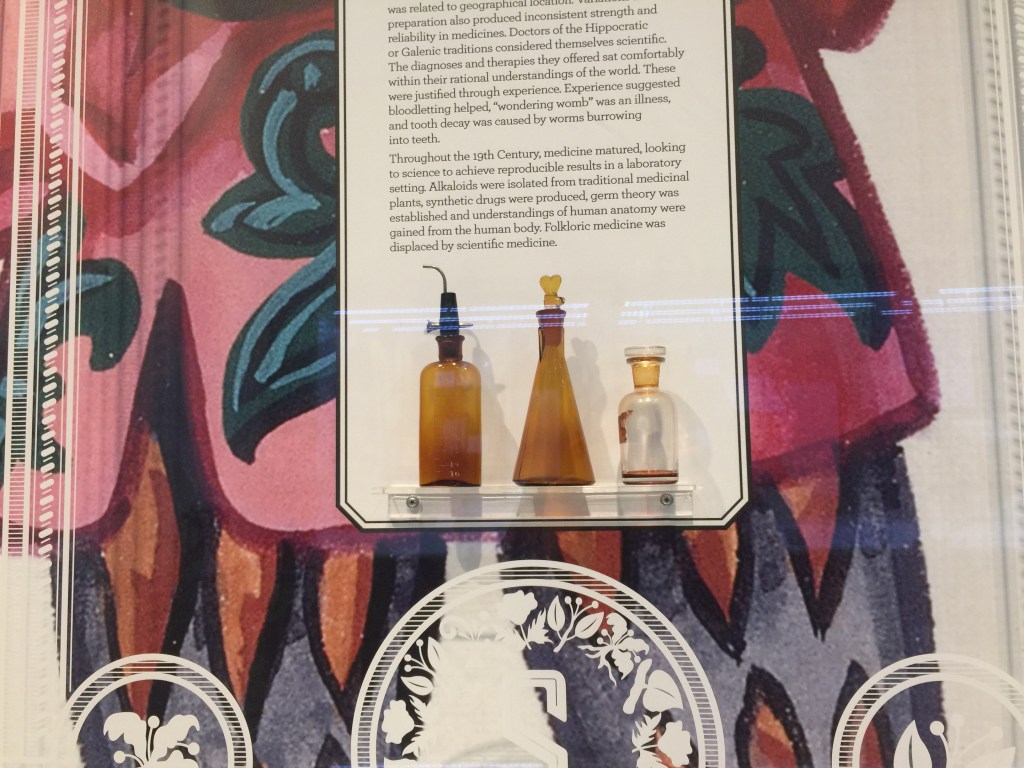
    Geoffrey Kaye Exhibition: From Snake Oil to Science
  • Immigration Museum

    I am back in Melbourne for a medical history writing workshop at the Geoffrey Kaye Museum. I’ve arrived a day early purely because my last trip to Melbourne was way too rushed! This afternoon, I went to the Immigration Museum. I have been wanting to visit this museum for years yet it has always slipped my mind when I’ve been in Melbourne. It’s located very centrally – right near Flinders Street Station. The building was originally Old Customs House. Today it’s a fusion of heritage building and museum which I believe definitely added to my experience.

    Rather than focusing on the content of the museum, this blog post will be dedicated to exhibition design. There are many stories told in the various exhibitions of the museum. I would argue that they are all powerful and were amazing to read. I would be too overwhelmed talking about them in this space.

    img_9932
    Immigration Museum

    In saying that, I do want to write a few words on this absolutely incredible object in the Journeys of a Lifetime Hall (pictured below). When walking around the exhibition space it immediately caught my eye. It is quite spectacular and has been utilized to tell the story of early Jewish migration to Australia. The thematic panel revealed so much I did not know. For example, I never knew that the Jewish population of Australia boomed during the gold rush, particularly in Victoria. This specific object is a samples chest belonging to Simcha Baevski. Baevski would eventually transform his door-to-door sales business into the  empire known today as Myer. For those reading this blog who are overseas, Myer is one of Australia’s largest department stores!

    IMG_9962.JPG
    Myer – Immigration Museum

    Moving on now to exhibition design. I have a few points I want to briefly write about. Pictures will be included!

    • Journeys of a Lifetime exhibition space – out of all the exhibition spaces in the Immigration Museum, this one stood out to me as being the best organized. Rather than cramming the room with panels and display cases, its minimalism and simple design is what really resonated with me. The ship in the middle was interactive in that you could walk through and see different cabins. It was a great way to visualize how the journey to Australia might have looked depending on factors such as income etc. On one side of the room were little self-contained display areas. Some of which had displays (the Jewish object was in one) and others had computers. Visitors are welcomed to use the computers to research their family history.
    img_9952
    Immigration Museum
    • Wall of Passports – another design feature that was attention-grabbing was the wall of passports in the Identity: Yours, Mine, Ours exhibition space. I had seen the wall in photographs throughout my studies, but, to see it with my own eyes was amazing. It is exactly what it’s called – a wall displaying the front cover of passports from around the world. It looks great and directly communicated the room’s message. As you can see from the photograph, some of the passports were accompanied by a panel with an individual’s story. Other panels had some quick facts on what it means to be an Australian citizen. In this room was a touch screen for visitors to take a practice citizenship test. I thought the use of digital technology in this space had great impact.
    img_9987
    Wall of Passports
    • Digital Technology – I am a firm believer in not using digital technology unless it can be properly integrated. The technology in this museum is a fine example of how it can accentuate rather than detract from an exhibition. One of my favourite parts of the museum was the Interview Room. Visitors can walk behind a panel into a manufactured interview room and come face-to-face with an individual hoping to migrate to Australia. You can ask a series of questions, hear their responses, then decide whether or not you would accept them into the country. Whether or not you agree with role playing in this way, there is no doubt that it was not a superfluous piece of technology in the museum.
    img_9978
    Digital Technology
    • My Favourite Design Wall – linking back to my second point, I am going to talk about a wall again. Not just any wall, my favourite wall in the museum space. On entering the Immigration Stories and Timeline exhibition space, the first thing you see is the wall pictured below. It is very effective. We have spoken a considerable amount over the past semester about the power of using shoes in an exhibition space. That whole “put yourself in their shoes” motto is made tangible. Looking at shoes is so personal as you can begin to imagine the individual who wore them, their experiences, and their lives.
    img_9968
    Shoes
    img_9970
    Shoes
    • Integrating Old Maps and Sketches – this was another design technique that I thought was very effective. In the exhibition space on Old Customs House, original floor plans covered the walls of the room. They were not overwhelming nor did they detract from the objects and labels. A delicate balance that is not always achieved when using large-scale photographs in museum spaces!
    img_9946
    Floor Plans

    Tangent

    I’ve said on this blog before that my purpose isn’t to be critical of museum spaces. If there is something that really disappoints me though I will mention it. I think each and every museum has its strengths and its weaknesses and I want this blog to celebrate the diversity of design, contents, and creative thought that exists in the sector.

    End of Tangent

    I had a wonderful afternoon at the Immigration Museum learning so many new design techniques. It will be interesting to see how the museum grows and develops over time to incorporate new stories and experiences.

  • The People’s Ground ICOMOS/National Trusts Conference

    The People’s Ground Conference runs from the 4th to the 8th of October at the Melbourne Cricket Ground (MCG). I am very grateful to have had the opportunity to attend the sessions today and present a snapshot paper on the Commissariat Store Museum’s audio guide.

    I wanted to briefly reflect on a few topics that were raised in various papers. There were three that particularly resonated with me. I also thought I’d provide a summary of my paper!

    1. Peter Lovell – “Killing the Inspiration”

    Peter Lovell’s keynote presentation was the first of the day. It was an incredibly interesting and thought-provoking paper focusing on contemporary heritage and contemporary uses of heritage. In my museum and heritage studies course we have focused a lot on the Burra Charter. For those of you who don’t know, this has basically been the heritage go-to guide for conservation. It states that heritage conservation should do as much as necessary, but, as little as possible. This mentality has the potential to stifle creativity and can turn heritage sites from living to dead. Due to this, Lovell argued that this framework needs to be challenged as it does “not stand up to the breadth of heritage”.

    Another interesting point raised by Lovell concerned statements of significance. He argued that they are static, fixed in time, and rarely re-visited. They should instead be dynamic and evolving with the changing use of the tangible heritage. Again, Lovell discussed the Burra Charter and highlighted how it lacks any meaningful discussion on values and transforming uses of heritage.

    Considering we have analysed the Burra Charter in depth, it was incredibly interesting to consider its omissions and how it could be amended.

    img_9874
    Peter Lovell

    2. Eric Hancock – “Quintet of Benefits from Conservation Training of Prisoners”

    The aim of this paper was to evaluate the main benefits from training prisoners in conservation. To provide some background, National Trust Australia Western Australia branch partnered with Freemantle prison and offered these workshops to inmates. Rather than exploiting prisoners, this program equips them with skills that can help with finding future work. The quality of the conservation work undertaken by prisoners was very high. This has been attributed to the role of the heritage expert trainers.

    What I also found to be an important point was that the prisoners were all genuinely interested in the history of the sites and their significance to the local community.

    What really intrigued me about this talk was that it raised so many different issues. All of which I had never really thought about nor have we discussed them in class. This idea of how to define a heritage professional and who can undertake heritage work was at the forefront of my mind throughout the entire presentation.

    3. Caroline Stokes— “Old Perth Boys’ School”

    I particularly enjoyed this talk as I am currently researching object biographies. There was archaeological evidence discussed in the presentation including erasers, inkwells, and cricket balls. Although their individual biographies were not discussed, the overall history of the school provided some idea of social and cultural contexts.

    When Stokes started discussing graffiti and inscriptions, however, there was a more obvious connection. It reminded me greatly of work by Dr Anne Clarke and Dr Ursula Frederick at the Quarantine Station in Sydney. By delving into inscriptions, object biographies can be formed and communicated. Knowing names, dates, etc. is a great way to delve into the past and construct narratives.

    4. My Paper

    My paper concerned the Commissariat Store Museum in Brisbane and their recently released audio guide. Last year I worked with others in the museum to uncover the hidden intangible stories within the building’s tangible structure. My paper summarized the processes we undertook in creating the audio guide as well as the challenges faced.

    If you would like more information on any of the talks comment below or send me a private message!

  • Teaching Touchy Topics

    Yesterday was such a wonderful learning experience and I would firstly like to thank Jo Henwood for organizing the professional development program. The main aim of the day was to hear from a range of professionals on, as the name suggests, teaching touchy topics. Here is the list of where we went and what we discussed:

    1. Australian Museum -Anti-Science

    2. Sydney Jewish Museum – The Holocaust

    3. Cell Block Theatre – Prisons and Asylums

    4. The Wall – Homosexuality

    5. Always Was, Always Will Be – The Invasion

    6. Victoria Barracks – Enemies

    7. Centennial Park – Final Discussion

    As you can see it was a very busy day covering some intense subject matter. I thought the best way to summarize the ideas and discussion points was to give a quick overview of the topics alongside my reflection. (more…)