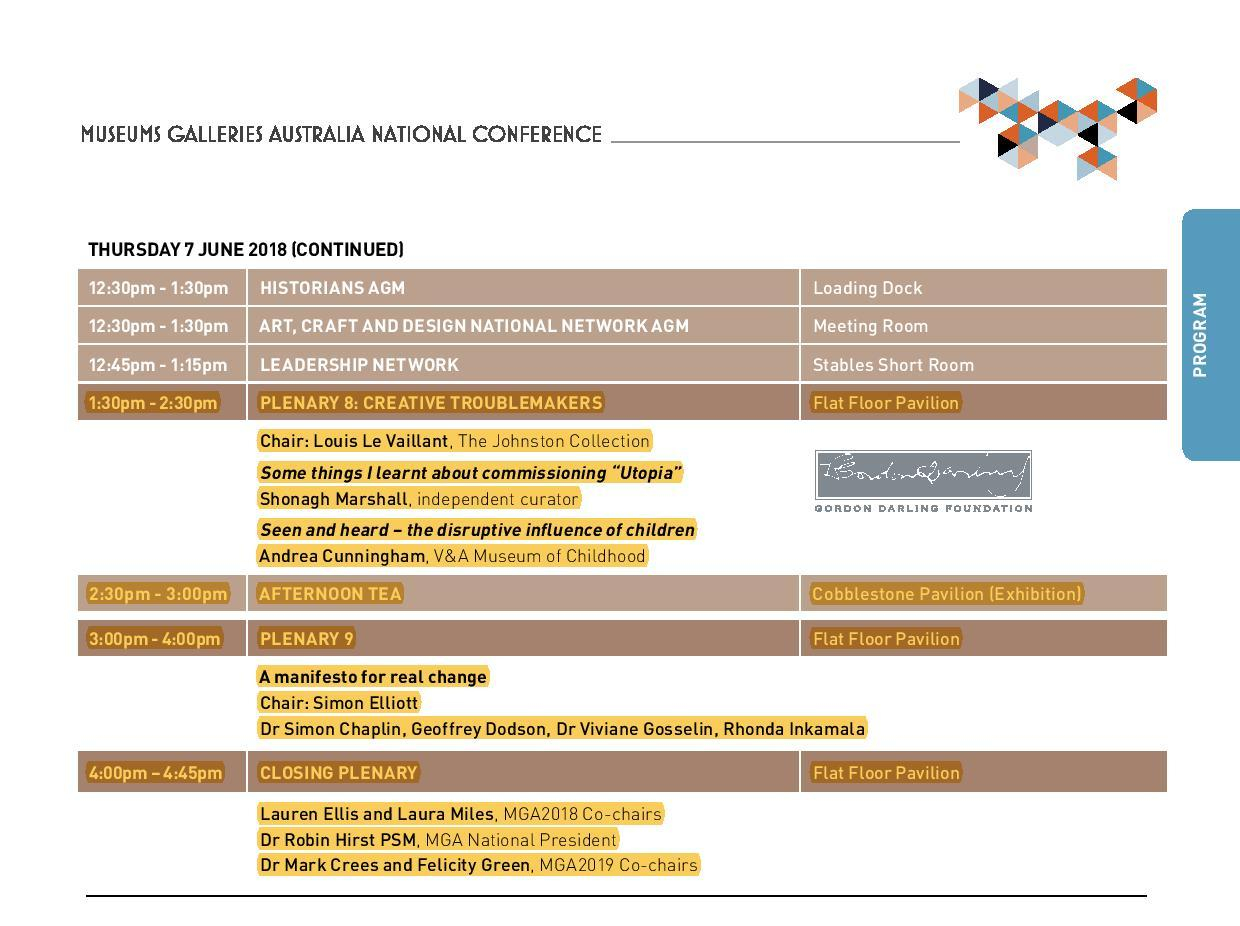
I have just arrived in Melbourne for the 2018 Museums Australia Conference. I am so excited for the week ahead! I am even excited to visit the conference venue – the heritage listed Meat Market. Tomorrow I am attending the Regional, Remote and Community day which looks to be very informative. I hope it is a day filled with ‘what you can do on a small budget’. I will be posting a summary of the conference every day including little sections on what I’ve learnt.
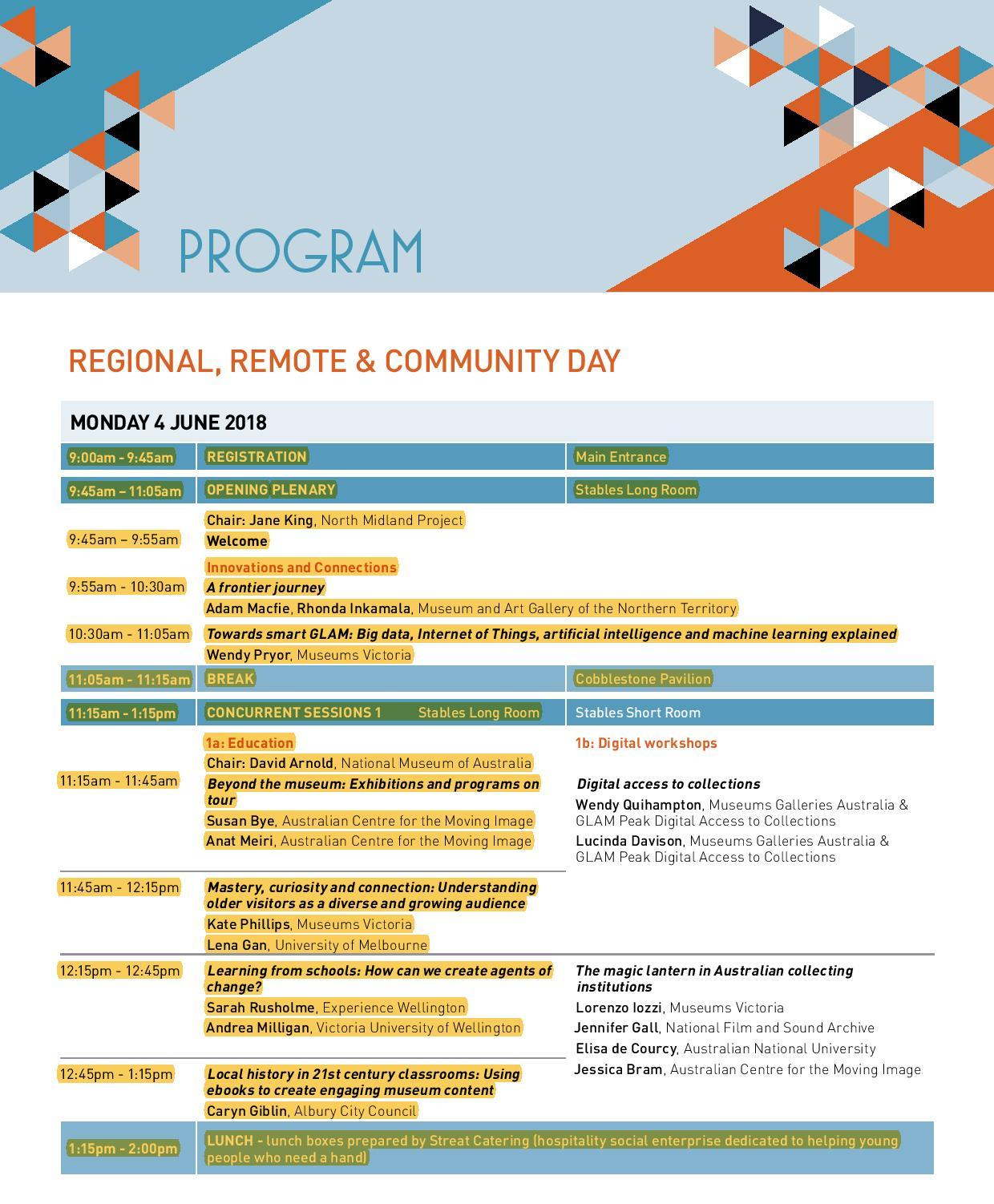
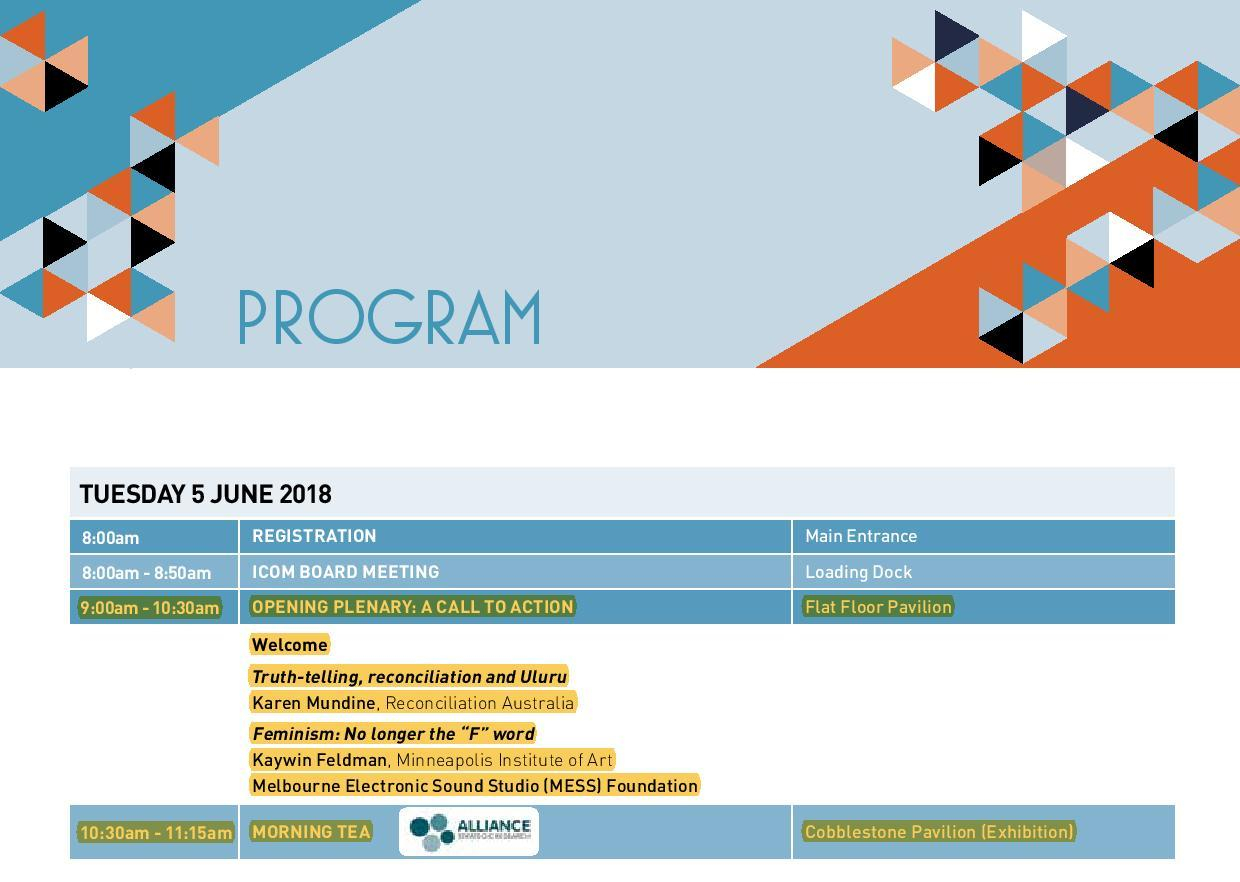
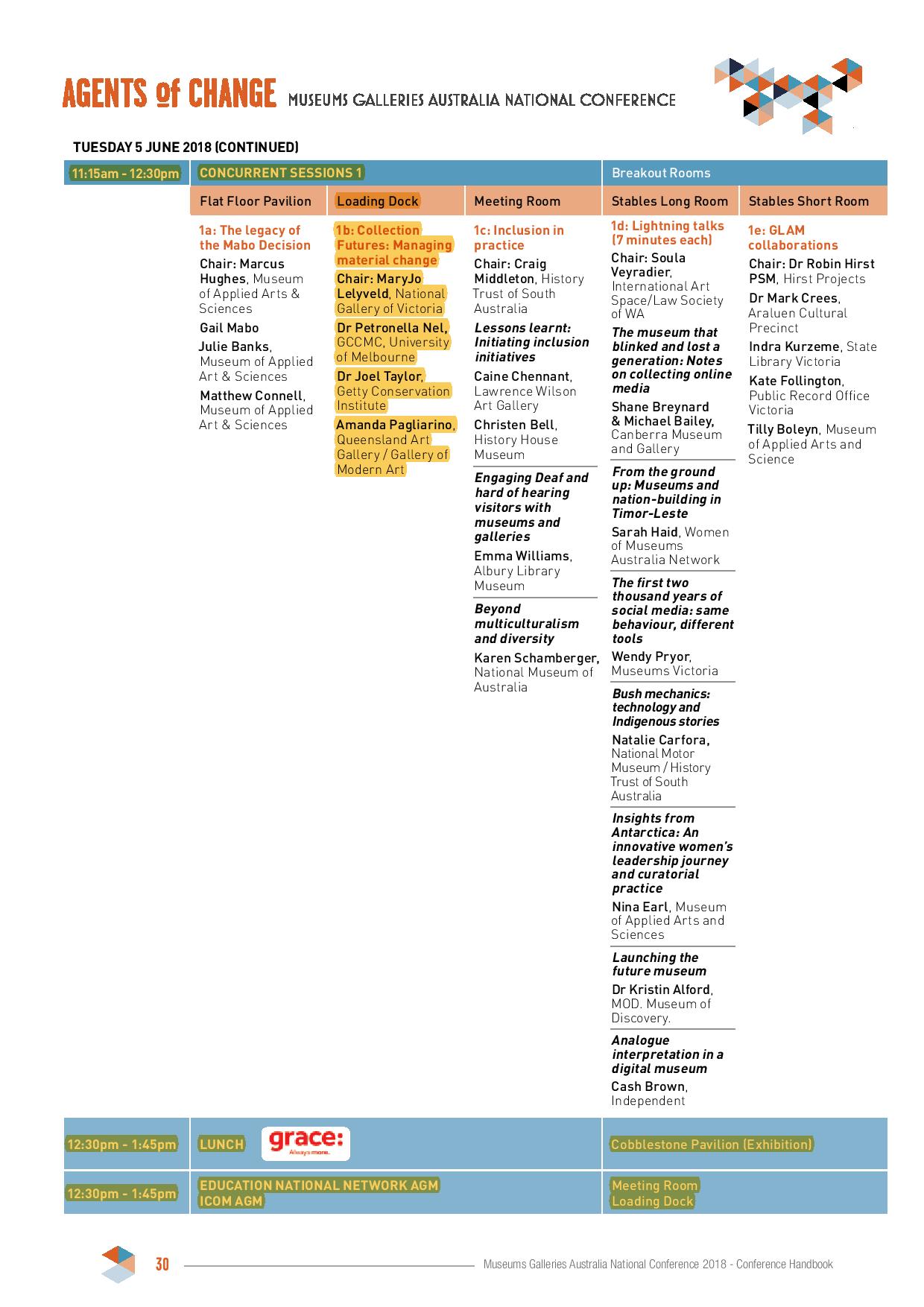
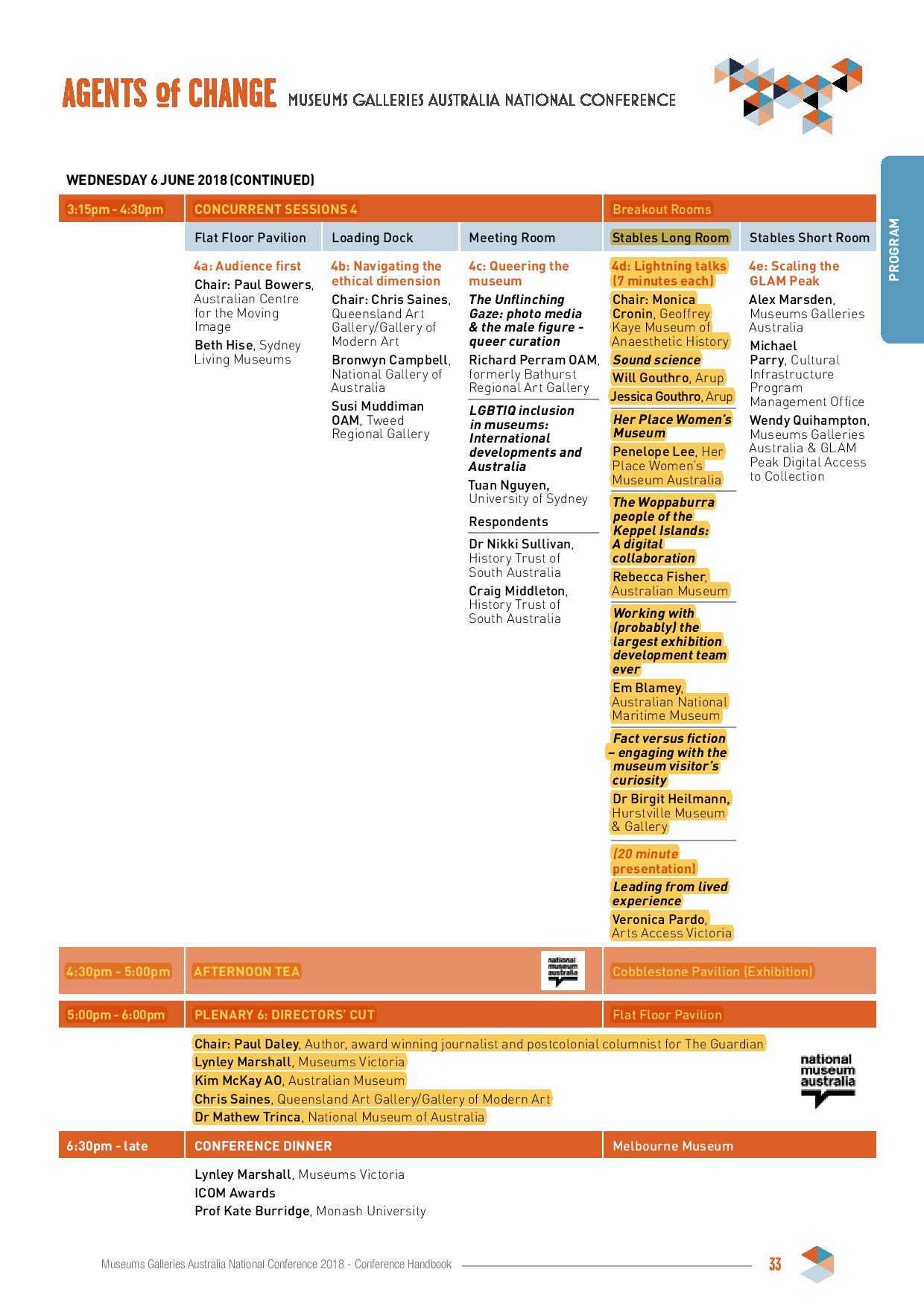
I have attached the program below for anyone interested in seeing the content that will be covered over the next few days. Anything highlighted is what I plan on attending. For those of you reading this who will be attending, I hope to meet you at the conference!
What an appropriate theme for GLAM Blog Club considering I am a control freak. In a good way of course. What can I say, I’m a true Virgo through and through. A big part of this comes from my desire to have things organised – I even colour code my wardrobe (yes, I have also catalogued the contents reassuring myself it was for insurance purposes and not for fun).
It’s also perfect timing because I am currently in bed sick with laryngitis. Did I plan for this to happen? No. Does anyone plan for this to happen? I hope not. There is so much in life you can’t control and as soon as I’m better I swear I will never take my health for granted! A promise I make every time I am sick.
An extreme case of not being in control – me bungy jumping in New Zealand, 2013
So what happens when you put a control freak into the world of museums? To those who haven’t worked in the industry you are probably thinking that’s a dream come true. All that cataloguing, all those orderly exhibitions with floor plans and perfectly polished display cabinets. I was reading an article in Museums Australia once about developing an exhibition and they had a screenshot of the most beautifully colour coordinated excel spreadsheet you have ever seen. I mean, I felt organised just looking at it. In other words, if I was standing in the binder aisle of Officeworks looking at this spreadsheet I would have probably astral projected from the level of visible organisation.
For those of you already in the industry, you know all too well the difference a day can make. It can literally boil down to one phone call and that’s it, your day puts you on a new path. Or better yet, you have this amazing idea for a program or exhibition and it’s just too expensive – so you have to go back to the drawing board.
One thing that working in this industry has taught me is the importance of, from time to time, switching the control switch from on to off and manually handling situations. No matter how planned you think you are, there is always something lurking. A big change I have made in my working life has been swapping daily to-do lists with weekly goal lists. I’ve found this to be incredibly helpful when I have flexible deadlines. Obviously if something is due it’s due and I can’t change that. But, I have found weekly lists to be so much more achievable. It’s not a 100% reliable method, but, it seems to be working for me.
Another incredibly crucial life lesson working in a museum has taught me is how to fully harness my problem solving skills. Sometimes an idea sounds great in theory but doesn’t work in practice. Running education programs is a perfect example. Each group you get is different so it is literally not going to work if you don’t release some control and adapt a program. A good educator knows how to deliver the same content in a million different ways to get people to listen.
Finally, what have I learnt in the museum industry when I am not in control? When I’m literally out of my comfort zone reaching for that paper bag I know I shouldn’t hyperventiate into but I kind of want to.
I have found these moments to be some of the best in my career. I was so shy in high school and the thought of talking in front of a group of people about anything made me feel sick. When I took my first historical tour of Brisbane I just said hello to the deep end and jumped right in. Nothing has grown my confidence in public speaking so quickly.
So what does this mean? Now, even if an opportunity makes me squirm a little I try to put my hand up. It’s totally fine to be in control (or make yourself think you are) and it’s totally fine to be not in complete control (unless you are operating heavy machinery).
My huge test in the control department is happening as we speak. We soon have an event that will be visited by just over 1 000 school children. I fluctuate between – we’ve got this! – and – I just need to grab something outside (runs and boards plane for overseas country) – about 400 times per day. I cannot wait until this event happens and I can see that balancing control with lack of control/intense flexibility can lead to something really great. I know it will work out in the end because I have a fantastic team of people who I feel privildged to hand over some of my control to.
I’m at the front of the raft, again in New Zealand, again no control here
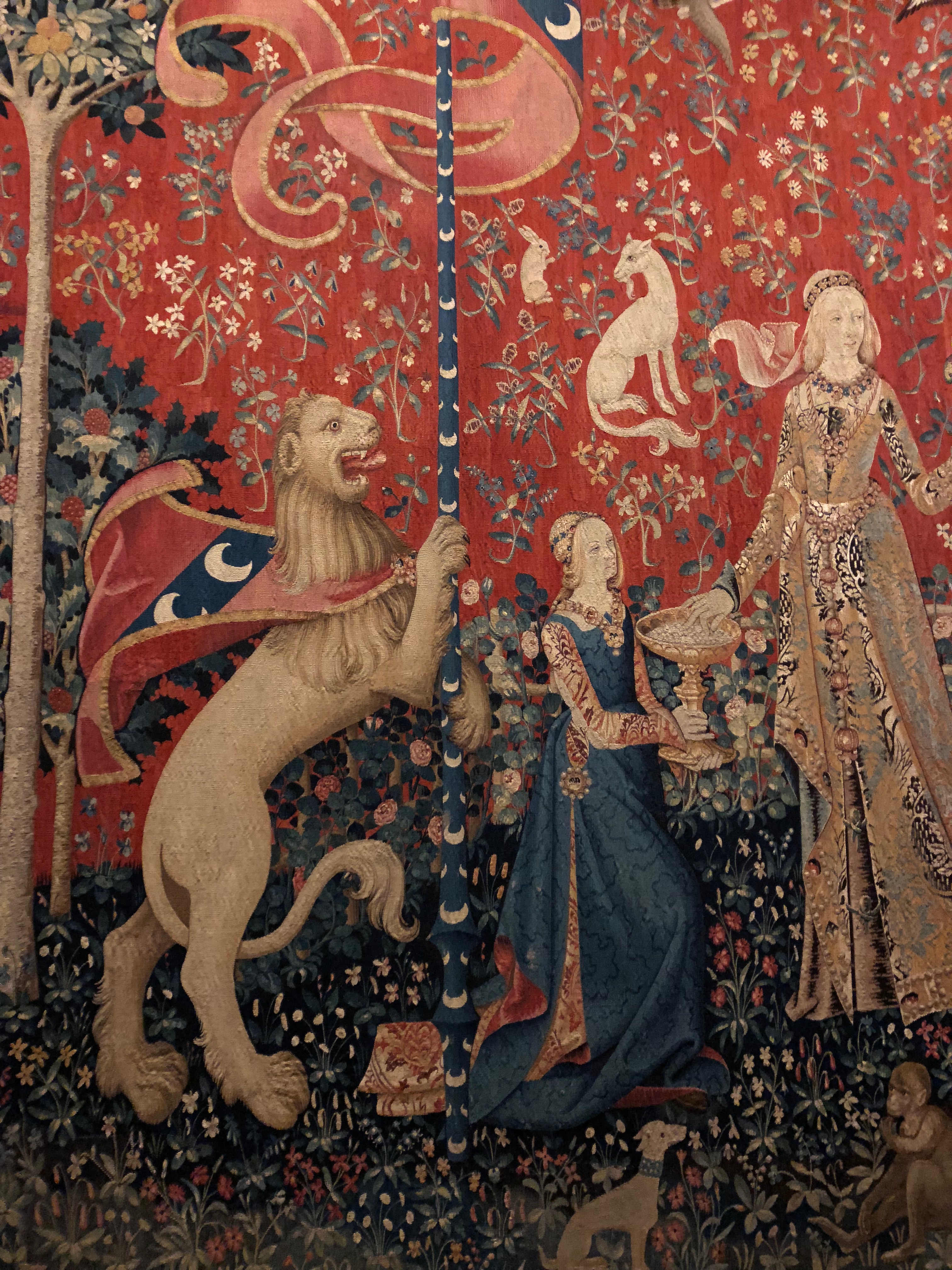
I have been meaning to write this blog post since Tuesday. Needless to say, I am only now finding the time to actually sit down and write my thoughts. The Lady and the Unicorn is currently on display at the Art Gallery of New South Wales. The exhibition consists of six large tapestries created by an unknown artist. It is estimated that they were weaved during the 1500s in France. What is pretty incredible is that these tapestries have only been displayed three times outside of France in over a 500 year period! According to the gallery’s website, the tapestries are “considered to be some of the greatest surviving masterpieces of medieval European art”.
This review is going to be really tricky to write. Rather than just lump everything together, I’m going to start with the pros and finish with the cons. But first, here is some context.
Context
These tapestries are all allegorical representations of the five senses (touch, taste, smell, hearing and sight). In the Middle Ages, these could be represented through different animals or objects. It wasn’t until later that female figures were also used in representations.
The sixth tapestry is a bit of a mystery. According to scholars in the 1400s, there was a sixth sense (not the ability to see dead people). It is difficult to determine what this may be, but, it is believed to be a sense of the heart or the key to moral salvation.
It is unknown who exactly made these tapestries. However, at the end of the exhibition there was a panel explaining how a tapestry during this time period was likely to be made. To summarise, it took a lot of planning and a lot of weaving.
Pros
There was one really major pro – the actual tapestries. They were absolutely stunning. I have never seen such vibrant colours in a historic tapestry. There were also so many small details weaved into each tapestry you really had to spend some time looking a the whole work in order to see everything.
The Lady and the UnicornThe Lady and the UnicornThe Lady and the UnicornThe Lady and the UnicornThe Lady and the UnicornThe Lady and the Unicorn
Next to the tapestries was a panel explaining how each of the senses had been represented. I read this panel before viewing the tapestries and thought it was really useful and a great addition. Under each sense was an explanation of the relevant tapestry. Side note – there was probably a more effective way for this information to have been communicated, but, I wasn’t too bothered. It was great to have the opportunity to delve deeper into the tapestries and learn more about the symbolism.
Cons
I visited this exhibition at 10 am on Tuesday. It wasn’t overly busy, probably about twenty to thirty people entered the exhibition around the same time. This wasn’t an issue until we stepped into where the tapestries were on display.
Inside the large gallery was a smaller circular-shaped gallery created with six walls displaying the tapestries. I guess the idea was to make visitors feel as though they were surrounded by the works. In theory, this was a great idea. In practice, this actually created a really claustrophobic environment. To make matters more difficult, in the centre of this small room was a huge irregular shaped bench with a lot of wasted space in the middle. It was great to have somewhere to sit, but, this bench took up a lot of space and could have been easily replaced by more practical seating.
The result was overcrowding. Even with just twenty other people in the space, it was difficult to move around and really appreciate the tapestries. Sitting down made matters worse as people were constantly running into the bench and into other people.
After viewing the tapestries, I followed the ‘more exhibition this way’ sign. I was really surprised to see the fascinating information about how the tapestries might have been made tucked around the corner. Virtually everyone walked past the panels.
Balancing the pros and the cons, I am really glad I saw the exhibition and was able to experience these tapestries. Displaying them slightly differently could have possibly enhanced my overall experience.
Greetings from Sydney! It is so lovely to be back in this city enjoying all the amazing people, places and food. As well as, of course, the wonderful museums and heritage sites. Today I visited my favourite island in the entire world, Cockatoo Island, to see the 21st Biennale of Sydney. It is quite unbelievable to think that two years ago I was working on the island and actually guiding tours to see the artworks that were on display! I visited the island with one of my closest friends, Emily.
For those wanting slightly more context, the Biennale is a huge art festival held every two years at various venues in Sydney. Due to its size, Cockatoo Island usually gets some pretty large-scale works. These can be magnificently displayed in the Turbine Hall. Each Biennale has a different theme and showcases works by artists that can relate. The 21st Biennale has been entirely curated by Artistic Director Mami Kataoka who has selected works adhering to the theme of superposition.
Cockatoo Island
I spent some time reading about what exactly this means and I will try super hard to relay that information in real terms. If you’ve read any of my previous posts you may already know that I can have serious issues with the language used surrounding art. Mainly, it can be incredibly isolating and pretentious causing significant issues regarding inclusivity.
Anyway, this theme looks at how artists can interpret things differently. For example, world events. It then goes one step further and aims to present works that balance and engage. For me, this theme was very vague. I didn’t really think about it too much as I was looking at the individual artworks. This is in complete contrast to the previous Biennale which had a very strong central theme.
On Cockatoo Island, twenty artists have displayed their artworks. These not only fit the broader theme, but, echo the history of the island addressing movement, migration, production and participation. This combination of heritage and art worked really well in the space and you could tell that the artworks had been carefully constructed for their environment.
We started our journey at the top of the island. The first artwork we came across was a dark room filled with screaming people. We decided to avoid this room and continue up the hill.
Displayed in the old Superintendent’s house were works by Dimitar Solakov. In two rooms of the house were around six large panoramic photographs of heritage sites in Bulgaria. These mainly focused on how poorly the sites have been conserved. Alongside these panorama shots were smaller images (drawings and paintings) of animals based on fossil records. I wasn’t a huge fan of this work. Even though he was exploring historical subjectivity, a favourite topic of mine, the way it was approached didn’t gel with me at all.
Cockatoo Island
We then visited the ceramic work of Yasmin Smith. This display was fantastic. Smith uses art, archaeology and science to reflect on a specific site’s environment. In this ceramic display were cast mangrove branches with a wood ash glaze. Considering we have an exhibition in Gladstone regarding our mangrove ecosystem, it was an apt time to see this artwork.
Cockatoo IslandCockatoo Island
One thing that really struck me about the island was that so many more buildings are now accessible. Meaning, you can now walk into more historical sites and actually see them up close! So lovely to see the island thriving.
Our final stop was the Turbine Hall. Inside is the enormous work by Ai Weiwei called ‘Law of the Journey’ – a 60-metre inflatable boat made from the same rubber used to make the boats that carry refugees from Turkey to Greece. It most definitely communicated a strong message.
Cockatoo IslandCockatoo Island
My favourite artwork was saved until last (unintentionally!) – ‘Icarus Container’ by Yukinori Yanagi. After waiting in a queue to go inside, we listened to a quick briefing about what to expect. This included the volunteer telling us numerous times not to touch the mirrors. Needless to say, every mirror inside the installation had, in fact, been touched. The point of the work was to use mirrors and words to highlight modern day Icarus – aka reflecting on the consequences of capitalism. As you moved through the space, every mirror reflected the one before with great precision and you felt quite disorientated. We did not touch the mirrors.
Cockatoo Island
Overall, the 21st Biennale of Sydney was a mixed bag but well worth seeing. Especially because it’s on the best island with some of the most incredible sites in Sydney!
Last night I decided to see the newly released film ‘Winchester’ starring the ever so fabulous feminist icon, Helen Mirren. I will say that it did contain some good jump scares so I was pretty pleased. Also, it has motivated me to write a blog entry on my visit to the Winchester Mystery House back in 2014. The mansion is registered on the National Register of Historic Places and contains two small museums inside the grounds. A visit will reveal a fascinating history of the Winchester family and a slice of 18th and 19th century American intrigue.
Flashback to 2014
Before we started our long drive from San Francisco to Las Vegas, I went straight to Google to see what we could do along the way. One of the first hits was the Winchester Mystery House – ‘an extravagant maze of Victorian craftsmanship – marvelous, baffling, eerily eccentric, and undeniably, haunted’ (Homepage – Winchester Mystery House). To say the least, I was hooked. After scrolling through the official webpage, I became more and more curious. It is not presented as a place for cheap thrills, but, as a mansion with a foreboding history and with secrets around every corner.
The only way to see the mansion is on a tour. As soon as we arrived we went to the ticket desk and were luckily able to reserve two places on the first tour of the day. We were told to wait in the outdoors courtyard until the tour began. As soon as you open the door to the courtyard you are greeted by the mansion. Today, it stands stands four storeys high. Originally, before the 1906 San Francisco earthquake, it was seven storeys high. I cannot imagine how intimidating it must have looked in the past.
Winchester Mystery HouseWinchester Mystery House
History
We were greeted by the tour guide who started the tour with a short history of the Winchester family focusing on Sarah Winchester, the resident and architect of the mansion. Her husband, William Winchester, was treasurer of the Winchester Repeating Arms Company. After he died from tuberculosis in 1881, their only child, Annie, died from marasmus, severe malnutrition.
After experiencing so much grief and loss, Sarah visited a medium who told her the only way she could ever be at peace was to continuously build a home for herself and the spirits of those killed by the Winchester rifles. Round the clock construction of this mansion began in 1884 and did not stop until her death in 1922.
Winchester Mystery House
The result was something quite literally never seen before. Just to give you an idea of how large and eerie this mansion is, today, there are approximately 161 rooms surviving. It is not known exactly how many rooms the mansion had originally. In order to confuse the spirits and trap them inside, there are staircases that lead to nowhere, doors that open to empty space and doors built into wardrobes. The mansion was ornately decorated with expensive glass windows and some of the finest parquentry for its time. The Grand Ballroom is a stunning example of the work undertaken, built almost entirely without nails and featuring six hardwoods – mahogany, teak, maple, rosewood, oak, and white ash.
Winchester Mystery House
This is just a very short summary of this absolutely fascinating history. To quote Sarah Winchester, it was ‘the house that spirits built’. You can really see how her pain and anguish, as well as fear, were poured into its construction.
The Tour
After hearing about the history, we were then guided through 110 of the 160 rooms in the mansion. You can begin to see very quickly why a guide is necessary. No doubt you would get horribly lost in the mansion without someone who knows their way around. Every corner had something eerie, bizarre, or spectacular. On top of this, we were visiting around Christmas so each of the main rooms had the most beautifully decorated Christmas trees I had ever seen. I was also completely mesmorised by the Victorian architecture. No photographs were allowed inside the mansion, but, I have included one I have found online. Please click ‘Link to Credit’ for more information.
The tour was really well pieced together and conducted. Rather than starting with some of the main rooms in the mansion, the guide built up to their reveal by firstly showing us the smaller features that we would have otherwise missed. For example, they pointed out how the number 13 infiltrated all aspects of design. Windows each had 13 panels, staircases had 13 stairs, and there were always 13 candlestick holders grouped together. It was also very interesting to learn about some of the more ‘modern features’ including fully functional indoor bathrooms, elevators, and push button gas lights.
We ended the tour by seeing the Grand Ballroom (absolutely incredible) and Sarah Winchester’s bedroom. After the tour you can visit the two museums on site which display antique Winchester objects.
In total, the tour lasted about 1.5 hours. Unfortunately we couldn’t stay for the flashlight tour, but I bet that would have been an experience. Tours are limited to 26 people per session. Luckily, we had far less on our tour. I strongly recommend you aim for the morning sessions as they would be the most quiet.
It is a great place to visit if you are looking for something to do that is more out of the box. On the day tours, they mention the supernautral aspect but don’t go overboard with references. It’s used more as an explanation for why the house was built and why some of the rooms exist.
I would love to return and take their new ‘Explore More Tour’ that goes through some of the attic space and rooms that have never been seen before. If you are interested in American history, the supernatural, Victorian architecture or historic homes then I strongly recommend a visit if you ever find yourself in the area.
For more photographs of the interior (especially the Grand Ballroom) you can find them by following this link:
I am a day late posting this blog in Australia but right on time for people who live in other parts of the world where it is, indeed, still 8 March aka International Women’s Day! To celebrate, I wanted to write a short blog piece focusing on a few incredible women. The following women have been selected as I have recently seen their stories on display in a museum.
1. Amelia Earhart – National Air and Space Museum
Late last year I visited the Smithsonian National Air and Space Museum in Washington, D.C. While there are some museums I am quite happy to aimlessly walk around and see at my own pace, I really wanted some guidance here. We joined a volunteer-led highlights tour which proved to be for the best. Fast forward to the third object on the tour, a large red plane (Lockheed 5B Vega) that looked so unbelievably retro I was in aviation heaven. All the guide had to say was ‘this plane belonged to Amelia Earhart’ and I was hooked. She purchased this plane in 1930 and gave it the nickname ‘Little Red Bus’.
So many of her aviation records were set in this plane. In 1932, Earhart became the first woman and second person, first was Charles Lindbergh, to fly alone across the Atlantic and the first female to fly nonstop across the United States. For the latter journey, Earhart flew from Los Angeles to Newark, New Jersey. In 1933, this plane was sold to Philadelphia’s Franklin Institute and later donated to the Smithsonian.
For those who don’t know the story, Earhart disappeared over the central Pacific Ocean in 1937. She had set out to circumnavigate the globe. Excitingly enough, when I googled Earhart a news story came up that was published only an hour ago saying that they may have found her body. Watch this space!
National Air and Space Museum
2. Frida Kahlo
It is no secret that I am in awe of Frida Kahlo’s work and fascinated by her life. While I was in Mexico in 2015, I made it an absolute priority to visit her house which is now the Frida Kahlo Museum. I have written numerous blog posts on this musuem so I won’t go into too much detail.
It is an incredible place filled with so much colour and plant life! The museum essentially, consists of two parts – her house and a small exhibition area. I loved how crowded it was when we visited. We shuffled through her house viewing her paint studio and a few other smaller rooms. On display in the exhibition area was some of her clothing. Due to a traffic accident, Kahlo experienced back pain her entire life. It was amazing to see how she incorporated her back brace into all of her clothing. Also a great reminder of how strong she must have been!
Frida Kahlo’s HouseFrida Kahlo’s House
3. Sophie Scholl
In the main building of the Ludwig Maximilian University, Munich (Ludwig-Maximilians-Universität München) there is a small memorial/museum to the White Rose resistance group. During World War II a group of University students, including Sophie Scholl, released pamphlets speaking out against the Nazi dictatorship. They were eventually discovered, arrested, and executed for their crime. Sophie Scholl died at age 21. Her story, along with those of the other group members, continues to be told all over the world. This museum had a few of her objects on display including her diary.
Apart from the University museum, you can also visit a small memorial in Munich where the group went to trial. It was quite an emotional experience visiting. Along with court transcripts and large images of the convicted, there was a vase in the corner of the room filled with white roses.
In 2017, the University museum went through a major upgrade and I cannot wait to revisit and learn more about this incredible group and brave woman.
Pamphlet Memorial outside Ludwig Maximilian University, MunichSophie SchollSophie Scholl
4. Frances Glessner Lee
How could I possibly create this list and not include Frances Glessner Lee. I am about 99% positive that everyone who I meet must, at some stage, listen to me go on about her life. Lee was such an influential figure in developing forensics in the United States. She achieved this by creating her “Nutshell Studies of Unexplained Death” – crime scene dioramas that were dollhouse-sized (so quite small). In total, she created twenty and can I just say that EIGHTEEN of these are still used today for training purposes. They are so detailed, that some even contain miniature working mousetraps and rocking chairs.
Each of the dioramas presents a homicide and it was up to police officers in training to pick apart the scene, look for clues, and solve the case. Prior to this, evidence was being unintentionally destroyed because so many officers had no idea of what was significant etc. Not only did Lee allow for such great advancements in foresnics, but, she also became the first female police captain in the United States and helped to set up the Department of Legal Medicine at Harvard.
I was unbelievably fortunate to see one of these Nutshell Studies on display at the Wellcome Collection in London. Until you see one with your own eyes, you can’t quite grasp just how remarkable they are. The one I saw consisted of a man who had been hit and murdered with a blunt object to the back of the head. In one of his hands was a tiny newspaper which was actually an exact replica of a newspaper just in miniature form. Although the tour only spent a few minutes exploring the object, I stayed behind and probably spent just under an hour looking at every single detail.
For those interested, 99% invisible did an amazing Podcast on her story. You can find it here:
I said this was going to be a short blog post and it has almost turned out to be the longest one I’ve ever written. What can I say? You have to give amazing women their deserved time in the spotlight. I hope everyone has a wonderful International Women’s Day!
New month, new GLAM Blog Club post! February went by so quickly I completely forgot to write something. To make up for it, I’m going to try and publish this blog as early in the month as possible. The theme for March is Happiness – i.e. what makes you happy? This is a huge theme to cover and consider, so I’m going to just focus on one moment where I felt nothing but happiness. Otherwise, we would be here all day. I say this because even on my bad days, I feel extremely grateful and happy to be working in an industry that is also something I’m passionate about.
My Moment of Happiness – Context
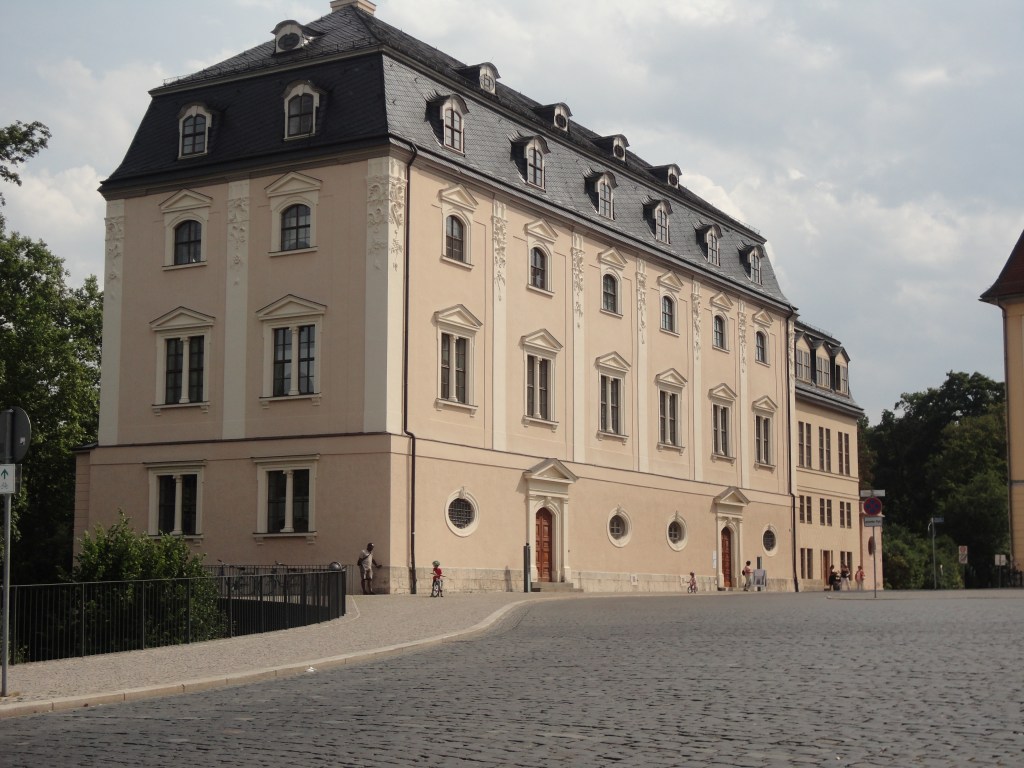
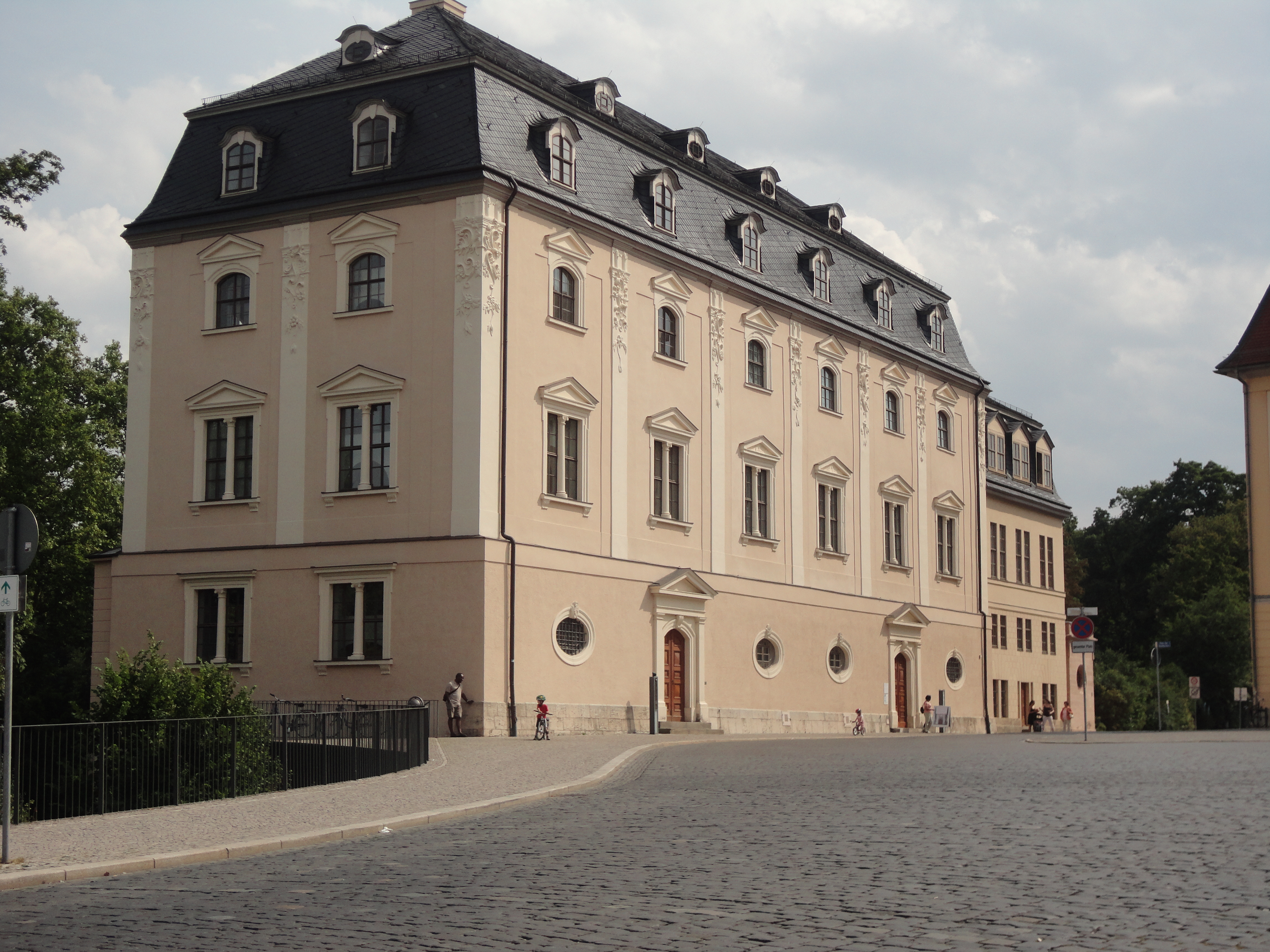
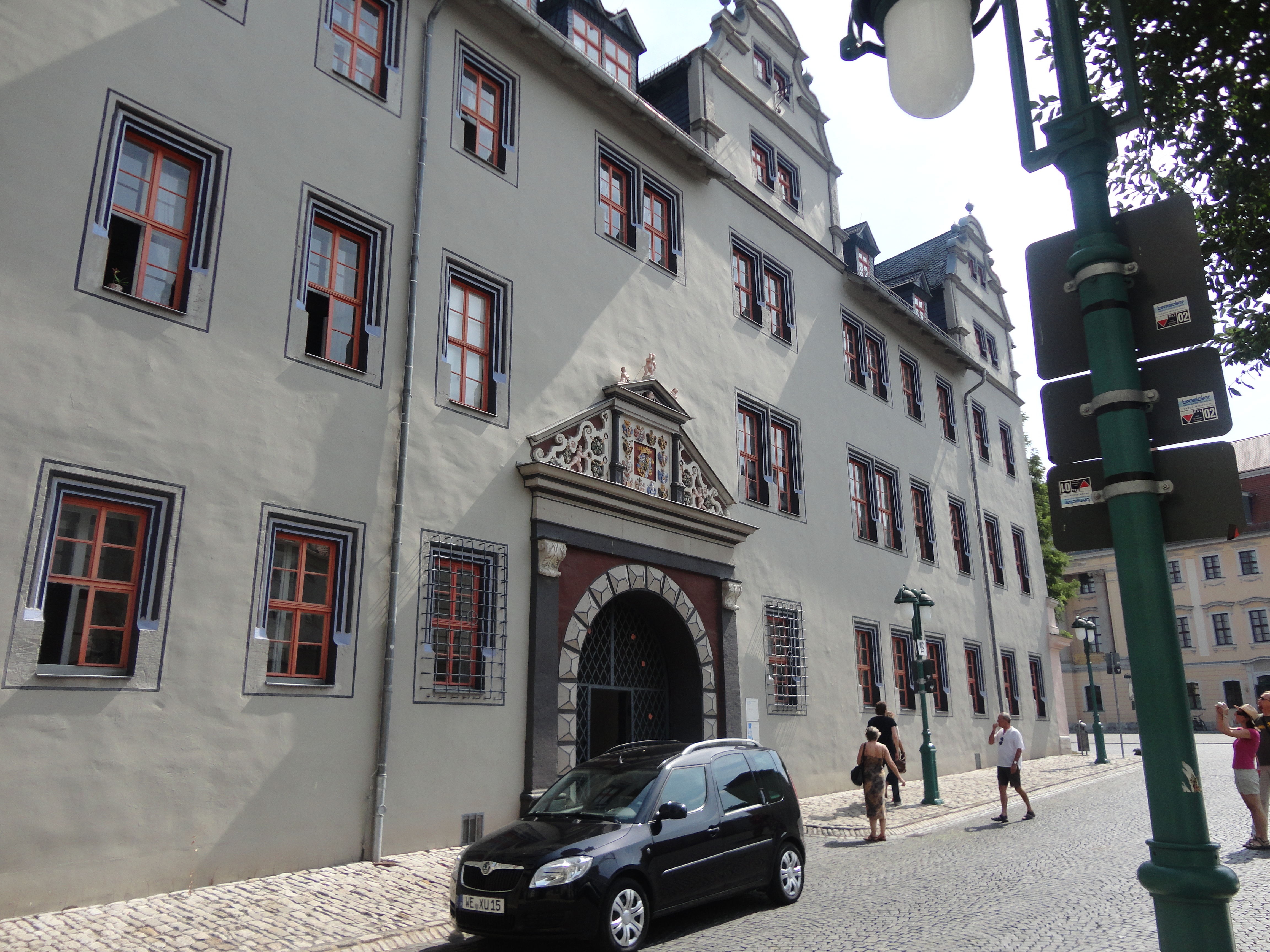
In 2012, I visited Weimar, Germany. This was partly because of my love for Bauhaus and partly because I wanted to travel to as many German cities as possible while studying over there. I had no idea just how much there was to see and do in this city. It is such a treasure trove of a place and it very quickly became my favourite city in the country, apart from Berlin. While there, I booked myself in for a tour of The Duchess Anna Amalia Bibliothek (Library).
The Duchess Anna Amalia BibliothekThe Duchess Anna Amalia BibliothekDuchess Anna Amalia
A quick sidenote – Duchess Anna Amalia (full title Anna Amalia, Duchess of Saxe-Weimar-Eisenach) was one of these awesome females from the past that we don’t hear enough about. She strongly encouraged some of the best cultural minds of the 18th century to come to Weimar. This included Goethe and Schiller. Amalia would frequently hold round table discussions with these great minds transforming Weimar into the cultural hub of Germany. She arranged for all the courtly books to be moved to a purpose built library. Today, the library holds over one million significant cultural texts along with medieval manuscripts, musical scores, and maps. Unfortunately the old library building suffered extensive damage in 2004 due to a fire. Luckily, it has been rebuilt true to form and is now a World Heritage Site.
Obviously I am missing out quite a bit about this extraordinary woman so please, go and read more about her!
Exhibition Happiness
From the moment I walked through the door I was totally and completely in awe. Before going to the library itself, there was a small exhibition filled with amazing autograph books from the 1700s and 1800s. They were absolutely captivating and beautifully curated.
I thought this was a great idea to showcase part of the collection for those to see before heading into the library. The exhibition space changes from time to time ensuring that the rare objects all have their moment.
I was completely lost in the display and was jolted from my browsing by a front desk staff member telling me I could go through. It was a really quite period so I felt as though everyone coming through was getting the real VIP treatment.
Beauty and the Beast Moment
As we walked up the stairs anticipation was at an all time high. The beautiful wooden steps were only just the beginning. Just before entering the library, I was asked to take off my shoes and put on what I can only describe as giant grey moleskin slippers. I have ridiculously small feet for an adult and unfortunately they had run out of child-sized shoes.
Right from the beginning, you feel as though you were going to walk into a truly special place. After a quick talk from the staff member about why we were wearing the shoes (conservation requirements etc) I was left alone to open the door and walk through the library.
If you haven’t seen Beauty and the Beast (cartoon or live-action movie) then now is an ideal moment to take a break and watch some Disney. Or just quickly watch the scene below taken from Youtube.
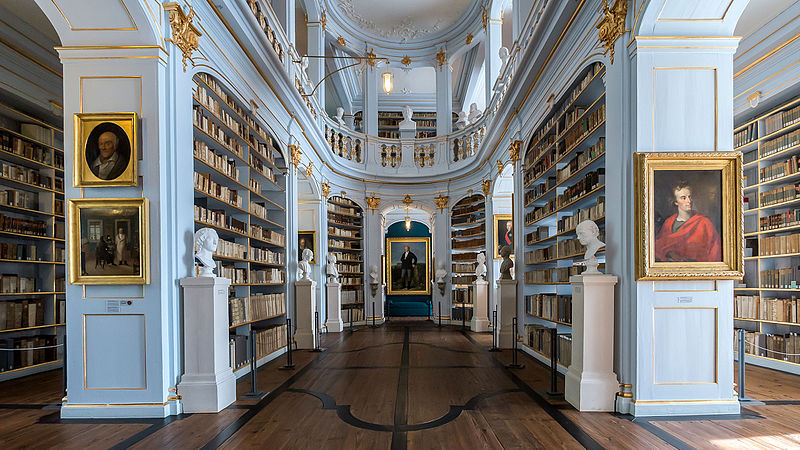
So that moment when Belle walks into the Beast’s library for the first time is exactly how I felt. Like being hit in the face with knowledge – in a good way. Everything from the architecture to how the books were displayed was just magical.
Here is an image of the inside:
Disclaimer: in no way shape or form was the staff member who took me to the library like the Beast. She was very lovely and let me practice my German.
Rococo Architecture
The whole library is designed in a Rococo-style. Basically, there was no such thing as “too much” when it came to Rococo. If you wanted your entire ceiling gold plated with huge murals covering every inch of the wall – that’s what you got. It is such a fun architectural style that is instantly recognisable.
The library wasn’t too over the top with Rococo-ness. It was a dialed back version with some guilding and elaborate additions. Enough to make you feel like you had stepped into a fairytale.
Books
The reading room that can be used today is separate from the library. Due to the 2004 fire, a lot of the more rare manuscripts etc are kept in fire-safe cabinets underground. There are still a plethora of old-looking, beautifully spined books around the library for you to see (not touch). I had a wonderful time looking around and gawking at some of the books on offer.
Maybe I’m just a hopeless romantic and loved being temporarily transported into a Disney-filled world. Maybe having to move super slowly because I was worried my shoes would fall off forced me to spend more time appreciating every detail. Whatever the reason, I would say this is one of my happiest moments in a GLAM site.
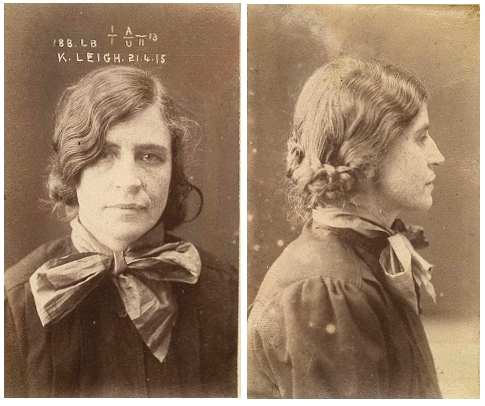
Hello, my name is Ziggy Potts and Rebecca asked me to share with you some of my thoughts on a recent exhibition. ‘Underworld: Mugshots from the Roaring Twenties,’ is now showing at the Museum of Sydney. This exhibition is one that I was very keen to visit, as I have always been fascinated by underworld figures seen in various television series such as ‘Tough Nuts: Australia’s Hardest Criminals’ and the various iterations of ‘Underbelly.’
The basis for the exhibition is a series of mugshots, known as ‘Specials’, taken by Sydney police in the 1920s for suspected potential criminals. At first thought, I was wondering how much specific information on the mugshots would be available and whether the exhibition would try and centre on specific stories of people and their lives – especially well-known criminals such as Kate Leigh or ‘Chow’ Hayes. However, I would have thought that given the wealth of popular programming on these figures (mentioned above), another focus would serve the exhibition better.
To my pleasant surprise, this is exactly what the Museum of Sydney did, using mugshots as exploratory, descriptive and explanatory examples to illustrate and reflect on the wider themes and aspects of life in 1920s Sydney. On stepping into the exhibition, one is greeted by an introduction panel detailing the history of police mugshots around the world. This includes the first ever known mugshot, taken c.1843/1844 in Belgium. It then goes into detail about how Sydney ‘Specials’ were, in a number of ways, distinct from other mugshots of the time. Firstly, they did not show the suspect in handcuffs so as not to influence the jury at their trial. Rather, they could take any pose they wished, often relaxed as if in the middle of a conversation. Thereby, the shots reflected their individual personalities and included a chair that was used as a height reference. It was also interesting to note that, unlike the protocol in other cities, it was possible for suspects who were found not guilty to have their faces scratched out of the mugshots.
From here, there was a fun little activity where a full length mirror with some era appropriate clothing and accessories provided. Anyone so inclined could dress up and imagine themselves as having their mugshot taken.
For me, the most interesting part of this exhibition was the following section focusing on family. Wives were often initially charged with receiving stolen goods in order to make their husbands confess to an actual burglary and theft. Given that crime often runs in families, siblings would often commit crimes together, use their names to confuse police and to provide alibis. Some of the mugshots of brothers side by side were extremely similar and I had some difficulty telling them apart. Also provided were a couple of touch screens that gave examples of siblings, telling individual stories of mugshots, including the history of the person (if known) and their pending charges. I thought this interactivity was very positive in that it not only tied in with, but expanded upon, the theme of family. It also provided more detailed and specific information on individual mugshots that was often difficult to obtain.
As one moves further along the exhibition, there is a clear progression from one theme to another, with descriptive text introducing the theme followed by a series of example mugshots. Where possible, more individual details on the mugshots were provided. One particular thing that caught my eye were two charges that would be very out of place in 2018 Sydney. The first was vagrancy (having no visible means of support for oneself), evidently alluding to the fact that the individual could have been supporting themselves through crime or were planning to do so. The second was wife desertion, which seemed quite odd from my perspective. This just shows the cultural differences and evolution that Western society has gone through over the last century.
As mentioned, the exhibition was carefully organised and grouped thematically, under two broad themes of Crime, and Life, in the Roaring Twenties. For Crime, this was further divided into ‘Bosses,’ ‘Bruisers’, ‘Petty Crims,’ and ‘Plotters,’ whilst the Roaring Twenties themes included ‘Flappers,’ ‘Cocaine,’ ‘Opium’ and ‘Joy Riders.’ While I think it would be a disservice to go into too much detail regarding the specifics of these themes, so as to not rob you readers of the fantastic and enlightening opportunity this exhibition will provide, I will briefly outline my thoughts.
First and foremost, starting, as I did, with the Crime section and finishing with the Roaring Twenties gave me a clear sense of cause and effect. I was able to follow what types of criminals there were, the crimes they were committing but, most significantly, how and why life and culture within 1920s Sydney was often a catalyst for crime. For instance, many returned servicemen who had trouble fitting back in with the routine of normal society following the horrors of war would often turn to crime to support themselves. Especially since there was little in the way of state support for some of them. Another example are those young women, known as ‘Flappers’ who, seeking the high life of fashion and luxury, would often use crime as a means to that end.
One last thing I should note is the useful inclusion of a small seating area with a ten minute video detailing some of the more intriguing and better known personalities of the time. This included the war between two gangs, one headed by ‘Squizzy’ Taylor and Ethel Violet Benn, known to use drainpipes to climb into windows and rob houses. This was a good place to end my time in the exhibition as it gave me a chance to absorb and reflect on the information and my overall experience. It also presented some of the information already on display in the exhibition in a visually entertaining way that gave visitors an alternative option to experience the exhibition.
‘Squizzy’ Taylor via Wikimedia Commons
Overall, this exhibition was very well done with the right mix of interactive technology and text. The organisation and layout of the collection provided varied levels of detail while not over-saturating the space with too many mugshots that might confuse and overwhelm the visitor. It also allowed for flow and movement within the space so it was not overcrowded with people reading every bit of detail, as I often like to do. Although much of this information is concurrently available online and is very useful (particularly for me in writing this piece), I urge you readers to experience it in person as moving physically through the space, as opposed to clicking from one webpage to another, provides a much more cohesive and interesting experience.
This post was written by Ziggy Potts.
It is always so great to read about the wonderful exhibitions happening all over Australia. Thank you Ziggy for a great post! I was really excited to learn that there is an online version of the exhibition that you can access here: https://sydneylivingmuseums.com.au/underworld.
In honour of Valentine’s Day, two years ago I wrote a list of museums I love. Last year, I thought about what museums I’d love to visit. In keeping with this tradition, I am going to focus my post for this year on museums I’d love to revisit. This has been the most challenging by far. There are so many museums I would love to see again. This might be because my interests have changed or because I just couldn’t see everything the first time!
1. Museo Nacional de Antropologia, Mexico City
Reason: Visitor Fatigue
Mexico has some of the most incredible museums and archaeological sites I have ever seen. When we visited in 2015, the National Museum of Anthropology was our first stop. To say the least, it was an overwhelming experience. There are so many rooms and displays to explore. Even after two visits I didn’t feel like I’d seen enough! The highlight of the museum is the Aztec Calendar Stone (or Sun Stone). I would love to return and spend more time in the other wings of the museum learning more about the different cultures inhabiting Mexico.
2. Dessau, Germany
Reason: Time
Dessau was one of the most significant centres of the Bauhaus movement in the inter-war period. The famous Bauhaus school of design is now a museum and there are multiple walking tours that take you to the homes of the Masters. Although I spent just over half a day enjoying my time in the town, I feel that I could most definitely go back and spend longer going on tours and making my way through the museum. If I went back, I would stay overnight in one of the old student rooms and go on more tours. Just so I could really absorb the sites and history. There was also a canvas tote bag that I regret not purchasing.
3. German Pharmacy Museum, Heidelberg
Reason: Greater Appreciation
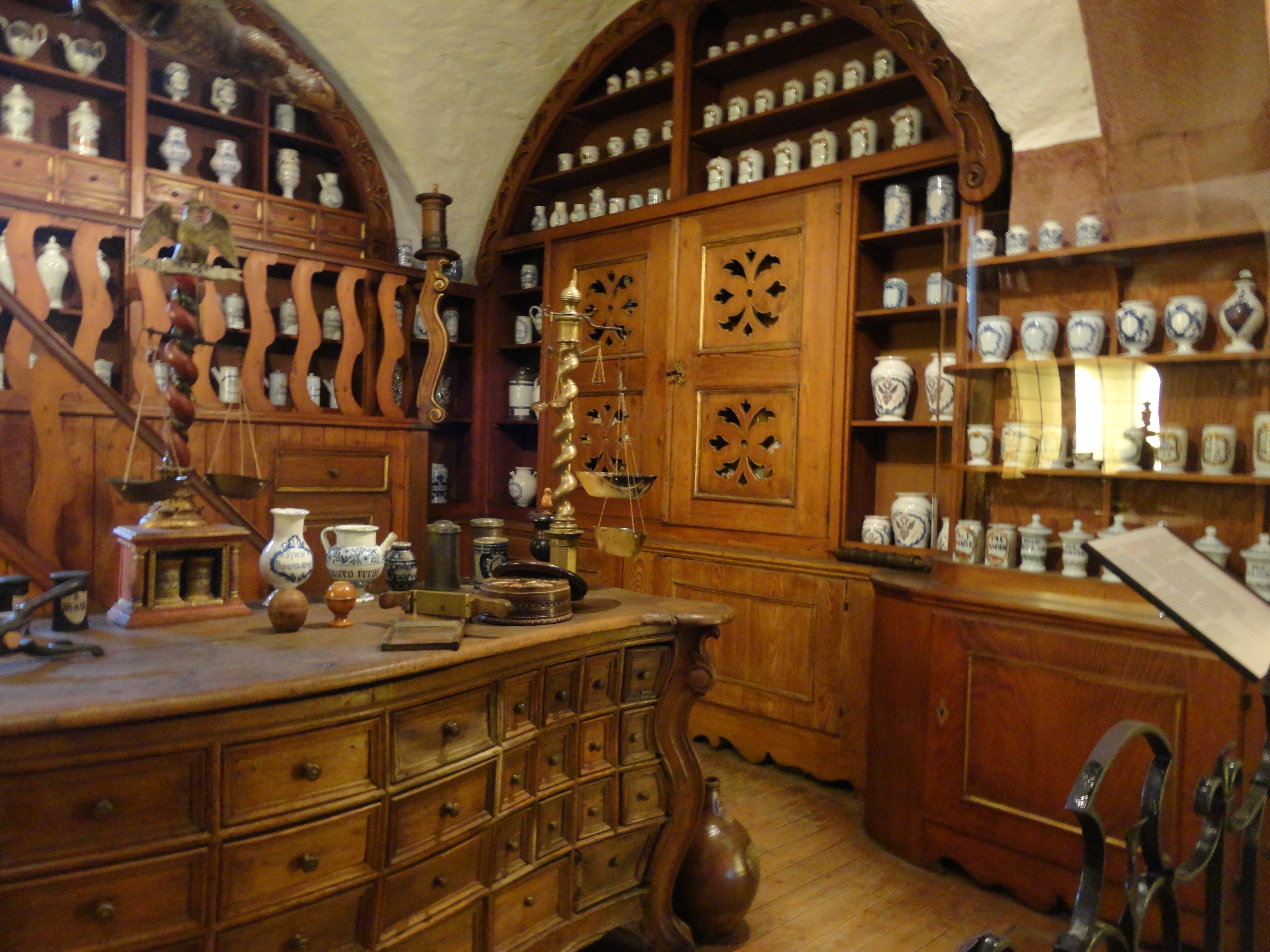
In 2012, I visited the beautiful city of Heidelberg in Germany. I booked a tour of the Castle and, as per usual, arrived very early. I was wandering around looking for something to do when I came across the German Pharmacy Museum. I can remember it was a really interesting museum with recreations of pharmacies from different centuries. Considering my love of medical history has really developed over the past few years, I feel that now I would appreciate the museum on a whole new level.
4. Nordic History Museum, Stockholm
Reason: Visitor Fatigue
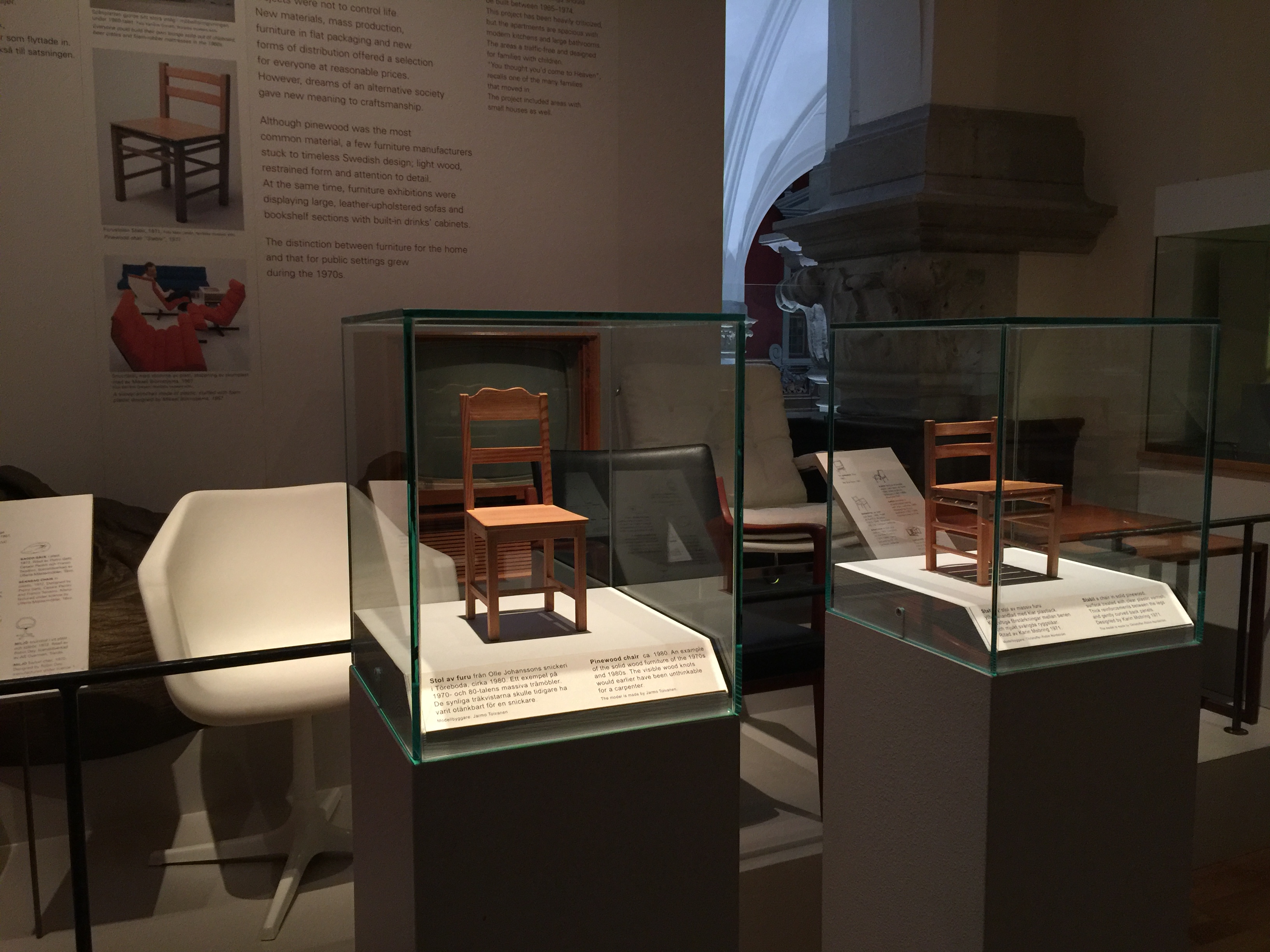
One of my favourite museums in Stockholm would have to be the Nordic History Museum. Anything and everything to do with Scandinavian/Swedish culture was on display. They also had a great audio guide and models where you could actually touch a mini replica of an object on display. Even though we spent a lot of time here, we did get exhausted towards the end and didn’t see everything. They also seemed to have a great array of touring exhibitions.
5. DDR Museum, Berlin
Reason: Crowds
There have only been a couple of museums that have made me super uncomfortable due to large crowds. The DDR Museum in Berlin and the Johnny Cash Museum in Nashville would have to be the top two. I honestly have no idea what was on display at the DDR Museum because as soon as I got in, I felt I had to get out. I am absolutely fascinated by this period of history and would love to return and actually see what the museum has to offer.
There are so many more museums I’d love to revisit! In saying that though, there are many more that I cannot wait to visit for the first time. Later this year I will be ticking off the Getty Museum, Museum of Tolerance, Museum of Death, and (hopefully if they find a new venue) the Museum of Broken Relationships in Los Angeles. A desperate plea to the latter – please find a new location in time for August!
I am already planning the post for next year (because I am too organised for my own good). I will be revisiting the first two lists to see whether my opinions have changed (or not) and whether I have visited any on my “I’d love to visit” list!
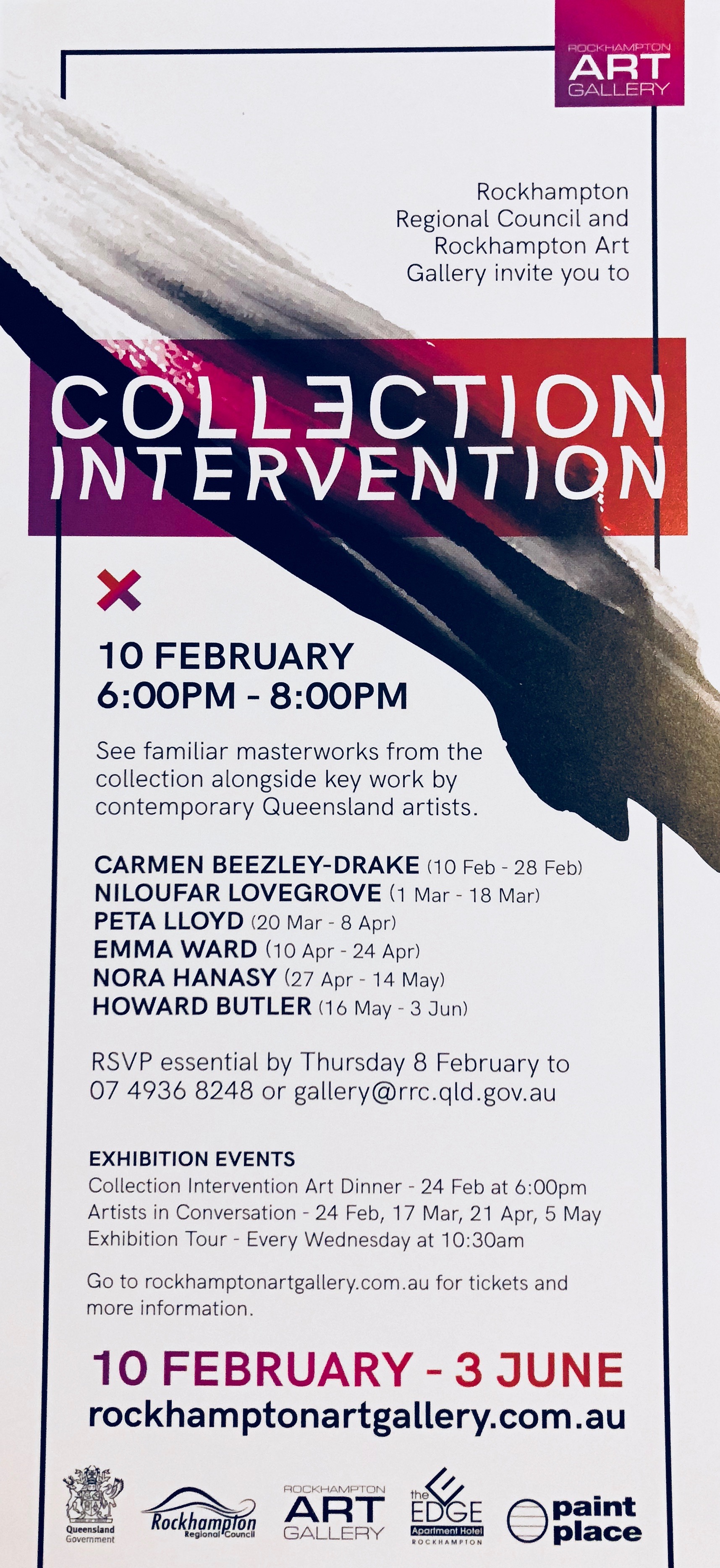
I cannot believe that this is my first review of an exhibition launch. I have attended a few but never really had much to write about. This time, however, I was able to spend quite a bit of time exploring the exhibition as well as enjoying the launch. The exhibition in question is Collection Intervention, now on display at the Rockhampton Art Gallery. The aim of the exhibition is for the Gallery’s collection to be reinterpreted by contemporary Queensland artists. Rockhampton has amassed one of the most incredible collections of Australian art. To paraphrase the Mayor, Margaret Strelow, the collection contains a remarkable piece of work by almost every well-known Australian artsit. It would be fantastic to see these works permanently on display!
Rather than temporarily displaying a set selection of pieces, this exhibition has a twist. Every few weeks, a new Queensland contemporary artist takes over the show and curates something different based on their own ideas and perceptions. In total there are six artists. I think this is a great idea. The result is one concept, but, six unique displays. I would hope that this encourages repeat visitation as people might return to see another artist’s interpretation of the collection. Since the show is running until June 3, I think I will return to see it in a new light.
The first artist who curated the show is Carmen Beezley-Drake (on display until February 28). What struck me immediately was the number of large, dominant works. Instead of clashing, however, they complemented each other so well in the space.
Rather than post a photo in the following sections, I have instead provided a link. Not only will you find the photograph by clicking on the link, but also, some more information about the artist.
A highlight for me was seeing the work of Ben Quilty The Evo Project Sheep Wash Road painted in 2012. It is a really amazing example of how the canvas itself can become part of the artwork and how the absence of paint in some areas can contribute to the whole. It is a large work and something you could not miss.
Going from large to small, another work that I appreciated was Shuffle by Victoria Reichelt. I have been binge watching The Office recently so this is probably why it stood out. It looks just like any normal office set-up. Except for the duck.
Finally, there was a series of three photographs by Fiona McDonald that really caught my attention. To create each of these works, McDonald has weaved together two photographs. You really have to look at the work up close and then far away to gain an understanding of the effect.
Apart from the incredible works on display, I also really appreciated the artwork labels. They were simple, didn’t contain art jargon that can be so alienating, and were printed on transparent stickers. In short, they were subtle and not distracting. I thought it would have been great to have kids labels as well. Especially since so many of the artworks were whimsical and fun.
Although I said it was an exhibition launch review, I have not yet mentioned anything about the actual event. I arrived a little bit early because I am “that person” who must always be early. Luckily, I was not the only one. I should clarify that by early I mean I was there at 5.50pm for a 6pm opening – nothing too ridiculous. When I walked into the gallery, it was clear that they were really well prepared and had everything ready.
BrochureCollection Intervention Exhibition Invite
Visitors were welcomed with a complimentary glass of champagne, which I thought was quite nice. We were allowed to walk around the exhibition with drinks. This did make me feel a little nervous. Cheeseboards (so good) and other small bites were dotted around the exhibition space. All in all, the catering side was simple but very effective. Especially considering it was a free event.
After around 45 minutes, the speeches began. It was officially opened by the Mayor and we also heard from Director Bianca Acimovic. They spoke a little about the future of the Gallery and about the show itself. After the speeches, we were free to linger as long as we liked until 8pm. Overall, the launch was relaxing and people were enjoying themselves. The vibe I got was that it was a regular crowd of people who probably come to all the openings.
Overall, I am glad that I took the opportunity to experience an opening at another regional art gallery. Usually I am one of the people behind the scenes organising and planning the event so it did feel strange being on the other side! I am looking forward to visiting again when a different artist takes the curatorial reins.