• Tweed Heads: Tweed Regional Gallery & Margaret Olley Art Centre

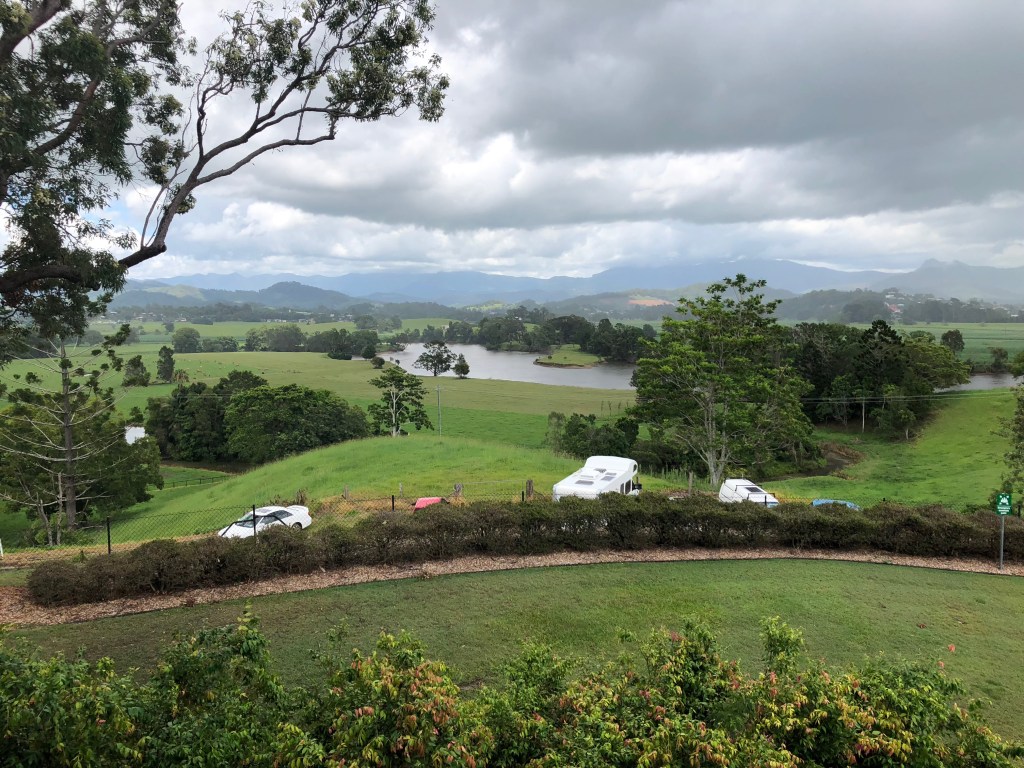
    Today we crossed the border between Queensland and New South Wales to visit the Tweed Regional Gallery & Margaret Olley Art Centre. Set in such beautiful surrounds with views that will be Instagrammed endlessly, we were very excited to explore what was on display. There were a few temporary exhibitions and, of course, the Margaret Olley Art Centre. This post is going to cover a few different things focusing on some of the exhibitions and our guided tour.

    The building was like a Tardis (relevant Doctor Who reference considering the first female doctor was revealed last night to much delight!!). From the outside you would never guess how large it is inside. There are three large rooms and a pretty big hallway. Each bit of available wall space was in use for an exhibition. Despite this, the gallery never felt cluttered. A lot of thought had gone into the construction of the building and it had a nice flowing effect. Here were my favourite exhibitions that are currently on display.  

    My Favourite Exhibition – TextaQueen Between You and Me

    Never in a million years did I think Texta Pens could be used to make incredible art. That was the old, ignorant me. The new me has now realised that in the right hands, they can be used to create masterpieces. The artist, TextaQueen, communicates incredibly complex issues of race, gender, sexuality and identity in her work. This is all achieved through the lens of popular culture. For example, some of her work resembles a classic movie poster, but, with a twist. TextaQueen has stated on her website that these works detail the evolution of her identity – a Goan Indian heritage born and raised in Australia.
    What really drew me to these works was how they were displayed – spaced out in the hallway. All of the works were bright and colourful, filling the space between rooms with strong messages that followed visitors as they walked through. They demanded your attention which I think was incredibly fitting considering each work had something very strong to say. If they were just placed in a room together with a didactic at the beginning, I don’t think they would have had the same impact.

    I strongly encourage you to look through her Instagram.

    Another Great Exhibition – Alasdair Macintyre The adventures of Aecap

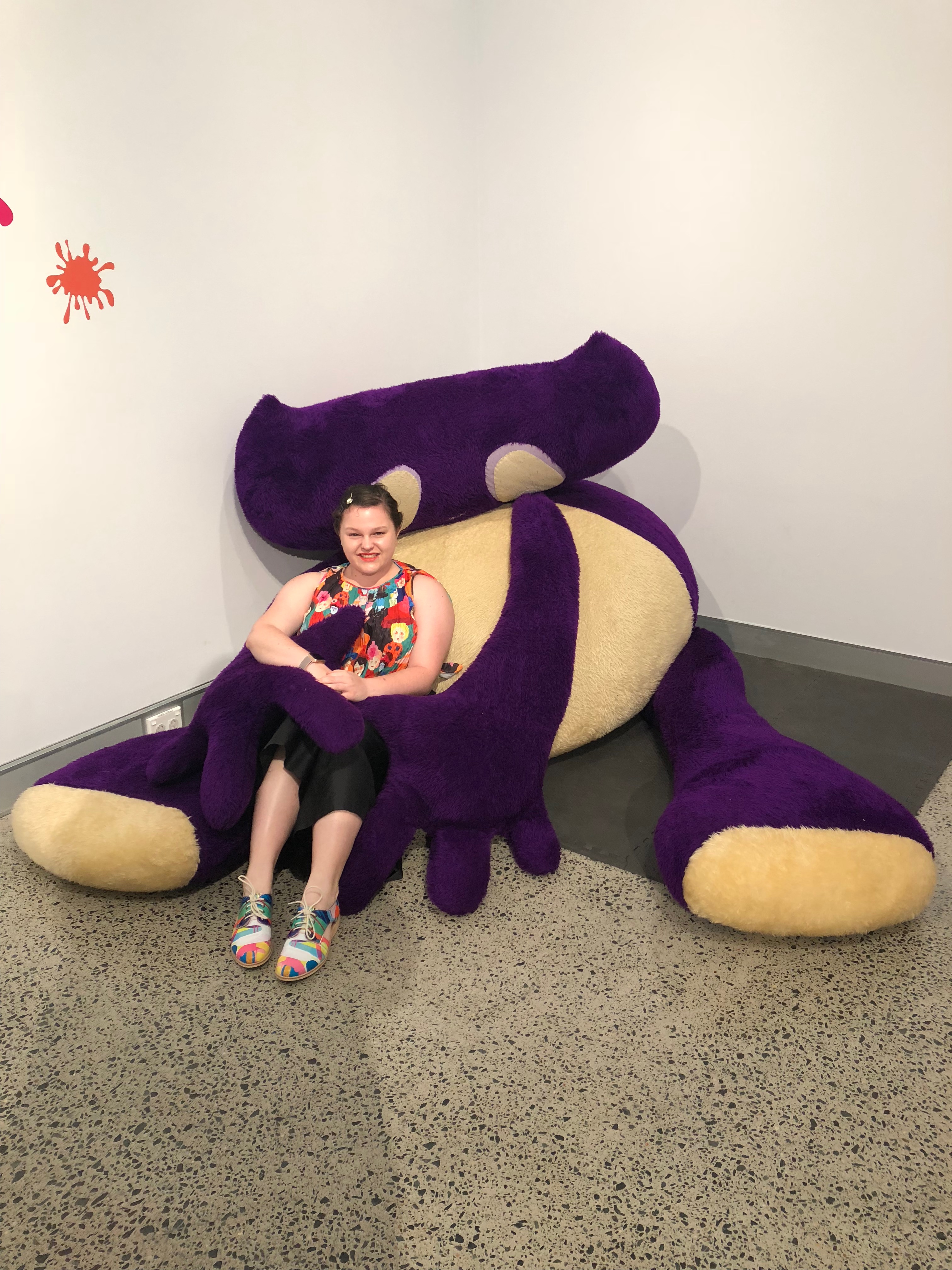
    I love seeing exhibitions targeted at kids being enjoyed by adults. There was so much colour and life in this exhibition that you couldn’t help yourself from having fun! I especially loved interacting with the giant toy and angry gallery guard.

    IMG_0421
    The adventures of Aecap
    IMG_9403
    The adventures of Aecap

    The exhibition is designed to encourage children to become artists – even if just for a moment. It does this by asking questions such as, what does it mean to be an artist? To answer these questions, visitors must follow the adventures of the character Aecap and his dog, Impasto. Along the way you discover what art can look like and what can be used to create artworks. 

    It was very well curated with lots of room between works and interactive stations. There were also little areas set aside for families to take a break. I felt as though kids could easily spend an hour or so in this space learning heaps and having fun.

    Margaret Olley Art Centre

    After walking through the temporary exhibition spaces, you reach the Margaret Olley Art Centre. Olley was an absolutely incredible individual. Here are just a couple of quick facts:

    • Olley held over 90 solo exhibitions in her lifetime
    • She was appointed Officer Order of Australia in 1991 and
    • Awarded Life Governor of the Art Gallery of New South Wales in 1997

    Born in New South Wales, Olley spent most of her youth moving between Queensland and New South Wales. During this time, she developed a passion for art, eventually studying the discipline. From there, her career in, and passion for, the arts continuously blossomed.

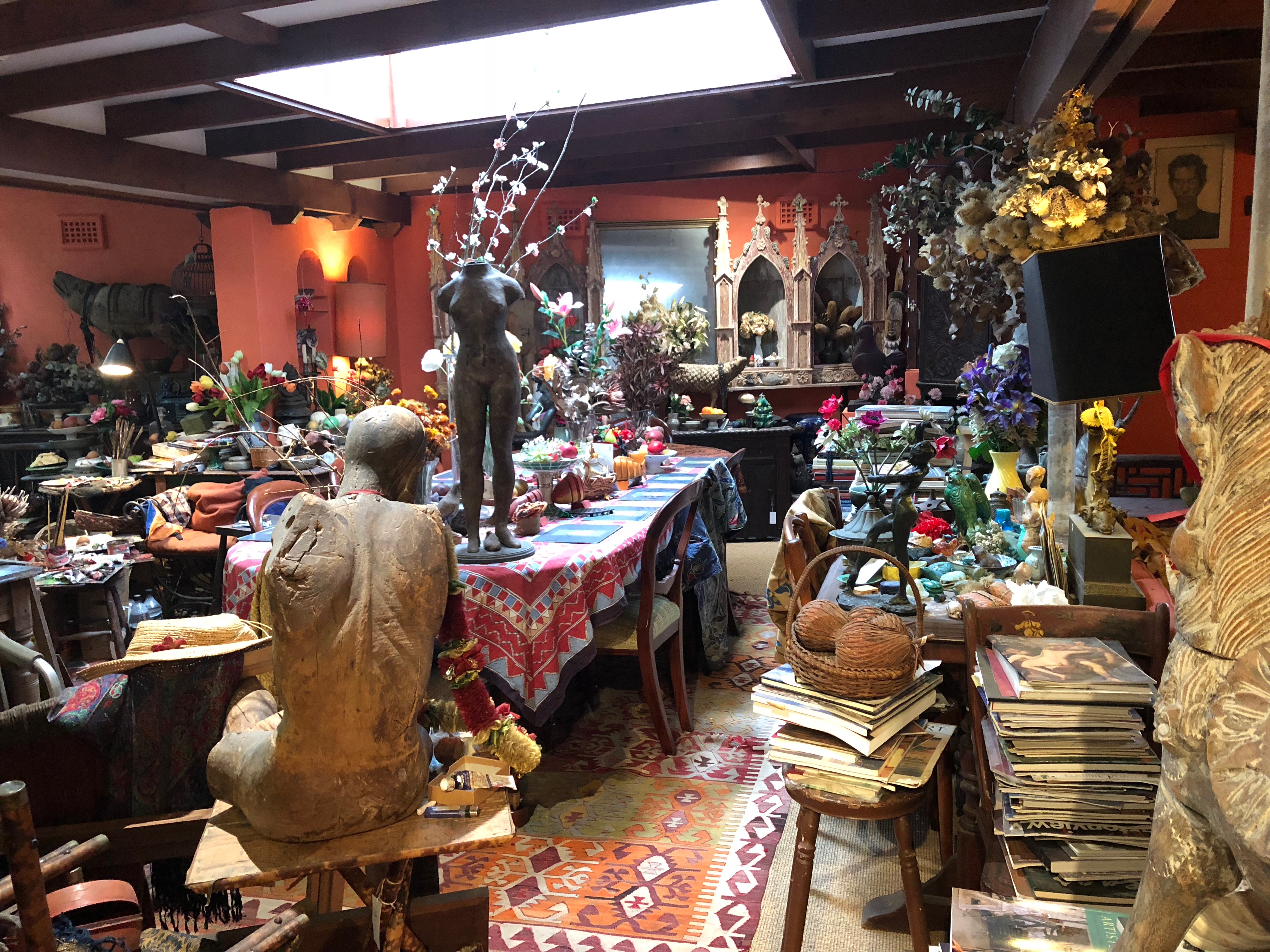
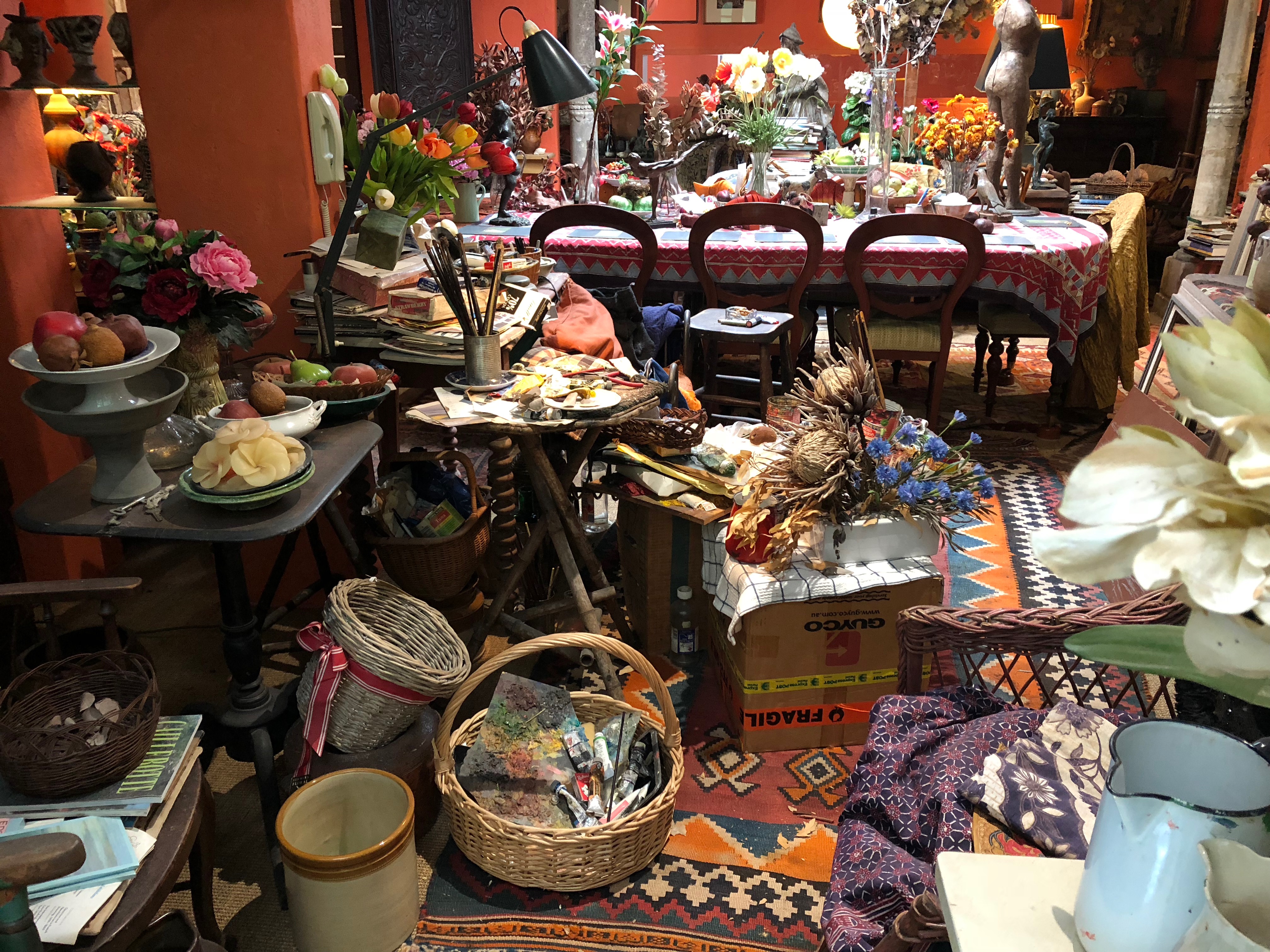
    Olley spent a considerable portion of her life living in the suburb of Paddington in Sydney. Her house, known as the Hat Shop as it once held a hat shop, was an old Victorian terrace. It wasn’t only her house, but also, her studio. On her death, it was left to the Gallery. Each object in her house that was kept in the Yellow Room, Kitchen, Hat Factory or Lounge Room was documented and moved into storage in preparation for its installation in the gallery space. Once these parts of her house were re-created, the objects were moved in and placed exactly where they had been in Sydney. I can’t imagine how much work went into this project. The outcome, however, was definitely worth the effort.

    IMG_1872
    View into the Lounge Room
    IMG_4042
    Kitchen
    IMG_5845
    Lounge Room
    IMG_8890
    Lounge Room

    Each of the rooms contains such an amazing assortments of bits and pieces. You can definitely see how she used the house as her studio with props for still life paintings left all over the place. Her paint brushes and palettes can be seen in every room on tables, chairs, and in kitchen sinks. If you are interested in learning more about the logistics of  moving these objects, there is a short film that provides a bit more information.

    Guided Tour

    The final part of our experience that I want to review is the guided tour. Just as we were making our way back to the beginning, it was announced that a guided tour was about to begin. Since it was suggested, we thought it would be something nice to do as we had never visited the space before.

    Overall, we enjoyed the tour as it added that little bit more to our visit. Personally, I learn more by listening than by reading. Tours allow me to look closer at works or objects and discover more about them. For this reason alone, I am always looking for a tour.

    Our guide, Elizabeth, gave us a quick overview of each of the exhibition spaces highlighting one or two objects. This method worked well as we were able to cover a lot in a limited amount of time. It also helped sustain peoples’ interest as we were constantly on the move stopping only occasionally. If you are going to visit, try and aim for a guided tour.

    It was definitely worth the drive down from Brisbane. I cannot wait to visit again next year when the artist in residence, Monica Rohan, has her work on display. She is definitely one of my favourite artists and I cannot wait to see how she interprets Olley’s house/studio!

  • Rockhampton: Rockhampton Art Gallery

    If you were born and/or raised in Australia during the last 50 years, you are probably very familiar with Play School. Personally, it played a huge role in my childhood, teaching me shapes, colours, songs, etc. I really wanted to see this exhibition when it was at the National Museum of Australia in Canberra last year. Unfortunately, I never had the chance. Luckily, it came to a gallery near me!

    I only had one expectation – I wanted the exhibition to be fun and nostalgic. I was hoping for a balance between activities and labels for kids and information for adults. In short, the exhibition did achieve this goal. Spread over two rooms, you can categorise room one as the more informative room and room two as the room for kids. I will go into more detail later, but, I really want to focus on why it was a successful kid’s exhibition that wasn’t just designed for kids.

    As soon as you step through the doors you are transported into the world of Play School. One of the first display cases you see contains Little Ted, Big Ted, Humpty and Jemima. I immediately went to this case first. After I got seeing the toys out of my system I began to methodically read the labels starting with the introductory panel positioned near the entry door. It was a very short panel, but, stated the aim of the exhbition – to celebrate 50 years of Play School. I found it to be quite light on any kind of information so I was pleased to see one of the first thematic panels explored the history of Play School in more depth.

    IMG_0607
    Happy Birthday Play School

    This panel was printed onto a yellow balloon-shaped board, but, was clearly directed at adults. The language and height gave this away. This is, however, what I really enjoyed about the exhibition. Even though it was a label for adults, it still was fun and had a whimsical feel about it. I was surprised to read that Play School was originally a BBC program in England that was adapted for Australian audiences. As the label states, it became “distinctly Australian” and “has continued to evolve.” I remember learning so much about native flora and fauna from the show!

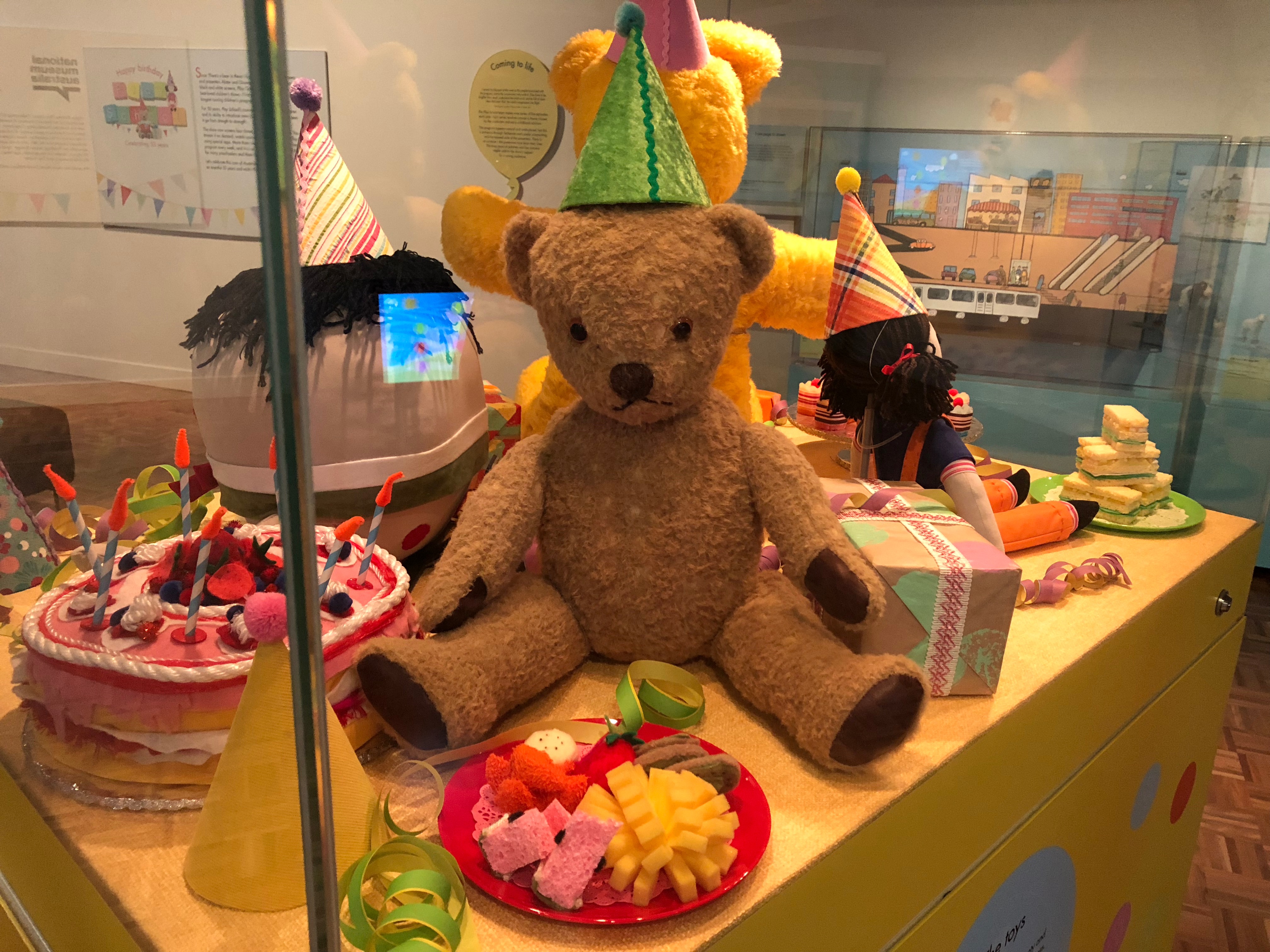
    Now moving onto the toys. They were on display with party hats, sitting next to plates of food including a large cake. Considering the theme of celebration, it was a very apt way to display all of these beautiful childhood favourites. Still a Big Ted fan for life! The labels for the toys were directed at children which was fine by me. I would imagine that adults just want to enjoy their time viewing what feels like a group of old friends.

    IMG_1738
    Happy Birthday Play School
    IMG_6462
    Happy Birthday Play School

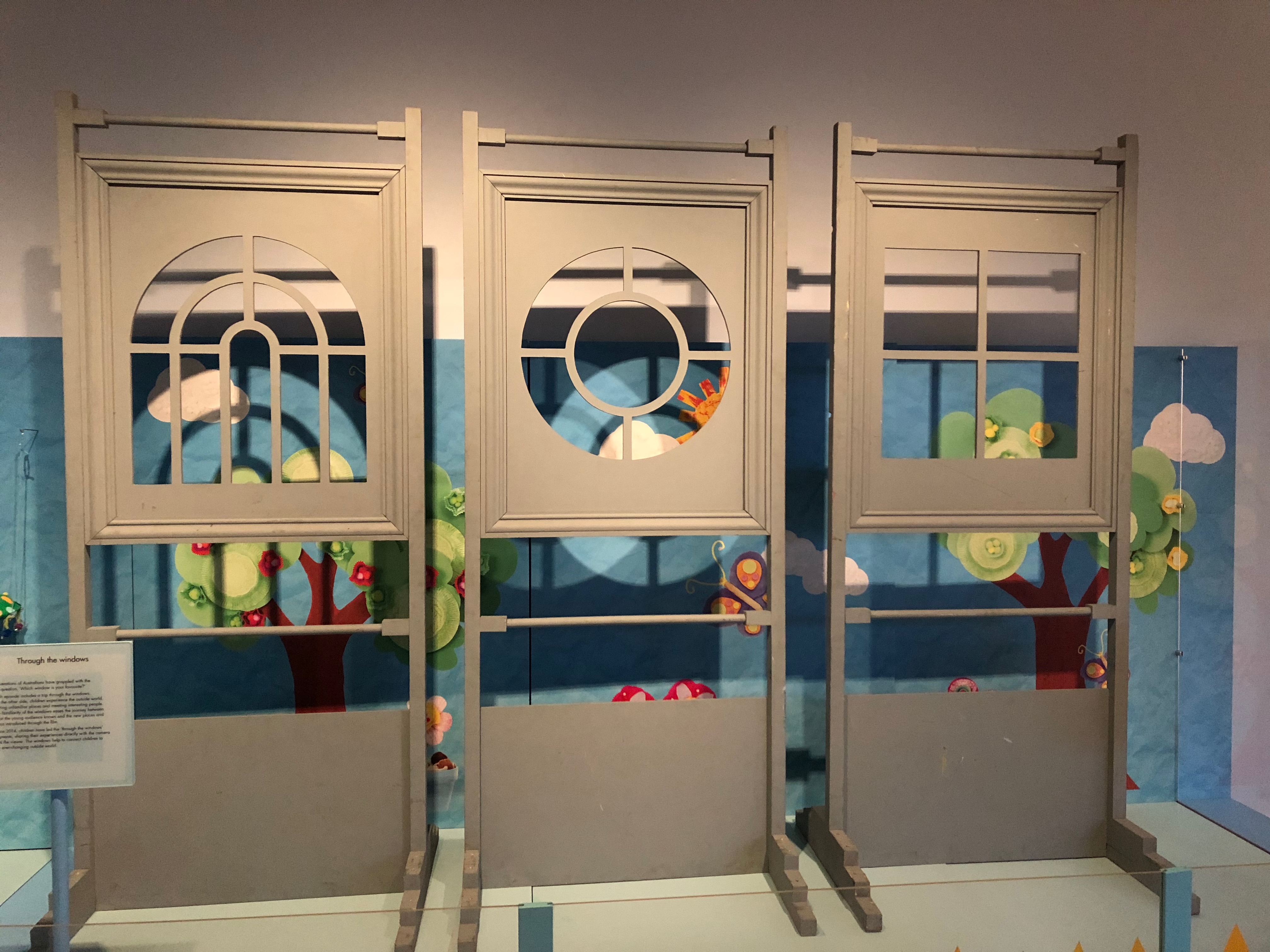
    Turning away from the toys, you come face-to-face with the Play School windows. The arch, round, and square are all there on display. These particular windows were introduced in the 1970s. At the risk of sounding like “things were better in my day” the animated windows that appear on the show today don’t cut it.

    IMG_1119
    Happy Birthday Play School

    Finally, another highlight object was the Rocket Clock. In the show, the clock would light up and rotate to reveal a diorama for the day. The one on display was a diaroama of Mt Fuji. Similar to the windows, the labels were designed for adults providing a snapshot of information. If they had been any longer, I think it would have proven to be distracting in the exhibition space.

    IMG_3895
    Happy Birthday Play School

    Before exiting the space into the mid-way placed cafe, there was a large board displaying photographs and information on presenters. We spent so long looking at this board trying to remember the different presenters and who were our favourites. The number of Australian television and movie stars who have appeared on the show is so high. There are some excellent photographs and quotes to keep you occupied.

    That basically concludes the section of the exhibition designed for adults, but, would engage kids. The second room is filled to the brim with activities including a storybook area and a table to make a rocket. There were some digital iPads that didn’t seem to be working. I found the activities that weren’t digital to be what looked most engaging and I really hope kids take the time to get away from the iPads and go old school Play School.

    IMG_9063
    Happy Birthday Play School
    IMG_8444
    Happy Birthday Play School

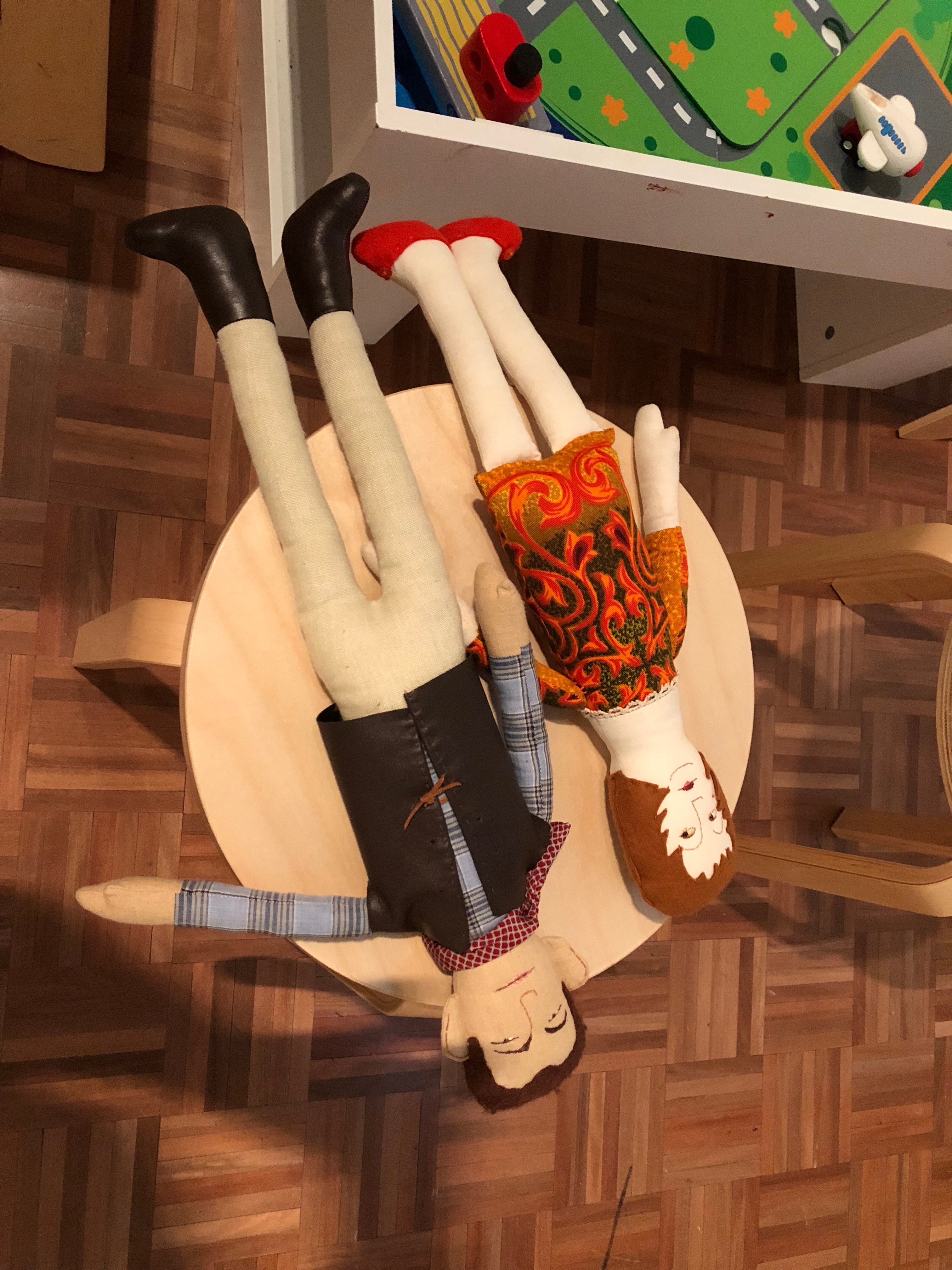
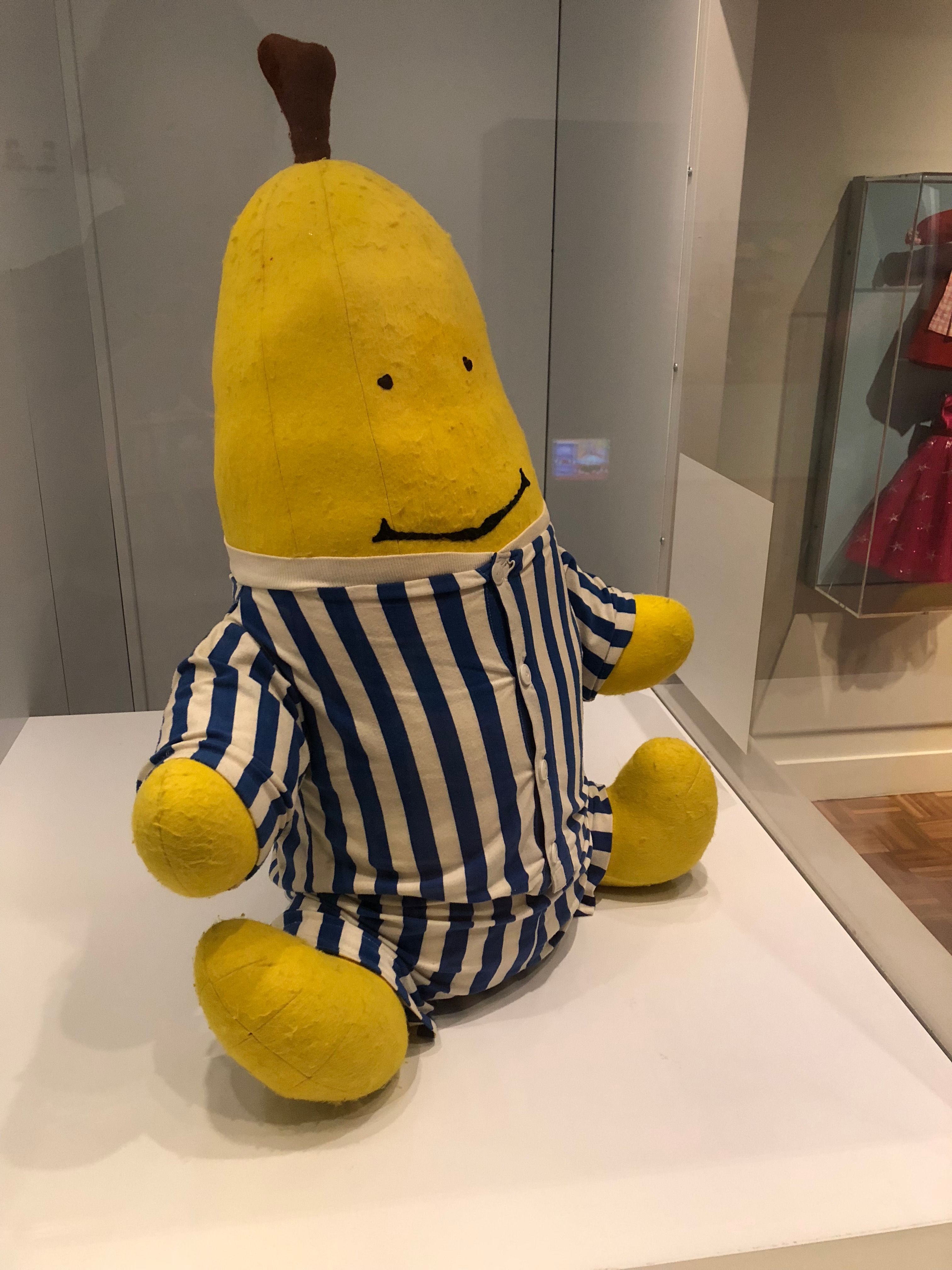
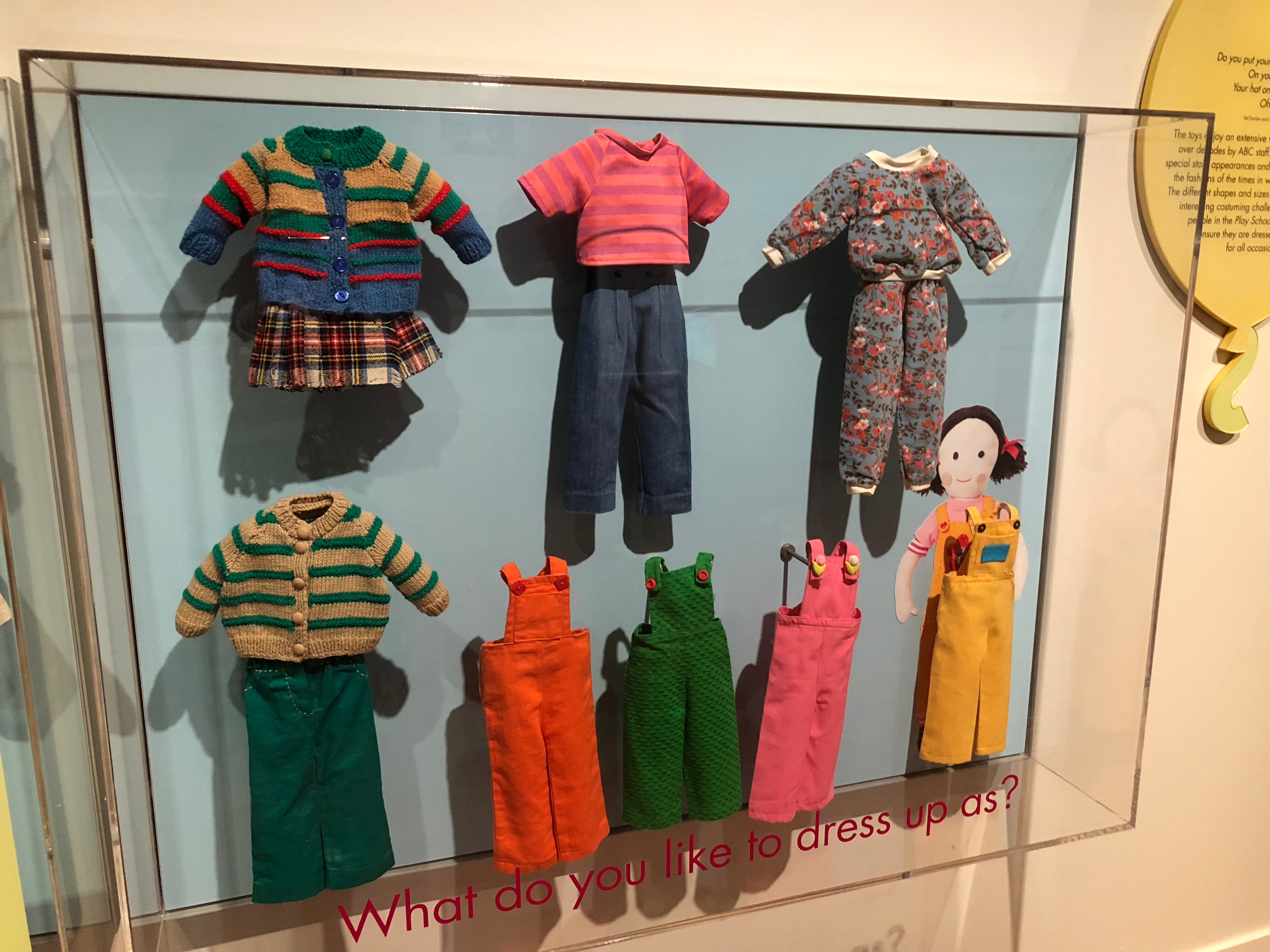
    There were two highlight areas in this section that adults could enjoy. The first was an original banana in pyjama without its twin and the second was some clothing from Jemima’s wardrobe. It was so strange seeing a single banana in a pair of pyjamas. The original television song was filmed on Play School and the Bananas in Pyjamas was a spin-off series. Again, this show has been essentially ruined by animation. The outfits belonging to Jemima were displayed hanging from the wall which was a great way to see them all together.

    IMG_9817
    Happy Birthday Play School
    IMG_1063
    Happy Birthday Play School

    Returning to what I said at the beginning, this exhibition was successful at being a kid’s exhibition that appealed to adults as well. This was mainly due to the fact that there were labels for adults and sections of the exhibition that triggered nostalgia. I actually thought it worked really well having all the activities in one space. If they were all throughout the space it would probably get very distracting and would ruin the atmosphere created in the first room.

    To finish, I want to quote the lovely front-of-house staff member who sold us our tickets – “the adults are enjoying this exhibition just as much as the kids – wait – no they are enjoying it more.”

  • Philadelphia: The Mutter Museum

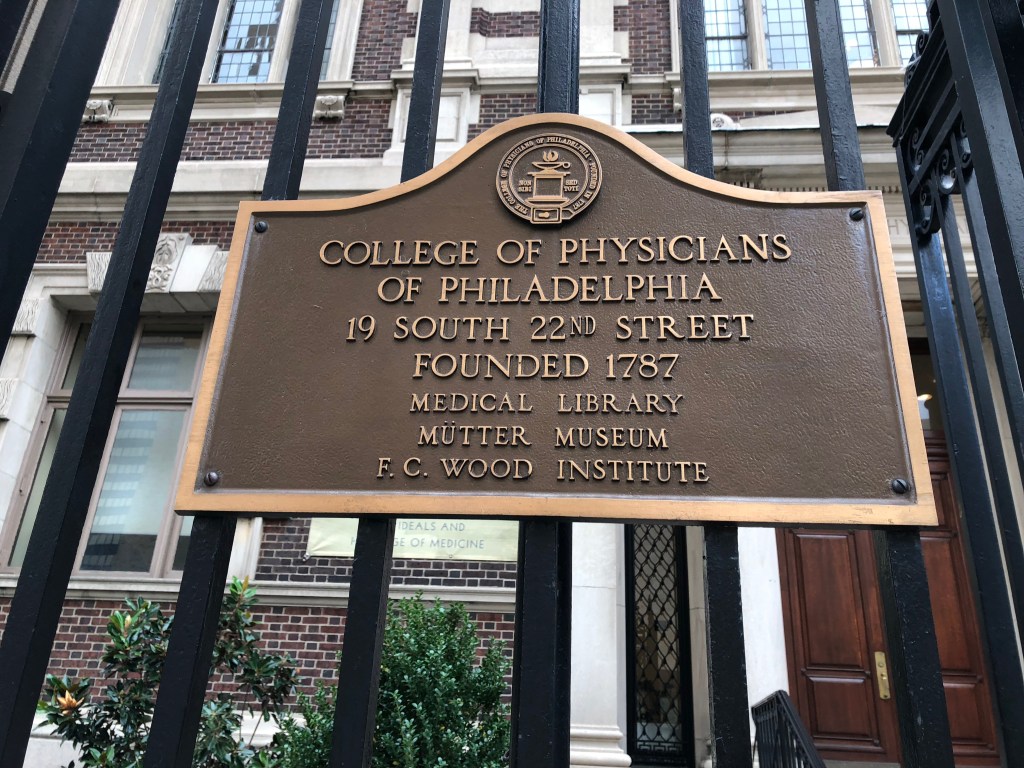
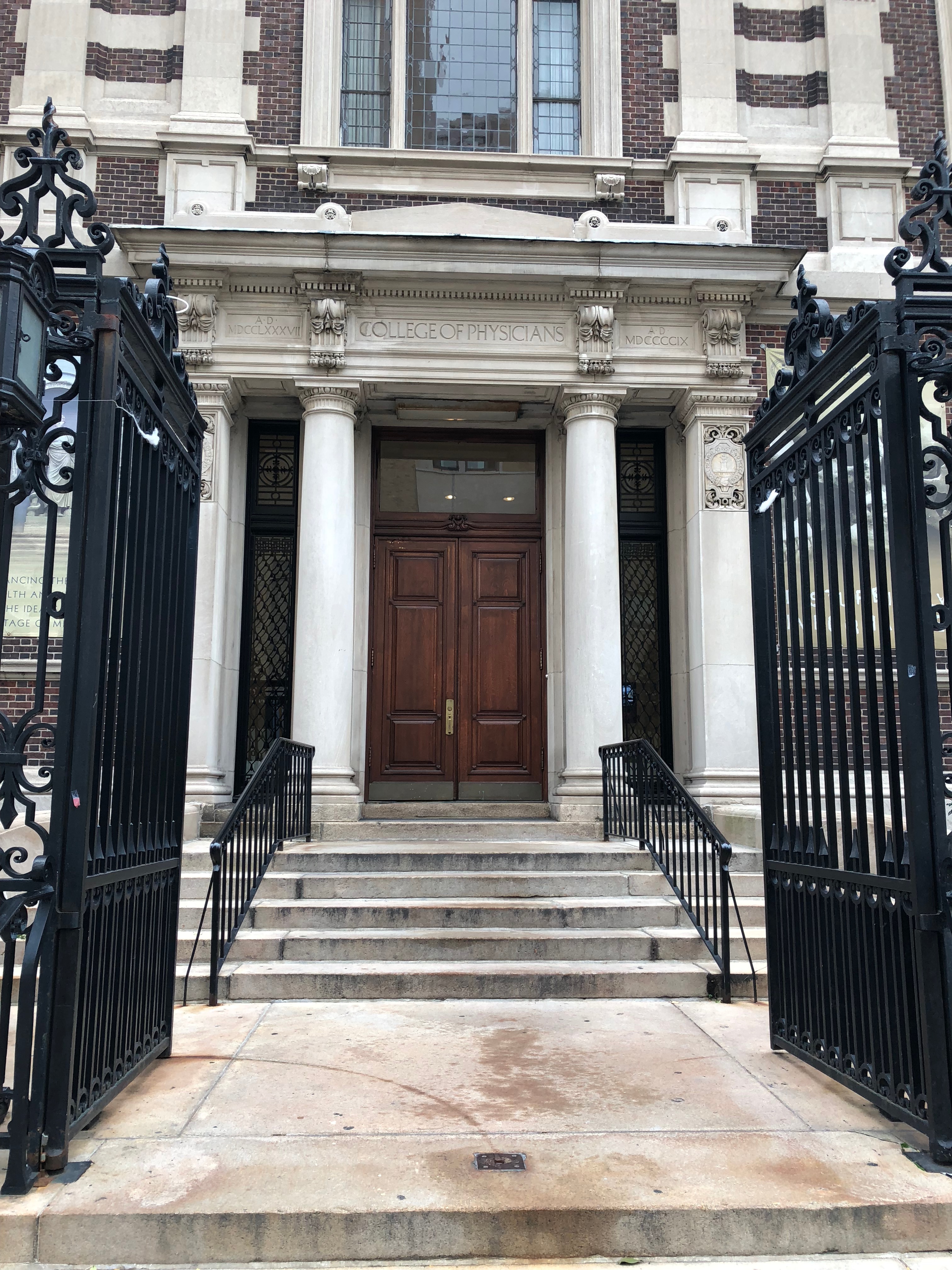
    One of the main reasons why I wanted to visit Philadelphia was to see the Mutter Museum. It has been on my “must visit” list for far too long. I am happy to report that not only did I get to visit the museum, but, it lived up to my expectations. The museum is named after Thomas Dent Mutter who was a physician and Fellow of the College of Physicians of Philadelphia (for the record I have never used the word “of” so much in one sentence).  Throughout his life, Mutter acquired a substantial teaching collection including human specimens and medical instruments. On his death, 1 700 objects were bequeathed to the College. Today, that number has grown to over 25 000.

    IMG_4873
    The Mutter Museum Entrance

    Here is a run down of what exactly you’d find in the collection:

    Wet Specimens – biological material preserved in a fluid (alcohol or water)
    Skeletal Specimens – whole skeletons or bone fragments
    Models – anatomical models used for teaching
    Instruments – an array of medical equipment and apparatus

    The museum continues to collect specimens that adhere to their Collection Management Policy. Interestingly, this policy is not available online to download and peruse. I would love to know if they continue to collect human remains or if they are solely collecting instruments/models. From a bit more research, I found that they are open to people donating artworks and are actively trying to grow their art collection.

    So why exactly would somewhere continue to display body parts if they are no longer used for teaching purposes? According to their website:

    “The goal of the Museum is to help visitors understand the mysteries and beauty of the human body and appreciate the history of diagnosis and treatment of disease.”

    This essentially means that by showing such objects, the history and heritage of medicine can be displayed and unravelled. What makes things difficult and incredibly problematic with medical museums is the issue of human remains. It is such a rich debate that has overshadowed medical museums in the modern era. I researched this area of museology numerous times during my Masters degree and while it is fascinating, I want to focus my review on what we saw.

    Benjamin Rush Medicinal Plant Garden

    IMG_4016
    Benjamin Rush Medicinal Plant Garden
    IMG_2132
    Benjamin Rush Medicinal Plant Garden

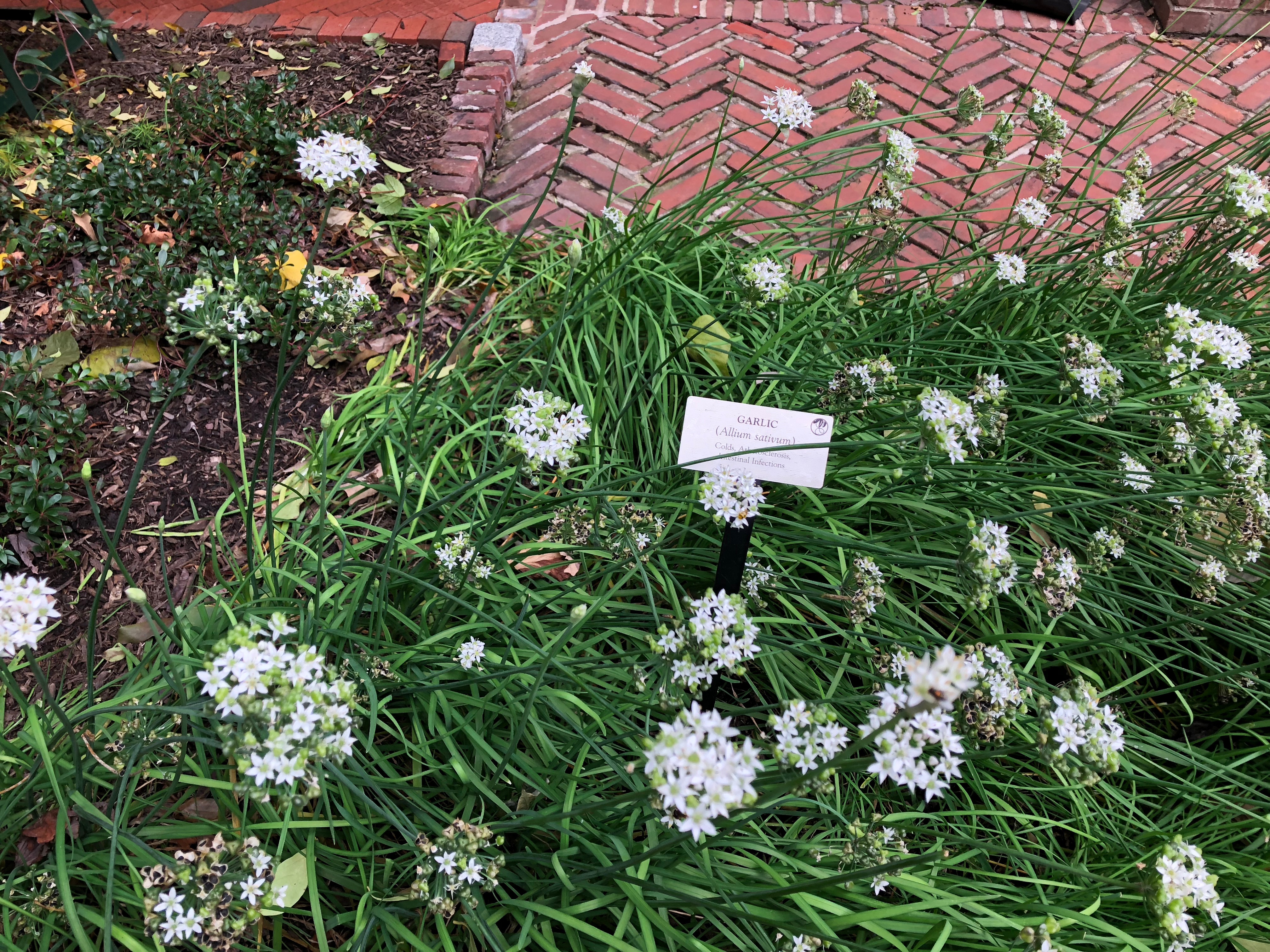
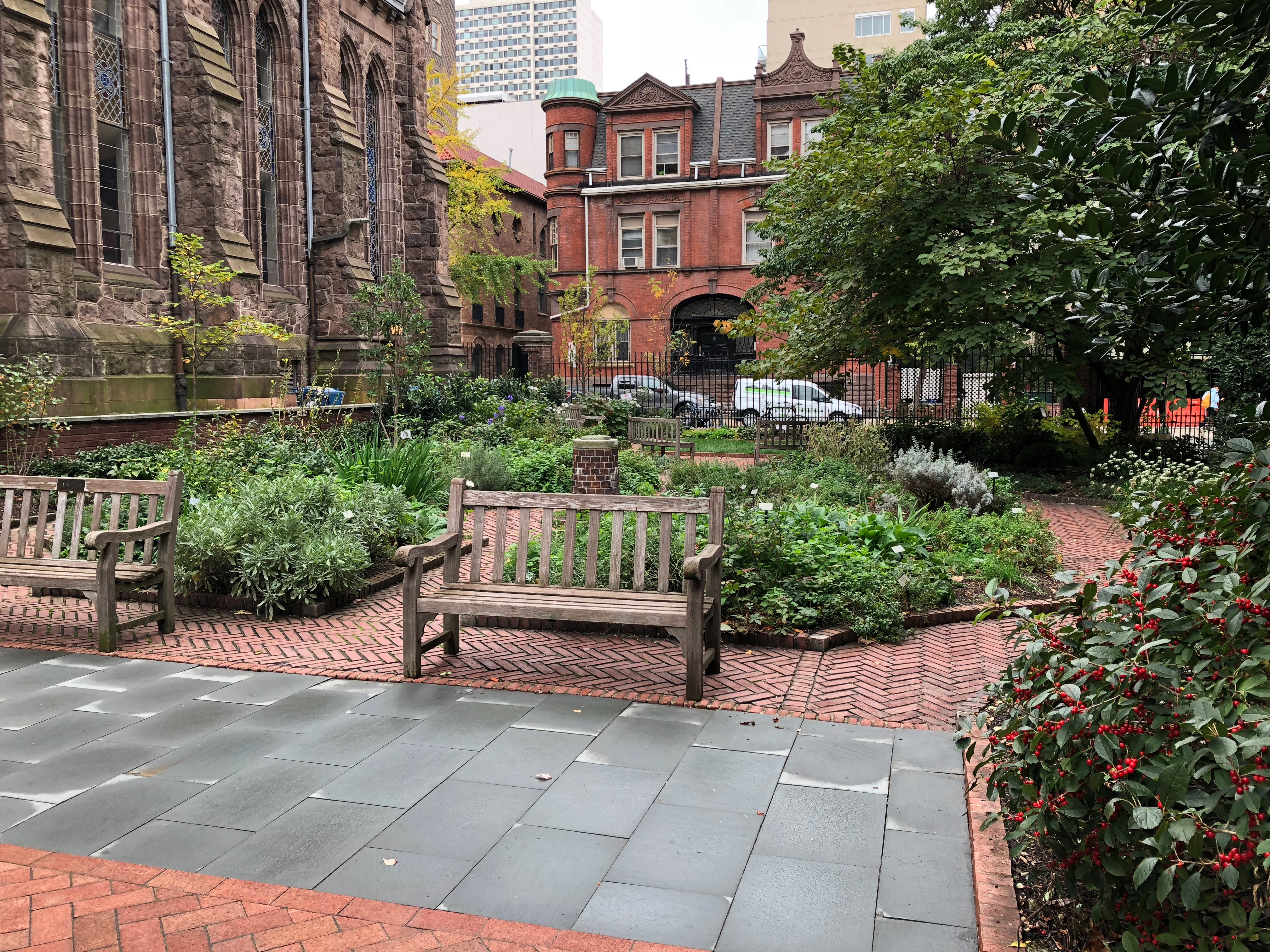
    I am going to start with my absolute favourite part of the museum. Separate from the permanent display, the Benjamin Rush Medicinal Plant Garden was just everything I hoped for and more. It is a beautiful little garden containing over sixty different types of plants/herbs. These have all had some historical or even contemporary value to medicine. The plant labels each contain the common name of the plant, scientific name, and its more common usages.

    Simply strolling around the garden was an educational experience. I am so impressed that the museum has continued to care for and grow this garden because I truly think it added that extra element to the museum experience.

    Temporary Exhibition – Lisa Nilsson “Collective Tissue”

    IMG_4316
    Lisa Nilsson “Collective Tissue”
    IMG_0602
    Lisa Nilsson “Collective Tissue”

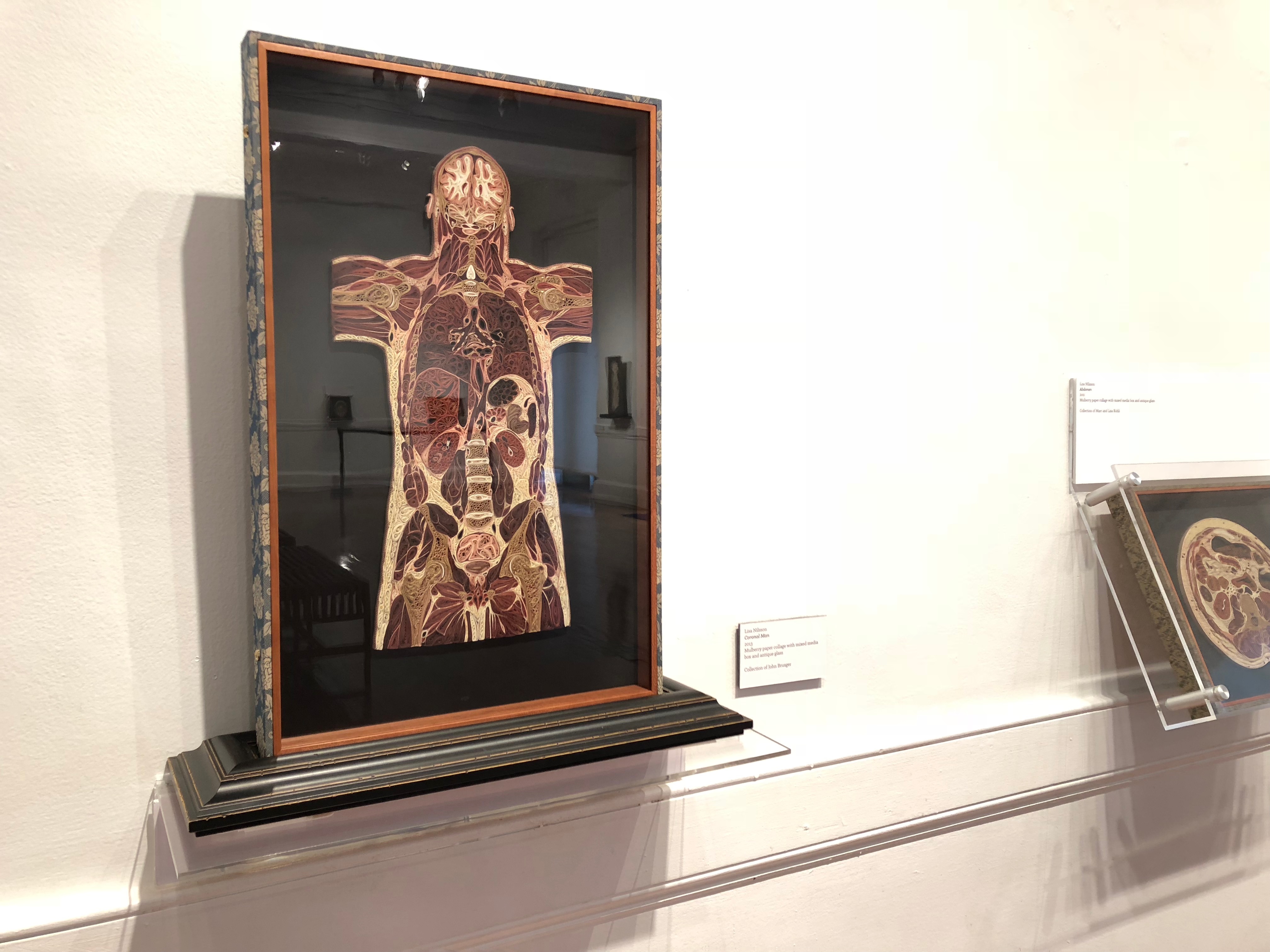
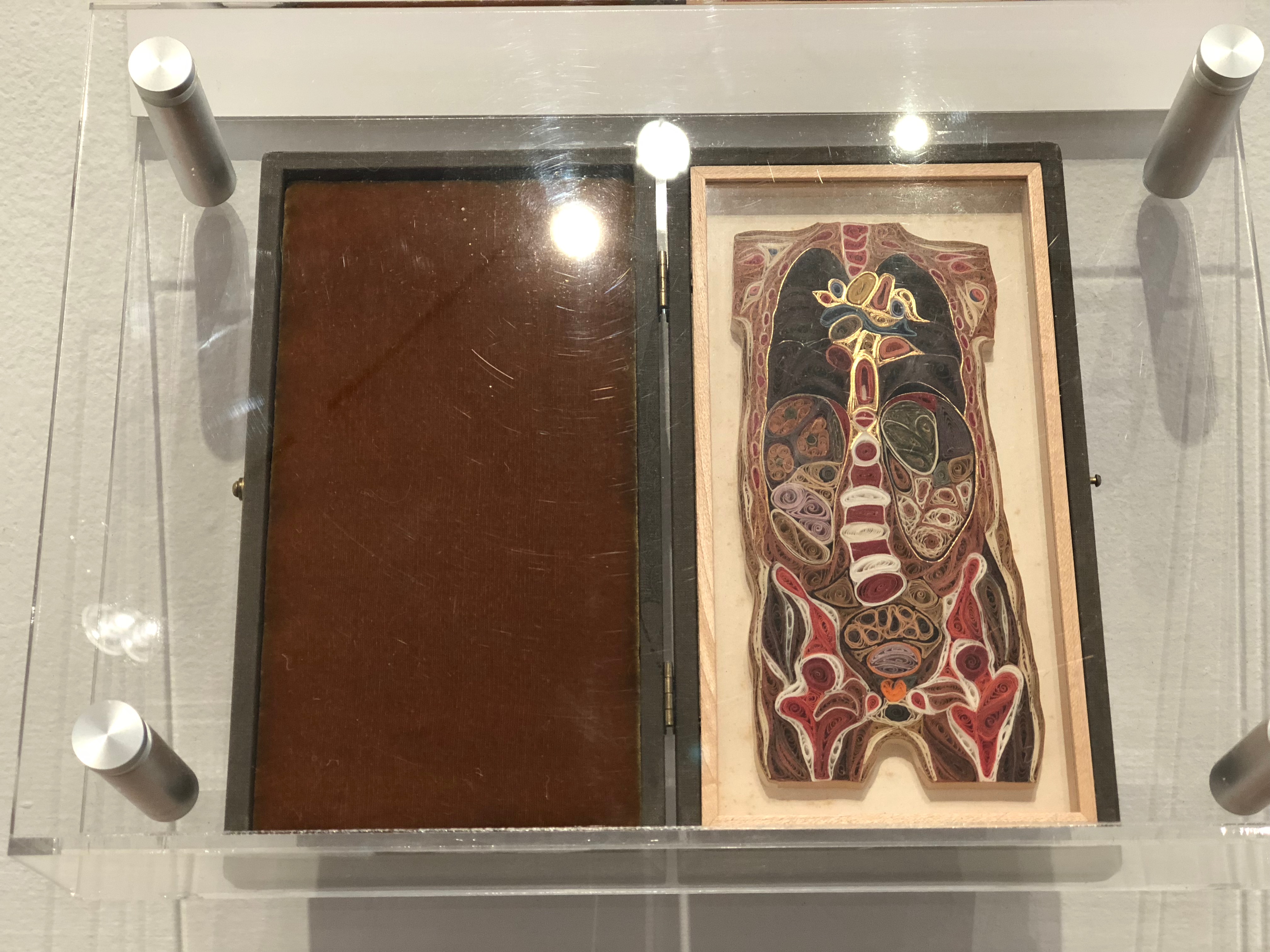
    Another highlight for me was the temporary exhibition by Lisa Nilsson. On first viewing the works, they look like actual cross sections of hearts, brains, etc. On closer inspection, you can see that they have been made from paper quills. I should disclose that one thing I love more than plants and medicine is art and medicine. There is something so satisfying in seeing the arts and science combine and work together.

    The most beautiful part of the works was the gold highlights you can see in the images made from the gilt edges of old books. They are stunning works of art that show the human body as a thing of beauty. It is also worth noting that the artist tried to make them as close to anatomically correct as possible.

    Permanent Display

    The permanent display of the Mutter Museum covers two medium-sized floors and is undergoing a transformation from cabinet of curiosities to a more modern exhibition space. For example, on the ground floor there are two full-sized skeletons on display, separated by a thematic panel. They are both female skeletons with one showing the effects of wearing corsets on the ribcage and other bones. The panel explained why women wore corsets and the long-standing health implications that many experienced.

    There are many well-known objects on display including the soap lady, parts of Einstein’s brain, a vertebrae from John Wilkes Booth, and a full Civil War amputation field kit. Just by googling the museum you can see all of this online and get a taste for the types of objects that greet visitors while they explore. Instead of re-hashing this information, I am going to focus more on the layout of the display.

    When you first walk into the space, you feel as though you have stepped back in time and into someone’s private collection. Although there are modern elements, the cabinets scream old school and a sense of nostalgia. Seeing this juxtaposed with the more informative thematic panels worked very well. Walking around this level, you are pretty much free to go where you like and explore in your own time. I wandered around and stopped when something caught my eye so I could learn more. I really enjoyed the temporary exhibition on herbs and plants that were and are used for medicinal purposes but can also pretty easily kill you. Some of these plants linked to the Benjamin Rush Garden mentioned above so it was a great way to incorporate this into the display.

    The ground level is quite similar. The one difference being there are display cases in the centre of the room containing some highlight objects. My absolute favourite display was on the ground level and was simply a series of drawers filled with objects people had accidentally swallowed. I remembered a case study of a man in England who swallowed a coin and ended up dying from a gangrenous lung. So it’s for the best that these objects were retrieved and not left inside.

    Another thing I thought worked really well with the layout was dispersig the wet specimens and combining them with old teaching models. It made the display feel less like ‘here is a bunch of human remains for your amusement’ and more like how the objects were intended to be used – as teaching tools. You were able to see the model and then see a specimen as a point of comparison.

    One thing that I was happy to read following our visit is that the object labels are slowly being replaced to meet museum standards. We found that many were difficult to read or weren’t positioned anywhere near the object.

    Overall the layout suited the objects on display and the aim of the museum to further educate. I think once the displays have been rennovated and refreshed, the museum will be able to communicate a much stronger message on health and disease. The temporary display was so exciting to see as the museum is clearly starting to engage with other disciplines and look at the culture surrounding health.

  • Philadelphia: Philadelphia Museum of Art

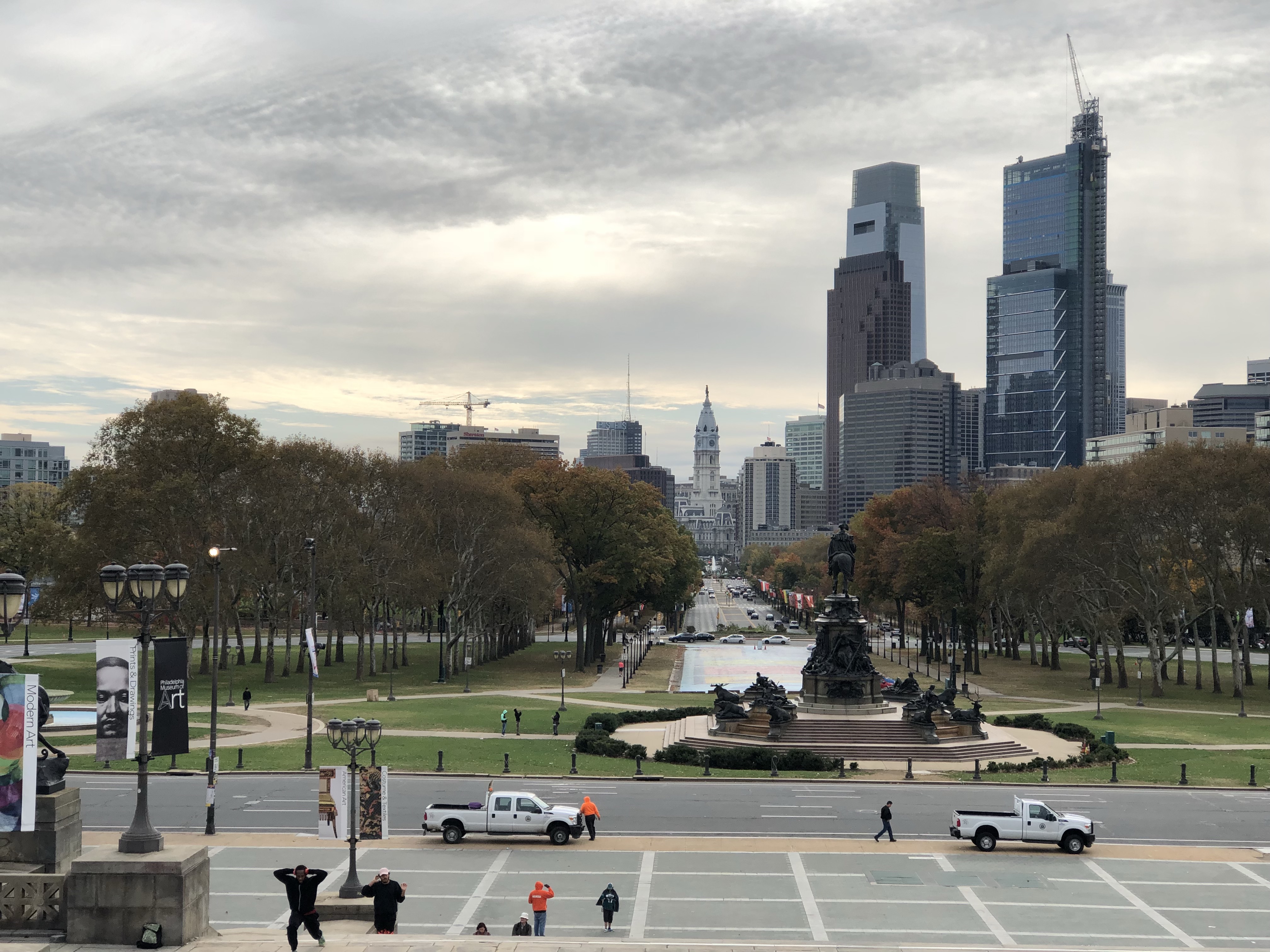
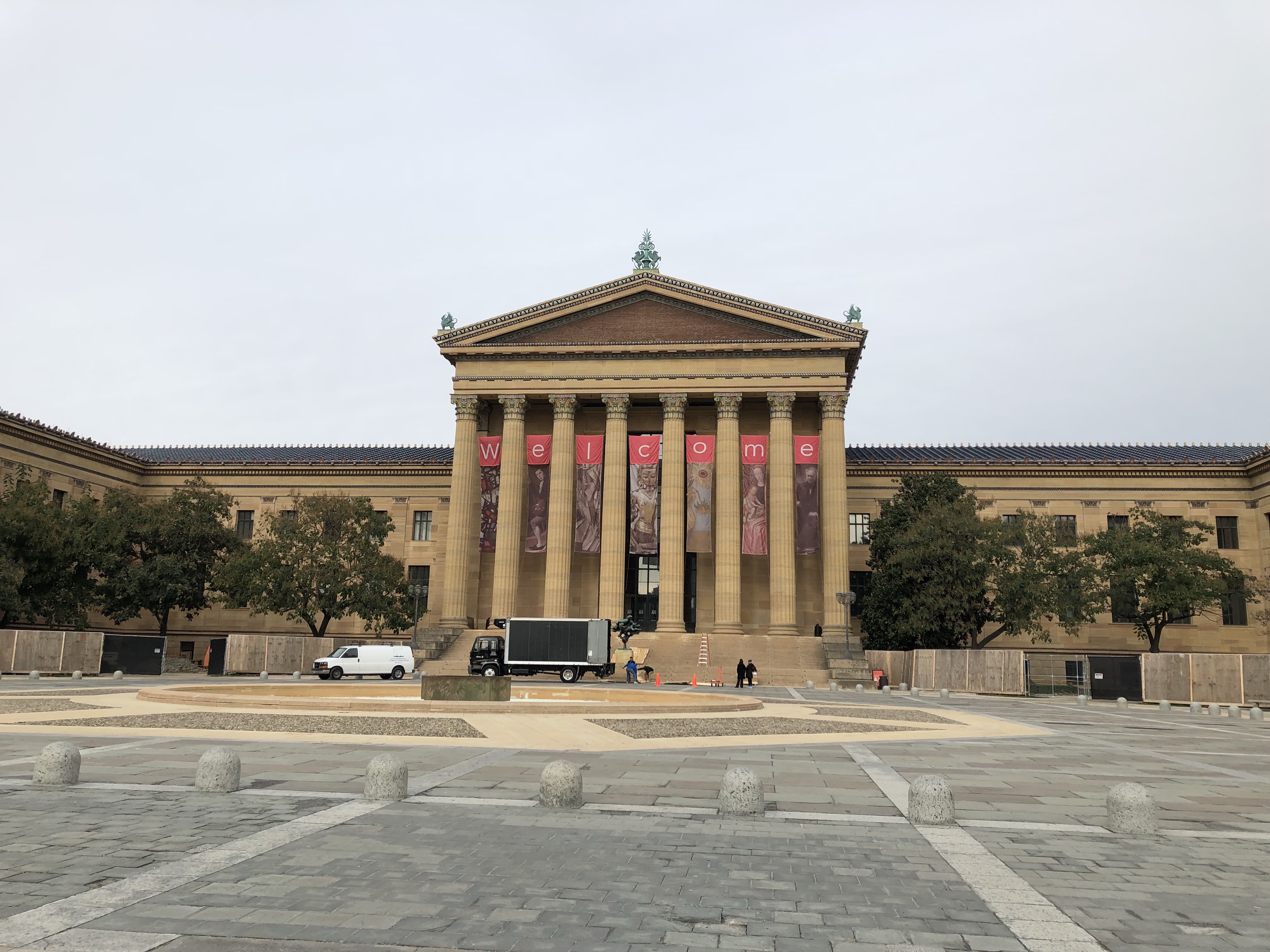
    The Philadelphia Museum of Art is an overwhelming institution in the best way possible. You could so easily spend an entire day here and not come close to seeing everything. I had been warned that this is a huge gallery filled with everything from 15th century European art to Picasso and Mondrian. Basically, if you want to visit a gallery that has a bit of literally everything, then this is the one to add to your list.

    Philadelphia Museum of ArtPhiladelphia Museum of Art
    Philadelphia Museum of Art

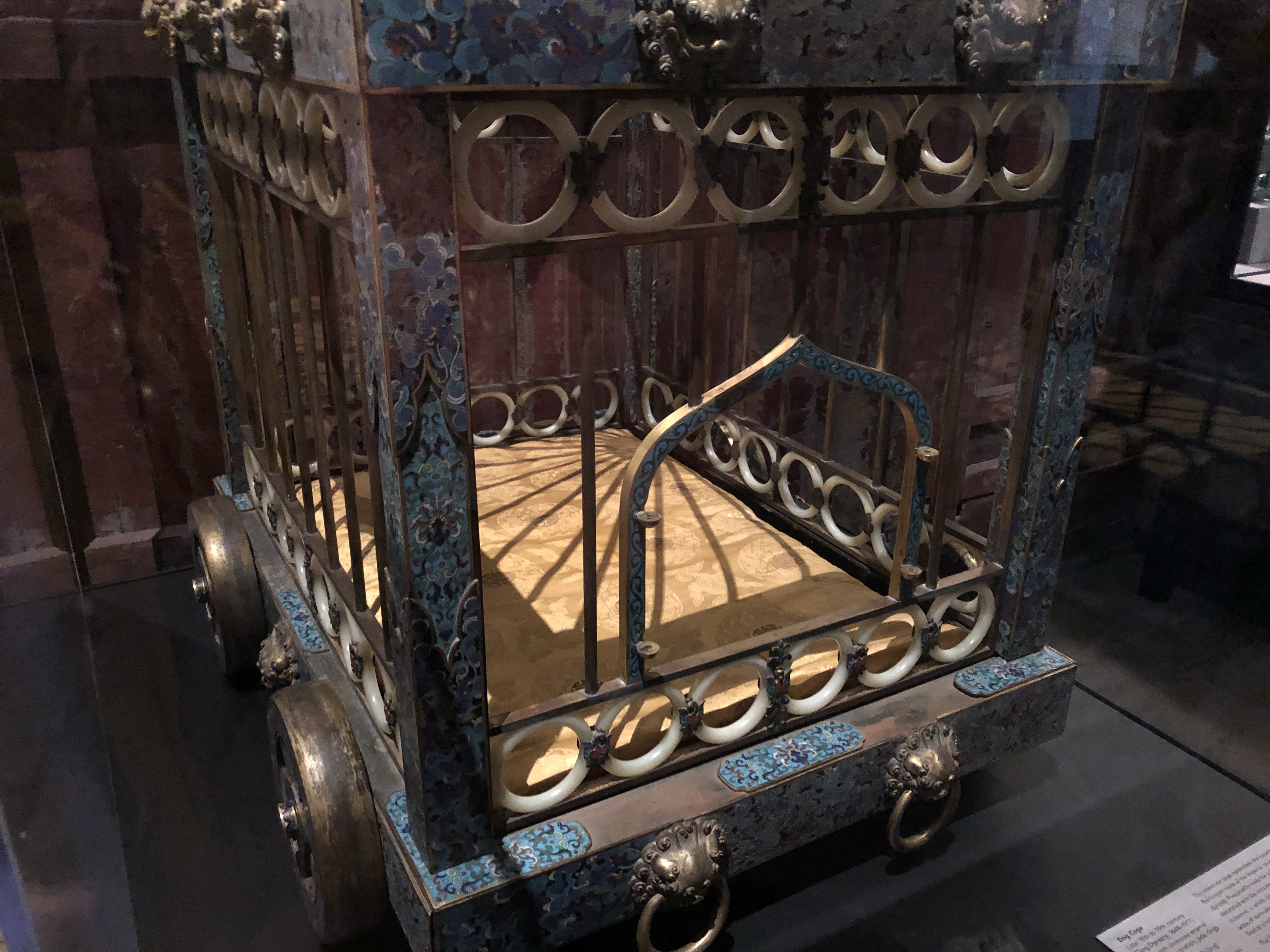
    On arrival at the museum we decided to join a collections highlight tour. I would so highly recommend doing this to orientate yourself and get a taste of what’s on offer. We started in the American Art wing and moved through Asia and Europe. My favourite object was this dog cage from China.

    Chinese Dog Cage

    It is from the Qing Dynasty and is believed to have been made around the late 18th century. According to the label, it represents the luxury of the Chinese Court. Imagine seeing a cute little puppy being treated like an Emperor. When not going for walks, the dog was able to relax on a silk pillow and be fed delicacies. The workmanship on the cage is unbelievably intricate. Five clawed dragons surround the top of the cage and there is rare white jade everywhere. A cage fit for a good boy.

    We were amazed on the tour by the number of architectural elements and objects inside the gallery. There was a complete Japanese Tea House reconstructed on the second floor. It felt as though you were inside a museum inside a gallery so ultimate level of inception.

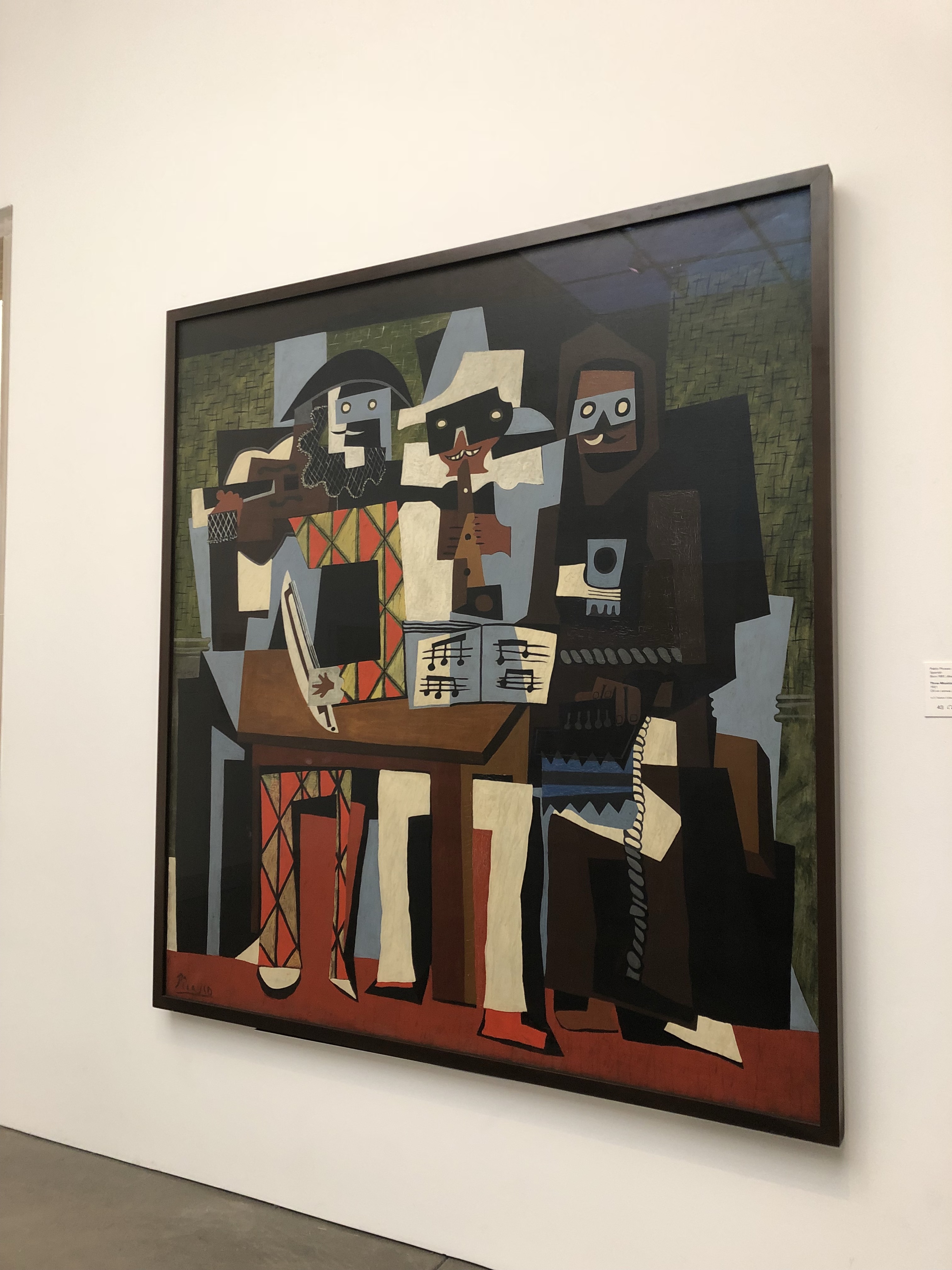
    Another highlight of the highlight tour was seeing the Three Musicians by Picasso. While the artwork label is incredibly minimal, we heard some great stories from our guide. One was that the painting is actually an autobiography. Picasso is the jester, a friend who died of the Spanish Flu is in the middle, and the monk is a friend who converted to Catholicism and entered a monastery. It is quite a sad painting as Picasso never saw his two friends again.

    Picasso

    These are just two of the many artworks mentioned on the tour. It was a really great way to start our visit and we developed a much clearer idea of where to go next.

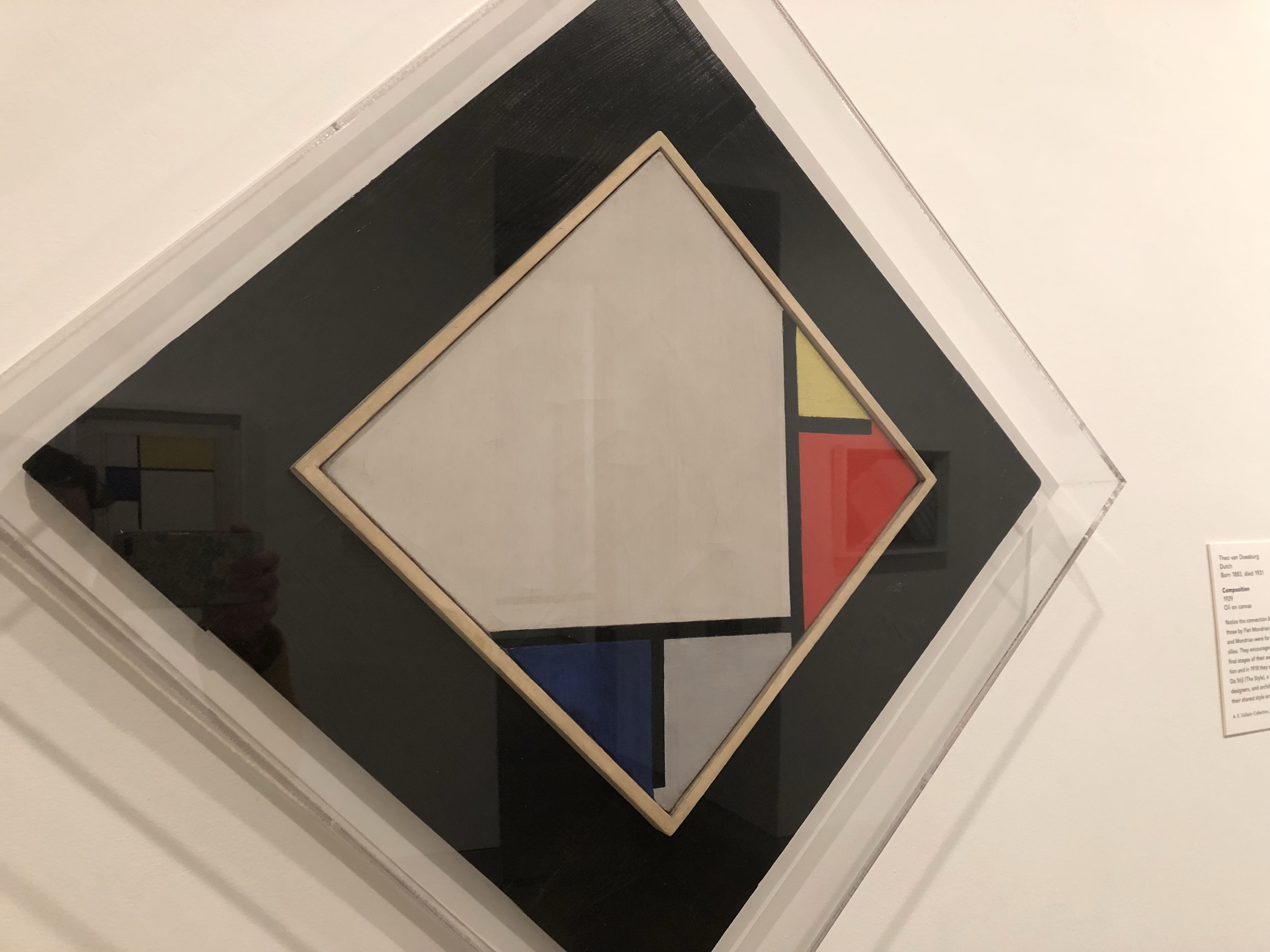
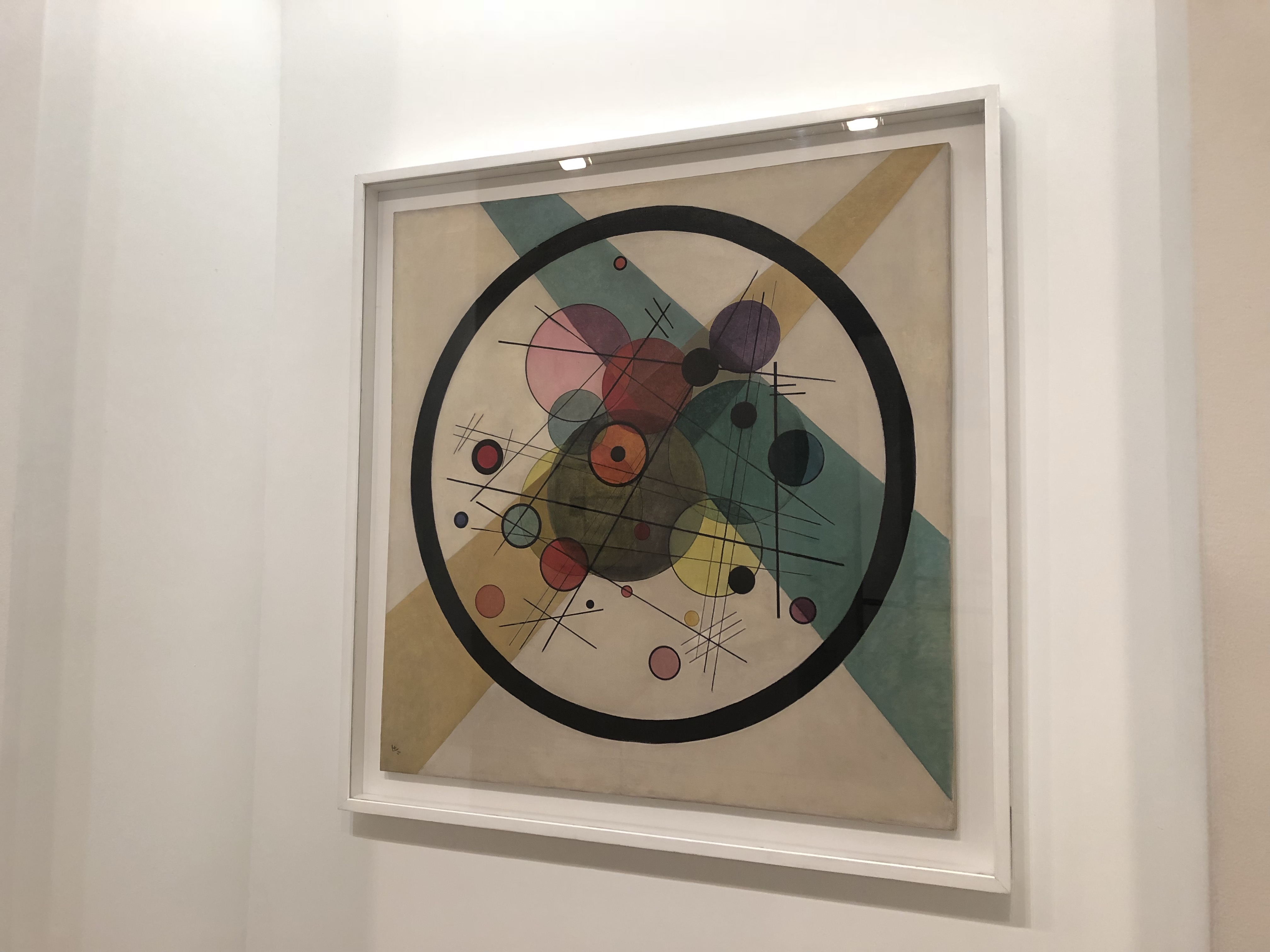
    I was beyond excited to see some works by Piet Mondrian. There were a couple of small examples on display just casually sitting alongside a Kandinsky.

    Mondrian
    Kandinsky

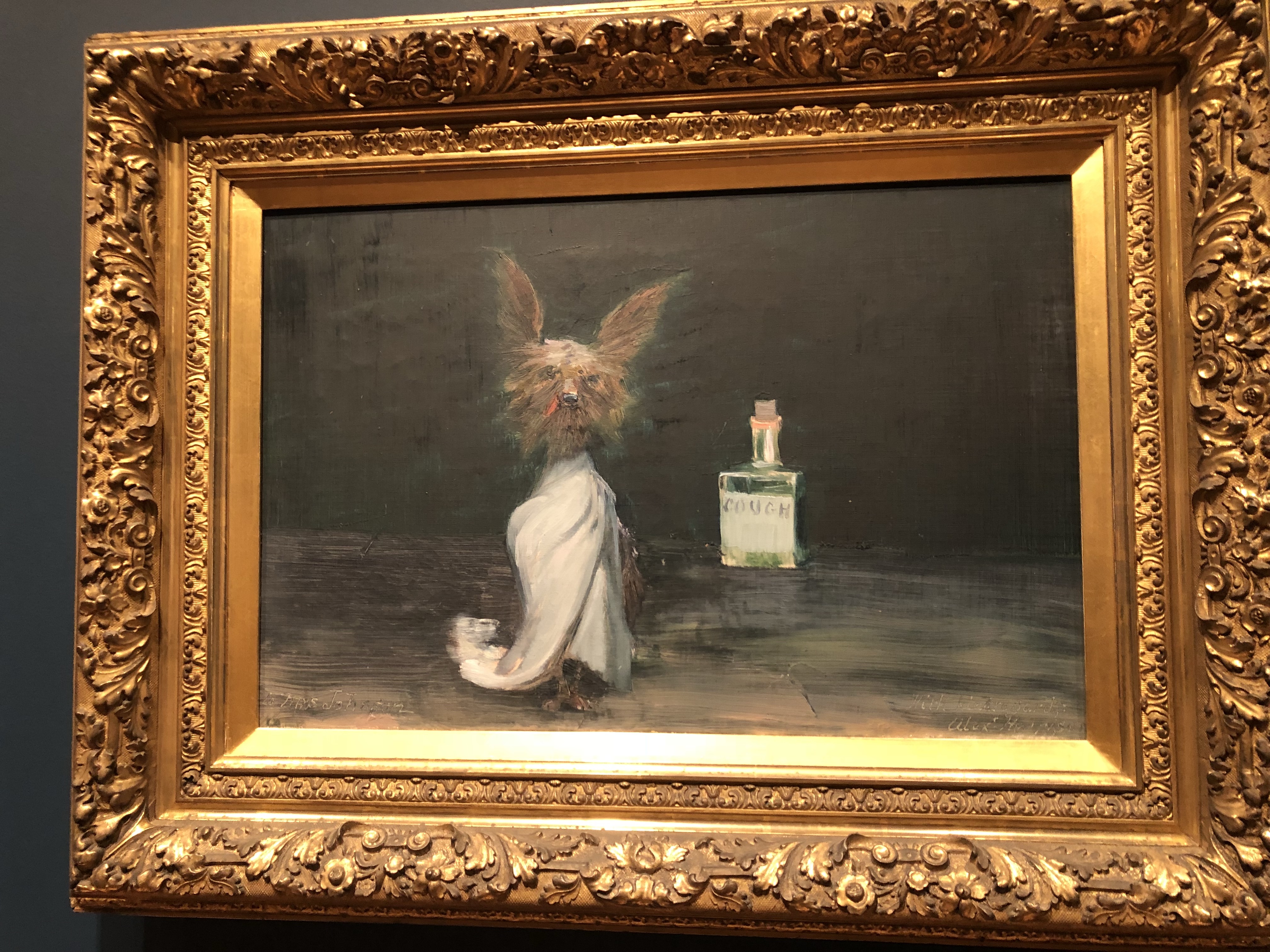
    After looking through the European and Modern/Contemporary sections we made our way to the special exhibition. Currently this is “Old Masters Now: Celebrating the Johnson Collection”. John G. Johnson was a famous lawyer who left his collection of 1300 artworks to the gallery. The exhibition is (roughly) divided into two segments. The first highlights some artworks including this piece which is both a pun and containing a dog. So 10/10 in my opinion:

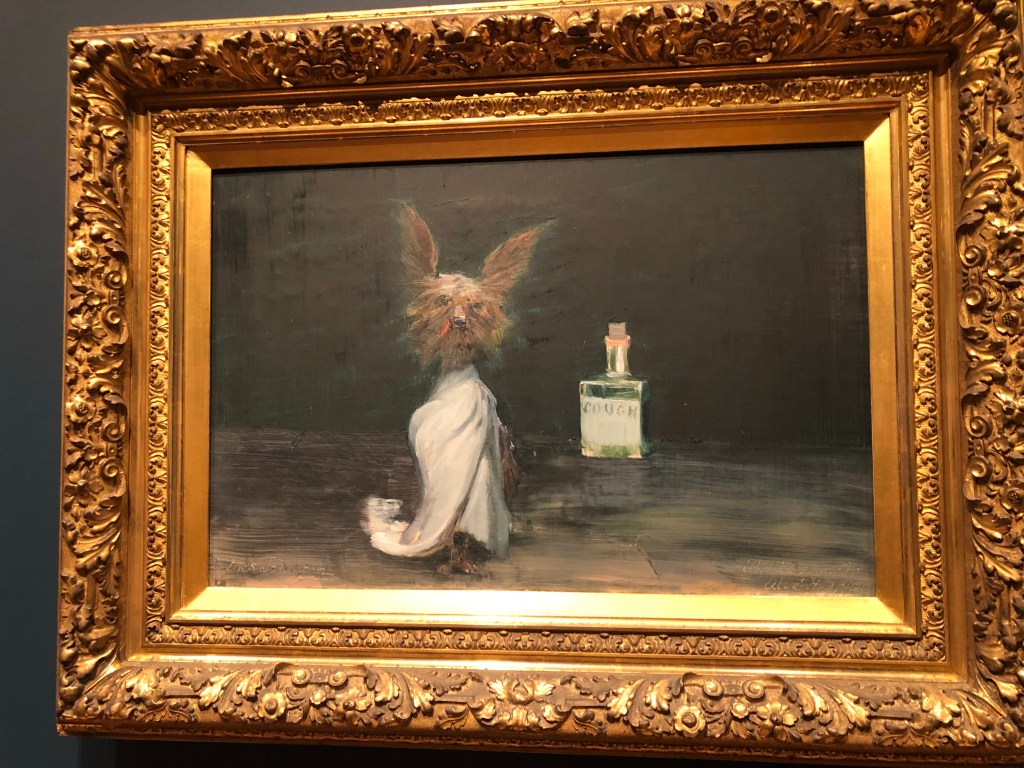
    Sick as a Dog

    In the second half, the focus shifted from showcasing the collection to revealing how it has been conserved and restored. There are two case studies I am going to share. They were presented really well in the space and encouraged visitors to learn a little more about the treatment of artworks after they have been acquired.

    Case Study 1 

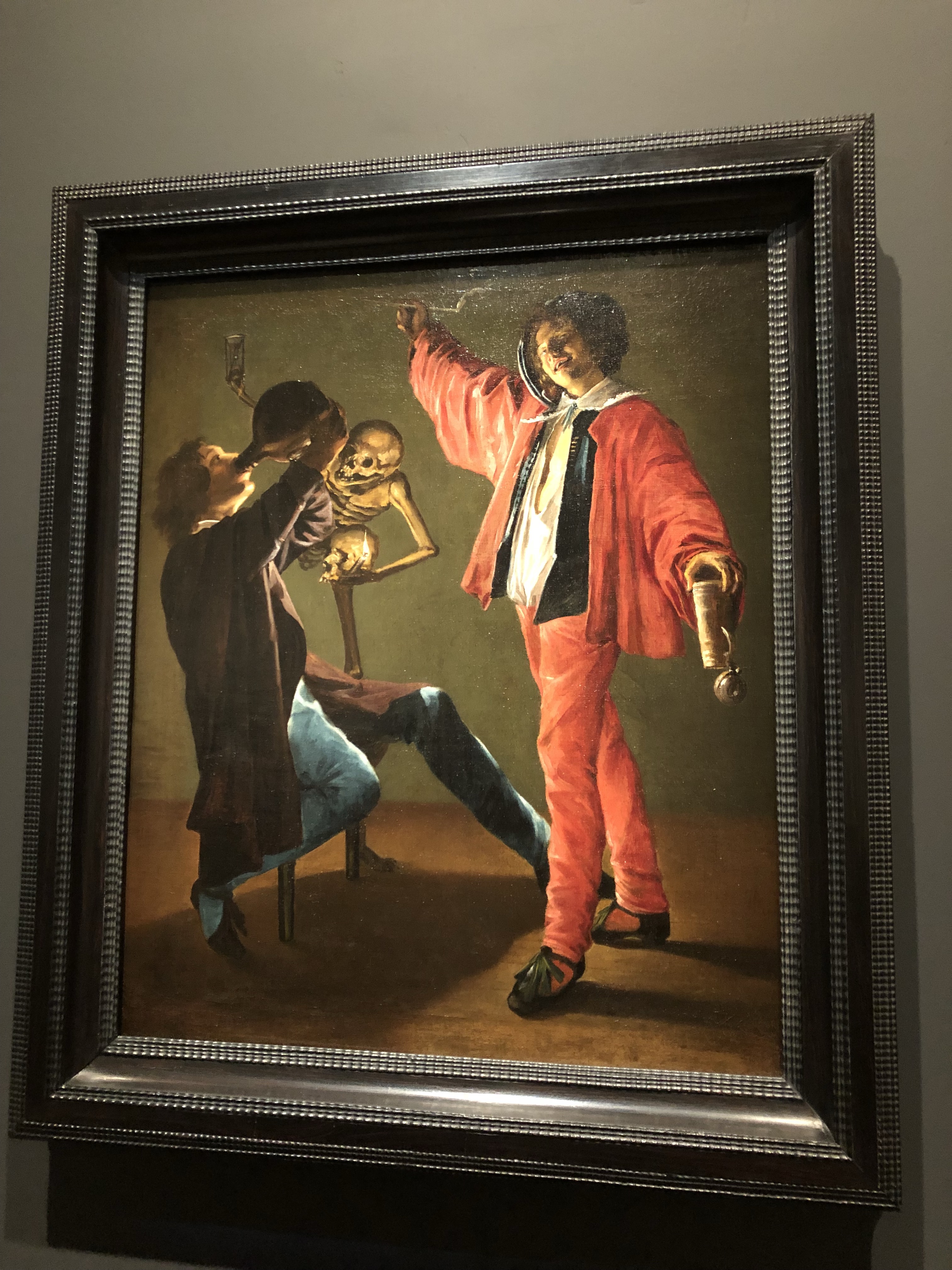
    Judith Leyster – The Last Drop – 1639

    The Last Drop

    Firstly, a female artist in the Old Masters exhibition! The painting on display shows two lively characters drinking away the night. Standing behind one of them is a skeleton reminding them of their doom. The painting didn’t always look like this. In fact, when it entered the collection the skeleton was completely absent. A scholar who specialises in Leyster’s work, knew the painting quite well and showed Curators an old copy of the painting with the skeleton. Dutch paintings from the 1600s onwards often contained warnings about foolish behaviour so the skeleton would make sense in this context.

    Conservators to the rescue! After some scientific analysis, it was discovered that the skeleton had been painted over to create a more light hearted scene. The painting has since been restored to its former glory, skeleton and all. I loved how the label ended stating the skeleton may not get the attention of the revellers but it surely captures ours. The significance and duality of the painting is transformed when its original state is displayed. It goes from a scene of fun to a scene that warns against the perils of indulging in too much alcohol.

    Case Study 2

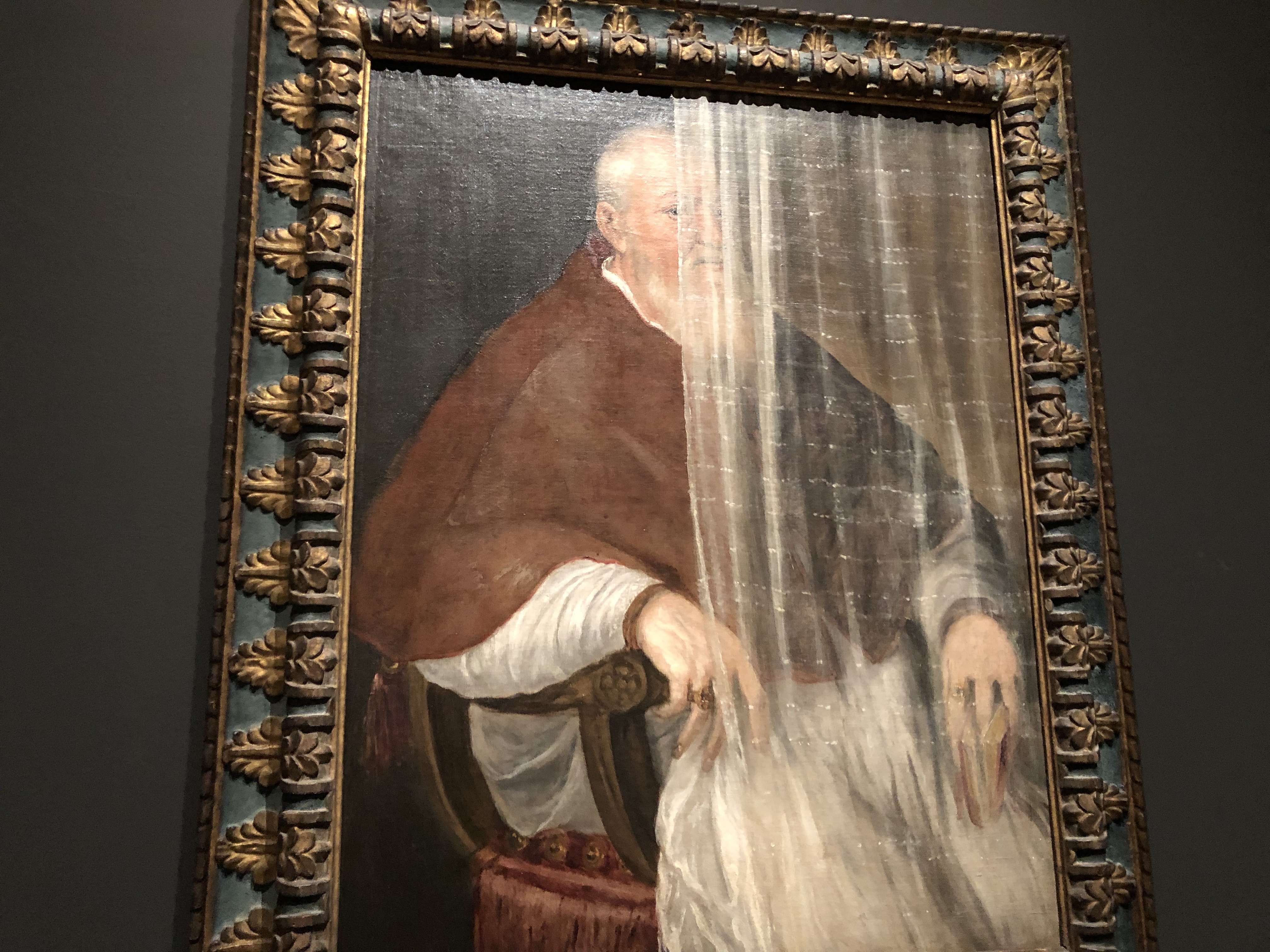
    cTitian – Archbishop Filippo Archinto – 1558

    Titian – Archbishop Filippo Archinto – 1558

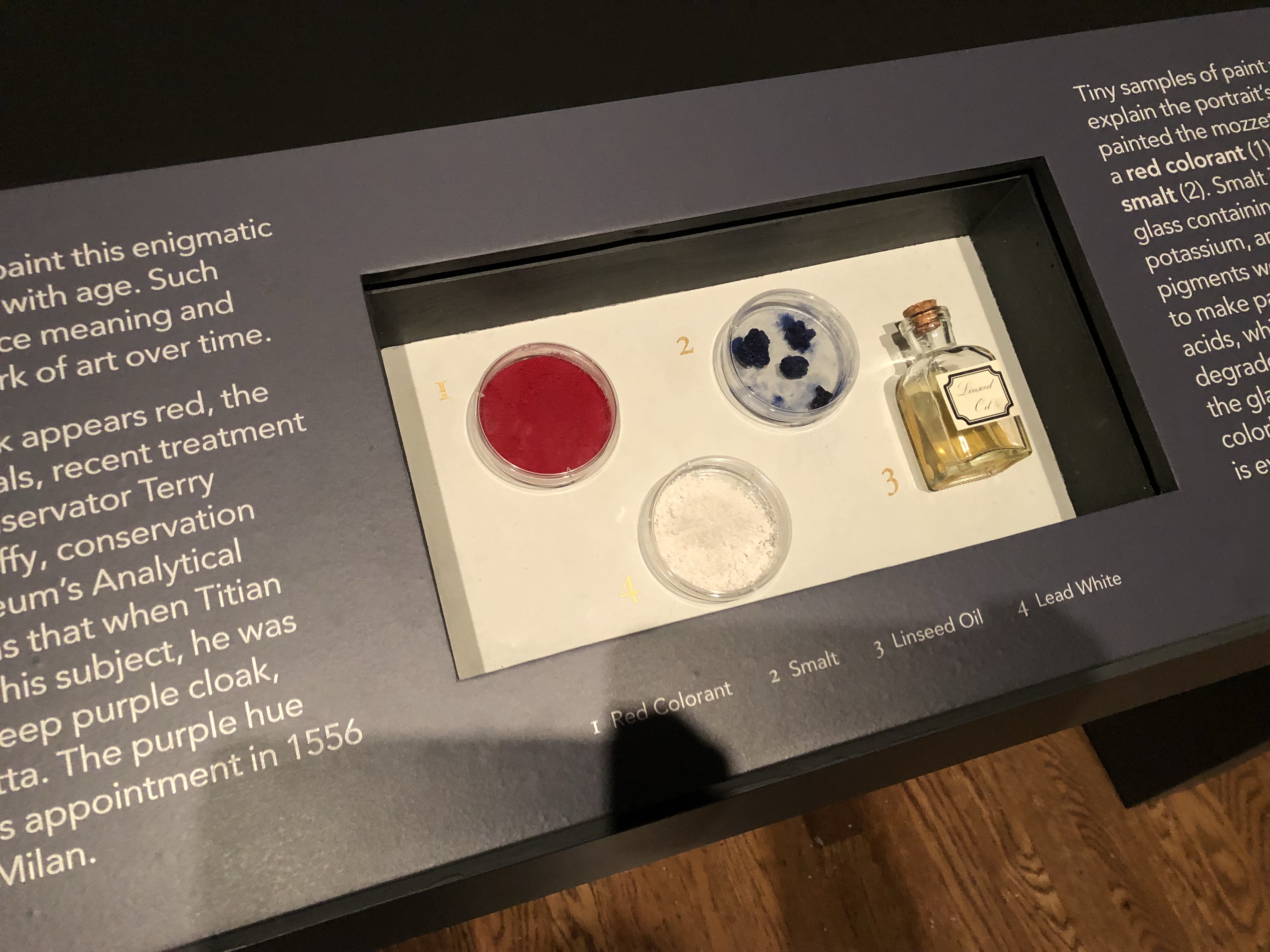
    With this painting, I enjoyed learning about the techniques used to determine original paint colours. Although the gown of this Archbishop looks red in colour, it was actually once a deep purple. To further understand this colour change, there were samples on display of the type of paints and oils that Titian would have had available.

    Conservation Colours

    As someone with limited knowledge of old painting styles, this particular display helped to clarify the ageing process of different artworks. After reading the information, I will be looking at other paintings from this period with new eyes. Are the colours I am seeing true or have they been distorted?

    This exhibition is included in the entry price and very worthwhile a walk through. Even just to see how the collector, Johnson, displayed the artwork in his home. The images looked like how a salon in France would have been organised with artworks hung three or four high on top of each other.

    Without doubt, the Philadelphia Museum of Art has been my favourite art gallery I have ever visited overseas. Everything from the art to the gift shop was amazing. I am very glad we took our time exploring and saw a little of everything on the highlight tour.

  • Washington DC: National Portrait Gallery 

    On our final day in Washington we decided to finish our museum journey at the National Portrait Gallery. My main motivation for visiting was to see the portrait of Benjamin Franklin and pose with the same judgemental smirk on my face. Now my motives are clear, I want to quickly add that as soon as we entered the gallery, we discovered there was so much more to see.

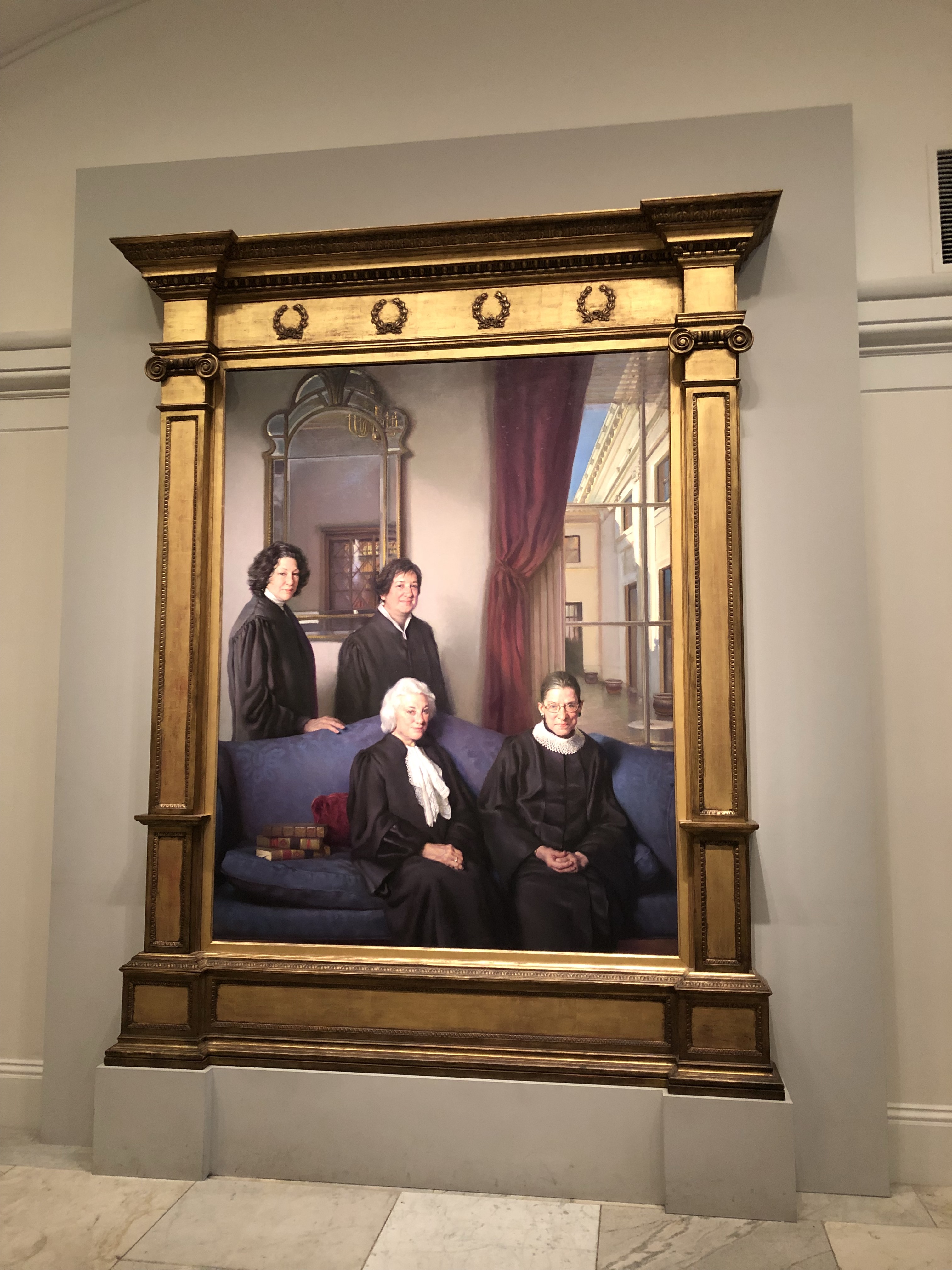
    The first gallery that caught my eye was the American Presidents Gallery located on the second level. At the top of the stairs is a huge painting containing four individuals and called “The Four Justices”. Depicted is Ruth Bader Ginsburg, Sonia Sotomayor, Elena Kagan, and Sandra Day O’Connor. Like every label in this gallery, it was super easy to read and understand. This one in particular had a lot of history woven into an explanation of the artwork.
    Each of the four outstanding women had a small biographical piece including their education, when they started serving on the Supreme Court and which President nominated them to the position. The first elected was Sandra Day O’Connor who was nominated by President Ronald Reagan. Having this painting positioned outside the portraits of the Presidents was so beautiful. Intended or not, probably not, it visually reminded visitors that it’s not just men, but also women who are integral to the political and judicial duties of the country.

    The Four Justices

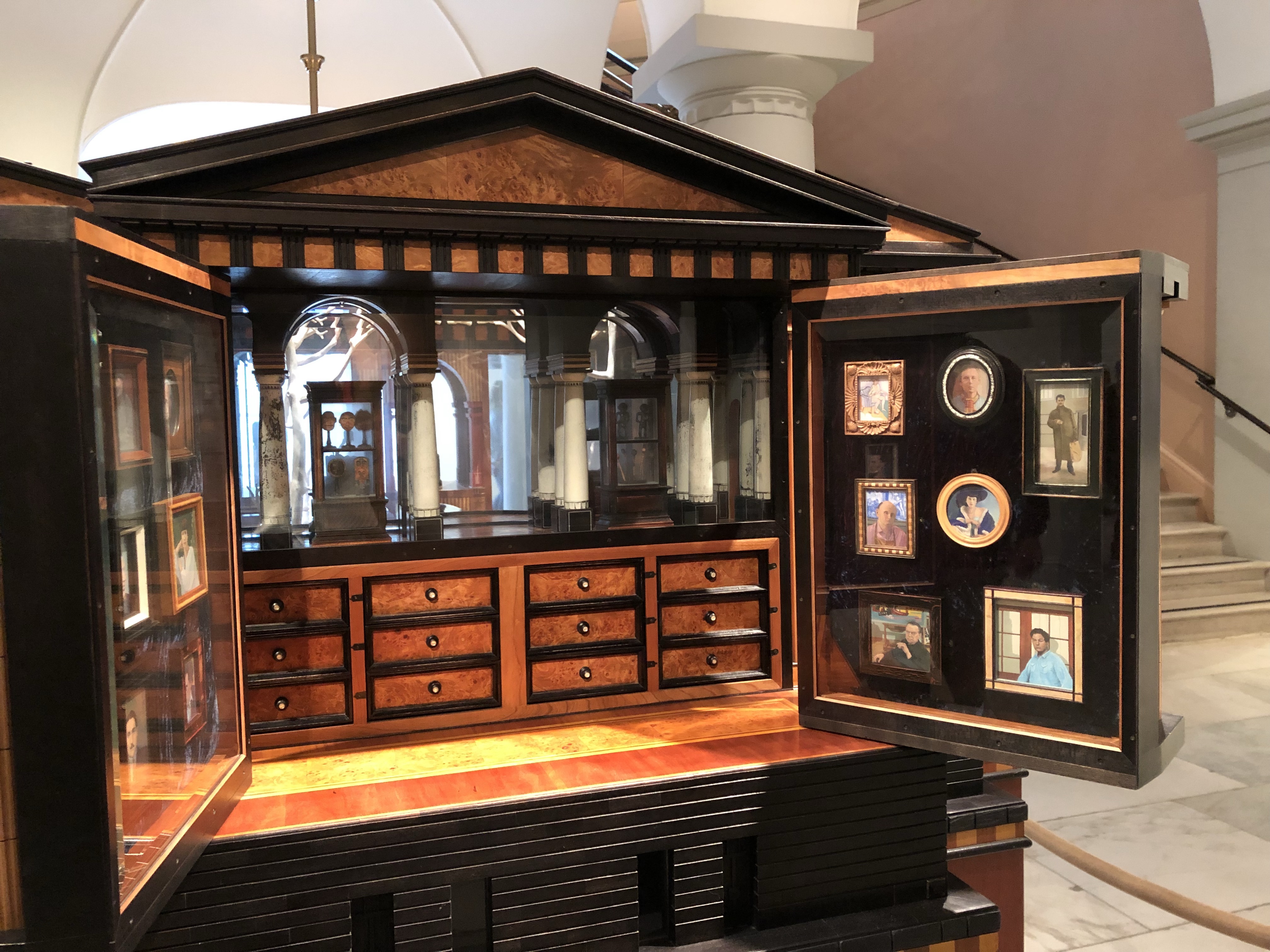
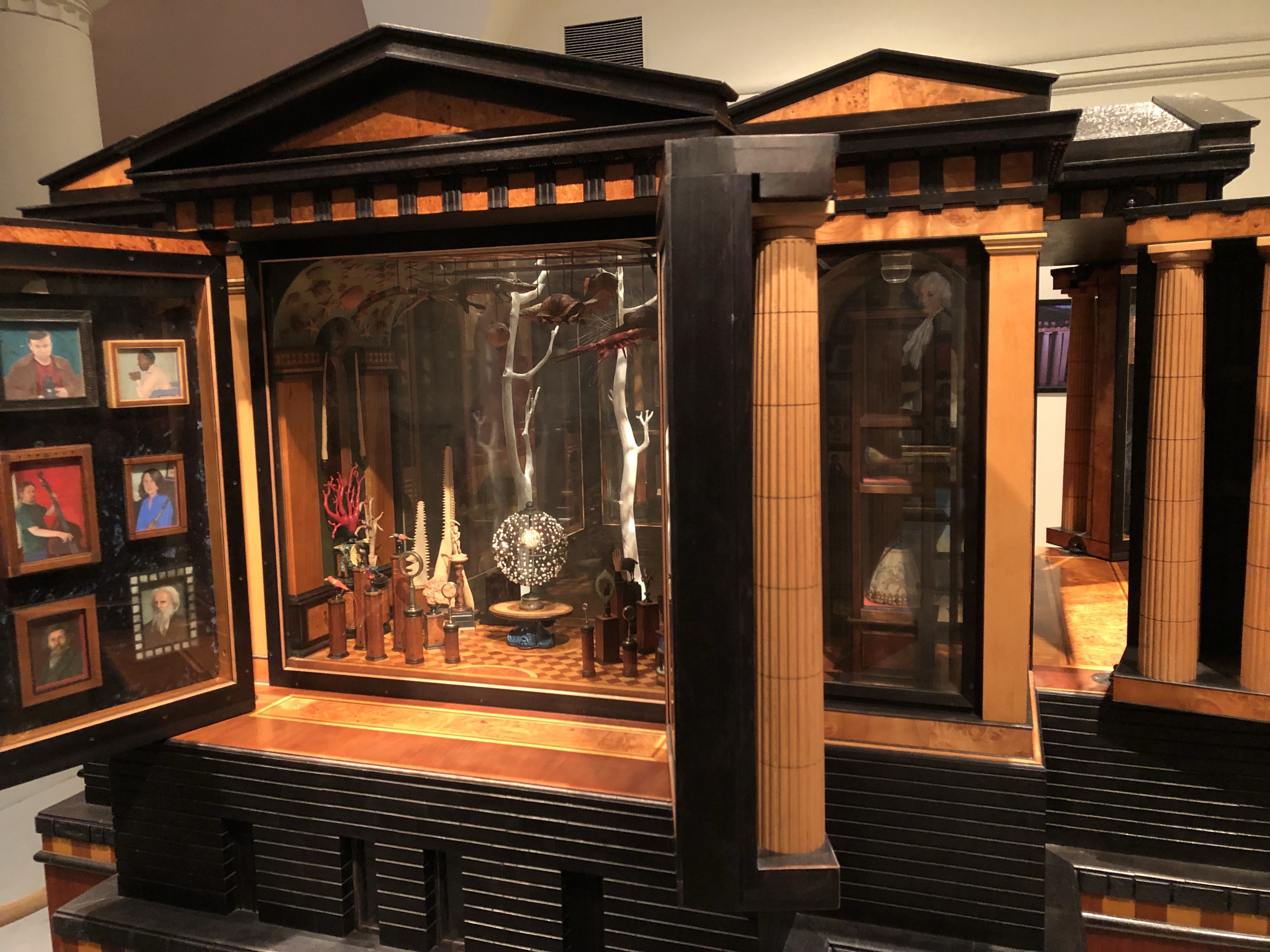
    In the centre of this room is a beautiful model of the gallery including miniature paintings and sculptures created by David Beck. It was created to celebrate the re-opening of the gallery in 2006 after renovations. It references the history of the building by including old displays on the tiny walls. It was almost like a dollhouse museum and I honestly think it would look amazing in my apartment.

    Miniature Gallery
    Miniature Gallery

    We then moved through to the American Presidents exhibition. This continued the trend of including history alongside the art to really enrich what you were seeing. Each president had a brass number next to their portrait to indicate when they were in office. The introductory panel nicely sets the scene with a little commentary on the aim of the exhibition – to show the Presidents not only as individuals, but, as a collective.

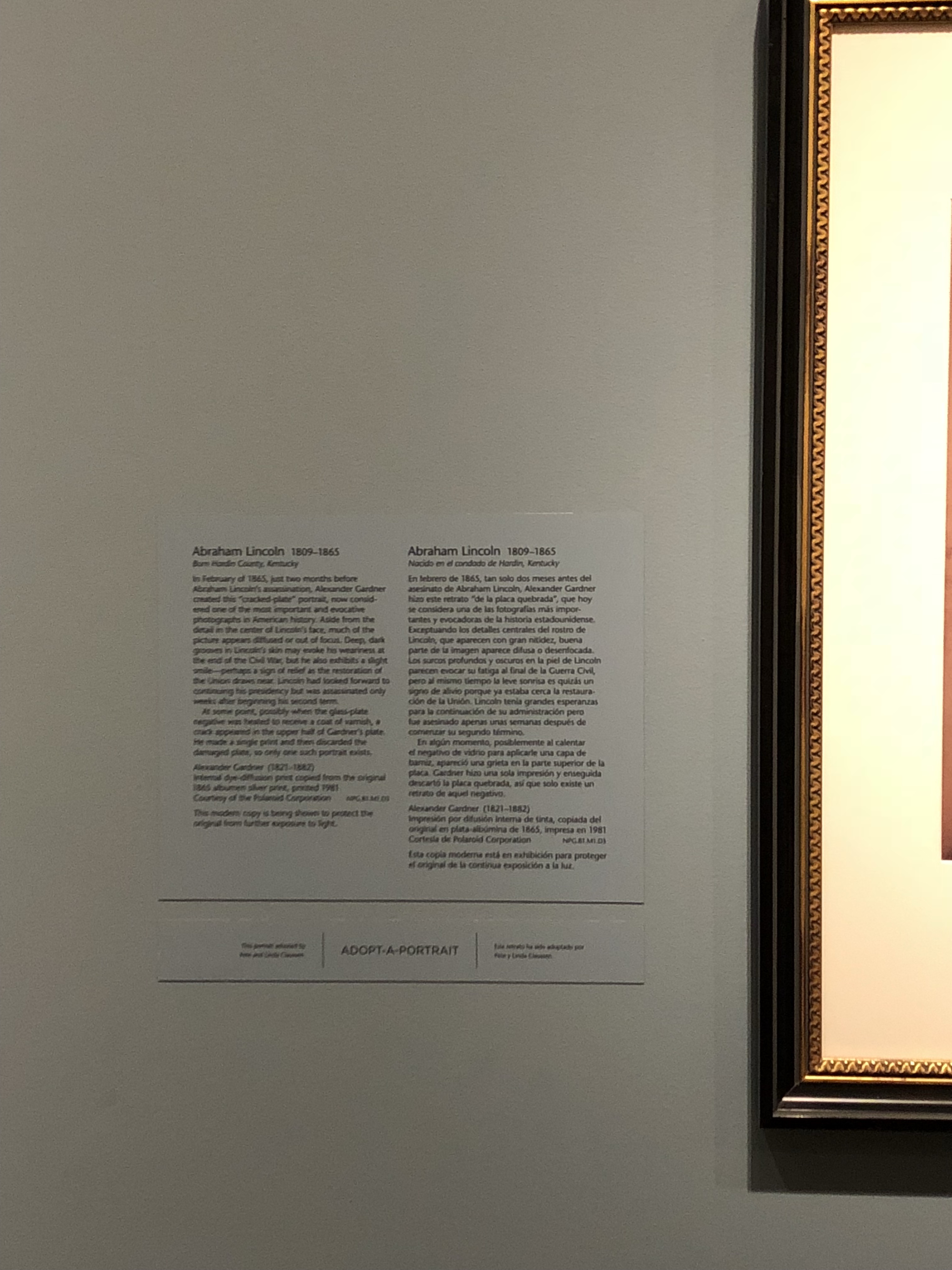
    Wandering around, I noticed some “Adopt a Portrait” labels next to certain artworks. From what I could determine, the gallery has a pretty cool program where individuals or companies can adopt a painting. This means providing funds for when the painting needs conservation work. Speaking of labels, I was also impressed to see artwork labels in both English and Spanish. This is the first museum in America where I’ve seen more than one language in the physical exhibition space (and I’m not including maps or guides).
    Labels

    Throughout the exhibition are large thematic panels exploring the changes in America from President to President. For example, there was a board which observed social reform between the Civil War and World War I. This was positioned after the portraits of Lincoln.

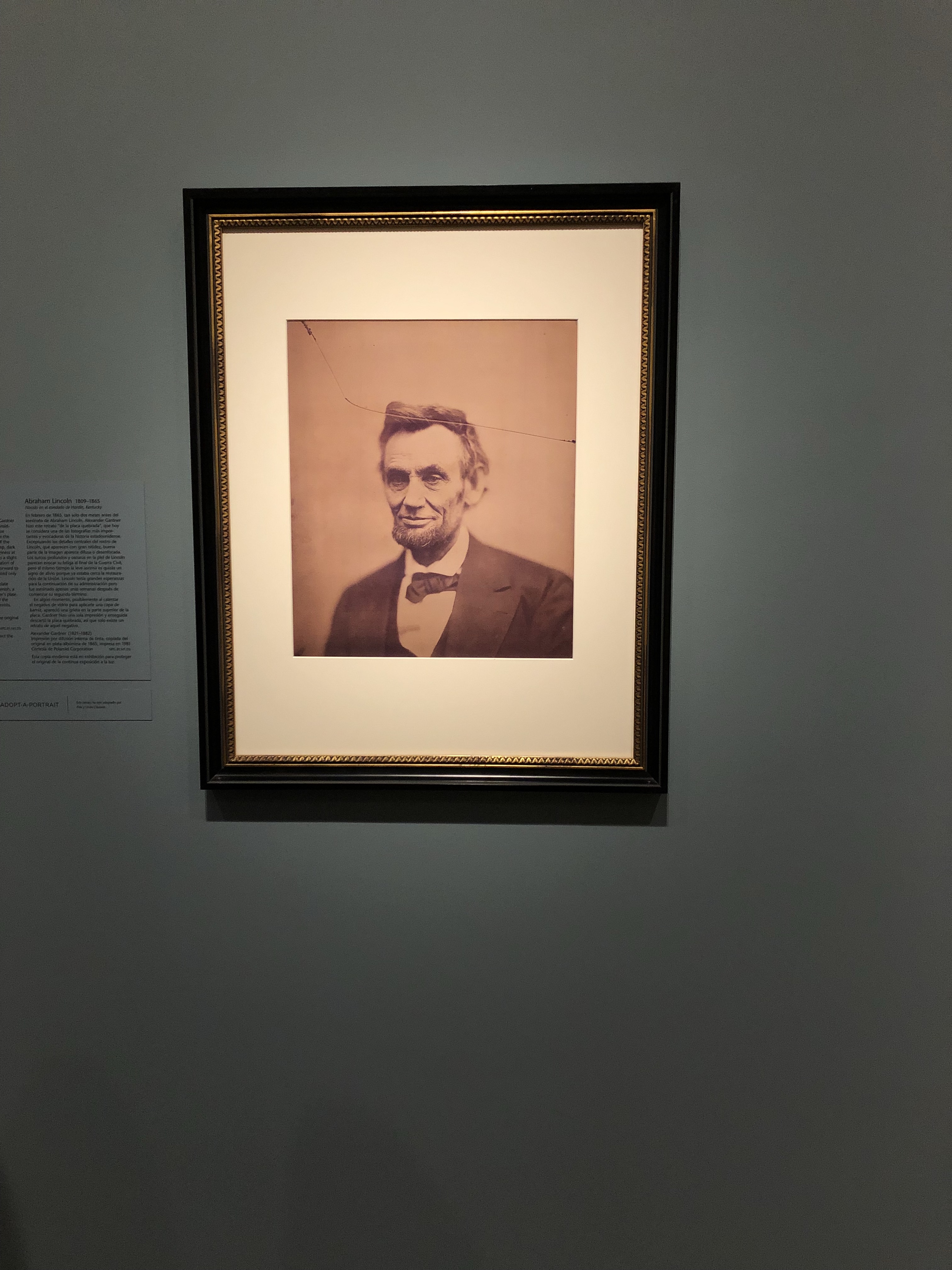
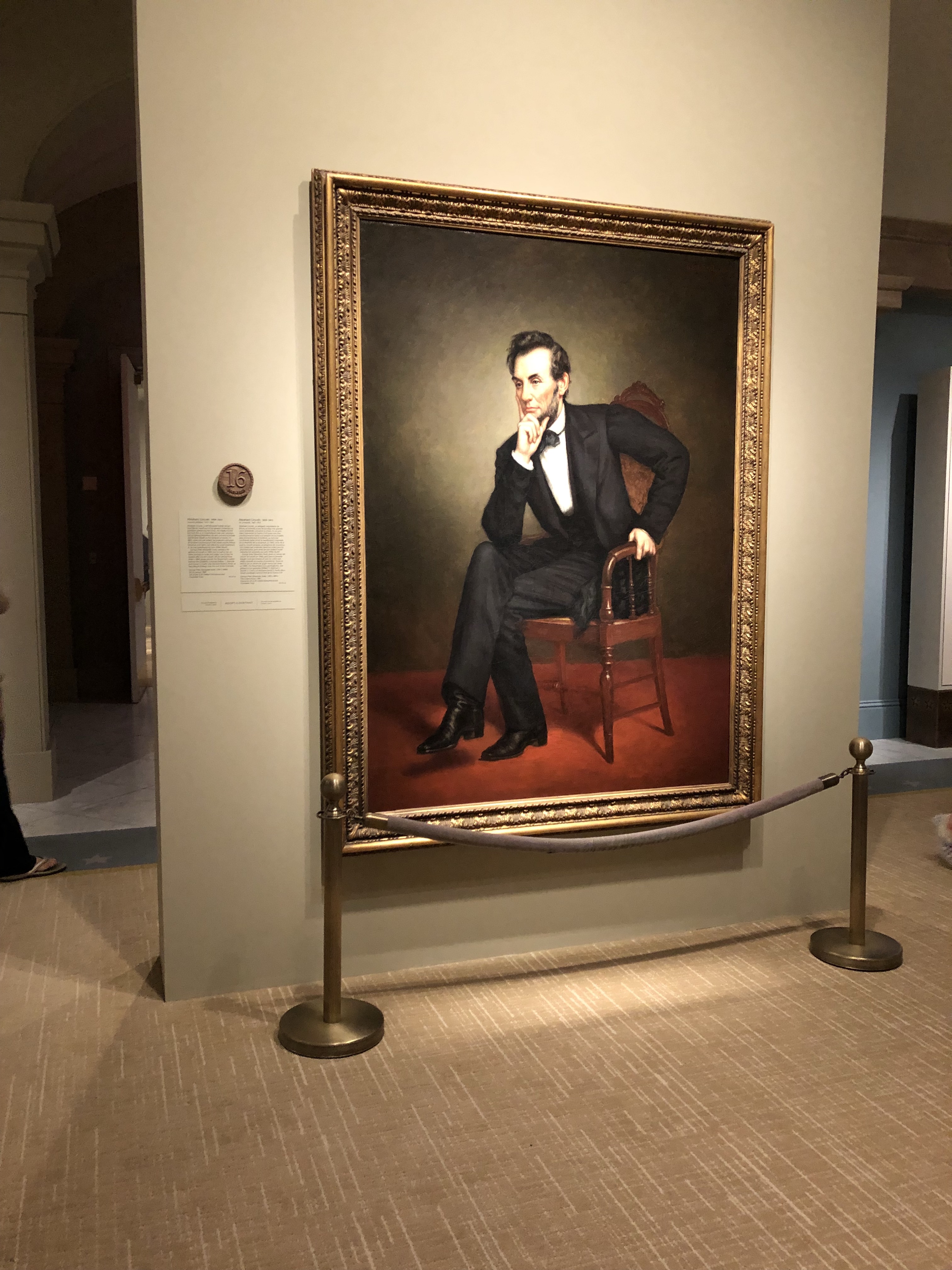
    Lincoln
    Lincoln

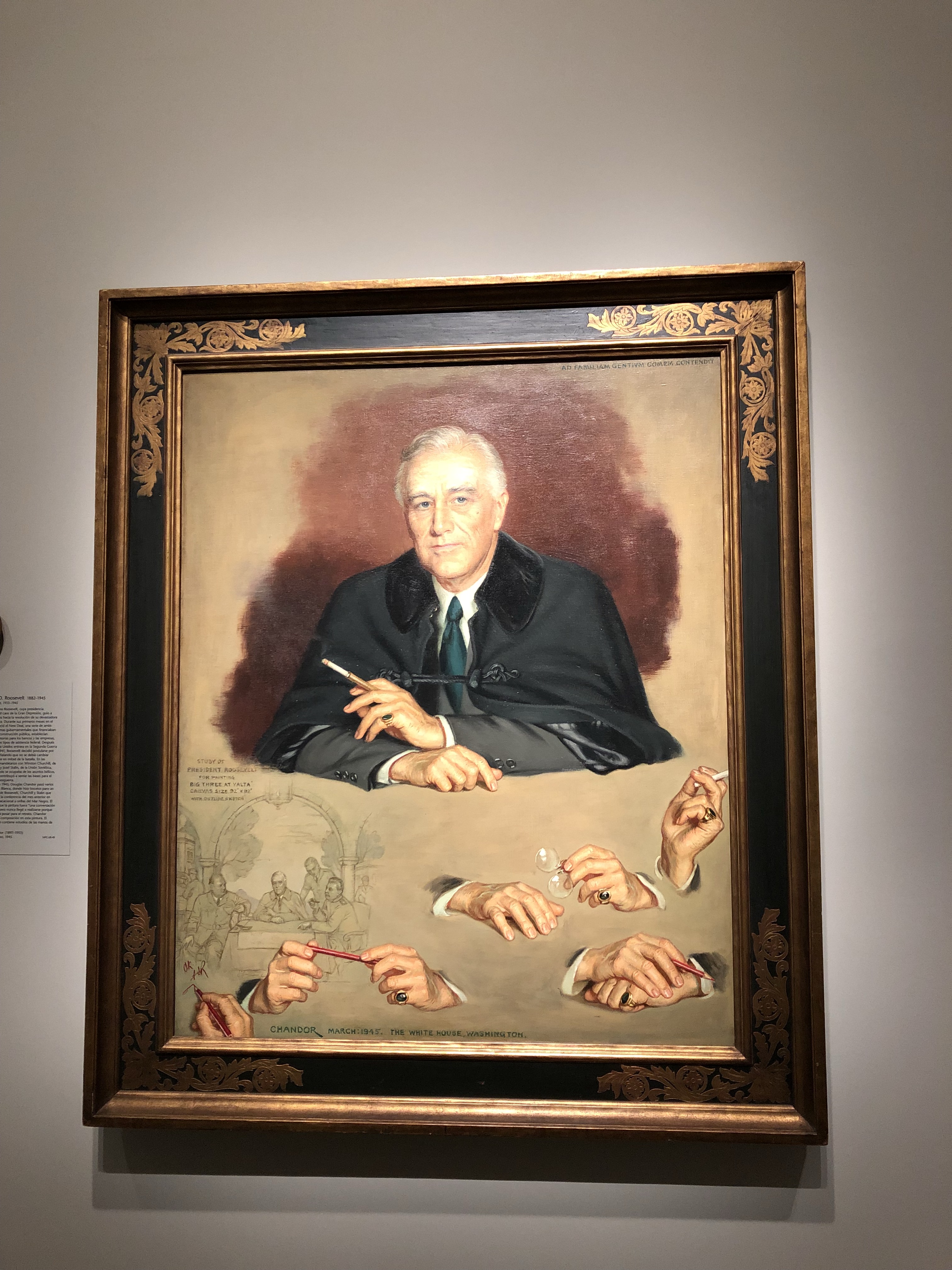
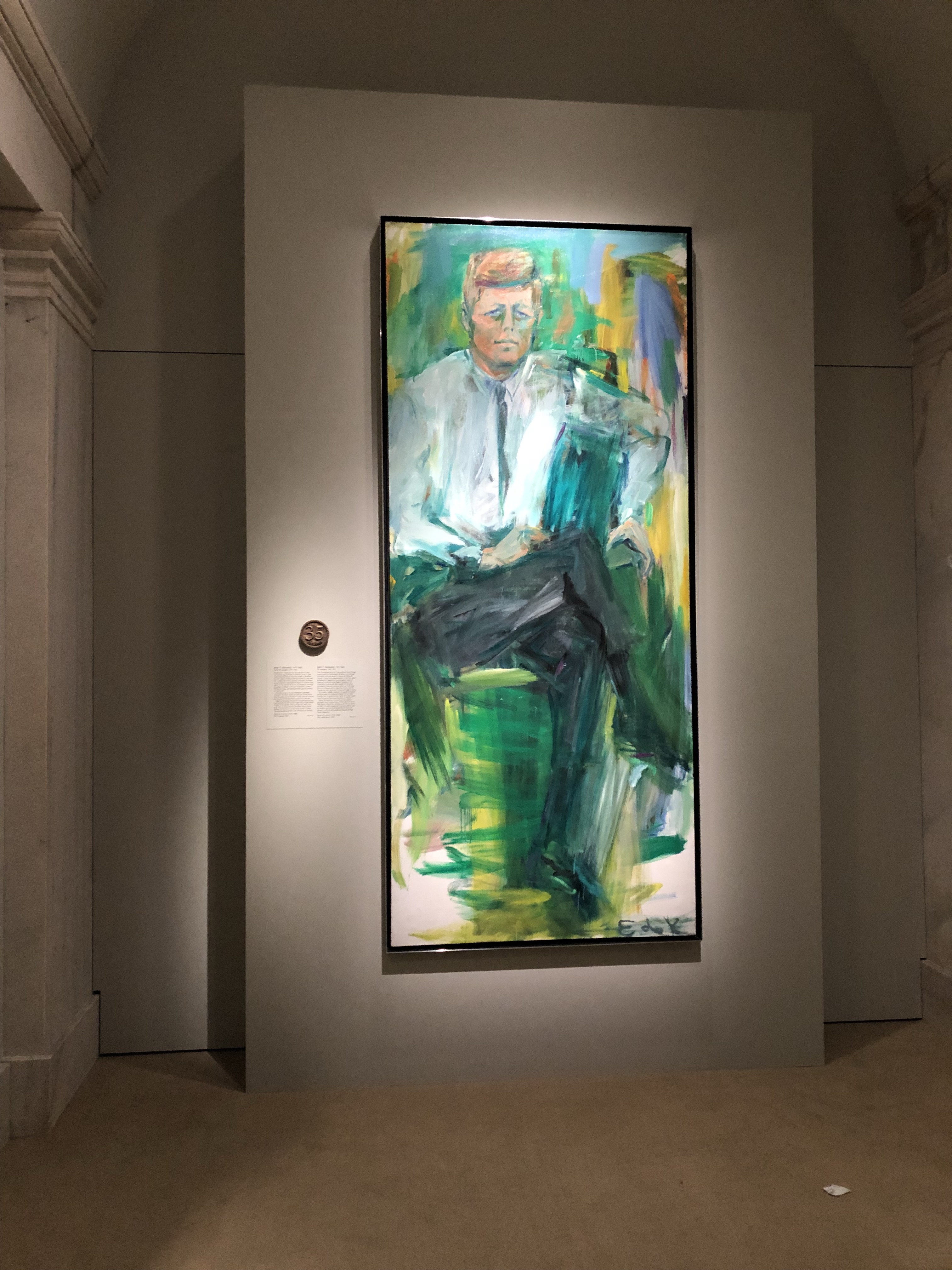
    The earlier portraits were very traditional and done in a similar style. For Lincoln, they also included a photograph. Starting from Kennedy, the portraits became more diverse as some where done in an impressionist style and others looked quite abstract. I wasn’t overly impressed with the portrait of Kennedy which was a shame considering he was the one I wanted to see most. My favourite was of Franklin Roosevelt. It had lots of little elements underneath his main portrait. I liked it because it captured the different sides of Roosevelt. It was also in a beautiful frame.

    Roosevelt
    Kennedy

    After seeing the Presidents, we went on a quest to find Franklin. He was not highlighted in the map so I had to quickly Google where exactly we could find the work. There are two whole rooms called American Origins that have portraits of those involved in the War of Independence. This is where we found Franklin. We didn’t spend long looking at the other portraits inside this particular exhibition.
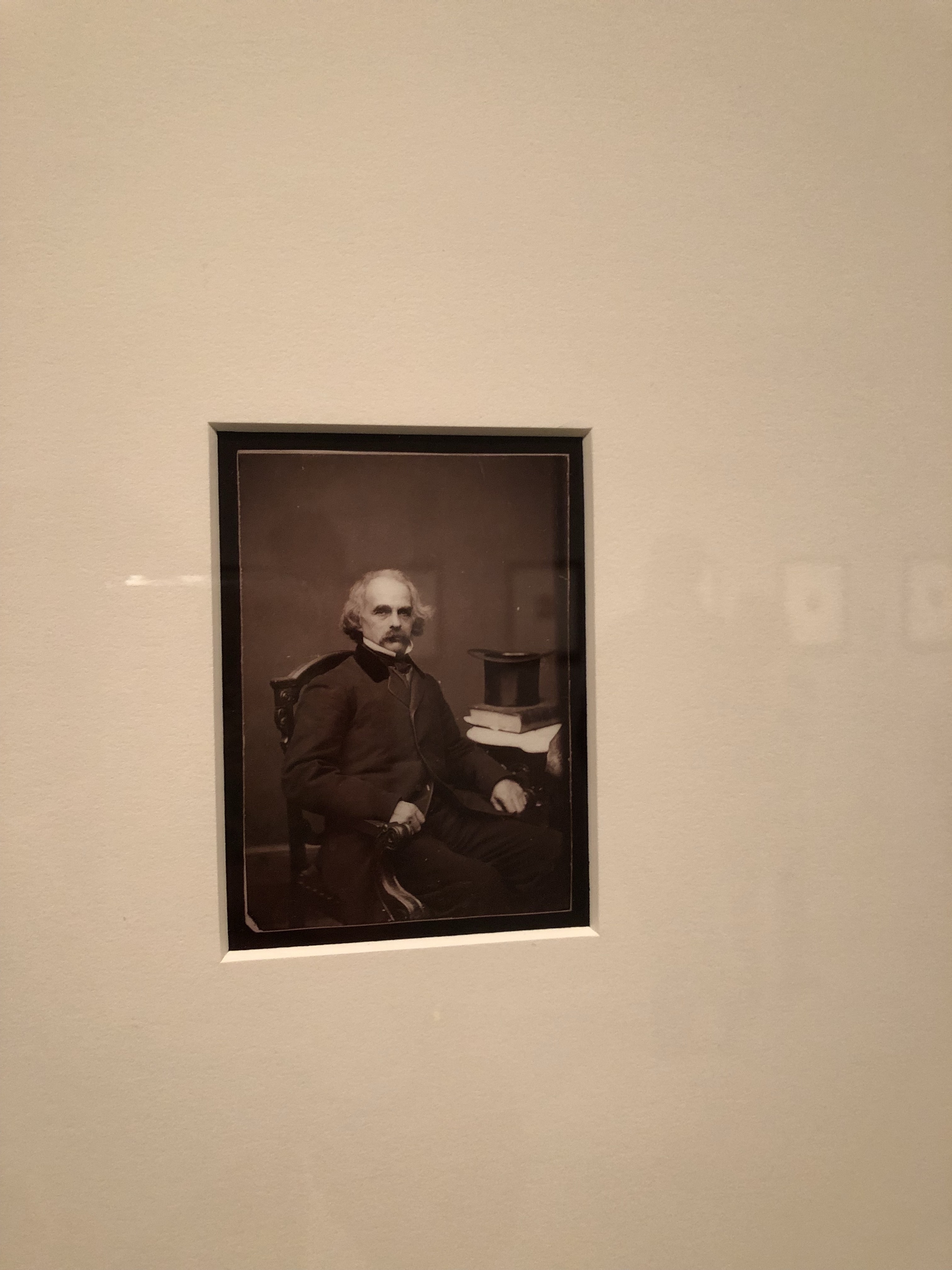
    The only other exhibition we really saw was on the American Civil War. There was a small book containing the portrait cards of Confederate Generals. We also walked past the wall of recent acquisitions which contained a small section on Lincoln’s contemporaries. On display was a small photograph of Nathaniel Hawthorne, author of the House of the Seven Gables. It was a very tiny photograph, but, great to see a piece of Salem in the gallery.

    Nathaniel Hawthorne

    I would recommend this gallery to anyone wanting to escape the National Mall. Actually, combine this museum with the National Museum of Women in the Arts and you’ve got yourself a relaxing art filled day!

  • Philadelphia: Eastern State Penitentiary

    Again I find myself so excited to write a review I just can’t wait to share! The Eastern State Penitentiary is such an incredibly fascinating heritage place. I’m going to start with a little bit of history then move into my experience of the site. There is so much I want to cover so I’m going to try my best to summarise as much as possible and hopefully persuade you to visit for yourself!

    img_2463
    Eastern State Penitentiary

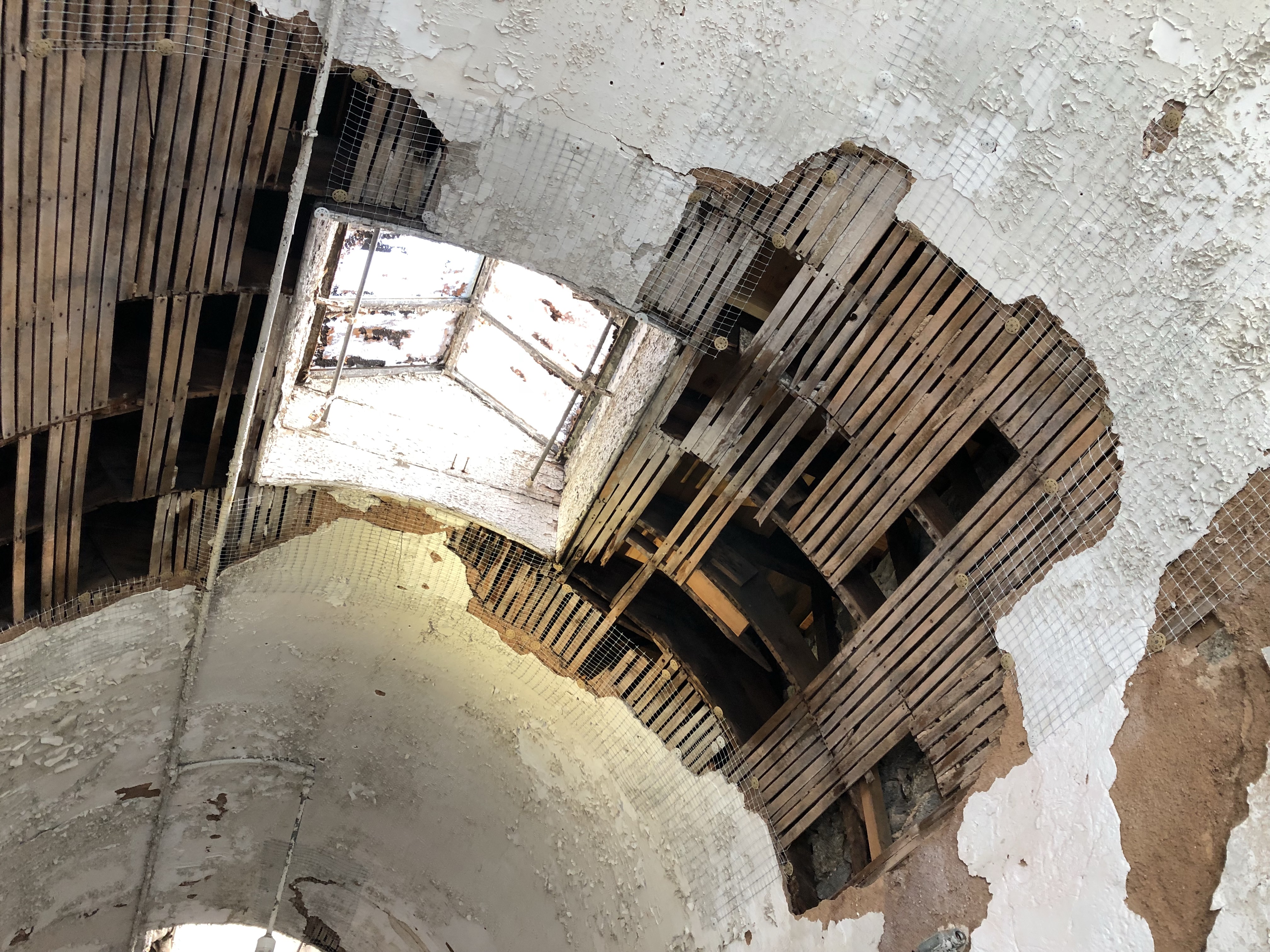
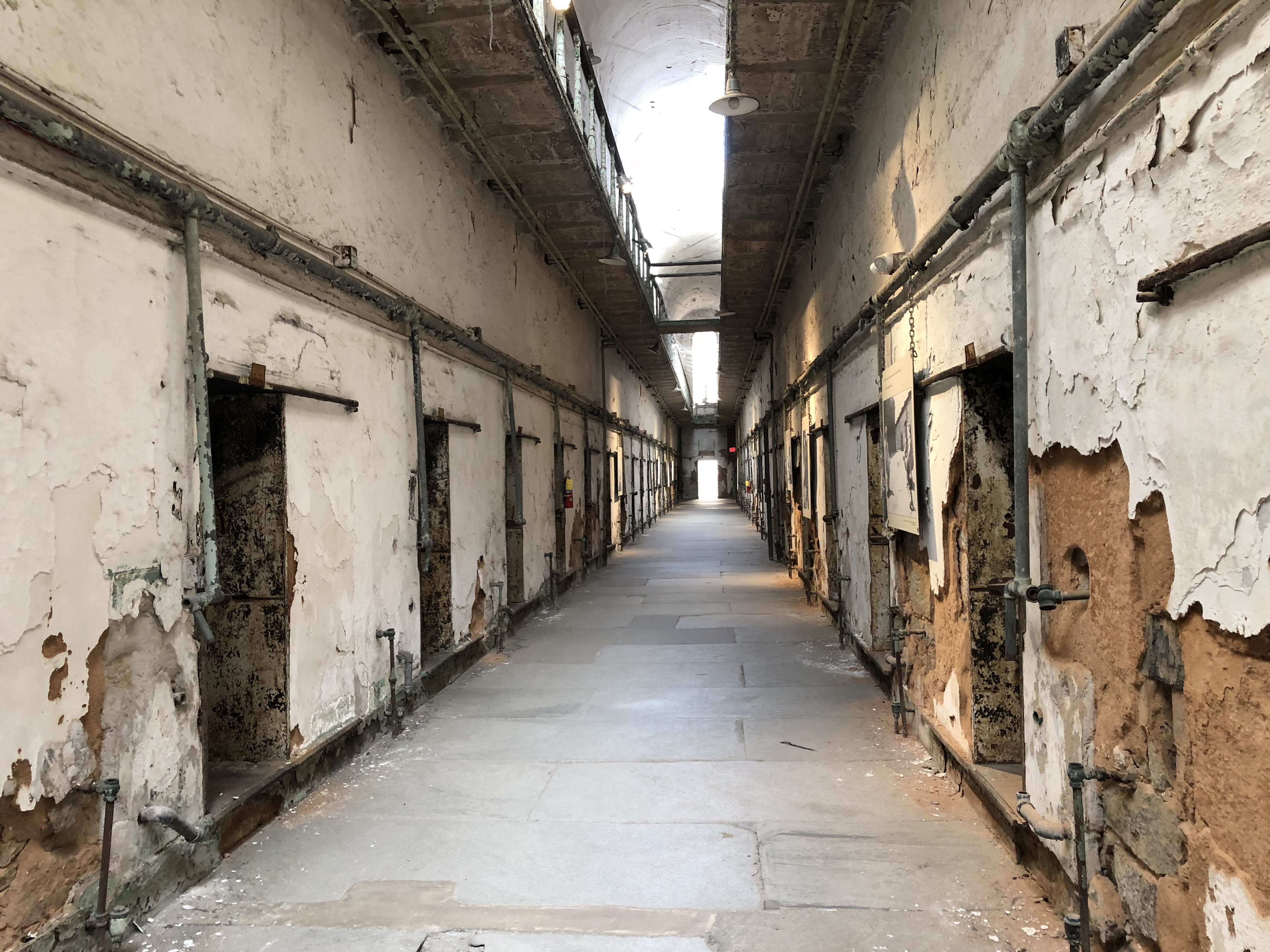
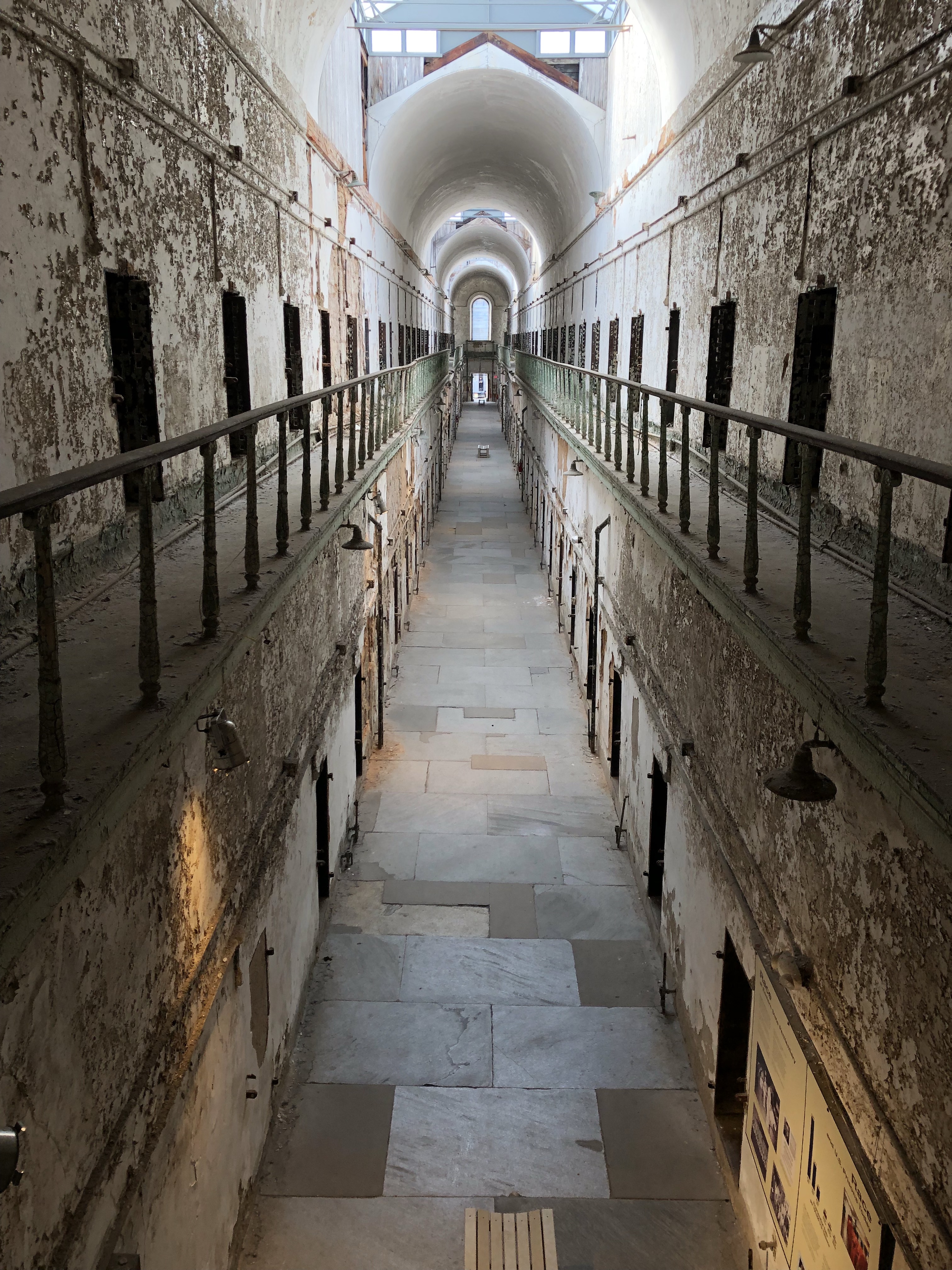
    The Eastern State Penitentiary is regarded as one of the most famous prisons in the world. It was opened in 1829 and functioned as a prison until 1971. According to their website, this prison was the first true penitentiary, meaning a place designed to “inspire penitence”. As opposed to other prisons at the time, namely Sing Sing in New York, the Penitentiary favoured solitary confinement over physical punishment. Bit by bit the prison closed and eventually was left to ruin. The decision had to be made with what to do with the site. Some wanted it completely demolished but others argued it should become a shopping mall. On the eve of the decision, a group of historians and preservationists fought to keep the site as a reminder of America’s past. Luckily, they won and now it is a site of stabilised ruin. I will write so much more on this concept later but let’s get into the site itself.

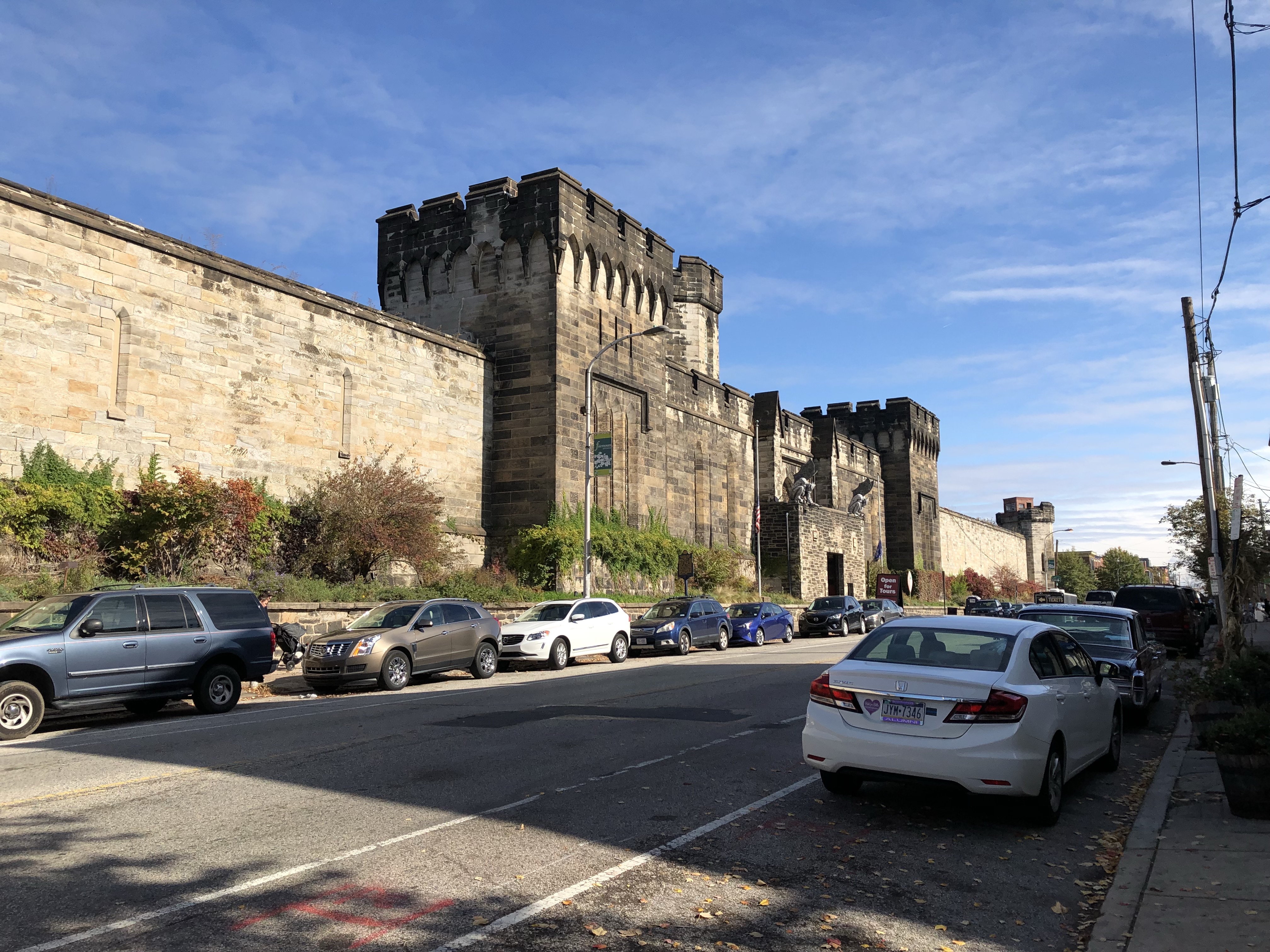
    The first thing you see when you arrive is a huge castle-like structure with two large gargoyles guarding the entrance. You literally feel intimidated from the word go. There were a couple of people waiting so they actually opened a little early so we could head inside. Included in your entry fee is an audio guide tour. It is narrated by Steve Buscemi so please trust me it is worth taking. Could not think of a more perfect person to guide you around.

    The entire audio guide tour only takes 45 minutes. You are guided through one of the nine wings of cell blocks learning about the penitentiary’s history as well as life behind bars. There are points on the tour when you hear from actual prisoners describing their individual experiences and sharing a story or two. Each stop was no more than 6 minutes so you’re not left standing around awkwardly in the way of everyone else.

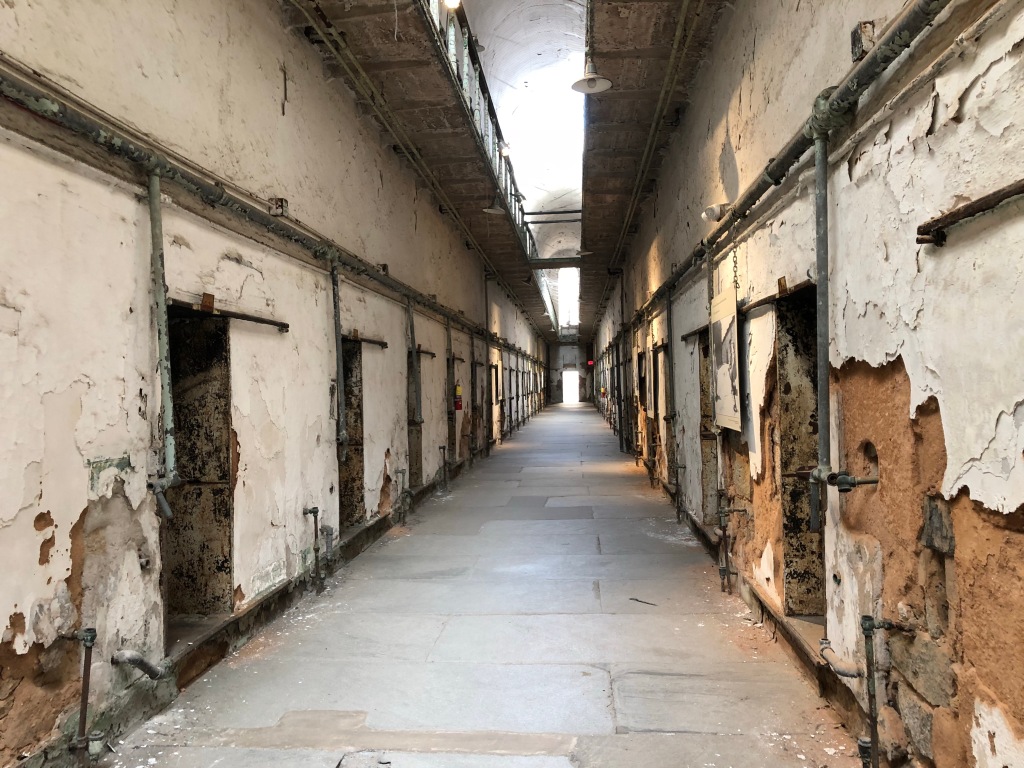
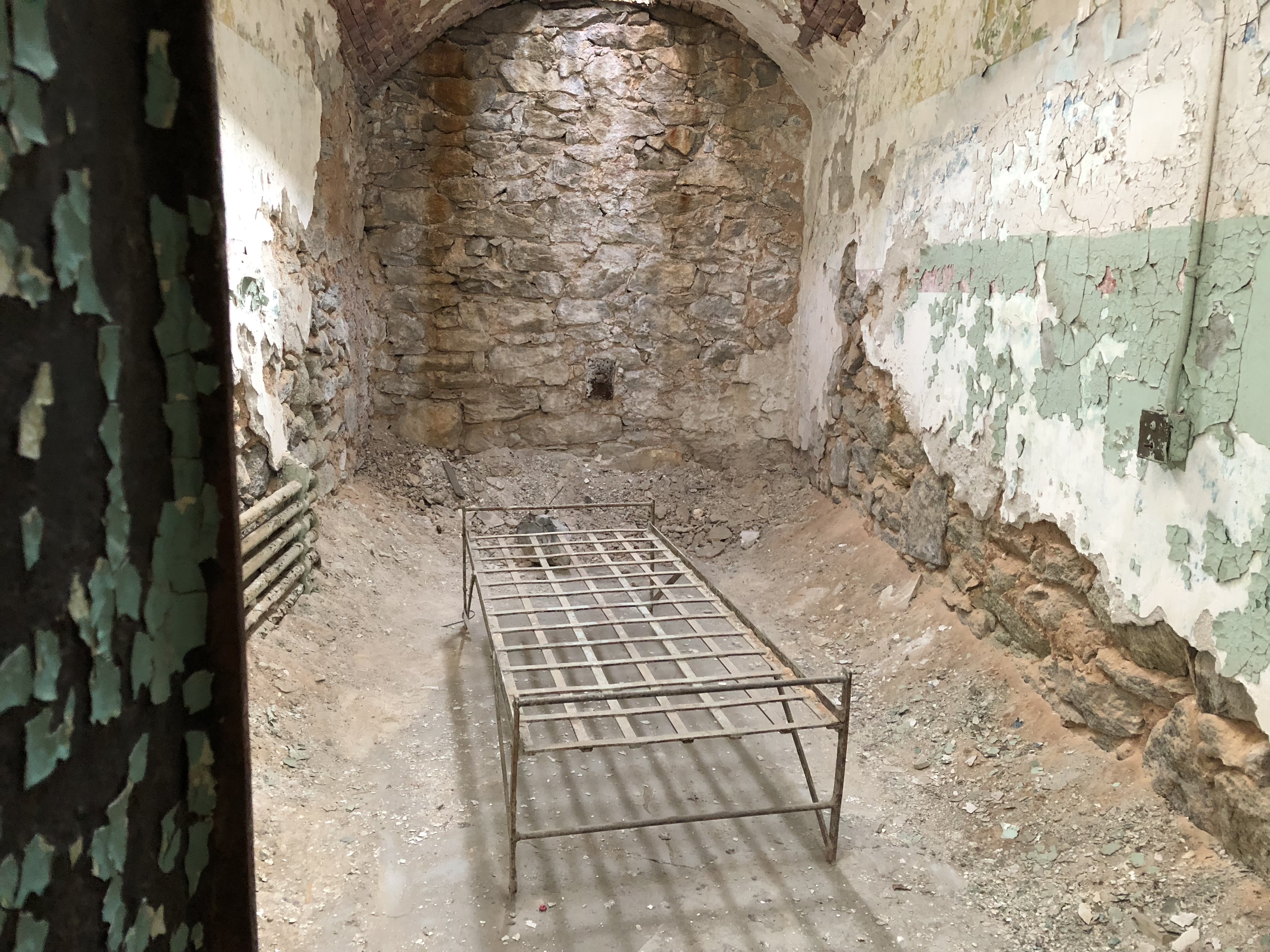
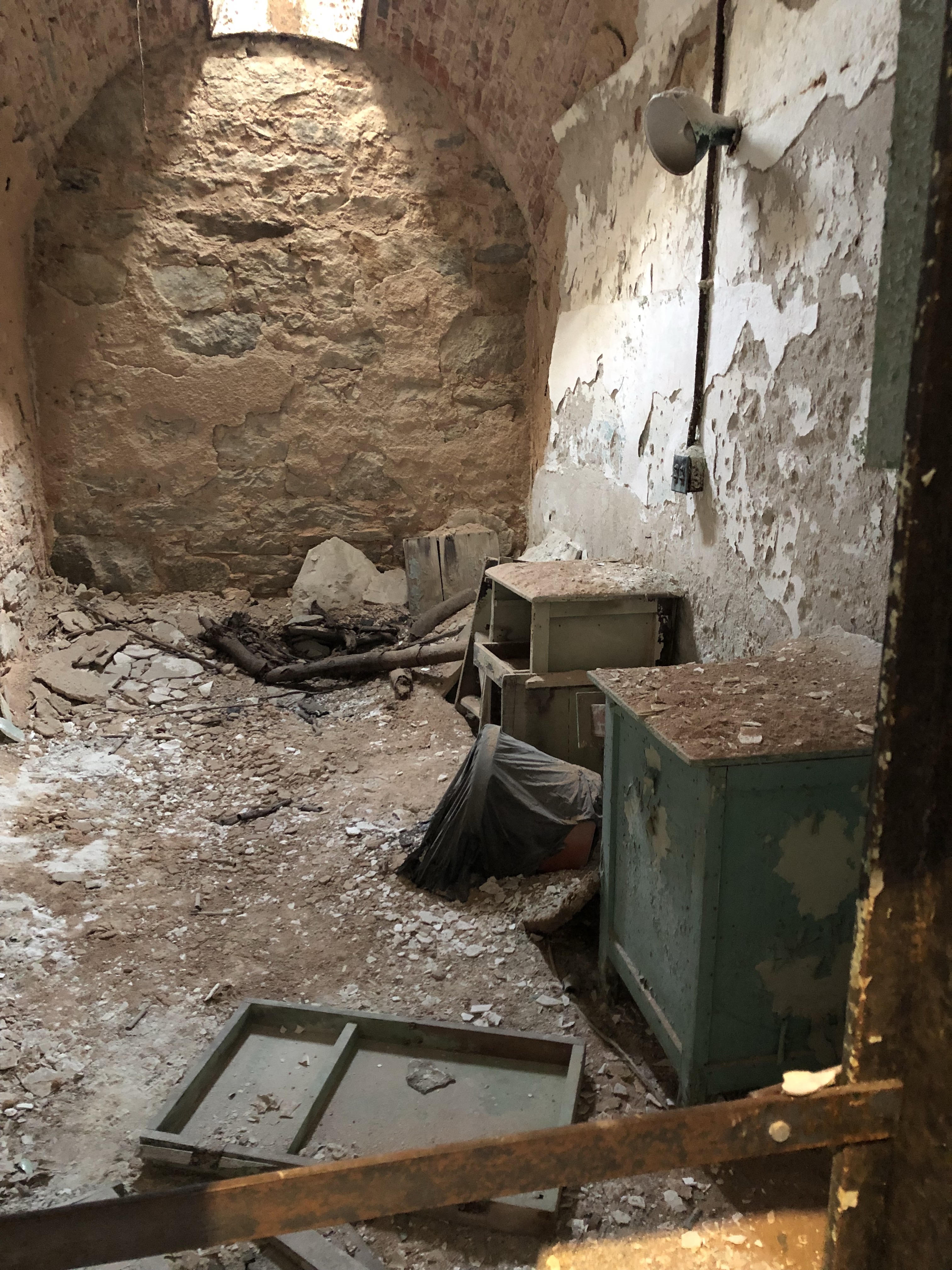
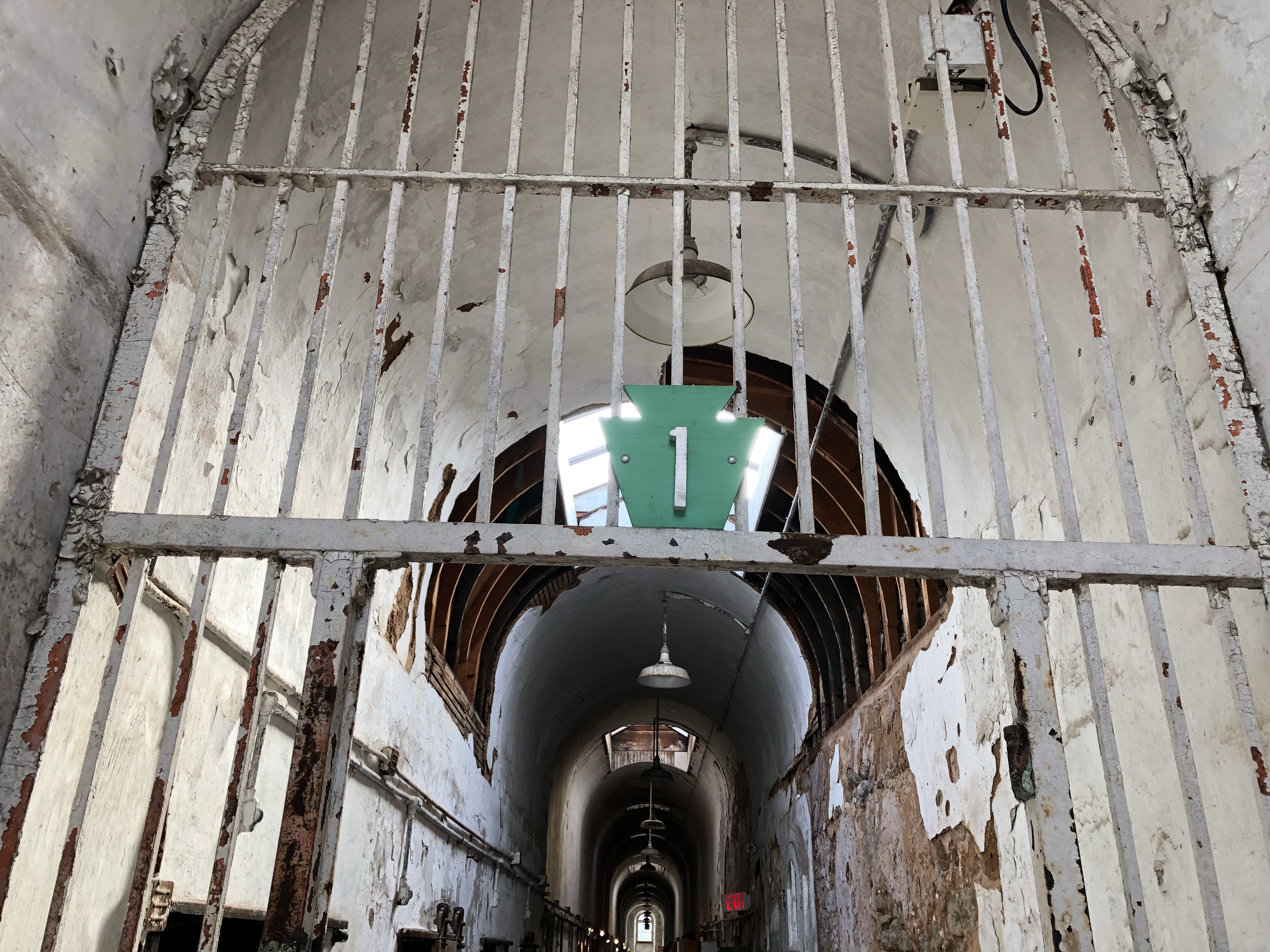
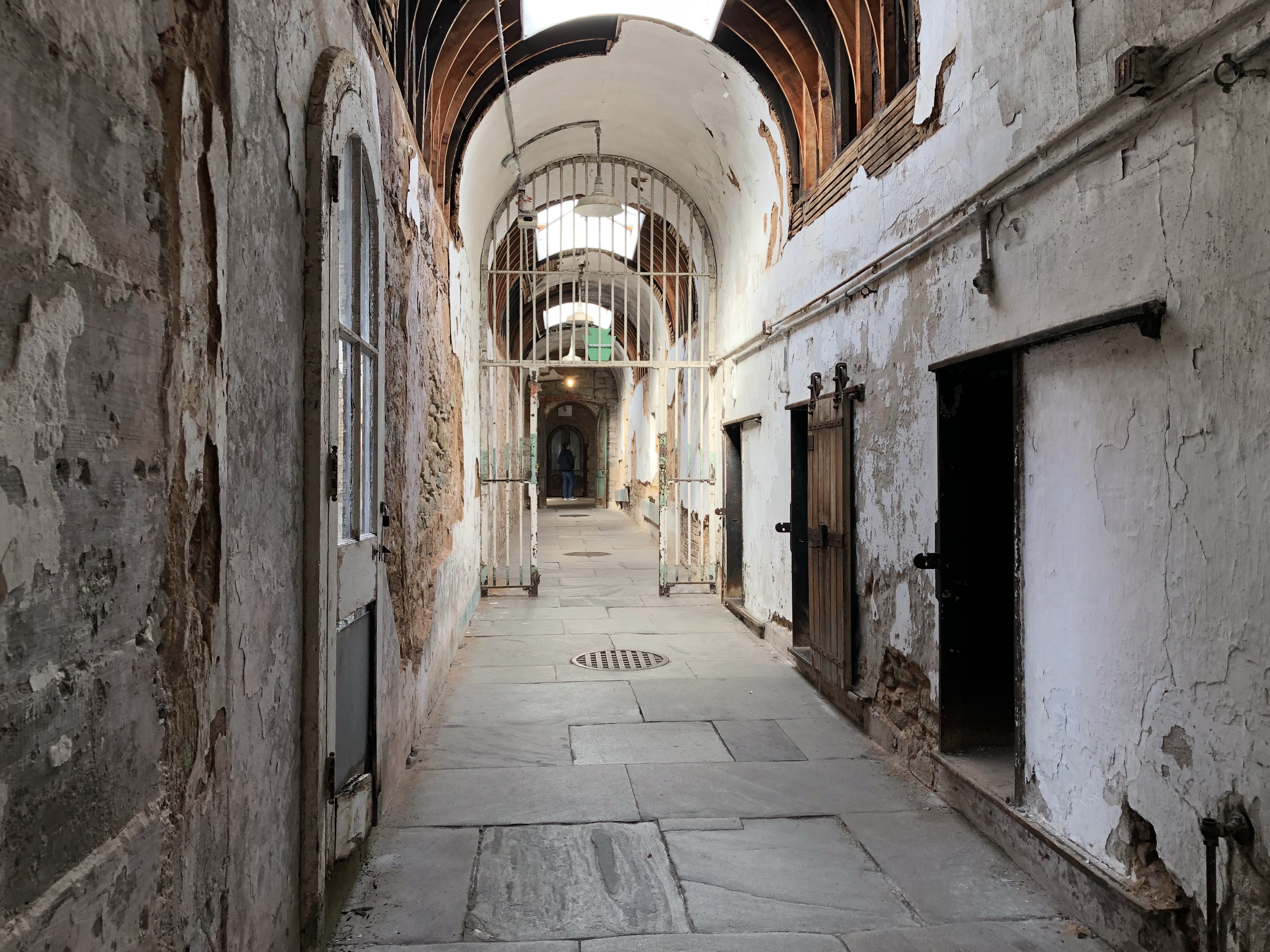
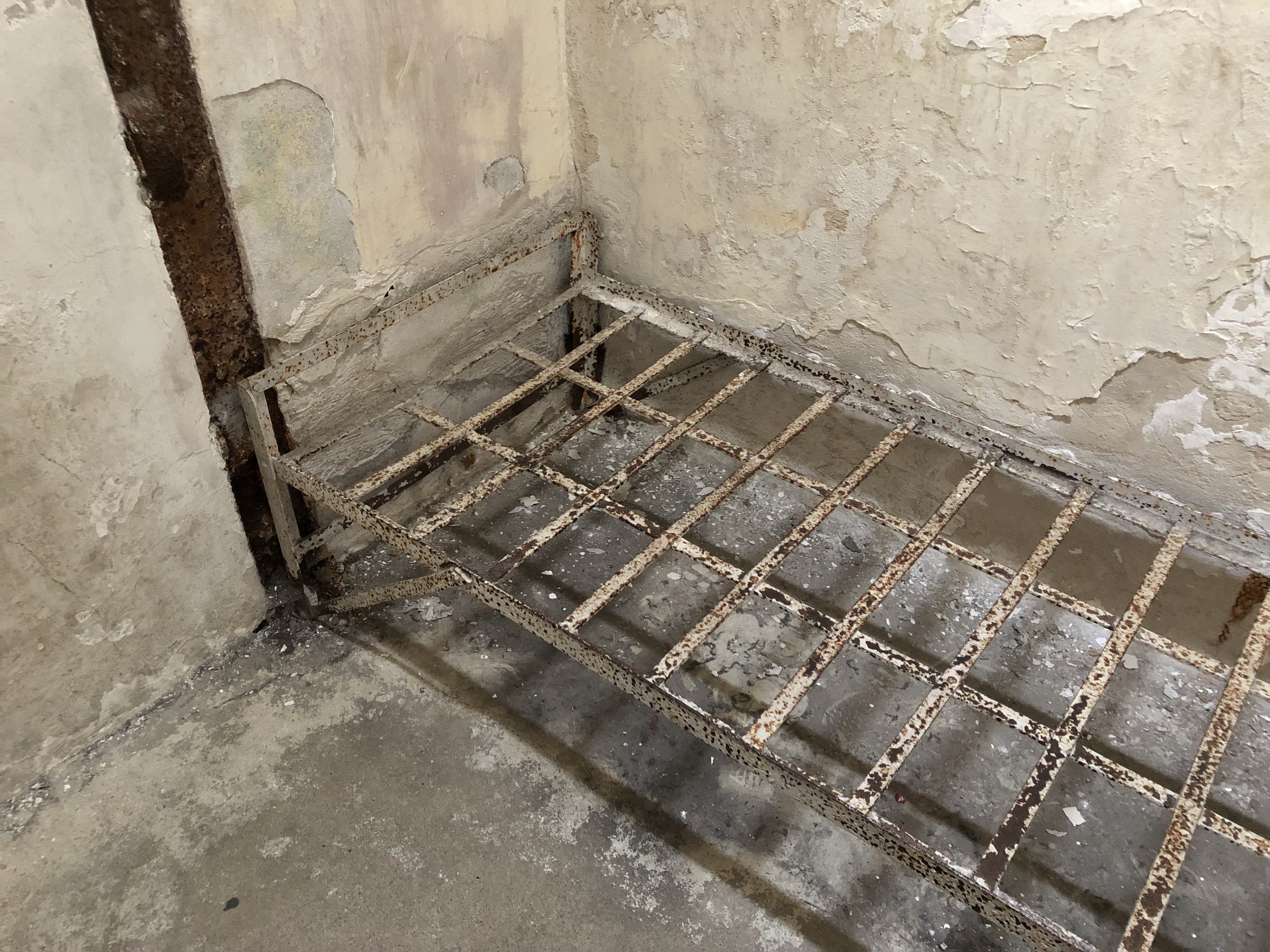
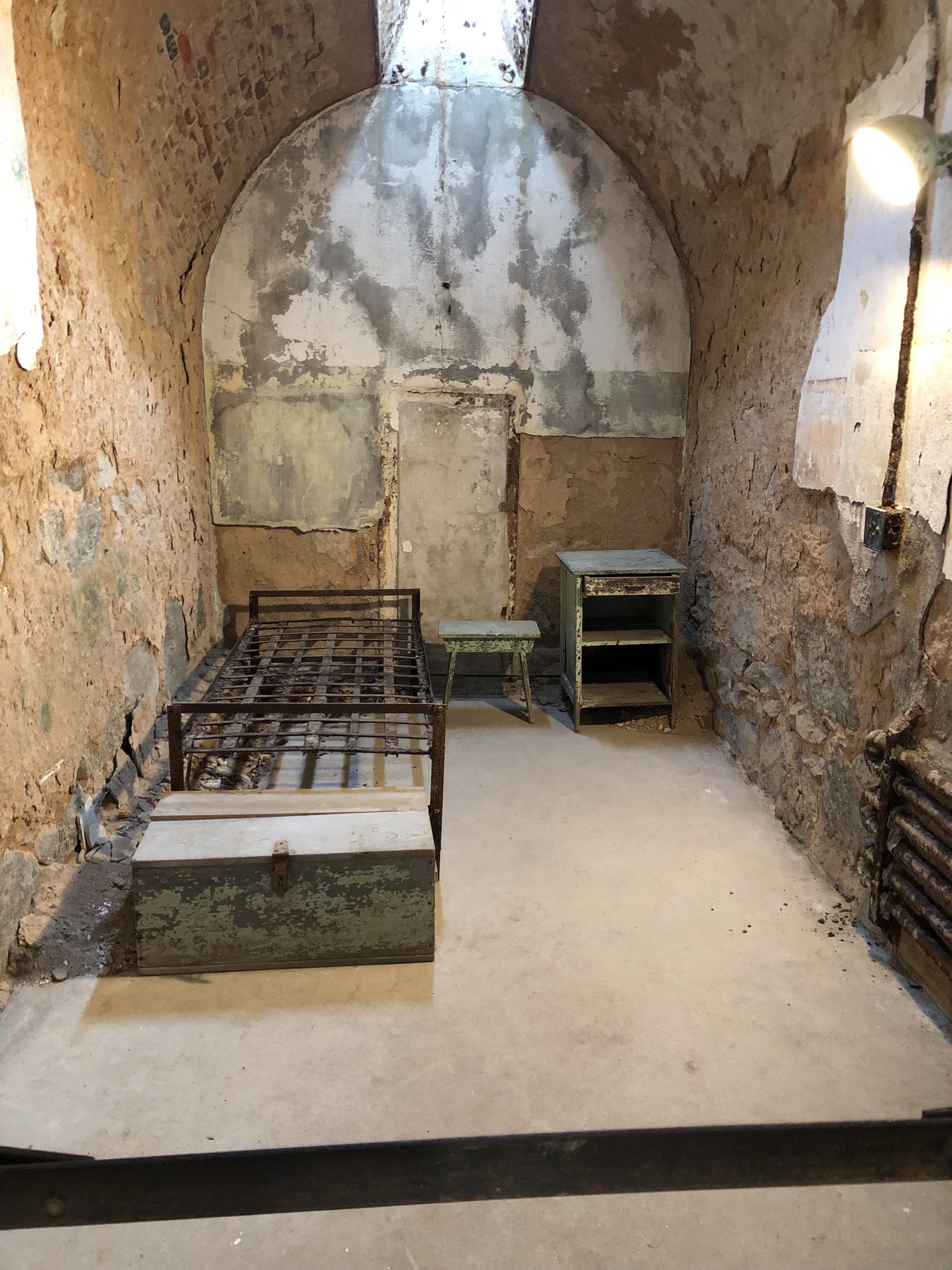
    Walking around you can expect to see sites like these:

    Eastern State Penitentiary
    Eastern State Penitentiary
    Eastern State Penitentiary
    Eastern State Penitentiary
    Eastern State Penitentiary
    Eastern State Penitentiary
    Eastern State Penitentiary
    Eastern State Penitentiary
    Eastern State Penitentiary

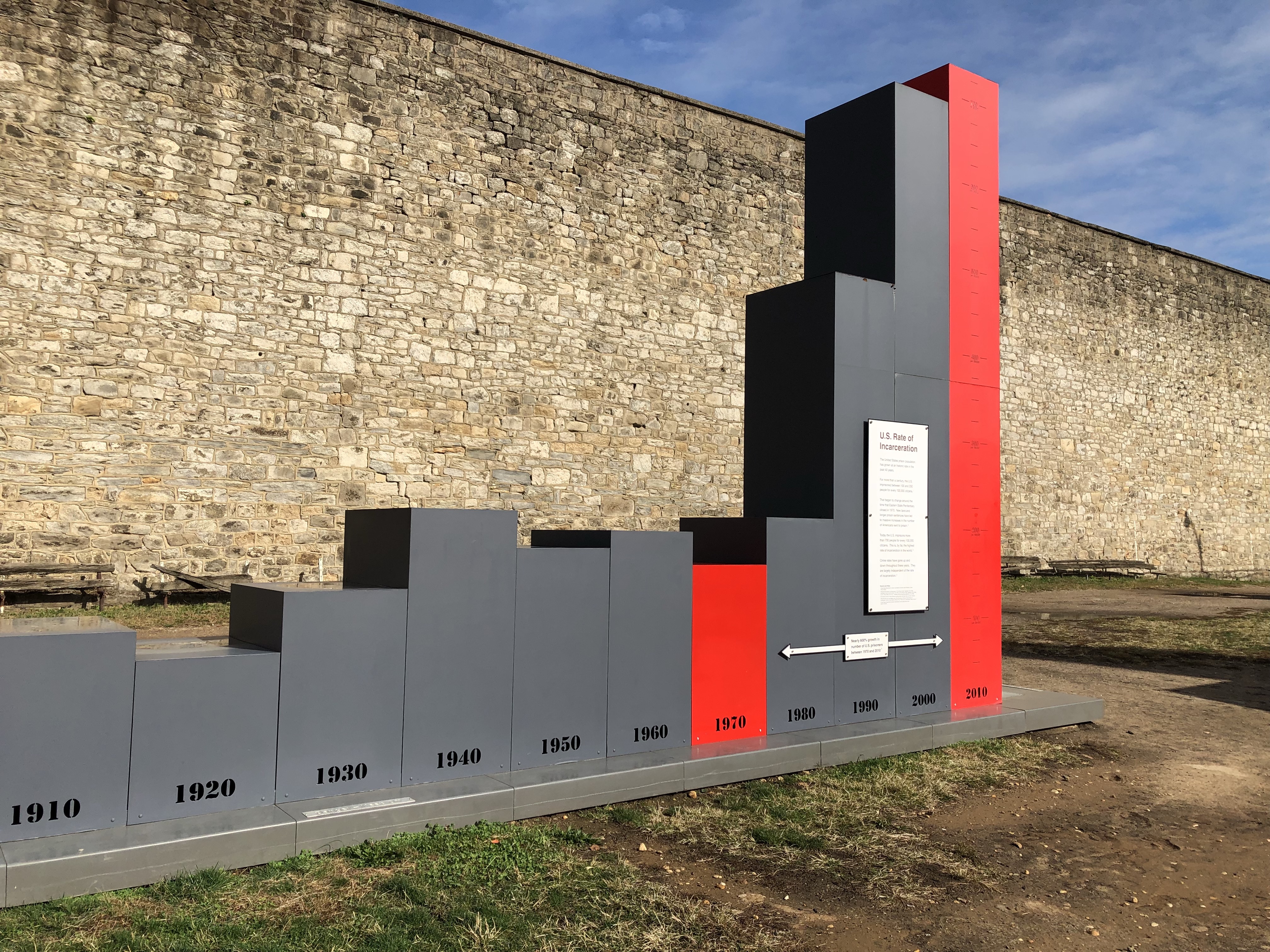
    The tour makes a real effort to bring the prison into the modern day. Outside on the baseball diamond is a large sculpture which actually displays three graphs. The first is the number of individuals incarcerated in America, the second compares this to the rest of the world, and the third breaks these figures down and looks at race. I know that America has a ridiculously high incarceration rate, but, seeing these numbers visualised was powerful.

    Graph showing incarcerated prisoners in America by decade

    At the end of the tour you must say goodbye to Steve and go your own way. You can visit the cell of Al Capone, watch a short film on an escape tunnel archaeologists discovered, and even see contemporary art installations in a few of the other cells not visited on the tour. There are other exhibitions to see as well. We made our way straight to the cell of Al Capone. It is the only cell in the penitentiary that has been restored back to how it may have looked. As you can see, it is quite luxurious. Looks more like a New York penthouse than a prison cell.

    Al Capone’s Cell

    There was something so haunting about the place. Paint was peeling off the walls, abandoned bed frames were discarded in the cells, and there was a feeling that you were walking through this site for the first time since it closed. I had one absolutely pressing question – what exactly was being done in terms of conservation? Was the penitentiary being left to ruin or were there conservation efforts going on?

    I found a member of staff who was super helpful in answering my question. He told us the site was regarded as a “stabilised ruin”. So what exactly does this mean. Rather than restore the cells or patch up the paintwork, the building was being preserved as best as it could in its current ruined state. He informed us that up until 2008 visitors were asked to wear hard hats, just in case. Now, more of the penitentiary is open to the public than ever before. More will eventually open over time as the ruins continues to be preserved.

    I’ve never really come across this idea. The best I could compare it to is Susannah Place Museum in Sydney. There is also an effort here to not interefere. With the Penitentiary, I’ve never seen a ruin this advanced being stabilised. In my opinion, I strongly believe heritage buildings should go one of two ways. Either be transformed into something useful that doesn’t interfere with its integrity or be preserved for educational/tourist purposes. The latter should always be achieved without compromising the building which I know is extremely hard to do. What I really loved about this place was that it is open to the public to be experienced exactly as it was left and not in a stylised form. Of course this approach would not work with every heritage building, but, here it has such a strong impact.

    Eastern State Penitentiary

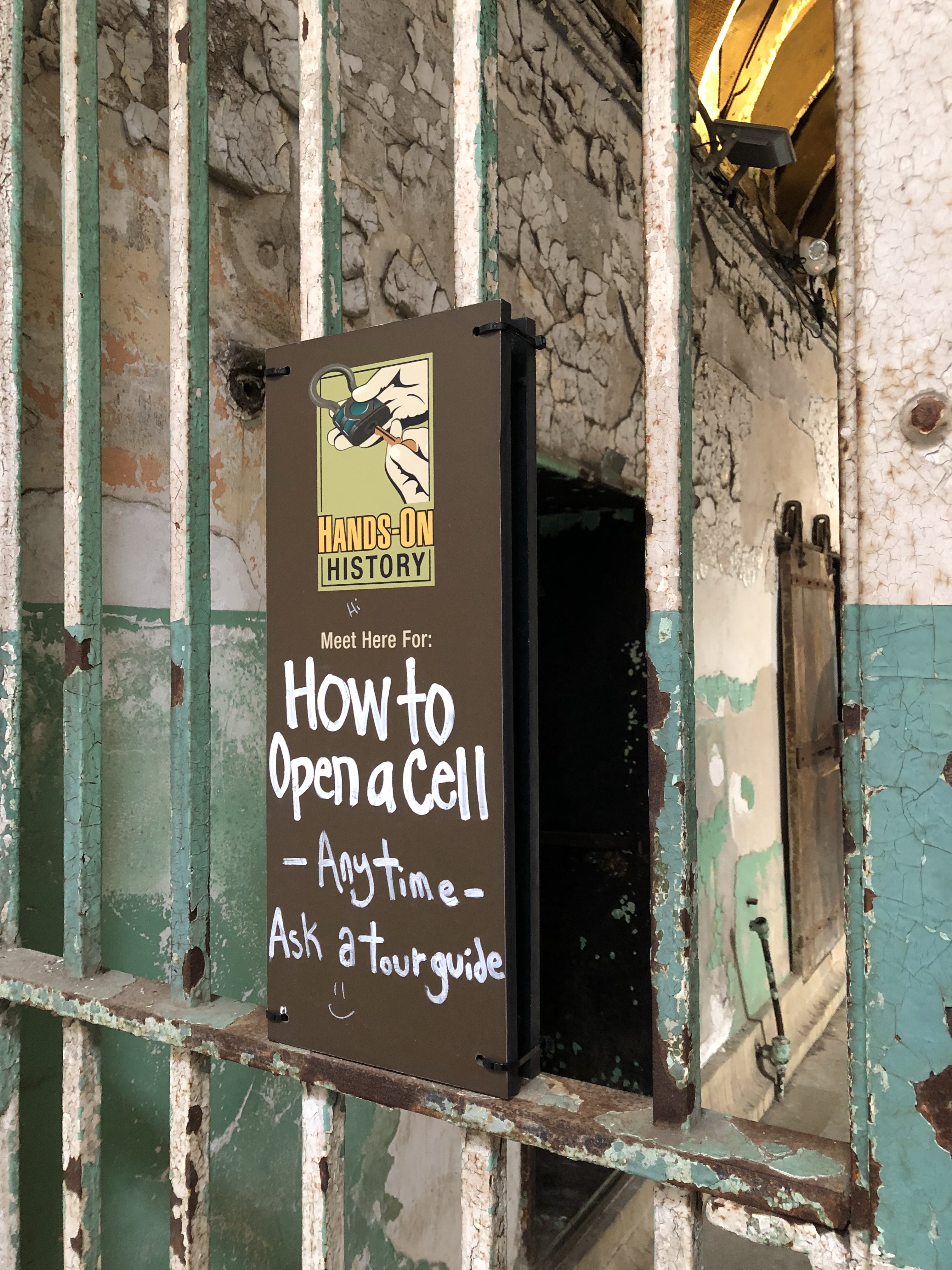
    There is also a great sense that they want you to engage with the site as much as possible. There is the opportunity for hands on supervised interaction. A member of staff can help answer questions and actually allow you to experience the history that little bit more in depth.

    Eastern State Penitentiary

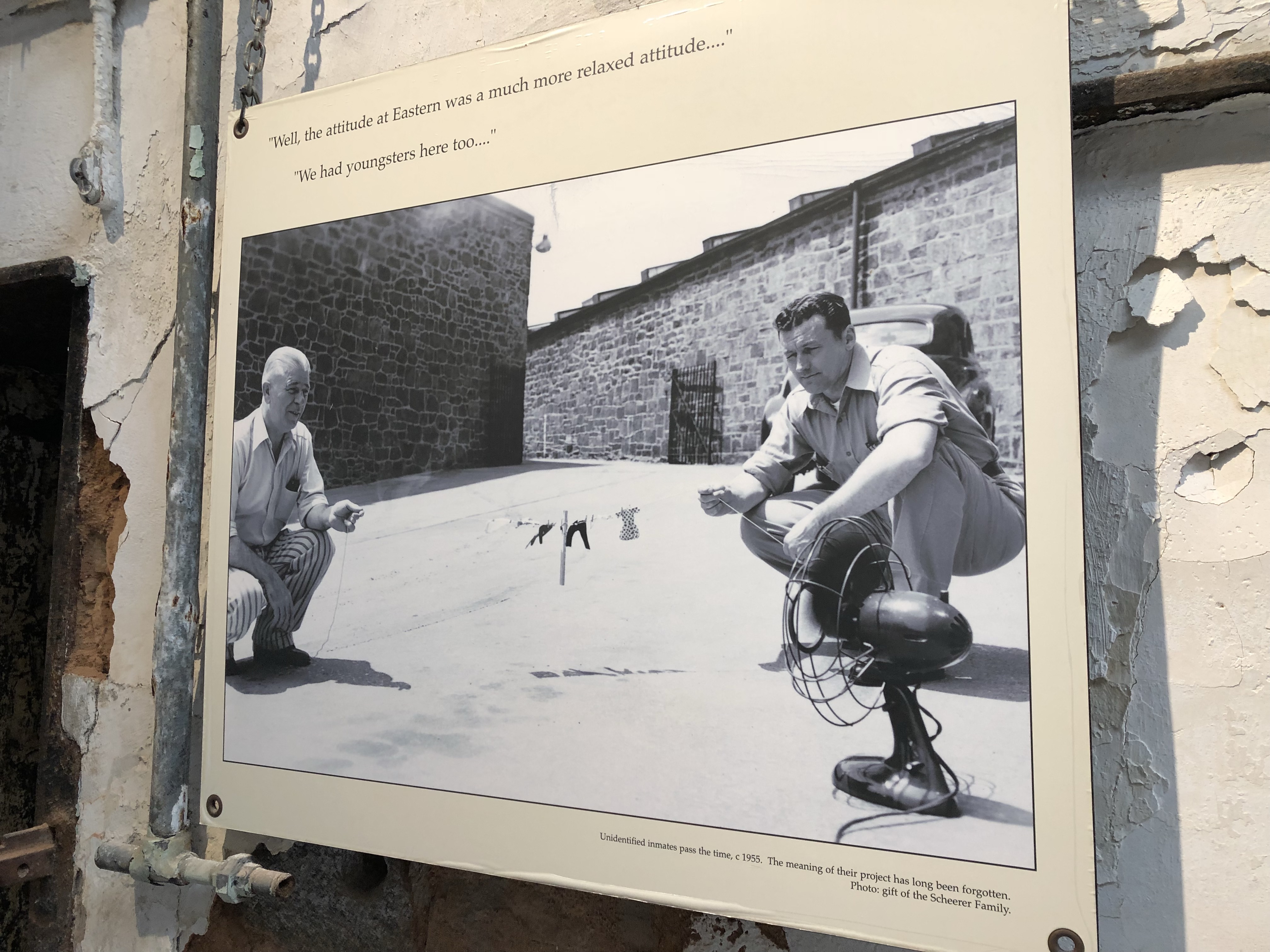
    Speaking of interaction, there were so many ways you could have the site interpreted. There is the audio guide, small exhibitions, guided tours, and photographs that appear on the cell block walls. This was my favourite showing prisoners drying little clothes. Why they’re doing this and who they are remains completely unknown.

    Eastern State Penitentiary

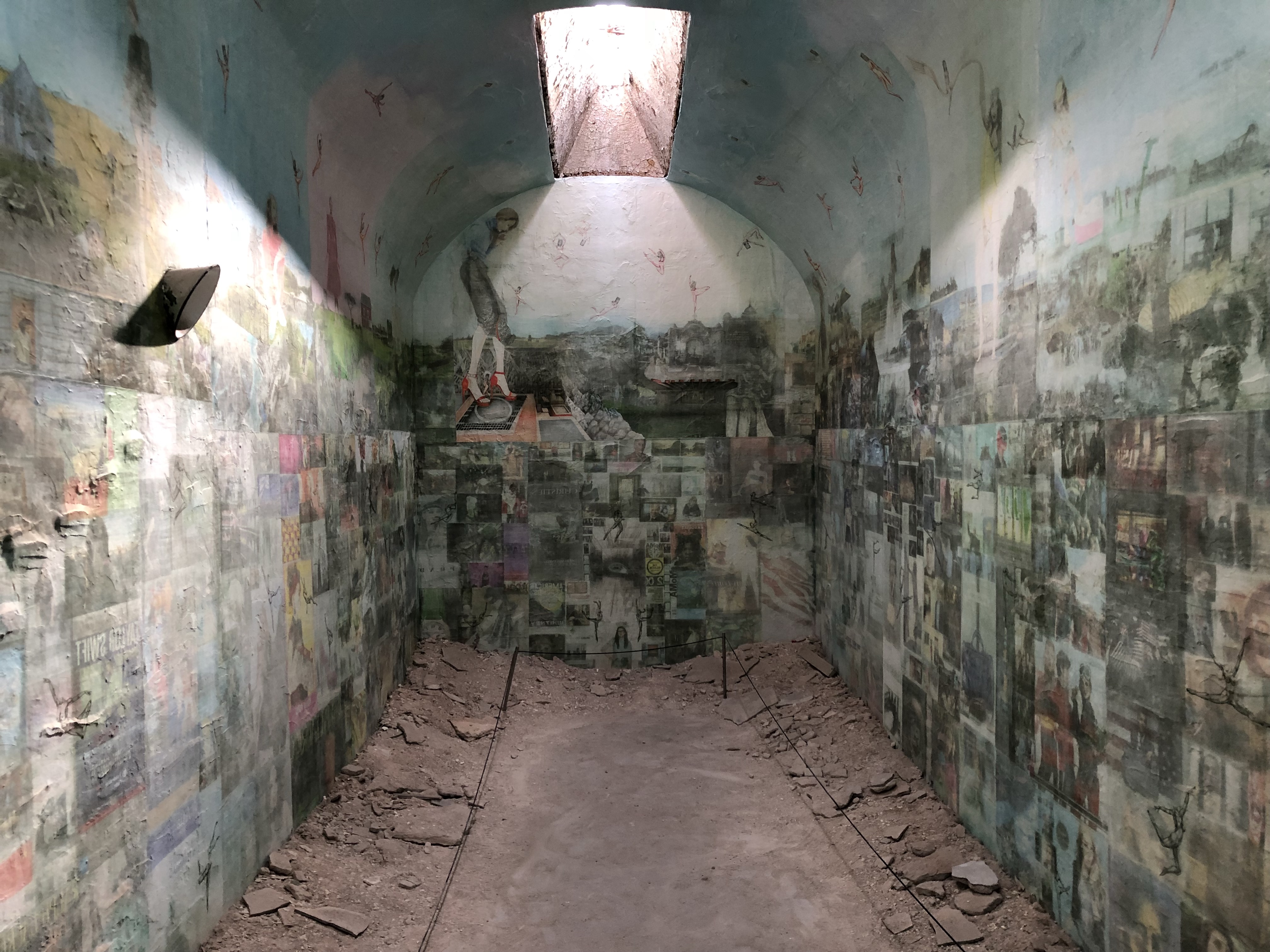
    The final thing I want to discuss is some of the contemporary art dotted around the place. One installation was by Jesse Krimes, a former prisoner. While incarcerated, he transferred pages from the New York Times to his bed sheets using hair gel. The 39 panels were combined together when he was released to create a surreal landscape.

    Eastern State Penitentiary

    I cannot recommend seeing this heritage place enough. It is both a place of pain and of beauty. Hearing the words of the prisoners, you couldn’t help but imagine how hard life must have been in the penitentiary. Yet looking around now, there is an eerie beauty. That of a building with a past strong as the people who have walked through its doors. You really feel that the building was a living and breathing place getting stronger the more it turns to ruins.

  • Washington DC: National Museum of American History and the National Air and Space Museum

    I mentioned in a previous post that the last time we were in Washington we visited almost every Smithsonian. For some reason, the Air and Space Museum was not on our list. This is probably because my desire to see objects from space didn’t really develop until after we visited the Kennedy Space Center. To this day, I still haven’t experienced anything quite like seeing the Atlantis Space Shuttle. It continues to give me goosebumps. With this in mind, we made sure to  fit the Air and Space Museum into our schedule. The day before we visited the National Museum of American History. There are both strong positives and criticisms about this museum I want to cover before delving into Air and Space.

    National Museum of American History Positives –

    This museum has an incredible collection of objects ranging from Dorothy’s Red Slippers to the Star Spangled Banner. If you focus solely on the objects, you’ll probably enjoy what’s on offer.

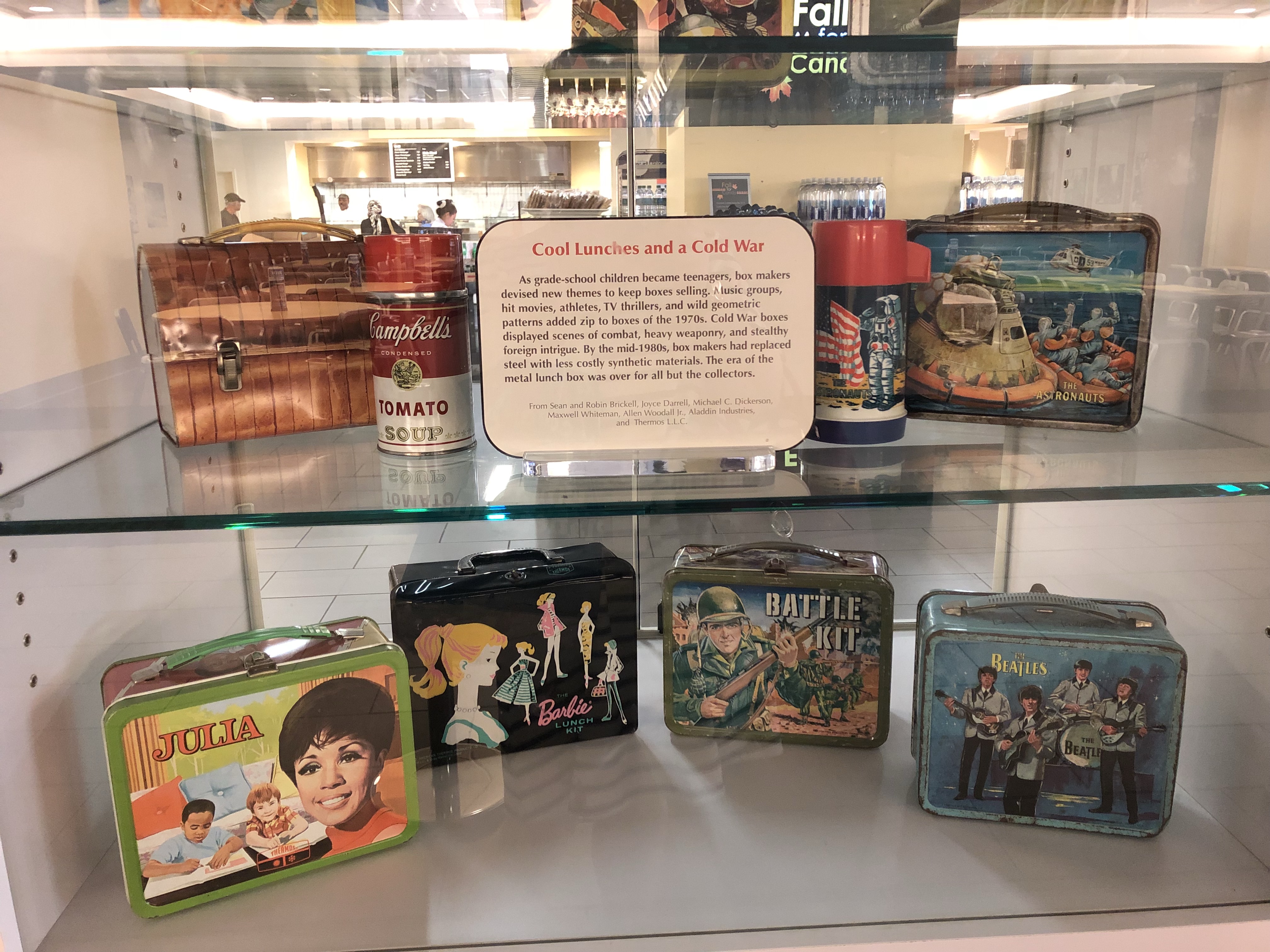
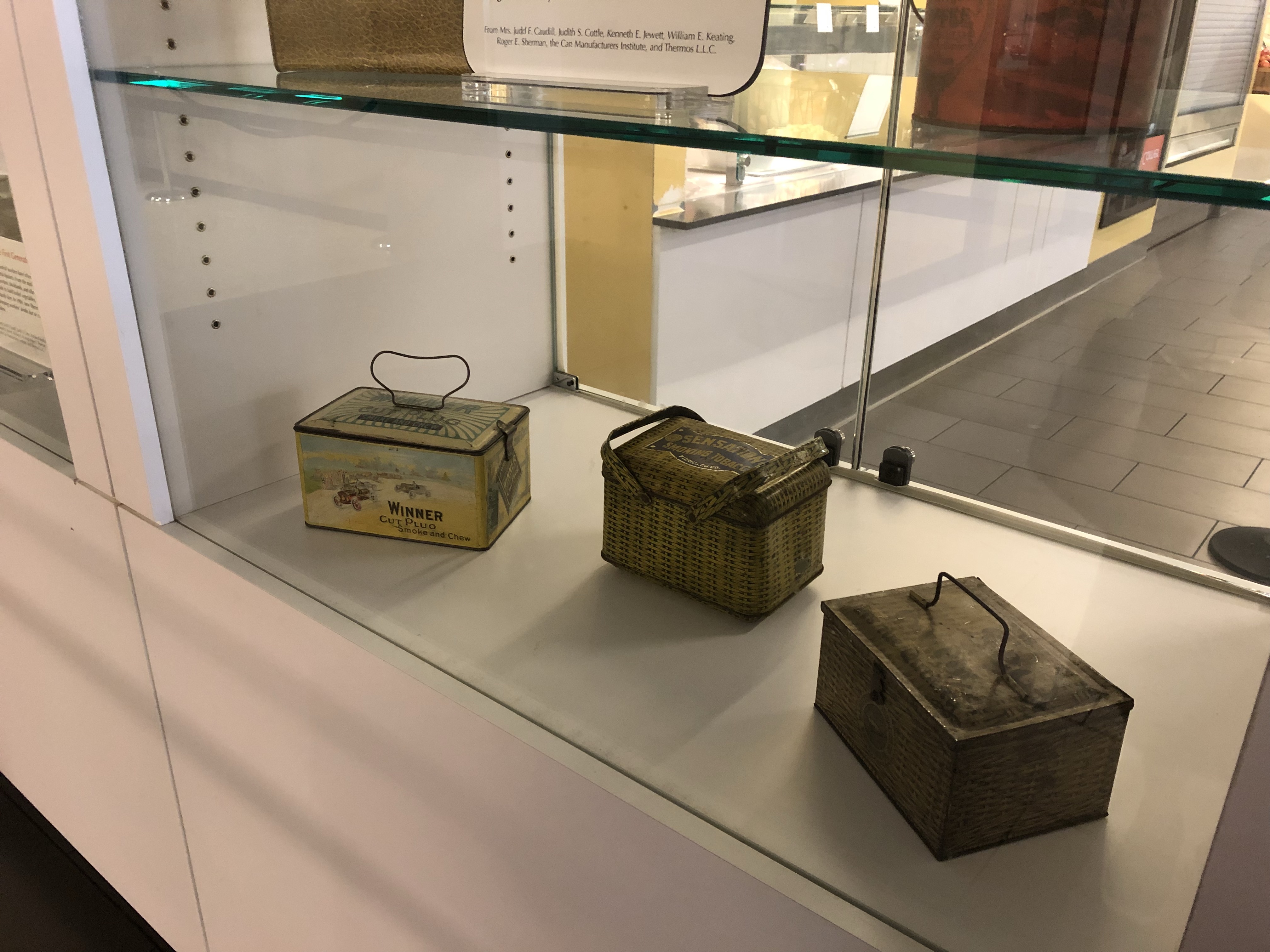
    One of my favourite displays was actually in the lower level cafeteria. There was a small exhibition on children’s lunchboxes throughout the ages. I loved seeing the really early examples from the 1910s and 1920s. The little wicker baskets were absolutely adorable. There was also an attempt to link the lunchboxes to wider historical moments and trends. For example, “Cool Lunches and a Cold War” explored how lunchboxes reflected the Cold War period. New designs were released showing combat scenes and the traditional steel box was slowly replaced by synthetic materials. Highlight lunchboxes included The Beatles and The Astronauts.

    National Museum of American History
    National Museum of American History
    National Museum of American History

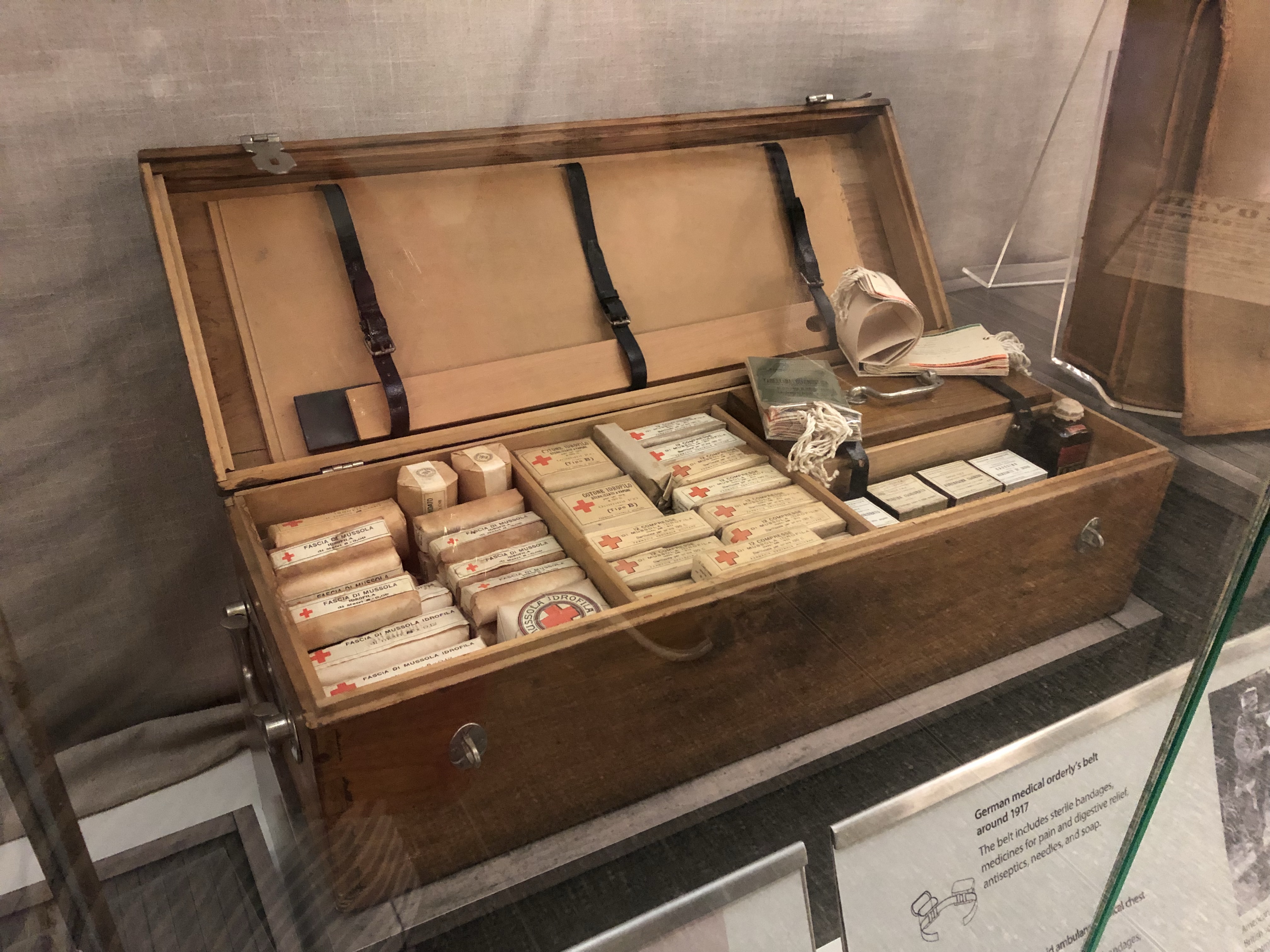
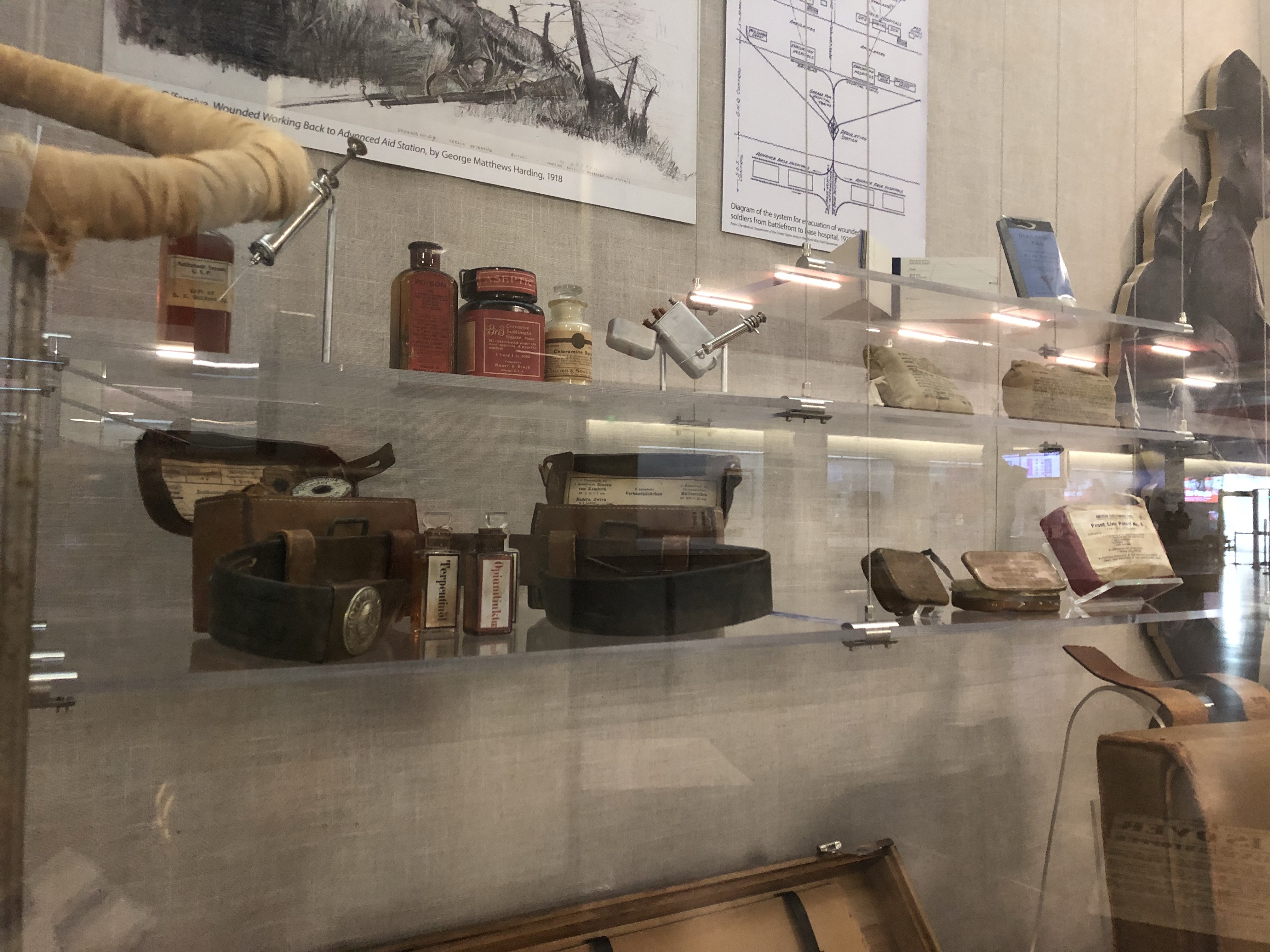
    We were also captivated by a small temporary exhibition on medicine in World War I. The introductory panel reminded visitors of the medical innovations that came out of the War. As doctors and medics were faced with widespread casualties and increasing pressure to deliver healthcare, new machines and techniques were founded that continue to be implemented today.

    In the first cabinet was a recruiting officer scale that was carried around recruitment centres to weigh prospective soldiers. You had to be of a certain weight to be deemed fit enough for service. Moving along the display, other highlight objects included a women’s medical uniform, Italian first-aid ambulance medical chest and a Carnes artificial arm. It was curated well with easy to read labels and a modern looking display. Clear shelves were used to separate the smaller objects from the large so they didn’t get lost in the whole display.

    National Museum of American History
    National Museum of American History
    National Museum of American History

    National Museum of American History Negatives –

    The permanent exhibition looked incredibly dated. As if it was installed about 30 years ago and completely forgotten. In some areas, paint was peeling off the wall which was not a good look. Especially considering the walls were similar to the National Museum of Australia, incredibly bright clashing colours giving a Kindergarten or Play School vibe.
    There was a real feeling of the objects being left behind. The collection is incredible, but, how it has been displayed does not do it justice. I was really shocked because last time we visited I didn’t really notice these things. Probably because I didn’t have a degree under my belt and because I was really focusing on what to see not how it had been displayed.

    I would love to see a refresh of the permanent exhibitions. Bring them into the 21st century! I’ve seen what can be achieved in the smaller temporary exhibitions and I think of how marvellous the whole museum would look if done in a similar style.

    National Air and Space Museum 

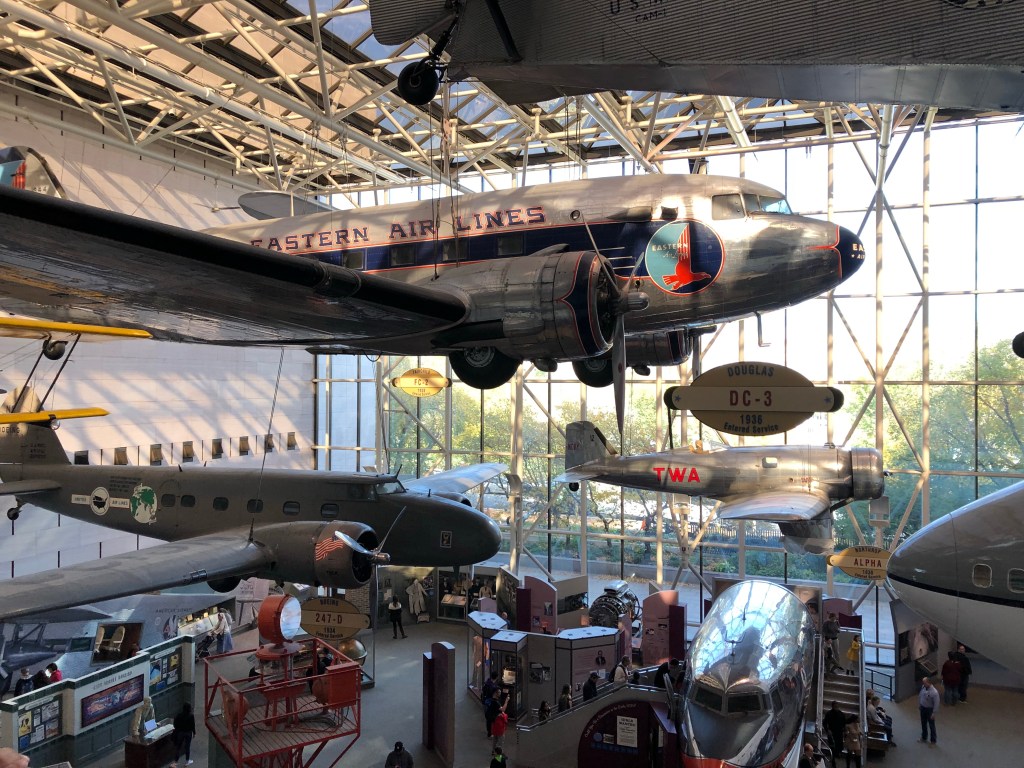
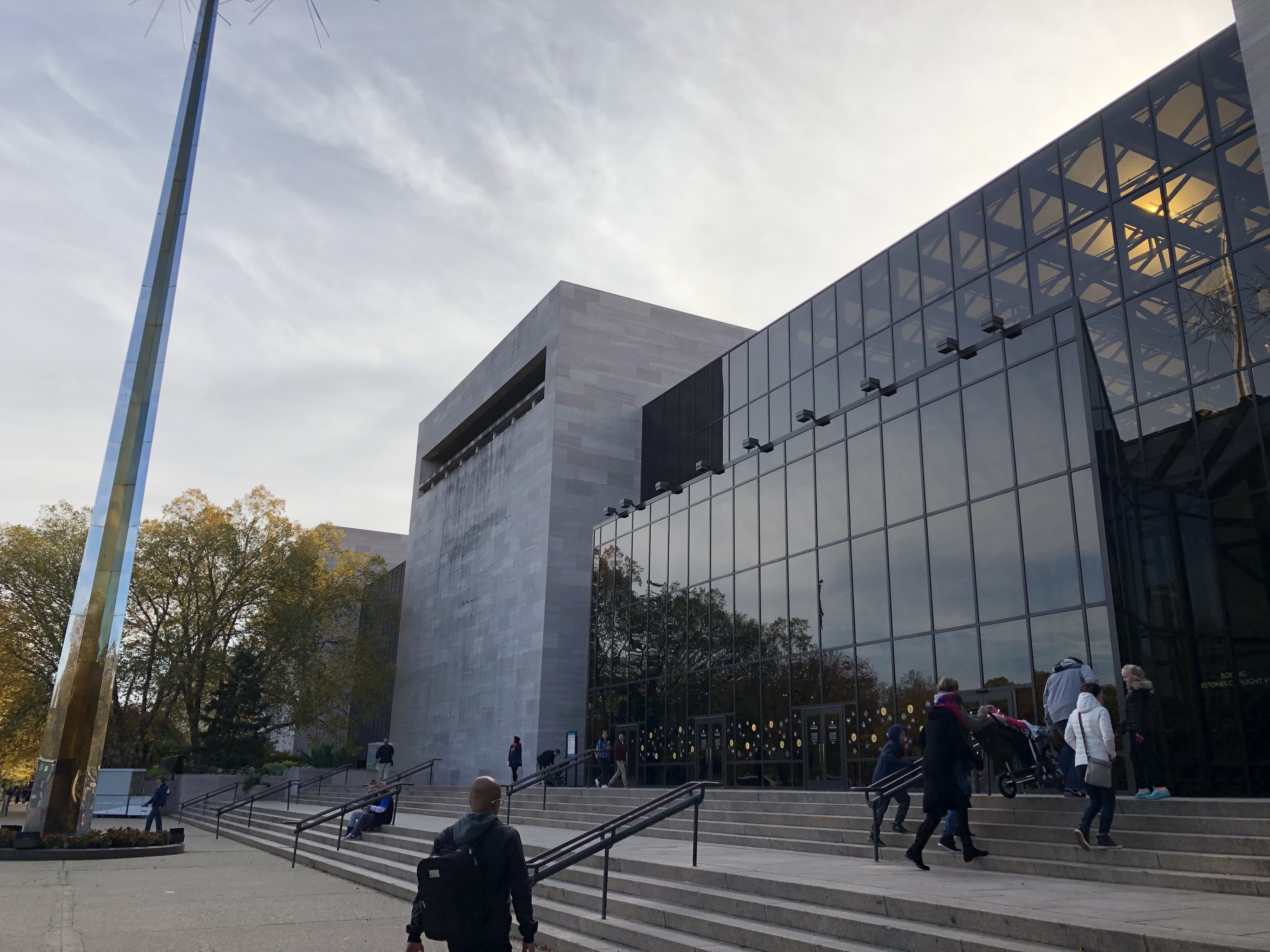
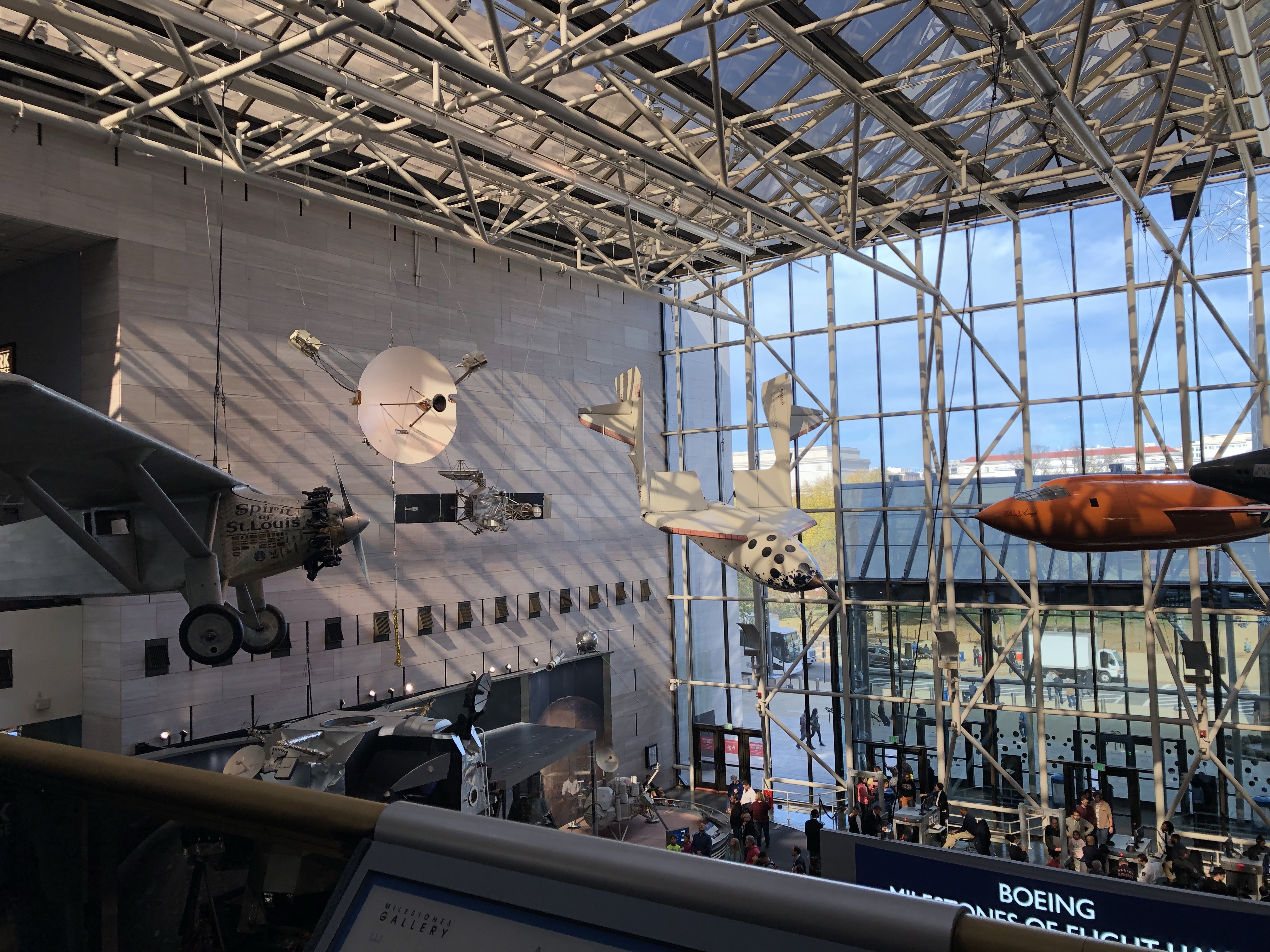
    Moving on now to the Air and Space Museum. Similar to the American History Museum, we found some of the displays to be quite outdated. This was less of an issue here though because the size of the objects and the fact it was my first time visiting distracted me.

    National Air and Space Museum 

    On arrival, we had plans to go to the food court and decide how to best see the museum. The food court was closed for planned maintenance…on a Saturday. Probably not the best day to do this. So we found ourselves a little lost. Luckily an announcement was made for a highlights tour. We made our way back to the information desk where we met our volunteer guide. In large museums I always think a highlights tour is worthwhile. You can see a lot in a short time and you get a great feel for what’s on offer.

    Our guide, Jim O’Connor, was enthusiastic and clearly loved taking these tours. We were guided around both floors, stopping at the deemed “pivotal” pieces of the collection. In total the tour took around one and a half hours which I found to be just right.

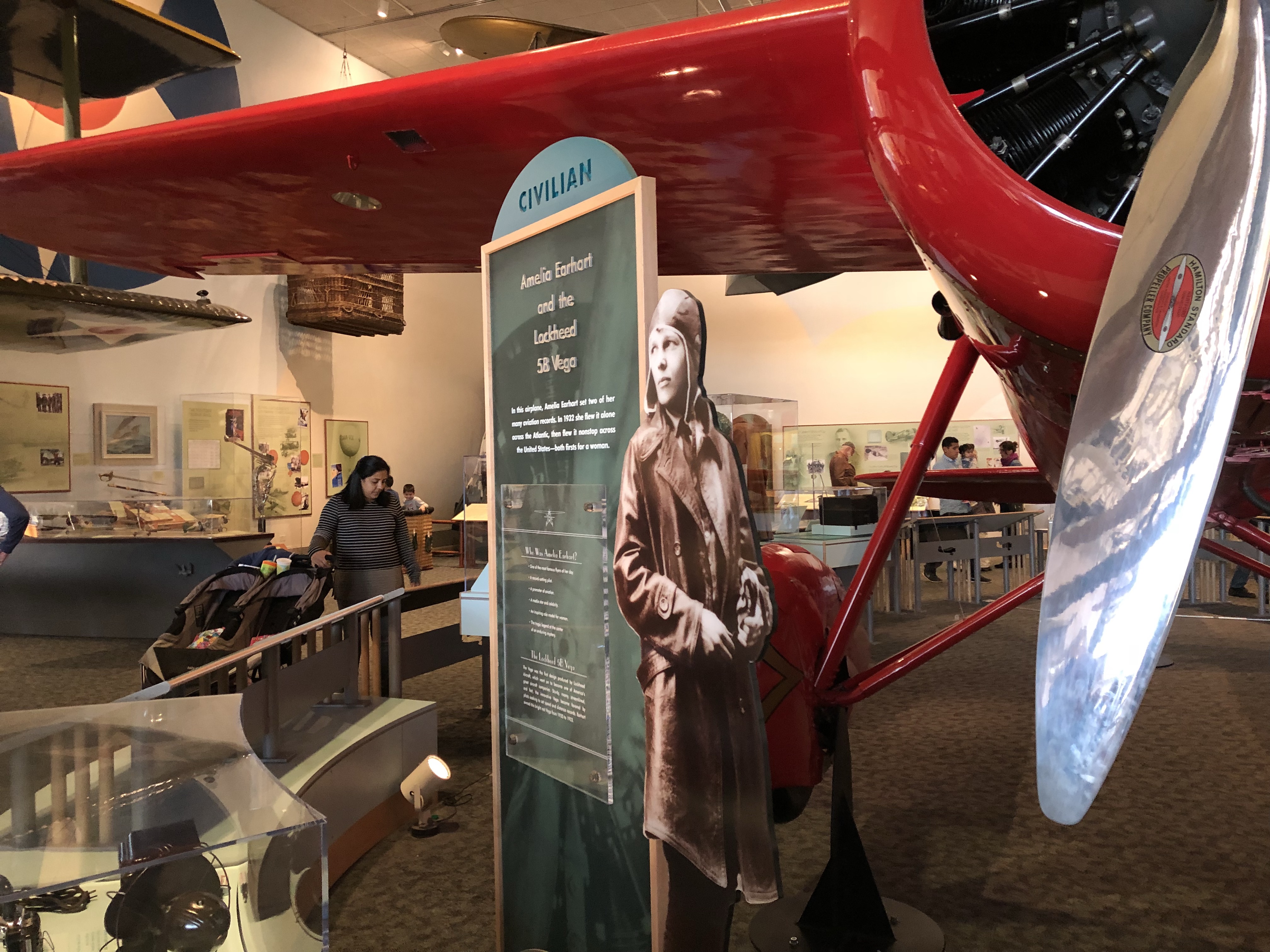
    Out of all the objects, my favourite was the plane that belonged to Amelia Earhart. She was an incredible and record breaking pilot in the 1920s and 1930s. Achievements included being the first woman to fly solo across the Atlantic and the first woman to fly nonstop coast to coast of America. On her final around the world voyage, her plane went missing somewhere in the Pacific Ocean. It continues to be a mystery as to what exactly happened to Earhart. It can be safely assumed there was an accident, however, the details remain unknown.

    National Air and Space Museum 
    National Air and Space Museum 

    The plane on display was the one she flew coast to coast and across the Atlantic. It is a beautiful bright red plane that is mostly original. Next to the plane were some information panels about Earhart and her achievements. Seeing a female pilot so prominently featured in the exhibition filled me with joy!

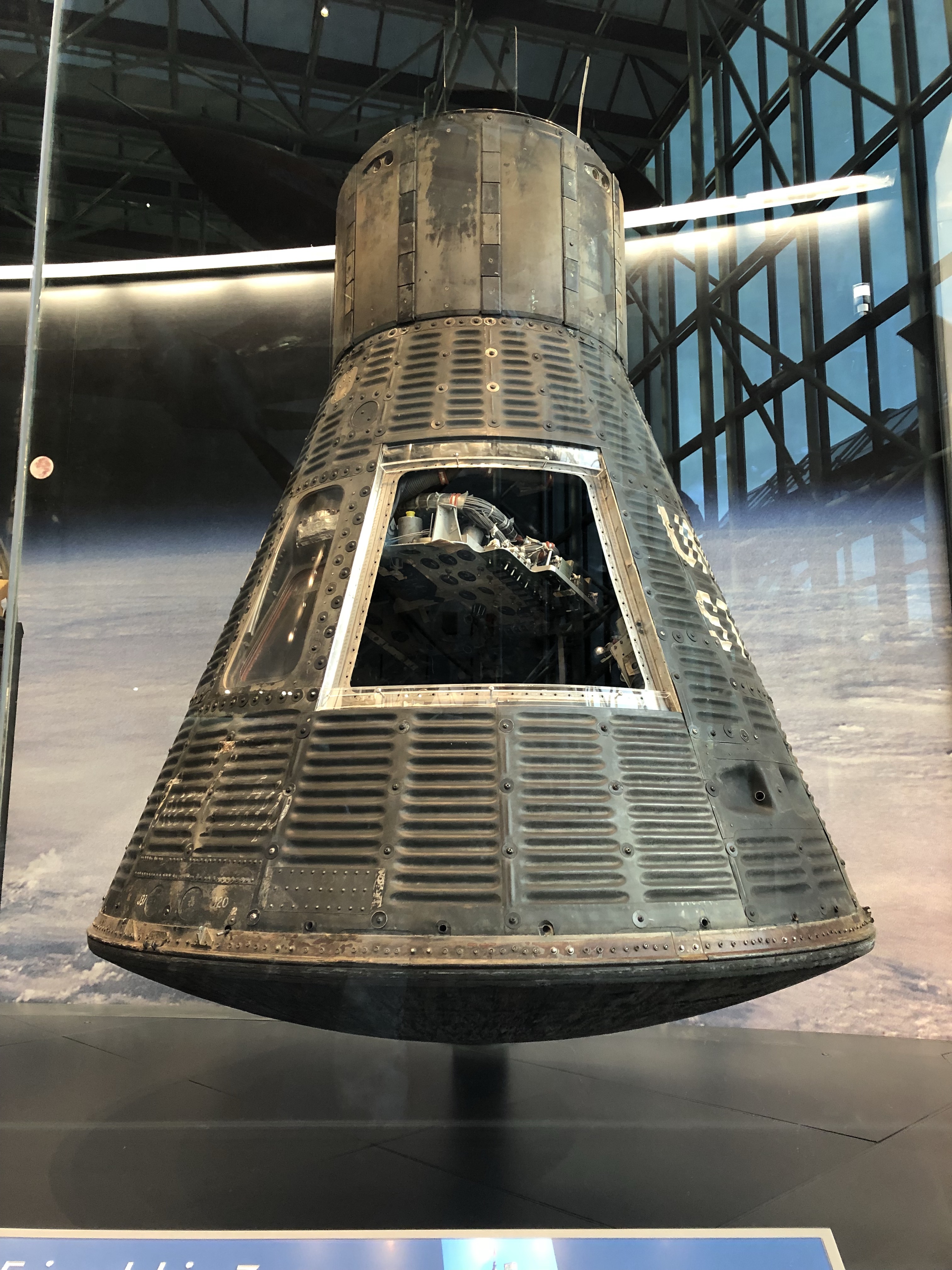
    Another highlight object was the Friendship 7, a Mercury Spacecraft. Piloted by John Glenn, it orbited the earth three times in 1962. My claustrophobia set in when I saw the spacecraft. It was tiny. Sure it was designed to fit only one person, but, it was seriously small. I couldn’t imagine orbiting anything in that craft let alone landing in it!

    National Air and Space Museum 

    Other objects we saw included an original Wright Brothers plane and a Douglas DC-3. My fear of flying has been somewhat alleviated by seeing these early aircraft. Considering it’s been just over 100 years since the Wright Brothers built their plane, the innovations have been unbelievable. Despite some incredibly old labels and displays, I appreciated this museum because of how the larger objects were exhibited. You walk into the Main Hall and all you have to do is look up.

    National Air and Space Museum 

    It’s still an amazing feeling to walk into a museum and be filled with that sense of wonder. Out of all the Smithsonian Museums, this was the only one that really gave me that feeling. The African American History and Culture Museum was an educational experience, but, the Air and Space Museum was a chance to run around like a kid and imagine a world outside of our own.

    National Air and Space Museum 
    National Air and Space Museum 
    National Air and Space Museum 
  • Philadelphia: Museum of the American Revolution 

    Although I am still releasing posts on Washington, I couldn’t resist writing about the Museum of the American Revolution. After our visit to the Mütter Museum (which will be posted about later) we were a little lost for what to do. This isn’t because there is nothing to see, actually it’s quite the opposite. You can’t take two steps in Philadelphia without seeing a museum. This is otherwise known as my kind of town.

    We decided to visit the newest museum in Philadelphia, the Museum of the American Revolution. We are determined to leave Philadelphia with a better idea of what happened during the American Revolutionary War. At first I was a little hesitant to visit. I thought it was going to be another extremely patriotic museum that just focused on the Founding Fathers with little to no mention of anyone else. Of course they were mentioned, however, there was a great effort to integrate other groups into the narrative.

    img_2027
    Museum of the American Revolution 

    Before you enter the permanent exhibition, there is a short film. As someone who knows very little about the Revolutionary War, I thought it was a great way to start the visit and get me into the right head space. Once it’s finished, you head up to the second level and into the permanent display. From here, you are led chronologically through the War.

    The highlight of the museum was its numerous interactive stations. This included not only digital touch screens, but also, physical objects you could touch and smell. They were very well integrated into the wider display. Not only does this enhance the visit, but it also caters to those who may require the use of senses other than sight to make their way through the exhibition.

    1. Posters of Protest

    Posters of Protest

    One of the first touch screens allowed visitors to further explore some of the protest posters released prior to the Revolution. I spent some time scrolling through the poster released to protest the Townshend Act.  This Act increased tax on goods imported into the American colonies. The poster encouraged those in Boston to boycott all taxed goods. Appearing on the poster were three buttons you could select for more information. These included one on the Sons and Daughters of Liberty. Each screen had a variety of different posters so there was quite a bit to explore.

    2. Touching the Liberty Tree

    In the middle of the first room was an artificial tree. Part of the trunk was cut out and inside, a segment of the last surviving Liberty Tree. These trees were often used as gathering places for those wishing to discuss dangerous revolutionary ideas. This particular tree was cut down in Annapolis, Maryland in 1999. As the label stated, you were able to touch this part of history.

    Liberty Tree

    3. Smell the Tea 

    This museum really tried to engage all the senses, except taste. Next to the thematic panel on the Boston Tea Party were some crates representing those that carried the tea. One actually contained tea and was perforated so you could experience the smell. I liked how the label encouraged you to imagine how the harbour must have smelt post tea destruction.

    Tea 

    4. Revolutionaries Touch Screen 

    Now it’s time for my favourite interactive screen. As you dragged the timeline at the bottom of the screen, different revolutionary figures popped up in different states. There were a lovely number of females represented on the screen. I had never heard of Abigail Adams, wife of John Adams, or her role in the War. Turns out she had incredibly progressive ideals and fought for the inclusion of women in the Declaration of Independence. Her quotes can be found all throughout the exhibition. She promised her husband that if women kept being neglected they would one day fight for their rights.

    Touch Screen 
    Touch Screen 

    The touch screen also included women who were against the Revolutionaries, otherwise known as Loyalists. Flora McDonald of South Carolina thought the War was just going to benefit the rich gentry in the North. This diversity of stories is what sparked my attention the most.

    Touch Screen 

    5. Don’t Touch the Horse

    This is just a fun little interactive example. To encourage visitors to preserve the horses in the diorama, there was a little board with some horse hair stuck to it that you could touch. An especially good idea for children.

    Horse
    Horse

    Also, yes I did say there were mannequin dioramas. I love dioramas as much as the next person. They give me strength when they’re used appropriately and when they make a good point. I thought they worked well in the display. Accompanying labels explained the scene they were staging and allowed visitors to know exactly who was represented and why.

    6. Cross Stitch Interaction Table 

    After the Revolution, it was believed that the best way to maintain the republic was to educate its citizens. As part of their general education, both girls and boys were taught basic sewing techniques. For girls, they continued to create samplers often with patriotic symbols alongside their names and the alphabet. Visitors could try and cross stitch a large rope through a metal frame. Teach the world cross stitch is my personal motto so I was thrilled to see this in the exhibition and its importance in early education recognised.

    Cross Stitch

    There were a few other general things I want to write about. Throughout the exhibition, it was always clear whether you were going to read the British or American perspective. This was achieved simply by using red and blue paint (red for British and blue for Revolutionaries).

    Another thing that I greatly appreciated were the number of seating areas with short films playing dispersed throughout the exhibition. We were able to frequently rest our feet and still continue our museum experience. I truly believe this actually helped us to not feel so fatigued.

    Finally, the overall message of the museum was just right. Basically, the War of Independence is over, but, the Revolutionary War continues – until every individual has the same basic rights and opportunities. To really reiterate this point, the grand finale of the permanent display is a group of mirrors with the words “Meet the Future of the American Revolution” written on the wall.

    Museum of the American Revolution 
    Museum of the American Revolution 

    It’s always nice to see digital technology working with a display. If you like or want to learn more about early American history, this museum really strives to cover as much as possible.

  • Washington DC: National Museum of African American History and Culture

    The National Museum of African American History and Culture opened in September 2016. It continues to be one of the most popular and visited Smithsonian Museums in Washington. After visiting the National Museum of American History, honestly the bar was set quite low for what to expect. I will definitely write about that later. As opposed to some of the other Smithsonians, this museum felt innovative and up-to-date. Even before walking into any exhibition you could already start to see this through the architecture of the building itself.

    img_1567-1
    National Museum of African American History and Culture

    I felt very fortunate to visit this museum with two friends from my museum studies course. We tried our very best to see as much of the museum as possible. It is an absolutely massive museum with three large floors of history and four floors displaying culture. I don’t think it would be possible to see everything in one day. This isn’t a criticism because being a National museum means, in my opinion, getting as much information out there for all to read/see. It is more beneficial to commit to either seeing a different section every time or walk through at a pace stopping to read what catches your eye. I had a lot of trouble deciding what to focus on for my review. There are just so many important elements and stories that have gone into the creation of this museum. Every floor is overflowing with significant events, important messages, and opportunities to reflect on the past and the pain and suffering that continues to scar this country. It is no easy feat to nicely wrap this up in a blog post.

    Instead, I’ve decided to do something I’ve never done before and let the pictures I took guide the post. In the past I have selected top images or objects, but, this will be slightly different. I took only a few photographs during my visit as I was more focused on trying to see a little bit of everything and work my way through the crowds. These photographs should give some idea of what’s held in the museum and the wide variety of stories on display.

    Photograph 1

    National Museum of African American History and Culture

    The first photograph is of a large sugar pot once used to boil down sugar cane. It is resting on a mass of sugar. This display introduced the section on the Transatlantic Slave Trade by showing one of the most sought after and life-destroying commodities of the era. The thematic panel printed on the glass was near impossible to read, but, tells the story of how sugar was more valuable than gold and responsible for the enslavement of so many people on plantations.

    Photograph 2

    Observations Upon Negro Slavery

    After walking through and seeing remains of a slave ship, you come face-to-face with this image. It shows how slaves were positioned on a ship. It is from a text called “Observations Upon Negro Slavery” by Charles Crawford. Images such as these were used by abolitionists to argue the inhumane treatment of slaves.

    Photograph 3

    Slavery Objects

    The objects pictured above include belt buckles, fragments of bottle, and an oar. They were all discovered during archaeological digs in Louisiana. For each geographical area of America where there was slavery the exhibition was organised as follows: section covering what slavery was used for in that specific location, objects, and evidence of rebellion. In the section photographed above there was information on how Africans and Native Americans worked together to hunt and trade, eventually developing their own economy.

    Photograph 4

    Paradox of Liberty

    The paradox of liberty statue highlighted how the American Constitution called for equality, yet did not deliver on this promise.

    Photograph 5

    Wedding Ring

    This wedding ring was used to marry over 400 enslaved African Americans in South Carolina. Although marriage was illegal, this did not stop many from showing their commitment to each other in a formal ceremony. It caught my attention as it is such a simple object that holds such a rich history. A small token of love welcomed in the exhibition.

    As you can see though, some of the labels were designed so that unless you stood directly in front, they looked blurry. Considering most had to be read from an angle, it was quite bad on the eyes.

    Photograph 6

    Civil Rights Map

    The second floor focused on the journey to Civil Rights. This map geographically showed the location of boycotts and sit ins. It was great to see this information visually represented.

    Photograph 7

    Segregated Train Car

    One of the largest objects on display is a segregated train cart from 1923. It physically shows the inequality and segregation faced by so many.

    Photograph 8

    Interactive Lunch Counter

    In the section on Civil Rights there is an interactive lunch counter. You can select events such as boycotts and protests and answer questions about what you may have done in that situation. It was an effective integration of digital technology that made people really think about what they had just seen on display.

    Photograph 9

    Whitfield Lovell
    Whitfield Lovell

    I skipped a whole floor of history and my next photograph was from the cultural display on visual art. This work was stunning. Created by Whitfield Lovell, it combines charcoal portraits with playing cards to represent the rise of African Americans out of slavery. The cards were found objects Lovell decided to add.

    Photograph 11

    Touch Table

    My final photograph was of a huge touch screen table found in an exhibition on place. You could slide different photographs from the centre to your section of screen and explore them in more detail. Each photograph was of a place that contains some memory of the past. A particularly harrowing image was of an all whites swimming pool that told the story of how African American children were drowning in lakes as they could not access the pools with life guards. There were pools they could go to, but, lines were so long many opted for the lake.

    What I have covered doesn’t even begin to reveal what is on display. It is just a tiny snapshot that will hopefully provide an idea of the displays and stories. If you have the chance, definitely visit and experience this history for yourself.


  • Washington DC: United States Holocaust Memorial Museum

    Last time we were in Washington I think we must have sprinted to see every single Smithsonian Museum. After returning to Australia, I soon started my Masters of Museum & Heritage Studies. Throughout this course, I learnt so much about the Holocaust Memorial Museum. I absolutely regretted not visiting! It was first on my to-see list if I ever returned to Washington. Luckily, the opportunity came, and I was able to see the museum with this knowledge in mind. Not only do I want to discuss the permanent exhibition that covers three floors, but also, the temporary exhibition “Remember the Children: Daniel’s Story”. When we arrived at the museum it was extremely busy, mostly filled with school children. A very helpful member of staff told us it would be best to see the temporary exhibition before making our way to the permanent display on the top floor. This proved to be an excellent decision.

    Remember the Children: Daniel’s Story

    United States Holocaust Memorial Museum

    This was actually one of the most powerful exhibitions I have ever seen on the Holocaust. It took this entire horrific event and presented it through the eyes of children. A variety of diary entries and stories from different children were compiled together to create the fictional character of Daniel. Although fictional, every experience in the exhibition had been derived from primary source material. This is all explained in the first room that also has a video playing on loop showing the escalation of anti-Semitism.

    The whole exhibition looks and feels like you are walking through a children’s picture book. The labels are large diary pages with a child’s handwriting telling the story. They were only short, yet allowed for so much information and emotion to be communicated. Often the labels were placed in areas that could be accessed by both adults and children – positioned low on walls or on top of props at a child’s eye level. As the text was so big, adults didn’t have to strain their necks bending down to read.

    The first place you visit after the introductory film is Daniel’s house. You can explore what his room looked like before the Holocaust and see what he learnt in school and how he helped around the house. The integration of museum objects was particularly well done in this room. Next to Daniel’s bed was a desk with drawers you could pull out. Inside were some original toys used by children prior to the War.

    On leaving his house, the exhibition gets darker and darker. The diary page labels become more torn and discoloured. You walk through a street showing Jewish businesses closed or destroyed. Then, you enter the ghetto and see how Daniel’s life transformed from his comfortable and warm home prior to the War to the conditions of the ghetto.

    United States Holocaust Memorial Museum
    United States Holocaust Memorial Museum
    United States Holocaust Memorial Museum
    United States Holocaust Memorial Museum
    United States Holocaust Memorial Museum
    United States Holocaust Memorial Museum

    Finally, you see a label that simply states “my worst fear has come true. They are taking us away.” The impact this label had in the overall exhibition was astounding. Nothing had to be shown or described in detail yet you understood what was likely going to happen next.

    United States Holocaust Memorial Museum

    The final room had a short film playing on the end of the war and liberation. Before leaving, we saw three tables for children where they could write a postcard to Daniel recording their experience of the display and how they felt. We did see some children visiting and they were interacting with the exhibition in quite an in depth way. Presenting it to them in a format that they can understand and/or connect with, can really speak to a child and be of more benefit. It was such a beautifully constructed exhibition that presented a strong message woven into this story of innocence and suffering. Adults will benefit just as much as children from visiting this exhibition.

    United States Holocaust Memorial Museum
    United States Holocaust Memorial Museum

    Permanent Display

    Next we visited the permanent display. Before taking the lift to the top floor, you can select an identity card of someone who either lived through or died during the Holocaust. I particularly liked this approach. Hearing six million people were killed during the Holocaust just sounds too horrible to comprehend. It becomes a statistic. Physically seeing the face of one of these victims or survivors, however, allows for that emotional connection. On each level you can read about what happened to the individual.

    The top floor covers the lead up to the Holocaust and the introduction of systematic segregation. It was unbelievably busy so we tried our best to read as much as we could. From what I could see, the actual displays were so well curated. One section on identifying race had hair and eye samples used to determine race positioned on top of relevant photographs or posters. Each display case had a large thematic panel that covered some of the basic information. Although it was white text on a black background, it was printed large enough to not be a problem.

    United States Holocaust Memorial Museum

    Before heading to the next floor, you walk through a room covered in photographs. These were taken in Lithuania of Jewish individuals and families. It is not until the end of the exhibition that you discover every person in these photographs was killed over two days. Nine hundred years of Jewish culture in Eishishok was destroyed in two days. Linking back to the identity card, seeing their faces had such impact. It also reminded visitors of the culture that was lost.

    United States Holocaust Memorial Museum
    United States Holocaust Memorial Museum

    The next floor covered the establishment of the ghettos and initial deportations. An aspect of the display that I found to be most thoughtful was the showing of graphic footage. In some areas there are moderately high walls that have a warning printed on the front regarding the graphic nature of the film. If you want to see, you lean over the wall where there are TVs. It would be near impossible for small children to see this footage. Something that has stayed with me from my museum studies course has been the notion that to teach trauma, you don’t want to traumatise.

    United States Holocaust Memorial Museum

    This floor had some powerful objects including a train cart used to transport Jewish prisoners. Seeing the objects rather than just hearing about what happened added that new layer of understanding. Everywhere you turned to look, you were reminded again and again of what happened. Even cobblestone floors were revealed to be from the Warsaw Ghetto. Objects such as these were more often than not donated by individuals or Polish museums.

    United States Holocaust Memorial Museum
    United States Holocaust Memorial Museum

    At the end of this floor was a room called the “Voices of Auschwitz.” Here you can sit inside and listen to testimonies. There were also transcriptions available for people to read or for those with hearing difficulties.

    After walking through to the next section, you stand face to face with hundreds of shoes. I had read so much about this room, but nothing could fully prepare me for this experience. Their smell is something I will never forget. There is something so personal about shoes. It links to that saying that to understand someone’s experiences or motives you need to walk a mile in their shoes. It is also a piece of clothing worn so regularly. You start to wonder who put on a pair of these shoes everyday.

    United States Holocaust Memorial Museum

    Finally, we made our way to the ground floor which focused on liberation and the aftermath. In the middle of the main exhibition space was a white wall containing the names of those who helped rescue Jewish individuals during the war. It is still a growing and developing project. There were also small displays on resistance including the White Rose Movement from Munich. The exhibition ends with videos of survivor testimonies. We sat and listened to quite a few. There were uplifting stories of people finding each other after the horror. There were also reminders that this history must never be repeated.

    United States Holocaust Memorial Museum
    United States Holocaust Memorial Museum

    I hope we can learn this lesson one day.