• Brisbane: Gallery of Modern Art (GOMA)

    This is my first blog post in just over a month! I cannot believe how quickly time has passed since the Museums Galleries Australia Conference. Not to mention, in the last month I have secured a new role, Curator of the Integrated Pathology Learning Centre at the University of Queensland, and moved everything from Gladstone back to Brisbane. Only now have I finally found time to go and see some exhibitions! The first on my list was Patricia Piccinini Curious Affection, currently on display at GOMA.

    IMG_7636
    Patricia Piccinini Curious Affection Entrance

    I was ony vaguely familiar with the work of  Piccinini before visiting this exhibition. I am not a huge fan of contemporary art – my tastes are quite niche. I had seen one of her sculptures on display (cannot remember where) and thought it was both bizarre yet incredibly intriguing. Also, her work reflects pretty clear themes that I think a lot of people can recognise and even begin to engage with. Anything that brings science, technology and art together in a really out there kind of way is a huge yes from me.

    I visited on a Wednesday during our winter school holidays. It was quite busy around the cultural centre precinct, but, the exhibition was quiet. There were only around eight other people in the absolutely massive space while I was there. This allowed me to really take my time and look closely at the works on display. I must have picked a good time because images I’ve seen of visitors to the exhibition always show the space absolutely packed with people.

    It is a ticketed exhibition which didn’t bother me. I can’t begin to imagine how expensive it was to get the exhibition to GOMA, so I didn’t mind paying a bit for admission. The first half of the exhibition is pretty light and open displaying some of Piccinini’s most famous works. She has been a practicising artist for over 20 years, producing so many works that really challenge visitors and invite us to question the world we live in.

    As soon as you enter the exhibition space there is a thematic panel explaining the crux of the exhibition. It is stated as her most ambitious exhibition yet, addressing such a wide variety of themes. The works on display relate to biotechnology and digital technology blurring the line between humans, nature and the artificial.

    I particularly enjoyed the sculptures that showed human-animal hybrids in familiar situations. Her automotive works didn’t really capture my imagination so I won’t be speaking about them in this post.

    One of the first sculptures you see is titled Doubting Thomas. A little boy is touching what looks like a miniature monster resting on a chair. I literally had to stop myself from thinking “oh no, someone’s kid is touching the exhibition”. Her work is so lifelike and real you were pinching yourself the entire time. In the same room there is a sculpture titled The Comforter. I found this one to be quite sweet, yet very powerful. A little girl suffering from hypertrichosis (or werewolf syndrome) is sitting on the floor holding a newborn baby with some kind of mutation. Commentary here is on genetic engineering and how mutation is a ntural phenomenon.

    IMG_2058
    The Comforter

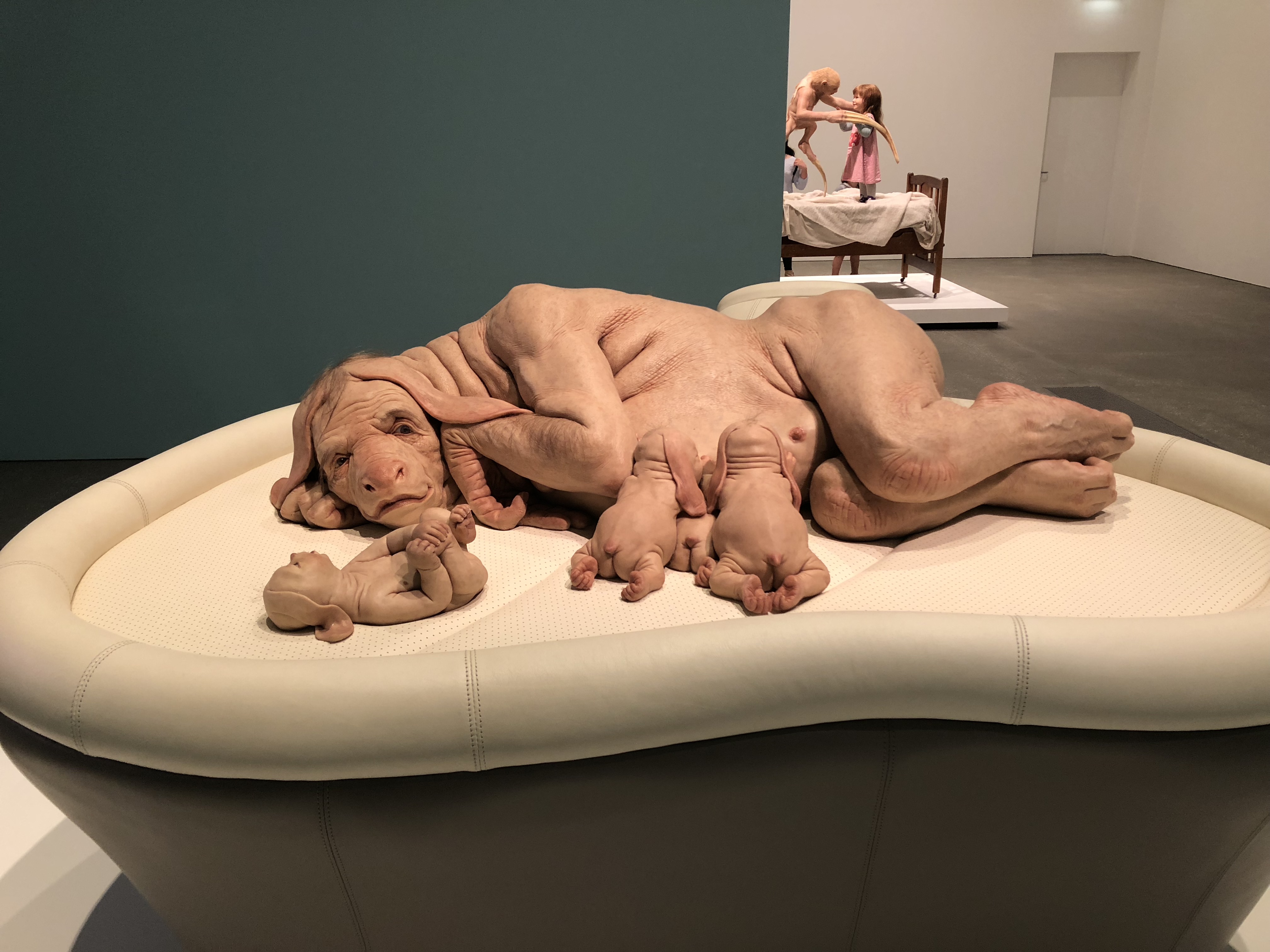
    The second room opens up more and allows visitors to move in and out of different spaces. It is in this space you can see what is probably Piccinini’s most famous work, The Young Family. This pig-human hybrid family is what Piccinini imagines to be animals bred for organ donation. I particularly enjoyed reading the didactic. Seeing how the ethics of organ donation from pigs to humans had influenced her work was very interesting. A few of the sculptures had a “learn more about” label directing visitors to a website for further information. I didn’t see anyone in the space following this suggestion.

    IMG_5308
    The Young Family

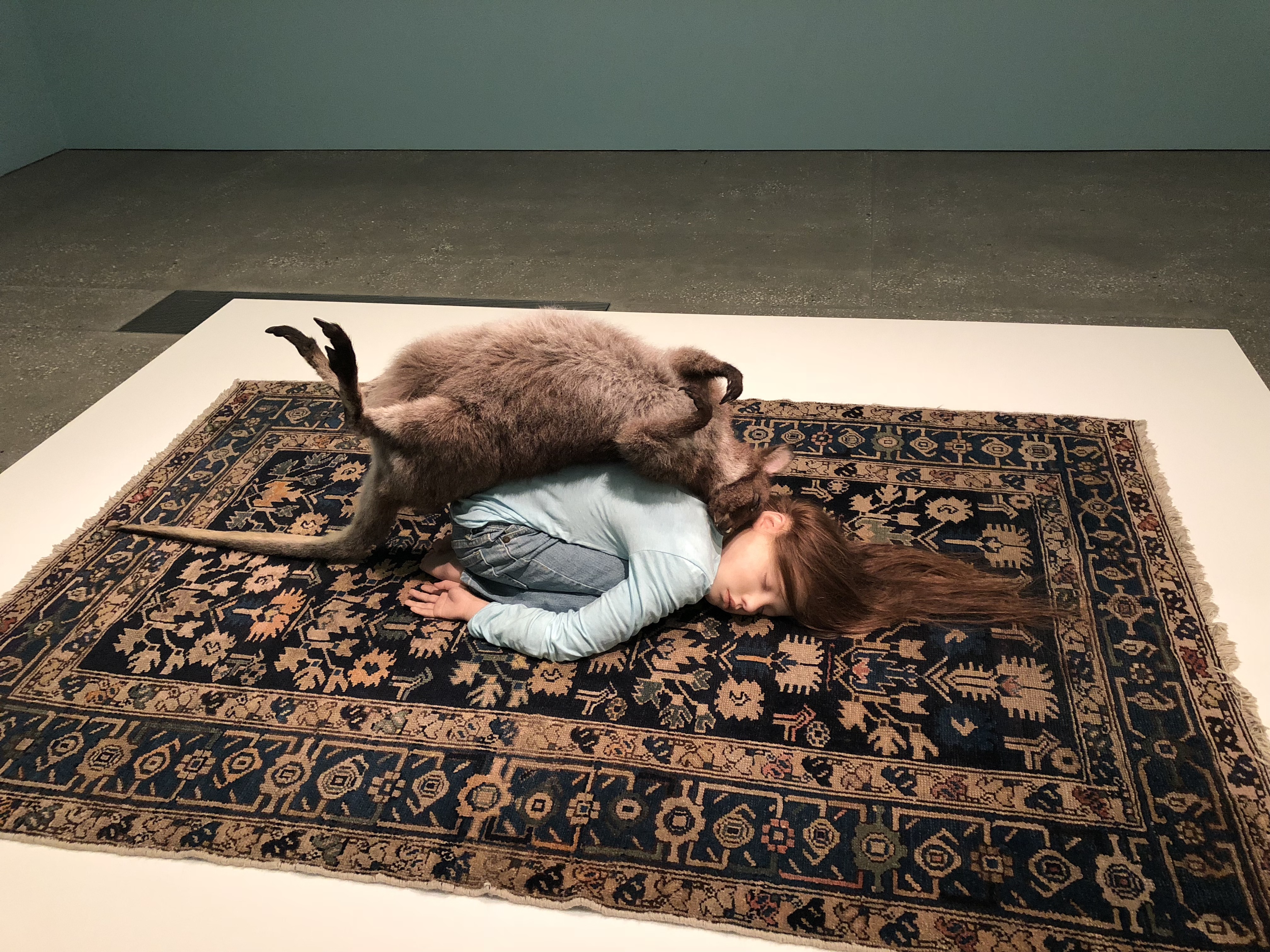
    Finally, this room contained my favourite sculpture, Balasana. An incredibly realistic  girl is resting on a rug with a wallaby on her back. My only criticism here is that similar to the National Gallery of Vicitoria, the labels for kids were really difficult to separate from the other labels. At least this time they were positioned at a slightly better height and asked more interesting questions. For example, the label for Balasana asked “have you ever shared a special relationship with an animal?”

    IMG_6380
    Balasana

    The second half the exhibition begins with an installation titled The Field. Here, 3000 flowers made from ABS and PPE plastic are swaying on a bouncy floor. Visitors walk through the space literally immersing themselves in the field. The reasoning behind this installation was to fuse the flower (associated with female fertility) with the Venus of Willendorf (a famous female figurine carved from limestone in 28 000 BCE), reminding visitors that societies have been female-centered. Dotted around the field were four sculptures including a self-portrait of Piccinini.

    IMG_8281
    The Field
    IMG_1070
    The Field
    IMG_4698
    The Field

    What was most striking about the entire exhibition was how it moved from light in the first half, to dark in the second. I spent quite a bit of time in The Field simply adjusting my eyes to the darkness.

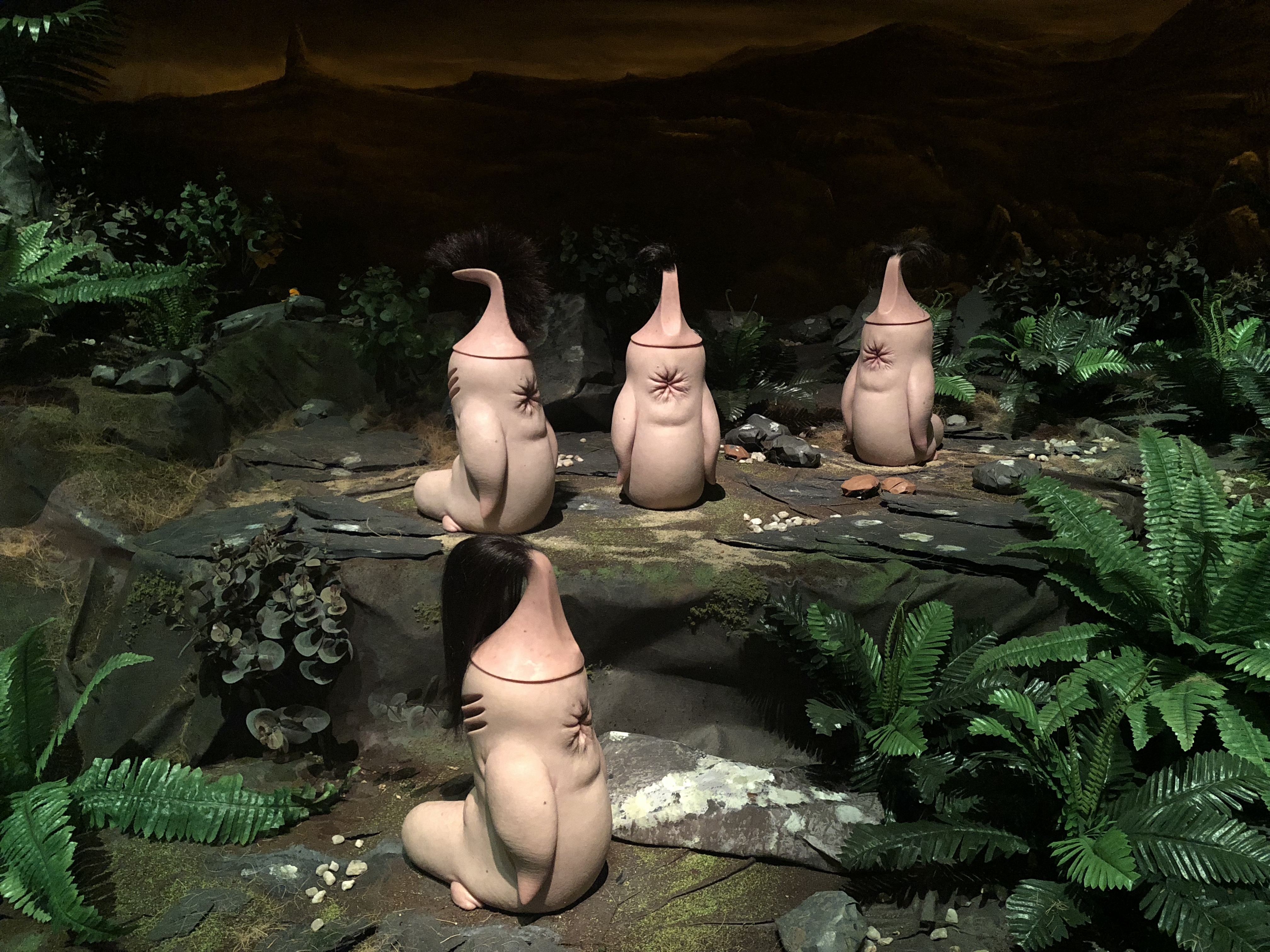
    The last sculpture I want to talk about was right at the end of the second half. After walking through and see creations such as Butthole Penguins, you come across a caravan. Inside is The Couple, two human-bear hybrids embracing each other and represeting the possibility of reproduction and for a future outside of our control.

    IMG_5330
    Butthole Penguins
    IMG_3204
    The Couple

    As you can see, there were some pretty major themes tackled in this exhibition. I enjoyed the fusion of science and technology with art to create something uncomfortable, yet very memorable.

    Overall, I really enjoyed this exhibition and would definitely recommend it to anyone who will be in Brisbane before 5 August 2018. It is such a wild ride from start to finish.

  • Melbourne: National Gallery of Victoria (NGV)

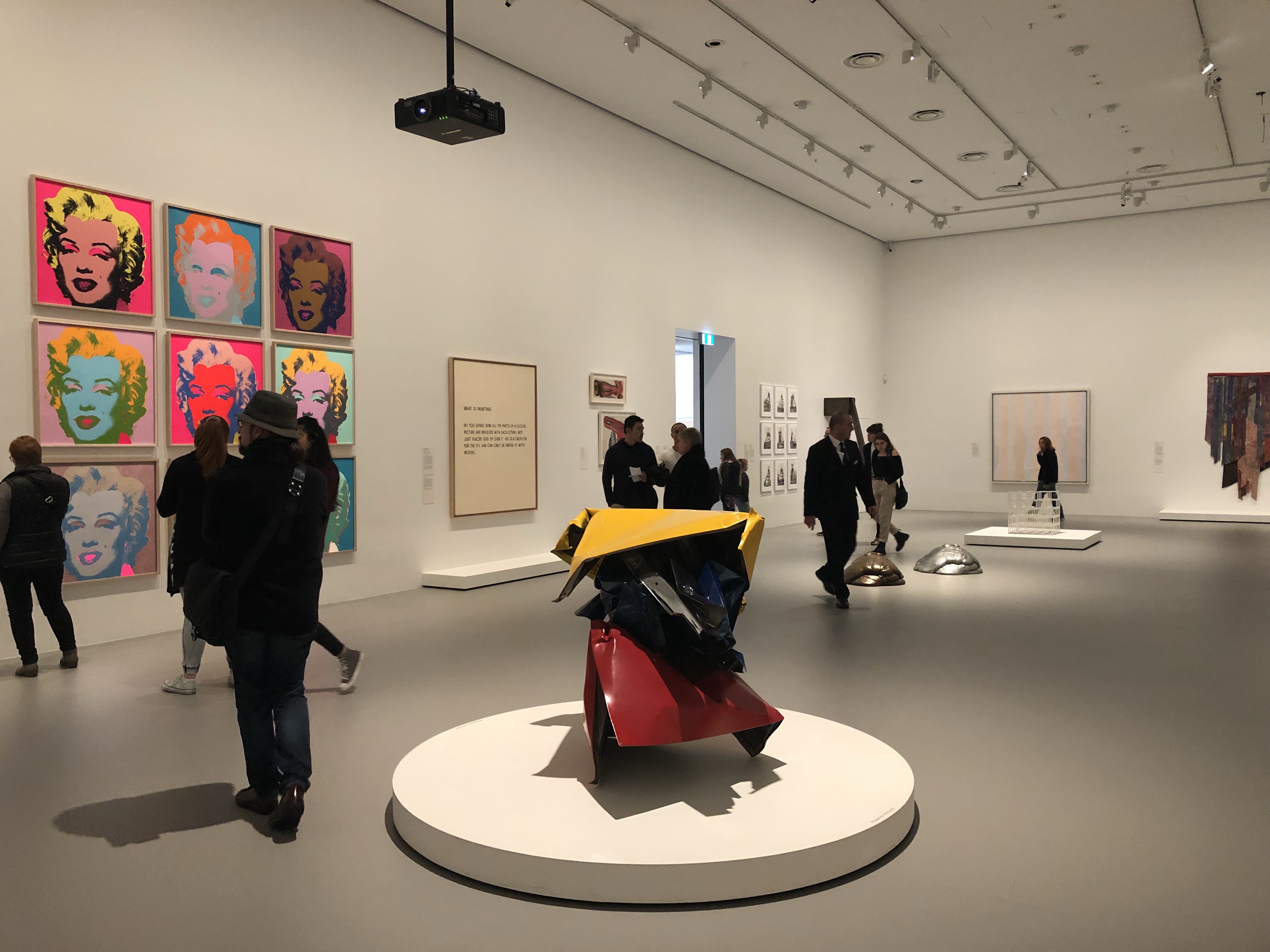
    This morning I braved the exhibition opening day crowds and visited MoMA at NGV: 130 Years of Modern and Contemporary Art from the Museum of Modern Art, New York. Not the world’s catchiest title, but, exactly describes what you are about to see. Luckily I had planned ahead and pre-purchased my ticket. Otherwise I’d probably still be in the queue waiting! I got into the exhibition space quite quickly and started my journey through the displays. If you are aware of what are called “compliment sandwiches” that’s exactly what I’m about to do next – positive, critical, positive. Let the implementation of a management strategy begin!

    Something Positive – Layout

    One thing I really appreciated was how the exhibition was designed. It was super busy, but, I never felt as though my personal space had been invaded.

    There were lots of hallways for people to sit and sort of remove themselves if necessary as well as large open rooms that did not feel congested.

    The use of light colours in the exhibition as well made the rooms feel bright and spacious. It did almost border on clinical and sterile, but, the artwork lifted the feel immensely.

    Layout
    Layout

    Sculptures and other 3D works had been carefully placed in the space as to not be an obstacle. I appreciated that a lot! They weren’t trip hazards nor were they so close to the work on the wall you had to be careful stepping back.

    Something Critical – Labels

    Ok, art galleries, if you’re listening please hear me. Stop making labels so impossibly full of terminology that no one but yourselves can understand. It is alienating. I don’t want to walk around with a glossary when I’m trying to appreciate art. I have now said this one million times, but, I do want to keep mentioning it.

    On the same subject, I had issues with the kids labels. I know I wasn’t the only one because a kid next to me at an artwork almost started crying because he couldn’t understand what it was saying. The labels were in the exact same format as the other labels and were located at a height that would have made them inaccessible to most children. Also, they had almost as much information printed on them as the labels for ‘adults’.

    Small Labels

    Every time I think about labels I’m transported back to Hampton Court Palace during the Open Palace Program. We had a presenter who stated that the most effective labels were simple. This is NOT the same as dumbing down.

    Something Critical – Representation

    If you never get the opportunity to travel to New York and see these amazing works then this exhibition is for you. If you are yearning for an exhibition that digs deeper into the diversity of people working during the 130 years the exhibition seeks to display and that would be present in MoMA’a collection, it will be a bit underwhelming. I do realise they might not have had control in what was sent over, but, then the responsibility is at the other end and decisions can be influenced.

    Combining these two critical thoughts together, what the exhibition didn’t quite reach was genuine integration. To quote Adrienne Rich it was a ‘moment of physic disequilibrium’.

    Something Positive – Curatorial and Kids Space

    Just to soften those critical analyses, what was on display was curated beautifully. I also found myself captivated by artworks that I had no idea existed.

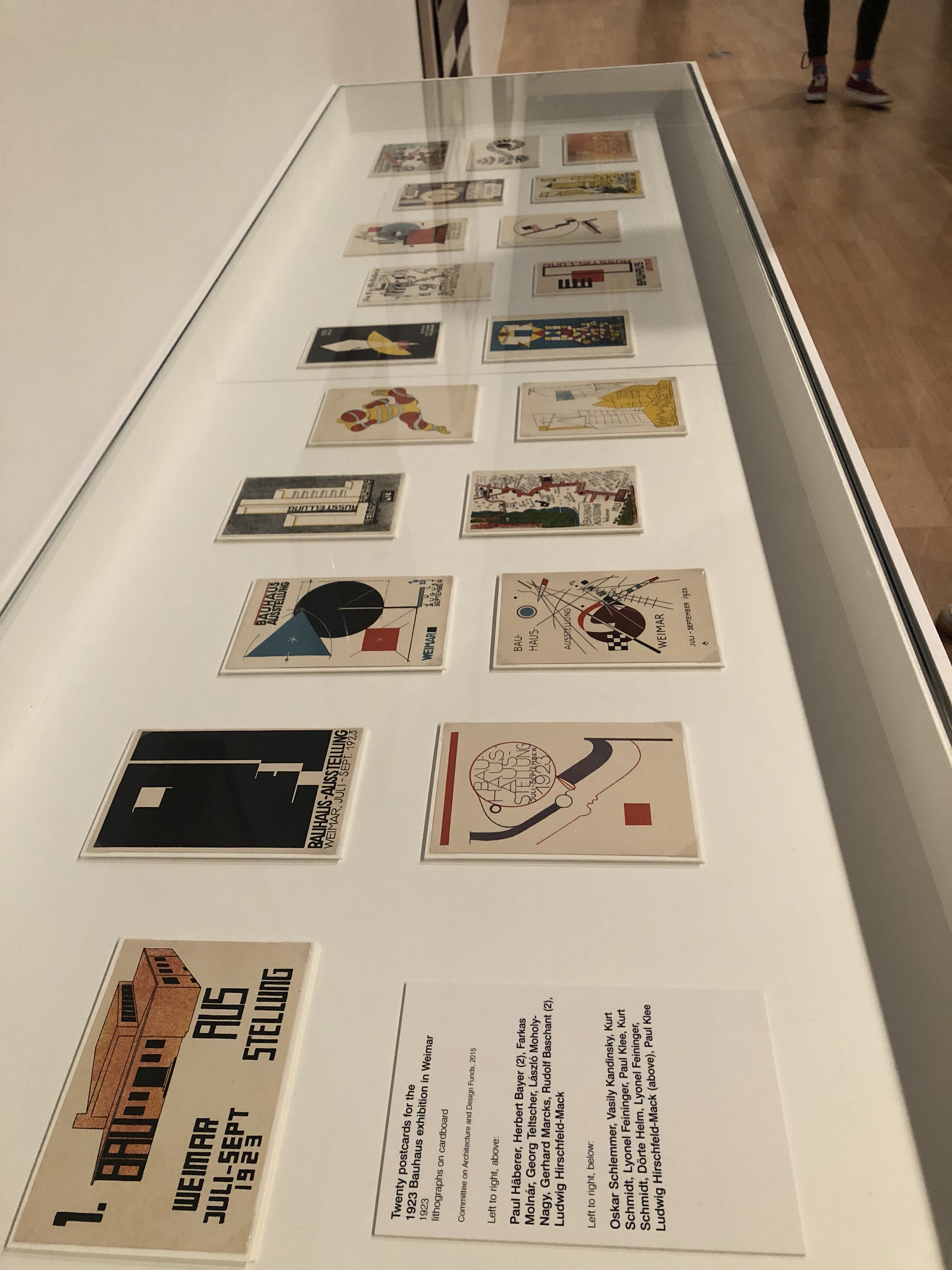
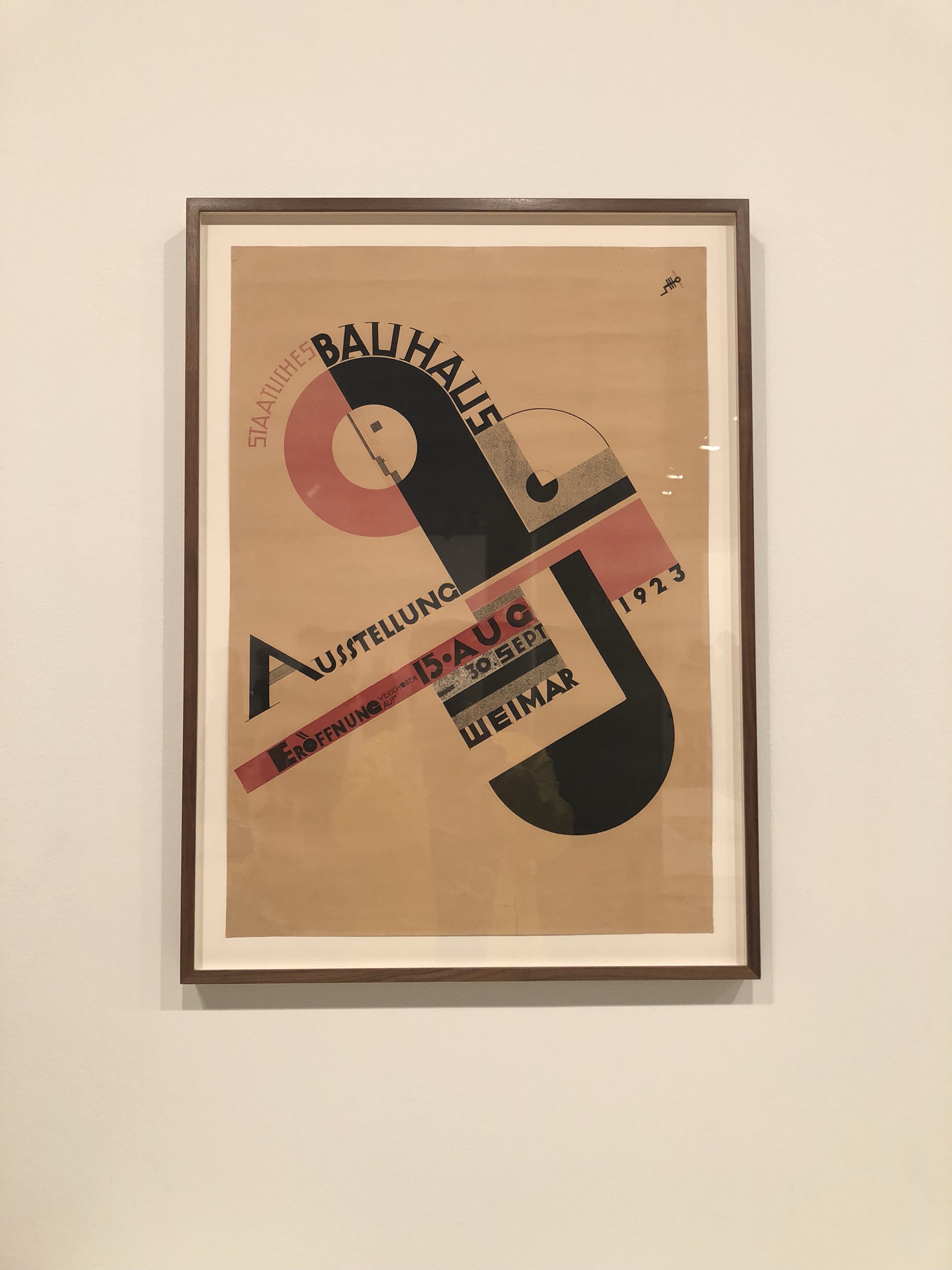
    For example, I love the Bauhaus movement. So much so, I’ve made the pilgrimage to Weimar and Dessau to immerse myself in everything Bauhaus. I was so happy to see they had Bauhaus works on display including this very famous exhibition poster.

    Joost Schmidt, Staatliches Bauhaus Ausstellung, 1923

    Beneath the poster were a series of postcards from the same exhibition that I’d never seen before! They were truly amazing and I spent ages looking through them.

    Bauhaus

    As I mentioned before, the displays were very carefully pieced together and almost every room conveyed the atmosphere of the work on display. I loved the pop culture room that had its own soundscape created by a film that was on show. It got you in the right head space for the contents.

    Andy Warhol, Marilyn Monroe, 1960s

    Right at the end, I popped my head into the kid’s space and thought ‘yep, this is where the kids feel comfortable’. It was a great space and made up for the labels.

    Something Positive – The Gift Shop

    This isn’t sarcasm at all. I think gift shops play a hugely important role in museums and galleries. A disappointing or unnecessarily commercial gift shop can cheapen an experience.

    This one, however, was so well-fitting. All the products for purchase had a purpose and weren’t just cheap memorabilia. The NGV has an absolutely top gift shop and I am very glad this was no exception.

    Something Positive – The Staff

    Look we’ve all been there. You walk into a gallery or museum and get the immediate vibe of “you’re not welcome here”. The attitude of staff can make or break an experience. I don’t mean everyone smiling and going overboard with niceties. I mean genuine pleasantness and making you feel welcome. The Gallery Officers were all so lovely asking people if they’d like any photographs with the work and not sort of in a state of readiness to shhh you or tell you to NOT TOUCH THE ART.

    In the last room you can have your height measured and recorded on a blank wall. A really lovely staff member came over and offered to mark the wall for me. Just little things like that can really positively represent an institution.

    Overall, I am so glad I visited and experienced MoMA outside of New York. These shows coming to Australia are amazing and I think all they could benefit from is more critical thought and presentation as well as meaningful integration (in whatever format it requires).

  • Melbourne: Australian Centre for the Moving Image (ACMI)

    I am so glad I took the time to see Wonderland at the Australian Centre for the Moving Image, better known as ACMI. Considering it was the day after the Museums Galleries Australia Conference and I still had some work to do, I just wanted to spend some time having fun. Luckily, I have a very good friend in Melbourne who was keen to visit with me and get lost in Wonderland.

    From the moment you step into the exhibition until the moment you leave you are essentially thrown down the rabbit hole into a world where objects and technology guide you through the weird and wonderful. Your first stop is to collect a map which assigns you a character and a suggested route through the exhibition. I got the Queen of Hearts. You can use this map in the exhibition for various interactive activites and also in The Queen’s Croquet Ground.

    IMG_5342
    Wonderland Map

    You then face two options – walk through a big door or a little door. Because I am a kid at heart and forget that my knees are not what they used to be, I opted for the little door and literally crawled my way into the exhibition space.

    Once inside, you can engage with the display as much or as little as you like. I have read so many reviews that say something similar without actually explaining what that means – so let me try to explain. Basically, you can simply walk through the exhibition and just have fun finding and playing along with the interactives. Alternatively, you can stop and read about all the representations of Alice in Wonderland and closely observe the objects on display. We did a bit of both.

    Here were my top three experiences:

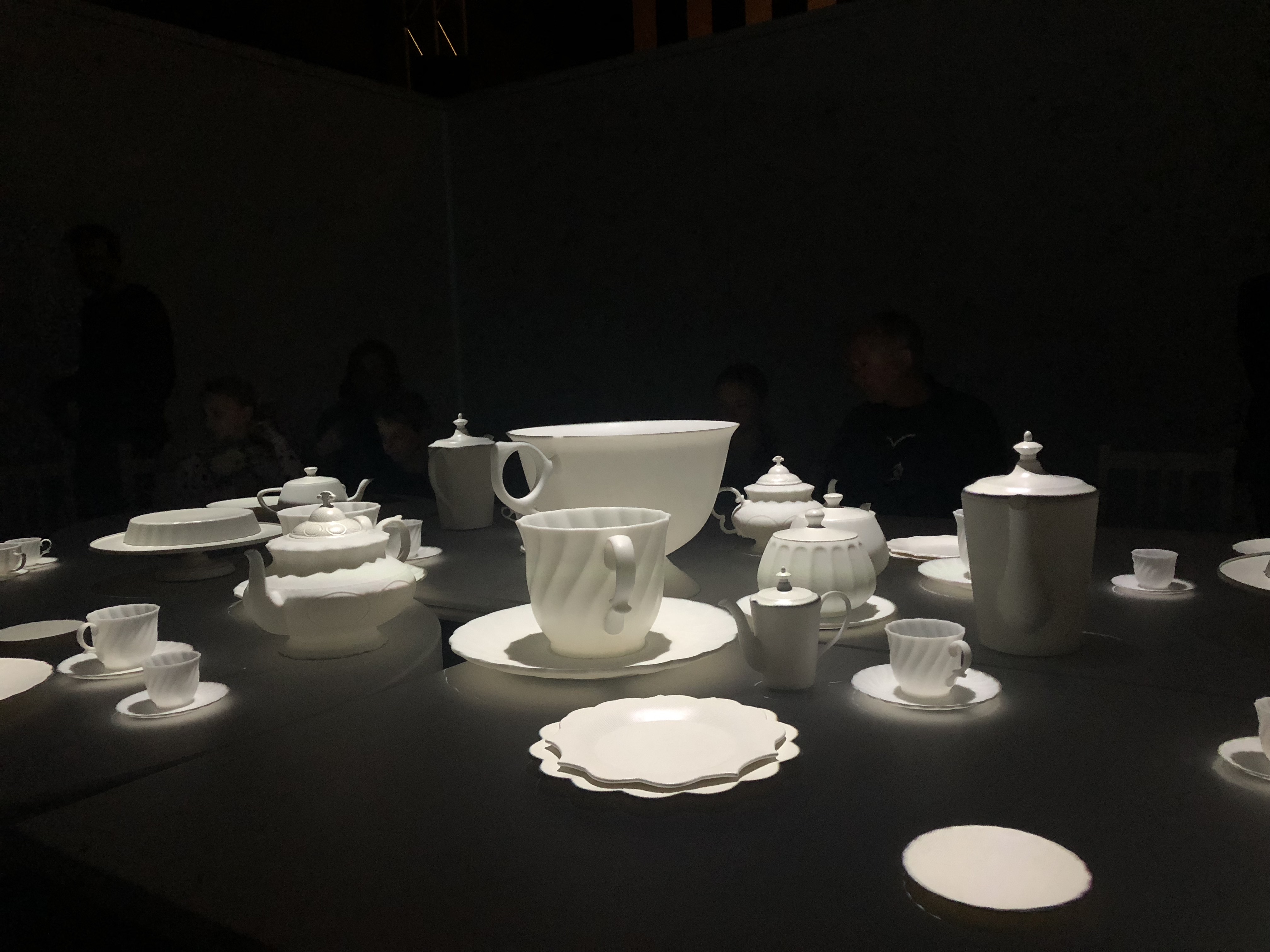
    1. The Mad Hatter’s Tea Party

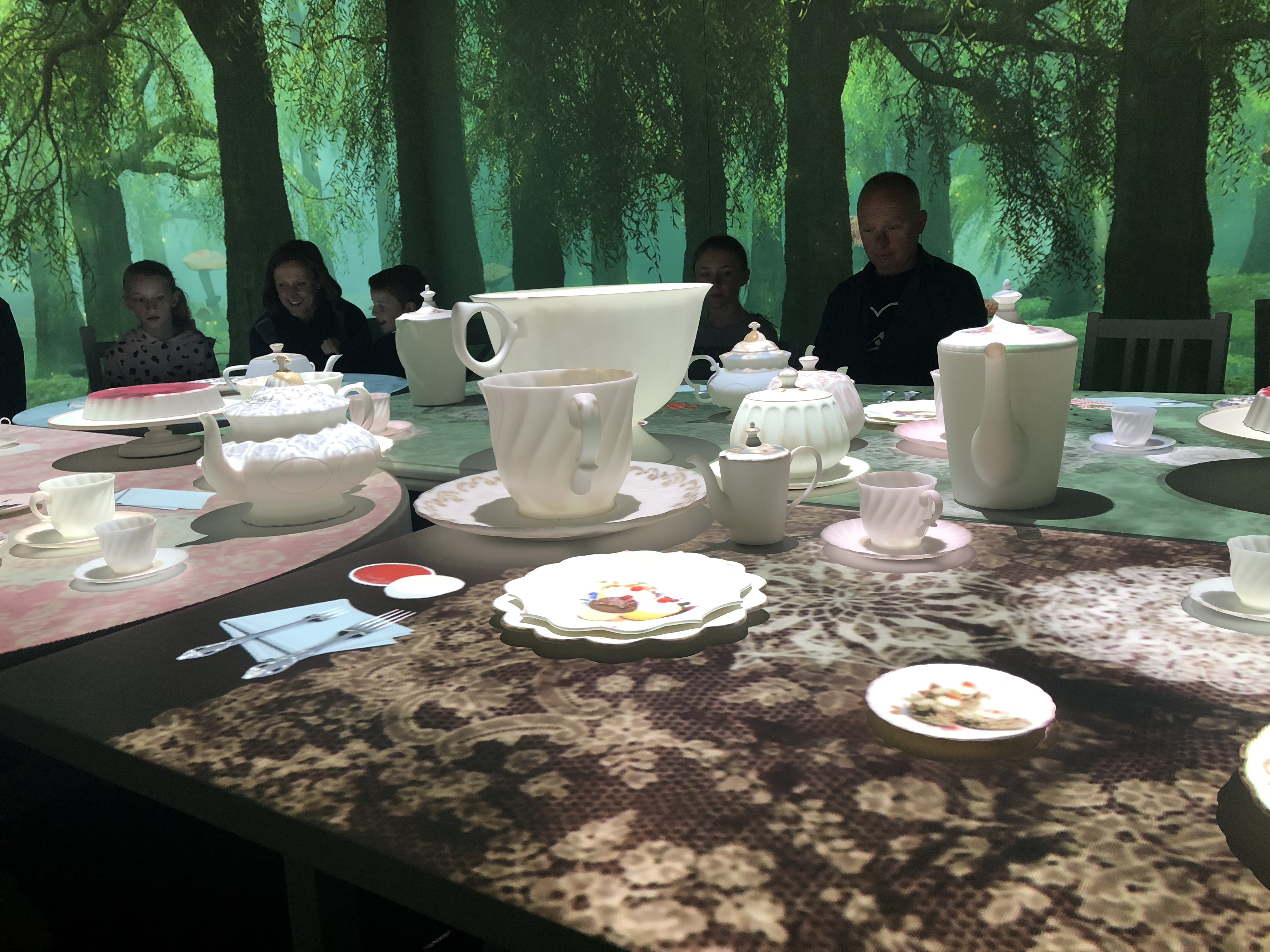
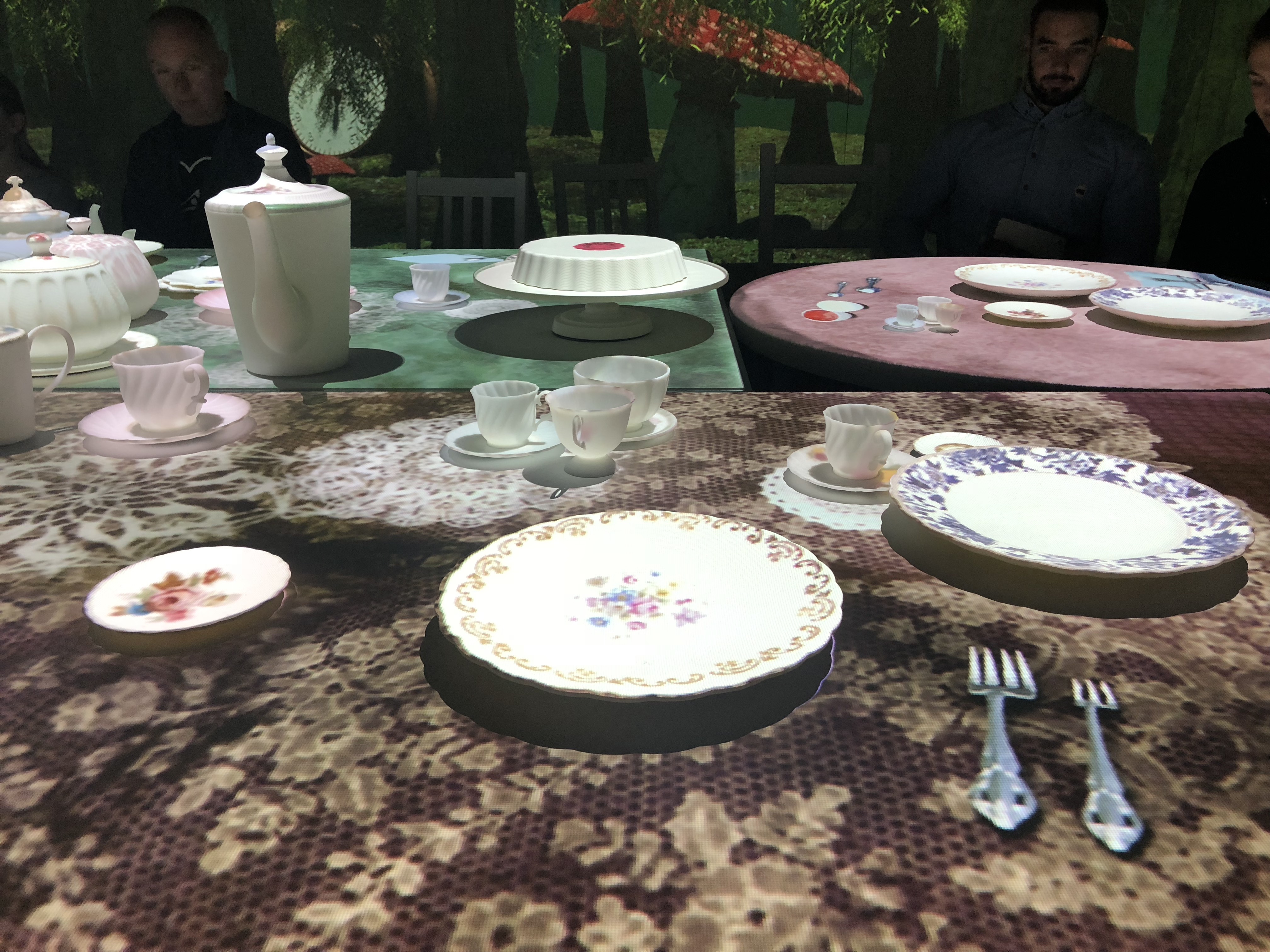
    This was a four and a half minute digital experience. You are led into a dark room and told to take a seat at the table. All that is on the table are some white dishes, cups and saucers. As soon as the experience begins, the screens around the room transport you into the woods. Then, the table lights up placing food on your plate and using the tableware to display the Tea Party as depicted in film from the 1930s to present day.

    IMG_7071
    The Mad Hatter’s Tea Party
    IMG_2615
    The Mad Hatter’s Tea Party
    IMG_4555
    The Mad Hatter’s Tea Party
    IMG_7840
    The Mad Hatter’s Tea Party

    2. The Queen’s Croquet Ground

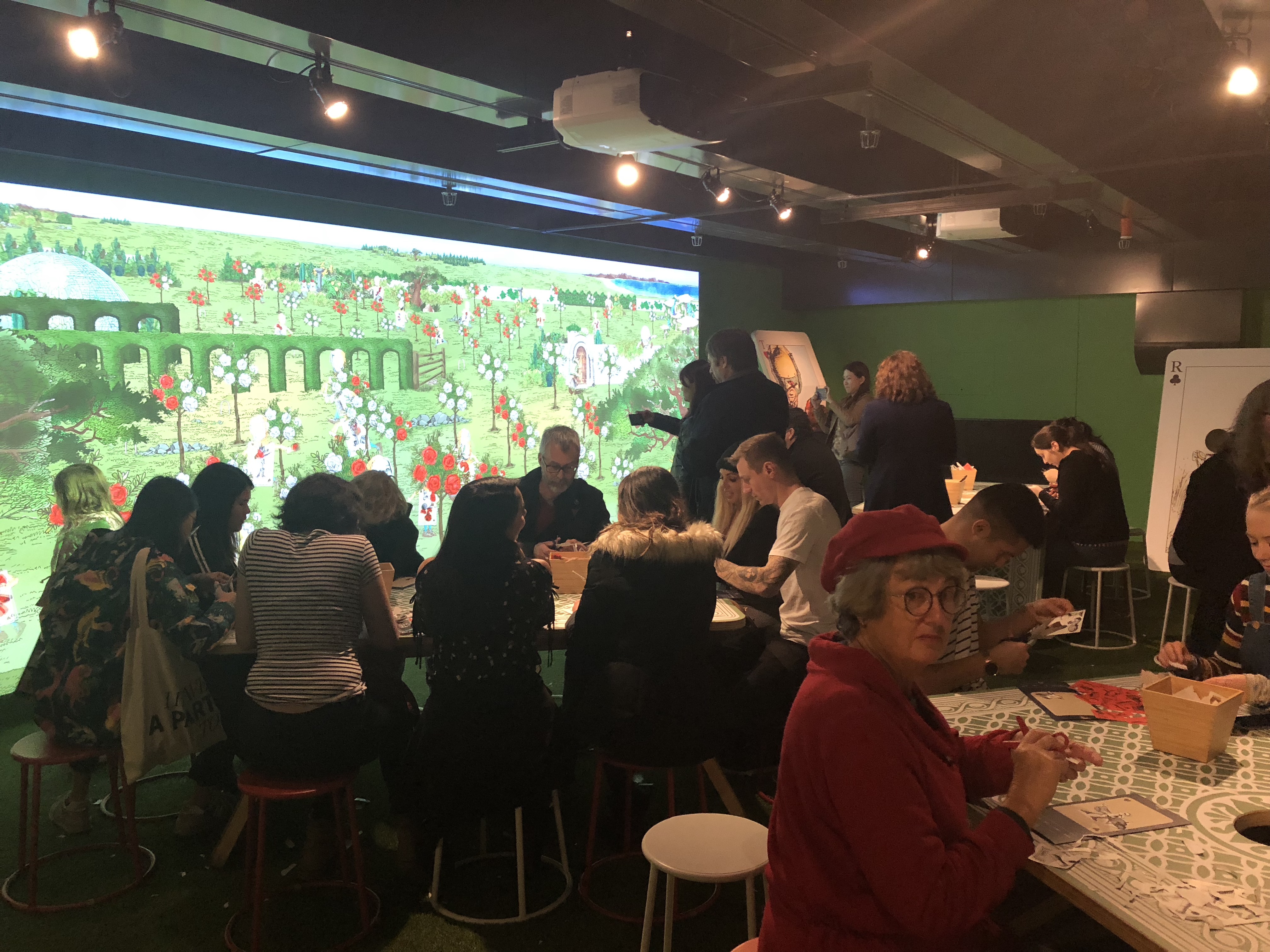
    There are times when you’re in a museum and actually crave something hands-on. Museum fatigue is a real issue and by shaking things up with an activity it can really help in re-focusing a visitor. On the back of the map is a blank playing card. In this room, you can add stickers and create your own character. Then, by placing the map in a scanning machine and by taking a photograph of your face, this character will come alive on a big screen to paint the roses for the Queen.

    IMG_8724
    The Queen’s Croquet Ground
    IMG_2309
    The Queen’s Croquet Ground
    IMG_9230
    The Queen’s Croquet Ground

    3. Disney

    Growing up, I remember watching one version of Alice in Wonderland over and over again. Clearly I never really focused on what I was watching because I don’t remember the story all too well. To jog my memory, a few years ago I watched the Disney version and loved it. On display were original movie posters and sketches from the production phase. In giant neon pink letters on the side wall was the question ‘Who Are You?’ It balanced informative yet fun in a really interesting way.

    IMG_3880
    Disney

    I also want to make three general and broad comments on the exhibition.

    1. Intergenerational learning

    One thing that really stood out to me as we moved through each room was the high level of intergenerational learning taking place. What I mean by this was the fact that we saw so many families working on the activities together and discussing what was on display. The design of the exhibition really encouraged these conversations being both accessible for children yet informative for adults. It was nice to see, for example, grandparents helping their grandkids in The Queen’s Croquet Ground to create their characters.

    2. Was it all just shiny technology?

    In short, no. I actually left the exhibition thinking ‘wow, I had no idea there were so many representations of Alice in Wonderland’. Aka, this has had a serious impact on not only our culture, but cultures around the world. I think we all have that desire to escape and get lost in a fantasy world of sorts. There of course was a lot of technology – it is, after all, the Australian Centre for the Moving Image. Reflecting on a talk I heard at the conference, I did notice that the technology encouraged human interactions. Some of it was a bit ‘we’ve added it because that would be cool’, but, there was also quite a lot of technology that sparked conversations.

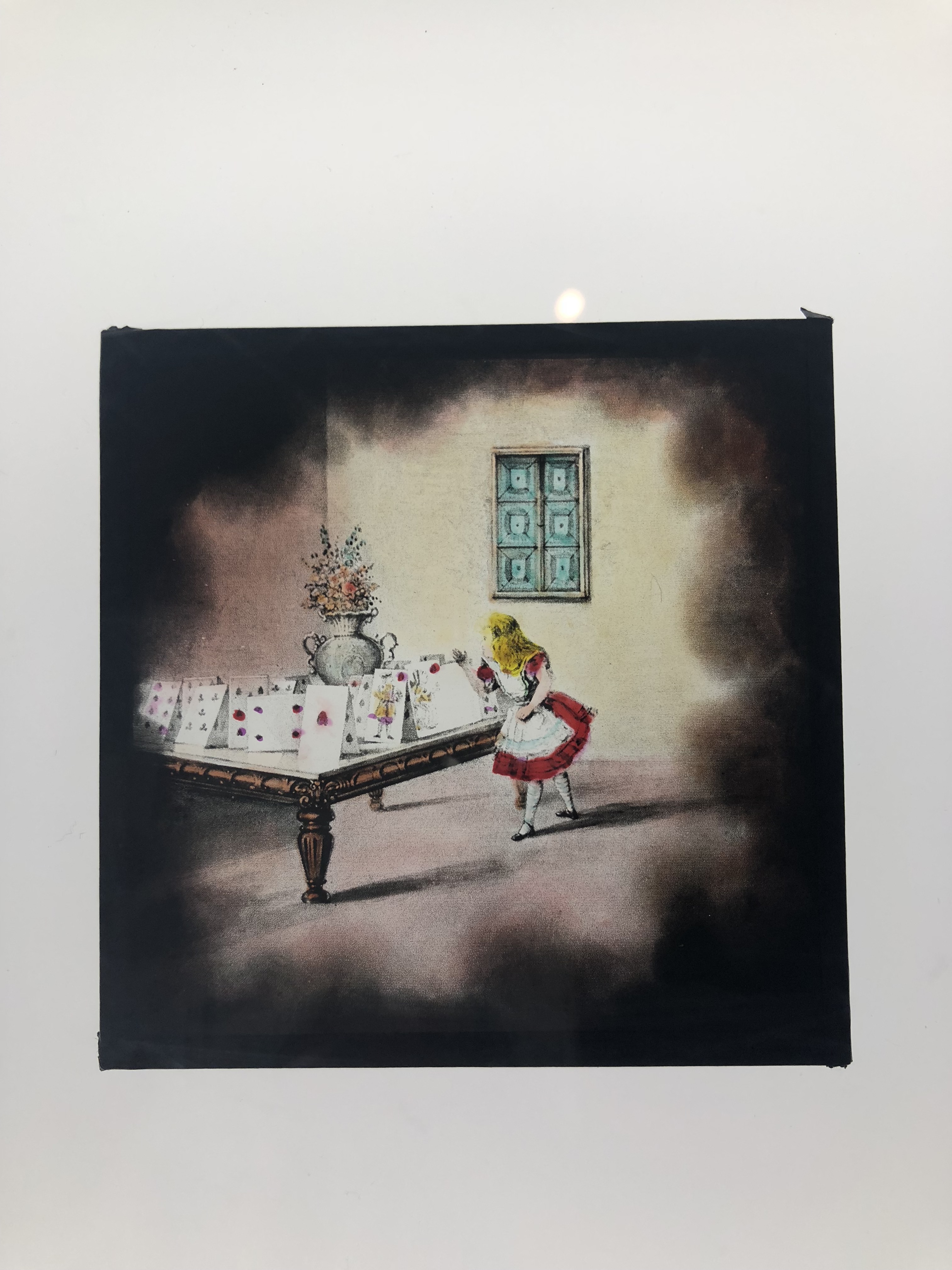
    There were also so many objects on display. My personal favourite was seeing some of the original illustration lantern slides from the 1800s. They were absolutely stunning.

    IMG_2271
    Lantern Slides
    IMG_3181
    Lantern Slides

    3. Continue the adventure at home

    Every map had a unique code that allowed you, after the exhibition, to re-enter Alice’s Wonderland. There is more information about each of the dispays and some behind-the-scenes videos. I am not sure exactly how well this would be utilised by visitors to the exhibition – it would be very interesting to find out!

    In terms of mentioning anything critical about the exhibition, I am sure there would be comments made that it was a little too much. Putting a lot into the one exhibition did get a little exhausting and by the end I did not want to look at another screen (irony is I’m looking at a screen now writing this post). As someone wanting to visit an exhibition that was fun and transported me elsewhere momentarily it most certainly ticked those boxes. I think with this exhibition I had to take off my critical hat and release my inner child.

  • Museums Galleries Australia National Conference: Final Day

    I want to begin this blog post by thanking the organisers and sponsors for the Museums Galleries Australia National Conference 2018. Also, a huge shout out to all the wonderful people I met over the four days – including some Twitter friends! I am going to share with you the top 3 things that I will take away from this conference. Firstly, however, here is a quick summary of the day.
    The day started strong with a fantastic presentation by Angelita Teo, Director of the National Museum of Singapore. Teo spoke about the four pillars of Singapore’s heritage plan: ‘our places, our treasures, our cultures, and our communities’. While talking about an exhibition, Witness to War, Teo discussed the amazing intergenerational work fostered by the museum with youth interviewing older generations to capture their stories.

    DfC0f-mVMAAAy8L.jpg large
    Angelita Teo

    After presenting on a few more projects undertaken by the National Museum of Singapore, Teo concluded by stating that technology is only meaningful if it encourages human interaction. Yes, so much yes.

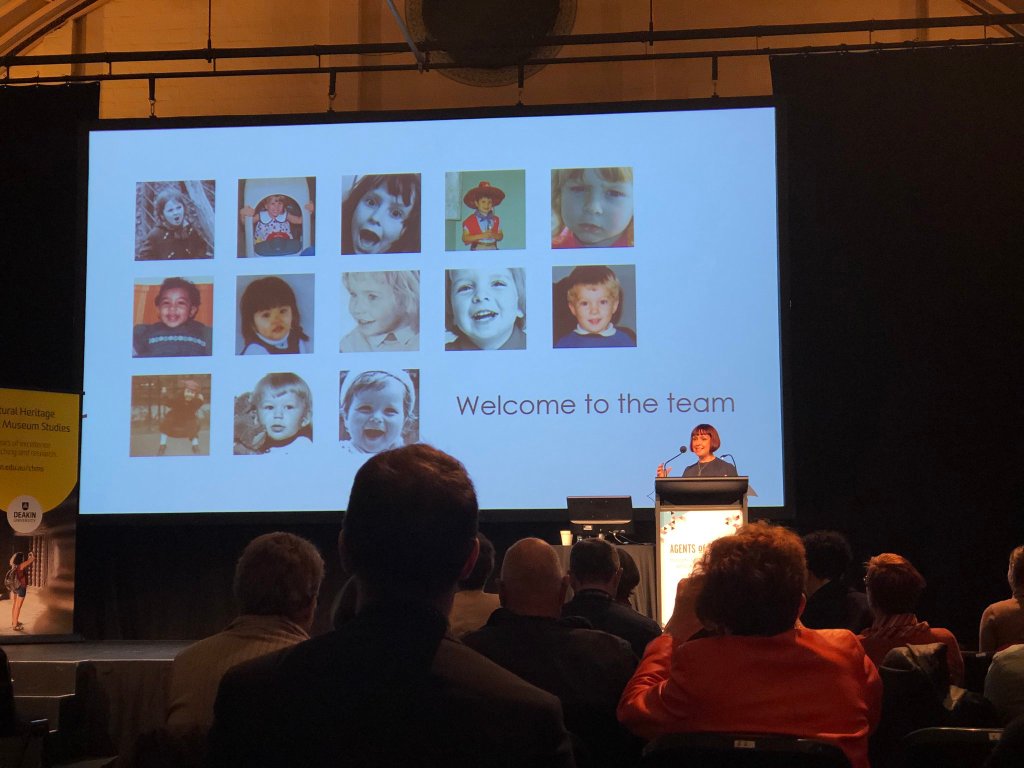
    Another talk I want to mention was presented by Andrea Cunningham from the V&A Museum of Childhood. Firstly, if you have never seen their ‘about us’ page on their website, definitely visit. Each member of staff is introduced alongside their childhood photograph. Something so simple, yet keeping to the brand.

    DfD4P7gUwAE2Nu7.jpg large
    Andrea Cunningham

    As part of Cunningham’s talk, we watched a video on the Children’s Forum. This is an iniaitive that focuses on integrating children into the museum experience and not just tacking them on as an afterthought. On one day, children were able to take over museum roles (guided by members of staff). They became the directors, curators, conservators and tour guides. Even though Cunningham spoke about this being tokenistic, I thought it was actually a great way to get children involved in the different areas of the museum and learn exactly what it is we do. Other museums around the world are similarly turning to the creativity of children to assist with exhibitions and providing that, what I would see as necessary, perspective.

    There were other great talks during the day, but, I want to now focus on what exactly did I learn and what I will be taking away from this conference.

    1. So who should be an agent of change – every single one of us!

    I’m going to start big or go home. One thing that stood out to me in every single presentation was the fact that literally everyone can be an agent of change through their work. You don’t have to be a director in order to actually implement meaningful change.

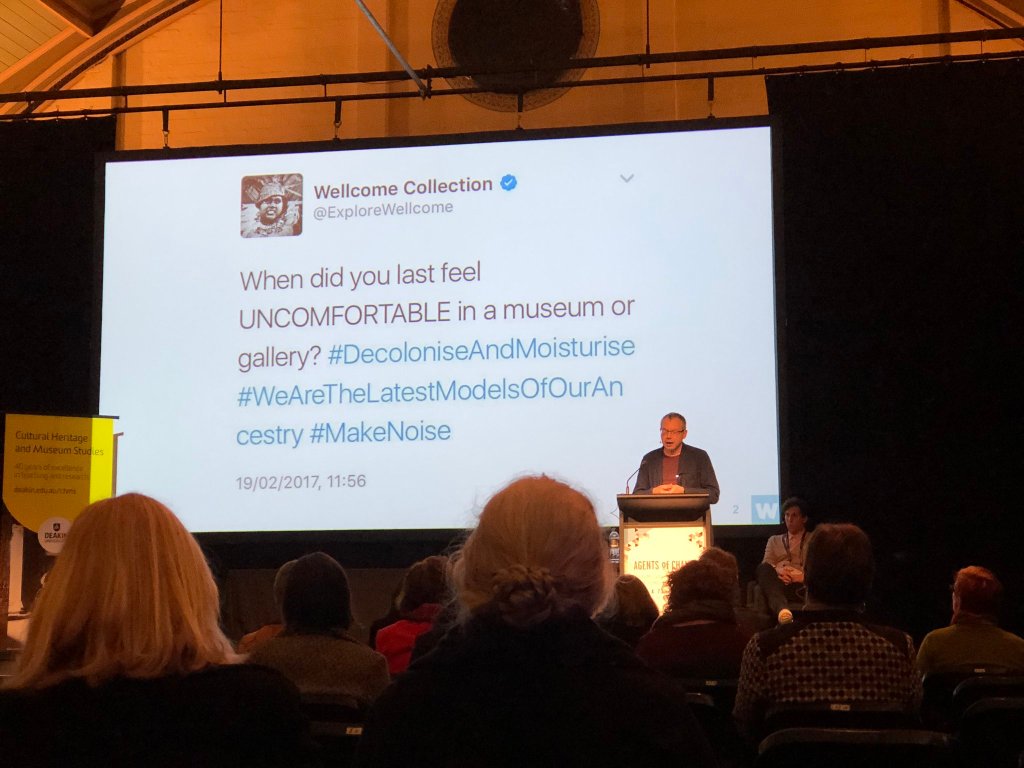
    As illustrated in the talk by Simon Chaplin and Brian Lobel, it all starts with asking the ‘difficult’ or ‘uncomfortable’ questions. Who is absent? Why? How can we bring those voices into the museum?

    I do actually think one of the most incredible accomplishments of this conference has been to provide more questions than answers.

    2. So I can change things tomorrow right? No. Slow and steady wins the race.

    The number of times I heard the fable of the tortoise and the hare as a child reaches into the hundreds of thousands.

    As I said in the previous point, it is so important to start thinking about how we can all be agents of change. It is equally important, however, to realise that you can’t change things overnight. If you do, it’s probably going to be something superficial. Of course there are some expceptions to this rule, but, if you want to implement real change, it has to be done over time.

    It has to be done in a way that means it will become ingrained in your institution.

    3. We have the most amazing support network – each other.

    Over the entire conference I had the incredible opportunity to meet so many professionals who are already beginning to be their institution’s agent of change.

    We are a small industry, but, on the whole, a very supportive one. One of the best resources we have is each other!

    So to summarise my entire conference experience in one blog post was difficult, but, I think I managed it. I hope to see everyone soon and no doubt I will be planning my future travels around the amazing places and sites that were discussed this week.

  • Museums Galleries Australia National Conference: Day 3

    You know it has been a good day at a conference when your phone battery is on 1% and you have Twitter fatigue. You also start to realise that a portable charger might be a sound investment and you will definitely be acquiring one before the next conference. I’m trying to structure each blog post a little differently. Yesterday, I summarised a few of the talks, mainly going through what I liked about the day. Today, I’m going to provide a breakdown of what I did throughout the day. I am so grateful to have Twitter helping me out on this one.

    9.00 am – 10.30 am

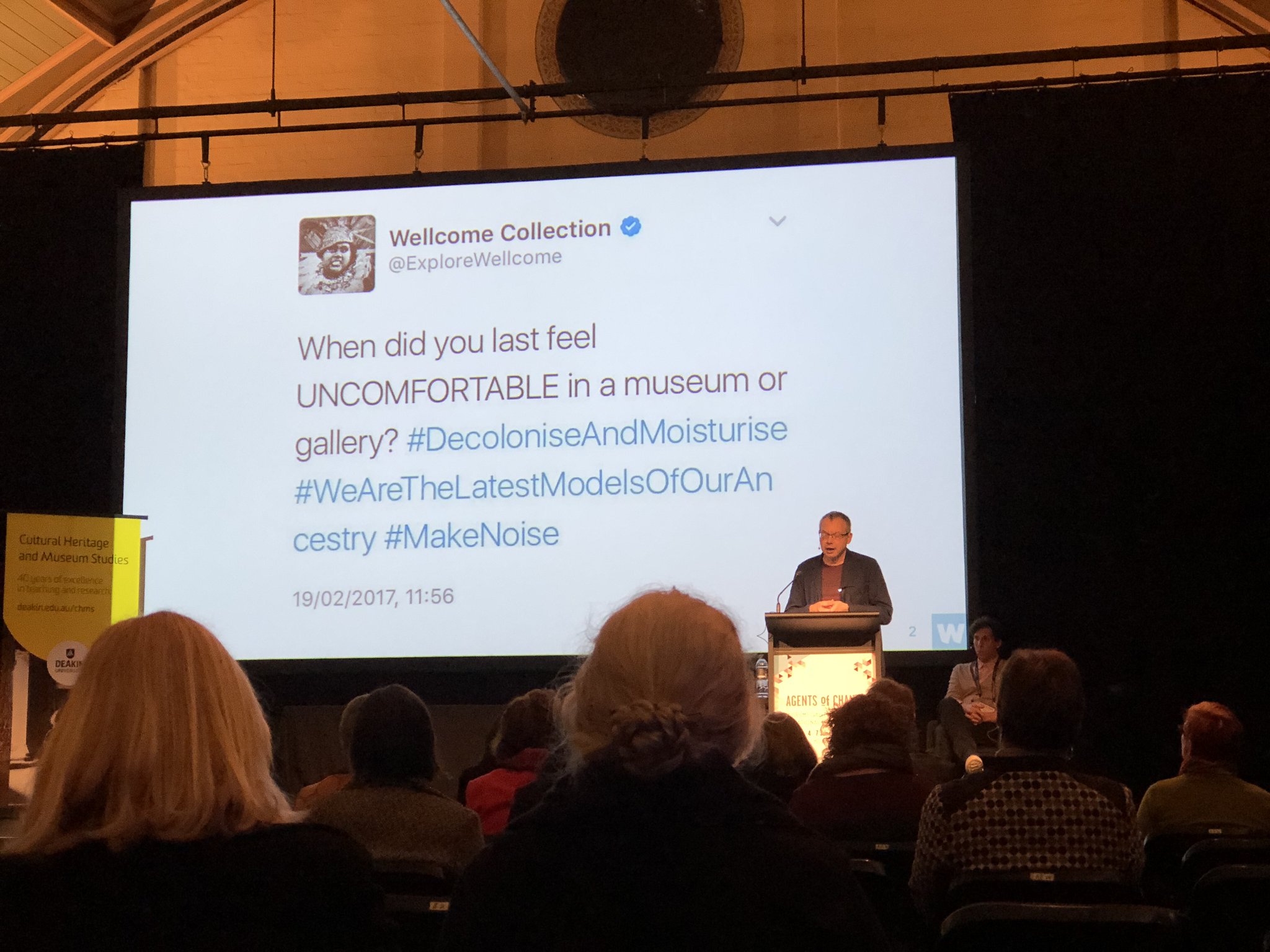
    I arrived at the conference venue and eagerly awaited the presentation by Simon Chaplin (Director of the Wellcome Trust) and Brian Lobel (performer, teacher and curator). In summary, their presentation was incredible.

    Chaplin spoke first on the role of the Wellcome Collection in challenging what is comfortable in a museum space. While he admitted there was still so much more to do, the Wellcome Collection must be applauded for the work they are already doing. Looking at health, rather than a history of medicine, has produced much more contemporary exhibitions and actually resulted in stronger connections with audiences.

    De9qvtNVMAAQMQL.jpg large
    Simon Chaplin

    Following Chaplin was Lobel, speaking so powerfully about cancer, disabilities and who museums include/exclude whether intentional or not. He then asked Chaplin some hard-hitting questions on behalf of an anonymous individual. One question was, when do ‘curious’ audiences become gawking audiences? Chaplin answered that we are now moving away from ‘otherness’ being a curiosity. Rather, there are more efforts being made to understand the other and not present this as a curiosity.

    Both Lobel and Chaplin then posed a question to the audience, who is absent from your museum or gallery, and why? After intense discussion, some of the groups shared their discoveries. Both are really imporant questions that we need to keep asking ourselves.

    11.15 am – 12.30 pm

    I was going to stay at the ‘you can’t ask that….’ session that posed questions, written by conference attendees, to some of the top Directors in Australia. The questions, however, weren’t juicy enough so I left and saw ‘being an agent of change’.

    The only talk I managed to see in its entirety was ‘Queer/ing curatorial practice: ‘Good thinking 99!’, by Nikki Sullivan and Craig Middleton. The combination of performance and presentation was not only a lot of fun, but, communicated some very important issues. Sullivan and Middleton handed out their ‘The KINQ Manifesto’. KINQ stands for ‘Knowledge Industries Need Queering’. This involves understanding that all museums are sex museums, museums are complicit in heteronormative disciplining of sex, museums have consistently functioned as an institution that defines sexual perversity, the straight and narrow must be renounced and both the praises and limitations of queer curatorship need to be recognised.

    According to Sullivan and Middleton, queer/ing curatorial practice is not about, for example, re-labelling objects, but, creating an environment where new meanings can be applied to what’s on display. A really interesting talk and I cannot wait to read their book when it’s published.

    12.45 pm – 1.45 pm

    During this hour we listened to two speakers, Nathan Sentance and Viviane Gosselin.

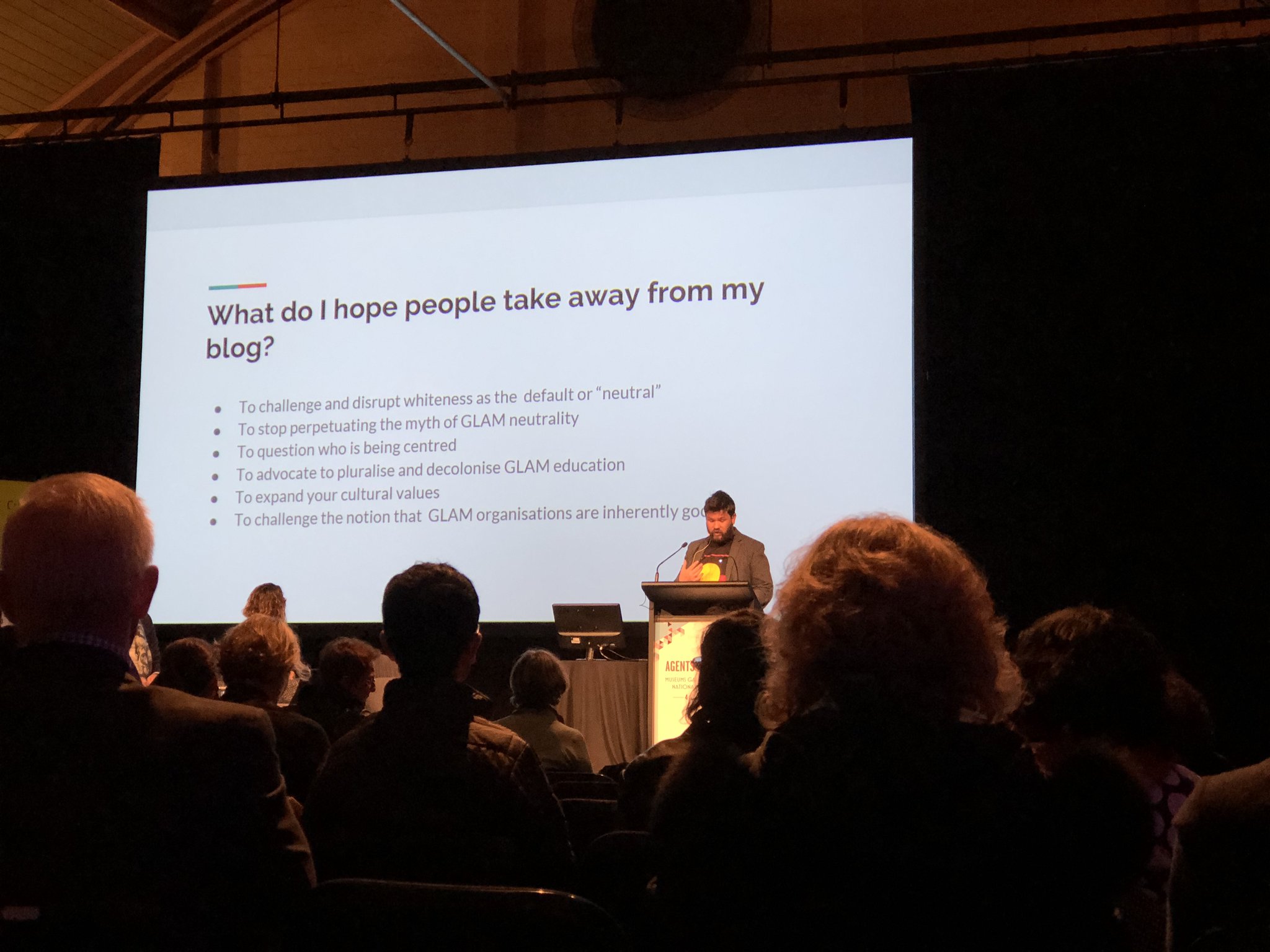
    Sentance presented on his blog, Archival Decolonist. You can find a link to the blog here. During his presentation, Sentance revealed what he wants people to take away from his blog – see the list below. Sentance also presented on the importance of letting Indigenous communities decide on what should and should not be shared from their history and how Indigenous material should be treated.

    De-fnIBV4AAvPLW.jpg large
    Nathan Sentance and Viviane Gosselin

    Next in the session was Viviane Gosselin who presented on the Museum of Vancouver and first nations engagement. One really good point to take away from this presentation is that museums need to pay their knowledge consultants! This term basically means anyone who is providing information about a community, culture, etc.

    3.15 pm – 4.30 pm

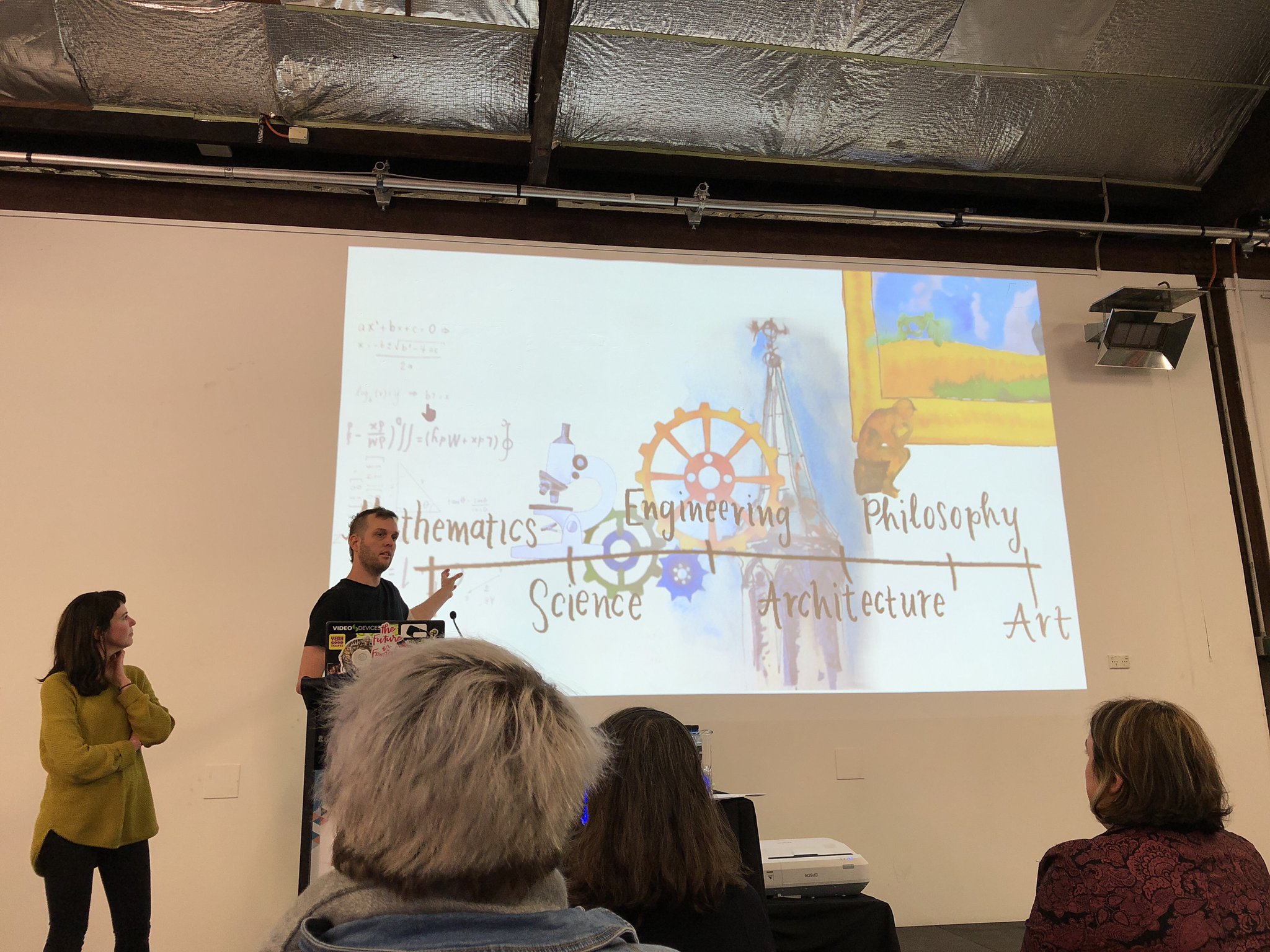
    This is when the Twitter fatigue really hit. For this session, I sat in on a series of lightning talks. There were some beautiful graphics shared by Will and Jessica Gouthro exploring how science and art should be combined.

    De-_D_hVQAAljeJ.jpg large
    Will and Jessica Gouthro

    It was also great to hear from Em Blamey from the National Maritime Museum about their pull-up banner exhibitions. We have displayed two of these exhibitions and we cannot wait to display their new one, Submerged, next year!

    5.00 pm – 6.00 pm

    For the final presentation of the day, we had the Director’s cut. Lynley Marshall from Museums Victoria, Chris Saines from the Queensland Art Gallery/Gallery of Modern Art and Mathew Trinca from the National Museum of Australia all spoke a bit about what they do and how their institutions operate.

    6.30 pm

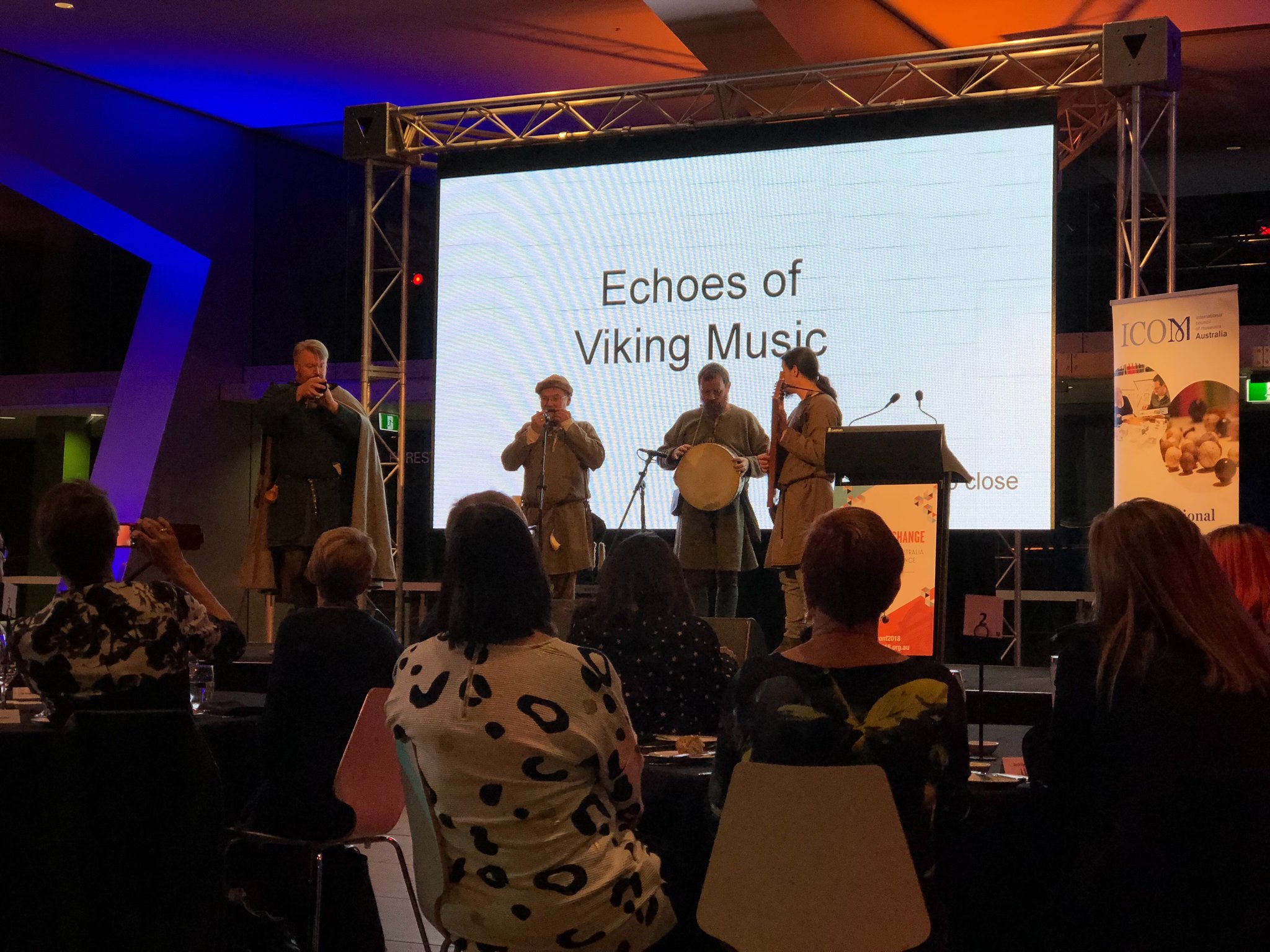
    Last, but not least, was the conference dinner. It was a really lovely evening filled with Viking music from History Up Close and dare I say, some networking.

    De_98PfVMAAOZIw.jpg large
    Viking Music

    I cannot believe that this was the second last day of the conference! Tune in tomorrow for my final recap.

  • Museums Galleries Australia National Conference: Day 2

    Before I say anything about the conference, I encourage anyone reading this who is not on Twitter to immediately open a new tab, go to Twitter and join. It is such a valuable tool in connecting museum professionals. It’s also a great place to see absolutely everything happening at the Museums Galleries 2018 Conference. Follow #MGAconf2018, sit back, pour a glass of wine (or whatever you like) and enjoy.

    Today was probably one of the best days I have ever had a conference. It was informative, fun, and ended in me acquiring a gold dinosaur trophy. More on that last part later. I don’t quite know how to summarise the day. Every talk was like hitting the nail on the head in terms of being interesting and actually addressing the theme of the conference, ‘Agents of Change’.

    I am going to focus my post on three talks. Mainly because without this kind of structure I might end up writing a 700 page article that even I wouldn’t want to read.

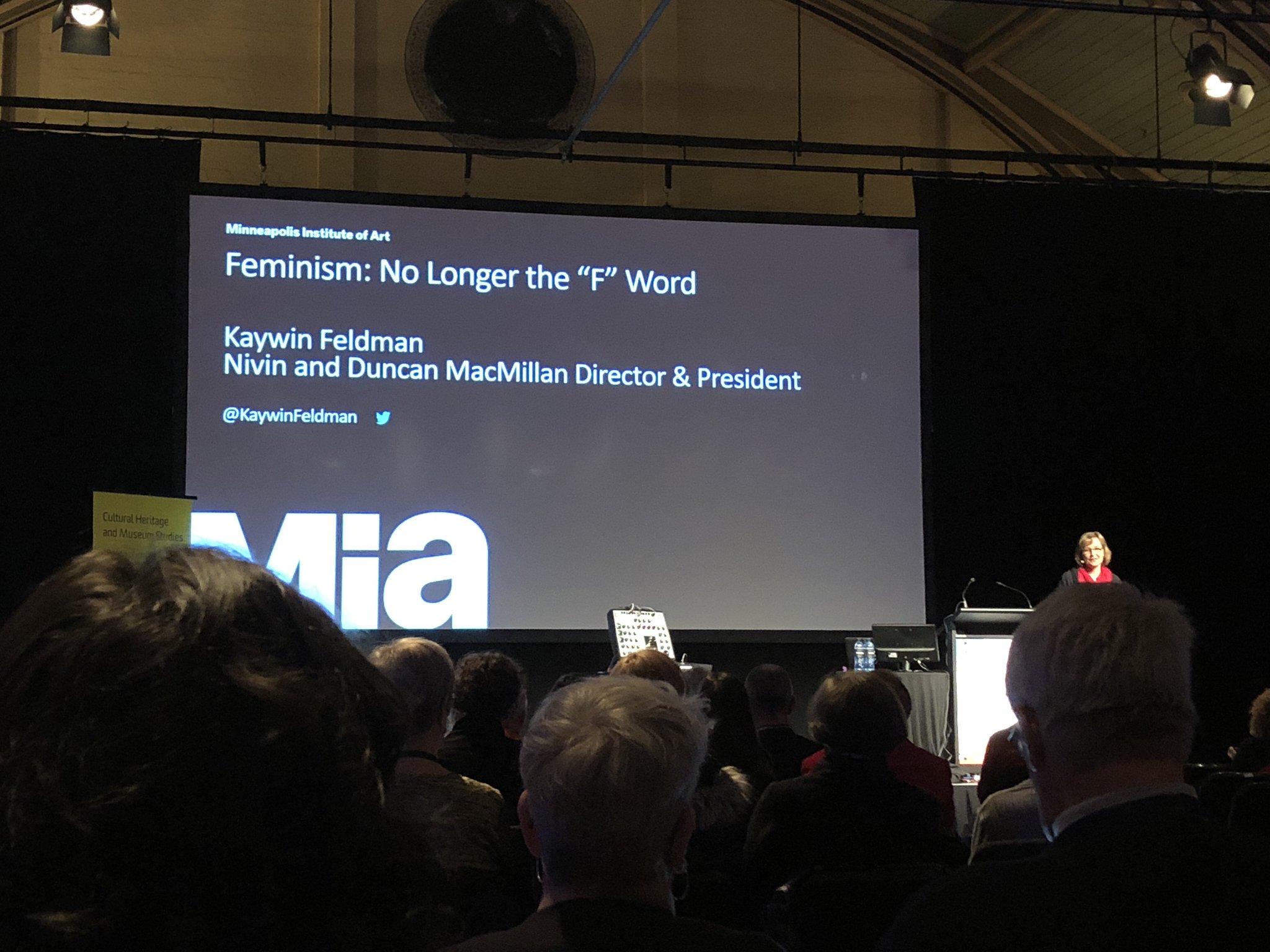
    1. Kaywin Feldman – Feminisim: No Longer the “F” Word

    De4p-99V4AA3rlo.jpg large
    Kaywin Feldman

    Our second plenary speaker of the day was Kaywin Feldman from the Minneapolis Institute of Art. I will note that the first speaker, Karen Mundine from Reconciliation Australia, did an incredible job discussing the role of museum professionals as truth-tellers. We need to grasp this concept before becoming agents of change. After all, our institutions disseminate stories and can have great impact.

    I was really excited to hear what Feldman had to say. She started by discussing the Guerilla Girls and how they are not really adapting to the modern world. Feminism is now everywhere and we shouldn’t have to wear masks while fighting for inclusion. I thought this was a particularly thought-provoking point.

    After going through some statistics on how women are under-represented in leadership positions and how the industry is low-paying because it is majority female, we were hit with this quote:

    De4tIvVUcAErEIt.jpg large
    Kaywin Feldman

    The writing is very small so if you can’t read it please see below:

    “When someone with the authority of a teacher describes the world and you’re not in it, there’s a moment of physic disequilibrium, as if you looked into a mirror and saw nothing.” by Adrienne Rich.

    Now there are some days when quotes just hit me particularly hard right in the feels. This was one of the days. It is such a powerful quote and I will forever refer to lack of representation as a physic disequilibrium. Having diverse role models and leaders celebrated is not something to ignore. Do you want your visitors, as the quote states, to feel as though they are looking at one giant mirror and not seeing themselves? Making those who were once invisible, visible, has an enormous impact. The role of museums in making this happen cannot be considered anything but necessary.

    Feldman provided the example of an exhibition on leadership that only really displayed white men. Now if you’re not a white man viewing this exhibition, you are not going to leave feeling empowered that you can be a leader. It isn’t token if it’s done correctly, its inclusionary and vital.

    2. Zoe Meagher and Rebecca Carland – Turning the Museum Inside Out

    De5zfDzUwAAHkH5.jpg large
    . Zoe Meagher and Rebecca Carland

    Last year I wrote a blog piece thanking Dr Kate Armstrong and Marni Pilgrim for talking about a program they had implemented that essentially failed. To quote a song, I was Wishin’ And Hopin’ for something similar at this conference. A huge thank you to Meagher and Carland for delivering!

    They spoke on the exhibition unveiled at Melbourne Museum in 2017 called Inside Out. This exhibition was quoted as a ‘love song to Museum Victoria’s collection’ (source). I would like to build a time machine, go back to 2017 and see this exhibition for myself!

    After introducing audiences to the exhibition, Meagher and Carland went through what worked and what didn’t. Or, in their words, ‘Oh God, never…’ Through sharing some humerous reviews and stories, the presenters were able to really drill down into the exhibition in a way that was both hilarious and insightful.

    I enjoyed learning about how it’s ok to prioritise feeling over learning in an exhibition. In saying that, if you’re going to do something too different to what people expect, you need to ease them into it to avoid alienation. Other topics discussed included practicalities such as when to open this type of exhibition and ticketing. Basically, don’t charge for this kind of abstract exhibition when it’s on display over the Christmas holidays and is competing with other free attractions.

    I cannot stress enough that you learn more from failures than from what is deemed a success. Hearing what they had learnt from this exhibition was just refreshing. More of this next year please!!

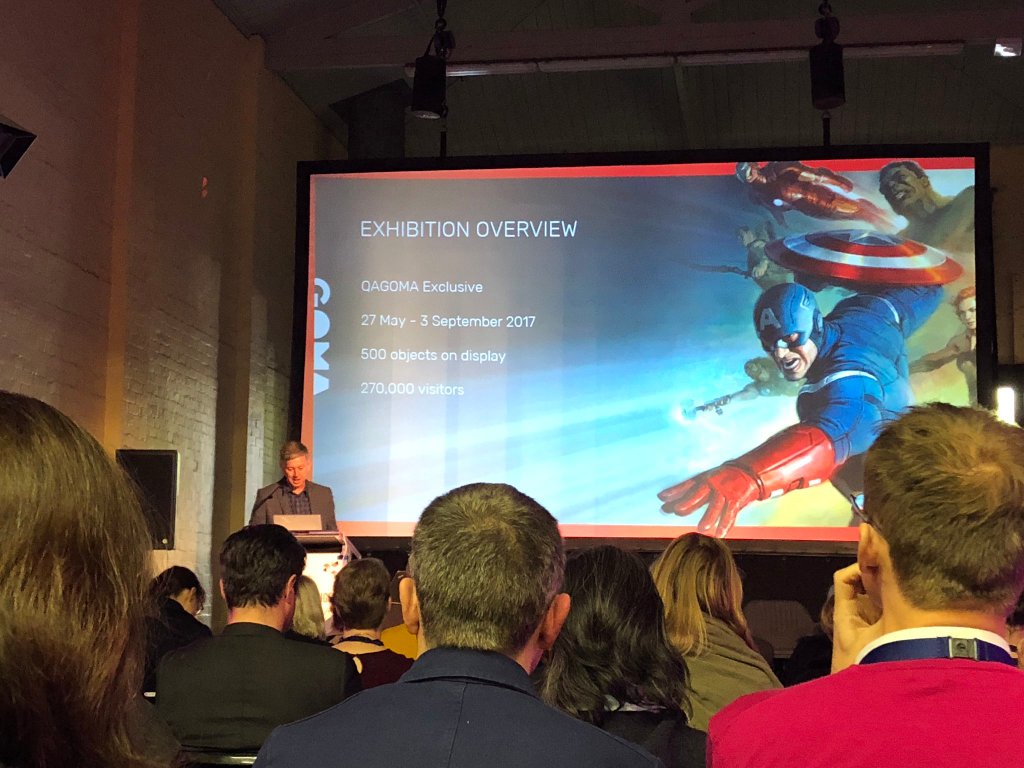
    3. Michael O’Sullivan – Turning Fiction into Fact – Designing the Marvel: Creating the Cinematic Universe

    De53SfoV4AASKWI.jpg large
    Michael O’Sullivan

    It is no surpirse that I was going to talk about this presentation. I’ll say it again for the people at the back of the room – I am a huge Marvel fan. I travelled from Sydney twice to see this exhibition at the Queensland Art Gallery/Gallery of Modern Art (QAGOMA). I was not disappointed. Hearing about the exhibition from a behind-the-scenes perspective made me a – insanely jealous and b – more aware of how blockbuster exhibitions are constructed.

    To research this exhibition, staff watched all twelve Marvel films that existed at this time. I can tell you now that I would be overqualified for this research role. It was also interesting to hear why this exhibition came to QAGOMA. The catalyst for the exhibition was the filming of Thor Ragnarok taking place in Brisbane.

    Select staff travelled to Marvel headquarters in Los Angeles and discussed what they would like to display and the stories they wanted to tell. I was legitimately cheering from the back when O’Sullivan made the point that just because these are blockbuster films it doesn’t mean the costuming and set designs aren’t works of art. The time and energy that goes into making these films is phenomenal.

    We were then taken through the design of the exhibition, the display of costumes and objects, and the rationale behind the entire display. Basically, it wasn’t just a ‘hey look at this cool Marvel stuff’ display. It was actually an avenue to introduce people to animation, digital effects and what happens post-production.

    It managed to attract over 270, 000 visitors which is massive. I would really like to know if any of these visitors have returned to the gallery since the exhibition. Blockbusters are great in attracting new audiences, but, do they produce repeat visitors who come back for more?

    That was just a small taste of what was on offer today. Just quickly, I dropped into the session ‘Younger and Wiser’ and I just want to say that wow, yes, agree, agree, agree. Give younger workers a chance to prove that wisdom doesn’t just come with age. We have so many amazing skills to offer and the industry needs to grow and change so that we have a place. I could write an entire blog post on just how much I agree with the comments made in this session. Maybe something post-conference?

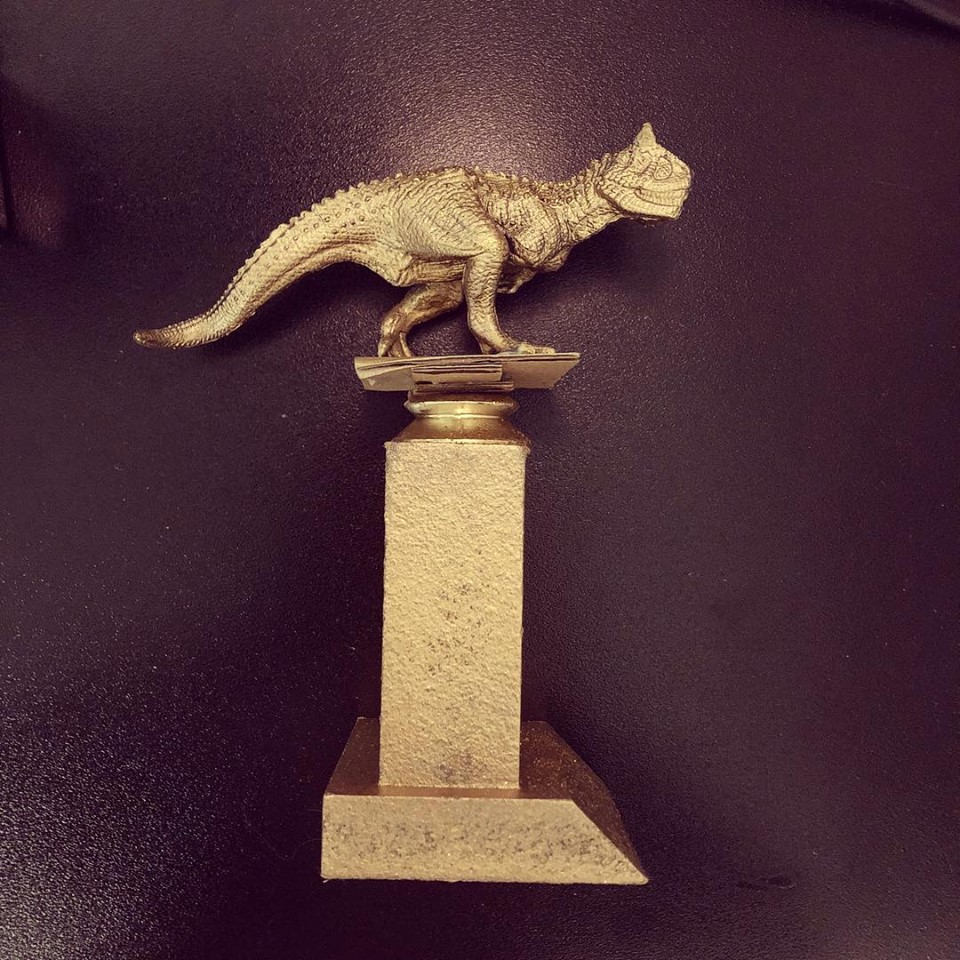
    If you have stayed with me, I should explain the gold dinosaur. In the unofficial trivia night of Museums Galleries Australia, our team, Trivia Newton-John, came second. This beautiful gold trophy is going to travel from Melbourne to Gladstone and probably end up with its very own display case.

    I have to thank everyone who contributed to making today a truly incredible day. Good luck to those presenting tomorrow! I will be glued to my phone live tweeting the conference.

    34483605_10160496574545261_1280835912833433600_n
    Trivia Prize

  • Museums Galleries Australia National Conference: Day 1

    Yesterday was the first day of the Museums Galleries Australia 2018 National Conference. While what was discussed wasn’t entirely tailored for the audience, there were still some fascinating topics on offer. Similar to last year’s conference, what I planned on seeing vs what I actually attended was a little different. Before I continue, I just want to say that the most valuable part of these conferences is meeting new people and catching up with others. Now that I’m so far away from Sydney and Melbourne, I am really valuing this time! Notice that I didn’t use the dreaded word ‘networking’ – this is because it’s so much more than that. I am truly lucky to be a part of such an incredible industry.

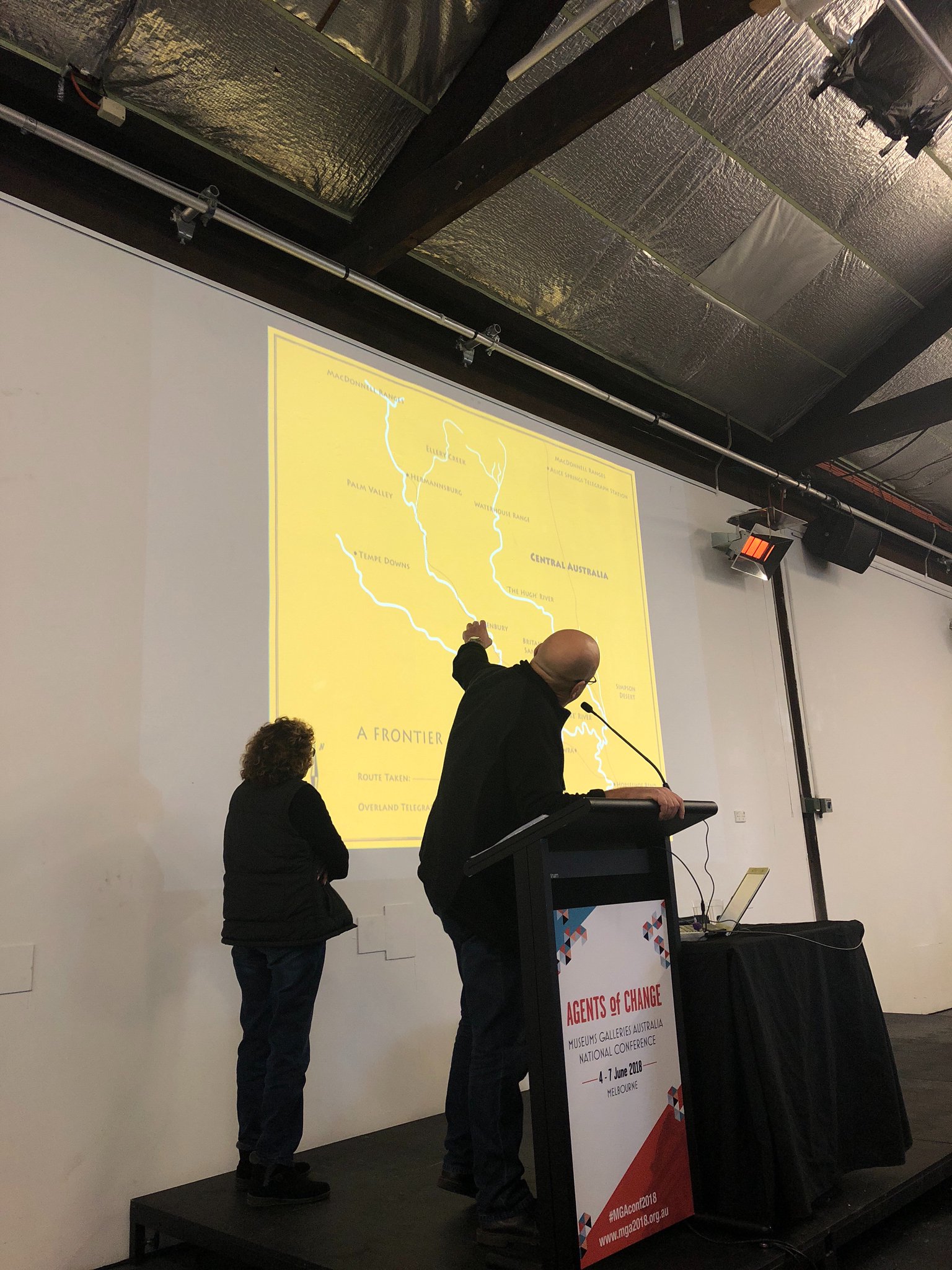
    Back to the first day. To start, we heard from Adam Macfie and Rhonda Inkamala. Both work at the Museum and Art Gallery of the Northern Territory or MAGNT (nice acronym). Their talk focused on the newly opened exhibition ‘A Frontier Journey: Photographs by Otto Tschirn 1915-18’.

    DeznSFlUwAAJXkp.jpg large
    Adam Macfie and Rhonda Inkamala

    The exhibition showcases photographs by Otto Tschirn that were taken on a Kodak Folding Camera. Tschirn’s images capture life in Central Australia documenting both Indigenous and non-Indigenous individuals. From what we saw during the presentation, there are some truly remarkable images – a very valuable archive. If you would like to read more about this exhibition click here.

    This is the first exhibition on display at MAGNT with labels in both English and an Indigenous language. Rhonda Inkamala spoke on translating the labels into the Aranda language. Not modern-day Aranda, but, how the language was in the early 1900’s. It was fascinating to hear about the research involved in this project and how historial records as well as community knowledge fused together so beautifully and resulted in this exhibition. The entire exhibition will eventually be gifted to Hermannsburg. Both speakers were able to provide such great insights into how this exhibition was pieced together and how they collaborated to produce the content.

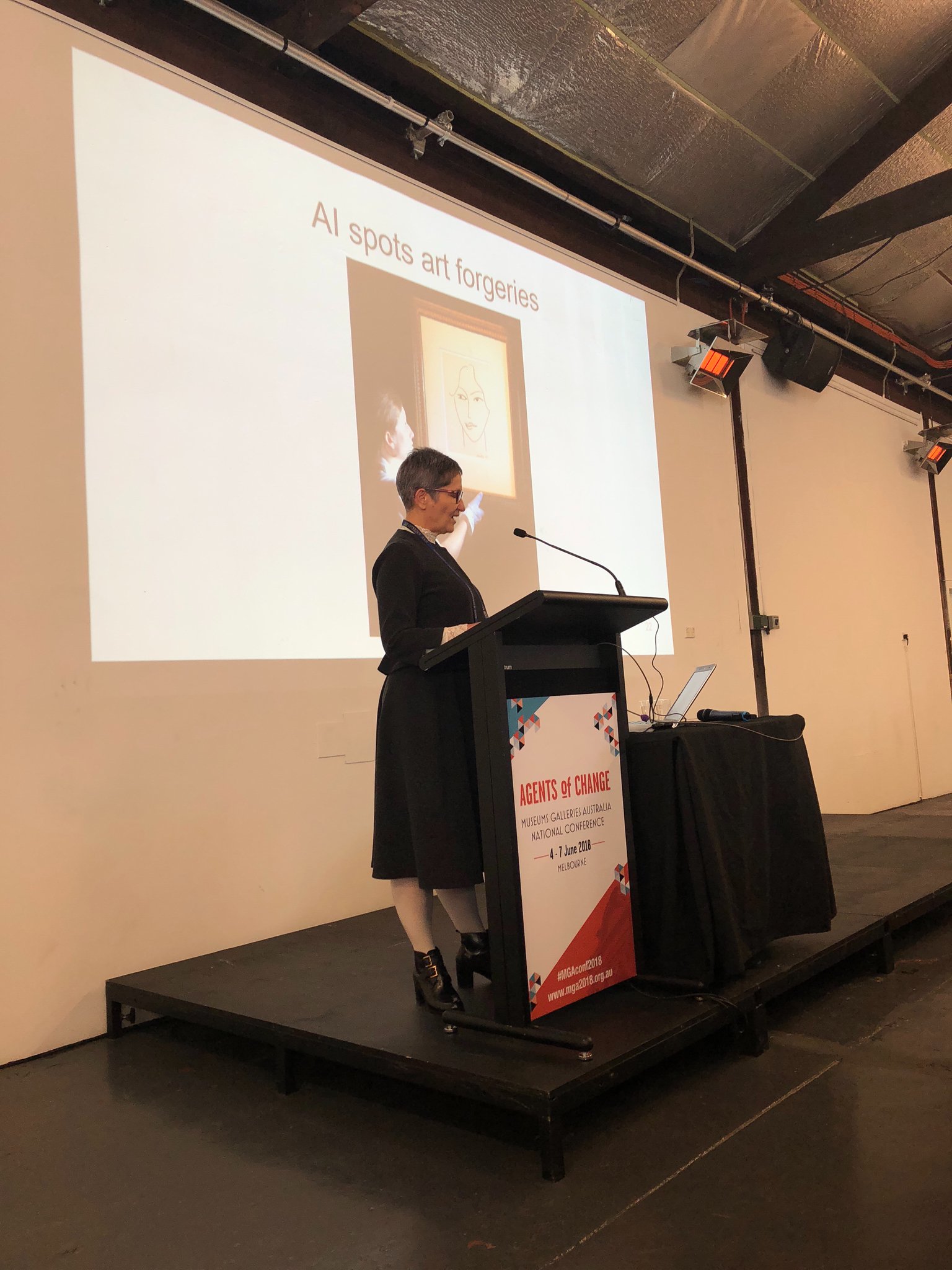
    Next up was Wendy Pryor talking about Smart GLAM – big data, artificial intelligence and machine learning. One of her first slides talked about a hotel in Tokyo run by robots, including velociraptors. I honestly did not expect that this would be a topic raised at the conference. I am sure glad it was though.

    DezwmraVQAA0igK.jpg large
    Wendy Pryor

    I completely agreed with her point that technology should not just be used because it’s available, but, should be well-integrated. An example she provided from the Tate Britian was quite interesting. The program ‘Recognition is an artificial intelligence programme that compares up-to-the-minute photojournalism from Reuters with British art from the Tate collection’ (source). It’s a way of renewing artworks held in a collection that may not be on display and available to the public.

    After momentarily breaking from our silent disco headphones, yes this conference has silent disco headphones, the first concurrent sessions began. I went to the education stream because it’s super relevant.

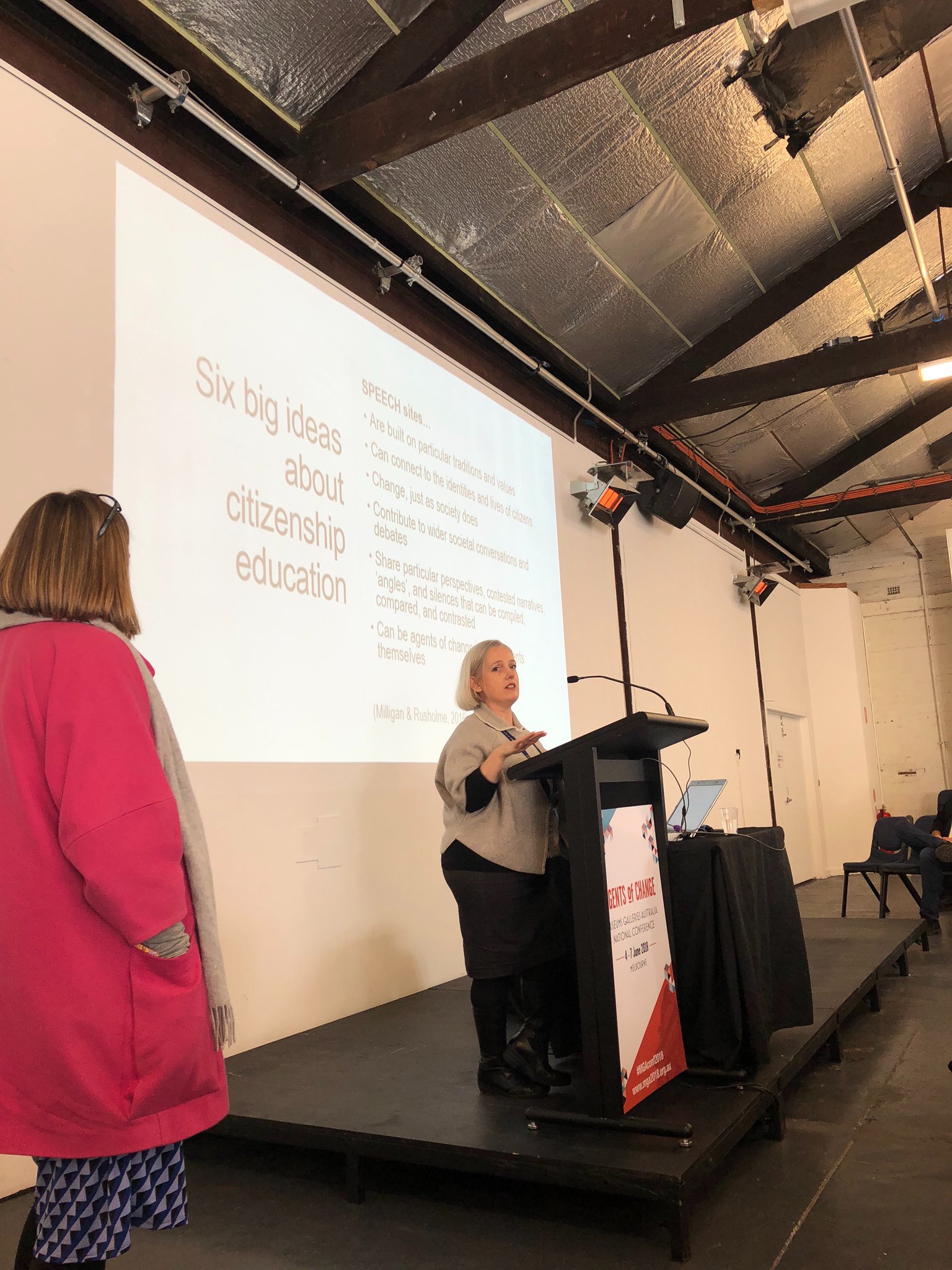
    Out of all the presentations, the one delivered by Sarah Rusholme and Andrea Milligan from Wellington was most relevant to me. They spoke about the importance of including teachers in the education programming process and helping them to recognise the multiple benefits of excursions to the museum. It was particularly interesting to hear about how introducing emotion into a tour can lead to more critical thinking among primary and secondary school students. Not involving teachers from the beginning when developing tours etc can lead to a less successful program and less desirable outcomes.

    De0E3cxUEAA7Y19.jpg large
    Sarah Rusholme and Andrea Milligan

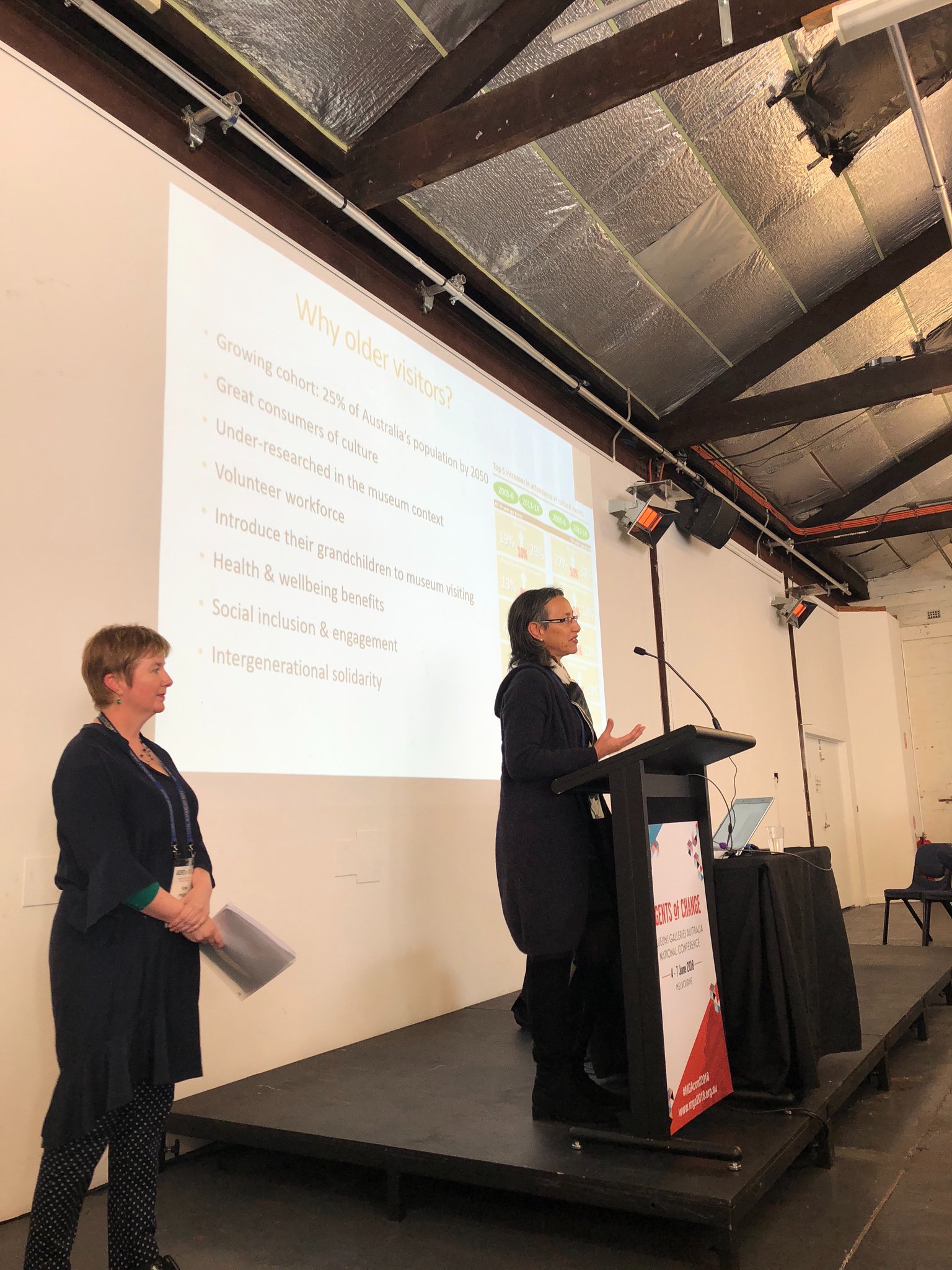
    I also want to give a quick shout out to Kate Phillips and Lena Gan who presented on how to engage seniors in lifelong learning. They asked the question, although we know our population is aging, what is being done at museums and galleries to accomodate?

    Dez9skWVMAAiI0x.jpg large
    Kate Phillips and Lena Gan

    Finally, I attended the Indigenous Workshop session (originally had planned to see the community engagement talks). I am so glad I made this decision as Terri Janke was an incredible speaker and we had some great discussion in the room about meaningful engagement with Indigenous communities. To discover more about the project click here.

    De0jUTFUwAA5PAl.jpg large
    Terri Janke

    To finish the day, there were drinks and a welcome reception at the State Library of Victoria. A stunning venue and a great opportunity to meet Twitter friends in real life.

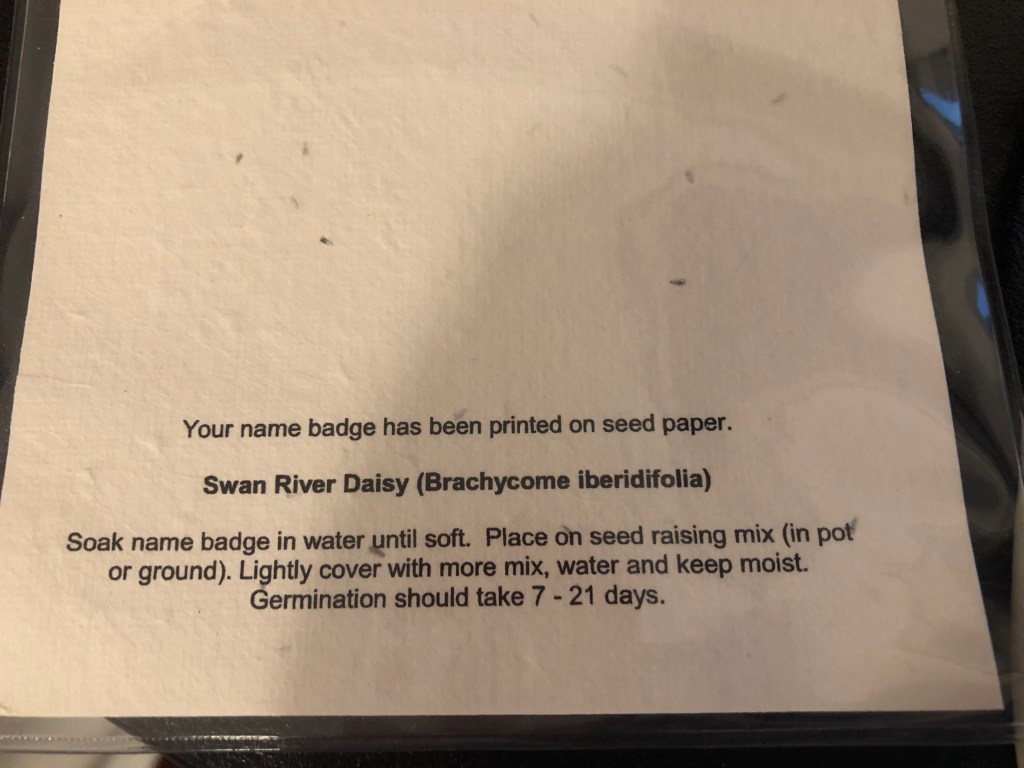
    There is honestly so much more I could write about but this post is getting too long. One last thing, after the conference you can plant your name tag. Yep, our names are printed on seed paper. I am hoping that my Swan River Daisy can stay alive between now and the conference next year. Knowing my track record with killing plants, this is going to be a major challenge.

    A huge thank you to all the wonderful speakers from Regional, Remote and Community day! A great way to start the conference.

    IMG_0739
    Conference Card Seeds

  • Museums Galleries Australia National Conference 2018

    I have just arrived in Melbourne for the 2018 Museums Australia Conference. I am so excited for the week ahead! I am even excited to visit the conference venue – the heritage listed Meat Market. Tomorrow I am attending the Regional, Remote and Community day which looks to be very informative. I hope it is a day filled with ‘what you can do on a small budget’. I will be posting a summary of the conference every day including little sections on what I’ve learnt.

    I have attached the program below for anyone interested in seeing the content that will be covered over the next few days. Anything highlighted is what I plan on attending. For those of you reading this who will be attending, I hope to meet you at the conference!

    MGA2018-RRC-draft-program-page-002
    MGA2018-RRC-draft-program-page-001
    MGA2018-RRC-draft-program-page-002
    MGA-2018-Draft-Program-page-001
    MGA-2018-Draft-Program-page-002
    MGA-2018-Draft-Program-page-003
    MGA-2018-Draft-Program-page-004
    MGA-2018-Draft-Program-page-005
    MGA-2018-Draft-Program-page-006
    MGA-2018-Draft-Program-page-007
  • GLAM Blog Club: Control

    What an appropriate theme for GLAM Blog Club considering I am a control freak. In a good way of course. What can I say, I’m a true Virgo through and through. A big part of this comes from my desire to have things organised – I even colour code my wardrobe (yes, I have also catalogued the contents reassuring myself it was for insurance purposes and not for fun).

    It’s also perfect timing because I am currently in bed sick with laryngitis. Did I plan for this to happen? No. Does anyone plan for this to happen? I hope not. There is so much in life you can’t control and as soon as I’m better I swear I will never take my health for granted! A promise I make every time I am sick.

    Bungee Jumping A J Hacketts
    An extreme case of not being in control – me bungy jumping in New Zealand, 2013

    So what happens when you put a control freak into the world of museums? To those who haven’t worked in the industry you are probably thinking that’s a dream come true. All that cataloguing, all those orderly exhibitions with floor plans and perfectly polished display cabinets.  I was reading an article in Museums Australia once about developing an exhibition and they had a screenshot of the most beautifully colour coordinated excel spreadsheet you have ever seen. I mean, I felt organised just looking at it. In other words, if I was standing in the binder aisle of Officeworks looking at this spreadsheet I would have probably astral projected from the level of visible organisation.

    For those of you already in the industry, you know all too well the difference a day can make. It can literally boil down to one phone call and that’s it, your day puts you on a new path. Or better yet, you have this amazing idea for a program or exhibition and it’s just too expensive – so you have to go back to the drawing board.

    One thing that working in this industry has taught me is the importance of, from time to time, switching the control switch from on to off and manually handling situations. No matter how planned you think you are, there is always something lurking. A big change I have made in my working life has been swapping daily to-do lists with weekly goal lists. I’ve found this to be incredibly helpful when I have flexible deadlines. Obviously if something is due it’s due and I can’t change that. But, I have found weekly lists to be so much more achievable. It’s not a 100% reliable method, but, it seems to be working for me.

    Another incredibly crucial life lesson working in a museum has taught me is how to fully harness my problem solving skills. Sometimes an idea sounds great in theory but doesn’t work in practice. Running education programs is a perfect example. Each group you get is different so it is literally not going to work if you don’t release some control and adapt a program. A good educator knows how to deliver the same content in a million different ways to get people to listen.

    Finally, what have I learnt in the museum industry when I am not in control? When I’m literally out of my comfort zone reaching for that paper bag I know I shouldn’t hyperventiate into but I kind of want to.

    I have found these moments to be some of the best in my career. I was so shy in high school and the thought of talking in front of a group of people about anything made me feel sick. When I took my first historical tour of Brisbane I just said hello to the deep end and jumped right in. Nothing has grown my confidence in public speaking so quickly.

    So what does this mean? Now, even if an opportunity makes me squirm a little I try to put my hand up. It’s totally fine to be in control (or make yourself think you are) and it’s totally fine to be not in complete control (unless you are operating heavy machinery).

    My huge test in the control department is happening as we speak. We soon have an event that will be visited by just over 1 000 school children. I fluctuate between – we’ve got this! – and – I just need to grab something outside (runs and boards plane for overseas country) – about 400 times per day. I cannot wait until this event happens and I can see that balancing control with lack of control/intense flexibility can lead to something really great. I know it will work out in the end because I have a fantastic team of people who I feel privildged to hand over some of my control to.

    River Rafting 21
    I’m at the front of the raft, again in New Zealand, again no control here


  • Sydney: Art Gallery of New South Wales

    I have been meaning to write this blog post since Tuesday. Needless to say, I am only now finding the time to actually sit down and write my thoughts. The Lady and the Unicorn is currently on display at the Art Gallery of New South Wales. The exhibition consists of six large tapestries created by an unknown artist. It is estimated that they were weaved during the 1500s in France. What is pretty incredible is that these tapestries have only been displayed three times outside of France in over a 500 year period! According to the gallery’s website, the tapestries are “considered to be some of the greatest surviving masterpieces of medieval European art”.

    This review is going to be really tricky to write. Rather than just lump everything together, I’m going to start with the pros and finish with the cons. But first, here is some context.

    Context

    These tapestries are all allegorical representations of the five senses (touch, taste, smell, hearing and sight). In the Middle Ages, these could be represented through different animals or objects. It wasn’t until later that female figures were also used in representations.

    The sixth tapestry is a bit of a mystery. According to scholars in the 1400s, there was a sixth sense (not the ability to see dead people). It is difficult to determine what this may be, but, it is believed to be a sense of the heart or the key to moral salvation.

    It is unknown who exactly made these tapestries. However, at the end of the exhibition there was a panel explaining how a tapestry during this time period was likely to be made. To summarise, it took a lot of planning and a lot of weaving.

    Pros

    There was one really major pro – the actual tapestries. They were absolutely stunning. I have never seen such vibrant colours in a historic tapestry. There were also so many small details weaved into each tapestry you really had to spend some time looking a the whole work in order to see everything.

    31317978_10160342993750261_4561634720122667008_n
    The Lady and the Unicorn
    31356907_10160342992940261_4739981063835615232_n
    The Lady and the Unicorn
    31369521_10160343000290261_1945662503400767488_n
    The Lady and the Unicorn
    31369570_10160342997250261_2663787778390622208_n
    The Lady and the Unicorn
    31393640_10160342998750261_5134324104593145856_n
    The Lady and the Unicorn
    31396465_10160342995400261_8169014504068218880_n
    The Lady and the Unicorn

    Next to the tapestries was a panel explaining how each of the senses had been represented. I read this panel before viewing the tapestries and thought it was really useful and a great addition. Under each sense was an explanation of the relevant tapestry. Side note – there was probably a more effective way for this information to have been communicated, but, I wasn’t too bothered. It was great to have the opportunity to delve deeper into the tapestries and learn more about the symbolism.

    Cons

    I visited this exhibition at 10 am on Tuesday. It wasn’t overly busy, probably about twenty to thirty people entered the exhibition around the same time. This wasn’t an issue until we stepped into where the tapestries were on display.

    Inside the large gallery was a smaller circular-shaped gallery created with six walls displaying the tapestries. I guess the idea was to make visitors feel as though they were surrounded by the works. In theory, this was a great idea. In practice, this actually created a really claustrophobic environment. To make matters more difficult, in the centre of this small room was a huge irregular shaped bench with a lot of wasted space in the middle. It was great to have somewhere to sit, but, this bench took up a lot of space and could have been easily replaced by more practical seating.

    The result was overcrowding. Even with just twenty other people in the space, it was difficult to move around and really appreciate the tapestries. Sitting down made matters worse as people were constantly running into the bench and into other people.

    After viewing the tapestries, I followed the ‘more exhibition this way’ sign. I was really surprised to see the fascinating information about how the tapestries might have been made tucked around the corner. Virtually everyone walked past the panels.

    Balancing the pros and the cons, I am really glad I saw the exhibition and was able to experience these tapestries. Displaying them slightly differently could have possibly enhanced my overall experience.