• Los Angeles: The Getty Center

    Today we spent the entire day at The Getty Center…literally the entire day. We arrived just after 10 am and didn’t leave until 4.30 pm, an hour before closing. My feet are screaming at me, but, it was so worth it. As well as exploring on our own, we joined a collections highlight tour and went on a Museum Hack tour! I am going to write about our day hour-by-hour. It seems like the most rationale way to approach what was an absolutely massive day. I don’t think I’ve ever spent this long at one cultural institution.
    IMG_6225
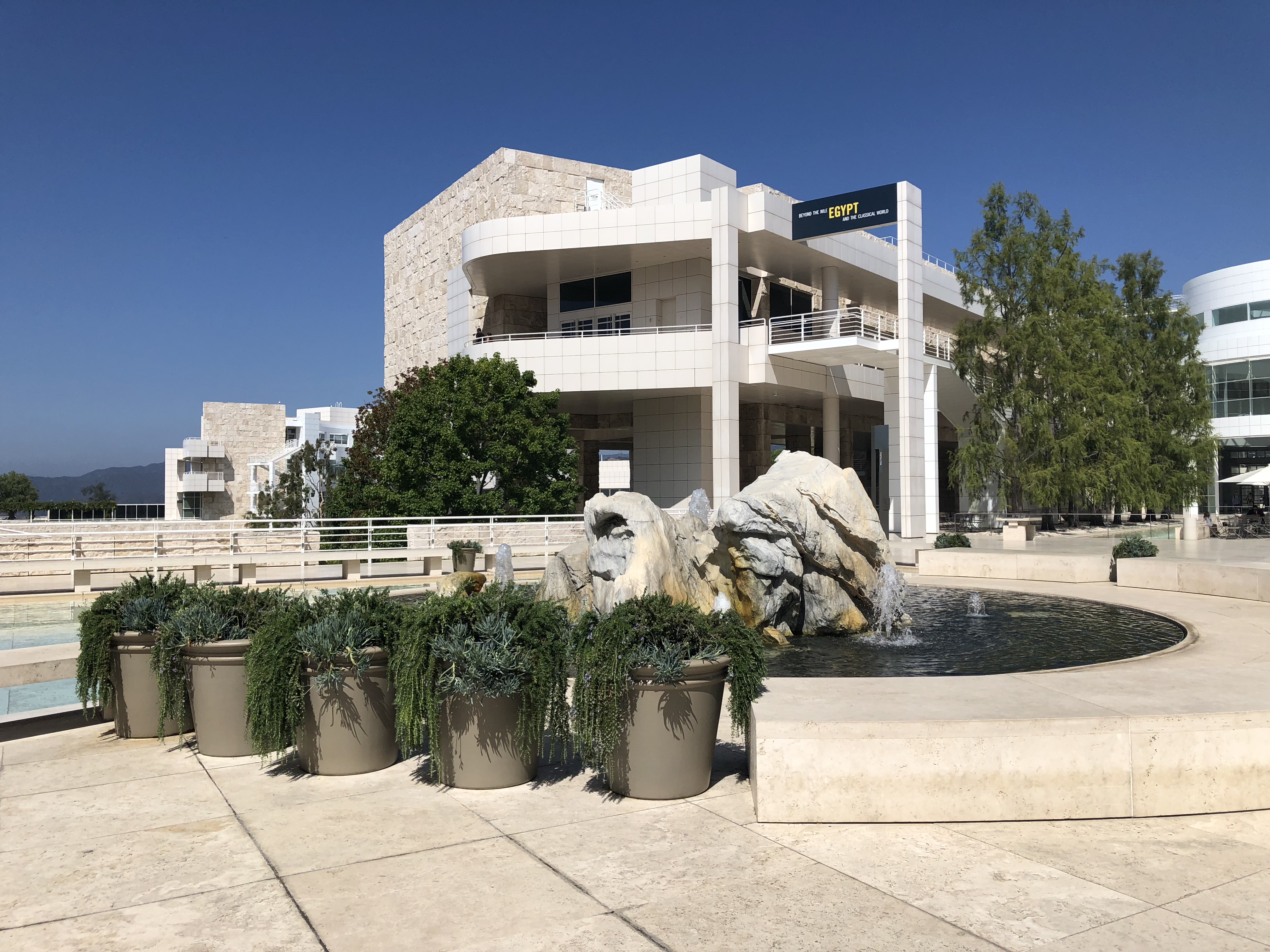
    The Getty Center

    Before I start, however, here is just a quick summary of The Getty. Some of the works were purchased by J. Paul Getty – an incredibly rich oil industrialist. His passion was collecting European art between, approximately, 1300 and 1900. The Getty Trust continues to collect art from this period as well as more modern photography and sculptures. The Getty Villa, at Malibu, houses an antiquity collection.

    10.15 am

    To get to The Getty, you must first ride a funicular up the hill. It is quite an experience simply getting to the entrance! On arrival, we were really impressed with how attentive the staff were – handing out umbrellas (because it was so hot) and ‘what’s on’ guides.

    The Getty consists of five main buildings. The first thing we did was work out what we wanted to see and if there were any interesting tours. There was a collections highlight tour at 11.15 am that sounded like a great place to start. To fill in the hour, we visited the South Pavilion to see A Queen’s Treasure from Versailles: Marie-Antoinette’s Japanese Lacquer.

    It was a small exhibition, but, contained some beautiful objects. It is believed that Marie- Antoinette had the largest collection of Japanese lacquer boxes in Europe. Some of the boxes on display had not been seen since the French Revolution. My favourite can be seen below, a dog-shaped box. It looks as though the dog is resting on the ground and looking at its owner.

    IMG_6236
    Dog Box

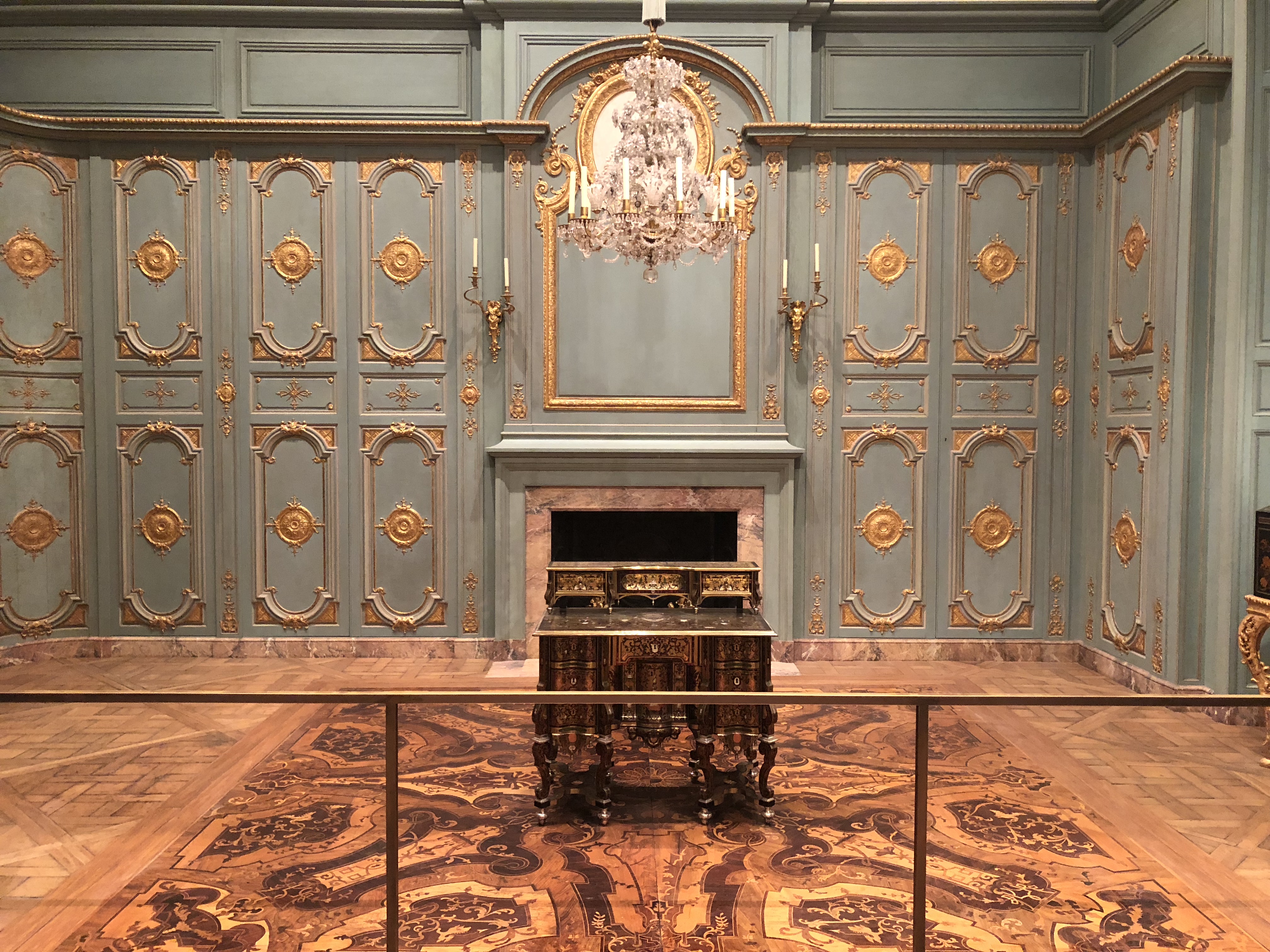
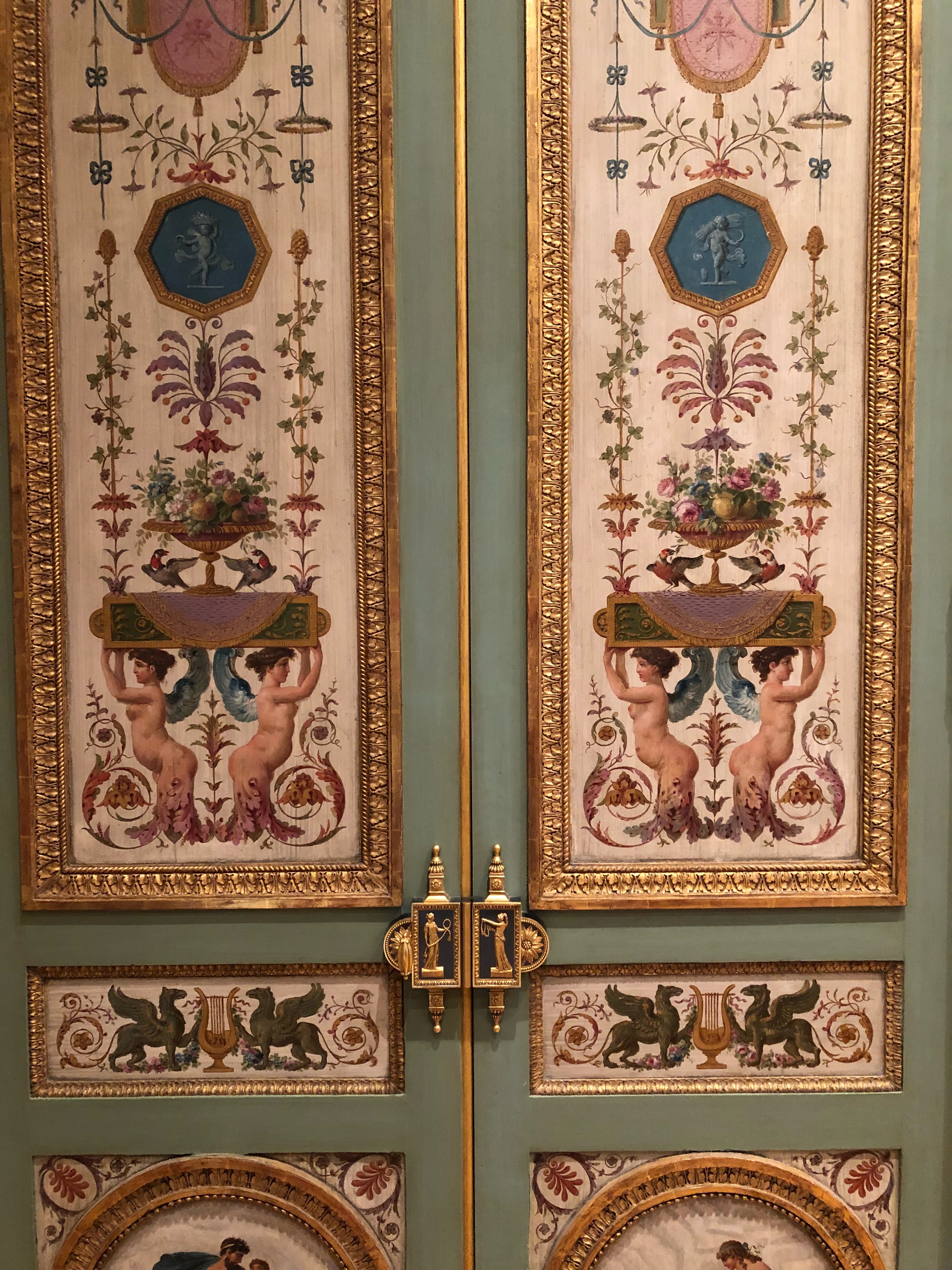
    We then spent some time wandering around the Versailles collection. This included the dressing chair of Marie-Antoinette. It felt as though you were walking through one of the countless palaces in Europe.

    IMG_6244
    Versailles
    IMG_6248
    Versailles
    IMG_6256
    Versailles

    11.15 am

    It was time for the collections highlight tour. I was so glad that the guide used a microphone and we could hear through little earpieces. Nothing is more frustrating than when you’re on a tour and cannot hear the guide.

    Our guide, Gabrielle, was fantastic. She knew a lot about The Getty and was clearly passionate about art. After hearing a little about the architecture of the Getty, we headed inside to our first stop. I could not believe that the floor and some of the walls had been constructed out of the same type of marble used to build the colosseum. Now that is showing commitment to Europe.

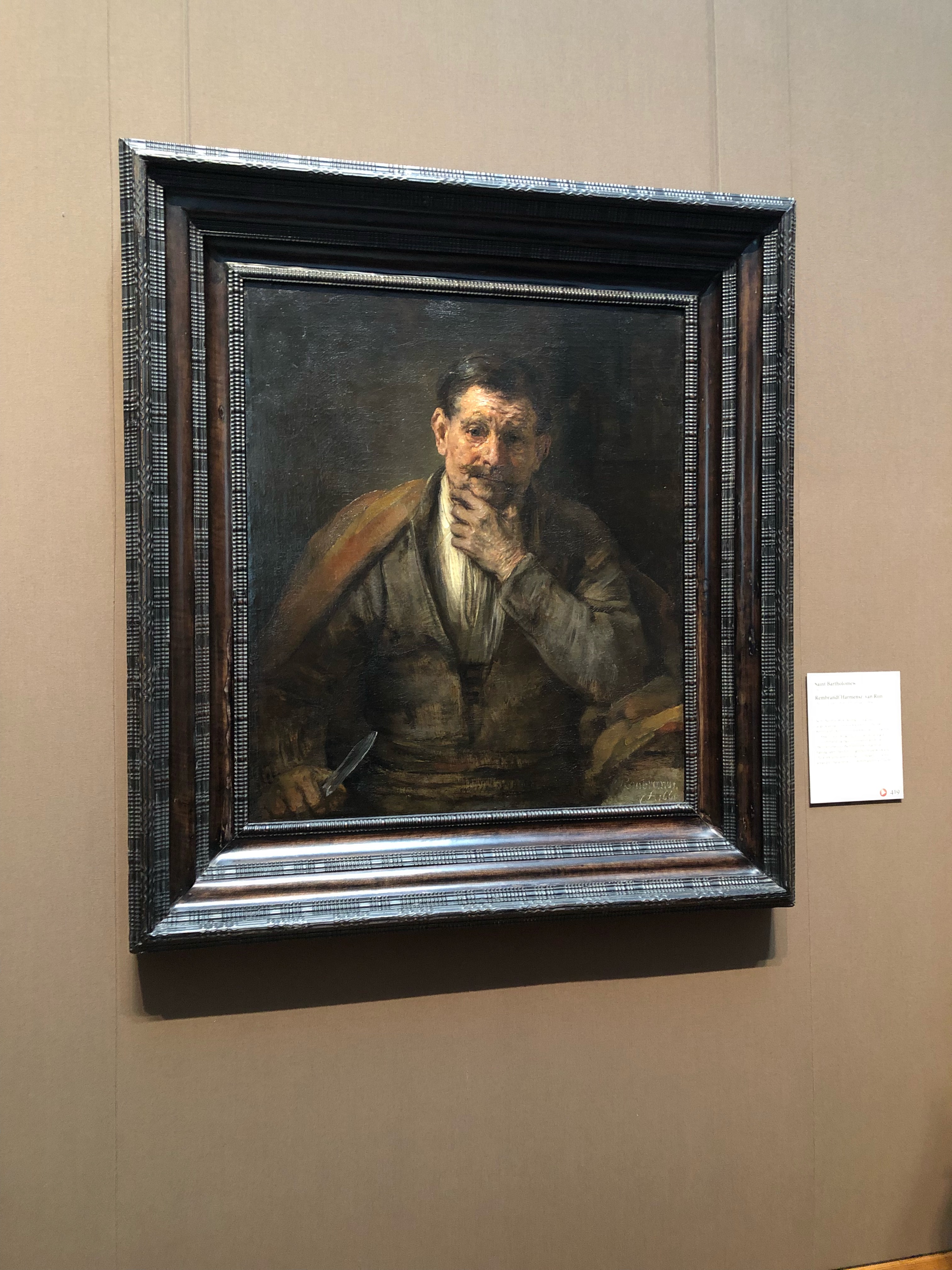
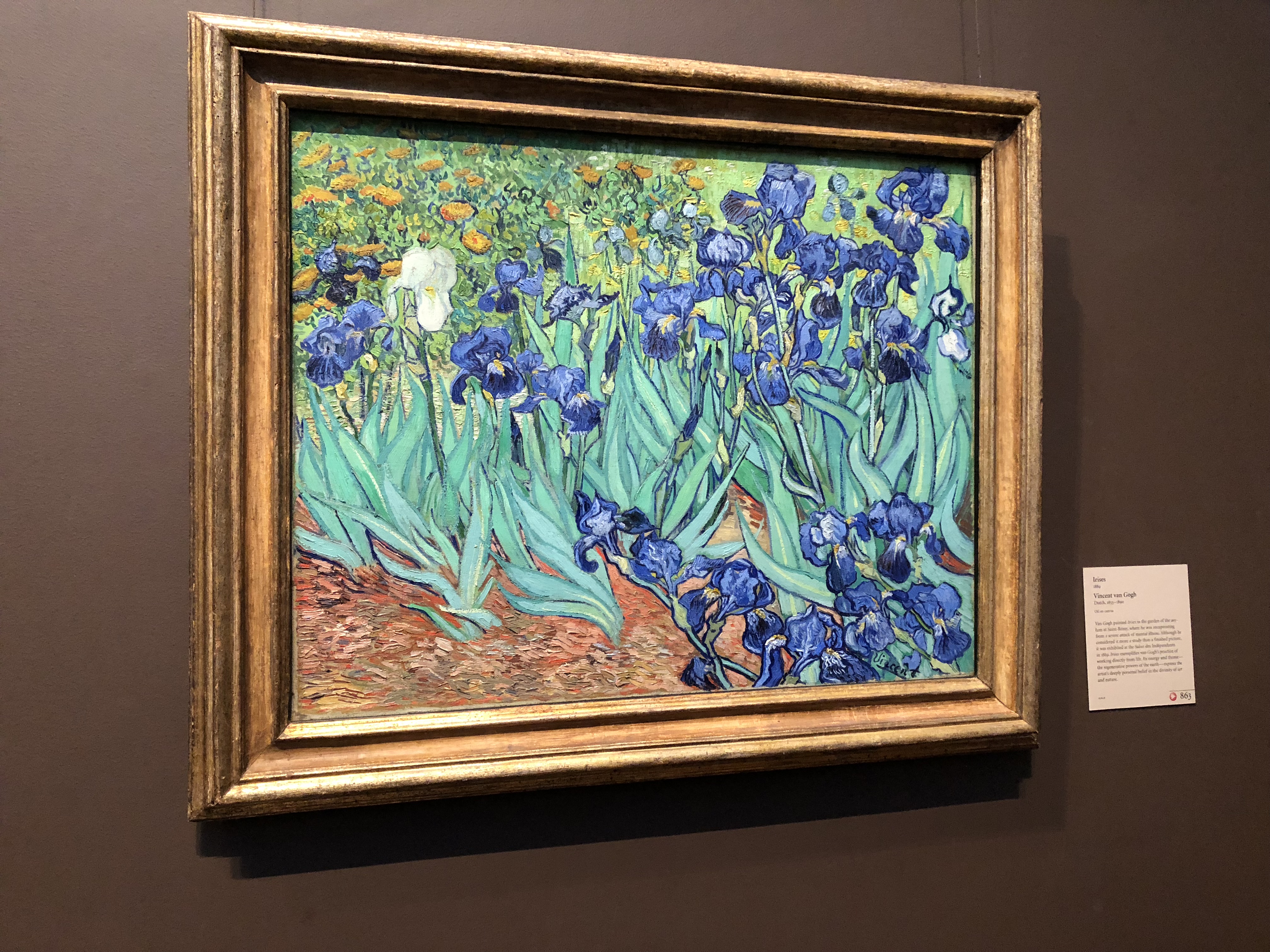
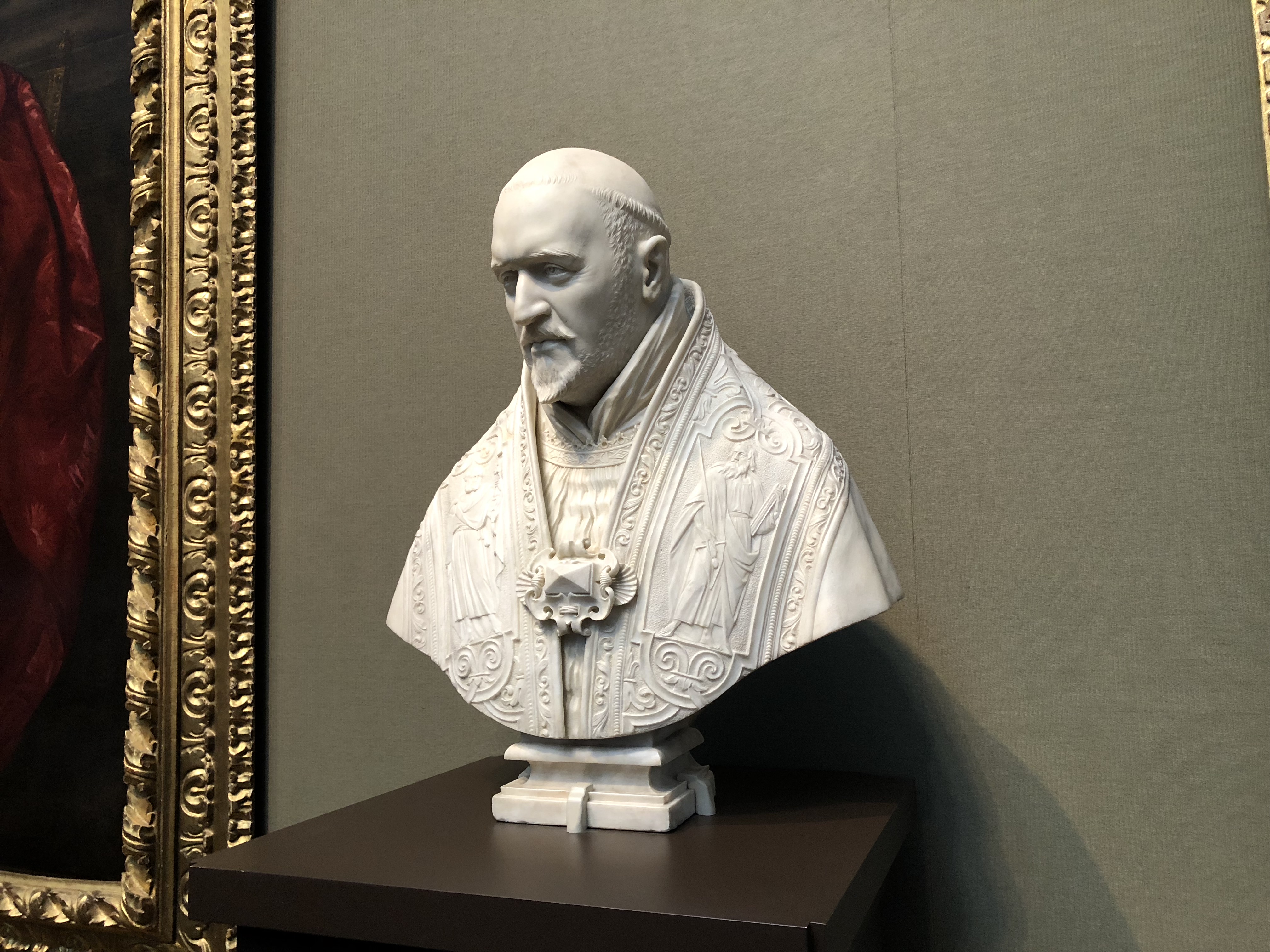
    We stopped at the bust of Pope Paul V by Bernini, a couple of works by Rembrandt and some works on display in the Impressionists Gallery. For me, the highlight of the highlight tour was seeing Irises by Vincent Van Gogh. This was the first work he painted after booking himself in to an asylum. The colours were unbelievably vibrant.

    IMG_6266
    Pope Paul V
    IMG_6267
    Rembrandt
    IMG_6271
    Rembrandt
    IMG_6274
    Rembrandt
    IMG_6292
    Irises

    A quick note on the bust. It wasn’t recognised as a Bernini until it was sold to The Getty. The individual who purchased it from an art auction paid around $30 000. They later sold it to The Getty for around 30 million.

    12.15 pm

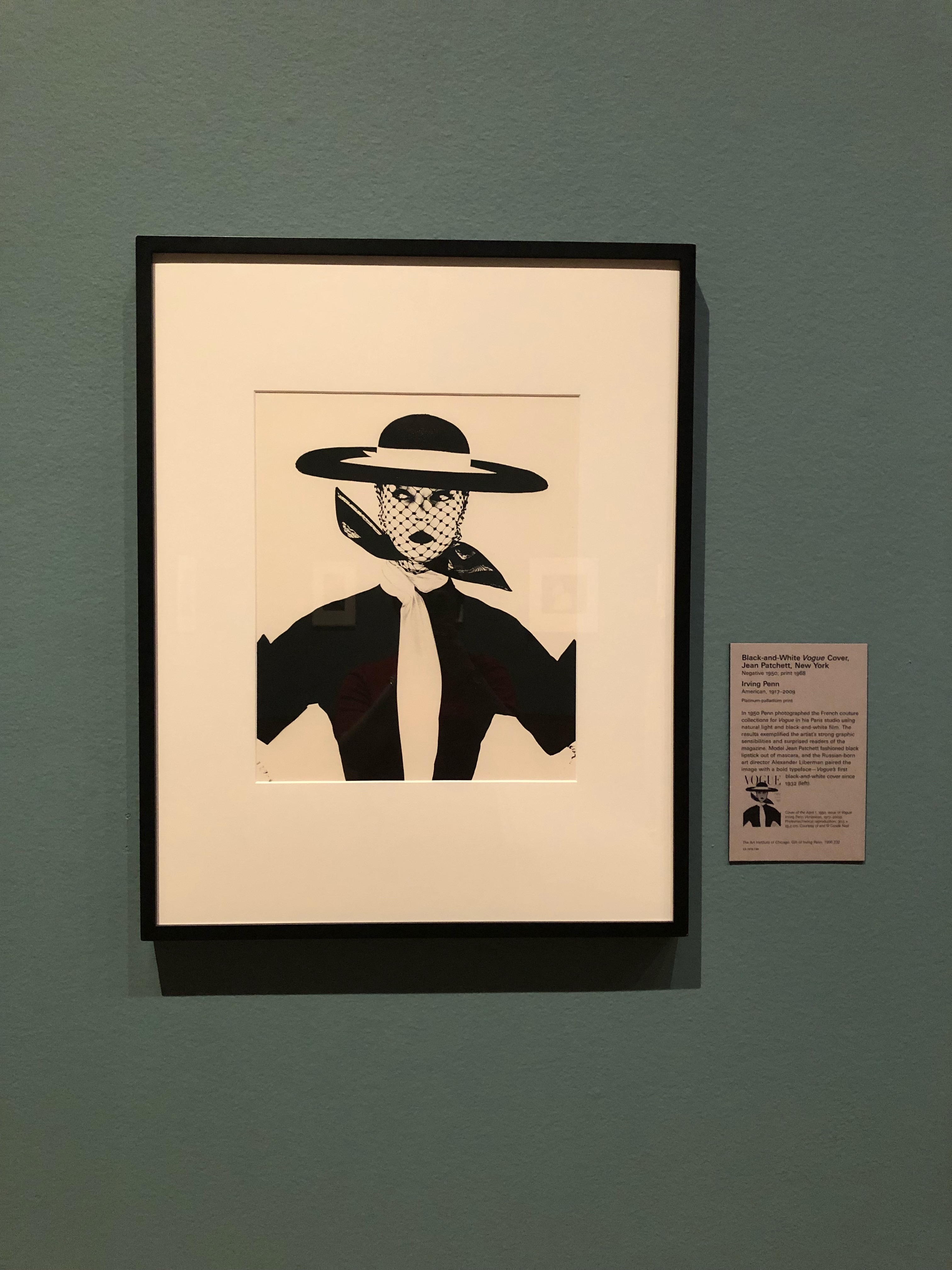
    After grabbing something to eat, we ventured in to see Icons of Style: A Century of Fashion Photography. One thing that really annoys me is when photography is allowed in an exhibition, with the exception of a few pieces that aren’t clearly marked. On the label of some of the works, right in the bottom corner, was a small camera with ‘no photograph’ printed next to it. The labels needed to be bigger to avoid the confusion that was constantly happening.

    IMG_6312
    Icons of Style: A Century of Fashion Photography

    The exhibition was displayed chronologically. There were some amazing photographs and clothing on display. I particularly enjoyed the earlier works as the later ones were all a bit too bizarre.

    The entrance to the exhibition was, understandably, dimly lit. What didn’t help was having a really dark paint on the wall with white text over the top. It was not a welcoming way to start. Once your eyes had adjusted, you were then exposed to comparatively bright light in the rest of the exhibition. A small thing to note, but, it did have an impact on my experience.

    1.15 pm

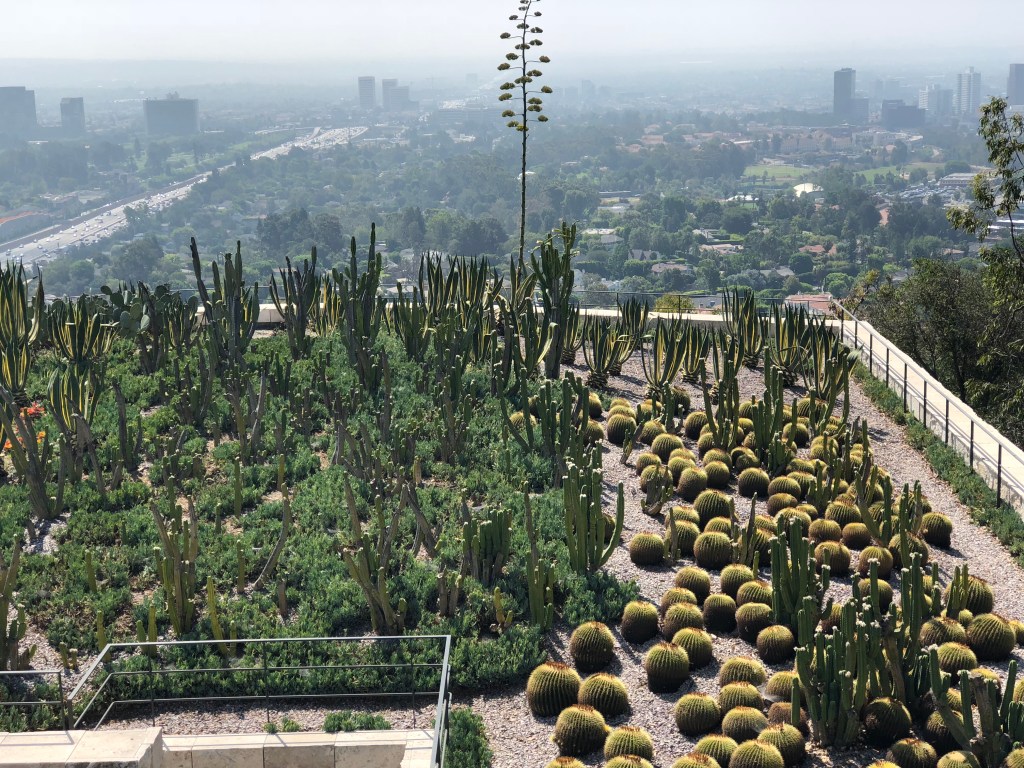
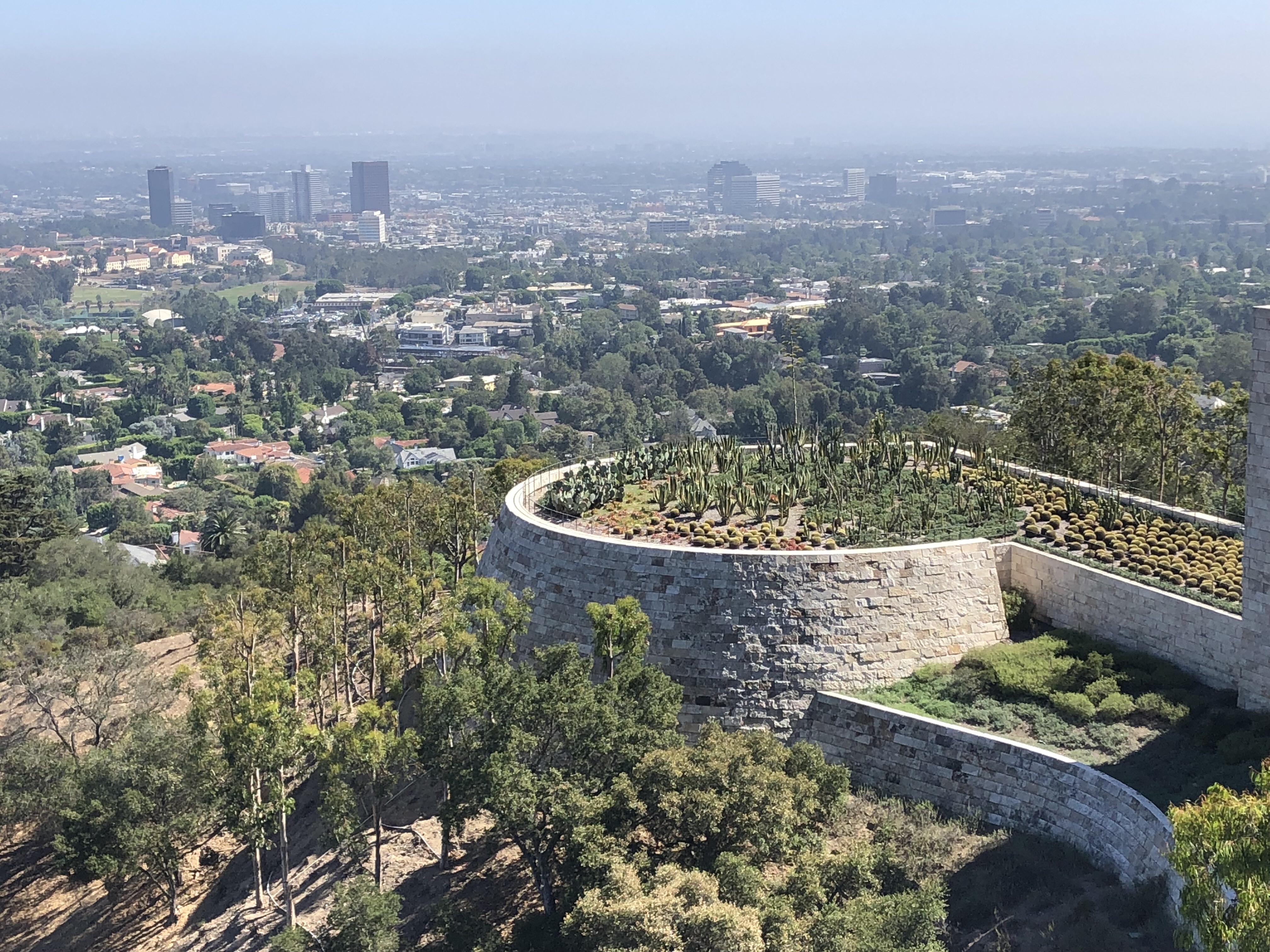
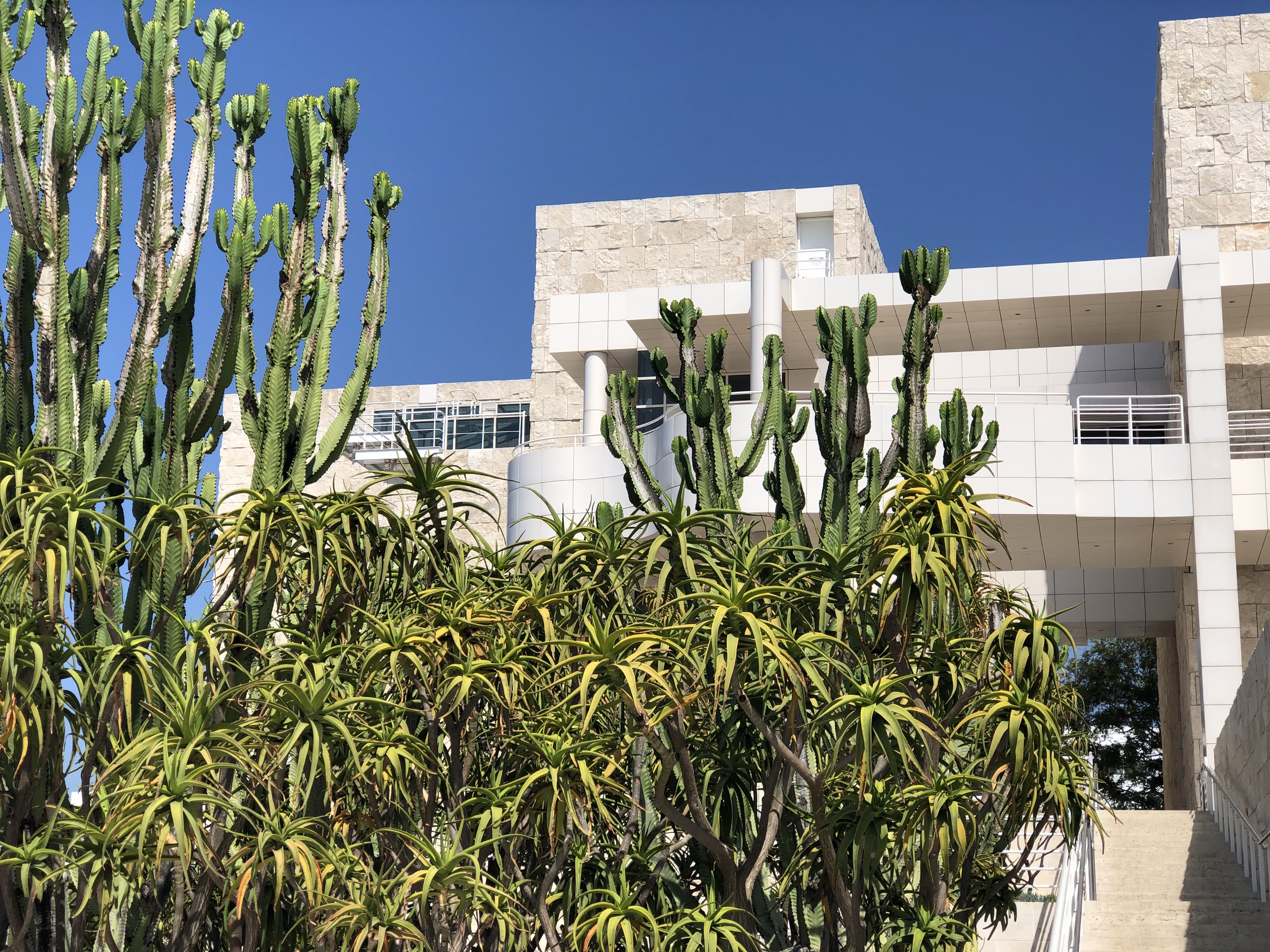
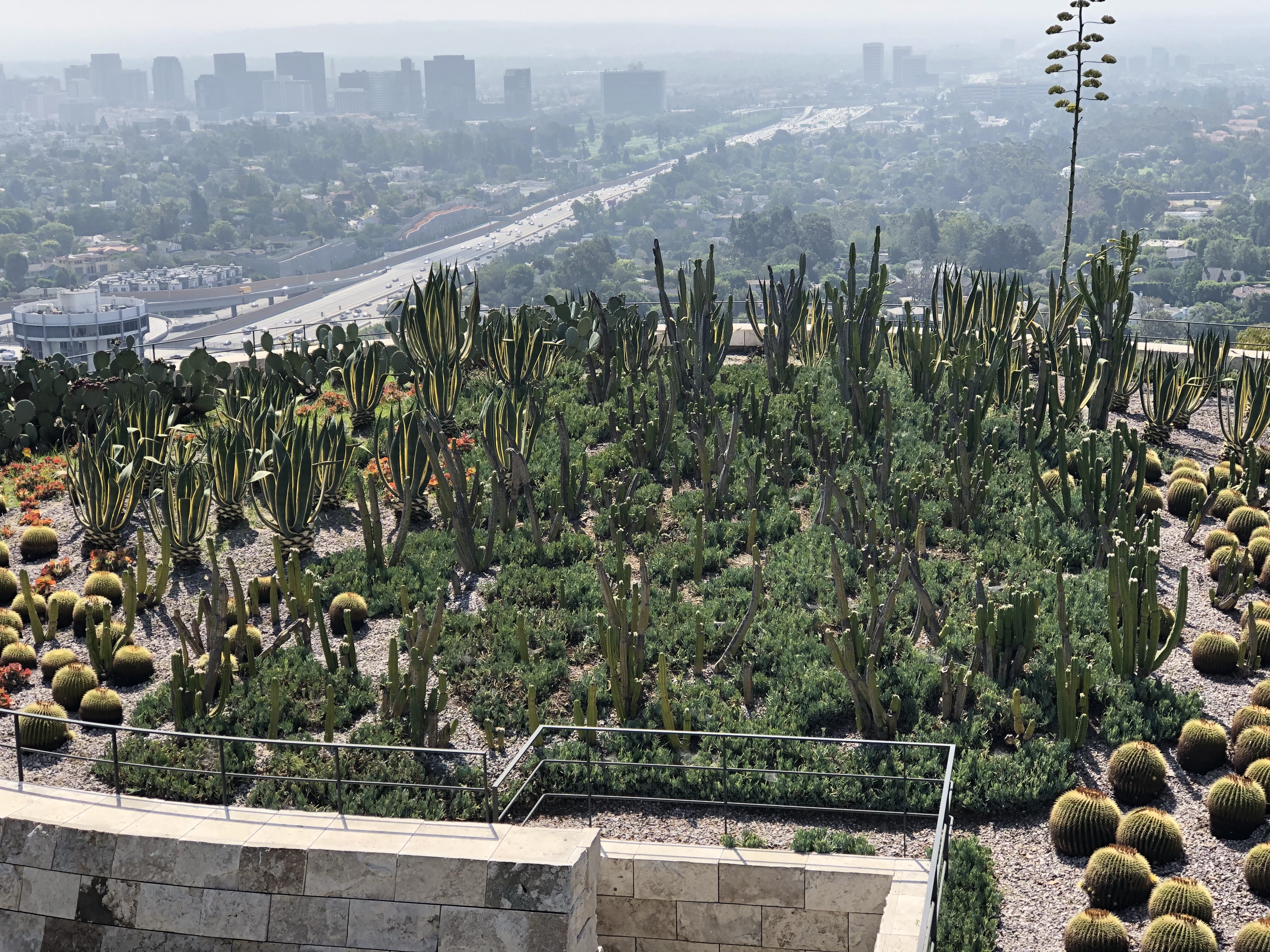
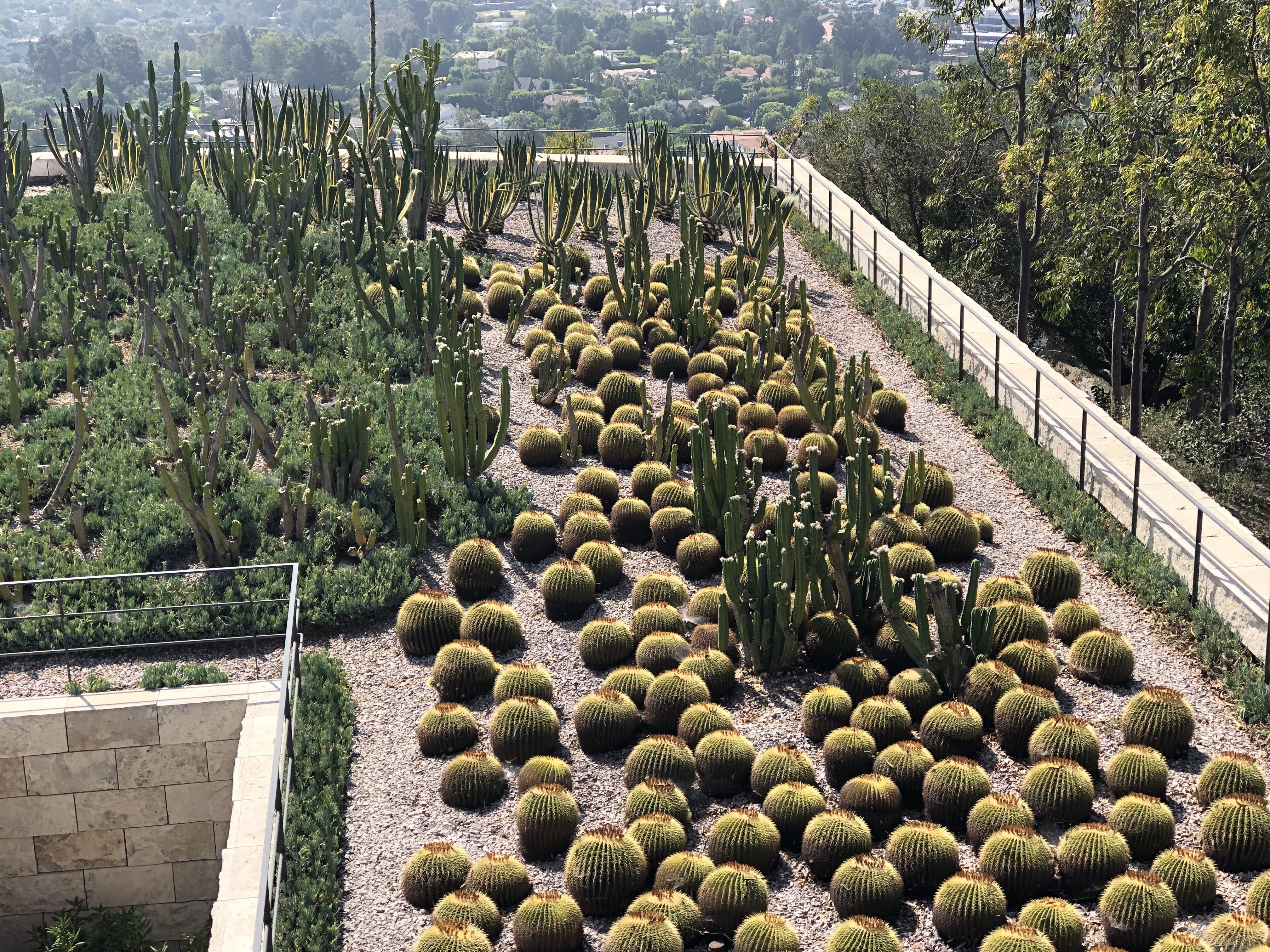
    We left this exhibition and walked outside to the cactus garden to snap some photographs. There was quite an assortment of cactus extending out over the hill.

    img_6346
    The Getty
    img_6216
    The Getty
    img_6208
    The Getty
    img_6213
    The Getty

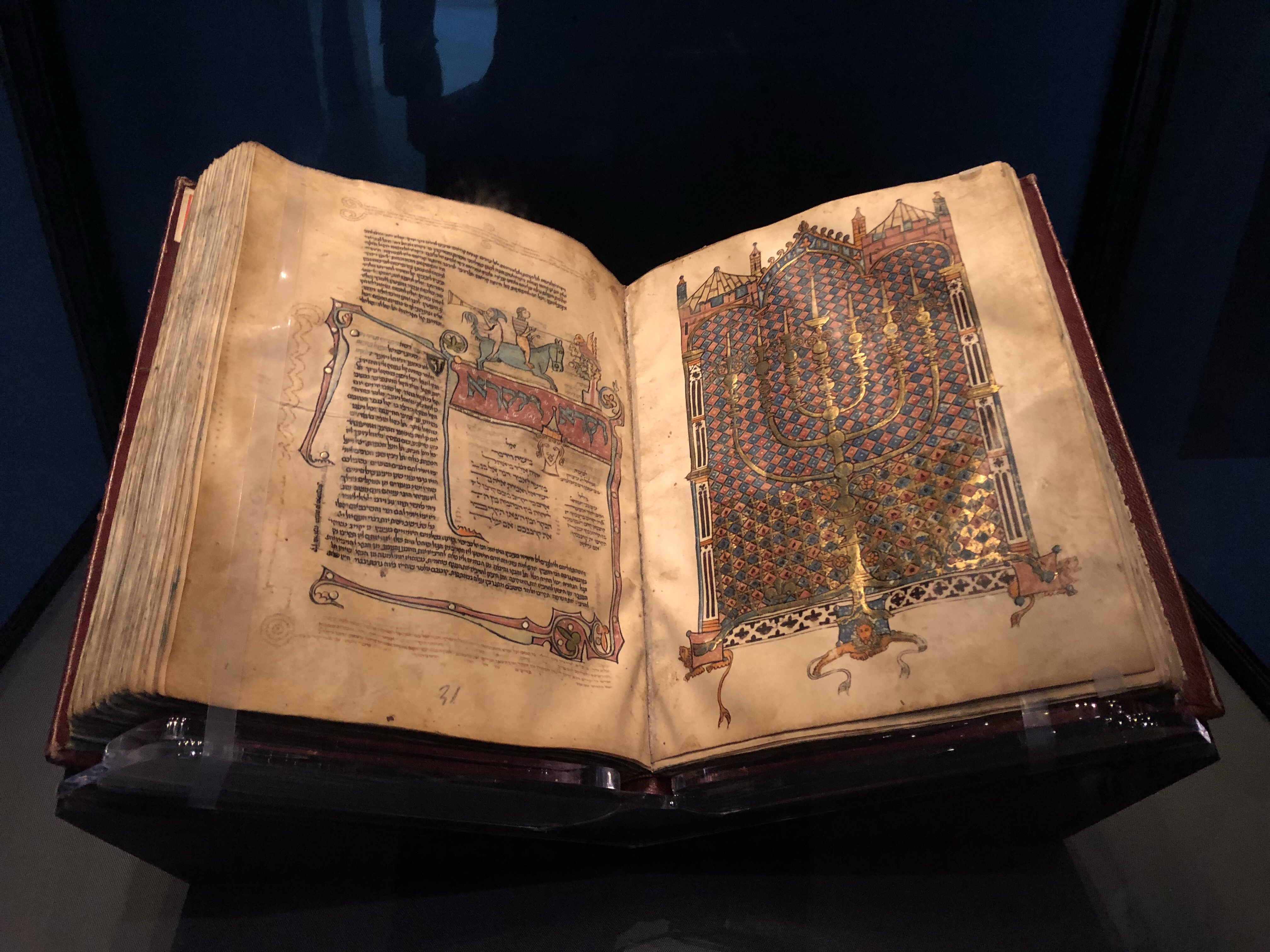
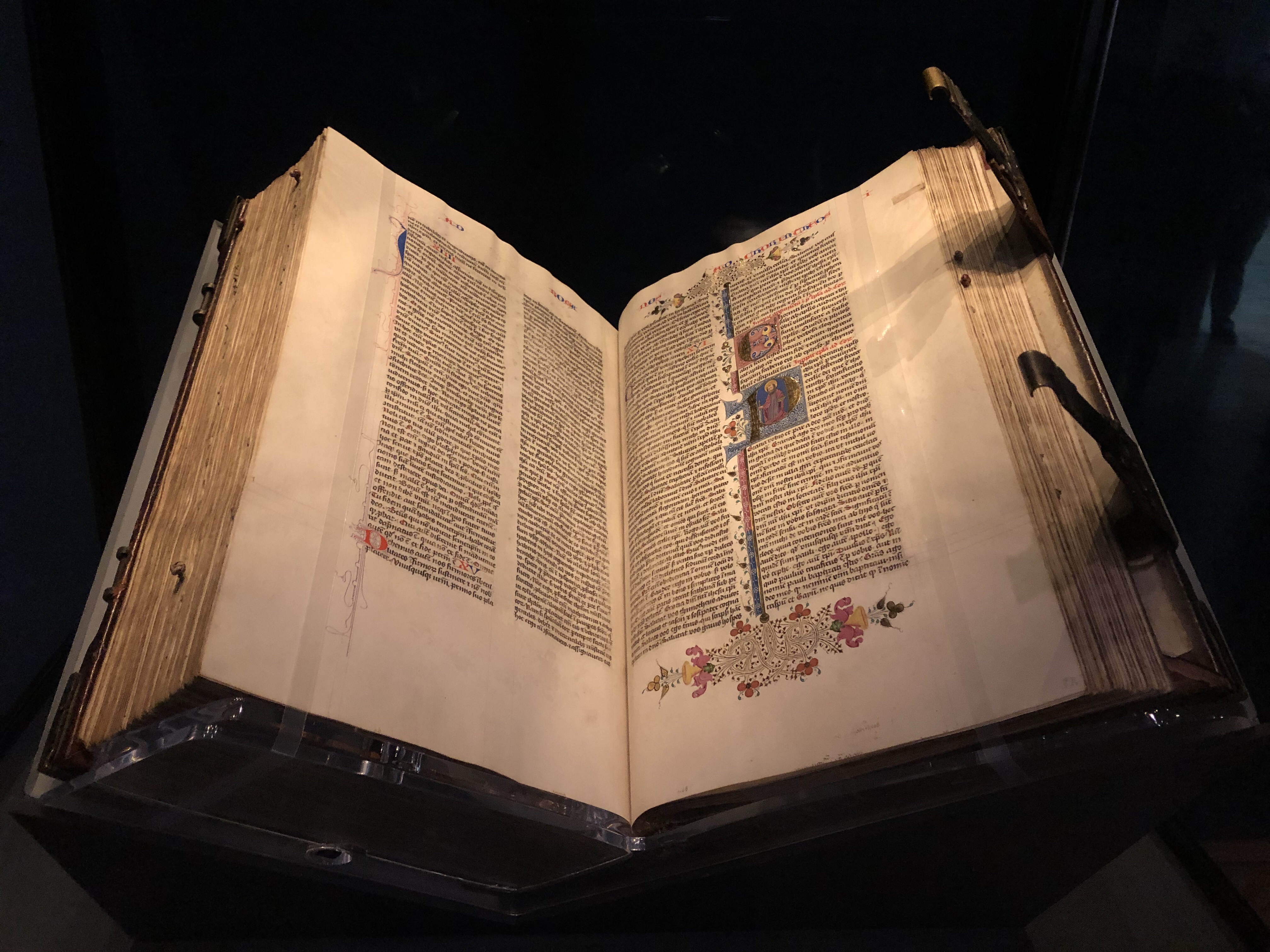
    I really wanted to see the exhibition, Art of Three Faiths, that showcased a Bible, Torah and Qur’an. The exhibition literally consisted of these three items in separate display cases. Next to each was a short explanation of the religion they represented. I was more interested in seeing the beautiful calligraphy and imagery on display. I was not disappointed.

    img_6327
    Art of Three Faiths
    img_6333
    Art of Three Faiths
    img_6330
    Art of Three Faiths

    We only spent a short time in this exhibition. After, we visited the shop and relaxed before our final tour.

    2.15 pm

    Museum Hack is a company that promises to deliver entertaining tours. Currently, it operates in New York, San Francisco, Chicago and Los Angeles. I was beyond excited to finally have the opportunity to experience one of these tours – and I was most definitely not disappointed.

    Our guide, Monisha, was incredible! We were the only two booked on the tour so essentially it was a private tour – very fancy.

    The following two hours were filled with hilarious stories, challenges, and opportunities to interact with the artworks. It was a tour that cut out all the boring parts and got right to the stuff that was interesting. Here is an example of a story, challenge, and interactive opportunity.

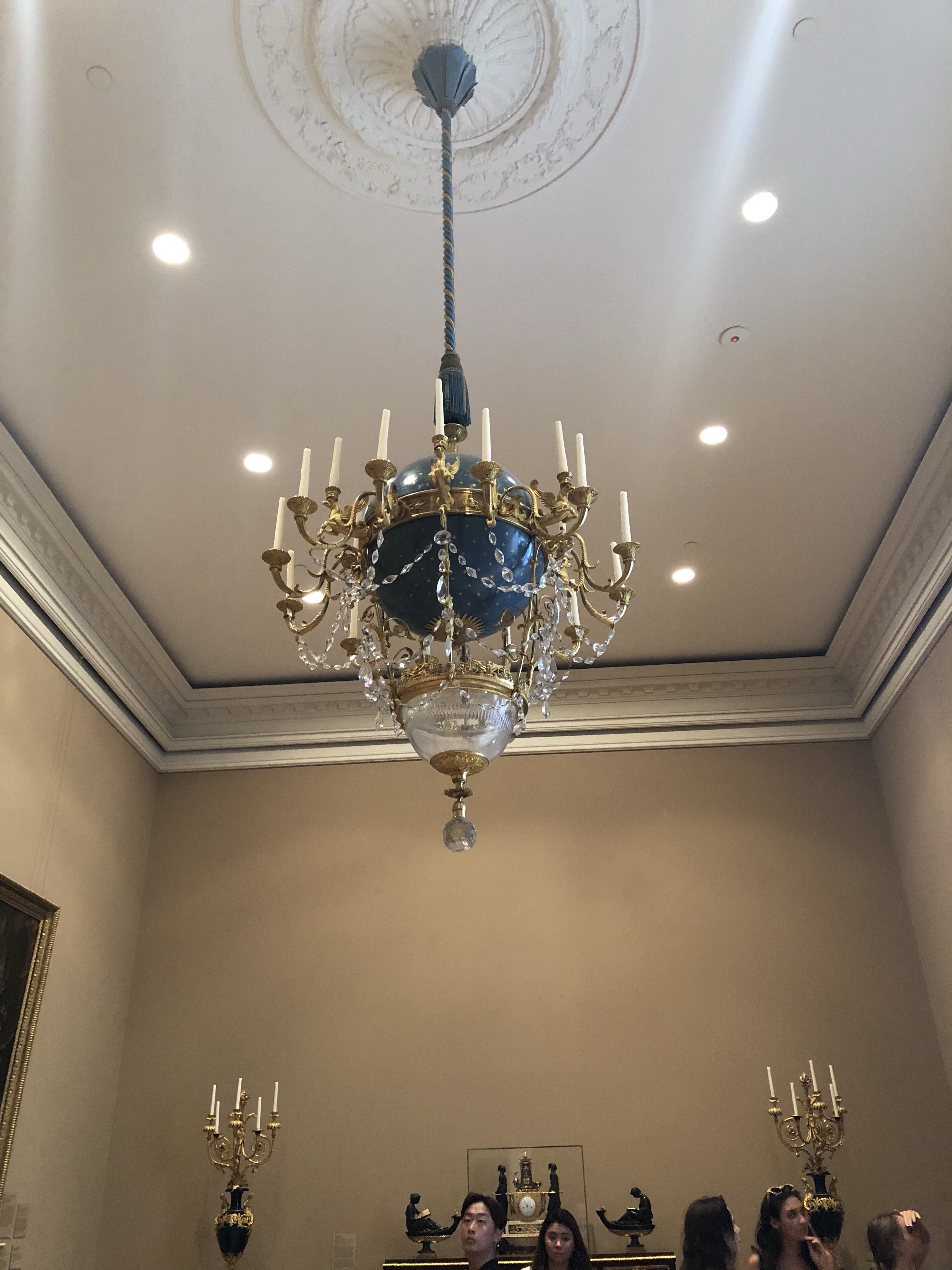
    Story: one of my favourite stories was about the chandelier pictured below. Superficially, it looks like a pretty over-the-top piece of art. The small bowl-like structure hanging below, however, was designed to be filled with water and hold a goldfish. You would never know just by looking at it today!

    img_6358
    Gold Fish Chandelier

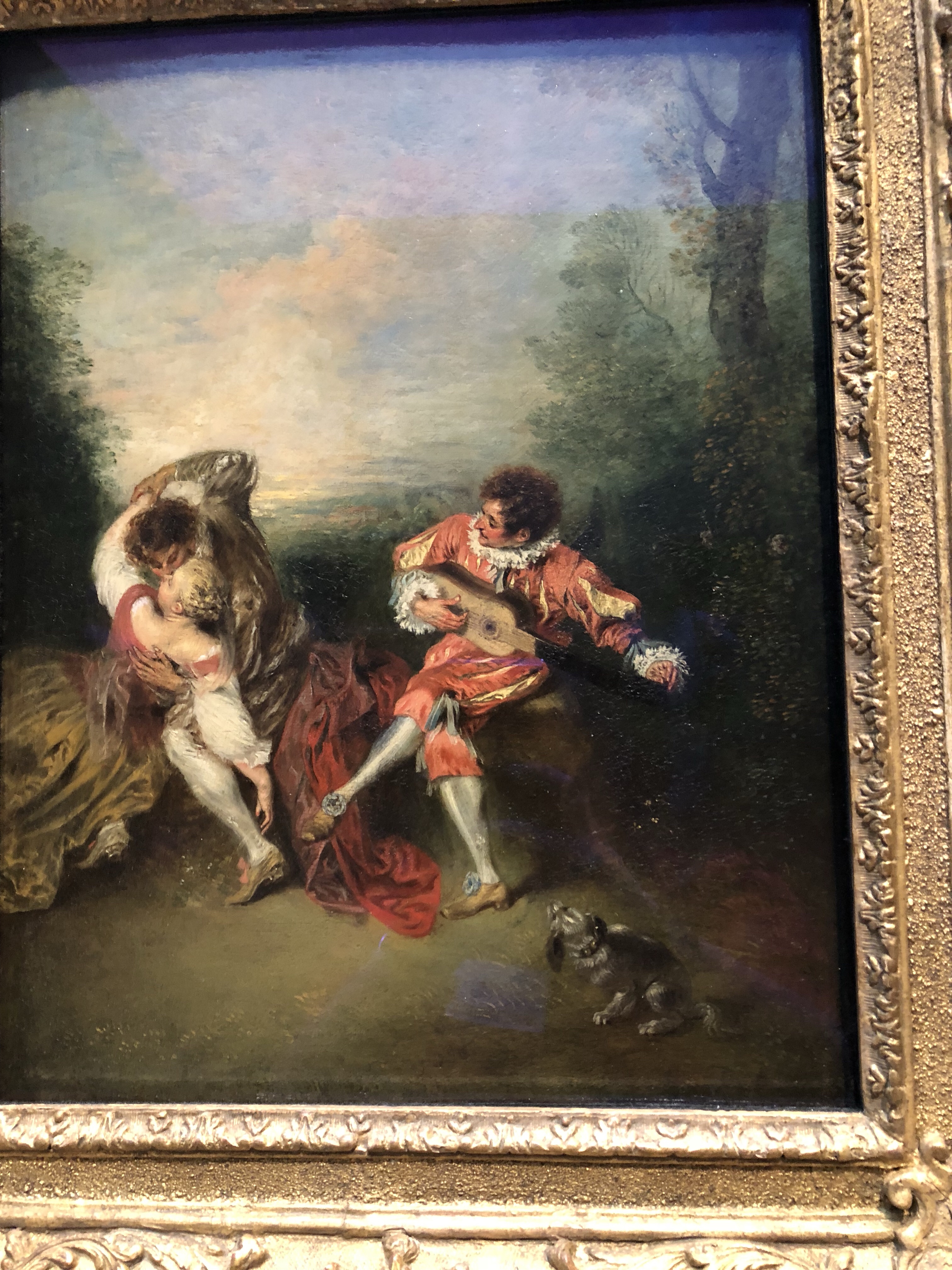
    Challenge: in one of the galleries we were asked to find two individuals in the artworks on display and come up with a love story. It was a fun way to actually look at everything in the gallery! I chose these two and came up with a story about how she was bored of everyone and everything and he was constantly a third wheel.

    img_6355
    Love Story
    img_6349
    Love Story

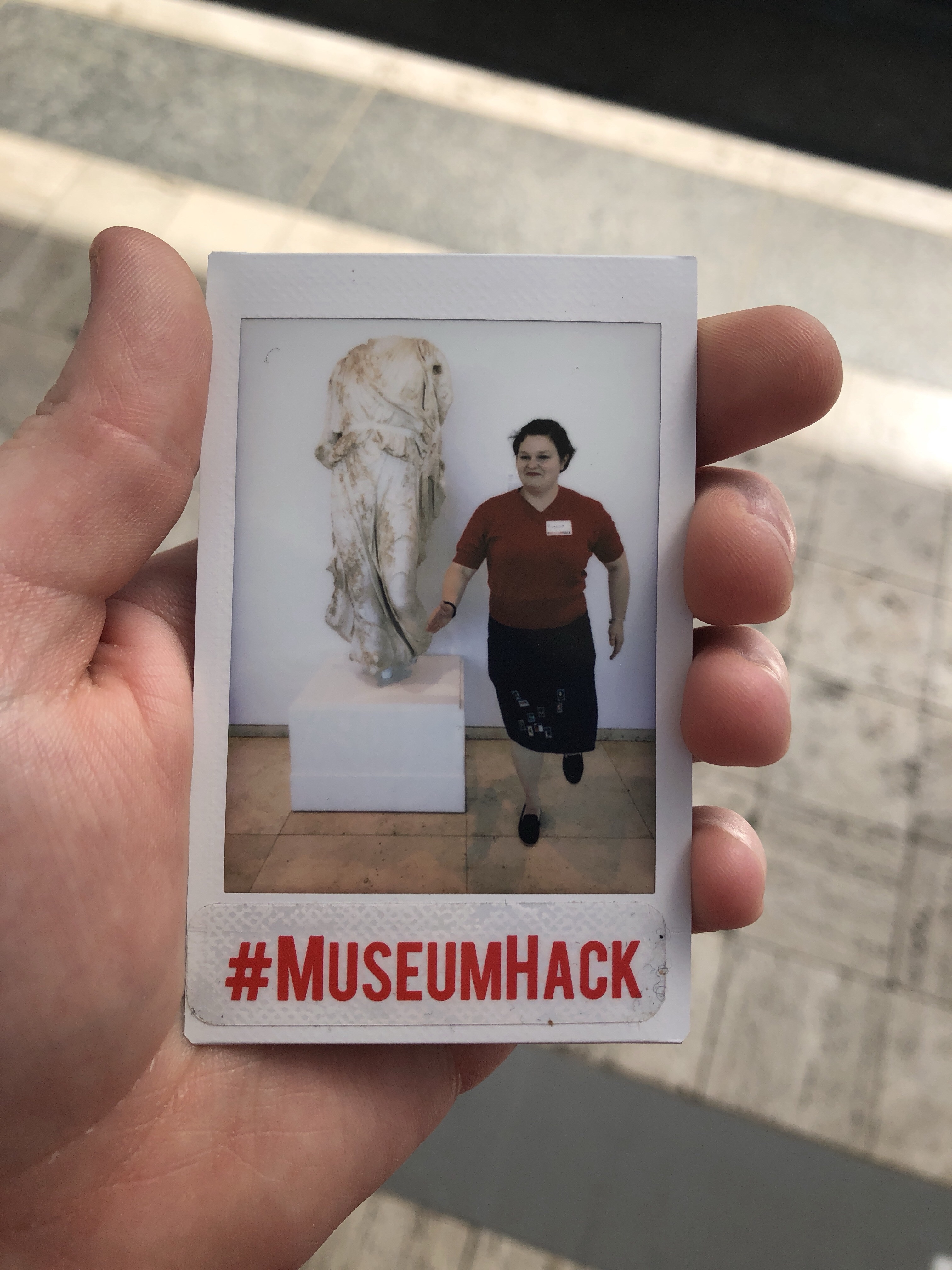
    Interactive opportunity: this one was my favourite. In the sculpture gallery we could select one statue to pose with and copy its stance etc. Here was my attempt.

    img_6387
    Sculpture
    img_6573
    Drawing

    If you are ever in one of the cities mentioned earlier, make sure you book yourself on one of these tours. You will laugh so hard it hurts and wish that the tour would never end.

    For more information or to book please click here! Or follow this link https://museumhack.com/tours/los-angeles/

    4.45 pm

    It was time to leave and head back to our hotel. I had the best day in the oasis that is The Getty.

  • Los Angeles: The Griffith Observatory

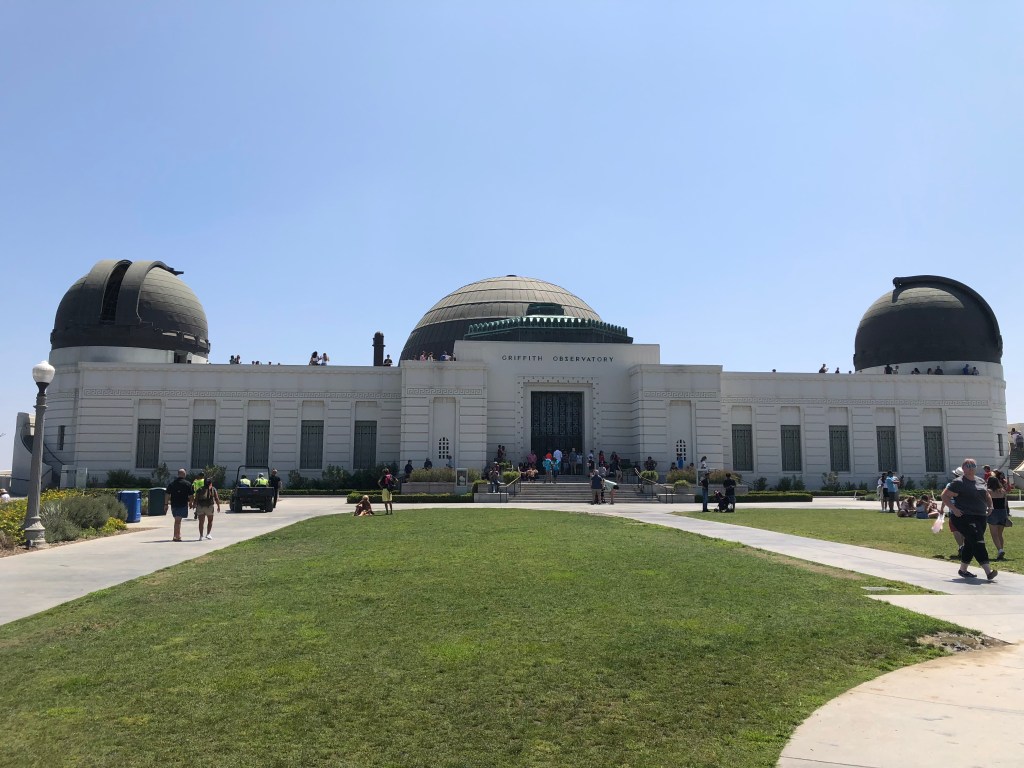
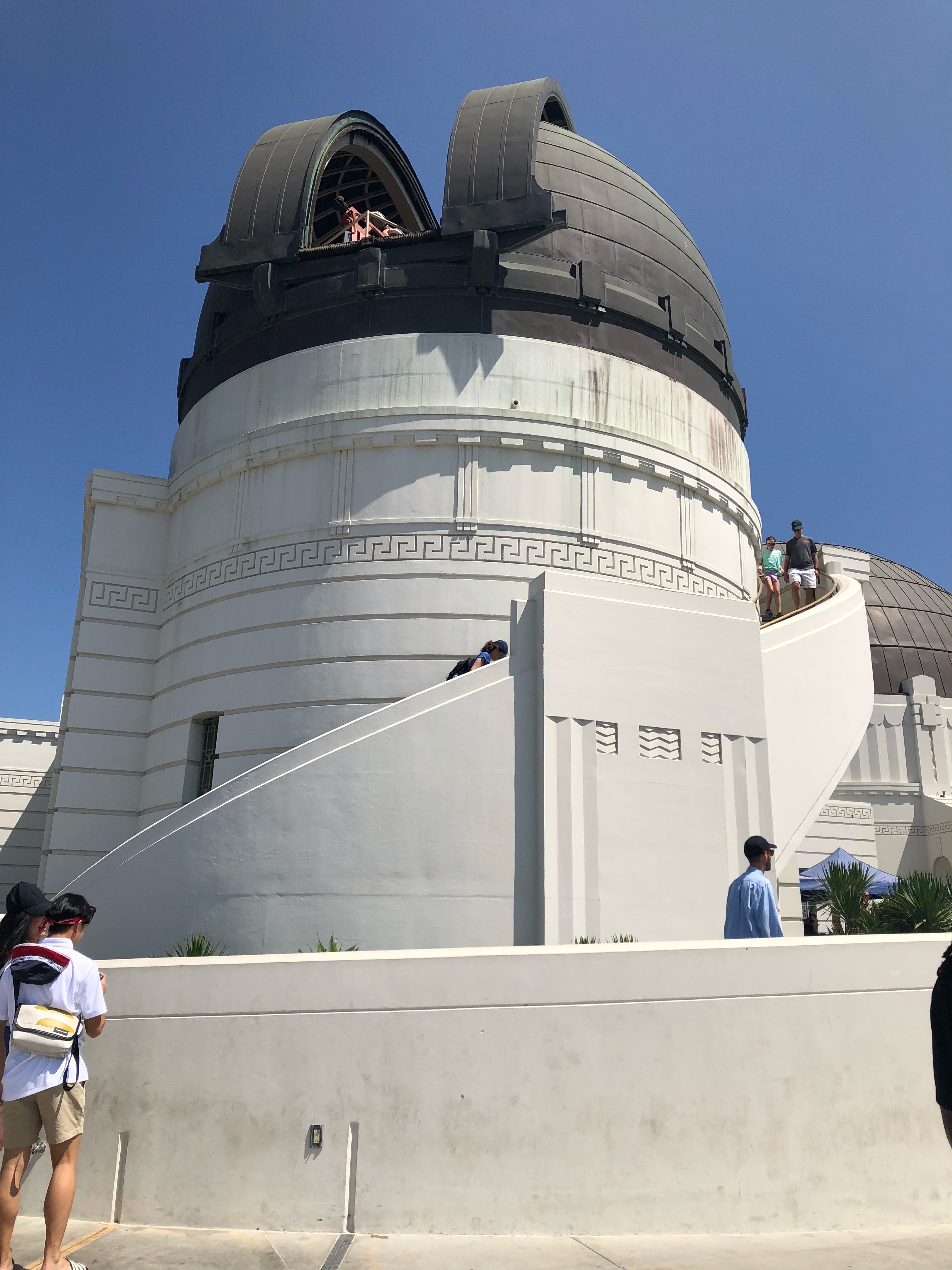
    Perched high above Los Angeles is the Griffith Observatory. It is often publicised to visitors as the perfect place to see the Hollywood sign and learn a little something about the universe. If that doesn’t persuade you to visit, you might also recognise the Observatory from the James Dean film Rebel Without a Cause. This film is one of the 300 that feature the observatory’s facade. We visited purely because I wanted to see the skyline of Los Angeles and watch one of the many films on offer in the planetarium. I love seeing anything to do with space even though it completely freaks me out how small we are in the bigger picture.

    The Observatory is housed in a stunning Art Deco building. It first opened to the public in 1935 meaning it has been operating for just over 80 years. It is a really incredible building and offers some of the most amazing views of Los Angeles. You can also watch people try and get their photograph holding the Hollywood sign.

    IMG_6117
    The Griffith Observatory
    IMG_6120
    The Griffith Observatory

    According to their website, the Observatory welcomes over one million visitors per year. Judging by what we saw, quite a few visitors actually walk inside the building and go through the displays. There was also a large crowd for the planetarium show Centred in the Universe.

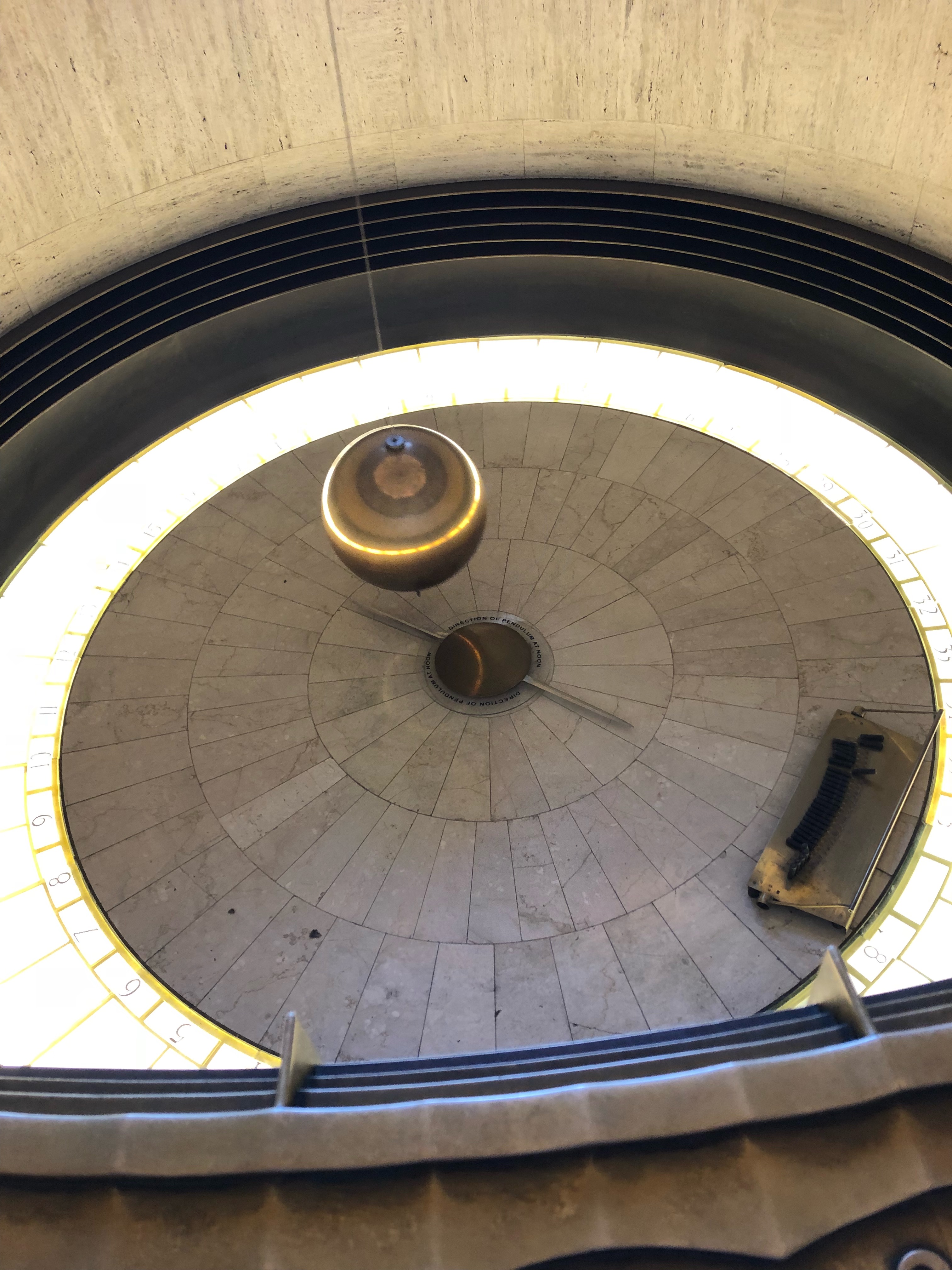
    We arrived at the Observatory around 2 pm. As the next planetarium show was scheduled for 2.45 pm, we had some time to kill. On the entrance level of the Observatory are a couple of little displays. The first is a large Foucault pendulum in the middle of the main building. It is one of the largest pendulum devices in the world and demonstrates the rotation of the Earth. If you look at it long enough, you might find yourself getting sleepy. Although it may look like the ball is changing direction, it’s actually staying on the same path while the Earth moves.

    IMG_6125
    The Griffith Observatory

    In one of the side rooms is a small display showcasing Galileo’s telescope and the first telescope used in Los Angeles. There were plenty of other objects and display boards dotted around the room. There had been an attempt to integrate technology. Unfortunately, quite a few of the displays with technology were not working. This was quite disappointing.

    IMG_6136
    The Griffith Observatory

    The ones that were working, however, were quite interesting. In particular, there was a display that showed you how much heat your body was radiating. Considering it is summer, everyone who stepped in front of the camera was positively glowing.

    It was then time to see the planetarium show. It took all my strength not to fall asleep in the comfy reclined chairs. Oh so many visitors did. The presentation was quite interesting going through some history of astronomy and trying to explain, in very simple terms, what is dark matter and dark energy. Although at times very dramatic, I did enjoy the section of film that asked ‘why should we care about things like dark energy and dark matter?’ Being curious has led us to many advancements and hopefully this desire to look outside ourselves and to the world around us will lead to many more.

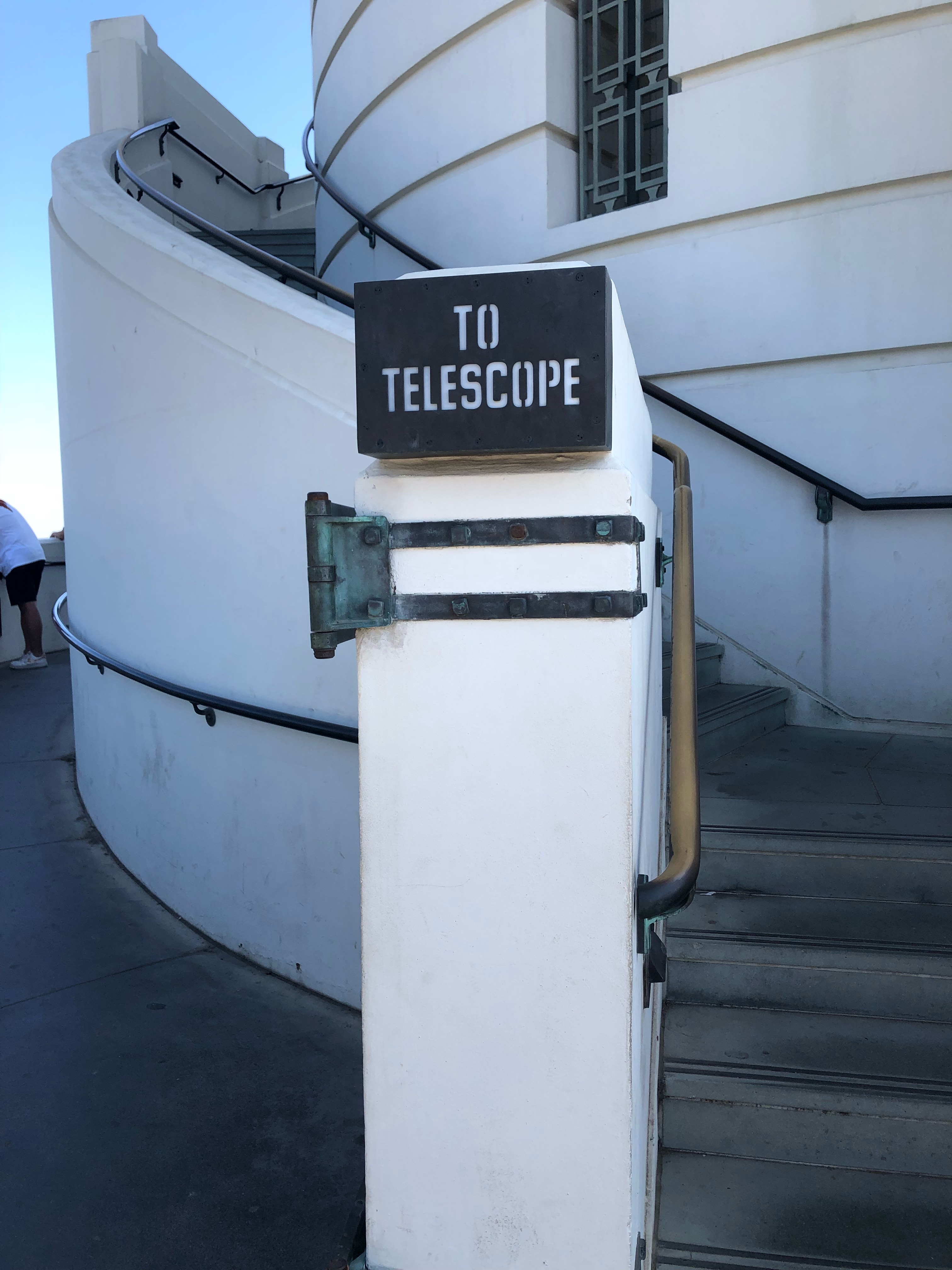
    To finish our visit, we climbed to the top of the Observatory to see the 12-inch Zeiss Refracting Telescope. The story goes that Griffith J. Griffith was inspired to open a public observatory equipped with a large telescope after visiting the Mount Wilson Observatory. The Griffith Trust purchased this telescope in 1931 from the Carl Zeiss Company in Germany. Today, the telescope is believed to be one of the most ‘looked through’ in the world, attracting just over 600 people per night to the star shows.

    IMG_6159
    The Griffith Observatory
    IMG_6156
    The Griffith Observatory
    IMG_6162
    The Griffith Observatory

    Although most of the displays were outdated, it appeared that the Observatory was aware. Every donation box had a sign stating that they were going to use the funds to update. The planetarium show was entertaining and quite informative.

    To finish, a little shout out to the gift shop. I purchased the most adorable mini projector that can show the stars on your ceiling at night. Really excited to add this to my room when I return home!

    IMG_6142
    The Griffith Observatory View
  • Los Angeles: County Museum of Art (LACMA)

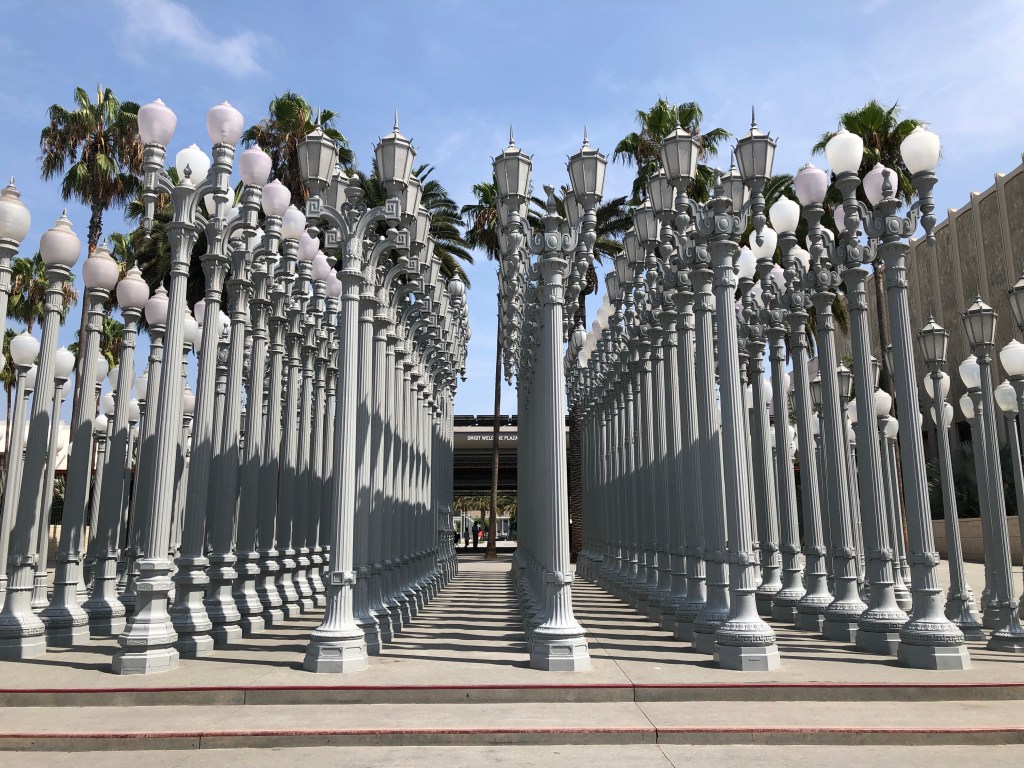
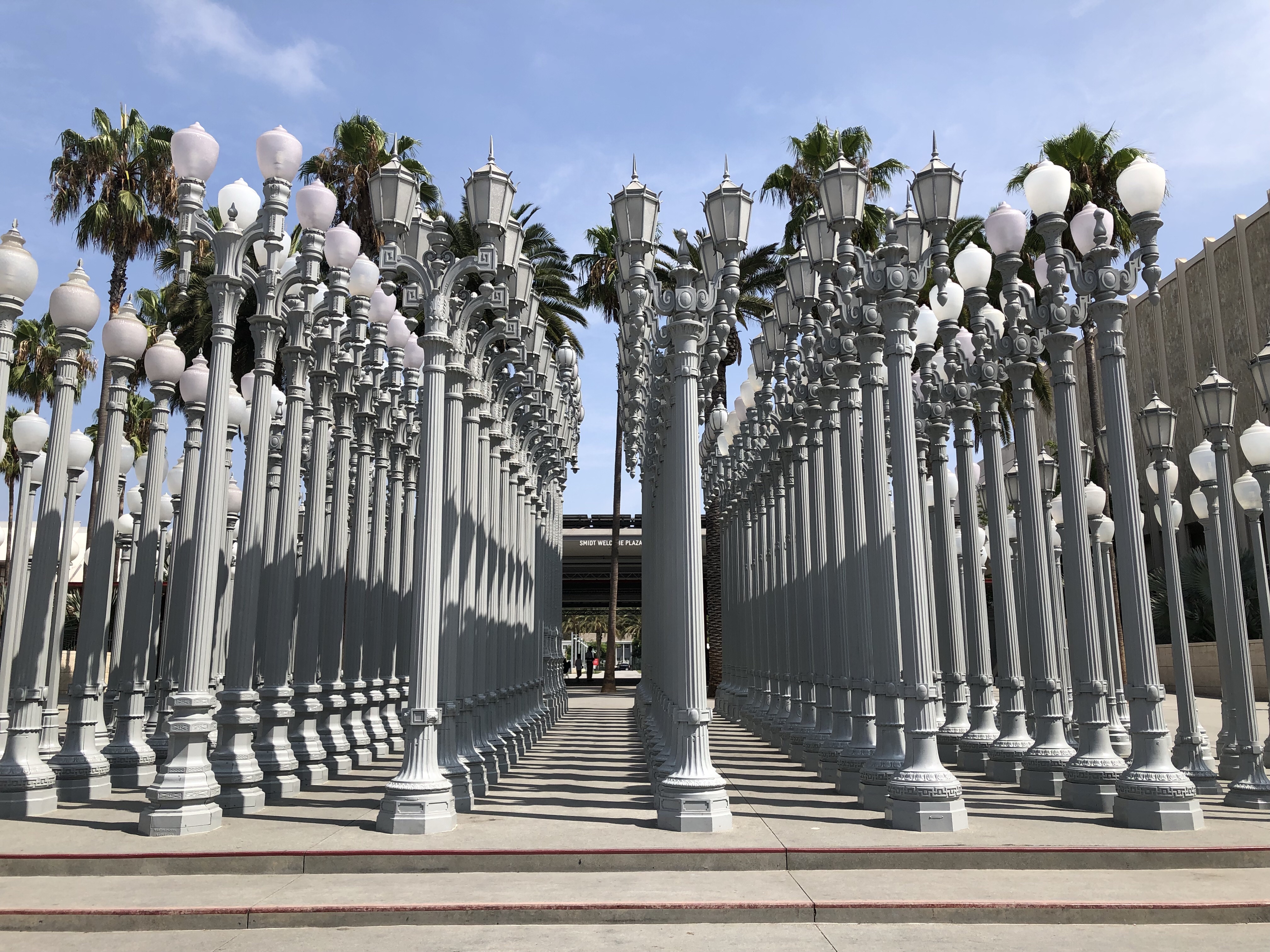
    This morning we headed to the Los Angeles County Museum of Art (LACMA). I really wanted to see this famous installation that sits outside the main entrance. This work is titled Urban Light by Chris Burden. It consists of 202 restored cast-iron street lamps and is meant to represent a civilised city – safe after dark and beautiful to see. Wouldn’t it be nice if cities were safe after dark – especially for women. Maybe one day. As you can imagine, it is a hot spot for photographs. I couldn’t resist running between the lamp posts and posing for a quick snap.

    img_5941
    LACMA Entrance

    Little did I know that LACMA consists of five separate buildings, each displaying remarkable collections. Currently, three of the buildings are undergoing renovation. We visited the German Expressionism Gallery, 3D: Double Vision, and American Art since the 1950s.

    German Expressionism Gallery

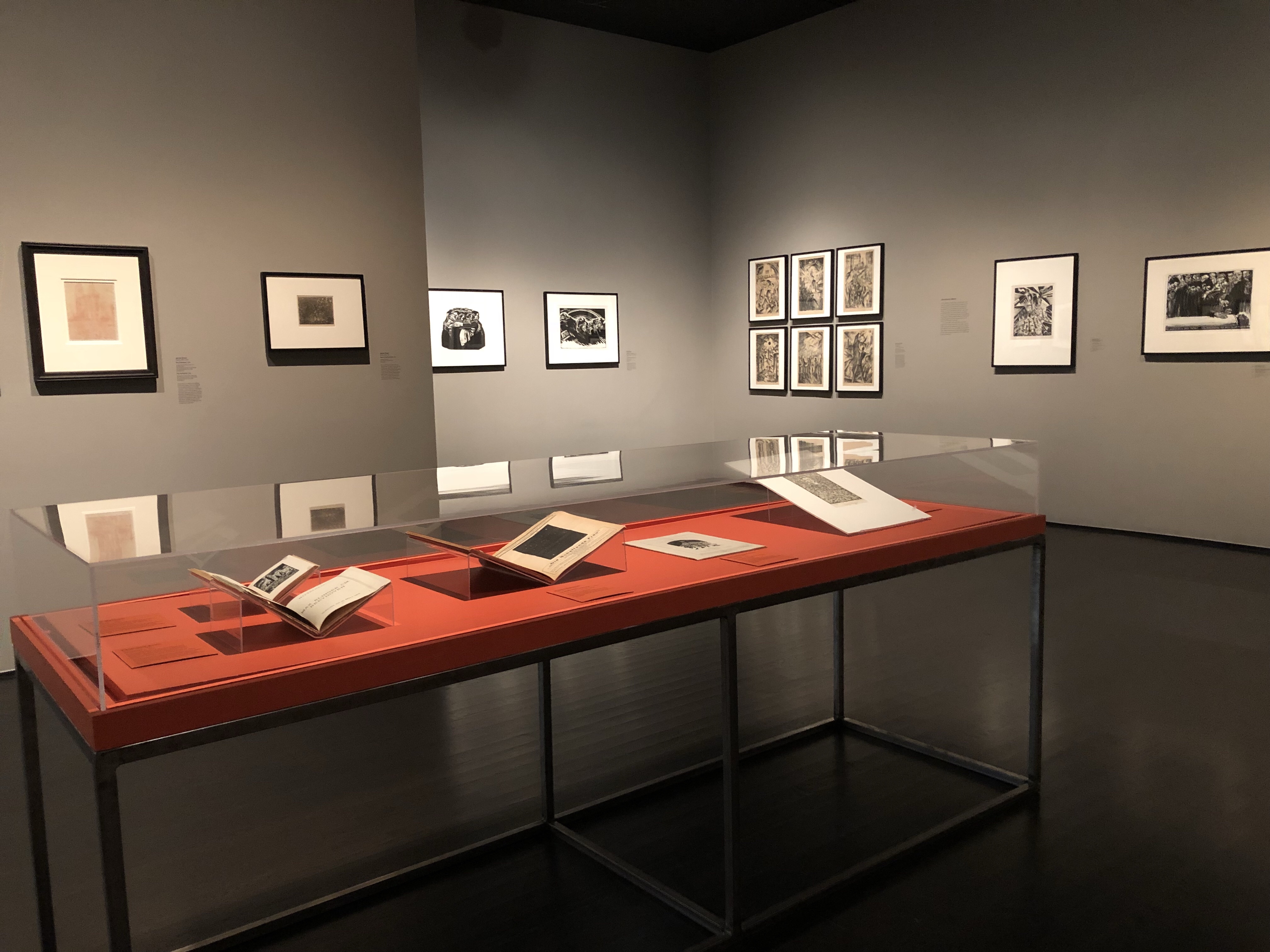
    As well as having a permanent display containing works by some of the Bauhaus greats, this gallery also had a small temporary exhibition space. On show now until 26 August is Picturing the Masses: Germany, 1900-1938.

    This was a really interesting exhibition that sought to portray mass movements. This not only included crowds of people, but also mass production and the mass dissemination of ideology. For example, there were catalogues containing mass produced products and film footage of Nazi party rallies.

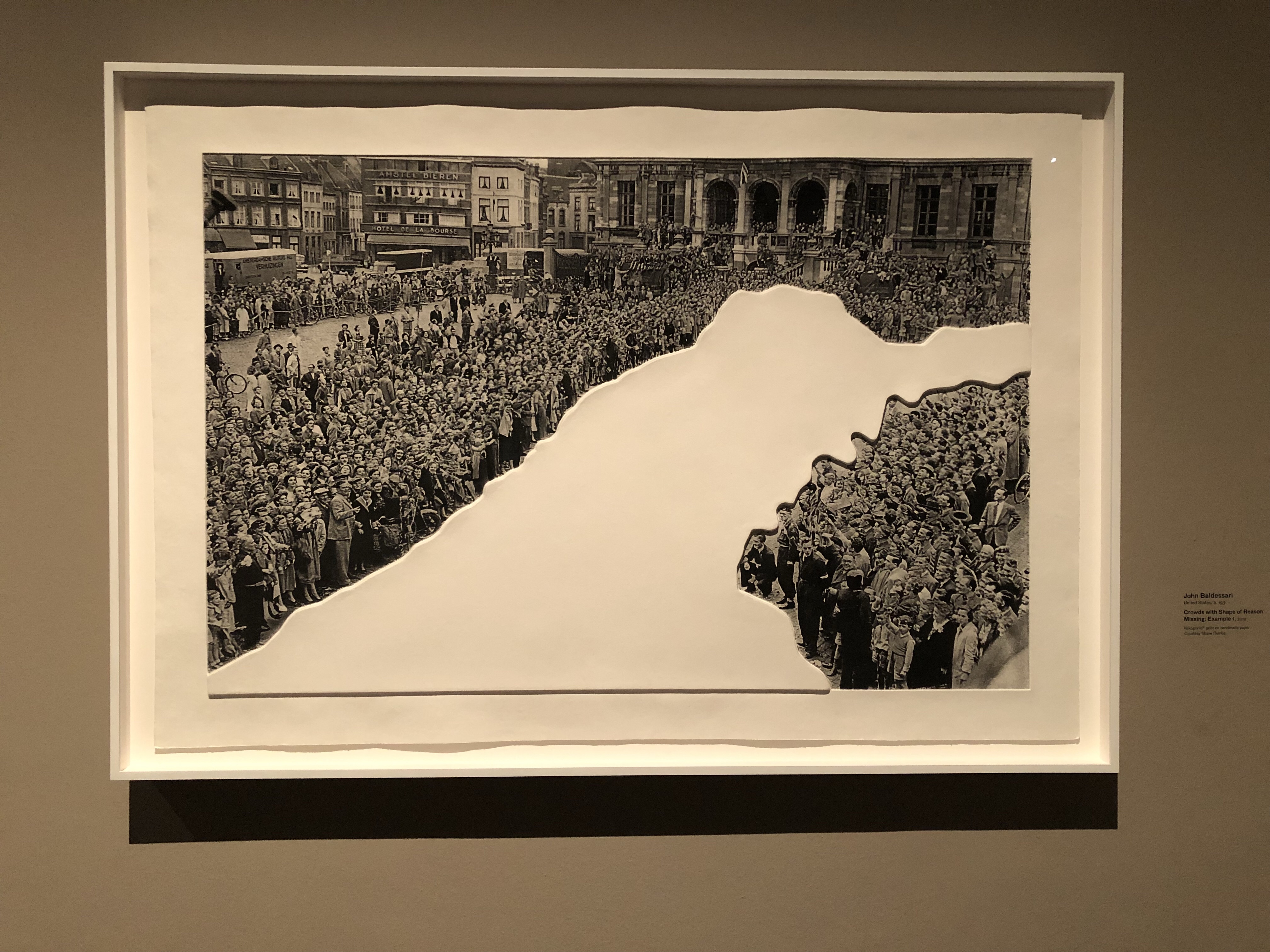
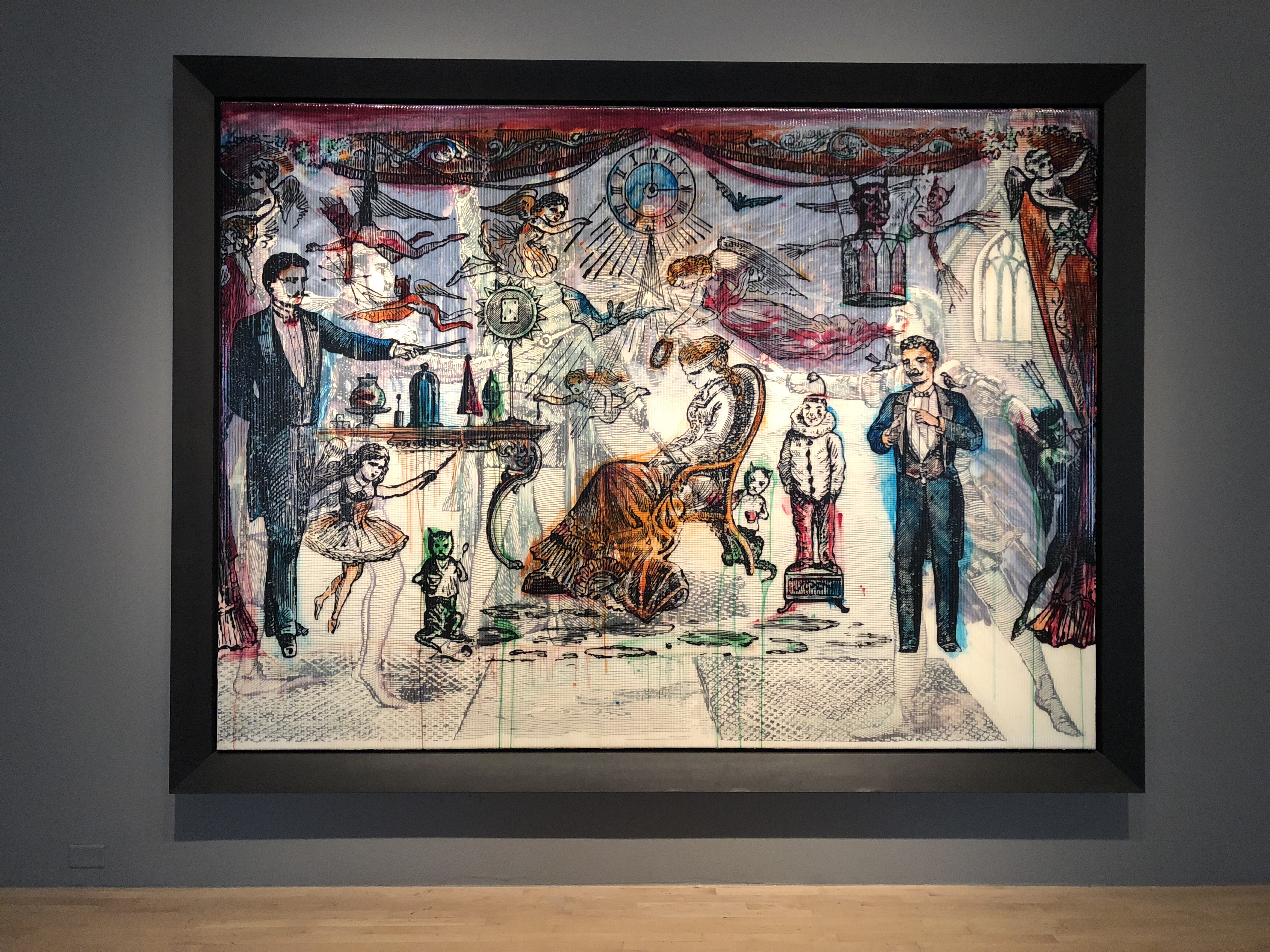
    I was particularly drawn to this artwork titled Crowds with Shape of Reason Missing by John Baldessari.

    Crowds with Shape of Reason Missing

    Even if you are familiar with the original image, this white space allows the visitor to project their own imagery into the piece. It literally could become anything you wanted it to be.

    The layout of this exhibition can be seen below.

    Layout

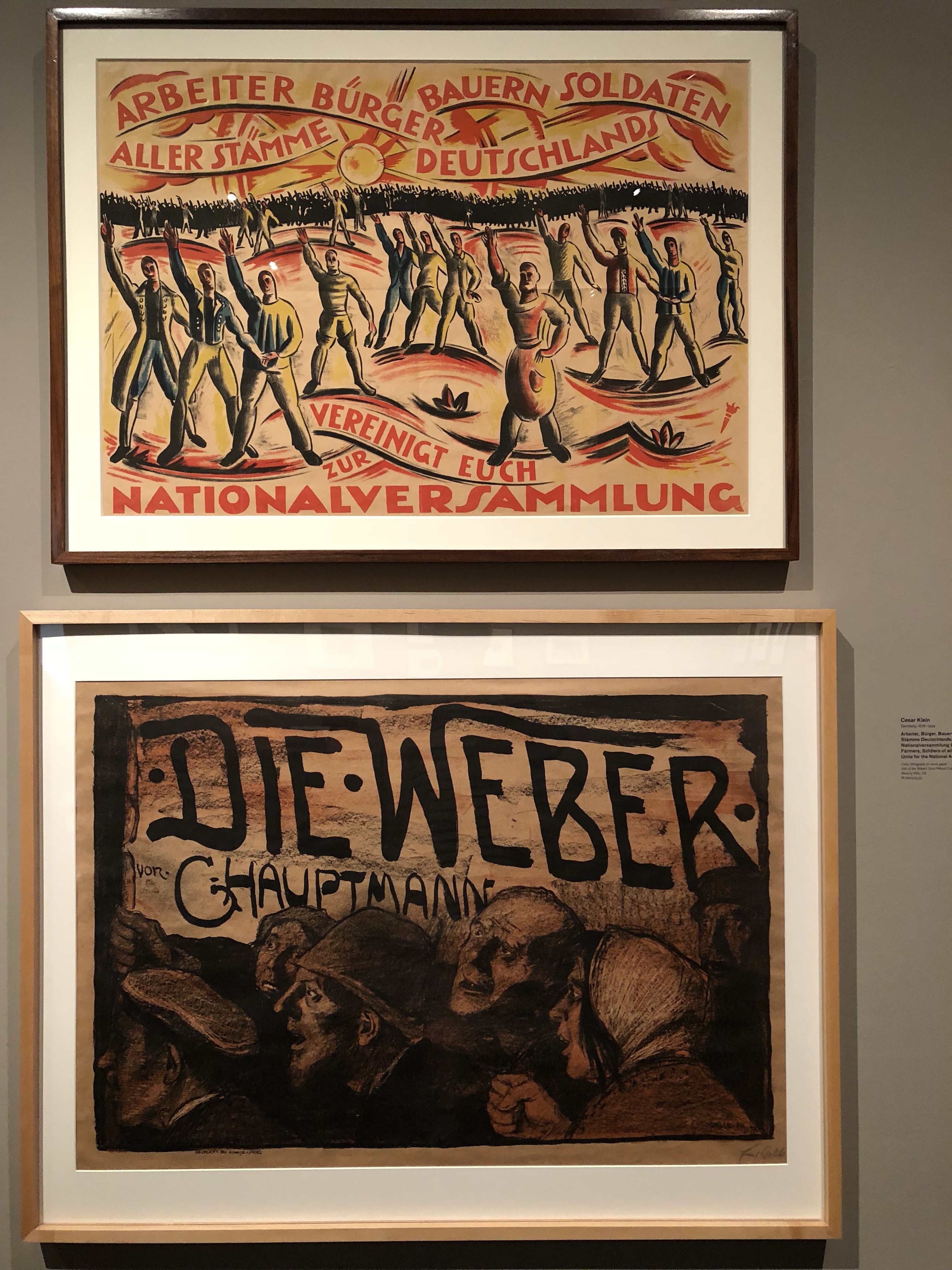
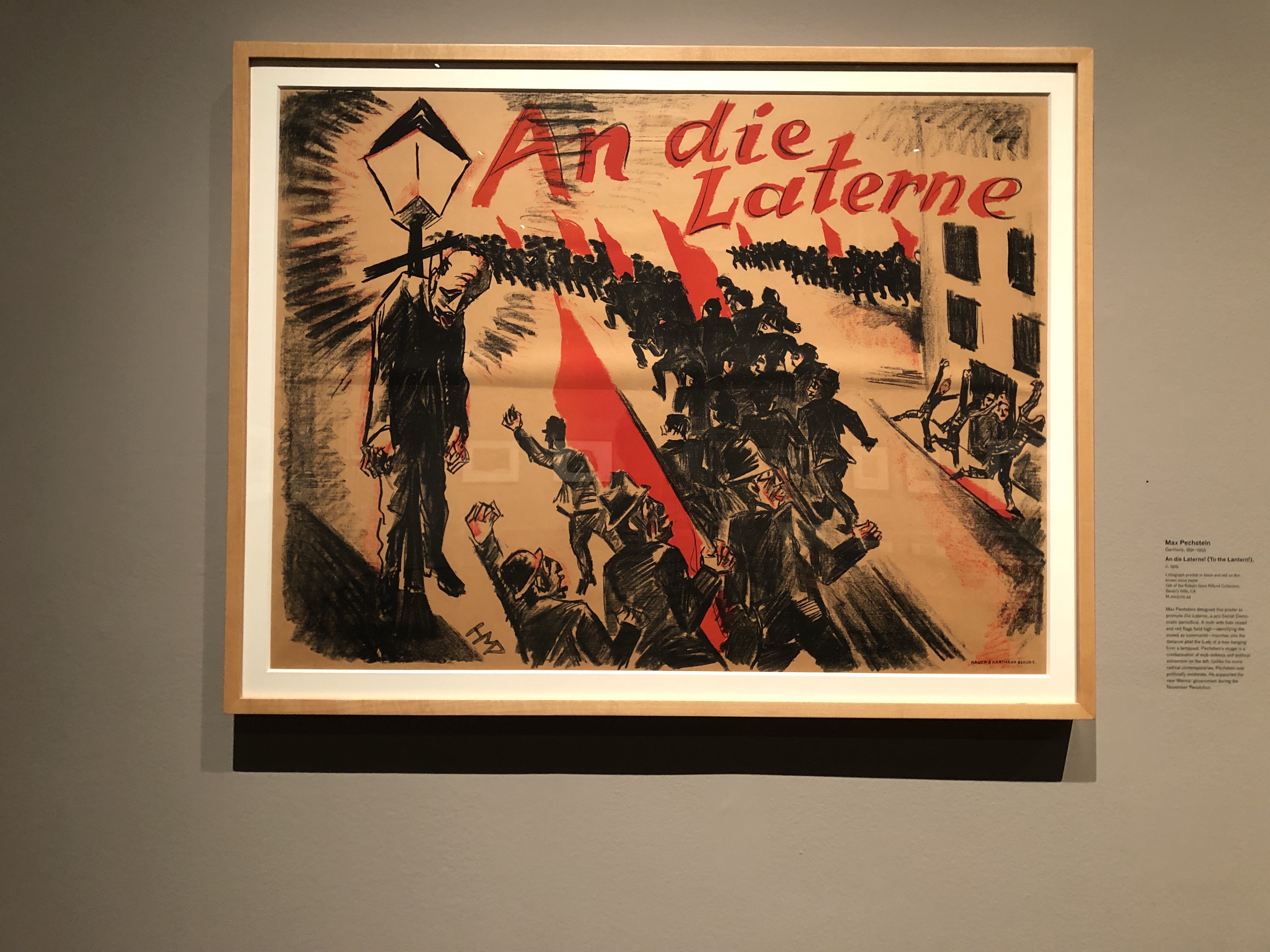
    The contrast between the red in the display cases and the grey walls aesthetically suited the works perfectly. Almost every work was on paper in either black or white, or muted colours. The only two exceptions were the works by Cesar Klein and Max Pechstein.

    Cesar Klein’s work is the top image
    Cesar Klein

    As red stands out in both works, this complemented the red in the display cases.

    I was really excited to see a couple of works by George Grosz. In a nutshell, his work depicts the decline of German society. Considering the work selected for display was titled The Entire Population is a Bunch of Malingerers you get the idea he was critical kind of guy. In the work pictured below he has categorised the urban masses of Berlin into characters such as wealthy industrialists who benefited from hyperinflation and World War I. I love his work, and others similar, primarily because he wasn’t afraid to hold a mirror up to society and point out the bad and the ugly.

    The Entire Population is a Bunch of Malingerers

    In the permanent display was a good old Bauhaus chair. So sleek, so practical.

    Bauhaus Chair

    3D: Double Vision

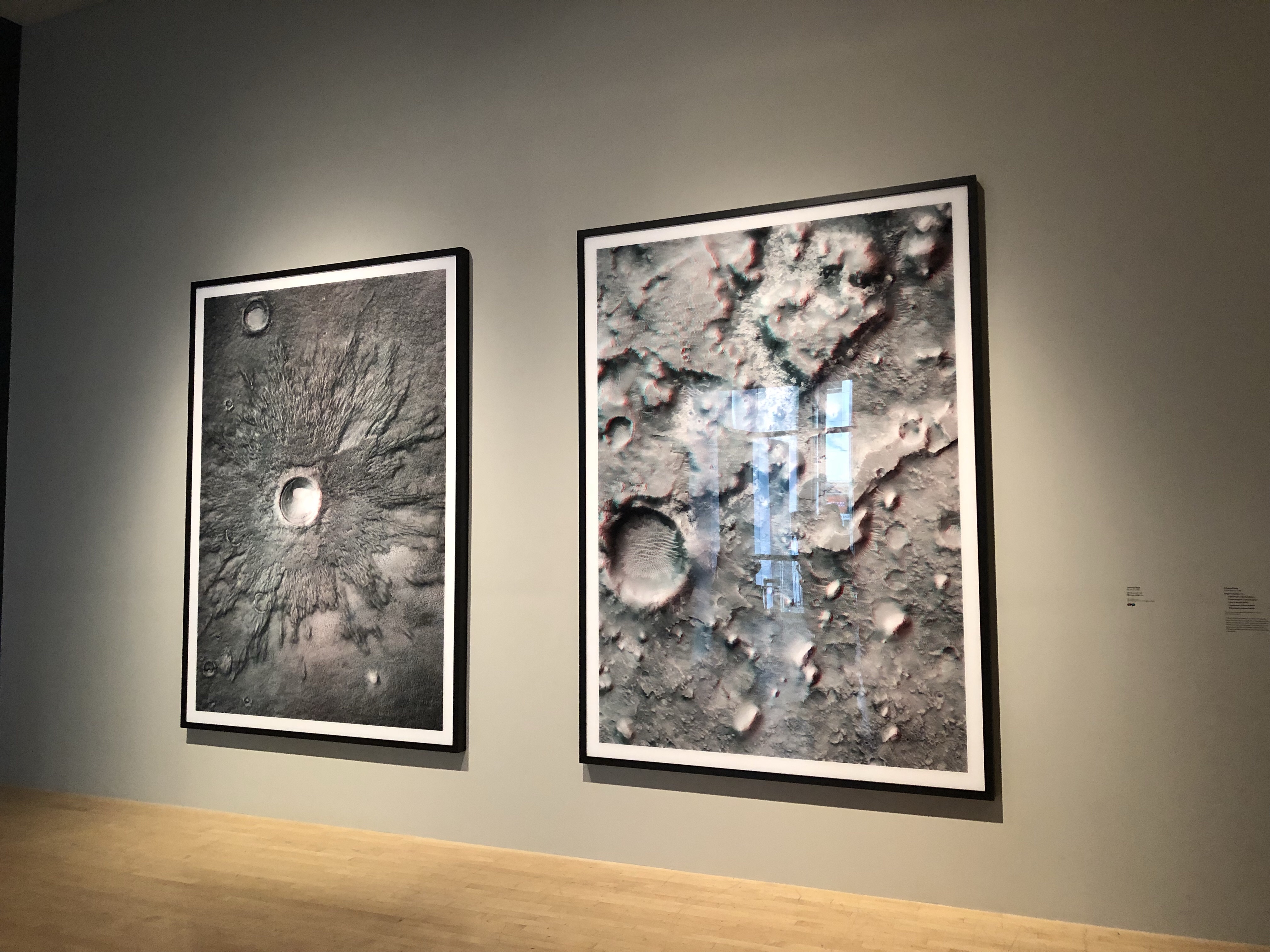
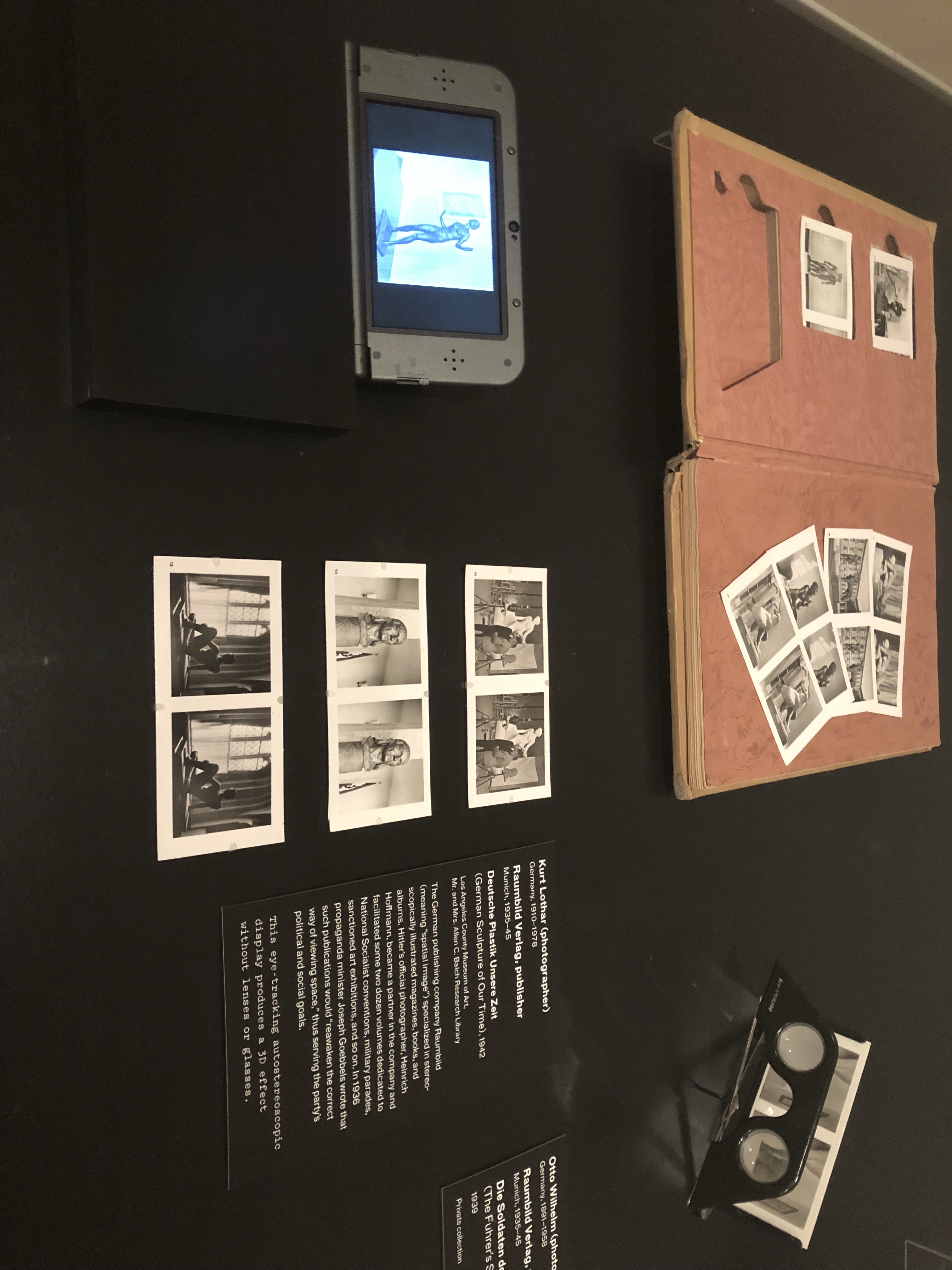
    Although the American Art section was mostly closed, the ground floor had an exhibition about 3D technology. It was a lot of fun. Throughout the exhibition there were three different types of 3D glasses that allowed visitors the chance to interact with the artworks.

    IMG_6029
    3D Glasses

    The first were the classic red and blue anaglyph glasses. They helped works like these of the moon come to life.

    Moon

    There were also plastic 3D glasses used by modern cinema and cardboard lens viewers. Each work had a small symbol indicating what glasses to wear, if any. I can imagine that this wouldn’t be suitable for everyone, however, it was an interesting way to encourage a level of interactivity with the works.

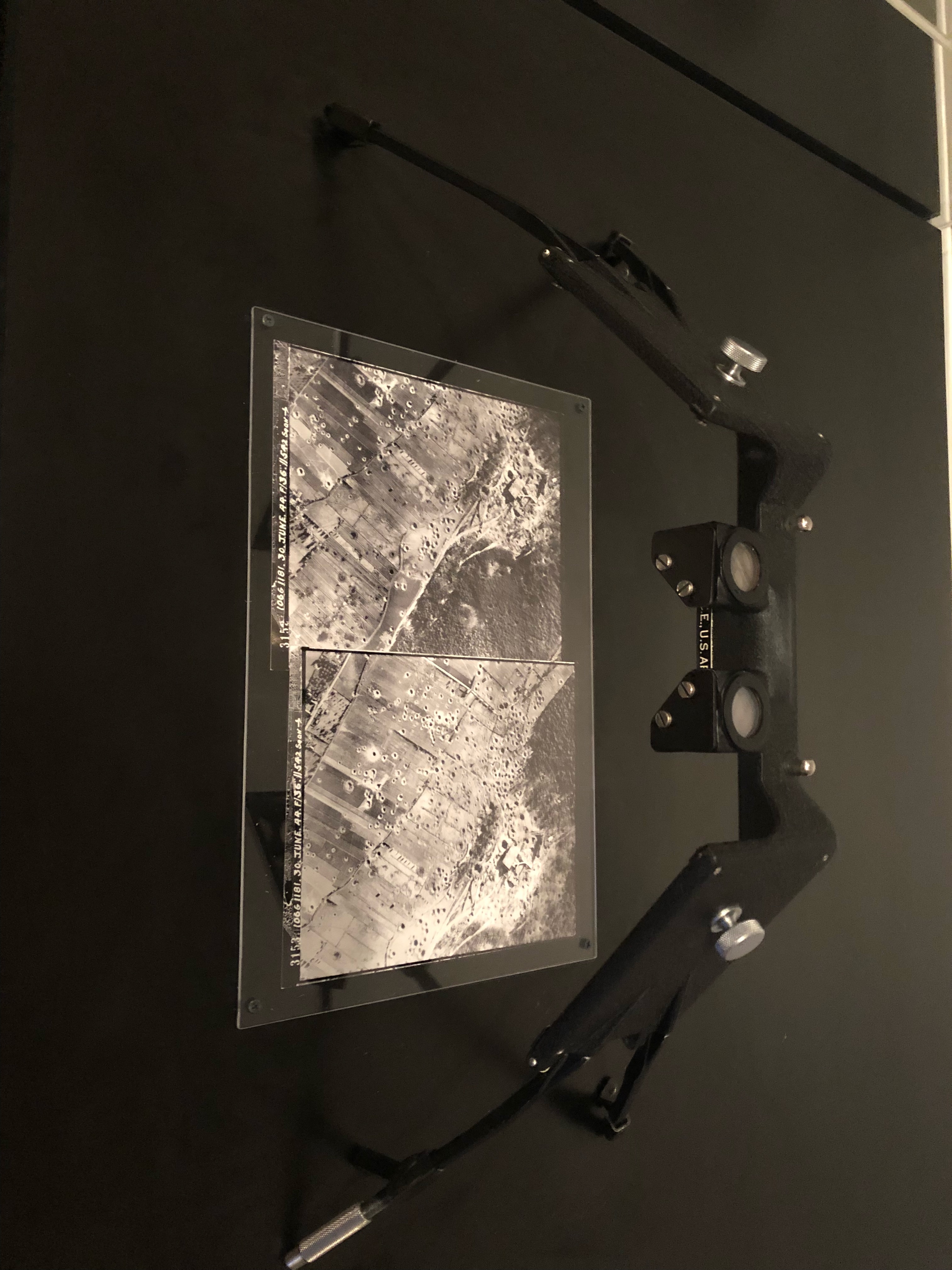
    Dotted around the exhibition space were also small cabinets containing historic objects. These included aerial surveillance images and machines used to gain a sense of depth during World War II.

    World War II
    IMG_6043
    World War II

    The exhibition also tackled the fears surrounding the onset of this new technology. For example, in the 1950s there was genuine concern that the introduction of 3D might lead to the blurring of reality and illusion.

    It was a really fascinating look at the impact of 3D technology on entertainment, art and politics.

    IMG_6046
    LACMA

    American Art since the 1950s

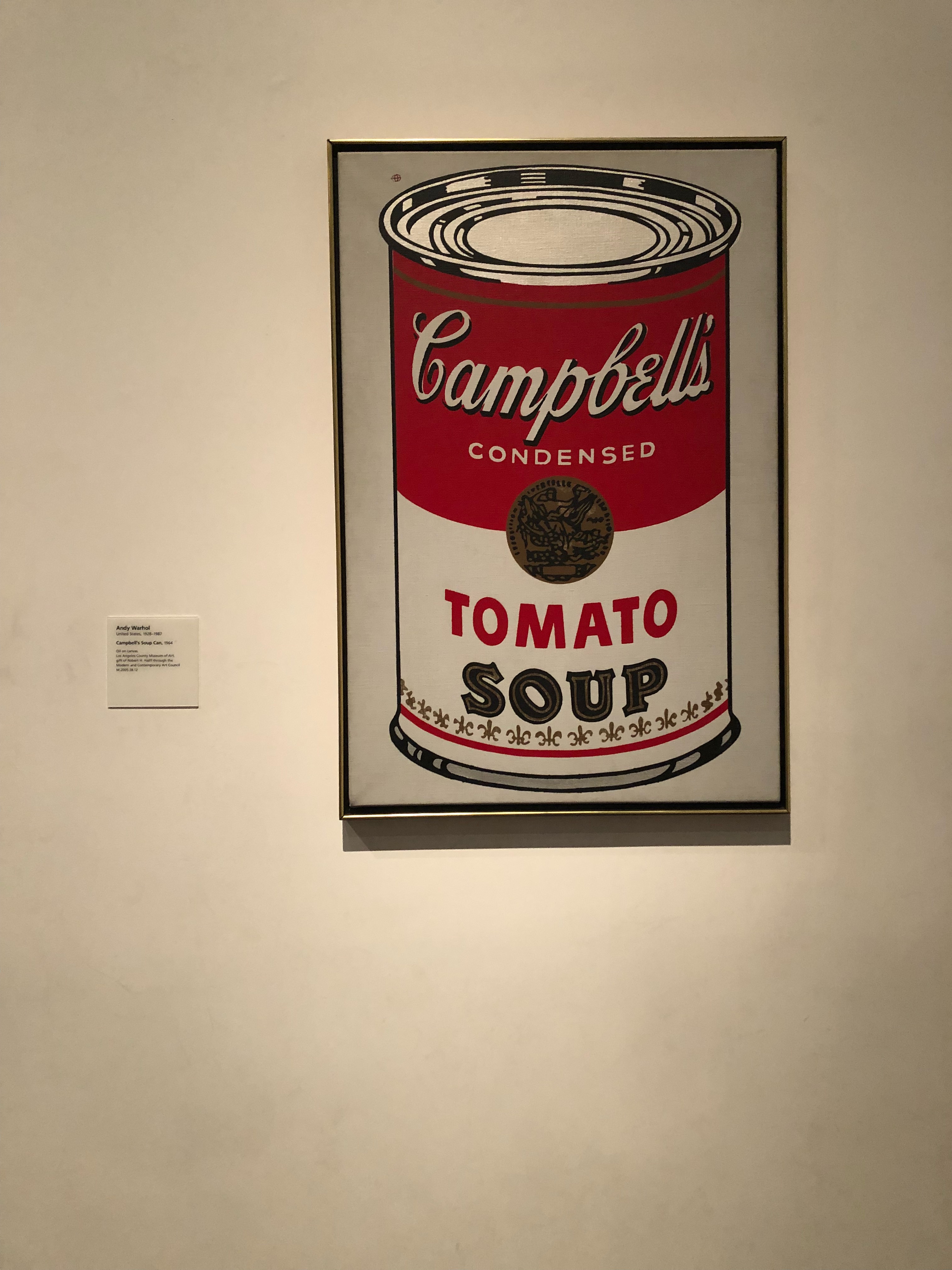
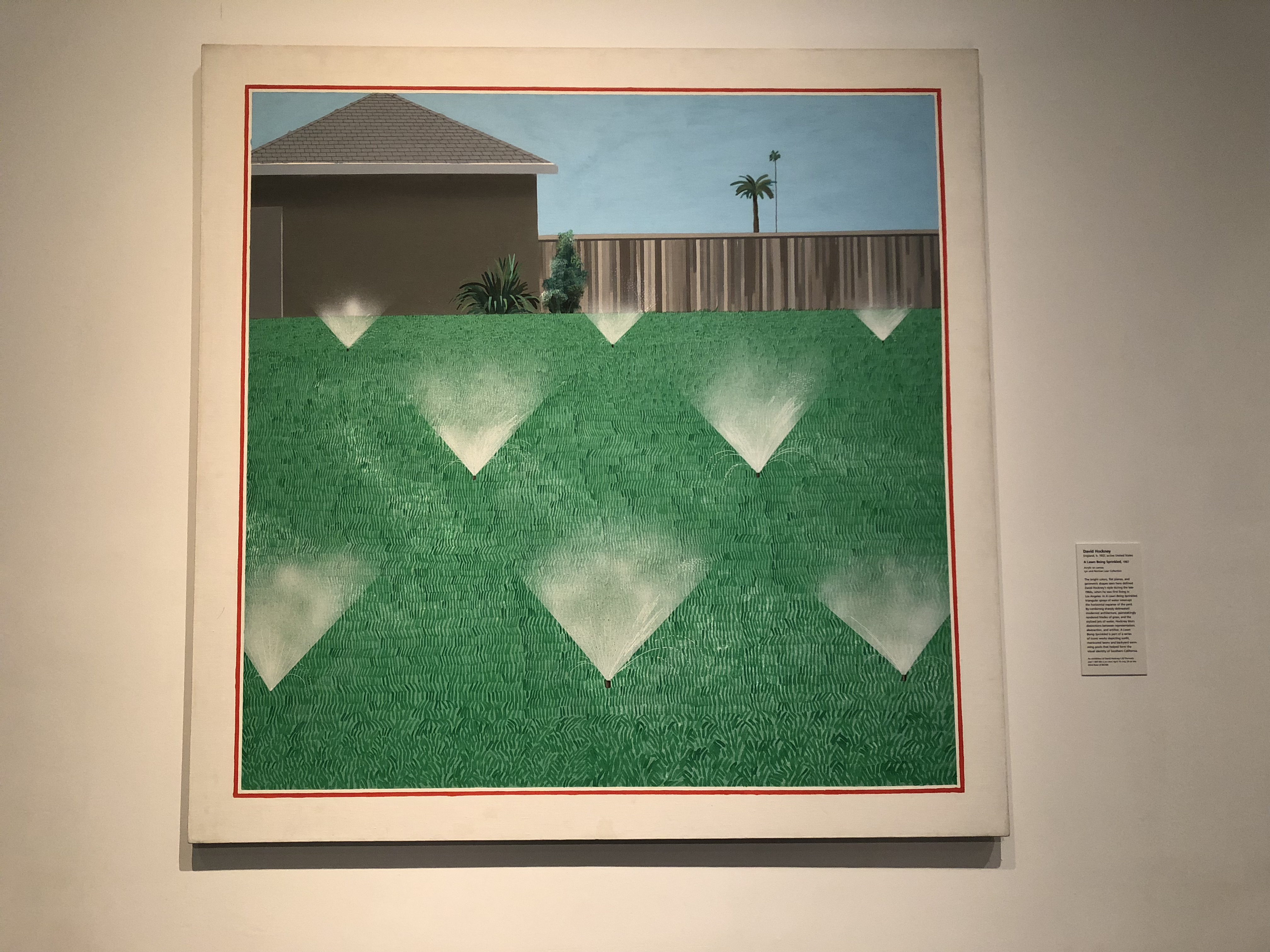
    One of the final galleries we visited displayed American art since the 1950s. There were some classic works on display by Warhol, David Hockney and Roy Lichtenstein.

    IMG_6010
    Cold Shoulder by Roy Lichtenstein
    IMG_6011
    Campbell’s Soup Can by Andy Warhol
    IMG_6014
    A Lawn Being Sprinkled by David Hockney
    IMG_6026
    The Treachery of Images by René Magritte

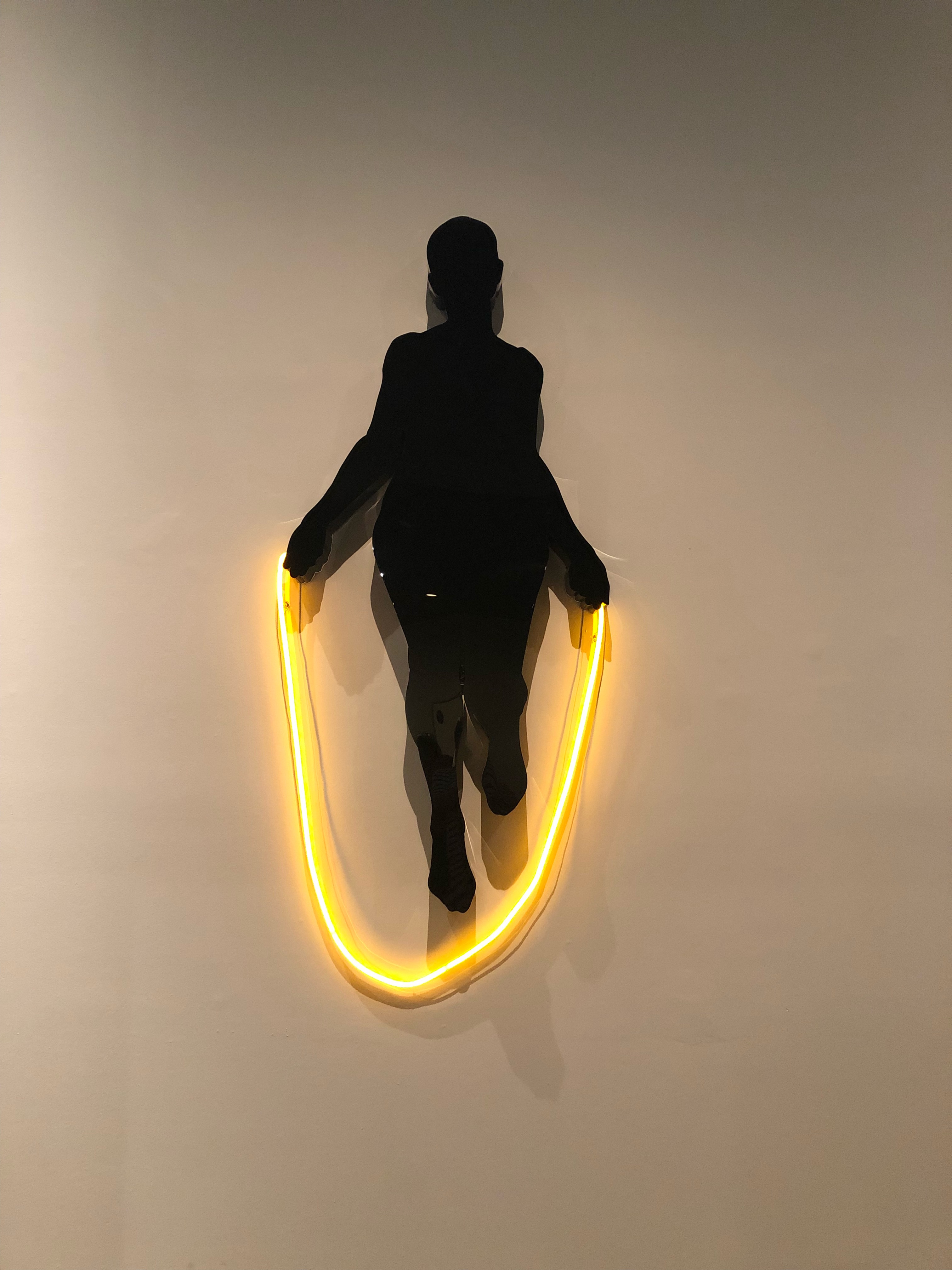
    While walking around this gallery I noticed a small room off to the side containing some new acquisitions. This one literally lit up the room.

    Jump Rope by Idelle Weber brings a sense of anonymity to those engaged in everyday activities. Seeing pop art by a truly remarkable female artist put the biggest smile on my face. You might recognise Weber’s work as her depiction of a man in a suit became the silhouette image of Mad Men. I hope they move this work to be with the other examples of pop art!

    IMG_6022
    Jump Rope by Idelle Weber

    Final Thoughts

    What really stood out to me at LACMA were the great visions supporting the temporary exhibitions. The permanent galleries were typically art gallery in feel and style. The temporary exhibitions, however, were well-designed and innovative. I wish I could visit again in the future when new exhibitions are released!

  • Los Angeles: Museum of Death

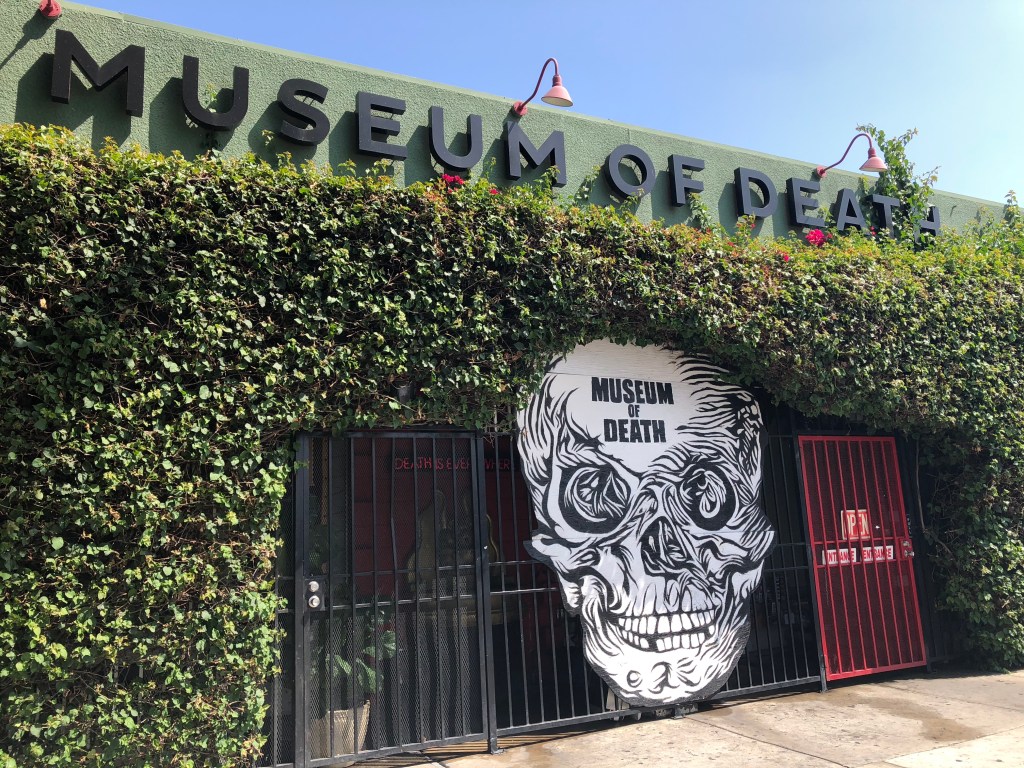
    Greetings from the hot and sunny Los Angeles! Last time I visited this city I was 6 years old and only cared about one thing – Disneyland. Since then, my list of things to see and do in Los Angeles has grown longer and longer. Finally, I now have the opportunity to visit some incredible museums and see the sites. Today was our first day so we decided to take things easy and stay around our hotel. The Museum of Death was only a short walk away. I had heard about this museum from one of my true crime podcasts so I knew it was going to be intense. But, I was genuinely interested in seeing how such a sensitive issue can be displayed. Also, I think there is this human need to try and make sense of the unthinkable and macabre.

    In short, it could have been handled a lot better due to the fact that they had some incredible objects, but, these weren’t curated as thoughtfully as possible. I should also note that I am fully aware this museum is a bit of a money-maker endeavour. Still, I think it’s important to review anything that has the word ‘museum’ in its name. So here we go.

    There will be some structure to this post, but, I firstly want to say that it is quite amazing there is no age limit. The website does warn against extremely graphic imagery. If anyone under the age of 16 or even 18 stepped foot into this museum I would strongly recommend it is followed by an appointment with a mental health professional.

    No photographs were allowed in the museum, for obvious reasons. This was actually what I appreciated the most considering the contents inside were so graphic. The rest of the post will focus on the objects, layout, labels and film.

    Objects

    The objects inside were taken straight from your nightmares. The very first room had some paintings by John Wayne Gacy and letters from serial killers such as Richard Ramirez. These objects were, as you would expect, extremely uncomfortable to view. Especially considering they were sort of crammed into one room with long labels explaining who the serial killers were and what they had done.

    Other graphic objects included crime scene photographs which I thought could have been more respectfully displayed. They were just hanging on the wall with almost no context. Maybe if they had have been displayed in folders that people could look through it might not have seemed so intentionally shocking.

    Some of the most interesting objects, for me, were the Victorian mourning jewellery and autopsy instruments from the past. This was probably because they had more imbedded history and weren’t as horrifying to see. There were full autopsy kits from the early 1800s and a make-up kit used to prepare a corpse for burial from the 1980s.

    Another set of objects I found insightful were the funerary objects for Jewish burial and the Día de Muertos (Day of the Dead) display. I had thought that the entire museum might be more like this – representations of how different religions and cultures view and deal with death.

    There were other random objects I want to mention including skulls from various animals and a whole room dedicated to the Heaven’s Gate cult. In other words, the objects were all, to varying extents, confrontational and some were problematic.

    Layout

    The layout of the museum was so that visitors could explore at their own pace. There was a pretty clear path from start to exit, but, there were rooms that branched off throughout. At times, it also allowed those who didn’t want to see particular images or objects to continue on a different route.

    Each room had a different theme so you (sort of) knew what to expect. For example, there was a room called the Manson Family filled with objects that belonged to the members. Other themes included execution and taxidermy (of animals).

    As each room was filled with objects and furniture, it was difficult to make your way around with others in the space. I can’t imagine how difficult it must be to move around when the museum is at capacity.

    Labels

    There were labels around the museum that offered some information about the objects on display. They were mostly very basic and left me thinking surely there is something more that could be written.

    There could have been more research into some of the objects on display stopping them from being merely shock value. This also could have helped with addressing the ethical issues surrounding the objects.

    Film

    We spent the most time watching documentary footage of early Hollywood murders. This was shown in the very last room of the museum. This footage explored cases such as ‘The Black Dahlia’.

    I think we spent about half an hour just sitting in this room learning about the dark side of early Hollywood.

    Final Thoughts

    This museum could have been a really interesting display on death. There were elements such as the film footage etc that showed great potential, but, the rest of the museum required more careful curating.

    If you are going to deal with death, I think it’s important to leave people feeling informed and not mentally scarred.

  • GLAM Blog Club

    On 9 December 2016, newCardigan launched GLAM Blog Club. According to their website: newCardigan is a social and professional group for people who work in galleries, libraries, archives and museums – and for those who like hanging around with GLAM types (source). GLAM Blog Club is an opportunity for those in the industry who run their own blog to write a post on a monthly theme. You can find more about it here. To see the archive of posts click here.

    I have been contributing since the beginning and try to write something every month. Despite my best efforts, some months have been missed.

    If you want to join newCardigan, subscribe, or just see more about the iniative and what they’re up to please click here.

    Enjoy reading my GLAM Blog Club posts!

  • I’m going to start by ignoring the fact I once said I’ll try and write something every month for GLAM Blog Club. It wasn’t a complete lie…I have tried. This theme, however, is a perfect opportunity to reveal and discuss a couple of my personal collections.

    Here are the two main ‘things’ I would say I actively collect:
    1. Vintage and Vintage-Style Clothing
    2. American election campaign pins

    There are other bits and pieces I collect including World War I silk postcards and, randomly enough, letters written in Massachusetts during the American Civil War. The latter is probably the nichest collection I will ever have. Nothing, however, compares to my collecting prowess in the above mentioned categories.

    1. Vintage-Style Clothing

    There is a beautiful quote that I live by and it goes “old fashion, not old fashioned”. I love it because it sums up my absolute passion for collecting vintage-style fashion and how this does not reflect any negative antiquated values. The era(s) I am most interested in are the 1950s and 1960s. More recently, however, I have been eyeing off pieces from the 1930s and 1940s.

    The majority of my clothing is reproduction. I do have some original vintage pieces that I tend to find at amazing stores including Retrostar Vintage in Melbourne. For vintage-style clothing, I almost exclusively buy online from American and British brands including Collectif, Pin-up Girl Clothing, Unique Vintage and The Oblong Box Shop. There are a few Australian manufacturers (shout out to Retrospec’d), but, not enough to sustain my collection. Note – I am not liable for any money you may spend at the above mentioned online shops.

    So when did I start collecting? Short answer: since I was about 19/20. Long answer: When I was at the latter end of my history degree I started becoming obsessed with fashion. It’s sad when people dismiss it as something frivolous to be interested in because what we wear can tell some of the most incredible stories. It wasn’t until I started volunteering with textiles at the Queensland Police Museum and travelling abroad that I started to realise the layers of history that can be literally sewn into garments.

    Today, fashion is fast and the industry has come under scrutiny for sweatshop conditions and its impact on the environment. I do sometimes purchase without thinking and I’m really trying to be more mindful and support sustainability. This means more company research and committing to buying timeless pieces that a) I love and b) serve a purpose. I find that proper quality pin-up fashion isn’t something that is produced in overwhelming quantities. It doesn’t have a perfect record, but, is something I know I will buy and not throw out two or three years later.

    The pin-up/retro/rockabilly community is amazing. It is filled with extremely supportive people that throw epic events such as Greazefest in Brisbane and Viva Las Vegas. I’ve not only found something to collect that I can display everyday, but, I’ve also found a culture that I can fit right into.

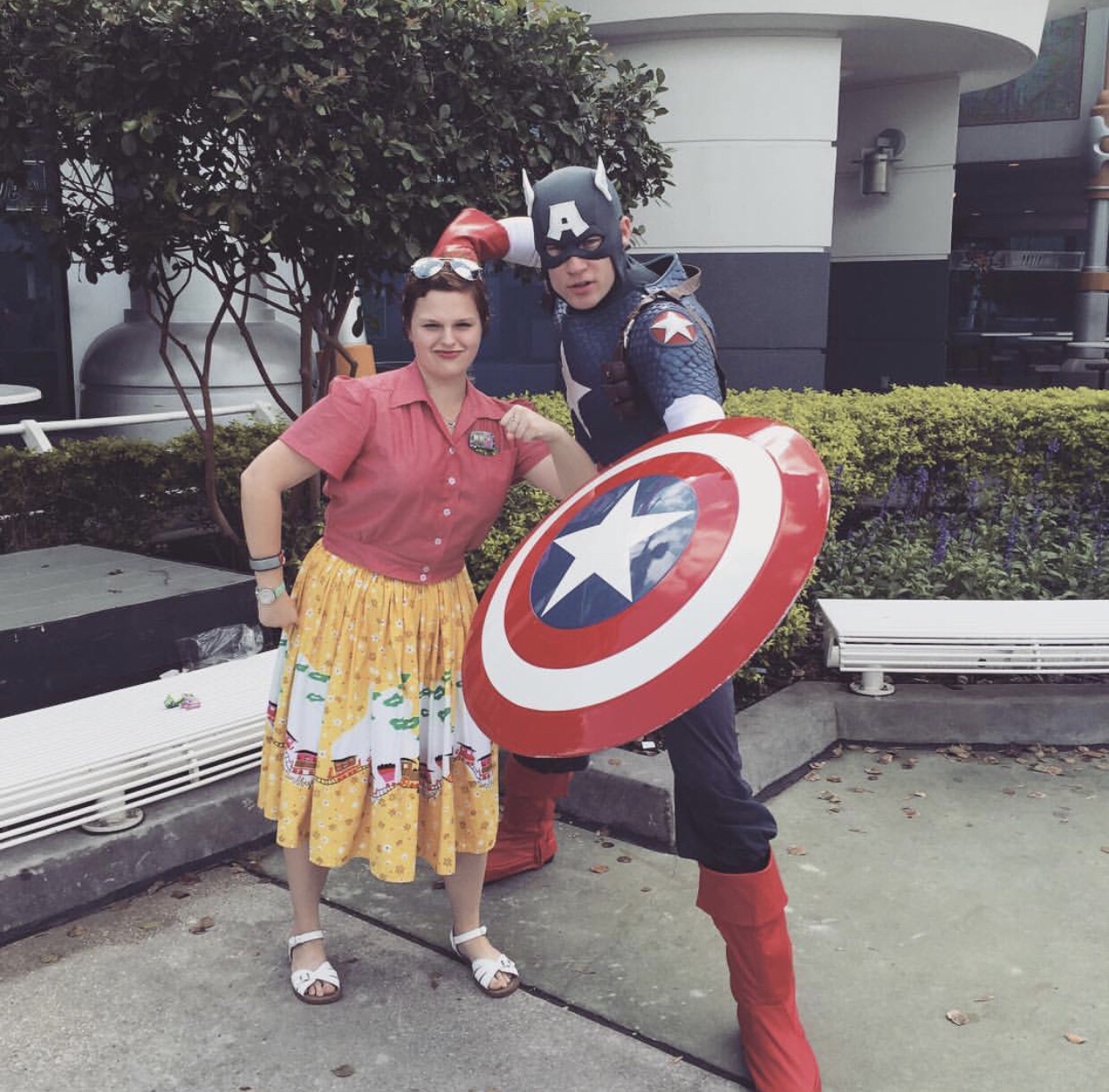
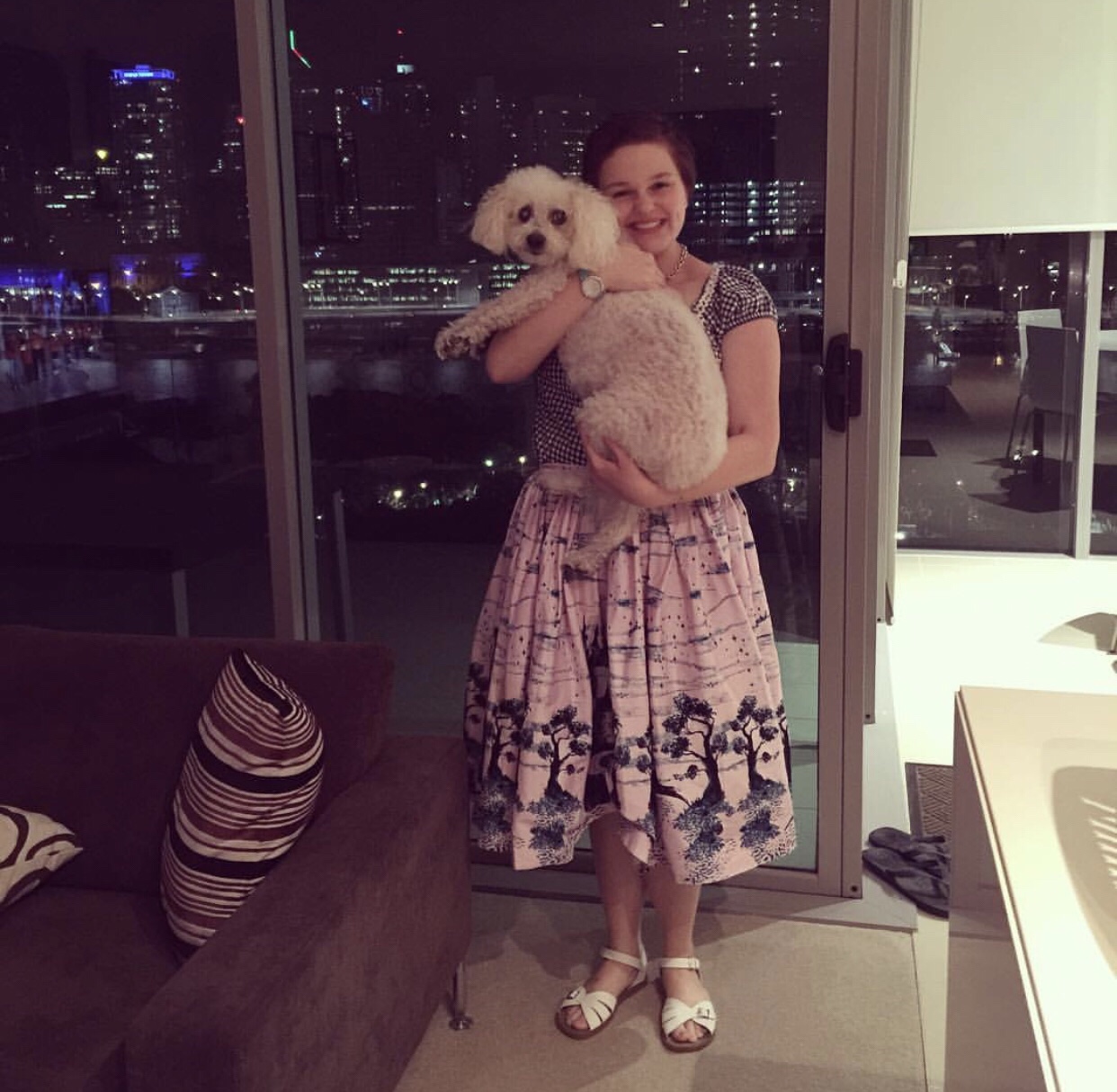
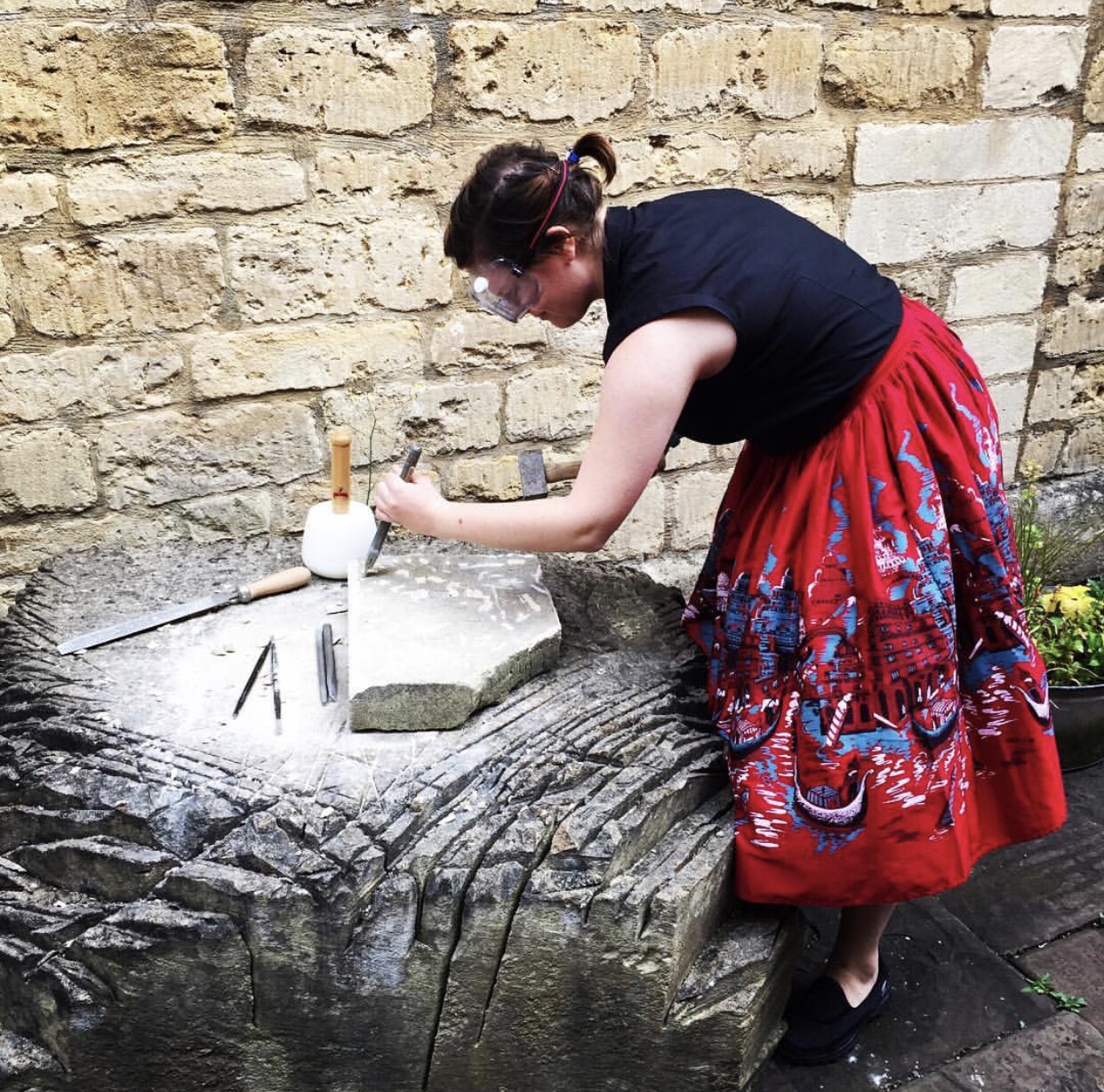
    Here are a couple of photographs to illustrate my love (featuring my dog and Captain America):

    2. American election campaign pins

    As you probably know, political pins or badges are circulated in America around the time of elections as a form of political advertising. There is evidence to suggest that pins were used as a way to support the presidency of George Washington. It wasn’t until Abraham Lincoln, however, that pins were used during a political campaign. In 1896, pins were mass produced when William McKinley ran against William Jennings Bryan (source).

    They are generally quite small, relatively inexpensive (depending on the badge) and easily purchased from online political memorabilia stores and even eBay. I have around 50 in my collection representing both Democrats and Republicans. The earliest one I have is from the campaign of Franklin D. Roosevelt.

    My favourite. A badge with ribbon celebrating the inauguration of President Kennedy.

    I have quite a few badges for President John F. Kennedy. Quick tangent, I do have a collection of memorabilia relating to President Kennedy. Probably my most loved item is the board game ‘The Exciting New Game of the Kennedys’ from the 1960s. I find his presidency, and the time during which he was President, fascinating.

    I have really enjoyed the opportunity to write a bit about my own collection! I literally love how this post is like a grown-up version of show and tell. I cannot wait to read what other people collect!

  • Brisbane: Museum of Brisbane

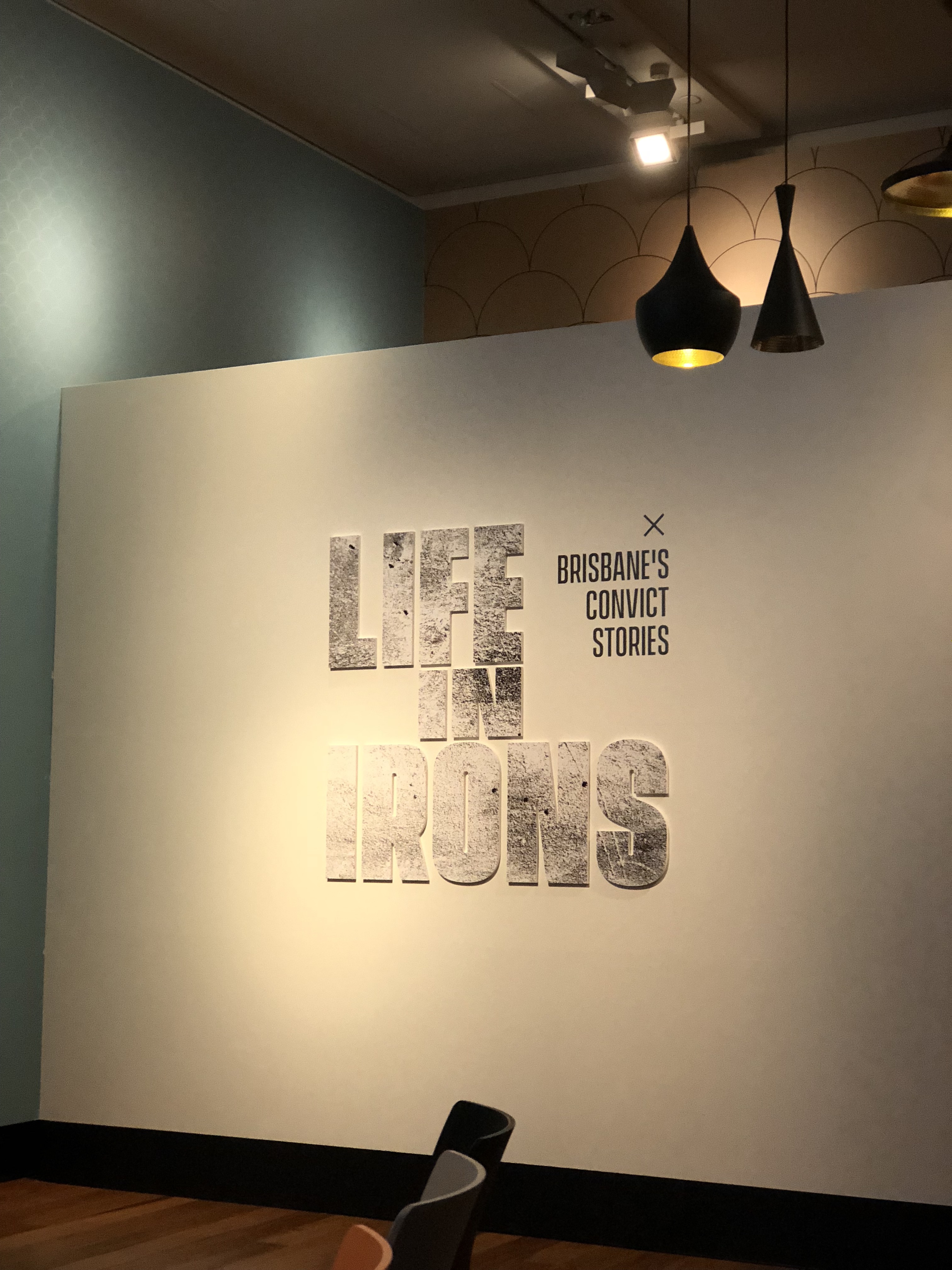
    The history and evolution of tattooing is fascinating. Originally reserved for criminals, now it is estimated that approximately 19% of Australians have at least one tattoo (source). As I find this particular topic very interesting, I was excited when the Museum of Brisbane released tickets for a public program titled Convict Tattoos: Skin Stories. This program was held in conjunction with their new exhibition Life in Irons, the men and women of the Moreton Bay Penal Colony. The following blog post will provide some convict context before focusing solely on the talk.

    Convict Brisbane

    To simplify a really long, complex and interesting story, convicts were not initially sent to the Moreton Bay Penal Colony, now modern-day Brisbane. In 1824 the decision was made to establish this colony as a place of secondary punishment for hardened criminals. Numbers fluctuated from around 947 convicts in 1831 to 374 before it was officially closed in 1842. When the colony closed, Queensland was then opened to free settlers.

    IMG_4515
    Museum of Brisbane

    Amazingly, quite a few sources from this time period have survived allowing for great insights into the people who were sent to the colony and the nature of their crimes. If you head on down to the Queensland State Archives you can view the Chronological Register of Convicts at Moreton Bay. In this register you can see the names, ages and physical descriptions of the convicts. The architectural drawings and archival records of the colony were digitised in 2012 and listed on the UNESCO Australian Memory of the World Register.

    IMG_2128
    Book of Trials in Moreton Bay 1835-1842

    Before moving to Sydney, one of my many roles was guiding people around Brisbane pointing out convict-related sites. Today, only two buildings remain from this era, the Old Windmill and the Commissariat Store. The latter is a museum that tells the story of the Moreton Bay Penal Colony.

    I hope that little bit of context has helped set the scene. If you would like to read more about the Moreton Bay Penal Colony, aka where I got my information from, I will include a short list of references at the end of this post.

    Convict Tattoos Skin Stories

    When we arrived at the Museum of Brisbane, we had the opportunity to quickly look through the Life in Irons exhibition before settling in for the talk. There were two speakers: Dr Jennifer Harrison and Clare November Miles. Harrison is a honorary research fellow with the University of Queensland focusing her studies on early Queensland history. Miles is the owner of Painted Ladies Tattoo in Holland Park and a high school visual arts teacher. Miles has also published a book on the first female tattoo artists in Australia.

    IMG_6100
    Life in Irons

    Rather than having one person present followed by the other, the talk seemed to naturally flow between them. Harrison would provide some information on the convicts before asking Miles for an insight into modern-day tattooing. So I don’t ramble on and on, I’m going to provide a brief overview of the information both speakers covered.

    Dr Jennifer Harrison

    Harrison focused her talk specifically on the Moreton Bay Penal Colony convicts. I was particularly interested in learning about the available source material that sheds light on convict tattoos. Specifically, is it all written evidence or are there drawings etc depicting the different tattoos? According to Harrison, when convicts left the colony there was a short physical description that accompanied their name written in a log book. As tattoos were quite a clear physical trait, they were included. Depending on the complexity of the tattoo, sometimes little pictures were drawn in the book.

    Harrison covered the most common types of tattoos, where they were located, and who usually performed the tattooing.

    Most common types of tattoos – flower pots (Harrison’s research has not been able to determine exactly what this symbol represented), wedding rings, anchors, wreaths and initials

    Where they were located – almost exclusively on the arms

    Who usually performed the tattooing – tattoos were either self-administered or the tattooing was perfromed by friends.

    Despite the fact that we know the different types of tattoos, Harrison highlighted that we don’t know for absolute sure the meanings behind the symbols. Apart from the flower pots, the other types of tattoos have some generic meanings ascribed. The anchor, for example, could have been a symbol of hope, or tattooed onto the arm of a convict after crossing the equator. The initials were more than likely those of family or friends left behind in the United Kingdom. There is evidence to suggest that convicts were already tattooed before boarding the ships to Australia and before arriving in Moreton Bay. Harrison also spoke of two female convicts who were registered as having had tattoos.

    Clare November Miles

    Miles provided an insight into modern-day tattooing in order to juxtapose the past with the present. For example, after hearing about some of the most common types of tattoos for convicts, Miles spoke about what are some of the most common tattoos today.

    IMG_5225
    Clare November Miles

    One part of the presentation that I really enjoyed was actually hearing about her tattoos. It was obvious that a lot of thought had gone into the placement and selection of tattoos as well as their meaning. They were incredible works of art and clearly reflect different aspects of her identity.

    It was fascinating to hear about how the nature of tattooing has transformed. In particular, the fact that in the last few years, tattooing has grown in popularity amongst young females. What Miles was saying really corroborated this idea of transforming cultural and societal perceptions of tattoos.

    Question Time

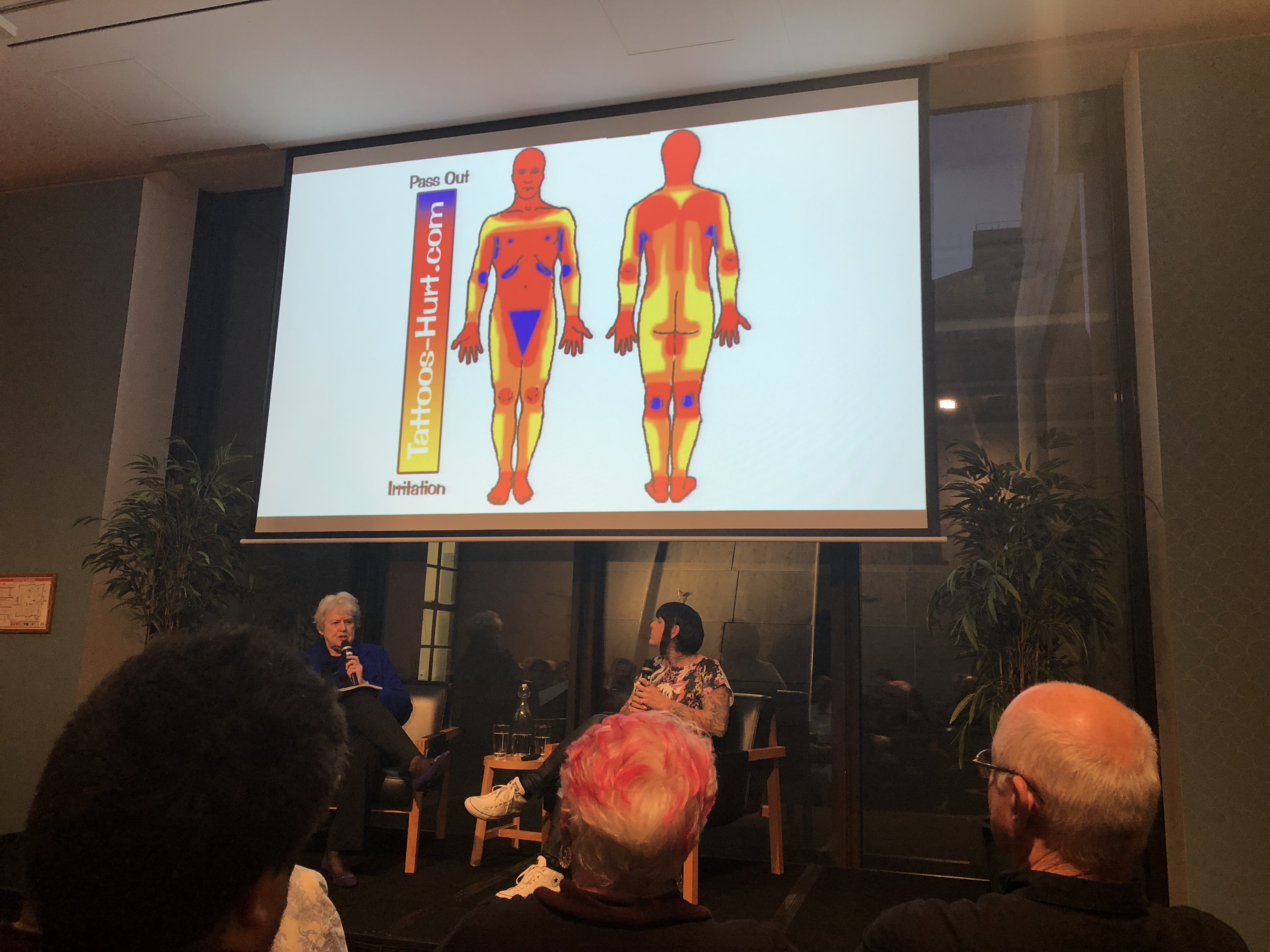
    Question time was not at all what I had predicted. The majority of questions were directed at Miles and included ‘is it ok for people to stare at heavily tattooed people’ and ‘where hurts the most when getting a tattoo’. Miles stated that yes it is ok to stare and one of the most painful places is behind the knee (ouch ouch ouch).

    IMG_5521
    Clare November Miles

    It was a great question time and, shock horror, actually had questions and not statements masquerading as such. The audience seemed genuinely interested in learning more about modern day tattooing procedures.

    The End

    I won’t be reviewing the exhibition as I really didn’t have a good look at everything on display. Life in Irons is on display until 28 October 2018. Surely I will have some spare time to return and have a closer look. Considering the architectural plans and archival materials on display are probably not going to be displayed again, I think I will make returning a priority!

    IMG_7169
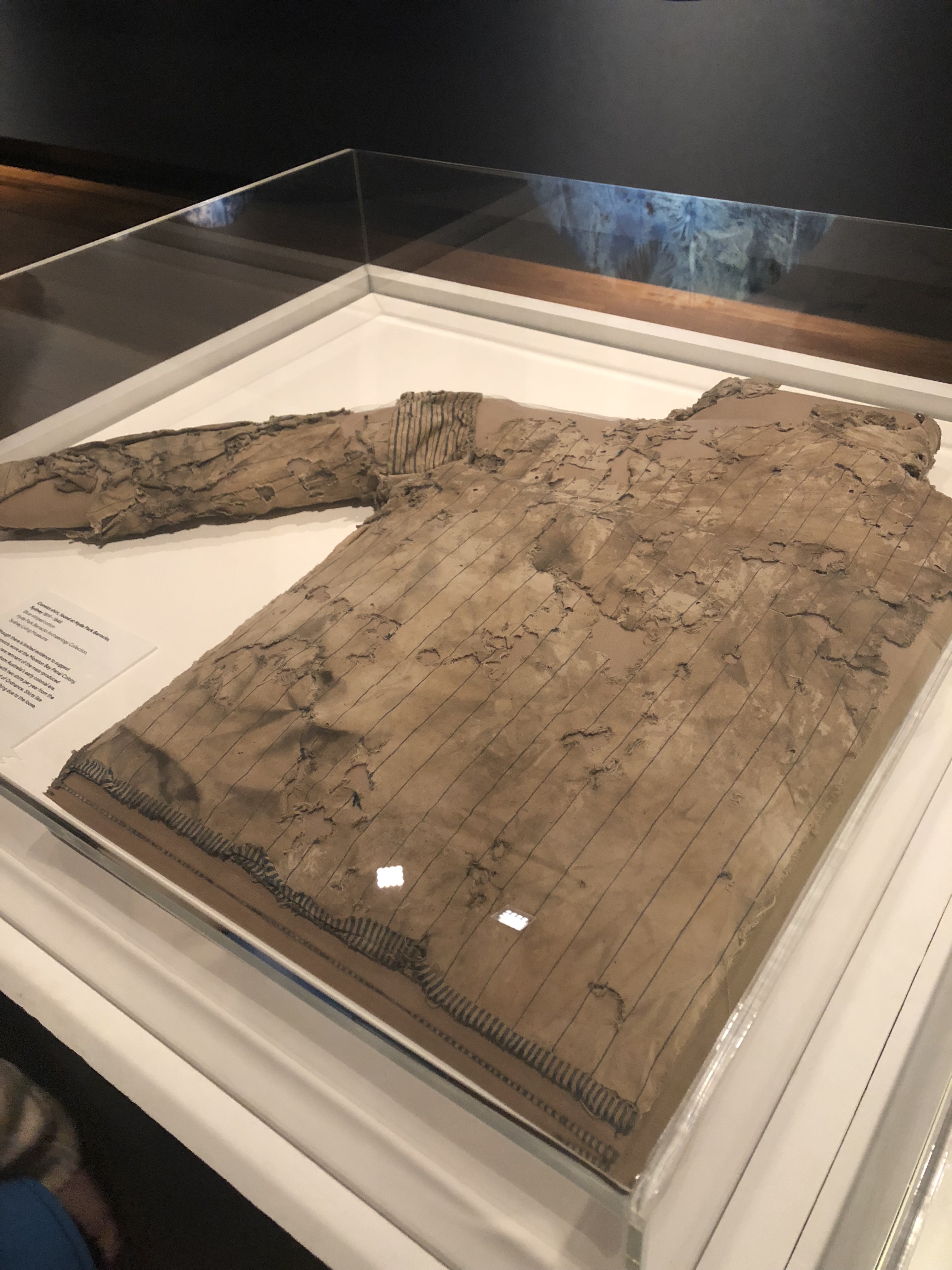
    A taste of what’s to come – convict shirt found at Hyde Park Barracks, Sydney

    References

    http://blogs.slq.qld.gov.au/jol/2014/06/12/moreton-bay-penal-settlement-1824-to-1842/

    http://www.amw.org.au/register/listings/convict-records-queensland-1825-1842

  • Brisbane: UQ Art Museum

    On Friday night, I was fortunate enough to attend the opening of Defying Empire: 3rd National Indigenous Art Triennial at the University of Queensland Art Museum. This exhibition has travelled from the National Gallery of Australia where it was on display in 2017. The evening was well-structured and it was fantastic to see so many people in attendance. I am going to focus this post on the evening itself with only occasional references to the art on display. I will also note here that photography is not allowed in the exhibition due to copyright issues. For this reason, there will not be many images throughout the post.

    Context

    In total, the exhibition consists of works from thirty contemporary Aboriginal and Torres Strait Islander artists from all around the country. Each artist has one work on display, meaning there is a mix of messages and stories as well as media types.

    The main aim of the exhibition is to commemorate the 50th anniversary of the 1967 Referendum that recognised Aboriginal people as Australians for the first time. Artists were able to respond to the Referendum itself, or, create works that reflect on broader themes and the long-lasting effects of invasion. On display are works that look at issues of identity, racism, displacement, nuclear testing and the stolen generations.

    To understand the crux of main aim of the exhibition, I am going to quote Tina Baum (Larrakia/Wardaman/Karajarri peoples), Curator of Aboriginal and Torres Strait Islander Art at the National Gallery of Australia.

    “We defy: By existing; By determining our identity; By asserting our histories; our culture; our language; By telling our stories, our way; By being one of the oldest continuous living cultures in the world.” (reference)

    IMG_3264
    Defying Empire
    IMG_5800
    Defying Empire

    Opening Night

    It is always interesting to see how a particular institution decides to conduct their opening nights. My friend and I arrived at the Gallery around 5.50 pm for a 6.15 pm start. If you’re wondering why I’m boring you with arrival times, you’ll see why in a minute. Anyway, as soon as we walked through the doors, we were made to feel quite welcome by Gallery staff. At around 6 pm, we were notified that a short Curator’s tour of the exhibition was about to take place.

    If we had arrived closer to the official starting time, we wouldn’t have had the amazing opportunity to be a part of this tour. I am a huge fan of tours in cultural institutions as a way of sharing the more ‘behind-the-scenes’ information and also as a way to orientate you as a visitor.

    As we walked through the exhibition space, one thing that really stood out to me was that each space was very well balanced. Large works complemented each other and smaller works were presented in a way that meant they weren’t lost on the walls. The first work you see entering the space is Assimilated Warriors by Karla Dickens (Wiradjuri people). This work consists of a series of fencing masks that reflect the battle for soverignity and rights that occured in the lead up to the 1967 Referendum. It also comments on how these battles continue.

    This work was balanced on the opposite wall by Untitled by Daniel Boyd (Kudjla/Gangalu peoples) and nguram-bang-dyuray by Jonathan Jones (Wiradjuri/Kamilaroi peoples). Untitled is a huge canvas work depicting the murder of Captain Cook whereas nguram-bang-dyuray consisted of a series of 19th century prints that had been etched with traditional Aboriginal designs. Themes of identity and reclaiming history prevailed.

    Conclusion

    After the speeches and the official opening, we were able to revisit the works on display and have a closer look. I was very glad to see that there was some crowd control happening at the entry to the exhibition space. Especially considering there were around 400 people at the opening.

    IMG_3356
    Defying Empire Opening

    Defying Empire: 3rd National Indigenous Art Triennial is an incredible show that displays the diversity of Aboriginal and Torres Strait Islander art and a multitude of messages that can be conveyed through various art forms. It is a powerful exhibition and one I definitely recommend seeing. Defying Empire is on display at the UQ Art Museum until 11 November 2018.

  • Brisbane: Abbey Medieval Festival

    The Abbey Medieval Festival, hosted by the Abbey Museum of Art & Archaeology, is a living history event. I have always wanted to attend the festival and see, firsthand, some historical re-enactments. Spoiler alert: it was epic. We spent the whole of Sunday walking around the festival stalls, watching some jousting and archery, and eating what was literally called meat on a stick.

    Arriving at the Festival was an experience in itself. The line to buy tickets was very long so I was glad we had pre-purchased our tickets online. If you ever think of attending this festival, I strongly advise you do the same. I am an absolute champion of pre-purchasing tickets for cultural institutions because it usually means less time waiting.

    As soon as we walked in, I was shocked by the sheer size of the festival. I knew it was going to be a huge event that would be incredibly busy, but, even this didn’t prepare me. To give you an idea of just how much of a big deal this event is, various areas of the festival grounds are dedicated to different re-enactment groups from a variety of time periods. These groups formed encampments meaning there were individuals who lived at the festival during its entirety. Quite a few time periods were represented including the Dark Age, High Middle Age, Late Middle Age and Early Renaissance.

    Abbey Medieval Festival

    To orientate ourselves, we purchased maps and consulted the timetable of activities to plan our day. Our number one priority was to get good seats for the jousting tournament. I have always wanted to see jousting so I was unbelievably excited to head to the stadium. To start, we were entertained by jesters who walked around juggling and performing all sorts of tricks. Then we were introduced to the jousters. There was one in particular, Luke Binks, who has literally made a career out of being a jouster. He has travelled all over the world jousting in New Zealand, Belgium, Holland, France, England, Denmark, Germany, Switzerland, USA, Norway, Sweden and Russia. It was also great to see quite a few female jousters. In fact, almost 50% were female!

    Abbey Medieval Festival
    Abbey Medieval Festival

    When the knights joust each other it is called a pass. Generally, three passes equals one round. As you can imagine, the sport is played very quickly and there is potential for serious injury. We witnessed one jouster completely knocked off his horse. This added level of ‘authenticity’ meant you were watching something that was not watered down by modern-day restrictions.

    After the jousting, we began our epic food journey. This included meat on a stick, crepes, and a toffee apple that almost pulled out all of my teeth. I can forget that getting older means some sticky foods are now a serious threat. I was also really impressed with the sheer number of cordials on offer. Flavours included summer berry, elderflower and mint and spanish orange. Never did I think I’d use the words impressed and cordial in the same sentence.

    Abbey Medieval Festival
    Abbey Medieval Festival

    In the later part of the afternoon, we spent some time listening to the Women in History group. Different members of the group assumed different roles throughout the day and spoke to visitors as that character. While we were there, one woman was playing the role of Catherine of Aragon.

    Abbey Medieval Festival
    Abbey Medieval Festival

    We then went to watch some archery in the main arena. Archery is one of those sports that looks straight forward and you think ‘yeah, I could do that.’ Then you pick up a bow and arrow, try to aim, pull the bow and fail miserably. Well at least that was my experience of archery at camp. Anyway, it’s not hard to see that there is much skill involved in becoming a good archer. We arrived just in time to see a bit of an ‘arch-off’. I don’t know how some of them managed to hit a target from an outrageous distance.

    Abbey Medieval Festival

    Towards the end of the day we spent time exploring the different encampments and catching the end of a talk on Medieval music. One of my favourite encampments had to belong to the Vikings. It was so well set up and made you feel as if you had travelled back in time and were walking around their actual camp. The smell of fire being used for cooking and weapon making as well added another sense to the experience. There were quite a few bits and pieces that people could buy including Viking-style necklaces and objects made in the fire at the festival.

    By this stage we were absolutely exhausted and ready to head back to Brisbane. For those not familiar with Queensland, Caboolture is about an hours drive from Brisbane CBD. If you are driving during the school holidays, this is going to take much longer!

    In terms of criticisms, I guess there would be people who could pick up on parts of the encampments not authentic enough to their liking. The admin, entry process and what was actually on offer was, to me, unproblematic. It seemed like a great way to promote the Abbey Museum through an event that directly aligns with their aim and mission statement. Not to mention, an event that has so much potential in drawing a crowd that may or may not have visited the actual museum. In my opinion, nothing felt cheap or tacky.

    I was glad to have visited the festival and support the Abbey Museum where I volunteered in 2015. Even if support meant eating meat on a stick.

  • I am so excited to be sharing with you another guest post from the wonderful Imogen Kennard-King. Enjoy reading all about the wonders of the Cartier exhibition currently on show in Canberra!

    It’s been a long time between blogs but I’m very happy to be back with another one for Curate Your Own Adventure. This time, I’ll be talking about my recent visit to Canberra to see Cartier: The Exhibition at the National Gallery of Australia (NGA). My last visit to the NGA was to see the Versailles exhibition hosted there last year (click here to see my blog on that!). I was interested to note that both of my most recent visits to the NGA were to see exhibitions displaying objects and themes you might not expect from such an institution, e.g. not ‘traditional’ visual arts. On both occasions I visited Canberra from Sydney for the specific purpose of seeing the Gallery’s ‘blockbuster’ exhibition.

    A note on the context of my visit before I share some of my thoughts on the content and display. I visited on one of the final Saturdays of the exhibition, and the first Saturday that the exhibition was open during the winter school holidays. As a result, the exhibition was extremely busy. We arrived at the Gallery at 2pm and were able to enter the exhibition at 2.50pm – meaning that we spent almost an hour in line queuing with a few hundred other visitors before we were able to enter. I had anticipated that the exhibition would be very busy, particularly given the timing of my visit, however I can’t remember another occasion when I’ve had to queue or wait quite that long to see a display in Australia. I have a deep aversion to queuing in all aspects of life, so the fact that I wasn’t too bothered by having to line up for an hour should be an indication of how much I enjoyed the exhibition. I think we timed our visit quite well, as those towards the front of the line when we arrived had been told it would be an hour’s wait but ended up waiting over an hour and a half. The queue moved steadily the whole time we were there, and everyone seemed calm and happy to wait. An interesting art piece could be developed from the looks on peoples faces as they walked in and saw the length of the queue – this was our entertainment as we waited. Had we all been allowed to enter as we arrived, it would have been both a safety issue and a poor experience as we wouldn’t have been able to see anything. I’m not sure why timed ticketing was not used.

    36912162_10156575496523464_7137163467496095744_n
    Queue of People

    Now, for the display itself. The exhibition was truly spectacular. I had high hopes for this exhibition and they were met if not exceeded. As you might expect, the objects on display were probably 90% pieces of jewellery and tiaras decorated with truly giant diamonds and other precious stones. Most of these pieces were displayed on black backgrounds under spotlights in dimly lit rooms. This method of display was perfect, as it allowed the pieces to speak for themselves and shine, quite literally. Some objects had a brief provenance note accompanying them, often telling the member of royalty or heiress who owned and wore the piece (there were some men’s pieces, including vintage watches), while others simply stated the stones in the pieces and how many carats they were – often hundreds. It hadn’t occurred to me that single pieces of jewellery existed with quite that many carats. Nor had it occurred to me that there were so many tiaras and diadems in the world – let alone that many by a single jewellery house.

    IMG_1209
    Pendant, 1913 – 478 carat sapphire
    IMG_1210
    Painting – Philip de Laszlo, Queen Marie of Romania 1924. Painted wearing the pendant on display. Queen Marie was an important figure in her husband’s political negotiations.
    IMG_1217
    Tutti Frutti handbag

    I won’t bother to explain in detail any of the pieces to you as there is no way I could do them any kind of justice. It was also impossible to photograph the jewellery in any meaningful way as they were simply too bright and too detailed to be captured – although many tried! I will include the few images I managed to take. One of the major draw cards was the tiara the Duchess of Cambridge wore on her wedding day in 2011 – the Cartier Halo tiara, commissioned by King George VI and given to Queen Elizabeth the Queen Mother in 1936 before it was passed down to Queen Elizabeth II on her 18th birthday. This was probably the smallest and least impressive of the many tiaras on display. There were also pieces from the personal collections of Elizabeth Taylor, Grace Kelly, Wallis Simpson and Maria Félix. My favourite pieces were those in the shape of animals – snakes, panthers, tigers and alligators all made repeat appearances. The room displaying the pieces owned by these and other actors also had a projector screen showing scenes from famous movies in which some of the pieces on display were worn. This was a great device and gave context to the pieces and provided explanations on how some of the pieces were actually worn – it wasn’t always clear!

    IMG_1287
    Grace Kelly’s pieces
    IMG_1274
    Peacock brooch
    IMG_1289
    Alligator necklace
    IMG_1290
    Maria Felix’s snake necklace
    IMG_1230
    Snake necklace, 1919, platinum and diamonds

    One element of the exhibition I wasn’t expecting but really enjoyed was all of the ephemera and archival material that was displayed alongside the jewels. This included vintage illustrations, hand drawn designs, invitations to Cartier stores, plaster casts used to form the jewellery pieces, research material, and material relating to some of the extensive travel undertaken by staff for consultations and sales in the past. There was also a whole room dedicated to the process of producing these beautiful pieces, which outlined the creative collaboration between designers, jewellers, stone cutters, and setters and polishers. It was great that the incredible skill and dedication of these craftspeople was demonstrated amongst the glitz and glamour of the final product.

    IMG_1196
    Invitation card to Cartier Paris store, 1919

    There were two final non-jewellery pieces that I really enjoyed seeing. One was a gold model of the Apollo 11 lunar landing module, made by Cartier in 1969. The model is one of only three ever made. Cartier was commissioned to make the replicas by the French newspaper Le Figaro, who requested donations from readers to fund the project. One model was made for each of the astronauts and they were presented with a microfilm containing the names of the contributors. Sadly, Neil Armstrong’s model was stolen last year and remains missing. The model on display in Canberra is that of Michael Collins, which was bought back by Cartier in 2003 for $55,000 (Aldrin’s was valued at about $150,000 last year). The other object was a clock presented to US President Franklin D. Roosevelt. The clock was presented to FDR by Pierre Cartier in 1943 as a gift accompanied by a strong hope for the end of the war. The clock has five faces and was set to display the time in Washington DC, London, Paris, Berlin, Rome, San Francisco and Tokyo simultaneously. A note accompanying the gift said the clock would “mark the hour of victory”. It was housed in a classic red leather Cartier box (red is to Cartier what blue is to Tiffany) embossed with the initials “F.D.R.” in gold foil.

    IMG_1262
    Red leather case for FDR clock

    I can’t do anything other than recommend a visit to this exhibition. There is no point trying to enjoy it from the photos online or from other people raving about it. This is a rare opportunity to see an exquisite range of largely unique pieces, brought together from royal and private collections around the world. So, deal with the cold and queues and go and see the shiny sparkly diamonds.

    Cartier: The Exhibition is on at the National Gallery of Australia in Canberra until July 22.

    This post was written by Imogen Kennard-King, imogenkennard.king@gmail.com, @imogenkk on twitter, @imogenk.k on Instagram.