• Sydney Update and State Library of Queensland

    Between my last blog post and now things have been incredibly busy. The majority of my time has been spent at my internship with the Trainor/Owen Archives. I am approximately halfway through my project! I am hopeful that I will be able to catalogue the entire collection before time runs out. Although that sounds awfully dramatic, there are instances where I have opened an unmarked archival box to find 30+ objects inside. As each object must be described, measured, photographed, etc etc this can take a very long time. To date, I have managed to complete 182 objects. I definitely believe my ability to describe an object has improved as well as my basic photography skills.

    In other study news, my intensive subject on sites of trauma, landscapes of genocide, finished two weeks ago. It was probably one of the most interesting subjects I have completed in my degree. I’m currently writing my final essay for the course on whether Auschwitz-Birkenau should be preserved or left to decay. My other course is on objects and places. Whilst we did have an excursion last week, it was to Cockatoo Island. Needless to say, I was very familiar with the heritage of the site and have definitely blogged about it before.

    Other than study, I have been working and volunteering. I am back volunteering regularly with the Australian Dress Register which has been very exciting. It is wonderful to see the array of textiles held in collections all around Australia. Quite a few new entries have been published recently so follow the link and enjoy!

    http://www.australiandressregister.org/

    The rest of my post is going to focus on the new exhibition at the State Library of Queensland. I made the decision earlier this week to book flights home and spend some time with family. Part of that time was spent at the library. I was really looking forward to seeing Tradition Now – an exhibition contributing to the 2016 theme of the library “Belonging”. The exhibition is divided over three floors. I am going to focus on the section located on level 4. The aim of the exhibition is to present “diverse individual and family stories shared by traditional custodians of this land and by culturally diverse Queenslanders”. What is most interesting about this exhibition is that the objects are all on loan from families or individuals. We have discussed objects and affect quite recently in our course and it was great to see such a fine example of objects representing emotional connections.

    img_9706
    Vietnamese Display Case

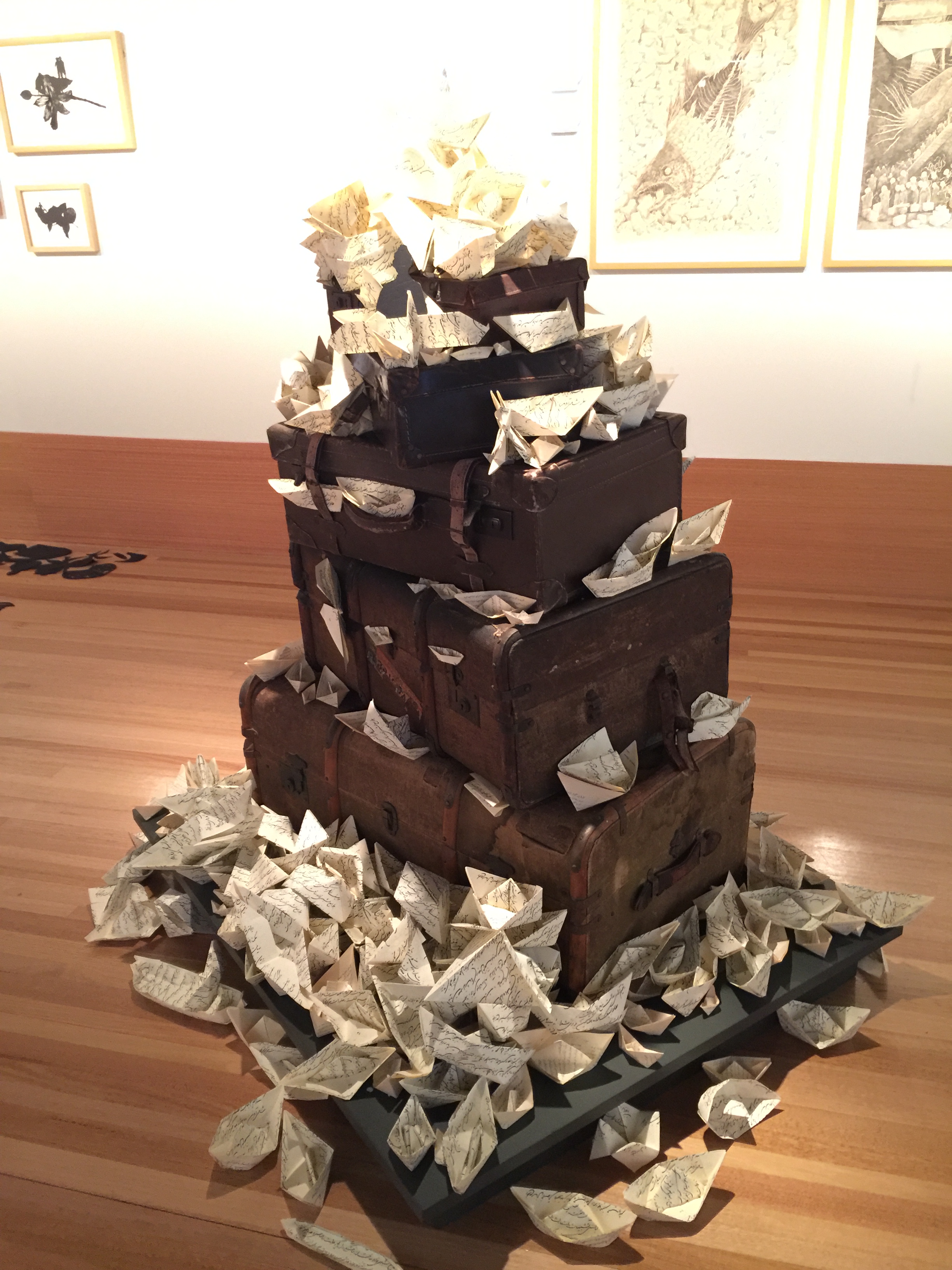
    Overall, it was a very engaging exhibition. Communities included Vietnamese, Iranian, European, Indigenous, and African. From a design perspective, each had their own separate display area that was easy to navigate. In the middle of the space was an activity station. Visitors could create paper boats or draw and cut-out objects significant to their family to add to a central pile. Every time I sit down at a museum activity station I realize I am terrible at following basic design directions. I don’t know what I made, but, it definitely was not a boat. Nevertheless, I thought both activities were fantastic because they were not restricted to a particular age.

    img_9725
    State Library of Queensland

    Walking around the exhibition space, I couldn’t help but think who exactly decided which stories were going to be displayed. This idea of belonging and including many stories is fantastic, but, problematic. Trying to include everyone may, in fact, lead to exclusion. I would also like to know who curated the exhibition. Did the families and individuals have great input when it came to design etc? Or was it a case of donating the objects and seeing the end result with little opportunity to contribute in the middle? These types of questions weren’t really answered in the exhibition space. Nevertheless, the exhibition did achieve its aim of providing an insight into the wonderful diversity of cultures in Queensland.

    img_9711
    State Library of Queensland

    On exiting the exhibition space we spent some time looking at the small exhibition Keepsakes of War. There were a few souvenirs and trinkets on display from World War I. They had three particularly beautiful silk postcards on display. I have included a photograph of them below. I wanted to mention this display purely because of the exhibition interpretation card. All of the object information was printed on a large card available for visitors to pick-up at the beginning of the exhibition. It was amazing and so detailed. I am a strong believer that a small exhibition can be just as impressive and innovative as something large!

    img_9729
    State Library of Queensland

    I will strive to write a bit more over the next few weeks. I am not making any promises, but, I do love writing entries and hope to be inspired again soon!

  • Return to Sydney & Sydney Jewish Museum

    Now that I have finally settled in and recovered from jetlag I thought it was an ideal time to write a quick update post. This semester I am delving back into some medical archives! I am interning two days a week at the Trainor/Owen Archives within the College of Radiologists. I have already handled some pretty unique objects and will (hopefully) catalogue their entire collection for online publication. Apart from my internship, I am completing a course on objects and places (a generic first year course), and one titled “Sites of Trauma Landscapes of Genocide”.

    Some exciting things are happening further down the track. I will be presenting at the National Trusts/ICOMOS Conference in Melbourne in October! One week later I’ll be back in Melbourne to attend a medical history writing class which should be not only interesting, but, very helpful. Finally, I cannot believe it is only 87 days until I set off to Scandinavia for a month. I have a lot of museums/heritage sites on my list so expect a lot of blog posts come November.

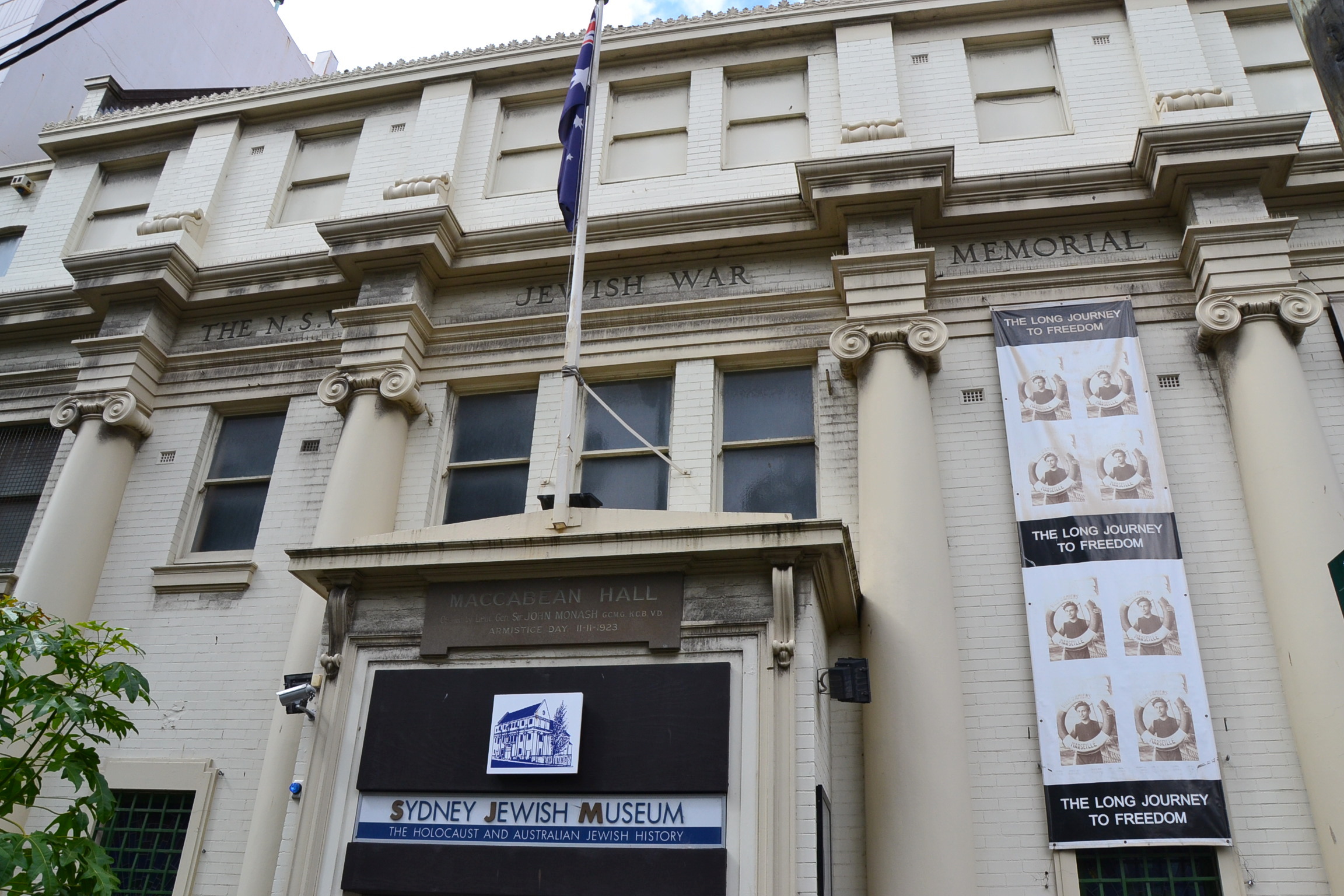
    Now back to Sydney. Last week for our sites of trauma subject we visited the Sydney Jewish Museum for a day filled with workshops and talks. The museum is currently undergoing renovation work and is expected to reopen in November this year. It is still definitely worth visiting prior to November as exhibitions on Anne Frank and Jewish Australia at War are still up and running.

    Our day began with a survivor testimony. It is virtually impossible for me to write about what kind of impact this had and what emotions were felt during the talk. All I can say is that it was an experience that will stay with me.

    After the testimony we visited the storeroom/archives of the museum. Here we heard from one of the curators on their acquisition policies and methods of display. Every item collected by the museum must be accompanied by a story. This allows the object to act as a tangible portal into something intangible. For example, we were shown a blanket from Auschwitz. Without a story the blanket still can elicit certain emotions and try to display an aspect of life in the camps. We were told that the blanket had thread missing because it belonged to a seamstress who picked the stitches and used them to repair clothing. Hearing this story motivated me to observe the object closer.

    The day finished with a talk on education in the museum. If you are interested in their education programs follow the link. There is too much to try and summarize in one post!

    I will be posting again from time to time when I feel the need to share. I have a feeling that this semester, my final one!!, will be filled with many moments and stories that will inspire me to keep on writing.

    1_Sydney_Jewish_Museum
    By Sandra (talk) 10:49, 7 September 2011 (UTC) (Own work) [GFDL (http://www.gnu.org/copyleft/fdl.html)

  • OPP Day 19 – Final Day

    I cannot believe that today was our final day of the Open Palace Programme! Luckily, I feel as though three weeks has been a perfect amount of time. To summarize, here are my top five experiences in no particular order.

    • Behind-the-scenes at Kensington Palace

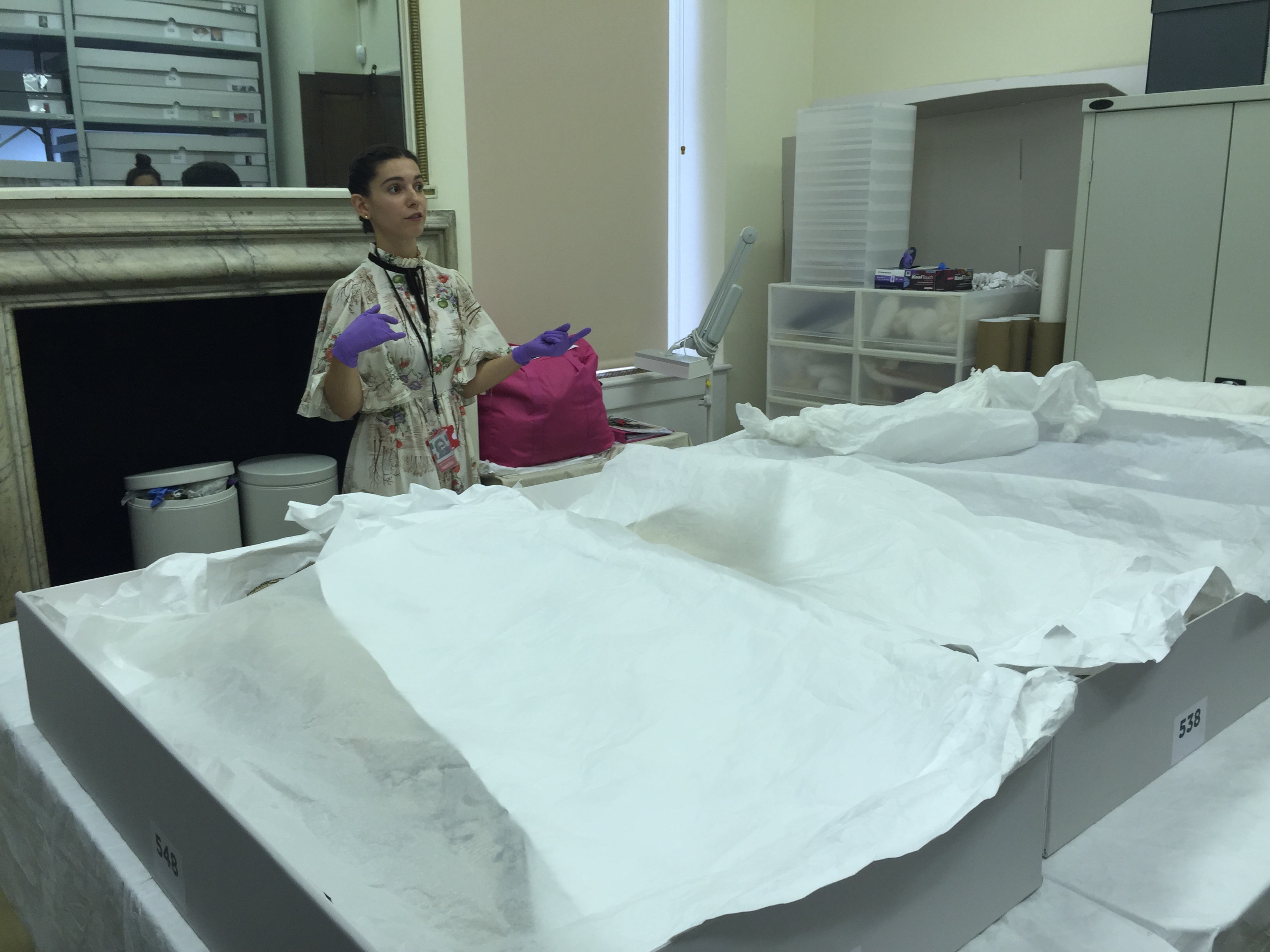
    Having the opportunity to see the textile collection at Kensington Palace was probably my overall highlight of the trip. Not only were we able to closely inspect three garments, but also, see the storage room. I made sure to note down specifics such as the design of the storage box labels and how the textiles are being conserved.

    IMG_8663.JPG
    Kensington Palace
    • Stowe House

    Our visit to Stowe came at a perfect time. Between Brighton and London, Stowe allowed us to have a break and a breather in the countryside. There was so much to learn and enjoy at Stowe House from the 2nd Duke of Buckingham to the intricately painted and decorated ceilings. All of our sessions were informative and sparked my curiosity for building conservation.

    IMG_8084
    Stowe House
    • The Royal Pavilion

    You have to see it to believe it. What made the Royal Pavilion so great was our tour guide who was obviously so passionate. I will never forget how overwhelmed I felt in the space.

    IMG_7767
    The Royal Pavilion
    • Museum of Bath Architecture

    My favourite activity in the entire programme was at the Museum of Bath Architecture designing an engagement program for a specific audience. It was also a lot of fun to chip away at Bath Stone and have that hands-on experience.

    IMG_7600
    Museum of Bath Architecture
    • Conservation at Hampton Court Palace

    Our talk on preventative conservation at Hampton Court Palace was very in depth. It was great to hear about the ten agents of deterioration and actually apply this knowledge to a room in the Palace.

    IMG_8755
    Conservation Lab at Hampton Court Palace

    I am very sad to leave such a wonderful people who have made my time on the programme truly memorable. Everyone in the group was so lovely and enthusiastic. I could not have asked for a more amazing group of people.

    13886232_1890735611154074_5923860924657570588_n

    As for now, I begin the long journey back home tomorrow. I have a lot of University readings to complete on the plane and a conference paper to write! Needless to say, I hope it is a productive flight.

  • OPP Day 18 – Fulham Palace and Apsley House

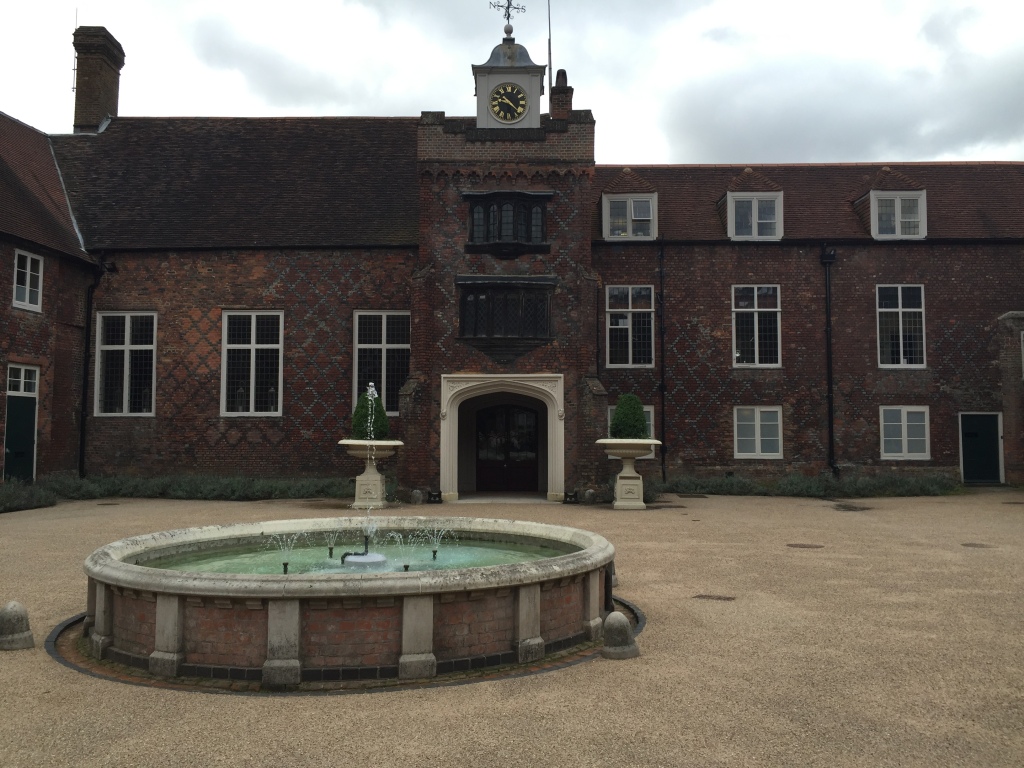
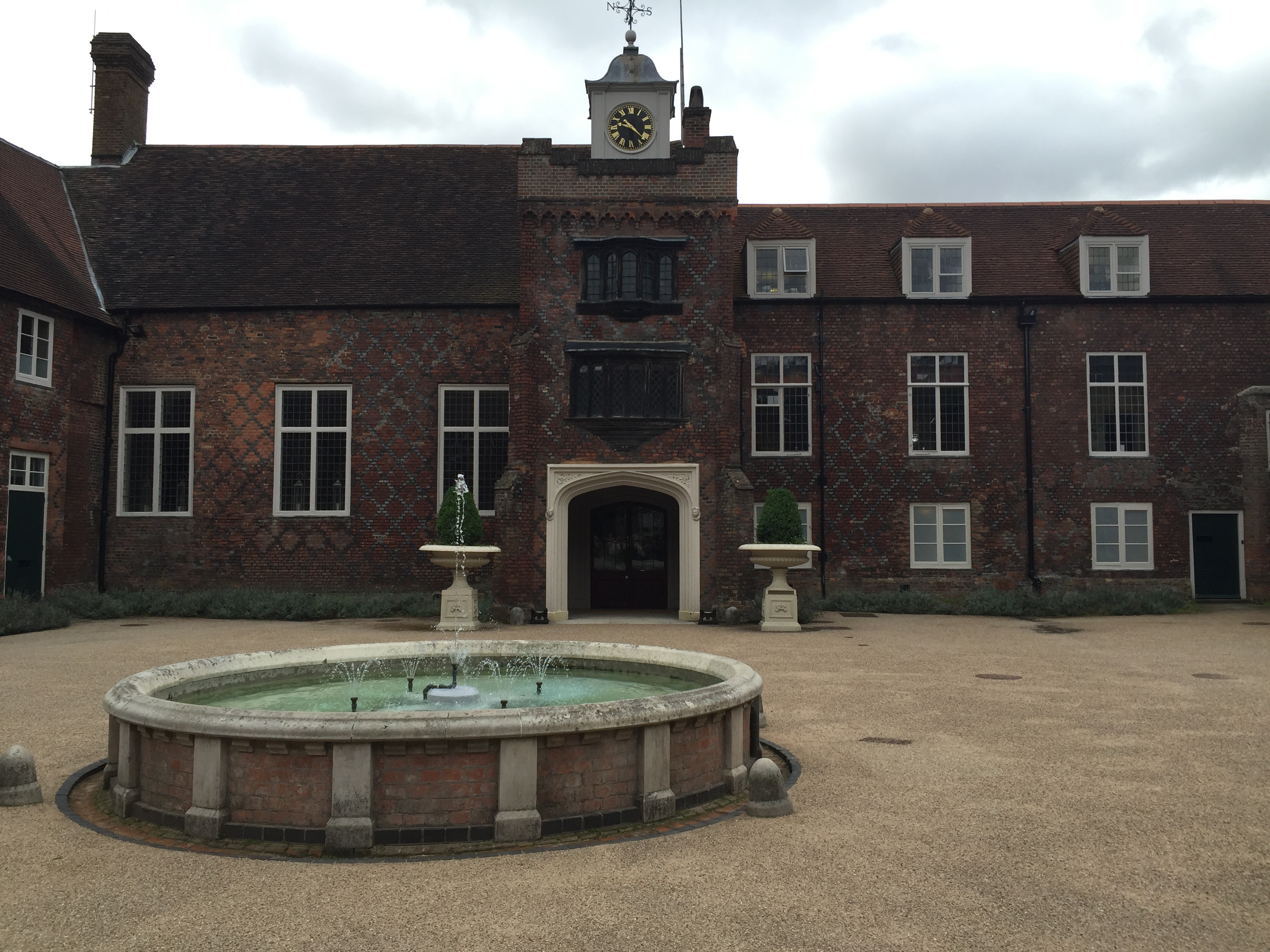
    Today was our final day of sessions for the Open Palace Programme! I will be writing a reflection of the entire program tomorrow so I will leave my final thoughts for then. This post will cover two sites – Fulham Palace and Apsley House. The former being the home of the Bishops of London until 1945 and the latter, home of the Duke of Wellington. At both sites we focused on interpretation techniques. I will be writing more on the activities than on the history of the sites. This is mainly because they are among the best we have experienced on the program.
    Fulham Palace has an incredibly rich history which is available to view on its website:

    http://www.fulhampalace.org/palace/history/

    IMG_8944
    Fulham Palace

    We had an amazing opportunity to propose a new visitor route through the site/museum and suggest additional interpretation to enhance the visitor experience. We were supported by curator Miranda Poliakoff throughout our decision-making process. I am going to provide a little background to contextualize the route we selected by going through each room in the Palace and its significance:

    1. Tudor Courtyard – located inside the entrance of the Palace. The Tudor Courtyard consists of some of the oldest parts of the Palace.
    2. Bishop Sherlock’s Room – Sherlock was Bishop from 1748 to 1761 adapting the room to suit his taste. The room also contains a small temporary exhibition and can be used as a functions room.
    3. Porteus Library – sharing its space with the gift shop, the Porteus Library is a small room with a few text panels and a display case exploring the more modern history of the Palace.
    4. Museum – self-explanatory. The museum contains objects such as a mummified rat from the Tudor period and a model of the entire Palace.
    5. Cafe – spread over two rooms.
    6. Terrick Rooms – Terrick was Bishop from 1764 to 1777. Similar to Sherlock’s Room, Terrick’s Rooms have been preserved.
    7. Chapel – a beautiful Chapel located off to the side of the main Palace.
    8. Great Hall – where Elizabeth I visited and often stayed, the Great Hall is now a functions space and is requiring additional interpretation.

    In all spaces, excluding the museum and cafe, there is some interpretation in the form of a small information board. As you can see on the map below, our visitor route has been roughly mapped out.

    IMG_8988
    Fulham Palace

    To start, after walking into the Tudor Court visitors will be guided through the gift shop and into the Welcome Centre (see arrows bottom of map). The centre will serve as a permanent exhibition space displaying the layers of the Palace’s history and answering questions such as why is it a Palace? Then, visitors can chose whether or not to follow the path around the Palace. If they decide to take the path, the next stop is the Great Hall. Inside the Hall will be the model of the Palace and white cardboard cut-outs of Queen Elizabeth I displaying stories from the room. These cardboard cut-outs will be located around the Palace as thematic/storytelling panels. In the other rooms, the cut-outs will be of well-known Bishops including Sherlock and Tessick.

    In Sherlock’s room will be a contemporary art gallery space to display artwork from the local community already showcased in the Palace’s hallways. We are keeping the museum and cafe where they are currently located. As the giftshop has been moved, the Porteus Library can be transformed into a learning/research centre and remain an exhibition space. To finish the tour, visitors will go through the Terrick Rooms, to the Chapel, and back to the Tudor Court. That was a very brief summary! After presenting we were able to see the actual plans that will be submitted for the Heritage Lottery Fund and compare our notes. A lot of ideas from the activity had already been considered!

    IMG_8961
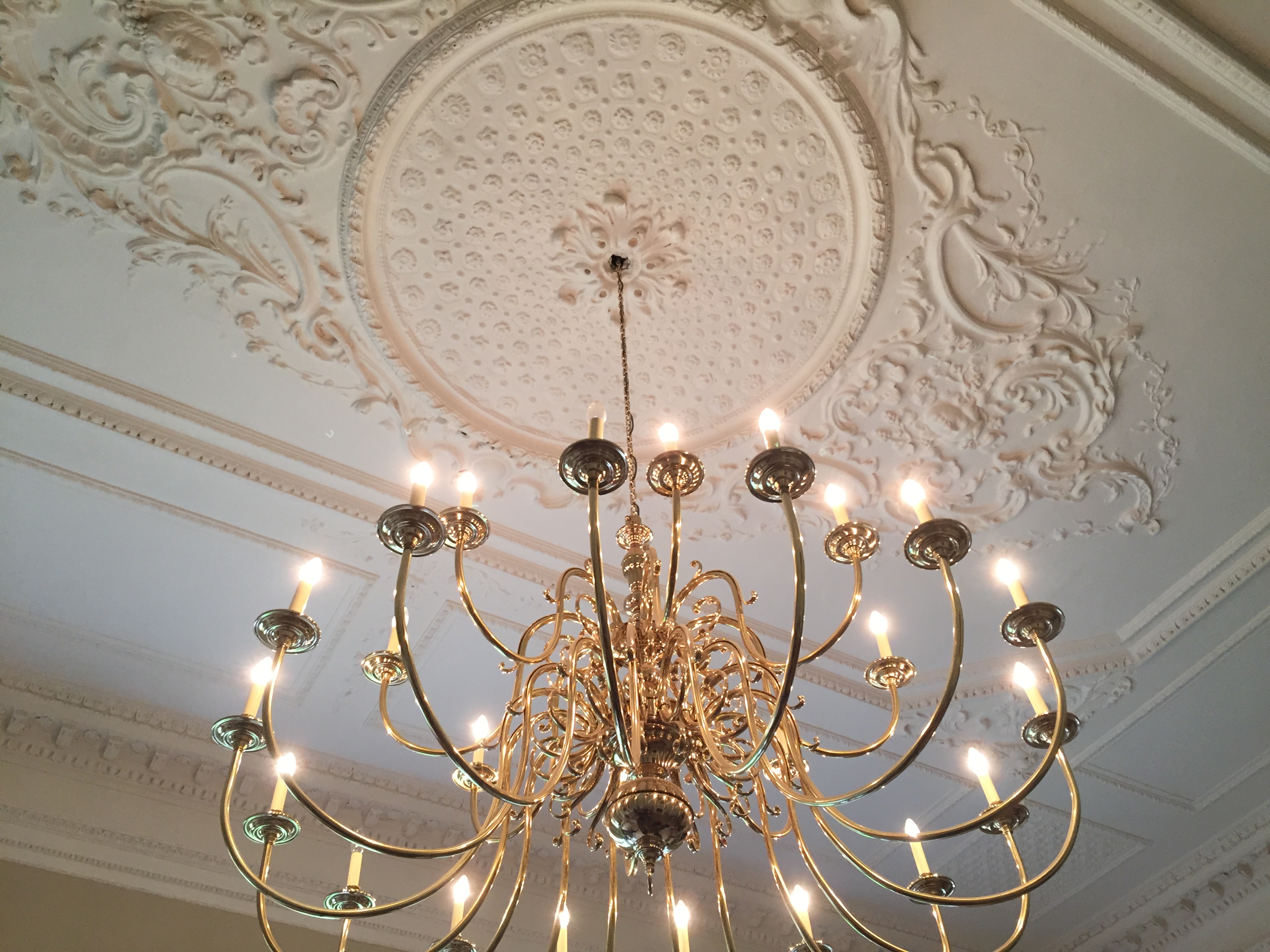
    Ceiling of Sherlock’s Room
    IMG_8976
    Fulham Palace Plans

    We then made our way from Fulham to Apsley House to meet curator Josephine Oxley. We went on a quick guided tour of the house seeing the Waterloo Room, Dining Room, Portico Room, and three Drawing Rooms. All of these rooms were filled with paintings that could be categorized into three collection areas: paintings of the Duke of Wellington, paintings by Dutch or Flemish artists, and paintings from the Spanish Royal Collection. Here is the website for more information:

    http://www.english-heritage.org.uk/visit/places/apsley-house/

    Our task at Apsley House was to think of a curatorial vision and how to appeal to a new audience. We had many ideas from digitizing the collection and allowing individuals to view it online to public lectures in the Waterloo Room. My favourite suggestion was a family friendly school holiday program. We thought it would be fantastic to offer free school holiday programs to try and attract a range of new visitors. Activities could include using props to recreate a portrait in the galleries, creating flowers for the dining hall table centre piece, and learning about the Battle of Waterloo from a costumed interpreter.

    IMG_8989
    Apsley House

    Both Apsley House and Fulham Palace are currently developing exciting new plans for their exhibition spaces and forms of interpretation. It was great to have this opportunity to provide feedback to the curators in this draft phase! Fulham House will be redeveloping all rooms in the Palace to include more interpretation and engage new visitors. On the other hand Apsley House will soon be closing for minor renovations. It will be excellent to return in a few years time and see the transformation of both sites!

  • OPP Day 17 – British Museum

    I want to start this post a little differently to what I have done before. This is mainly because the first two hours of our time at the British Museum was spent enjoying being visitors and noting the forms of interpretation evident in the Enlightenment Gallery. Although containing fantastic objects and a wealth of information, topics such as colonization etc were not mentioned which I found quite odd. The following are my Top Five objects in the Enlightenment Gallery!

    No. 5 – Tiles from Alhambra

    These are located in Case 18 titled Languages and Translation. As you can see in the photograph there are four beautifully decorated tiles with Arabic inscriptions. These were collected by Anne Seymour Damer from the Alhambra Palace in Spain in 1791. They are beautifully decorated and served to aid English scholars in discovering the root of their modern language.

    IMG_8824
    Tiles from Alhambra

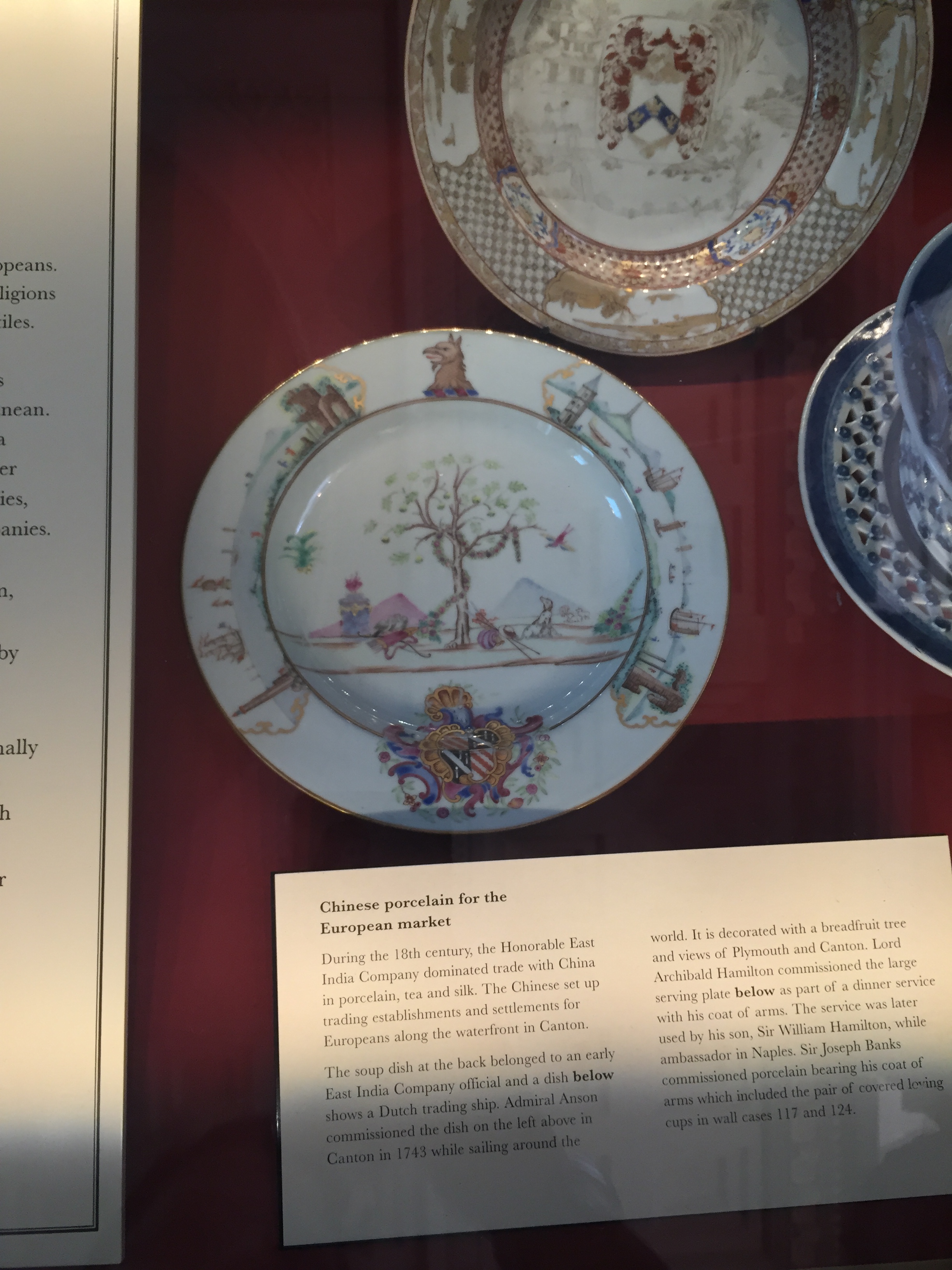
    No. 4 – Chinese Porcelain for the European Market

    In Case 23 there is a lovely Chinese porcelain plate that was traded with the East India Company in Canton. According to the object description it depicts a breadfruit tree and views of Plymouth and Canton.

    IMG_8829
    Chinese Porcelain

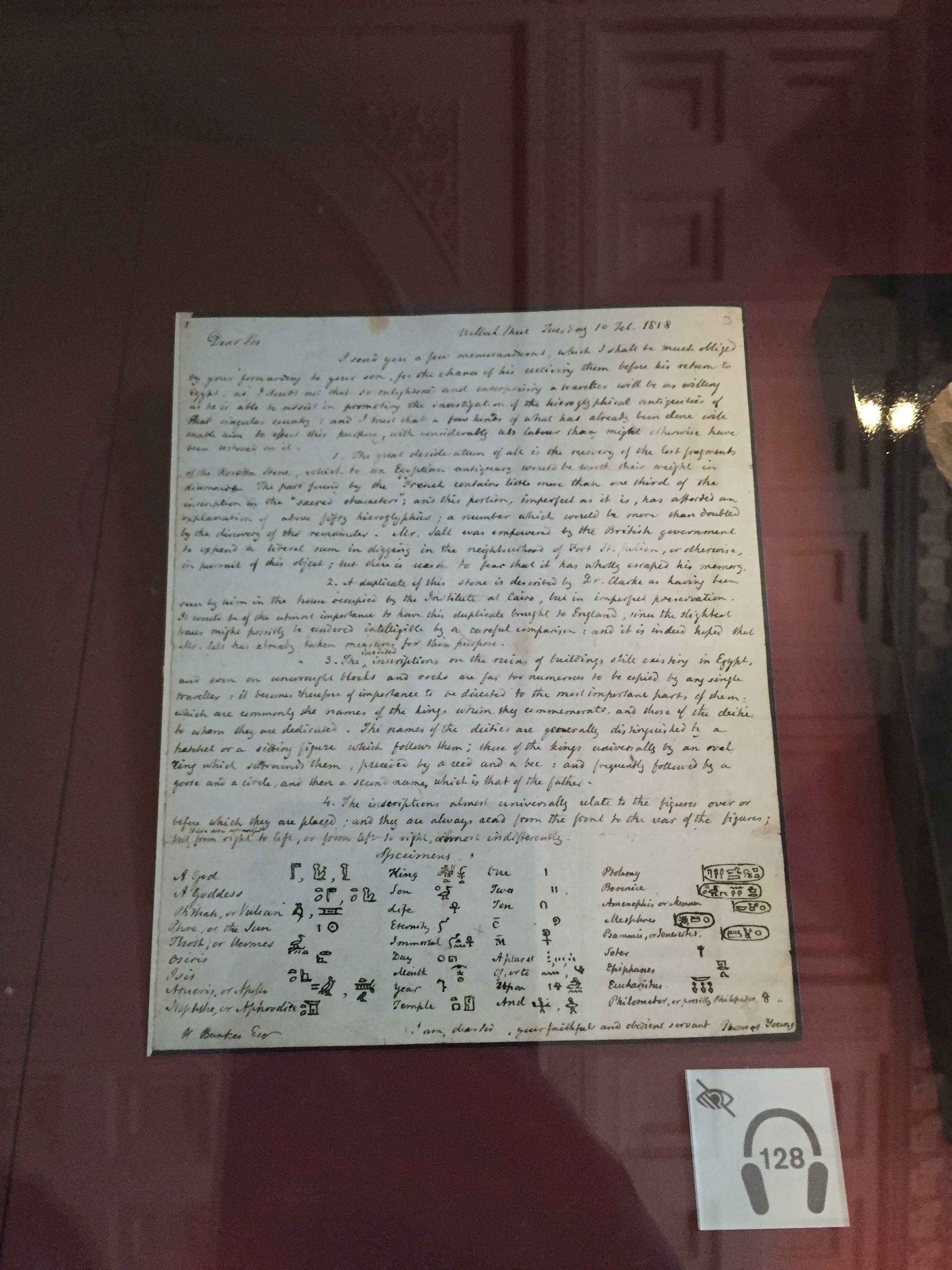
    No. 3 – Letter on the Road to Decipherment

    Case 16 focuses on hieroglyphs with a particular emphasis on code-breaking the Rosetta Stone. This particular letter is one of the most important developments in understanding hieroglyphs. Thomas Young, English scholar, sent the letter to his father, William John Bankes, in 1818. The hieroglyphs at the end of the letter are mostly correct translations allowing this letter to be particularly significant.

    IMG_8835
    Road to Decipherment

    No. 2 – Natural History Drawings

    Not only are these drawings works of art, but, they provided a wealth of information on a number of natural history specimens. Completed by Maria Sibylla Merian in 1699, the drawings are all of the flora and fauna of Surinam in South America. What I particularly liked about this book is that the object label specified the pages would be turned every three months. Good for conservation, and good for the public who will be able to see a new drawing over time.

    IMG_8844
    Natural History Drawings

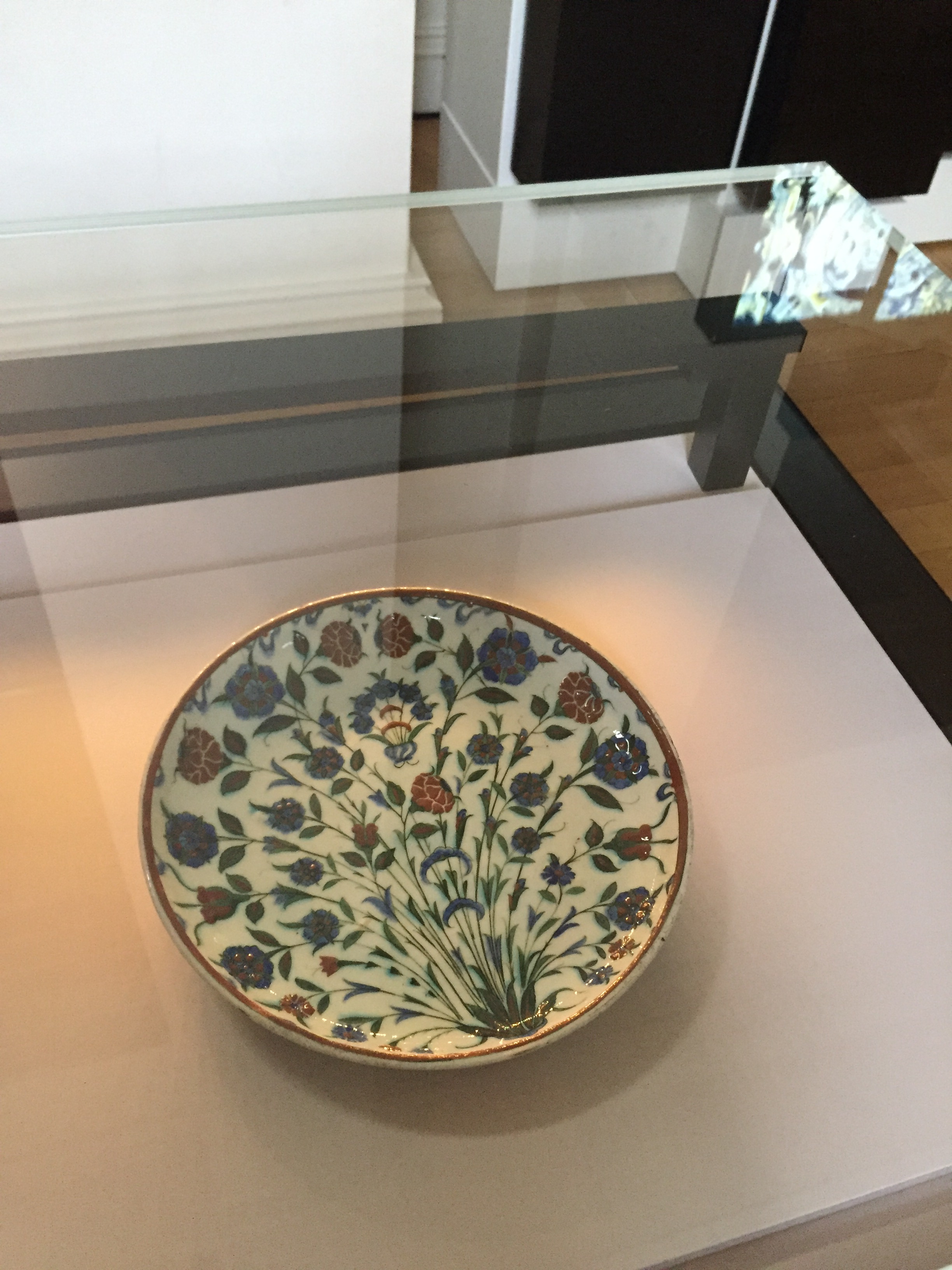
    No. 1 – Dish – Turkey 1550 – 1600

    In the second room of the Enlightenment Gallery is this quite understated object. Similar to the tiles, I was drawn to this item because of its interesting design and colours. The dish has amazing provenance having been bequeathed to the museum by Edith Godman. Her father was a prolific collector of Spanish and Islamic pottery. His collection eventually grew to the largest private collection of Islamic pottery in the world. This plate is just one of the thousands of items that are now owned by the British Museum from the collection.

    IMG_8857
    Dish – Turkey

    Apart from having a stroll around the galleries we had a wonderful talk from Stuart Frost who is the head of interpretation at the British Museum. We covered what interpretation strategies are in place in the permanent galleries of the museum and in the temporary exhibitions. For the permanent galleries, techniques that have been used include highlighting the most significant objects in the room. This helps tourists who may be rushing around the museum to see a snapshot of a collection area and decide to delve further or continue on. In the coins exhibition, for example, the most important objects are highlighted in pink. This is designed to attract people to look at the object more closely and read the information.

    For the temporary exhibitions, it was very interesting to hear that almost 80% of visitors are United Kingdom citizens. Rather than walking through to catch the highlights, these exhibitions are designed for a more comprehensive experience. We went through the interpretation strategies of the Sunken Cities temporary exhibition that is trying to satisfy three categories of visitors: self-developers, families, and art lovers. In order to appeal to these three groups, the museum had a consultation with focus groups in the first drafting phase of the exhibition. This helped to determine what would work, what wouldn’t, etc. The idea of a family station developed out of these focus groups and are situated around the exhibition for use by children. The whole exhibition was aesthetically beautiful for the art lovers and contained a lot of information for the self-developers.

    IMG_8875
    British Museum

    Although the space was painted a very dark blue, the conservation-grade lighting was enough for the labels to be readable. The soundscape of ocean music was at times a little creepy, but, mostly atmospheric. It was great to have a context video at the beginning of the exhibition for those unaware of the Greece and Egypt relationship. Throughout the exhibition there was a lot of interpretation available and I have to say I really enjoyed reading the thematic panels and actually learning about these interesting sunken cities. More often than not, object labels were incredibly helpful in providing the necessary information.

    Overall, we had a great day at the British Museum. The most interesting part of our sessions was learning the difference between audience engagement in permanent galleries and temporary exhibitions. Although not applicable in every case, the distinction made between the types of audiences visiting was very insightful! A great new way to consider the audience and engagement strategies.

  • OPP Day 16 – Hampton Court Palace

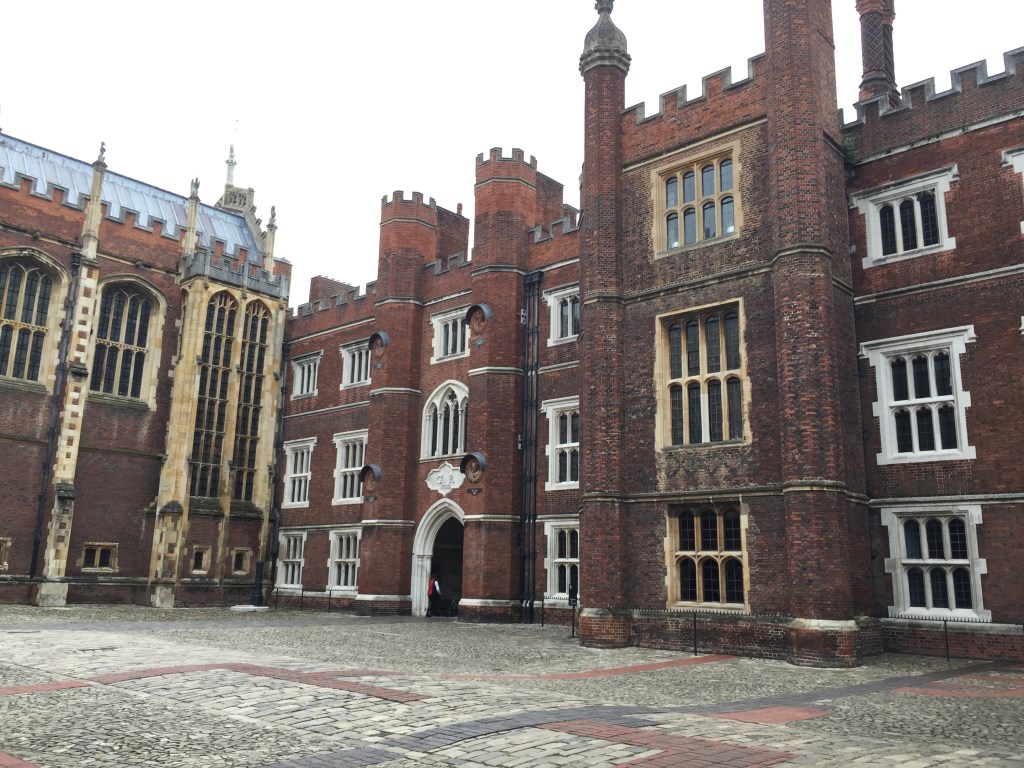
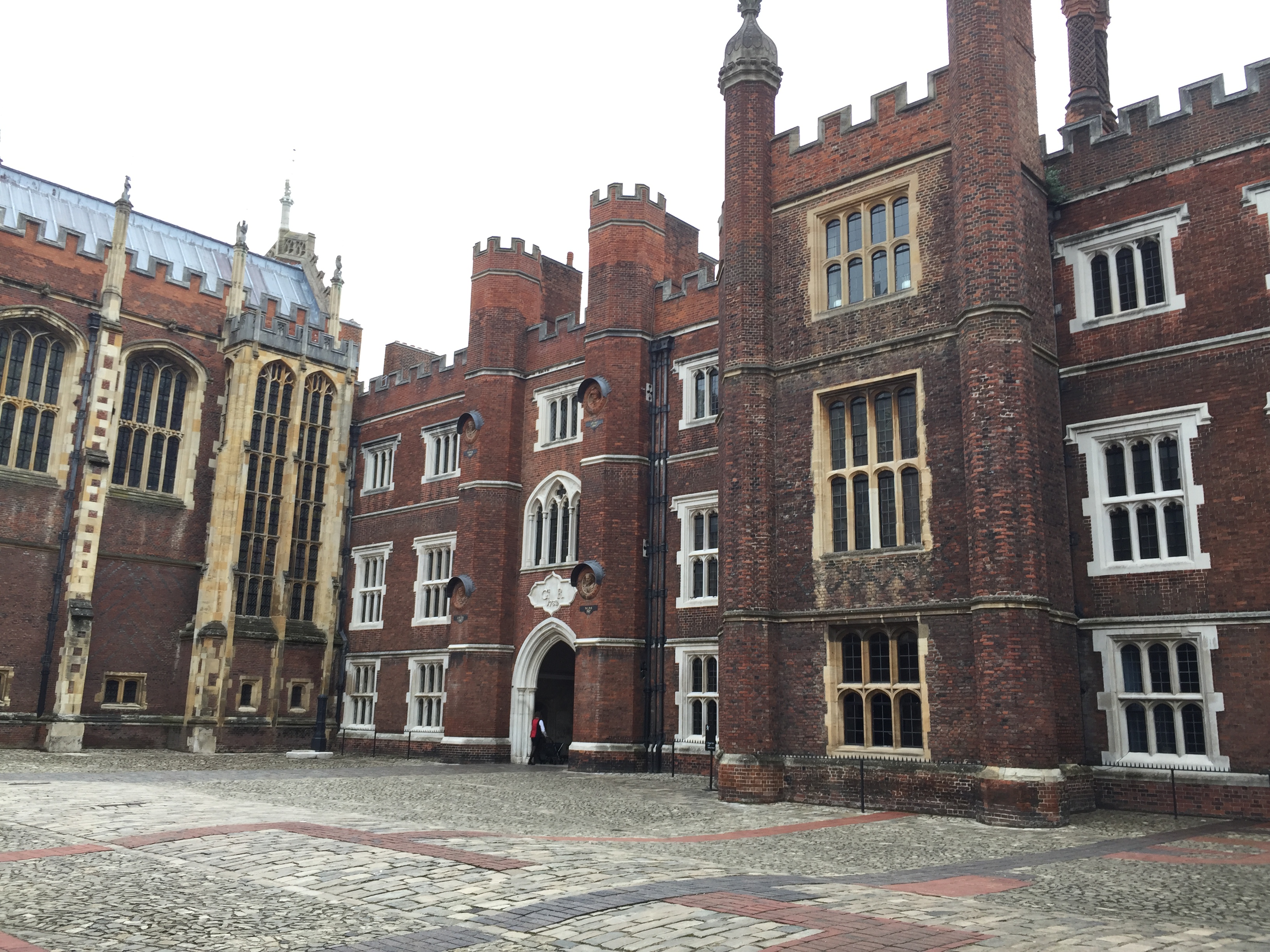
    To prepare for this program, I enrolled in the online Future Learn – A History of Royal Food and Feasting course. The course was organized by Historic Royal Palaces alongside the University of Reading. It was a really wonderful introduction to food and royalty. Hampton Court featured quite significantly in the lectures so I was very prepared for a day at the Palace exploring and listening to the experts. We had three sessions that focused on conservation and curatorial practices. The morning was dedicated to learning about preventative and treatment conservation from Kathryn Hallett and Mika Takami. I do have more of an interest in preventative conservation having had amazing mentors, Monica Cronin, Virginia Gordon, and Kate Childlow, introduce me to some of the basics.

    IMG_8764
    Hampton Court Palace
    IMG_8790
    Hampton Court Palace

    Part of our initial discussion with Kathryn was on the ten agents of deterioration. Before delving into what these are it is important to note that the role of preventative conservation is to minimise the risks that fall under the following ten categories.

    1. Direct physical force – this includes damage by visitors and staff from handling or touching objects
    2. Thieves and Vandals – theft of objects is self explanatory and vandals include those that deface objects with political or other messages
    3. Fire
    4. Water
    5. Pests – moths are particularly terrible when it comes to textile conservation
    6. Contaminants – this includes dust that can become problematic if left to harden on an object
    7. Light and Radiation
    8. Inappropriate Temperature
    9. Humidity
    10. Disassociation – when an object is disassociated from its archival or other information

    Out of all ten, the key risks for Hampton Court are direct physical force and light/humidity. Considering their prized objects are textiles, specifically tapestries, maintaining stable environmental conditions are of top priority. To give you an idea of how marvelous these tapestries are, Henry VIII once spent the same amount of money on a tapestry that he would a war ship. Needless to say they are impressive objects and tell their own wonderful stories.

    Our activity for this section was to note the risks in the Queens Gallery to the tapestries. In groups of four we examined the room and documented what efforts were already underway to prevent damage. The following were highlights:

    1. Natural light was being controlled by large blackout curtains, window UV filters, and mesh curtains
    2. Humidity monitors were documenting fluctuations in the room throughout the day
    3. There were bug traps in the fireplace
    4. Perplex glass had been placed over parts of the tapestry that could be accidentally bumped or touched

    IMG_8747
    Tapestry in Queens Gallery

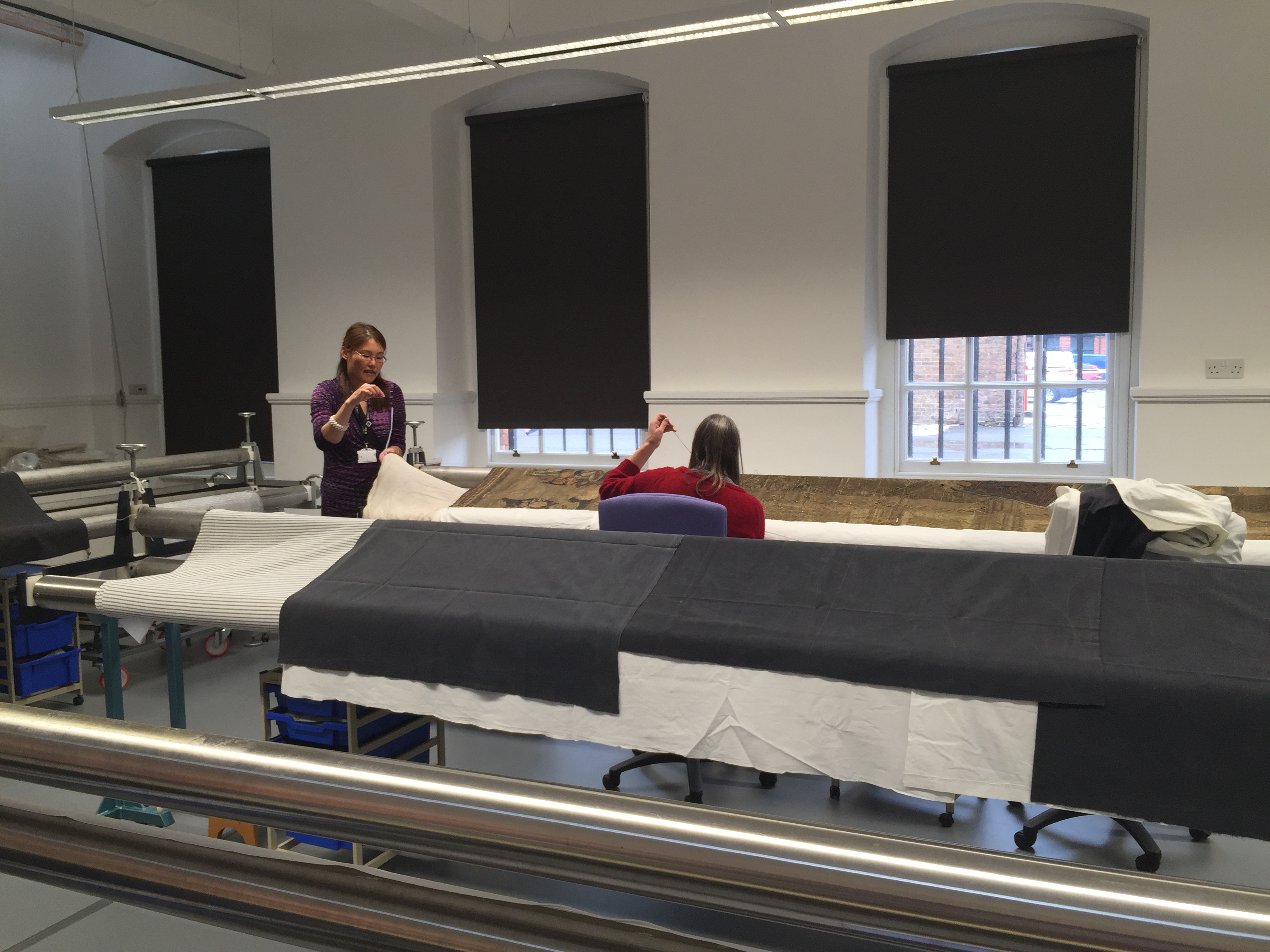
    Our next session reinforced a lot of what we had learnt in the first session, but, provided us with a slightly different activity. We had actual hands-on experience conserving an 18th century piece of fabric. It is safe to say that I don’t think I have the patience required for that kind of work. Yet again, my respect for conservators has been pushed to new heights.

    IMG_8750
    Hampton Court Palace Stitching

    In the afternoon we had Polly Putnam talk about her role as curator. She basically summarised the role in three words: research, protection, and communication. Or in other words, know what you’re looking at, protect it, and communicate its significance or purpose to your audience. One of the things I have enjoyed most about this program is how each professional provides us with an overview of how their background and career path. Polly provided us not only with her personal background, but also, a general idea of the steps it takes to become a curator. Obviously there is no hard and fast rule and there are different paths and individual can take. It was nice to have some idea of expectations etc.

    Our final activity for the day was creating an object label of 30 words for a Hoover Vacuum cleaner. This belonged to Lady Manning, a resident of one of the Grace and Favour apartments in the palace. She passed away during the 1990s and many of her possessions are now in the collection of Historic Royal Palaces. Grace and Favour apartments were provided by the Crown to those who were deemed worthy. Lady Manning’s husband fought valiantly in both World Wars. When she became a widow, she was allocated an apartment.

    Our object label tried to capture this social history context of the vacuum:

    “They don’t make things like they used to! This trusty vacuum was used by Lady Manning continuously for almost 60 years while she resides in the Grace and Favour apartments.”

    It was particularly satisfying that our label was exactly 30 words. We did receive one last piece of advice that I will use to conclude this blog post. There is a difference between ‘dumbing something down’ and simplifying it. If you can’t read an object label in a David Attenborough voice and think, does this sound like something he’d say, scrap it. The line between too obvious and too complicated is very fine and it’s important that work goes into striking a balance!

  • OPP Day 15 – Tower of London and Kensington Palace

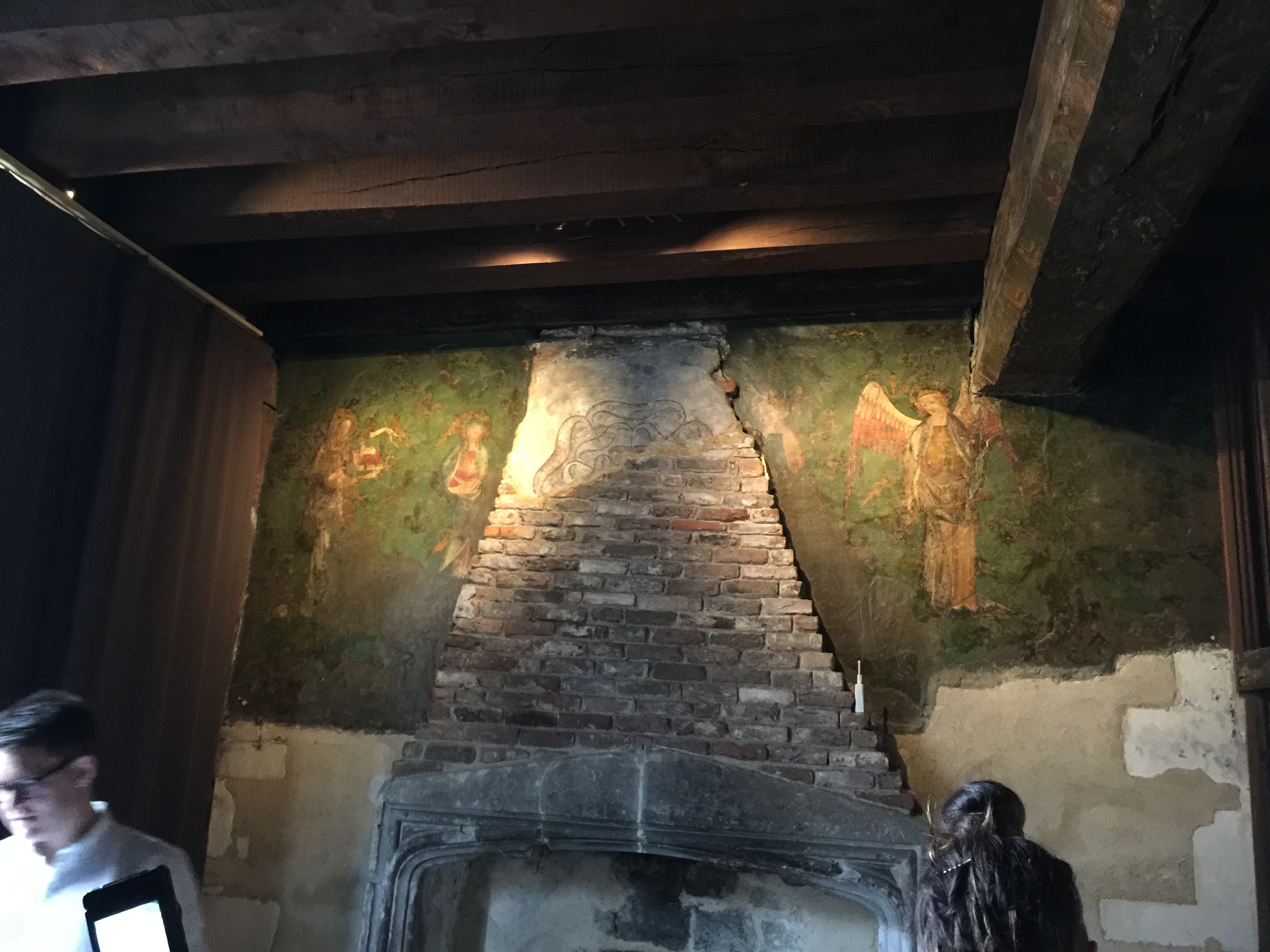
    Our morning began with a brief visit to the Tower of London. Here we met building conservator Alden Gregory who took us behind the scenes in the Byward Tower. The Tower was originally built as the third gate of defence on the outer wall in the 13th century. Today, the two levels of the tower are not open to the public. This is because the head Yeoman Warder (Beefeater) lives on the top floor and the middle floor contains a medieval mural in need of constant monitoring and preventative conservation.

    We had the opportunity to explore the middle floor and point out important historical features and conservation efforts. We noted that there were curtains in the room blocking out natural light and humidity monitors to ensure favourable environmental conditions. After thirty minutes we headed to the learning centre to hear a lecture on the history of the Tower of London and of the Byward Tower mural/room.

    IMG_8635
    Tower of London

    Our task was to consider how the public could access the room without compromising the conservation efforts. We had to develop three solutions and think of their pros and cons. We decided on two quite serious ones and a bit of a wildcard. Our serious options were a virtual reality experience and a specialty tour. The latter would be a pre-booked tour option that would only allow a small number of people in at a time on dates that suited staffing etc. Our wildcard was a family friendly theatrical presentation with staff members dressing as the mural explaining its significance. I would be very shocked if the latter was considered!

    Although a quick session I feel as though we covered a lot of important material and had a fantastic time. Our next stop was Kensington Palace. We arrived after experiencing the best of London’s underground system. I am so shocked after the delays we faced we still managed to arrive only 30 minutes late! Kensington holds the most significant pieces of the Historic Royal Palaces dress collection. Historically, the palace has always had a strong connection to showcasing textiles and this is being maintained through current and future exhibitions.

    On arrival at the Palace we were divided into two groups. One went with Isabella Coraça and the other with Claudia Williams, both of whom are curatorial assistants. We first went with Claudia for a tour of the Queen Victoria exhibition. After an hour or so we swapped mentors and went behind the scenes with Isabella viewing some of the clothing collection in storage. Amongst what we saw in the storeroom was the dress Queen Victoria wore at her first privy council.

    IMG_8645
    Queen Victoria’s Dollhouse
    IMG_8663
    Isabella in the collection storeroom

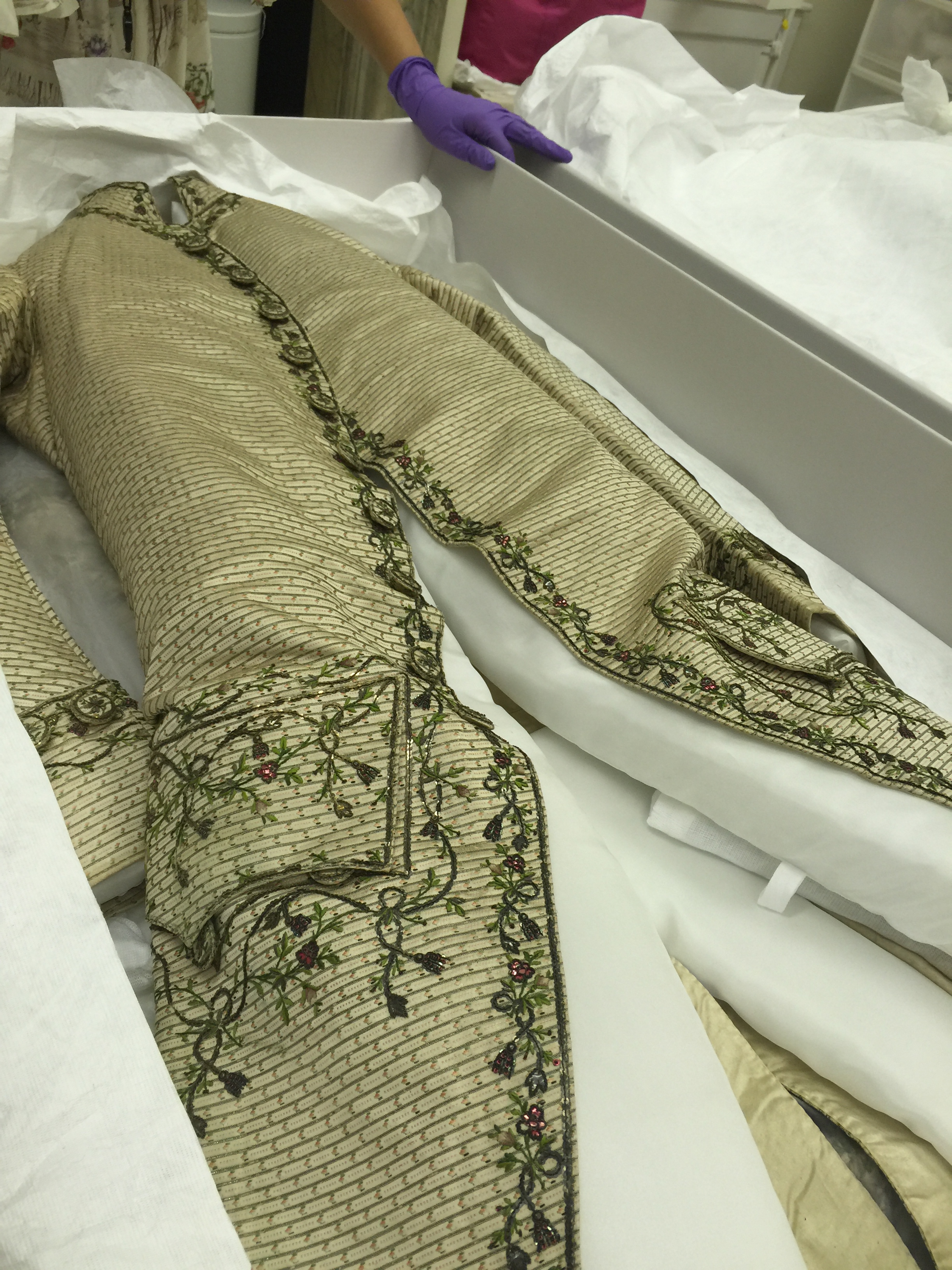
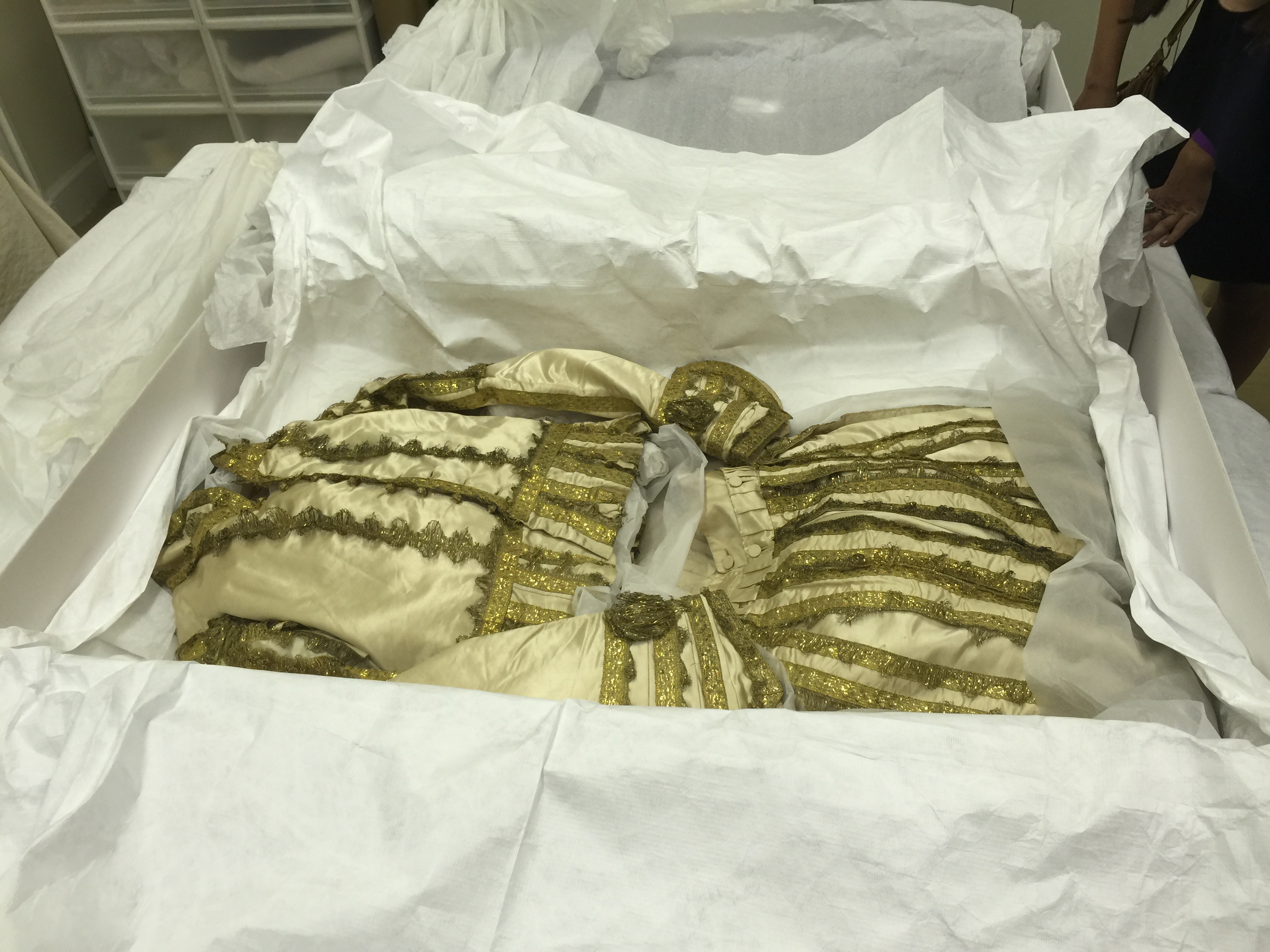
    The other two textiles we saw were an 18th century men’s waistcoat and an outfit from George IV’s coronation. The waistcoat was so beautiful and intricate made from such fine silk and silver thread. It was definitely worn in the Royal Court and would have signified great wealth and extravagance. People were not formally invited to court events in the 18th century. Rather, you’d arrive at the Palace and if you were wearing appropriate dress you’d be allowed inside. By appropriate I mean something that signified you were extremely wealthy. The waistcoat would have definitely allowed it’s wearer entry. It was also interesting to hear that the waistcoat had not been modified. As textiles were more important than clothing, many clothes were re-purposed and adapted to suit new styles. No modifications is very rare for the time period especially on pieces that are in such good condition.

    IMG_8669
    Kensington Palace

    The coronation dress of King George IV was quite theatrical. As George had a good eye for beautiful textiles, he insisted he design all the outfits for the coronation. The result was that everyone had to wear an outfit that resembled an Elizabethan costume. The outfit was interesting to say the least and provided a great insight into his character.

    IMG_8675
    King George IV Coronation Dress

    To finish, we had a short activity on object acquisitions. We were presented with the acquisition policy of Kensington Palace and three potential acquisitions. They were a dress belonging to Princess Diana, a 1920s court dress, and a collection of Queen Victoria’s undergarments. I argued for the dress of Princess Diana as it was in very good condition and had a strong connection to the Palace. It also had great interpretive capacity having been worn on numerous occasions. I enjoyed hearing the selections of others and their reasoning behind why one would work better in the collection than the others. As we soon discovered, all three textiles were acquired by the Palace.

    Our two mentors so wonderfully worded the importance of textiles and why they are so significant. Textiles can really bring someone to life. Seeing their style, size, etc, is a strong way in which you can connect to them on a more personal level. Displaying textiles also allows for more interpretation as the basics don’t need explaining. People can see a dress is a dress so the focus can be on its significance and important stories.

    It was great to have both of these opportunities at the two separate sites. I loved the textile-filled afternoon and I cannot wait to get back to my volunteering on the Dress Register when I return!

  • OPP Day 14 – Bletchley Park

    I was just notified this morning that yesterday’s blog post on the Tower of London was my 100th entry! Thank you to everyone who is reading for your support. I will endeavour to post 100 more and continue documenting everything museum/heritage in my life.

    My post for today is on the amazing Bletchley Park located around an hours train ride from central London. I visited the site with four friends who are also on the program. We had a lovely day spending around three hours exploring the museums and wandering around the buildings. The site is pretty massive. There is a welcome centre, which provides a brief context to the site, a museum, the mansion, and five huts. Each offers a slightly different experience and forms of interpretation.

    We started in the welcome centre where they have a tiny exhibition on the history of Bletchley Park and a short film. The film was actually very useful in providing some necessary context to the site and some more information about its role in the Second World War. Just seeing how the physical landscape surrounding the Park transformed during the War Years is impressive enough. You can then either see a small exhibition on cyber security today or head out to the Park.

    We decided to head to the more comprehensive museum that’s located in Block B. The exhibition was text-heavy, but, very interesting. I walked through only reading panels and seeing objects that caught my eye. For example, there is an Alan Turing memorial made from slate about half way through the space. Opposite is the formal apology from Prime Minister Gordon Brown to Turing delivered in 2009. Surrounding the apology were cases and panels on the life and achievements of Turing. The second object I was drawn to was Turing’s Teddy Bear. Purchased in his adult life, the bear  named Porgy, is in very good condition. I particularly liked the story that accompanied the bear. One Christmas his niece received a plaid skirt with red buttons. Turing had matching overalls made for Porgy that delighted the niece so much he never removed them.

    IMG_8532
    Turing’s Teddy Bear

    After leaving the museum we walked up to the mansion. The Park is beautiful to walk through and every so often there is a text panel exploring some facet of life at Blechtley. There was a particularly sweet panel on romance in the Park. Right in the centre of the Park is a large lake with a water fountain. Surrounding the lake are picnic tables, game tables, and places to relax. It was wonderful to see families using the space for leisure activities and creating such a positive atmosphere.

    IMG_8536
    Blechtley Park

    The mansion was beautiful inside and out with a fantastic exhibition on The Imitation Game. Costumes and props from the movie were on display including the red notebook used to write down the first message decoded in the film. The Bombe, the Enigma-cracking-machine, from the film is also on display. It was a really nice exhibition linking the house to contemporary popular culture. It was not an exhibition designed to expose the myths of the film, but, showcase the props and draw connections. I would have liked to have seen perhaps one or two panels comparing aspects of the film to what actually happened, but, I can understand why this was not the focus.

    IMG_8545
    Blechtley Park
    IMG_8577
    Part of The Imitation Game exhibition
    IMG_8596
    Beautiful library in the mansion

    Last but not least, we visited the five huts around the Park. The first, Hut 11, contained a small exhibition on the women at Bletchley Park. It took a while for my eyes to adjust to the very low light levels. I am glad I waited because the exhibition was quite fascinating. I thought the quotes that were selected were especially insightful and I left with a much clearer idea of the roles adopted by women in Bletchley during the War.

    The next two huts, Hut 3 and 6, focused on what life was like working in Bletchley during the Second World War. The rooms have been restored to how they would have looked during the War. This included adding wall features and furniture. There was nothing to say whether the furniture was original or replicas. I would imagine replicas as you could walk through the rooms unrestricted.

    IMG_8615
    Alan Turing’s desk

    Hut 8 offered a more interactive visitor experience focusing on cracking the code. In each separate room was a large computer touch screen with a different activity teaching ways in which messages can be decoded. I did not personally interact with this element. Mainly because it was busy and each station was occupied when I walked through.

    We finished by visiting what now is my favourite hut, Hut 12. A new exhibition has just opened focusing on the restoration and renovation of the various huts. On display included the only existing Banbury sheets and handwritten notes on the Enigma wheel order. Banbury sheets were created by Turing to aid in finding the changing Enigma settings. These, along with the decoding notes, were all found in the roof of Hut 6. If this restoration/renovation work had not been carried out, this information may have been lost. Seeing an exhibition like this makes me very proud to be in the industry.

    IMG_8618
    Blechtley Park
    IMG_8625
    Banbury Sheets

    As you can see, we had a very good walk around the site and saw some pretty incredible objects. To finish this post I would like to quote Professor Richard Holmes, a military historian whose words are inscribed on the ceiling in Hut 12: “If this isn’t worth preserving, what is?”

    IMG_8629
    Blechtley Park
  • OPP Day 13 – Tower of London

    It was so wonderful to catch up with an old friend today and see the magnificent Tower of London! I have been thinking of how to write this blog post and there is just so much in the Tower I know covering everything would be confusing. It is definitely a place you would want to see more than once. Unless, of course, you can read and comprehend masses of information on a range of different topics in one go. I have decided to focus on some personal highlights of the Tower.

    IMG_8491
    Tower of London

    I highly recommend you buy the visitor’s book that is available at the ticket desk. For just 5 pounds you can have access to so much more information and maps of the site. We found it particularly useful when we were standing in a long line waiting to see the Crown Jewels.

    For those of you unaware, the Crown Jewels are housed in the Tower of London under strict security and protection. They are a working collection meaning they are still in use and can be taken from the exhibition when needed. My favourite part of this exhibition space was the crowd control with the first set of crowns. I know a lot of people will disagree with what I am saying, but, to me it seemed to work really well. Visitors could either walk up some stairs and see the crowns from a platform or opt to hop onto a very slow moving travelator. Luckily no one was rude enough to push past on the travelator so one-by-one we all stepped on and saw the crowns without crowds covering them.

    Right at the end of the exhibition is the crown of Queen Elizabeth II. Although not accessible for viewing from a travelator, the solitary crown display worked well in the space. I didn’t find myself having to push to the front to get a better view as people were just walking around and moving away. It was a great example of how similar objects do not always need to be displayed in identical conditions in order for a good visitor experience. Again, my own personal opinion.

    Moving on now to the Medieval Palace. You can access the palace through the wall walk which is definitely worth doing! What was fantastic in this space was the material touching board. Here you could feel the different materials that were utilized to make a bed. These included woolen blankets, silk pillows, and linen sheets. You could also feel the curtain fabric. There were a lot of visitors approaching the board to feel the different fabrics before moving into the next room. This tactile experience really added to the space and was ‘hands-on, minds-on’. You could compare how each element felt in comparison to the sheets etc you have on your bed today. My only critique is that the board was quite high off the ground and may have been difficult for children to reach.

    IMG_8486
    Tower of London
    IMG_8487
    Tower of London
    IMG_8489
    The bed that the fabric was used to recreate

    Another highlight was the graffiti in the Beauchamp Tower. I still remember visiting the Tower of London for the first time when I was nine and seeing the name Jane carved into the wall. I think we were on a tour and the guide explained how a supporter of Lady Jane Grey, Queen for nine days, carved her name into the wall before their execution. This is just one piece of graffiti out of many. It is fascinating to see the emotions poured into the final pictures and words of those who were held prisoner. Some engraved very simple messages or quotes whereas others had very clearly spent a great amount of time in the Tower perfecting something larger.

    IMG_8504
    Tower of London
    IMG_8506
    Tower of London

    The final highlight for me was the memorial to the executed. Unveiled in 2006, the memorial is simple yet beautifully constructed. In the centre is a glass-sculpted pillow. Beneath is engraved the names of the ten who were executed in the Tower and their execution dates. The base of the monument has a poem by the artist inscribed. It is a non-intrusive memorial in the landscape, yet contains so much in terms of symbolism and meaning.

    IMG_8502
    Tower of London

    On the topic of deaths in the Tower I was glad to see those executed during the First and Second World Wars commemorated in various exhibitions. It may be surprising to know, but, the last person to be executed at the Tower was Josef Jakobs in 1941. Jakobs, a German spy, was caught after parachuting into London. He was taken to the Tower and killed by firing squad. There was some information on this in the White Tower and again in a very small temporary exhibition on the walkway. The exhibition on the First World War was great to see. The Tower served as a training camp during the war years. The photographs of soldiers placed onto modern-day images of the Tower were particularly powerful.

    One last thing – the food in the cafe is unbelievably good. It is worth having your lunch there because the selection is fantastic, the food is fresh, and it is a great eating environment. I had a butter chicken curry and a slice of Victoria sandwich/sponge. I wouldn’t mention it in a blog post unless it was amazing so trust me on this!

    I am very glad to have seen the Tower with a friend. It was great to hear her opinions on the exhibitions! Overall, a really lovely day and a great start to the weekend!


  • OPP Day 12 – Transfer to London

    This is more of an update than a blog post. This morning we said our farewells to Stowe and headed straight to London. Reflecting back on our time in Stowe it was wonderful to spend some time away from the hustle and bustle of the cities and mass tourist destinations. It really did allow us to get to the core of some of the issues we are focusing on in our program.

    I will also say that last night we had such a wonderful formal dinner in the blue sitting room of Stowe House. I have never had dinner in such a beautiful room and the food was amazing.

    13620917_10210303462051117_1528733386042664086_n
    Stowe Dinner

    It took us around two hours to get to London. As soon as we arrived we spent some time walking around and enjoying the city. No museums or heritage sites were visited. It was nice to have some time off and just relax!

    To say we didn’t specifically visit a museum or heritage site does not mean that the city isn’t filled to the brim with history. Simply walking around will allow you to see the heritage of the city and its collection of buildings. For example, we did see a few English Heritage Blue Plaques. One of the plaques we read is very near our accommodation. It recognizes the living quarters of several members of the Bloomsbury Group – a group of influential writers who lived, worked or studied together in the early 20th century. This included influential writers such as Virginia Woolf, John Maynard Keynes and Lytton Strachey.

    Bloomsbury_Group_51_Gordon_Square_blue_plaque
    Image Source

    Tomorrow I am seeing an old friend and we may visit a museum if we have time. Sunday, I am visiting Bletchley Park with some friends in the program. It should be a fantastic weekend with some much needed rest and some wonderful city exploration!