• Sydney: Annandale Heritage Walk

    The suburb of Annandale in Sydney’s Inner West is filled with beautiful heritage buildings and stories of Australia’s convict and colonial past. An efficient way to see as much as possible is to walk down Johnston Street. I started my walk from Rozelle Bay Light Rail Station, however, the street can be directly accessed from Parramatta Road. Either way, I strongly advise you walk its entire length so you don’t miss out on seeing any of the architecture!

    img_6505
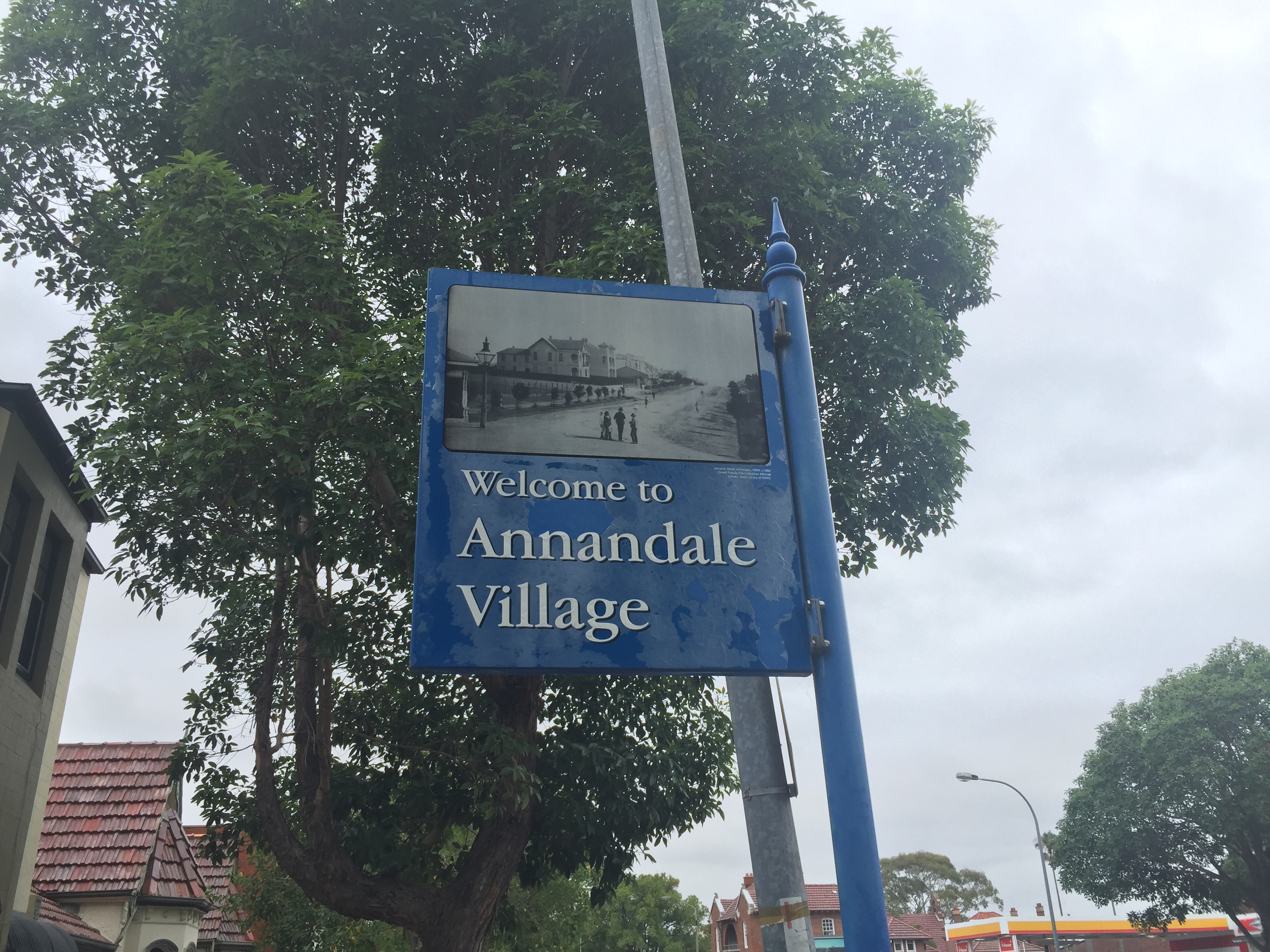
    Annandale Village Sign

    Annandale’s history can be traced back to the 18th century and Major George Johnston (1764-1823). Johnston captained one of the First Fleet ships transporting convicts from England to Australia. He also led the Rum Rebellion, a successful takeover of the Australian Government in 1808. For his service, he was granted the area of land around Annandale naming it after his birthplace in Scotland, Annan. What’s really interesting about this history, is that Johnston married one of the convicts on his ship, Ester Abrahams. She was essentially written out of this story until a memorial to her was unveiled in Johnston Street bicentennial park.

    Long story short, their son, Robert, inherited their estate and land and in 1877 sold it to John Young. Young started to make the suburb look oh so pretty. And here is where our tour begins.

    Stop 1: The Witches Houses

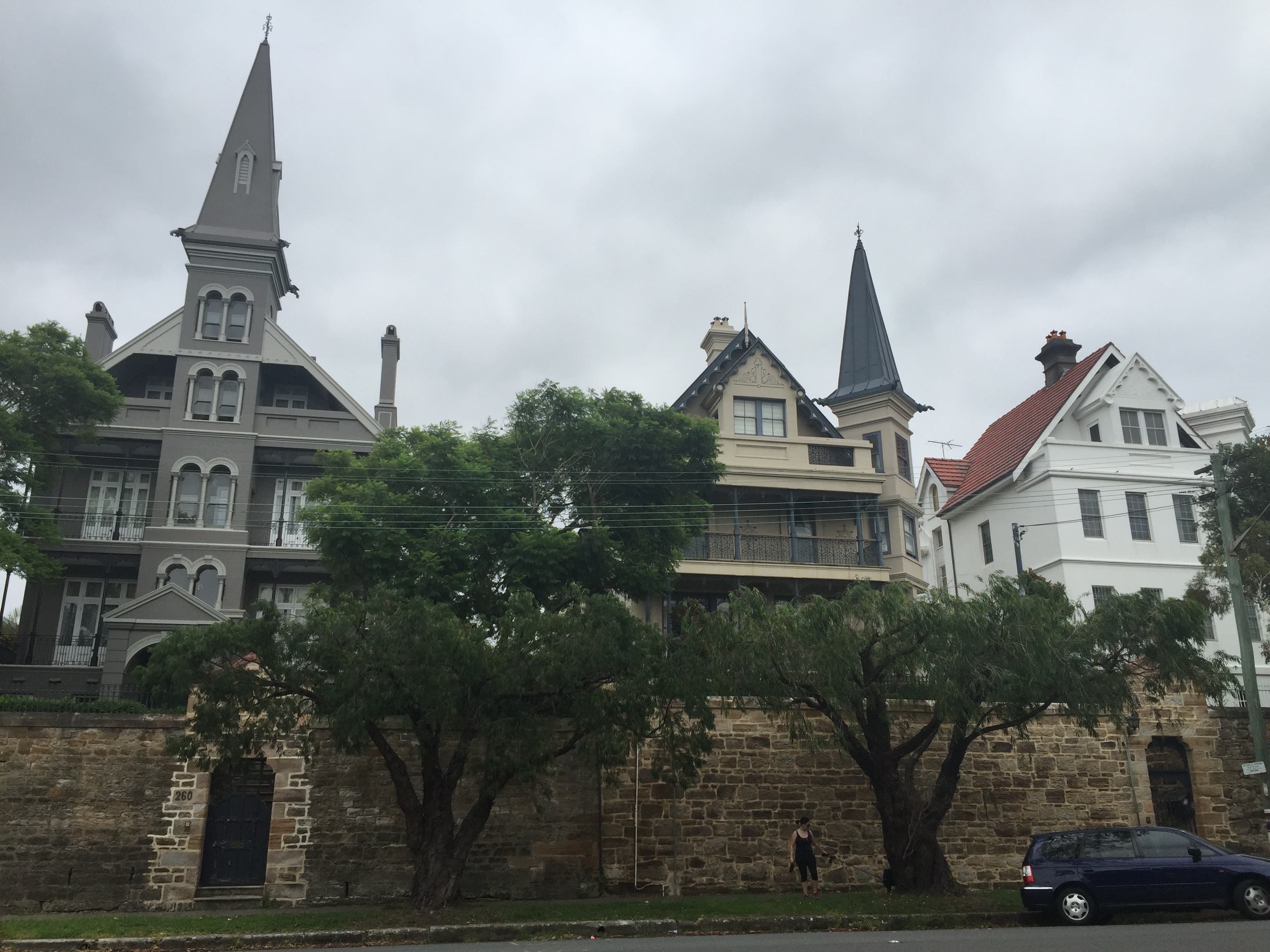
    Very close to Rozelle Bay Light Rail are the witches houses – on the corner of Johnston and Weynton. They are named after one of the feature houses, Kenilworth, which has a roof shaped similar to a witch’s hat. This specific house was rented to Henry Parkes, a key figure in drafting the Australian Constitution. He also has a strong connection to Cockatoo Island and its first superintendent Charles Ormsby. Other houses in the group include the Abbey, Oybin, Greba, Hockingdon, and Highroyd.

    img_6490
    The Witches Houses

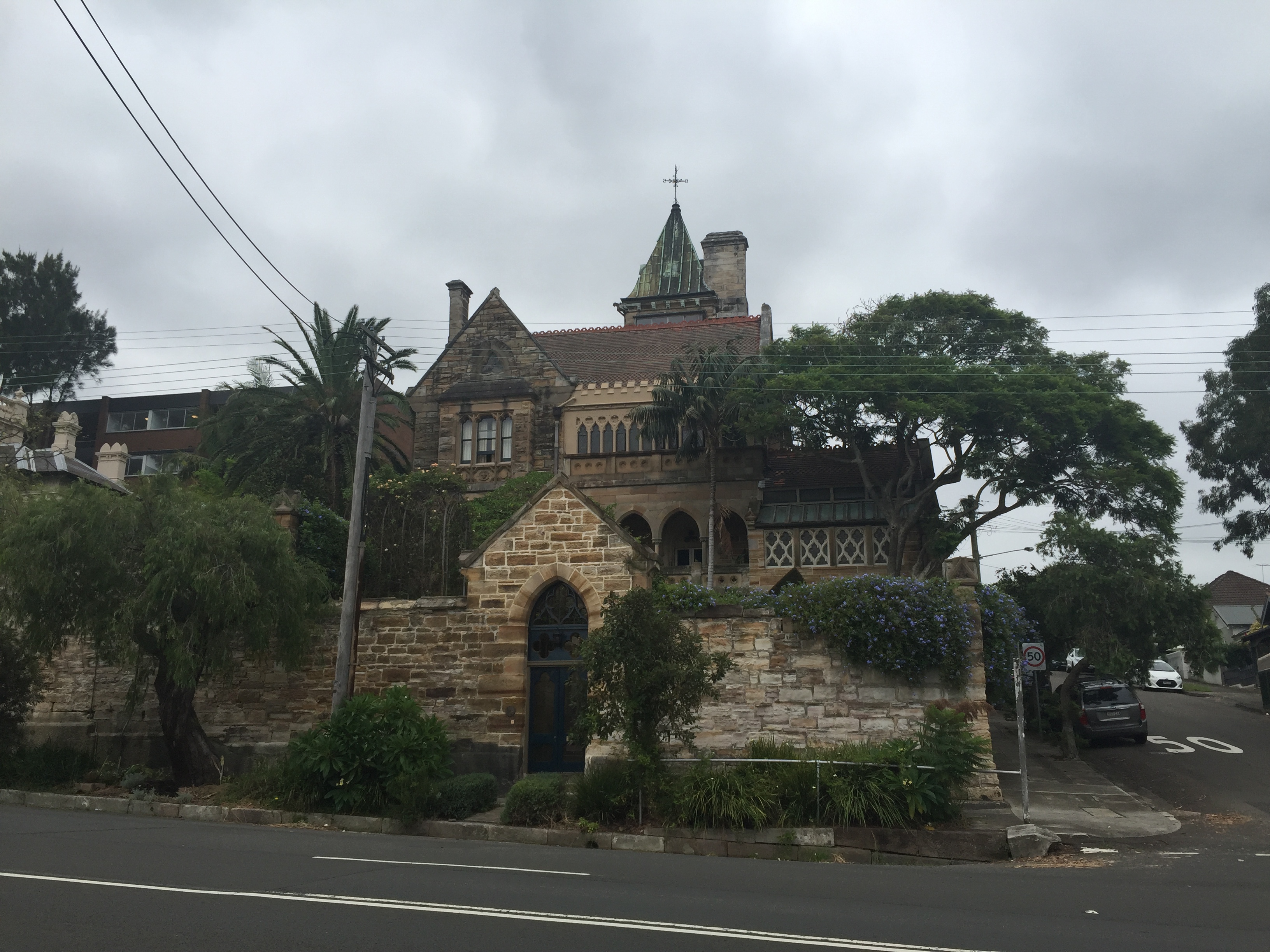
    The Abbey is, in my opinion, the most architecturally stunning. It has been built in a Gothic Revival style to mimic a Scottish Manor. It has gables, arches, gargoyles, a cloister, and a tower hence the nickname, The Abbey. For a while, the house was subdivided into various flats. In 1959, however, the whole house was purchased and restored to its former glory.

    img_6483
    The Abbey

    Unfortunately, there were originally another two houses in this set that have since been demolished – Claremont and Rozelle. According to photographs and early descriptions, Claremont looked almost identical to Kenilworth.

    img_6499
    Kenilworth, Highroyd, and Hockindon

    Stop 2: Uniting Church

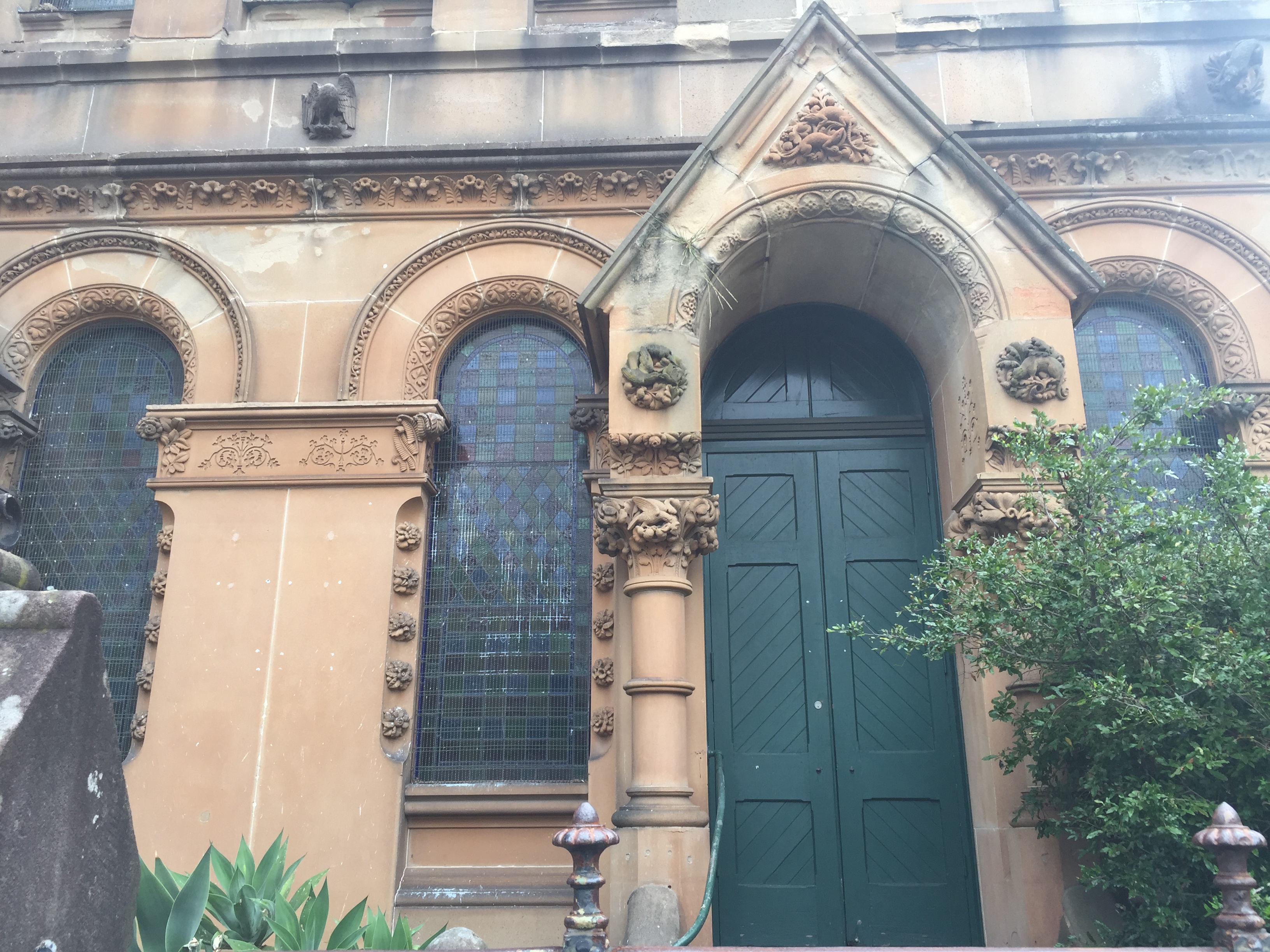
    This is a nice spot to stop between the witches houses and the Hunter Baillie Memorial Presbyterian Church. Originally built as a Uniting Church in 1891, the building now serves as the Annandale Creative Arts Centre.

    img_6509
    Uniting Church

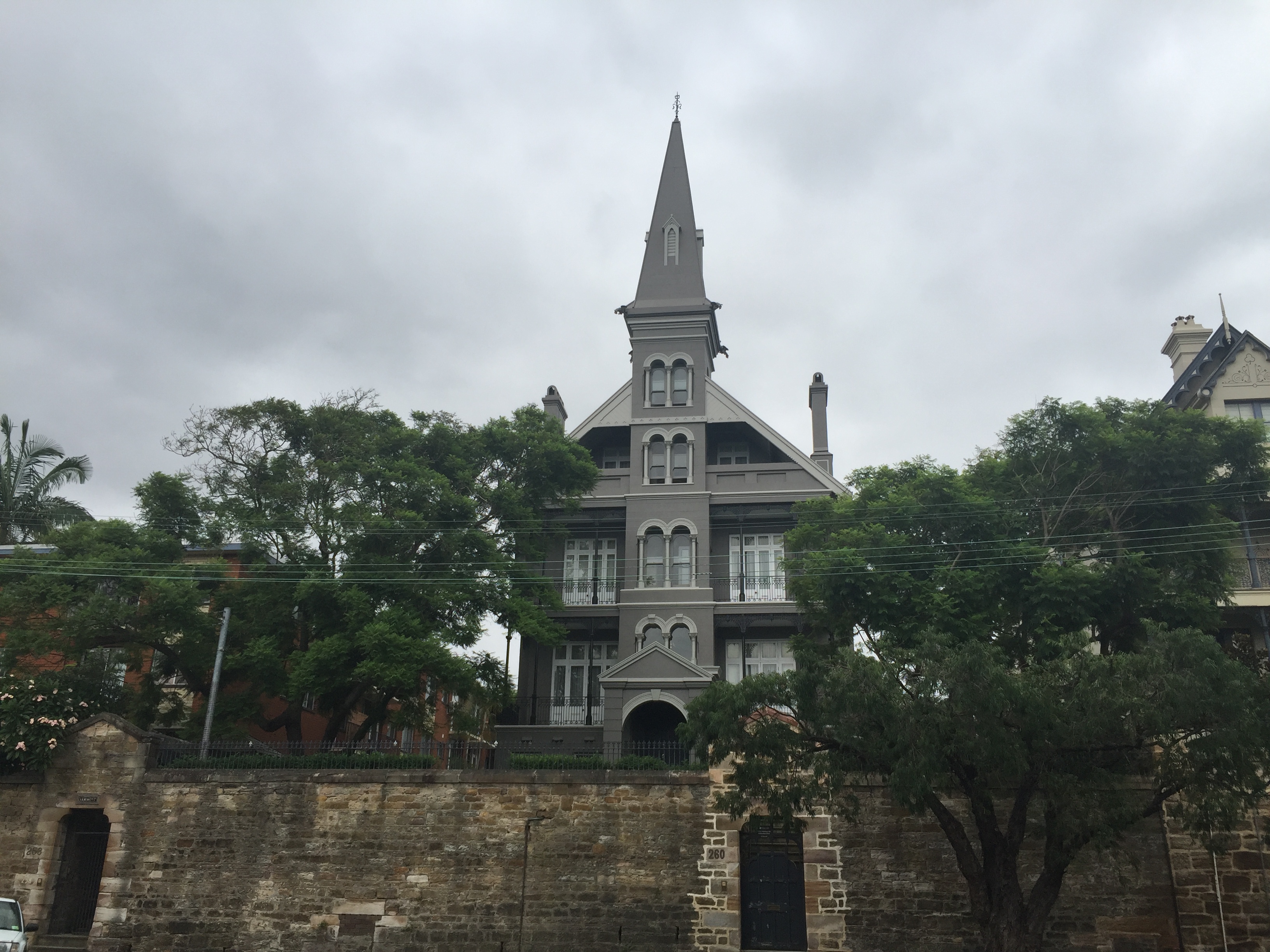
    Stop 3: Hunter Baillie Memorial Presbyterian Church

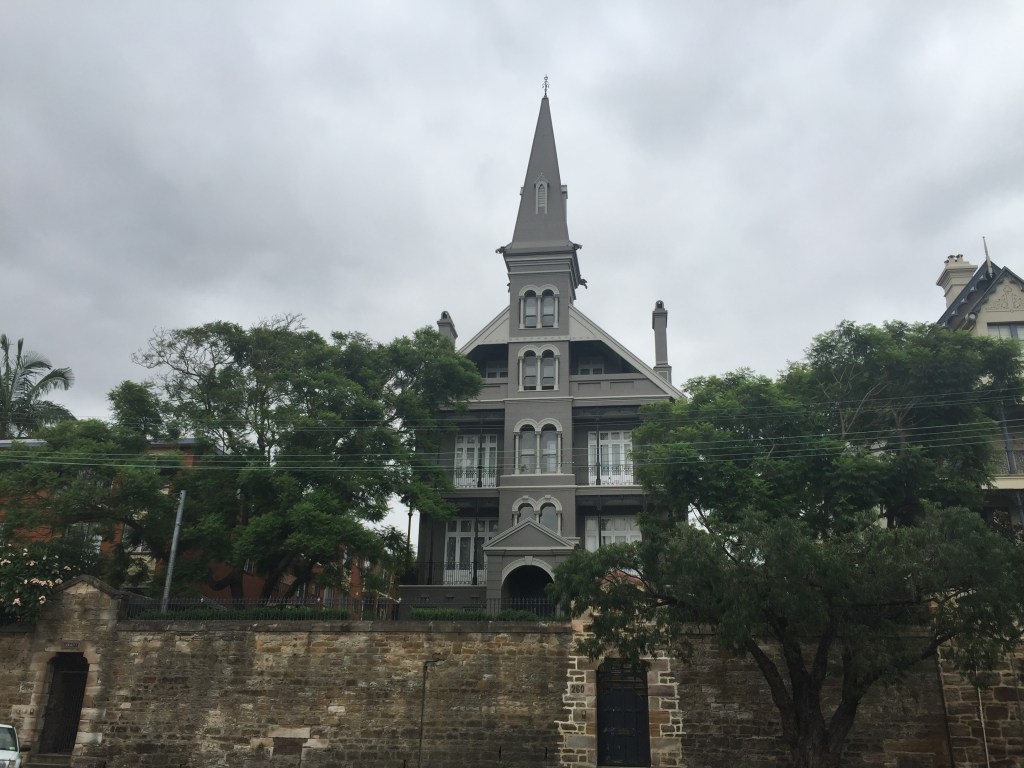
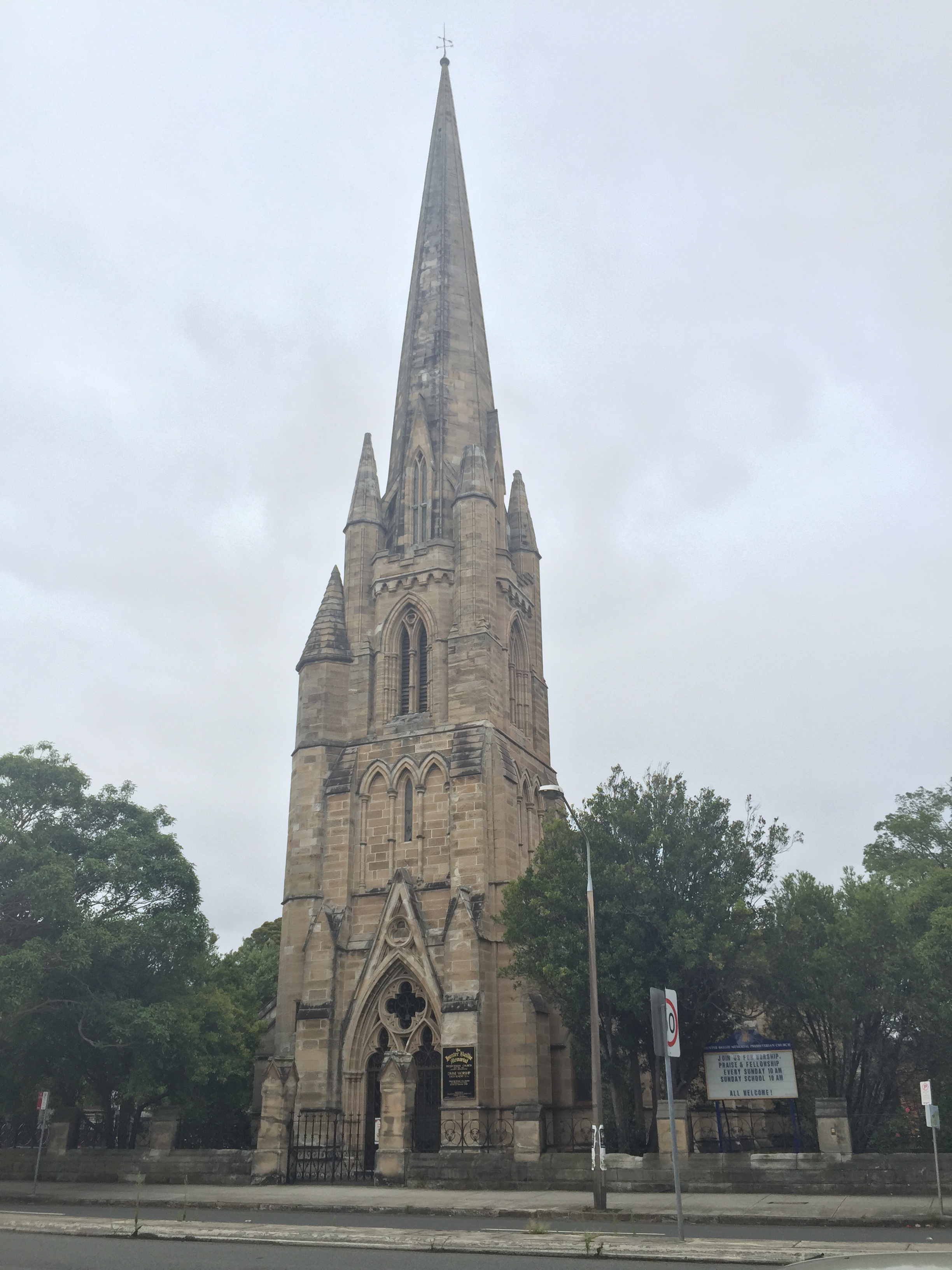
    You will see the spire of this church long before seeing the actual church. It is, after all, the tallest chruch spire in New South Wales reaching a height of 56 metres. I did not get the chance to see inside, but, it is supposedly filled with marble.

    img_6514
    Hunter Baillie Memorial Presbyterian Church

    Stop 4: Norton House, 33 Johnston Street

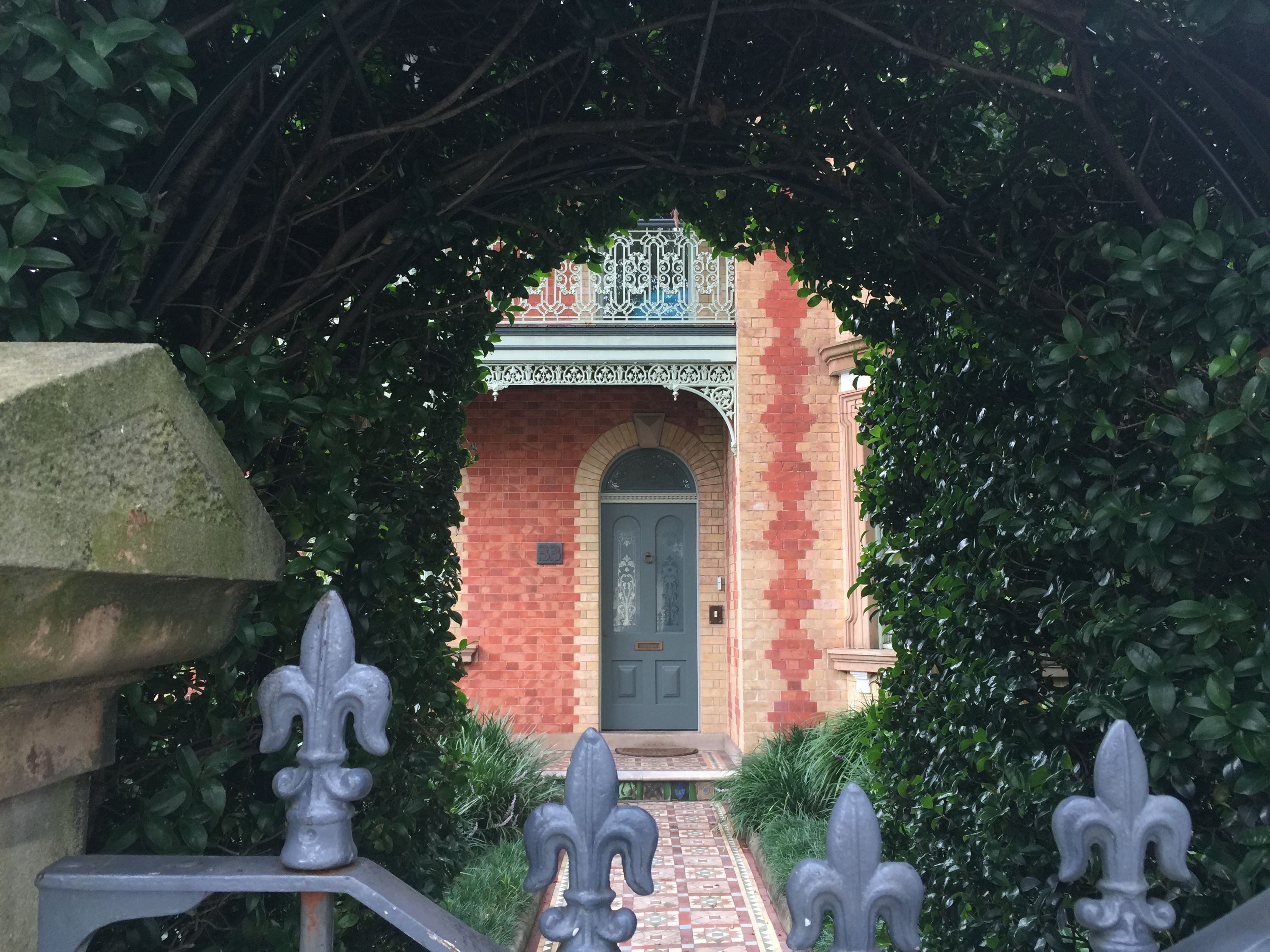
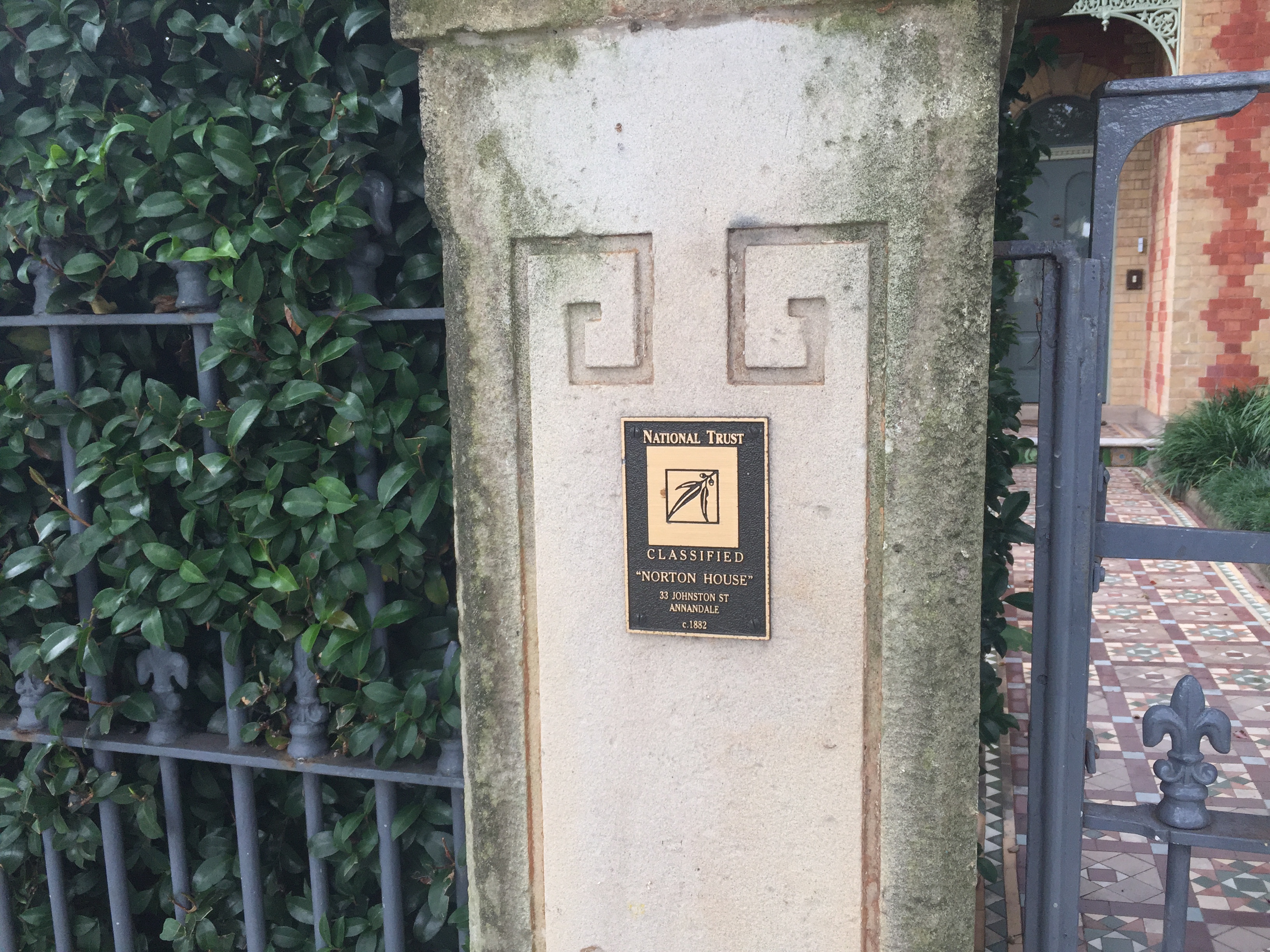
    After trawling through quite a few websites, I finally came across some information on this place. I bothered looking because the house had the National Trust logo next to the gate along with its title, “Norton House”. According to its entry on the Annandale Association Register of Buildings, Norton House is a significant example of a Johnston Street mansion from the late 1800s.

    img_6518
    Norton House
    img_6517
    Norton House

    Stop 5: Annandale House Gates

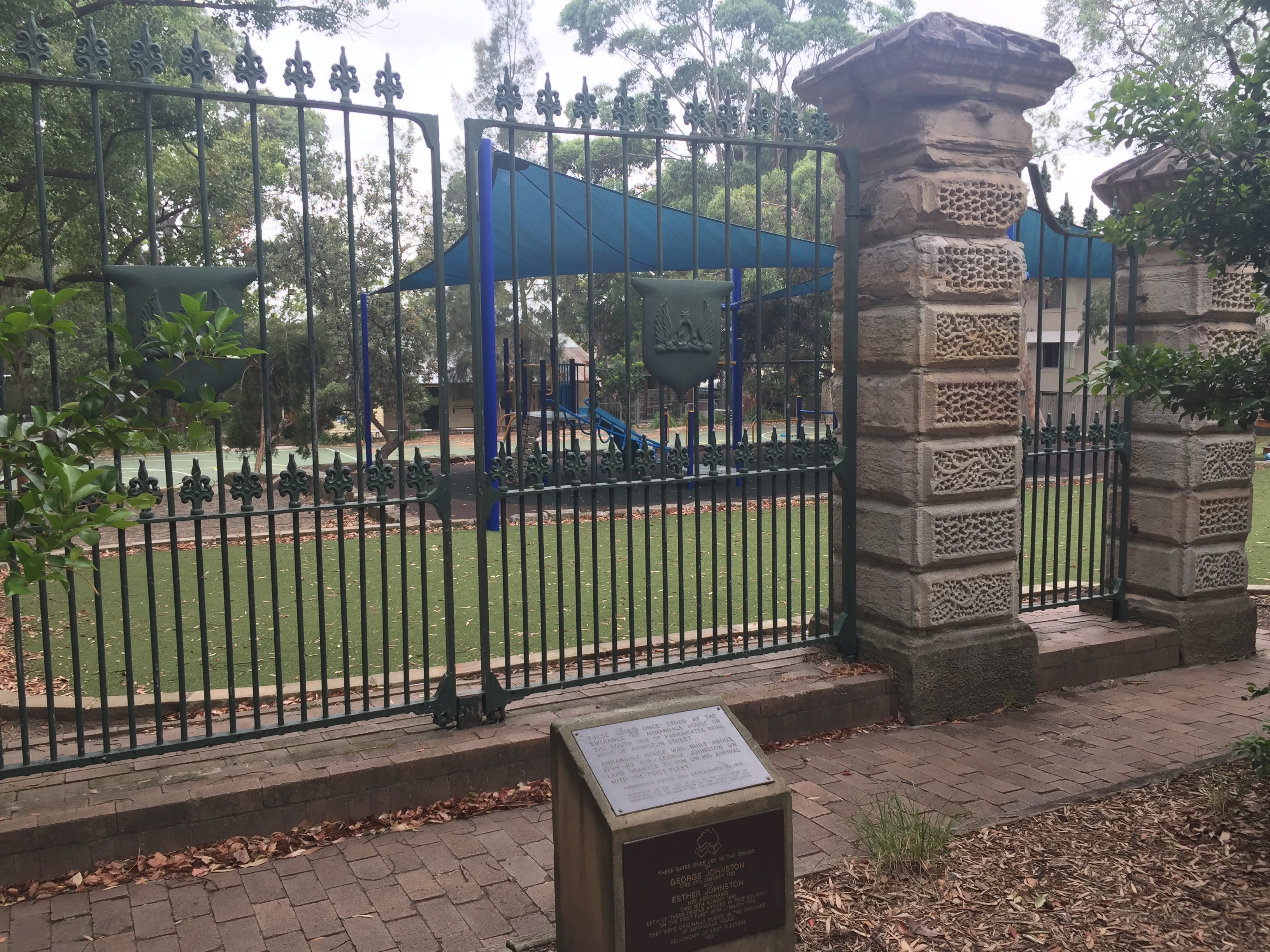
    My final stop was at the gates to the entrance of Annandale House. George Johnston had this house built on the land in around 1799. It was demolished some time between 1905 and 1914 to make way for the Annandale Public School. These convict-built gates are all that remain. The gates also once led to the graves of George and Ester Johnston. They have since been moved to Waverley Cemetery.

    img_6521
    Annandale House Gates

    All of these properties were once inscribed on the Register of the National Estate. Since 2003, however, this list has been discontinued and now acts more as an archive of information on over 13 000 places in Australia. In its place, two new heritage lists were created – the National Heritage List and Commonwealth Heritage List. The difference being that national has oustanding places of value and commonwealth has places controlled by the Commonwealth. These buildings are not listed as National Heritage List sites.

    The level of community pride in these sites, however, has left me feeling not too worried. The Hunter Baillie Memorial Presbyterian Church, also, for example, collaborated with the National Trust to gain funds for conservation. I am going to keep positive that these buildings will be preserved and maintained!

  • Sydney: Museum of Contemporary Art

    Today I had a moment to quickly visit the Museum of Contemporary Art (MCA) and their new Primavera exhibition. I am trying to visit more art galleries this year. This is primarily because I would like to expand my knowledge of how their exhibitions are designed. As I only had thirty minutes, I decided to focus on one of the two rooms displaying Primavera artwork. For those who have visited, or plan on visiting, it is the room immediately to the right of the cloakroom.

    My first question was, what is Primavera? I am not very tuned into the world of art so this was the first time I had even heard of such an exhibition. To my surprise, Primavera is one of the longest running exhibitions in the country! Essentially, it is an exhibition held yearly at the MCA showcasing artwork by early career artists. One condition is that artists must be aged 35 years or younger to have their work displayed. From such exhibitions, the MCA has acquired over 230 artworks. As it is Primavera’s 25th anniversary, the MCA decided to reflect on the meaning of the exhibition and display some highlight works.

    img_6455
    Museum of Contemporary Art Entrance

    First things first, the introduction panel was very informative and provided a great snapshot of what was on display. The artworks are grouped thematically focusing on transformation, time, and history.

    The layout of the exhibition was, to me, very effective. The artworks are displayed inside a huge room. Considering only a few are on display, it was amazing that they seemed to fill the room. There was obviously a lot of care taken with the placement of the artworks and deciding how they would all work together in the shared space. As there is plenty of room to move around, I hardly noticed the other people and felt as though I was in a relaxed environment. I strongly dislike being jostled around and hurried along when I’m trying to look at something in a museum.

    At the very back of the exhibition space was a feature wall. Well, it was actually an artwork by Agatha Gothe-Snape titled Emotional Wall with Everything Else. The whole wall has been divided into five sections, each painted in a different colour to represent the Lüscher colour test. In 1947, Dr Max Lüscher created the concept that you could measure an individual’s psychological state through their response to specific colours. Why the words “everything else” are painted on the navy wall is to allow visitors the chance to stop and reflect. Considering the other walls are painted a neutral creamy white colour, the artwork stood out and worked very well within the space.

    img_6480
    Emotional Wall with Everything Else

    My eyes were, however, immediately drawn to the artwork Native Gold by Danie Mellor. It was shimmering at the back of the exhibition space enticing visitors inside. On reading the object label, the significance of the piece comes to life. It is a commentary on ideas of authenticity and Indigenous identity in Australia. According to the lable, the gold represents the wealth of nineteenth-century Australia juxtaposed against the fact that it was of no use to Indigenous Australians. The animals are indeed real and had been taxidermied!

    img_6456
    Native Gold

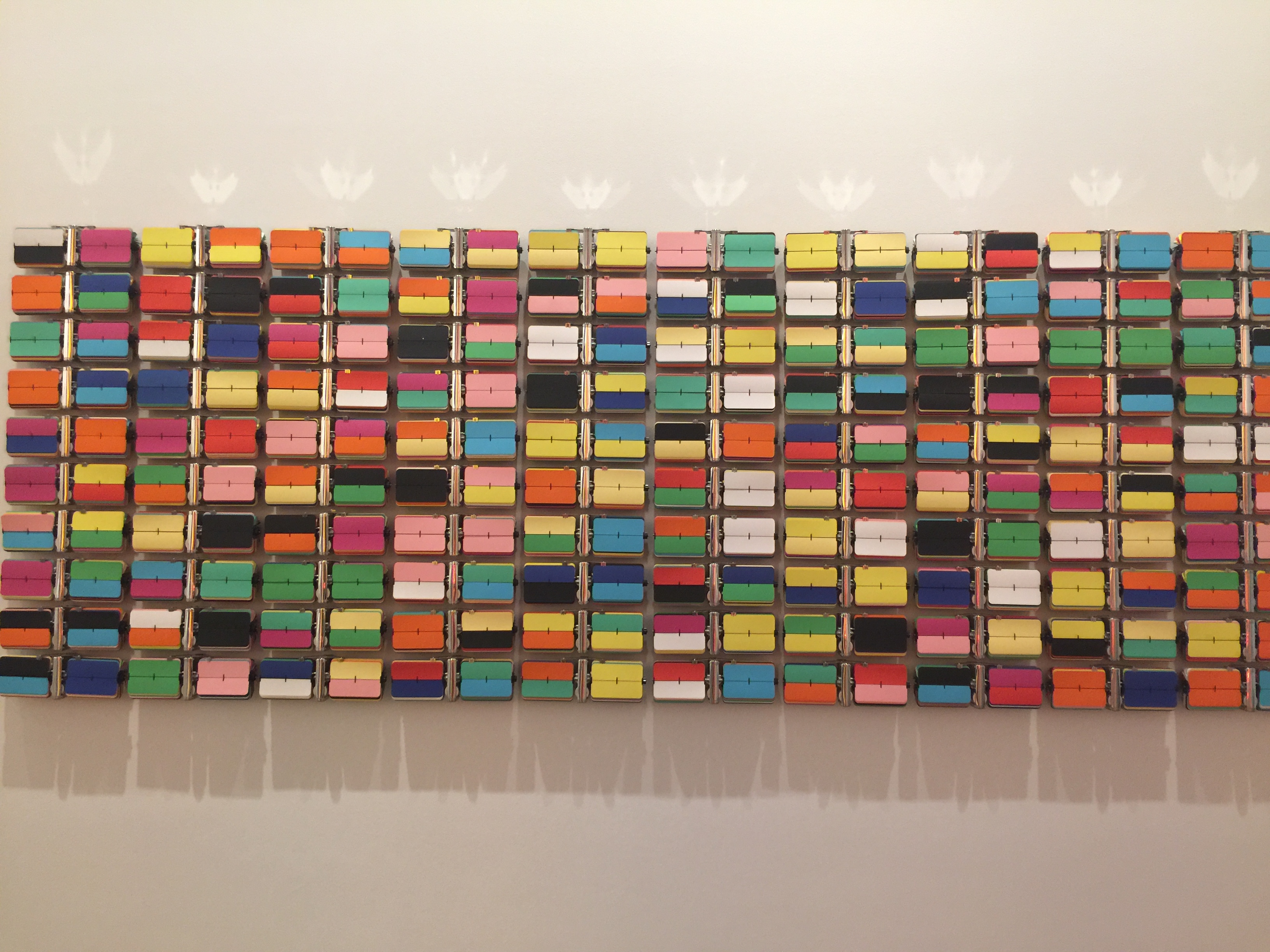
    After exploring the far end of the exhibition space, I was very fortunate to hear about one of the artworks from a gallery officer. It made a huge difference to my experience – in a good way. I heard about how the artist, Rebecca Baumann, had lived in Berlin and was interested in the train locations and times flicking over on the screen. This has been combined with an experiment to see how many different colour combinations can arise from combining the three primary colours. What has resulted is a grid of 100 flip-clocks. Instead of numbers, each card is painted one of the primary-mixed colours. In a 24-hour cycle all of the discs flip over creating a randomly generated colour grid.

    img_6460
    Rebecca Baumann

    These were my favourite artworks in the exhibition space. Not only because they were aesthetically interesting, but also, because I found their stories and context to be engaging.

    This is a major breakthrough for me. I have not had this kind of experience in a contemporary art gallery since visiting the Museum of Fine Art in Boston. Although just one room, it provided a perfect quick getaway from the crowds at Circular Quay. Thirty mintues is plenty of time to see the entire Primavera exhibition. Especially if you are just looking to walk around and not go into too much depth reading each artwork label. I do, however, strongly recommend that you read the labels. They weren’t as incomprehensible as so many tend to be in art galleries.

    The exhibition will be running until the 19th of March. It is free to enter and also features on the MCA app. I did not spend my time downloading the app and working out how to use it in the space. If you are looking to further engage, or if you have more time, why not see how the digital has been integrated into the exhibition space.

  • Museum of Applied Arts & Sciences: Icons

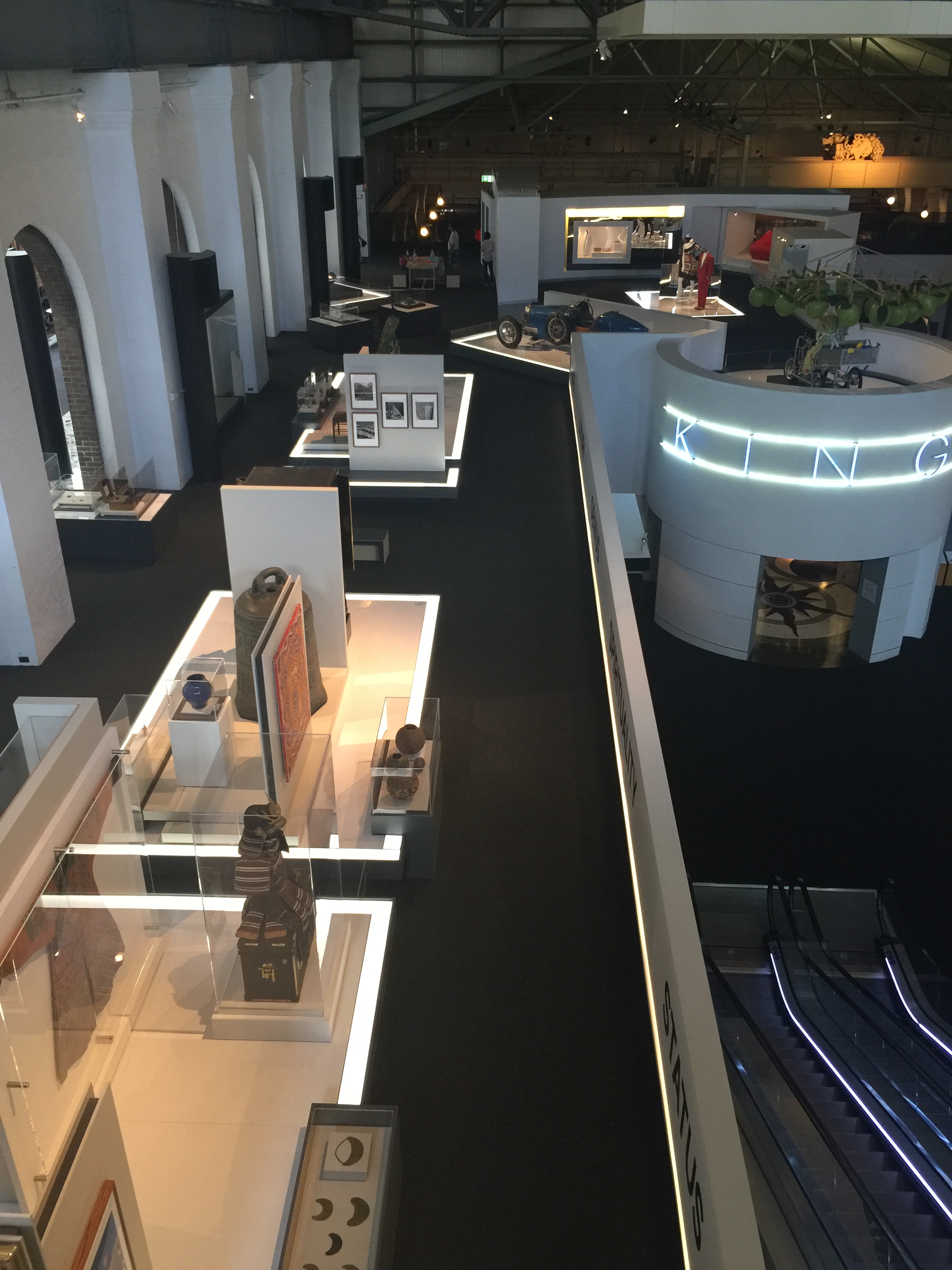
    Over the past few days I have been spending quite a bit of time in the Powerhouse Museum (or Museum of Applied Arts & Sciences). Some of this time has been spent wandering around their relatively new exhibition titled Icons. The basic aim of this exhibition is to showcase some of the treasures held in the museum’s collection. It struck me as a mix between their Recollect series, i.e. visible storage, and other, more narrative-driven, styles of display. There are a lot of objects, however, each has its own label and fits into one of the six sub-themes: luxury, celebrity, status, spirituality, value, and genius.

    img_6378
    Aerial View of Exhibition

    The introductory panel sets the scene, describing the collection of the museum as eclectic and extensive. Considering the museum collects anything and everything to do with applied arts and sciences this is a fair statement. For those of you unaware, the collection of the Powerhouse Museum can be traced back to around 1882 and the Sydney International Exhibition held in the Garden Palace. Three years after the palace was built, the entire building burnt down in less than forty minutes. As you can imagine, the vast majority of objects were destroyed. Luckily, a few did survive and these became the foundation collection of the museum. Today, the museum has over 500 000 objects.

    The following are my icons in Icons – a list of objects that I found particularly interesting.

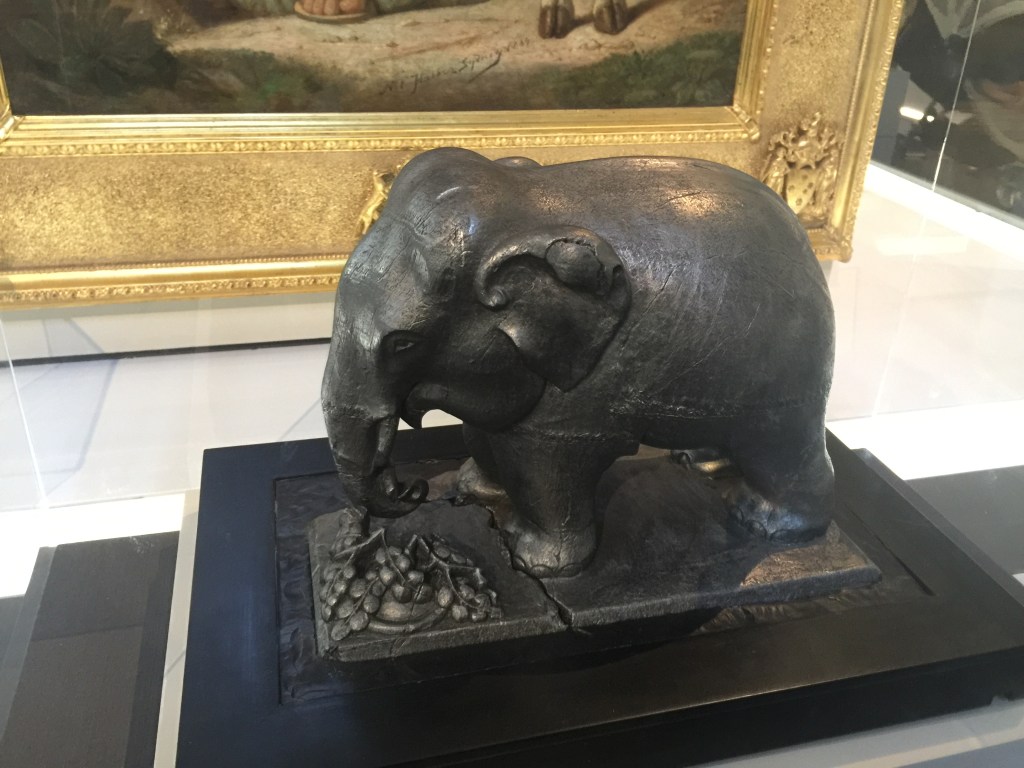
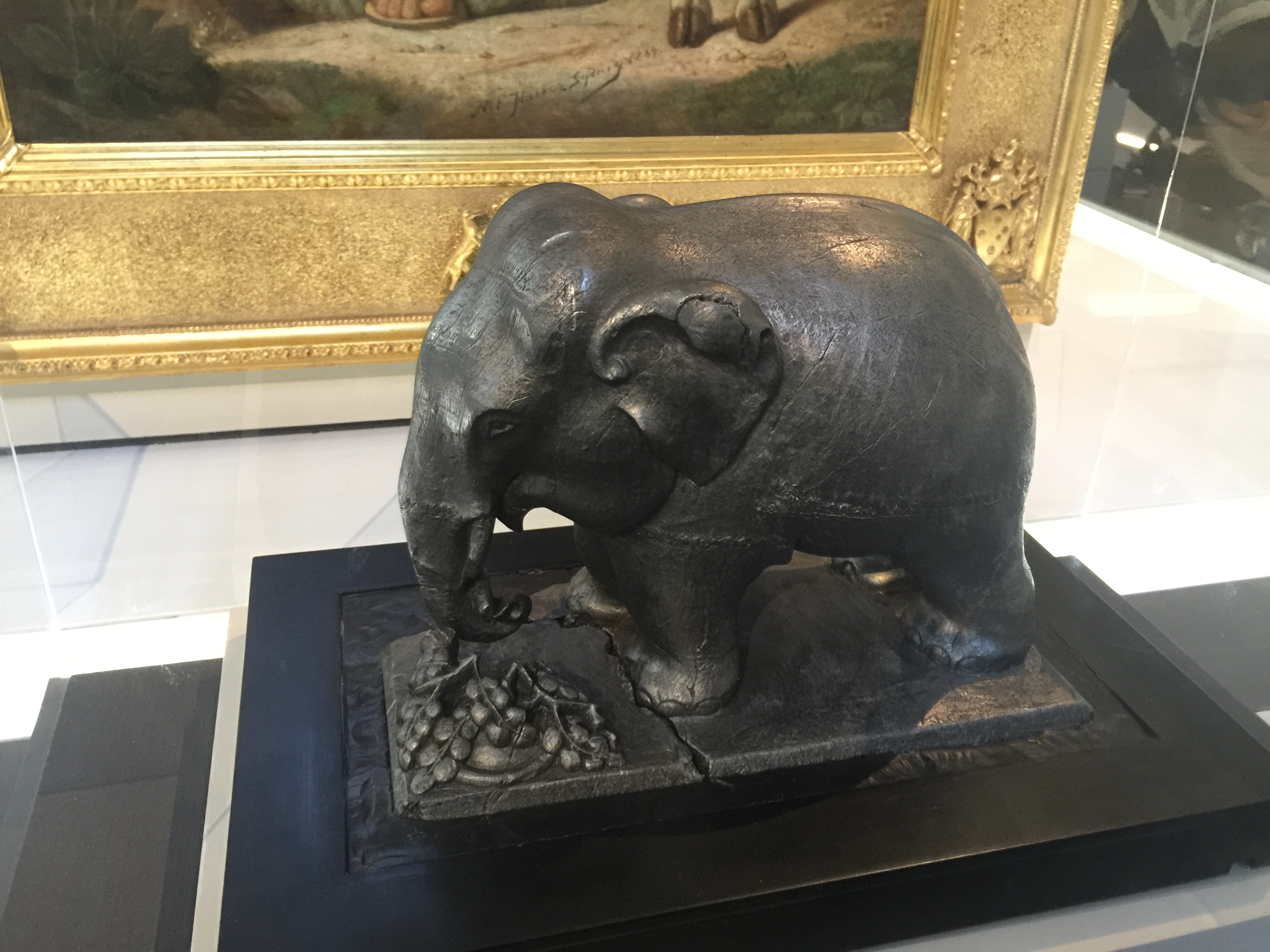
    1. Garden Palace Elephant

    This elephant was one of the first objects acquired by the Powerhouse Museum. Somehow, it managed to survive the Garden Palace inferno. People have speculated this is because it fell through the floor and was shielded from the flames.

    The entire piece was carved from a single block of graphite which is pretty remarkable. Especially considering the detail around the ears and trunk. It has made my list purely because of its connection to the early days of the museum.

    img_6412
    Garden Palace Elephant
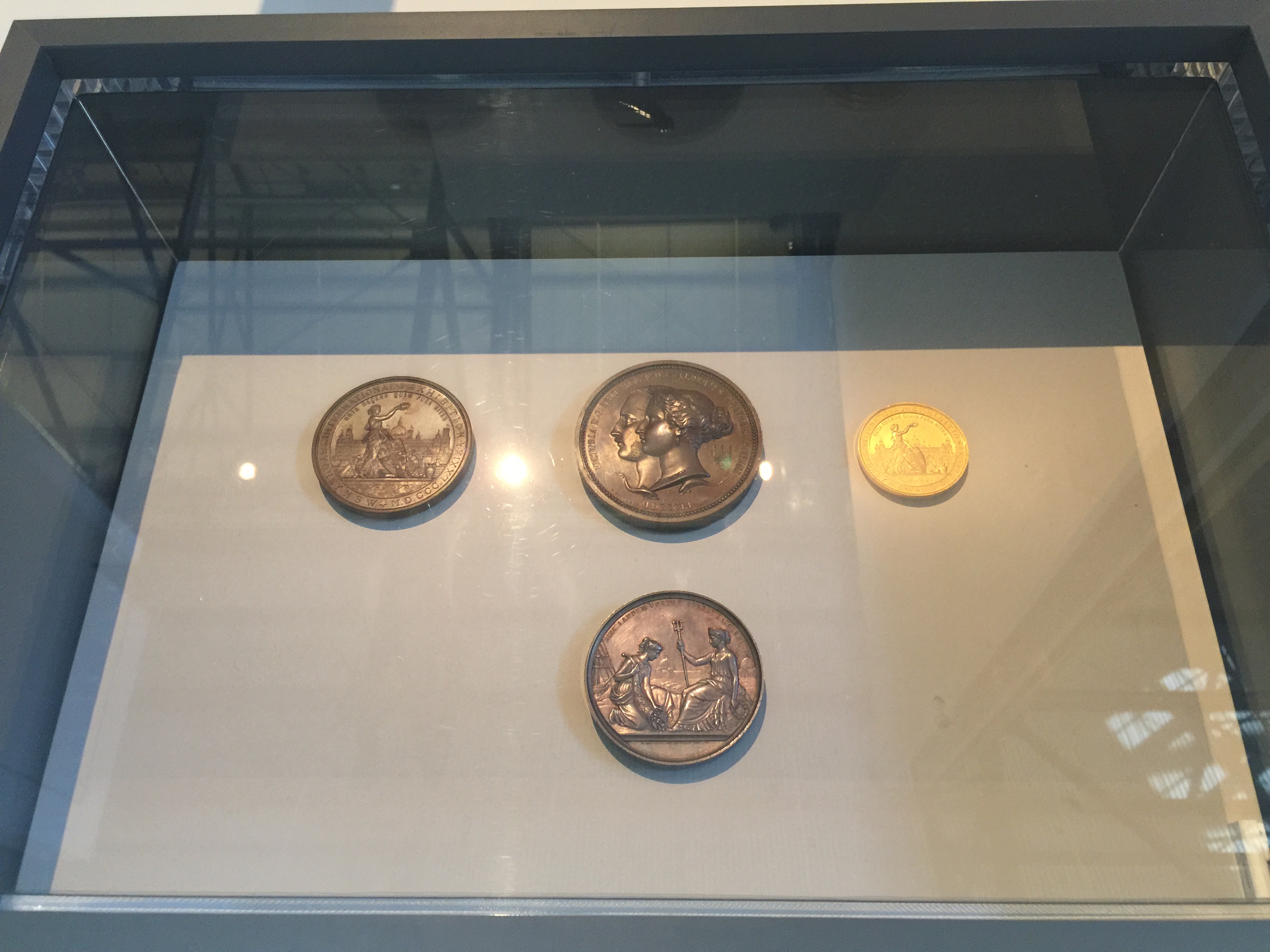
    1. International Exhibition Medals

    I have spoken at length about my love of 19th century international exhibitions. My first exhibition I curated focused on these exhibitions and the role that Queensland played. These exhibitions were so grand and spectacular. For this reason, they continue to ignite my curiosity.

    There are four medals on display – gold, silver, and two bronze. My favourite was the bronze medal designed by William Wyon and Joseph-Francoise Domar. In the photograph below, it is the medal on the first row in the middle. It has made the list because it was awarded during the first international exhibition at the Crystal Palace in 1851.

    img_6410
    International Exhibition Medals
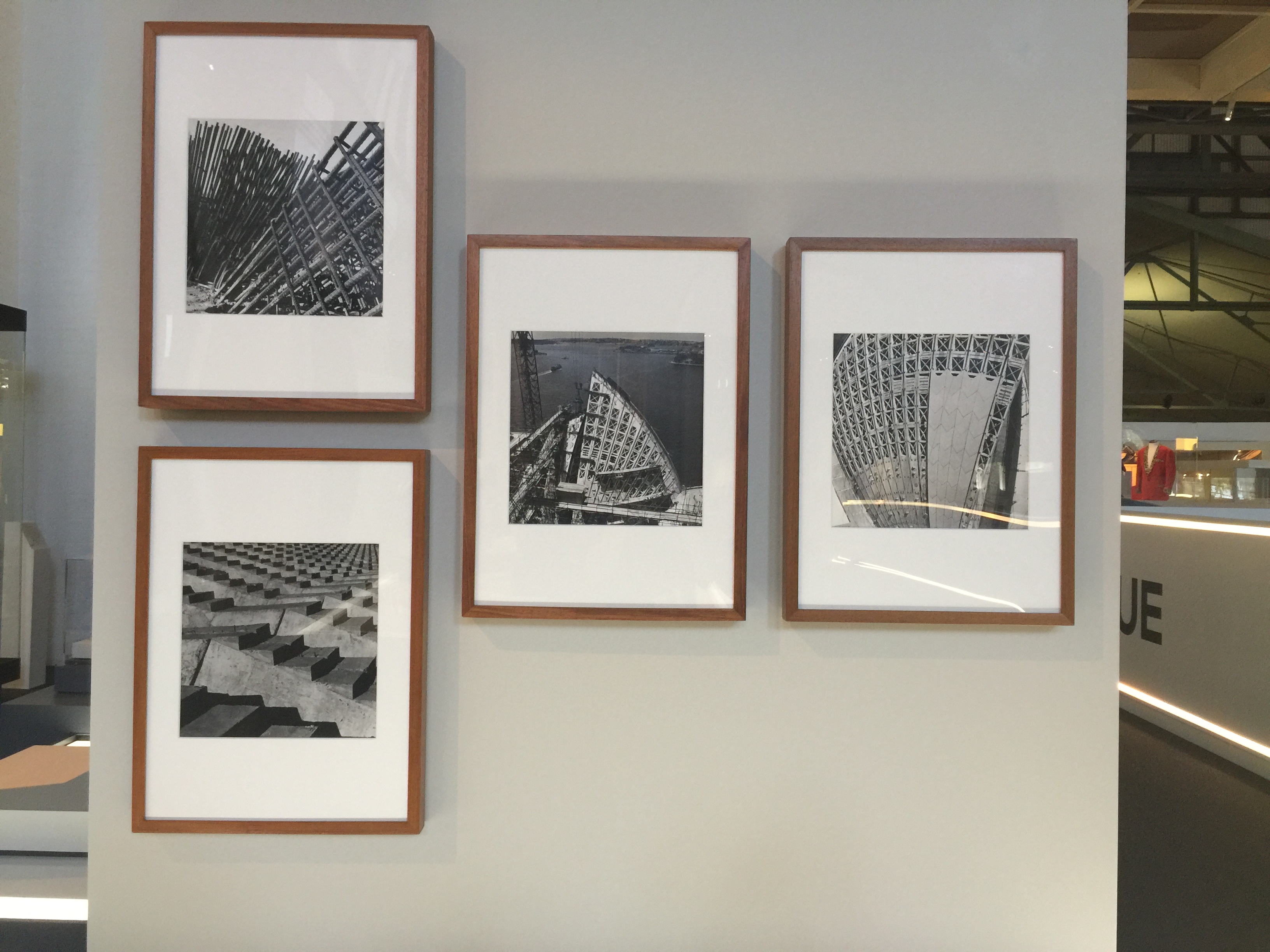
    1. Documenting an Icon

    I still remember seeing the Sydney Opera House for the first time on a school trip in year 7. To think that I would eventually move to Sydney and see the Opera House almost once a week never crossed my mind. The building, therefore, is quite special to me.

    These black and white photographs document the construction of the Opera House between 1958 and 1973. It is great to see the building at various stages. I can definitely see the intricacy of the design. Aesthetically, the photographs are displayed nicely and, to me, were very eye-catching.

    img_6392
    Oper House
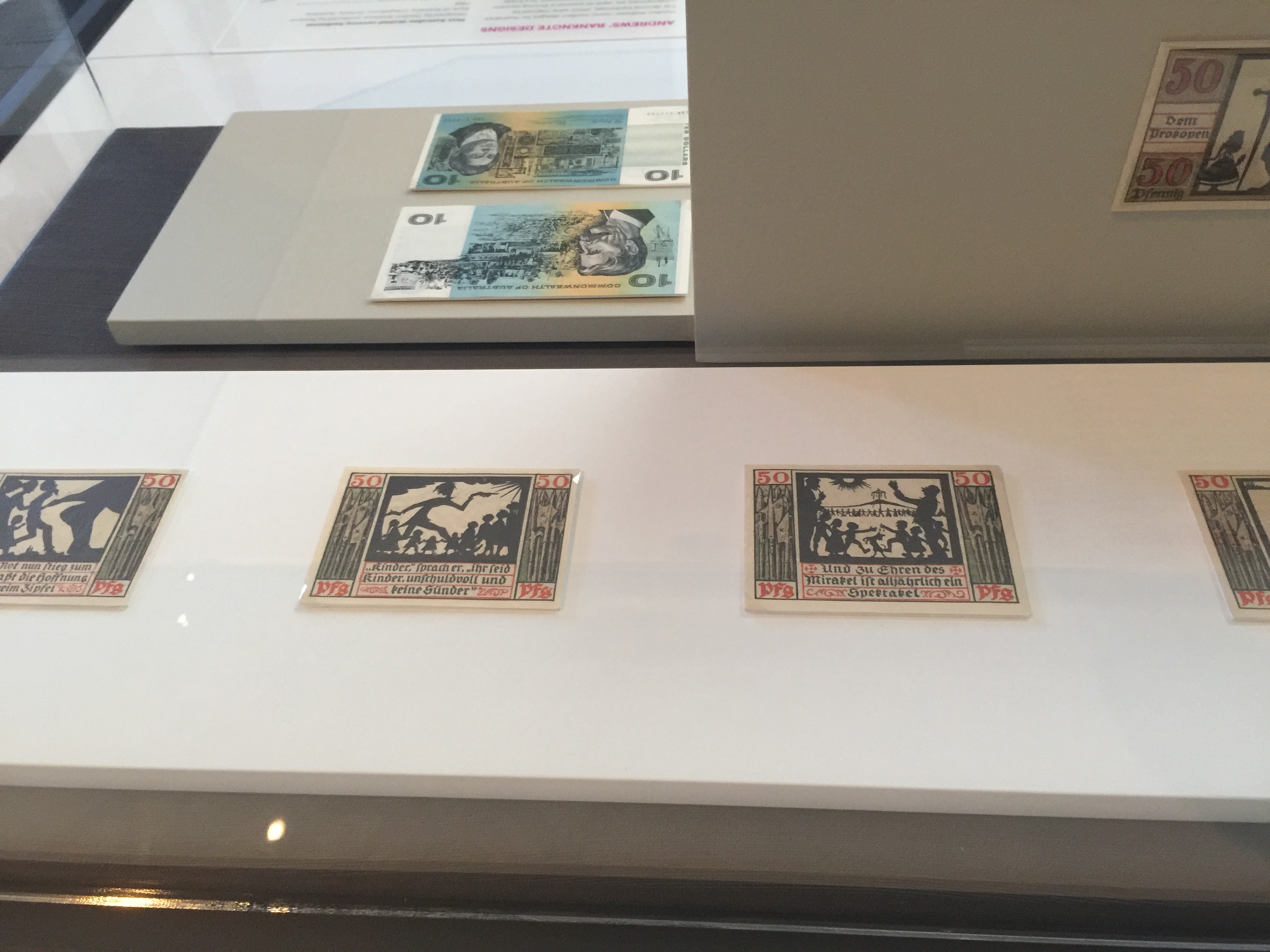
    1. Weimar Republic Currency

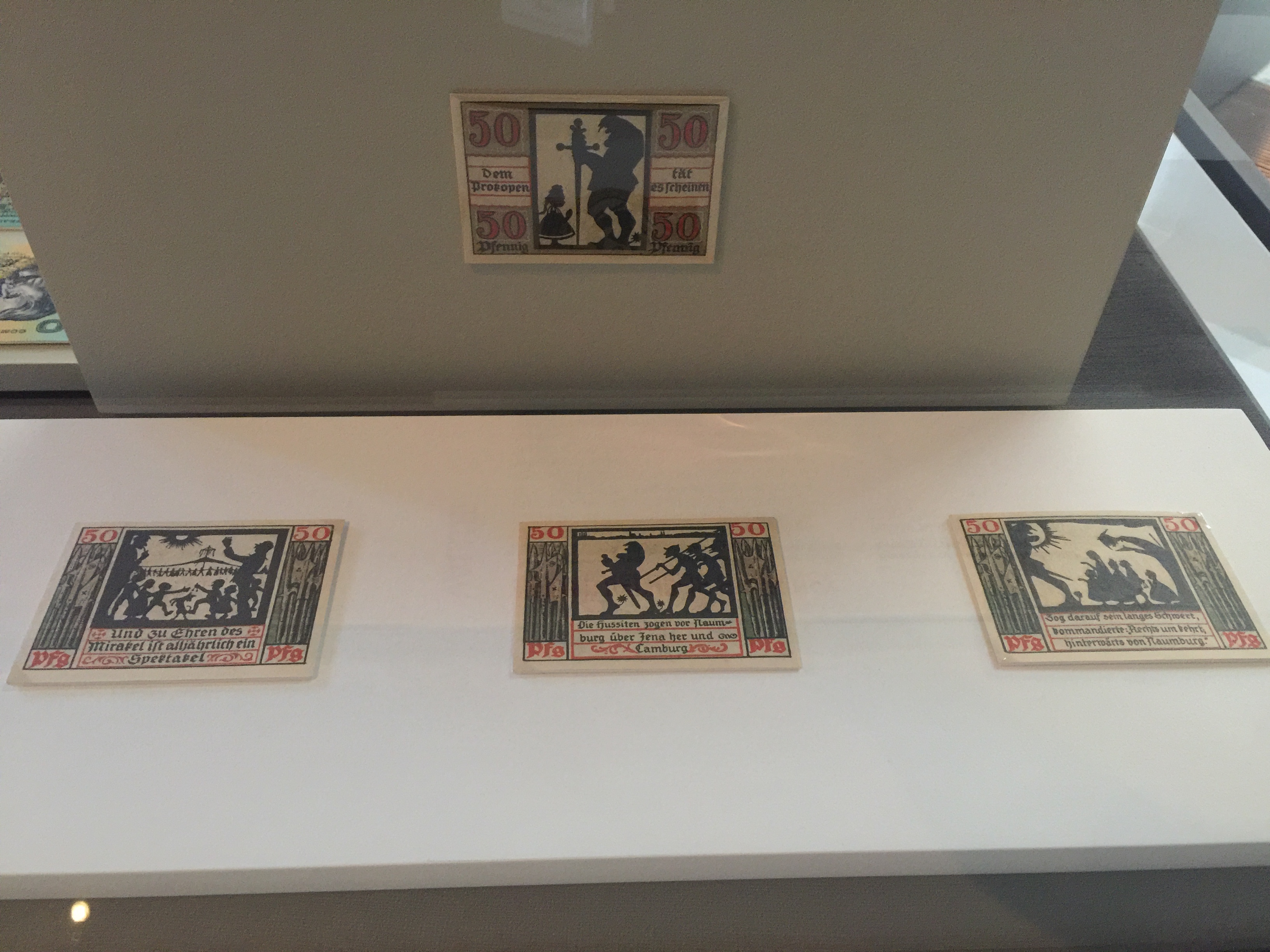
    Despite walking around the exhibition countless times, I didn’t notice these objects until today. I loved studying the Weimar Republic at University. It is such a complex and rich area of history. These bank notes were produced in the early years of the Republic, prior to the hyperinflation that occurred from 1922 to 1923. That alone is interesting enough. What makes these notes extra special are the images that have been printed on the front of each note. These designs were inspired by a children’s fairytale. I think they are visually stunning.

    img_6404
    Weimar Republic Currency
    img_6406
    Weimar Republic Currency
    1. Top-Secret Code Machine

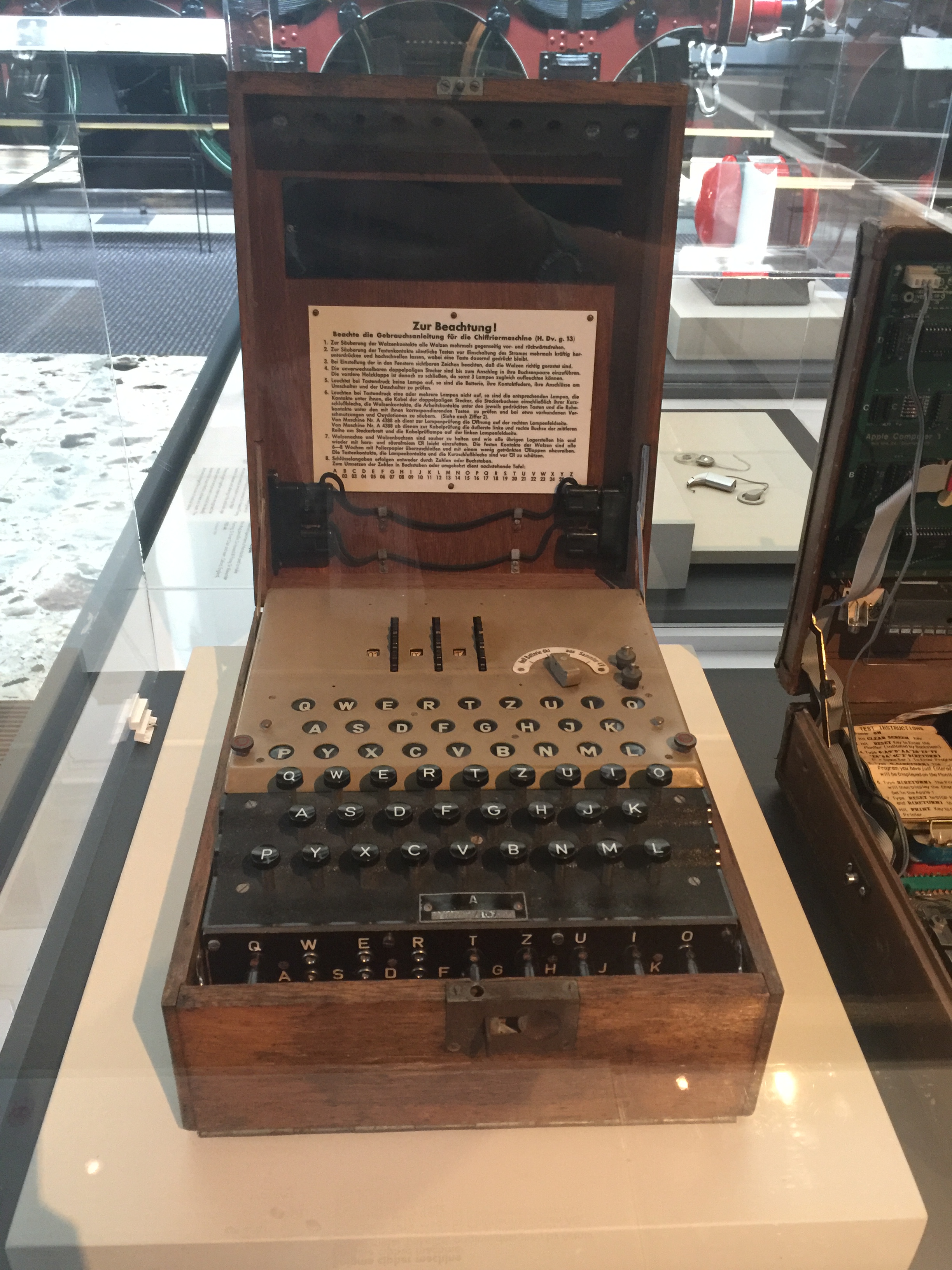
    Visiting Bletchley Park last year was an incredible experience. The following is an incredibly brief summary of the history. During the Second World War, the German military had a secret code that was deciphered first by Polish cryptographers then by the team at Bletchley Park led by Alan Turing. A reductionist summary that would leave all my history teachers with a migraine. If you are interested in this history there is so much out there to read.

    On display is one of the original Engima code machines. It reminds me of why I became interested in museums in the first place. Reading history is just not the same as actually seeing an object from the past in front of your very eyes. To me, there is no substitute.

    img_6389
    Top-Secret Code Machine

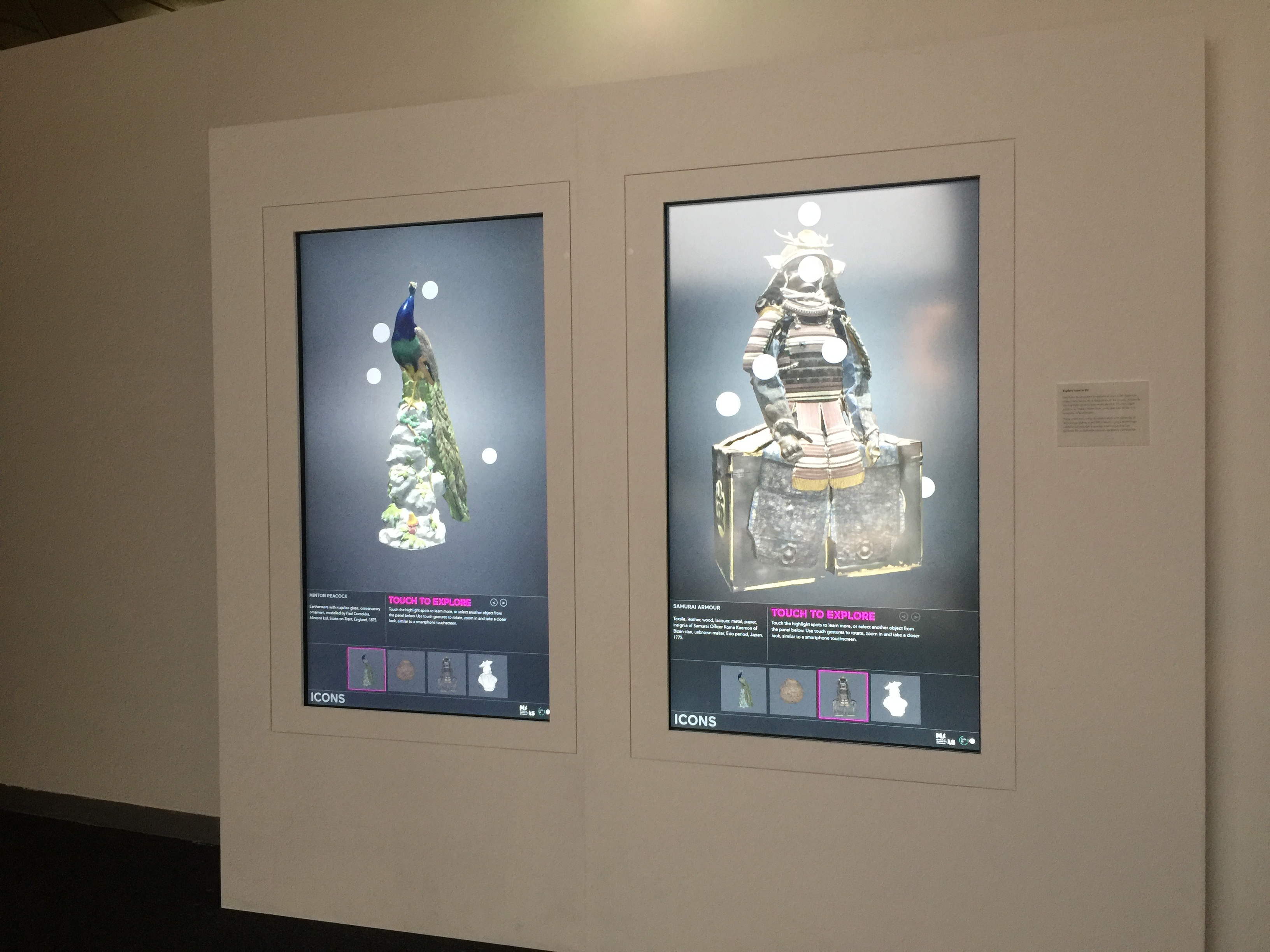
    There you have it, a snapshot of my icons in Icons. Another thing I wanted to mention was the integration of digital technology. Right at the back of the exhibition are large touch screens. A few of the objects have been 3D scanned allowing visitors to view each object from all angles, zoom in, etc. This has been the result of great collaboration between the museum and the University of Technology Sydney (UTS) students.

    img_6400
    Digital Screens

    If you are visiting the museum for the first time this exhibition is a great place to start. In one space, you can gain an overall understanding of the museum and its collection.

  • This is my first blog post for the GLAM (Galleries, Libraries, Archives, and Museums) Blog Club! I am so excited to be a member of this initiative. Once a month I will be writing an entry that relates to a specific theme or selected topic. For January the themes are:

    “What I learned in 2016” OR “What I want to learn in 2017”

    I selected the latter because I think I have already spoken at length about what I learned in 2016. Above all else, I learned the importance of being proactive and actively seeking opportunities.

    There is so much I want to learn in 2017.

    The following is my wishlist:

    1. Learn more about archival practices

    Whilst I have been working and volunteering in archives for the past six months, I hope that 2017 will be a year of refining my skills and learning new practices. As part of this, I have finally made the decision to study a Graduate Diploma in Records Management and Archives through Curtin University. I cannot wait to combine my practical experience with some theory. Yes, this does mean another year of non-stop assignments, but, I am looking forward to delving deeper into the world of archives.

    curtin-university

    2. Learn more from short courses and workshops

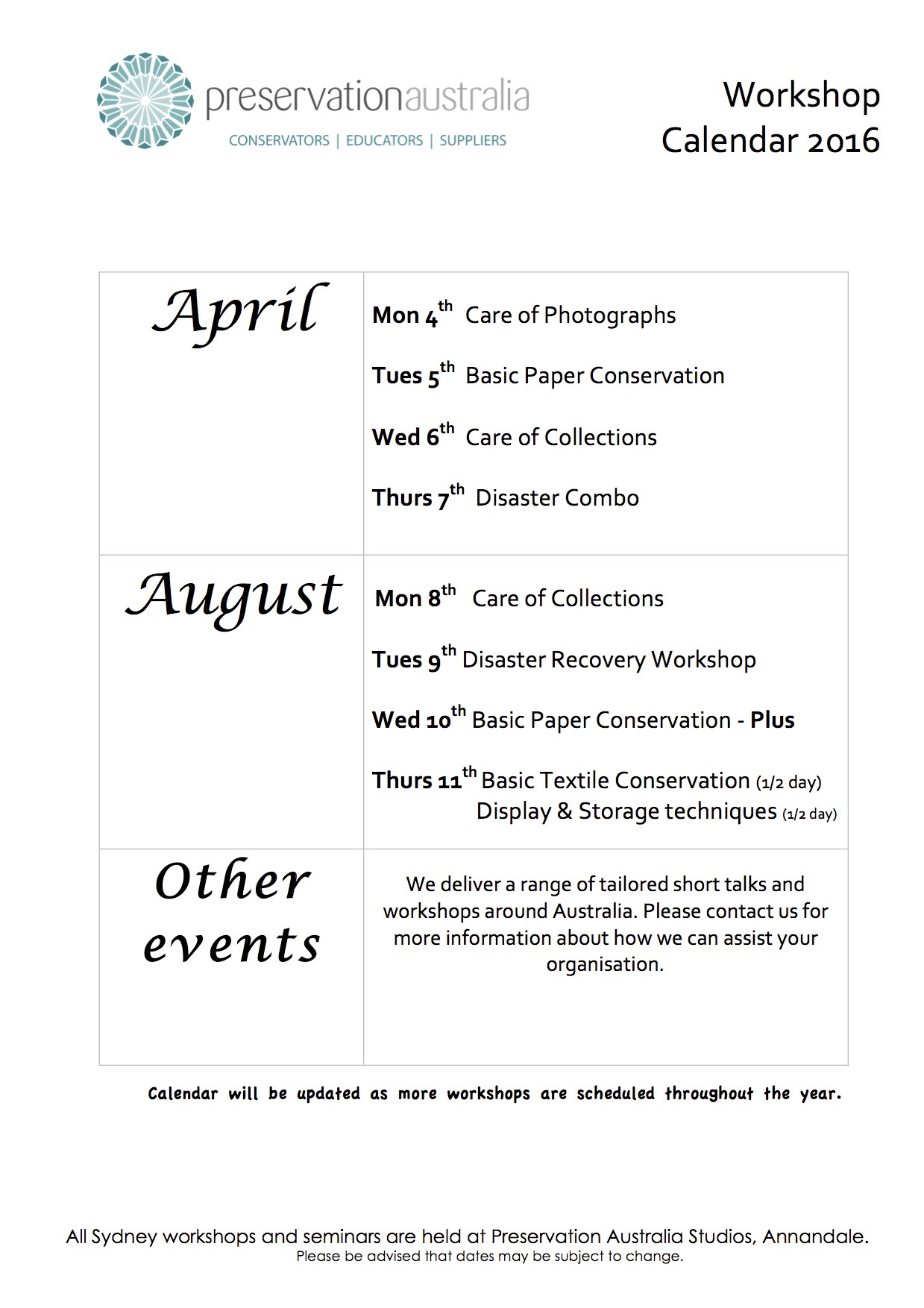
    One thing that I really want to do this year is be involved in more workshops and short courses. For example, I would love to take a basic textile preservation course offered by Preservation Australia:

    Home

    These seem like a great way to keep up-to-date with current standards and reinforce what is best practice. I am most interested in learning some basic conservation principles. Especially those related to textiles and paper.

    2016-workshop-calendar-2016-workshop-calendar

    3. Learn how to write an impressive grant proposal

    I have a lot of catching up to do when it comes to writing grants. Whilst I have an understanding of how to write a grant proposal, I am hoping to learn some tips and tricks to improve the quality of my proposals. Here’s hoping by the end of the year I am more confident in my writing abilities!

    It will be very interesting to review these three goals at the end of the year and compare what I learnt to what I was hoping to learn. I am sure as the year continues there will be many more goals to add to the list. It does, however, feel good to write something down and have this post to reflect on as the year unfolds.

  • Australian Dress Register

    I thought it was time to delve a little deeper into the Australian Dress Register (ADR). To summarize what I have said in previous blog posts, I started working with the register on behalf of the Queensland Police Museum. In total, I helped publish six police uniforms to the site. Links to these can be found here:

    http://australiandressregister.org/garment/555/

    http://australiandressregister.org/garment/562/

    http://australiandressregister.org/garment/537/

    http://australiandressregister.org/garment/571/

    http://australiandressregister.org/garment/559/

    http://australiandressregister.org/garment/554/

    untitled

    When I moved to Sydney, I started volunteering with the register itself. It has been an incredible experience. The following will provide you with some more information on the site, including my role.

    What is the Australian Dress Register?

    According to the website the ADR is “a collaborative, online project about dress with Australian provenance.” It is essentially a site that endeavours to provide comprehensive information on select garments from a range of Australian institutions and private collectors. If a garment has a story, we want it on the site. To date, we have over 160 participating institutions and over 200 published garments.

    What information can I find on the site?

    In order to capture as much information as possible, the register requires not only basic information about a garment, but also, its historical and social context. As well as describing the garment and commenting on its condition, contributors are also encouraged to share information on the garment’s provenance and history. This includes information on who owned the garment. The most important part of the entry is the statement of significance. This allows contributors to voice why they believe their garment should be published on the site and what information it can reveal about a personality, time period, or community.

    What garments have been published?

    The earliest garment published on the site is a tartan cutaway jacket from 1750. The dress register contains a diversity of garments including dresses, skirts, tops, trousers, waistcoats, jackets, and suits.

    9781863171496

    My role

    My work with the ADR has been diverse. Since moving to Sydney I have been primarily involved with editing the site, uploading new content, and communicating with museums around Australia to encourage them to contribute. An average day working on the register will start with a team meeting during which we review new contributions and discuss what needs to be added or changed. After this meeting, myself and fellow volunteer Julie will begin researching the garments and editing the entries.

    I have also had the opportunity to add my own entries to the register on behalf of the Powerhouse Museum. My favourite has been the Iced VoVo Dress:

    http://australiandressregister.org/garment/602/

    untitled-1

    As you can see it is a very quirky and unusual garment.

    c33e80204fc945f1cecad1777381202a
    Courtesy of the Powerhouse Museum

    What I enjoy most about the site is its ability to communicate Australian history from a textile and fashion perspective. I strongly encourage you to take a look at the site and uncover some of the fascinating stories behind the garments.

    I want to conclude by saying that the ADR team is a fantastic group of individuals all with a passion for textiles and dress history. I am very grateful to have this opportunity to work on the site and I cannot wait to see what’s in store for 2017.

  • Port Macquarie Historical Museum

    I am very excited to share with you another guest post from the wonderful Imogen!

    Hello again! The lovely Bec has invited me to write another guest post here on Curate Your Own Adventure. I’ve found blogging about my museum and heritage experiences a great opportunity to contemplate what I’ve seen and discuss my thoughts with others.

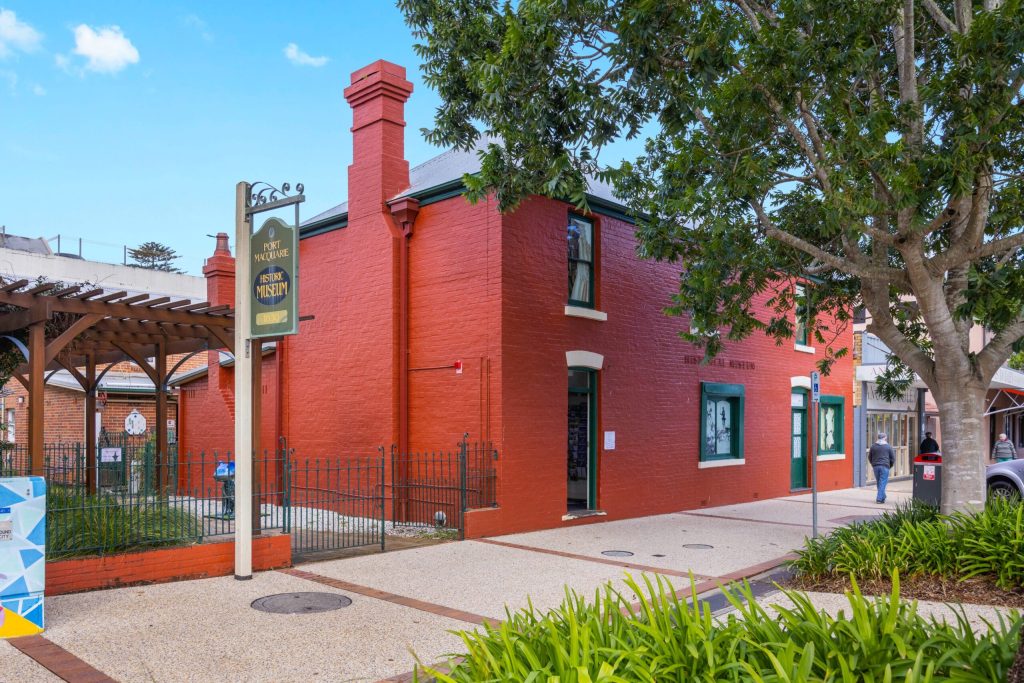
    Earlier in December I visited Port Macquarie (a coastal town 4 hours north of Sydney) with a group of friends for a pre-Christmas getaway. I hadn’t even thought about looking for a museum to visit while I was there, but was excited to happen upon the Port Macquarie Historical Museum on the Saturday morning. I returned with a friend later in the day and we made our way through the exhibition spaces together. On arrival, we were greeted by two very helpful and enthusiastic volunteers. I had quickly checked the museum’s website before visiting, which mentioned that the museum was larger than appears and recommended allowing around an hour for a visit. This was definitely a worthwhile recommendation as the exhibition space was much bigger than it appeared from outside and seemed to go on forever! The museum is housed in an historic building, which has been recognised by the National Trust for its heritage significance, and was the original general store when the town was settled.

    Given the scale of the museum I’ll choose just a few of the displays to focus on. I was pleasantly surprised to find that the first display related to the local Indigenous population and their history, with a number of stone and wooden tools displayed alongside a large amount of interpretive text. Accompanying these tools were photographs by Thomas Dick (1877-1927), a local photographer and historian who had an interesting relationship with the local Indigenous population. The Thomas Dick photography collection includes a large number of photographs of Aboriginal people in staged reenactments, in an attempt to create ‘authentic’ pre-contact images, in the 1920’s. It was nice to see the names of some of the subjects of the photographs acknowledged in the display, while the photographs prompted me to think about the ethics and motivations behind this photographic project and how non-Indigenous approaches to interpreting Indigenous histories have evolved over time.

    Another element of the display that was both fascinating and beautiful was the display of fashion. Throughout the whole museum I was amazed by the size and breadth of the museum’s fashion collection, and was pleased to see how well it had been taken care of in terms of conservation and care in display techniques. Most of the vintage fashion pieces were stored in a large chest of drawers, which visitors could open to see each piece and read about its history. Not only did this display allow the pieces to be shown as they would have been kept by their original owners, but it also ensured the delicate pieces were protected from the light and other environmental factors. When the drawers were open, a protective layer of glass ensured further preventative conservation whilst also allowing these significant objects to be accessible to visitors. I’ve included a few images of the dresses that were displayed in this way, as well as one of stunning black satin dress from the 1870’s, that was in fact displayed in a room of its own. It was completely closed off from the rest of the museum except for a window visitors could open to view the dress, again protecting it from light. These conservation efforts seem to be working as all of the dresses seemed to be in remarkably good condition. I was also excited to see that the museum has done some collaborative work with the Australian Dress Register to conserve and catalogue their collection.

    Here are some links to their entries on the Australian Dress Register:

    http://australiandressregister.org/garment/267/

    http://australiandressregister.org/garment/33/

    http://australiandressregister.org/garment/268/

    One more small display I couldn’t help but quickly mention (I can’t stress enough how much I’m skipping over here, this museum is huge!) was of the old dentist’s office and instruments. The display was eerily life-like and seeing all the instruments laid out, some of which might be uncomfortably familiar, gave me shivers.

    I had a truly enjoyable time visiting the Port Macquarie Historical Museum, and would encourage anyone to visit and discover all the other great bits I didn’t get a chance to talk about here, including the huge old well, all of the interpretive information on the town’s role as a penal settlement and the display upstairs which recreated period bedrooms, children’s rooms and a dining room. Thanks again to Bec for letting me share my thoughts again!

    This post was written by Imogen Kennard-King. Her email is: Imogenkennard.king@gmail.com.

    Thank you again Imogen for such a wonderful contribution to the blog! I cannot wait to visit the Port Macquerie Historical Museum and see their Australian Dress Registered clothing and dental tools! If you would like to contribute a blog post please contact me at: curateyouradventure@gmail.com. 

  • Gallery of Modern Art: GOMA Turns 10

    Happy New Year!

    I am very excited to share with you my first post of 2017. While I was in Brisbane over the Christmas period, I visited the Gallery of Modern Art (GOMA) with some friends. Currently, there is an exhibition titled GOMA Turns 10. A few months ago GOMA ran a poll on Facebook asking followers to vote for which artwork should make a return to celebrate this milestone. The awesome silver slide running from the top to the ground level won. I am mentioning this because I thought it was a great way to engage their Facebook audience!

    I cannot believe that GOMA is already 10. I remember when it first opened and I visited to see the Andy Warhol exhibition. It is definitely one of the best contemporary art galleries I have ever seen. It is such a beautiful building overlooking the Brisbane River and tends to have quite interesting exhibitions. This year will be a big one with the Marvel exhibition set to open in late May. To say I am looking forward to this exhibition is a massive understatement. I could not be more ready for May.

    For this post, I am going to focus on my five highlight artworks from GOMA Turns 10.

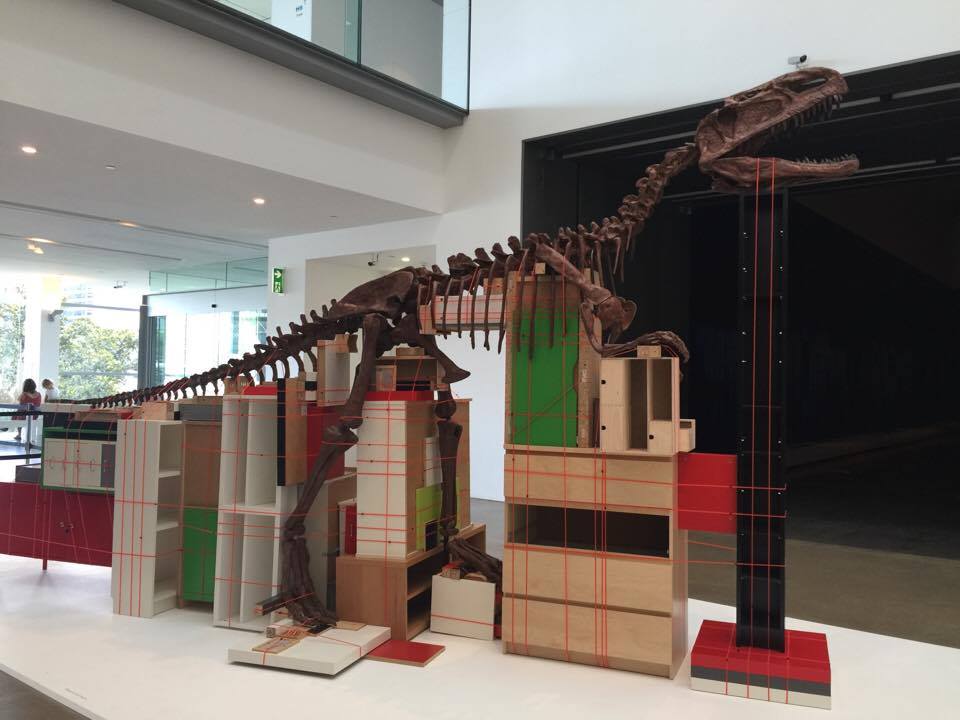
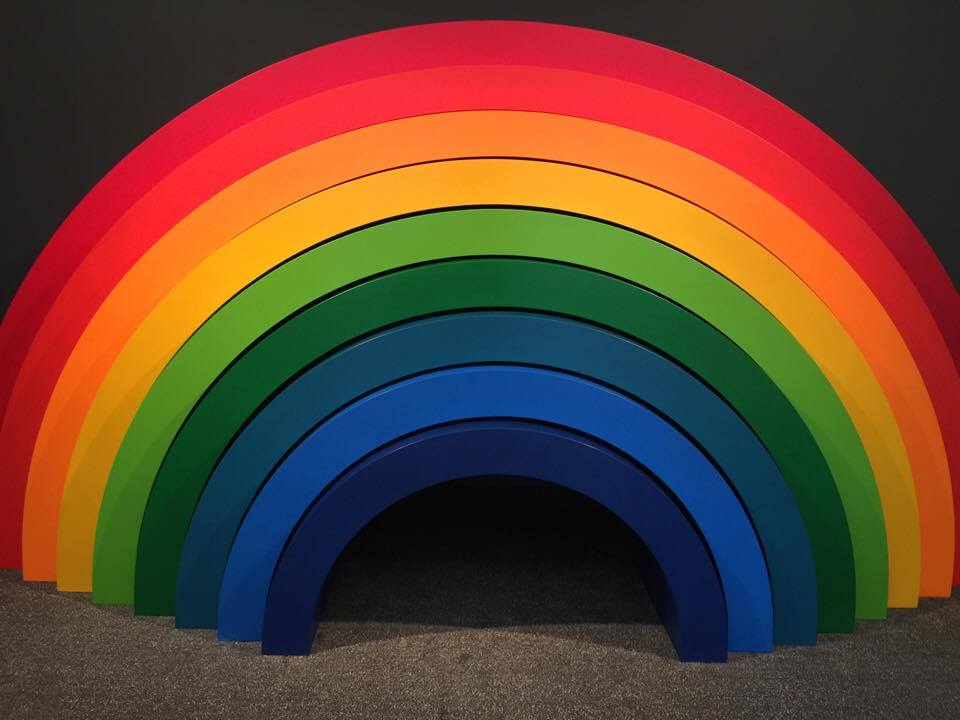
    1. Ikea Dinosaur

    15879102_10158008940010261_399178854_n
    Ikea Dinosaur

    Someone clearly heard about my love for dinosaurs and Swedish furniture. I interpreted this sculpture to be a commentary on how both Ikea furniture and dinosaurs come in pieces that have to be assembled. Also, trying to assemble both on your own can lead to unnecessary frustration.

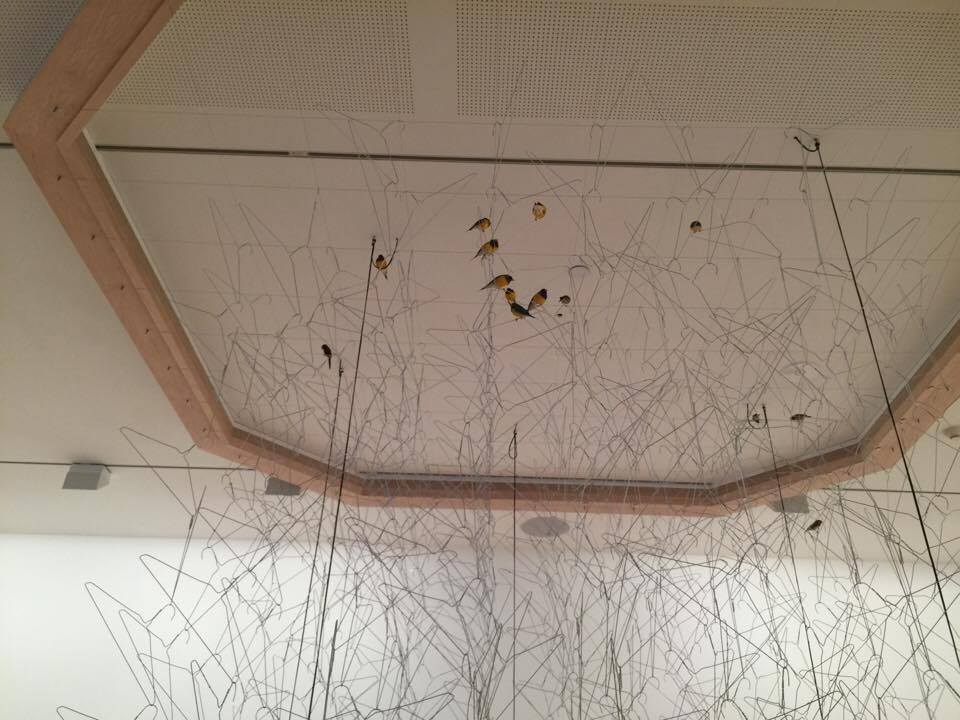
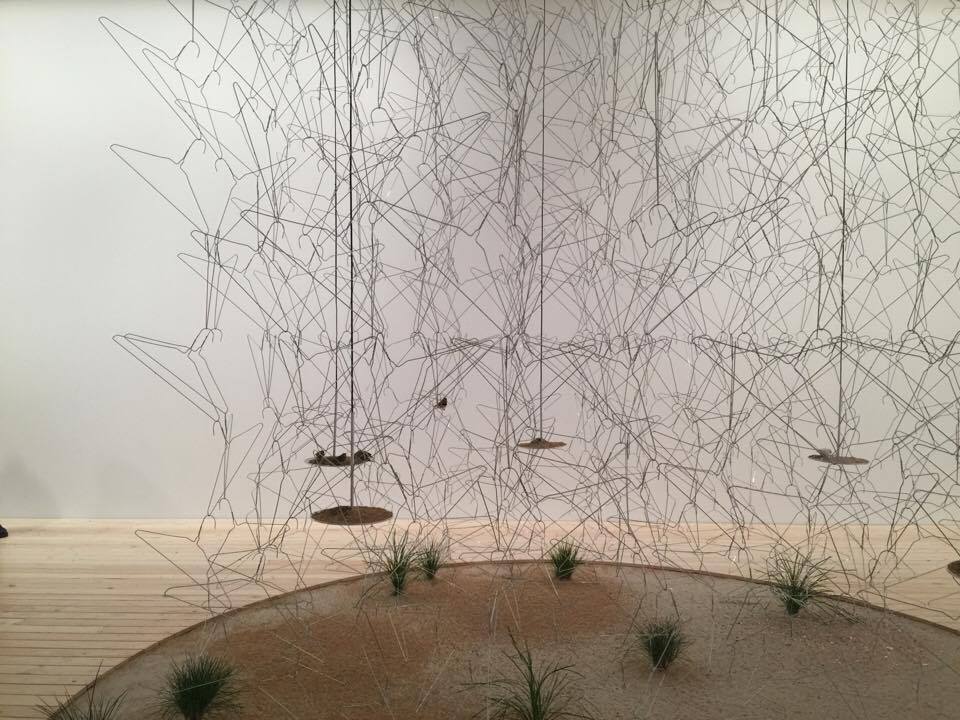
    2. Finches

    15822158_10158008945145261_2103935715_n
    Finches

    One of the exhibition spaces has been transformed into a temporary home for a lot of finches. It was a very tranquil space with soothing music and constant little chirps. I do not recommend you visit this space if you have a fear of birds. They are free to fly around and have little nests attached to the coat hangers.

    15871256_10158008939720261_2063838764_n
    Finches

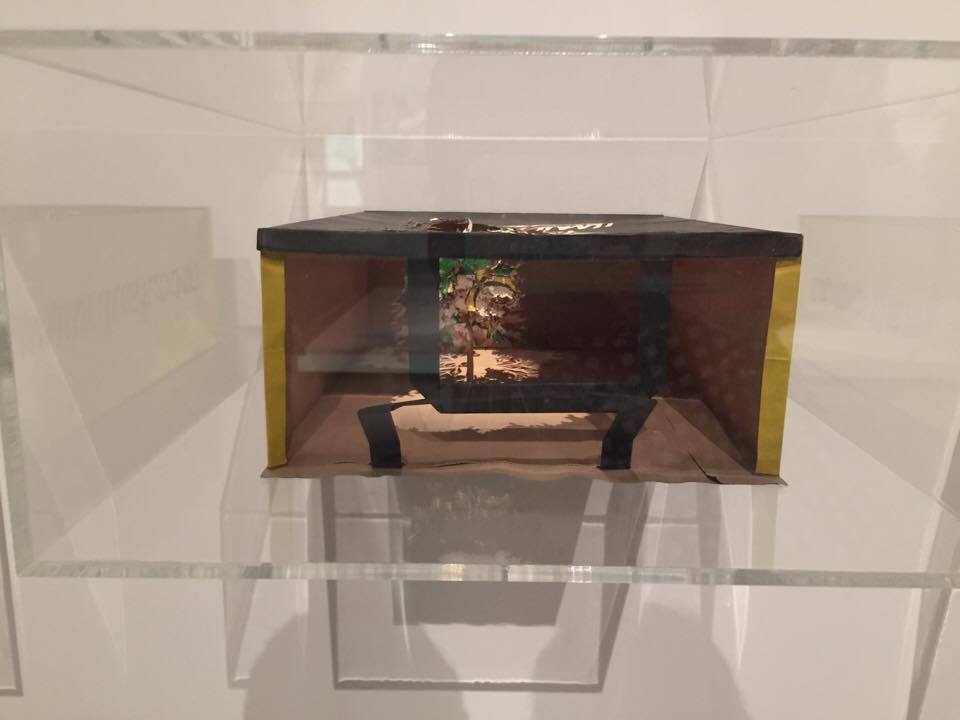
    3. Lush Bag Tree

    15879035_10158008939305261_1066960221_n
    Lush Bag Tree

    There were around four (maybe five) paper bags inside glass cases attached to the wall of the exhibition space. Each paper bag had a section missing from the top. When you looked inside the bag you could see that the missing paper had been transformed into a little artwork. I thought this was such a delicate and adorable piece of art.

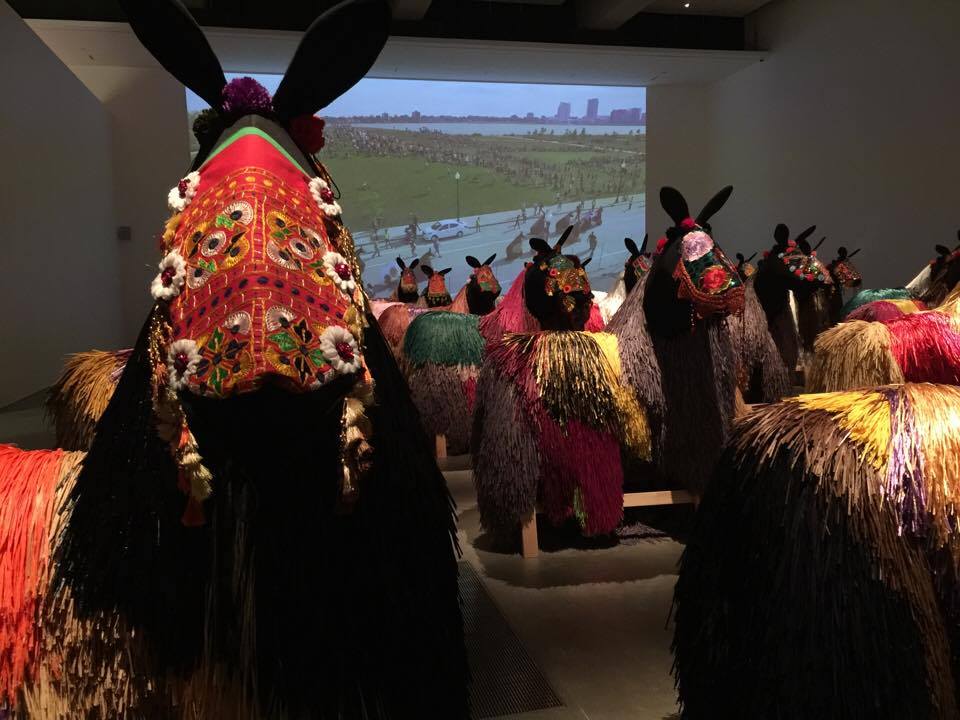
    4. Heard (Detail)

    15841076_10158008939220261_212545340_n
    Heard

    You are now face-to-face with one of thirty decorated ‘soundsuits’ or costumes on display each with its own unique design. The first of these suits was created in 1992 by Nick Cave in response to the beating of Rodney King by Los Angeles police. They are designed to express individuality whilst also “shielding identity markers such as skin colour, gender, and sexuality”. Click on the link below to learn more about these pretty amazing costumes. There is so much more than what meets the eye:

    http://learning.qagoma.qld.gov.au/?p=6230

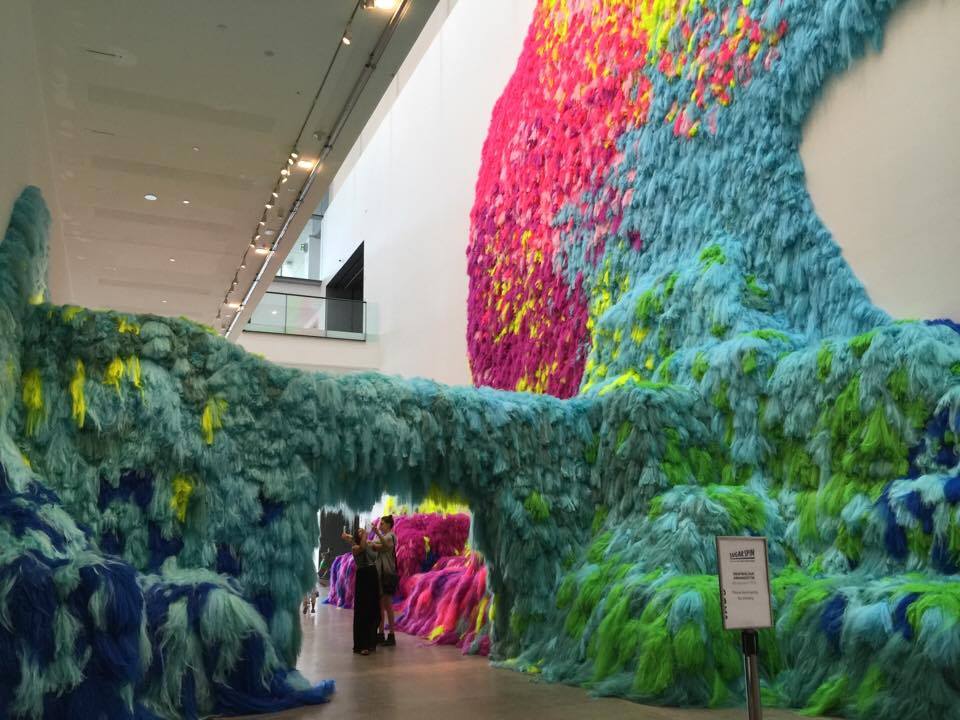
    5. Furry Wall

    15871272_10158008939385261_1272126820_n
    Furry Wall

    The furry wall of GOMA. I was glad to learn it is meant to be interpreted as grotesque. The first thing that came to mind when I saw it was edible fairy floss. Luckily for WH&S it is not. Created by Icelandic artist Hrafnhildur Arnardóttir, the wall is actually constructed from dyed fluorescent synthetic hair.

    There is so much more to see and explore at GOMA. If the photographs do not entice you to visit then what about free entry, air conditioning, and a very nice gift shop! GOMA has been such a wonderful addition to the cultural landscape of Brisbane. Once you have finished your visit, it is a very short walk to the State Library of Queensland, Queensland Art Gallery, and Queensland Museum. A perfect day out.

    15871203_10158008939535261_1893059865_n
  • 2016 in Review

    What an absolutely intense year this has been. I finished my Masters, became a curator, travelled to America & Scandinavia, participated in the Open Palace Programme in England, and enjoyed another fantastic year exploring museums and heritage in Sydney. Here is a month by month (very short) summary of 2016.

    January

    In January this year I was back home in Queensland. For a month I interned with the RD Milns Antiquities Museum, researching the World War I antiquities souvenir market. It was my role as an exhibition research intern to gather as much information as possible about the Anzacs and their connection to some of the objects in the RD Milns collection.

    fullsizerender
    Antiquities Museum

    February

    February was an exciting month as I travelled to Orlando, Miami, and Nashville. Highlights included the Vizcaya Museum, Hermitage Museum, Graceland, and the Civil Rights Museum. Nothing, however, could compare to seeing the Everglades. This natural World Heritage Site was beyond words, beautiful for its starkness and wildlife.

    everglades-21
    Everglades

    March

    I moved back to Sydney and started my second semester at the University of Sydney. I visited the Biennale exhibitions on Cockatoo Island and in the Museum of Contemporary Art. According to my blog posts for this month, I also visited the Art of the Brick at the Powerhouse Museum.

    April

    In April I went on my first road trip to Canberra to see the Australian War Memorial and the National Museum of Australia. I was incredibly impressed with the new exhibition at the War Memorial. Their integration of digital technology into the exhibition space was fantastic.

    me-and-awm
    National War Memorial

    May

    May was a month of exploring exhibitions in Sydney through my university courses. We visited Hyde Park Barracks, the Australian Museum for their VR experience, and the Art Gallery of New South Wales.

    June

    Melbourne!!! I visited my amazing supervisor from the Geoffrey Kaye Museum and saw her new exhibition From Snake Oil to Science. I also visited the Melbourne Museum and the National Gallery of Victoria.

    image
    Geoffrey Kaye Museum

    July

    July was a fantastic month as I set off for the Open Palace Programme in England. Needless to say it was an amazing experience and I met such a wonderful group of like-minded individuals. Definitely a month to remember!!

    13620917_10210303462051117_1528733386042664086_n
    Open Palace Program

    August – September

    August and September were spent catching up on the uni work I had missed whilst overseas. I did visit the State Library of Queensland in September to see their new exhibition. It was also during these months that I became a curator.

    October

    October consisted of two trips down to Melbourne. I attended and presented at the ICOMOS Conference on the topic of creating an audio guide. One weekend later I attended a writing medical history masterclass at the Geoffrey Kaye Museum. I finished my internship at the Trainor/Owen Archives (and will return to volunteer in the New Year).

    November

    Almost at the end of the year now. After finishing my Masters of Museum and Heritage Studies I travelled to Sweden, Denmark, and Iceland to celebrate. I ticked seeing the Northern Lights off my bucket list and visited some incredible museums. The Nordic History Museum and Vasa Museum were definitely my favourites.

    img_3547
    Nordic Museum

    December

    To round off the year I have explored a lot more of Sydney, started a new job at the Powerhouse Museum, and enjoyed having a bit of a break from study.

    This will be my last post for 2016. I am going to a couple of exhibitions when I go home for Christmas but I’ll save those posts for the New Year.

    Happy Holidays and Happy New Year!

  • Museum of Applied Arts & Sciences: Egyptian Mummies

    Enjoy reading!

    Hi, my name is Ziggy Potts and, as a fellow Museum and Heritage Studies student, Rebecca has kindly allowed me to review the new Egyptian Mummies exhibition currently on at the Powerhouse Museum. Whilst this is, in no ways does this review address all aspects, it reflects some of the things that made an impression on me and my overall experience.

    The new summer blockbuster Egyptian Mummies exhibition at the Powerhouse Museum is a collaborative effort with the British Museum. It showcases 6 mummies from the British Museum collection, using new scientific research methodologies to discover more about the lives of these people, their health and the processes of mummification. Each of the showcased mummies has been carefully chosen in order to reveal various aspects of the mummification process, religious belief and family life.

    Of the six displayed only two, Tamut and the young child from Hawara, have been previously displayed as part of the Ancient lives, new discoveries exhibition at the British Museum from 2014 to 2015. Whereas previously, only x-rays and physical unwrapping of mummies could be used to learn more about their lives, new CT scans allow for individual profiles to be developed, including their height, likely age, geographic area, when they lived and their social standing. Overall, these profiles not only shed light on the evolution of the process of mummification but also the various roles each god had in the process. For instance, whilst Anubis is the most important funerary god, Bes was a household god responsible for protecting a family from evil spirits and Taweret in protecting women in pregnancy and childbirth.

    img_4942
    Egyptian Mummy

    The exhibition itself starts in a dark room where a short video is presented giving context to the exhibition, including the six mummies on display and the important discoveries new medical technology like CT scans have had on learning more about Ancient Egypt, the people, religion and way of life. From here, the layout is a mix between linear progression and open plan. You head down a dark corridor to a series of open plan rooms, with two or so areas dedicated to each individual. I found this layout to be quite useful, as each area focused on a specific part of each sarchophagus, be it the actual wrapped mummy, the inner coffin where the body was placed or the larger decorative sarcophagus itself. Around this focal point placed in the centre of the room, the walls showcased various funerary depictions, amulets, family life and the function and significance of a number of gods as part of these facets of life.

    img_4928
    Inside Sarcophagus

    Within each defined area, there were digital interactives with touch controls where the visitor could move their finger in a circular motion to rotate and unwrap a digital representation of the physical mummy on display. This gave more information for how the individual profile was developed, including their height, age based on fusion of bone, as well as any identifiable health issues. I found this especially interesting as I previously had no idea how widespread dental decay and abscesses were in Ancient Egypt.Another interesting point was learning (in a fair amount of detail considering the limitations of exhibition panels) how interconnected the actual processes of mummification were with religion and how the developed and changed through the centuries. For example, the incision made to remove the internal organs was often covered with a metal plate decorated with the eye of

    Another interesting point was learning (in a fair amount of detail considering the limitations of exhibition panels) how interconnected the actual processes of mummification were with religion and how the developed and changed through the centuries. For example, the incision made to remove the internal organs was often covered with a metal plate decorated with the eye of wedjat, a symbol of protection and restoration to ensure the body remained whole for use in the afterlife. The removed organs, which included the stomach, intestines, liver and lungs were then placed in separate canopic jars capped with representations of the four sons of Horus; Imsety, Duamutef, Hapi, Qebehsenuef. This was done to magically protect the organs of the deceased so they could still make use of them in the afterlife. Into the Graeco-Roman period, however, the organs were increasingly kept in the bodies and the outer coffin decorations increasingly reflective of Roman culture, illustrating increasing Romanisation within Egypt.

    img_4932
    Canopic Jars

    Similarly, the exhibition highlighted the use of the cartonnage from the 9th to 8th centuries BCE, as a cheaper alternative to wooden coffins. This was a highly decorative wrapping of plaster, linen and glue. Firstly, a mud and straw core was used as a mould, followed by a layer of plaster and several wrappings of linen. Another layer of plaster was then applied for decoration whilst, the mud and straw mould was removed via an opening in the back, through which the mummy was placed inside. Even though it does take a fair while to move throughout the exhibition (it took me 2 hours), the presented information was very comprehensive and, as I moved through the exhibition, reference to previous information not only reinforced but complemented what I had already read to create a comprehensive and self-reflexive learning experience.

    Other technology such as Visible -induced Infrared Luminesence and Infrared Reflectography, both use light reflection to determine the dyes and paints used in decoration. This facilitated digital reconstruction of the various scenes depicted and thereby explain the varying religious significance of the depicted figures throughout and their function within the ancient Egyptian rituals of mummification. This can also be seen in the use of CT scan data to 3D print various amulets placed in and on the body, each then presented individually as to their significance within the process. For instance, a scarab amulet was placed over the chest and inscribed with a spell to prevent the owners heart from revealing misdeeds to the gods in the hall of judgement.

    Overall, I found the exhibition highly informative with a layout that clearly divided the space between the 6 mummies with an important balance reached between the use of digital interactives and the information. The former added to but did not detract from the information or general experience.

    One note though: If you don’t seek such an intense learning experience or do not have the time, the gift shop does offer a complete book on the exhibition, including all images presented in the exhibition with the accompanying information for only $30.

    This post was written by Ziggy Potts. His email is: zpot4628@uni.sydney.edu.au.

    A huge thanks to Ziggy for his interesting post on the Egyptian Mummies exhibition. I saw the exhibition a couple of days ago now and wanted to add my own thoughts which are below.

    My two cents:

    I saw the exhibition the other day so thought I’d add on to this post. I’m going to touch on two components of the exhibition: the smelling boxes and ethics of display. In England, earlier this year, we visited the Ashmolean to see their exhibition Storms, War and Shipwrecks: Treasures from the Sicilian Seas. It was a great display on sea voyages equipped with a smelling box. You opened a little door and guessed what you were smelling. This included wine, oil, and I can’t remember the other. Ancient Lives had a couple of similar interactives that complemented the digital components that Ziggy spoke about. As opposed to having each individual smell separate, they were lumped in together. Onion, herbs and spices all in the one box. I made the mistake of smelling the contents and leaving the station with a headache. Way too strong! Cool, but way too intense.

    Onto the ethics of display. It amazes me that the mummies are human remains yet are often not displayed with dignity and respect. Sure there are a whole raft of issues as to why, but it still saddens me. This exhibition was the first serious attempt at displaying mummies respectfully and still generating intrigue and mystery. The fact that each individual mummy, when known, is named and provided with a biography is fantastic!

    In no way did this type of display wreck a traditional display of mummies. Sure, they were still on display and taken from their final burying point. However, the lessons they can teach and the insight they can share with the public on life in ancient Egypt is truly remarkable. Treating their remains as significant and not cramming them all into a room for people to gawk at is a valiant attempt at taking ethics seriously. According to Christine Quigley, in her work on Modern Mummies, people should first and foremost be aware that they are viewing human remains.

  • Museum of Applied Arts & Sciences: Ancient Egyptian Skies

    The Sydney Observatory is currently running tours to complement the new exhibition at the Powerhouse Museum, Egyptian Mummies: Exploring Ancient Lives. The tour runs for approximately one hour and takes place in the observatory’s planetarium. This review is going to be short purely because the tour was short and I want that to be the focus, not the entire observatory.

    img_5537
    Sydney Observatory

    The tour starts with a forty minute documentary on Ancient Egypt and mummification. It was a bit like the documentaries you watch in eighth grade ancient history – a lot of re-enactments and dramatic music. It was kitschy but I quite enjoyed it. I was glad to have the opportunity to brush up on my general knowledge of Egypt. As my friend Alice pointed out, the video also had a great connection to the exhibition at the Powerhouse. Both observe how medical advancements have increased knowledge of mummies and mummification. The video covered how DNA can be extracted from a mummy and what this evidence may reveal.

    After the video, we were taken on a tour of the night sky in Ancient Egypt, around 1200 BCE. At various stages the video of the sky was paused and Egyptian mythology of the stars, sun, and moon was explained. This was accompanied by the corresponding hierogyphs. For example, we learnt how the milky way was imagined as a goddess who swallowed the sun during the night. The name of the goddess appeared in the centre of the screen in hierglyphs. This part of the tour went for around 15 minutes.

    597px-goddess_nut_1
    Nut, Egyptian Goddess of the Sky (by Hans Bernhard – Own work, CC BY-SA 3.0, https//commons.wikimedia.org/w/index.php?curid=6428319)

    Ancient Egypt is a fascinating topic by default. I thought this tour added a new layer of interpretation – it is quite different to what has been done before. I would recommend you see the exhibition at the Powerhouse and then take this tour.

    Speaking of the Powerhouse, watch this space early next week for a guest post on this exhibition!

    1200px-dendera_deckenrelief_08
    Astronomical Ceiling Relief from Dendera, Egypt (by Olaf Tausch – Own work, CC BY 3.0, https://commons.wikimedia.org/w/index.php?curid=15683822)