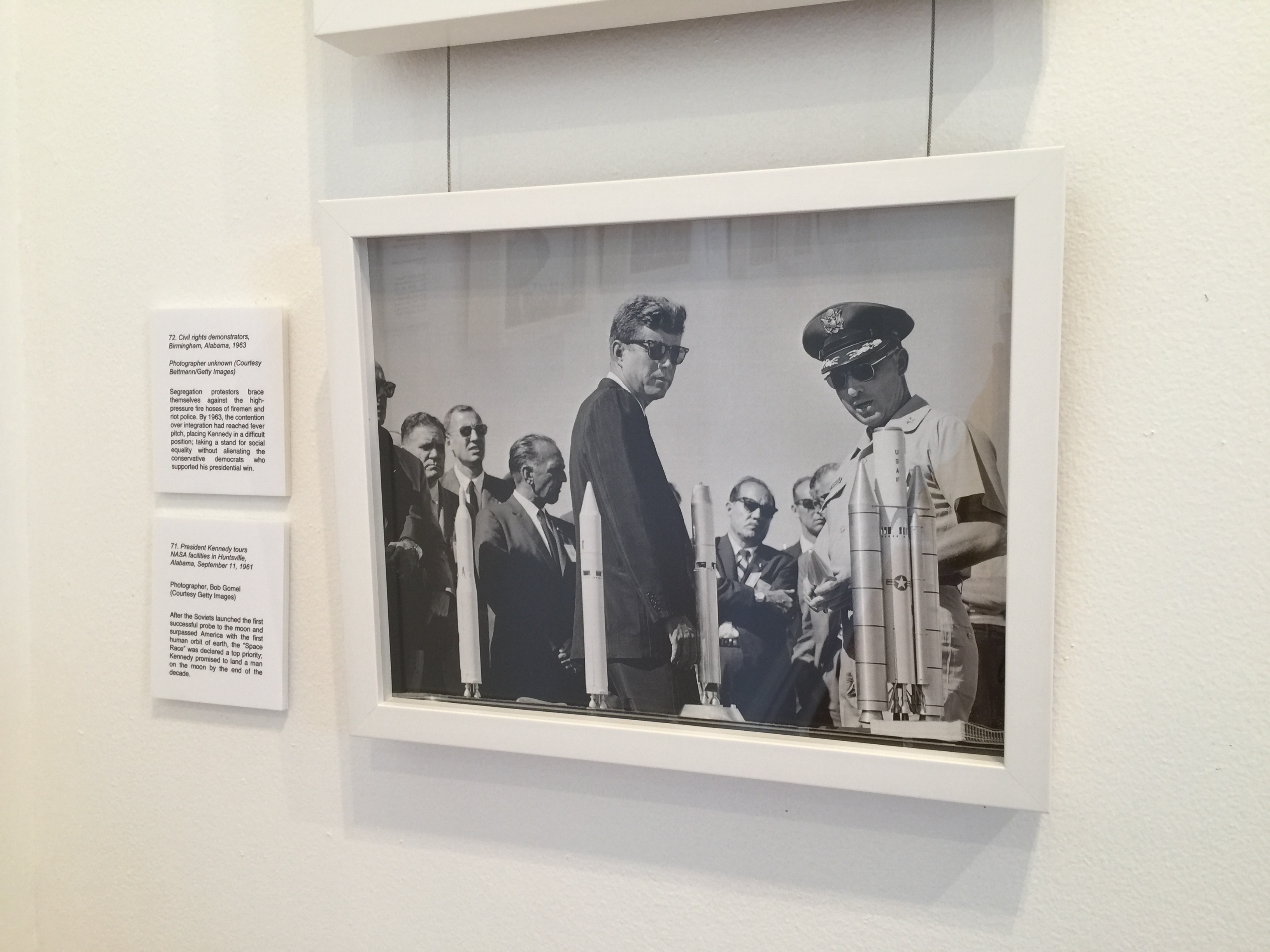
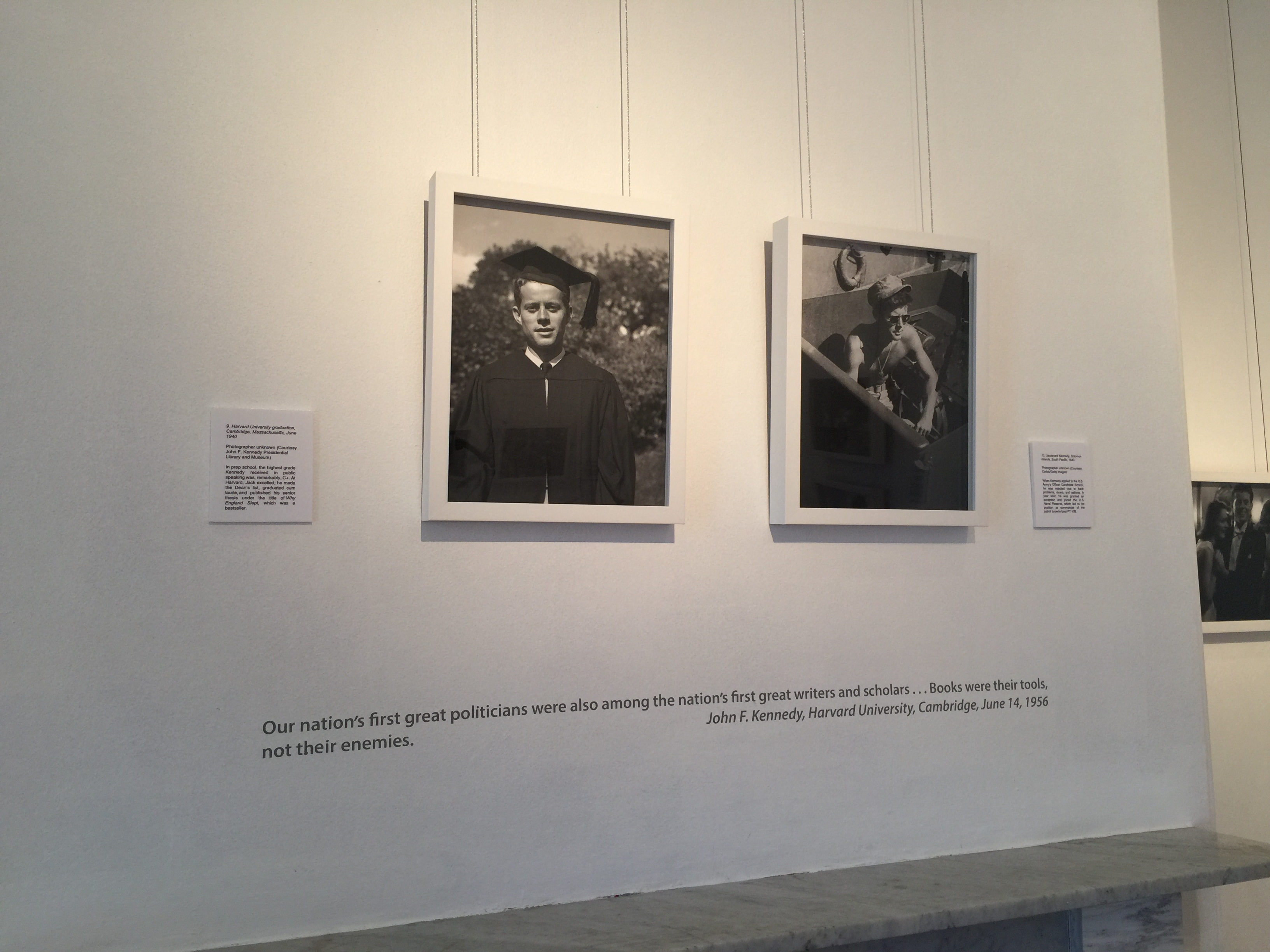
To celebrate 100 years since the birth of President John F. Kennedy (JFK), exhibitions are popping up all over America and in other places around the world. I was absolutely not expecting an exhibition at Penrith Regional Art Gallery and Museum. I was shocked to see that they were displaying photographs of Kennedy in an exhibition titled: American Visionary: John F. Kennedy’s Life and Times. Penrith is approximately one hour by train from Sydney CBD. The journey was worth it to see the exhibition.
I was so excited to see how a regional museum tackled his presidency and how they selected to display the photographs. In total, there were four rooms and a small hallway. Each room represented a different theme covering the early years, the presidential campaign, and his time as president. It was in the cutest little house inside the gallery complex. You felt as though you were literally walking into someone’s place. Once inside, the video playing footage of the Kennedy campaign etc, transformed the space entirely.
Penrith Regional Gallery
It was a perfect size for an exhibition. I spent around 45 minutes looking at the display, but, you could easily see it all in only 30 minutes. To start, there is a thematic panel welcoming visitors to the space explaining how Kennedy and the media were inseparable. His presidency really was in this ‘golden age of photojournalism’ (one of the many reasons why I find his presidency so fascinating). You are then informed that the Kennedy family conveyed a new vision of America – one filled with change and opportunity. It was a very interesting way to introduce the exhibition. It conforms to how JFK is regarded today – as the hopeful President who never had the chance to complete one term of his presidency.
Penrith Regional Gallery
After reading the panel there is no set way to see the photographs. It makes sense to start in the first room on the left that depicts the early years of Kennedy up until his presidential campaign. Now I have seen multitudes of photographs of his presidency. I’ve visited the JFK Library and Museum in Boston a few times and have researched his presidency for many assignments and just out of interest. There were so many photographs I had never seen before which was seriously exciting. I liked how they covered his early life before launching into his thousand days in office. Also, the photographs weren’t just of him. They have made a great effort to select images that also depict the social, cultural, and wider political issues America faced under his presidency. For example, there was a powerful image of the Birmingham Riots.
Penrith Regional Gallery
The rooms were all curated with such care. The photographs were well positioned and did not clutter the space. Often I feel galleries are too sparse or too cluttered so it was nice to feel a balance. My favourite room was right down the back of the house also on the left. The image of JFK and Robert “Bobby” Kennedy sitting on a bed contemplating everything is one of my favourite images of his presidency. It was used on the book cover for “Brothers” by David Talbot. It is just a stunning photograph capturing the hidden history behind the public face of JFK that eluded to nothing but confidence.
Penrith Regional GalleryPenrith Regional Gallery
I also enjoyed the room that looked at the youth of Kennedy including family photographs and photographs of his wedding to Jacqueline Bouvier. There was a small thematic panel exploring the family dynamic of the Kennedy family which is complex, tense, and filled with misfortune.
I also wanted to share a couple of photographs I had never seen before. The first is of Kennedy’s visit to Berlin in June 1963. Mere months before his assassination. The photograph depicts Kennedy at Checkpoint Charlie, looking at the wall with a crowd of East Berliners seen in the background. It would be fantastic to have this image on display at the Kennedy Museum in Berlin!
Penrith Regional Gallery
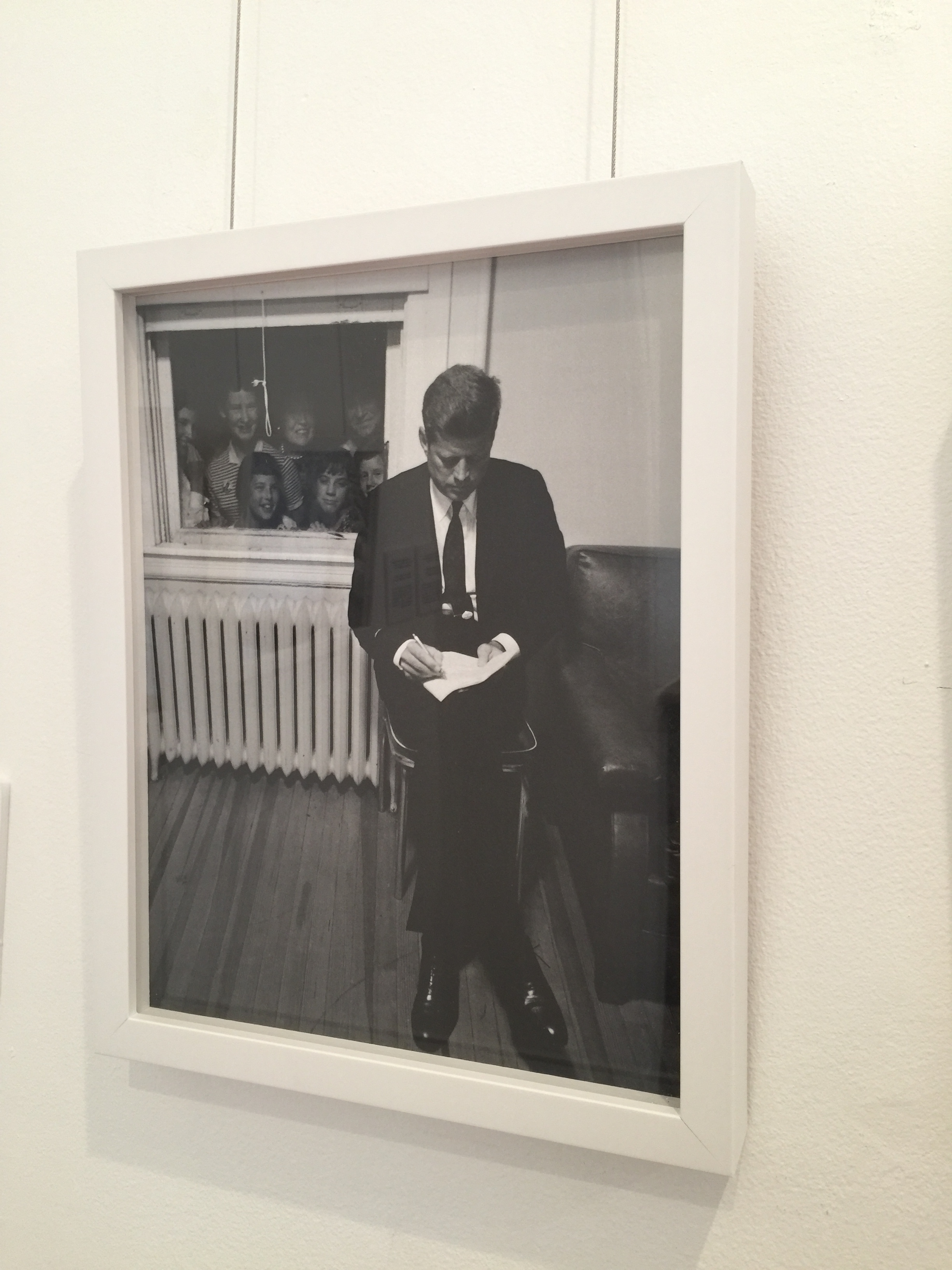
Another image I had never seen before was one of JFK sitting in a chair writing something while children crowd around the window outside. It is such a fun photograph and I spent a little while contemplating whether or not it was entirely staged. Clearly the majority of his photographs as President have been staged to conform to a certain image. This one, however, looked more natural than the others.
Penrith Regional Gallery
Finally, another highlight image was not of JFK himself, but, of the voting booth during the election. You can only see the legs of those inside the booth. Again, this is a quirky image and a great addition to the exhibition space.
Penrith Regional Gallery
The only real critical thought I had throughout my visit was that occassionaly there were obvious spelling mistakes on the labels. There was one glaring word in the introductory panel that did not fit in the sentence. I did only notice these errors post-visit while I was looking through my photographs.
Overall, I had a great day spending time with the photographs of Kennedy in Penrith. I would highly encourage those with even a slight interest in his presidency to make the journey and see the exhbition for yourself. Out of all the photographic exhibitions of Kennedy I have seen, this one ranks amongst the best. Everything from the location to the video sound permeating the rooms allowed it to be a great tribute to a fascinating President.
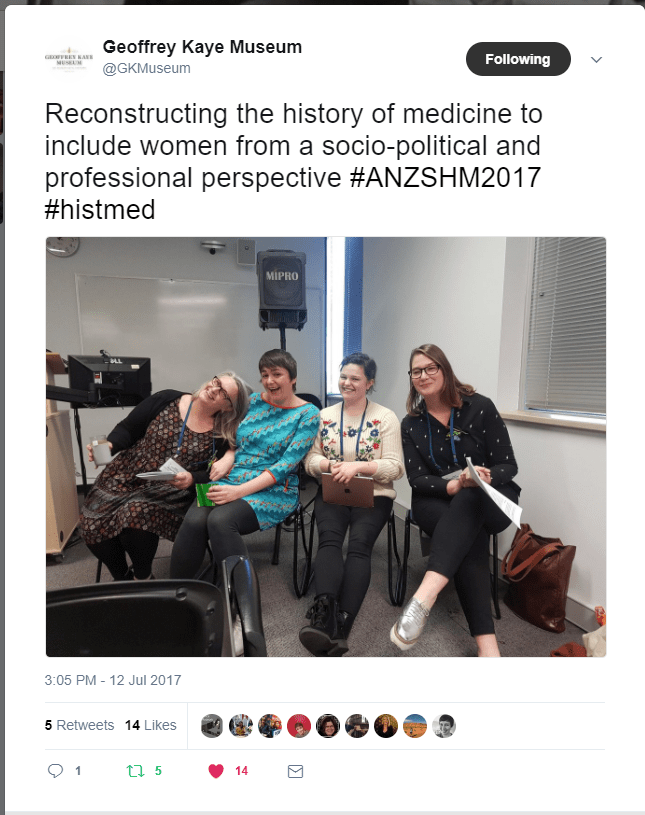
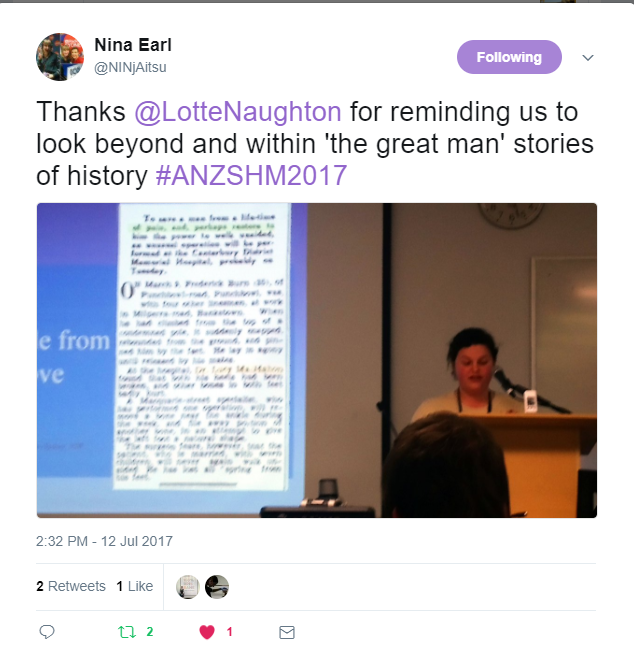
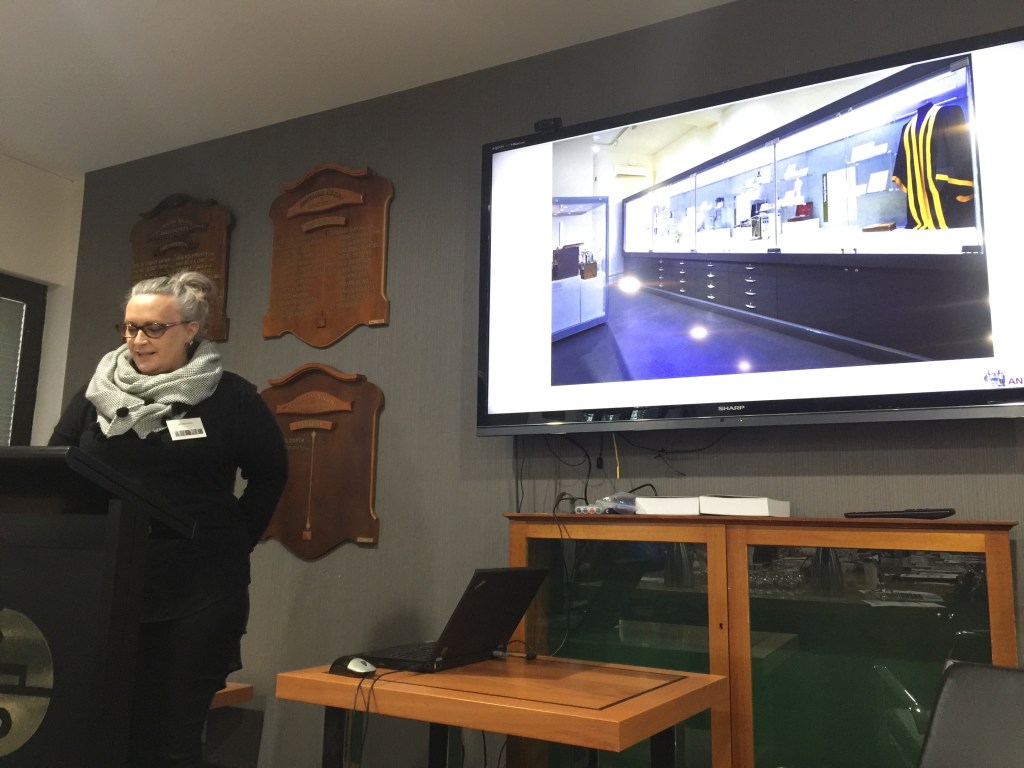
On Wednesday the 12th of July, I attended the History of Medicine Conference in Melbourne. I presented alongside three incredible women, Monica Cronin, Tilly Boleyn, and Ari Hunter, in a panel on Women in the History of Medicine. Rather than provide a summary of the day, I have decided to post my talk (an abbreviated version) and screenshots of some of the publicity our panel received through Twitter. It focuses on how museums can assist in rewriting dominant narratives and represent the women who have been consistently marginalised.
In 1812, Frances ‘Fanny’ Burney underwent a mastectomy without anaesthesia. In the days post her surgery, Burney wrote a letter to her sister Esther Burney describing, in great detail, her experience of surgery. Almost ninety years later, in 1901, Dr Lucy Gertrude MacMahon was born in Sydney. After studying at the University of Sydney, MacMahon was awarded her Bachelor of Medicine, Bachelor of Surgery and began practicing as an anaesthetist. Whilst seemingly unrelated, these two specific case studies can shed much light on the experiences of women in this history. Both, however, present different research challenges which will be explored.
To start, however, I am going to provide some context on the history of anaesthesia and the persistent issues that have emerged in the discipline. On October 16, 1846, William T. G. Morton publicly demonstrated the use of ether as a form of anaesthesia. This surgery was performed at what is now termed the ether dome in Massachusetts General Hospital. Around the same time, Dr John Snow was experimenting with chloroform and ether. Snow was a significant figure in early public health. His work on cholera, in particular, has been celebrated as a major contribution to the understanding of health in the 19th century. He mapped the spread of cholera determining it was being spread by contaminated water. On the whole, the history of anaesthesia tends to focus on these characters, prioritising their developments and contributions. While their stories are important, the context in which they were operating in is often neglected. This is not because the evidence does not exist, it is because the evidence has not been properly analysed and evaluated.
In historical theory, this approach to analysing the past has been labelled the “Great Man theory”. Popular in the 19th century, this theory suggests that the past can be largely explained by “great men” or heroes who in some way impacted on the past. Over time, this theory has been re-evaluated and deemed too simplistic in understanding the past. Instead, different schools of history have now emerged that consider the past from a variety of angles – for example social, cultural, and gender history.
Rather than focusing on the “great men” these schools have turned their attention on re-interpreting the source material, incorporating different types of source material, and challenging the dominant narratives. The rest of my paper will delve into the stories of Frances Burney and Dr Lucy MacMahon. I will be answering questions such as: how can their stories contribute to understanding the history of anaesthesia? How can their accounts be examined from a different historical perspective and what can this tell us about the past?
The first example I am going to share is the account of Burney of her mastectomy in 1812. In the case of Burney, her full letter and account of surgery exists, yet has never been analysed in depth. It is considered an excellent example of an account written in the time before anaesthesia. In 2010, Michael Kaplan published the entire letter of Burney to his blog “The New Jacksonian Blog”. Prior to this, snippets of the letter were available in various places, however this blog entry has allowed the letter to reach wider audiences.
The account is primarily used to outline how horrific surgery was prior to anaesthesia. Burney is almost always used as an example resulting in her entire experience being broken down and fragmented. In particular, her account of the actual surgery itself is focused on. In her words “when the dreadful steel was plunged into the breast – ‘cutting through veins – arteries – flesh – nerves’. I am going to briefly cover the other topics raised by Burney and how her letter can be used for much more than simply understanding the exact moment of surgery pre-anaesthesia.
At the beginning of her letter, Burney writes on the events leading up to the surgery. As she states, “I began to be annoyed by a small pain in my breast, which went on augmenting from week to week.” Eventually, Burney was persuaded to see a medical professional and have an examination. Burney recounts how terrified she was at the prospect of something being wrong. It provides a fantastic insight into patient emotions that can be compared/contrasted to present day. It can also be read as indicating an awareness of the limitations of medicine. Perhaps her terror came from what was unknown regarding surgery. Later in the letter, Burney describes in detail her struggle with accepting the surgery and finally providing her consent. It reads as a tumultuous journey through stages of grief ending in acceptance.
“I called upon them to speak. M. Dubois then, after a long and unintelligible harangue, from his own disturbance, pronounced my doom. I now saw it was inevitable, and abstained from any further effort. They received my formal consent, and retired to fix a day.”
The letter can also allow for an insight into patient/doctor relationship in the 19th century. Throughout the letter, Burney references multiple doctors who were consulted regarding the potential for surgery. For each doctor, Burney writes down her impression and how she regarded their level of care. For M. Dubois, who provided the initial consultation, she was wary of his inability to tell her directly she required surgery. Instead, Dubois notified her friend this was the only option and it was his responsibility to then notify Burney displaying “the bitterest woe”.
Burney is then examined by Dr Larrey, Dr Moreau, and Dr Ribe. All three come to the conclusion that surgery is necessary. The patient/doctor relationship between Burney and Dr Larrey appeared most strong as on telling Burney the news he “had now tears in his Eyes’.
It is clear that Burney can offer a more diverse account of surgery pre-anaesthesia when her letter is read through different perspectives and with a sharper focus.
My second case study is on Dr Lucy Gertrude MacMahon, a foundation fellow of the Faculty of Anaesthetists Royal Australasian College of Surgeons. Prior to becoming the College of Anaesthetists, a faculty was established in 1952. There were forty original fellows of the Faculty including six women. During my internship at the Geoffrey Kaye Museum, I researched all forty Foundation Fellows for the online exhibition Lives of the Fellows. As part of this online exhibition, a biography was required for each Fellow including some basic information such as date and place of birth. I was working to a project deadline and had twenty days to complete as much research as possible. In the twenty days, I managed to complete preliminary research on all forty fellows and additionally completed fifteen entries including sourcing photographs and objects in the collection. Each ‘fact’ about the fellow was validated through thorough primary research. Lives of the Fellows is still an ongoing project collecting further research and building upon the foundations.
For many, the research was quite straight forward. Many of the male fellows had war records that detailed their date and place of birth along with their University qualifications and other interesting pieces of information.
One woman in particular, Dr Mary Burnell, had folders filled with information and primary source documents. Her anaesthesia records, details of her study, certifications, and information on her travels was all available in the archives. For many of the other women, however, their files contained minimal information and required extra research. Rather than dismissing these stories as the research can be perceived as too challenging, writing these women back into the story and history was achievable with the right skills and tools.
Dr MacMahon was selected as I saw the most transformation with her story. The following will now cover how I pieced together her story.
To start, I was made aware that she came from New South Wales so my first stop was the New South Wales Government Registry of Births, Deaths & Marriages. Considering I had a middle name and an approximate date range, I was able to discover MacMahon was born on the 21st of May 1901 in the town of Cootamundra. She died in June 1996. I then found year books from the University of Sydney, discovering that she was awarded her MB CHM – or Bachelor of Medicine, Bachelor of Surgery in 1924. The year book also disclosed that MacMahon had undertaken her residency at the Royal Prince Alfred Hospital in Sydney. Just from two databases, I had already pieced together a short biography.
In order to boost her biography and ensure that her story in the history of anaesthesia was recongised in the exhibition, I focused my attention on the treasure chest that is Trove. For those of you who are unaware of Trove, it is a search engine that “brings together content from libraries, museums, archives, repositories, and other research and collecting organisations big and small”.
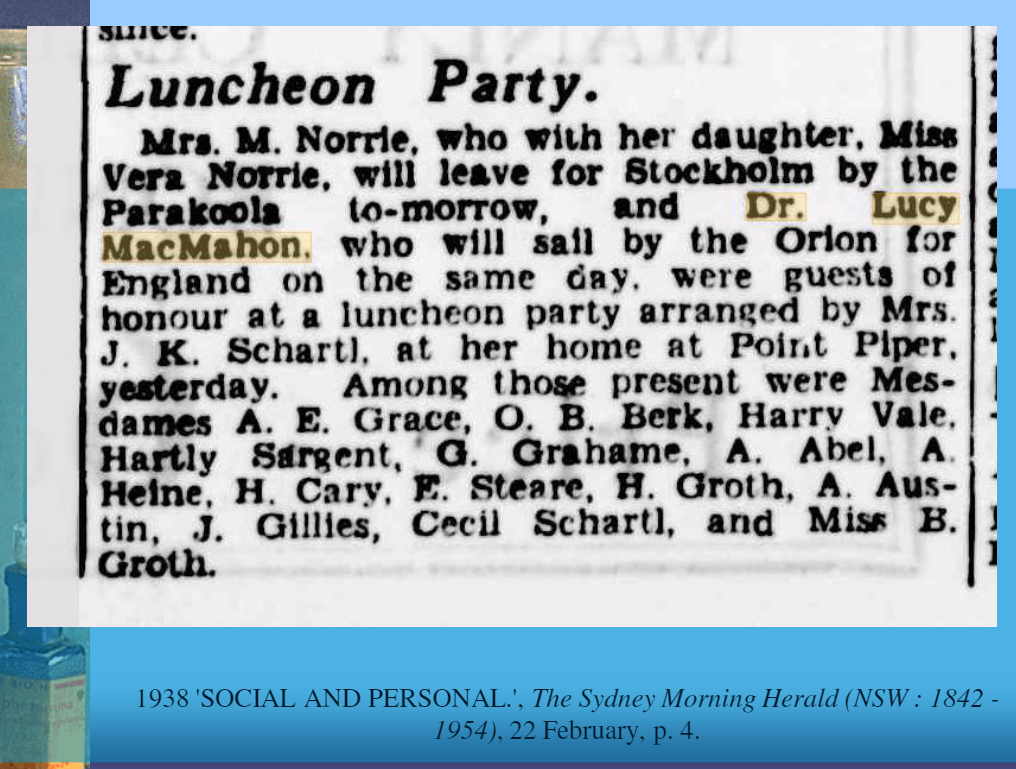
In Trove, you are able to search for an individual, narrowing the date range, adding important information to refine your search, and, ultimately, viewing the relevant documents, images, or books. When I typed in Dr Lucy MacMahon and set the date parameters, I was met with a wealth of information. Dr MacMahon was a socialite. She attended many balls, weddings, parties, and other social events in the 1920s and 1930s. At each of these events, information was provided such as where she was working. This is mainly because the events were held to raise funds for hospitals. I pieced together that MacMahon worked at the Canterbury District Memorial Hospital before moving to Lewisham Hospital in Sydney until 1938. She then worked at St Vincent’s Hospital in Sydney before venturing off to England. In a newspaper article from 1938, it stated she was on board the Orion ship to England which we confirmed against ship records.
Even the exordium document revealed more than I first realised. The address of her practice she had provided was the same as Dr Harry Daly. This would indicate that on her return to Australia after World War II she entered into private practice with Daly.
Apart from her professional placements, the newspaper articles also revealed information on her family. MacMahon had two brothers and four sisters. Her sister, Dora, was also a doctor and two of her other sisters had married doctors.
By filling in the gaps of her story, we are ensuring that the work and life of Dr MacMahon is not neglected from the wider picture of the Foundation Fellows. Her contributions as an early female anaesthetist have now been recognised and publicised for visitors to the online exhibition. Her story can shed light on the history of anaesthesia by providing a different perspective.
It was also interesting to see what other history was revealed by searching her name. For example, I discovered the popularity of hospital charity functions in Sydney during the 1920s and 1930s and the type of audience they attracted. Through databases such as Trove, these histories and stories are becoming increasingly accessible.
It is clear that the rewriting the history of anaesthesia by including women can yield differing perspectives and a more rich understanding of this past. Their stories have been neglected or only briefly considered. By incorporating their experiences as both patients and doctors, the gaps in the history of anaesthesia can begin to be filled.
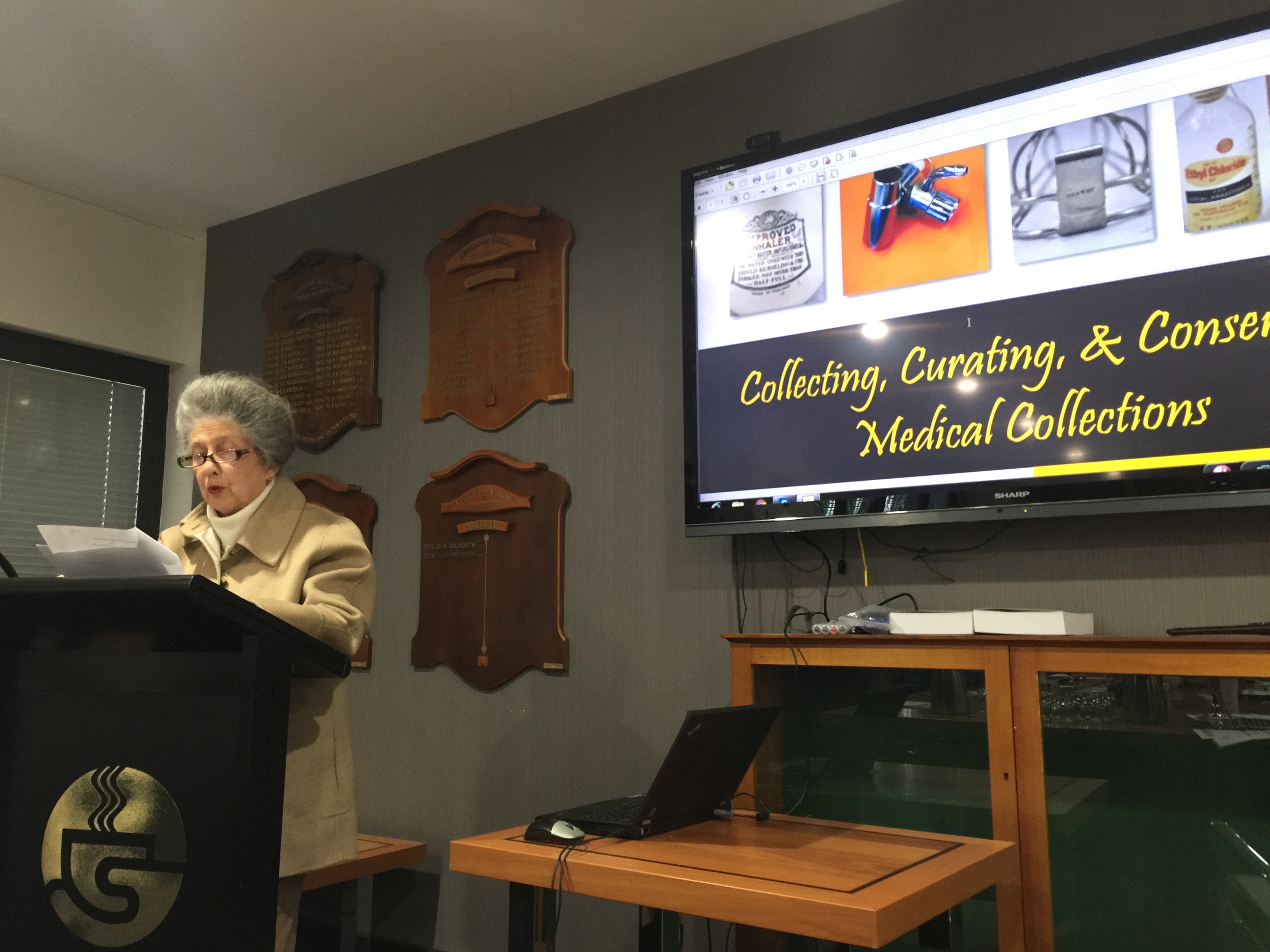
Today I ran my first ever museum event. It was a medical history seminar titled: Collecting, Curating, & Conserving. We had an excellent turn out of thirty professionals from all over New South Wales and even Victoria! It was a genuinely lovely morning that involved being surrounded by incredibly passionate people in the field of medical history. Throughout the day, we heard about the challenges medical collections face and how various collections have been formed and maintained.
In total, we had seven speakers present on a topic of their choice. This allowed for such a great diversity of topics from changing permanent displays on a shoestring budget, to identifying medical objects through in-depth research. I am going to provide an overview of each talk and try to summarise the main aim and findings.
Program
Cate Storey – Transforming Archives: Making Stuff Relevant for the 21st Century and Beyond
Storey focused her presentation on the archives of the Royal North Shore Hosptial. Essentially, Storey is building the archives from scratch and wanted feedback and assistance from the seminar participants. Her presentation posed some significant questions to consider when creating an archive: What is the future of the archive? How do we sort the material? How do we catalogue the collection?
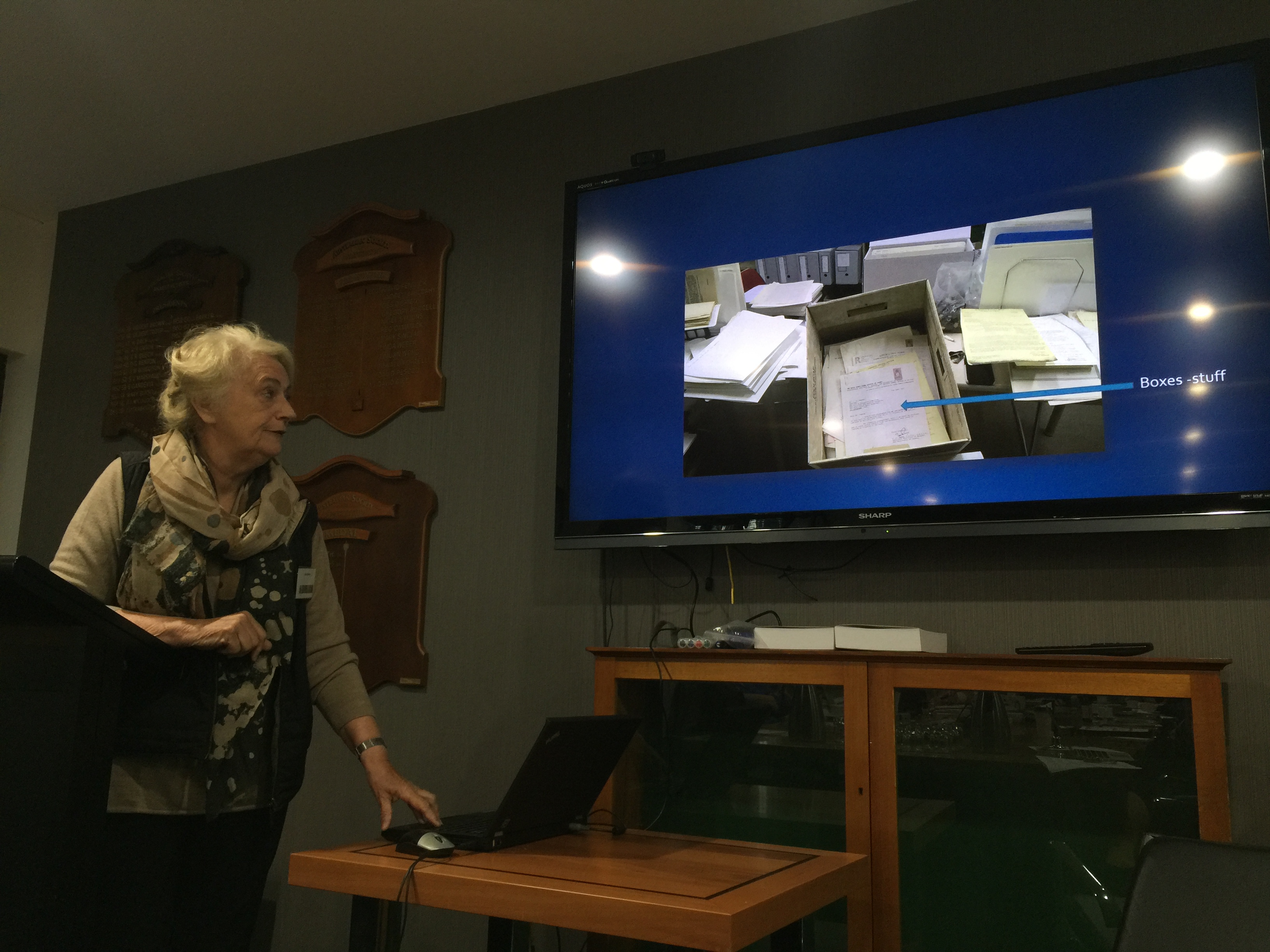
I have asked myself very similar questions while working with the Gwen Wilson Archives. Especially, how to sort the material. When you are faced with hundreds of boxes marked “to be sorted” it can be a huge undertaking just to work out how they should be arranged. Storey has achieved so much with the archives, rescuing old historical registers and re-organising a significant amount of material.
Cate Storey
2. Monica Cronin – A Museum Without Walls: Taking the Museum Experience to the People
The Geoffrey Kaye Museum of Anaesthetic History in Melbourne has done incredible work reaching out to audiences through online platforms. This has included social media, blogs, and online exhibitions.
Cronin provided a great overview of the museum’s outreach work which are dot-pointed below:
Twitter – for example contributing to Museum Week and Ask a Curator day
It was an engaging talk that certainly sparked the imagination and creativity of those in the audience.
Monica Cronin
3. Me – Meeting Standards: Transforming the Harry Daly Museum’s Permanent Display
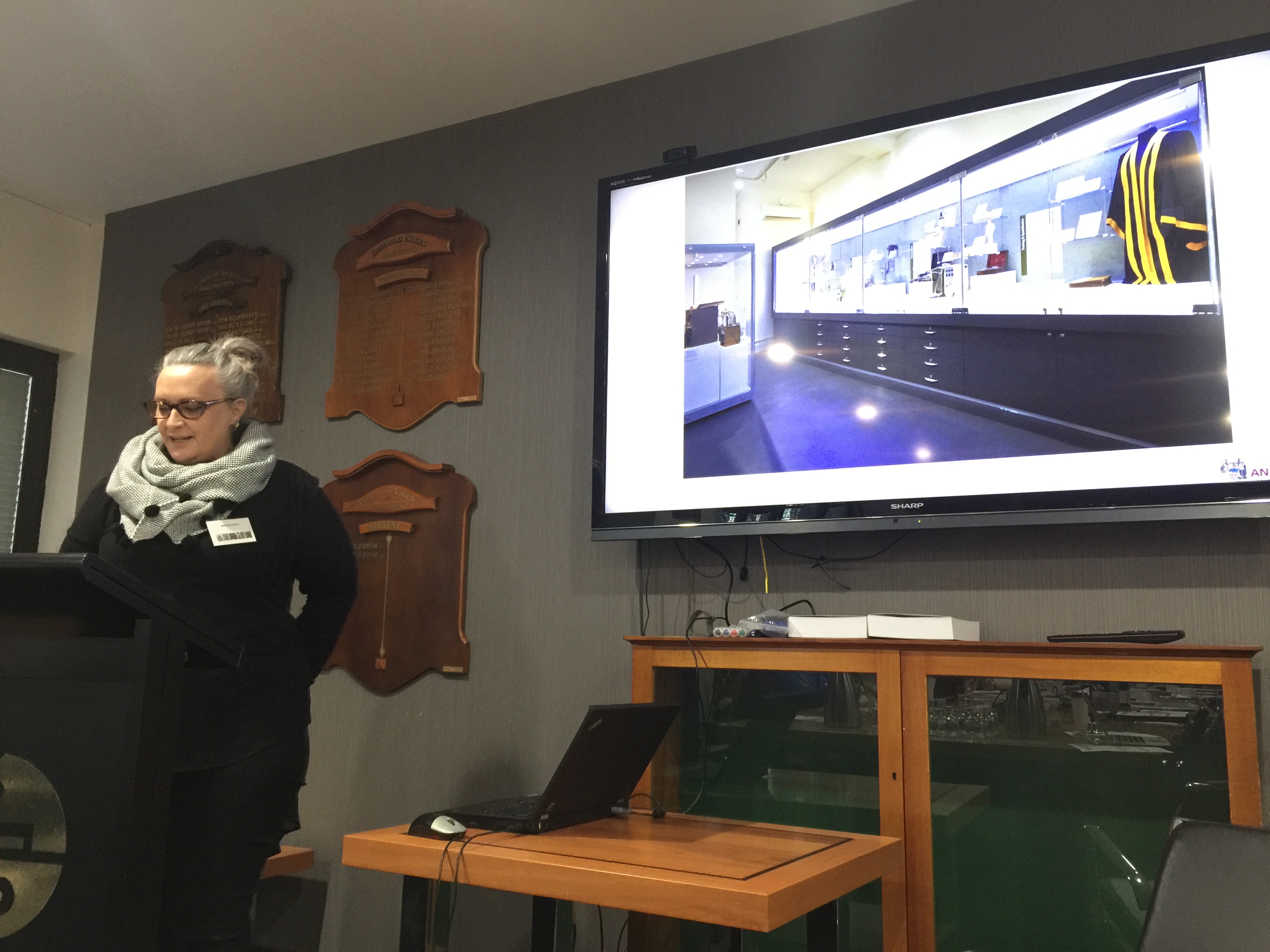
It was then my turn to talk. I focused on how the permanent display of the Harry Daly Museum has transformed in order to appeal to a broader audience.
This has included reducing the amount of text in the display cases, creating new object labels, and moving objects into a more cohesive display. I was so grateful for the opportunity to present on my work and the feedback I received was overwhelmingly positive. I am now more confident than ever with the work I am completing and the direction the museum is going.
4. Elinor Wrobel – Morbid Anatomy Collection 1890s to 1985
The Sydney Hospital Museum has been on my must-visit list for too long. The presentation by Elinor Wrobel was an incredibly passionate ode to the museum and its place in medical history. Wrobel spoke on the history of medicine in Sydney and how it has skewed the significance of the hospital. I am excited to visit this museum and see all the wonderful objects with my own eyes.
Elinor Wrobel
5. Dr Bevan Stone – Medical Collection Query Service
There were two main parts to this presentation.
The past role of the History of Medical Museums specialist group
How to identify medical museum objects
With the latter, Stone showed a picture of an altar cloth from World War I that was seemingly unrelated to a medical history collection. On further research, he discovered it was a cloth embroided by Australian soldiers who were amputees. It was an incredible story!
Dr Bevan Stone
6. Derek Williamson – How does a Medical Museum Visit Change People’s Health Intentions?
This presentation focused on how medical museums can change perceptions of health. Although Williamson had collected anecdotal evidence, he was hoping to produce data that could be presented to the University of New South Wales. He knew, for example, that visits could potentially change health behaviours. He shared a story of a teacher who after their visit quit smoking because of what they had witnessed in the museum. Considering it is a pathology museum, there are literal human lungs on display that have been affected by cigarette smoke.
After running some surveys and collating the data, Williamson discovered that primary school and high school students were affected by the messages in the museum. In fact, at an event called ‘Zombies in the Museum’, 86% of participants continued a conversation about the museum post-visit. This is great data suggesting a new significance of medical collections not only in telling the history of the discipline, but actually changing attitudes and behaviours.
Derek Williamson
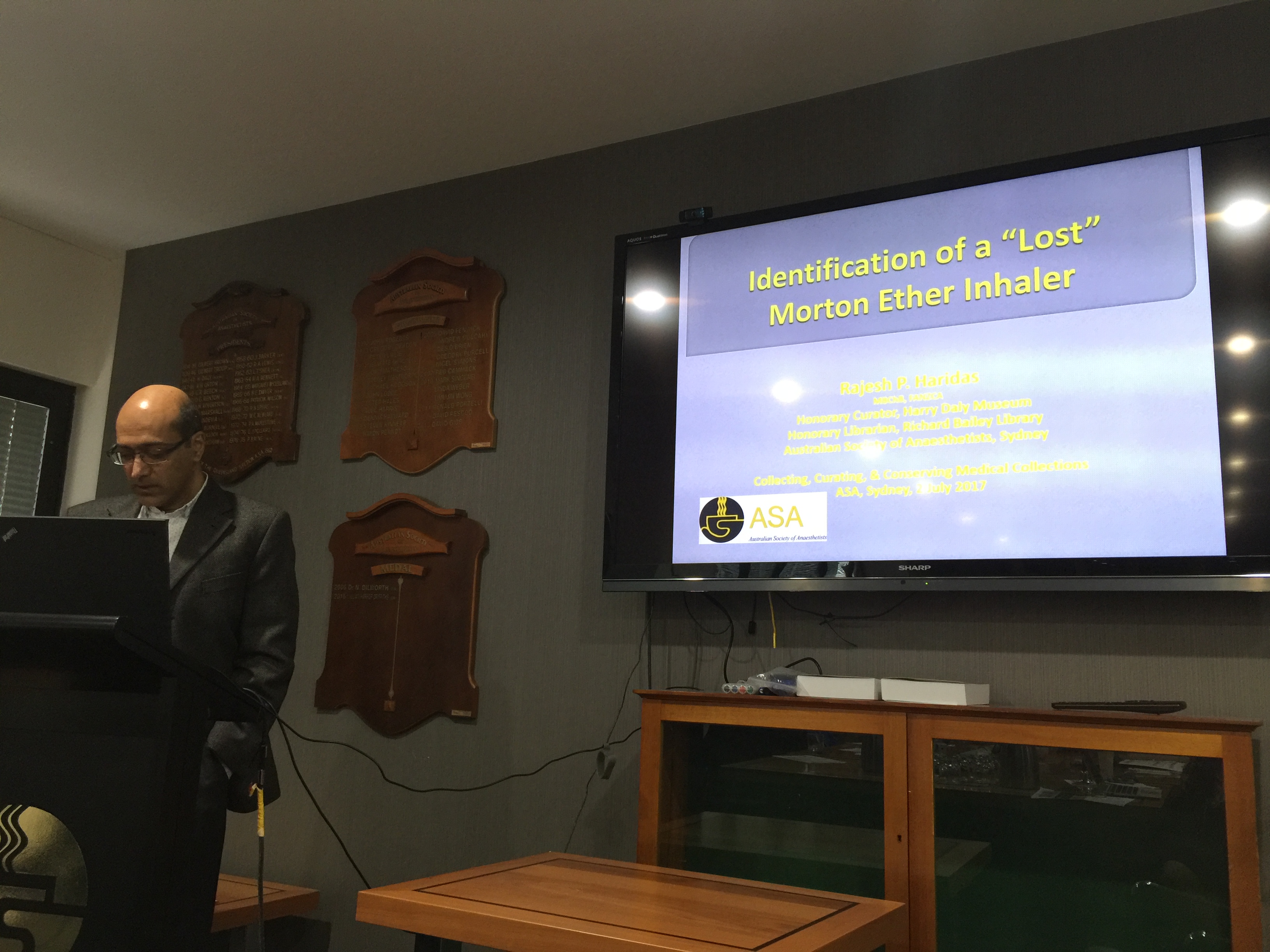
7. Dr Rajesh Haridas – The ‘Lost’ Morton Inhaler
Our final speaker was Dr Rajesh Haridas who spoke on the Morton inhaler that was allegedly lost during the 1840s. So the first anaesthetic publicly administered was by this guy called William Morton – just so you know. After seeing a ‘replica’ in the archives of the Massachusetts General Hospital, Haridas exmained it in more depth discovering it was actually the original.
This was a great talk on how important it is to scrutinise the evidence.
Dr Rajesh Haridas
I am so relieved today was successful and I cannot wait to hear back from the participants on their experience. To evaluate the seminar, I will be distributing a questionairre and hopefully will gain some further insight into what worked well and what could be improved on.
Now that the event is over, I can finally start focusing on the History of Medicine Conference coming up on the 12th of July in Melbourne. My talk will be revising the history of anaesthesia to include women and their stories!
Thank you to everyone who participated in the seminar!
Time for another GLAM Blog Club post! I am truly excited to write on the topic of ‘fear’. I’m going to tackle this topic from a variety of angles. Not just because I have many fears, but also because I work with some objects that absolute ignite fear in others.
To start, I’m going to write about my time curating a medical collection. A few years ago I realised that I very easily have vasovagal syncope episodes. Basically, for me, being somewhere medical can result in me fainting and feeling incredibly nauseous. There are also times when my vision has become very blurry and my pulse slows right down. It’s quite hard to manage and even when I try my absolute best not to pass out, it still happens. A couple of years ago now it hit me while I was standing in a pharmacy looking at some medication. I saw the word swelling, yes it only took seeing one word, and I was out. Vaccinations as well as blood tests almost always result in a vasovagal episode.
It is caused by a whole variety of triggers including fear of pain and/or bodily injury. Some people experience slight lightheadedness, whereas others, including myself, just full on faint. So how does this relate to fear in the museum?
I became interested in medical collections in 2015. It makes no sense that I would be wanting to work with the objects that have caused me so much grief. Nevertheless I thought this history was way too interesting for me not to pursue. The real test came with my first internship at the Geoffrey Kaye Museum in Melbourne.
On my first day, I was guided through the collection by my wonderful supervisor, and to my surprise I didn’t feel ill nor did I faint. I was even comfortable handling needles. I thought this was going to be a great turning point for me. However, I still faint at the site of a needle today when it is about to go into my arm.
Handling objects in the Geoffrey Kaye Museum
While I was still frightened by some of the old medical equipment, the fact it wasn’t going to be used on me helped in not triggering an episode. Even with the more modern equipment, seeing it trapped behind glass or sitting on a museum storage shelf allowed me to disassociate it from pain. Ironically, the collection of the Geoffrey Kaye Museum and Harry Daly Museum, where I now work as a curator, is all about preventing and treating pain. Luckily for me, the collection generates a different kind of fear that is more focused on ‘I’d hate for that to happen to me in x century’ rather than ‘wow this is actually going to happen to me right here, right now’. Objects such as a full medical kit from World War I including scapels and saws, I can now appreciate for their incredible interpretive capacity and how they might have been experienced without placing myself in the picture.
The drawer of fear!
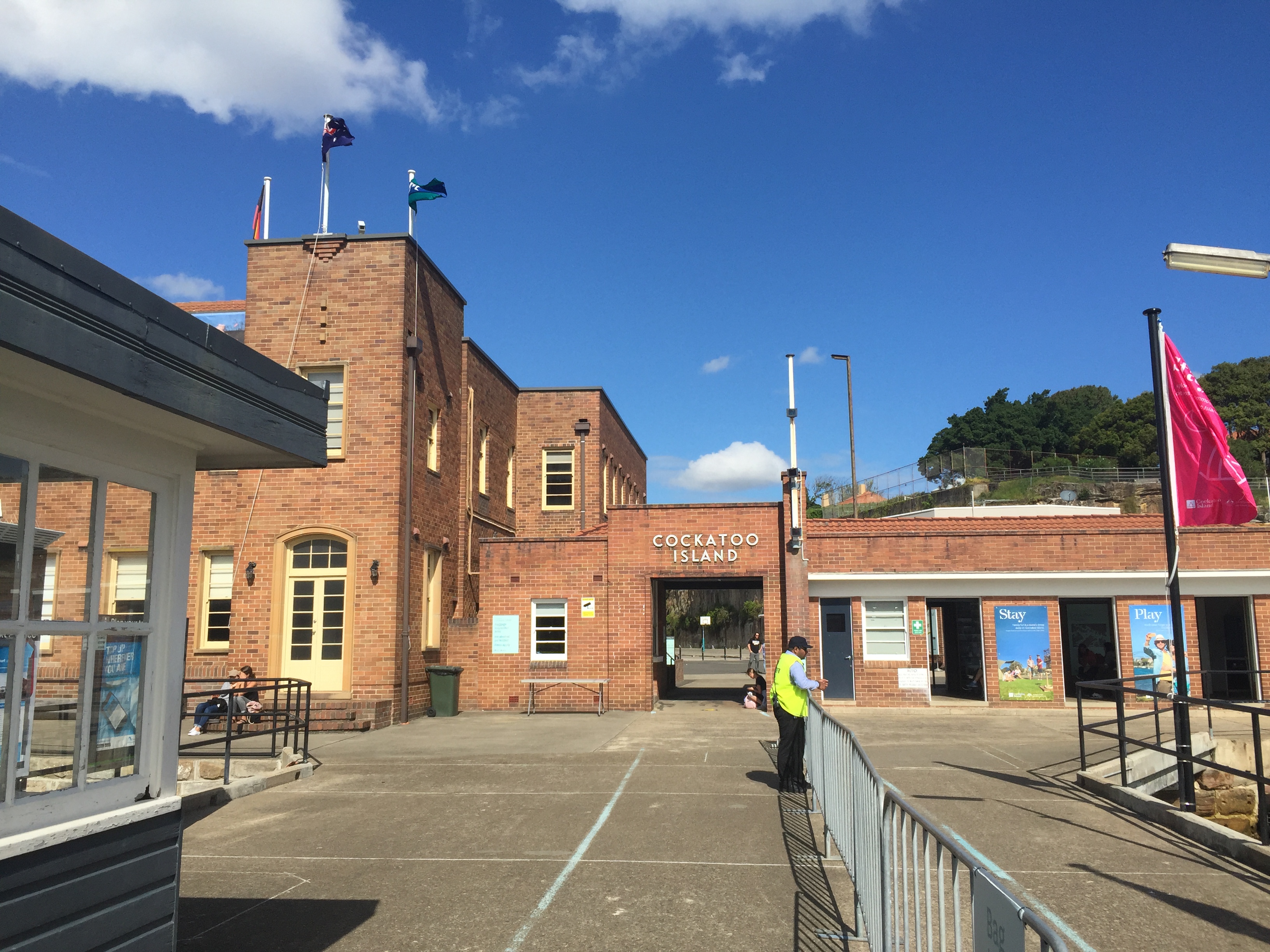
Moving on now to something a little less ‘my medical history 101’. I want to briefly talk about a heritage site, Cockatoo Island. Since February this year, I have started running ghost tours of the island. Some of the stories we share are truly horrible and transform the site from a nice place to picnic on the weekend, to a site of trauma. Considering it was a hard labour prison for convicts for 30 years, then a reformitory school for girls, and a shipyard during World War I and World War II, there are no shortage of terrible stories.
Cockatoo IslandCockatoo Island
The tour covers this gruesome history of the island including stories about convicts who were drowned and workers who were crushed to death in our Turbine Hall by large engines. It is truly a scary place. Out of respect to those who died, our tours focus more on the history of the site and tell the stories how they were reported on/how they were described by those who once worked on the island. Everytime though, I can feel chills up my spine and am so grateful to be on the island in the 21st century.
This was a great topic for GLAM Blog Club! Some of my fears, have joined me on my journey in the museum sector. Instead of shying away, I’m trying to work with them and not against them!
This week was Museum Week on Twitter. Basically an opportunity for museums around the world to showcase their collections and stories while promoting a ‘theme of the day’. This year, there was also an overarching theme – women in museums. A fantastic opportunity for museums to consider the stories of those that are often marginalised. From following this hash tag everyday, I learned so many incredible stories of women and their achievements. A very empowering week.
I am going to share with you my contributions. If you follow me on Instagram (@curateyourownadventure) you would have already seen these photographs. I’ll be providing a little more context, however, in this blog post.
1. #FoodMW
To start the week we had my favourite topic, food. I was lucky enough to be working with the collection of Hurstville Museum and snapped a picture of these cakes. Hurstville Museum was once located in an old bakery and this is where their cake collection began. Most are from around early 2000 to present day. Many have been entered into the Sydney Royal Easter Show and won prizes – hence why they are being preserved. They are so beautiful and so bizarre. I really enjoy any opportunity to go to the storeroom and work with these objects.
2. #SportMW
This is the only entry I had that is not connected to the daily theme, but, to the overall theme. The Justice & Police Museum, owned by Sydney Living Museums, has done a fantastic job at representing the stories of female criminals and victims. This thematic panel shows some of the women who were arrested and accused during the early 20th century. As a Curriculum Program Deliverer, incorporating women into the history of crime in New South Wales is especially important. On each tour, we discuss the case of the Pyjama Girl, a woman who was beaten to death in 1934 and never saw true justice. A case of extreme domestic violence by today’s standards.
3. #MusicMW
Today I was working at the Powerhouse Museum in the Sherlock exhibition. I couldn’t help but take a picture of Sherlock’s violin.
4. #StoriesMW
I struggled with this theme the most. Purely because I am surrounded by so many stories everyday I just couldn’t pick one! I decided to leave it to the last minute. Whatever was in front of me at the end of the day, was the winning entry. In this case, I was working on acquiring a new anaesthetic mask at the Harry Daly Museum that was fashioned using pieces of metal during World War I. Innovation and creativity at a time of horror and despair.
5. #BooksMW
These notebooks are currently in the archive at the Harry Daly Museum. Not only are they aesthetically pleasing, but, they tell an important story of how anaesthesia was studied and how information was recorded.
6. #TravelMW
The final two days were really dedicated to Cockatoo Island. This is one of my favourite images on the island showing how workers arrived on the island during it’s shipyard days. Over 4000 indivdiuals worked on Cockatoo Island building and repairing large ships. It’s amazing to think we still have this material heritage!
7. #HeritageMW
Finally, we have the convict barracks that once held over 200 male convicts. Between 1839 and 1869, literally hundreds of convicts passed through Cockatoo Island to serve their sentence of hard labour. If the walls could talk, what horrible stories they could tell. Intepreting this heritage and providing a voice for the hundreds of individuals who were tortured and tormented is a job that I take very seriously.
So there we have it! Seven days and seven photographs. It was great to be involved and I cannot wait for Museum Week next year!
This weekend was spent guiding two lovely friends from Brisbane around Sydney. The absolute highlight of the visit was taking them to see the new blockbuster exhibition at the Powerhouse Museum, Sherlock. It was very busy when we visited and overall it took us about an hour and a half to get through the entire exhibition. I imagine it would be a little longer during peak busy times.
The exhibition is divided into three distinct sections: museum display, stamp collecting, and solving the crime. As soon as you enter, there is a small section displaying some of Sir Arthur Conan Doyle’s original manuscripts and other associated objects. There was a fantastic little scapel kit underneath an anatomical drawing in the corner that caught my attention. The thematic panels were really well done looking as though they were bits of paper pinned up by Scotland Yard on corkboard. Even the font of the labels, one that looked like the paper had just come out of a typewriter, created a nice atmosphere. Objects and display cases were quite well organised in the space allowing for people to distribute themselves around the room and not cause great congestion. To be completely honest, we only spent a few minutes in this space. The lure of solving a crime made it impossible to resist moving on quickly to the second part of the exhibition.
As you move into the stamp section, you are presented with a little booklet. Read this carefully before running off. There are six stamps to collect at six different booths: optics & lenses, botany, cosmetics, telegraph, ballistics, and Scotland Yard. Located at each station was some information, objects, and a stamp machine for the booklets. I felt like an overgrown kid in a candy store. No matter your age, stamps and stickers are two simple pleasures in life. We made our way to each of the stations, reading the panels and learning some basic information about forensics in Victorian England and today.
I loved the cosmetics section. Jars and glass bottles containing “arsenic” and “washing powder” lined a wooden case underneath the orientation sign. The thematic panel explained how substances such as arsenic were once used in makeup before they were discovered to be extremely harmful. The integration of actual objects, meaning little advertisements and booklets from the Victorian time period, was quite interesting and effective. The stamp for this section was a skull and bones to reflect the dangerous chemicals once used. The other sections were also interesting displaying information on early policing and botanical plants that had been used to posion unsuspecting victims.
Towards the end of this space was a Gazette Newspaper stand. Here, you had to punch out a section of your booklet and record a newspaper article with a rubbing. It honestly never ceased to amaze me how much my inner child/Sherlock nerd required restraining. I can’t imagine this space anymore crowded than it was today. Somehow, it still managed to work and we didn’t get too frustrated.
Finally, you enter section three, the solving of the crime space. At first it was quite straight forward – you follow a path that first leads you through 221B Baker Street and the facts of the crime. As soon as you leave the crime scene and finish stamping your blood splatter markings and bullet trajectories, things get a little complicated. We tried to follow our booklets but it was really difficult to work out where to go next. We saw so many visitors wandering around with a “I have no idea what I’m doing” look on their faces. Not to mention when you get to each space, like the conservatory or the slaughter house, you really have to read things super carefully or else you get completey lost.
There are four sections that ask you to analyse what you have seen and use a different hole punch machine on your booklet that corresponds to an answer. So, in the slaughter house, you are asked to analyse different blood splatters before selecting which one more closely matches the stamp you made at the beginning of the crime scene space. There are three machines that replicate a blood splatter. You pull a lever or push a button for the machine to work and it spurts out a blood-like substance onto a clear screen. Once you have selected a machine and a splatter, there is a hole punch next to the machine for your booklet. After visiting all four spaces, you line the punched holes in your booklet up with a newspaper cutting and it gives you your final clue – “no spoilers”.
As soon as you are in the zone, know where to go, and begin engaging with each section, things do get ridiculously fun. Just getting to this stage, however, was a little difficult and being constantly shadowed by other visitors wanting a turn did get tiring.
The exhibition concludes with some ephemera from the Sherlock TV series and movies along with some fan art and objects. As a reward for solving the case, treat yourself in the gift shop. I was quite impressed with the gift shop. I thought it might be a lot tackier but I managed to buy myself a very nice “evidence” bag (see picture below). There were adorable notebooks, postcards, and badges.
Overall, the exhibition was entertaining and made a valiant attempt to introduce visitors to the basics of forensics. Even though the crime was set in the Victorian era, things like blood splatter and testing seeds for posion are still relevant and used today. As soon as people clicked on to what to do, they did look as though they were engaging with the activities. You could work your way through the exhibition for entertainment’s sake or you could read the labels and have a more informative experience. It was science made accessible!
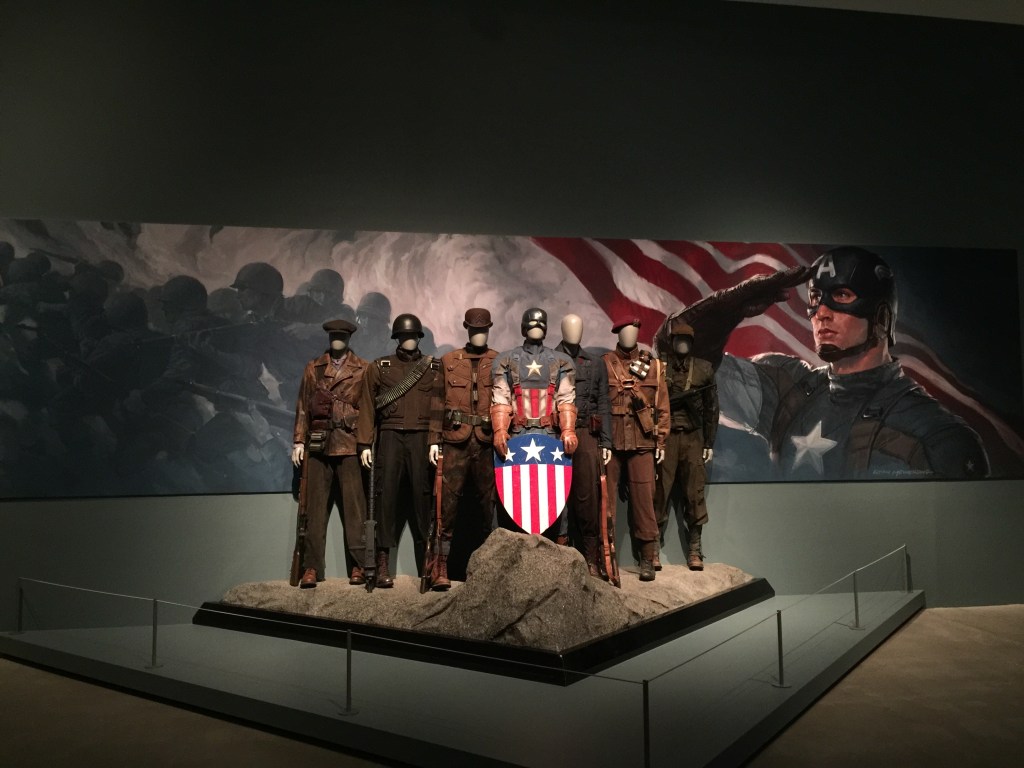
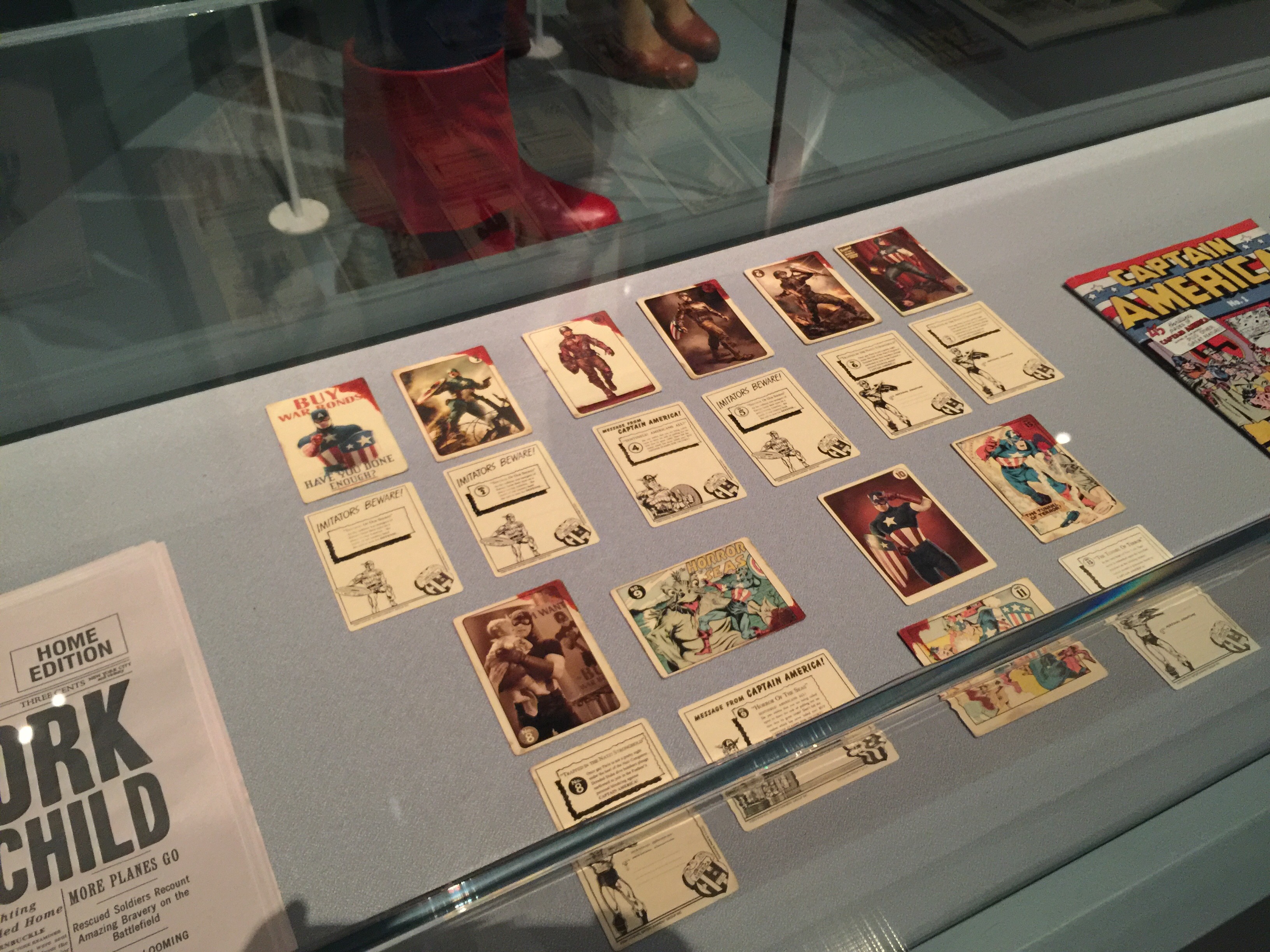
This blog entry won’t contain any surprises. I am a Marvel fan through and through and I am so glad I had the opportunity to see this wonderful exhibition at the Gallery of Modern Art in Brisbane. I still cannot believe this exhibition came to my home city! It is the first serious effort to display a whole bunch of Marvel costumes, comics, and objects in the one place. According to the introductory panel, the objects have been drawn from the collection of Marvel Studios in Los Angeles and loans from private collections.
I get a little frustrated when people say that Blockbuster exhibitions are purely money grabbing and cater way too much to the masses. Never in my life have I seen both children and adults so engaged in an exhibition space.. The costumes and comics were true works of art and are just as worthy as any contemporary work of art to be on display in a gallery. Now that I’ve said that, the rest of this post will focus on some of the exhibition highlights.
Overall Theme
The overall theme of the exhibition was to trace how characters in the Marvel Universe are connected. For those who have valiantly sat through every Marvel film, you will know that the universe is complex, interconnected, and outright amazing. The exhibition sought to discover the links between the movies/comics and pay homage to the creativity behind the studio. I thought this was a nice way to connect everything together. Rather than the whole exhibition being just “look at this cool stuff” which, let’s face it, I would have still loved.
This theme is highlighted in the middle foyer connecting the two main parts of the exhibition. There are some computers and touch screens available for interaction. Visitors can select various characters and see how they relate to each other and to the overarching storylines.
Marvel Universe
Layout
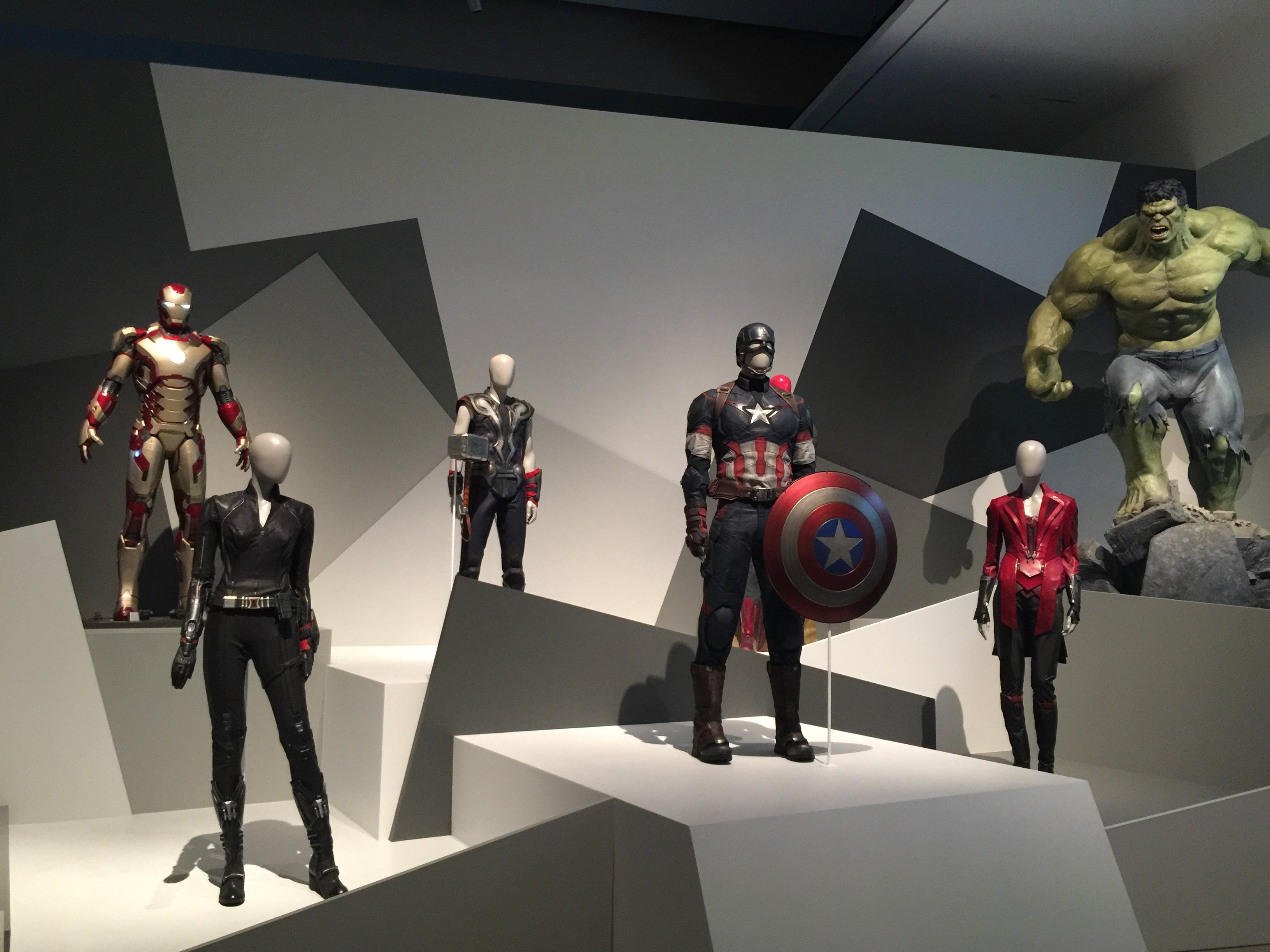
The exhibition is huge. It covers almost the entire first floor of the gallery and contained approximately nine rooms. I didn’t count the exact number, but it did feel as though it just kept going. The first part of the exhibition covers the main different groups in the Marvel Universe. There is a room for the Avengers, Captain America, Thor, Iron Man, and the Guardians of the Galaxy. Each room had its own feel that reflected the various films. For example, in the room for Thor, the giant throne of Asgard welcomed visitors to the space. This room is juxtaposed against the one for Guardians of the Galaxy that was designed to look more industrial and rustic.
MarvelMarvel
The second part of the exhibition looked more at how Marvel is created – so the production side of things. Suits worn by actors for CGI purposes and digital storyboards filled the space revealing some behind-the-scenes secrets.
The exhibition was easy to follow and although there was a prescribed path through the rooms, you never knew what was around the corner. It was therefore a little suspenseful and kept things exciting enough.
Text & Objects
Each space had a thematic panel and there were object labels. Because of this small amount of text, people were actually reading the signs. Yay! The focus was, however, on the objects themselves. They were displayed with great impact in the different spaces. For example, in the room for the Avengers, the most eye-catching part of the display was the costumes that had been placed on mannequins. As a picture paints a thousand words, see below for a visual.
MarvelMarvel
The Captain America room had me completely nerding out because the costumes were displayed exactly how they were in the Smithsonian in the film. It was as if you were walking in on the film. They even had the sound bite playing that was on loop in the Smithsonian. If this isn’t meta – a display of a display in a film – then I don’t know what is.
Marvel
The location of the objects was clearly well designed with large spaces between objects catering to the crowds. You didn’t spend the entire exhibition bumping into everyone trying to see everything. Even though it was a Wednesday, it was busy and when we left there were about three school groups heading on in. This is where I do have one criticism. For some reason, and I’d like to know why, there were no timed tickets. I can’t imagine how busy it would get on the weekend. With no clear form of crowd control in place, we were extremely lucky with our timing.
Snippets of Film
In each room there were snippets of film being played that related to the objects on display. There was no sound so it wasn’t too distracting but you could see the objects in action. This allowed for a little more context. As there was no sound, it also meant people weren’t spending long watching the content and blocking parts of the exhibition.
Digital Integration
I thought they might overdo the digital in this exhibition. In the first half there was virtually nothing interactive. It was you, the objects, and bliss. When you went to the section on ‘behind-the-scenes’ a lot more digital was present, but it made sense. My favourite digital inclusion was a large storyboard table that showed the process of designing the characters and the scenes. The comics came to life in front of you without taking up a huge amount of space.
There was even a small section where you could step into a space and see how CGI technology works. Your movements were replicated on the screen by a different character depending on which area you stood in.
Overall, the exhibition met and exceeded my expectations. It wasn’t a tacky exhibition – it was actually really well curated. Rather than placing the costumes on display next to some comics, it tried to tell an overall story and look at the art and technique behind the films. After seeing all your favourite characters, you were then treated to exactly how they were made. The exhibition was self-aware and took this opportunity to actually be informative and interesting.
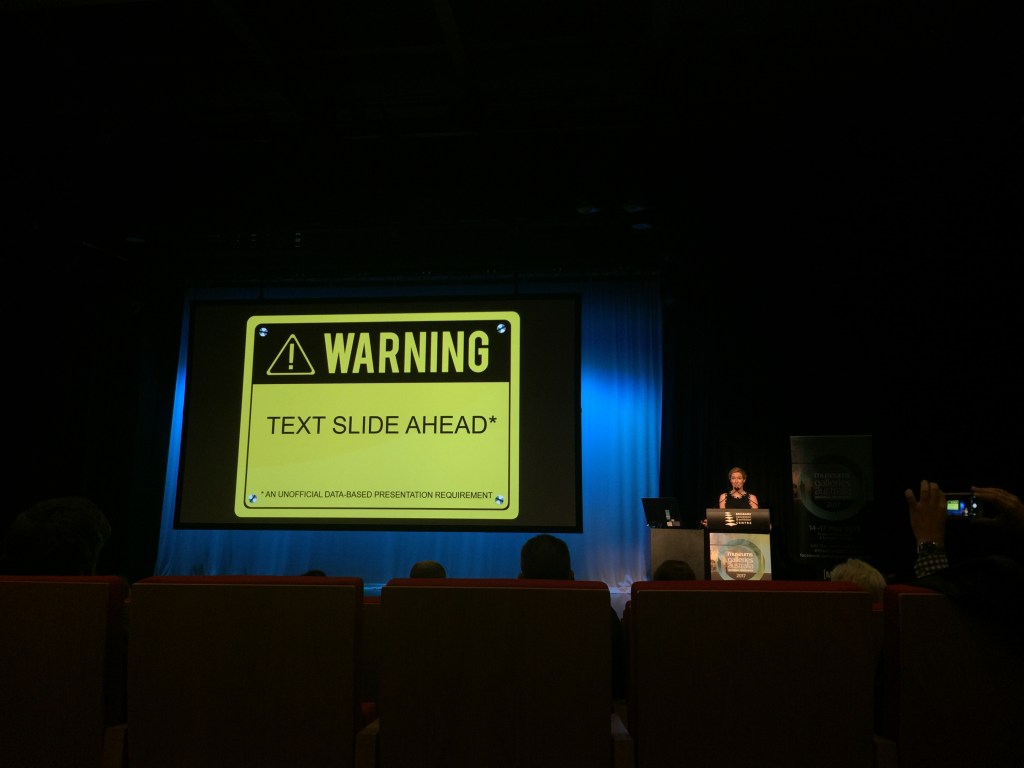
There we have it – my first Museums Australia Conference is now over. I’m currently sitting at the airport waiting for the flight back to my other home, Sydney. I am going to structure this post differently to the other two and discuss three main themes or ideas that were raised throughout the day. Each will have spanned over numerous presentations so I’ll make sure to credit the talks when they’re raised.
1. Understanding
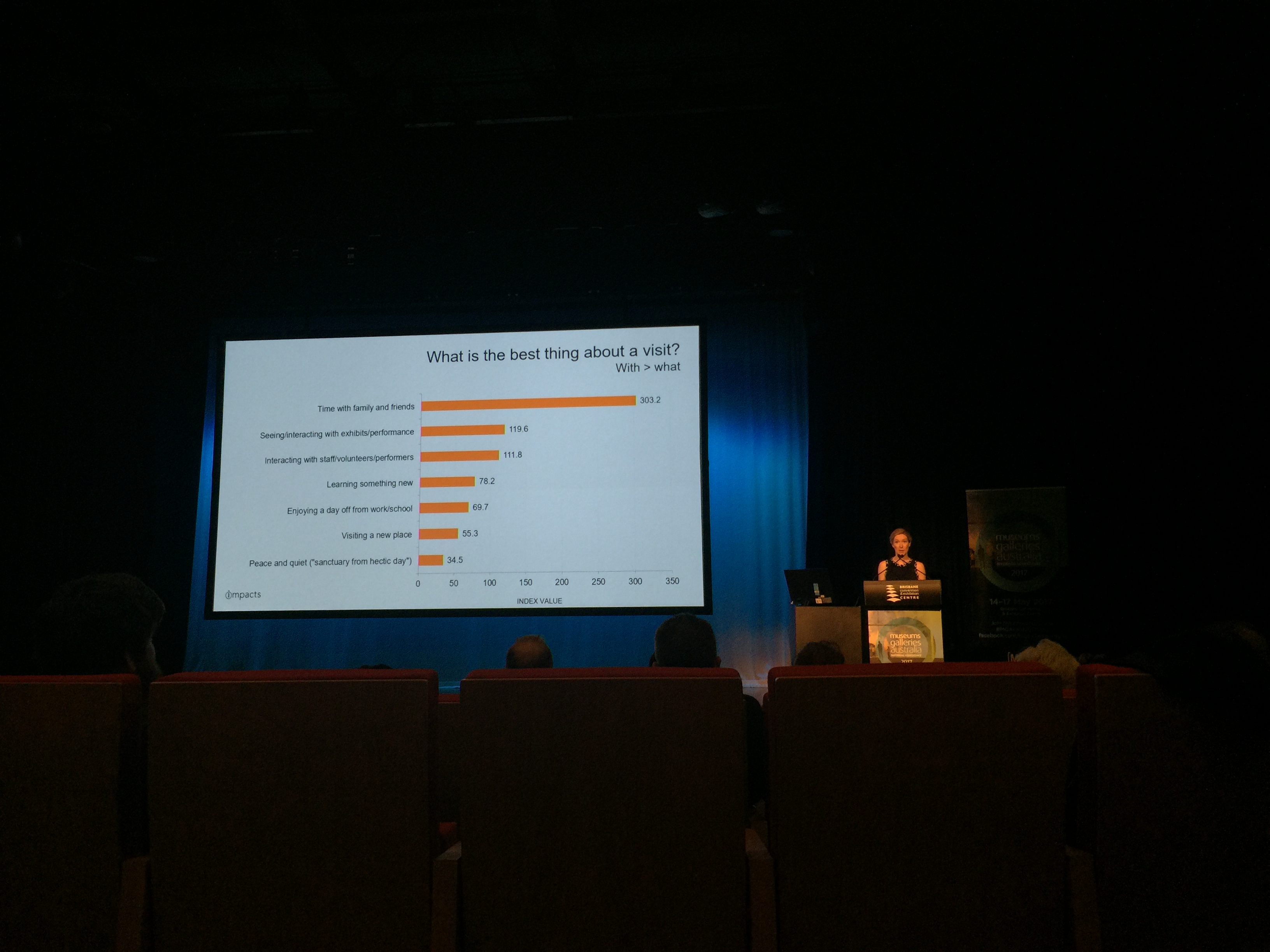
This was a huge theme of today. Our plenary speaker, Colleen Dilenschneider spoke passionately about using data from cultural institutions to understand visitor satisfaction. This data came from her institution IMPACTS and the National, Awareness, Attitudes, & Usage Survey. What they discovered from crunching oh so many numbers was that social connectivity in the museum is key. In fact, having one-on-one experiences with volunteers and front-of-house staff is actually a leading factor in increased satisfaction and likely repeat visitation.
This made me reflect on how many times I have had wonderful experiences in a museum and why. I don’t think I’ve had many one-on-one experiences to be completely honest. I have been to touch tables but I don’t really engage in that way. I’m such an introvert it’s almost painful and when I go to museums by myself I’m often wearing headphones trying to create a playlist to add a soundscape to the exhibition. Each to their own!
The whole talk was a great insight into understanding what museums can do to ensure high visitor satisfaction and maintaining/building their reputation.
2. Perserverence
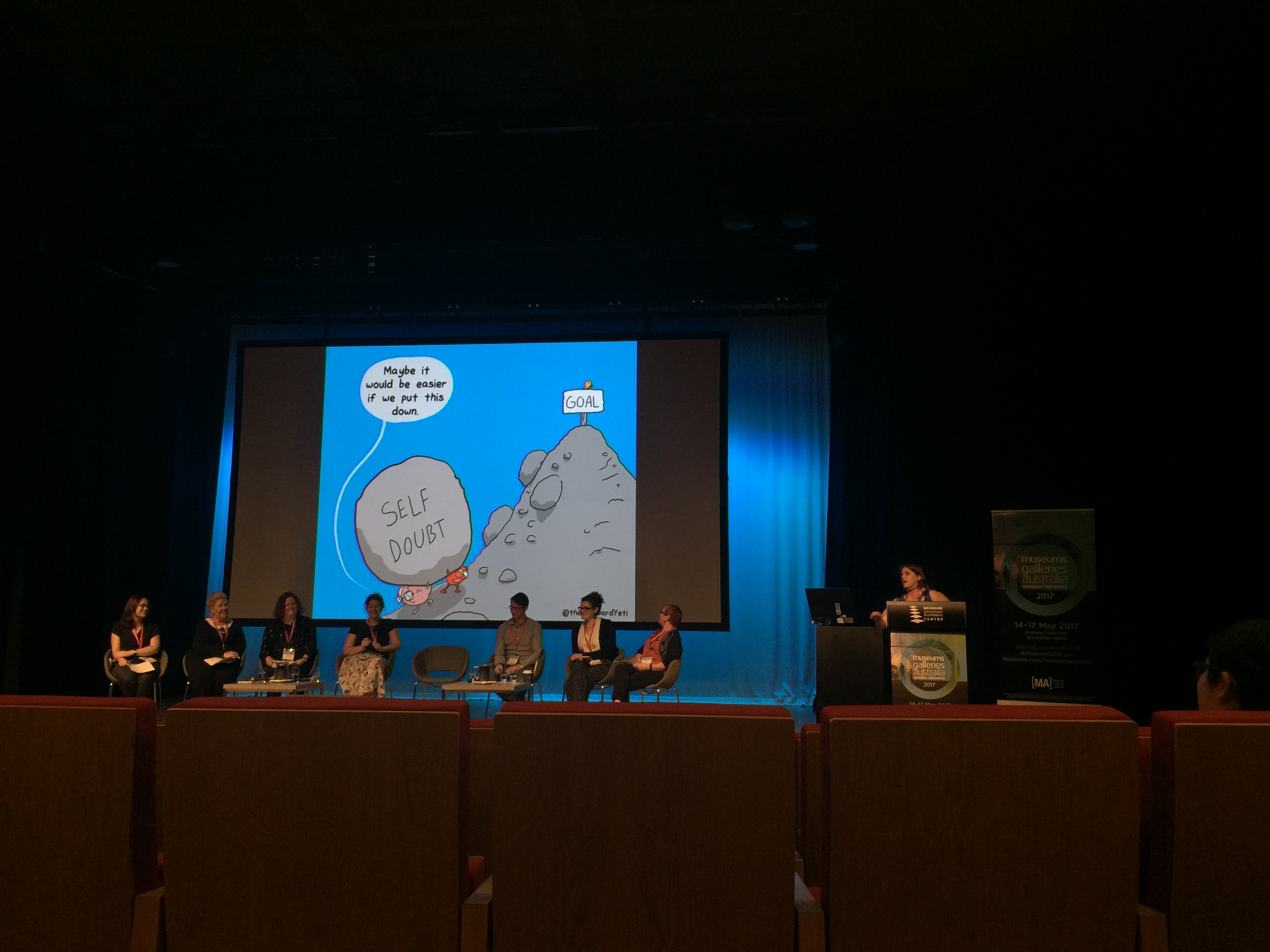
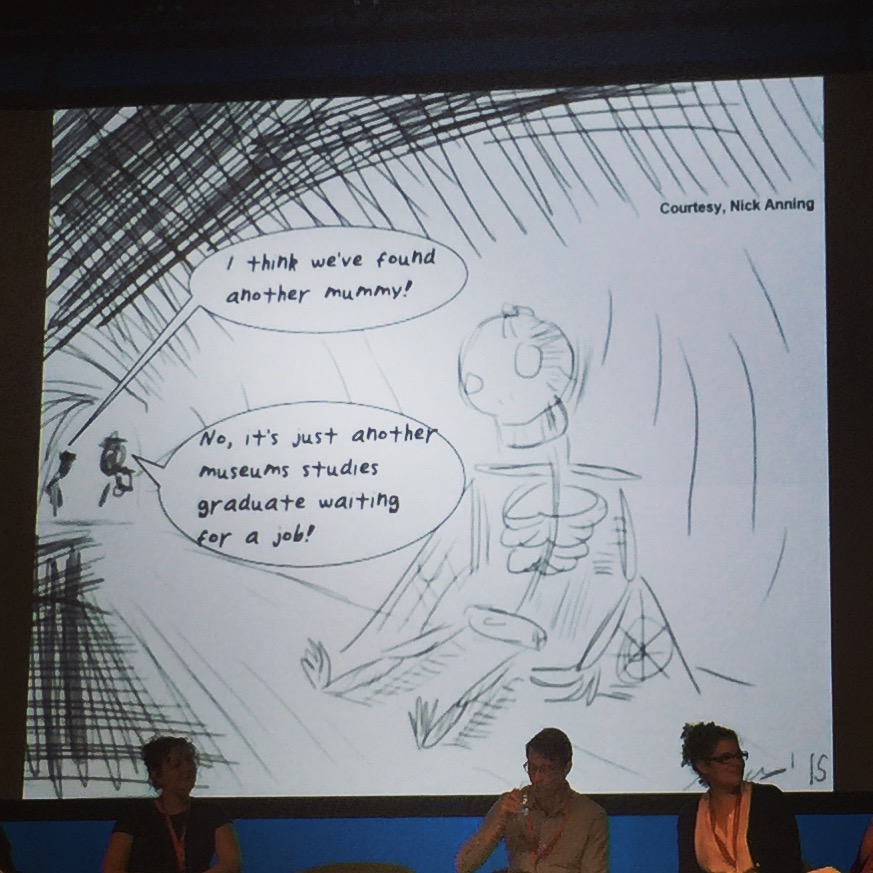
So this theme was kind of central to the emerging professionals skills and careers talk. Each of the seven speakers selected a certain skill that they thought was crucial for emerging professionals to embrace. One common thread that stood out to me was that of try and try again. Try and build as many skills as you can and keep going filling out those job applications.
While this all sounded pleasant enough, I felt that Stephanie Chinneck’s presentation resonated with me the most. Especially how museums should try to meet us emerging professionals half way. It should be a shared responsility of emerging professionals getting out there and museums, in turn, respecting and trusting us. I have been so lucky to have had some amazing internship and volunteer supervisors who have allowed me to go above and beyond to build up my skills. Shout out to them, you know who you are.
Perserverence as well comes from simply applying again and again. I’ve applied for so many jobs now I might as well update my hobbies to include “applying for jobs”. While I’m at it, under languages I’ll add “Jobs NSW” because I’m well aware of their lingo. Anyway if you don’t laugh you cry so thanks Stephanie for an entertaining, too true, look at the life of an emerging professional.
3. The Future
The final theme is the future. I had a lot of time to reflect in the emerging professionals talk about not only the future of museums, but also, my future. I am constantly reminded at the most random times that I’m not going to give up on this industry. It might be hard, absolutely hard, but I’m ready to tackle it head on. I’ve already made writing job applications my hobby so I’m basically on the right track?
In terms of the future of museums, I have so much faith in what lays ahead. No matter what technology comes out, the physical act of going to a museum has been proven (thanks Colleen) to have no substitute. The industry is and will continue to be moving in new and interesting directions. Being adaptable and open to change is key.
Thank you to everyone who made my first Museums Australia Conference so memorable. A huge thanks to all you amazing people who have been reading my blog. My post on the first day of the conference had over 200 readers! I have so much fun writing these posts and it means a lot that you are willing to read through my bad jokes and sarcasm that isn’t clearly sarcasm. I am already counting down to the next conference. A trip to Melbourne rarely needs an excuse.
If you have just been following my blog for the conference I encourage you to stick around and subscribe or just drop in from time to time to read about awesome exhibitions and heritage sites I visit. If you want to contribute your thoughts on the conference send me an email!! lush2408@gmail.com. I’d love to hear.
To keep things interesting, I am going to slightly change the format of my post today. Enjoy!
9.00 am – 10.30 am
I arrived at the conference after battling Brisbane’s ‘peak-hour’ traffic. First up was another plenary session consisting of a welcome and talks from Janet Laurence and Megan Cope. Laurence, who is currently in Germany, sent a video for us to view. I was immediately captivated when she started talking about medical history and botanical specimens. Check out her work, ‘Inside the Flower’, which was on display in Berlin. In this installation, you could walk inside a mini-Reichstag looking glasshouse and be instantly surrounded by a variety of medicinal plants. All of her work highlights this relationship between the human and natural worlds.
Our next speaker, Megan Cope, presented on the interweaving of geography, maps, and identity. This includes breaking apart myths of colonization. Cope spoke so passionately about her work and the messages she yearns to deliver. I was in awe of her ability to challenge herself.
10.30 am – 11.00 am
Morning tea time, yum.
11.00 am – 12.30 pm
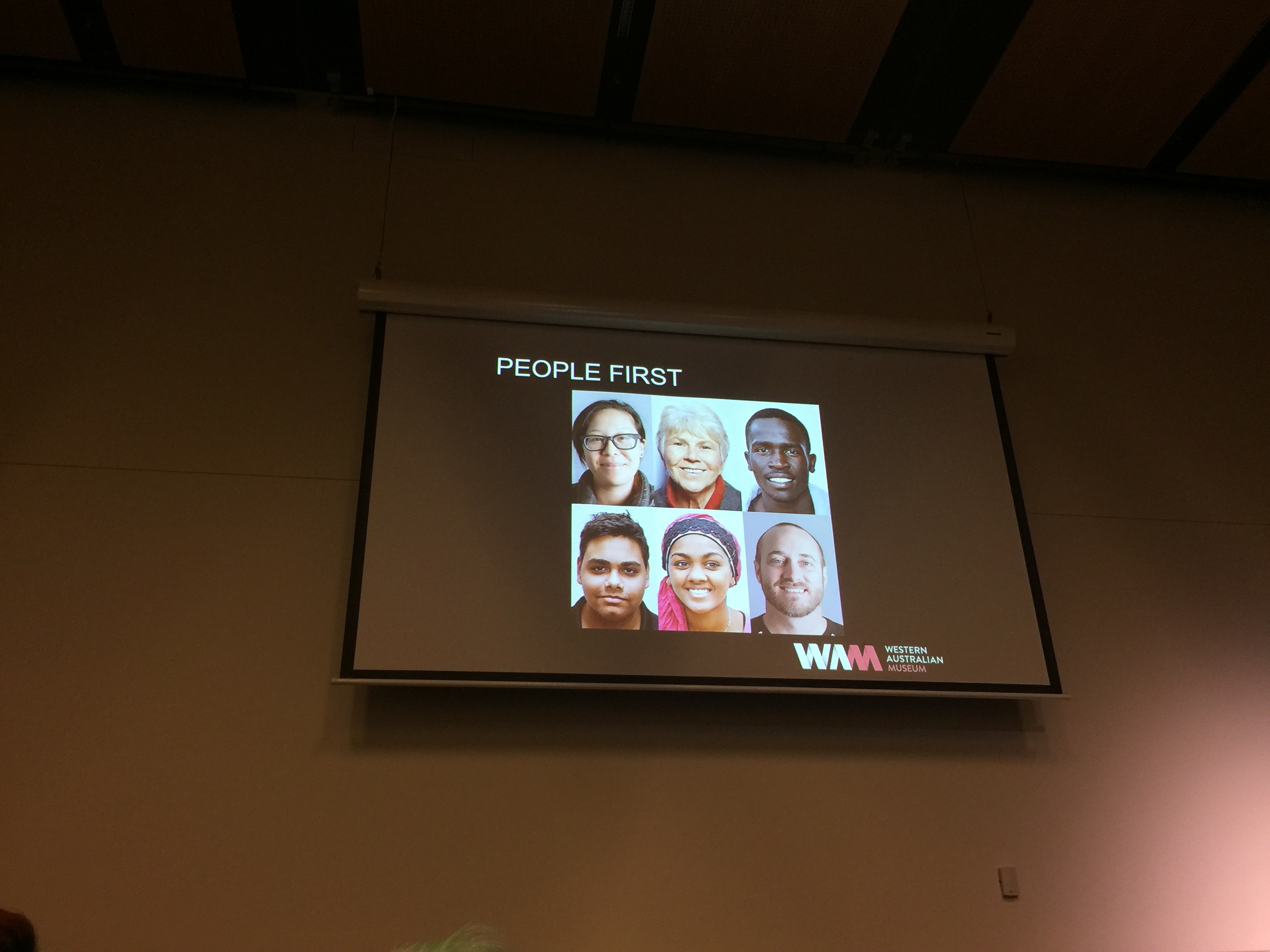
The first session of concurrent speakers. I spent some time deciding on which session to attend and went with ‘Working with Diverse Communities’. The first speaker was Amy Wegerhoff from the Western Australian Museum. Her talk was an interesting look at how you can involve communities in shaping your museum content. There were two takeaway messages – engagement takes a long time and think of community in a narrow, not broad, sense. With regards to the latter, this can mean finding communities within a larger community to avoid excluding significant stories or groups. There is a greater chance then of being more inclusive, in theory. What struck me most about Wegerhoff’s talk was how you can’t just assume groups are willing to be participants. Sometimes, you have to go that little bit deeper and care just that little bit more to really get a response and create a ‘people first’ exhibition.
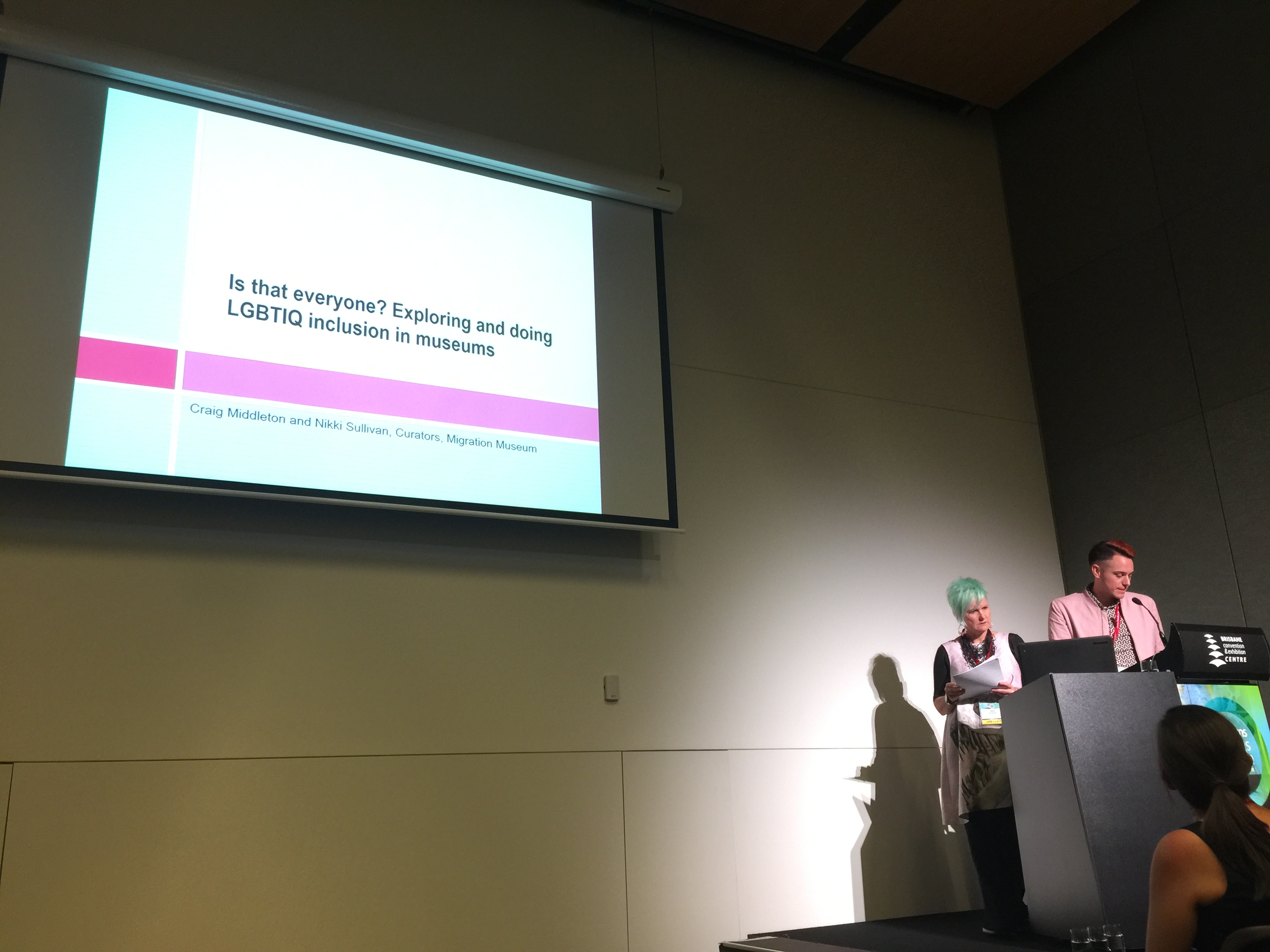
Wegerhoff was followed by Craig Middleton and Dr Nikki Sullivan from South Australia. I was particularly interested in their talk on including LGBTIQ in museums. Their talk, however, went above and beyond. They started with a fantastic discussion on how you should never include groups in the museum space to increase visitor numbers or as an act of tokenism. This can lead to further marginalization. Their involvement with the LGBTIQ community in South Australia has led to wonderful integration in both museum and community spaces. Although there is much room for progress, their work is truly a great step in the right direction.
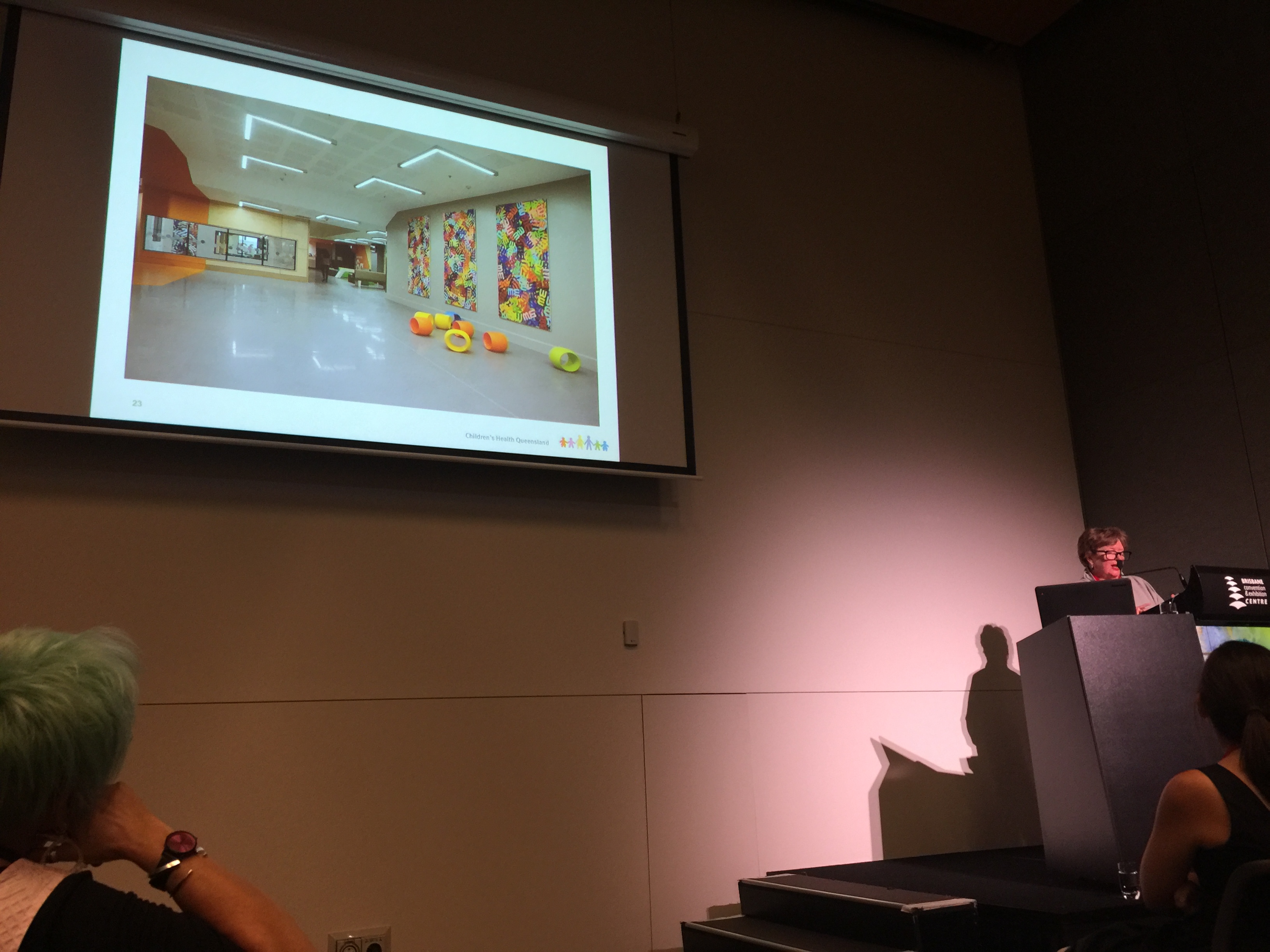
Finally, we heard from Lynne Seear from the Lady Cilento Children’s Hospital. This hospital is supporting the amazing integration of art and cultural programs. This is partly to create an environment of normality and beauty in a space associated with illness and sadness. Seear stated at the end that art will not cure a disease, but, it can help in the overall mending process. It reminded me of this dystopian novel (the name has totally escaped me). In the face of destruction and death, the one thing that kept people going was a small traveling theatre society that reminded people of the joy that the arts can bring.
12.30 pm – 1.00 pm
Lunch and chats. Don’t want to use the dreaded word ‘networking’.
1.00 pm – 1.30 pm
During this half hour, I sat in on the Museums Australia AGM.
1.30 pm – 3.00 pm
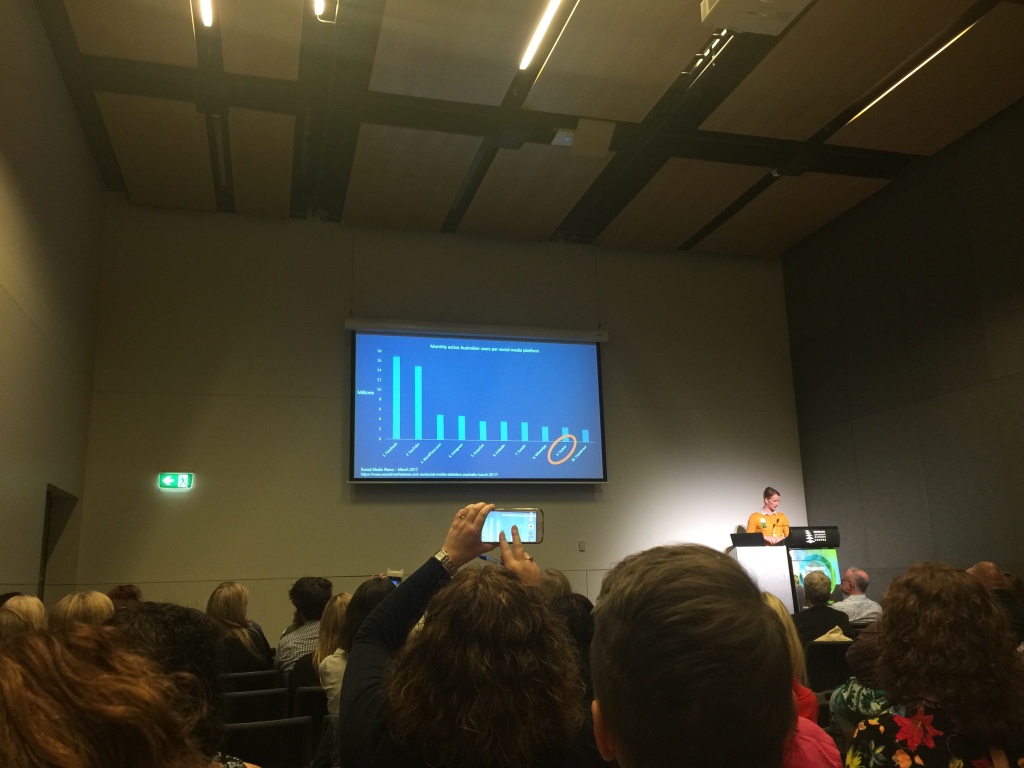
I am so excited to write about the first speakers in the ‘Experiential Learnings’ session. Dr Kate Armstrong and Marni Pilgrim, I salute you. To get up there and talk about something that failed IS WHAT I HAVE WANTED TO HEAR THIS ENTIRE CONFERENCE. If you are reading this and want to submit something next year, please do the same. It’s great to hear about success stories, but, since I’m at the start of my career I want to hear about when things go wrong. More importantly, I want to learn what you’ve learnt so I can be more aware! Anyway, thank you for being honest about a selfie Twitter program that did not succeed. Issues about social media platforms, agency with uploading selfies and the composition of photographs were all such interesting things to consider. I took so much away from this session especially that you can’t tell people what to do, but, you can foster creative thinking and fun engagement. The latter is definitely more likely to work and now I have an actual example of why.
Similarly, Bronwyn Roper spoke on the Library at the Dock in Docklands Melbourne. This was more of a journey through how digital technology in the museum space has been used to its full potential. Digital touch tables were transformed by Monash University students to complement ‘The Docks’ exhibition. The main message was – reach out and find people who can fully utilize the technology.
Finally, Linda Barron from the State Library of Queensland provided an insight into visitor feedback. I really enjoyed this talk because it highlighted the importance of front-of-house staff.
3.00 pm – 3.30 pm
Another food break – honestly being fed really well here.
3.30 pm – 4.00 pm
I could only stay for the first speaker in the next session. Madeleine Borthwick from Kiss the Frog presented on her company’s amazing work in creating immersive experiences. I highly recommend you to google this company and see their work for yourself. They have tackled everything from taking over entire art gallery floors with immersive games and challenges to setting up audio guides.
As you can see, day two was just as exciting as day one. Tomorrow is the final day of the conference then it’s back to Sydney!
The first day of the conference is unfortunately over! It was an incredibly interesting day consisting of a workshop at the State Library of Queensland and two sessions of speakers. I have so much to talk about I am going to try and be as succinct as possible.
State Library Workshop
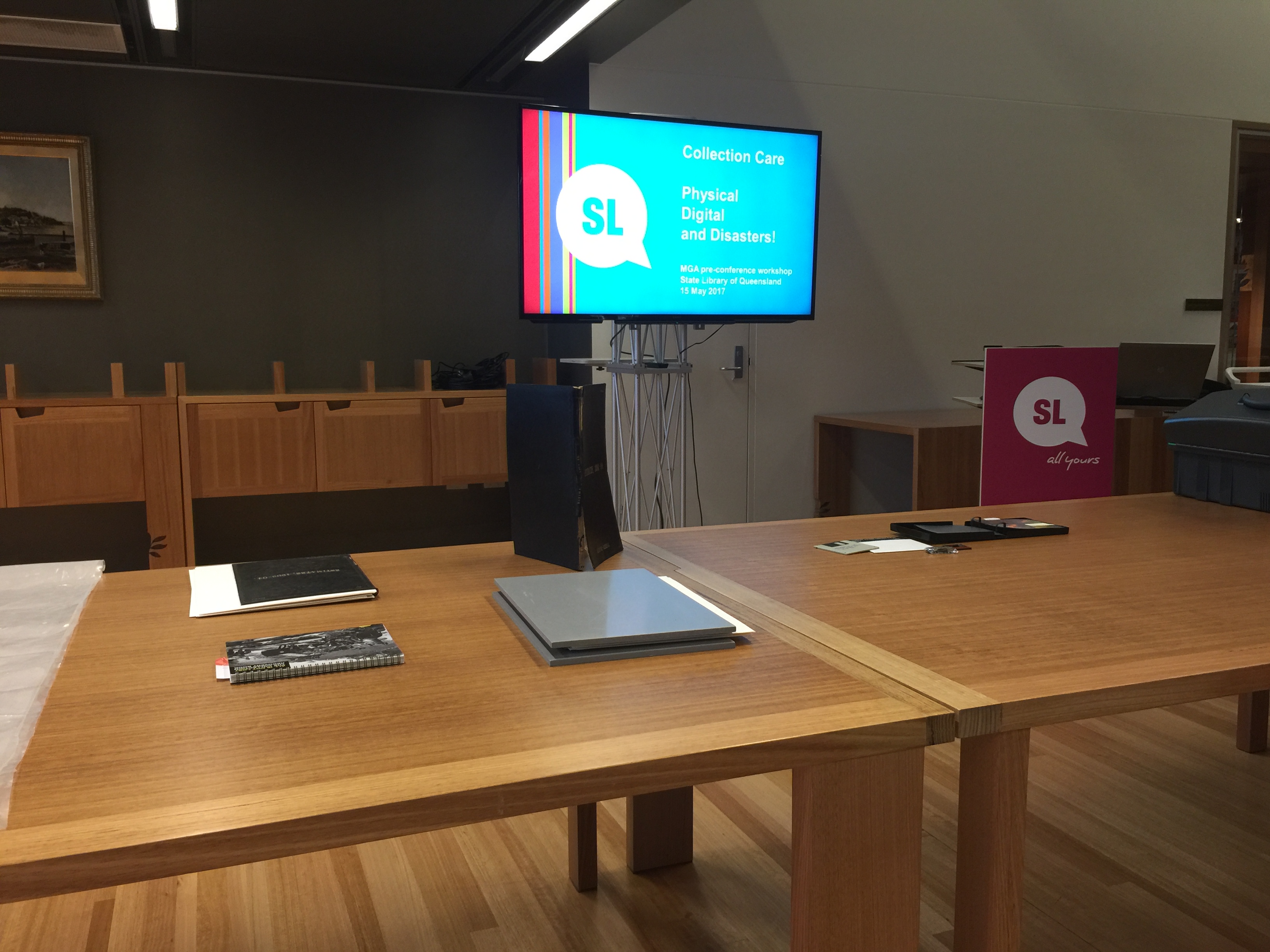
My day started at the State Library of Queensland for a workshop titled Collection Care – Physical, Digital and Disasters! For two hours, we heard from leading conservators at the library about how to care for your collection. The time was divided between three speakers each of whom talked on the general topic of conservation from a different perspective.
State Library of Queensland
Our first speaker was Rachel Spano, a senior conservator at the library. Her talk ranged from quarantining objects when they first arrive in the museum to organizing a disaster plan strategy. To ensure nothing nasty enters the collection, when you receive new objects or paper files, it is recommended they are isolated from other items in your collection and treated. This could be blasting it with nitrogen or simply placing the objects in a garbage bag for a certain period of time. If no bugs are present, then the time in quarantine can be shorter. Spano then went through categorizing objects from most to least significant. If a disaster strikes, you are pretty set then knowing which objects to save and which to live and let die.
Next was Grant Collins who has direct experience with managing disasters. Throughout his time at the library, he has managed twenty. The one in focus was the 2011 floods which were unbelievably destructive. He went through information on how to create salvage areas in case of disaster and how to start cleaning up the mess. It was so cool because he actually dipped a book (that was due to be disposed of) in water and showed us step-by-step how to manage the situation. I learned a lot from actually seeing the work in action.
State Library of Queensland
Finally, Leif Ekstrom talked on digital collections and potential disasters. If there is one lesson I have learned from my numerous years of study it’s that you must literally always back up every single thing you are working on or else you have a good chance of losing everything.
The workshop was super informative and I was able to pick up so many great tips and tricks to take back to Sydney with me. Implementing a basic checklist of how to check up on the collection each day, week, and month will be so very helpful.
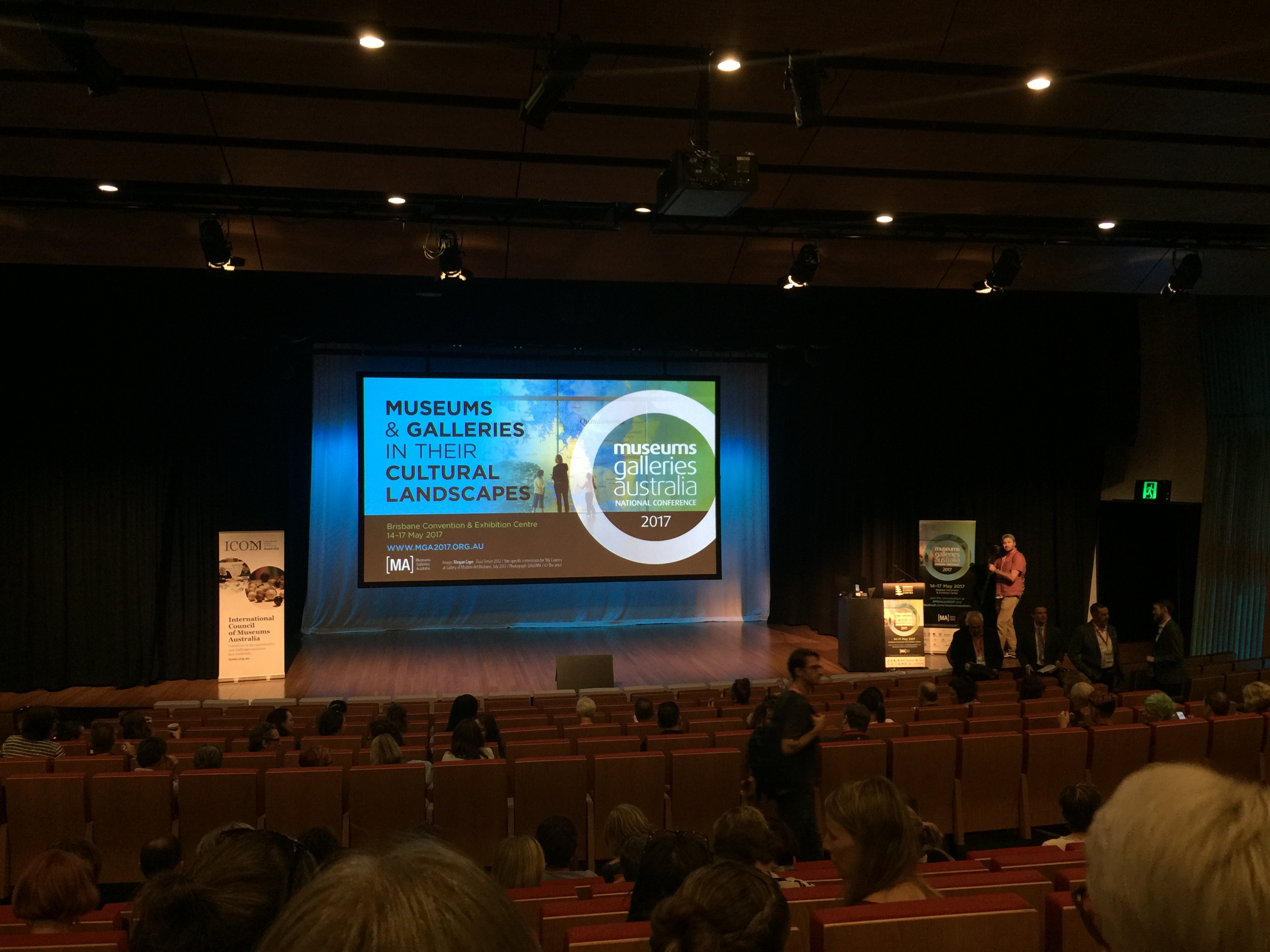
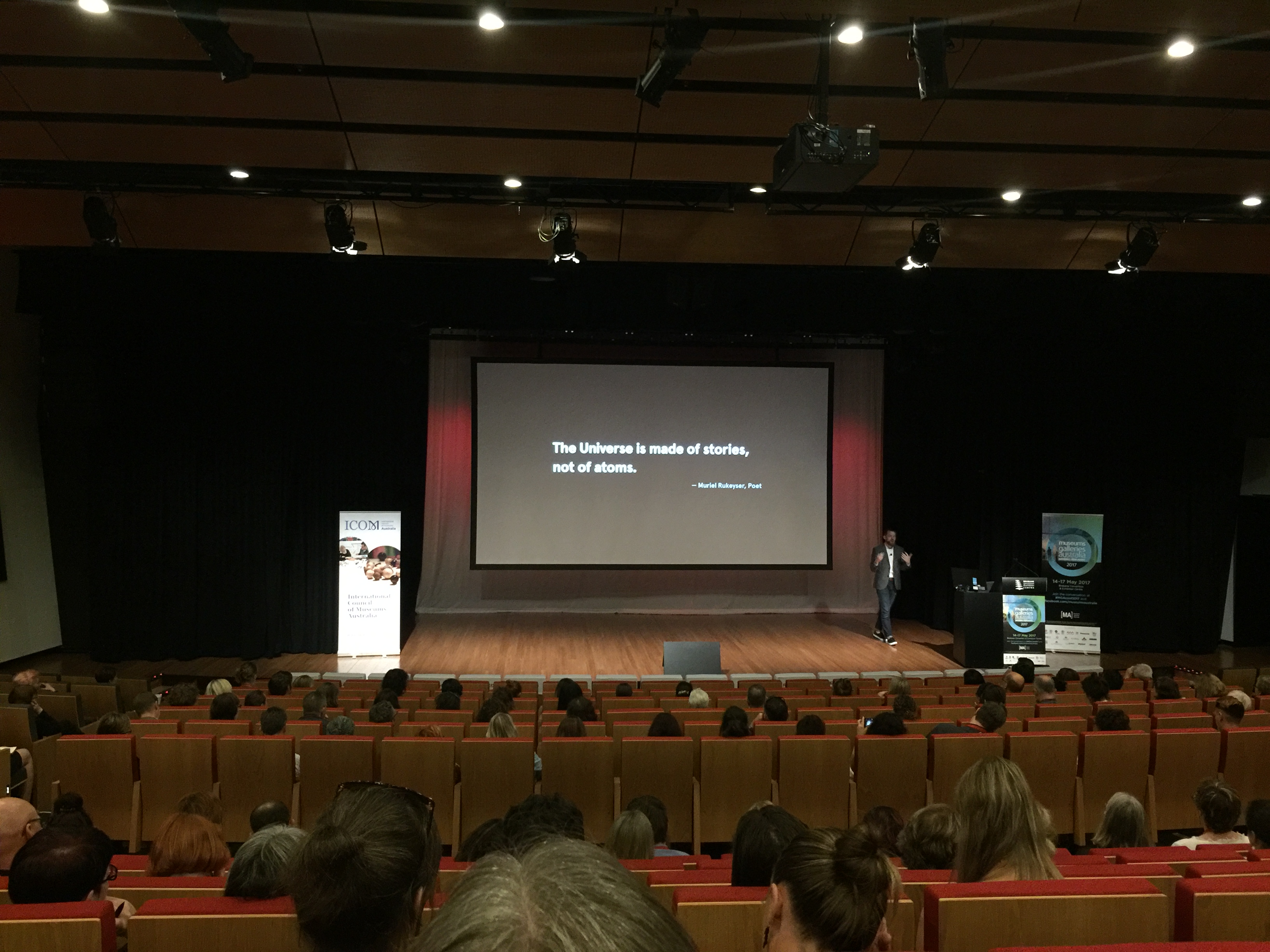
Plenary Speaker and Welcome
Post-workshop I registered for the conference and had a lovely lunch. One thing I absolutely adore about the GLAM (Galleries, Libraries, Archives, & Museums) sector is that almost everyone is genuinely lovely. Makes the dreaded networking a little easier.
The plenary speaker, John Ryan, was interesting. The aim of his talk was to see how the human touch can combine with digital technology. The premise of the entire talk was that his company in New York prides itself on using technology to enhance visitor experiences in the museum and not to detract from the actual museum itself. So you have things like digital pens that you carry around and collect objects then use it to draw on walls etc. I literally could not help but think “if that technology crashed, there goes the experience”.
One of his projects was designing the digital technology in the 9/11 Memorial Museum. As you enter into the space, you hear the voices of numerous individuals saying where they were when 9/11 happened. You can then watch interviews with certain personalities and record your own answers to the posed questions.
The talk was, in the moment, impressive and had the wow-factor of super shiny new things. Critically reflecting on it though, I can’t help but wonder that’s great for your larger institutions but how can a smaller museum implement such technology? The focus was on keeping the stories central, but, I inevitably think that introducing technology changes things. For better or worse, that’s up to personal opinion.
Why Not Science? Concurrent Session
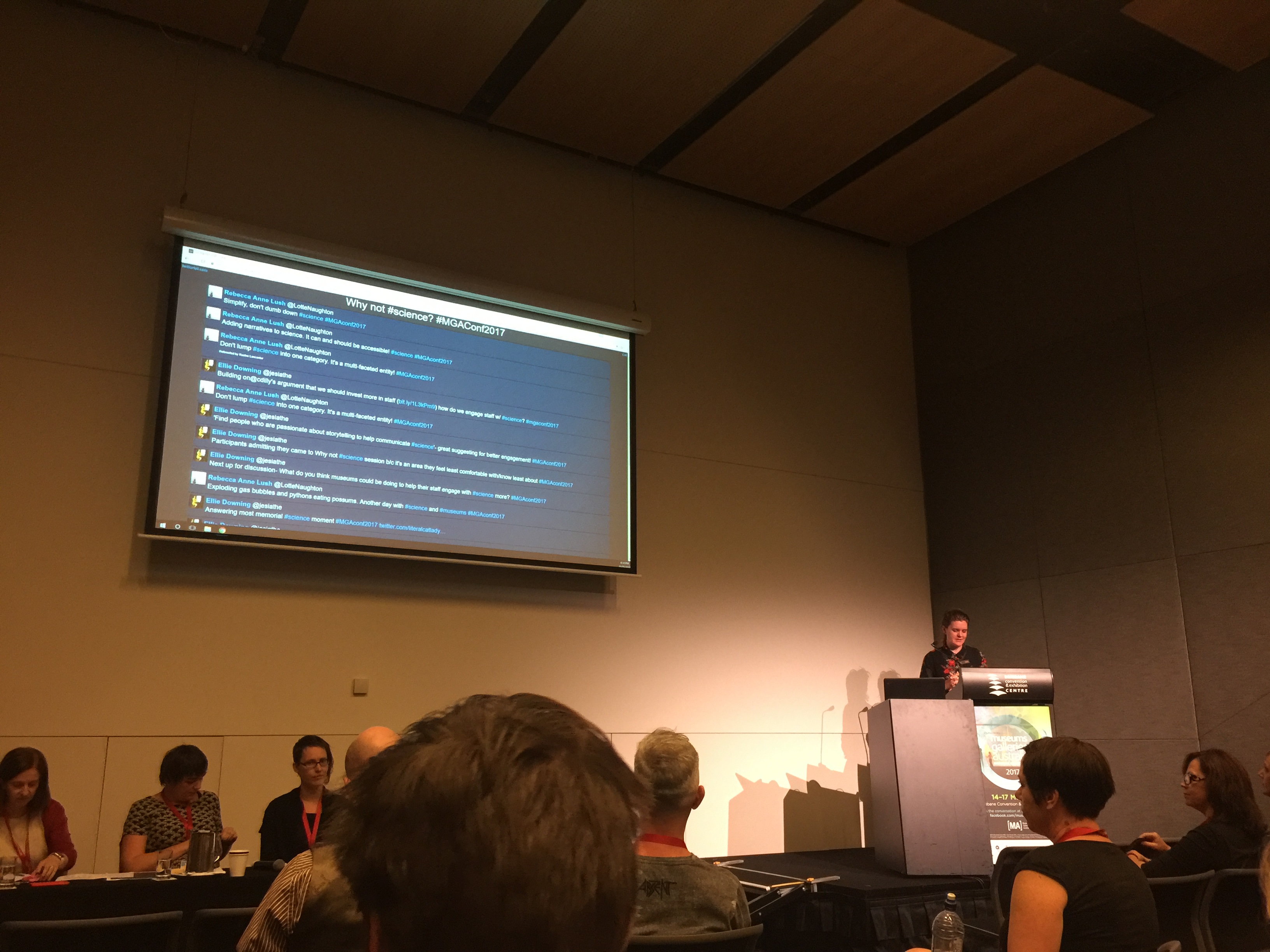
I was so excited for this session. An opportunity to speak about how to make science accessible is always welcomed. I have ended up working with a medical collection. Rather than being a hindrance, I learned from this workshop that it’s actually of great value.
We started by breaking into small groups and discussing our favourite moments of science. I talked about how amazing it is when members of the general public visit the Harry Daly Museum and leave with some great stories about early anaesthetics. I heard from some great professionals about their highlights including high school scientific experiments gone wrong and pythons eating possums. We then discussed how to make science accessible. At the end, we came together and had a larger discussion about the role museums can play in facilitating discussions. I left the workshop feeling more confident about my abilities in communicating science and stories of medical history.
Overall, it was a wonderful day and I cannot wait to see what’s in store tomorrow!