• Melbourne: National Gallery of Victoria (NGV)

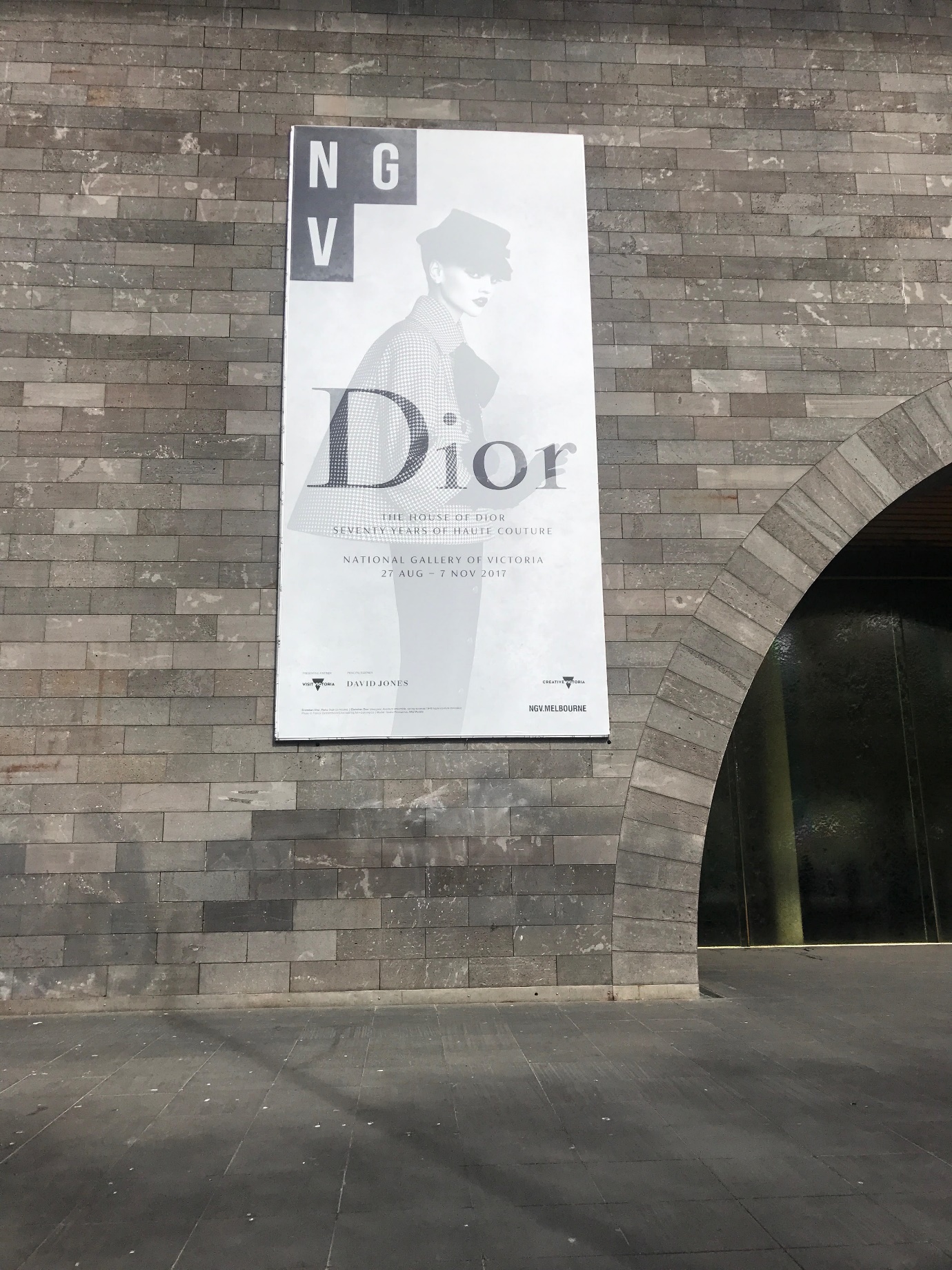
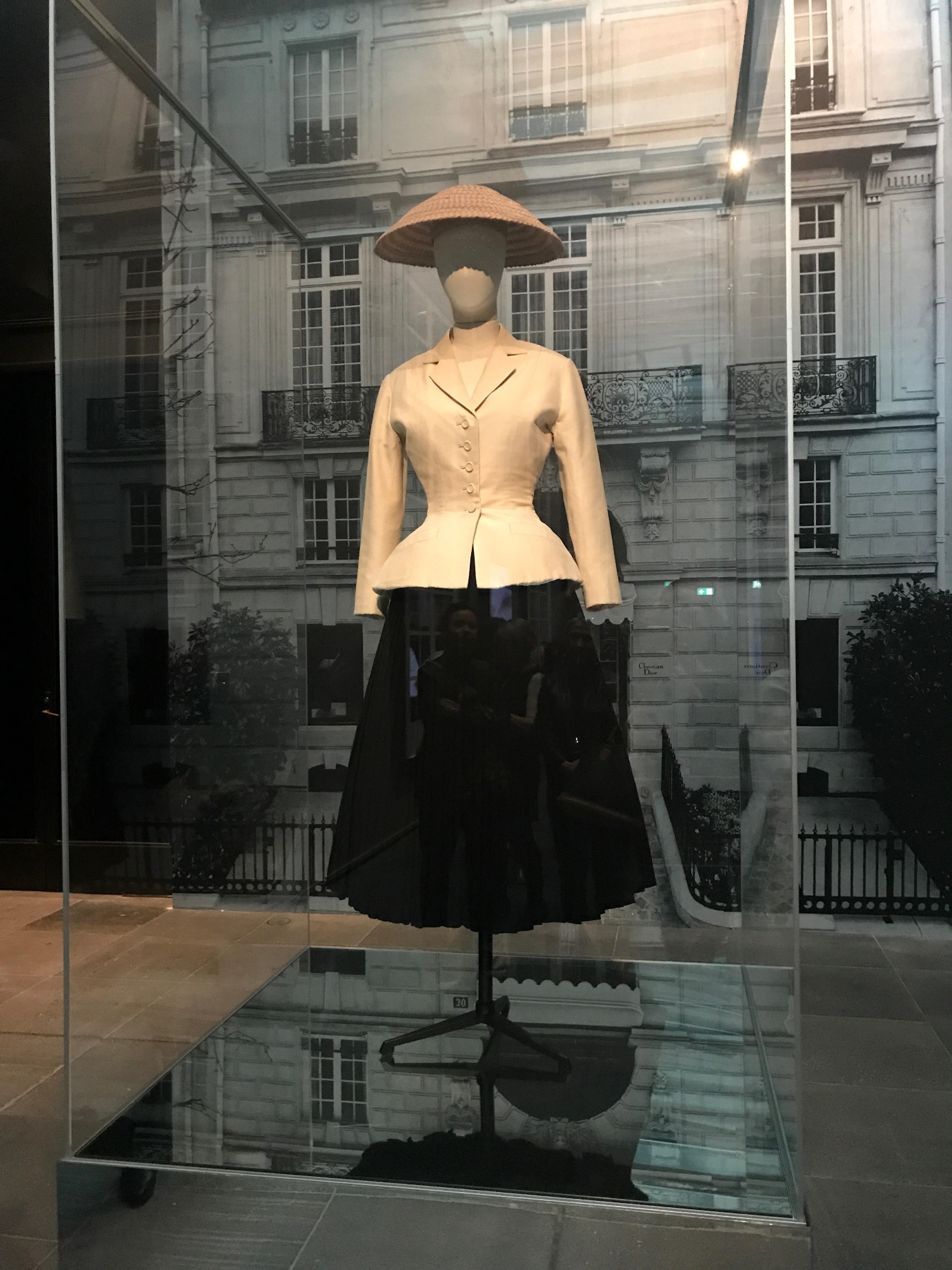
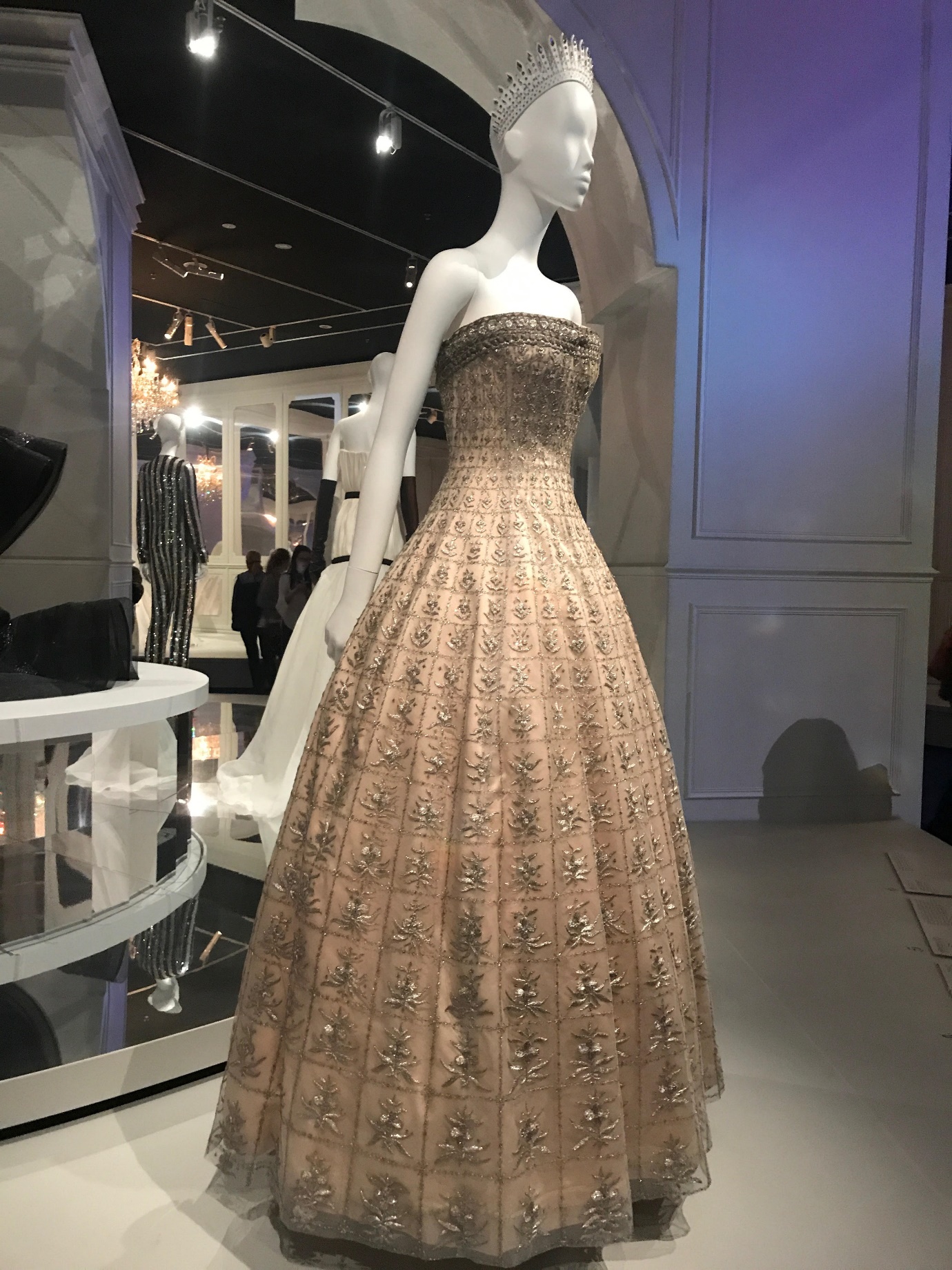
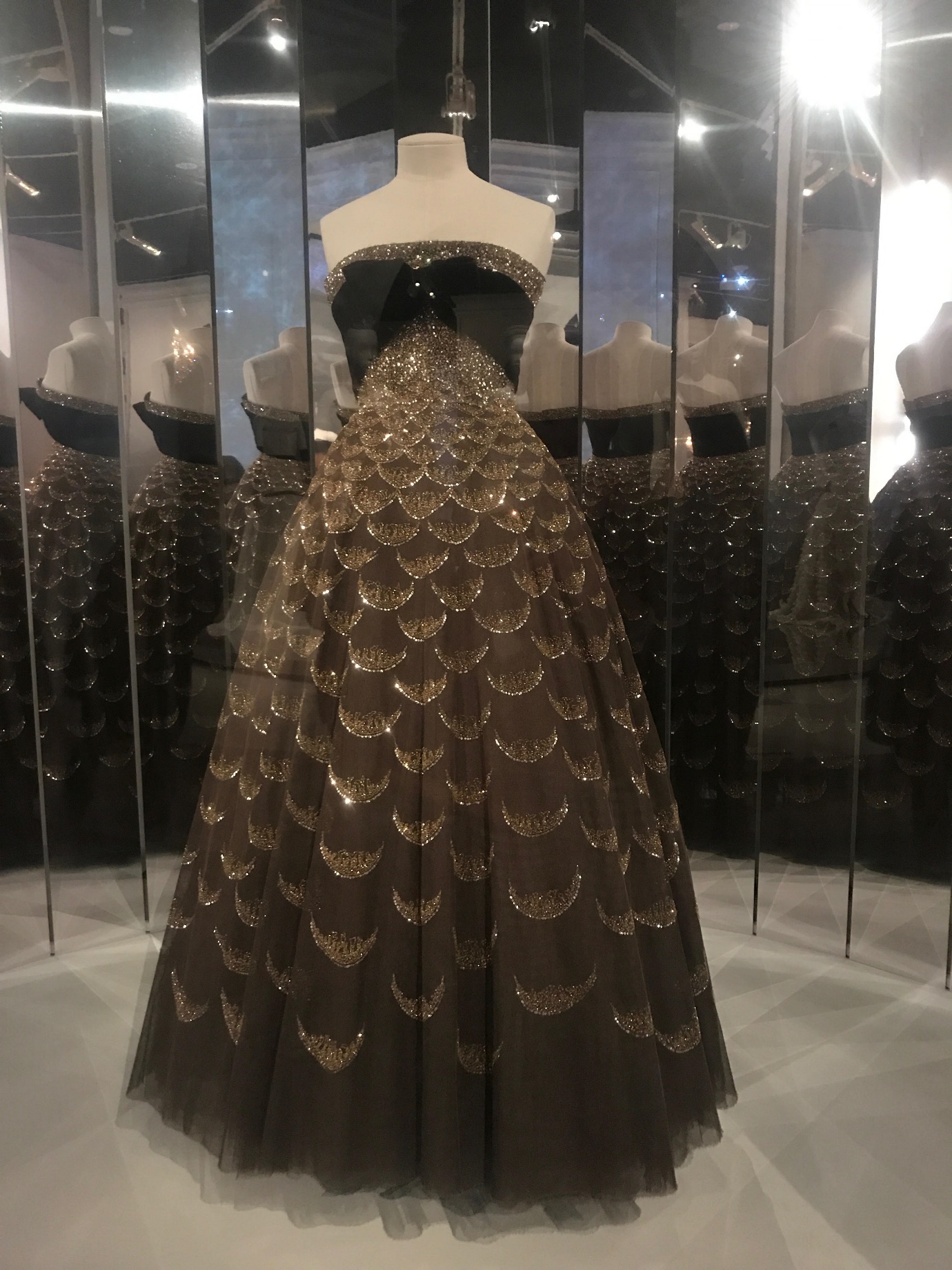
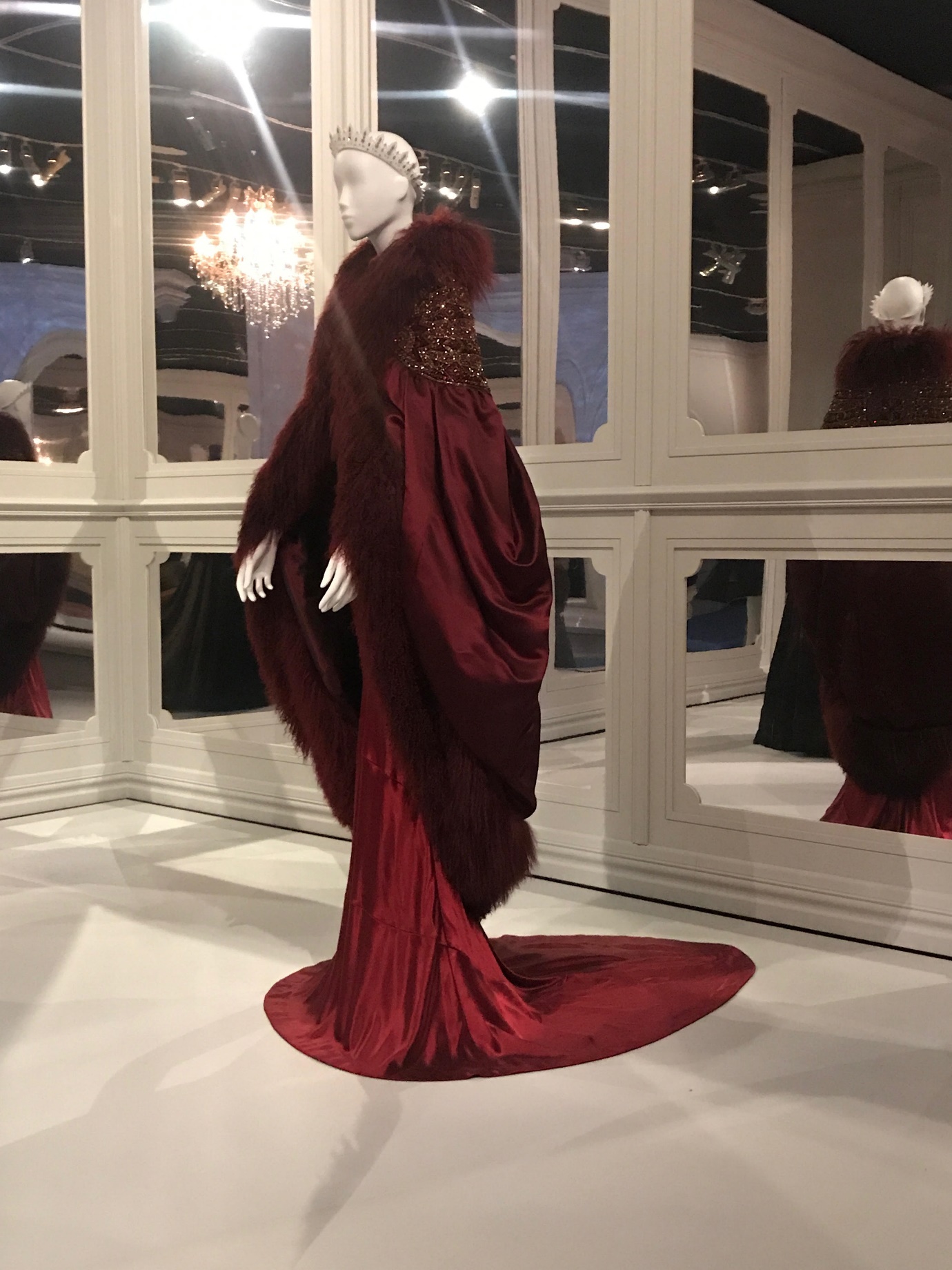
    Hello! I’m back with another guest post for Curate Your Own Adventure. This time I’m discussing The House of Dior: Seventy Years of Haute Couture exhibition, currently on show at the National Gallery of Victoria (NGV) in Melbourne. This exhibition commemorates the seventieth anniversary of the Dior fashion house, one of the most iconic couture fashion houses in the world. I’m going to try and keep this brief, as most of what I have to say simply constitutes raving about how good the exhibition is and encouraging you to visit it yourself.

    I made a special trip to Melbourne from Sydney to see the exhibition, which had been on my list since it was first announced earlier in the year. I had to roll my eyes at yet ANOTHER exhibition opening exclusively in Melbourne. There seems to be a real trend for ‘exhibition exclusivity’ south of the border at the moment. My visit was probably affected to some extent by the weekend we had selected – beginning of school holidays and football finals. It was a very busy weekend in the city. I had been warned to expect the Gallery to be very busy, and had already pre-purchased our exhibition tickets online a week in advance, which I thought was the done thing. Note the tickets are not timed but are valid for a specific date.
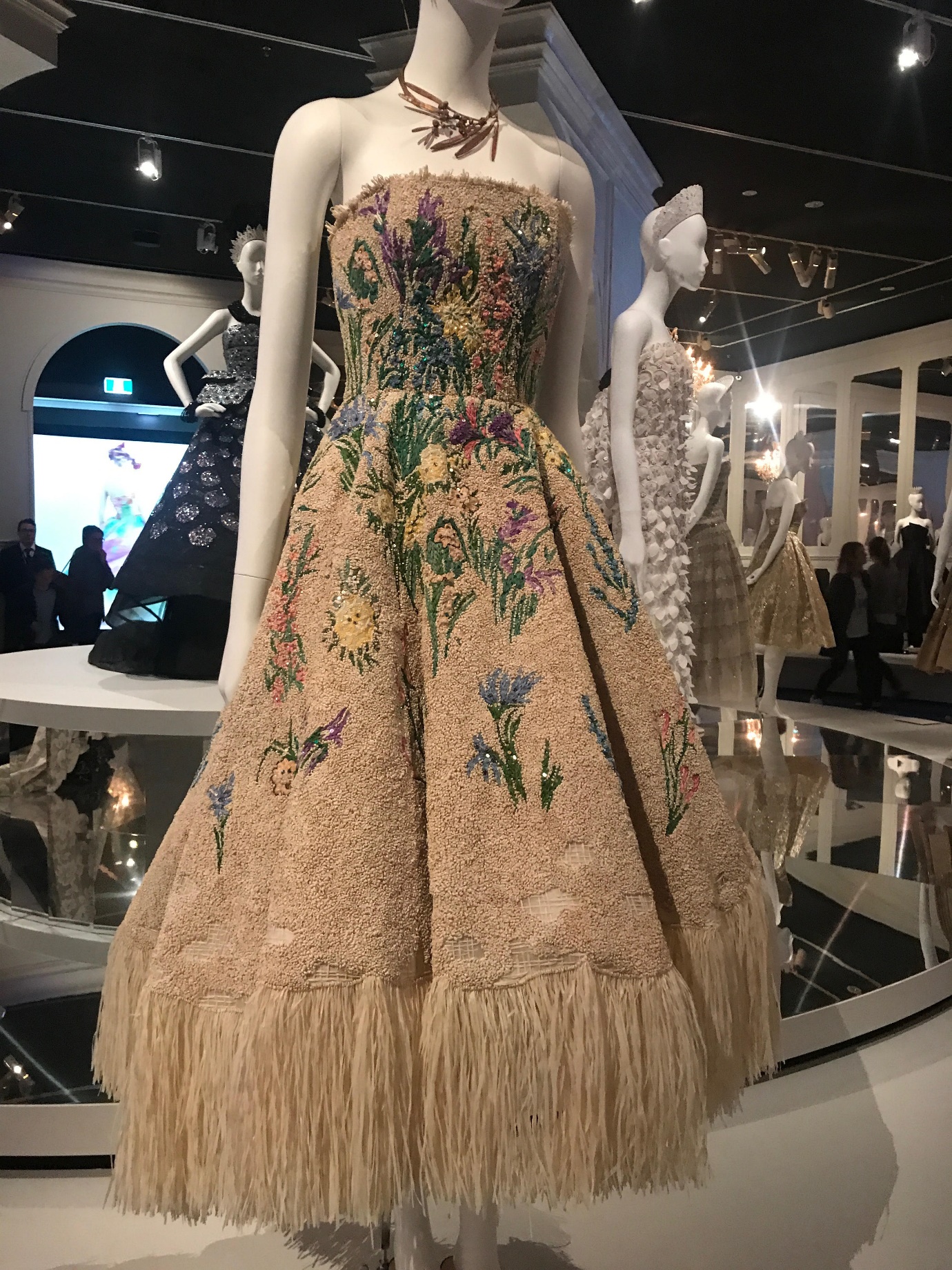
    image1-17
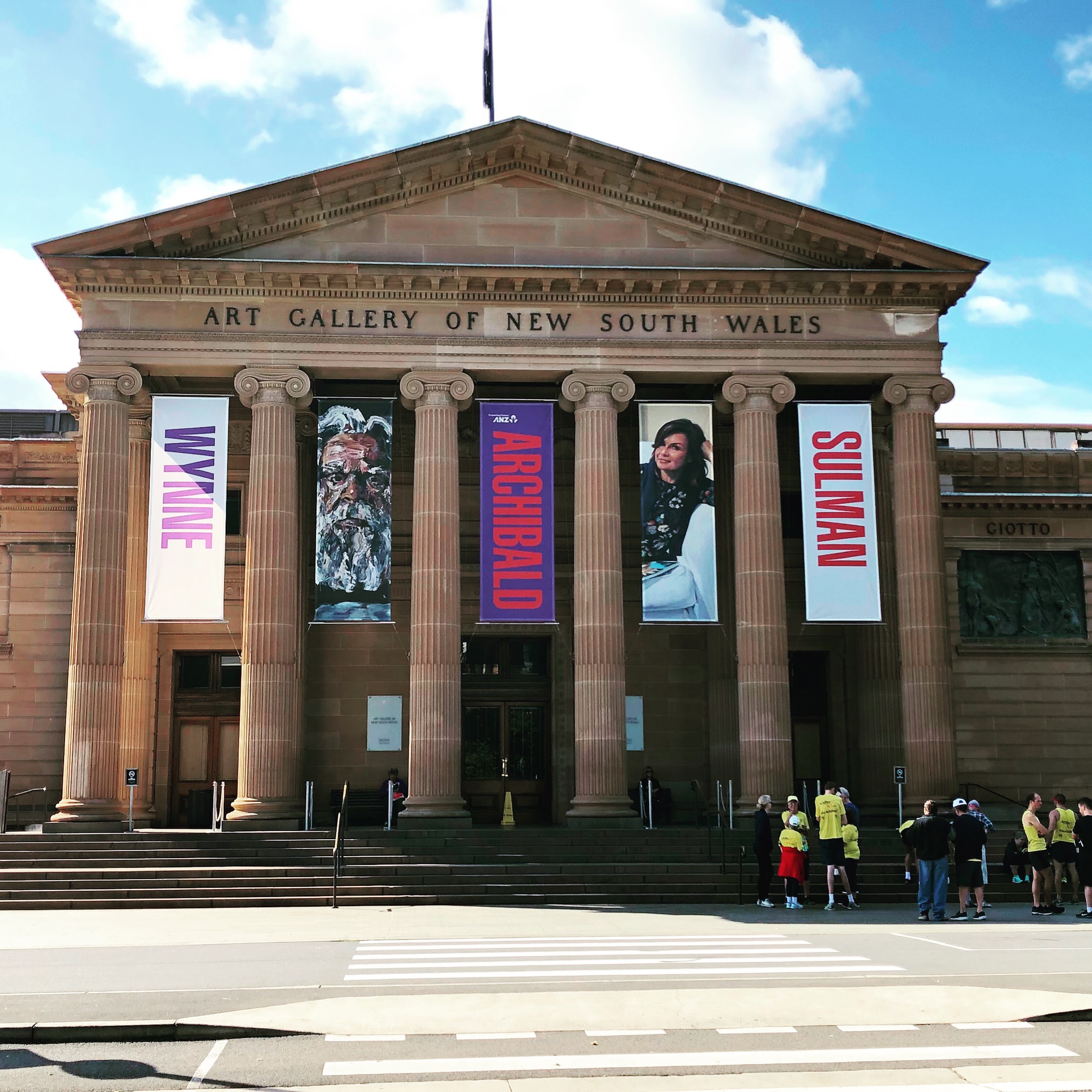
    Museum Entrance

    Apparently, no one else bought their tickets online because the queue to buy tickets at the gallery was obscenely long. We arrived at the Gallery shortly after opening time at about 10:15am and there were at least 100 people queueing to buy tickets. The queue had at least doubled by the time we exited. We happily skipped this queue and entered the exhibition, where we quickly discovered another queue just to get into the first room. I have been to more than my fair share of exhibitions in my time in Australia and overseas, and never have I encountered one as busy as this. Again, this might have had something to do with the date we visited, however it was still insanely busy. I was glad to see so many people out enjoying some culture. Because of how busy it was, my experience of the exhibition was different to normal as I was unable to read the majority of the labels and description panels due to the sheer number of people in the rooms. Again, it remains a mystery to me why tickets were not timed. So, instead of gaining a lot of background knowledge on the topic being displayed, my visit focused on enjoying the clothes and other objects on display as pieces of art. This would usually annoy me, but given the subject matter and how beautiful the objects were, I don’t feel it diminished my experience.

    I won’t go through each element of the exhibition, all of the objects or the display, simply because it was too vast for me to meaningfully discuss, and it was too well done and thoughtfully curated for me to be able to do it justice. The incredible thought and detail that has gone into this exhibition and the display is truly some of the best I have seen and something to aspire to. It was obvious that no expense had been spared, from the sheer scale to the commissioning of new pieces and special millinery for the exhibition. The curation really did the subject and objects justice.

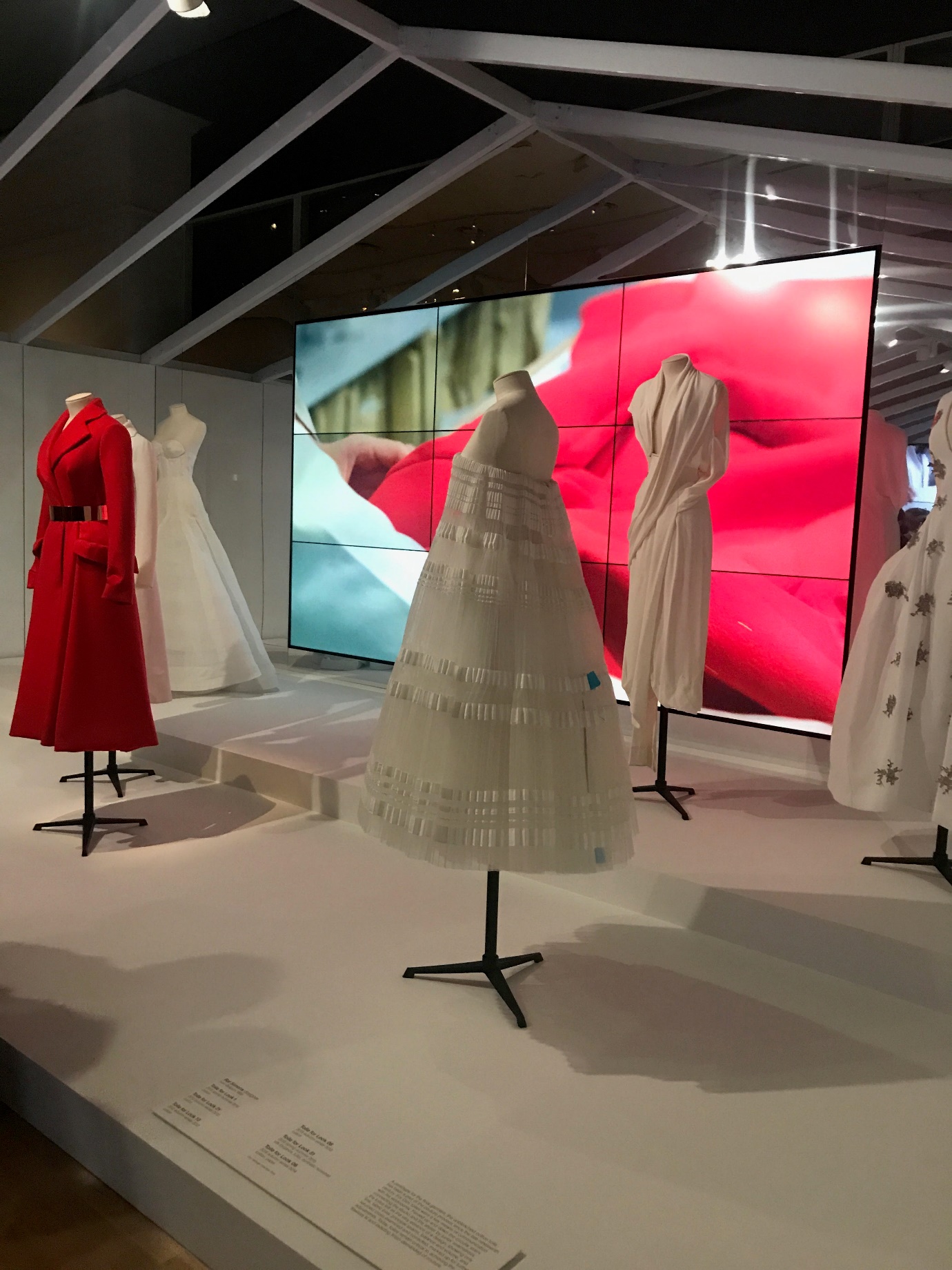
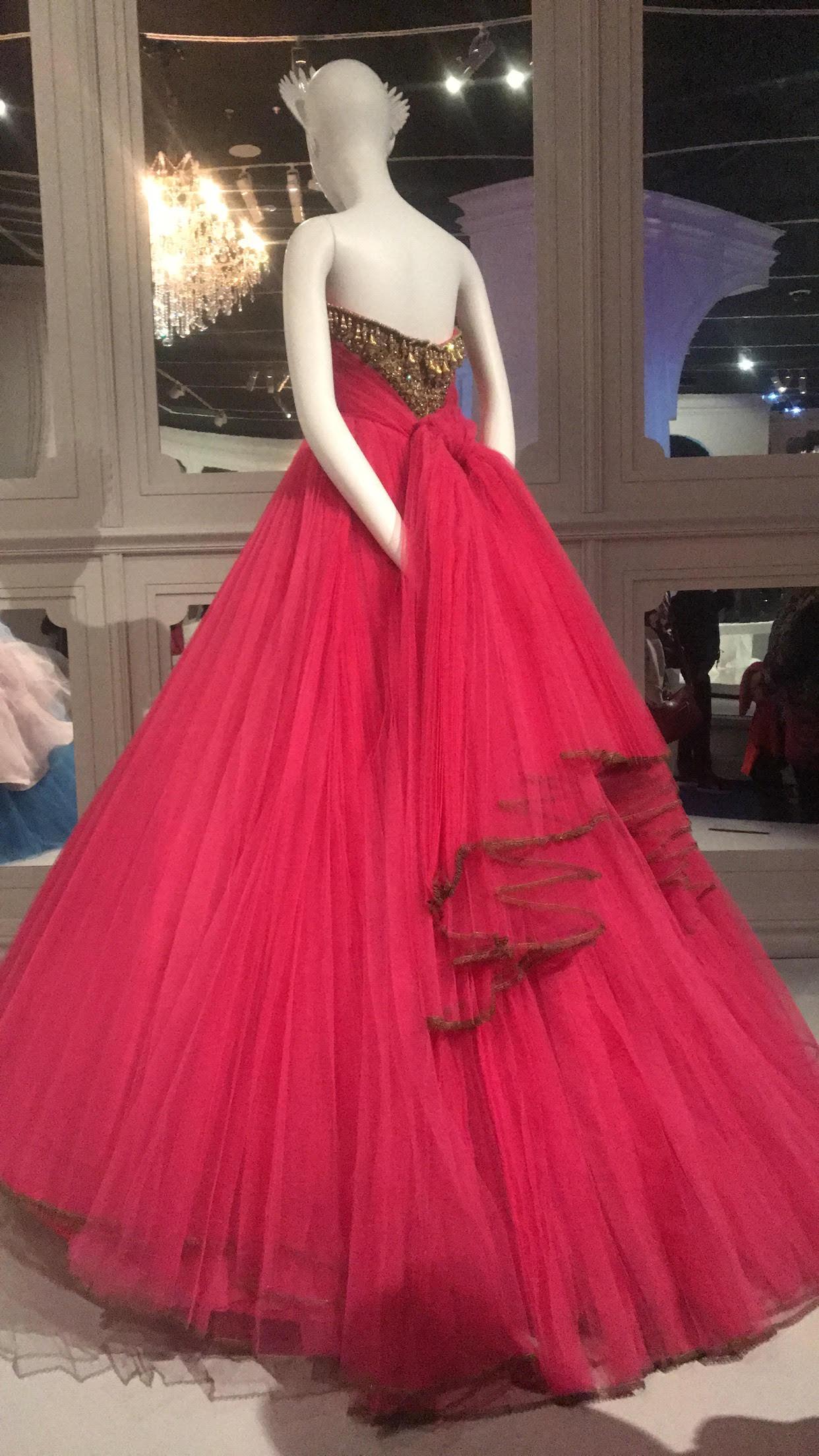
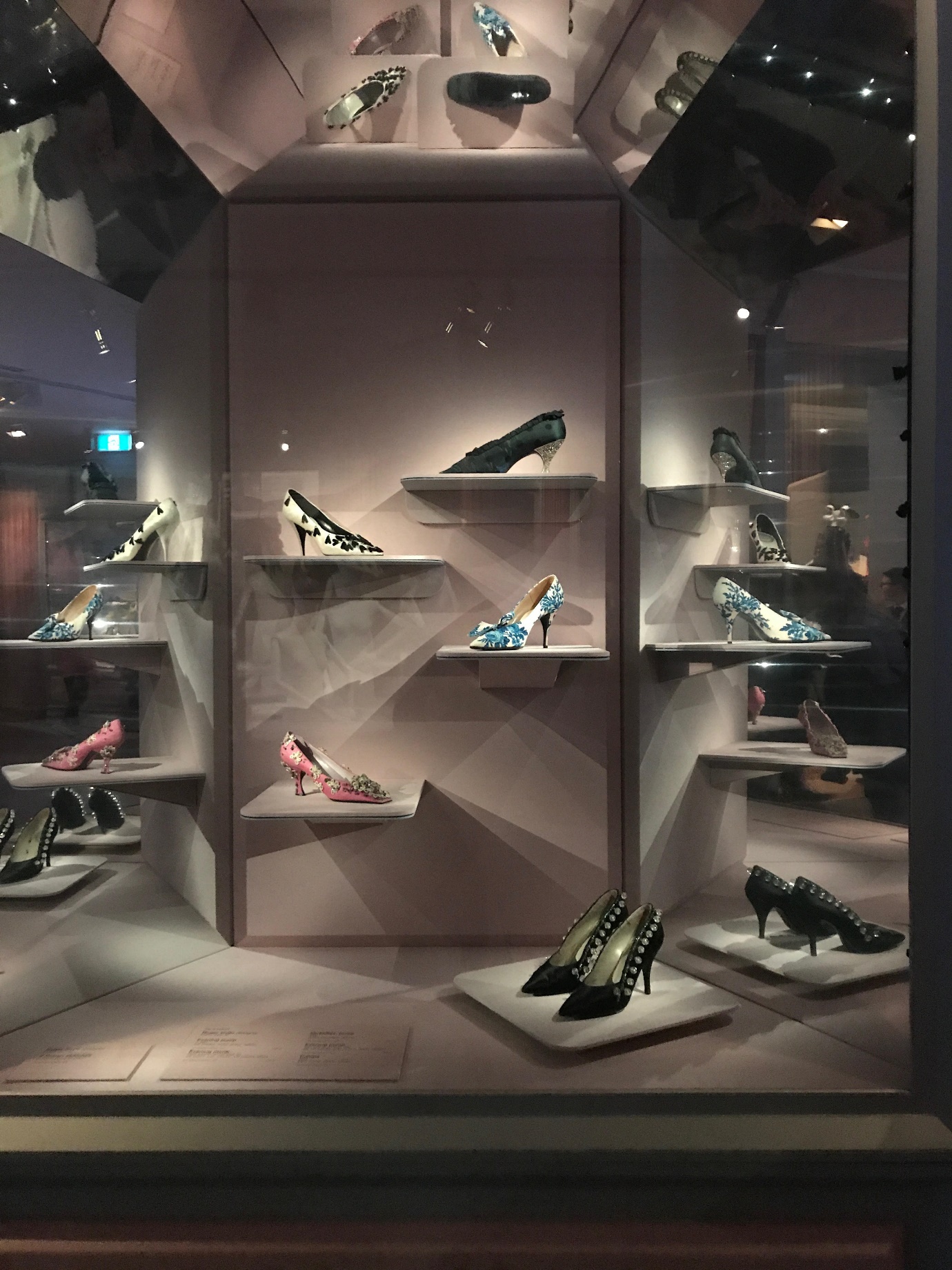
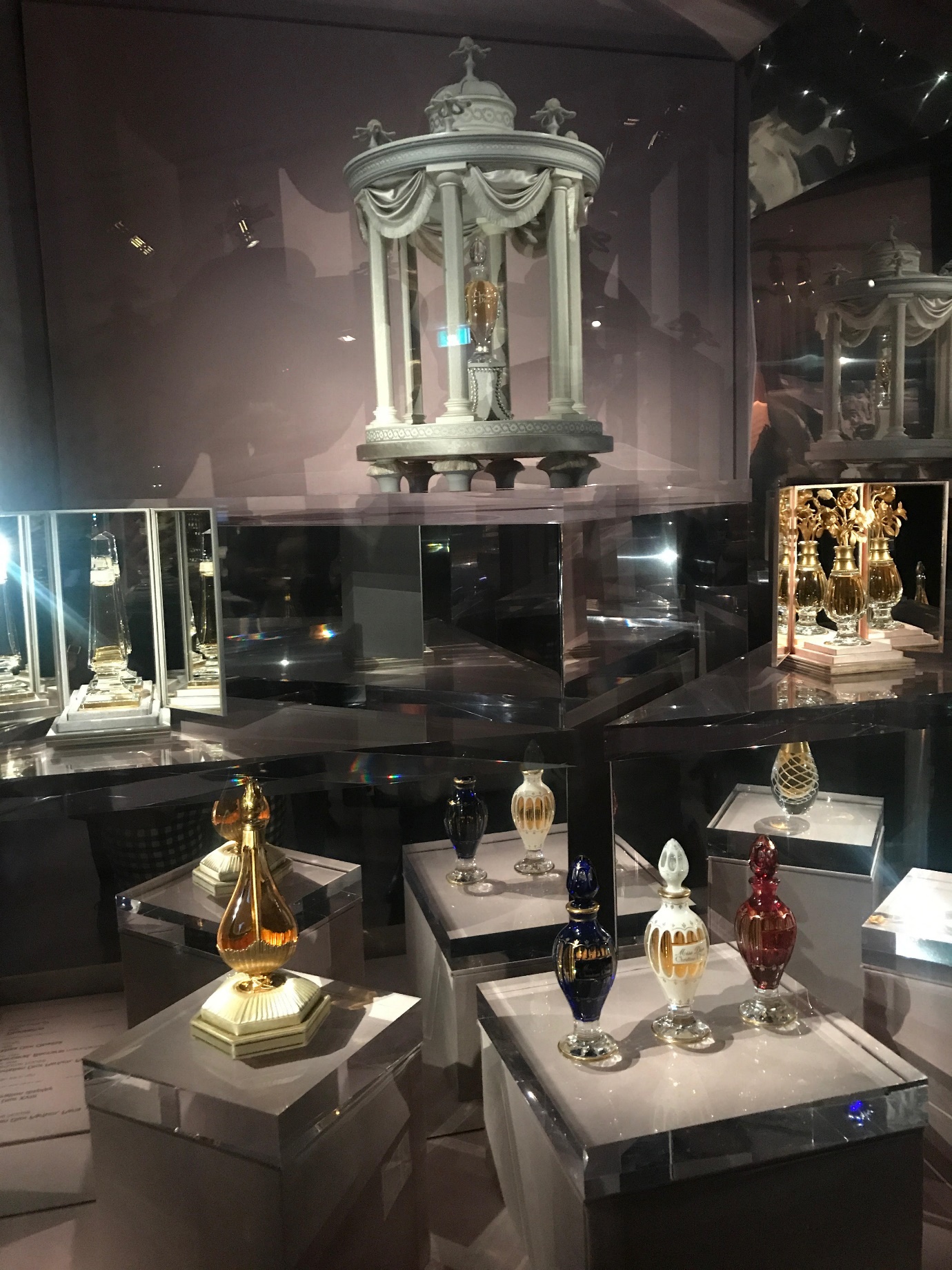
    The exhibition covers all aspects of Dior’s operations and history, meaning that there are pieces from each creative director on show, which really made the creative evolution of the brand clear, as well as clothes, shoes, hats and perfume. One of my favourite rooms was that which displayed dozens of pairs of shoes and hats as if they were in shop windows, along with some of the iconic Dior perfumes in their original vintage packaging. Another favourite room was the final room of the exhibition. This room was circular, and displayed outfits on mannequins all around the circumference of the room, along with a number of outfits displayed on a revolving centre platform. This display meant that you could stand in one place and have the outfits pass by in front of you. This room and display reminded me of how I imagine a 1950’s department store (think the modelling scenes in How to Marry a Millionaire starring Marilyn Monroe). This room was probably my favourite as it displayed some of the most extravagant and classic Haute Couture pieces – mostly ball gowns and incredibly spectacular outfits that would only ever be appropriate for the red carpet or a white tie event.

    Another element of the exhibition definitely worth mentioning was a small section discussing the first Dior collection to visit Australia, which occurred in 1948. This landmark visit had a lasting effect on both the Australian fashion industry and the house of Dior. This section had original programs and images from the fashion parades that took place which was really interesting for anyone interested in vintage fashion. It was just a shame that this section was quite small and in a hallway between two larger rooms, but it was nice to see this history and connection acknowledged.

    I have included some pictures I took at the exhibition, but given how crowded it was it was quite difficult to take any at all, let alone attempt to capture the real beauty of the clothes and the displays. Seriously, these pictures and my description does not nearly do this exhibition justice. I can only implore you to visit it yourself if you have the opportunity. The House of Dior: Seventy Years of Haute Couture is currently showing at the NGV International (if you are unfamiliar with the NGV, it is spread across two separate locations. Dior is showing at St Kilda Road, not Federation Square) until November 7th. There are also sister exhibitions currently on display in Paris and New York if you find yourself there instead. Enjoy!

    image2-19
    Dior Dress
    image3-21
    Dior Dress
    image4-23
    Dior Dress
    image5-25
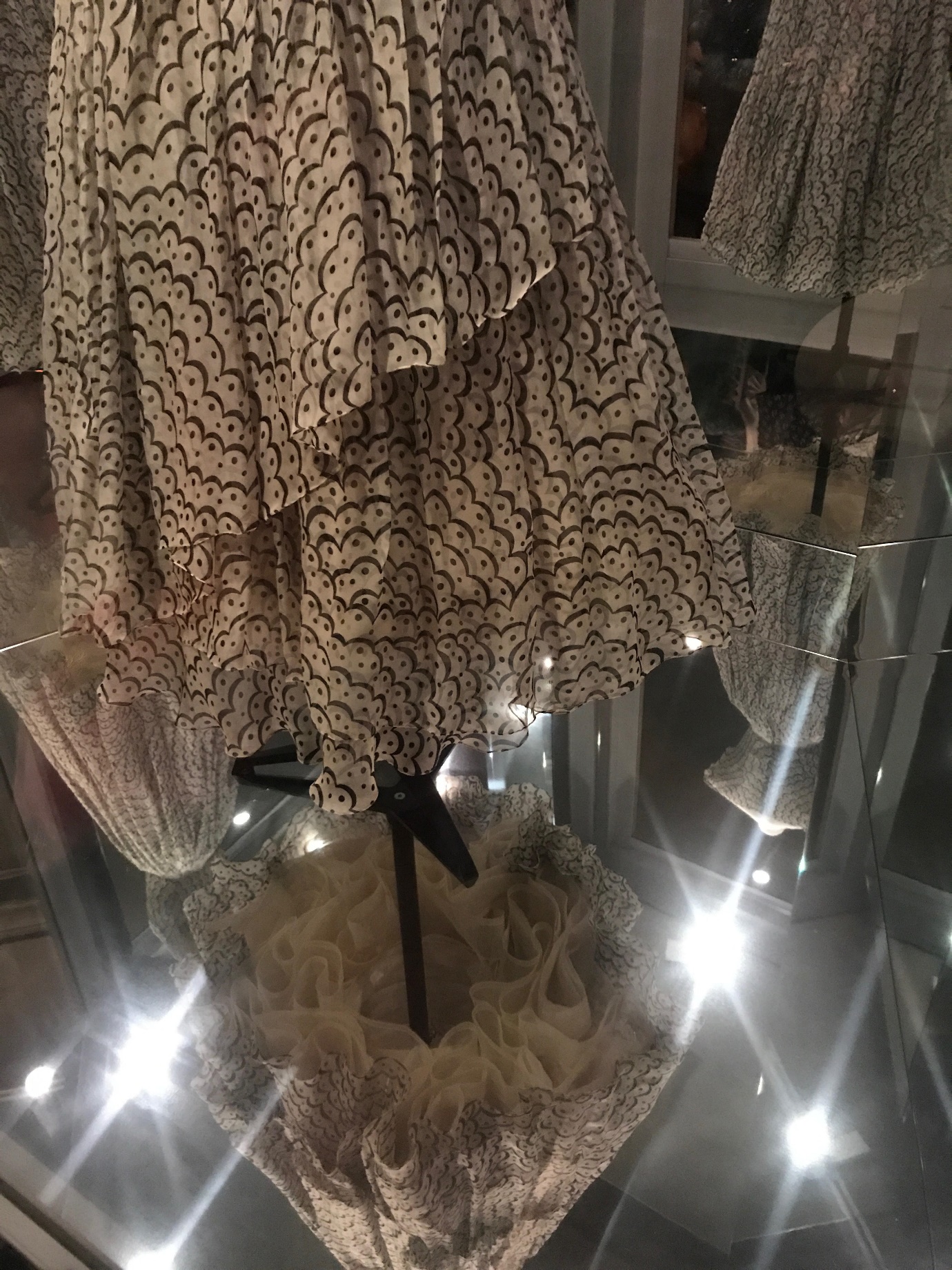
    Clever display – a mirror underneath the dress allowed visitors to see the underskirt of the dress
    image6-27
    Dior Dress
    image7-29
    Dior Dress
    image8-31
    Dior Dress
    image10-35
    Dior Shoes
    image9-33
    Vintage Perfumes
    image11-37
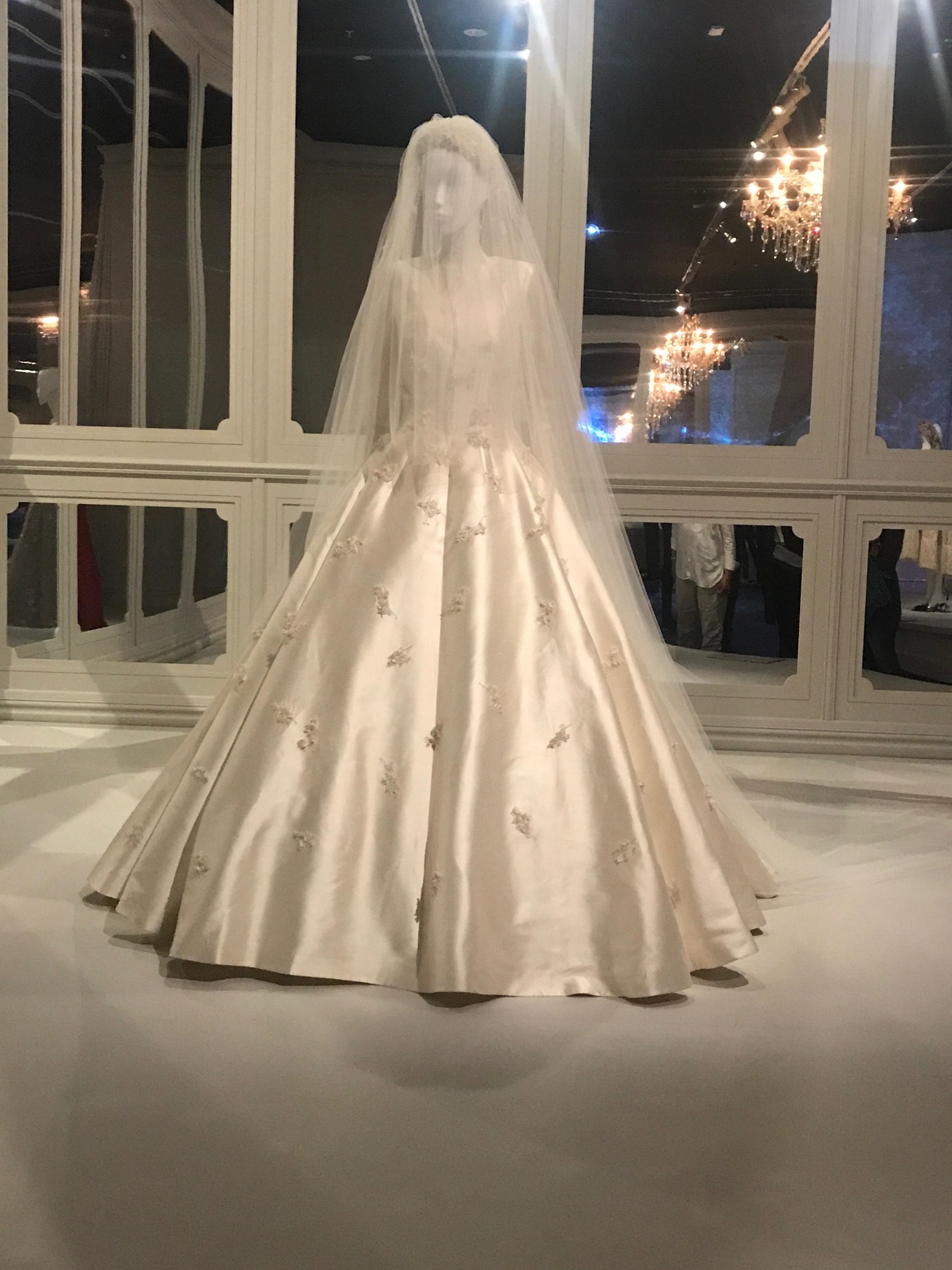
    Miranda Kerr’s custom 2017 Wedding Dress
    image12-39
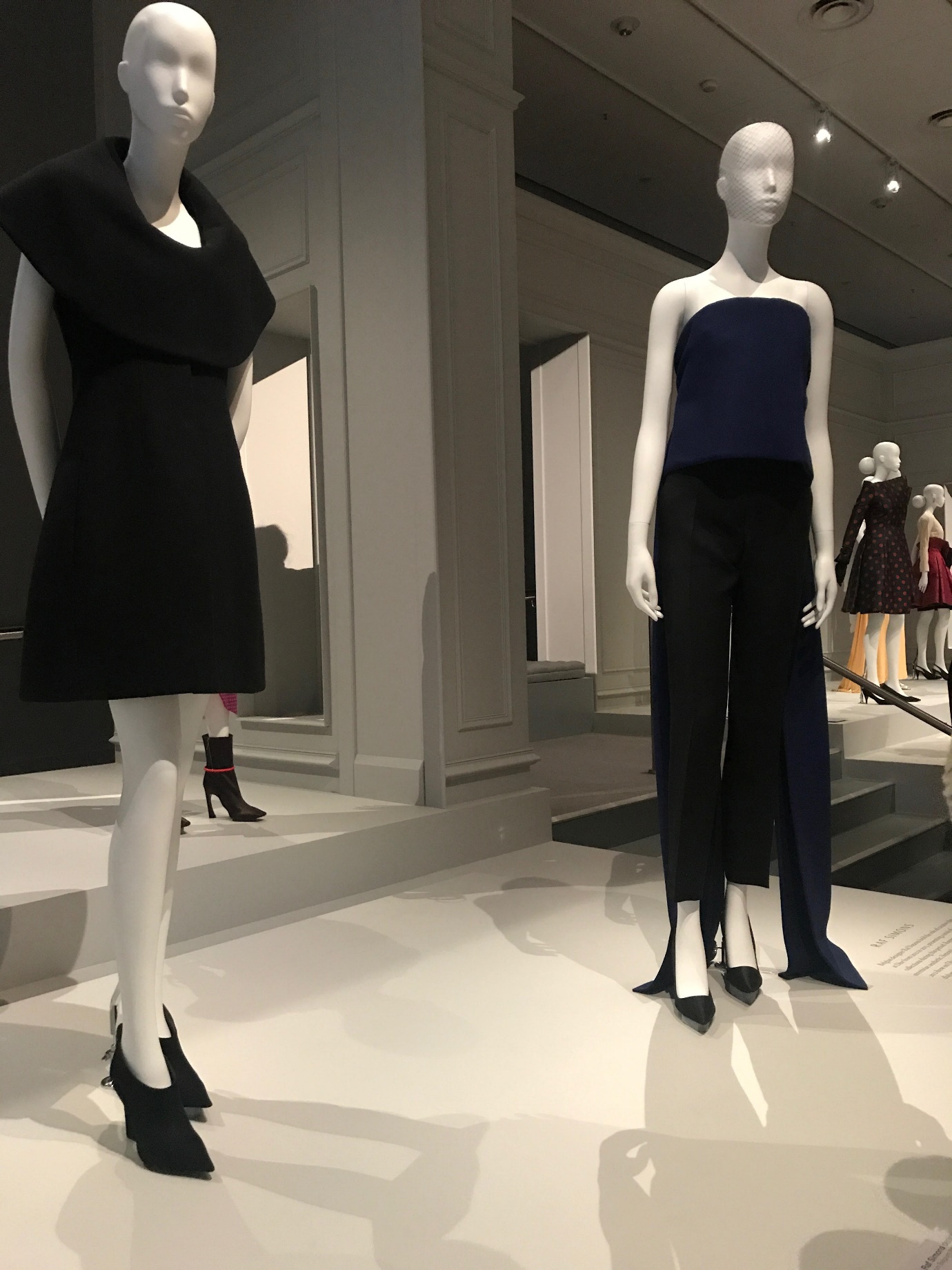
    Modern Dior
    image13-41
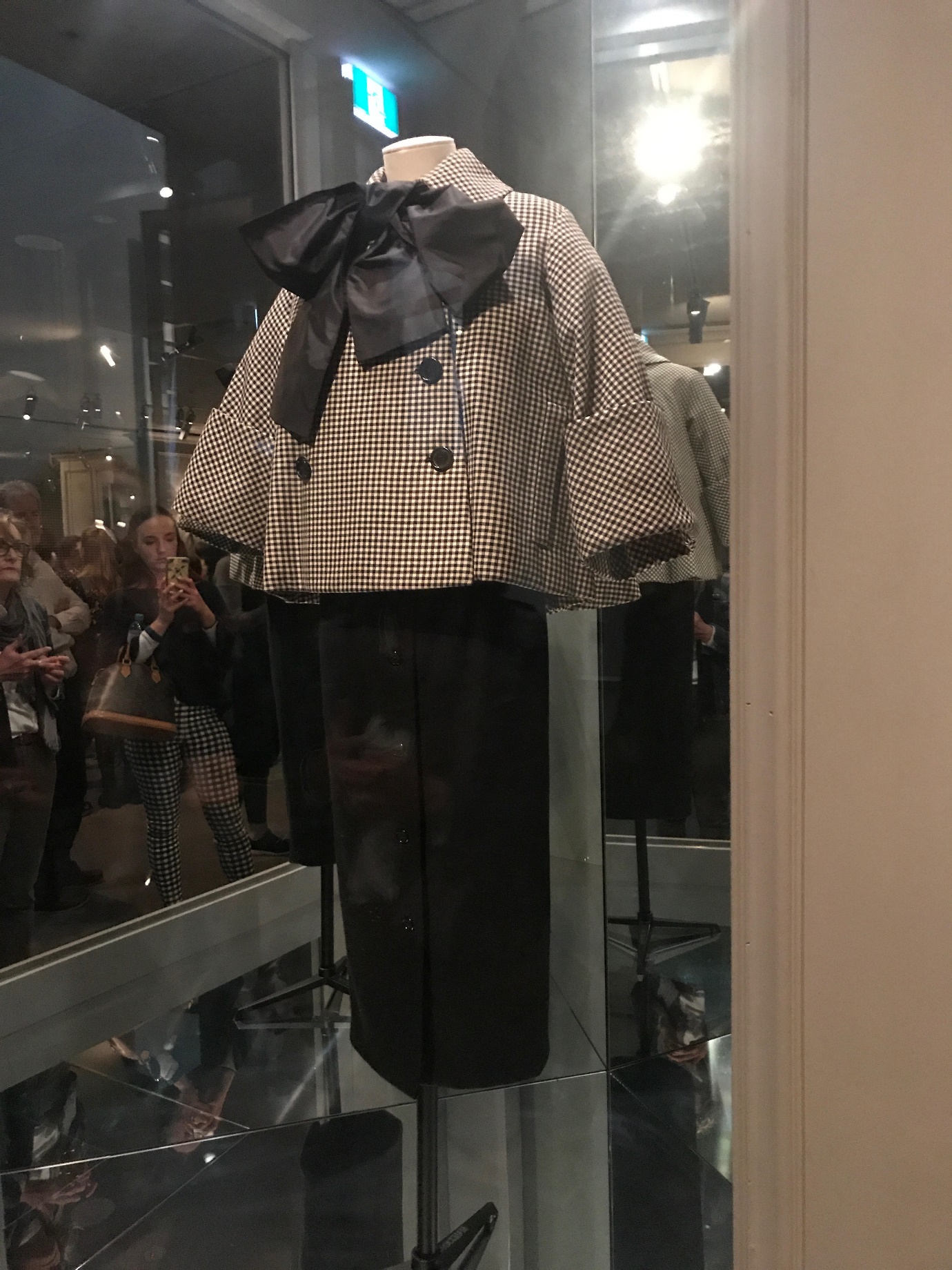
    Dior Coat
    image14-43
    Dior Dress

    This post was written by Imogen Kennard-King: Imogenkennard.king@gmail.com.

    A huge thank you to Imogen for again sharing her wonderful thoughts on exhibitions!

  • GLAM Blog Club: How I Ended Up Here

    It has been way too long since I’ve written a post for GLAM Blog Club. This month, the theme is How I Ended Up Here. Not only does this allow for some great feelings of nostalgia, but also, time to reflect on my journey. It’s so easy to get caught up in the present or dread/fear/anticipate the future. How often do you take the time to sit down and really just remember where you started and how far you’ve come? I’m hoping that by writing this blog post, I can take the time to feel proud of what I’ve accomplished. I also hope that if you’re reading this post, you can also take some time out of your day to do the same.

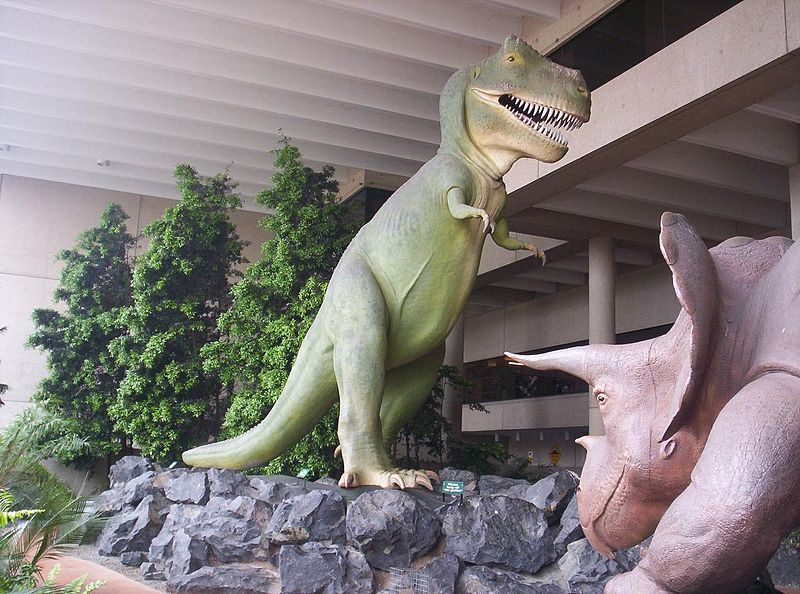
    Ok, so my story begins all the way back in primary school. Visiting museums was, for me, the best excursion ever. Seeing all the cool dinosaur bones and dioramas at the Queensland Museum is something that I can still so vividly remember. Especially seeing the two large dinosaurs that were and still are outside the museum in an outdoors area. My other hazy memories of museums and art galleries include visiting the Queensland Art Gallery and completing just about every school holiday activity I could find. I grew up really valuing museums and this is something that would continue.

    800px-Try-and-Tri
    By Figaro at en.wikipedia (Own work Transferred from en.wikipedia) [Public domain], via Wikimedia Commons.

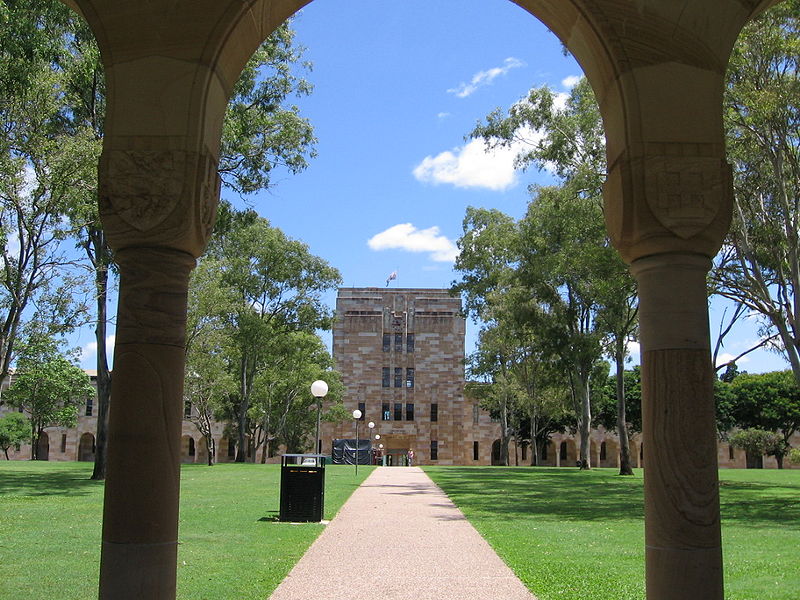
    I’m going to skip ahead to my first year of University. History was my absolute favourite subject in school so it made sense to enrol in a Bachelor of Arts/Social Science at the University of Queensland majoring in history. I eventually dropped the latter in order to focus more on my Bachelor of Arts. After trying almost every elective, I settled on a German language/culture minor. What proved to be an extremely good choice as it allowed me to spend some time/fall in love with Berlin. While I enjoyed studying history, I was more interested in how history is presented and how you can use objects to tell stories.

    800px-University_of_Queensland
    Sedination at the English language Wikipedia [GFDL (http://www.gnu.org/copyleft/fdl.html) or CC-BY-SA-3.0 (http://creativecommons.org/licenses/by-sa/3.0/)%5D, via Wikimedia Commons

    One day, during my first exam period, I was procrastinating and googled every museum in Brisbane just to see if they accepted volunteers. I found the MacArthur World War II Museum in the City and thought it would be a cool place to start gaining some museum experience. For about two years, this was my only volunteering gig. I would go in every Saturday and help with welcoming visitors, running tours, etc.

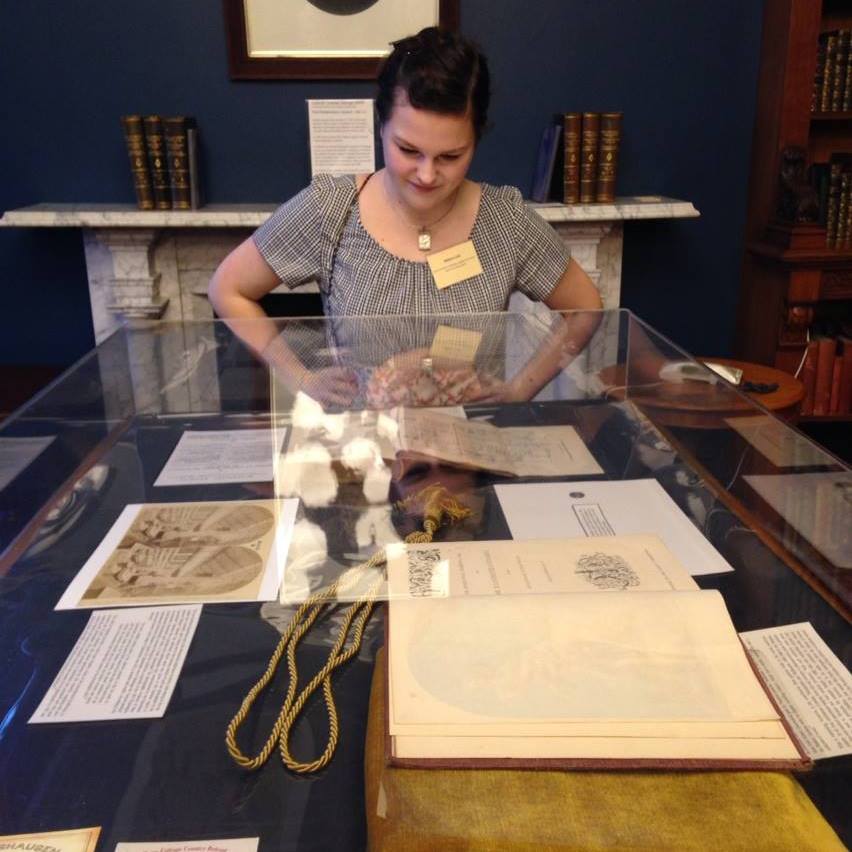
    It encouraged me to apply for a 2013 history scholarship at the University of Queensland which involved curating a display case in the Queensland Parliament Library. I loved writing labels for an exhibition about international exhibitions. It was meta, it allowed me to reach out to the community, and, most importantly, it meant I could learn a lot about Queensland’s history from rare books and manuscripts.

    1654014_10153796793515261_362746295_n
    Queensland Parliament Library Display Case

    After this scholarship, I started my honours year writing on memorialisation of the 1692 Salem Witchcraft Trials. I wanted another volunteering opportunity so I could balance my time and feel like I was actually using my skills. I was absolutely thrilled when the Queensland Police Museum gave me the wonderful opportunity to work with and publish parts of their textile collection. It sparked a long-lasting love of historical textiles. At this stage, I was pretty confident that I wanted to study Museum and Heritage Studies. The University of Queensland had a course, but I wanted to try something new. I sent my application to the University of Sydney and was accepted to start studying mid-2015. In the six months leading up to me moving inter-state, I worked and volunteered almost everyday to build my experience and learn everything I could possibly want to know.
    1609937_10154762080445261_4677643580652674916_n
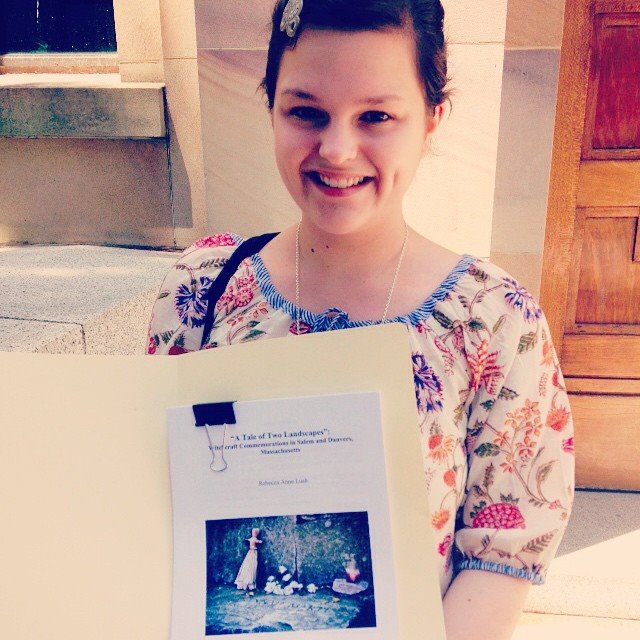
    My Honours Thesis

    I continued volunteering at the Police Museum. I also started volunteering at the Commissariat Store Museum (a convict museum in Brisbane) and the Abbey Museum of Art & Archaeology in Caboolture. It was a very tiring six months but I am so glad I took the time to really get a grip on what I was going to study.

    Then I moved to Sydney. One of the best decisions I have ever made. After a month of living in Sydney I got my first paid job in the museum/heritage sector as an education tour guide on Cockatoo Island. I still remember how excited I was when I got the job as this was really my first paid job doing what I loved. After my first semester, I boarded a plane to Melbourne to intern at the Geoffrey Kaye Museum of Anaesthetic History. Here, I developed a love of medical objects/history and learnt so much from my supervisor, Monica Cronin. It was during this internship that I realised this kind of work was exactly what I wanted to do and there was no going back.

    19380022_1718546178159576_2491146469801721856_n
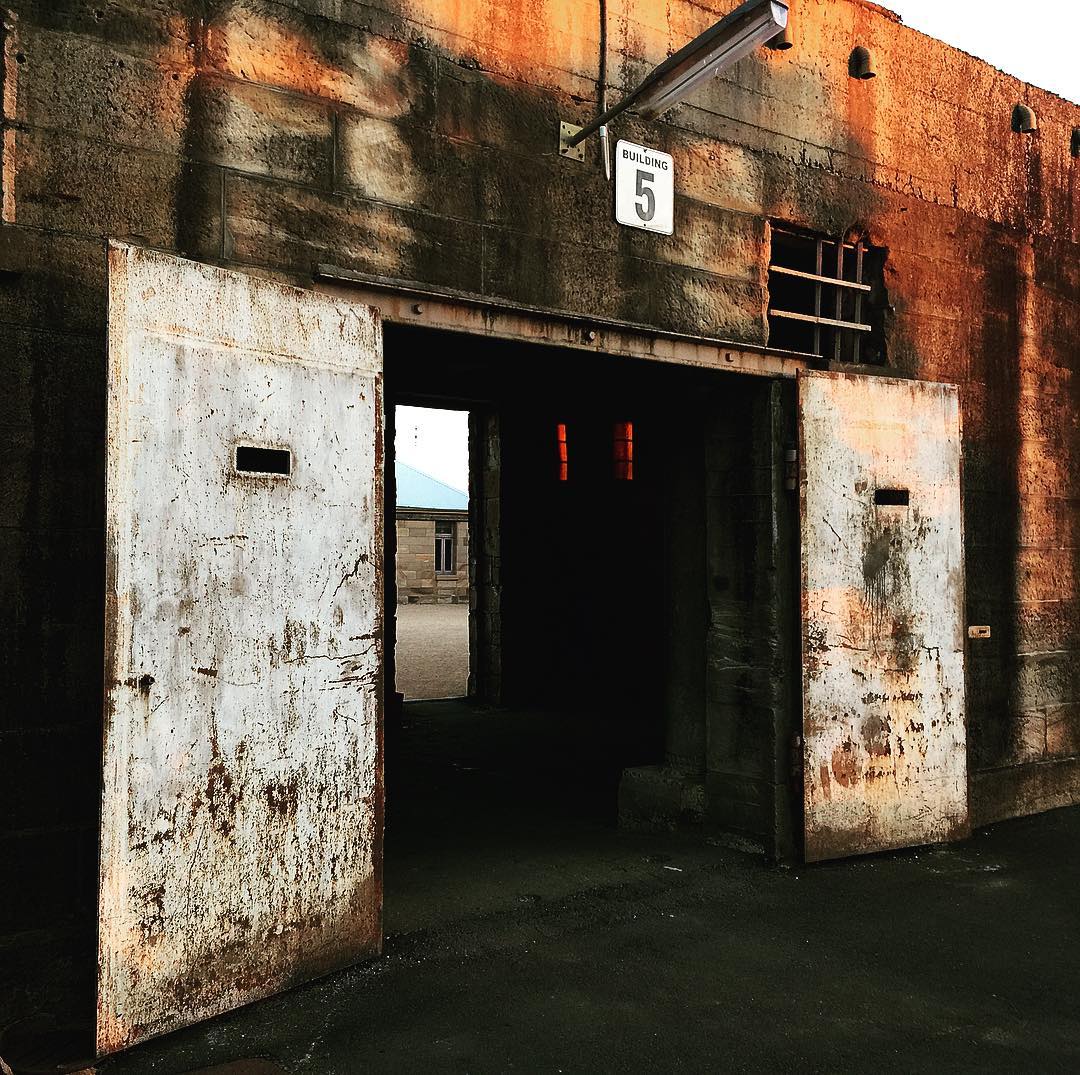
    Cockatoo Island
    11252737_708452815922774_232218505_n
    Cockatoo Island


    Geoffrey Kaye copy
    Geoffrey Kaye Museum of Anaesthetic History

    For about a year, I held seven casual/part time jobs in museums and at heritage places (see About Me or my Extended CV for a list!). I did so because casual work was really all over the place and I needed to piece together something that resembled a full-time job. The stress of filling out rosters, ensuring I had enough hours, was insane. This was all worth it in the end. I gained so much experience in so many different areas I was confident and prepared to go for something more permanent.

    In August this year, I started my role as Exhibitions and Education Officer at the Gladstone Regional Art Gallery & Museum. In just a couple of months, I have already had so many incredible opportunities. I can’t wait for the years ahead.

    21272171_10159294393050261_9020350515498658380_n
    Gladstone Regional Art Gallery & Museum

    That’s my long-winded How I Ended Up Here story. I could not have ended up here without the support of oh so many people. At the risk of turning this into an Golden Globes acceptance speech, you know who you are and I thank you. I am incredibly proud to be in this industry and to have ended up exactly where I am.

  • Samford: Samford Village Heritage Trail

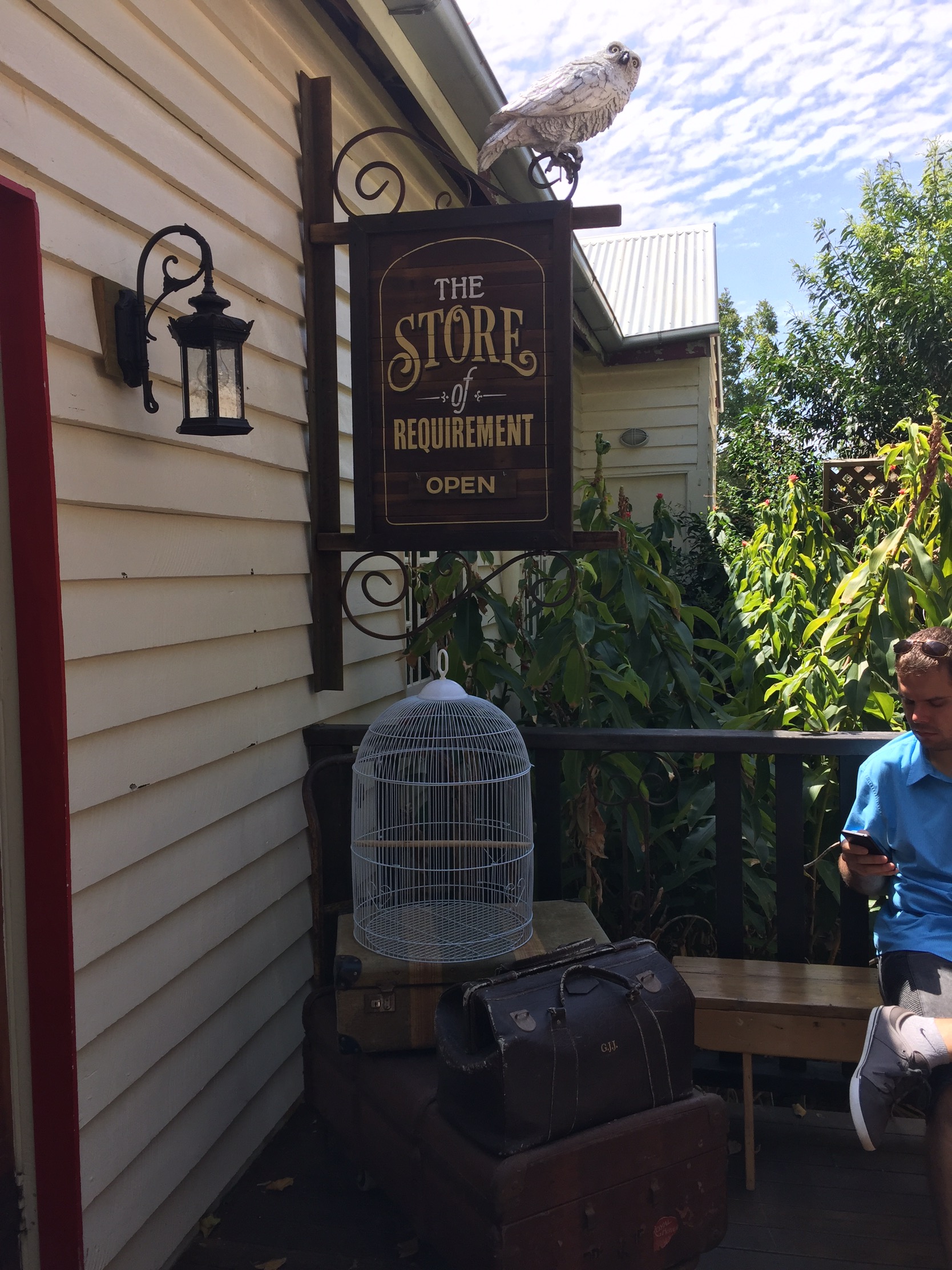
    Before I begin this blog post I must be entirely honest. When we visited Samford Village today, located 30 mins outside Brisbane, we were visiting for one reason – the Harry Potter Store of Requirements. It was literally a magical place. After purchasing everything Hufflepuff we could find, we decided to walk around the Village. There was this one building that had a sign out the front with an old photograph, some information, and a number. Intrigued, I walked across to the information centre in John Scott park to find out more. Here I was given a Samford Village Heritage Trail brochure. It is a very detailed brochure containing thirteen places of interest and a museum.

    Store of Requirement
    Store of Requirement
    Heritage Trail

    I was very impressed with the brochure. It starts with the history of Indigenous occupation in the area. A respectful way to begin the brochure yet I was unsure where this history had been sourced and whether there was any collaboration with Indigenous groups in the area. It also ended very abruptly and I was interested to know if there was any continuing Indigenous presence.

    We tried our best to visit all thirteen locations. They can all be reached on foot and are located on either Main Street or Station Road. I am just going to cover the sites that we did visit. At the end of the post, I will list the other locations.

    1. John Scott Park

    The brochure contains some wonderful heritage photographs credited to both individuals and the Samford Historical Museum Collection. It is clear that there was a lot of community involvement that went into producing this tour. John Scott park was absolutely thriving when we visited. There were families celebrating birthdays and dogs running around. It was a really beautiful park and so great to see it is still heavily used by the community. In the middle of the park was a large stage which was part of the old Rotary Station.

    Originally, the park was part of the railway station and yards. In 1955, after the railway station had closed, a petition was sent to the Pine Rivers Council to transform the land into a public park. After meeting with the State Government, the decision was made to create a recreational and sports reserve. From what we could see, this use has continued today.

    John Scott Park
    John Scott Park

    2. Samford Valley Hotel

    A place which I imagine has amazing Chicken Schnitzel. The Hotel was the first licensed premises in the area built on the land that once had the village’s first bakery. It has survived numerous name changes and numerous changes in ownership. There is a beautiful kerosene lamp at the front that was once turned on by a switch at the bar to welcome patrons in.

    Samford Valley Hotel

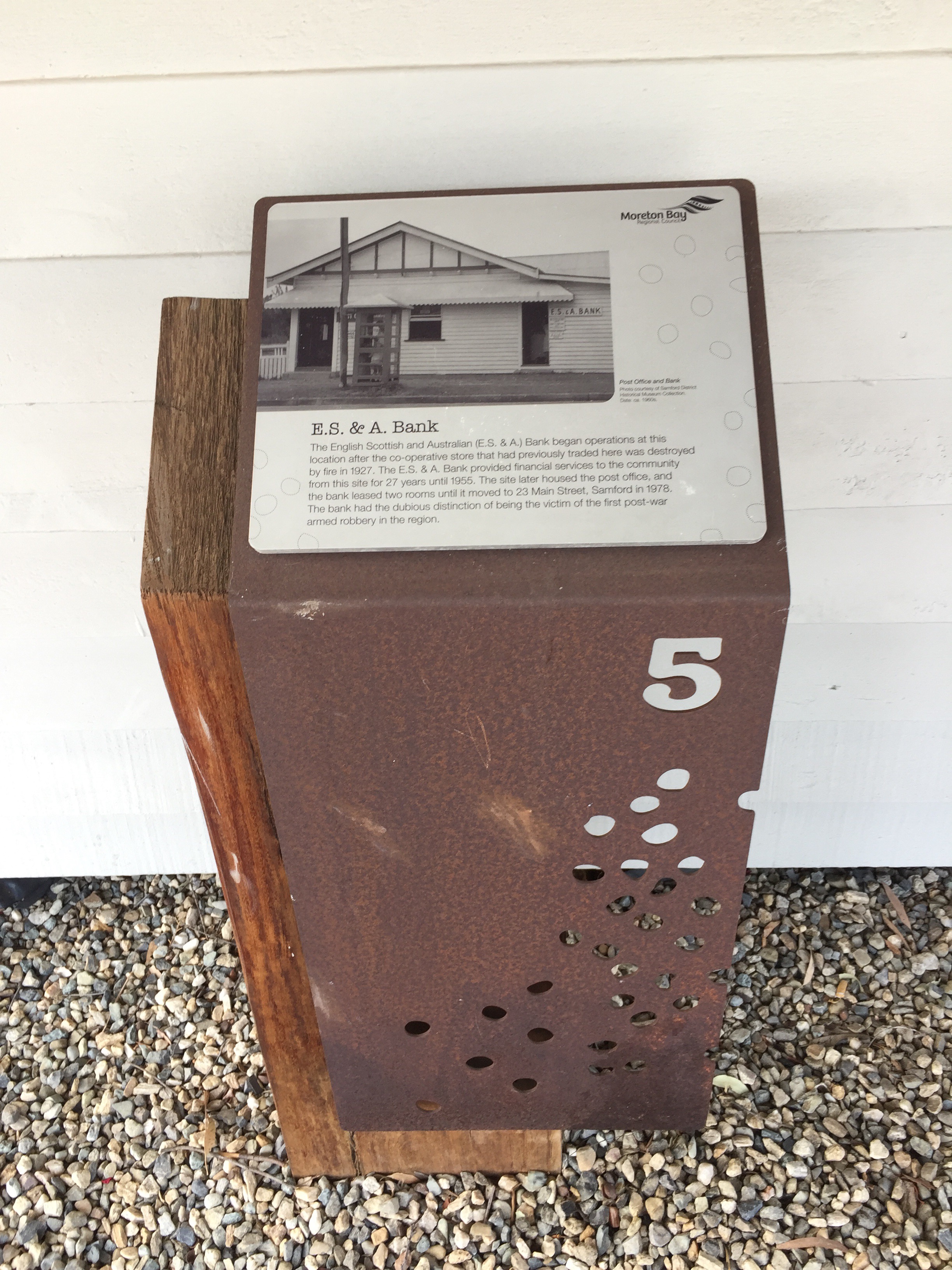
    3. English Scottish and Australian Bank

    This is the first building we saw with the sign out the front. It is a very cute little building that has an interesting story attached. On October 11, 1948, members of staff were held up at gunpoint by robbers. They were placed and sealed in an airtight vault. A nearby resident, Estelle Nelson, thought something strange was going on at the bank so alerted police. After witness statements were collected, they managed to find and arrest those involved.

    The bank eventually merged with ANZ in 1970 and moved to a different building.

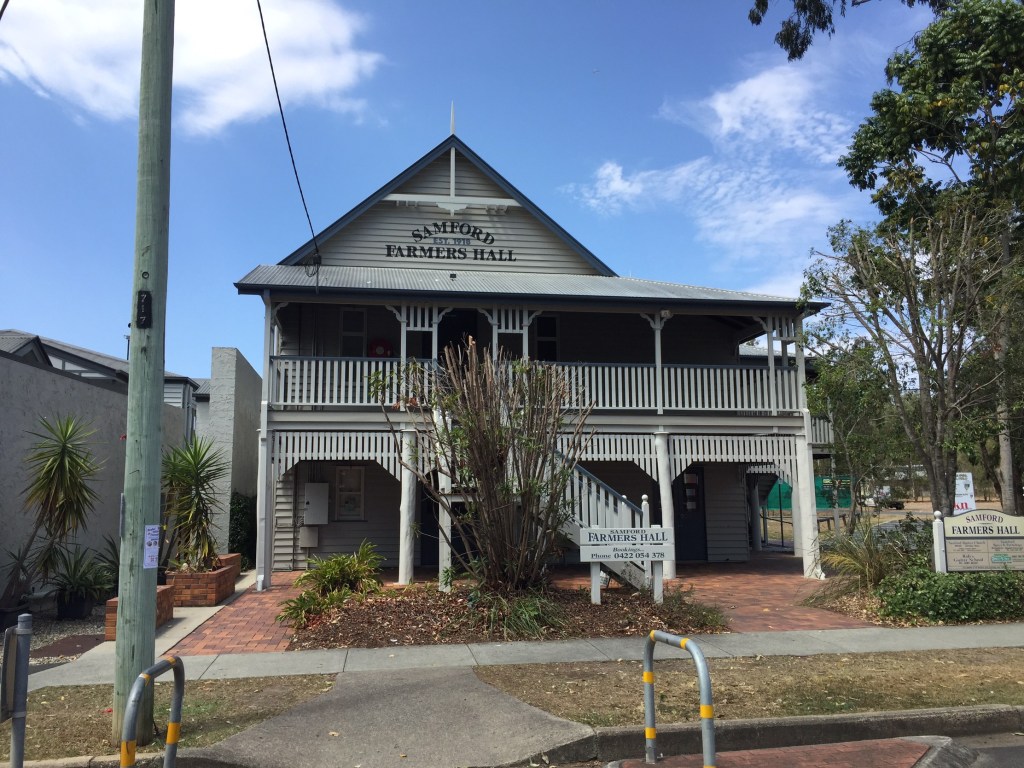
    4. Samford Farmers’ Hall

    When driving into the Village, this building was hard to miss. It is huge and painted a very sweet lilac colour. It is a fun building too, that was used for dance parties and community events. Opening in 1918, it replaced the old and much smaller community centre. Since the railway line was bringing in people all the time, the decision was made to have a venue that would hold cultural events as well as parties and dinners. It would have been pretty magnificent during this time.

    Today, it is still used as a community centre with businesses able to rent out parts of the building.

    Samford Farmers’ Hall
    Samford Farmers’ Hall

    5. Cash Avenue

    Today Cash Avenue is just a normal looking street. It was, however, where the train line ran through the Village. The train not only provided Samford Village with trade opportunities, but allowed city residents to visit the country village and “fill their lungs with Samford Valley country air.”

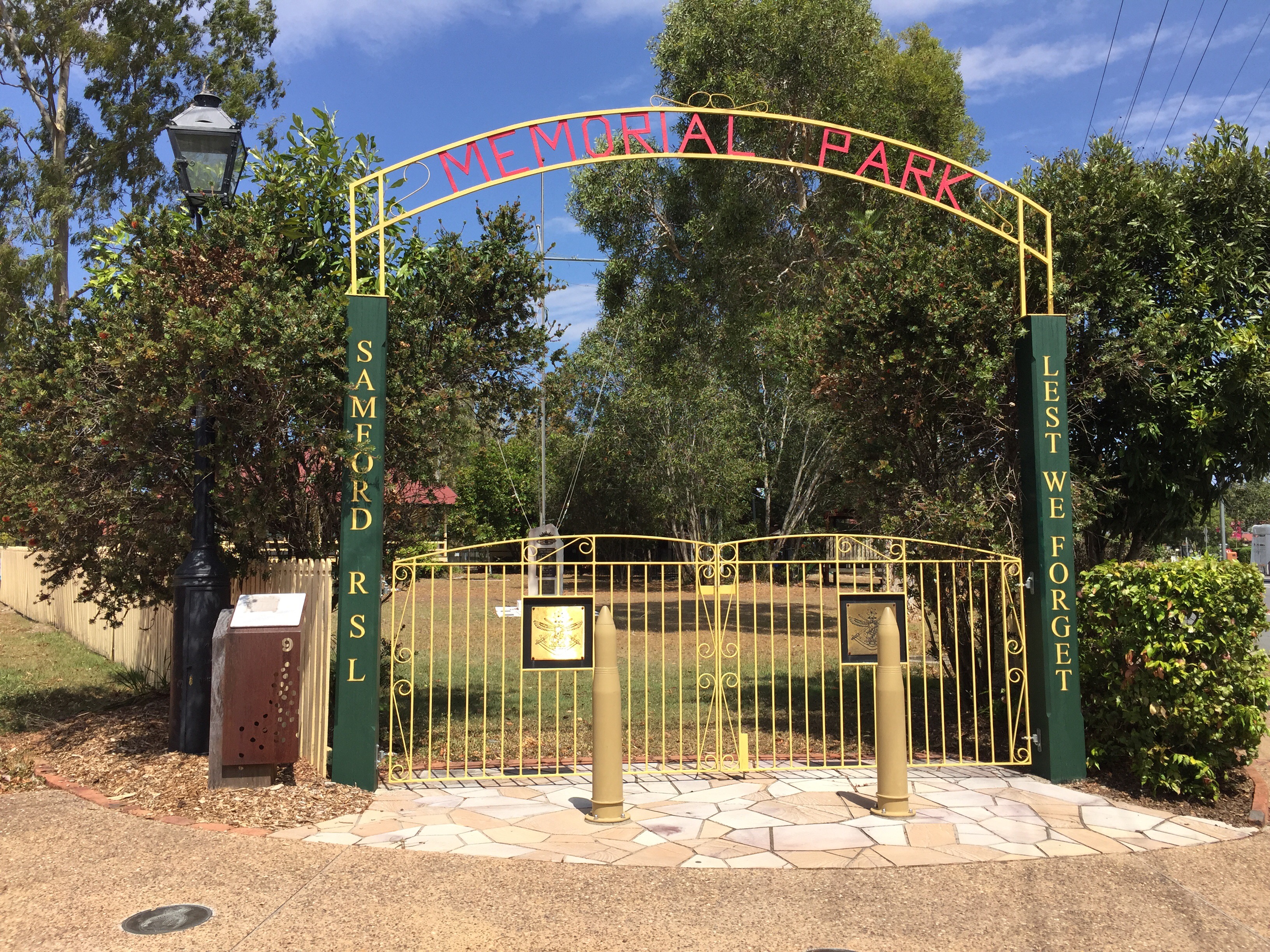
    6. RSL Memorial Park

    Where ANZAC services were and continued to be held every year on 25 April. Right at the back of the park is the century-old schoolmaster’s house from Samford State School that was moved and renovated in 2006.

    RSL Memorial Park

    We finished the tour there as it was getting blisteringly hot and the air conditioning in our car was so tempting. Considering the old buildings in Samford Village really do stand out amongst the rest, it was a nice way to see the town from this historical perspective. Might as well add some history to your morning or afternoon stroll!

    Other locations:

    1. Samford District Historical Museum

    2. Samford Railway Station and Goods Yard

    3. Williamson’s Butcher Shop

    4. Samford Garage

    5. Samford Public Hall

    6. Weise’s General Store and Post Office

    7. Samford Rural Fire Brigade

  • Brisbane: Museum of Brisbane

    My plan was to see Tastes Like Sunshine later this month, however, an opportunity arose today. After 100% Brisbane, I was expecting a lot from the new exhibition at the Museum of Brisbane. While the exhibition was not to the same standard, it was still enjoyable and included some wonderful information and artworks. I am going to provide an overview of the exhibition then delve into a couple of different aspects.

    According to their website, the exhibition seeks to explore the “flavoursome” side of Brisbane, revealing an evolving food story. This story is told through contemporary art, personal stories, historical documents, and images. Slavery, Indigenous culture, immigration, history of food markets, and food production in Queensland were all addressed within the space. On top of this, issues of environmental degredation and the treatment of animals were also tackled. Needless to say, this exhibition had a huge amount of content to display.

    The actual space containing the exhibition was not large at all. It took us around 30 minutes to walk from one end to the other – and this included stopping to read the labels. I am going to highlight a few of my favourite things about the exhibition.

    • The Wallpaper

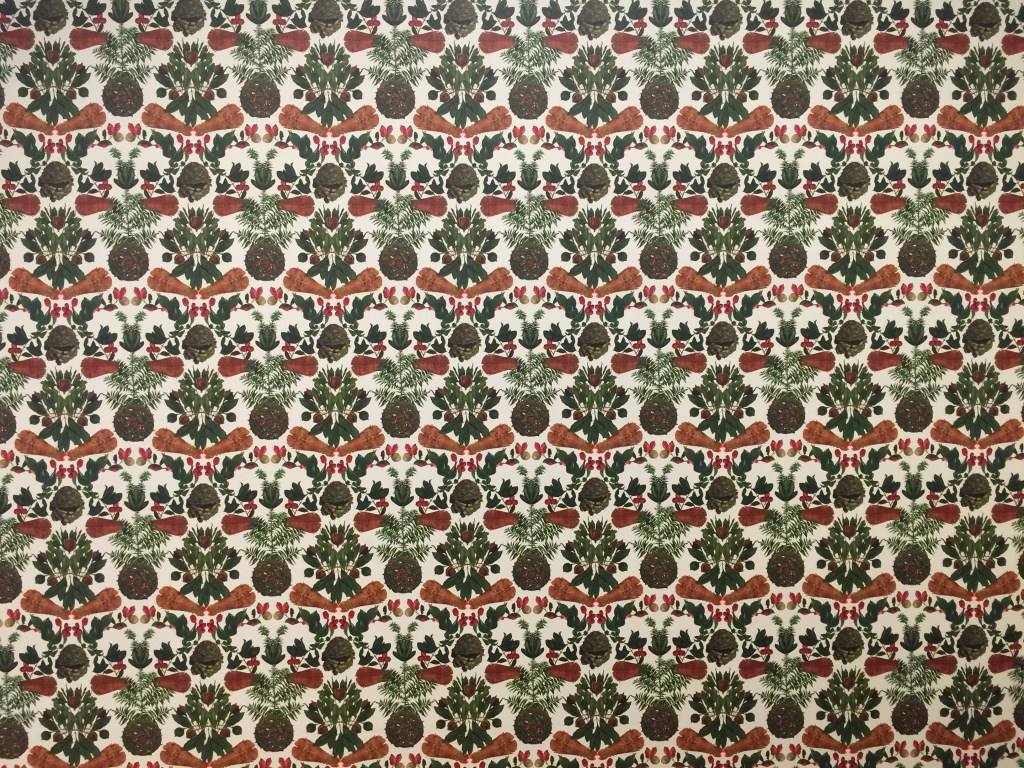
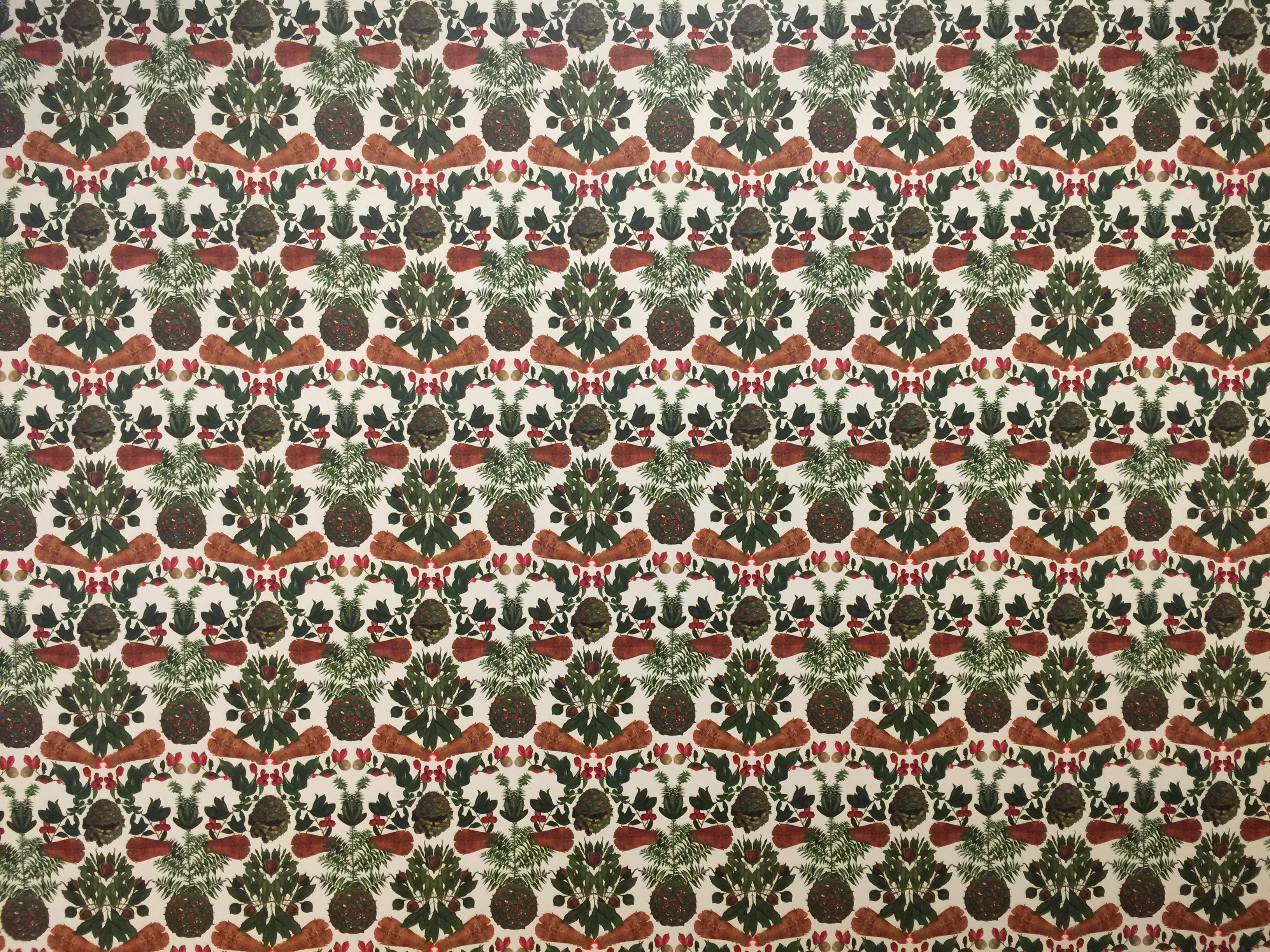
    On first entering the space, you see this absolutely incredible wallpaper designed by artist Elizabeth Willing.

    IMG_0968
    Wallpaper

    The title of the work is Strawberry Thief (after William Morris). The foods included in the wallpaper are local Indigenous foods – macadamia nut, bunya nut, lilly pilly, finger lime, and Moreton Bay bug. The work, therefore, merges this European heritage with local Indigenous knowledge/culture. It’s a striking way to start the exhibition considering it’s pasted on four massive walls. Also, it has a strong message – Brisbane’s food history is layered with different cultures who have all contributed to what we eat today.

    • Untitled (toasted marshmellows)

    Near the entrance is this very unusal looking artwork.

    IMG_1027
    Untitled

    After reading the label, I thought surely these are fake. They are not. These are the actual skins of marshmellows that have been toasted. It is bizarre and I love it. One of those fantastic pieces of art that you have to see up close to really believe it is what the label says.

    • Produce Cartons

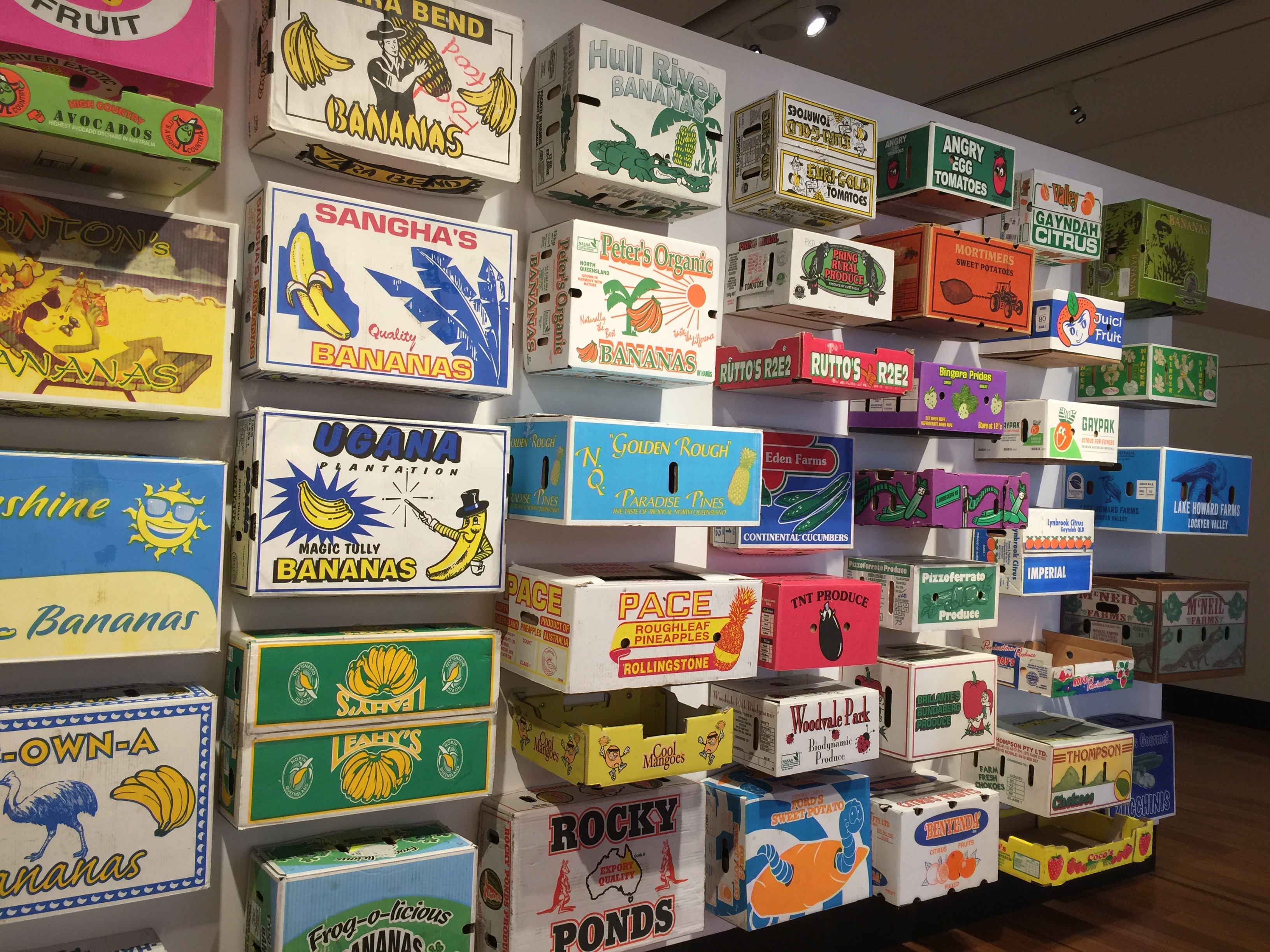
    Sean Rafferty created this colourful wall of produce cartons.

    IMG_1013
    Produce Cartons
    IMG_0998
    Produce Cartons

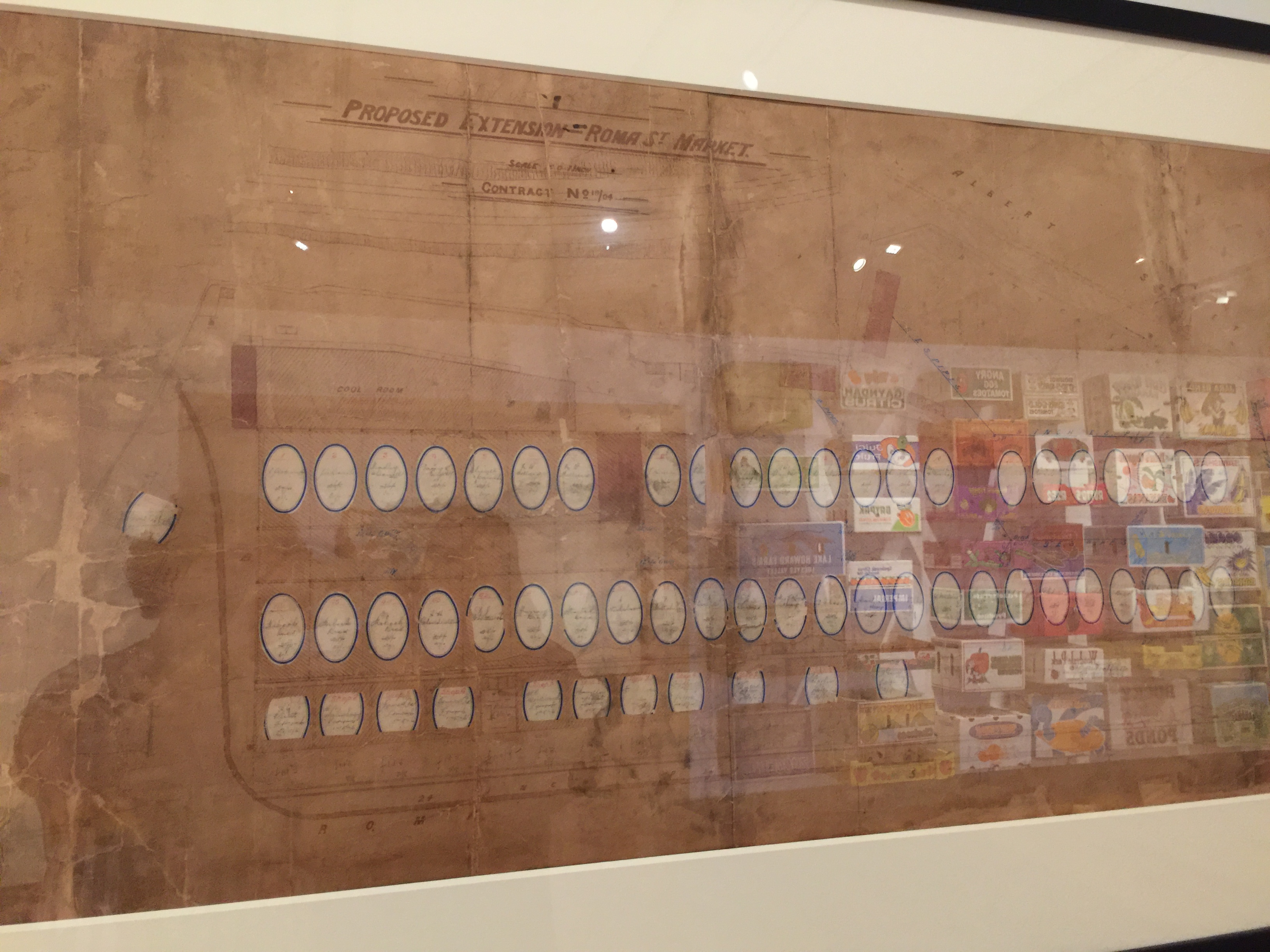
    Similar to the wallpaper, it is aesthetically amazing. Also, there is a lovely story behind the installation. Rafferty was commissioned by the Museum of Brisbane to produce two artworks for the exhibition. After talking to farmers, wholesalers, and distributors at Brisbane’s Rocklea markets, he developed this idea of sharing the produce of Queensland through the carton boxes that carry it from farm to market. It is a great snapshot at the types of food that are grown and distributed in this State.

    On display next to the boxes is a historical map of Roma Street food markets. It is lovely to see this historical document juxtaposed with the contemporary art installation.

    IMG_1007
    Roma Street Food Markets
    • South Sea Islanders and Sugar Cane

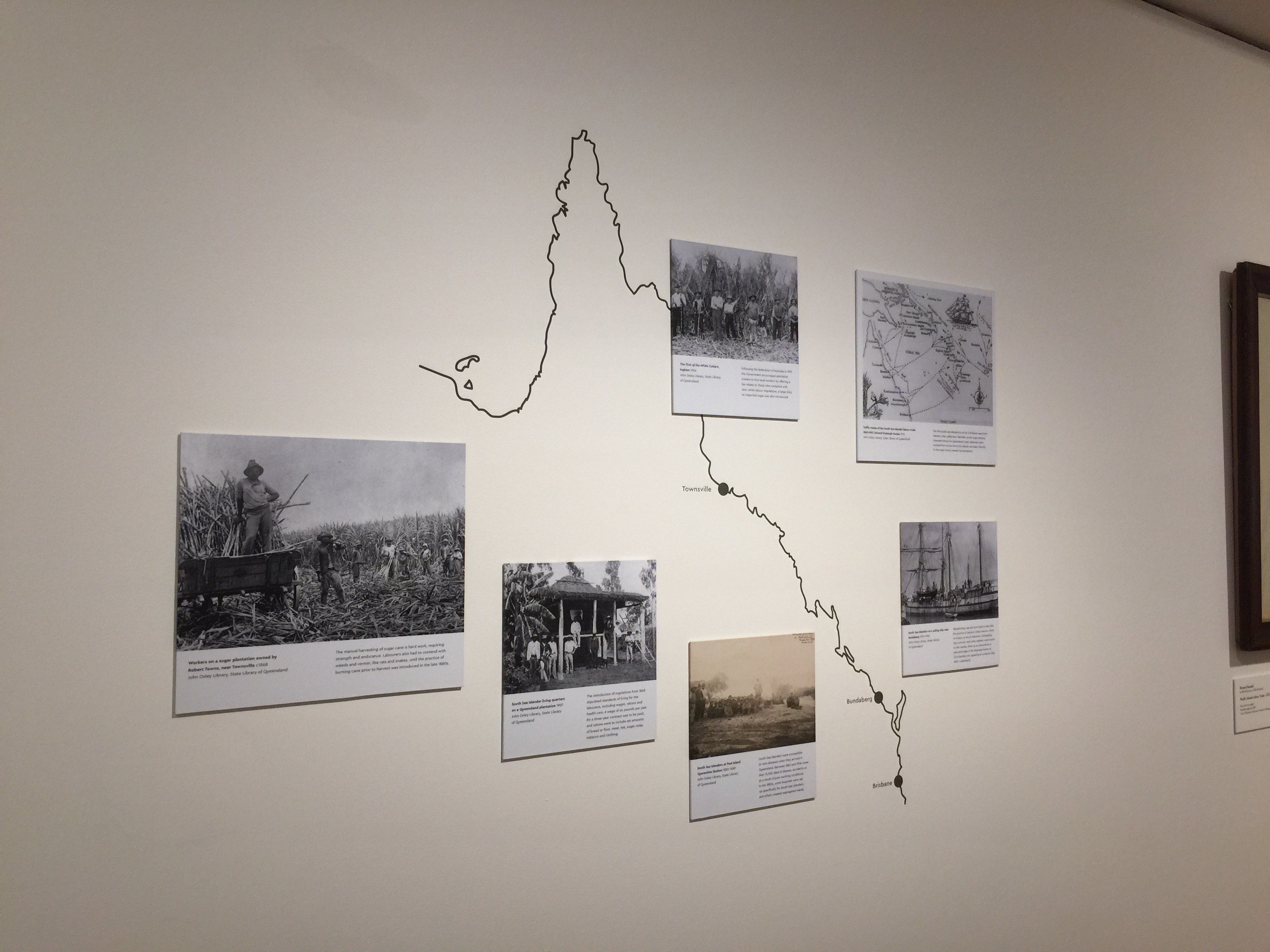
    Towards the back of the exhibition is the story of the South Sea Islanders ’employed’ by plantation owners in Queensland as a source of cheap labour. Between 1863 and 1904, it is estimated that approximately 62 000 South Sea Islanders came to Queensland. Some were coerced or forced to work on the sugar plantations in a practice known as ‘blackbirding’. By 1901, most were deported. Those who continued to live in Queensland were formally recognised in 2000 as a distinct community group that has contributed to the development of Queensland.

    IMG_1030
    South Sea Islanders and Sugar Cane
    • Food Futures

    Right at the end of the exhibition is a space called Food Futures. This space looks at the impact of growing food on the environment and how the future of food in Brisbane may evolve further. In this space there are three interactive touch screens that allow you to answer 12 questions and discover if your inner self is a carnivore, vegetarian, vegan, plus two other options I can’t remember. Once you have your answer, you can take a sticker with your result. It is fun and it makes you think – what more could you want.

    Overall, the exhibition is a nice mix of history and art, shedding some light on the history of food in Brisbane. I think what worked best in the exhibition space was the intertwining of historical documents, contemporary art, photographs, and digital technology. The exhibition, however, tried to do too much in a very small space. Unlike 100% Brisbane which was amazingly inclusive, I feel as though this exhibition would have excluded so many from the narrative purely because of its scale. Perhaps if it was more focused on the food of the region as shown through contemporary art it may have reached its aim a little more successfully. It was an exhibition that bit off a bit more than it could chew – pun absolutely intended.

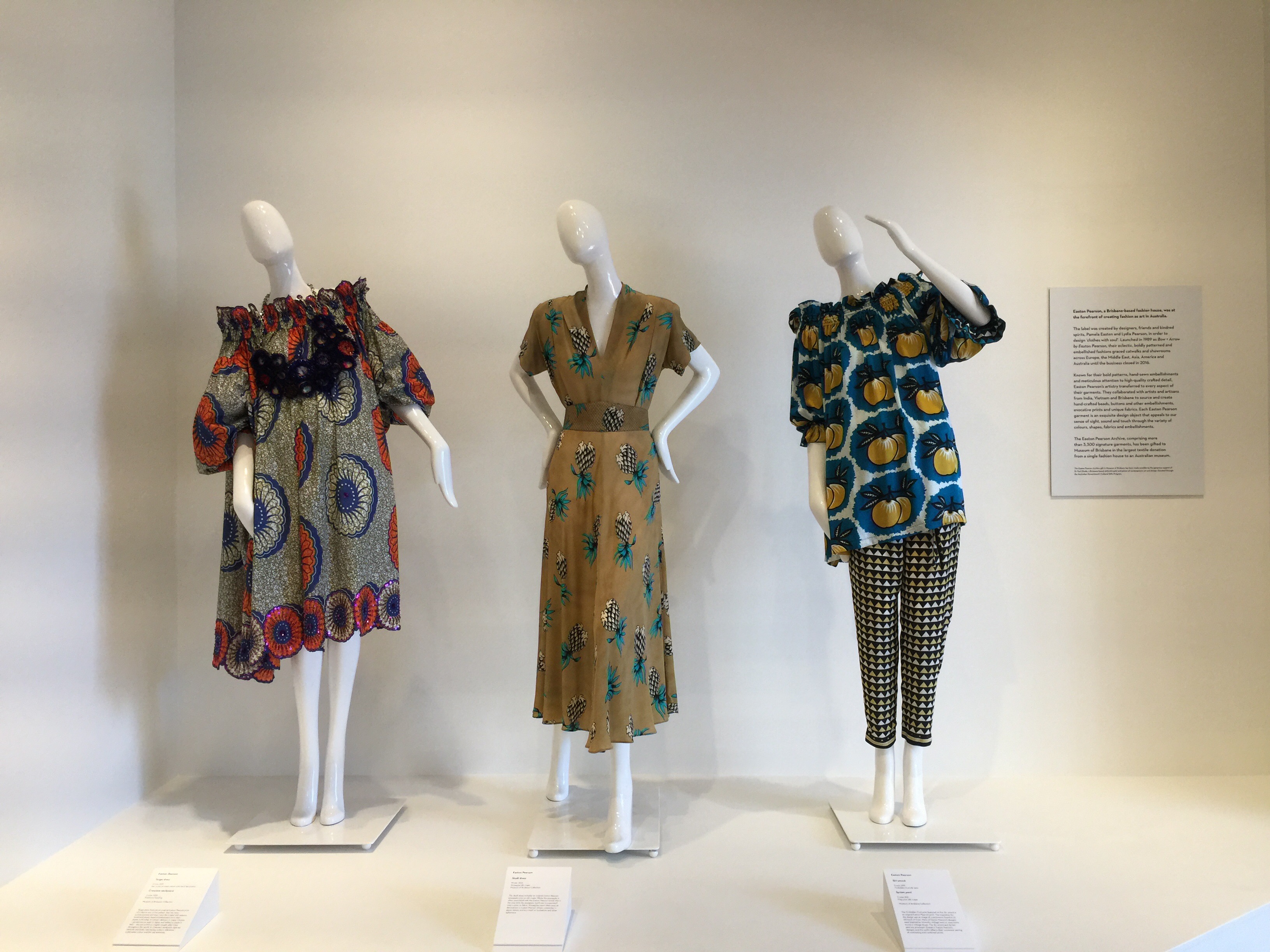
    Regardless, it was a lovely visit to the museum. I even saw some of the new Easton Pearson collection that, intended or not, suited the exhibition themes. For example, there was a lovely top with pineapples printed on the fabric. I really enjoy visiting the Museumo of Brisbane so no doubt I will return shortly to write another review!

    Easton Pearson Collection
  • Gladstone: Gladstone Regional Art Gallery & Museum

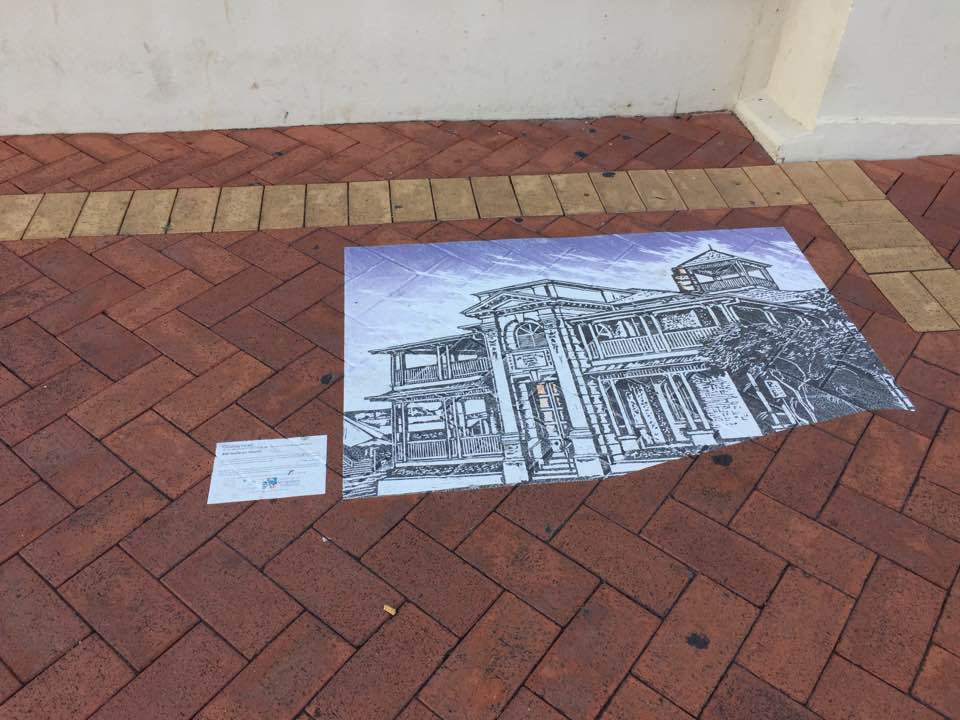
    In October 2016, I attended the ICOMOS & National Trusts of Australia Conference in Melbourne. One of the many talks that really hit a nerve was on the topic of heritage and significance statements. The speaker was trying to push the point that a building is never frozen in time. Rather, it changes, it adapts, and it gains new significance. When I moved to Gladstone I found the brochure (pictured above) and was intrigued as to this heritage walking tour of the city centre. After walking Goondoon Street this morning and seeing all the buildings and their decals on the footpath, I believe this tour is achieving that balance between exploring a building’s past, yet cementing it in the present.

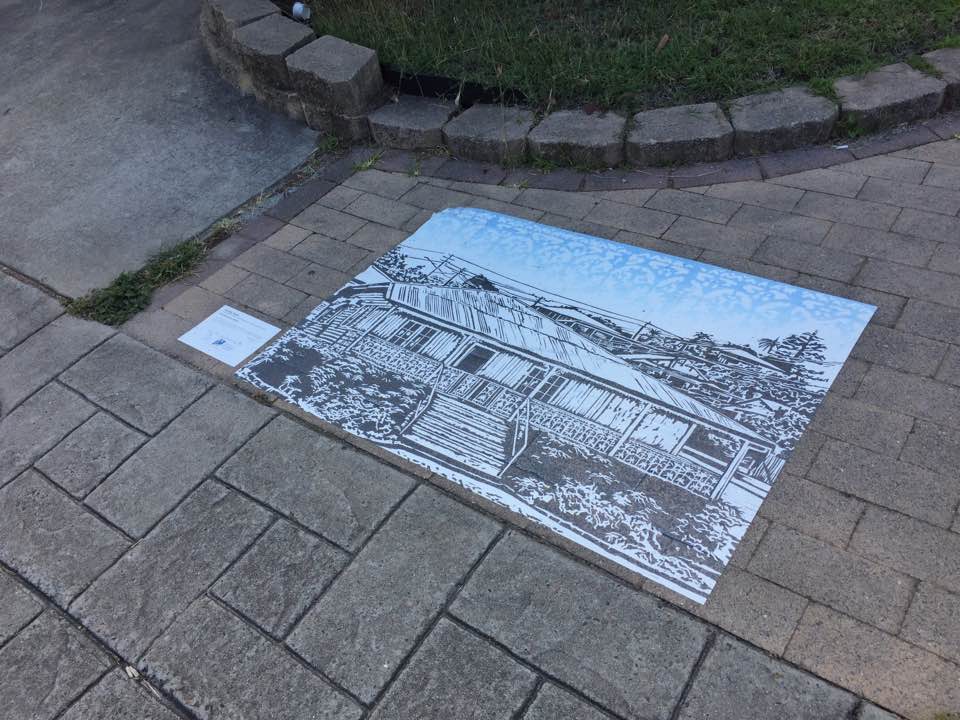
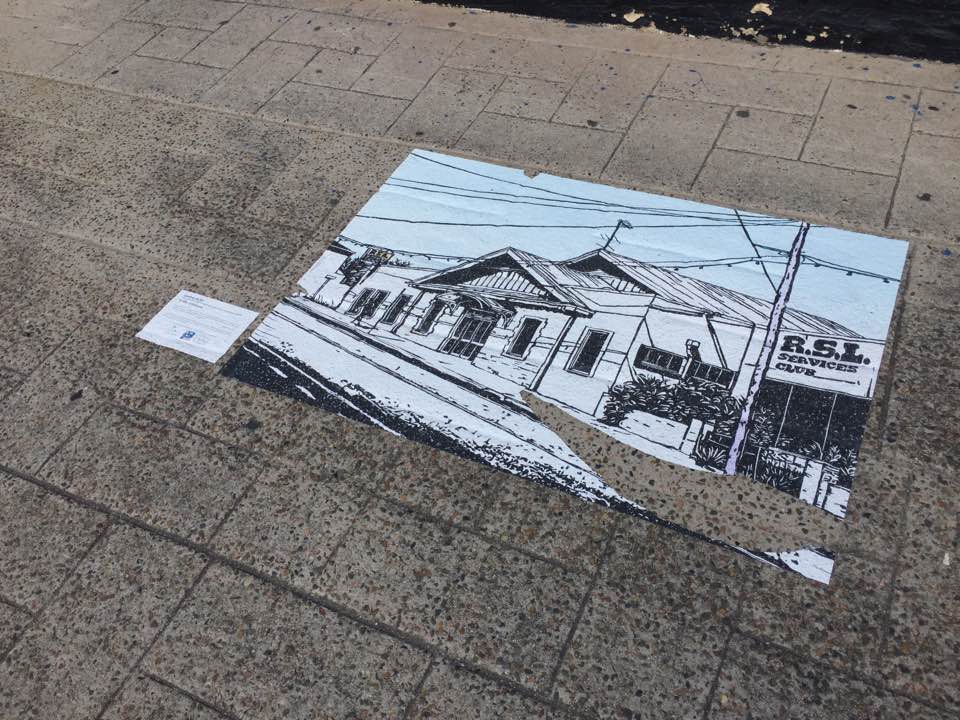
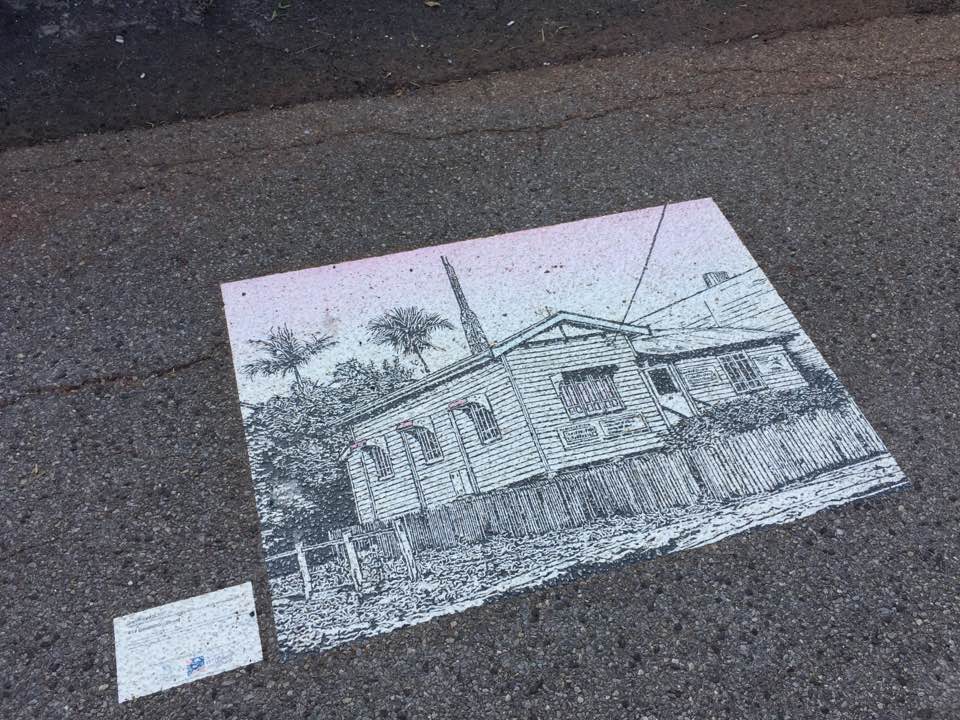
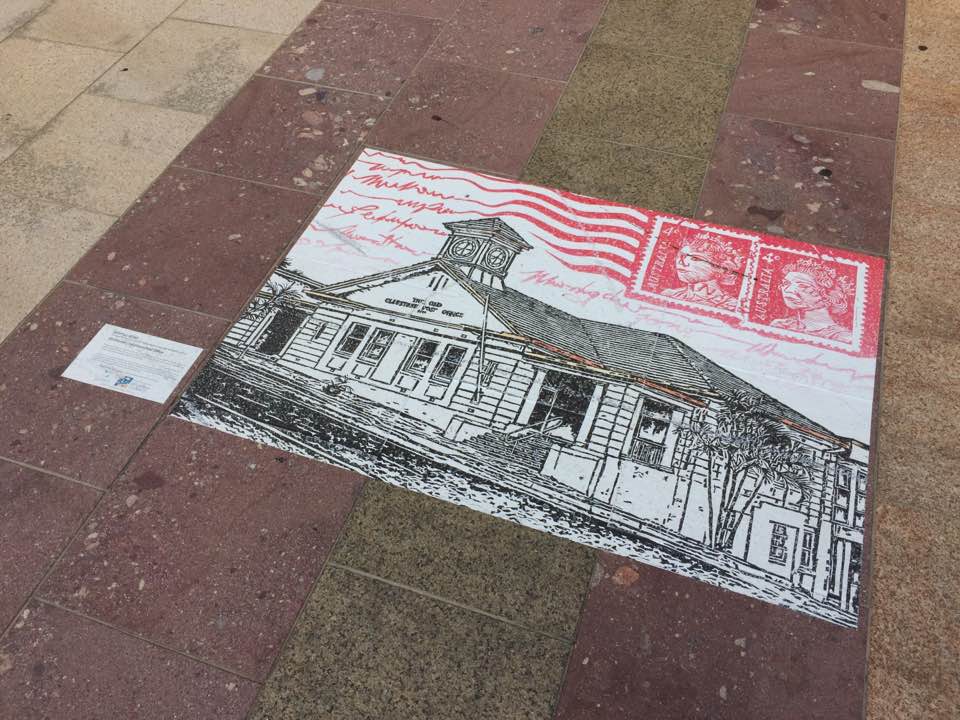
    The walking tour took me about 45 minutes. This is because I kept stopping to take photographs and read the brochure that contains information on each of the ten buildings. I am absolutely amazed and thrilled by the fact that Gladstone has kept quite a few of its heritage buildings and has even listed some on the Queensland Heritage Register. The following post will look at each building individually, commenting on its past and its present. It should also be noted that the art decals were produced by an incredible local aritst, Geoffrey Head. They are stuck on the footpath outside each of the buildings allowing people walking by to stop and read some history.

    1 Goondoon Street

    Then: The Port Curtis Aquatic Club

    Now: Gladstone Yacht Club

    The Port Curtis Aquatic Club was established in 1941. Its aim was to grow the sport of sailing in Gladstone. This building was the club house, finished in March 1959. The building’s floors were made from Calliope River gum trees, donated after a cyclone hit the area in 1949. In the mid-1970s, the building became the Gladstone Yacht Club – a very popular venue during the annual Brisbane to Gladstone Yacht Race. It is now listed on the Queensland Heritage Register. Side note: they also do an amazing chicken schnitzel – speaking from personal experience.

    21272166_10159294393040261_6441130025863855334_n
    Gladstone Yacht Club
    21314335_10159294393055261_1437927576765142152_n
    Gladstone Yacht Club

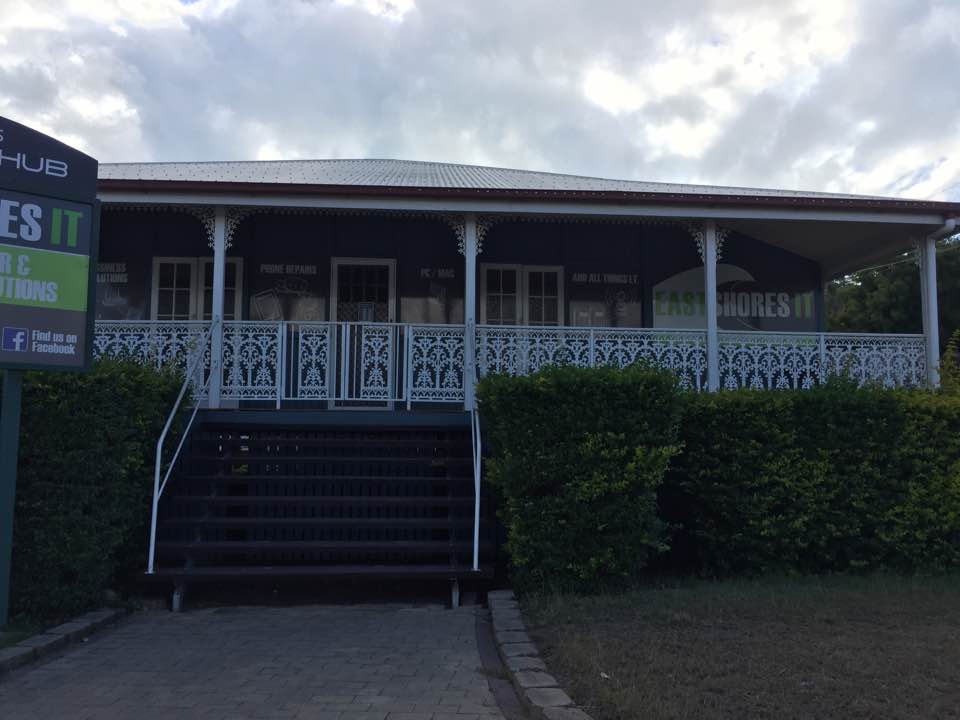
    4 Goondoon Street

    Then: Private Residence and Metropolitan Hotel

    Now: Phone Repair Business

    Originally the location of a private residence, this area of land once was home to the Metropolitan Hotel. According to first licensee, Samuel Evans, “it [was] a quiet retreat [with] moderate charges.” Unfortunately the building burned down in 1910. Although fire fighters were quick to the blaze, the age of the building and lack of water supply meant it was destroyed. Mr Golding, who was a member of the volunteer fire brigade, purchased the land building five houses. This is one of the surviving houses.

    21272558_10159294393035261_8430522775914678206_n
    Phone Repair Business
    21369176_10159294393045261_6887007565304033649_n
    Phone Repair Business

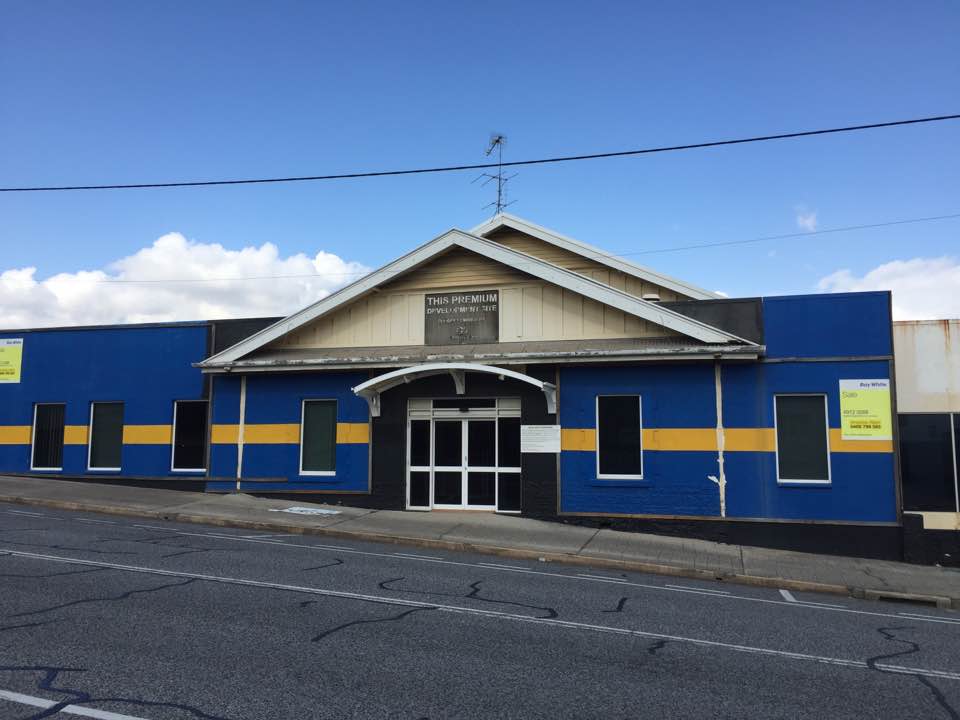
    7 Goondoon Street

    Then: Gladstone Town Hall and Returned Services League Clubhouse

    Now: For Sale

    One of the area’s oldest buildings, this was the original Town Hall of Gladstone. When the new hall was built in 1934, it became the Returned Services League or RSL. The foundation stone was laid on 28 November 1868. It served as the civic chamber for a total of 64 years! It then became the RSL, which unfortunately closed in 2003. Its future is pending so I will be watching this space closely. A beautiful building with so much history and intrigue. For example, coins of the realm and a copy of the earliest Gladstone Observer are said to be built into the walls, however, have never been found.

    21192835_10159294393135261_5793817615921167098_n
    Gladstone Town Hall and Returned Services League Clubhouse
    21231699_10159294393140261_349779868081598352_n
    Gladstone Town Hall and Returned Services League Clubhouse

    14 Goondoon Street

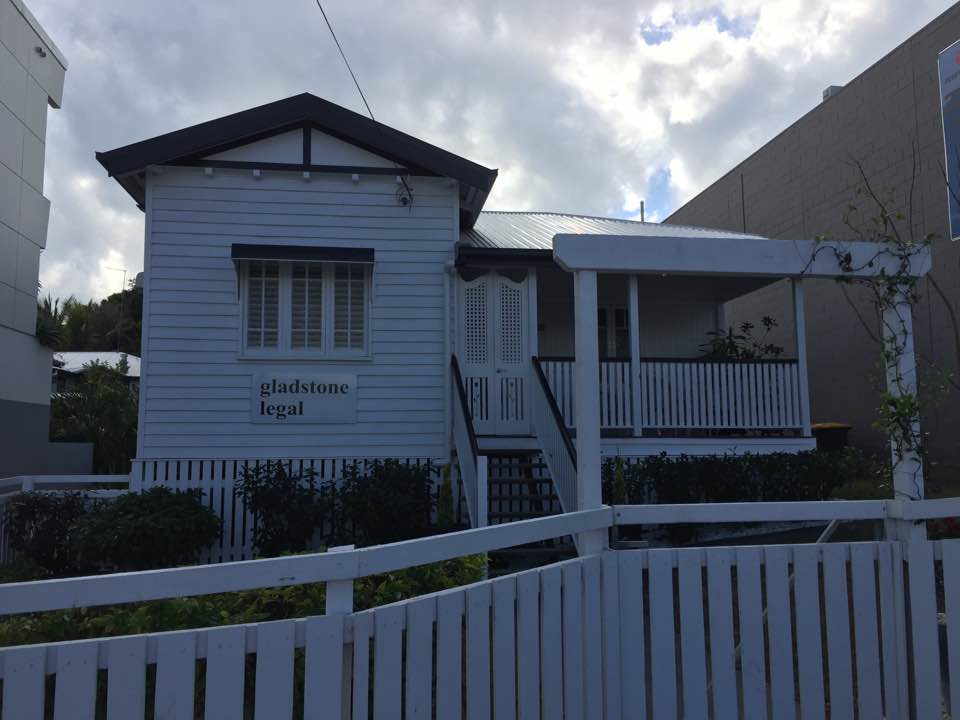
    Then: Private Residence (?)

    Now: Law Offices

    This house has been restored to as close to its original appearance as possible giving it the nickname “Grandma’s House”. More research is currently underway as to its original function.

    21272572_10159294393125261_5643556523444133041_n
    Law Offices
    21192831_10159294393120261_573986877594623951_n
    Law Offices

    33 Goondoon Street

    Then: Post Office

    Now: Real Estate Offices

    My second favourite building on the tour was the town’s first post office built in 1932. The original post office, however, was located in another area and was built in 1854. This building was a purpose-designed post office for the Commonwealth Postmaster General. What makes this building particularly significant is that only seven of the ‘twin porch’ post offices were ever built in Queensland. This is the only one with a clock tower. It was eventually sold to private businesses in 1997. A truly magnificant building.

    21314364_10159294393220261_183239657298766219_n
    Real Estate Offices
    21192856_10159294393225261_6572150175014831677_n
    Real Estate Offices

    40 Goondoon Street

    Then: Commercial Banking Company of Sydney Ltd Offices, Flats, Restaurant, and Law Offices

    Now: Gladstone Ports Corporation Offices

    This building has a long and interesting history. Originally built for the Commercial Banking Company of Sydney Ltd in 1911, it was sold in the early 1960s to Mr M. A. Busteed, a local businessman. The building became a group of flats called “Kullaroo House” – meaning ‘road that leads to water’ in a local Indigenous language. In the 1970s, it became offices for a law firm. Next it was a restaurant in the 1980s before being sold in 1993 to the Gladstone Port Authority, now Gladstone Ports Corpration.

    21272126_10159294393230261_4954776002910415378_n
    Gladstone Ports Corporation Offices
    21230937_10159294393210261_6627912609542004113_n
    Gladstone Ports Corporation Offices

    79 Goondoon Street

    Then: Grand Hotel

    Now: Grand Hotel

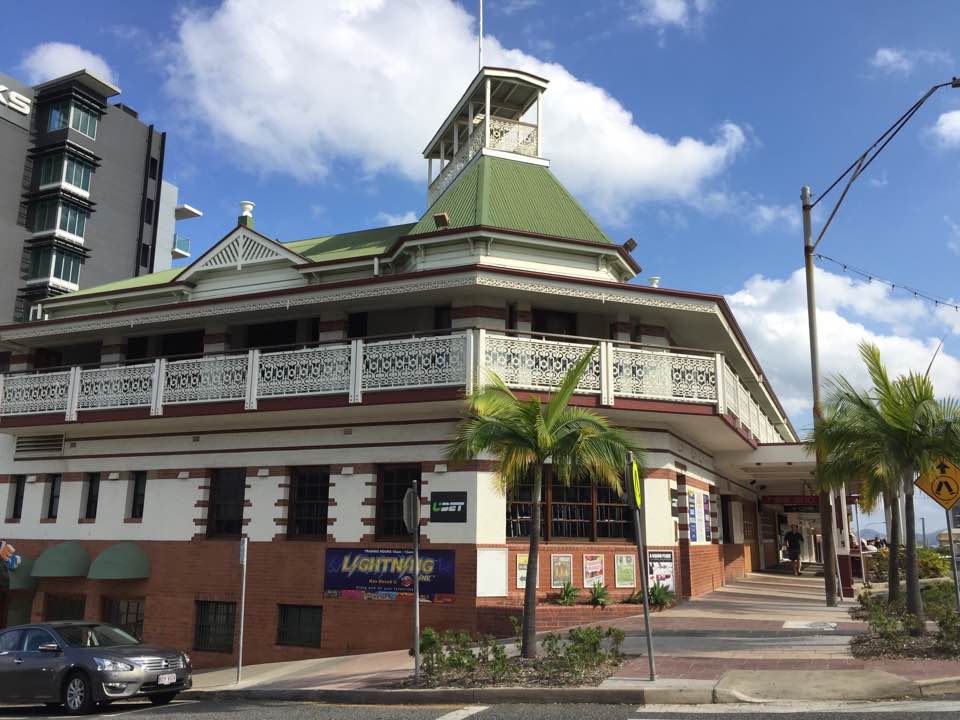
    A building that has held the same business since 1898, the Grant Hotel once contained seventeen bedrooms, one sitting room, two bathrooms, one bar and a parlour room. Its purpose was to accommodate passengers moving to and from North Queensland for work. Although not all of the building is original, the widow’s walk right on top has remained intact. The rest of the building has been restored after a substantially damaging fire in 1993.

    21317676_10159294393385261_5046587835412594554_n
    Grand Hotel
    21192235_10159294393215261_510815397926153719_n
    Grand Hotel

    98 Goondoon Street

    Then: Patrick’s Jewellers

    Now: Patrick’s Jewellers

    There is quite a horrific theme here of fire destroying buildings and this one is no exception. The first building opened in 1911 containing Patrick’s jewellers, owned and operated by Colin Patrick. A fire destroyed the original building in 1938, causing the Patrick family, who lived above, to flee with only their pyjamas on their backs. A new premises was eventually built and Patrick re-opened his jewellers. This store has been passed from generation to generation. The current owner, Noel, is the third generation of Patrick to run the store.

    21314690_10159294393395261_1986043443198011605_n
    Patrick’s Jewellers
    21192441_10159294393390261_7108916777233808972_n
    Patrick’s Jewellers

    114 Goondoon Street

    Then: Commonwealth Bank Branch

    Now: Private Business

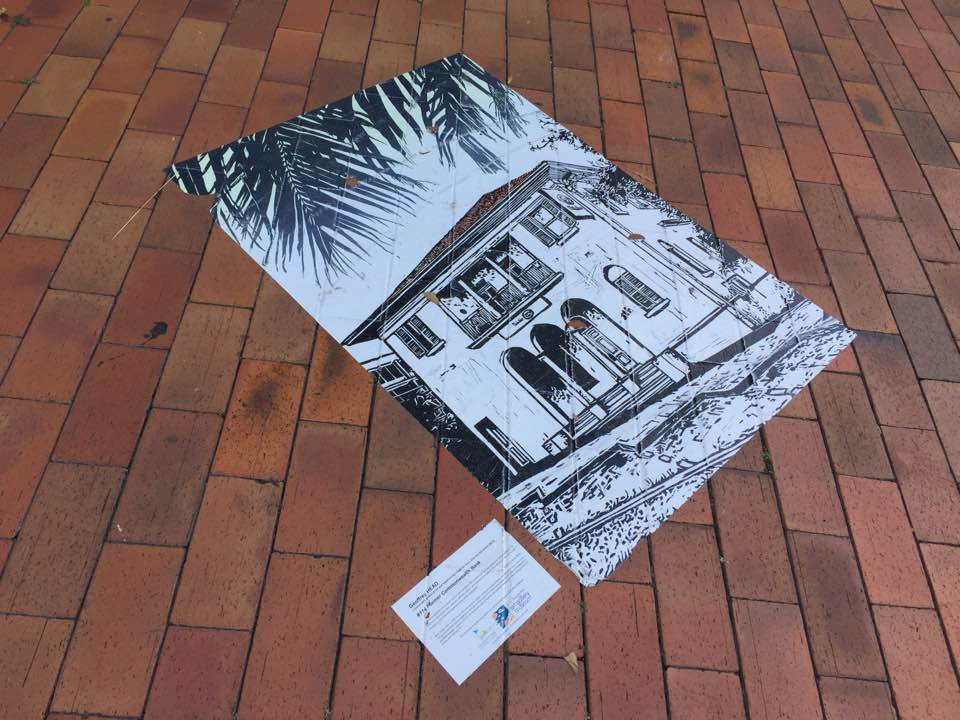
    This building was purchased for approximately $1, 000 (in today’s money) to build a branch for the Commonwealth Bank opening in 1927. It is a substantial two-storey “Spanish style” building that held the bank until 1972. It is now owned by a private business.

    21231709_10159294393375261_7775657504120618988_n
    Commonwealth Bank Branch
    21192475_10159294393380261_8036516211644990877_n
    Commonwealth Bank Branch

    144 Goondoon Street

    Then: Town Hall and Municipal Chambers

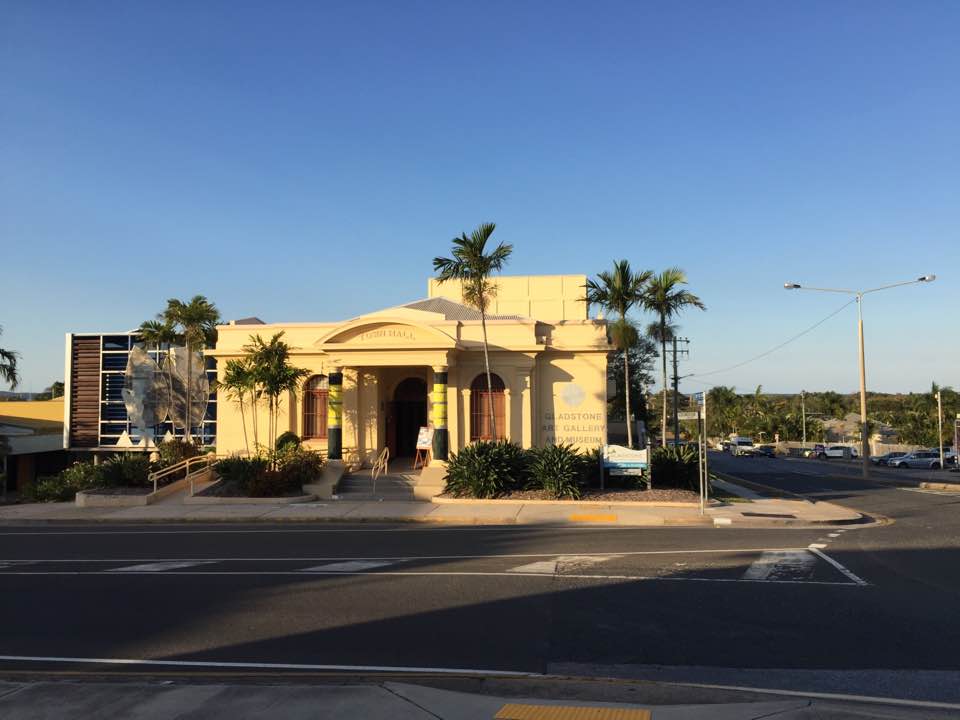
    Now: Gladstone Regional Art Gallery and Museum

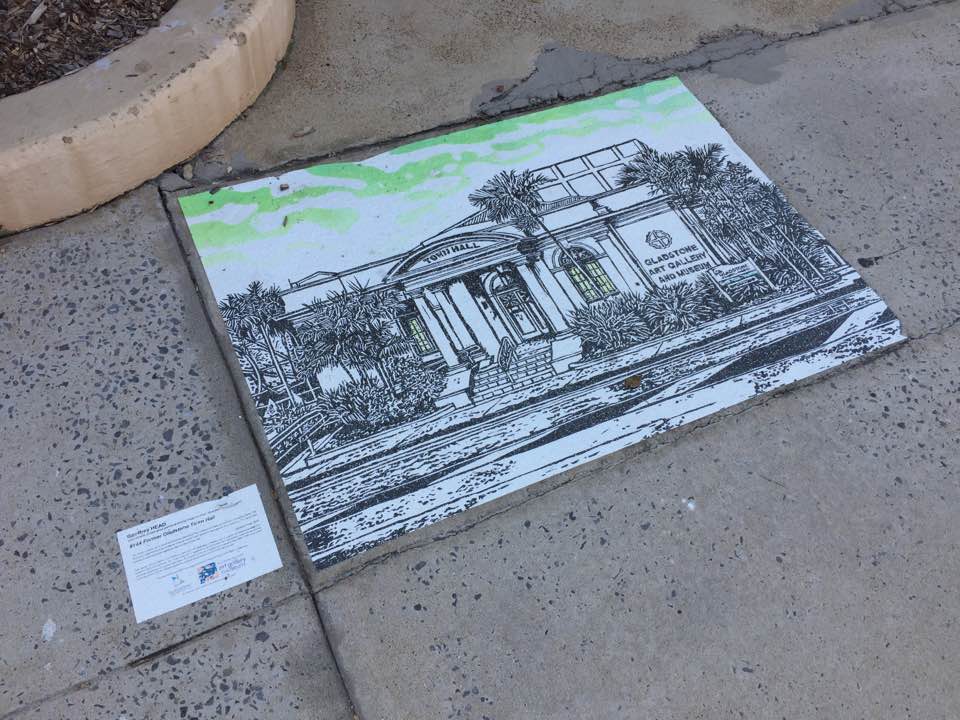
    No bias here at all, but this is my favourite building of the lot. It was designed by Rockhampton architect Roy Chipps and built during the Great Depression to generate jobs and income for struggling families. It was opened on 15 September 1934. It operated as the Town Hall and Municipal Chambers. It also held the World War I Honour Board that was wheeled out every ANZAC Day for the ceremony. While the board still remains, the ceremony is now held in ANZAC Park. It was also a place of great entertainment with weekly movies, dances, parties, flower shows, weddings, and even held a children’s library. It was closed and eventually turned into the Art Gallery and Museum in 1985. This Art Deco building is absolutely stunning and I am grateful every single day that I can go through these doors into a hub of cultural and community activity.

    21272171_10159294393050261_9020350515498658380_n
    Gladstone Regional Art Gallery and Museum
    21192881_10159294393575261_69724680831319533_n
    Gladstone Regional Art Gallery and Museum

    This was such a wonderful way to spend my Sunday morning. It was also a great introduction to the heritage we have in the city centre!

  • Rockhampton: Rockhampton Art Gallery

    Greetings from the beautiful city of Gladstone! This is my third week working at the Gladstone Regional Art Gallery and Museum. My first couple of weeks have been nothing but incredible. I have learned everything from hanging artworks to lighting exhibitions. I have also guided three educaiton programs learning so much about the State Heritage Listed Town Hall and Council Chambers. I still have to pinch myself when I walk through the doors of the Art Deco building. I am unbelievably grateful to have been given this opportunity and I cannot wait to see how the role evolves over time.

    On the topic of regional museums, last weekend I went on a road trip to Rockhampton. Located approximately 108 km from Gladstone, Rocky (affectionate nickname) is the fourth largest regional city in Queensland. There are quite a few heritage sites and museums in and around the city so watch this space for more Rockhampton-themed blog posts.

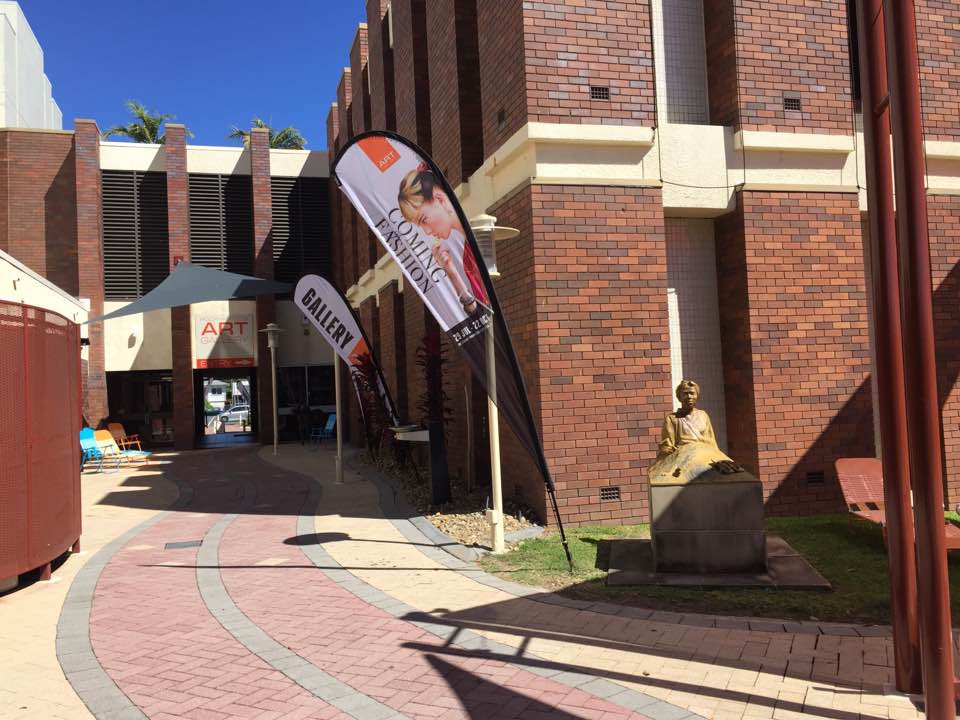
    For my first time in the city, I decided to visit the Art Gallery. It’s right in the city centre, near the Fitzroy River. I wasn’t visiting to see a specific exhibition, I was more interested in seeing the venue and how they curated their exhibition spaces. Currently on show is: Coming into Fashion: A Century of Photography at Condé Nast.

    21078663_10159266950960261_536334645916307635_n
    Rockhampton Art Gallery

    According to the website, the exhibition is to celebrate some of the most iconic fashion images ever snapped. These have come from archives in New York, Milan, and Paris. While I absolutely adore fashion, fashion photography isn’t something I’d go out of my way to see. Considering it was a $10 admission fee just to see the exhibition, I have to admit I did hesitate.

    In the end, I went in. The first thing you see when you enter the space is the introductory panel that is white writing on a black background. It was a strain to read, however, it was well lit. Right at the end of the panel, the text states that the exhibition is divded across two galleries – the one in Rockhampton and the one in Mackay. I was slightly nervous at this stage wondering how much exactly I would see and what I was missing.

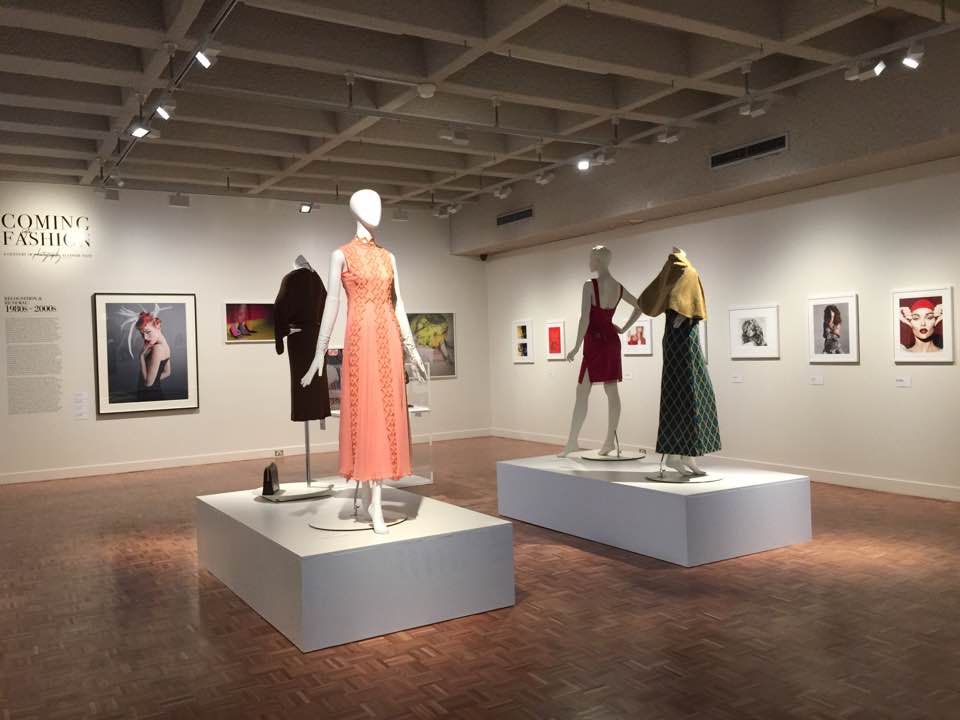
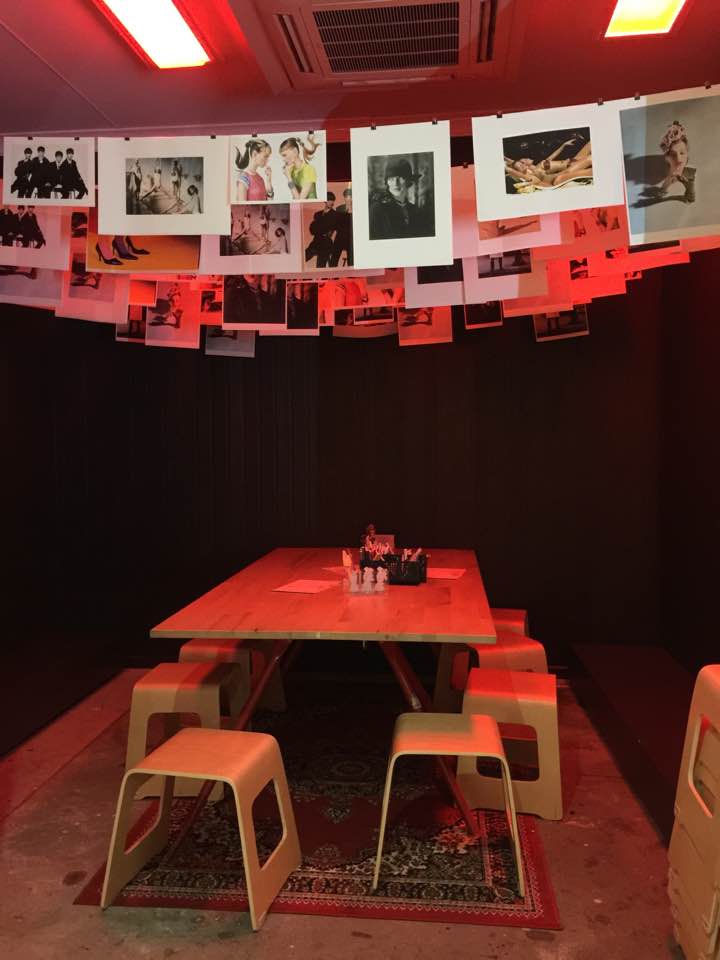
    You then enter a large room that has photographs and text divided by decades. For example, there was Recognition and Renewal – the 1980s to 2000s. These thematic panels were incredibly in-depth going through the history of Condé Nast and highlighting specific significant developments along the way.

    21078345_10159266950980261_5616176206743069569_n
    Rockhampton Art Gallery

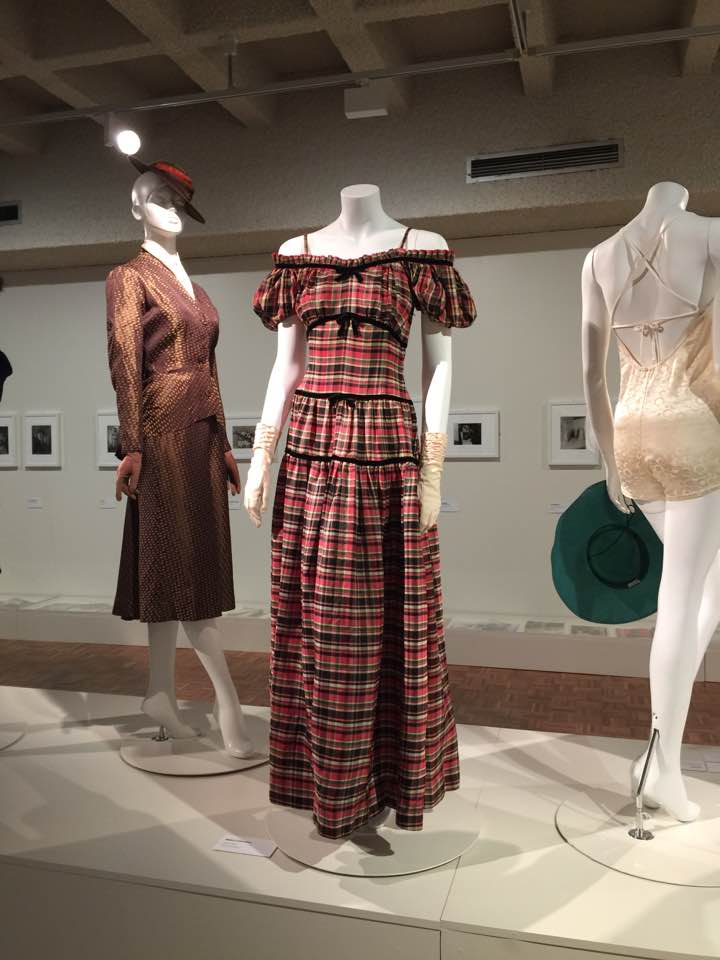
    I spent more time admiring the textiles in the middle of the space. They were positioned well, allowing visitors to view each piece of clothing from all angles. I appreciated being able to see the reverse of the garment which is not always the case in textile exhibitions.

    Rockhampton Art Gallery

    Then things got a little confusing. There were two ways to go, back out the door you came in (obviously not the way) or through a little door at the back of the room that wasn’t obviously a connection between exhibition spaces. On approaching the door, I saw a small sign indicating it was, in fact, the correct way. Through the door, you walk down a corridor, past the staff offices. I felt as though I had accidentally walked into a “staff only” area.

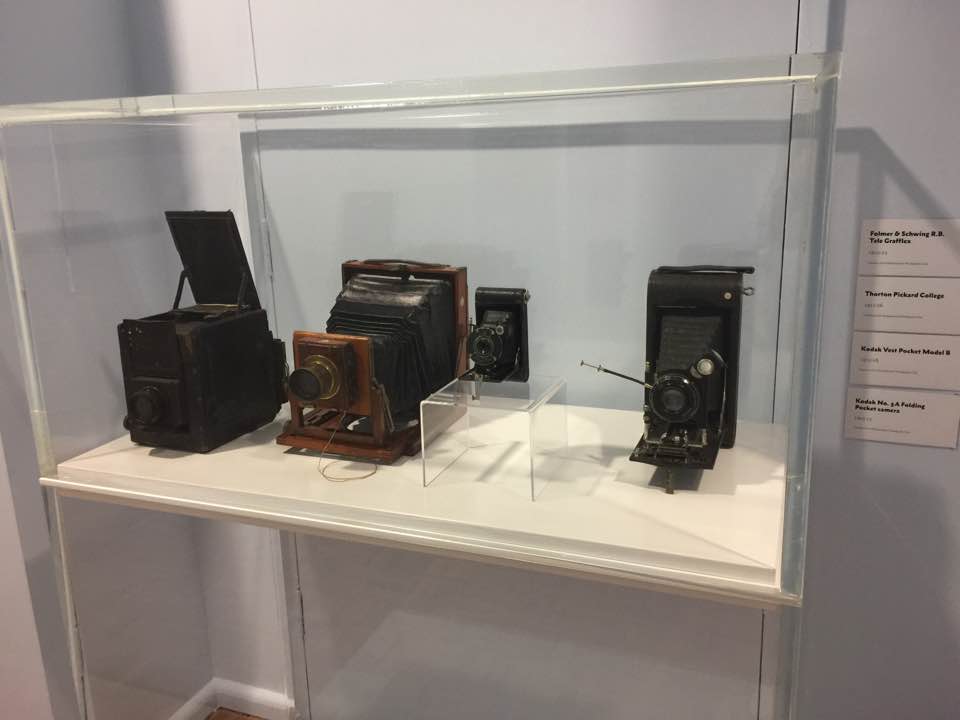
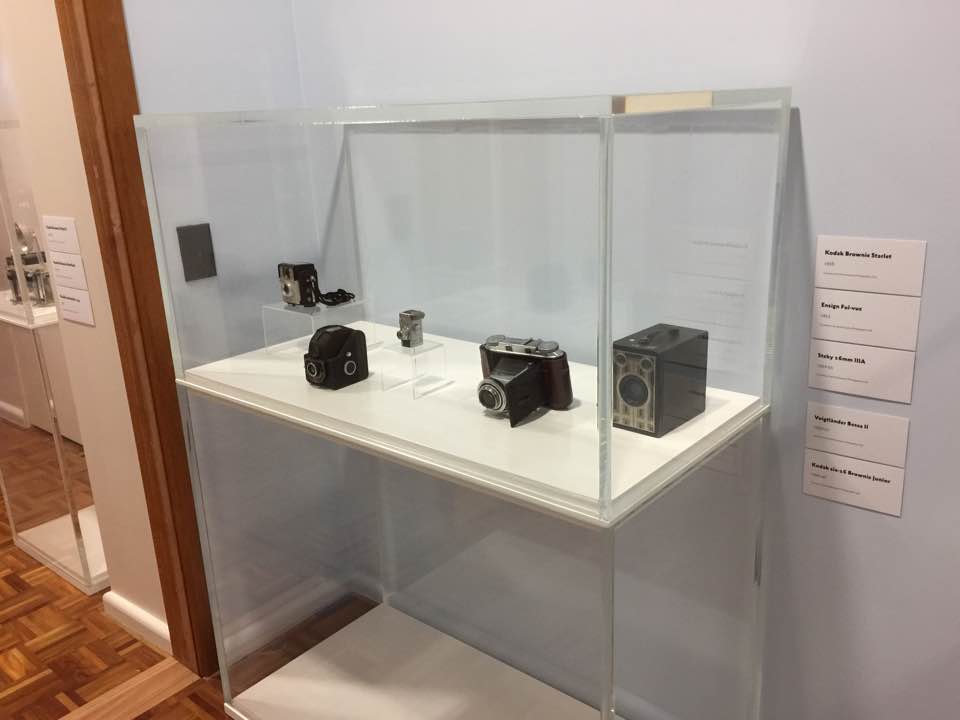
    In saying this, it was nicely designed in that the wall opposite the offices displayed a chronology of cameras from some of the earliest to one’s used today. At the end of this space was a small cafe and a children’s play area which I thought was a real highlight. Having a play area and cafe away from the main exhibition, but, between the two rooms made the exhibition feel larger than it actually was. It is a pretty nifty way to extend an exhibition experience.

    21106415_10159266951045261_5230560104310652741_n
    Rockhampton Art Gallery
    21191951_10159266951015261_4094491824509019628_n
    Rockhampton Art Gallery
    21105982_10159266951075261_1152202719277937277_n
    Rockhampton Art Gallery

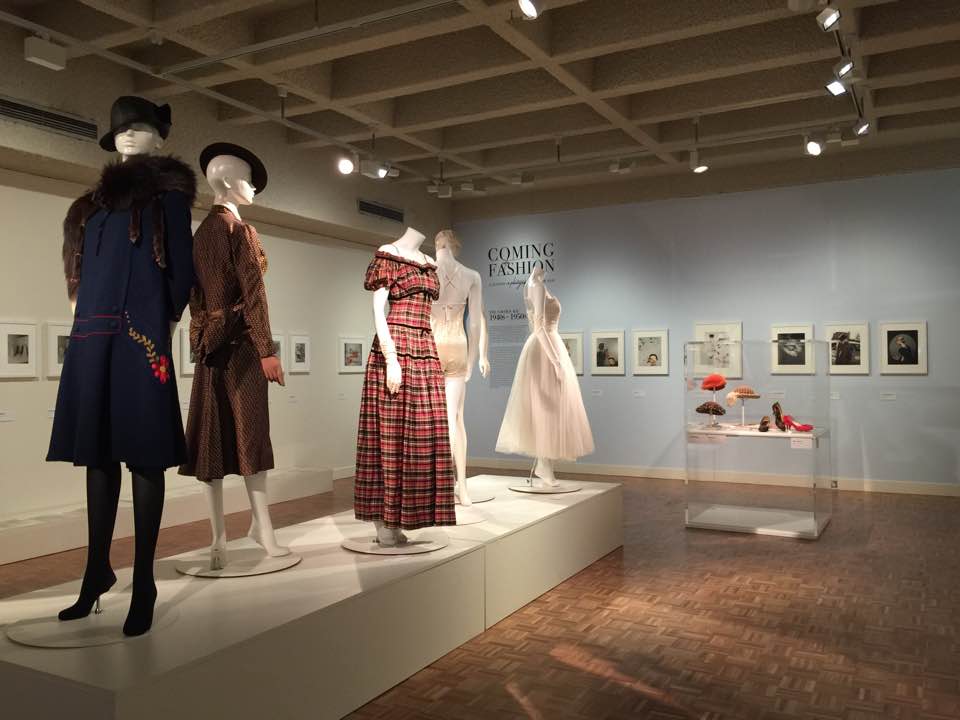
    After walking through yet another door, I was in the final room of the exhibition. Considering it looked at ealier decades from the 1910s to the 1980s, it was definitely more enjoyable than the first room. The textiles in the middle were, again, the highlight. Especially this beautiful tartan dress!

    21106456_10159266951215261_3734039259243345658_n
    Rockhampton Art Gallery

    After walking around this room, I walked out the door expecting more to the exhibition. As I soon discovered, however, it was the end. Although small, the exhibition was well curated and it was very interesting to see how they were displayed and fixed to the wall.

    I will say that the Gallery had a gift shop filled with treasures. I purchased a Guerilla Girls car air freshner (“to eliminate the smell of patriarchy”) and a doll wearing a mondrian dress. The latter is a handmade art piece and so cute I couldn’t resist.

    Overall, I am very glad that I visited the Art Gallery and I can’t wait to see what they offer in the future. I did see a Watercolours and Wine event that had my name all over it.

    There is so much to see and do here I cannot wait to explore more! On my list is definitely a few trips to snorkel the Great Barrier Reef, swim with turtles and rays at Heron Island, see fossils in the Capricorn Caves and watch koalas sleep in the Rockhampton Botanic Gardens. I am also unbelievably excited to see the new Museum of Brisbane exhibition – Tastes like Sunshine – when I visit Brisbane in late September.

    For my next post, however, I am going to tkae you on a journey through the heritage buildings of central Gladstone. I hope to walk the route this weekend!

  • Sydney: Museum of Sydney

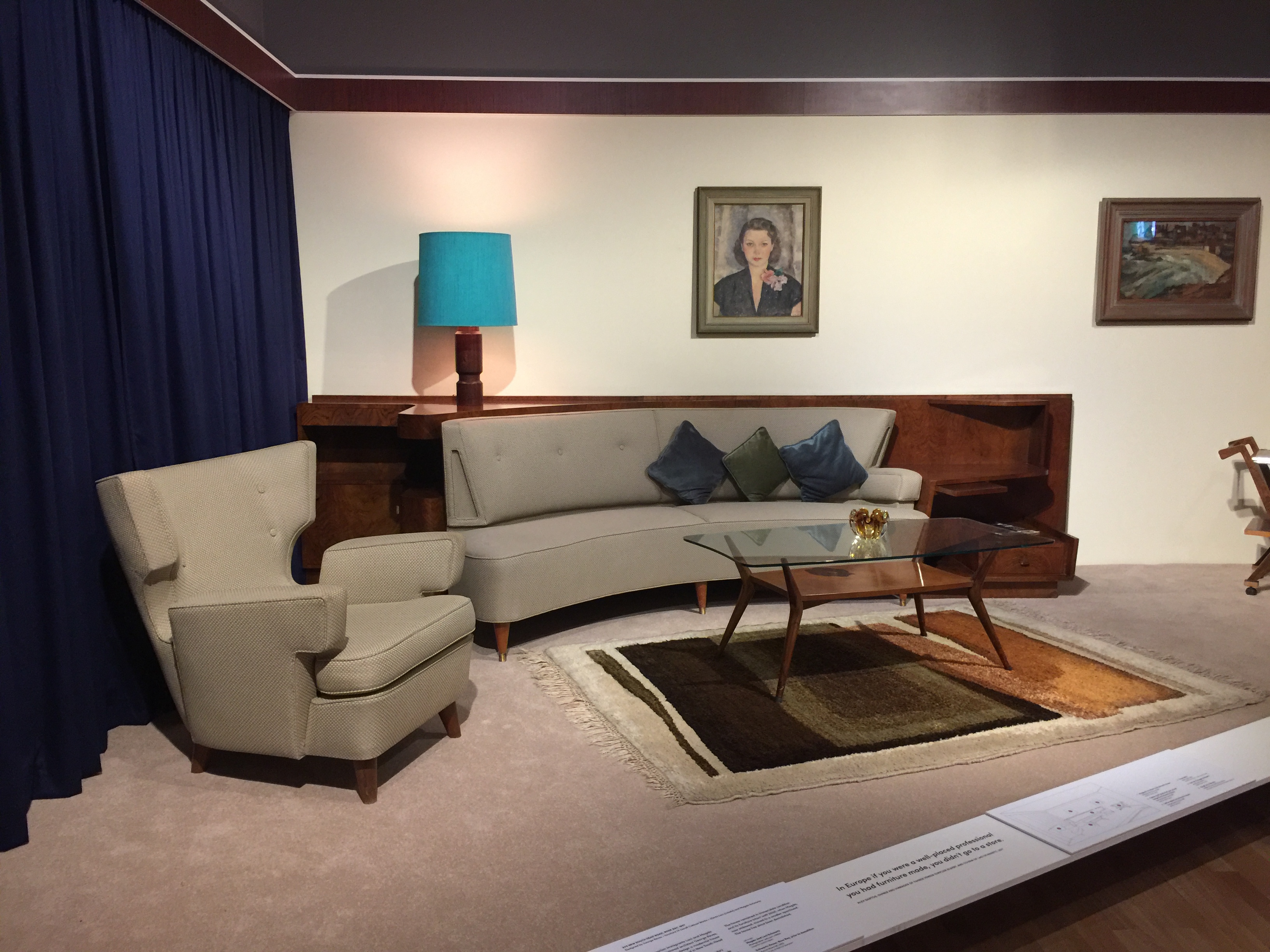
    The Moderns: European Designers in Sydney is now showing at the Museum of Sydney until November 26, 2017. There is something about furniture and homewares from the 1930s to 1960s that just fills a small void in my life. It’s basically the transformation of furniture from verging on impractical to sleek and beautifully designed. In other words, this movement allowed simple to be magnificent. When I heard about this exhibition opening in Sydney I was very intrigued. We must have had some amazing designers around this period, but I’ve never heard their stories. Today was the day to educate myself and admire the men and women who often fled tumultuous circumstances in Europe to practice their craft and realise their designs.

    The exhibition is located on Level 2 of the Museum of Sydney. Just before entering the space, there is a large thematic panel with the exhibition title in neon blue. Contained in a glass tube is a chair manufactured by George Karody. As the introductory panel states, modern Australian architecture is so often associated with Harry Seidler. Those that came before him are ignored and marginalised from the story. So already you feel as though it is going to be a different kind of modernist exhibition that tackles new material.

    The Moderns Entrance

    The exhibition space allows you to select whatever path you wish to take. It is essentially set up to showcase the biographies of early designers and photographs/objects representing their work. The display cases are so perfectly designed to look like 1920s Art Deco pieces. Each designer has their own colour and section of the exhibition. Men and women are represented in the space which was great to see.

    The Moderns
    The Moderns
    The Moderns
    The Moderns
    The Moderns

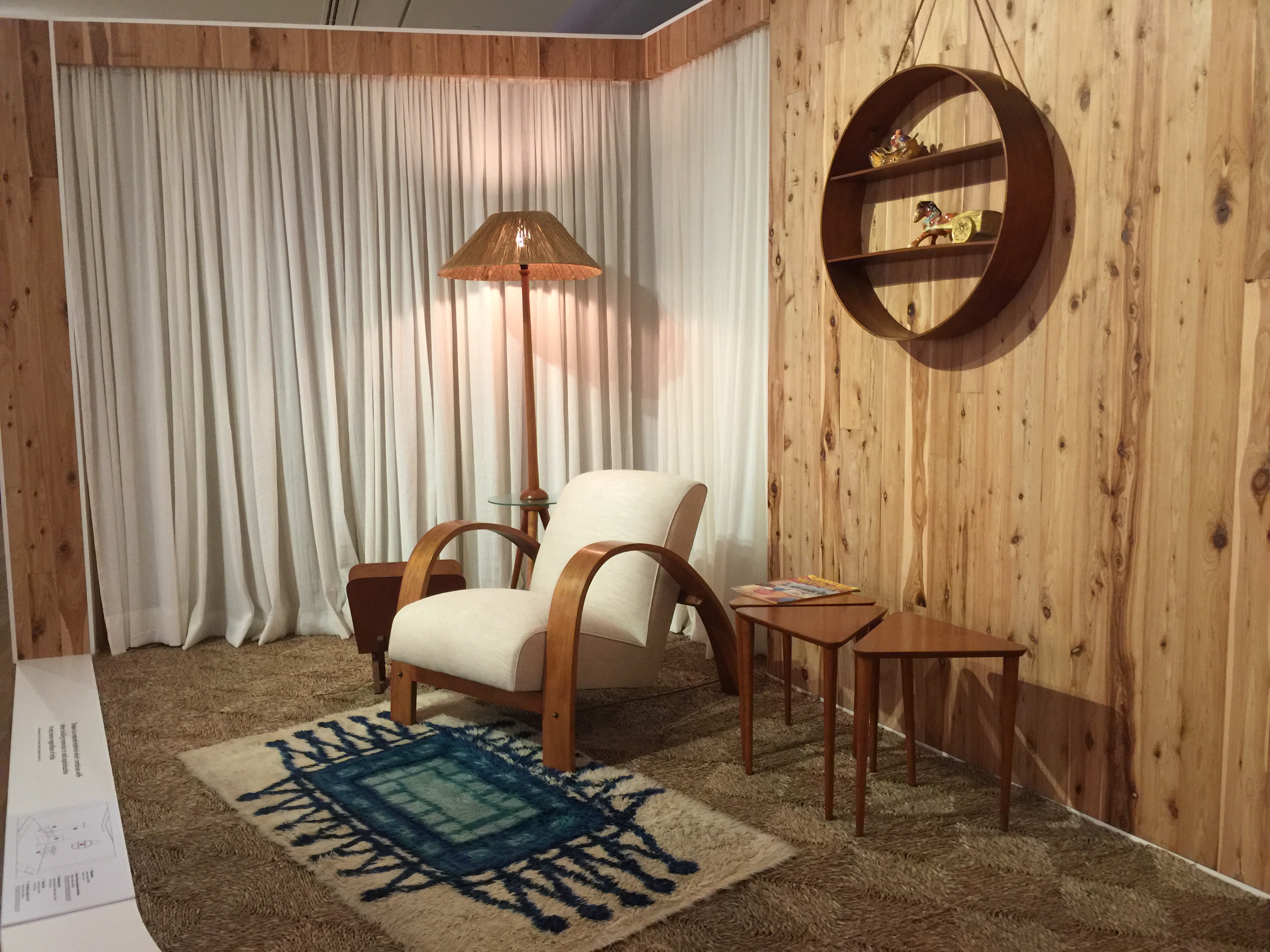
    Apart from the biography panels and cases, parts of the exhibition space were re-created rooms from Sydney houses. The furniture was all inspired or created by the designers and told the story of a particular family and their connection to the moderns.

    That basically provides a nice overview of the entire exhibition space. See the photographs below for further layout information.

    The rest of the blog will focus on three designers that I found to be most interesting. Also, I’ll briefly discuss one of the house set ups that really caught my eye.

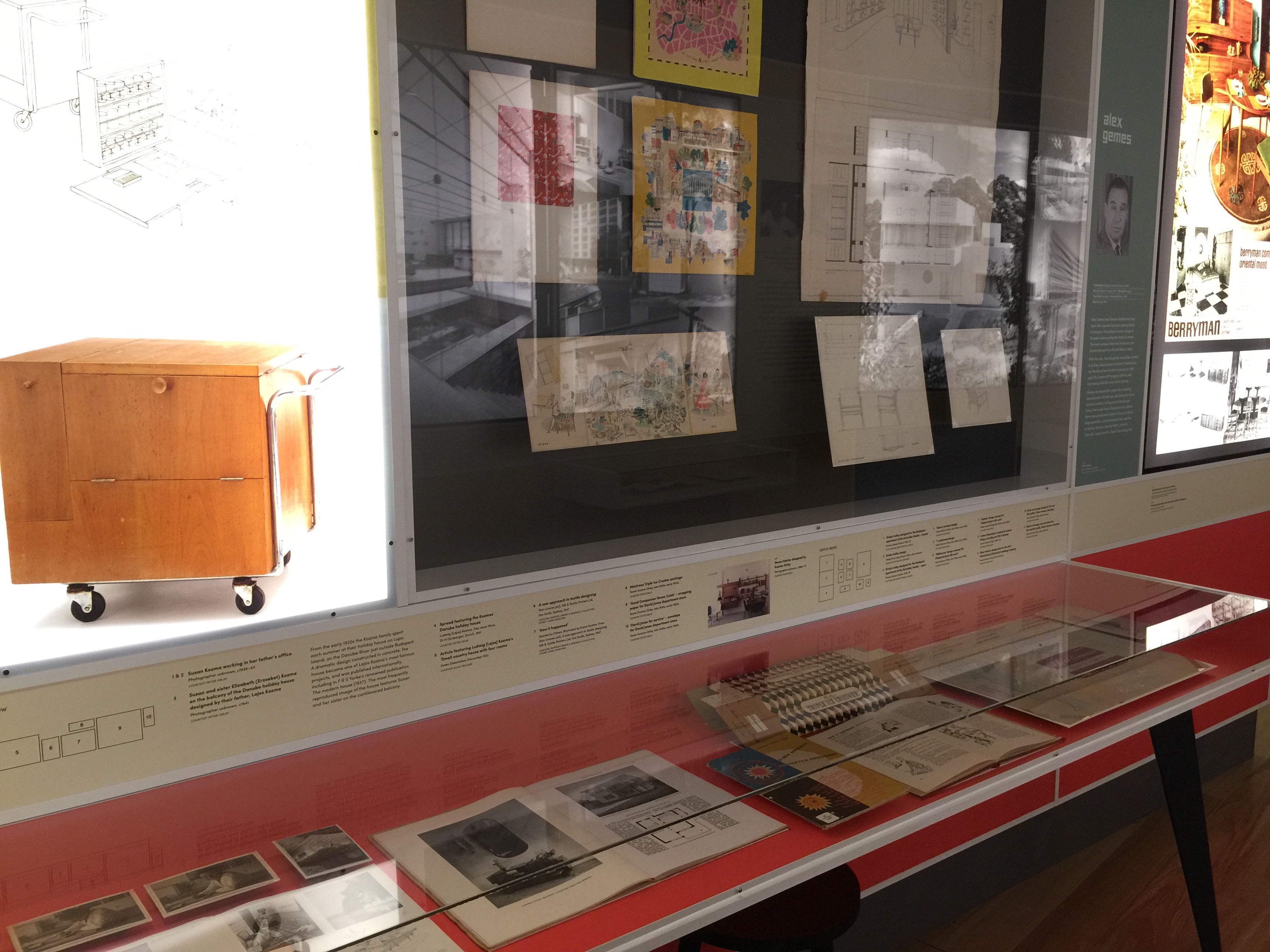
    1. Susan Kozma-Orlay

    Kozma-Orlay was born in 1913, in Budapest Hungary. After studying in Budapest, Stuttgart, and Vienna, she fled to Australia with her family having survived Nazi occupation. During her illustrious career, Kozma-Orlay worked for companies such as David Jones, designing graphics for their silk and textile patterns. She later moved into furntiure and interior design working closely with Stephen Gergely in the eastern suburbs of Sydney. Her earlier work is now on display at the Victoria & Albert Museum in London.

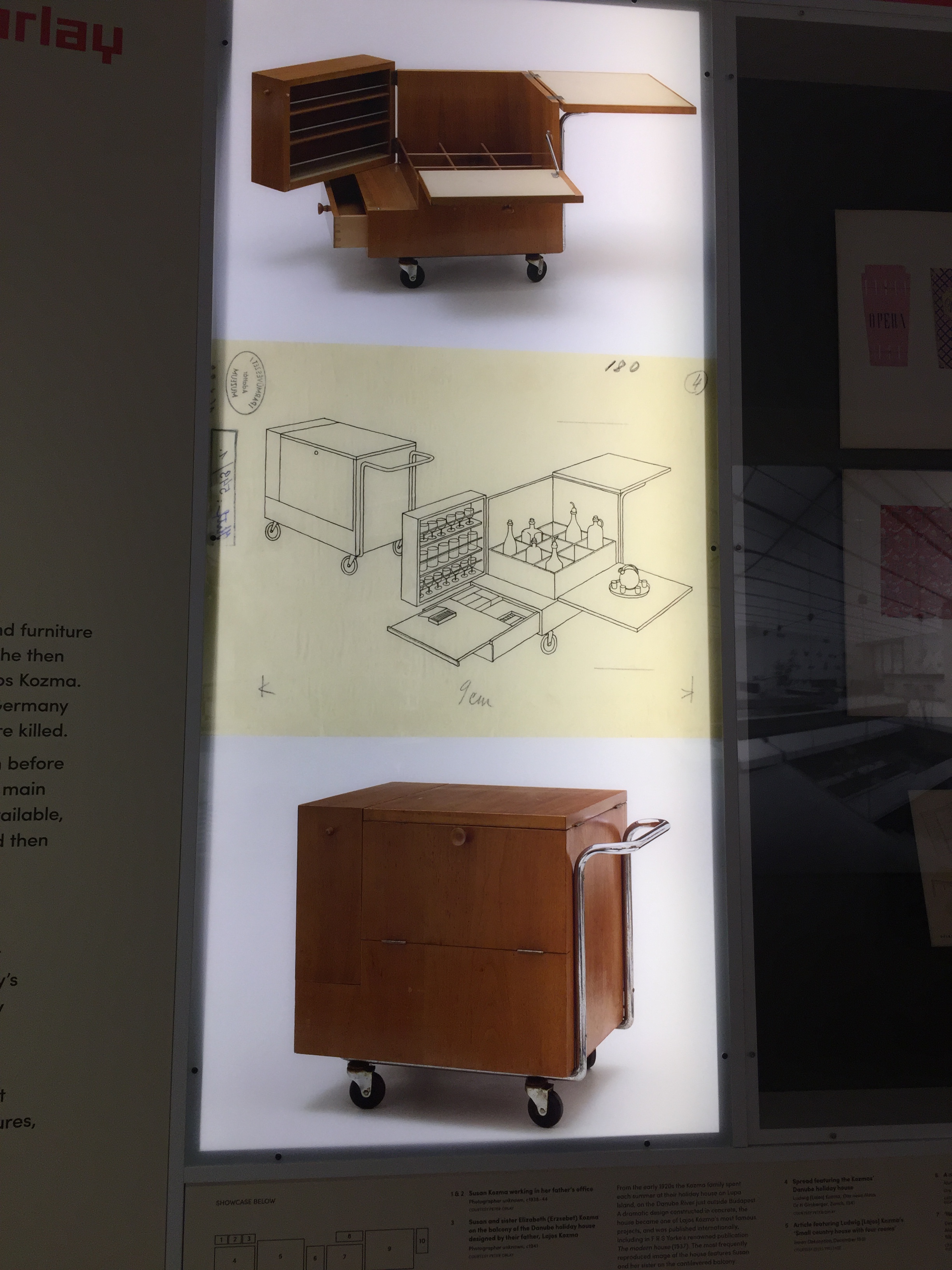
    After reading about this amazing journey from Europe to Australia, you are then invited to see some of her designs both in pictorial form and as actual objects. The first image is of a beautiful drinks chest that has wheels attached for easy manouevring. My favourite object, however, was the samples book created for David Jones containing some of her designs.

    What worked really well in this space was the use of backlighting to highlight specific images. By creating contrast with lights, the display was more visually appealing and your eyes were drawn to the most significant works.

    The Moderns
    The Moderns

    2 and 3. Oser and Fombertaux

    Hans Oser was born in Austria, arriving in Sydney in 1938. Jean Fombertaux was born in France and arrived in Sydney three years earlier. In Sydney, the two formed a partnership utilising their design skills and producing late-international-style architecture.

    Their work included the William Bland Centre on Macquarie Street and the BOAC Travel Centre on Castlereagh Street. The latter was included in the Royal Australian Institute of Architectus in 1971.

    I have selected these personalities because the images that accompanied their stories were extremely powerful. In particular, seeing the Star of David added to one of the buildings made me reflect on the broader themes of the exhibition as well as take a moment to consider wider contexts.

    They also produced some stunning interiors and the backlit photographs were difficult to miss when first entering the space.

    4. Room with Cocktail Cabinet

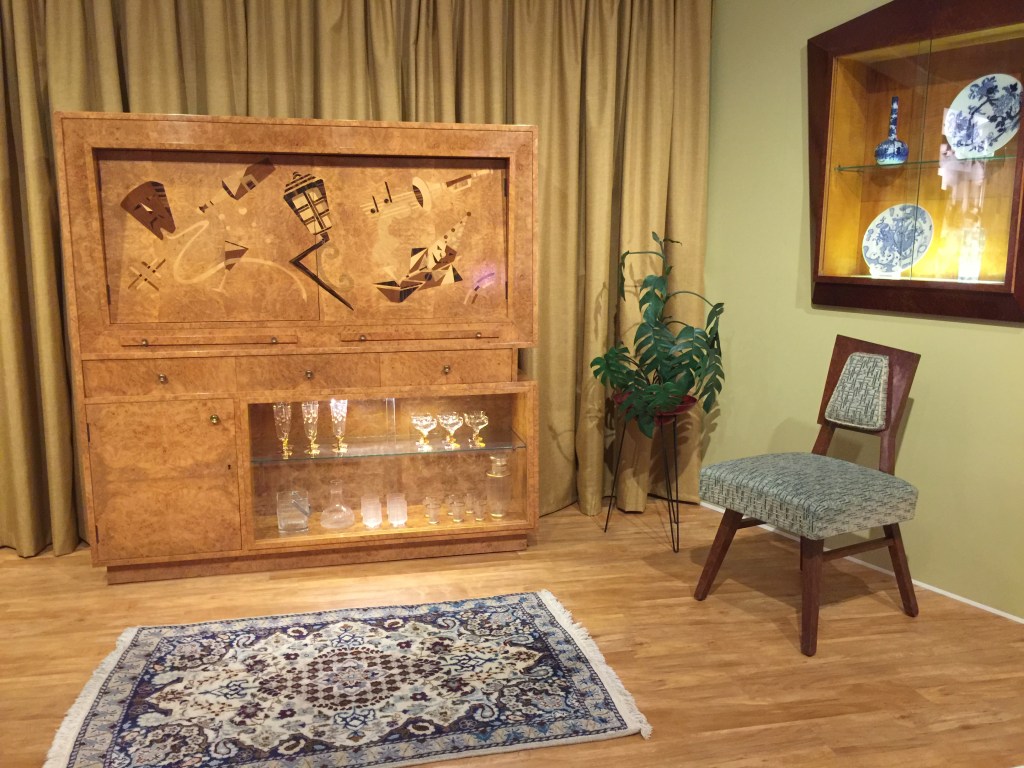
    It is incredibly difficult to walk past this section of the exhibition and not fall immediately in love with the cocktail cabinet. The work is stunning and it is such a treasure piece of Art Deco. Also the wood is sourced from Queensland so a huge plus there.

    The Moderns

    In saying this, there was another room with a great little story attached – the Schwartz House. The room panel explored the story of Laci and Magda Schwartz who emigrated to Sydney from Hungary and had George Reves design their house. This room is an example of their entertaining space where visitors could overlook Sydney Harbour. The story was going so well until the ending. The house was demolished in 2000, seriously heart breaking. All of this amazing modernist design and architecture no longer exists.

    The Moderns

    Here are some of the other room displays:

    The Moderns
    The Moderns

    This level of design and the individuals who championed the modernist movement have been thoughtfully remembered in the exhibition space. I just wish more of these Art Deco properties and their interiors remained! For today, seeing the designs and products in a museum will have to do. I can dream that one day I’ll own a house that will be modernist designed from floor to ceiling.

  • Penrith: Penrith Regional Gallery

    To celebrate 100 years since the birth of President John F. Kennedy (JFK), exhibitions are popping up all over America and in other places around the world. I was absolutely not expecting an exhibition at Penrith Regional Art Gallery and Museum. I was shocked to see that they were displaying photographs of Kennedy in an exhibition titled: American Visionary: John F. Kennedy’s Life and Times. Penrith is approximately one hour by train from Sydney CBD. The journey was worth it to see the exhibition.

    I was so excited to see how a regional museum tackled his presidency and how they selected to display the photographs. In total, there were four rooms and a small hallway. Each room represented a different theme covering the early years, the presidential campaign, and his time as president. It was in the cutest little house inside the gallery complex. You felt as though you were literally walking into someone’s place. Once inside, the video playing footage of the Kennedy campaign etc, transformed the space entirely.

    Penrith Regional Gallery

    It was a perfect size for an exhibition. I spent around 45 minutes looking at the display, but, you could easily see it all in only 30 minutes. To start, there is a thematic panel welcoming visitors to the space explaining how Kennedy and the media were inseparable. His presidency really was in this ‘golden age of photojournalism’ (one of the many reasons why I find his presidency so fascinating). You are then informed that the Kennedy family conveyed a new vision of America – one filled with change and opportunity. It was a very interesting way to introduce the exhibition. It conforms to how JFK is regarded today – as the hopeful President who never had the chance to complete one term of his presidency.

    IMG_0037
    Penrith Regional Gallery

    After reading the panel there is no set way to see the photographs. It makes sense to start in the first room on the left that depicts the early years of Kennedy up until his presidential campaign. Now I have seen multitudes of photographs of his presidency. I’ve visited the JFK Library and Museum in Boston a few times and have researched his presidency for many assignments and just out of interest. There were so many photographs I had never seen before which was seriously exciting. I liked how they covered his early life before launching into his thousand days in office. Also, the photographs weren’t just of him. They have made a great effort to select images that also depict the social, cultural, and wider political issues America faced under his presidency. For example, there was a powerful image of the Birmingham Riots.

    IMG_0040
    Penrith Regional Gallery

    The rooms were all curated with such care. The photographs were well positioned and did not clutter the space. Often I feel galleries are too sparse or too cluttered so it was nice to feel a balance. My favourite room was right down the back of the house also on the left. The image of JFK and Robert “Bobby” Kennedy sitting on a bed contemplating everything is one of my favourite images of his presidency. It was used on the book cover for “Brothers” by David Talbot. It is just a stunning photograph capturing the hidden history behind the public face of JFK that eluded to nothing but confidence.

    IMG_0049
    Penrith Regional Gallery
    IMG_0132
    Penrith Regional Gallery

    I also enjoyed the room that looked at the youth of Kennedy including family photographs and photographs of his wedding to Jacqueline Bouvier. There was a small thematic panel exploring the family dynamic of the Kennedy family which is complex, tense, and filled with misfortune.

    I also wanted to share a couple of photographs I had never seen before. The first is of Kennedy’s visit to Berlin in June 1963. Mere months before his assassination. The photograph depicts Kennedy at Checkpoint Charlie, looking at the wall with a crowd of East Berliners seen in the background. It would be fantastic to have this image on display at the Kennedy Museum in Berlin!

    IMG_0043
    Penrith Regional Gallery

    Another image I had never seen before was one of JFK sitting in a chair writing something while children crowd around the window outside. It is such a fun photograph and I spent a little while contemplating whether or not it was entirely staged. Clearly the majority of his photographs as President have been staged to conform to a certain image. This one, however, looked more natural than the others.

    IMG_0136
    Penrith Regional Gallery

    Finally, another highlight image was not of JFK himself, but, of the voting booth during the election. You can only see the legs of those inside the booth. Again, this is a quirky image and a great addition to the exhibition space.

    IMG_0096
    Penrith Regional Gallery

    The only real critical thought I had throughout my visit was that occassionaly there were obvious spelling mistakes on the labels. There was one glaring word in the introductory panel that did not fit in the sentence. I did only notice these errors post-visit while I was looking through my photographs.

    Overall, I had a great day spending time with the photographs of Kennedy in Penrith. I would highly encourage those with even a slight interest in his presidency to make the journey and see the exhbition for yourself. Out of all the photographic exhibitions of Kennedy I have seen, this one ranks amongst the best. Everything from the location to the video sound permeating the rooms allowed it to be a great tribute to a fascinating President.

    IMG_0045
    Penrith Regional Gallery
    IMG_0097
    Penrith Regional Gallery
    IMG_0138
    Penrith Regional Gallery
  • History of Medicine Conference

    On Wednesday the 12th of July, I attended the History of Medicine Conference in Melbourne. I presented alongside three incredible women, Monica Cronin, Tilly Boleyn, and Ari Hunter, in a panel on Women in the History of Medicine. Rather than provide a summary of the day, I have decided to post my talk (an abbreviated version) and screenshots of some of the publicity our panel received through Twitter. It focuses on how museums can assist in rewriting dominant narratives and represent the women who have been consistently marginalised.

    In 1812, Frances ‘Fanny’ Burney underwent a mastectomy without anaesthesia. In the days post her surgery, Burney wrote a letter to her sister Esther Burney describing, in great detail, her experience of surgery. Almost ninety years later, in 1901, Dr Lucy Gertrude MacMahon was born in Sydney. After studying at the University of Sydney, MacMahon was awarded her Bachelor of Medicine, Bachelor of Surgery and began practicing as an anaesthetist. Whilst seemingly unrelated, these two specific case studies can shed much light on the experiences of women in this history. Both, however, present different research challenges which will be explored.

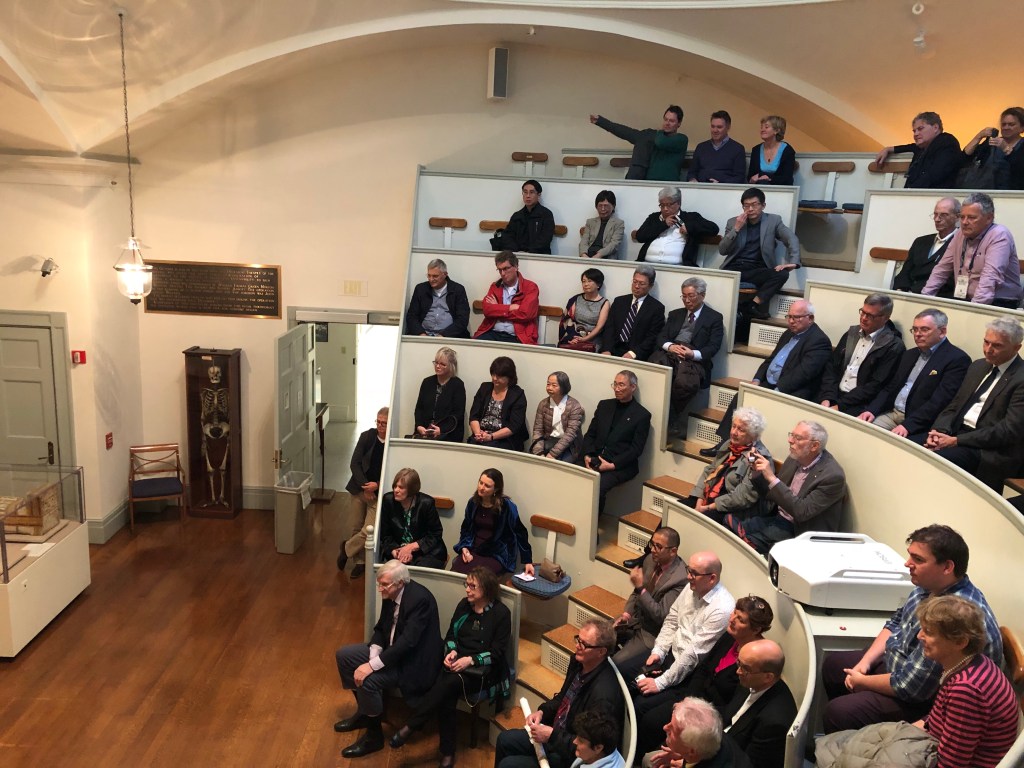
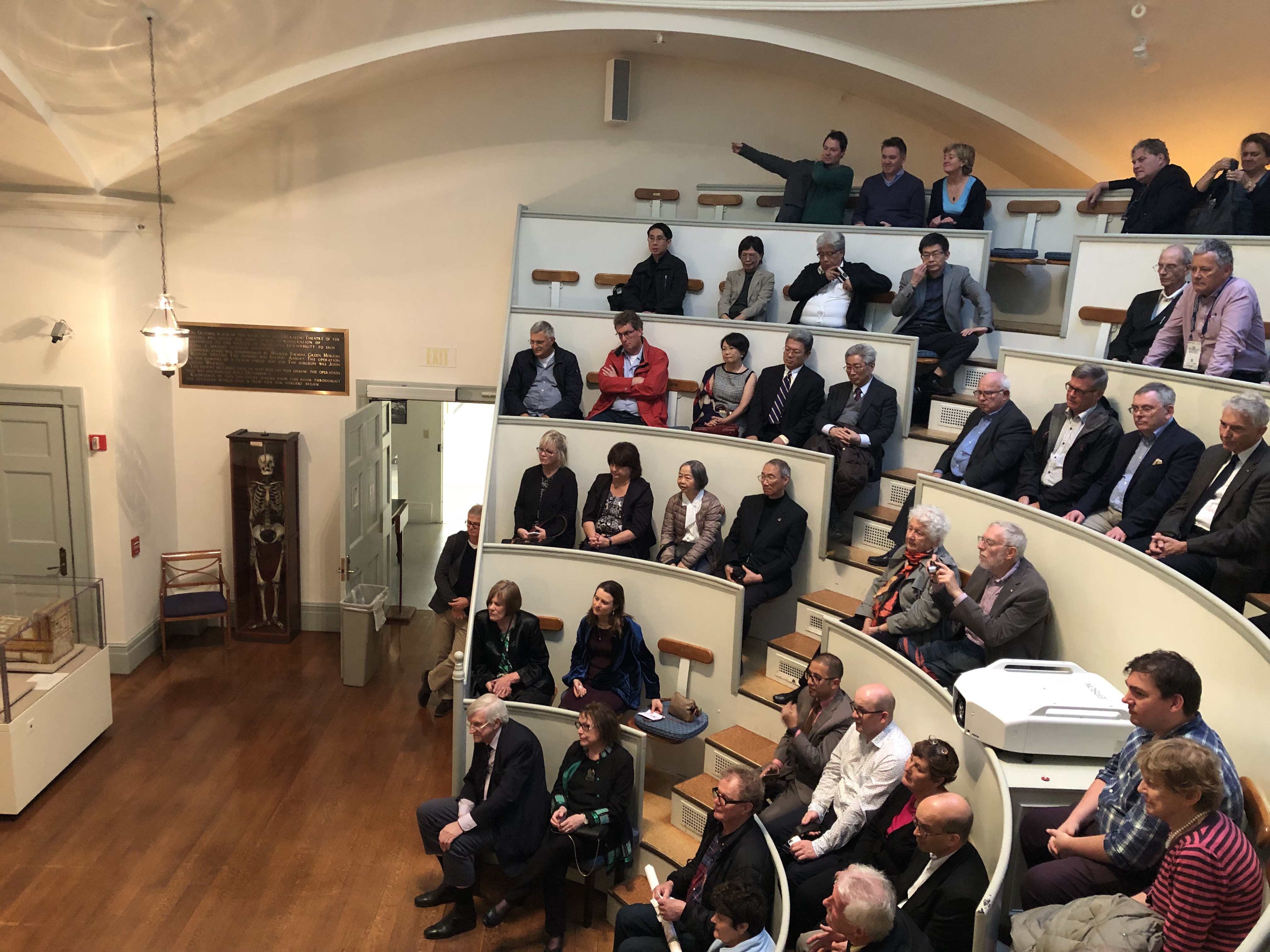
    To start, however, I am going to provide some context on the history of anaesthesia and the persistent issues that have emerged in the discipline. On October 16, 1846, William T. G. Morton publicly demonstrated the use of ether as a form of anaesthesia. This surgery was performed at what is now termed the ether dome in Massachusetts General Hospital. Around the same time, Dr John Snow was experimenting with chloroform and ether. Snow was a significant figure in early public health. His work on cholera, in particular, has been celebrated as a major contribution to the understanding of health in the 19th century. He mapped the spread of cholera determining it was being spread by contaminated water. On the whole, the history of anaesthesia tends to focus on these characters, prioritising their developments and contributions. While their stories are important, the context in which they were operating in is often neglected. This is not because the evidence does not exist, it is because the evidence has not been properly analysed and evaluated.

    In historical theory, this approach to analysing the past has been labelled the “Great Man theory”. Popular in the 19th century, this theory suggests that the past can be largely explained by “great men” or heroes who in some way impacted on the past. Over time, this theory has been re-evaluated and deemed too simplistic in understanding the past. Instead, different schools of history have now emerged that consider the past from a variety of angles – for example social, cultural, and gender history.

    Rather than focusing on the “great men” these schools have turned their attention on re-interpreting the source material, incorporating different types of source material, and challenging the dominant narratives. The rest of my paper will delve into the stories of Frances Burney and Dr Lucy MacMahon. I will be answering questions such as: how can their stories contribute to understanding the history of anaesthesia? How can their accounts be examined from a different historical perspective and what can this tell us about the past?

    The first example I am going to share is the account of Burney of her mastectomy in 1812. In the case of Burney, her full letter and account of surgery exists, yet has never been analysed in depth. It is considered an excellent example of an account written in the time before anaesthesia. In 2010, Michael Kaplan published the entire letter of Burney to his blog “The New Jacksonian Blog”. Prior to this, snippets of the letter were available in various places, however this blog entry has allowed the letter to reach wider audiences.

    The account is primarily used to outline how horrific surgery was prior to anaesthesia. Burney is almost always used as an example resulting in her entire experience being broken down and fragmented. In particular, her account of the actual surgery itself is focused on. In her words “when the dreadful steel was plunged into the breast – ‘cutting through veins – arteries – flesh – nerves’. I am going to briefly cover the other topics raised by Burney and how her letter can be used for much more than simply understanding the exact moment of surgery pre-anaesthesia.

    At the beginning of her letter, Burney writes on the events leading up to the surgery. As she states, “I began to be annoyed by a small pain in my breast, which went on augmenting from week to week.” Eventually, Burney was persuaded to see a medical professional and have an examination. Burney recounts how terrified she was at the prospect of something being wrong. It provides a fantastic insight into patient emotions that can be compared/contrasted to present day. It can also be read as indicating an awareness of the limitations of medicine. Perhaps her terror came from what was unknown regarding surgery. Later in the letter, Burney describes in detail her struggle with accepting the surgery and finally providing her consent. It reads as a tumultuous journey through stages of grief ending in acceptance.

    “I called upon them to speak. M. Dubois then, after a long and unintelligible harangue, from his own disturbance, pronounced my doom. I now saw it was inevitable, and abstained from any further effort. They received my formal consent, and retired to fix a day.”

    The letter can also allow for an insight into patient/doctor relationship in the 19th century. Throughout the letter, Burney references multiple doctors who were consulted regarding the potential for surgery. For each doctor, Burney writes down her impression and how she regarded their level of care. For M. Dubois, who provided the initial consultation, she was wary of his inability to tell her directly she required surgery. Instead, Dubois notified her friend this was the only option and it was his responsibility to then notify Burney displaying “the bitterest woe”.

    Burney is then examined by Dr Larrey, Dr Moreau, and Dr Ribe. All three come to the conclusion that surgery is necessary. The patient/doctor relationship between Burney and Dr Larrey appeared most strong as on telling Burney the news he “had now tears in his Eyes’.

    It is clear that Burney can offer a more diverse account of surgery pre-anaesthesia when her letter is read through different perspectives and with a sharper focus.

    My second case study is on Dr Lucy Gertrude MacMahon, a foundation fellow of the Faculty of Anaesthetists Royal Australasian College of Surgeons. Prior to becoming the College of Anaesthetists, a faculty was established in 1952. There were forty original fellows of the Faculty including six women. During my internship at the Geoffrey Kaye Museum, I researched all forty Foundation Fellows for the online exhibition Lives of the Fellows. As part of this online exhibition, a biography was required for each Fellow including some basic information such as date and place of birth. I was working to a project deadline and had twenty days to complete as much research as possible. In the twenty days, I managed to complete preliminary research on all forty fellows and additionally completed fifteen entries including sourcing photographs and objects in the collection. Each ‘fact’ about the fellow was validated through thorough primary research. Lives of the Fellows is still an ongoing project collecting further research and building upon the foundations.

    For many, the research was quite straight forward. Many of the male fellows had war records that detailed their date and place of birth along with their University qualifications and other interesting pieces of information.

    One woman in particular, Dr Mary Burnell, had folders filled with information and primary source documents. Her anaesthesia records, details of her study, certifications, and information on her travels was all available in the archives. For many of the other women, however, their files contained minimal information and required extra research. Rather than dismissing these stories as the research can be perceived as too challenging, writing these women back into the story and history was achievable with the right skills and tools.

    Dr MacMahon was selected as I saw the most transformation with her story. The following will now cover how I pieced together her story.

    To start, I was made aware that she came from New South Wales so my first stop was the New South Wales Government Registry of Births, Deaths & Marriages. Considering I had a middle name and an approximate date range, I was able to discover MacMahon was born on the 21st of May 1901 in the town of Cootamundra. She died in June 1996. I then found year books from the University of Sydney, discovering that she was awarded her MB CHM – or Bachelor of Medicine, Bachelor of Surgery in 1924. The year book also disclosed that MacMahon had undertaken her residency at the Royal Prince Alfred Hospital in Sydney. Just from two databases, I had already pieced together a short biography.

    In order to boost her biography and ensure that her story in the history of anaesthesia was recongised in the exhibition, I focused my attention on the treasure chest that is Trove. For those of you who are unaware of Trove, it is a search engine that “brings together content from libraries, museums, archives, repositories, and other research and collecting organisations big and small”.

    In Trove, you are able to search for an individual, narrowing the date range, adding important information to refine your search, and, ultimately, viewing the relevant documents, images, or books. When I typed in Dr Lucy MacMahon and set the date parameters, I was met with a wealth of information. Dr MacMahon was a socialite. She attended many balls, weddings, parties, and other social events in the 1920s and 1930s. At each of these events, information was provided such as where she was working. This is mainly because the events were held to raise funds for hospitals. I pieced together that MacMahon worked at the Canterbury District Memorial Hospital before moving to Lewisham Hospital in Sydney until 1938. She then worked at St Vincent’s Hospital in Sydney before venturing off to England. In a newspaper article from 1938, it stated she was on board the Orion ship to England which we confirmed against ship records.
    5

    Even the exordium document revealed more than I first realised. The address of her practice she had provided was the same as Dr Harry Daly. This would indicate that on her return to Australia after World War II she entered into private practice with Daly.
    Apart from her professional placements, the newspaper articles also revealed information on her family. MacMahon had two brothers and four sisters. Her sister, Dora, was also a doctor and two of her other sisters had married doctors.

    By filling in the gaps of her story, we are ensuring that the work and life of Dr MacMahon is not neglected from the wider picture of the Foundation Fellows. Her contributions as an early female anaesthetist have now been recognised and publicised for visitors to the online exhibition. Her story can shed light on the history of anaesthesia by providing a different perspective.

    It was also interesting to see what other history was revealed by searching her name.  For example, I discovered the popularity of hospital charity functions in Sydney during the 1920s and 1930s and the type of audience they attracted. Through databases such as Trove, these histories and stories are becoming increasingly accessible.

    It is clear that the rewriting the history of anaesthesia by including women can yield differing perspectives and a more rich understanding of this past. Their stories have been neglected or only briefly considered. By incorporating their experiences as both patients and doctors, the gaps in the history of anaesthesia can begin to be filled.

    Twitter:

    1
    2
    3
    4
  • Harry Daly Museum Seminar

    Today I ran my first ever museum event. It was a medical history seminar titled: Collecting, Curating, & Conserving. We had an excellent turn out of thirty professionals from all over New South Wales and even Victoria! It was a genuinely lovely morning that involved being surrounded by incredibly passionate people in the field of medical history. Throughout the day, we heard about the challenges medical collections face and how various collections have been formed and maintained.

    In total, we had seven speakers present on a topic of their choice. This allowed for such a great diversity of topics from changing permanent displays on a shoestring budget, to identifying medical objects through in-depth research. I am going to provide an overview of each talk and try to summarise the main aim and findings.

    FullSizeRender 4
    Program
    1. Cate Storey – Transforming Archives: Making Stuff Relevant for the 21st Century and Beyond

    Storey focused her presentation on the archives of the Royal North Shore Hosptial. Essentially, Storey is building the archives from scratch and wanted feedback and assistance from the seminar participants. Her presentation posed some significant questions to consider when creating an archive: What is the future of the archive? How do we sort the material? How do we catalogue the collection?

    I have asked myself very similar questions while working with the Gwen Wilson Archives. Especially, how to sort the material. When you are faced with hundreds of boxes marked “to be sorted” it can be a huge undertaking just to work out how they should be arranged. Storey has achieved so much with the archives, rescuing old historical registers and re-organising a significant amount of material.

    IMG_1739
    Cate Storey

    2. Monica Cronin – A Museum Without Walls: Taking the Museum Experience to the People

    The Geoffrey Kaye Museum of Anaesthetic History in Melbourne has done incredible work reaching out to audiences through online platforms. This has included social media, blogs, and online exhibitions.

    Cronin provided a great overview of the museum’s outreach work which are dot-pointed below:

    It was an engaging talk that certainly sparked the imagination and creativity of those in the audience.

    IMG_1742
    Monica Cronin

    3. Me – Meeting Standards: Transforming the Harry Daly Museum’s Permanent Display

    It was then my turn to talk. I focused on how the permanent display of the Harry Daly Museum has transformed in order to appeal to a broader audience.

    This has included reducing the amount of text in the display cases, creating new object labels, and moving objects into a more cohesive display. I was so grateful for the opportunity to present on my work and the feedback I received was overwhelmingly positive. I am now more confident than ever with the work I am completing and the direction the museum is going.

    4. Elinor Wrobel – Morbid Anatomy Collection 1890s to 1985

    The Sydney Hospital Museum has been on my must-visit list for too long. The presentation by Elinor Wrobel was an incredibly passionate ode to the museum and its place in medical history. Wrobel spoke on the history of medicine in Sydney and how it has skewed the significance of the hospital. I am excited to visit this museum and see all the wonderful objects with my own eyes.

    IMG_1747 2
    Elinor Wrobel

    5. Dr Bevan Stone – Medical Collection Query Service

    There were two main parts to this presentation.

    1. The past role of the History of Medical Museums specialist group
    2. How to identify medical museum objects

    With the latter, Stone showed a picture of an altar cloth from World War I that was seemingly unrelated to a medical history collection. On further research, he discovered it was a cloth embroided by Australian soldiers who were amputees. It was an incredible story!

    IMG_1752
    Dr Bevan Stone

    6. Derek Williamson – How does a Medical Museum Visit Change People’s Health Intentions?

    This presentation focused on how medical museums can change perceptions of health. Although Williamson had collected anecdotal evidence, he was hoping to produce data that could be presented to the University of New South Wales. He knew, for example, that visits could potentially change health behaviours. He shared a story of a teacher who after their visit quit smoking because of what they had witnessed in the museum. Considering it is a pathology museum, there are literal human lungs on display that have been affected by cigarette smoke.

    After running some surveys and collating the data, Williamson discovered that primary school and high school students were affected by the messages in the museum. In fact, at an event called ‘Zombies in the Museum’, 86% of participants continued a conversation about the museum post-visit. This is great data suggesting a new significance of medical collections not only in telling the history of the discipline, but actually changing attitudes and behaviours.

    IMG_1754
    Derek Williamson

    7. Dr Rajesh Haridas – The ‘Lost’ Morton Inhaler

    Our final speaker was Dr Rajesh Haridas who spoke on the Morton inhaler that was allegedly lost during the 1840s. So the first anaesthetic publicly administered was by this guy called William Morton – just so you know. After seeing a ‘replica’ in the archives of the Massachusetts General Hospital, Haridas exmained it in more depth discovering it was actually the original.

    This was a great talk on how important it is to scrutinise the evidence.

    IMG_1759
    Dr Rajesh Haridas

    I am so relieved today was successful and I cannot wait to hear back from the participants on their experience. To evaluate the seminar, I will be distributing a questionairre and hopefully will gain some further insight into what worked well and what could be improved on.

    Now that the event is over, I can finally start focusing on the History of Medicine Conference coming up on the 12th of July in Melbourne. My talk will be revising the history of anaesthesia to include women and their stories!

    Thank you to everyone who participated in the seminar!