• Boston: The Peabody Museum, Harvard Natural History Museum & Warren Anatomical Museum

    While I really wanted to write separate reviews for the Peabody Museum, Harvard Museum of Natural History and the Warren Anatomical Museum, I thought that combining them was best. This is because I doubt I could write a decent full review on each of them individually. I am going to focus on only one section of the Peabody Museum, the Day of the Dead display. Similarly, I will only write on one display in the Natural History Museum, the glass flowers.

    I am doing this for a variety of reasons. While I enjoyed the Peabody Museum, I felt I had entered into a museum from the past. It was quite antiquated and while attempts were made to display Indigenous Americans thoughtfully, I was expecting more. For example, evidence of consultation with the various Indigenous groups on display. The highlight for me was the Day of the Dead display which was informative, but also, quite striking. The Natural History glass flowers display was just so unique and bizarre (in a good way) I had to include it in a blog post. I hope that explains why I’m narrowing this down.

    I’ll start with the first museum we visited, the Peabody Museum – full title the Peabody Museum of Archaeology and Ethnology. It is located at Harvard, the law school and arts campus not the medical one. There was a special exhibition about the development of anthropology in America which was interesting considering the profession used international exhibitions to display and legitimise their work. I particularly enjoyed seeing the glass eyes that were both creepy and amazing.

    Eyes in Museum

    The area I want to focus on can be found on the second floor of the museum in the South Americas wing. Day of the Dead or Dia de los Muertos is a festival held in Mexico every year to remember and celebrate the lives of those who have died. What I think is special about this festival is that it isn’t about mourning. It’s about celebrating. There are three stages of celebrating: preparing for the ceremony and building family alters, the feast of the dead, and communicating with the dead

    On display is a huge family alter containing photographs, mementos, and sugar skulls. They are so colourful and bright to attract the souls of the departed. Once at the alter, the spirits can select from a fine assortment of foods to keep them nourished and content. Alters are not just for private residences, they can be found in public places.

    Here is an image of the alter on display:

    Dia de los Muertos
    Dia de los Muertos

    As you can see it is so colourful and contains everything you need to honour the dead. There is something comforting in remembering the dead through colour and life.

    Flowers are something traditionally left on people’s graves or given to those in mourning. I say this to segue into my next blog section on the glass flower/plant collection of the Natural History Museum. Have you ever walked into an exhibition and thought: what exactly am I looking at? This was me in this space. Inside the exhibition are a few large wooden display cases housing literally thousands of flower and plant models. The catch is, they are all made from glass. Leopoldo and Rudolf Blaschka, were two Czech glass manufacturers who were pursued by Harvard to create anatomically correct plant models. These would be used for teaching purposes.

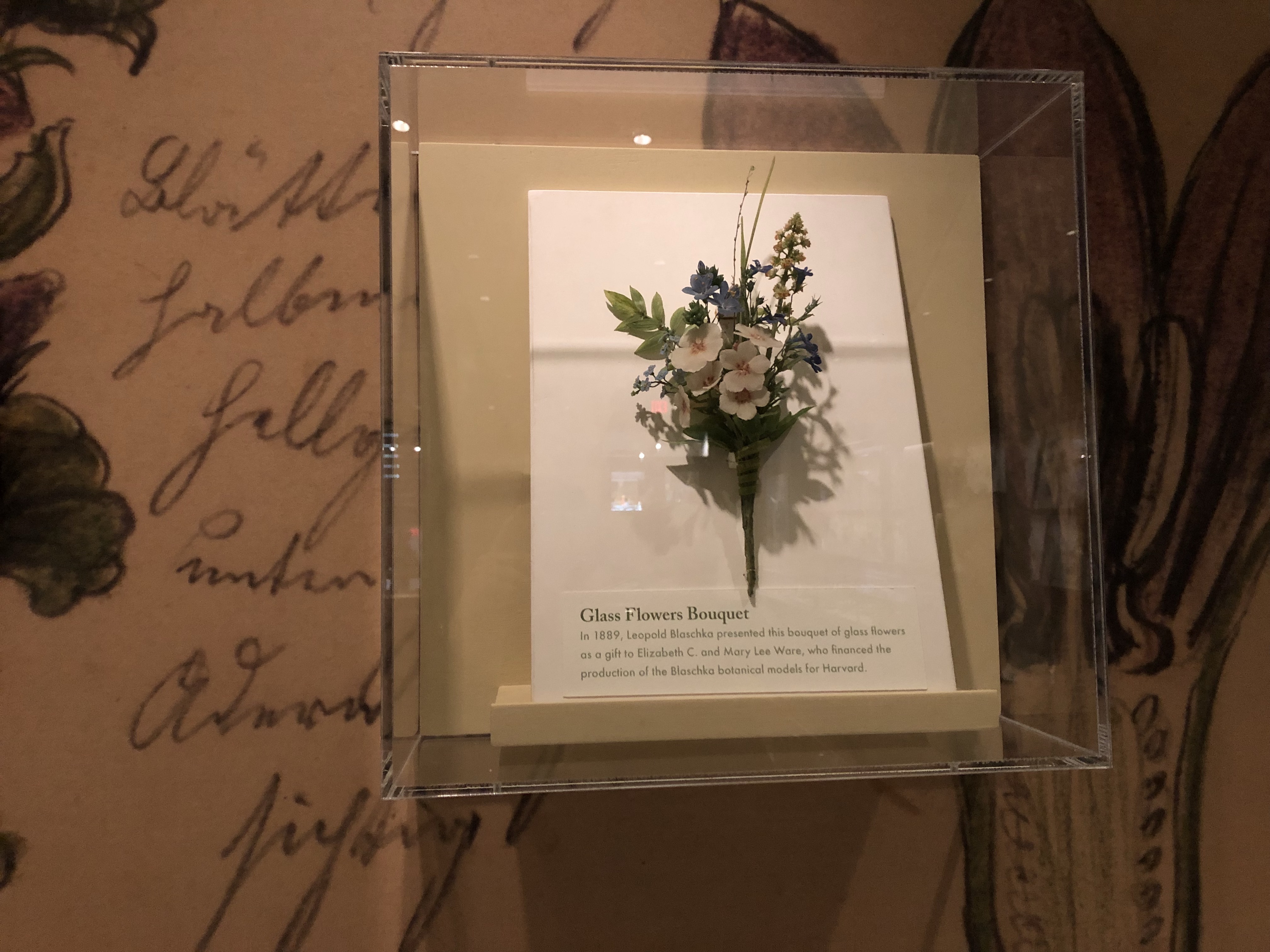
    It took the father and son team almost forty years to complete every single specimen. They were funded by Elizabeth C. Ware and her daughter Mary Lee Ware who were residents of Boston. They just fell in love with the models.

    Harvard Natural History Museum

    The result is pretty spectacular. I could not believe that the specimens we were seeing had been made from glass. They were so intricate and delicate. The display was quite nice with little information labels next to each specimen. My favourite object was a small bouquet of glass flowers presented to Mary Lee to commemorate the completion of the collection.

    Harvard Natural History Museum

    I really don’t have more to say about this, but, I will include some more photographs for you to enjoy. I’ll make sure to include photographs of the entire display as well as some of individual plants and flowers to give you an idea of the work that must have gone into their creation.

    Harvard Natural History Museum
    Harvard Natural History Museum
    Harvard Natural History Museum

    The theme of death and dying has one more element that I’m now going to now delve into with the Warren Anatomical Museum – disease. Moving from the law and arts campus of Harvard to the medical campus we have the Warren Anatomical Museum in the Countway Library. The whole museum consists of four cabinets displaying some medical curiosities and objects of medical significance.

    What immediately caught my eye was a small scalpel that was used in the first operation with ether. There were numerous other objects on display that related to anaesthetics, but, this scalpel was the highlight. Walking around and viewing the rest of the objects on display, I couldn’t help but think how it could be more powerfully displayed. Someone with a background in producing museum displays, could really take this collection and display it in a way that was a little more meaningful. It tread the line between a cabinet of curiosity and a modern display. Considering it was displayed around the edges of a floor in the library, I think a more modern display would have suited it best. 

    I also believe medical museums need to start displaying their collection with some relevance to today. These specimens were once either used to teach or collected for simply their value in being odd or unique. Now, it is our responsibility to ensure the specimens are respected and displayed in a way that can continue to teach. The Warren was more about showing the specimens rather than fully understanding their potential.

    It will be so interesting to visit the Mutter Museum in Philadelphia and compare how they display their collection. From what I’ve already heard, the Mutter is making attempts at using their collection to link people to modern health issues and resources.

    How themes of death and dying are exhibited is very interesting to me. Although the flower collection doesn’t really fit into these themes, it was so beautifully bizarre I just had to include it in this post. I can’t wait to see more of these types of collections in Washington and Philadelphia.

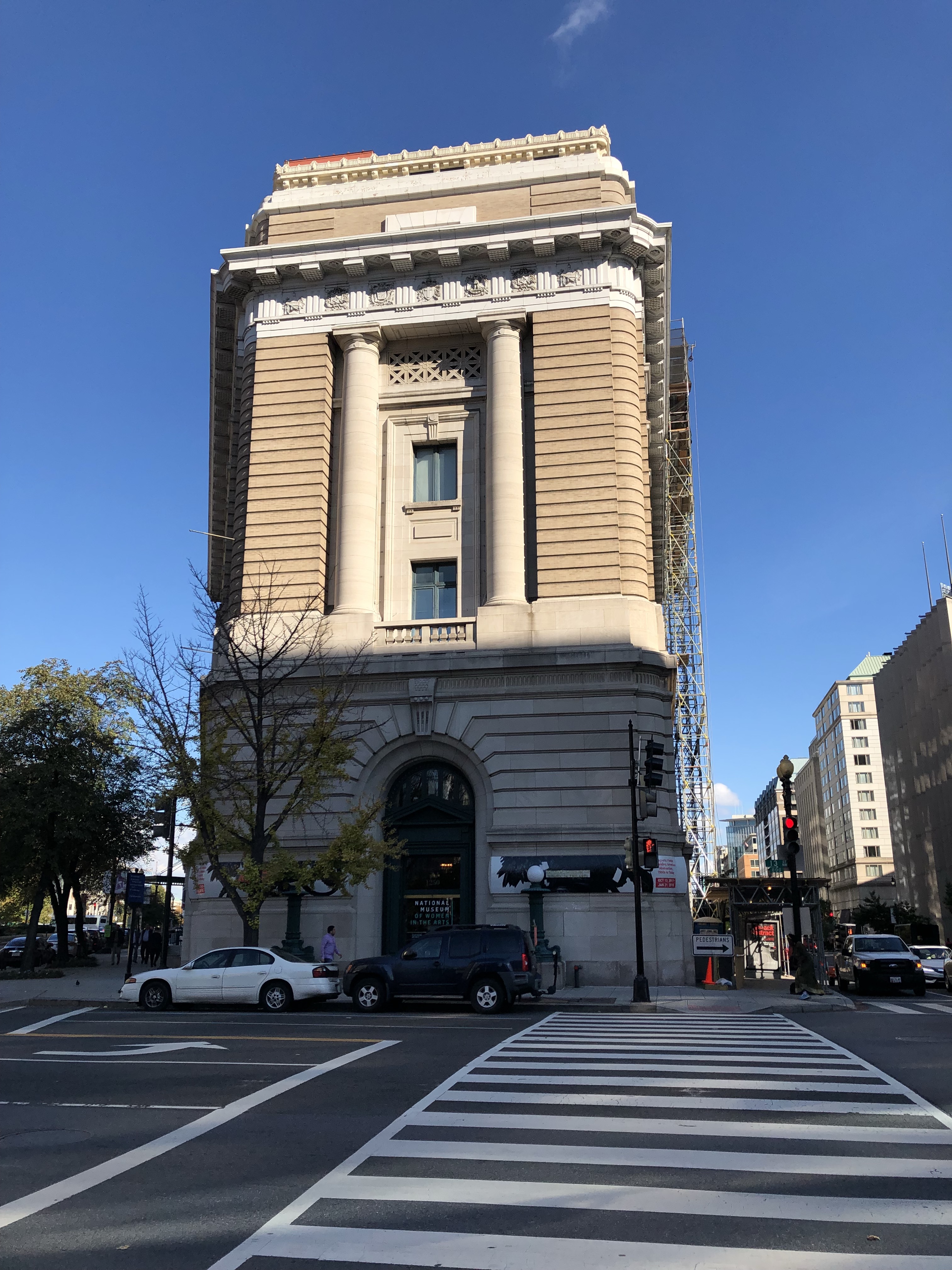
  • Washington DC: National Museum of Women in the Arts 

    I am already breaking the promise I made yesterday about posting every second day. This is because I am literally too excited not to write about the National Museum for Women in the Arts. Before I begin, I am going to assume there are people out there who would say “where is the museum for men in the arts?” Walk into any art gallery in the world and I challenge you to find a greater representation of women artists to men. You’ve already got your museums of men in the arts, visited by literally millions every year. There are of course exceptions, but, there are so few. Now that’s said and done, I can drop my imaginary mic and write on.

    To start, when you walk into the museum you can select either a traditional map and guide or something a little special. Inside an elusive looking envelope are a selection of cards that each contain a different work of art and some information on the reverse. The museum encourages you to take these cards home and share them with your friends. Look, I was already head over heels.

    img_1433
    National Museum of Women in the Arts 

    The first two floors of the museum have some collection highlights on display. I loved the works by Marion Pike. Although Coco Chanel was close to artists such as Pablo Picasso, she chose Pike to paint her at work and at home. The paintings that were produced are beautiful and capture the different sides of Chanel. My favourite was a medium-sized piece, seen below in the top left. It had a subtle multi-coloured background with a contrasting black and white image of Chanel that really stands out. The fluttering of her scarf looks so real.

    National Museum of Women in the Arts 

    The works on the second floor are displayed underneath ornate plaster arches applied to the wall. There are some very early works from the 1700s proving that women were, in fact, present alongside some of the masters we all read and hear about. My favourite piece on this floor was a selection of photographs from a series by Janaina Tschäpe, “100 Little Deaths”. While travelling the globe, Tschäpe wanted to connect to the various places and environments she encountered. She decided to photograph herself lying on the ground. It was randomly beautiful and produced some interesting works.

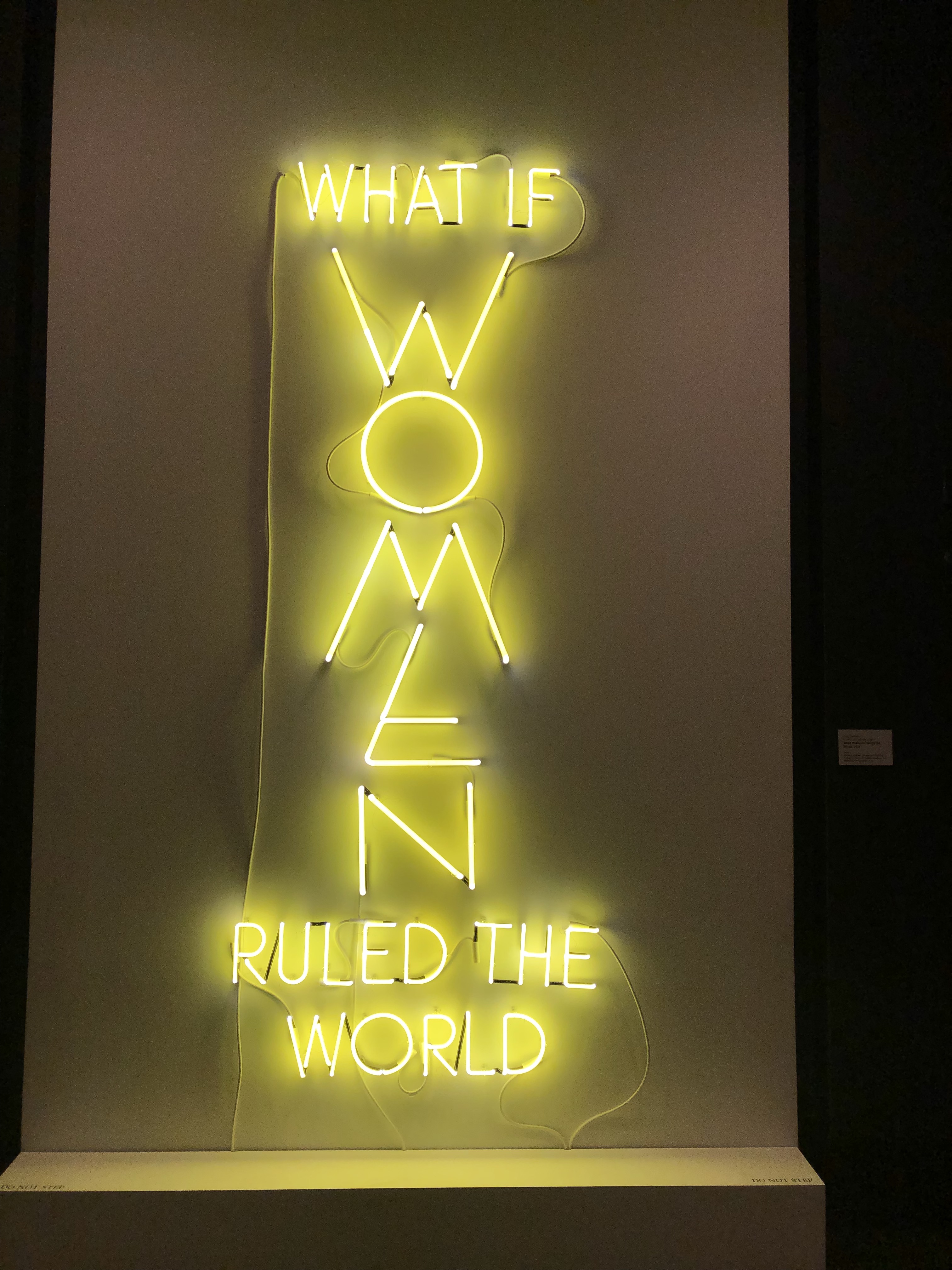
    The top floor was my favourite. So much artwork and so much history. The first artwork we saw is pictured below – hence why it was already my favourite floor.

    What if Women Ruled the World?

    Each room contains artworks pertaining to a theme. The first was herstory. Women were banned from early art schools that taught how to incorporate mythology and religion into art. They were told to stick to portraits because these were seen as easier to produce (I think the Archibald Prize has something to say about that). Women artists did, however, reference and redefine history through their works whether they intended to or not. Another section I loved was called “Body Language”. Works in this section exhibited how feminist artists in the 1960s and 1970s reclaimed how their bodies were represented in art. Prior to this, these representations were controlled by men.

    There was something so wonderful about seeing works by these amazing female artists. Probably because I just haven’t seen a lot before in one place. The atmosphere this created is one that I so strongly believe can be appreciated by both men and women. Speaking of which, it was a shame to see the gallery filled only with women. There were no male visitors while we were there. It would be great to see more men in the museum learning about the history of female artists and their presence throughout history.

    There were so many highlights in the museum I think they each need a special mention. The following six works were my favourites.

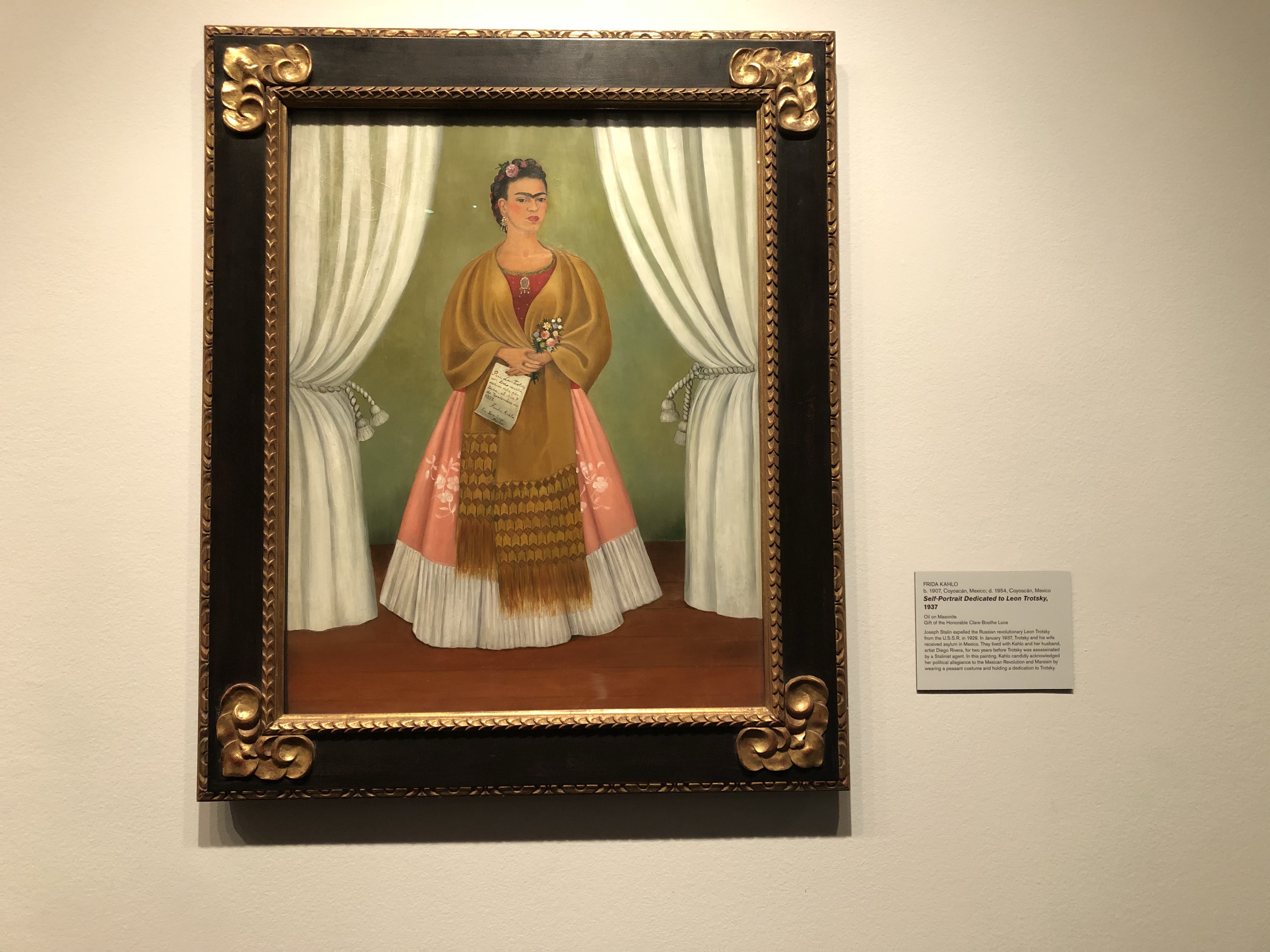
    1. Frida Kahlo – Self-Portrait Dedicated to Leon Trotsky 1937 

    Frida Kahlo

    The style and work of Frida Kahlo just makes me happy. She was a fantastic artist who included strong political and social messages in her colourful works of art. This particular piece shows allegiance to Trotsky and Marxism. Kahlo is dressed in peasant clothing holding a letter of appreciation addressed to Trotsky. I will never tire of seeing her works.

    2. Marzia Migliora – Pleasure 2002

    Pleasure

    Some of the works had two labels – one with heaps of information and one that just had the basics. This work could be appreciated so much more by reading the longer label. This work represents the duality of pleasure and pain. The white leather wedding gloves look soft to wear yet are filled with sharp thorns. A quick turn from pleasure to pain.

    3. Kiki Smith – Sampler 2007

    Sampler

    This piece was in a section dedicated to women reclaiming domestic tasks, such as embroidery, and turning it into art. It combines so many different elements including hand stamped gold and embroidery to create a very intricate piece.

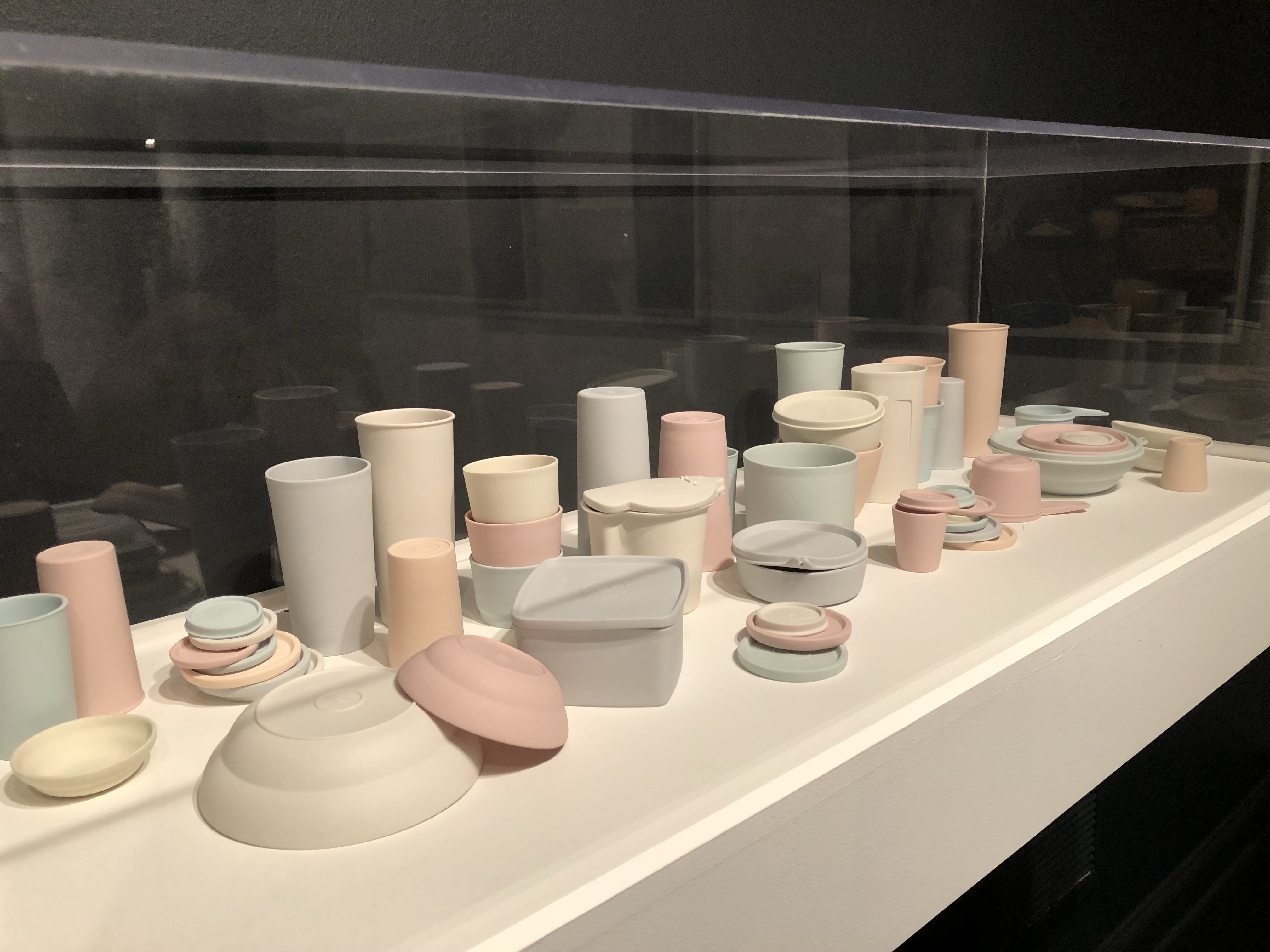
    4. Honor Freeman – Tupperware: Transforming a Chaotic Kitchen 2007

    Tupperware

    I was so excited to see an Australian artist on display! Freeman is from Adelaide where she creates clay molds of everyday objects. This is a collection of various types of Tupperware. They represent notions of domesticity, but also, the human desire to preserve. The label states that the molds are “cheeky”.

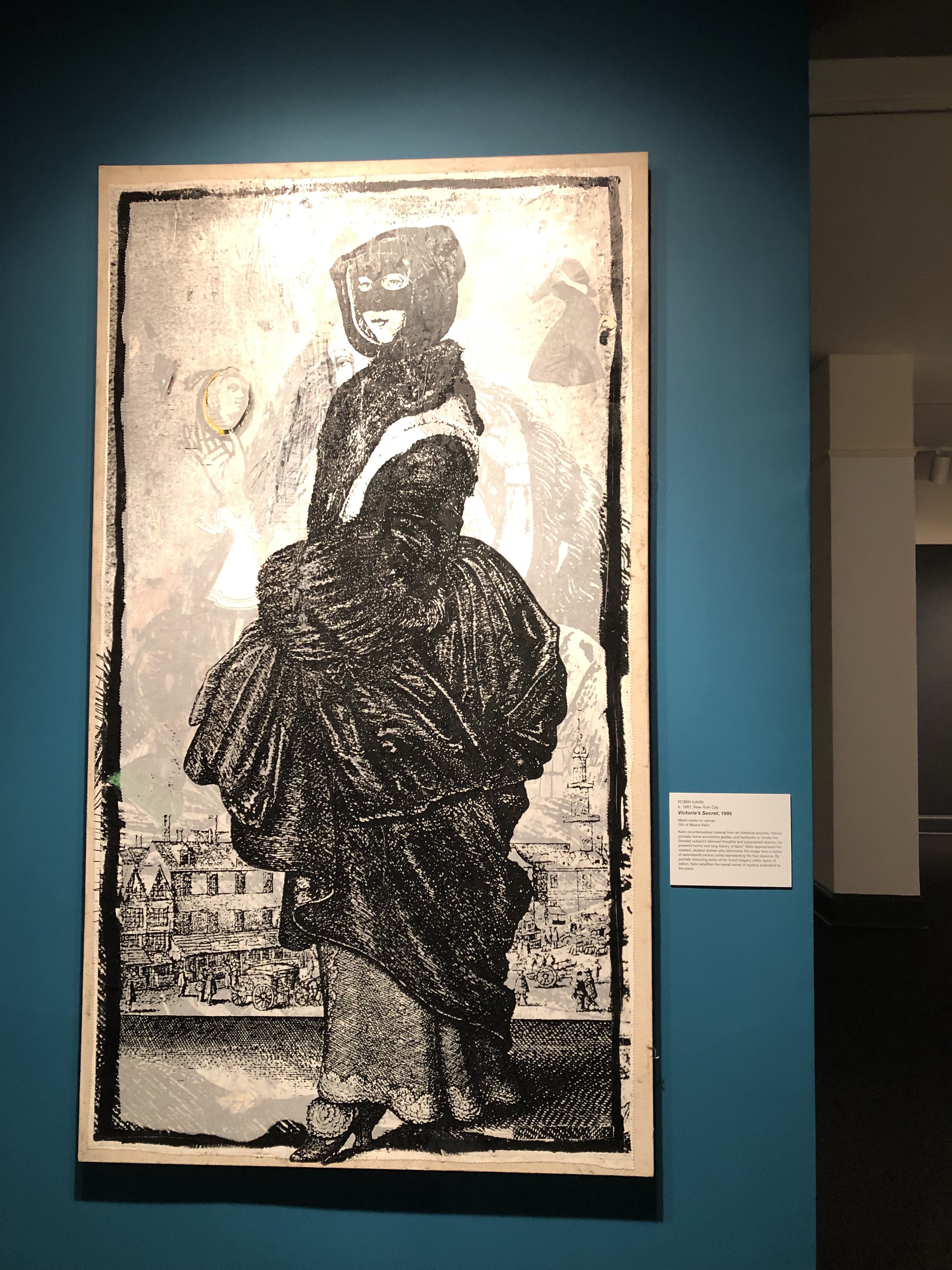
    5. Robin Kahn – Victoria’s Secret 1995

    Victoria’s Secret

    From afar, this work looks like a painting. Up close, however, the layers are revealed. Kahn has created a collage of historical material from journals and printing plates. The main woman figure was created from piecing together different 17th century representations found in the historical materials.

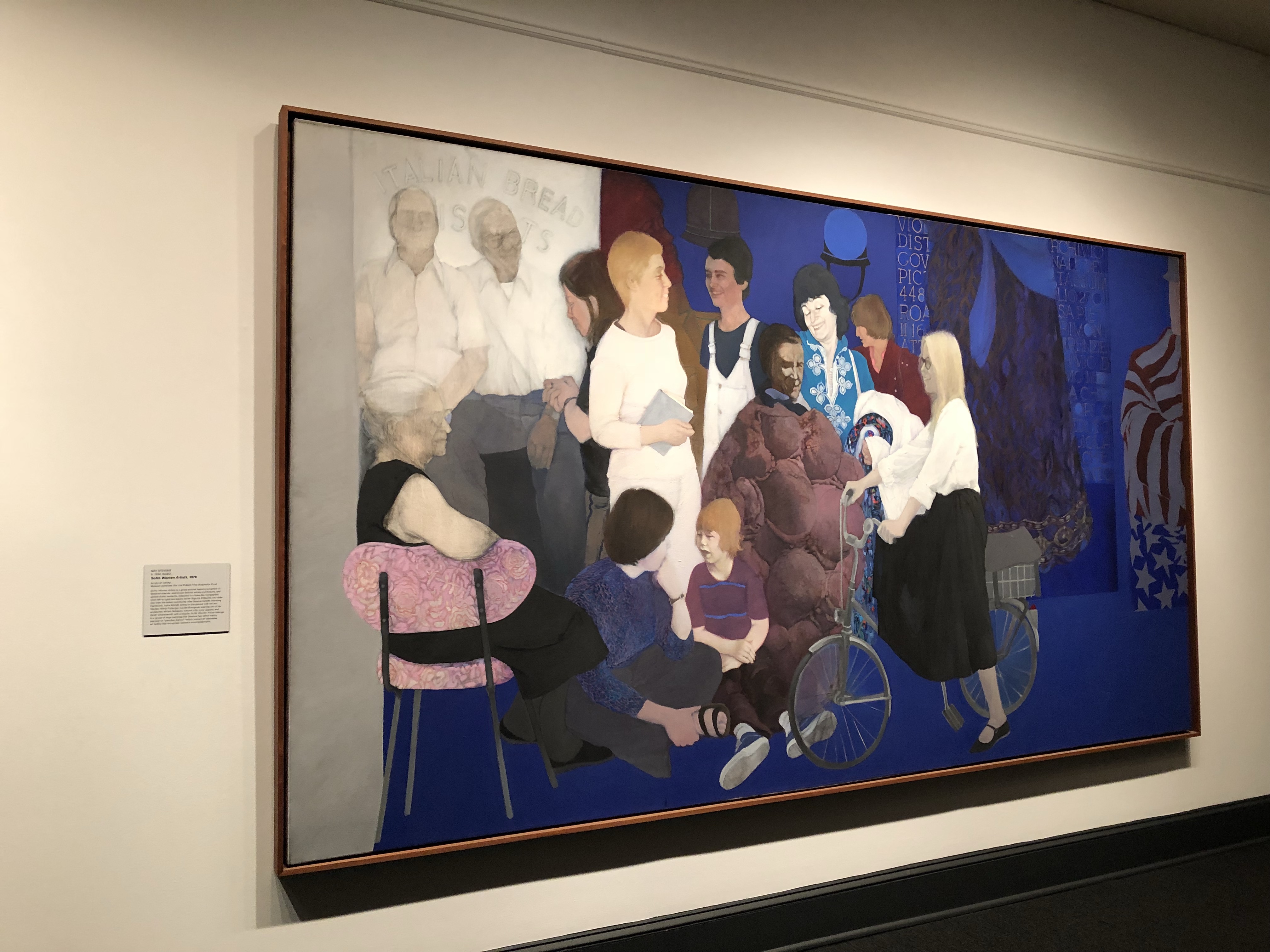
    6. May Stevens – SoHo Women Artists 1978 

    SoHo Women Artists

    This work depicts numerous female artists from New York in the 1970s. It celebrates the accomplishments of female artists by presenting them at the forefront of the work. It is a painting that feels alive. You can almost hear the conversations through the work.

    I strongly encourage you to visit this museum if you are ever in Washington. It holds some incredible art that has such a strong statement to make. It would be great to one day see this art hanging integrated in other institutions. For now, this gallery is playing a very important role promoting what has been neglected and showcasing the work that may have been hidden.

  • Boston: Black Heritage Trail

    There was so much we did in Boston that I didn’t get the chance to blog about. From now on, there will be a new post every second day. This is to avoid the release of four blog posts in one day! I promised a while ago I would write on the Black Heritage Trail. After leaving the Freedom Trail Tour at Faneuil Hall, I made my way to the Abiel Smith School on Joy Street. Built between 1834 and 1835, the building held the African School of Boston. This wasn’t the schools first location. As early as 1787, there were petitions against the inequality of the education system. Two years later a school was established in the home of Primus Hall. In 1808 it was moved to the African Meeting House.

    Eventually the school was built with the funds left by a businessman named Abiel Smith. The conditions of the school weren’t great and the education received by students was no where near the same quality as white students in public schools. The public school system in Massachusetts was the last to be de-segregated following Brown vs. Board of Education.

    img_0672-2
    African Meeting House

    The school building is now a museum which is run by the National Parks Service. I was welcomed by lovely front of house staff who informed me there was a short tour of the Heritage Trail. It included a tour of the school building and the African Meeting House. I will list the other stops on the tour at the end of my post.

    We started in the African Meeting House. Our guide was a Park Ranger who clearly knew their history. The building has served many functions over the years including its primary purpose as a church. It is also where the New England Abolitionist movement began, where Frederick Douglass presented many of his speeches, and where the 54th Massachusetts Regiment was recruited.

    As a side note, if you are interested in the 54th Massachusetts Regiment, there is a memorial to the soldiers in Boston Common. In front of the memorial is a plaque containing further information. It is a stunning memorial.

    The tour of the Meeting House lasted around 45 minutes. After hearing all of this history in one go, you are then free to explore the House at your own pace. There were a couple of specific highlights I must mention.

    Right at the back of the house is a segment of wall that is framed. It is very easy to spot. Inside the frame is an original segment of painted wall showing the original paint colour that had been scraped back. I am an absolute fan of showing how restorations are achieved. A bit of scraped paint and original wall completely transformed the House and added that extra physical layer of history.

    African Meeting House

    Once you’ve seen this wall, turn around and inspect the pews. They all look deceptively similar. Only two pews in the house are, however, original. The rest have been based on these originals. You can tell as the original pews have numbers attached to the back.

    African Meeting House

    After our tour, I went back to see the exhibitions in the school. I was hoping there might be a permanent display on the history of the school or of de-segregation. Unfortunately, there was no such display.

    There was a display spread over two levels on the photographs of Frederick Douglass. I have to admit that before seeing this exhibition, I only vaguely knew about this famous abolitionist, orator and author. The exhibition was well curated allowing visitors to move freely around the space. The exhibition begins with quite a lengthy introductory panel explaining how Frederick Douglass used photographs of himself in his work. Essentially, to establish a new image of black people as free and self-determined. It stated he was one of the most photographed individuals during this time with estimates suggesting there are 160 photographs surviving. That is a huge number considering their rarity at the time.

    If you are interested in the Black Heritage Trail I highly recommend combining it with the Freedom Trail. It’s a great way to see multiple perspectives of Boston and uncover more of its past.

    Other stops on the Black Freedom Trail are:

    1. Robert Gould Shaw and 54th Regiment Memorial

    2. George Middleton House

    3. The Phillips School

    4. John J. Smith House

    5. Charles Street Meeting House

    6. Lewis and Harriet Hayden House

    7. John Coburn House

    8-12. Smith Court Residences

    13. Abiel Smith School

    14. The African Meeting House

  • Halloween in Salem & Boston

    Celebrating Halloween in America has been on my to-do list for quite some time. I believe that this cultural celebration most definitely is a form of cultural heritage. According to ICOMOS (International Council on Monuments and Sites):

    “Cultural Heritage is an expression of the ways of living developed by a community and passed on from generation to generation, including customs, practices, places, objects, artistic expressions and values.”

    Practices/traditions such as trick-or-treating have a long history in America dating back to around the 1920s and 1930s. Of course the holiday itself is of Celtic tradition and consisted of people dressing up to defend themselves against demons. I could write an entire blog post on the history of Halloween because it is so interesting and highly contested. Rather, I want to focus on the experience I had today which included visiting memorials in Salem and trick-or-treating in Boston.

    In 2015 I completed my thesis on the existing 1692 witchcraft trials memorials in Salem and Danvers. I came to the conclusion that both memorials have made a valiant attempt at memorialising the past and remembering those who were victims of the trials. Around two years later, an amazing discovery was made – the bodies of the victims. The victims were not burned at the stake, despite common belief. Instead, they were hanged with the exception of Giles Corey who was crushed.

    For centuries, there has been a desire to find the final resting place of the victims and, therefore, some kind of closure. There have been so many theories regarding where they were buried. Proctor’s Ledge was a promising suggestion. There were some archaeological digs and long story short the remains were found. To commemorate this discovery, the decision was made to build a memorial.

    The first memorial in the city centre opened in 1992. Basically, an international competition was held and a panel selected the winning entry. For the new memorial, the city selected a landscape architect, Martha Lyon, who consulted with the public and landholders. From this, a design was created and the memorial was built. I had seen photographs of the memorial online and initial sketches. Already, I had a very strong opinion.

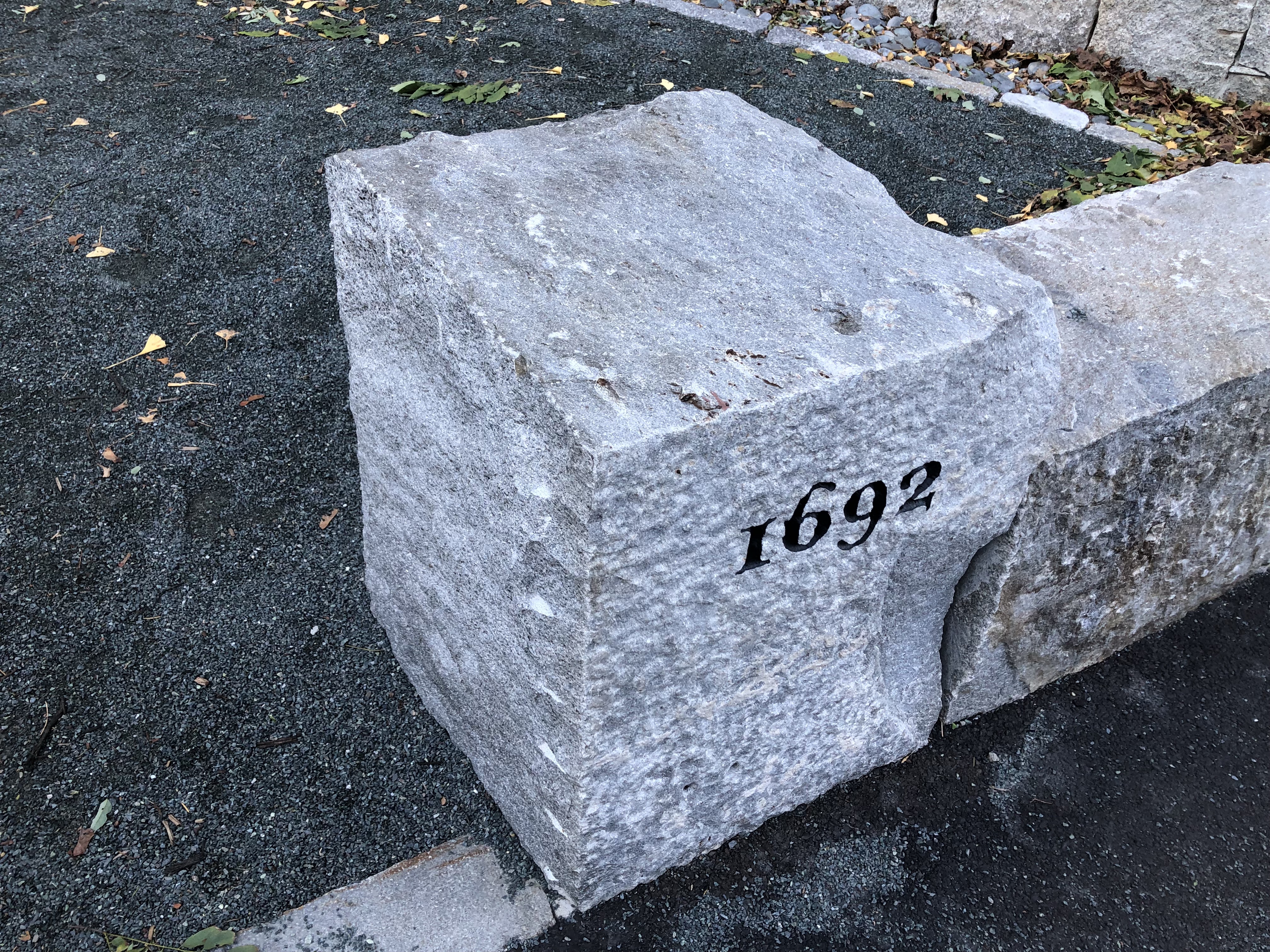
    On seeing the actual memorial itself, these initial responses were confirmed. It is located on Pope Street, just next to the side of the road. It is a semi-circle of stones with evenly-spaced plaques set into the wall each bearing the name of one victim and their date of death. In the centre is a single oak tree with “We Remember” carved into the ground beneath it. At either end of the memorial’s entrance are two large blocks with “Proctor’s Ledge” inscribed in one and “1692” inscribed in the other.


    I thought it would look quaint, a respectful site that blended into the environment. Instead, it looks awkward and as if it was rushed. It looks incredibly similar to the other memorial in the city and I think it was a missed opportunity to develop a memorial that was unique and truly reflected the magnitude of the history and the discovery. What this may look like, I have no idea. I do know that it would not have a large and distracting “keep off the slope” sign jutting out from its edge.

    I am not saying that what has been produced isn’t terrible at all, just very different to what I was expecting. After spending 14 months closely reading and reflecting on the other memorials, I was probably too close to this topic to ever be objective. Memorials are very tricky things and at the end of the day, there is a memorial there marking this location and it’s place in history. There was even evidence of people interacting with the memorial which was great to see. Little pumpkins and stones had been left on the top of the memorial. For these reasons alone, I am glad for the existence of this memorial.


    Moving on, there is this conflict happening in Salem that was highlighted today. This is between the outright horrific past and the commercialisation of this past in the present. Seeing literally hundreds of people dressed up for Halloween walking the streets was both a little uncomfortable yet a tangible festival where people can and do take the opportunity to learn about the past. It’s a conflict that I would love to look into more and even formally study in the  future.


    After a few hours in Salem, we were ready to leave and experience Halloween elsewhere. We opted to return to Boston to witness firsthand the trick-or-treat tradition.

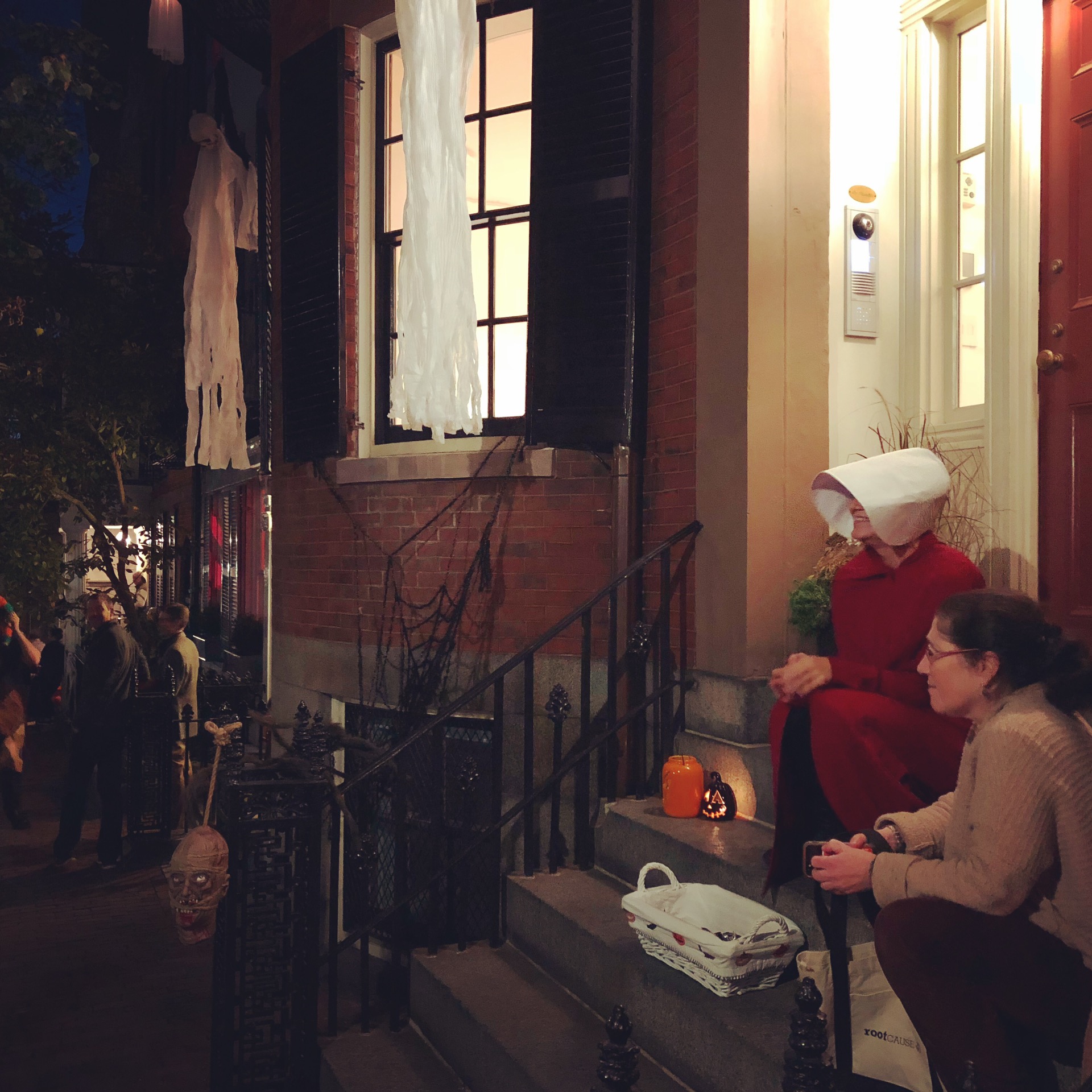
    There are some streets above Boston Common, for example the famous Acorn and Chestnut Streets, that were closed to traffic from 4.30 pm to 8.30 pm. We headed out around 6 pm, very excited to see the annual trick-or-treat tradition. The streets were filled with people, yet it never felt overwhelming. Kids were running around in such a variety of costumes eating candy with one hand and holding their trick-or-treat bags in the other.


    It was an incredible night. The atmosphere was unlike anything I had ever experienced before. It is one of those cultural phenomenons that you have to see to believe. We are starting to celebrate Halloween in Australia, but, of course, nothing that compares to America. For this reason, I would and will argue that Halloween is cultural heritage.

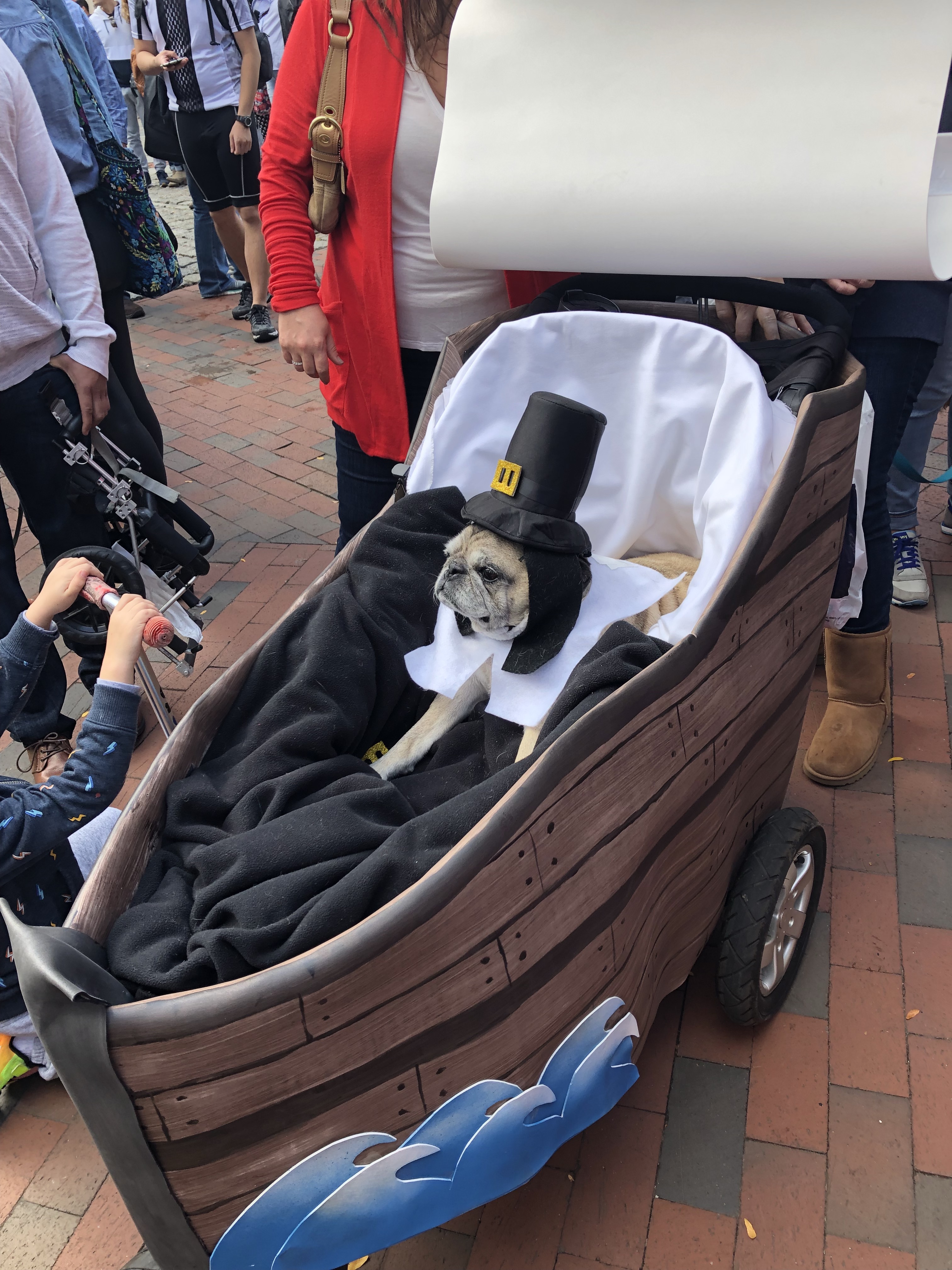
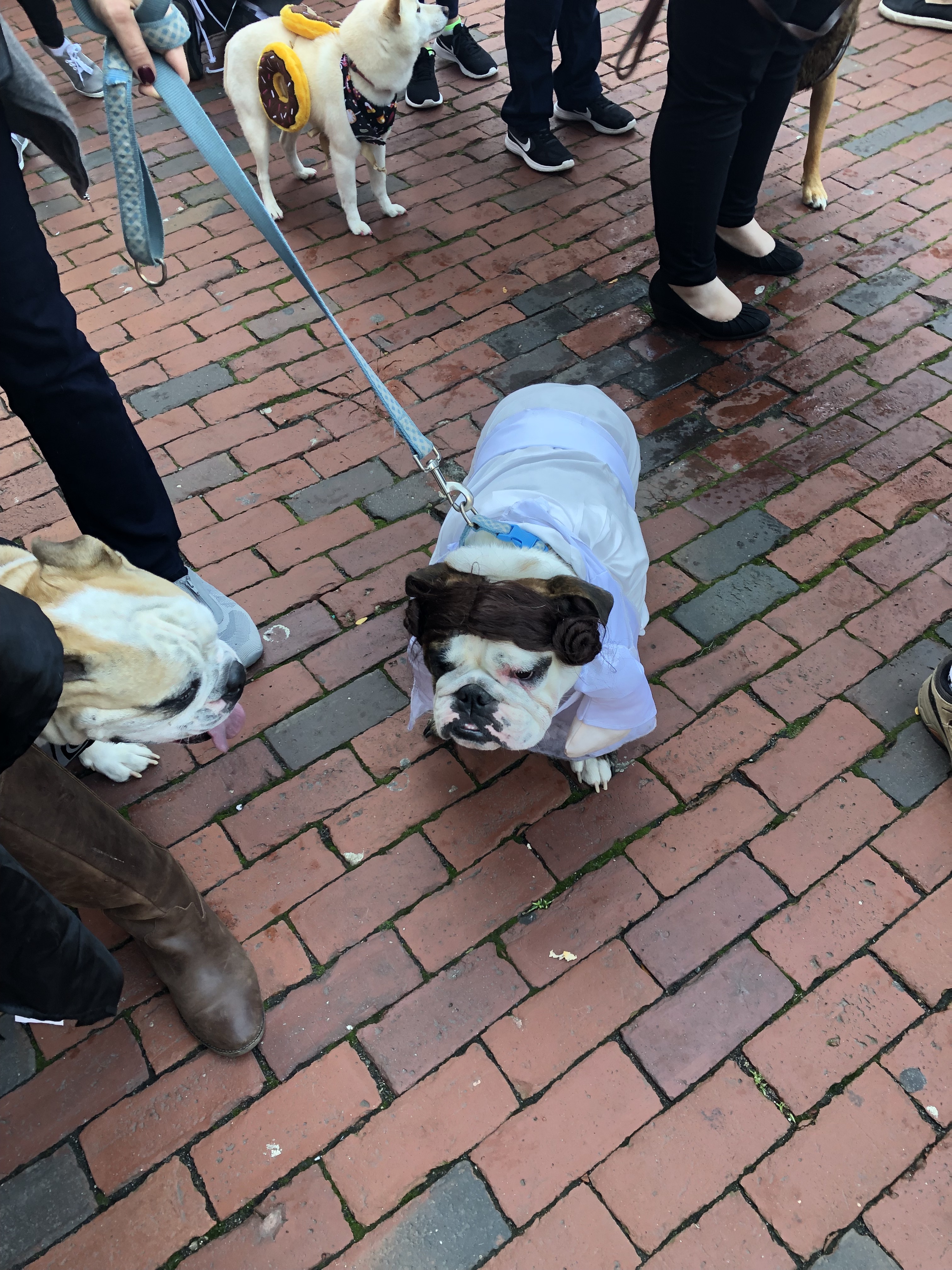
    I hope everyone had a safe and happy Halloween! It is my favourite time of the year as it sort of launches this end of year joy. I only hope I can experience another Halloween in America. To finish the blog post, here are some cute dogs in Halloween costumes. You’re welcome.

  • Boston: Isabella Stewart Gardner Museum

    The Isabella Stewart Gardner Museum is located within walking distance from the Museum of Fine Arts. It houses a superb collection of artworks from artists such as Rembrandt and Titian. I would argue, however, that it is not solely an art galley. Instead, it had all the trademarks of a house museum. I will delve into this later, but first things first – let me cover the Palace.

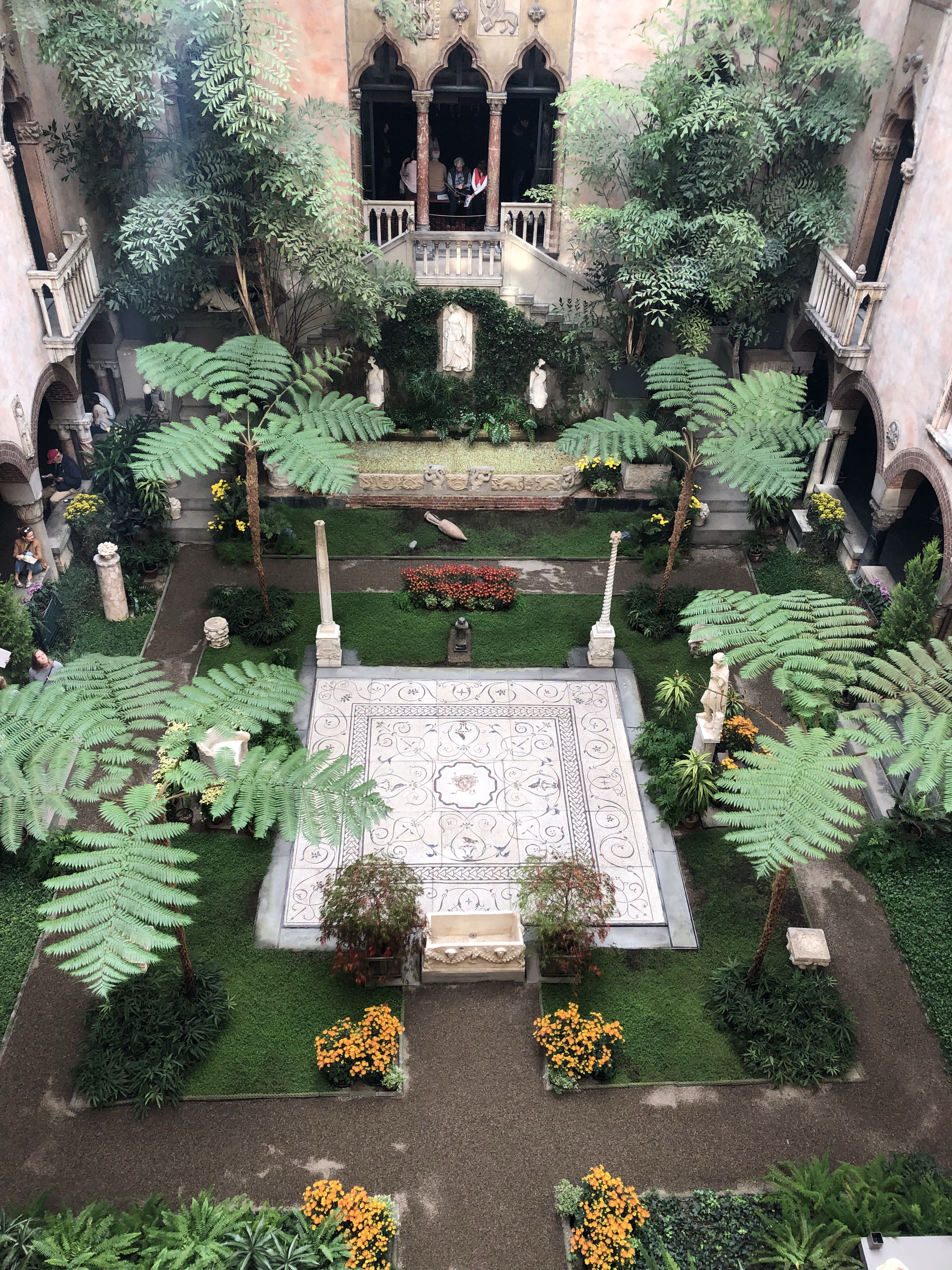
    So the main building that houses the artworks is referred to as the Palace. On entering the museum, you first walk through a modern-built annex that contains the gift shop, cafe, information counter, etc. You are then directed through a glass walkway to the Palace. It is not hard to see why it bears this name. Towering three storeys high, the Venetian-inspired Palace quite literally looks like you have been transported to another country. The courtyard garden in the middle features an Ancient Roman mosaic. Surrounding the mosaic are numerous plants, statues, and fountains. I will include photographs below because words cannot do it justice.

    Isabella Stewart Gardner Museum
    Isabella Stewart Gardner Museum

    To understand why there is a Venetian Palace in the centre of Boston, I will now introduce you to Isabella Gardner Stewart. Born in New York in 1840, Isabella soon moved to Boston to marry John Lowell Gardner. They travelled everywhere, eventually developing a passion for art that soon turned into a desire to collect. Isabella decided to seek advice from her friends and certain connoisseurs of Italian Renaissance art just to make sure she was collecting quality works. What else did Isabella need? A house to store her new collection. She insisted that the house be built to her specifications and carefully watched over the construction. The result is what you can visit today. For this reason alone, you can start to see why the house is just as significant as the art held within its many rooms

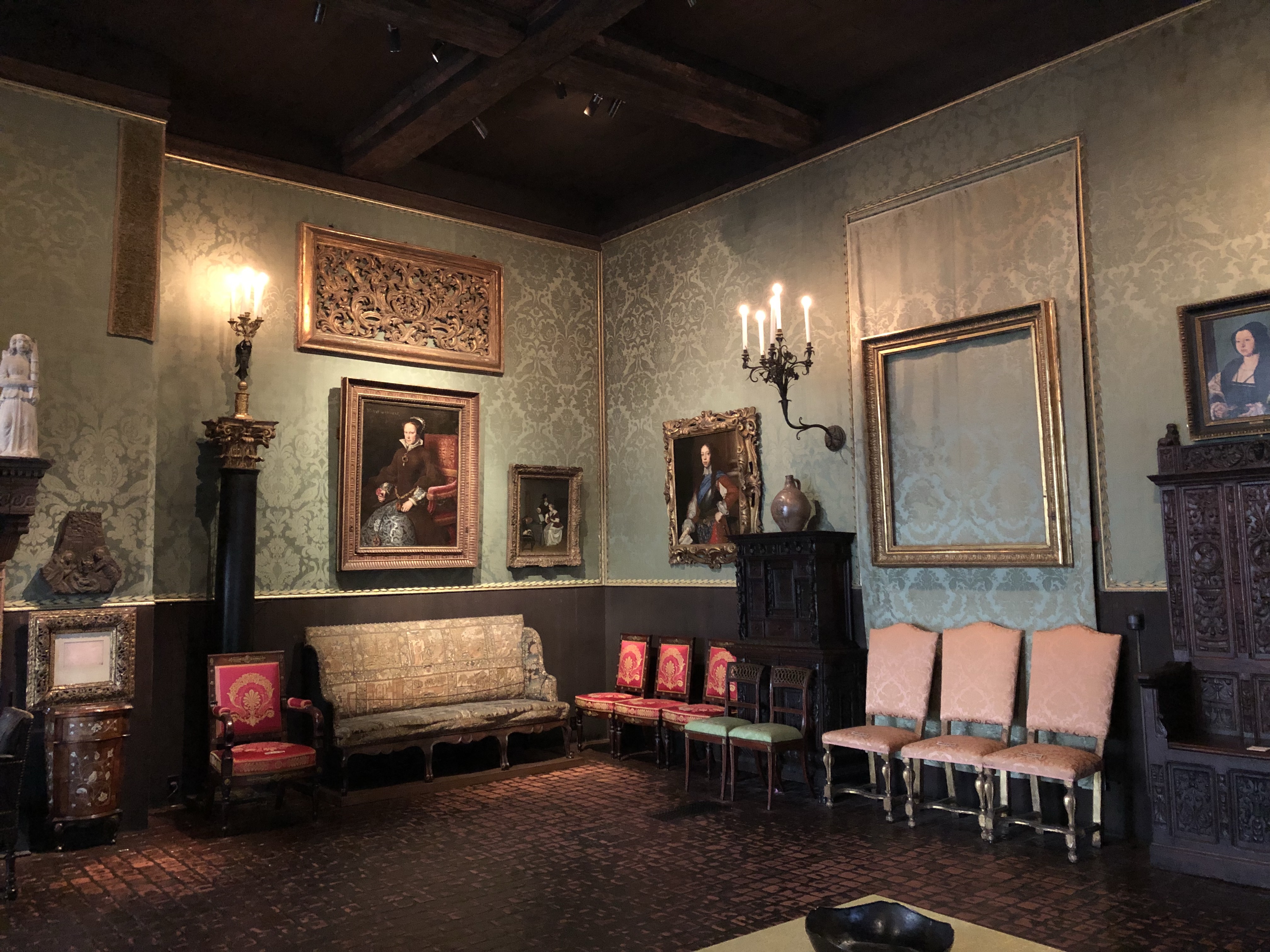
    While walking through the numerous levels and rooms, you may notice there are a few empty frames. In 1990, there was a huge art heist with thieves stealing artworks by Rembrandt and Degas, to name a couple. The artworks stolen totalled around half a billion dollars. According to the museum, two men posing as police officers were let into the museum and when they left so did the artwork. What amazes me is that it is still missing to this day! If you know anyone in the Boston area who has a suspicious looking Rembrandt hanging in their living room, now is probably the time to call the police. How the museum has integrated this story into the display, is by having these empty frames where the artworks once hung. A curatorial decision, I presume, that reminds visitors of what was lost, but also, what remains.

    Isabella Stewart Gardner Museum

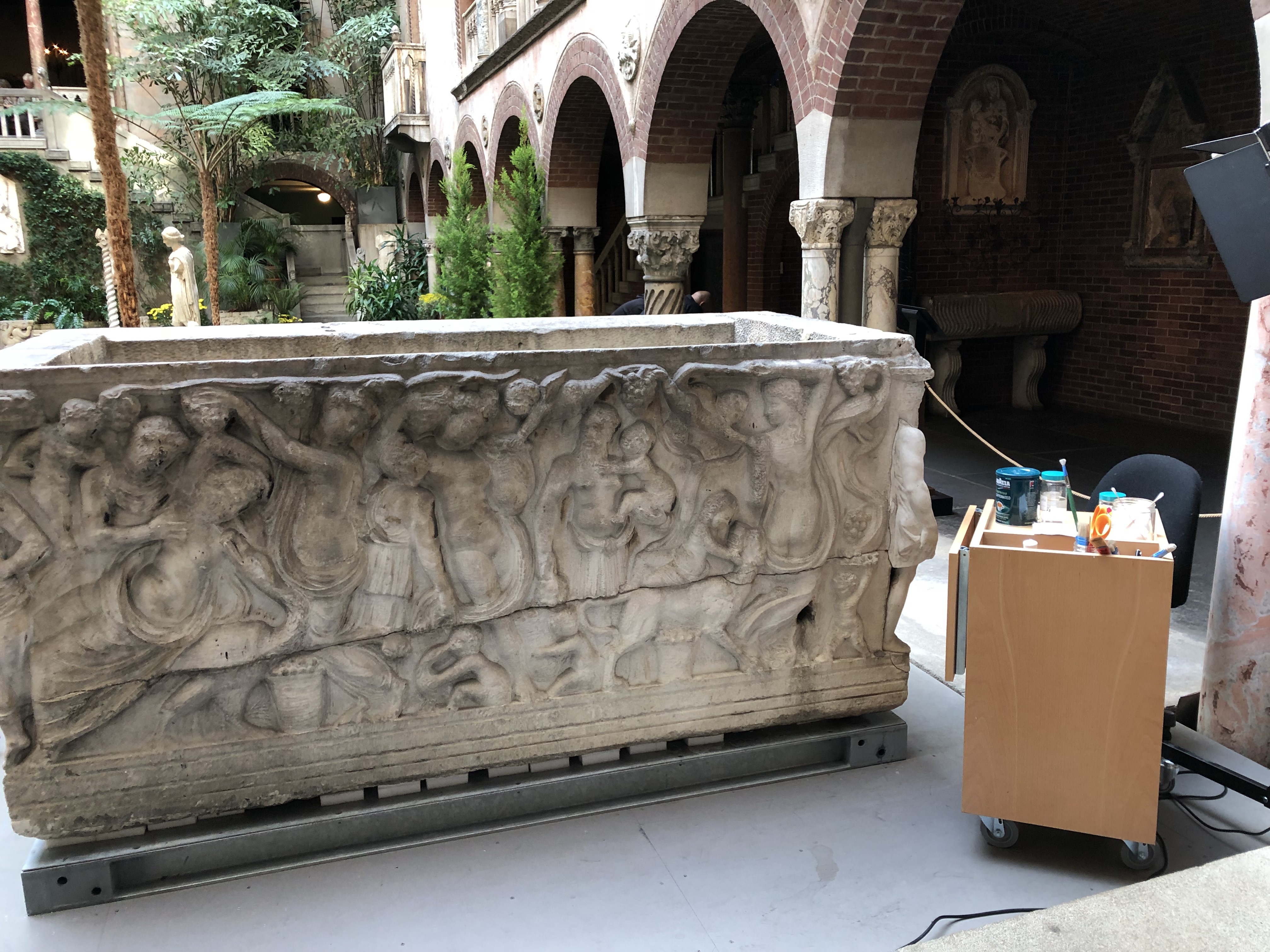
    The final general thing I want to discuss is the inclusion of conservation stations. We found two examples where conservators had set up workstations to show the public ongoing conservation efforts. One was in the courtyard showing the cleaning of a Roman statue. Another was on the third floor of the Palace where the walls and floor were slowly being restored. A great way to see how one section of a museum works. Not every section can have a public face, but, it is great to see some behind the scenes secrets exposed.

    Conservation Work

    Now that I’ve covered the architecture and the heist, I want to spend some time discussing why I saw the museum as a house museum and not a gallery. This is entirely my opinion. I am sure for each of these points someone could argue the opposite.

    1. No Labels on Walls 

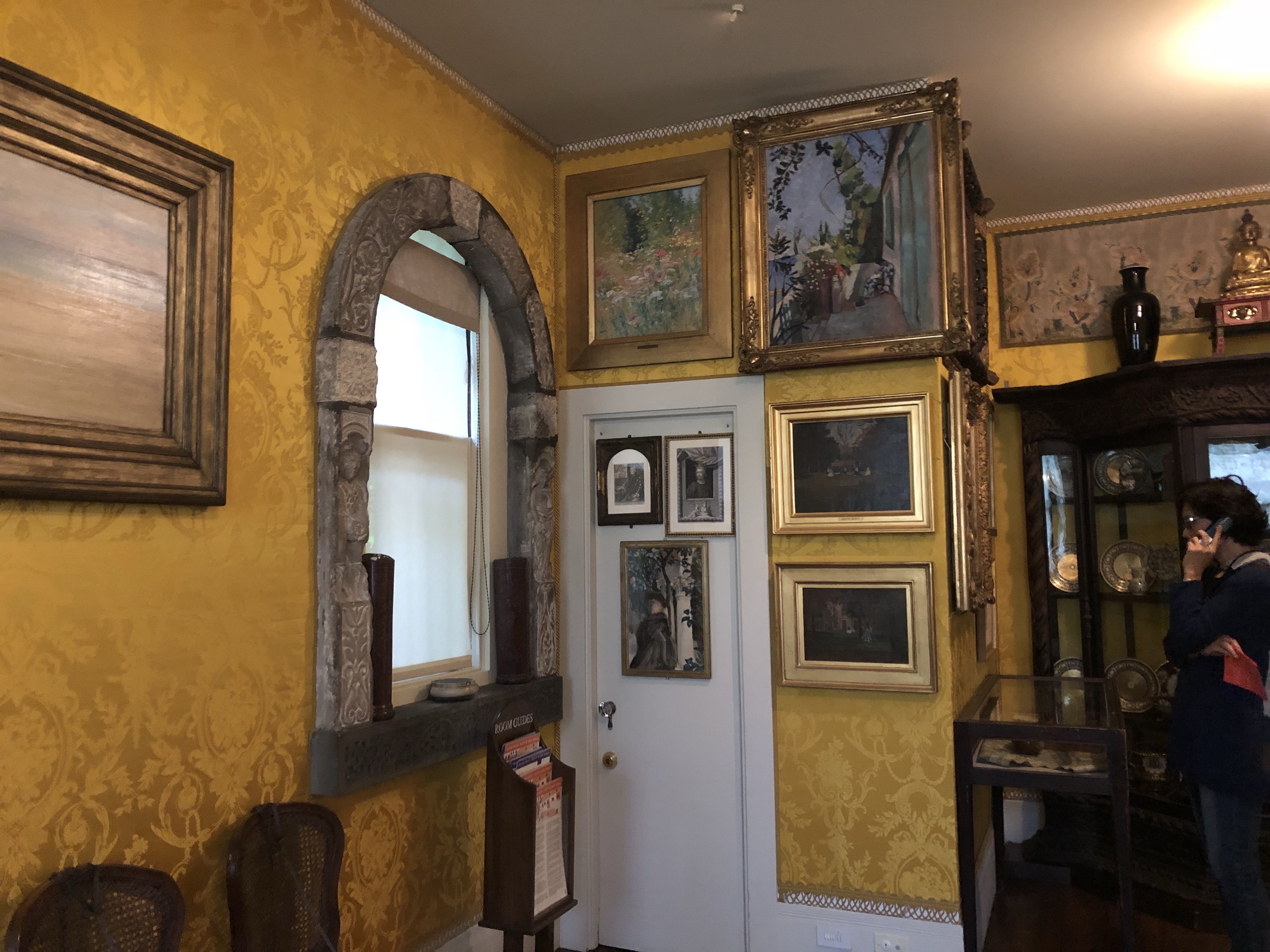
    In each of the rooms there were numerous paintings hanging on the walls. They were curated to look as though they’ve just been hung on the wall wherever space was available. This allowed for a sort of cabinet of curiosities feel. There were absolutely no labels on the walls. Unless you recognised the painting itself, there was no quick way to identify the works. I haven’t been to many art galleries where this is the case.

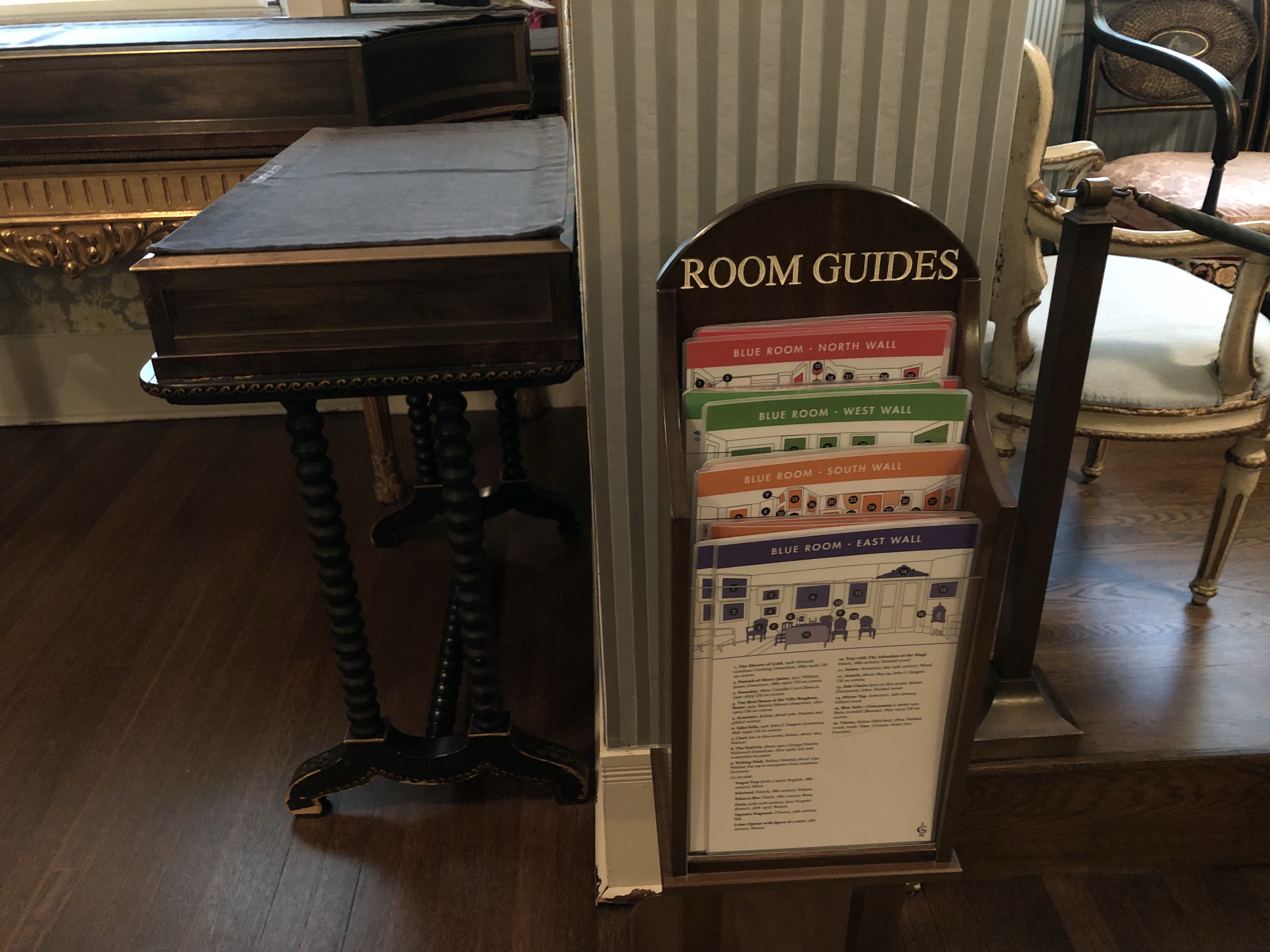
    There was some interpretation available. In each room was a room guide. First, if you wanted to identify a painting you needed to know if it was on the east, west, north or south wall. Then, you had to pick the right guide. Finally, on the guide, you had to select the right outline of the artwork.  And there you have it. If it was any busier there would be no guides available and I imagine this would get frustrating. The map does have some highlight artworks, but there are only a few in each room.

    Isabella Stewart Gardner Museum
    Isabella Stewart Gardner Museum Room Guides

    So instead of worrying about the artwork, we viewed the room as a whole, focusing on how the artworks worked together inside each room. While you also can do this in any art gallery, the character of each room and the lack of labels meant our interest was with the room itself and not the artworks. They played into a larger picture (pun absolutely intended).

    2. Room Restorations

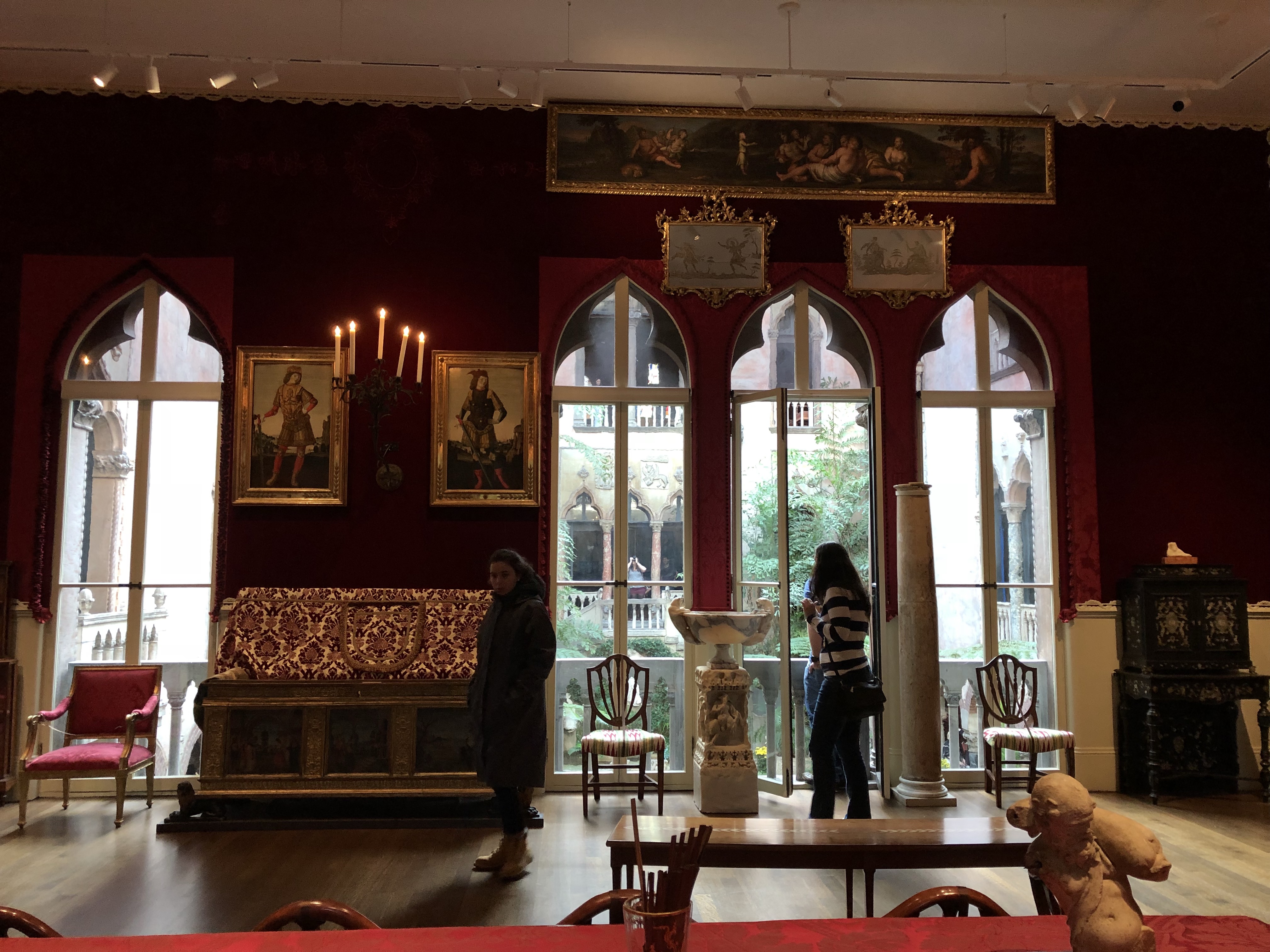
    If it was purely a gallery I wonder if there would have been an attempt to restore the rooms. In each room there were an array of furniture pieces including entire dining room sets, bookcases and tables. I am not insinuating that furniture cannot be art. Instead, I am suggesting that this desire to have the rooms appear as they looked originally, is in line with what I’ve seen at other house museums.

    Isabella Stewart Gardner Museum

    3. Serving the Same Function

    Originally it was designed to be a museum with a private residence attached. Even though they did not live inside the Palace, this does not mean it can be excluded as a house museum. One of the conditions of a house museum, according to the American Alliance of Museums, is that it must continue to serve the same function today as it did in the past. In other words, the museum must still be a museum solely displaying the works collected by Isabella.

    For these reasons I think it is safe to say that this museum is a version of a house museum. I see it as a hybrid as it also can be considered an art gallery. This adds a new layer of complexity and intrigue. A debate that continued to follow me while walking around. This is unlike any place I have visited before and for this reason, I highly recommend a visit! Below are some more photographs.

    Rembrandt, Self-Portrait Aged 23
    Peter Paul Rubens, Thomas Howard Earl of Arundel
    Isabella Stewart Gardner Museum
    Isabella Stewart Gardner Museum
    Isabella Stewart Gardner Museum
    Isabella Stewart Gardner Museum
  • Boston: Museum of Fine Arts

    The Museum of Fine Arts (MFA) is one of the most impressive and beautiful cultural spaces I have ever visited. It is filled with objects and artworks from Asia, America, Europe, and numerous ancient cultures. There are constantly changing exhibitions meaning you could visit again and again without feeling as though you had seen it all before. In saying this, we spent over two hours at the museum and still felt as though we had barely scratched the surface of what was on offer.

    It was an absolutely exhausting experience trying to find our way around and see everything that was of interest. I am absolutely hopeless reading a map at the best of times. This map defeated me and we often found ourselves completely lost. In other words, we saw more of the museum than we initially intended. Apart from the map, which I do believe could be slightly improved and adjusted, our experience of the MFA was very enjoyable. I would highly recommend anyone visiting Boston to have this museum on their “to visit” list.

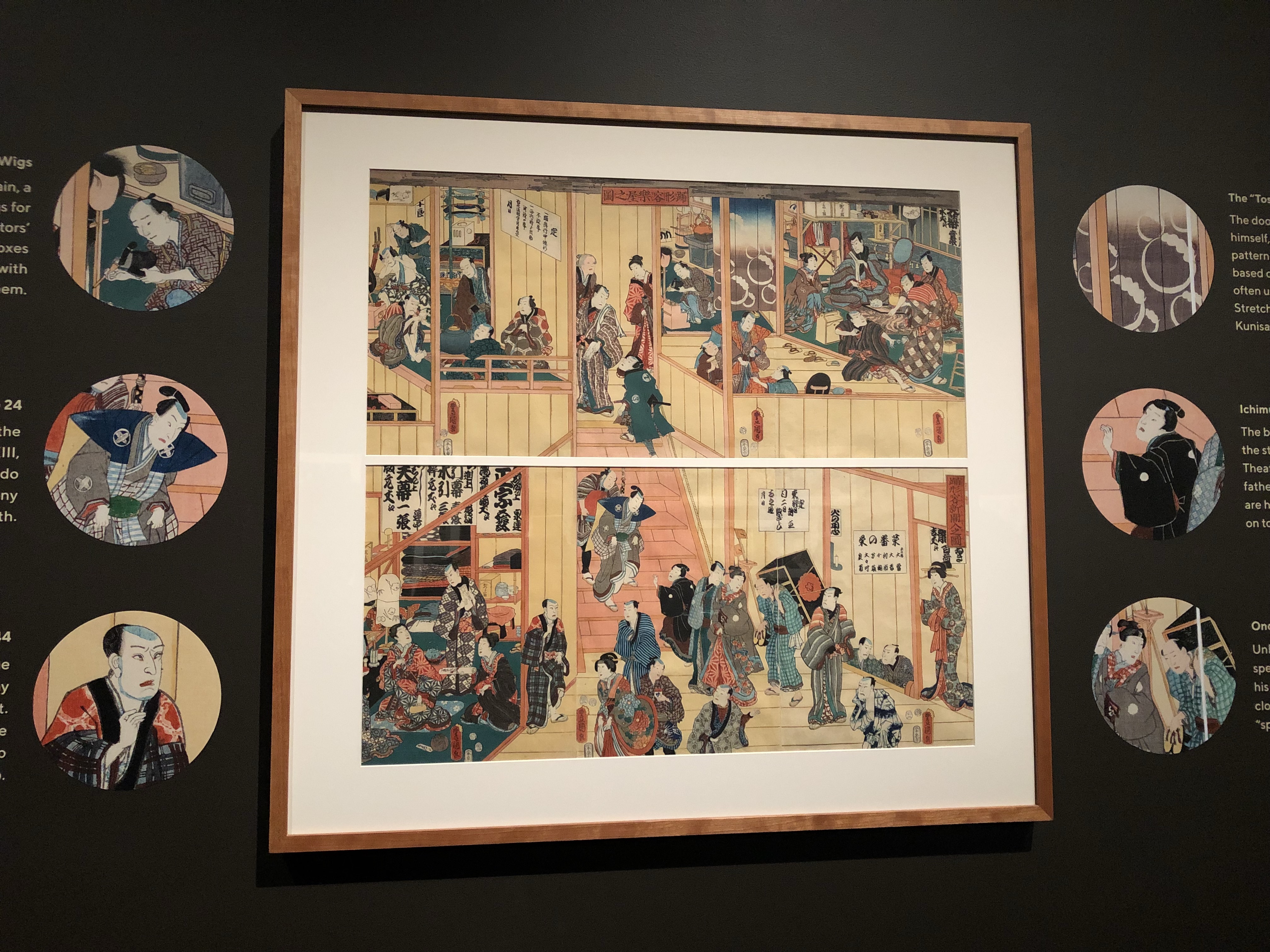
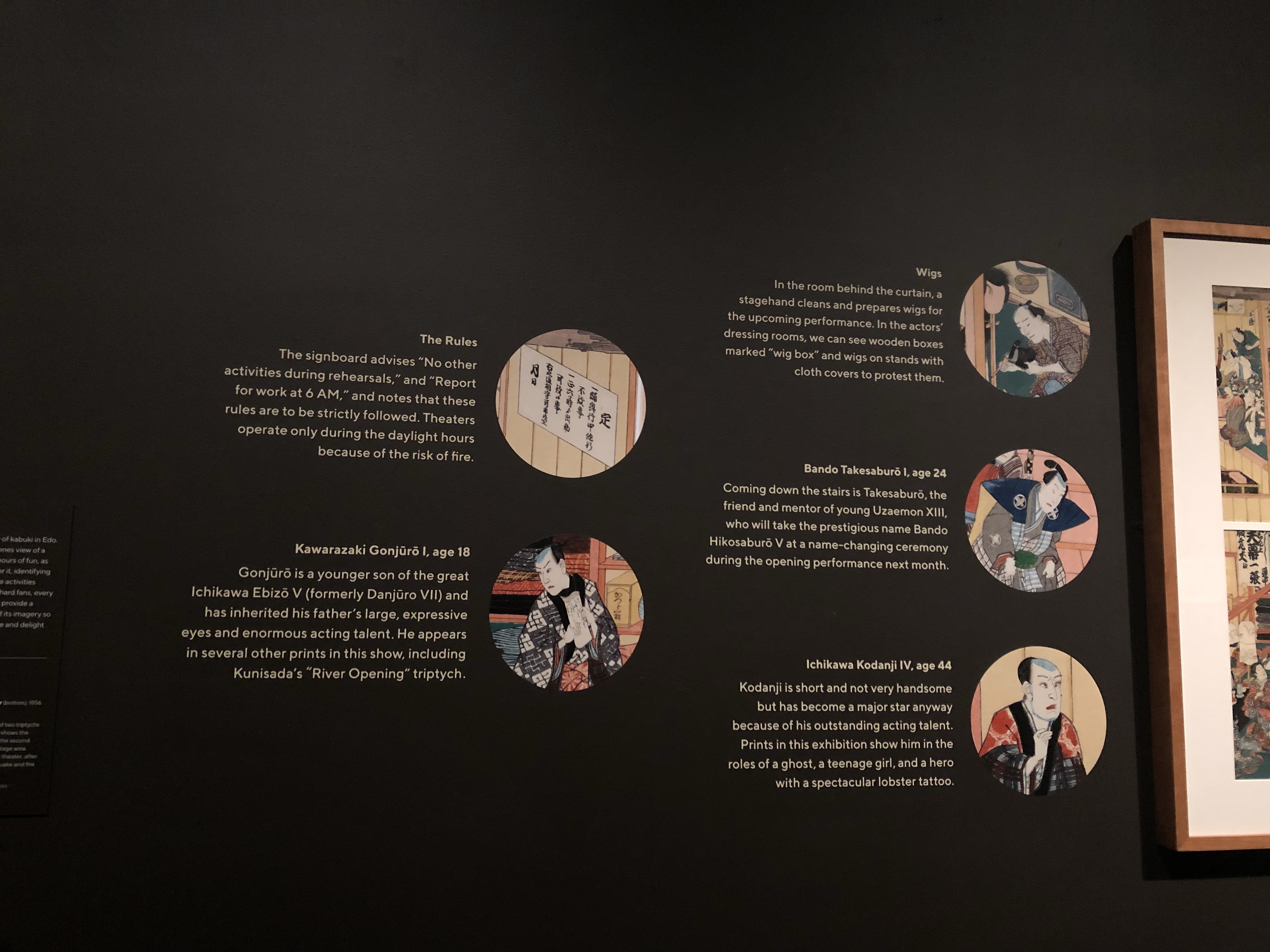
    I am going to start by reviewing their new exhibition, Showdown! Kuniyoshi vs. Kunisada. It is located on the lower level of the museum in their special exhibition space. What I found great about this exhibition is it was quite fun and challenged the visitor to more closely assess and evaluate the artwork. The introductory panel sets the scene – Kuniyoshi and Kunisada were rival woodblock print designers in 19th century Edo, now modern Tokyo. They created some of the most beautiful prints in Japan depicting people, most notably kabuki actors. The panel asks visitors to re-ignite the rivalry by the selecting which artist they prefer.

    Showdown! Kuniyoshi vs. Kunisada.

    What worked really well was that all of Kuniyoshi’s works were framed in black and Kunisada’s in brown. This meant it was aesthetically very easy to see who did what without having to read through every label and remember all the details. With over 50 prints on display, this was a real positive. It also meant that the artworks could be easily merged together yet retain their artist’s identity. As similar themes were explored by both, displaying the works together was almost necessary, in my opinion.

    The prints themselves were so colourful and intricate. You could literally spend hours looking at one work finding all the hidden symbols and characters. One of the more intense pieces was interpreted by the Curators. On the wall next to the print, there were parts enlarged with further information. For example, faces were selected and identified, showing visitors who was in the print. I really liked how this was displayed considering it encouraged me to more closely look at the others.


    Finally, the exhibition had an iPad containing a quiz to discover if you were more like Kuniyoshi or Kunisada. Having this sort of “pick a side” feel to the exhibition was very interesting and I enjoyed how it wasn’t just a gimmick but did draw on a historical rivalry.

    Showdown! Kuniyoshi vs. Kunisada.
    Showdown! Kuniyoshi vs. Kunisada.

    This exhibition was one of the main reasons I wanted to visit. Walking around the rest of the exhibition spaces, I picked up some other great efforts made by the MFA. I will briefly cover these below.

    . Revival Jewellery Exhibition

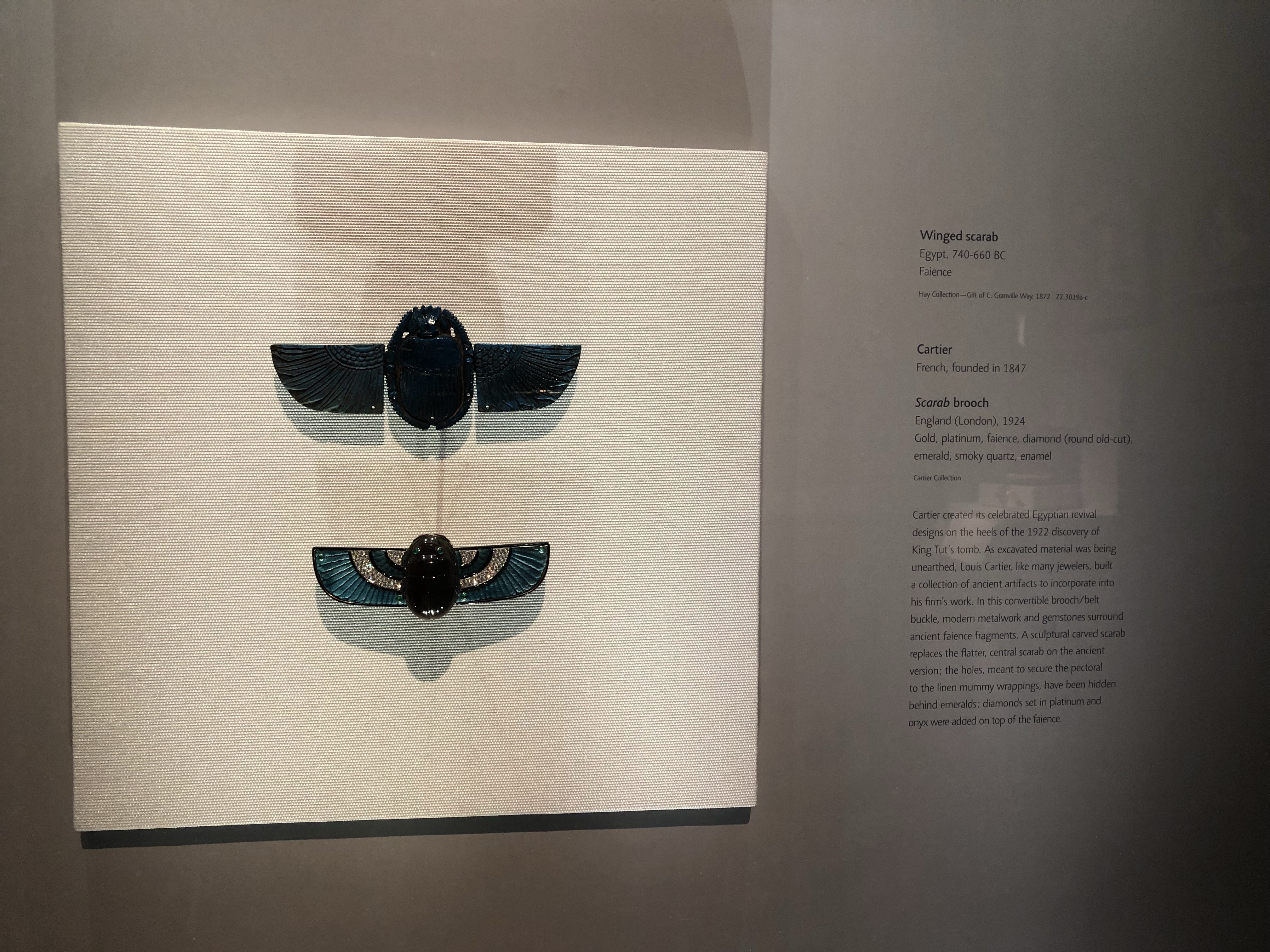
    Juxtaposing the past with the present is something that I very much appreciate. Actually seeing inspiration from the past that has influenced something in the present can have great impact. On entering the exhibition space, the first object you see is a winged scarab from 740-660 BC lying above a 1924 Cartier scarab brooch. Full disclosure, the exhibition is sponsored by Cartier so no surprise that one of their pieces featured.

    Cartier Scarab Brooch

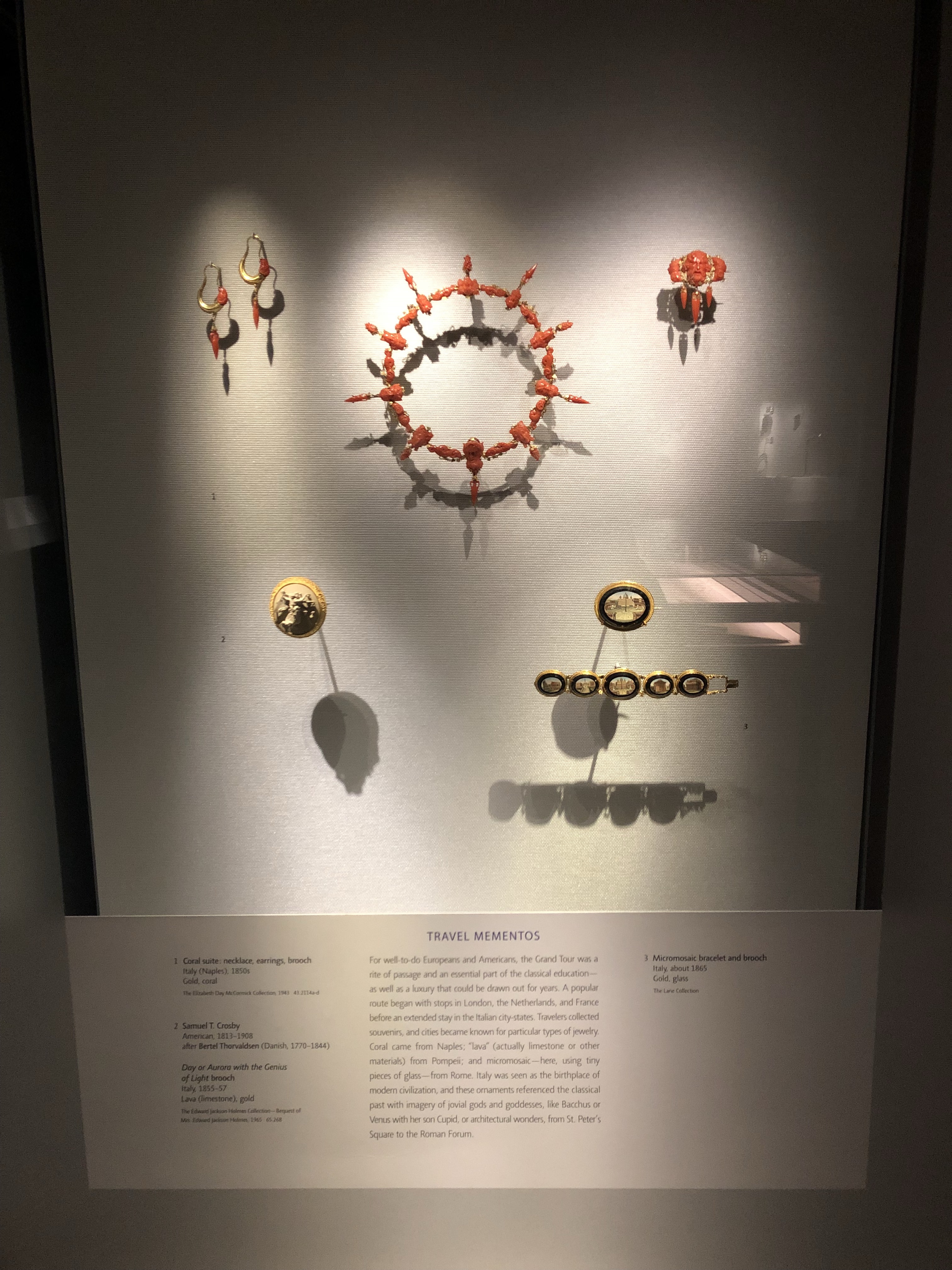
    The rest of the exhibition was quite small, only containing around ten cases mounted to the wall and one large case in the centre. Most of the cases displayed ancient/early modern examples with their modern counterparts. There were some stunning pieces on display including a travel bracelet from 19th century Italy. The labels were positioned well inside the case but the font was quite small. A trend I am seeing way too often in some museums.

    Travel Mementos

    . Recent Acquisitions Signs

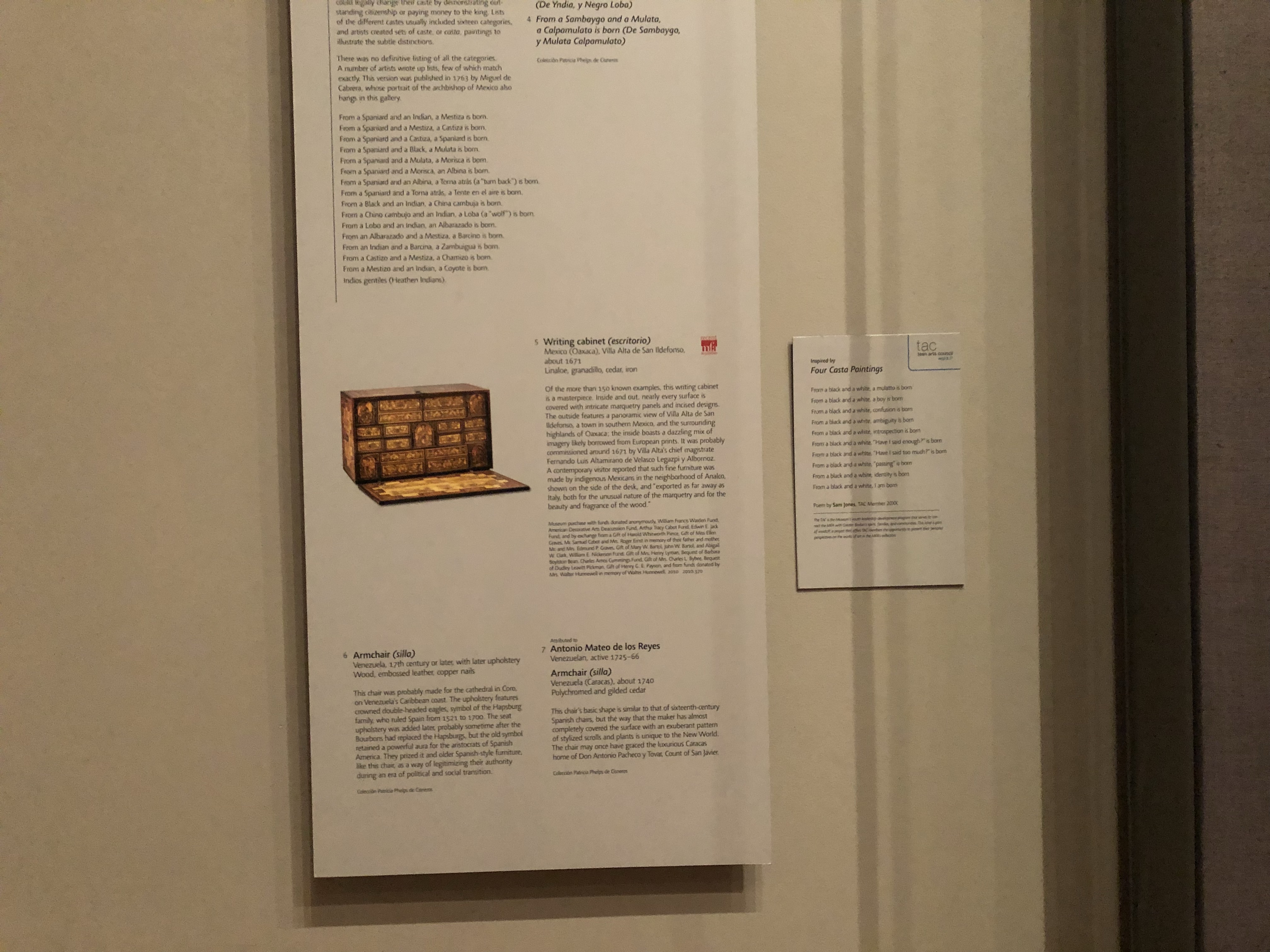
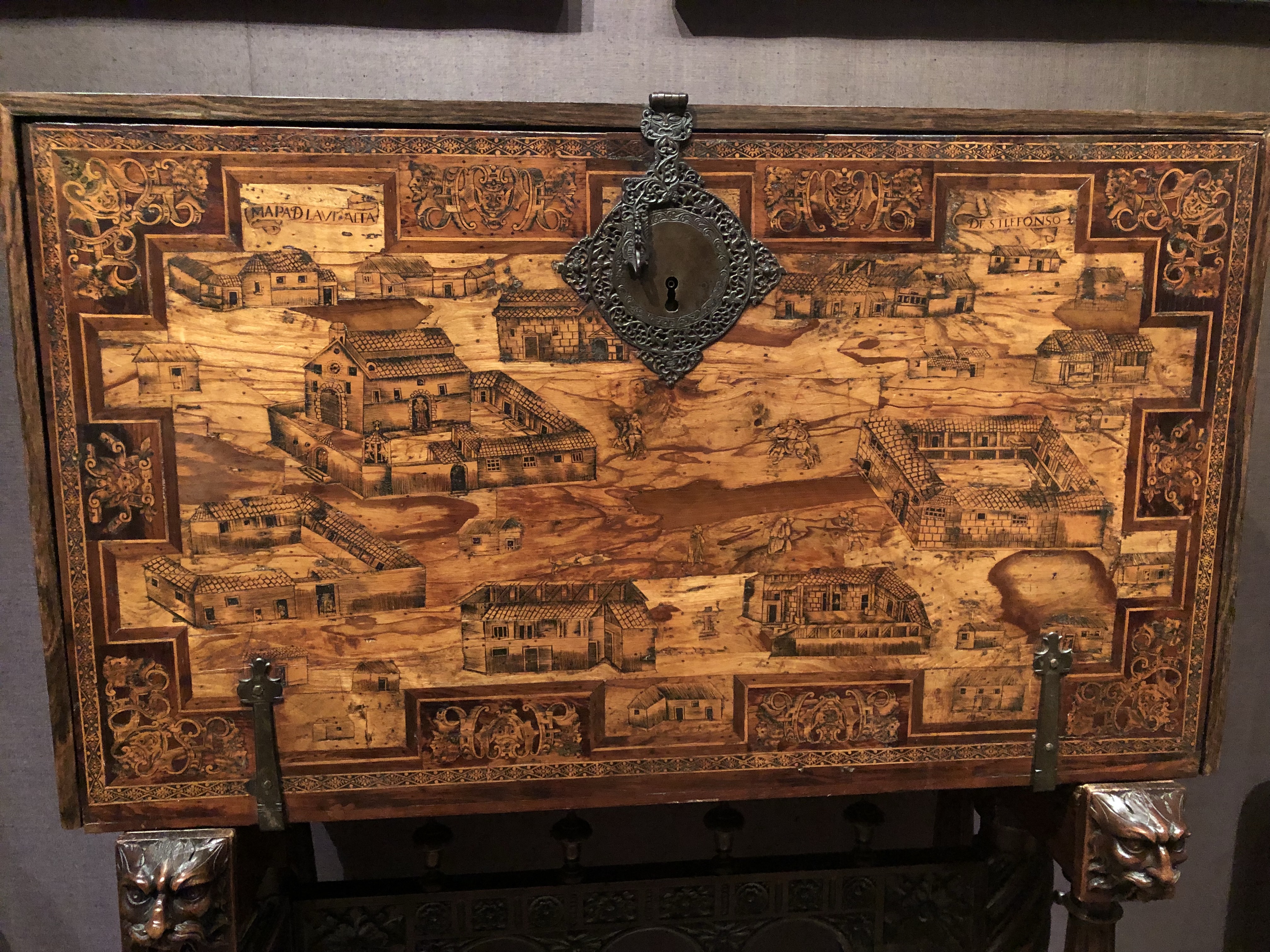
    Something that I am always so interested in seeing are recent museum acquisitions. I don’t know why, it just makes me happy to see institutions still collecting significant objects. A writing table from Mexico immediately caught my attention. While reading about the desk I noticed a small red and white symbol on the label. On closer inspection, it was specifying that this object was a recent acquisition.

    Recent Acquisitions Signs
    Recent Acquisition

    All of a sudden I went from being interested in the object to also being interested in how this recent acquisition had been worked into the existing display. I believe it added another layer of complexity and thought to the exhibition.

    . Articulated Animals – Dragon X-Ray

    There was one object in the Art of Asia and Oceania that I found provided incredible insight into how much research is conducted on objects. Underneath this sculpture was an X-Ray image showing the internal parts and sections. It gave a new perspective and meant you could better see how it was put together. The fact that modern technology can now be used to shed new light on ancient objects was highlighted and added to the object’s story.

    Dragon X-Ray

    We were overwhelmed by how much was on display in this museum. After two hours we reached maximum capacity. It would be great to return again to see the new temporary exhibitions and more of the permanent display. The museum also has an amazing contemporary art collection that we did not have time to visit. Considering we will soon be at the Philadelphia Museum of Art, we didn’t want to wear ourselves out too early in the trip.

  • Boston: The Freedom Trail Tour

    I first visited Boston in 2012. We did most of the touristy things including walking the Freedom Trail. We purchased the guide, followed the trail and learnt a little about the history of the city. Over the past few months I have seen the Freedom Trail tour guides all over Instagram and Facebook. This persuaded me to try the trail again and see the heritage of Boston from a different perspective.

    In short, this was an absolutely brilliant decision. I’m going to provide an overview of the type of tour that was offered then highlight five stops on the tour that were of particular interest.

    img_0498
    The Freedom Trail Tour

    Tour Overview 

    Basically I want to answer the question why should you go on this tour as opposed to walking the Trail yourself? If you don’t like walking tours then fair enough. I love them because you often get the stories to go along with the heritage in a succinct and entertaining way. Hearing stories from another person can bring heritage to life, unlocking fascinating stories. To me, this is more interesting than reading the information in a booklet or online.

    This tour was absolutely amazing. From a historian’s perspective, I appreciated the amount of research that went into the script. A few times on the tour the guide corrected historical inaccuracies which permeate the Colonial history of America. Not only did this happen, but, it was done in an incredibly entertaining way.

    Everyone on the tour was absolutely mesmerised by the history because it was being told in a fun way. There was also a great attempt to include other perspectives. Stories of women, African Americans and Native Americans were included allowing the tour to be way more interesting than when I walked the trail solo. Obviously not every story could be included and things had to be simplified. But, this wasn’t meant to be an academic paper. It was meant to engage people and I think it achieved this goal.

    I should also say here that after this tour I went on the African American Freedom Trail. This will be another blog post because there is just too much to mention in both! The following will be addressed in order of stop number and not preference.

    Stop 1 – Park Street Church

    After a lengthy amount of time wandering around Boston Common, we crossed the street to see Park Street Church. Here, we learnt so much about Boston’s role in the Civil Rights Movement – both good and bad. It amazed me to learn the last public school was de-segregated in Boston.

    Park Street Church

    Anyway, this particular building was first where Puritans stored their grain and then became a church. It was a place of safety for abolitionists in the North including Frederick Douglass. It is still a running church.

    Stop 2 – Granary Burying Ground

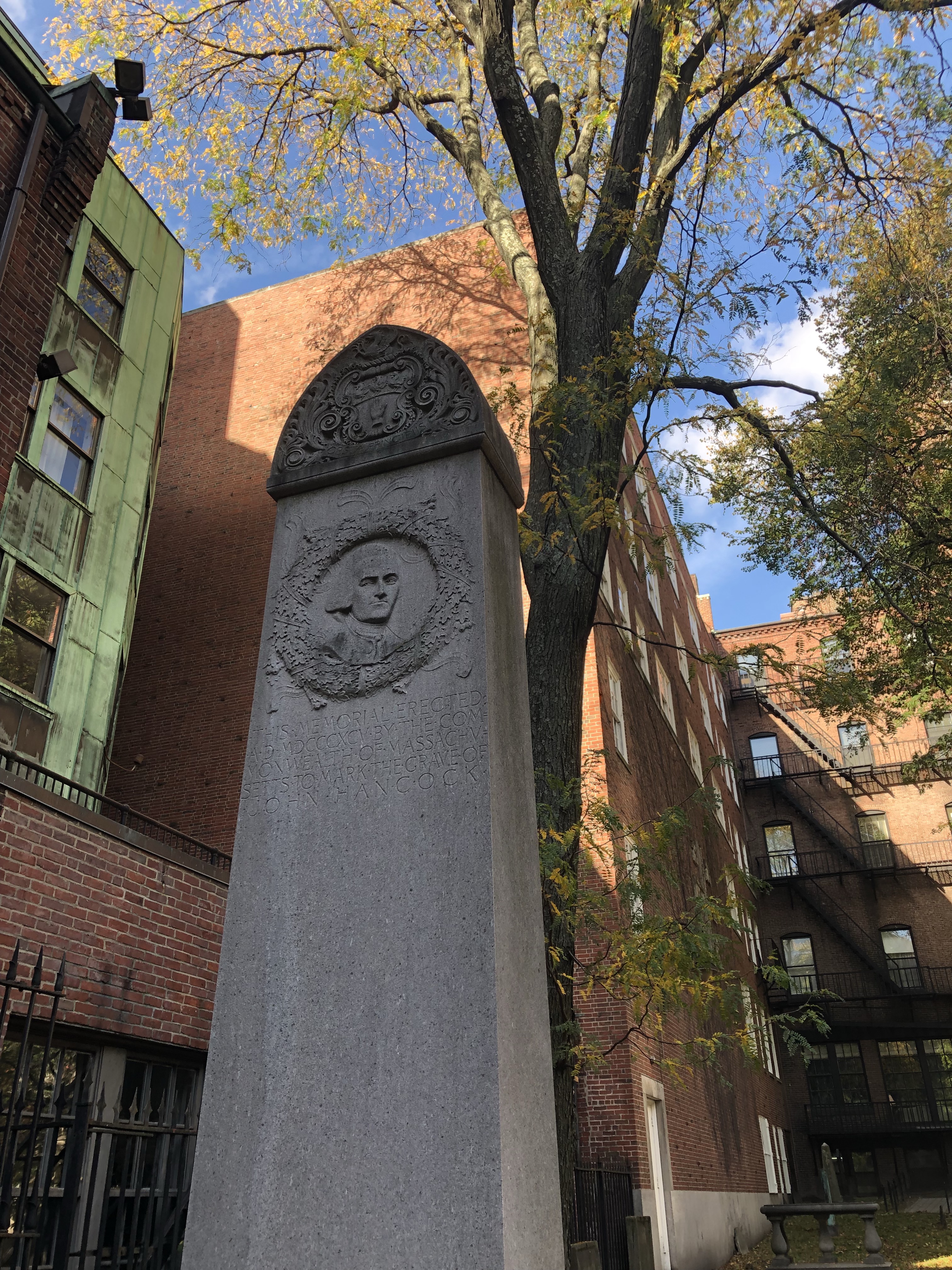
    In this one location, our guide busted so many of the myths that persist in American history. Inside the cemetery there are some names you may recognise – John Hancock, Paul Revere and Samuel Adams. If you have no idea who they are, they were all involved in the Revolutionary War/War of Independence. The guide was great in that he talked about these individuals not as great men of history, but, as products of their context.

    Granary Burying Ground
    Granary Burying Ground
    Granary Burying Ground
    Granary Burying Ground

    One of my favourite stories was on why John Hancock’s signature is so huge on the Declaration of Independence. This story involved explaining his role in the early colony and the workings of early political America. He signed the document when it was completed so it could be copied and sent to the other colonies. Then, others wanted to sign so had to fit their signatures in somewhere.

    The social, cultural and political climate of the colonies during this period were all touched on. It has actually spurred me to look a little closer at the role of women in the War. They were operating in the same contexts and it would be interesting to hear their stories.

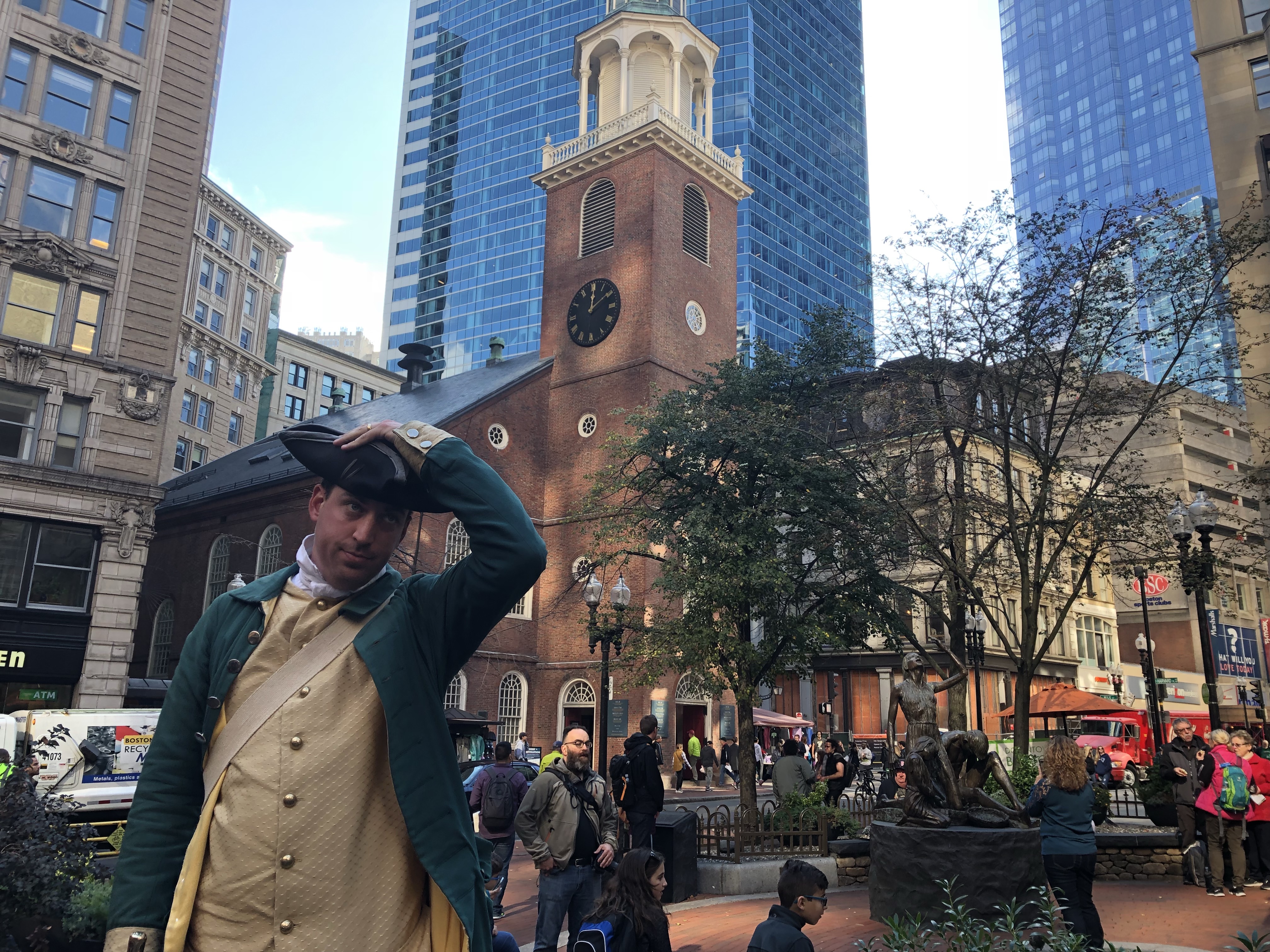
    Stop 3 – Old South Meeting House

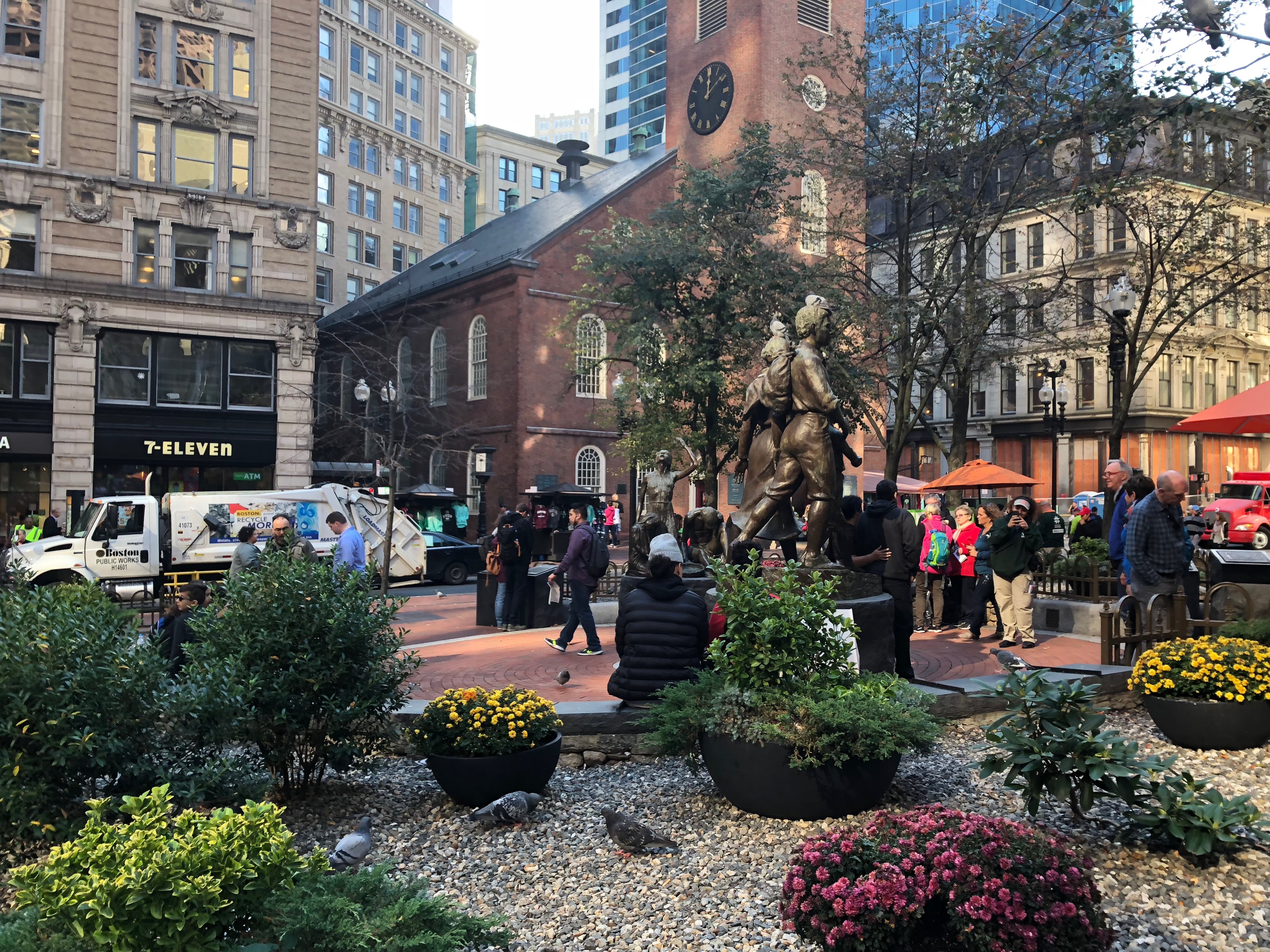
    You have probably heard of the Boston Tea Party. When boxes of tea, totalling in today’s money approximately 1.8 million, were thrown into Boston Harbour. So for over 100 years the colonies weren’t taxed. Then it started with paint and of course tea. There were a few other things mentioned that I forget! The people of Boston boycotted these goods but when they were promised much cheaper prices, still with tax, drastic action was decided. This building is where over 5000 people gathered to discuss the tax situation.

    IMG_1292
    Old South Meeting House

    What heritage adds to these kinds of tours is the fact you can actually see remnants of the past. You can start to imagine the physicality of the event.

    Stop 4 – Faneuil Hall

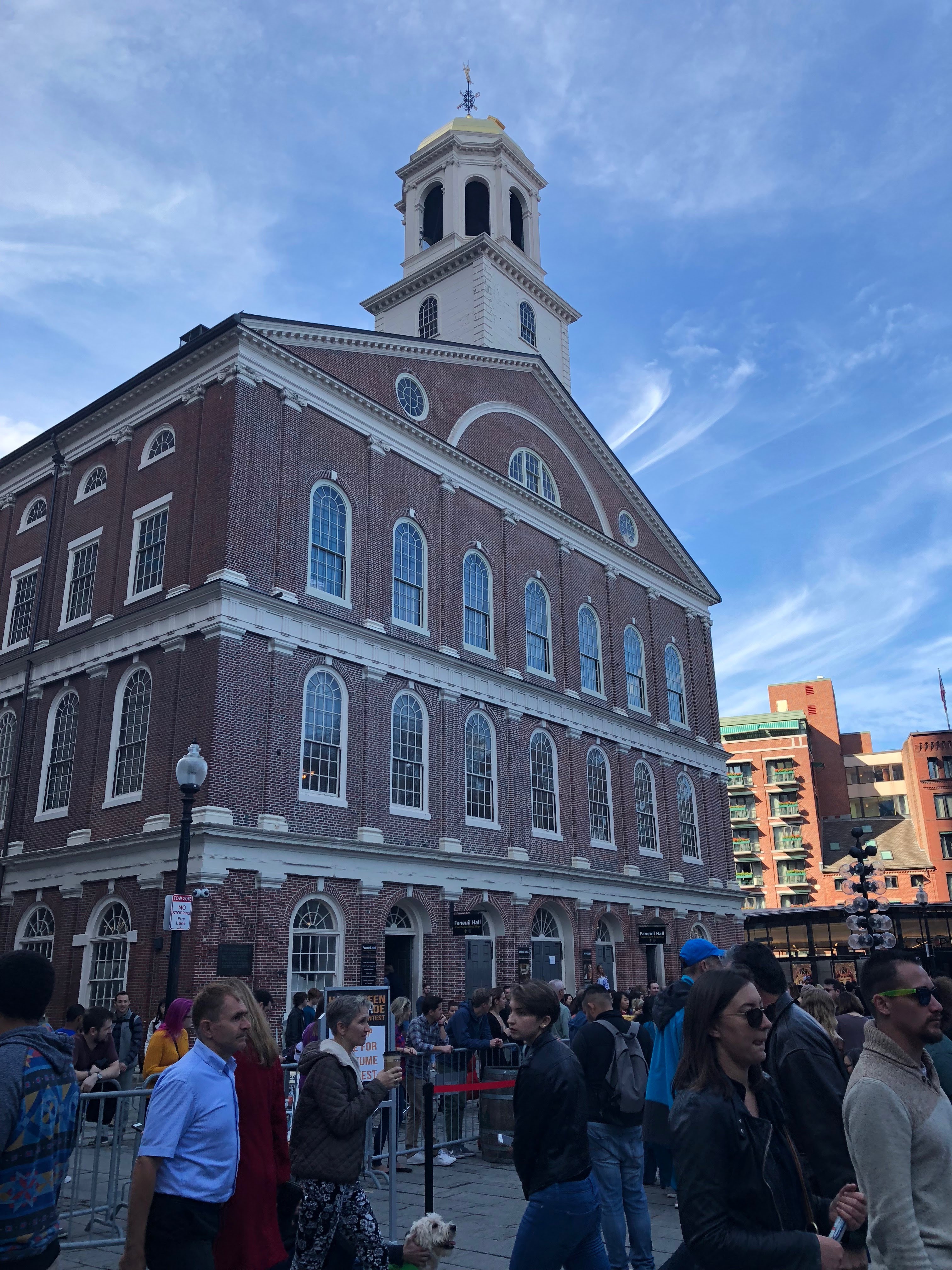
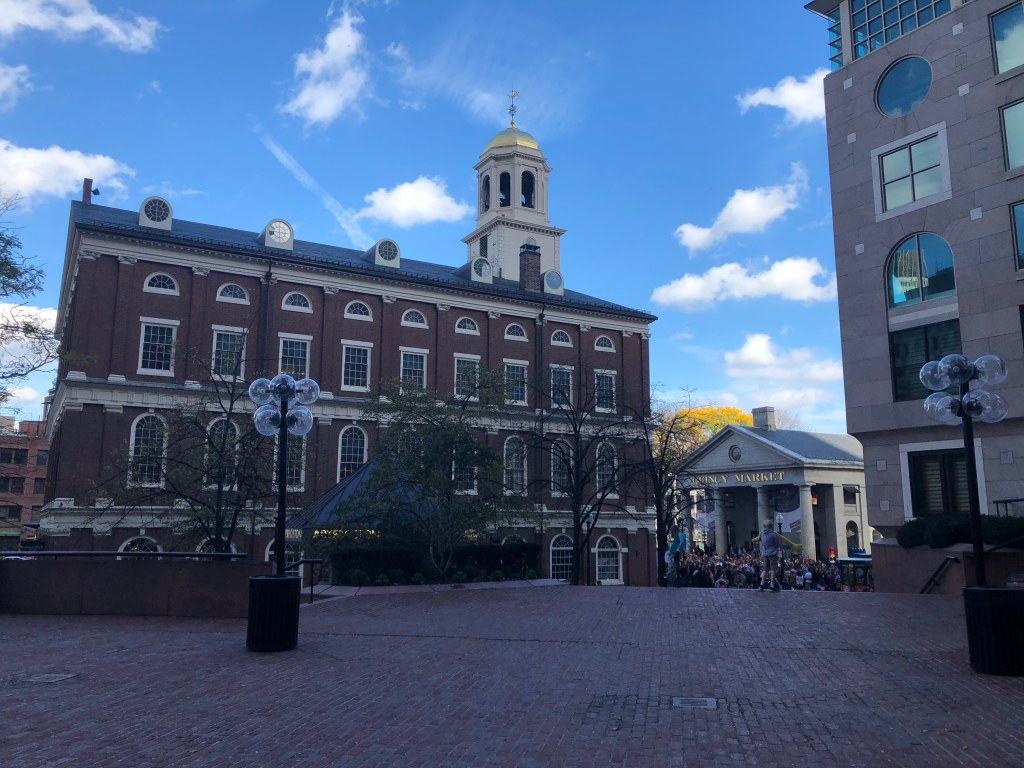
    If the walls of this building could speak I am sure they would have very interesting things to say. Faneuil Hall is otherwise known as the Cradle of Liberty. The second floor of this Hall was a meeting place crucial for spreading revolutionary ideas. It continues to have a strong political association, often selected as a location for political speeches. It is also where new citizens to Massachusetts are sworn in by taking the Oath of Allegiance.

    IMG_6148
    Faneuil Hall

    What stood out to me the most was it’s beautiful architecture style. It was built in a Georgian style with a small white dome on the top. This is juxtaposed against the modern buildings that surround. It really stands out and demands attention.

    Stop 5 – Omni Parker House

    So I am cheating a little. Omni Parker House isn’t on the official Freedom Trail, but, we stopped here so that’s how I’m justifying it. This is one of the oldest operating hotels in America. In here the Boston Cream Bun was invented, Ho Chi Minh worked, JFK had his bachelor party and John Wilkes Booth stayed before heading to Washington. Sure the hotel has been renovated over time, but there are original fixtures and features. Considering it’s link to JFK and food, it addresses many of my specific interests.

    If it wasn’t for this physical heritage surviving in the city this tour would not have had the same impact. Maybe there wouldn’t even be a tour. Sure it’s a bit of a tourist trap but anything that promotes history and heritage I just have to support. At least people are engaging with the city’s past and perhaps becoming inspired to learn and discover more!

  • International Symposium on the History of Anaesthesia

    Today was the final day for the International Symposium on the History of Anaesthesia here in Boston. Luckily, the program for this year contained a few talks on museums from around the world. We heard from Directors, Curators and Honoray Curators who were representing museums in Wales, Germany, America and Australia to name a few. I am going to summarise and comment on three of my favourite talks from the conference. These were all relating to museums (no surprise) and really highlighted the passion that can be found in this industry. They will be discussed in order of when they were presented.

    Just quickly, I was very happy with how my talk on applying historical methodologies to the history was received!

    1. Museuming: Things Museums Should Be Doing – Monica Cronin

    Day one started with a powerful presentation on the world of museums and how they should be managed/regarded. Monica Cronin from the Geoffrey Kaye Museum of Anaesthetic History quite literally left the audience speechless. For those who know a little about me, I completed my internship at this museum in 2015.

    What I admired most about this talk was how museums were legitimised and presented as complex institutions. The value of a qualified and skilled museum professional was definitely stressed ensuring that listeners were not left ignorant of the extremely hard work and efforts that go into working in a museum. This talk generated much discussion and I strongly believe it left a lasting impression on the audience that attended.

    I was particularly interested in hearing about the steps involved in accreditation and what that meant for the museum. As Cronin stated, the average length of time it takes to accredit a museum is three years. That’s three years of incredibly hard work, ensuring policies are either produced or up to date. Also this means applying industry standards not only in the public space, but also, behind the scenes. The Geoffrey Kaye Museum has benefitted greatly from accreditation raising its profile in the museum industry and ensuring best practice is at the forefront.

    The significance of the research undertaken by the Curator, Cronin, was highlighted in another talk, “Where Are All the Women? Exploring the Seemingly Invisible History of Women in Anaesthesia.” This talk was a fantastic insight into the role of research in the museum and how museums/Curators can share often neglected histories to wider audiences.

    Monica Cronin

    2. The Exhibitions of the Industrial Revolution and Their Impact on Anaesthesia – Dr Christine Ball

    I have mentioned before that the Crystal Palace Great Exhibition of 1851 follows me wherever I go. This conference was no exception. Dr Christine Ball was able to find evidence of anaesthetic equipment on display at a whole range of international exhibitions.

    The presentation began with a contextualisation of the exhibitions that was both informative and entertaining. The first anaesthetics were used around the same time as these exhibitions so Dr Ball investigated the primary sources to see if the equipment appeared anywhere on display. Through a close reading of the catalogues and an understanding of the display categories at these exhibitions, this evidence was found and analysed.

    The most admirable thing about this presentation was how Ball discovered exactly what was mentioned in the catalogues. Vague descriptions of equipment were often cited and Dr Ball was able to compare the catalogues to the equipment of the era and tell us what it was likely to be. This then opened the door for interesting insights into why certain equipment was displayed and how it was innovative or transformative to the discipline.

    Dr Christine Ball

    3. The Mushin Museum Renovation Project: Cardiff University Student Collaboration & Public Engagement and the Mushin Museum: A History of Anaesthesia Told Through the World Wars’ Event – Dr Danielle Huckle

    There were two presentations delivered by Dr Danielle Huckle and I couldn’t just pick one. Both provided an amazing insight into the renovation and evolution of a medical museum. Dr Huckle was such an engaging speaker, introducing audiences to the history of the museum and how it is developing.

    In her first talk, Dr Huckle spoke about student projects that have contributed to the museum in a variety of ways. The most exciting for me was the creation of education resources that can be sent to teachers and used to teach students within the museum space. It is incredible to think that high school students are learning with the support of objects from a medical collection!

    Summer scholarships/internships were promoted to University students to assist with such programs. As part of their experience, they were sent to other museums such as the Hunterian to gain inspiration. I almost clapped in glee that this happened. Interestingly, all students had a medical background. There is a museum studies program at Cardiff University and I would encourage any of these students to apply and transfer their skills and expertise! I took what seemed like a gamble at the time to intern at a medical museum and it turned out to be one of the best decisions I ever made.

    Dr Huckle’s final talk was more focused on how the museum has reached out to the public. There were so many genuinely exciting things discussed. For example, having a fine arts student come in and sketch some of the equipment. They produced a portfolio of stunning drawings that can now be used as visuals in the museum.

    For World War I commemorations, the museum ran a workshop with talks and two simulations. The museum is located inside Cardiff University so they were able to use dummy simulations to re-enact surgeries – fake blood included. What a great way to actually get audiences experiencing a snapshot of surgery in the past. Combined with the talks, the workshop sounds like it was a sensory experience.

    Dr Danielle Huckle

    As well as these talks there were representatives from the Wood Library Museum, the Anaesthesia Heritage Centre, the Japanese Museum of Anaesthesiology, the Crawford W. Long Museum and the Dräger Company Archives. It’s amazing to see the cultural heritage of this profession being used for a vast array of purposes. It’s a testament to how the history of anaesthesia is a story worth telling and one that truly benefits from collaboration between different professionals.

  • Boston: Warren Anatomical Museum, Boston Public Library and Ether Dome

    Greetings from Boston! Where autumn/fall is in full swing and the pumpkin spice lattes are on every menu. I have always wanted to visit America during this time of year and I am absolutely thrilled that this conference has lined up perfectly! Although it is technically my first full day in Boston (I arrived last night) there is already so much to discuss.

    Today I spent the day with my lovely friend Monica exploring a few sites in Boston. We first visited the Warren Anatomical Museum for a meeting with its curator, Dominic Hall. We had a fascinating discussion about storing and maintaining wet specimens – meaning full body parts including organs that need to be stored in a preserving liquid.

    We had the chance to go behind the scenes and see the laboratory work that is currently on the go. There was great dialogue regarding what can and can’t be displayed and how ideal storage conditions have been met. As part of the chat, we saw the original premises of the museum. Architecturally stunning.

    Warren Anatomical Museum

    We didn’t have time to see the museum itself, but I’m hoping to return and shall blog if I can!

    Another highlight of the day was seeing the Boston Public Library. It is such a stunning building with marble stair cases, murals and water fountains. I don’t know how anyone can actually study in this place. We spent a bit of time just wondering around and admiring the beauty that was in front of us.

    Boston Public Library
    Boston Public Library
    Boston Public Library

    It was then time to register for the International Symposium on the History of Anaesthesia and travel to Massachusetts General Hospital. Here, in 1846, the first successful demonstration of ether was performed in what is now deemed “the Ether Dome”. It is virtually impossible to think of surgery without anaesthesia. The pain, the complications and the recovery would just be beyond horrendous.

    Needless to say this moment was, therefore, pretty revolutionary. To actually sit in the operating theatre where it happened was nothing short of surreal. Just picturing the surgeons and anaesthetist for the first time working in that space without causing great pain was incredible. It was a really powerful way to start the conference. I have visited other old operating theatres before, but, this one just had that added layer of history.

    Ether Dome
    Ether Dome

    The conference runs until Friday. I am speaking tomorrow on experiences of surgery pre-anaesthesia particularly focusing on women. The history of anaesthesia tends to favour men who made contributions to the field in some way, shape or form. My paper is going to challenge this dominant narrative and offer new perspectives and readings on the past.

    I am so excited to share my passion of medical history and my desire to see it flourish as a professional field. I will write a full summary of the conference at the end.

  • Sydney: Art Gallery of New South Wales

    I am now en route to Boston for the International Symposium on the History of Anaesthesia. While in the States I will be visiting as many museums as possible in Boston, Philadelphia and Washington DC! In other words, prepare yourself for numerous blog posts and, of course, lots of photographs.

    Before heading off, I spent the weekend in Sydney. Luckily, I was here for the final day of the 2017 Archibald Prize at the Art Gallery of New South Wales. For those not aware, the Archibald Prize is an annual art event held in Sydney. It is named after Jules Archibald, the founding editor of The Bulletin magazine. He had a passion for art and on his death in 1919, left money to fund a major portrait painting competition. The prize is huge – $100 000! There are also prizes for People’s Choice, voted by visitors, and the Packing Room Prize, which is awarded by staff of the Gallery who install the exhibition.

    Art Gallery of New South Wales

    This is the first time I have seen the Archibald Prize and I had very high expectations. This is due to a variety of reasons including the hype surrounding the Prize and the prize money involved. I’m going to divide this post into two sections – where I believe it met these expectations and where it fell a little short. I should say here that I did not download the mobile guide.

    Positives

    I was very impressed with the layout of the exhibition. There was a slight bottle neck issue at the beginning, with crowds being funnelled into a small room. Once you made it through here, however, it was spacious and the works were not crowded together. This allowed for the display to not be overwhelming and it encouraged me to look more closely at each individual work.

    Archibald Prize

    I also found that the balance was consistent throughout the exhibition. Incredibly colourful pieces were not all in the same room allowing for some breathing space. What struck me was the size of some of the artworks. I must admit I knew very little about entry requirements, but, some of the paintings were massive. This must have been difficult to curate! Yet, like I said, it was just so beautifully balanced and aesthetically incredible. Each time I walked into a new space, this feeling was just continuously confirmed.

    Another positive for me was the inclusion of children in the exhibition. There were labels for children (also a negative but I’ll get to that later) and, my personal favourite, a space dedicated to fun interaction. There were three large frames mounted on a wall and children/adults could stand behind the wall, move into a frame and have their photo taken. The idea being that your portrait was now part of the Archibald.

    Be Part of the Art

    Running the length of a wall that separated these frames from the entrance to the Archibald, were the Young Archie finalist entries. Children can submit portraits they have created and have these displayed as part of the major exhibition. They were so lovely to see and I was absolutely in awe of the children’s creativity!

    Archibald Prize

    Overall, I had a lovely time looking through the entries of both adults and children admiring how they had captured various personalities.

    Negatives

    There was one major disappointment with the display – the labels. I know it was the final day, however, most of the labels I saw were grubby and/or peeling off the wall. It was not a good look. The information they contained was very interesting and it was a shame to see them peeling away.

    On the topic of labels I have two more comments. The children’s labels were placed so high on the wall – just below eye level for adults. I can’t imagine young kids being able to see that high, let alone answer the questions. Maybe this was a way of encouraging parents to interact with their children by reading the labels to them? Who knows, but, it stood out to me. I did see there was a children’s trail available which may have been amazing.
    Archibald Prize

    Finally, the labels indicating the winners looked identical to the artwork labels. They were really hard to find as they blended in with everything else. No wonder I saw so many people ask the guards and staff where the winners were located inside the space. It would have been nice to see some colour or just something different to help them stand out.
    Archibald Prize

    Of course, like always, this is just my personal opinion and I’d love to hear from you in the comments if you have any other or opposing thoughts!

    I am very glad I got to experience the 2017 Archibald Prize. I think the fact it was busy did not detract from the exhibition, but enhanced it. Hearing what people had to say regarding the winners was actually quite fun. Many agreed with the choices, however, some were disappointed and it was interesting to hear why. It was an exhibition designed to make you feel quite comfortable and, therefore, I was quite happy to wonder around feeling no pressure from the crowds and enjoying the artworks.

    The Wynne and Sulman Prizes were also on display, however, I wanted to just focus on the Archibald.

    Below are some more images of the artwork on display. Enjoy!

    Peter Sheets, Lisa Wilkinson AM, Packing Room Prize Winner
    Madeleine Winch, Facing the Canvas
    Mitch Cairns, Agatha Gothe-Snape, Winner of the 2017 Archibald Prize
    Marc Etherington, Paul (Paul Williams in his studio)
    Yvette Coppersmith, Professor Gillian Triggs
    Anh Do, JC