• Chicago: The Field Museum

    We have had way too much fun in Chicago! One major highlight of the past few days has been seeing the musical Hamilton. It was just, wow – worth all the hype and praise it deserves. I am trying to catch up with writing my reviews. Even though it has only been two days since I’ve last posted, we have managed to visit three museums and go on two tours. Before my terrible short term memory gets the better of me, I better start writing!

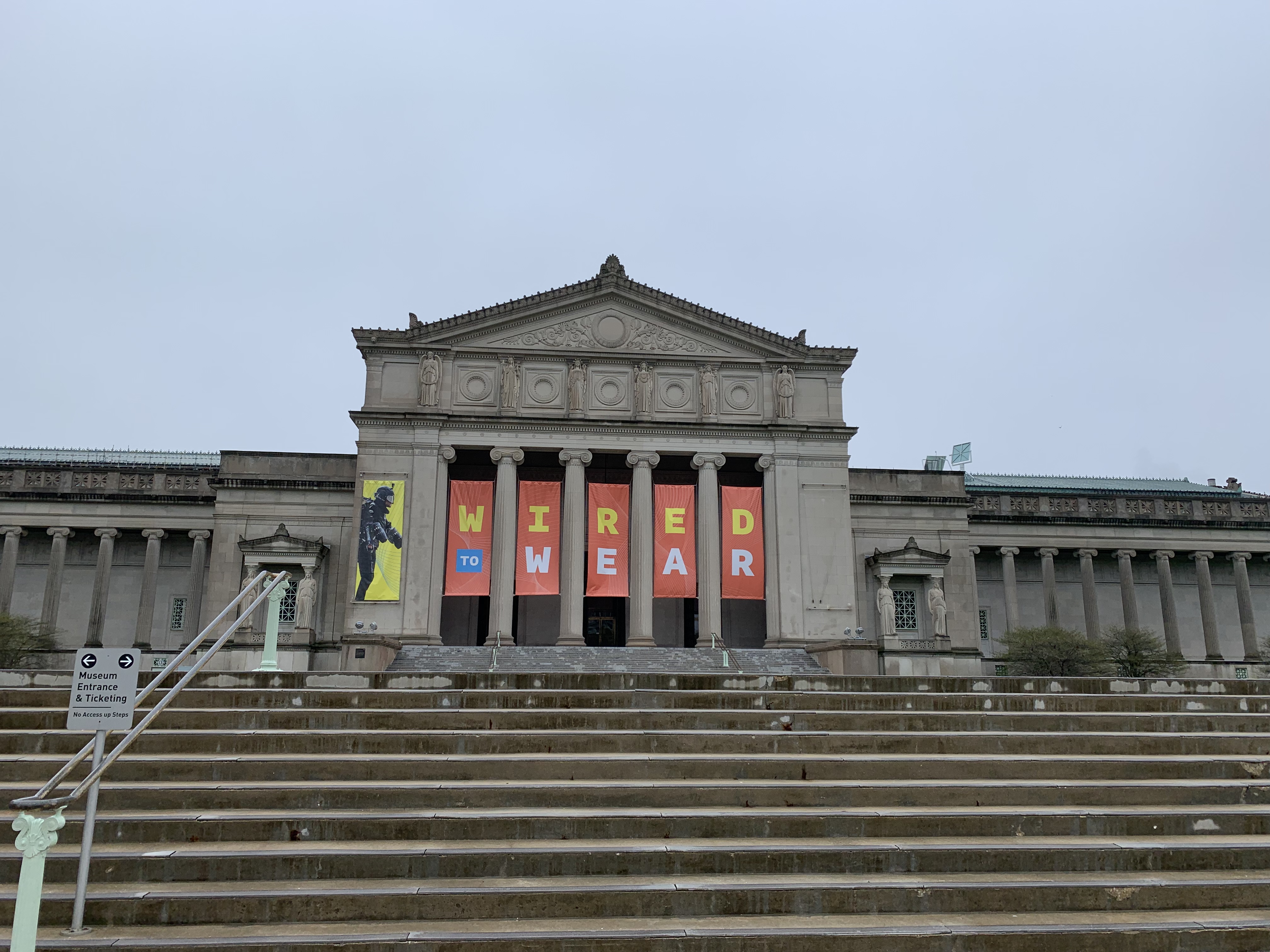
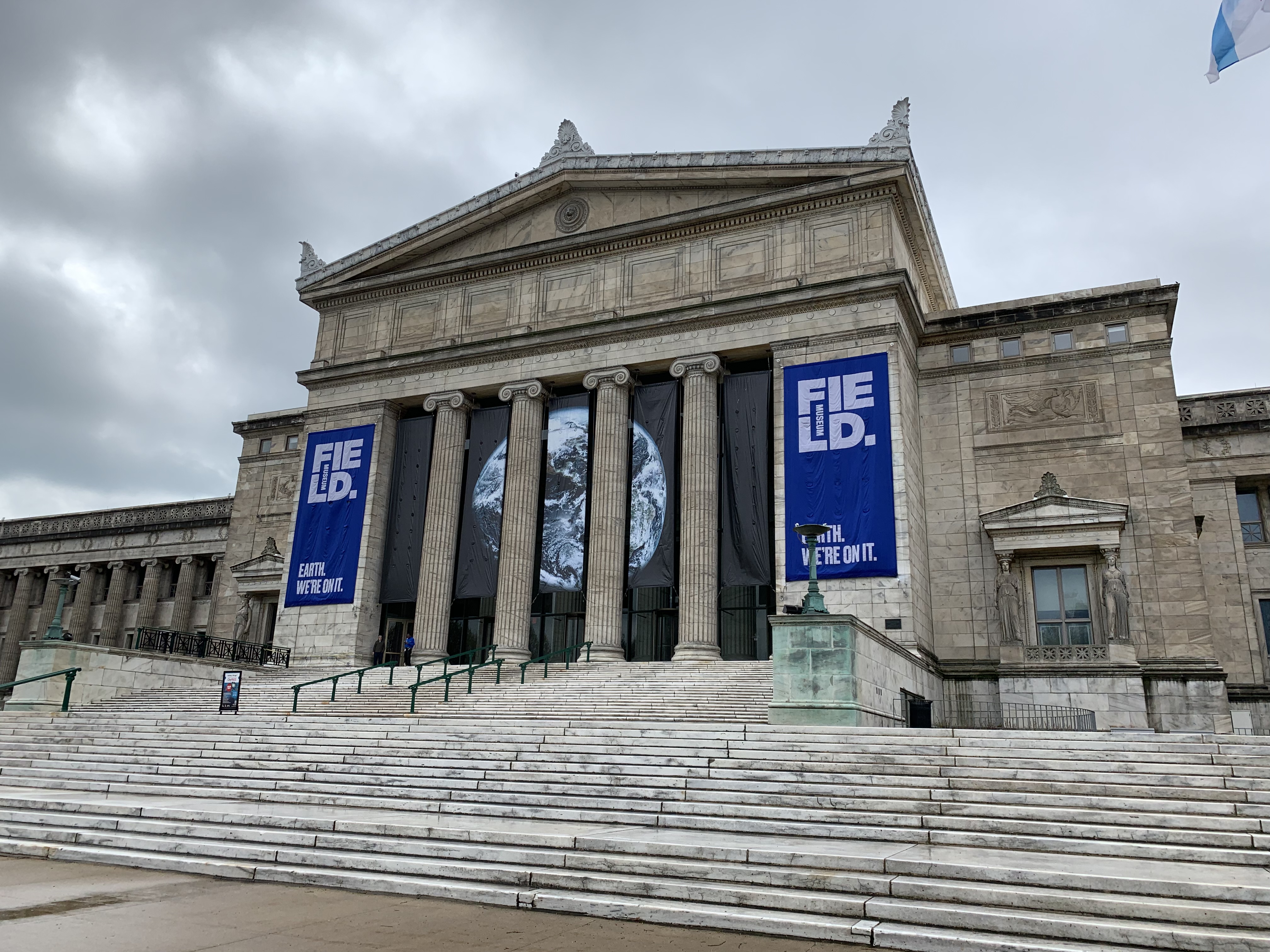
    The Field Museum Entrance

    We visited The Field Museum on Wednesday because I needed (not wanted) to see Sue the T-Rex. The majority of this post will be dedicated to Sue so that’s all I’ll mention for now. There is so much more to see and do in The Field Museum. We only had the energy to walk around a couple of exhibitions. As with so many large institutions, the key is quality over quantity. Select what most appeals to you and focus on seeing that rather than trying to tackle absolutely everything. On that note…

    History and First Impressions

    It has been quite a while since I’ve stepped foot into a natural history museum. The Field has a wonderful past. Its initial collection comprised of objects leftover from the 1893 World’s Columbian Exposition. The name ‘Field’ pays homage to the Chicago magnate Marshall Field who donated one million dollars to creating a permanent home for the collection. Today, they have over 40 million objects. Exhibitions, research and programs all conform to their aim – to fuel a journey of discovery to ensure a brighter future (I have paraphrased).

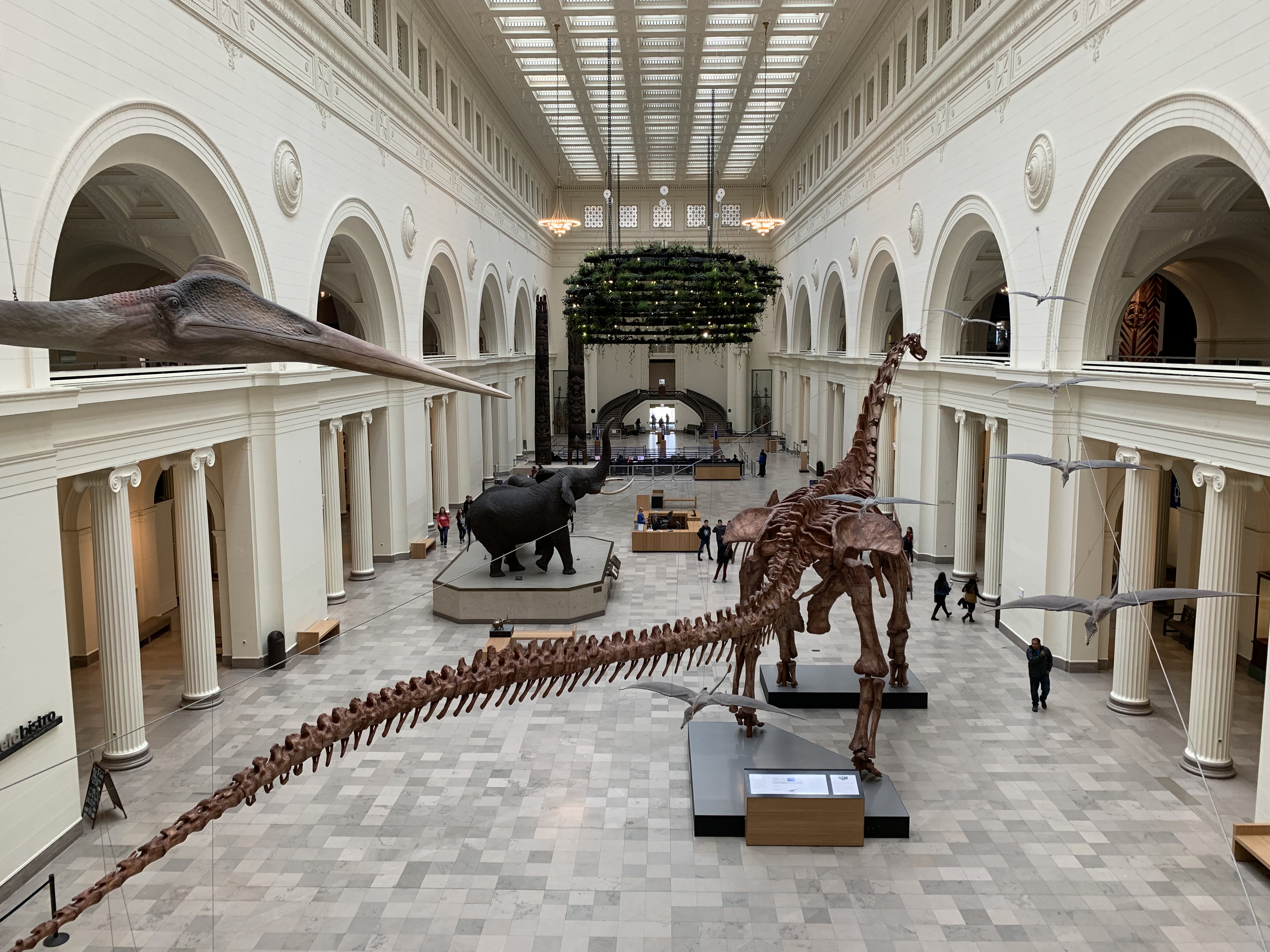
    On entering The Field Museum, you are met with an impressive entrance hall. There are two quite imposing specimens front and centre – two fighting African elephants and Maximo, the Titanosaurus.

    Dinosaur Hall

    The fighting elephants have been in the entrance hall of The Field since 1909. The skin and tusks are 100% real and have been attached to other bits and pieces to create the correct shape. Accompanying the display is a touchscreen computer where you can discover more about the taxidermy process or the history of the elephants. There is also a small model of the elephants for visitors to touch. Both work really well and allow for multiple ways to engage.

    African Elephants
    African Elephants

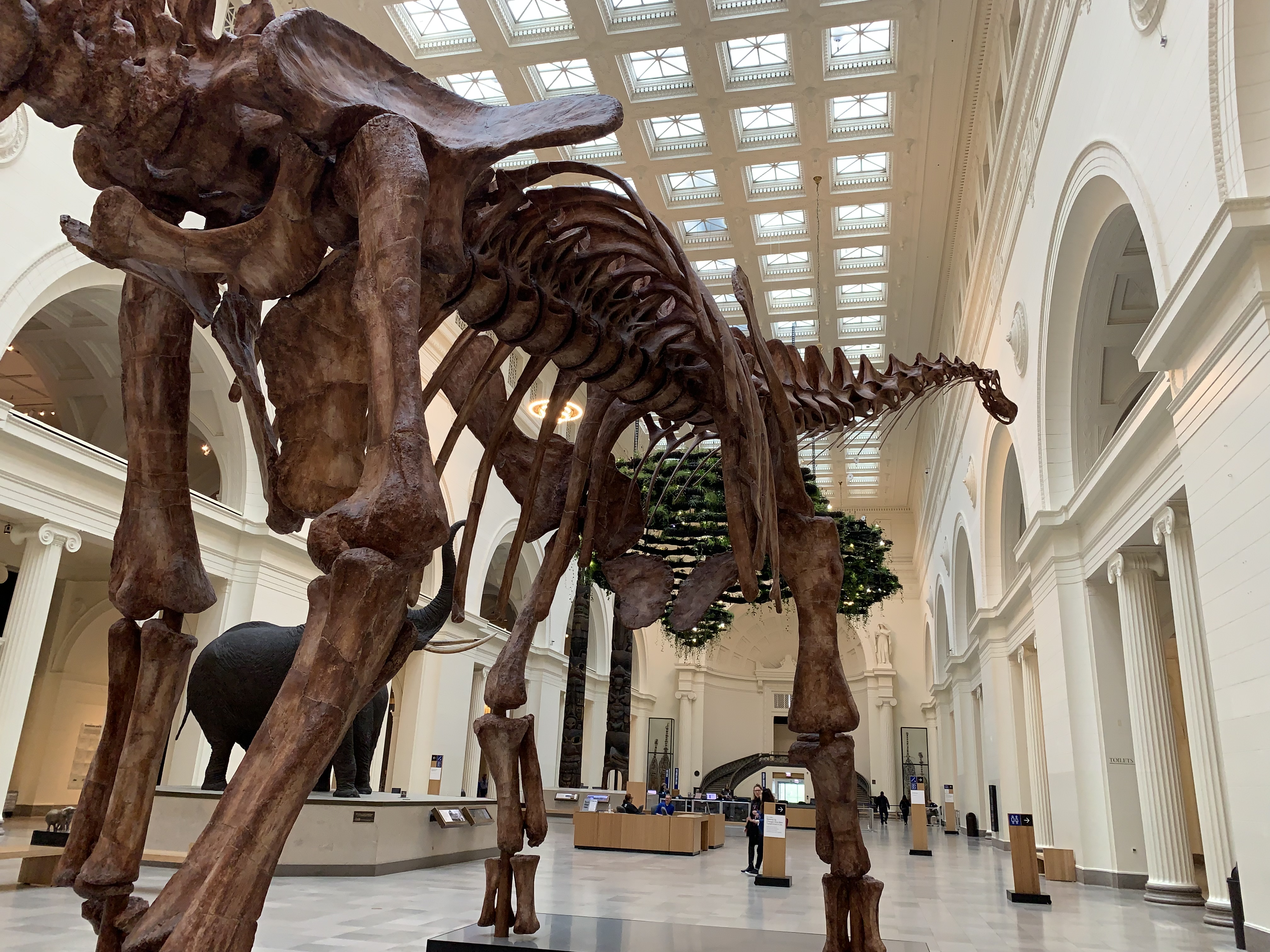
    Then there is Maximo, a cast of the largest animal to have ever walked the earth. I am a tragic for dinosaurs so I was pretty much in heaven from the get go. So you could say that I had a great first impression.

    Maximo

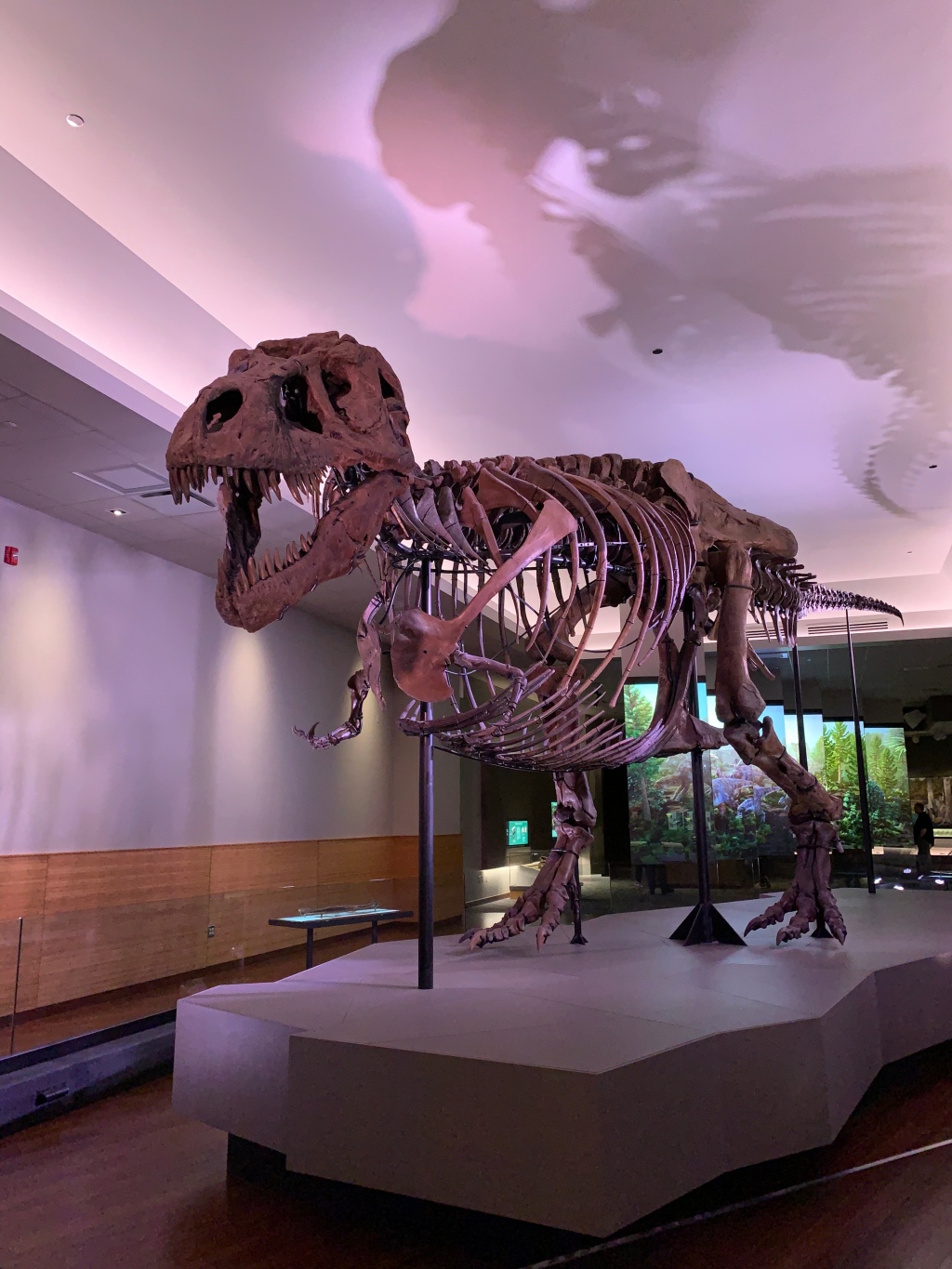
    Sue the T-Rex

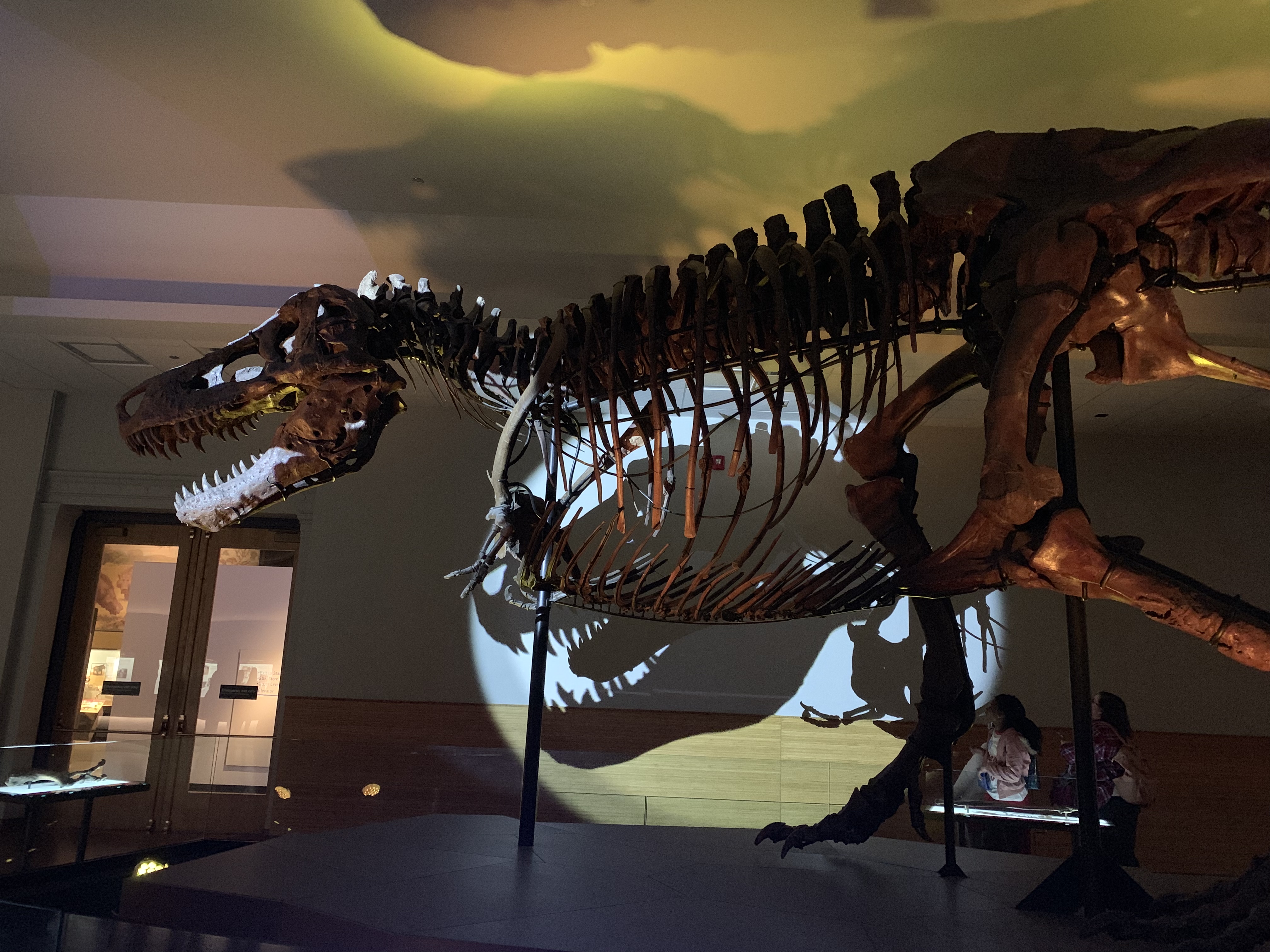
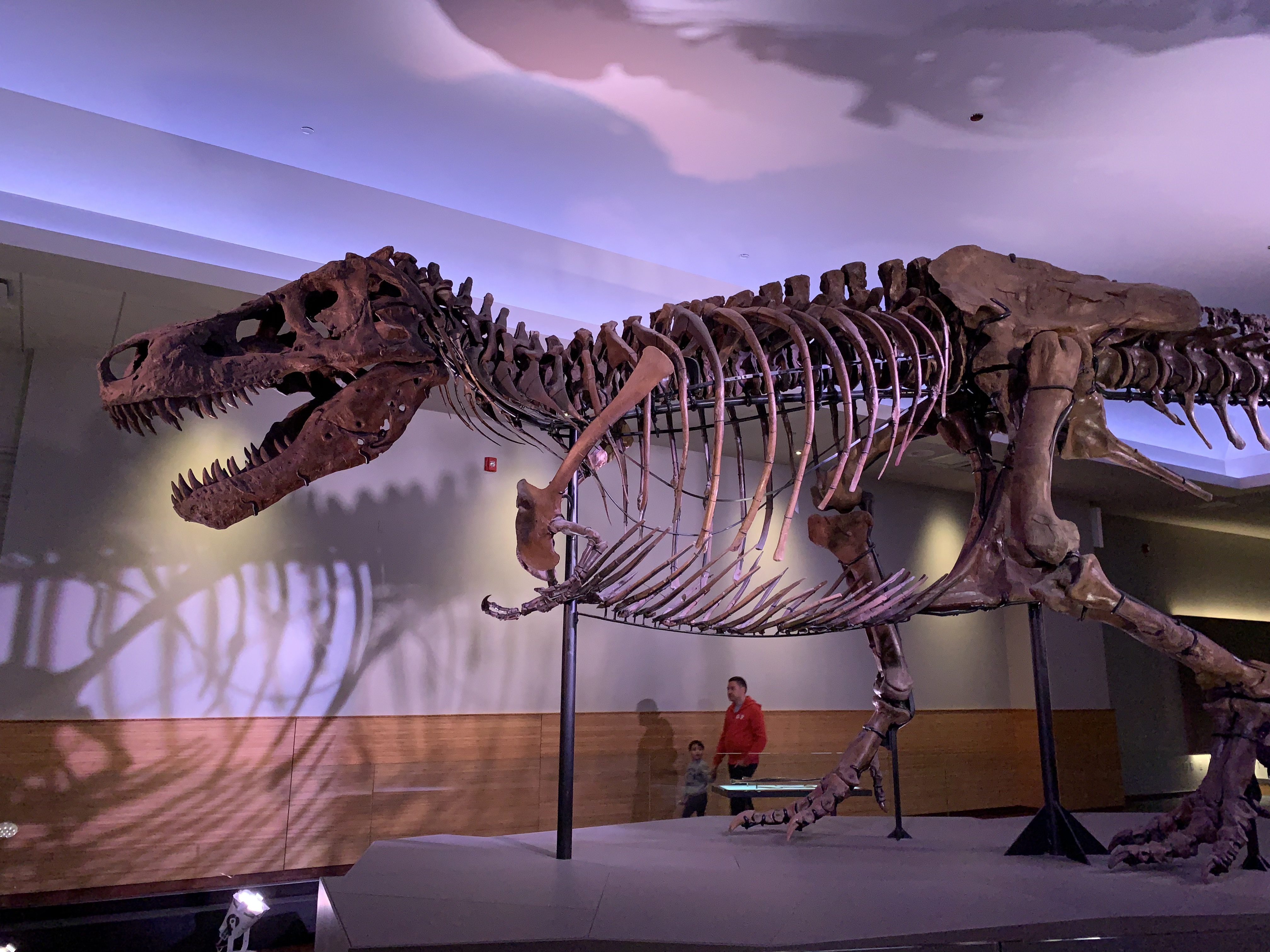
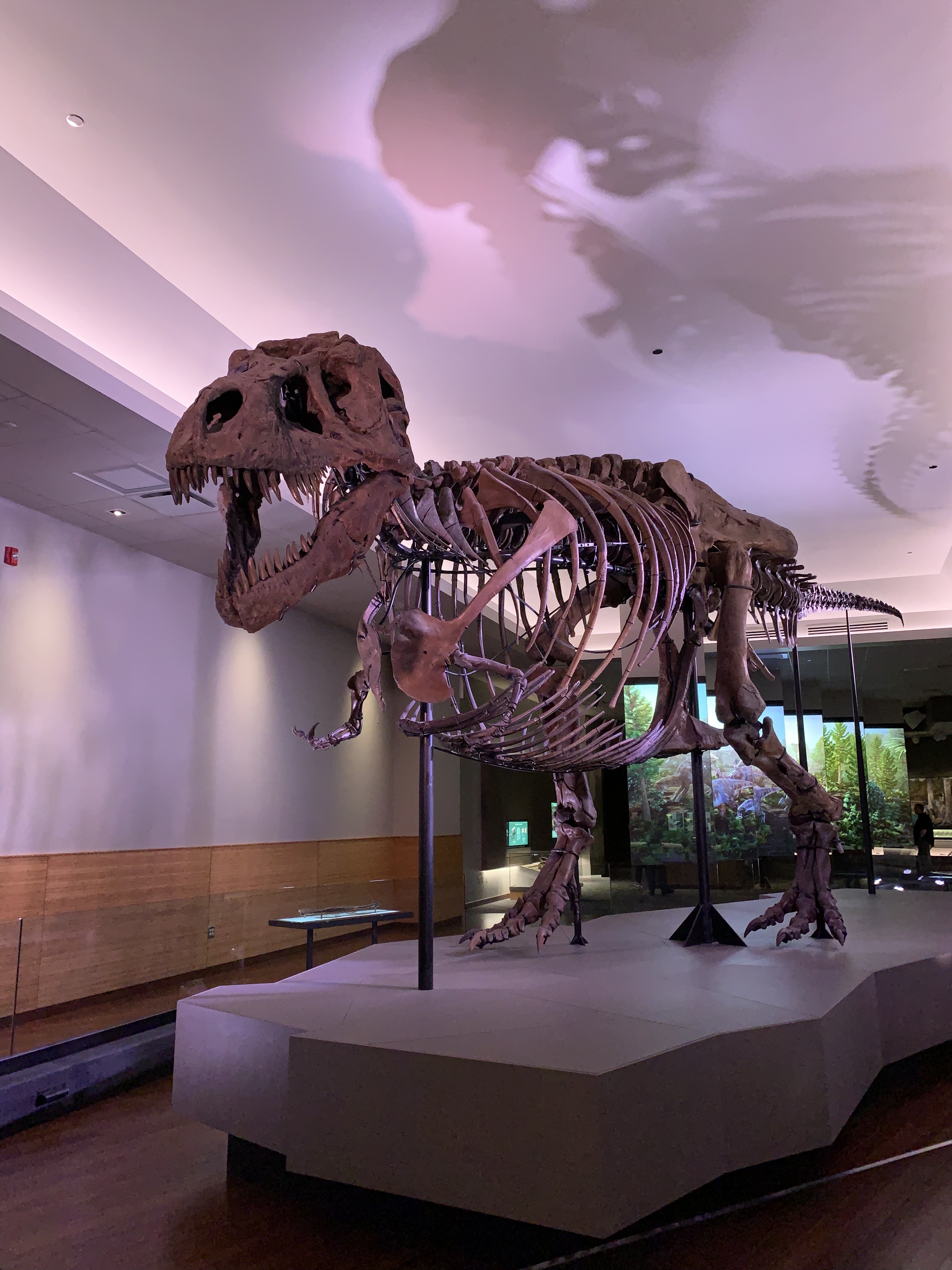
    We headed straight to the second level to an exhibition called Evolving Planet that led to Sue – the most intact T-Rex skeleton ever to be discovered. Around 90% of the skeleton is real. Just let that sink in.

    Here are some quick facts:

    • Sue lived around 67 million years ago
    • We don’t know if Sue was male or female
    • Sue was named after Sue Hendrickson who discovered the skeleton in 1990
    • Sue was found in South Dakota
    • Researchers from all over the world study Sue and have discovered so much about T-Rex because of this skeleton (for example researchers have been able to determine the average life expectancy of a T-Rex – 28 years)

    I virtually ran through the Evolving Planet exhibition (which is really very interesting) and the dinosaur hall (again super interesting but I was on a mission) to get to Sue. I am slightly exaggerating because I did stop and read quite a bit along the way.

    Finally, we came to a darkened room with a huge poster saying Sue is this way. We first saw Sue’s real skull which is kept behind glass and very well protected. This is mostly because it is studied so much they don’t want to keep taking it off the rest of the skeleton all the time. Then, we went around a small partition and finally saw Sue.

    Sue T-Rex

    A lovely staff member was waiting to let everyone know a light show was about to start. I was a little worried about the wording ‘light show’. When it started, I soon realised I had no need to worry. What the light show consists of is lighting up various parts of the skeleton to explore the life of Sue. Well, the life of Sue we can see etched into the bones. It is actually quite heart breaking to learn Sue probably died from starvation as the jaw bones show evidence of an infection. The show also highlights some past battle injuries. For example, there are three ribs that have been broken and were beginning to heal. This proved to be a really engaging way to communicate information through the use of lighting.

    Sue T-Rex
    Sue T-Rex

    When the light show finished, we took about two hundred thousand photographs of Sue before leaving. I also explored the touchscreen information labels to learn more about the various bones and what we have discovered about T-Rex thanks to them.

    Sue T-Rex
    Sue T-Rex
    Sue T-Rex

    Evolving Planet

    Because I skipped over it, I’m now going to go back and spend a bit of time on the broader Evolving Planet permanent display. There is so much information on display you could spend days getting through it all. For this reason, I basically only focused on what looked most appealing to me.

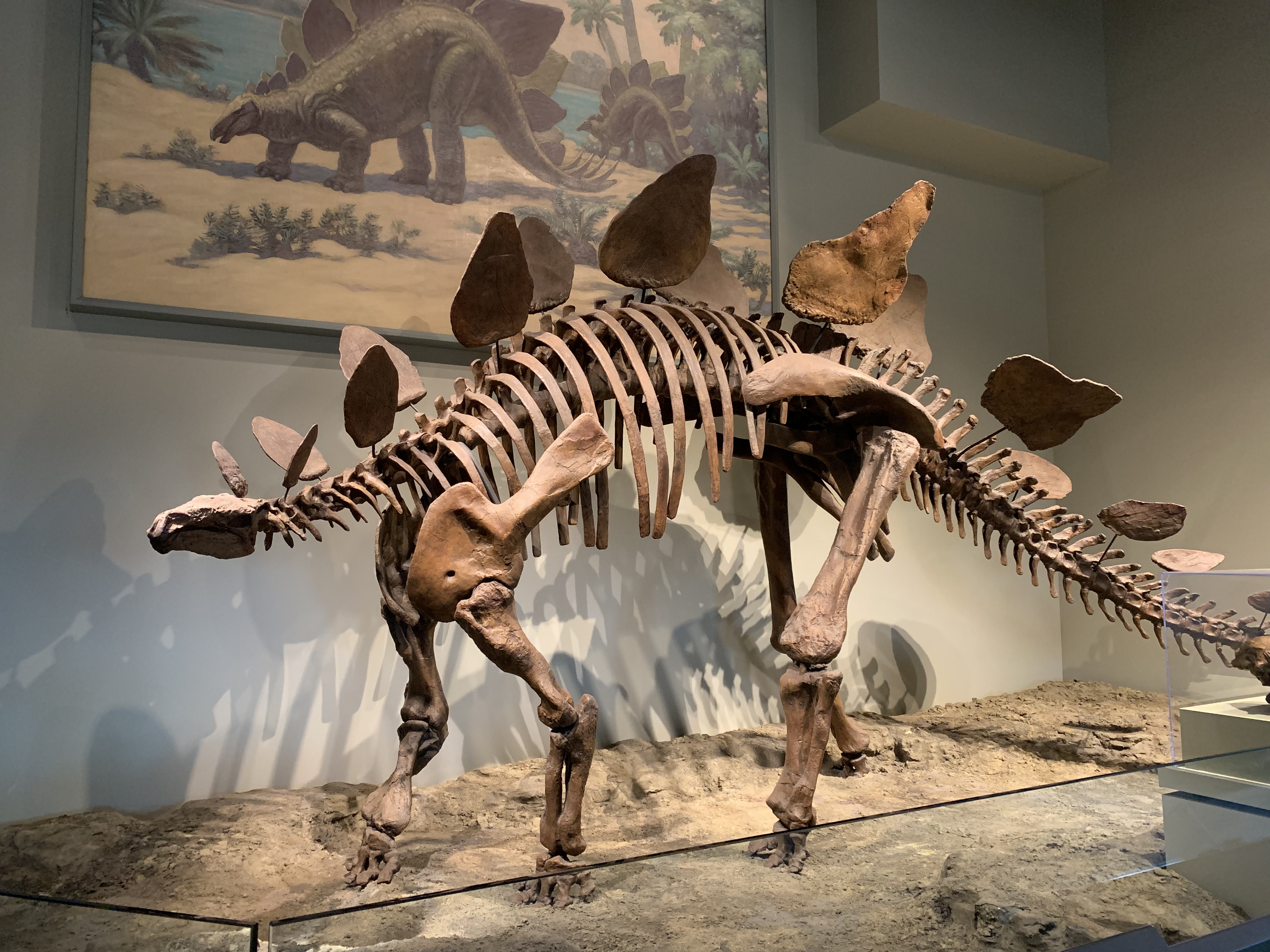
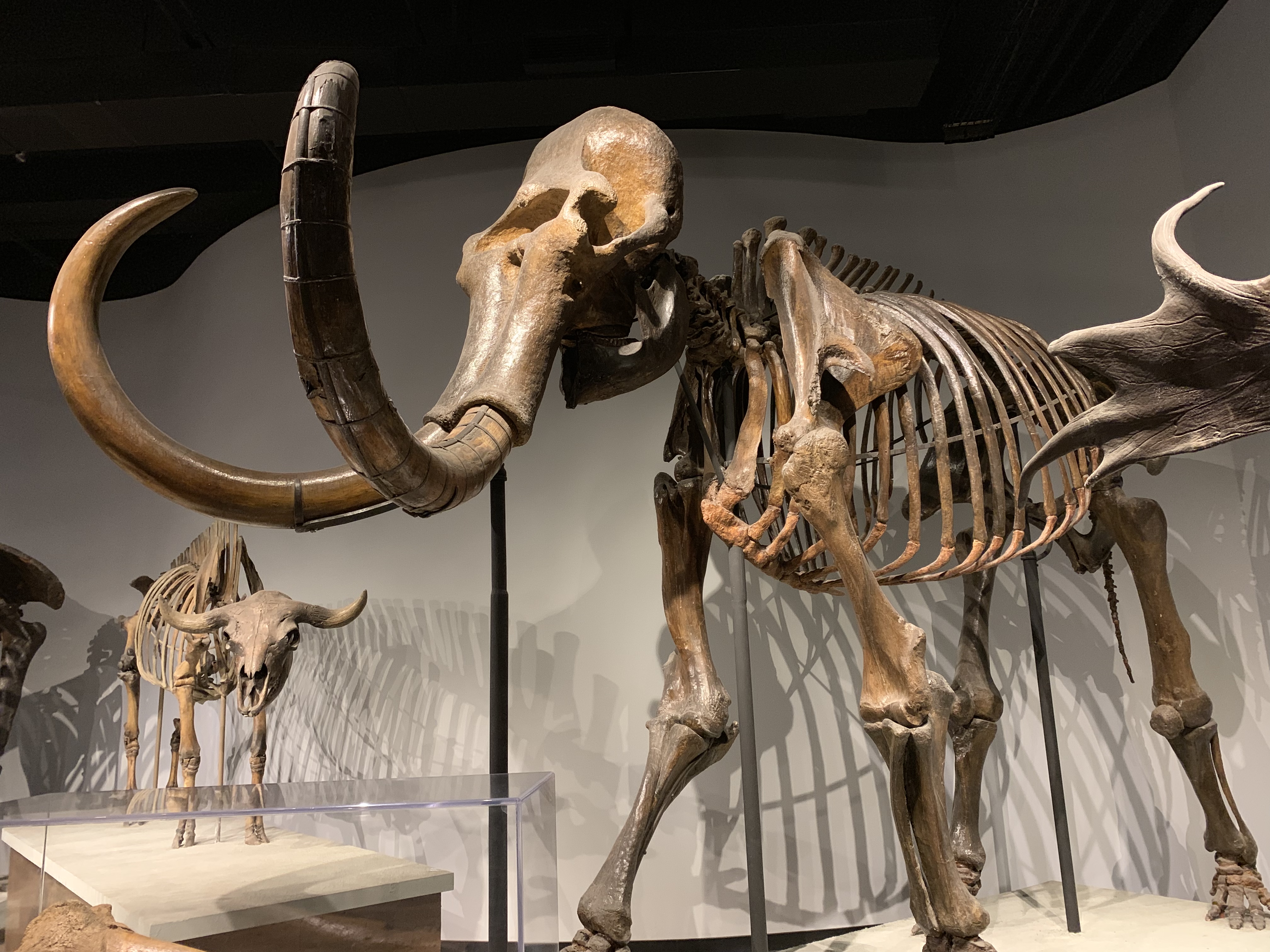
    This did mean spending some time in the dinosaur hall seeing the Ceratopsian and Stegosaurus. I also thoroughly enjoyed the Ice Age animal room that showcases a skeleton of a woolly mammoth and saber tooth tiger. For fellow Game of Thrones fans, there are also some dire wolf skulls on display.

    Ceratopsian
    Stegosaurus
    Mammoth
    Saber Tooth Tiger
    Skulls

    I did get overwhelmed by how much there was to get through in one exhibition. From the moment life started on earth until, essentially, today, you can see how we’re talking about a huge topic to tackle in an exhibition. I was very glad for the ‘you are here’ timeline scale that is on display when moving from one time period to another.

    Timeline for Exhibition

    When we finished Evolving Planet, visitor fatigue set in. For the rest of our visit, I only wanted to see something light and fun.

    Dioramas

    I had forgotten how much I love dioramas. You can always trust an old natural history museum to have some absolutely wicked dioramas. These are no exception and were exactly what I needed after an intense walk through life on earth. I’ve included an example below.

    Dioramas

    Visitor Information

    I would strongly recommend planning your visit before entering the Museum. Make sure you know what you want to spend your time and energy on. For first time visitors, seeing Sue should be at the top of your list so work from there. The Field Museum is open daily from 9.00 am to 5 pm with last entry at 4 pm. It is accessible. We did purchase our tickets online, however, if you’re visiting on a weekday outside of school holidays then this is not necessary.

  • Chicago: International Museum of Surgical Science

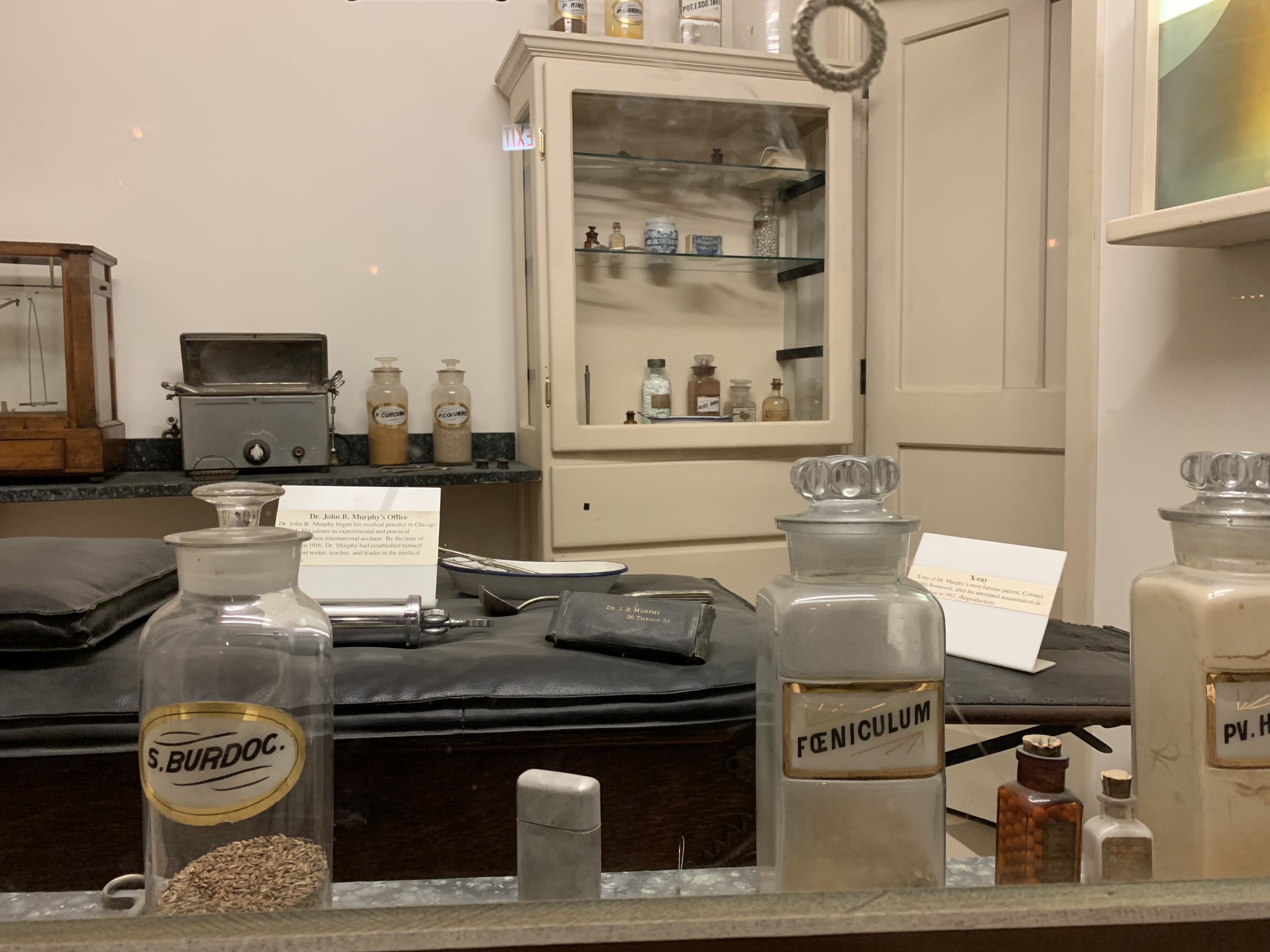
    The International Museum of Surgical Science is dedicated to enhancing an understanding of the history, development of, and advances in, surgery. It is the only museum in North America covering such subject matter. I wanted to visit for many reasons. Not only because of my current role, but also, because I’m genuinely interested in the history of surgery – except for when it becomes a little too gory.

    The following post will start by covering the building and layout before moving into exhibitions and specific objects. Enjoy!

    Museum Building

    The Museum is housed in what was a lakeside mansion belonging to Eleanor Robinson Countiss and her family. Eleanor’s father was an extremely wealthy businessman who invested a lot of money in matches. The family settled in Chicago in 1887. Here, Eleanor met Frederick Downer Countiss (President of the Chicago Stock Exchange). Although he was dating her sister, the tables turned and Frederick and Eleanor married in 1910. Part of their wedding gift was a downpayment to build the mansion. Construction began in 1917. Eleanor was inspired by Le Petit Trianon in Versailles, France designing the mansion to look identical.

    International Museum of Surgical Science

    Today, it is one of the few surviving lakefront mansions in Chicago and the only one open to the public. For this reason, it was listed in the National and Illinois Register of Historic Places. It was acquired by the International College of Surgeons in the early 1950s and opened as a museum in 1954.

    Museum Layout

    When you visit, keep in mind it was once a residence. Because of this, the rooms are small and the exhibitions have to be spread over four floors. It is such a labyrinth. I couldn’t imagine living here. There are parts restricted to the public, but, don’t worry about accidentally wandering into a strange area – there is plenty of signage around.

    Exhibitions

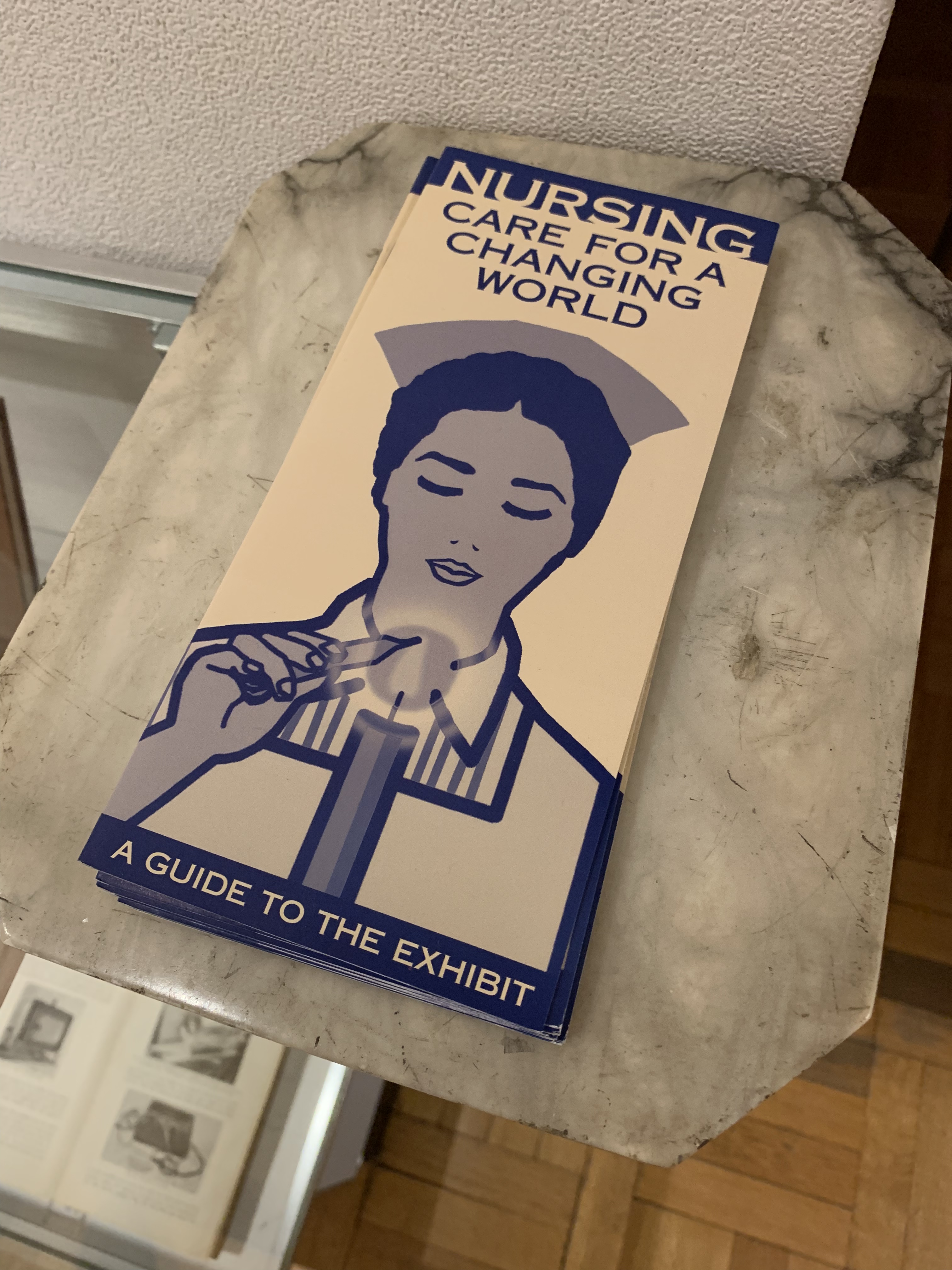
    Every exhibition in the Museum feels very contained – each with their own theme that is explored in one room. This is heightened by the fact that almost every exhibition has a brochure available that covers the main theme and contains information on the objects on display. To name a few examples, there is an exhibition on anaesthesia, one on blood transfusions and another on radiology. These brochures are a great idea for visitors to either use when walking around, or, take home as souvenirs.

    Example of a brochure guide in the exhibition covering the history of nursing.

    I do have to say one thing that I would strongly recommend the Museum re-consider – their labels. There is no consistency with the labelling throughout the entire museum. Some were A4 pieces of paper attached to the wall with edges peeling off. Something they should really look at addressing considering almost every visitor will look at them.

    Peeling Labels

    Although it was great to see some very familiar objects in the anaesthesia and radiology, my favourite theme was on anatomical and medical illustration. On display are old medical texts open to pages displaying the human skeleton.

    Here is an example:

    Medical Text

    This image is by Bernhard Albinus, in collaboration with Jan Wandelaar, from around 1749. It is a very famous image depicting a skeleton posing in front of a rhinoceros. We know two things about the rhinoceros – her name was Clara and she was on a sixteen year tour of Europe. In other words, living her best life.

    This room also contains a model of the first anatomical theatre located in Padua Italy. It has made me want to visit and see the theatre for myself. I can only imagine just how intimidating it would be to stand in the middle and look up at all the rows.

    Hall of Immortals

    Hall of Immortals
    Hall of Immortals

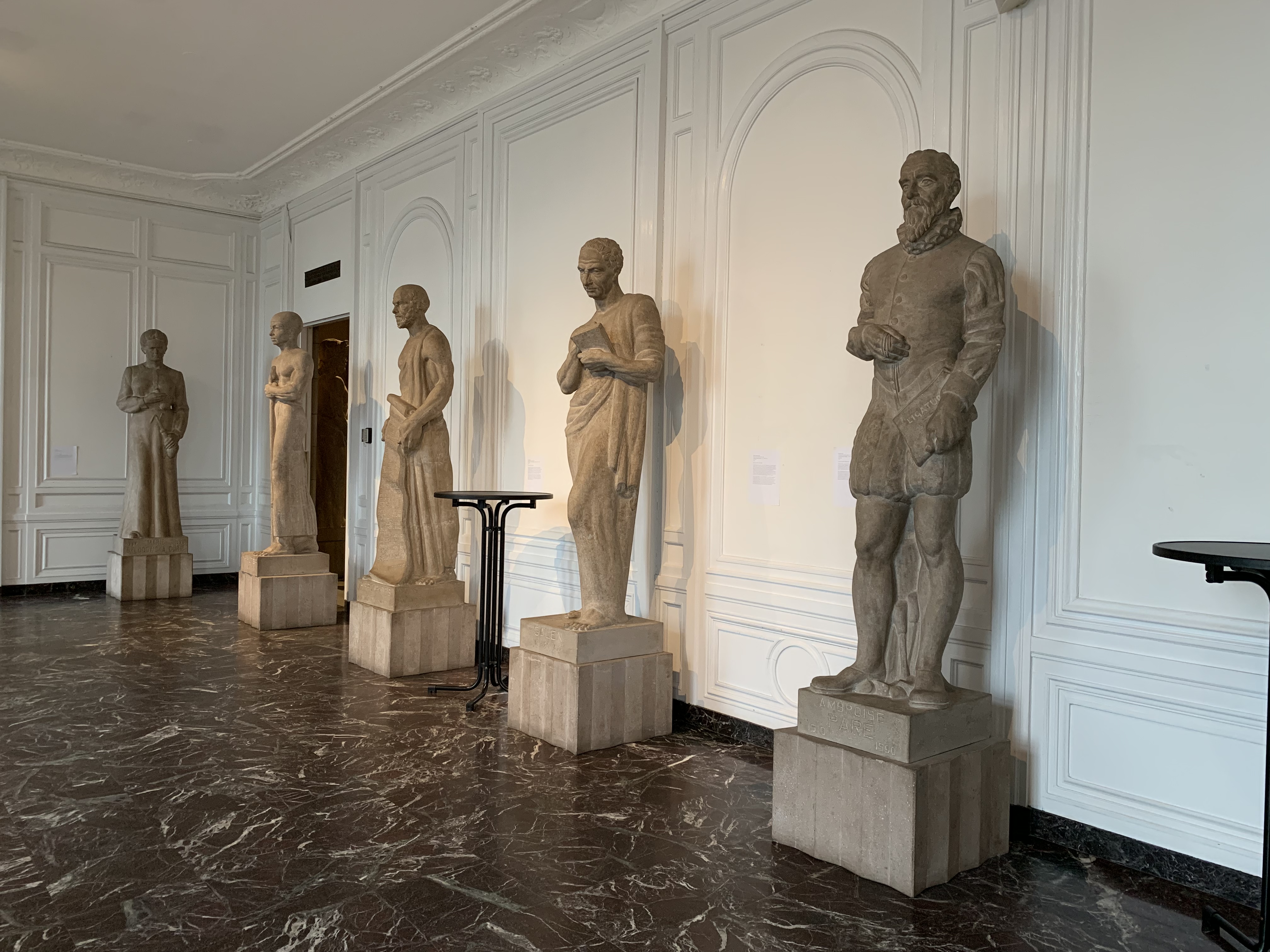
    The Hall of Immortals is a permanent display containing large stone sculptures of figures deemed significant in the history of surgery. I was so glad to see one female represented, Marie Curie. Alongside Curie are Wilhelm Rontgen, Joseph Lister and Louis Pasteur.

    Marie Curie

    Behind each sculpture is a label providing visitors with a brief biography and the reason why they have been included. Going back to what I said before, out of everything in the Museum, these sculptures would benefit the most from an improvement to the labels.

    Highlight Objects/Groups of Objects

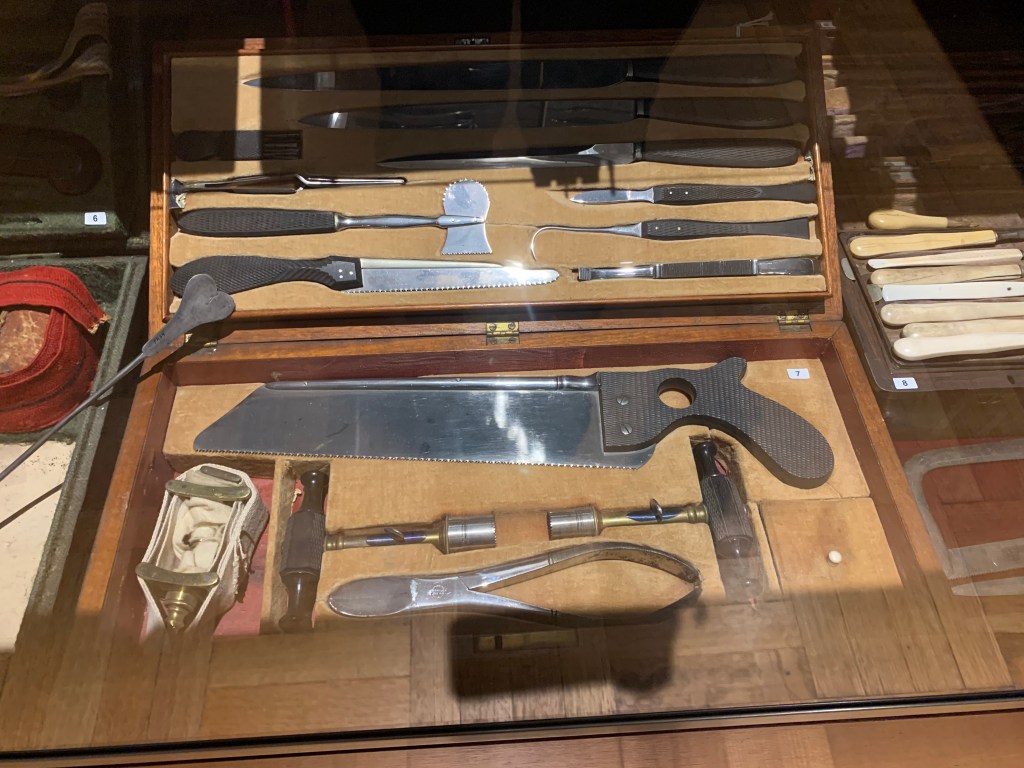
    There is no doubt that the Museum has an impressive collection of amputation kits. They pop up quite a bit in different exhibitions including nursing, anaesthesia and wound healing. I have included a couple of images below of kits that date back to the Civil War era.

    Civil War Kit
    Civil War Kit

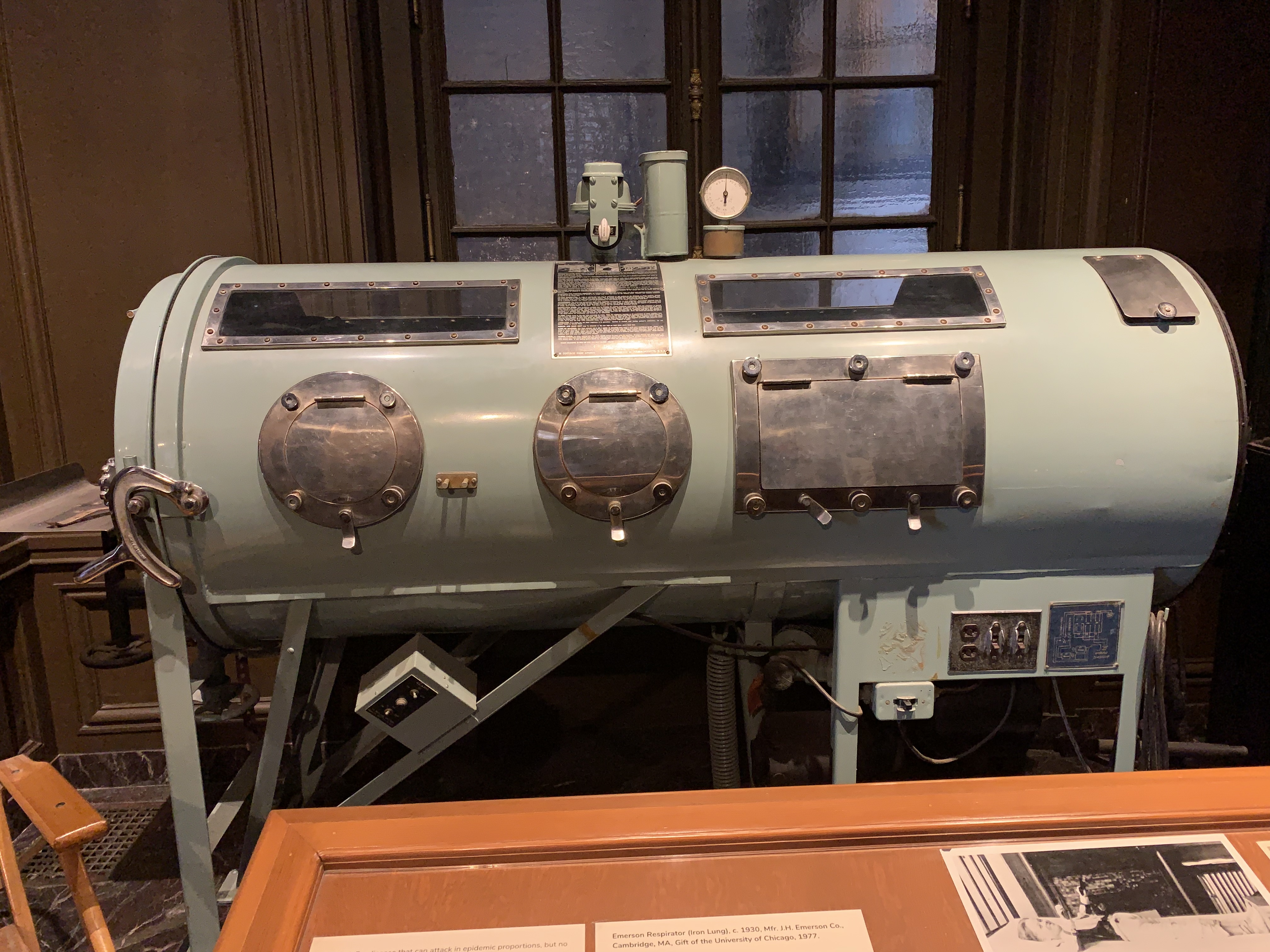
    Another object that I love is this iron lung. The history of polio treatment is like something out of a horror story. Imagine being in this machine with just your head poking out as it essentially breathed for you when your muscles became too weak.

    Iron Lung

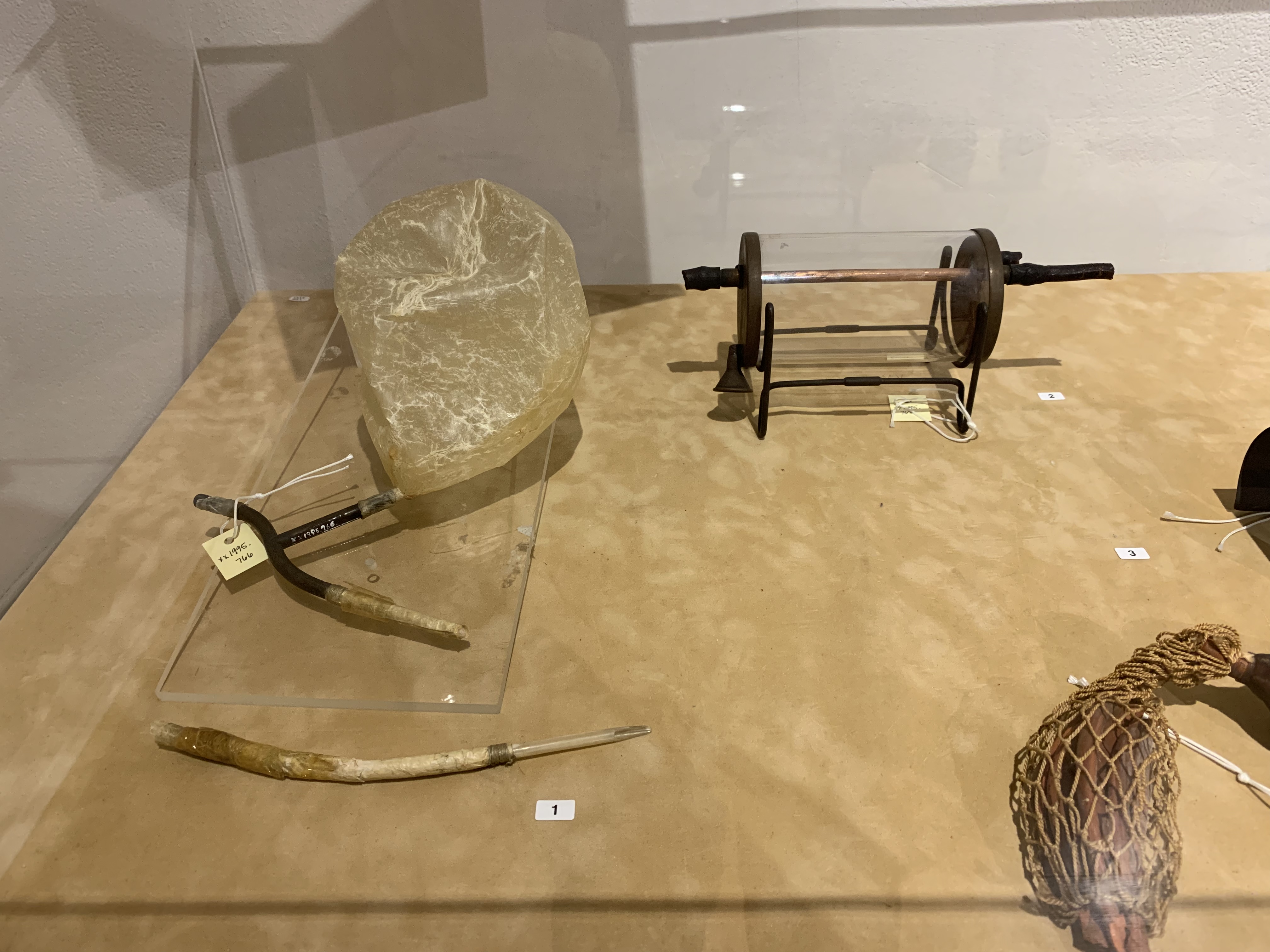
    This blood transfusion device (on the left) dates back to 1665. Christopher Wren used such a device to inject medicines into dogs. Richard Lower continued Wren’s work with equipment inspired by this device and successfully transferred blood between two dogs.

    Blood Transfusion

    A collection of bladder, uterine, kidney and gallstones.

    Stones

    These three microscopes date back to the 1700s and 1800s. The one on the right dates back to the 1700s and is a simple microscope. The other two are compound microscopes from the 1850s.

    Micorscopes

    If you really want to read something that’s worse than fictitious horror, then read some early treatments for gynaecological issues. Seeing this gynaecological table used between the 1900s and 1940s is that much more terrifying after reading various descriptions of ‘treatments’ and ‘procedures’.

    Gynaecology Chair

    Visitor Information

    The International Museum of Surgical Science is open between 9.30 am and 5 pm on weekdays and from 10 am on weekends. It has a fantastic little gift shop. The museum is fully accessible and easy to get to on public transport (we went with route 151 that operates from the downtown area).

  • Chicago: The Art Institute of Chicago

    First thing’s first, there are two very good reasons why I wanted to visit The Art Institute of Chicago:

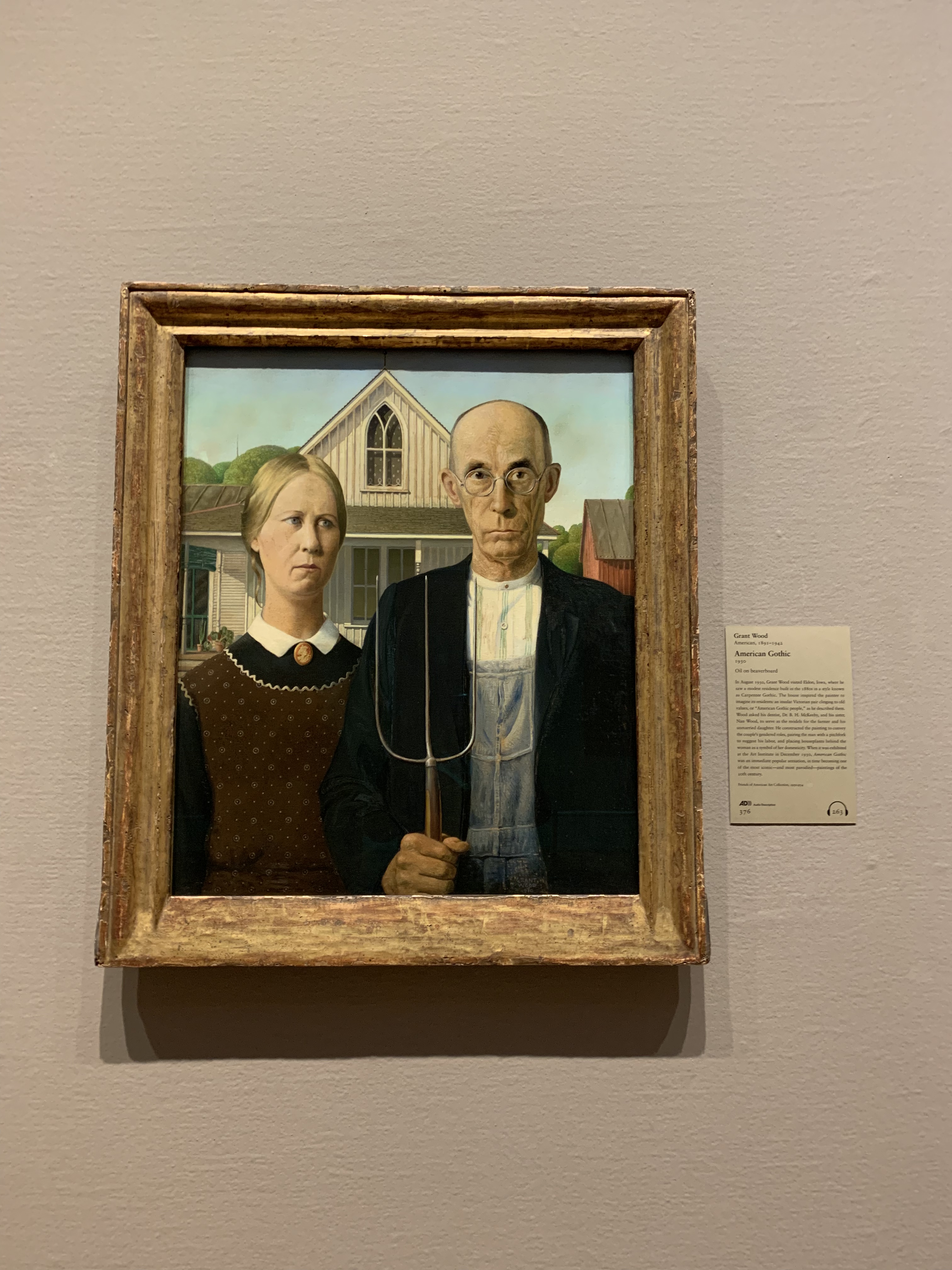
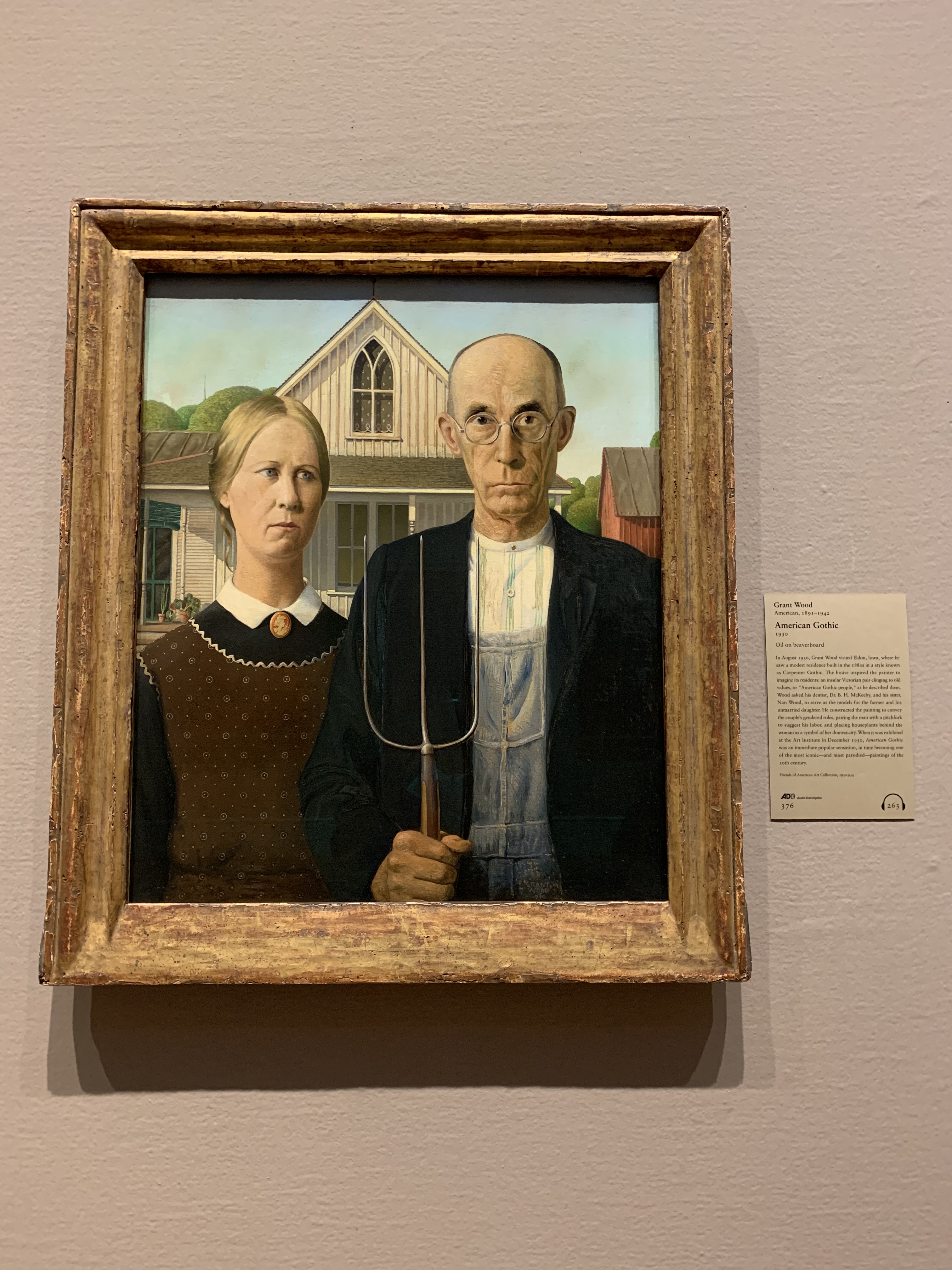
    American Gothic
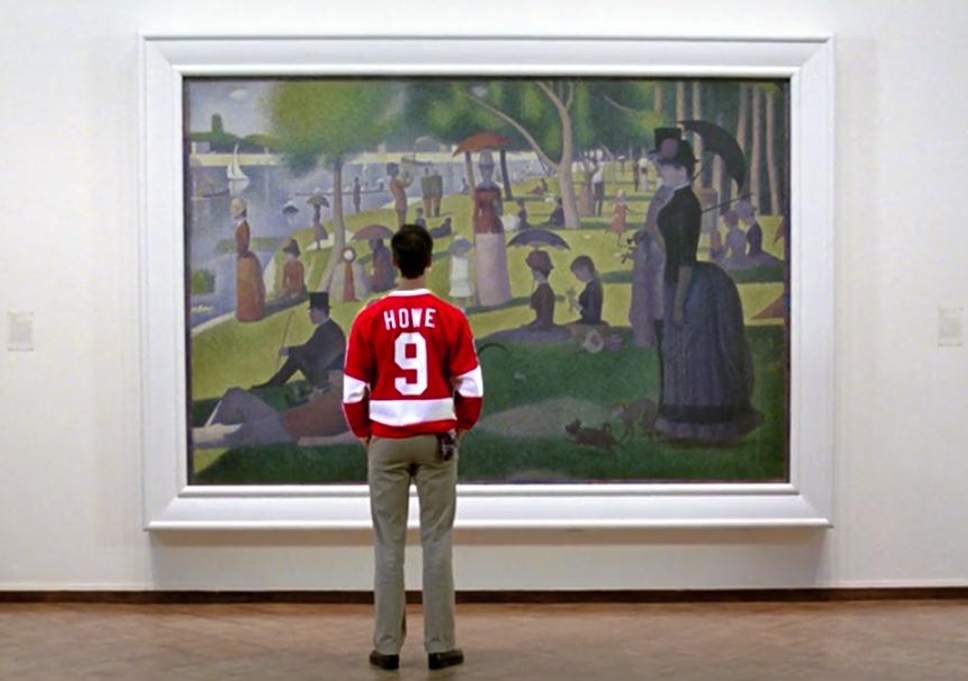
    Still from the film Ferris Bueller’s Day Off, 1986
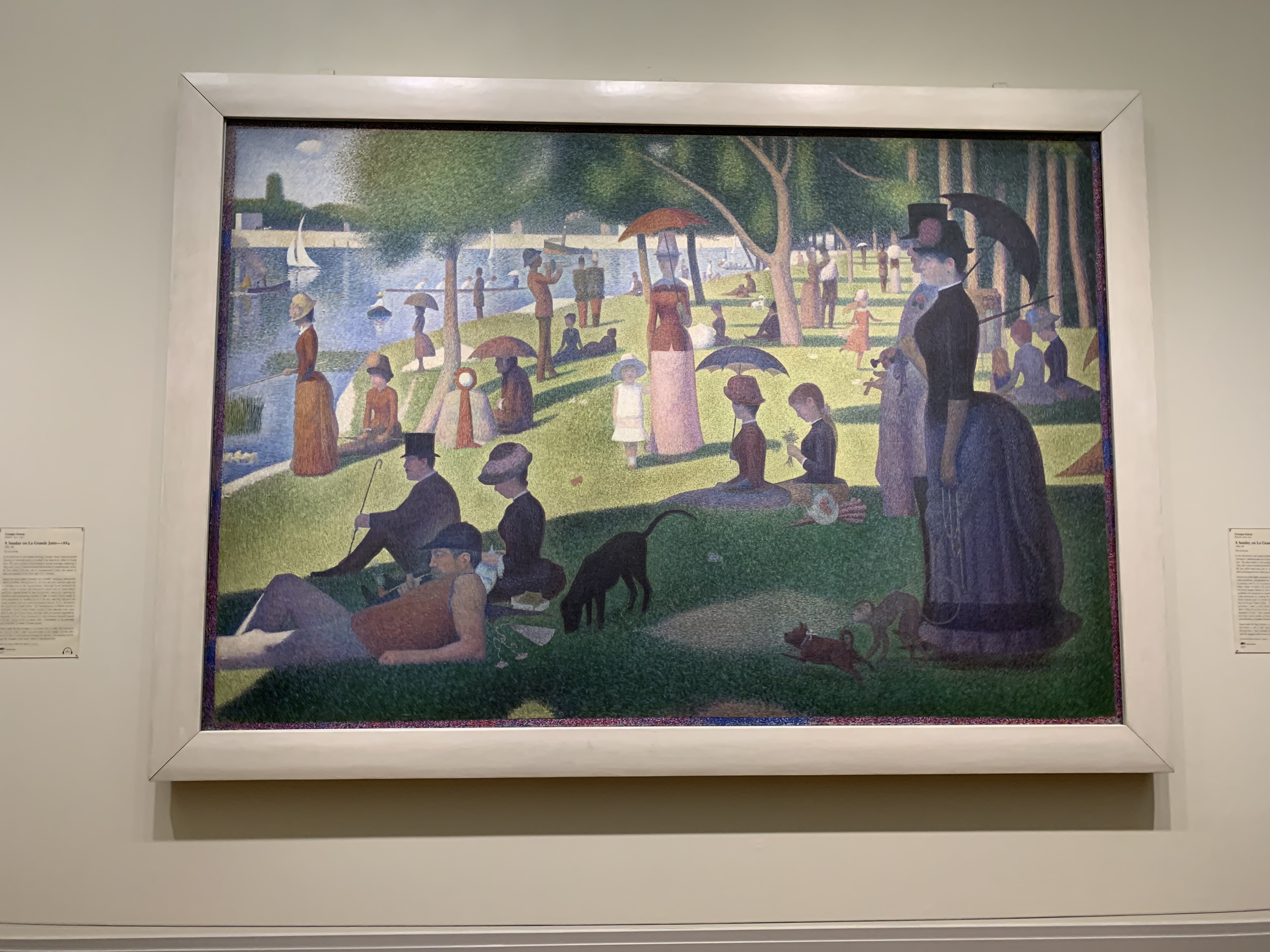
    A Sunday Afternoon on the Island of La Grande Jatte

    As you can see, I’m a fan of the film Ferris Bueller’s Day Off. I’ve also always wanted to see the work American Gothic by Grant Wood. Both did not disappoint. Now for a few more details about our visit.

    Ticket Tip

    We arrived at The Institute when it opened, 10.30 am. It was a particularly rainy and grim day so I was expecting quite a crowd. As soon as we entered the building, it became clear that pre-booking our tickets was the right move. The line (for a Monday) was almost out the door! We were able to walk past the huge crowd and go straight into the exhibitions. Cannot stress enough how grateful you’ll be if you pre-book.

    In saying this, you do have to select a date when booking tickets online. If you don’t like feeling locked in, fair enough. It is, however, worth it.

    Maps

    Right at the entrance of The Institute is an information counter where you can find visitor maps. I did find the map a bit confusing as it often didn’t match the actual layout. For example, on the map there were a few long straight corridors that looked easy to follow. However, the corridors ended up having a few twists and turns along the way. For this reason, I strongly recommend following the signs displayed in The Institute and referring to the map for specific highlights.

    Tours

    We had hoped to join an overall highlights tour so we could get orientated and not miss anything significant. Unfortunately, it seems as though these tours are few and far between. There was a highlights tour available, but, just of the modern gallery.

    We had a look at the events page handed to us at the entrance and were a little confused by the highlight tours. In terms of overall tours, they all seem to be quite late in the afternoon with none in the morning. I much preferred how the Philadelphia Museum of Art and Getty Museum operated with a morning highlights tour. If you are hoping to catch one, double check times on the website before visiting.

    Audience

    The Institute has made a concerted effort to appeal to a wide audience. There are monthly free teen hang out sessions and teen audio guides on offer. How popular they are is a good question. We also noticed a very large number of visiting education groups. One thing is clear, The Institute attracts a huge international audience.

    Chances are, no matter where you’re visiting from, your age or learning style, there will be something on offer to suit. That is except for highlight tours.

    Highlights

    Apart from a few glitches, The Institute is an incredible place to explore. Here are the twelve highlights recommended. Note: we didn’t get around to seeing all of them.

    1. Andõ Gallery

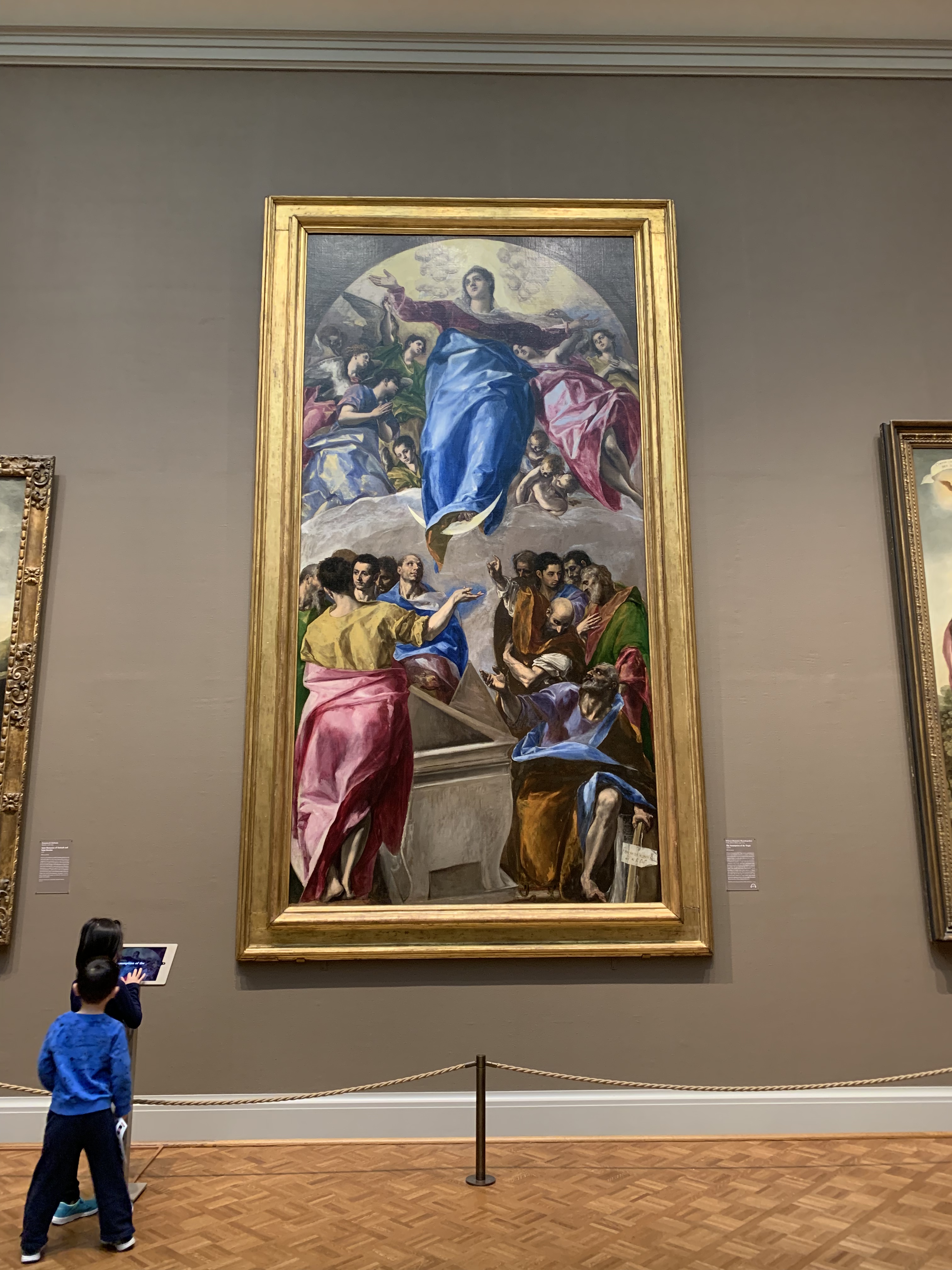
    2. The Assumption of the Virgin, El Greco, 1577

    This work was originally above an altar in Toledo. It depicts angels welcoming Mary as she rises from her grave.

    The Assumption of the Virgin

    3. Armour for Man and Horse

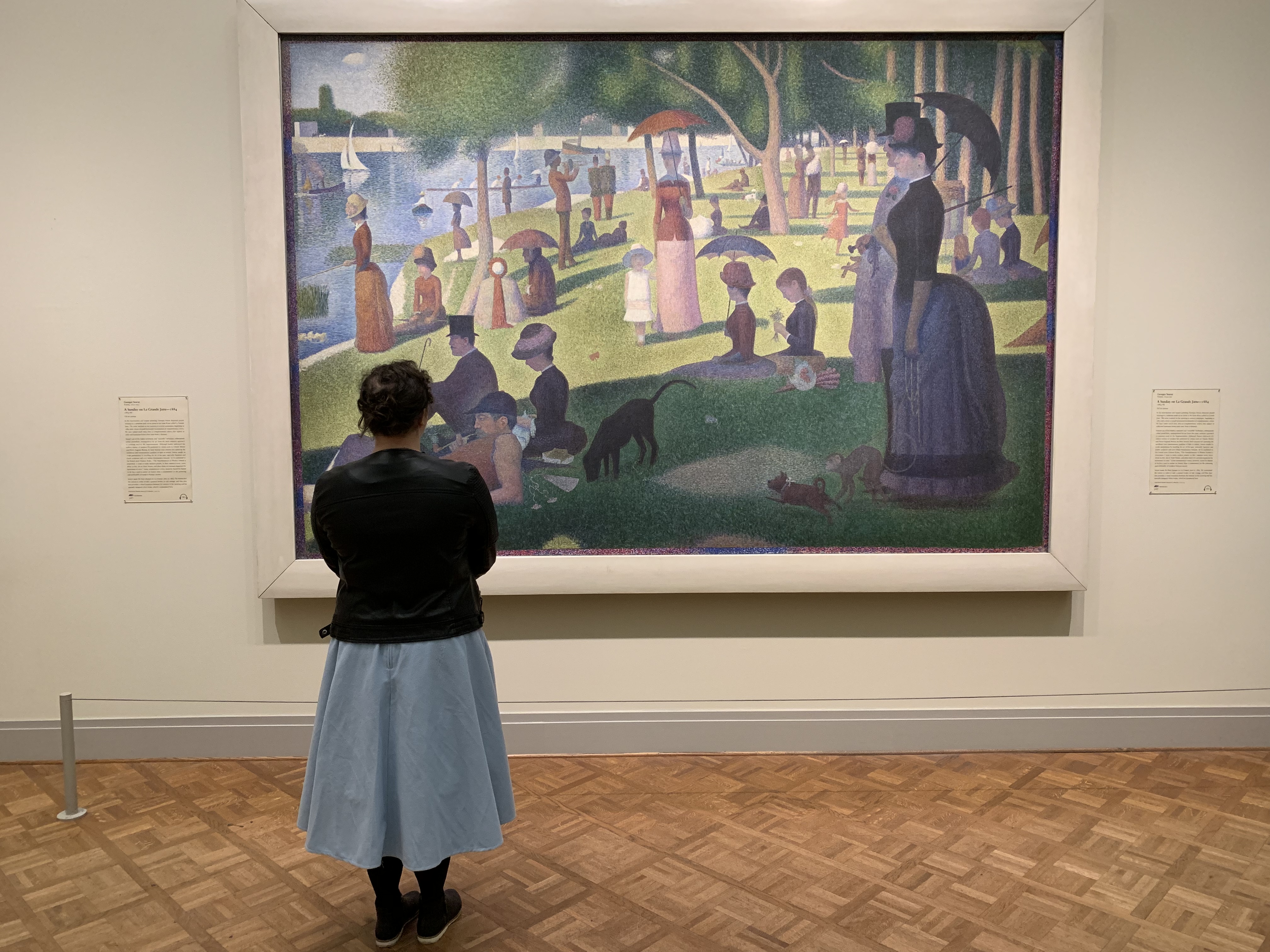
    4. A Sunday on La Grande Jatte, Georges Seurat, 1884

    Imagine spending your afternoon relaxing on the La Grande Jatte island in the Seine River. This work is a prime example of pointillism – using patterns of small coloured dots to build an image. The term pointillism appears on the artwork label but is not explained. It continues to frustrate me how art galleries write their labels, but, I won’t go down that path yet again.

    A Sunday on La Grande Jatte

    5. Stacks of Wheat, Claude Monet, 1891

    Stacks of Wheat

    6. Sky above Clouds IV, Georgia O’Keeffe

    7. American Gothic, Grant Wood, 1930

    Artist Grant Wood was in Eldon, Iowa when he found a house built in the style of Carpenter Gothic. It inspired him to paint this work. In the image are his sister (Nan Wood) and dentist (Dr McKeeby). They are portrayed here as clinging onto the old America – a couple stuck in the past and conforming to their gendered roles. You have probably seen this image parodied many times.

    American Gothic

    8. Nightlife, Archibald J. Motley Jnr., 1943

    A work highlighting the vibrancy of African American culture in Chicago. Motley plays with artificial light to capture the liveliness of the scene.

    Nightlife

    9. America Windows, Marc Chagall, 1975

    After World War II, Chagall began experimenting with stained glass. These windows are a merge of Chicago and wider American identity.

    America Windows

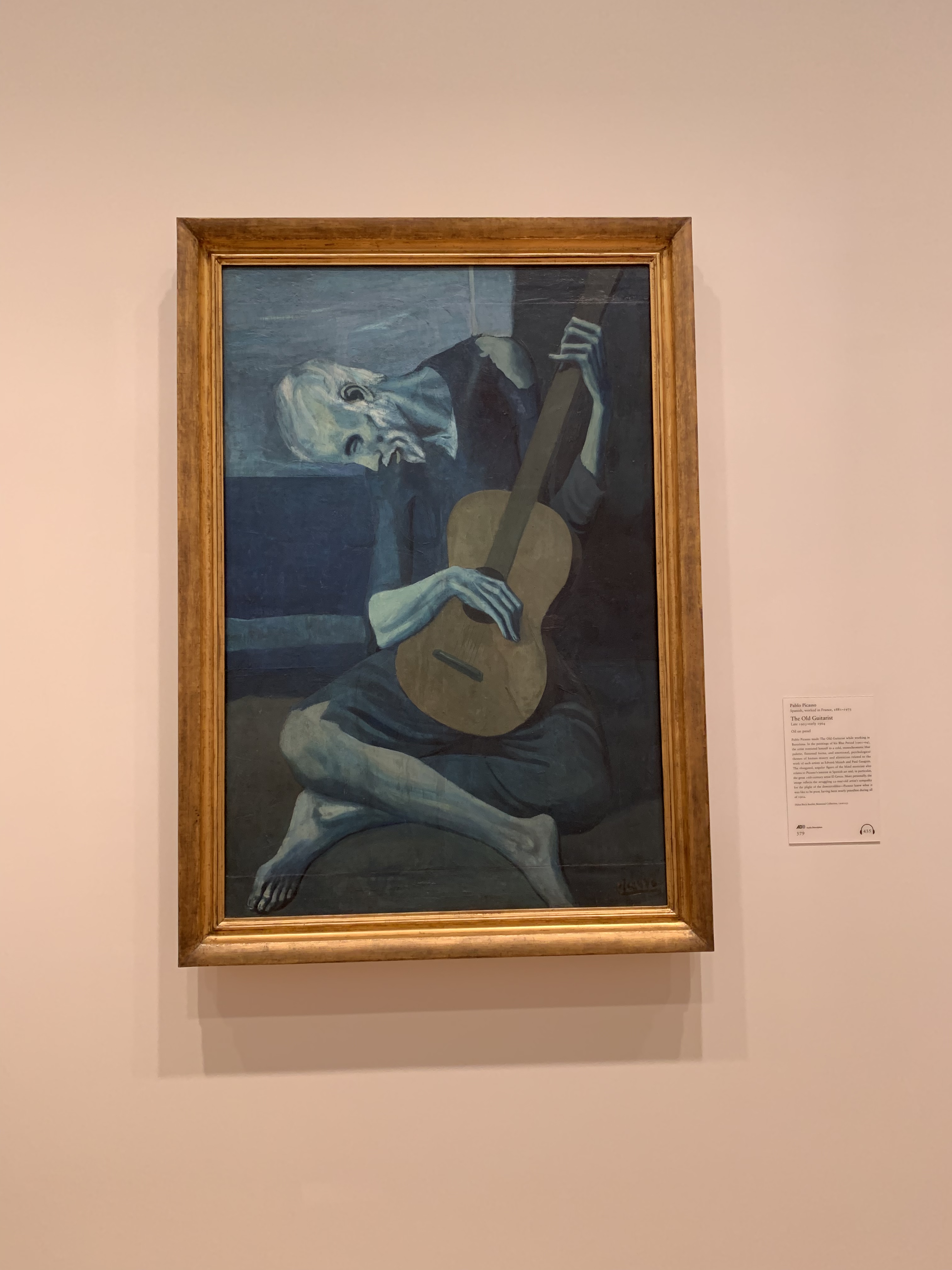
    10. The Old Guitarist, Pablo Picasso, 1903-1904

    Painted during a time when Picasso preferred cool blue tones, the Old Guitarist represents Picasso’s sympathy for the downtrodden in society.

    The Old Guitarist

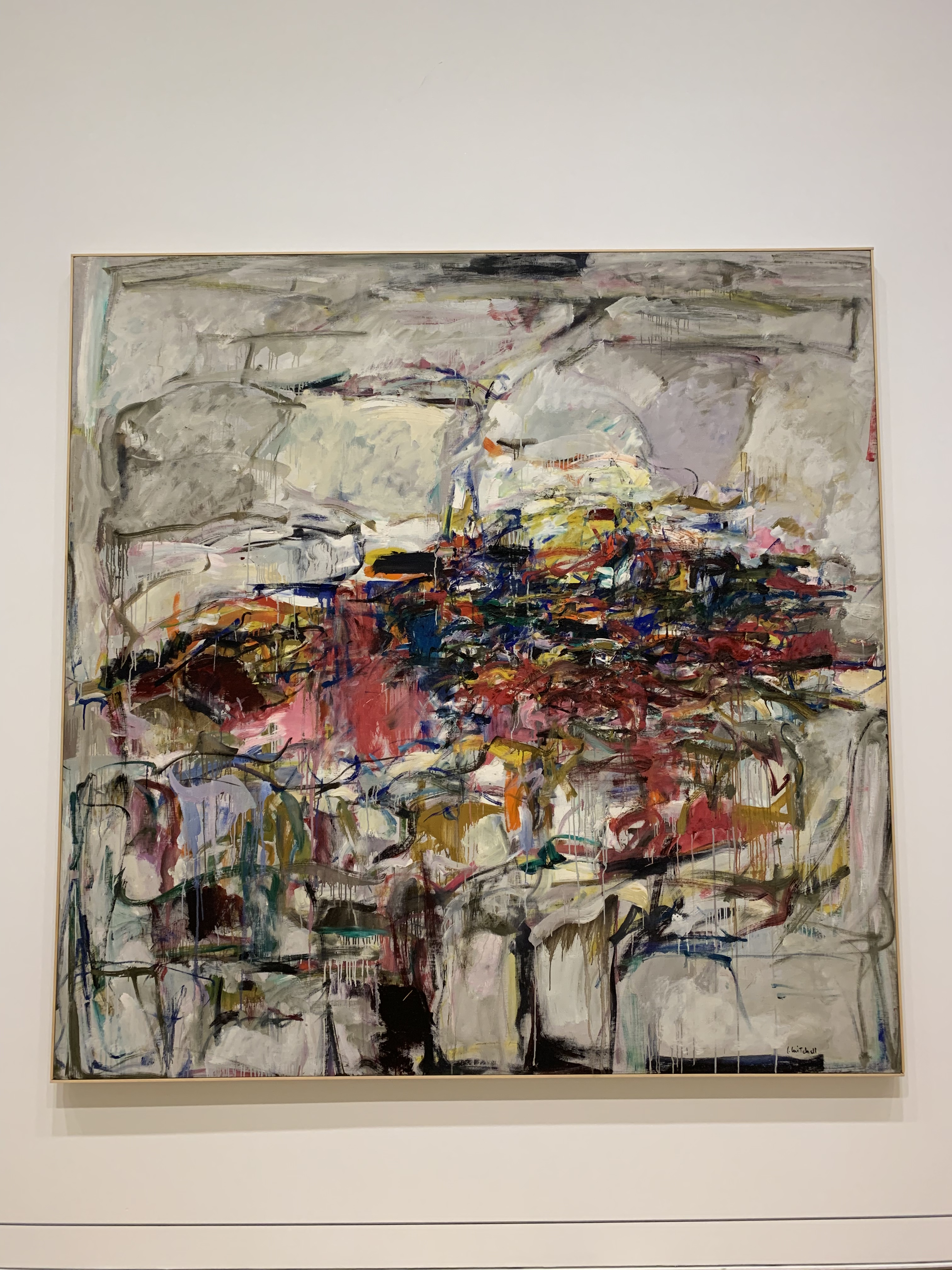
    11. City Landscape, Joan Mitchell, 1955

    This painting reflects the lights of a metropolitan city. The use of colour is quite striking and it definitely captures the effect of all city lights combining together at night.

    City Landscape

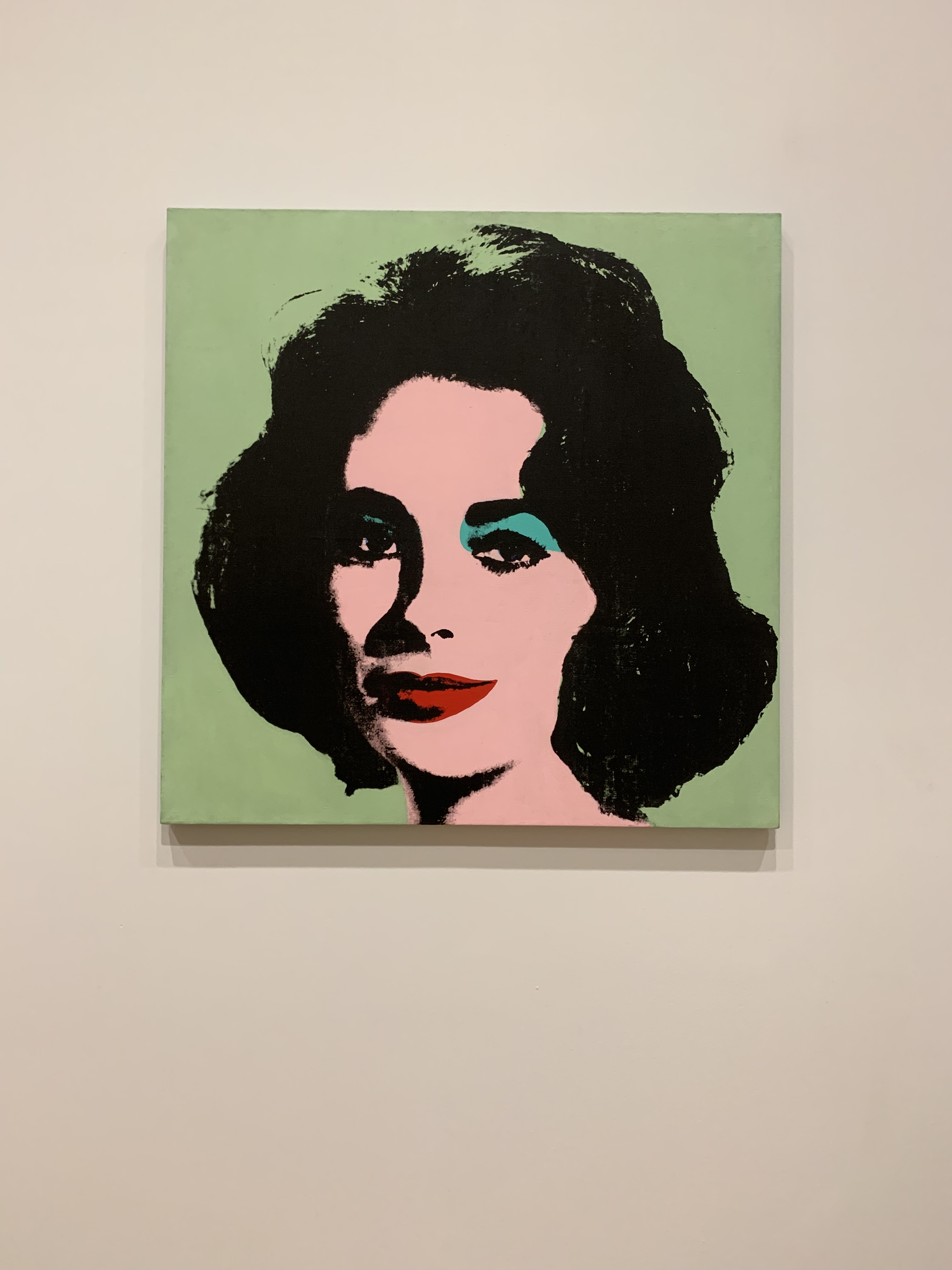
    12. Liz #3, Andy Warhol, 1963

    Liz #3

    Personal Highlights

    While I agree with the twelve highlights on the map, there are some others that stood out to me. Hence why we didn’t get around to seeing all the ‘official’ highlights.

    1. Nighthawks, Edward Hopper, 1942

    I absolutely love this work. It captures the emotion of loneliness so well by being both beautiful yet sad to observe. I had this image as my desktop background for so long when I was younger so it was really great to see in person.

    Nighthawks

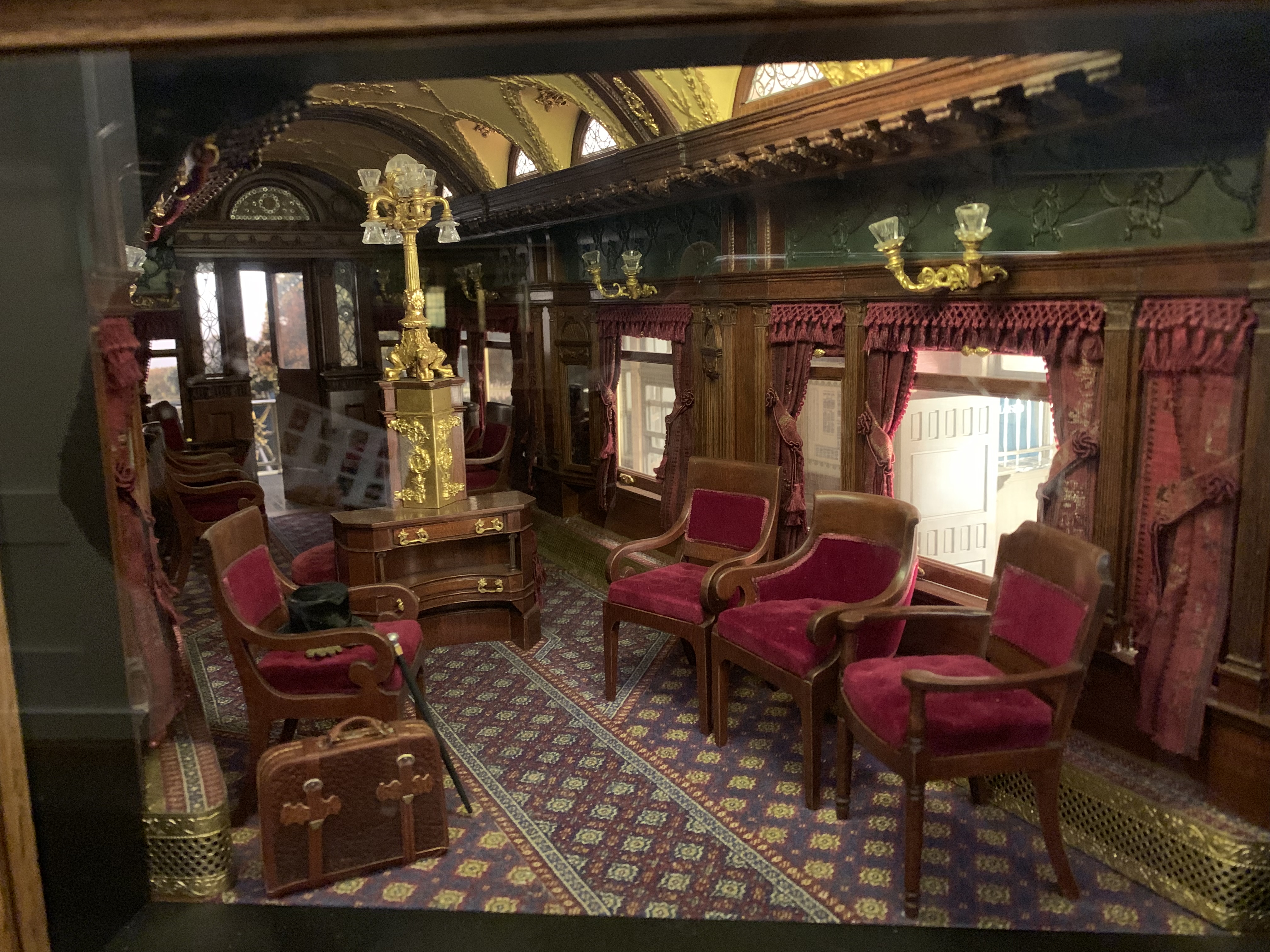
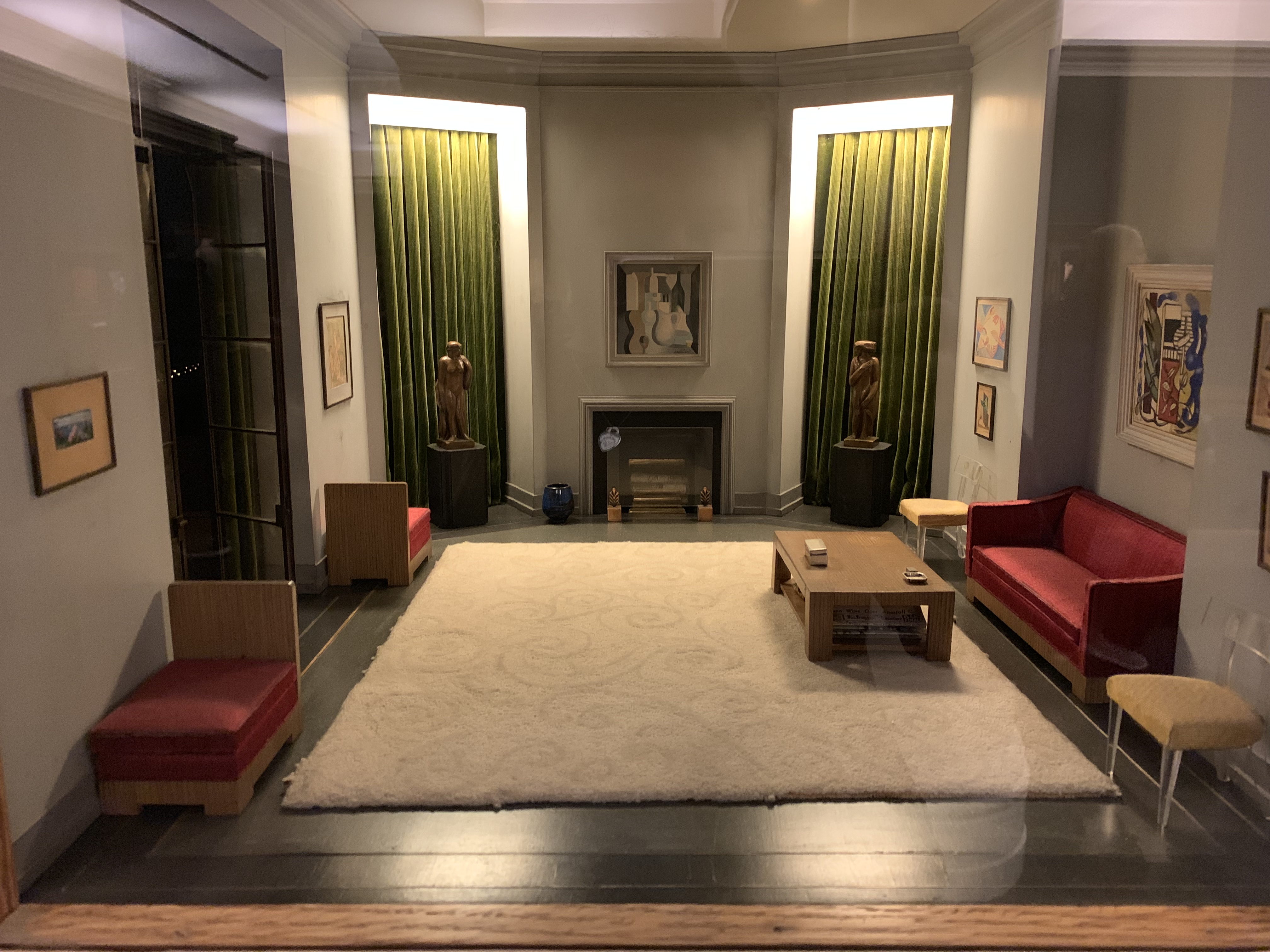
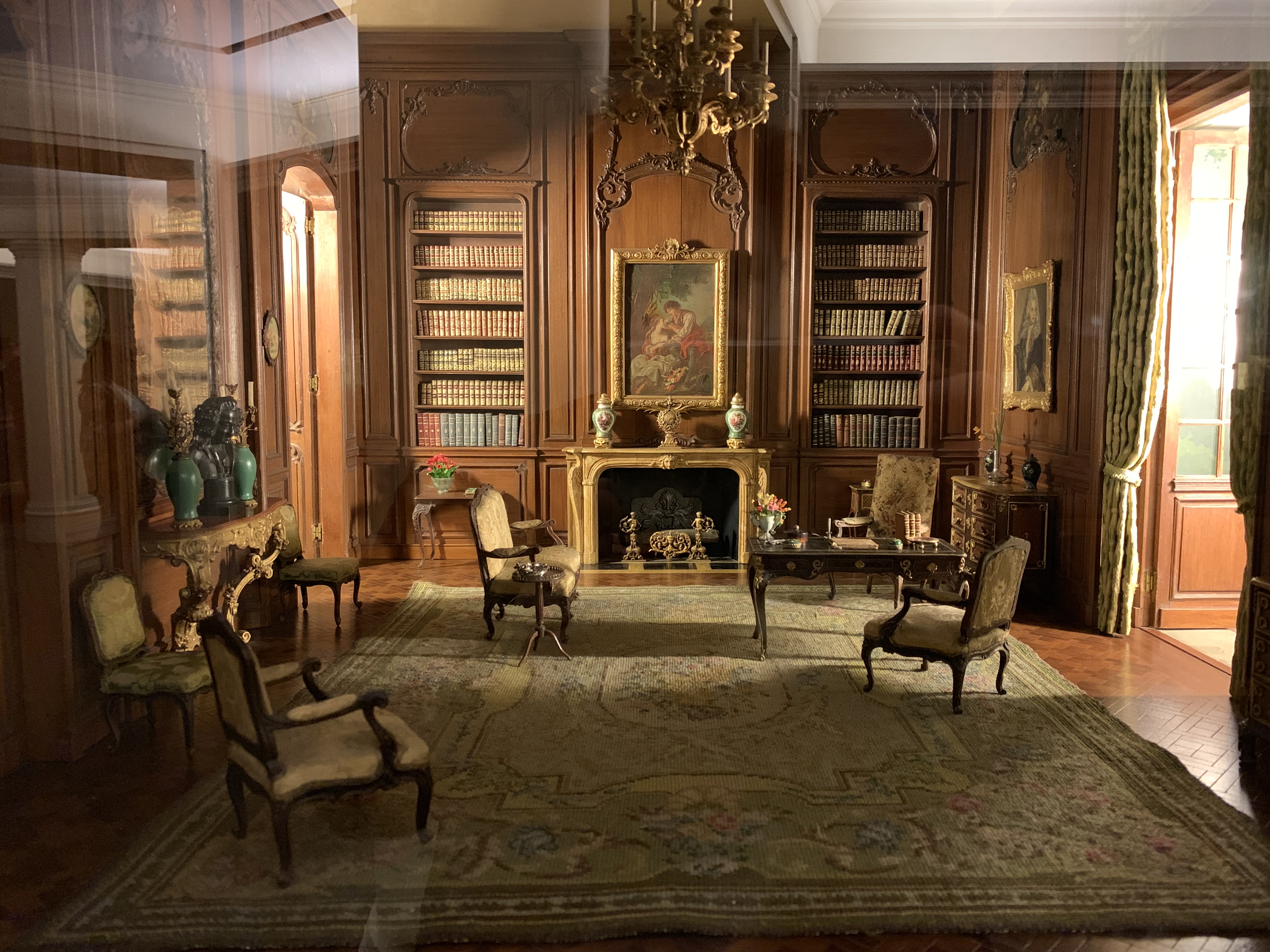
    2. Thorne Miniature Room Gallery, Mrs James Ward Thorne

    This is quite an amazing collection to stumble across in the basement. Originally, Thorne created these displays of miniature rooms to showcase her collection of miniature furniture. Over time, and due to exposure at World Fairs, she was commissioned to create more. In total, 68 rooms were donated to The Institute and continue to be on permanent display. It’s hard to judge their size from the images but think of a small room from a standard dollhouse.

    Pullman Observation Car, World’s Columbian Exposition, 1893 Chicago
    California Hallway, 1940
    French Library, 1720

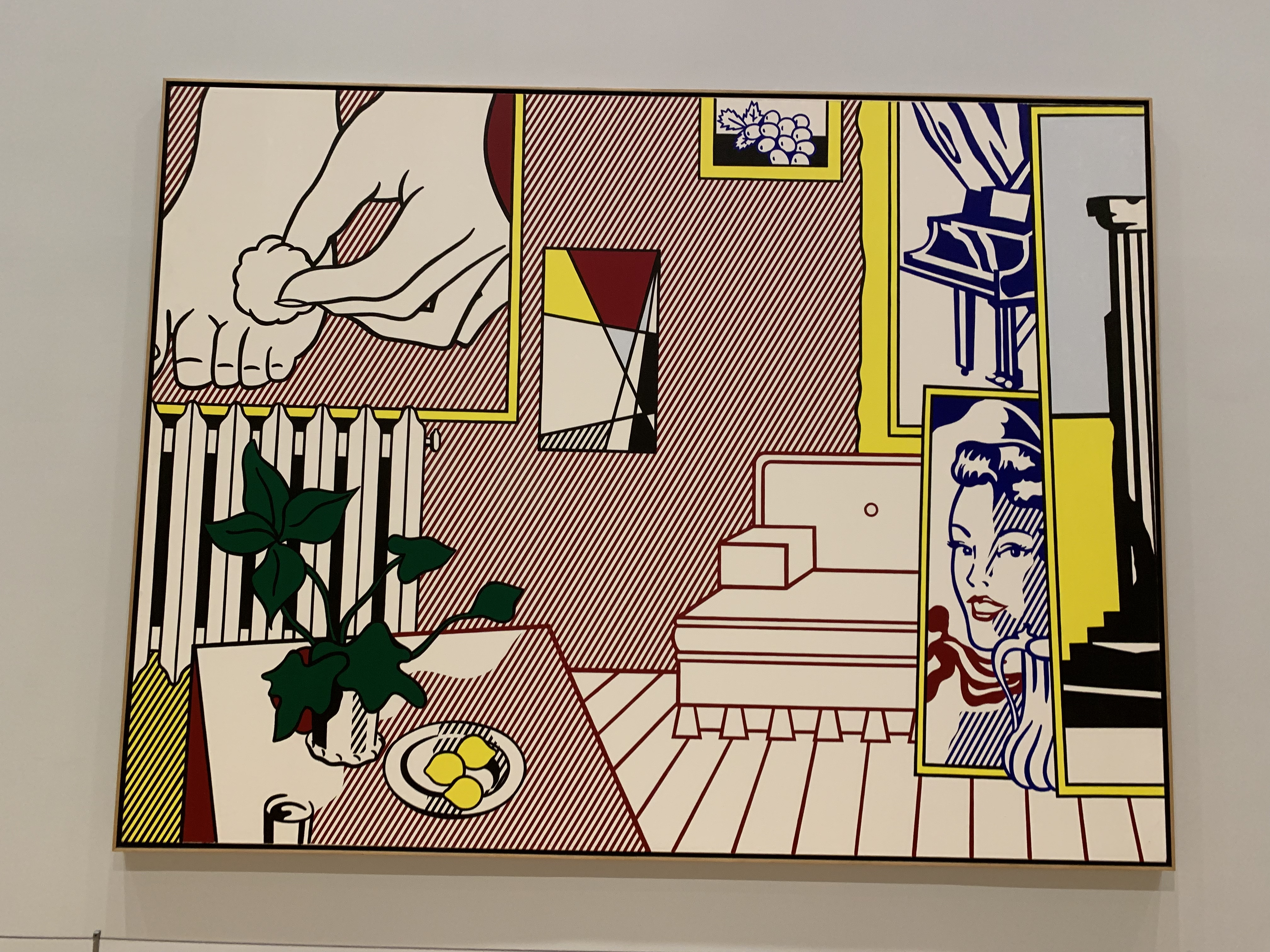
    3. Artist’s Studio “Foot Medication”, Roy Lichtenstein, 1974

    It’s a fun painting that spoke to me because of all the walking we’ve done this holiday.

    Artist’s Studio “Foot Medication”

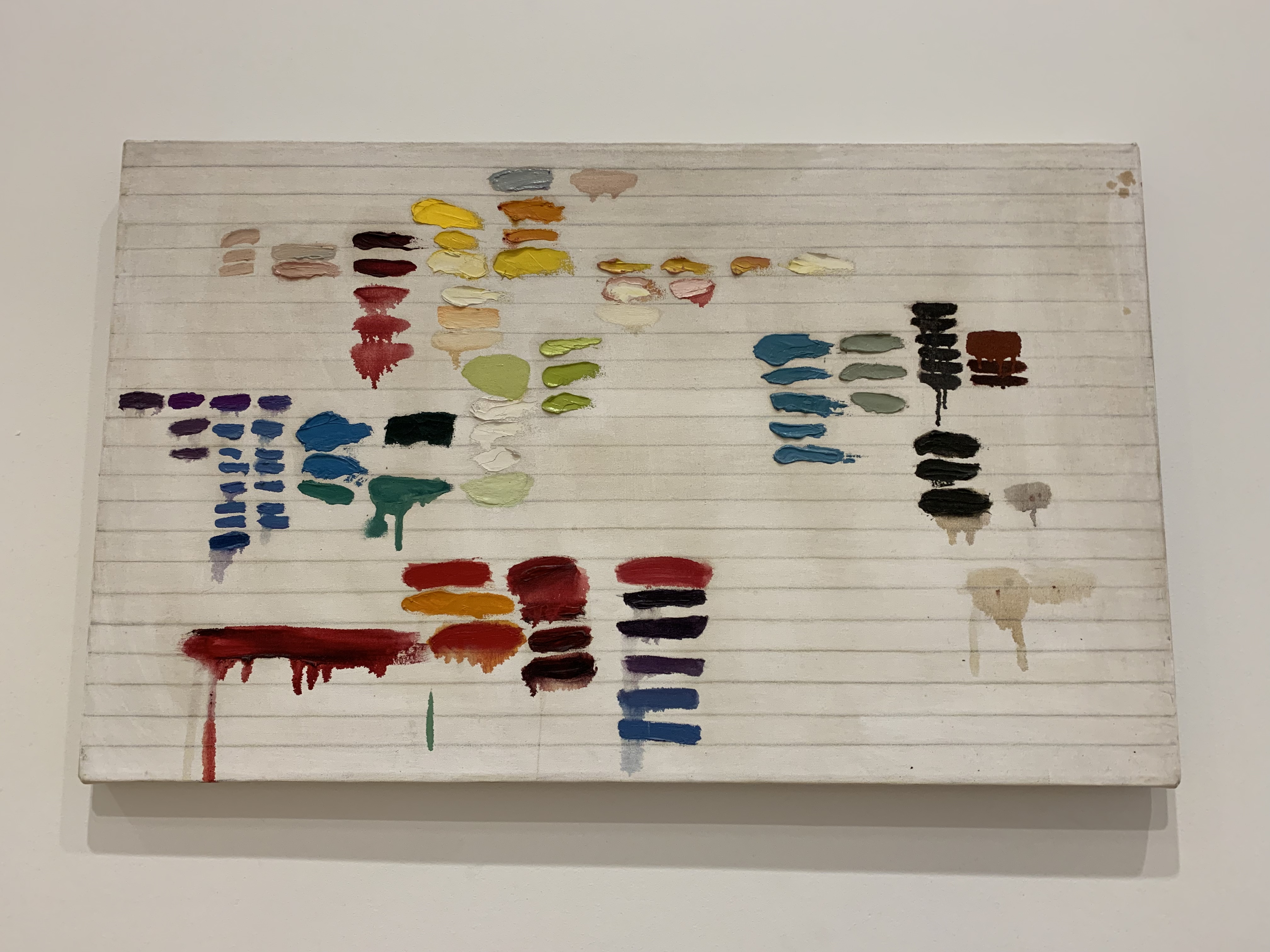
    4. Summer, Joan Snyder, 1970

    I’m always drawn to paintings/images that portray colour palettes. That’s pretty much why I’ve included this work on my list.

    Summer

    Additional Information

    The Art Institute of Chicago is open daily from 10.30 am to 5 pm (Thursday until 8 pm). It is a fully accessible museum with a couple of cafes and museum shop onsite. If you are visiting more than one museum in Chicago I’d recommend looking into a CityPass card. Finally, the Museum is located on the edge of Millennium Park. So, after, or before your visit, take the time to wander through the park and see other sights such as Cloudgate.

  • Chicago: American Writers Museum

    Greetings from Chicago where it is currently 1°C and snowing! Definitely a change from the desert heat of Las Vegas. Due to the weather, we decided that visiting a museum would be wise. The American Writers Museum, located on Michigan Avenue, is dedicated to celebrating the influence of American writers on American history, culture, and identity.

    I really want to focus on the Museum’s interactives. In order to do that, however, I’m going to start with an overview of the Museum and its exhibitions.

    Overview

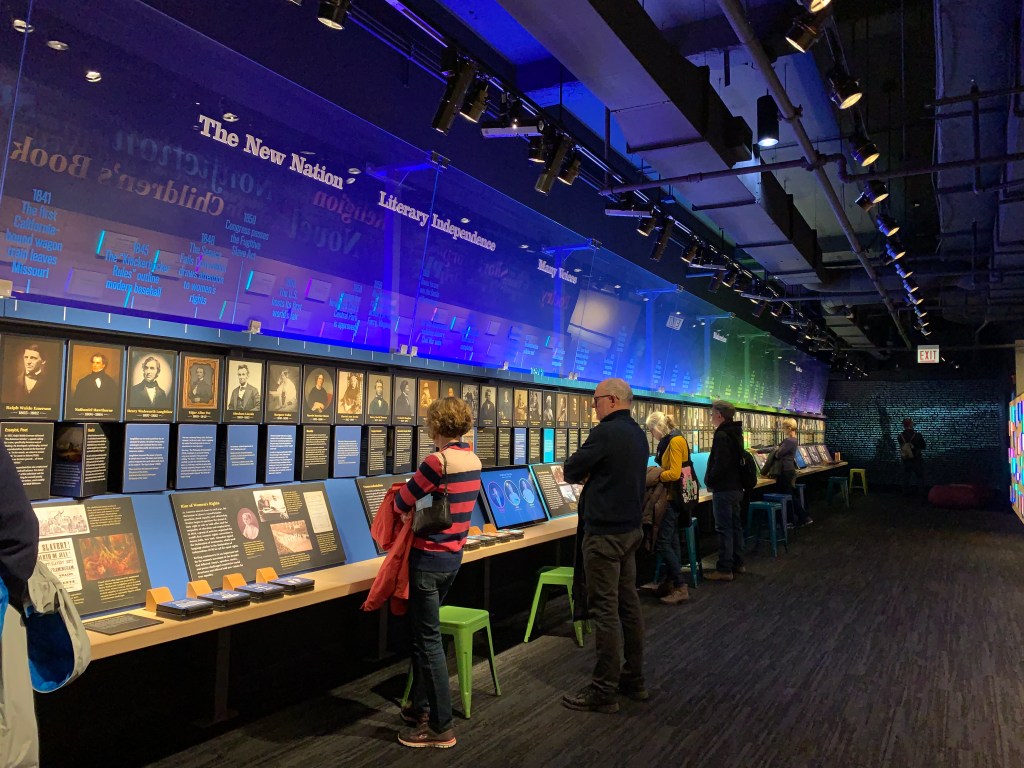
    The Museum is all located on one level. The exhibitions are organised so that you start where you purchase your tickets and work your way back around to the entrance in a circle. There are five permanent displays and a temporary exhibition space. This post will cover interactives in A Nation of Writers: John and Cathie Estey and the Mind of a Writer Gallery. I didn’t find the interactives in the other three permanent display areas as engaging.

    Here are two overview images of the A Nation of Writers gallery.

    American Writers Museum
    American Writers Museum

    This exhibition chronologically covers the life and work of 100 American writers. Each has a photograph and label that can be rotated to discover more information. Some have interactives while others have more in-depth thematic panels.

    The Mind of a Writer Gallery is a more open space with different activities throughout. It was slightly more difficult to capture the entire exhibition so I have no overview images.

    A Nation of Writers: John and Cathie Estey

    Surprise Bookshelf

    The Surprise Bookshelf is located on the righthand side of the gallery. As you can see, the entire wall is covered in illuminated boxes. Visitors can rotate each box to discover a surprise about the author or text on the front of the box. The surprise could be a photograph, sound or even smell.

    Surprise Bookshelf

    One of my favourites was The Gastronomical Me by M. F. K. Fisher written in 1943. When the box is rotated it emits a very sweet strawberry scent. There is also a box for Jurassic Park by Michael Crichton, 1990. Inside is a piece of amber with an insect inside. It asks the question should we tinker with nature?

    Surprise Bookshelf
    Surprise Bookshelf

    The boxes are a fun idea that encourage visitors to interact with such a diversity of texts. I did, however, feel bad for opening the boxes with sound because they are very loud.

    Welcome to Sleepy Hollow

    This was my favourite interactive in the whole museum. On the panel are descriptions of three characters from the novel Sleepy Hollow written by Washington Irving. Accompanying each description is a flipbook containing different visual representations of the characters from drawings, film and television. Visitors are asked to compare what is written with the images in front of them and decide which character looks most like the description from the book.

    Welcome to Sleepy Hollow

    The Social Ladder

    Here visitors can explore how two female protagonists from Edith Wharton’s The House of Mirth and Theodore Dreiser’s Sisters Carrie climbed and fell off the social ladder. When the wheel rotates, it reveals another step each took towards their rise or fall. These steps were mostly influenced by external factors. For example, as one moved to New York, the other was impacted by false rumours and jealously.

    The Social Ladder

    Touch the Past

    In her novel series Little House, Laura Ingalls Wilder describes growing up in the northern Midwest during the mid-1800s. In this interactive, visitors can touch some of the fabrics mentioned in her works.

    Touch the Past

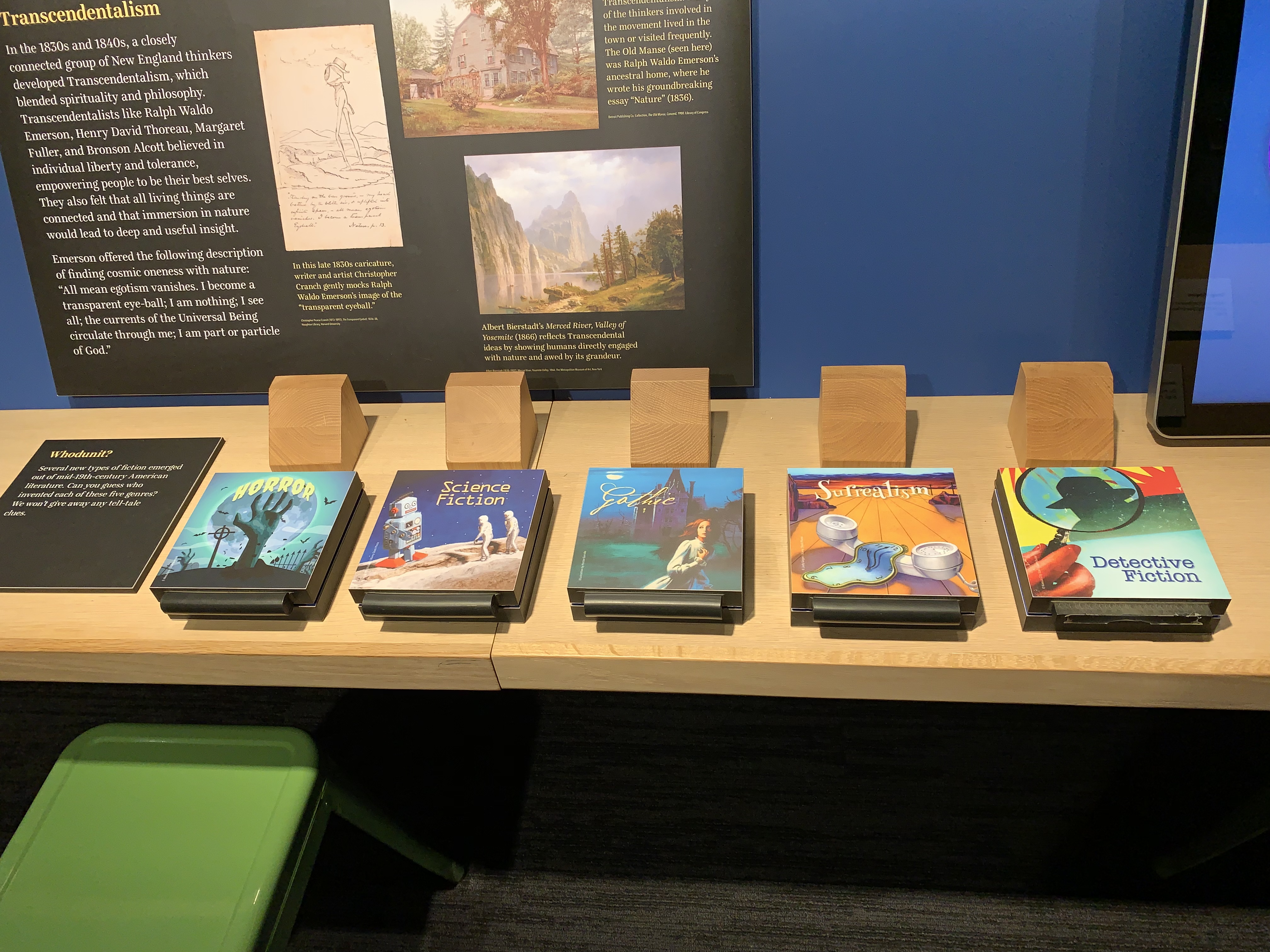
    Whodunit?

    No spoilers here, I promise. Basically, this tests trivia skills asking visitors to try and guess who invented the various genres on display. To discover the answer, visitors must lift the tab.

    Whodunit?

    There are a few more interactives in this space, but, these really stood out to me as being the most engaging.

    Mind of a Writer

    Story of the Day

    A really cool interactive where visitors can contribute to a story. The interactive consists of eight typewriters and some spare paper. The idea is that you write a line or two then leave your story for someone else to finish. The only rule is to be clean. That hadn’t been followed, but, it was interesting to read some pretty bizarre stories.

    Story of the Day

    Build a Routine

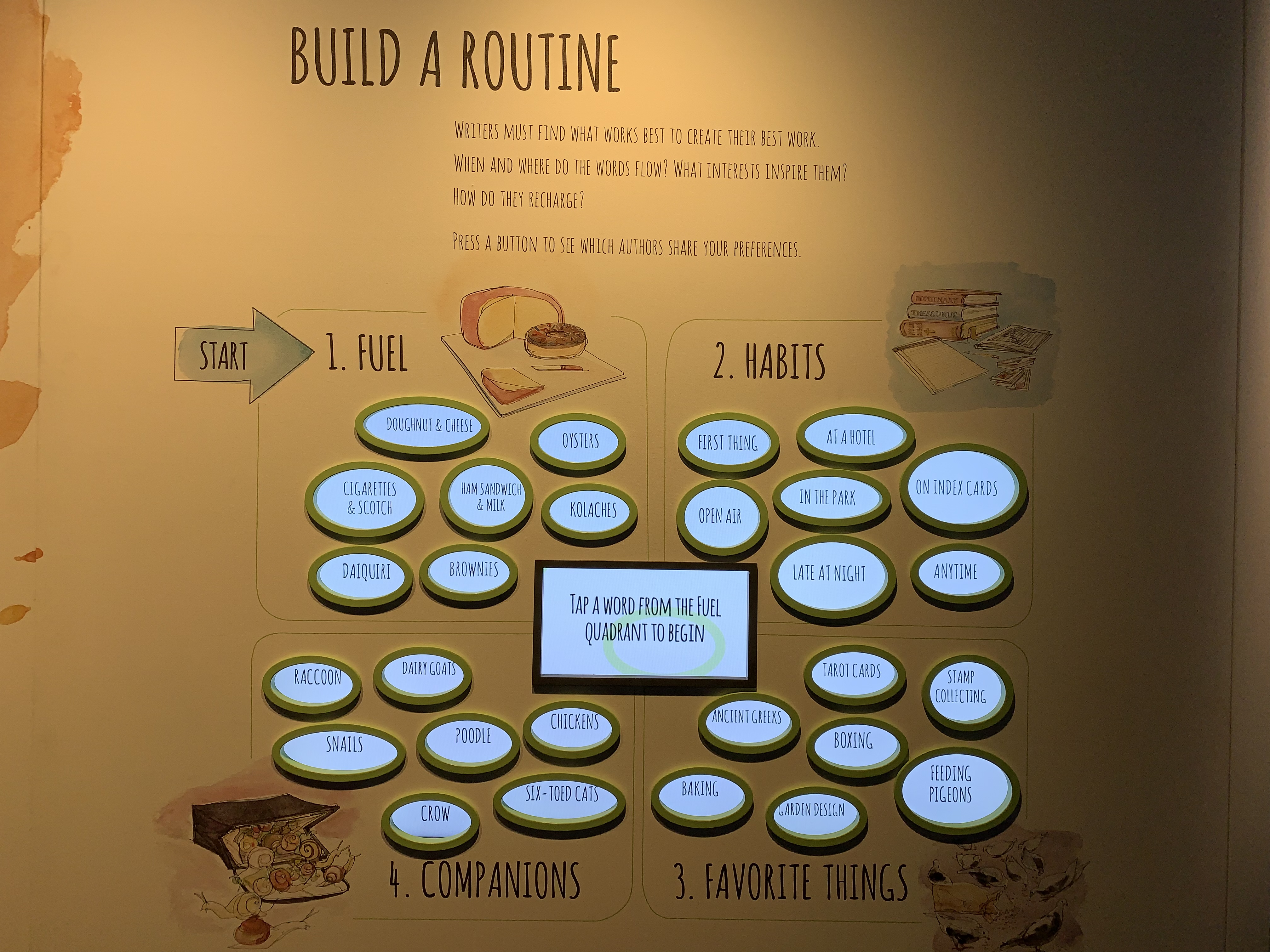
    Does your daily routine match that of a famous writer? Select your fuel, habits, favourite things and companions and the machine will tell you who matches your routine. For fuel, I was matched with John Steinbeck. Turns out there is a shared appreciation of cheese and doughnuts.

    Build a Routine

    Dialogue Generator

    If you are looking for inspiration for dialogue between characters then this is a great interactive. After selecting two characters and a scenario, you can then type out some dialogue. There are only four lines to fill, two for each character, so no pressure. We selected a dog talking to a doctor trying to solve a crime. It can get weird and wonderful.

    Dialogue Generator

    Wordplay

    Now this was a lot of fun. You can either play by yourself or against someone. After selecting a genre, a passage of text appears on the screen missing a few crucial words. The race is on to fill in the blanks in the text. For every word you guess correctly you get some points. When the timer runs out, whoever has guessed the most words correctly wins. A great game to test your knowledge of words.

    Make Meaning

    The final interactive I want to mention is this one. Visitors can select a common phrase and learn all about its history and first use in literature.

    Make Meaning

    Museum Information

    The American Writers Museum is open daily from 10 am to 5 pm. It is a completely accessible museum.

  • Detroit: The Henry Ford Museum of American Innovation and Greenfield Village

    I literally have no idea where to even start with this review. I’ve been wanting to visit The Henry Ford Museum of American Innovation for years. So much so, that we diverted our holiday for two days purely so I could visit. The Museum and Village are filled to the absolute brim with iconic objects and buildings, displaying everything from President Kennedy’s Lincoln to the Wright Brothers entire bicycle shop. I am going to divide this post into the Museum and the Village. Happy reading.

    The Henry Ford Museum of American Innovation

    The first place we visited was the Msueum. I had a list of highlights to tick off including President Lincoln’s Ford Theatre chair and the Rosa Parks bus. When we arrived, front of house staff (who were very welcoming) handed us a map and recommended some paths to follow.

    For each section, the map suggests a few highlight objects for visitors to find. We basically followed this so we didn’t miss anything. If you do visit, I would strongly suggest hanging onto this map. We referred to it a lot!

    Layout

    The entire museum is on one level. I am not sure why, but for some reason I didn’t feel overwhelmed because of this. I guess it meant it was easier to keep track of where we had and hadn’t been.

    There are 22 sections to explore including ‘Driving America’, ‘Fully Furnished’ and ‘Presidential Vehicales’. Each of the sections is easy to find and clearly labelled by an introductory panel. The sections also have their own colour which lessens confusion when moving between them.

    When we first entered the Museum I was glad to see huge spaces between both the exhibitions and right at the entrance way. Considering huge groups of school kids were coming through on their excursions, the space just made things easier to navigate. I can imagine that even when it’s absolutely full of people, it doesn’t feel too cramped. Even around the objects themselves there was so much space.

    There are no prescriptive paths in the Museum. As mentioned before, there are a few suggested routes within sections, but no overarching you must start and finish here. It’s really open to exploring on your own.

    Select Themes/Sections

    Here are a few of the highlight objects according to their theme/section.

    1. Presidential Vehicles

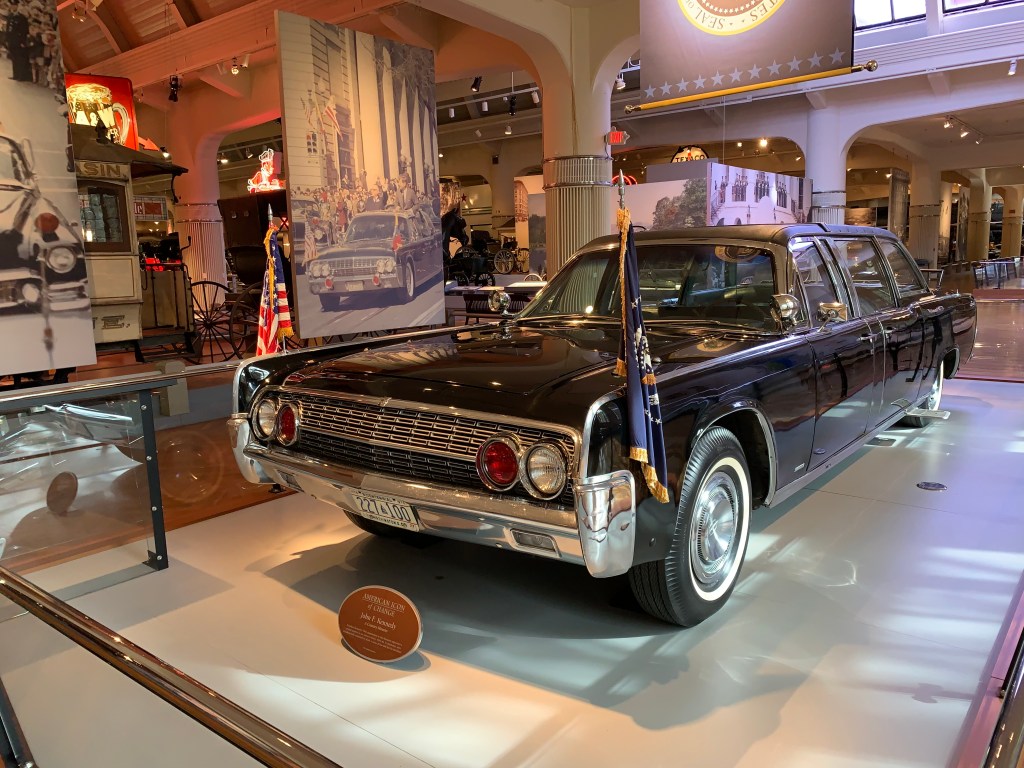
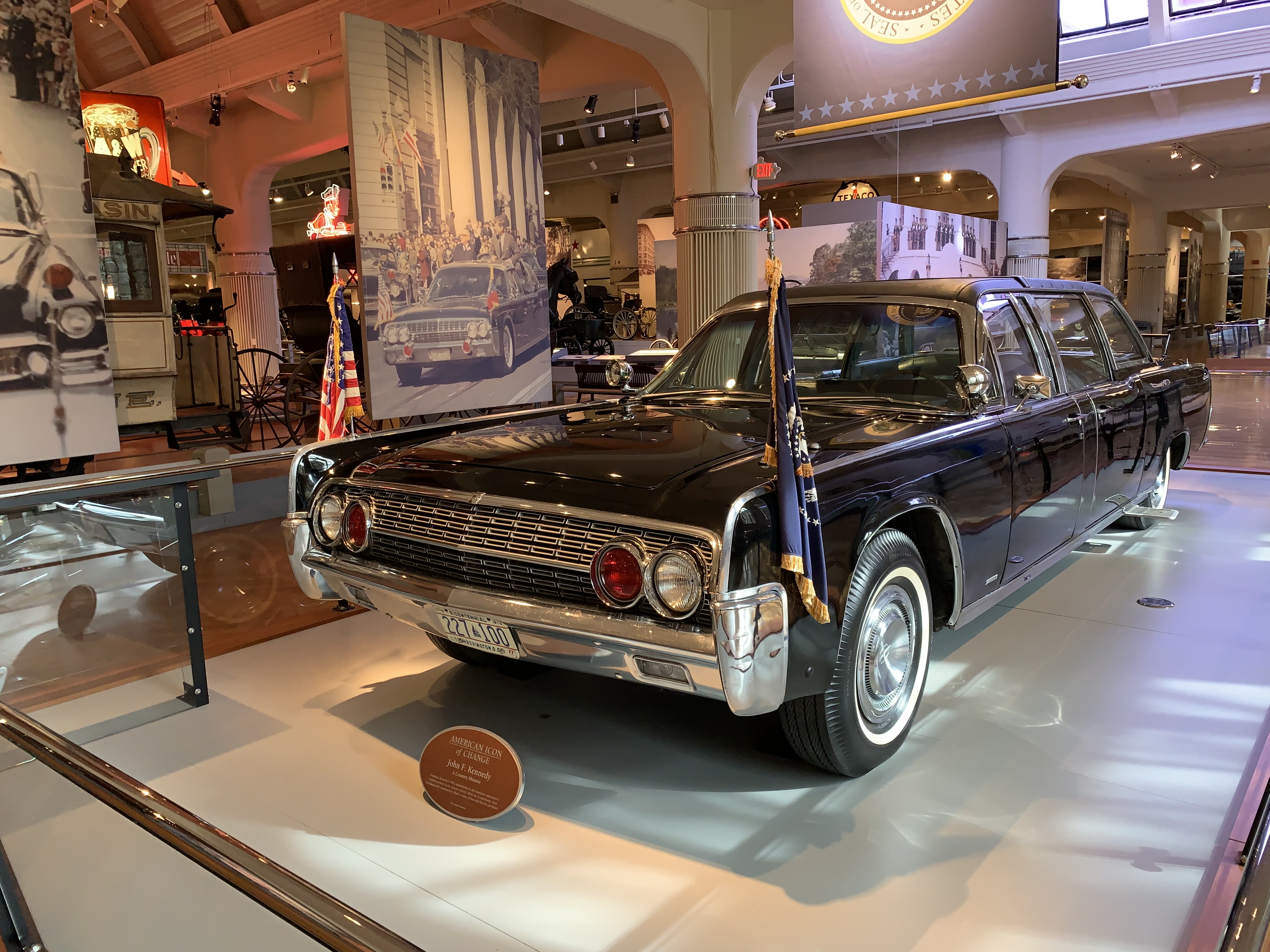
    This is the object I wanted to see above all else, President Kennedy’s 1961 Lincoln. Kennedy was sitting in this car when he was assassinated on 22 November 1963. I was quite surpirsed to learn that proceeding Presidents including Lyndon Johnson and Richard Nixon occassionally used this car. Due to the assassination, the Secret Service made adjustments to increase the security of the car. According to the label, this tension between safety and the President wanting to be seen, has continued to grow over time.

    Presidential Vehicles

    Presidential Vehicles

    2. With Liberty and Justice For All

    This section has too many highlight objects to mention. Around every corner is something inspiring from either the fight for Women’s Suffrage, Civil Rights or American Independence.

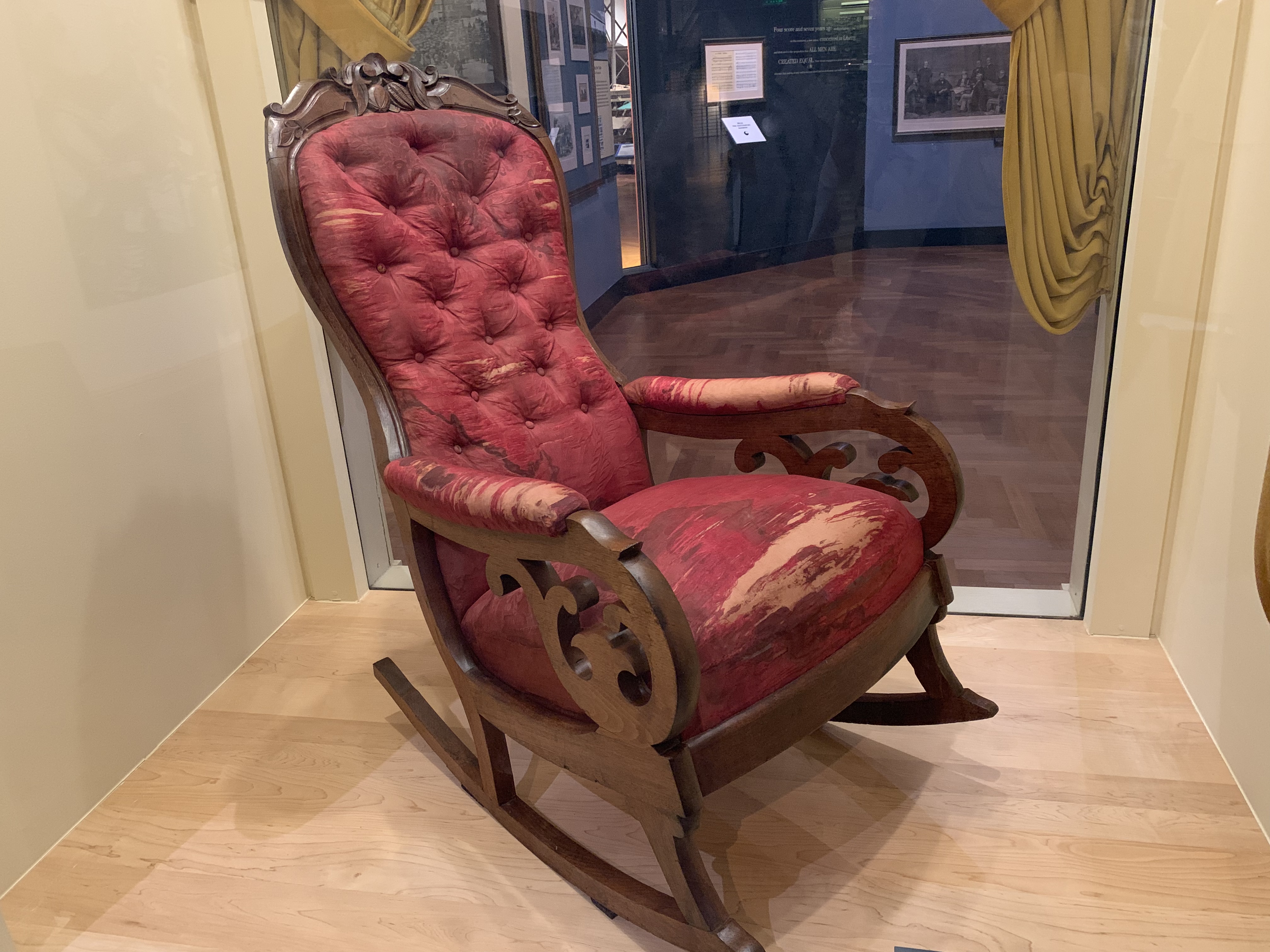
    Two must-see objects are the Rosa Parks bus and Abraham Lincoln’s rocking chair from the Ford Theatre.

    Rosa Parks Bus
    Rosa Parks Bus
    Lincoln’s Chair

    3. Fully Furnished

    During your visit one thing becomes increasingly clear, Henry Ford collected anything and everything. This section on American home furnishings includes this adorable child’s table from 1956. Also on display are a few dollhouses from the 1800s to early 1900s.

    Fully Furnished

    I was also really excited to see the prototype of the Eames Fiberglass Chair. Ray and Charles Eames were a dynamic artist and designer duo who created not only furniture, but also toys, exhibits and films.

    Fully Furnished
    Fully Furnished

    4. Driving America

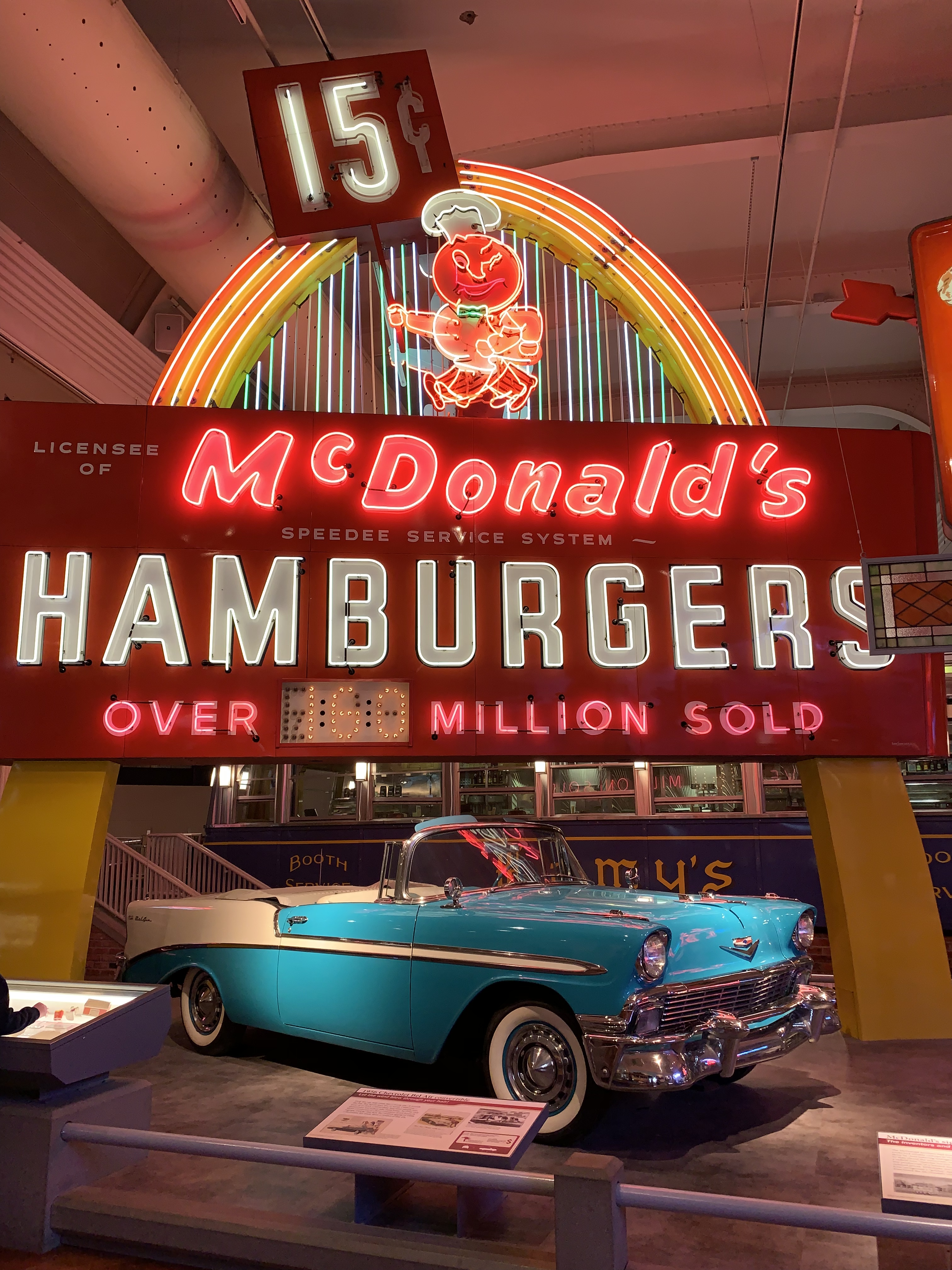
    If you are like me and love vintage cars, then do not miss this section. If you are also like me and don’t mind McDonalds from time to time then make sure you see the McDonalds sign from 1960. It is a huge flashing neon sign so really hard to miss.

    McDonald’s Sign

    It’s also worth finding the 1896 Ford Quadricycle, one of the few remaining Henry Ford vehicle experiments. His aim, to build a vehicle that didn’t require horses.

    Ford Quadricycle

    5. Dymaxion House

    If you have ever wondered what it’d be like to live in a house that eternally makes you feel dizzy, look no further. Designed by Buckminster Fuller in the 1920s, this house was meant to fix all problems with housing. The Dymaxion House was affordable, easy to move and had plenty of space for two bedrooms, a bathroom, kitchen and lounge room. The entire house is in a dome so to get from one room to another you have to walk in a circle hence the dizziness. As amazing as it looks, I’m glad this never took off and only one family ever lived in one. Today, this is the only prototype that exists.

    Dymaxion House

    Dymaxion House
    Dymaxion House

    I have included a few more images below and you can find the details in the captions.

    Holiday Inn Sign, Driving America, 1952-1982
    Canadian Pacific Snowplow, Railroads, 1923
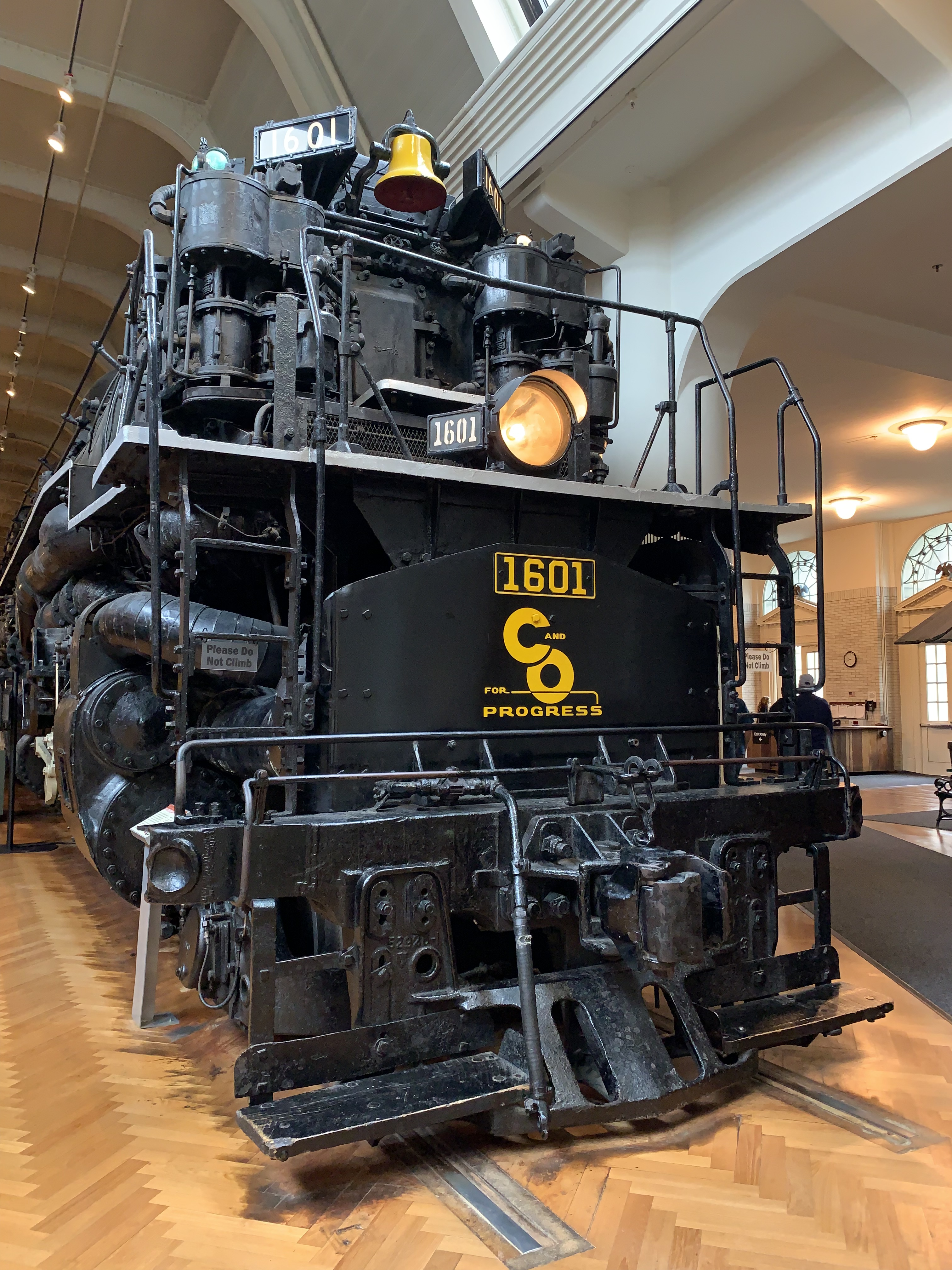
    Allegheny Locomotive, Railroads, 1941
    President Theodore Roosevelt’s Carriage, Presidential Vehicles

    Other Notable Things

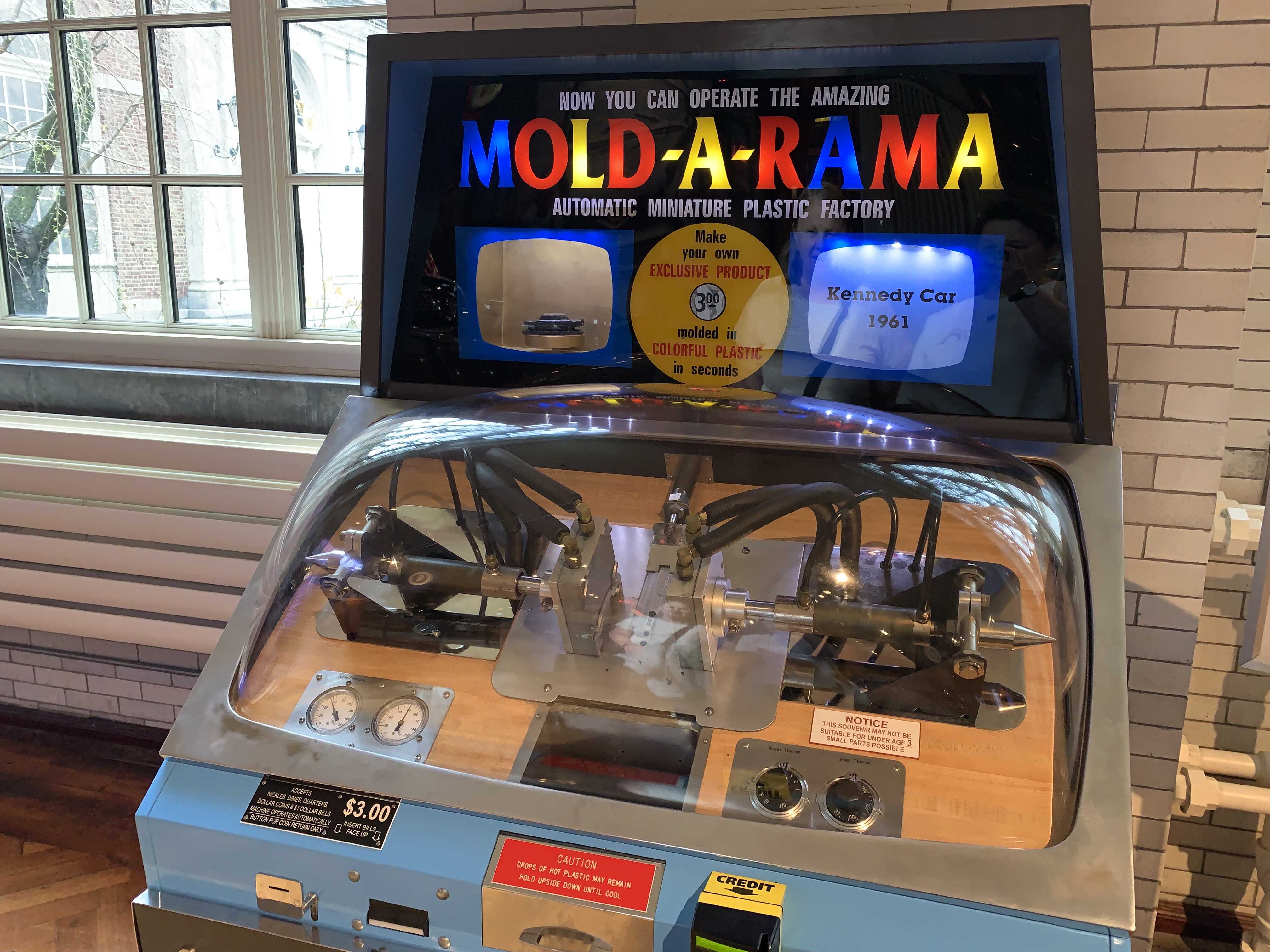
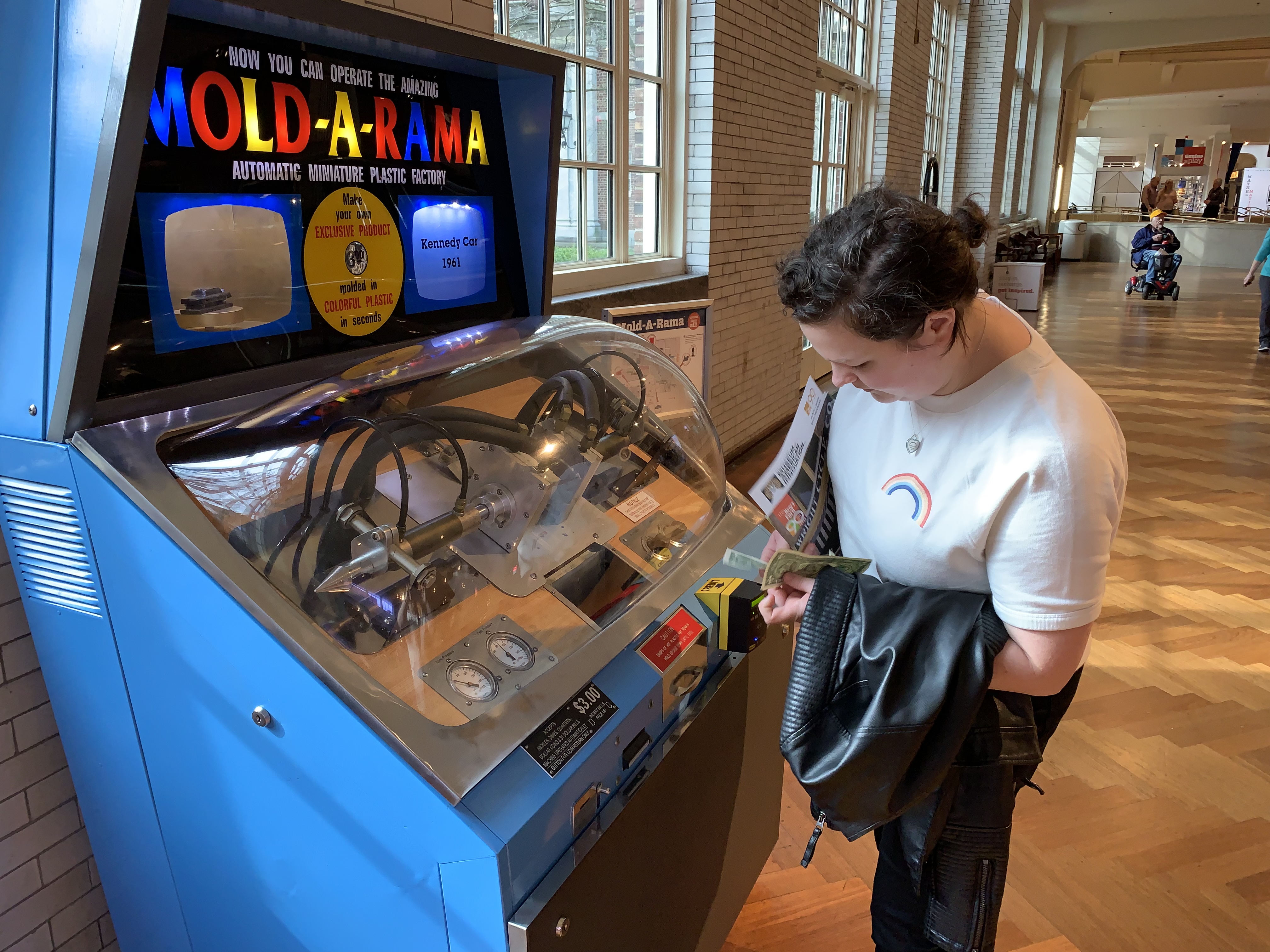
    The one thing that impresses me the most about this museum is the mold-a-rama machines dotted around near some of the most significant objects. Basically, you pay the machine a small fee and it shoots hot plastic into a mould of the selected object creating a small replica for you to take home. I honestly love this idea so much. We got a Rosa Parks bus and Kennedy’s Lincoln. I was tempted to get the Wiener Mobile, but showed great restraint.

    Mold-A-Rama
    Mold-A-Rama

    Another thing I want to mention is that we saw quite a few charging stations around the Museum for visitors to charge their devices. I take a lot of photos when I visit a museum (shock, horror) so having the ability to charge my phone at convenient locations was fantastic.

    Charging Station

    Greenfield Village

    We originally didn’t plan on visiting Greenfield Village because we thought we’d be completely exhausted from the Museum. We spent from 9.30 am to 11.30 am in the Museum and decided last minute to go to the Village for lunch. Staff were so helpful transitioning our tickets over to include the Village.

    The Village is intense. Think historical village on a really large scale. Here is how we managed to see almost everything in two hours.

    11.30 am

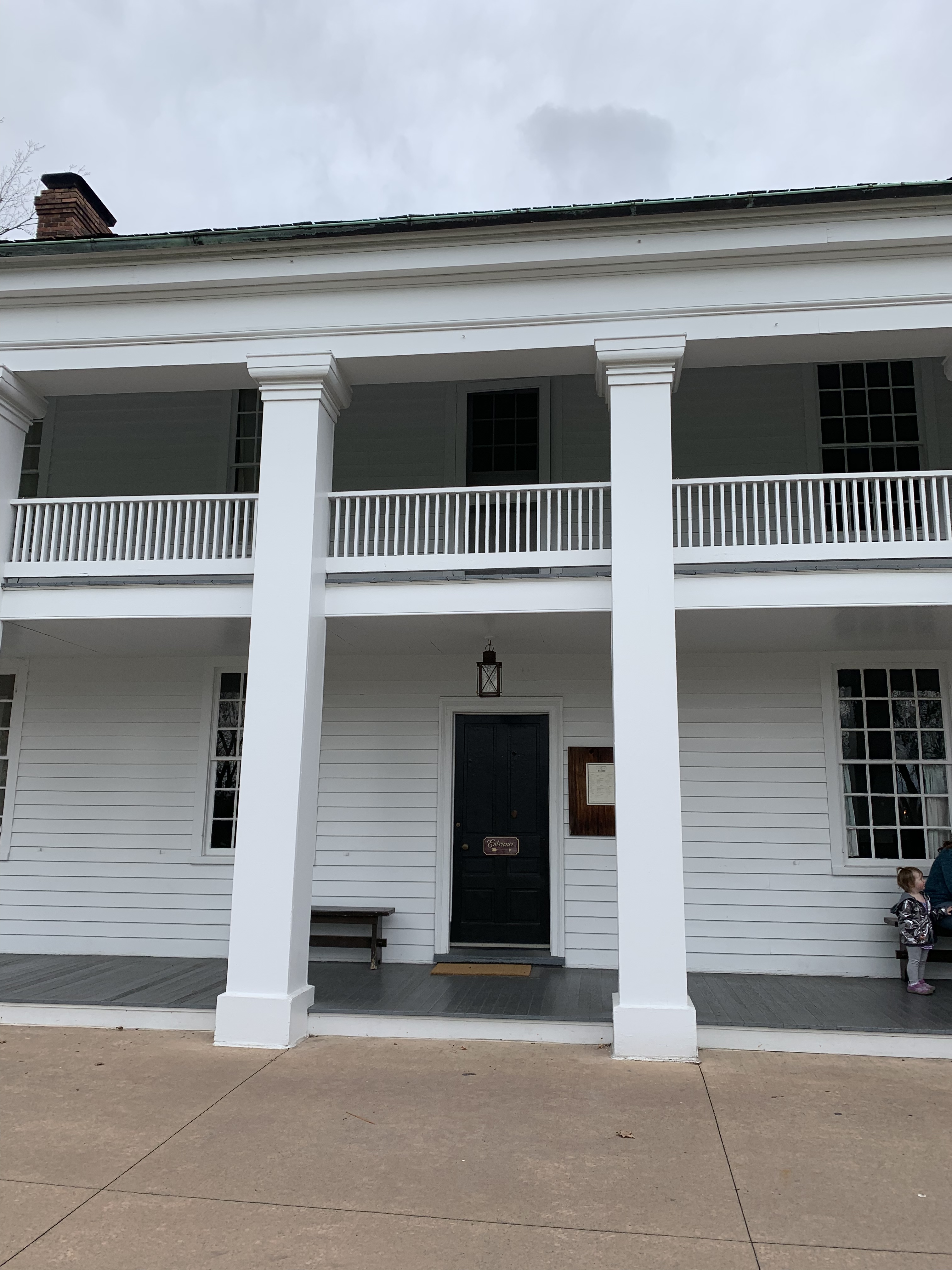
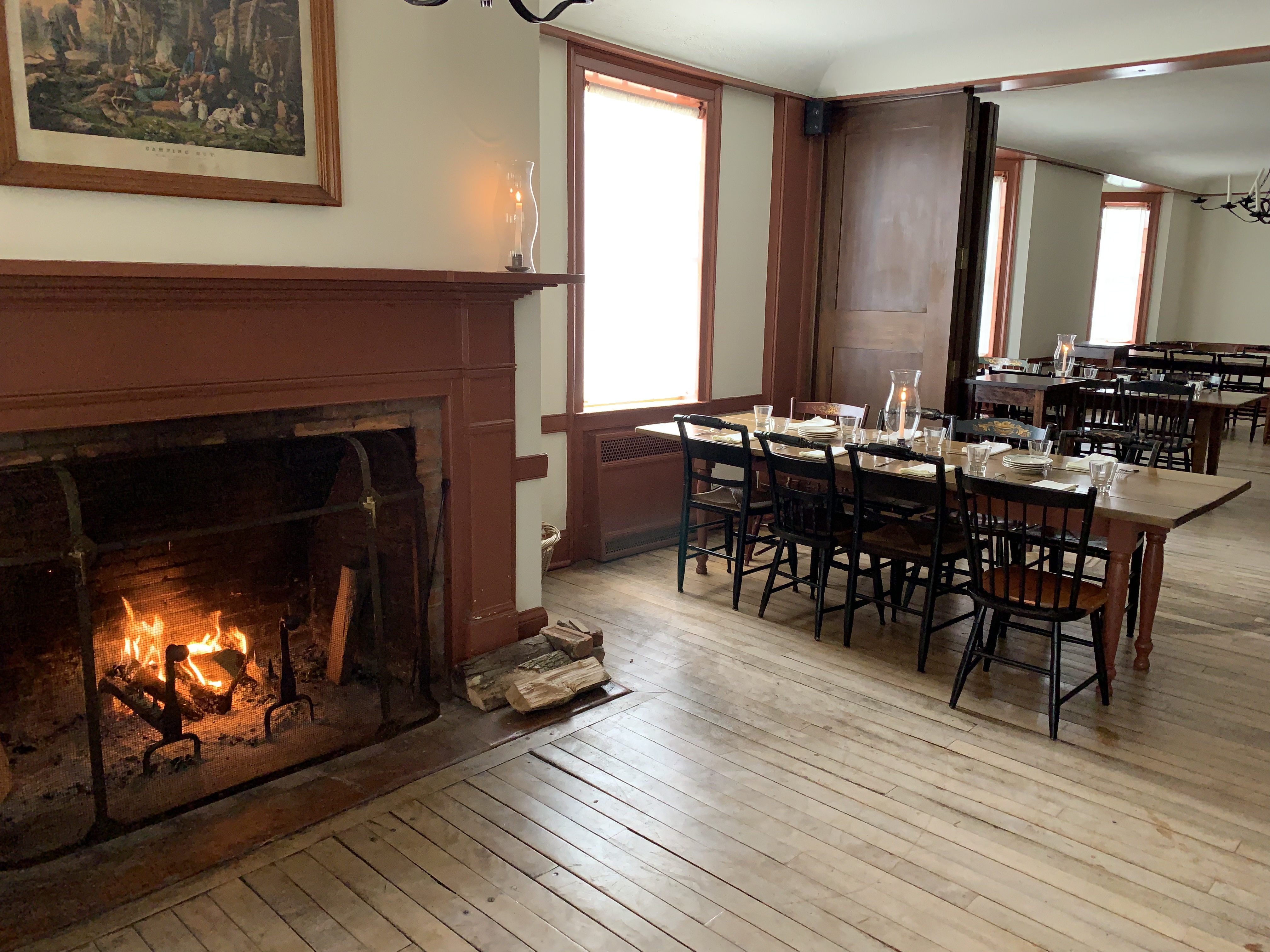
    Arrived in the Village and walked to Eagle Tavern Dining for lunch. A tavern from the 1850s serving food inspired by historical recipes.

    Eagle Tavern Dining
    Eagle Tavern Dining

    12.00 pm

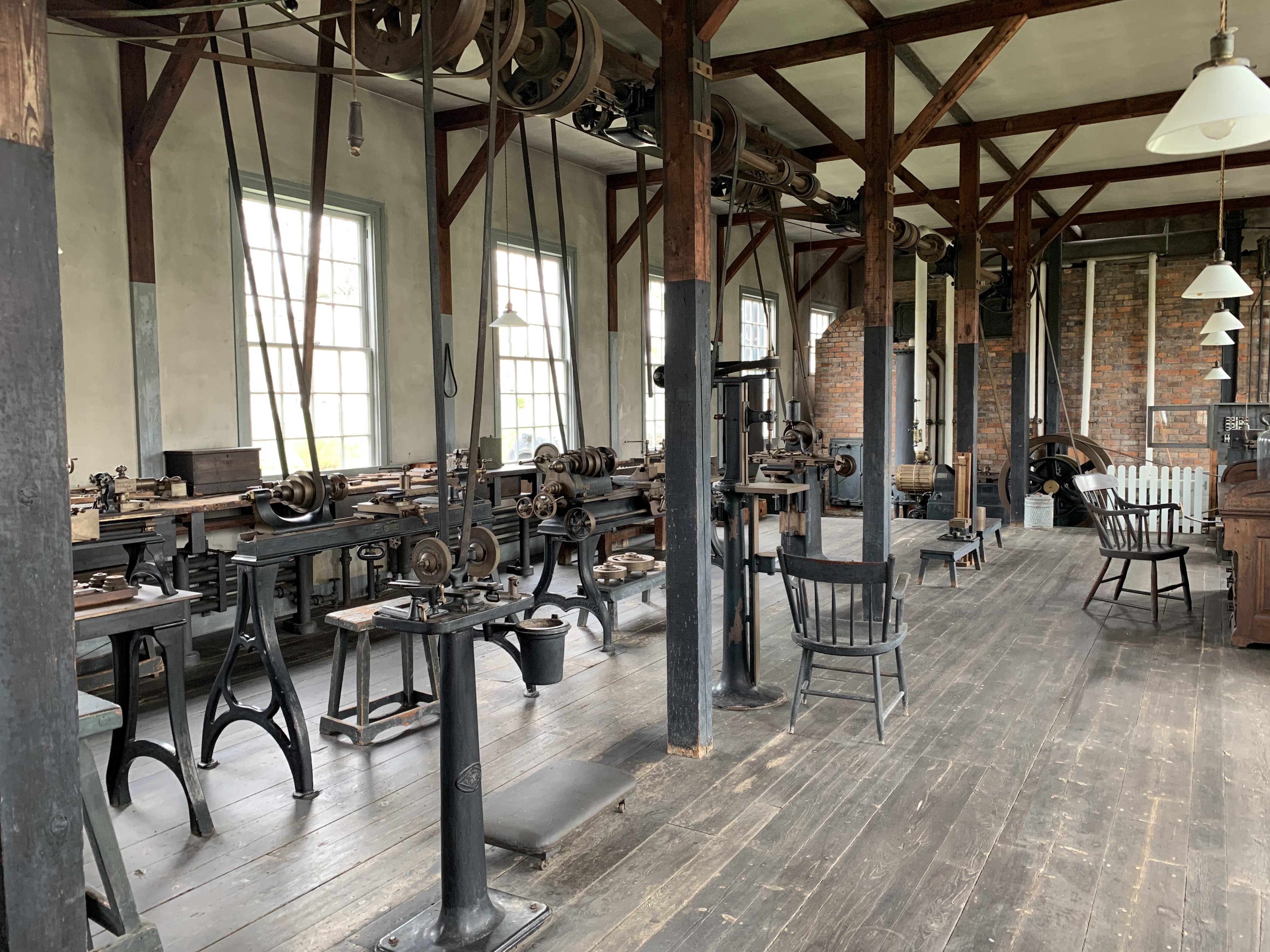
    Lunch was quick. We then walked down to the section called ‘Edison at Work’. Here we saw Edison’s Fort Myers Laboratory and Menlo Park Complex.

    Edison at Work
    Edison at Work

    12.15 pm

    To return to Main Street, we walked through part of the ‘Porches and Parlors’ section where homes from America’s Past are on display. This did include slave quarters from the Hermitage Plantation in Savannah.

    12.30 pm

    We reached Main Street and walked through the Wright Brothers Bicycle Shop and visited Main Street Emporium gift shop. Here I found old historical medicine bottles and purchased one used for castor oil.

    Wright Brothers Bicycle Shop

    12.45 pm

    Towards the end of Main Street you will find the station for Model T Rides. For a small fee, you can ride around town in a T Ford. Definitely worth doing for the experience and to see more of the Village.

    Model T Rides

    1.15 pm

    To finish, we walked through Liberty Craftworks to see the glass blowing and pottery. We also managed to sneak a peak at Thomas the Tank Engine who is going on display for a few family weekends.

    Thomas the Tank Engine

    1.30 pm

    We left the Village and started our long drive to Chicago.

    End Notes

    I am truly glad we spent the time and energy de-touring our holiday to visit. The Henry Ford Museum and Greenfield Village are open daily from 9.30 am to 5 pm. I recommend buying tickets online before your visit. If you haven’t yet visited, I hope you have the opportunity to in the future. A truly remarkable place!
  • Las Vegas: The Neon Museum

    I have always had a great interest in the history of Las Vegas. In particular, the development of ‘The Strip’ and the stories of those who contributed to its highs and lows. If you are in Vegas and looking to learn about this history then pay a visit to The Neon Museum. According to their Statement of Purpose, The Neon Museum is dedicated to “collecting, preserving, studying and exhibiting iconic Las Vegas signs for educational, historic, arts and cultural enrichment.” By the end of this post, you’ll hopefully see how they’ve managed to successfully achieve this goal.

    There are multiple ways to experience the Museum. During the day, you can enter the neon boneyard and wander around at your own pace between 9 am and 5 pm. You do have to buy a ticket for whichever hour you’d like to enter. Then there is a guided tour option that runs for an hour. The benefit of this is that you have an interpreter. Finally, you can combine a guided tour with a light show called “Brilliant!” After some careful consideration, we decided that a guided tour would be most beneficial as you get to hear about the history as well as see the signs. I was so glad we opted for the tour because it added so much to the experience.

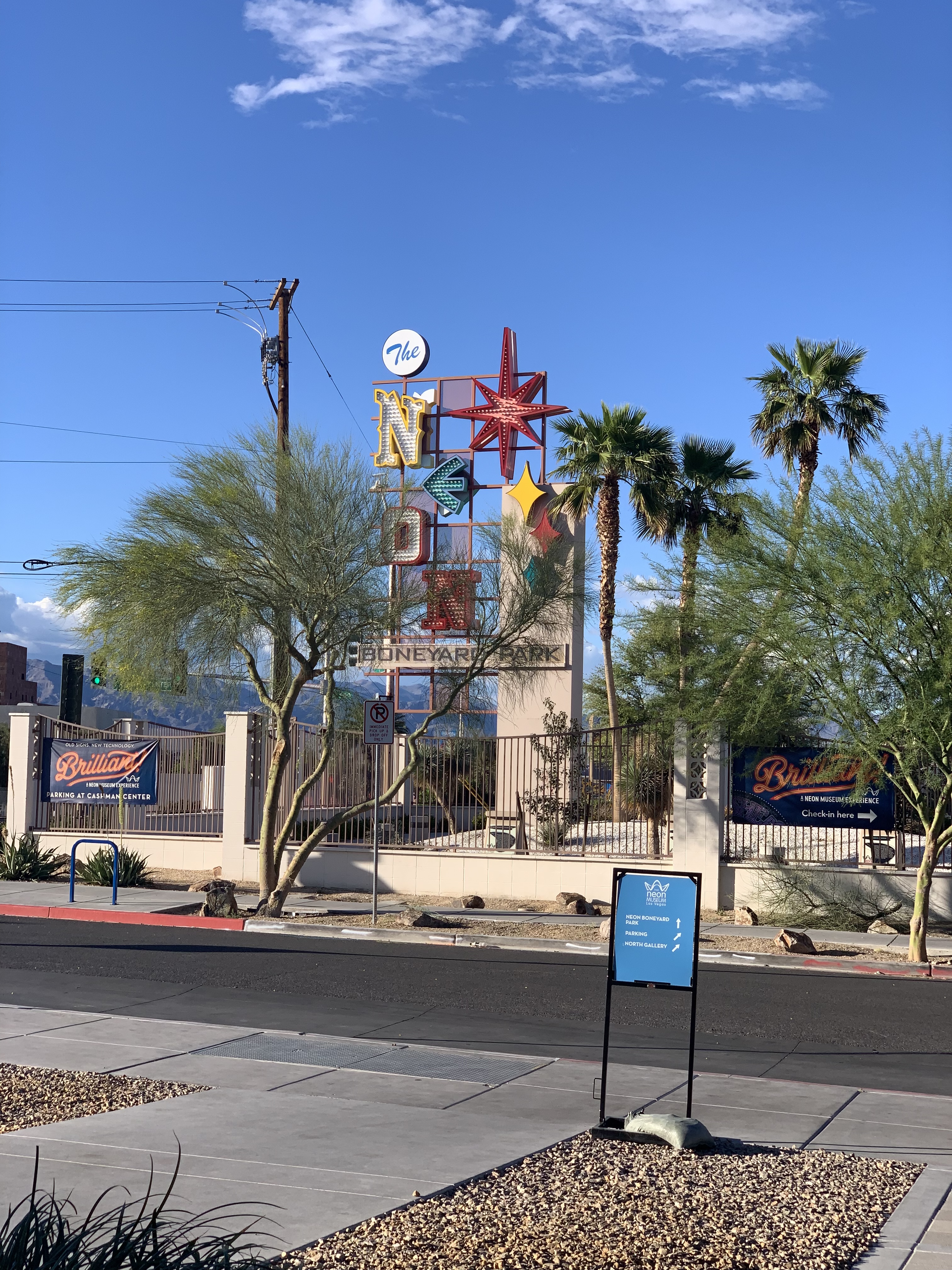
    Neon Museum Entrance

    After a brief introduction, our guide explained how the boneyard is roughly divided into three sections: downtown Vegas signs, small business signs and, finally, signs from The Strip. Overall, the tour was a very positive experience. The stories really enhanced seeing the signs and we were able to learn a little about the Museum’s plans for restoration and conservation. I’ll start by providing an overview of the latter before sharing some highlight signs from the tour.

    Conservation and Preservation

    When some famous casinos and hotels were demolished, including Sands Hotel and Casino, everything attached to the building was lost. The Neon Museum was formed in 1996 and began preserving the neon signs of Vegas in order to offer a glimpse into the past. Luckily, many of these signs are often leased to businesses that can return them to the manufacturer at the end of the lease. Or, alternatively, they can keep the sign. The Neon Museum has managed to salvage a significant number of signs that have come into the collection in varying conditions.

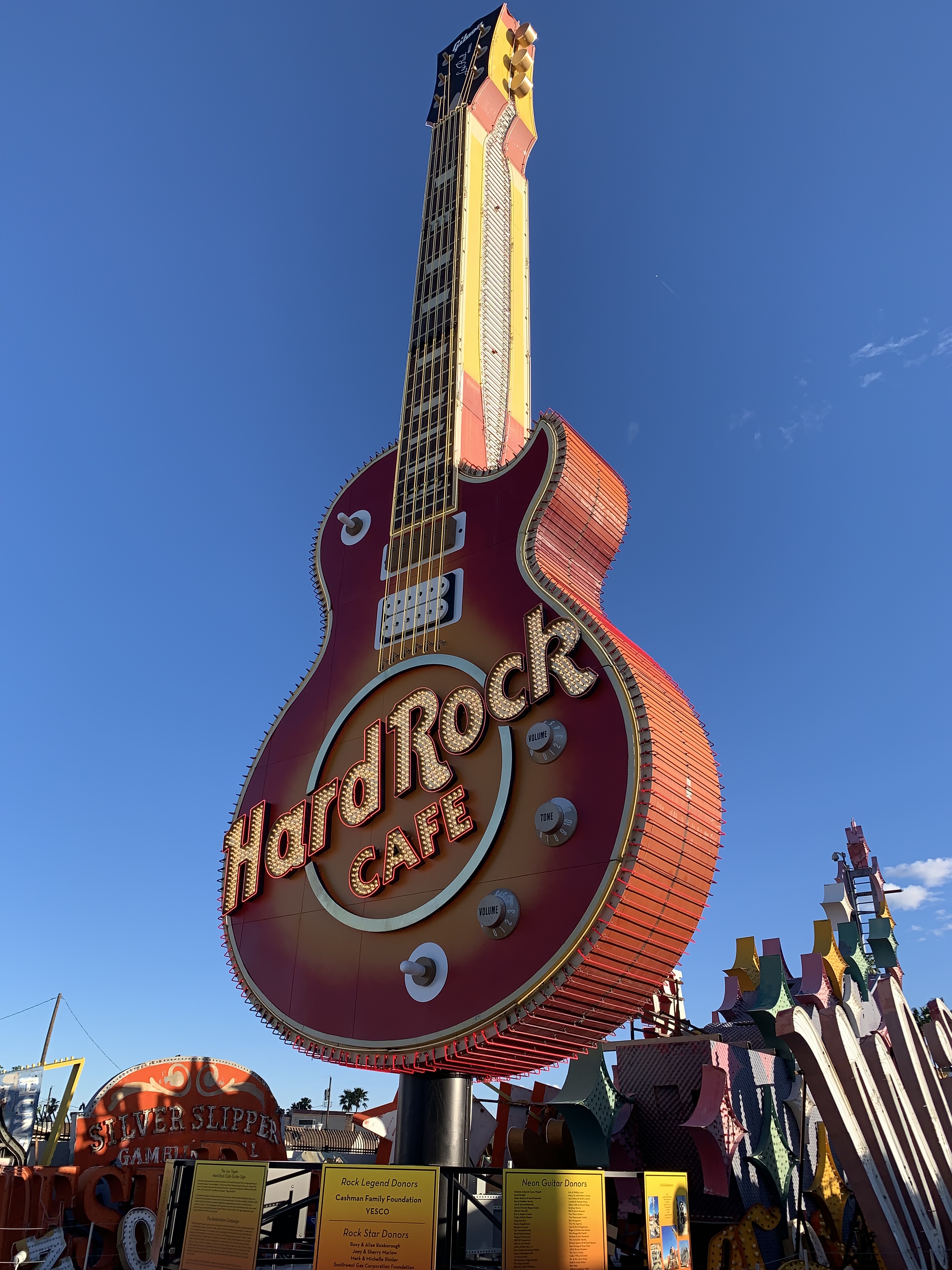
    According to our guide, the Museum has only received two fully operational signs since opening. There have been sign restorations including this amazing one from Hard Rock Cafe. Not every sign is scheduled to be restored. There is an intention to display the state of how some were discovered so that history isn’t lost.

    Hard Rock Cafe
    Hard Rock Cafe

    It was also great to learn about how the neon signs are made. Depending on what goes inside the tubing you can either have a red (neon) or a blue (argon) sign. To make different colours, these need to be mixed or the tubing needs to be coated in order for the desired colour to appear.

    I don’t want to talk about every single sign we saw. For each of the three sections, I have selected one or two to discuss that either had an interesting story or just looked really cool.

    Signs from Downtown Las Vegas

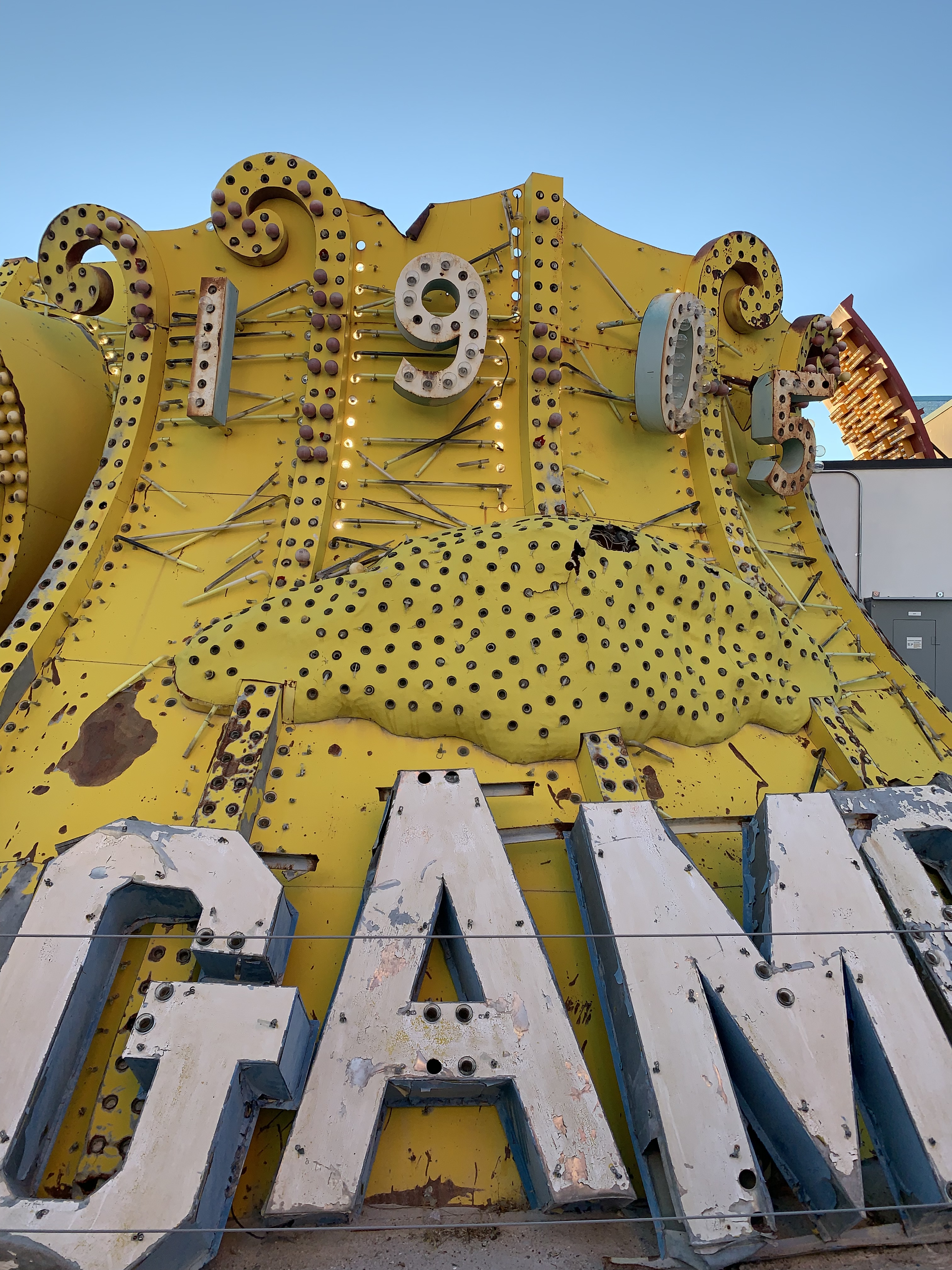
    One of the first signs in the boneyard is this one from The Golden Nugget. This hotel was opened in 1946. The 1905 refers to when Las Vegas became a town. Essentially, a significant train hub opened near downtown Vegas, leading to casinos and hotels opening to entertain and accommodate the workers.

    The Golden Nugget

    Moving further along, we learnt about the Moulin Rouge, the first de-segregated casino in Vegas. There are many rumours as to why this casino closed only a few months after opening. One is that The Mob, who pretty much controlled The Strip, did not like how popular the casino had become in such a short time. The Moulin Rouge did try opening again a few times, but, never again opened a full casino and hotel. At one stage it did operate as a small hotel and coffee shop. In this shop, members of the NAACP (National Association for the Advancement of Colored People) met with casino owners and came to the agreement that casinos would voluntarily start de-segregating in the 1960s.

    Moulin Rouge

    Signs from Small Businesses

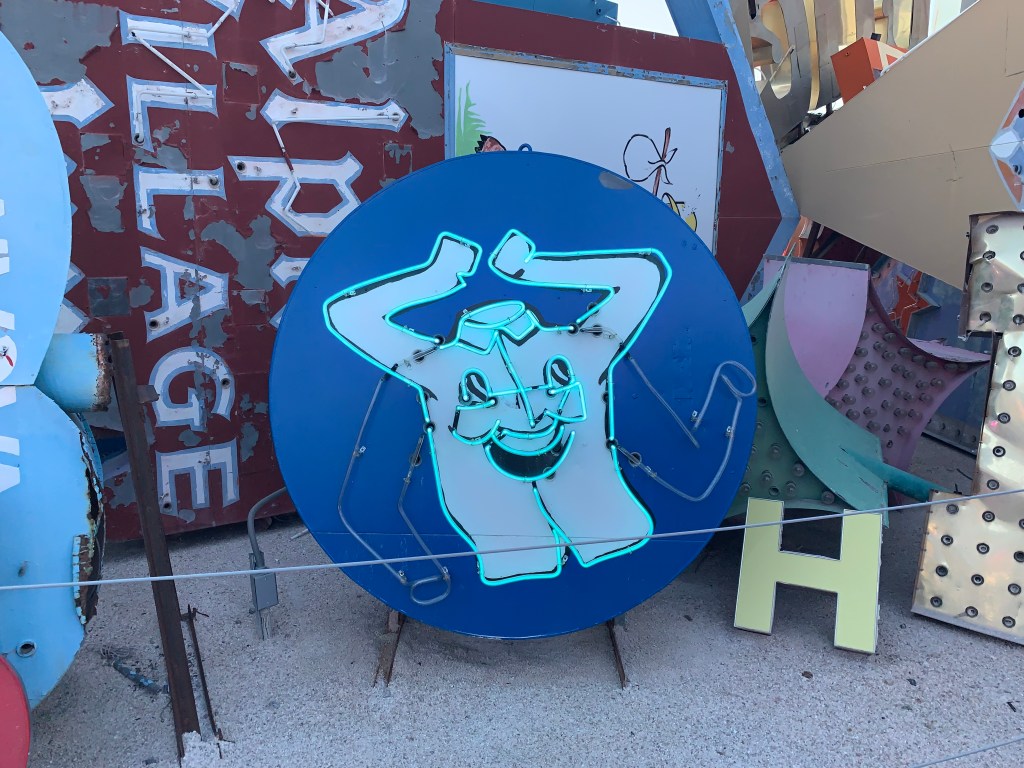
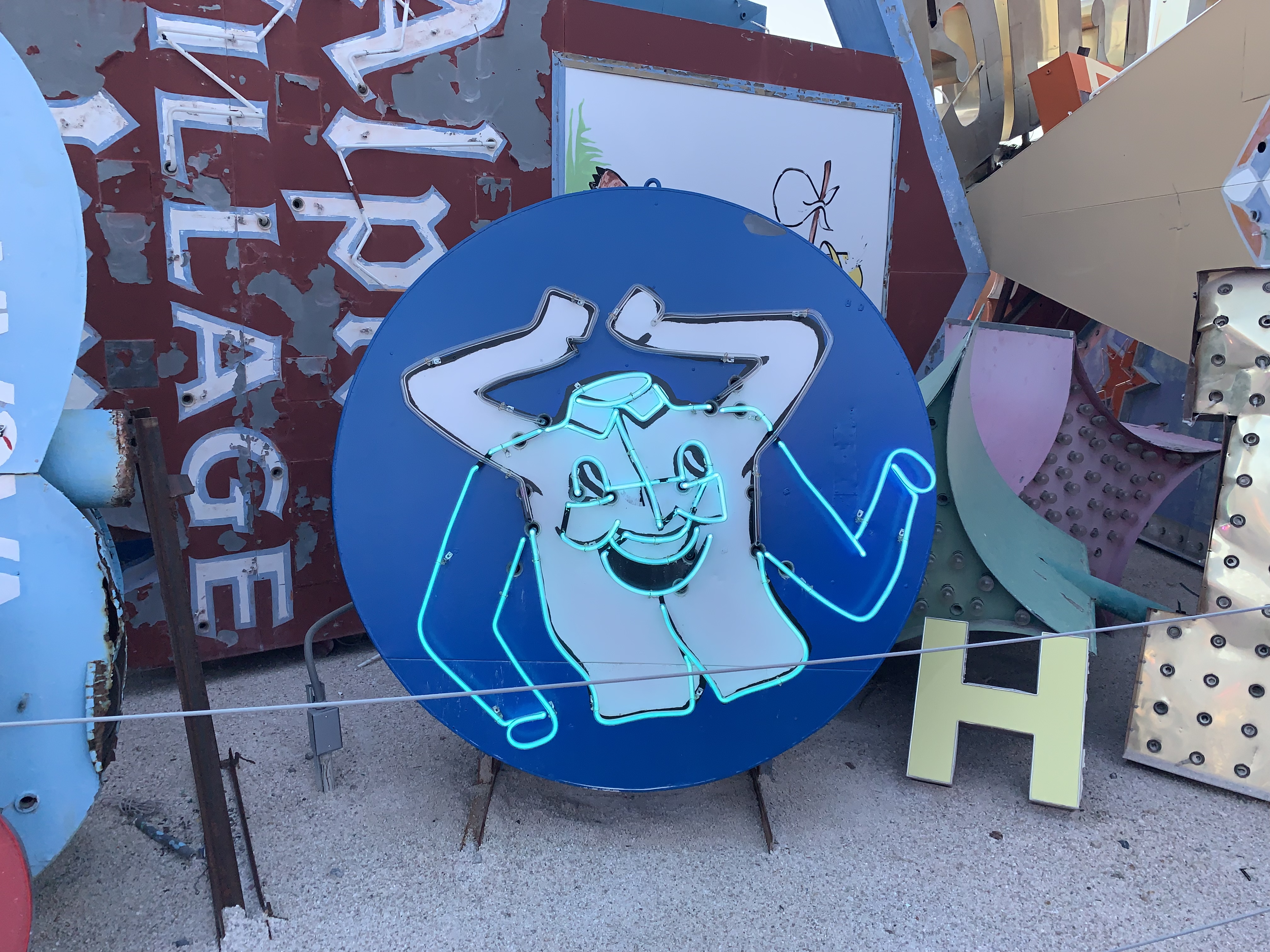
    There are two signs from this section I want to mention. The first is this happy shirt sign that belonged to Steiner Cleaners & Laundry. The sign was designed by the daughter of the owners who originally had drawn the shirt with a cigar hanging out of its mouth. Over time, the cigar has disappeared. This drycleaning company was where Liberace sent his costumes after performing in Vegas. Because rhinestones and jewels couldn’t go through the drycleaning process, staff would remove them, sometimes up to 4000 on one garment, then sew them back on piece by piece after cleaning.

    Steiner Cleaners & Laundry
    Steiner Cleaners & Laundry

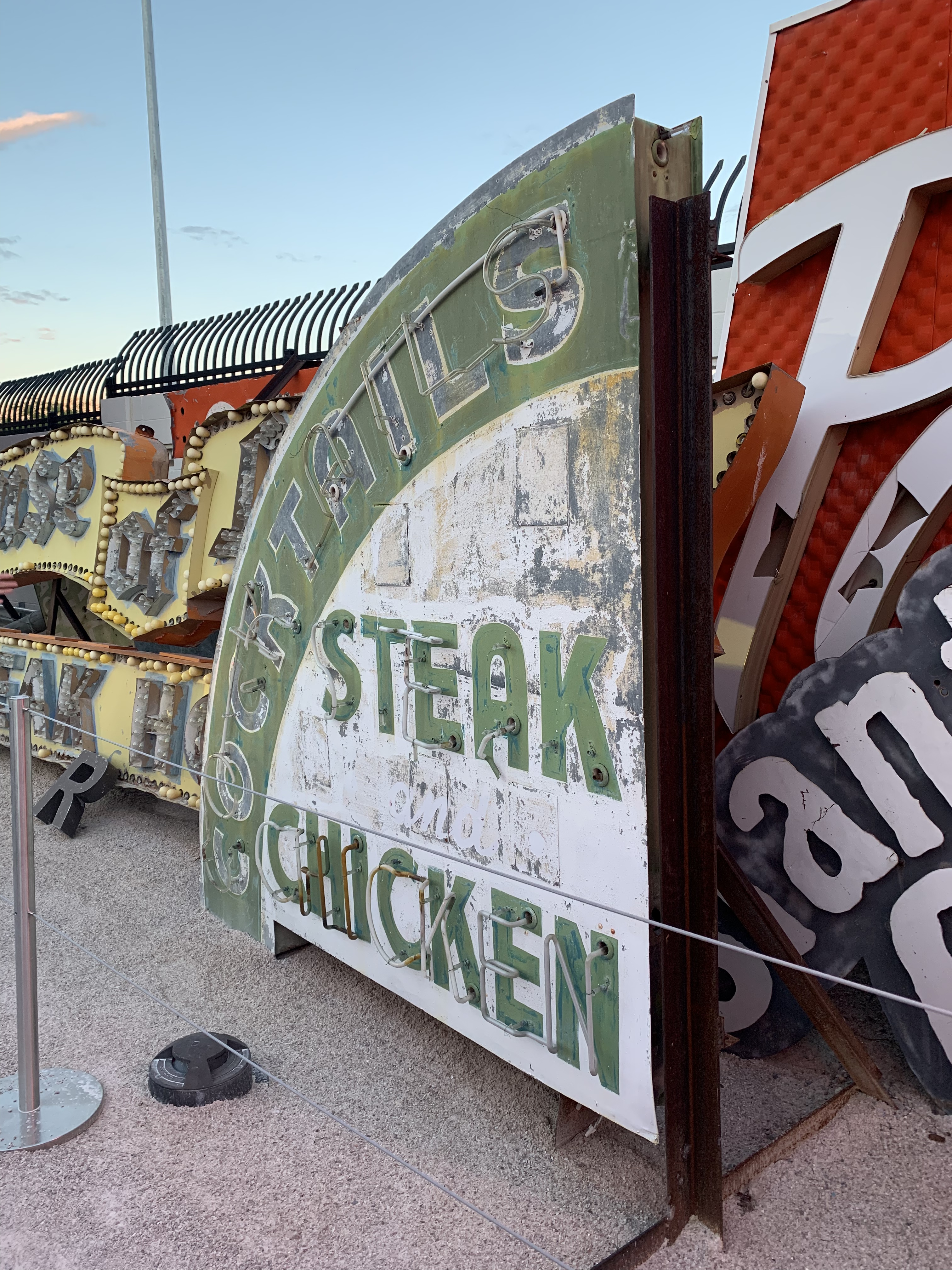
    The name of the restaurant this sign belonged to was the Green Shack. It was opened by Mattie Jones in 1929. In 1932 it changed its name from the Colorado to Green Shack. This was during the construction of the Hoover Dam. When workers came back into town they could literally visit the window of the owner’s house and get chicken and whisky. As this was Prohibition, the whisky was a bit on the down low. When Prohibition ended, the restaurant expanded to also serve steak and more freely advertise cocktails. It operated until 1999, an amazingly long time for a business in Vegas. Today, the building is listed on the United States National Register of Historic Places.

    Green Shack

    Signs from The Strip

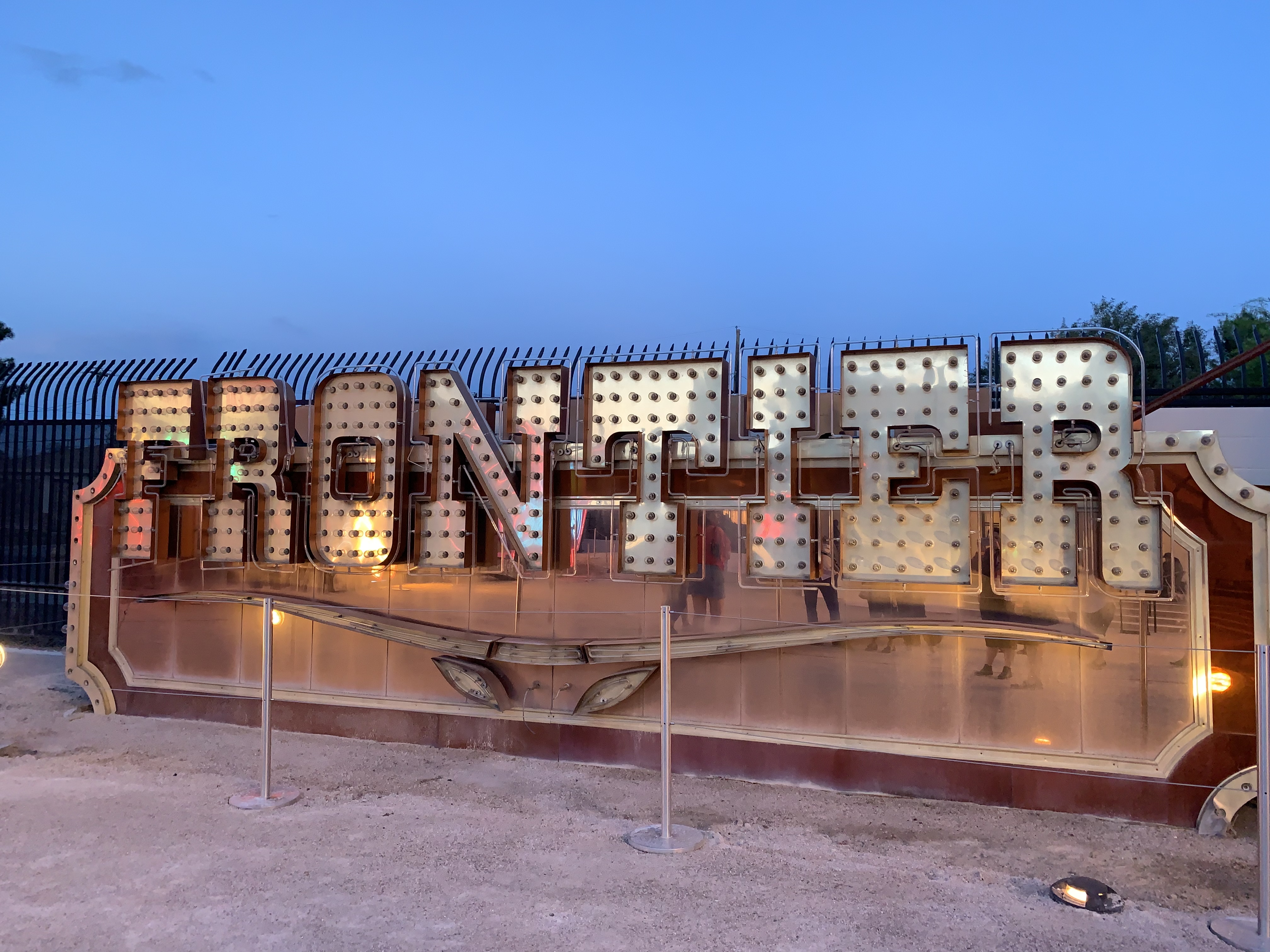
    The New Frontier was once owned by Howard Hughes. He had stayed at the Desert Inn countless times and on one of these occasions decided he wanted to extend his reservation. When his request was declined, he purchased the Inn. Eventually, Hughes would go on to own many other casinos and hotels on The Strip including Sands and The New Frontier.

    Frontier

    The final sign I want to share is from the Stardust Resort and Casino. Stardust only closed in 2006. The Resort was outer space themed which you can really tell from the atomic style lettering. Its sign became very famous in Vegas.

    Stardust

    Gift Shop

    I haven’t done a gift shop shout out in quite some time! The shop at The Neon Museum is fantastic. They sell so many vintage items including room keys from hotels that have since been demolished and old casino playing card decks.
    One particular item I just had to buy was a light bulb from the Welcome to Las Vegas Sign. The store assistant was so helpful and explained how the bulbs on the sign are replaced every day so they never burn out. The bulbs that are taken down are sold as souvenirs. I’ll be leaving Vegas with a small part of its most famous sign.

    Further Information

    I would like to thank our guide for such an in-depth tour of the boneyard.

    The Neon Museum is open daily from 9 am to 5 pm. I would highly recommend pre-purchasing tickets from their website beforeyou visit.

    Photographs can be taken for personal use only. This is not a commercial blog, nor am I using the photographs taken for commercial benefit.

  • Las Vegas: The Mob Museum

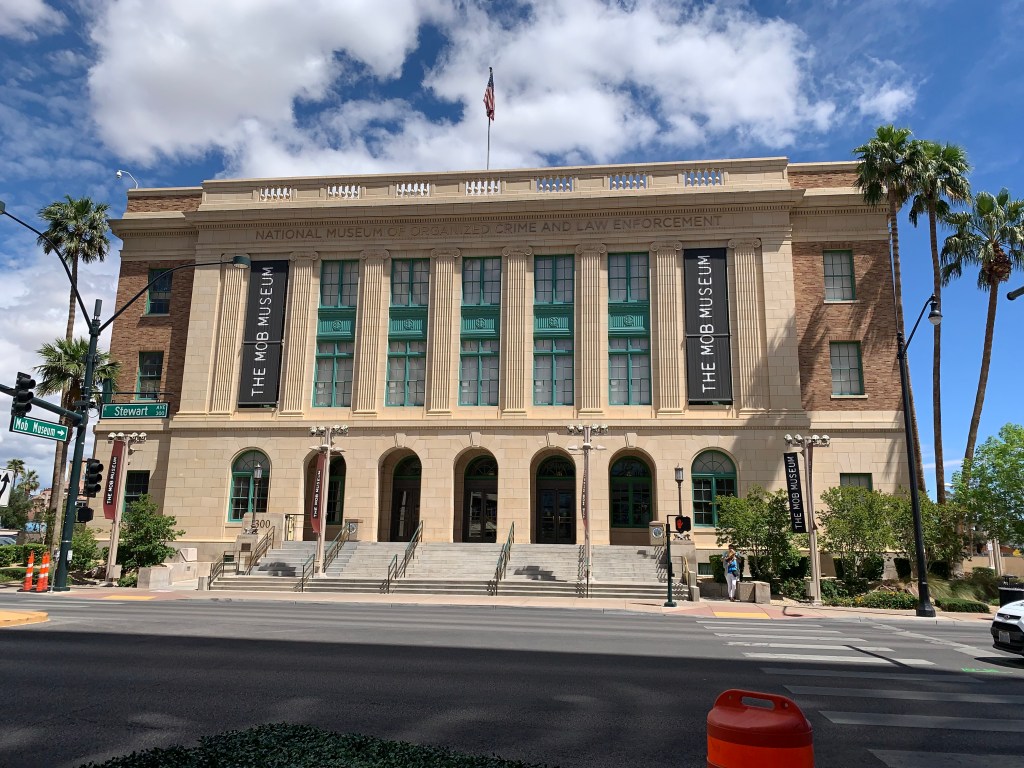
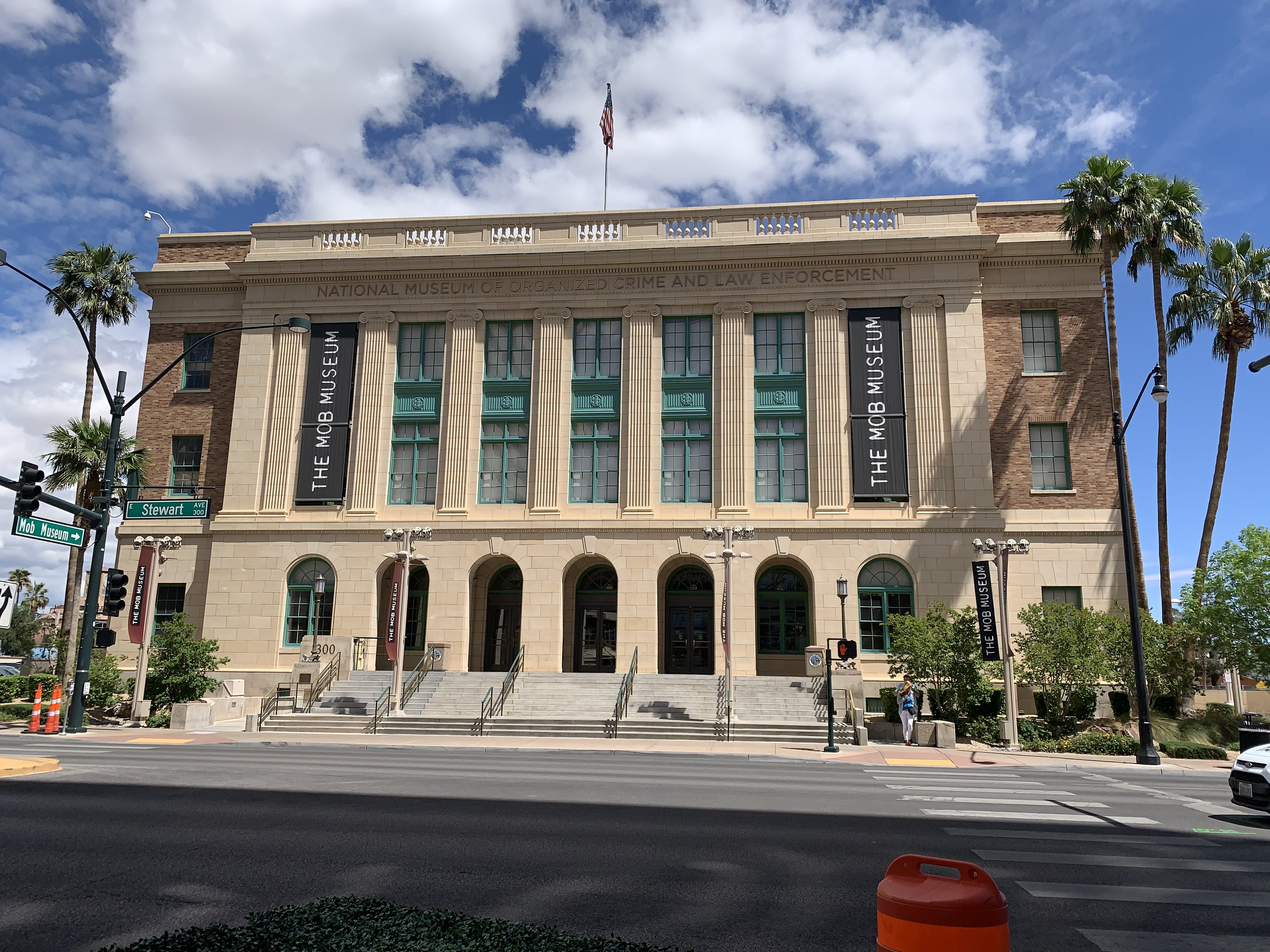
    If you ever find yourself in Vegas needing a break from the intensity of it all, The Mob Museum (National Museum of Organised Crime and Law Enforcement) is a must. Located in Downtown Las Vegas, the building originally housed the U.S. Post Office and Courthouse. Construction began in 1931 and finished in 1933. Today, the building is registered on both the Nevada and National Register of Historic Places.

    It was built to accommodate federal officials who were looking for a home before the Hoover Dam opened. As the only federal judge in Nevada was based at Carson City, 400 miles from Las Vegas, judges would visit from Los Angeles and San Francisco twice a year. In 1945, Vegas finally had a full time judge. Flash forward to 1950 and the courthouse held one of the Kefauver Committee hearings. This was a special investigation into organised crime led by Tennessee Senator Estes Kefauver. The outcome of these hearings was that the underbelly of crime in America was finally exposed, especially in places such as Las Vegas and Chicago.

    The Mob Museum

    In 2002, the building was sold to the City of Las Vegas for $1. On the provision that it had to be preserved and used as a cultural centre – preferably museum.

    Our Visit

    There are three different types of tickets you can choose from – general admission, deluxe pass (1 experience) and premier pass (2 experiences). The experiences include a crime lab experience, firearm training simulator and distillery tour. It was a tough choice, but, we just went for general admission that allows access to all exhibition spaces. Once you have purchased a ticket, you take an elevator to the third level. I really like when multi-level museums are organised in this way – i.e. you start on the top level and work your way down.

    After learning about the origins of The Mob, you make your way through a series of displays that cover the development of Las Vegas, the 1920s and 1930s crime syndicates and events such as the St Valentine’s Day Massacre.

    Highlights

    There are quite a few highlights to discuss so I’m going to keep things brief. Before going into detail about some specific objects, there are a few general highlights I want to mention.

    1. Labels

    It isn’t often that I leave a museum after having read multiple labels and don’t feel fatigued. The Mob Museum manages to communicate a lot of information through minimal text. This is supplemented by quite a few short films and interactive elements that I’ll come back to later.

    2. Speakeasy

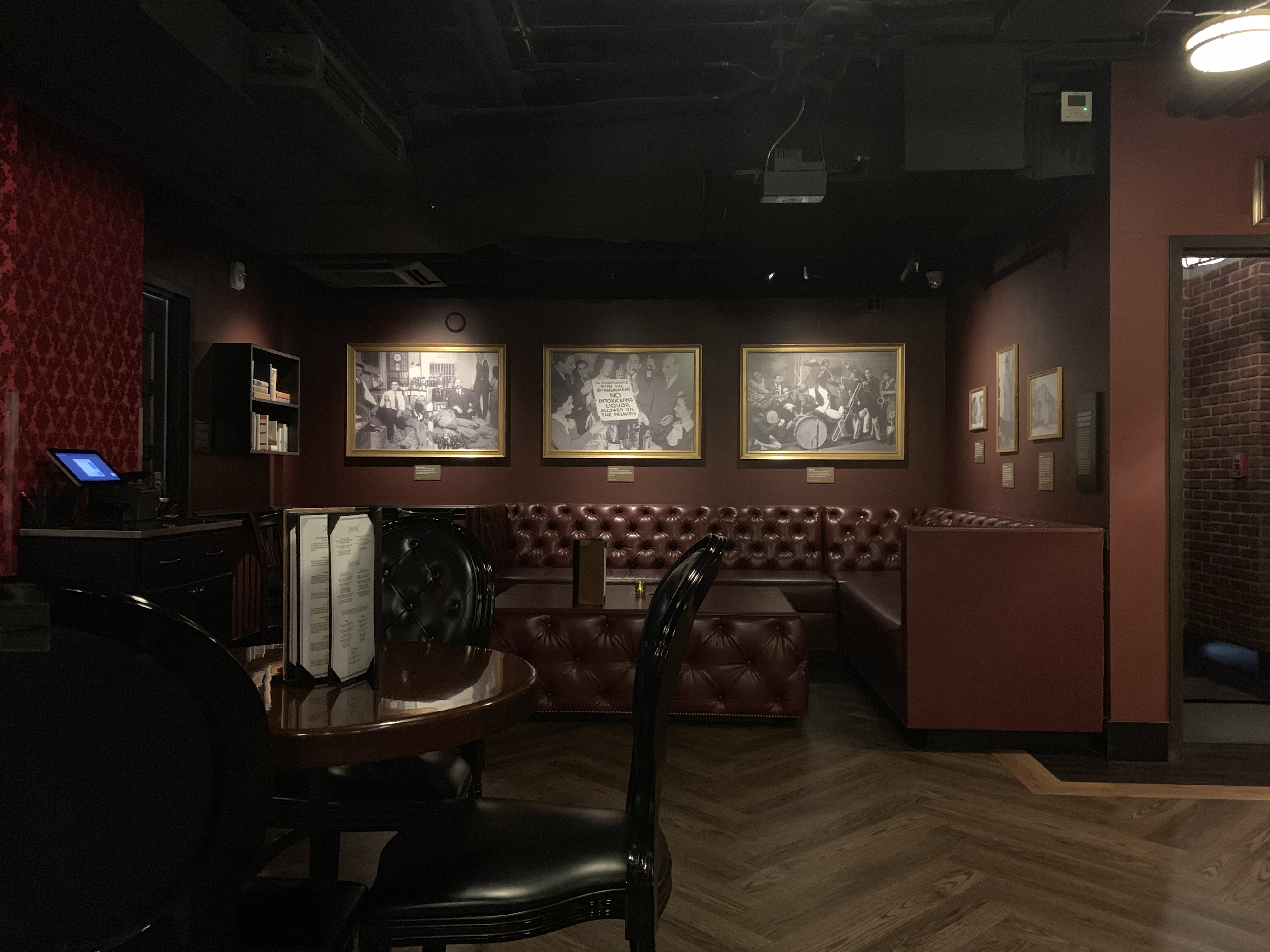
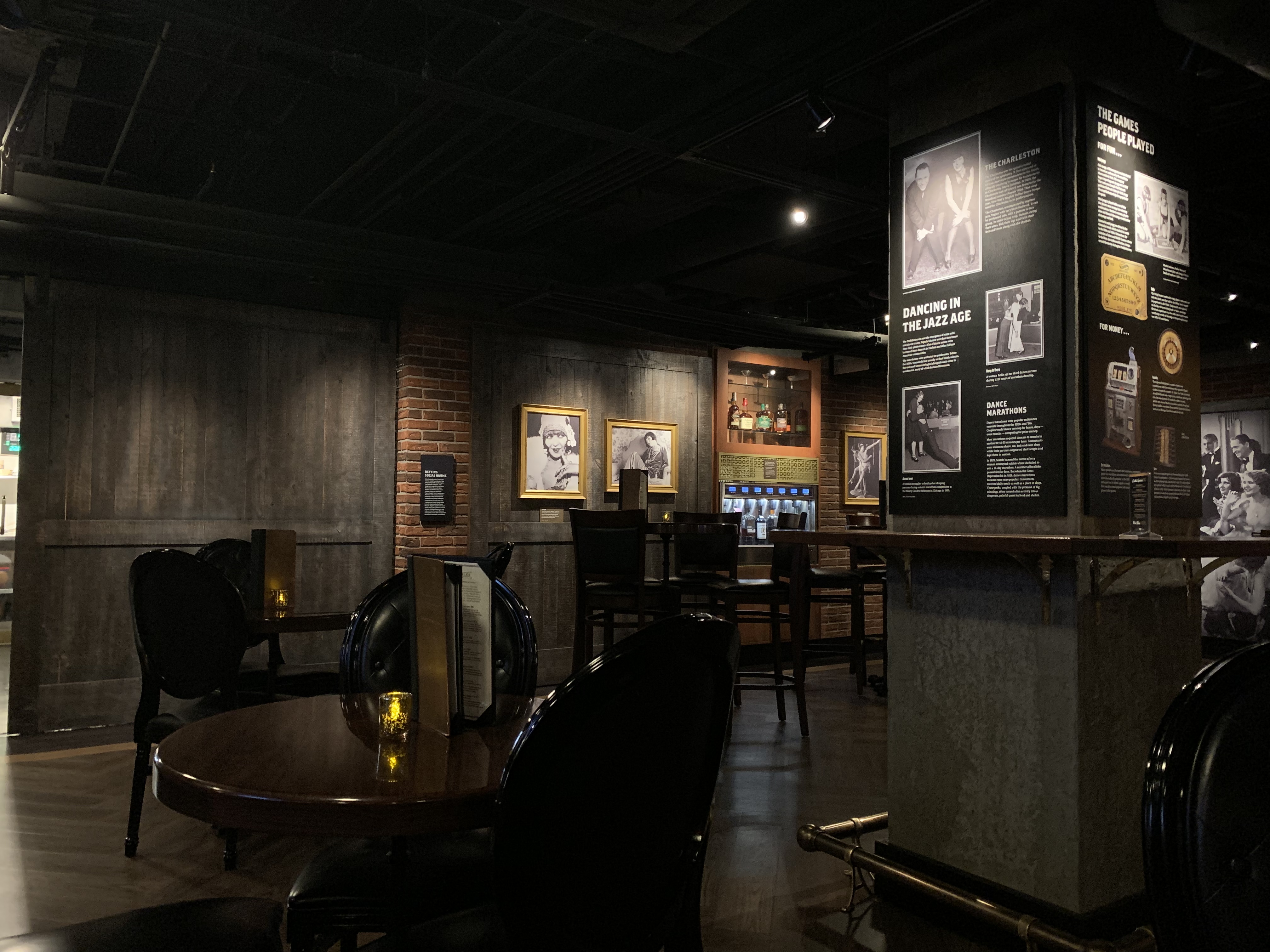
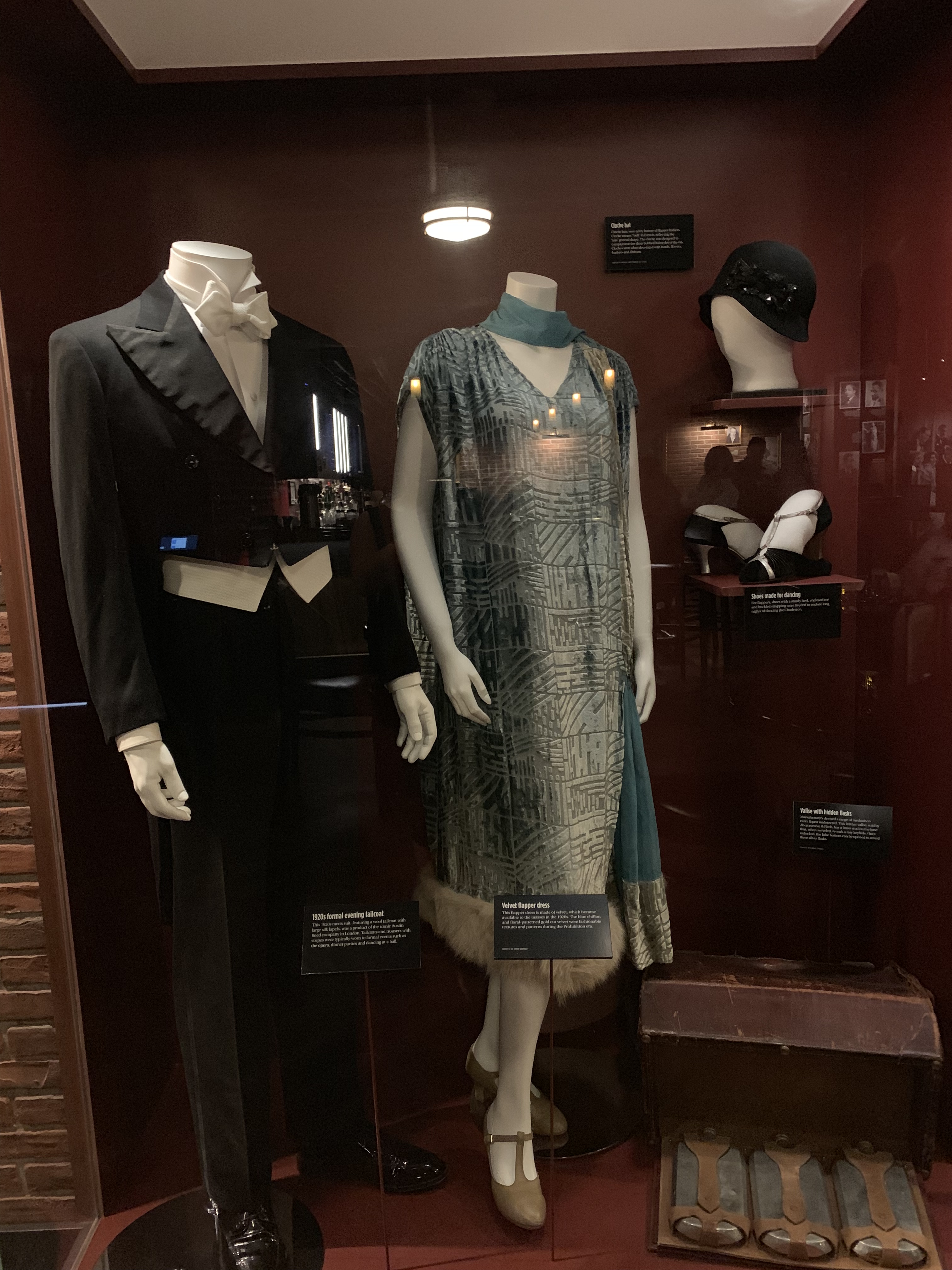
    Located in the basement is a Speakeasy that serves cocktails inspired by those created in the 1920s and 1930s. I was able to try some Moonshine and learn about its history and significance during the Prohibition Era. On display around the Speakeasy are an array of objects including a beautiful 1920s Art Deco dress.

    Speakeasy
    Speakeasy
    Speakeasy

    3. Different Elements

    Almost every exhibition space feels like an immersive experience with various elements added to suit a particular theme. On the third floor, where the origins of The Mob is on display, there is a police line-up that you can walk behind to have your picture taken. There is a large image of a line-up from the 1930s on the wall next to the entrance.

    In the space dedicated to the St Valentine’s Day Massacre there are photographs reproduced on oak barrels. Considering the connections to Prohibition, this display choice is very apt.

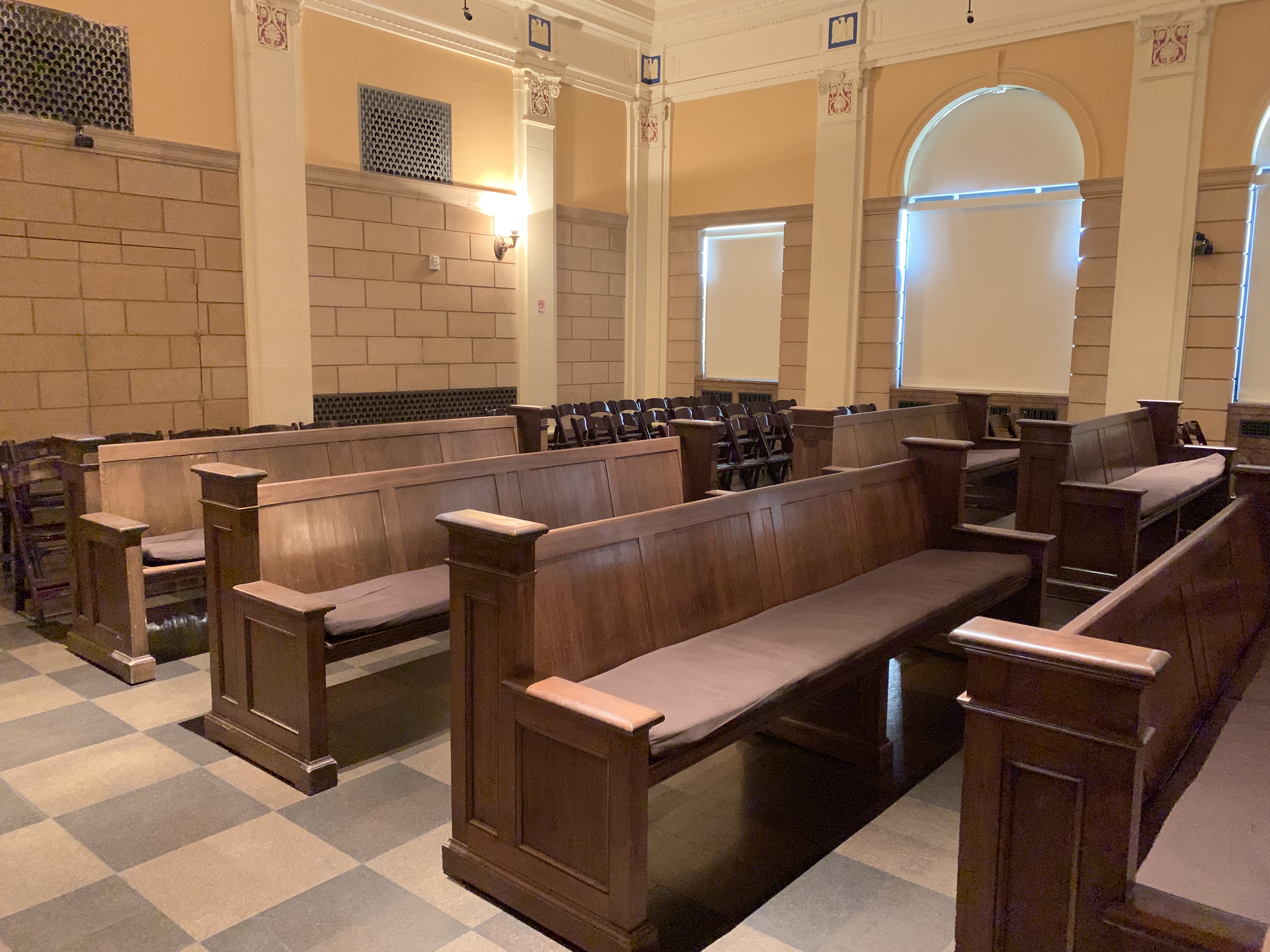
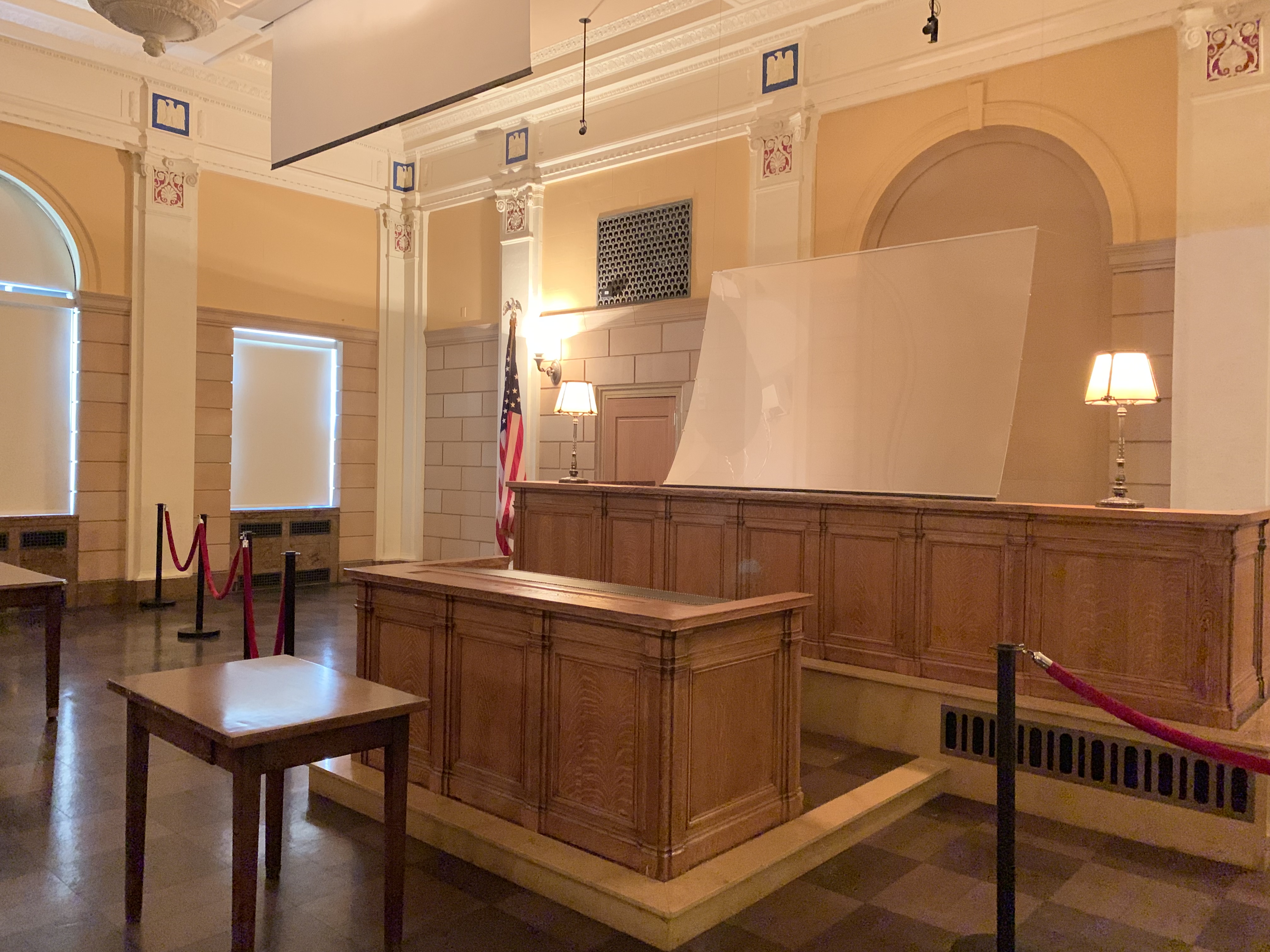
    There are also a significant number of short films playing throughout the Museum. For example, on the second floor you can sit in the same courtroom that held a Kefauver trial and watch excerpts. On that same level are a number of display screens sitting on a dining table. You can order a series of different cities from the menu and read all about how The Mob operated in that city.

    Kefauver Trial
    Kefauver Trial

    Object Highlights

    1. St Valentine’s Day Massacre Wall

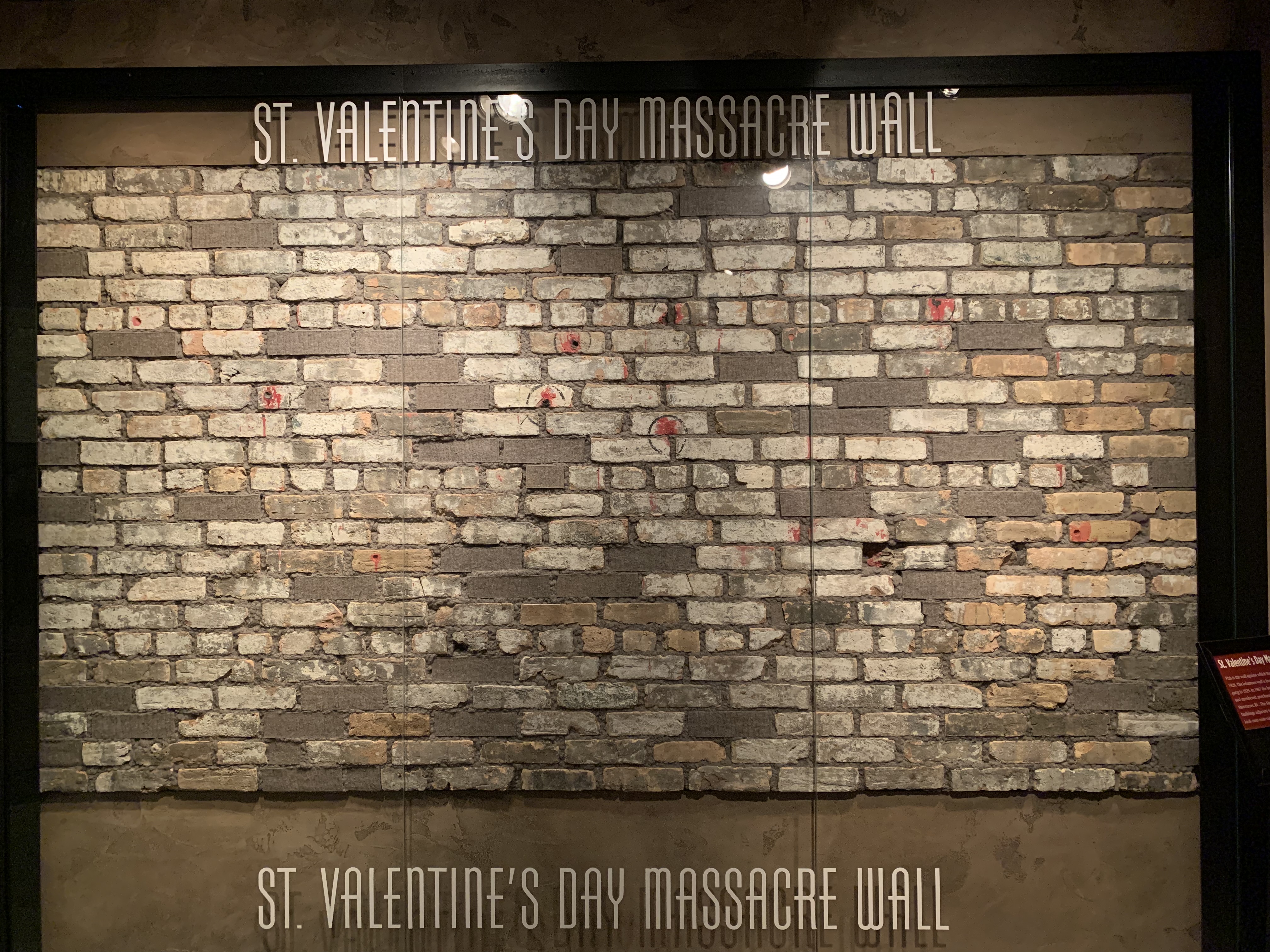
    On 14 February 1929, Bugs Moran’s men were shot against this wall in Chicago. Moran was a Chicago gangster and the hit is believed to have been ordered by Al Capone (jury is still out). The possible aim, to stop inter-gangster warfare. The building where it happened, SMC Cartage, was demolished, but, the wall was saved by businessman George Patey. He took apart the wall brick by brick and gave each a number so it could be rebuilt. His family later donated the entire wall to the Museum.

    St Valentine’s Day Massacre Wall

    2. Al Capone Revolver

    Al Capone ordered this gun in 1928 from Parker Henderson Jnr before moving to Miami. It was seized in 2004 by the IRS who discovered it in an illegal gambling den in Kentucky.

    Al Capone Revolver

    3. The Flamingo Menu

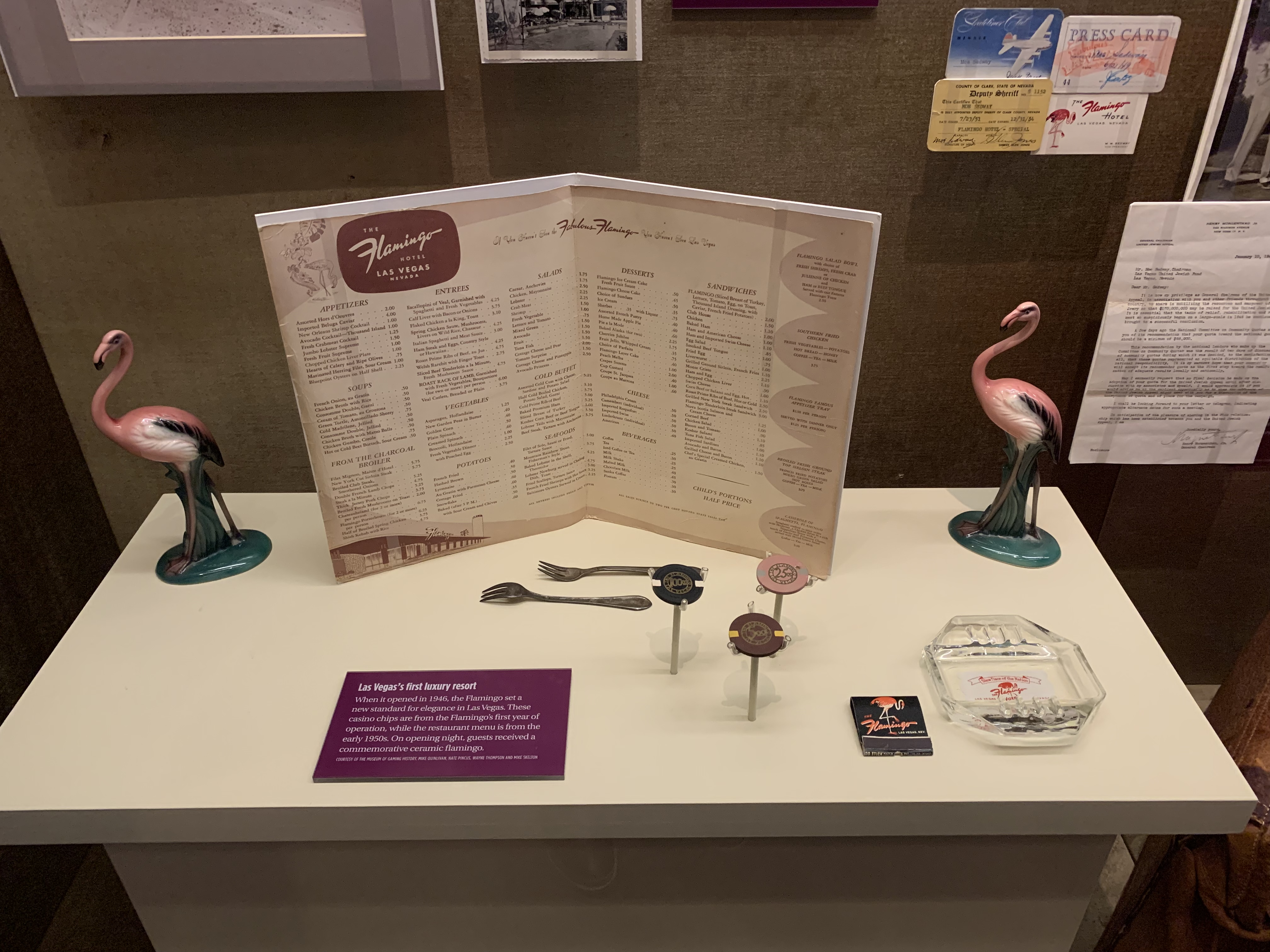
    Dubbed the first luxury resort in Vegas, The Flamingo opened in 1946. This menu is from the early 1950s and the poker chips are from its first year of operation. It was custom to also present a ceramic flamingo to each guest upon departure.

    The Flamingo Menu

    4. Kennedy Memorabilia

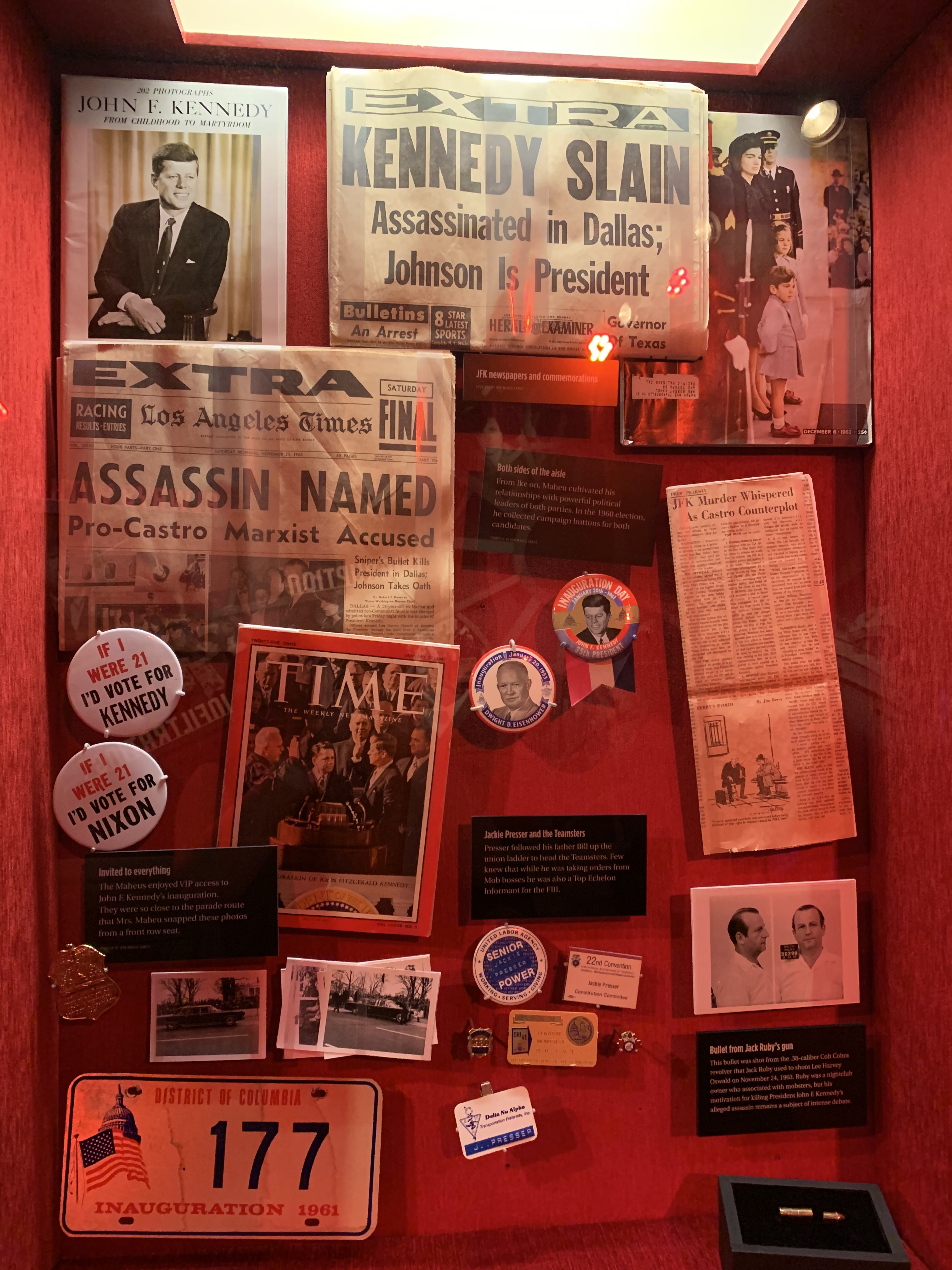
    There is a room that explores the connection between President John F Kennedy and the Mafia. It offers a very interesting look into who may or may not have supported Kennedy to victory in Chicago. There is even a bullet from Jack Ruby’s gun on display.

    Kennedy Memorabilia
    Kennedy Memorabilia

    5. 1939 Las Vegas Brochure

    This is such a beautiful brochure of Las Vegas showing everything you can do in the City.

    1939 Las Vegas Brochure

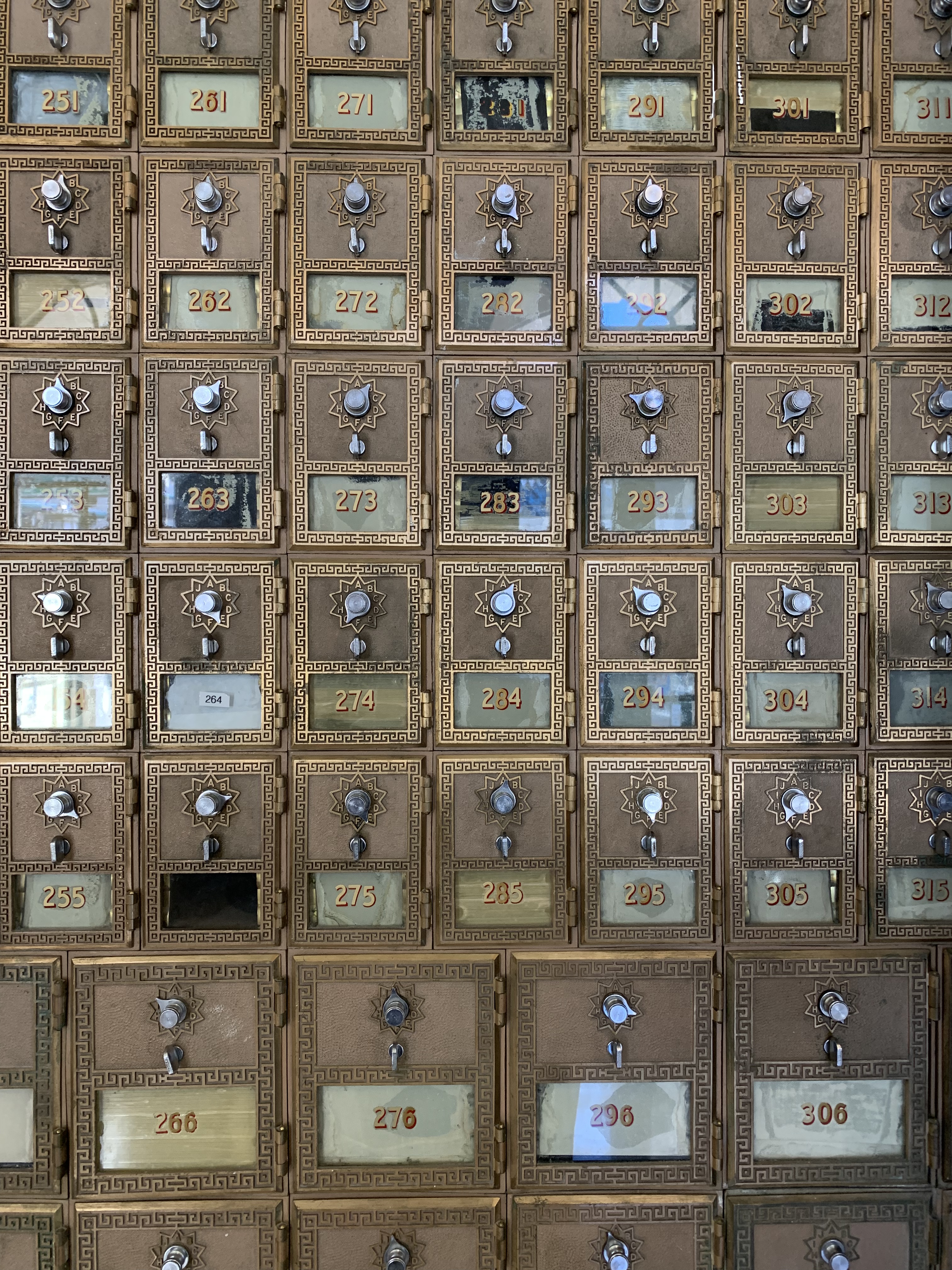
    6. 1933 Original Mailboxes

    Although not a specific object in an exhibition, I have to share these mailboxes. On the ground floor, as soon as you enter, there are hundreds of original mailboxes from 1933. They are an amazing part of the building that have been preserved.

    1933 Original Mailboxes

    7. Final Memo of Capone Case

    This is the final report on Capone’s tax evasion case compiled by Frank Wilson (document on the left).

    Final Memo of Capone Case

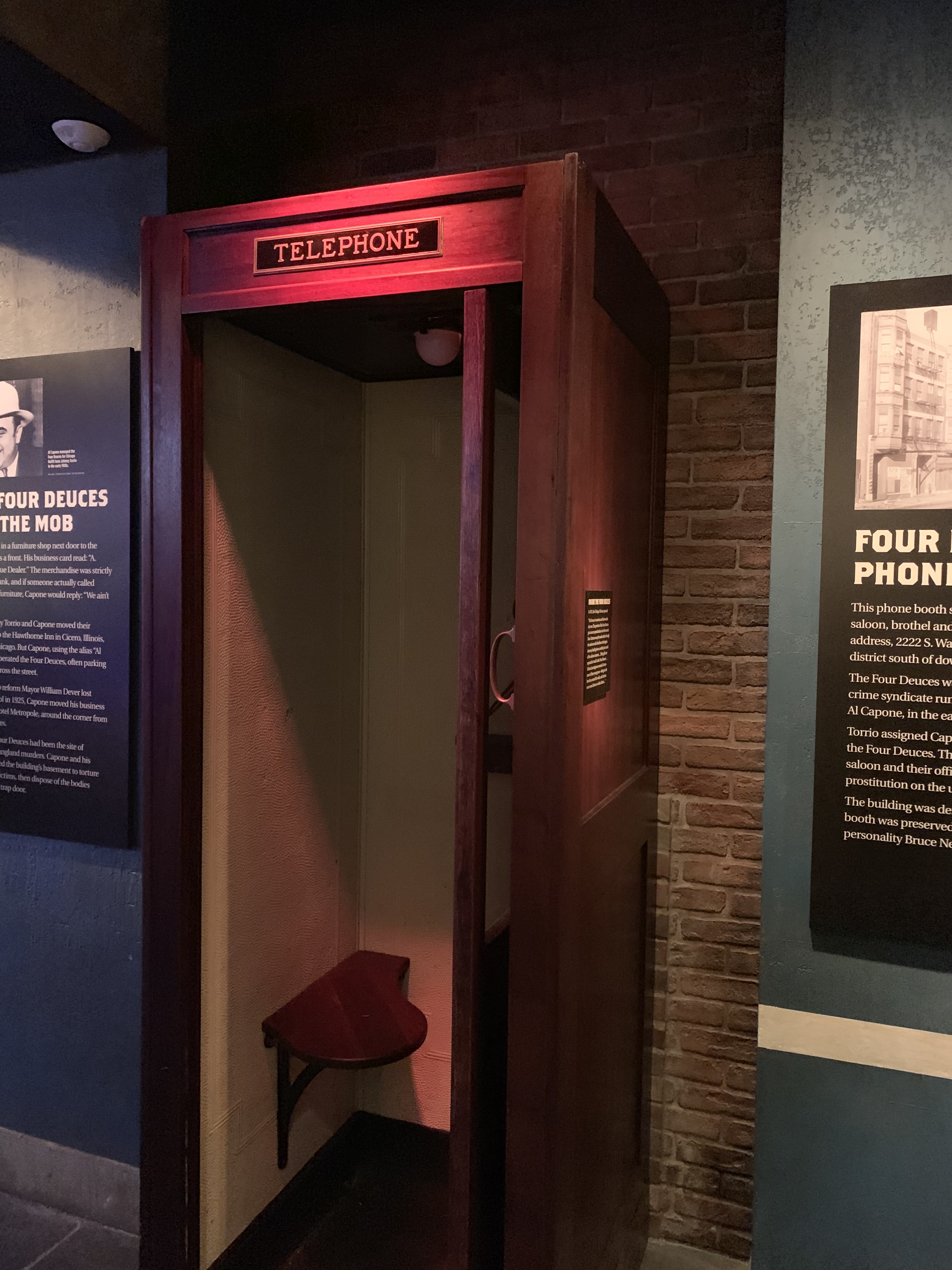
    8. Four Deuces Phone Booth

    This phone booth once stood outside the Four Deuces in Chicago. This was the headquarters of the Chicago crime syndicate that was led by Johnny Torrio and Al Capone.

    Four Deuces Phone Booth

    9. Photograph of Nuclear Bomb Testing

    It is pretty hard to believe that between 1951 and 1963, Las Vegas residents and visitors could get up and close to nuclear bomb testing. As you can see, it makes for a truly terrifying photograph.

    Photograph of Nuclear Bomb Testing

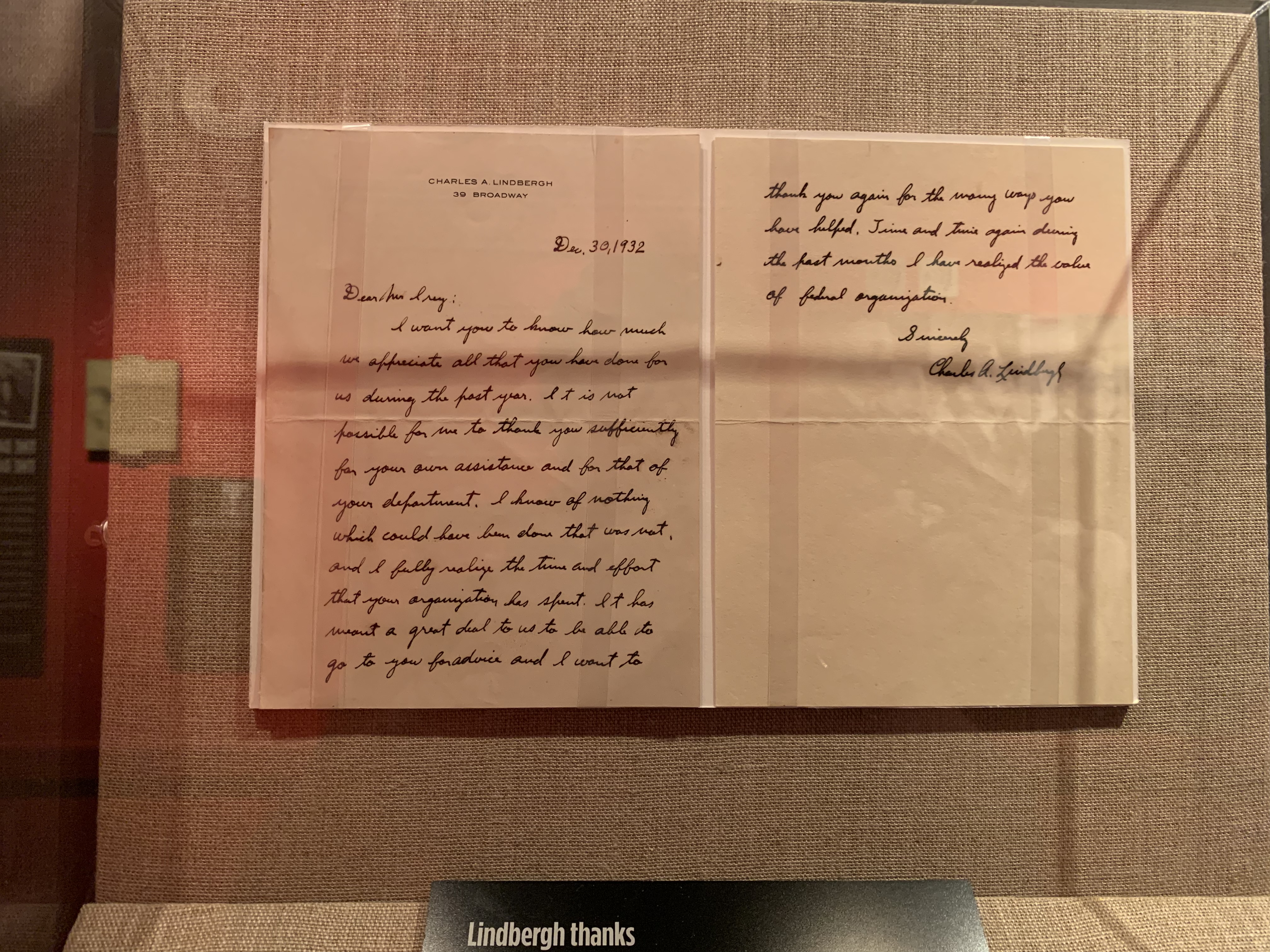
    10. Lindbergh Thanks Letter

    A letter sent to Elmer Irey in 1932, thanking him for his advice and assistance with finding his son’s kidnapper. If you’re unfamiliar with the story, Charles Lindbergh was a famous aviator whose baby son was kidnapped and murdered in 1932. A truly horrific case.

    Lindbergh Thanks Letter

    The Mob Museum is open daily from 9 am to 9 pm. The Speakeasy is open until 12 am. For more information you can find the website here.

  • Melbourne: National Gallery of Victoria (NGV)

    During a weekend getaway to Melbourne, I made sure to visit the National Gallery of Victoria (NGV) to see Escher X nendo | Between Two Worlds. I was quite familiar with the works of Escher having seen examples in optical illusion puzzle books. I was particularly excited to see the work titled Ascending and descending – luckily, it was in the exhibition!
    Context

    Just for some context, here is a very short summary of the artist Escher and design studio nendo.

    M. C. Escher (1898-1972)

    A Dutch graphic artist who was inspired by his travels and nature to create iconic prints. His later works were defined by tessellations, optical illusions, and representations of infinity.

    nendo

    A design studio based in Tokyo founded in 2002 by Oki Sato. The word nendo is Japanese for clay. The studio is focused on simplicity, curiosity and craftsmanship.

    NGV Entrance

    Layout

    One significant issue I had with the exhibition was the entrance area. As a sidenote, the exhibition did have timed ticket entry. This, in theory, should control visitor numbers. In practice, and in this instance, it did not. Granted, it was the final weekend to see the exhibition so I was expecting large visitor numbers.

    With all that in mind, the entrance area to the exhibition is a long dark corridor with a strobe light installation. Right at the end of this corridor are some introductory panels and artworks that encourage people to linger. Long story short, we were essentially stuck in a long dark corridor for quite some time waiting for the queue to move into the rest of the exhibition space. I’m not normally a claustrophobic person, but, this was quite a negative experience. Something similar happened at the end of the exhibition with a huge crowd forming in a narrow corridor to see the final artwork.

    Apart from the beginning and the end, everything in between is really well curated. Each space feels as though it has its own identity that perfectly suits the theme being represented. The chronological layout allows visitors to trace the evolution of Escher’s work. It was interesting to see how the layout was not only chronological, but also, thematic. This was aided in part by the fact that Escher focused on quite distinct styles at various stages of his life.

    Labels

    The labels are quite difficult to read as they are white text on both black and medium grey backgrounds. I’m not a fan of this as it can really strain your eyes. I did appreciate, however, that the labels didn’t contain as much art terminology as ones I’ve read in the past. They did reveal some pretty interesting information. For example, the label for Ascending and descending explains what motivated Escher to create this print and what is the optical illusion.

    The labels for kids continue to be quite problematic. They look identical to the other labels so are hard to identify at first glance. In addition, they are almost at the same height as the other labels making them hard for children to read. One thing I did notice, however, is that the kids labels are written in a much more accessible language than others I have seen at the NGV. So some positives and some continuing frustrations.

    Labels

    Artworks

    Now it’s time to share my absolute favourite artworks in the exhibition. Disclaimer: they will all be Escher works. I will post a nendo work at the end of the post.

    1. Ascending and descending – 1960 – lithograph

    Ascending and descending
    Ascending and descending

    There is no competition for what was my favourite artwork in the show. This optical illusion was inspired by the publication of an endless staircase designed by mathematicians Roger and L. S. Penrose in 1958. This print shows a staircase that never gets any higher or lower. The figures walking the stairs are essentially doomed to never know which direction they’re going.

    2. Print Gallery – 1956 – lithograph

    Print Gallery

    In the corner of this print you can see a boy in a gallery looking at a wall of framed prints. At the top, the townscape twists and turns with a veranda forming the roof of the gallery. According to the label, Escher believed this to be one of his most successful prints.

    Print Gallery

    3. Drawing hands – 1948 – lithograph

    This is the print at the end of the exhibition. It is an incredible print that appears as though the hands are drawing each other. One of the most pertinent examples of how Escher matured and perfected the optical illusion style.

    4. Hand with Reflecting Sphere – 1935 – lithograph

    Hand with Reflecting Sphere

    This is such a beautiful lithograph that also serves as a self-portrait. One of the most obvious themes here is that of reflection. Not only what is reflected in the sphere, but, the paintings on the walls etc are all linked to this theme.

    Eye

    5. Eye – 1946 – lithograph

    The main reason why I’ve included this print on the list is because you can see a skeleton reflected in the eye.

    6. Waterfall – 1961 – lithograph

    Waterfall

    Similar to Ascending and descending this print plays with the notion of direction. It seems as though the water is defying gravity and flowing uphill. It is based on the Penrose triangle created by mathematician Roger Penrose.

    7. Circle limit IV (Heaven and hell) – 1960 – woodcut

    Circle limit IV

    This print consists of angels and demons. The angels are a bit more difficult to see, but, sit between the demons.

    nendo

    nendo
    nendo

    This was my favourite installation work by nendo. In and amongst the houses are exhibition cases with Escher works on display. You felt as though you could really explore in this space. I loved the immersive nature and the ability to choose your own path.

    Final Details

    Unfortunately, Escher x nendo | Between Two Worlds is finishing on Sunday 7 April 2019. To see what is coming soon, make sure you visit the NGV website.

  • Brisbane: Howard Smith Wharves

    A huge thank you to everyone who voted on my Instagram poll ‘should I blog about the heritage-listed Howard Smith Wharves?’ The result was 100% yes, so here we go. For those of you who would like to follow me on Instagram, my username is @curateyourownadventure. Or, you can click the Instagram icon on my home page!

    Opening in November last year, the Howard Smith Wharves precinct is a new public place in Brisbane filled with parks, restaurants, function spaces/centres and a hotel. Just so you know my bias in this post, I am completely in favour of transforming heritage places if:

    1. The heritage is kept intact
    2. A transforming purpose breathes new life
    3. It prevents any thoughts or plans of demolition
    4. It’s appropriate to do so

    There is nothing I love seeing more than a heritage place that has evolved and adapted whilst retaining its historical charm. I lied, I do love seeing dogs that have jobs. But, in terms of heritage, this is what I really love to see.

    Historical Context

    The history of the Howard Smith Wharves stretches all the way back to approximately 1840-1842, when the Moreton Bay Convict Settlement and Penal Colony opened to free settlers. To accommodate the arrival of cargo from shipping companies, wharves and warehouses were built along the Brisbane River. By 1850, there were five wharves in operation spread along the south side of the Brisbane River.

    The name Howard Smith belongs to William Howard Smith who established his own shipping company in 1854. From 1880, Smith occupied the Commercial Wharf, moving freight up and down the east coast of Australia. Smith remained at this site until the late 1890s when he moved the company to the Brisbane City Council’s Boundary Street Wharf, downstream from his original location. This is the location where the Howard Smith Wharves are today.

    From around 1934 to the early 1940s, the wharf at the end of Boundary Street was demolished, rebuilt/extended and renamed the Brisbane Central Wharves, known more commonly as the Howard Smith Wharves due to his association. In January 1935, the existing facilities occupied by Smith resumed and construction of the new Wharves was undertaken in a way to ensure port activity could continue. In 1936, Smith signed a 21 year lease under the business name of Howard Smith Co. Ltd (previously known as William Howard Smith & Sons Ltd). Out of the five sheds that were planned and built – three remain to this day and are heritage-listed. In 1935, construction also began on Brisbane’s Story Bridge, which sits directly above the Wharves.

    Story Bridge under construction in Brisbane 1938
    Story Bridge under construction in Brisbane, 1938. John Oxley Library, State Library of Queensland Negative Number: 185343.
    default
    Howard Smith Wharf, New Farm, 1938. John Oxley Library, State Library of Queensland Negative Number: 167693

    In 1940, construction of the Story Bridge finished. Interestingly, during 1941 and 1942, air-raid shelters were built on the Wharves because of the location, right underneath the Bridge. They were never used.

    When Smith’s lease expired in the early 1960s, his company moved to better facilities downstream in Hamilton. The Wharves were then used by The Water Police and Queensland Works Department as storage.

    The Wharves were basically vacant from the late 1960s to 2018. They are one of the very few historical wharves remaining in Brisbane, and the best preserved! Rather than letting this area deteriorate, it has now been opened as a place in Brisbane, and I quote, to “eat, drink, play and stay”. All of this information has been sourced from the Howard Smith Wharves official website which you can access here. At the bottom of the timeline, there are a couple of links for more information.

    Heritage Listing

    The museum and heritage nerd within me always loves having a look at why places, objects, etc, are deemed ‘significant’. Here is a summary of the Wharves heritage significance sourced from the Queensland Government website.

    Criterion A: The place is important in demonstrating the evolution or pattern of Queensland’s history.

    The Wharves are regarded as important when it comes to illustrating the evolution and development of Queensland history. Especially considering they are evidence of the port that was once right in the centre of Brisbane. As there were construction projects undertaken during the Great Depression (1930s), the Wharves also serve as an example of an employment-generating infrastructure building project.

    The remaining ‘pillbox’ air-raid shelters are unlike any other known surviving shelters in Brisbane. This adds to the history of how the Story Bridge and Wharves were seen as strategically important locations within Brisbane during the War.

    Criterion B: The place demonstrates rare, uncommon or endangered aspects of Queensland’s cultural heritage.

    The Wharves are able to demonstrate the characteristics of a 1930s port facility and evidence of a pre-1940 port of Brisbane.

    Criterion D: The place is important in demonstrating the principal characteristics of a particular class of cultural places.

    Due to the fact that the Wharves have been so well preserved, they can illustrate one of Brisbane’s largest single wharf leases. The sheds and office buildings are all representative of a particular place of business.

    Criterion E: The place is important because of its aesthetic significance.

    You can really appreciate the amazing views of the Story Bridge and Brisbane River that the Wharves offer. The large exposed rock cliff face is a nice juxtaposition behind the industrial buildings.

    Criterion H: The Place has a special association with the life or work of a particular person, group or organisation of importance in Queensland’s history.

    Of course, the Wharves are associated with William Howard Smith and his company who were one of Australia’s principal 19th and early 20th century coastal shipping companies.

    Howard Smith Wharves Today

    Wharves Sign

    It was really interesting to experience the Wharves first before reading their ‘where do we see ourselves in five years’ statement. According to the website, Howard Smith Wharves Nominees plan to own and operate the Wharves well into the future.

    Their plan is to ensure there are the following available: activated open spaces, dining, generous landscaping, cultivation, coffee roasting, brewery, bakery, boutique hotels, events/exhibitions, car parking, cycle connections and public security.

    It sounds ambitious, but, after experiencing the Wharves for myself, so much of this is already happening, and happening well.

    My Experience

    I visited on the weekend to have lunch at Felons Brewing Co. Cider and heritage is a sweet mix. I was immediately impressed with the place. The mix of green spaces and re-purposed buildings appears to be well-balanced. There were just as many people outside the restaurants as there were inside, enjoying the green spaces and having picnics.

    Felons Brewing
    Felons Brewing
    Felons Brewing

    Within only a few minutes, you can really see how the entire space fits well into Criterion E – the aesthetic significance. Between the Story Bridge and the exposed rock cliff face, you are caught between natural and industrial beauty. I also loved the incredibly tall lift that takes people from the top of the cliff to the precinct, and vice versa.

    Howard Smith Lift
    Howard Smith Lift
    Howard Smith Wharves
    Captain Cook Bridge
    Brisbane

    In terms of maintaining its heritage whilst simultaneously evolving, I really think this is an amazing example in Brisbane. I am most definitely looking forward to returning to the Wharves and trying all the restaurants (good food always wins in my books) as well as seeing how it develops over time.

    I’d be very interested in hearing what people have to think about these kinds of projects. Do you agree with my sentiments? Do you think that re-purposing heritage might not be the best idea? Have you visited a heritage place that has been re-purposed and it just hasn’t worked? Comment below if you’d like to share!

  • Brisbane: Gallery of Modern Art (GOMA)

    Yesterday I visited the Gallery of Modern Art (GOMA) to see The 9th Asia Pacific Triennial of Contemporary Art (APT9). This is the first time I’ve ever seen this triennial art show. I was expecting maybe two or three rooms displaying a small number of artworks. Instead, I was really surprised that the exhibition is in fact huge and spreads over two floors at GOMA plus has a presence at the Queensland Art Gallery. There were a few artworks in particular that caught my attention, which I will cover in this blog post. First though, here is some context.

    Context

    The first Asia Pacific Triennial of Contemporary Art was held in 1993 at the Queensland Art Gallery. A new show is curated and put on display every three years (no surprises there). Today, and since 2006, the Triennial is held both at the Art Gallery and at GOMA. Both are located in Brisbane’s Cultural Centre.

    IMG_2501
    APT9 Entrance

    What is great about this exhibition is that such a diversity of contemporary art is on display from across the Asia-Pacific region. The number of themes and messages it covers is quite remarkable. This means there is hopefully something that will be of interest to every visitor. Running alongside the exhibition is a broad and varied program of events and activities for both adults and children.

    This APT series is regarded as being one of the most ambitious ever held. There are over 400 artworks by 80 artists to explore. This post will cover only a tiny fraction of what there is to see and do. I highly recommend taking advantage of the air conditioned gallery in Brisbane’s hot and humid climate and visiting to see for yourself.

    ‘For Kids’ Labels

    If you have read my blog before you are probably all too aware that the biggest issue I have with art galleries is their labels. More specifically, the language they use and how it can be alienating to those who are not familiar with art terminology. I have also discovered quite a few galleries have bizarre kid’s labels.

    In terms of the latter, GOMA have made more of an attempt than most to produce something both relevant and accessible. The labels are at a great height for a child and although they look incredibly similar to the more formal labels, they do have a colourful symbol and fish at the top. This is consistent across all the kid’s labels so even from afar you can see which artworks do and which don’t include them. They are even written in a language that I can imagine children understanding – revolutionary.

    Layout

    One final thing before sharing some of my favourite artworks. The layout of this exhibition is wonderful. Having basically the entire Gallery of Modern Art to play with, the result is that the artworks are well-spaced with no room feeling ‘busy’.

    My friend and I quite effortlessly made our way through the exhibition, re-tracing our steps a couple of times to have a closer look at some of the artworks. When you can do all that without stopping to think where you are or what you have and haven’t seen, you know they’ve achieved a pretty successful layout. In short, it is a truly pleasant exhibition to wander through.

    Artworks

    The following five artworks were my favourite.

    1. House – Spirit, 2018 by Vuth Lyno

    This is a really striking artwork to have at the ground-level entrance to the exhibition. Apart from the fact that it consists of many shrines, I wanted to know a little bit more about its meaning. The label doesn’t reveal anything, except for basic artist information. It was then I turned to the kid’s label and found it to be actually really informative. It explains how these shrines were taken from an apartment building, prior to its demolition, in the city of Phnom Penh. The kid’s label also mentions how common these shrines are in Cambodia and their function, to protect people from harm.

    IMG_2503
    House – Spirit
    IMG_2505
    House – Spirit

    2. (untitled) giran, 2018 by Jonathan Jones with Dr Uncle Stan Grant Snr AM

    There is going to be a pretty consistent theme running through this post. Considering the artwork labels contained quite limited information, I basically depended on the kid’s labels for context. In this case, the kid’s label reveals that over 1000 handmade objects were gathered to create this artwork including stones, emu eggshells, animal bones, etc. Each object then had a feather attached, allowing the entire artwork to appear as a flock of birds flying across the sky. The display is in a room all to itself. This is fantastic because it has so much impact that would have been ruined if other artworks were in the way.

    IMG_2511
    (untitled) giran
    IMG_2514
    (untitled) giran

    3. Map of Technological Ethics, 2018 by Qiu Zhijie

    This is, by far, my favourite artwork. GOMA has this huge blank wall running from the ground to the top level that is almost always used for large-scale projects. For APT9, the wall has had a map applied that highlights some particularly tricky ethical situations that have arisen in contemporary society. I’ve included plenty of pictures below so you can see some of the confronting issues raised.

    IMG_2509
    Map of Technological Ethics
    IMG_2531
    Map of Technological Ethics
    IMG_2532
    Map of Technological Ethics
    IMG_2535
    Map of Technological Ethics

    4. UnMYthU: UnKIND(s) Alternatives, 2018 by Mithu Sen

    When I first saw this artwork I was immediately drawn to the panel photographed below. The more you look at it, the more you will find. I only just noticed the skeleton hanging from a tree while writing this post. The aim of this artwork is to explore the in-between spaces of social conventions and interactions. I just aesthetically appreciate all the different components working together and the anatomical illustrations. And, of course, the fish that grow on trees.

    IMG_2546
    UnMYthU: UnKIND(s) Alternatives
    IMG_2544
    UnMYthU: UnKIND(s) Alternatives
    IMG_2547
    UnMYthU: UnKIND(s) Alternatives

    5. 18/28: The Singhaseni Tapestries, 2017-2018 by Jakkai Siributr

    Siributr has combined needlwork and textiles in order to share stories. In total there are five dresses with embroidery dedicated to the artist’s mother, grandmothers and aunts. The dresses belonged to his mother and the embroidered images you can see are family photographs that were discovered in his mother’s diary. Each dress is displayed hanging from some clear fishing line creating the illusion that all five dresses are floating above the platform.

    IMG_2561
    18/28: The Singhaseni Tapestries
    IMG_2563
    18/28: The Singhaseni Tapestries
    IMG_2565
    18/28: The Singhaseni Tapestries

    There is so much more to see and explore, I hope you have the opportunity to visit.

    The 9th Asia Pacific Triennial of Contemporary Art (APT9) is on at the Queensland Art Gallery/Gallery of Modern Art until 28 April 2019. Entrance is free.