• MuseumNext Digital Summit: Day Two

    If I was asked to summarise day two of the MuseumNext conference in one sentence it would be the following: COVID-19 has accelerated the need for museums to re-consider traditional ways of collecting and venture into the realm of collecting digital content from a diverse audience. I really enjoyed listening to how museums are adapting their collecting practices in order to respond rapidly to such significant historical events as the Australian bushfires and the pandemic. The pandemic in particular has spurred this need to have a procedure in place for not only collecting content quickly, but ethically. Especially when it comes to traumatic events – how can we protect both staff and visitors from re-living or re-experiencing trauma?

    One thing to add from yesterday. I mentioned that because of sleep I had missed the live Q&A sessions. When I logged on this morning I was so thrilled to see the sessions have been uploaded and can now be watched. I will be re-visiting day one this afternoon to see what kinds of issues were raised for each presentation.

    This post will focus on two talks that I will use as springboards into discussing how the themes they raised were also central in other presentations. The overarching theme was digital collecting, however this led to discussions on digital accessibility and ownership. I also hope to highlight the incredible projects that were discussed and how COVID-19 has been an opportunity for re-thinking engagement, policy and practice.

    1. Digital Collecting from Bushfires to a Pandemic
      Presenters: Craig Middleton and Lakyn Cooper

    The first presentation of the day was by Craig Middleton and Lakyn Cooper from the National Museum of Australia. Over the past 18 months, Australia has not only experienced the pandemic but also a horrific bushfire season at the end of 2019 that affected so many individuals and communities. Their presentation focused on two museum-run Facebook groups and the website ‘Momentous’ – a digital space where people can share stories, videos and images both about the bushfires and COVID-19. On both platforms, members of the public have the opportunity to document their story and have it form part of the Museum’s collection. A couple of really fascinating points were raised by both presenters. Firstly, how can we be contemporary collectors within a broader ethical framework when dealing with trauma? Secondly, how is this new way of collecting able to be captured and organised?

    I am just going to focus on the website to answer these questions. How we can be ethical with this kind of collecting is to give agency to the people submitting their stories. At its core, this is a crowdsourcing model. From the beginning of the submission process to the end, the control is in the hands of the contributor when it comes to, whether or not to post, whether or not to provide your name alongside the post, etc. It was revealed that no material is edited, but it is moderated to ensure nothing too distressing makes it to the website. Not only that, but staff have been trained in recognising this kind of content and how to approach/manage these type of stories.

    Moving onto the second point, museums have been accessioning objects for an extremely long time. But what happens when a physical object becomes something virtual? Having a space set-up and dedicated to sharing these stories, and any accompanying multimedia, means that at the end of this project, the information can be downloaded into the collection and archived. The stories are organised by theme and you can select which theme you want to explore. Otherwise, when you first open the site, all stories appear and you can just infinitely scroll through. There are breaks every so often reminding the visitor that they can submit a story. Everything from the colour scheme to the layout supports the aim of the website to be a safe place for sharing stories that shed much light on the lived experiences of Austrailans during this time.

    The majority of talks looked at how this new way of thinking when it comes to collecting can actually democratize a museum’s collection. As Foeini Aravani from the Museum of London said, we aren’t just collecting the expert opinions, we are collecting with a more inclusive mindset to really capture a diversity of experiences. We are navigating these particpatory spaces online to gain a more complex understanding of these historical events.

    2. Museums, Communities and Civic Engagement
    Presenters: Suhaly Bautista-Carolina along with Ali Rosa Salas, Lauren Zelaya and Djali Alessandra Brown-Cepeda

    As opposed to thinking about how we can collect in the present and future, this talk posed a question that made the audience think of how museums can change their practices for the future. Bautista-Carolina posed the question to the other panellists, how can we centre care as practice? There was an exceptionally insightful and meaningful conversation that followed highlighting so many issues surrounding the concept of agency and trust (also touched on by Christine Azzi). Zelaya spoke about how we must be honest about our past if we want to move forward. Be upfront and be accountable and then see how this impacts on engagement and building relationships with communities. Salas highlighted how there are already people doing incredible work that need help in the form of resources and assistance in carrying out their mission. Finally, Brown-Cepeda asked museums not to just reach out in times of hardship or peril, but to make reaching out a standard practice. Of course, so much more was discussed. It was a powerful conversation about how museums can de-centralise, share authority, and look at what’s happening outside their walls rather than focusing on within.

    The presentation on the Mootookakio’ssin Blackfoot Digital Project also spoke to this broader issue of agency. By using digital platforms, a website made by and for the Blackfoot people has been able to use technology to establish the ownership of objects. It was discussed how this project provides a space to reclaim authority on heritage and take objects usually on display to represent an ancient culture and make them fit into a contemporary understanding and story. Through the digital platform, the objects and language come alive and that sense of ownership returns to the Blackfoot people.

    Going over the presentations for tomorrow, it seems to be a mixed bag of looking at accessibility, content and navigating the digital for, perhaps, the first time. I wanted to end by saying a huge thank you to everyone who read my post yesterday. It feels so great to be able to start blogging again and organising my thoughts and reflections from a conference.

    All images are from the MuseumNext Digital Summit page.

  • MuseumNext Digital Summit: Day One

    Welcome to my first blog post of 2021! A huge thank you to all my readers and subscribers for continuing to follow and for making 2020 the best year yet for new audiences and blog post visitation. This will be the first post in a series reflecting on the MuseumNext Digital Summit. For those of you who have never come across MuseumNext before, it is essentially a business driven to connect those passionate about museums and the future of these institutions. I have always wanted to attend one of their conferences, so took this opportunity to join the digital summit. Hopefully, one day soon, I’ll be able to attend one of their conferences in-person. I will add here that the focus and theme of this particular summit is, no surprises here, everything digital!

    Because I enjoy sleeping, I am not watching the conference live. Instead, I am watching the recordings. This does mean I miss out on the live Q&A sessions, but taking you back to my initial point, I cannot stress how much I enjoy sleeping. As soon as I signed up I knew this was going to be a collaborative and intriguing conference. Keeping in mind this is my first virtual museum conference, I was expecting Zoom links and a folder of Zoom recordings to go through. Instead, there is a whole forum to join where you can connect with everyone else at the conference through chats, questions and even by selecting your specialty area and speaking to others in the group. I find this to be such a great way of getting people to not only watch the presentations, but engage and network – similar to what you would do at an in-person conference. I was also surprised to see you have full access to the Digital Summit from 2019 including all the recordings. Immediately impressed, I was ready to start the first day.

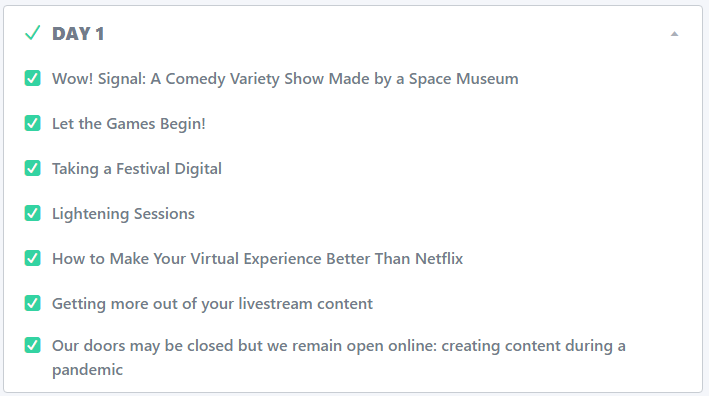
    Above is a screen shot of the talks that took place on day one. As you can see, after watching each presentation you are able to mark it as ‘watched’ and a little green tick appears so it is super easy to keep track of where you are up to. The following are some reflections on the talks that were either particularly relevant or enjoyable to me.

    1. Wow! Signal: A Comedy Variety Show Made by a Space Museum
      Presenters: Lucianne Walkowicz (astronomer) and Meredith Stepien and

    The Wow! Signal comedy variety show is a series of YouTube videos released by the Adler Planetarium that aim to engage audiences through an emotional connection rather than strictly delivering content. It was created as they saw a new need with their audience. Those wanting to engage didn’t want pretentious science and art videos but something fun. Something they could watch that would be a distraction and bring joy. So, the Adler Planetarium used COVID-19 as an opportunity to get creative and engage in what Chris Bresky (part of the team) termed ‘oops education’. The kind of education you get from watching something enjoyable and then oops, you’ve learnt something (I personally am now going to use this phrase a lot). Another great quote from their presentation was ‘we need art in order to do science’. By combining creative sketches together with the ‘oops education’, the Adler have been able to engage wide audiences in learning about their mission and collection. If you want to see their videos you can click here.

    2. Let the Games Begin!
    Presenters: Silvia Filippini-Fantoni, John Sear and Maegan Douglas

    What stood out to me about this talk, and so many of the others, is how before COVID-19 so many museums hadn’t really delved into creating or following a digital strategy. At the centre of the museum experience is the physical – physical spaces, objects, etc. What happens, however, when you can’t have that? What happens when your audience is now stuck at home, but they still want to engage? The Newark Museum of Art went on a ‘finding themselves digitally’ journey to keep up levels of engagement. They started with some academic lectures but wanted to introduce something more interactive. This includes the ‘Art Olympics’ program where two museums come head-to-head to see who has the better artworks representing a whole raft of categories. My favourite category was ‘hipster beards’. This program is held via Zoom and gives people the opportunity to vote for which painting they prefer in each category. Anothe program they are running is their upcoming ‘Art Roast’ where comedians have been asked to respond to the collection. Finally, they were able to create a virtual escape room that can be visited by school groups and the public. By using the breakout room function on Zoom, people are divided into teams and must work through puzzles and riddles to gather clues and eventually find an ale recipe that they have been asked to steal.

    3. Lightening Talks

    In this session there were seven presenters who each had five minutes to tell us about their digital learnings and experiences. A couple of points I want to draw from these talks. The first was raised by Anna Jansson from the Nationalmuseum in Sweden. Jansson spoke about how the Nationalmuseum couldn’t just keep posting the same usual content. It had to become more direct, engage new audiences, and venture into the realm of videos. A really great point Jansson made was that going digital made it even more crucial to have the presence of a person. Whether that be through a video or Zoom meeting or some other kind of digital event, people are wanting that connection. All the talks touched on this issue of keeping people connected. If your audience can’t come into the museum then how do we keep them engaged and feeling as though they are still valued and having a worthwhile experience? Following on from that, Thomas Byttebier from Base Design spoke on a digital exhibition where visitors had little avatars viewing the artwork and you can ‘bump into’ other visitors or just see what they were looking at and get a similar-ish feeling of actually being in a gallery with other people. Finally, the talk by Winoka Yepa from the IAIA Museum of Contemporary Native Arts touched further on this idea of building an online community. The Museum took their artist in residence program online including blogs, Zoom interactions and digital community town halls that related to the themes raised by the artists. It seemed like a great way to continue a program that was clearly having an impact at this museum and taking it into the digital realm.

    4. How to Make Your Virtual Experience Better than Netflix
    Presenter: Rachel Grate

    The last few talks on day one started to lay down some useful and practical lists for viewers. Rachel Grate used her experience of working with museums to produce digital content to outline the six most common ‘let’s go digital!’ mistakes. These are: not knowing why you’re hosting an experience, picking a time that doesn’t resonate, not planning content, overlooking technical details, not rehearsing and assuming people will find the event without marketing. In a later talk by John Shevlin, it was noted that the most frustrating thing to go wrong with an event is bad audio quality. Building on this, Josh Dyer and his team at the Myseum of Toronto also highlighted the importance of making content accessible. Going digital needs a checklist so that everything is discussed, considered and integrated into planning. As Grate pointed out, even knowing if there is one spot in your museum that has terrible Wi-Fi could be the difference between a great, or frustrating experience for your digital visitors.

    At the end of day one I felt as though I had learnt oh so much about the world of digital and museums. It was inspiring to see how small, medium and large institutions all found the transition challenging for different reasons and how they adapted in order to create content and keep people engaged. It just fills me with joy listening to the amazing, creative and flexible people that are in this industry. Rather than seeing the pandemic as being too big a challenge, they’ve been able to use this time as an opportunity to problem solve, gain new audiences and build empathy and closer connections within their teams.

    As I head into day two, I am excited to learn more about how museums have been collecting during the pandemic and how these collections will be archived for the future. If you are attending the conference please feel free to add your thoughts as a comment or find me on the conference forum page.

    All images in this post have been sourced from the MuseumNext Digital Summit website.

  • Brisbane: Northshore Sculpture by the River

    Despite writing in my previous post that I was excited to start blogging again, it has been just over three months and I haven’t had much to write about! That is, until yesterday, when I had the opportunity to go to Northshore Sculpture by the River in Hamilton, Brisbane. The best way to describe it is by saying it’s essentially a sculpture garden, with 26 sculptures lining a segment of the Brisbane River. As always, I’ll start with a quick overview before delving into some personal highlights.

    Overview

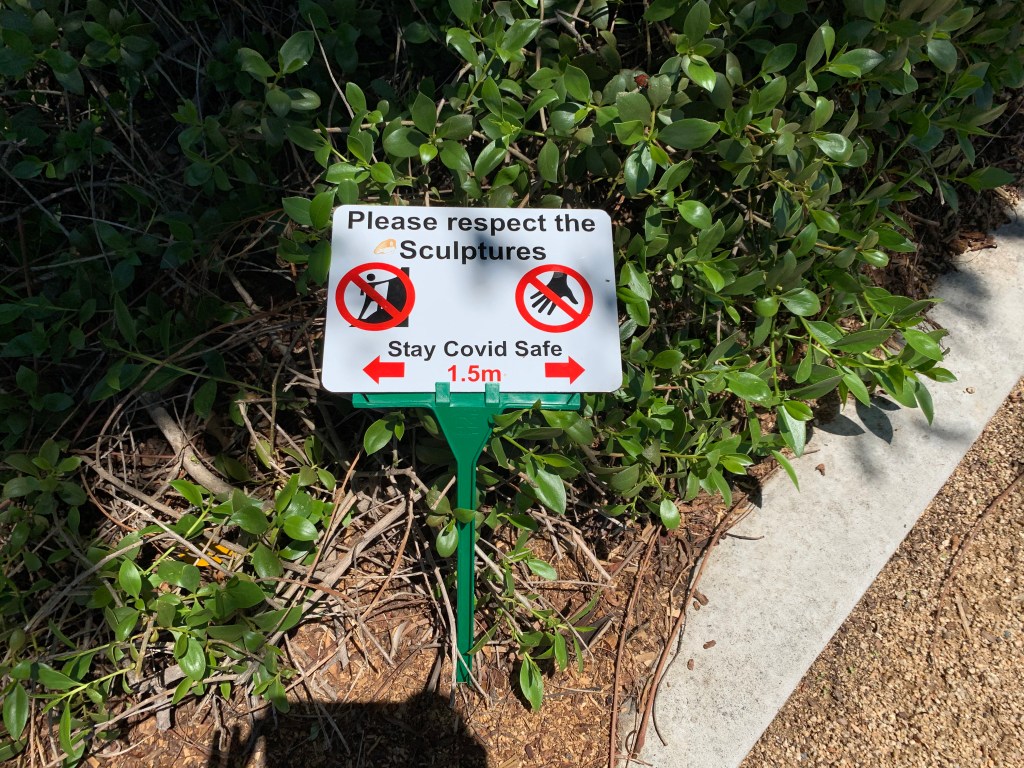
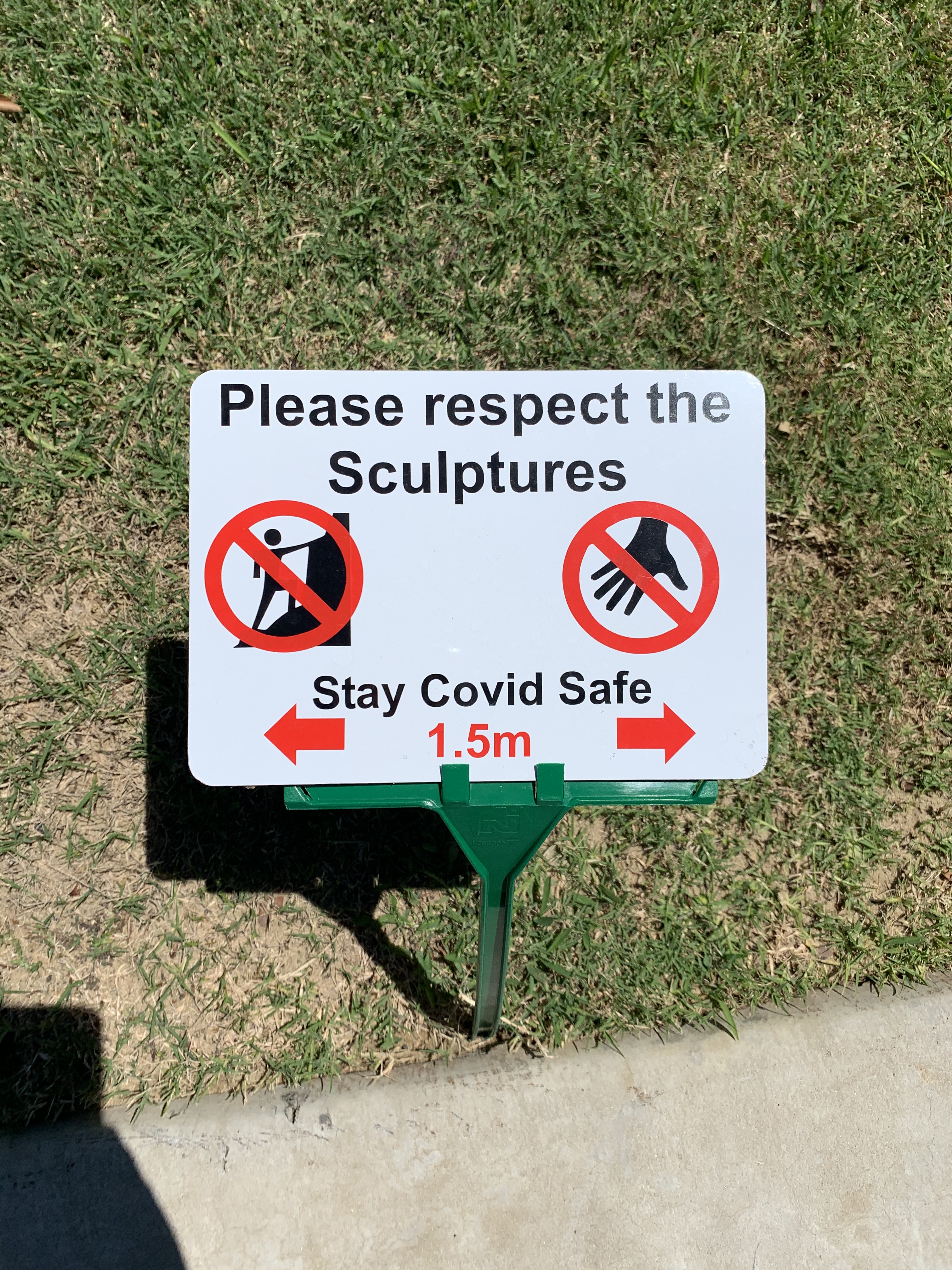
    Sculpture Sign

    This is the first year that Sculpture by the River has been held in Brisbane. As well as the outdoor exhibition, there were sculptures on display in a warehouse from 3 October to 11 October. I’m hoping that they extend this timeframe next year. The aim of the exhibition is to acknowledge the significance of the Brisbane River, including what role it has played in the past, what role it has in the present and what role it might have in the future. All of the sculptures on display speak to this theme.

    The sculptures aren’t spread out over a large geographical area. However, they are spaced out enough for a decent half hour walk (if you read all the accompanying signs). The signs were sometimes difficult to find, but were at least black text on a white background. If you are wanting to ensure you don’t miss any sculptures, I highly recommend visiting the website and downloading the brochure before you arrive. It also provides some great ‘how to get here’ tips. The exhibition is also, of course, ‘Covid Safe’ as it’s outdoors with plenty of room between the sculptures and lots of visible signage.

    It was interesting to see the different interpretations of the River and how the various artists decided to depict it’s history, present or future in their sculptures. Although there are large car parks and other visual distractions along the path, they made a great decision to have the sculptures on the side of the River so you can ignore those other views.

    Top 8 Sculptures

    Rather than share all 26 sculptures, I wanted to select my ‘Top 8’. In no particular order, here are the 8 (not 5, not 10) sculptures that I found particularly beautiful or memorable.

    1. Superegg, Aluminium, by Jaco Roeloffs
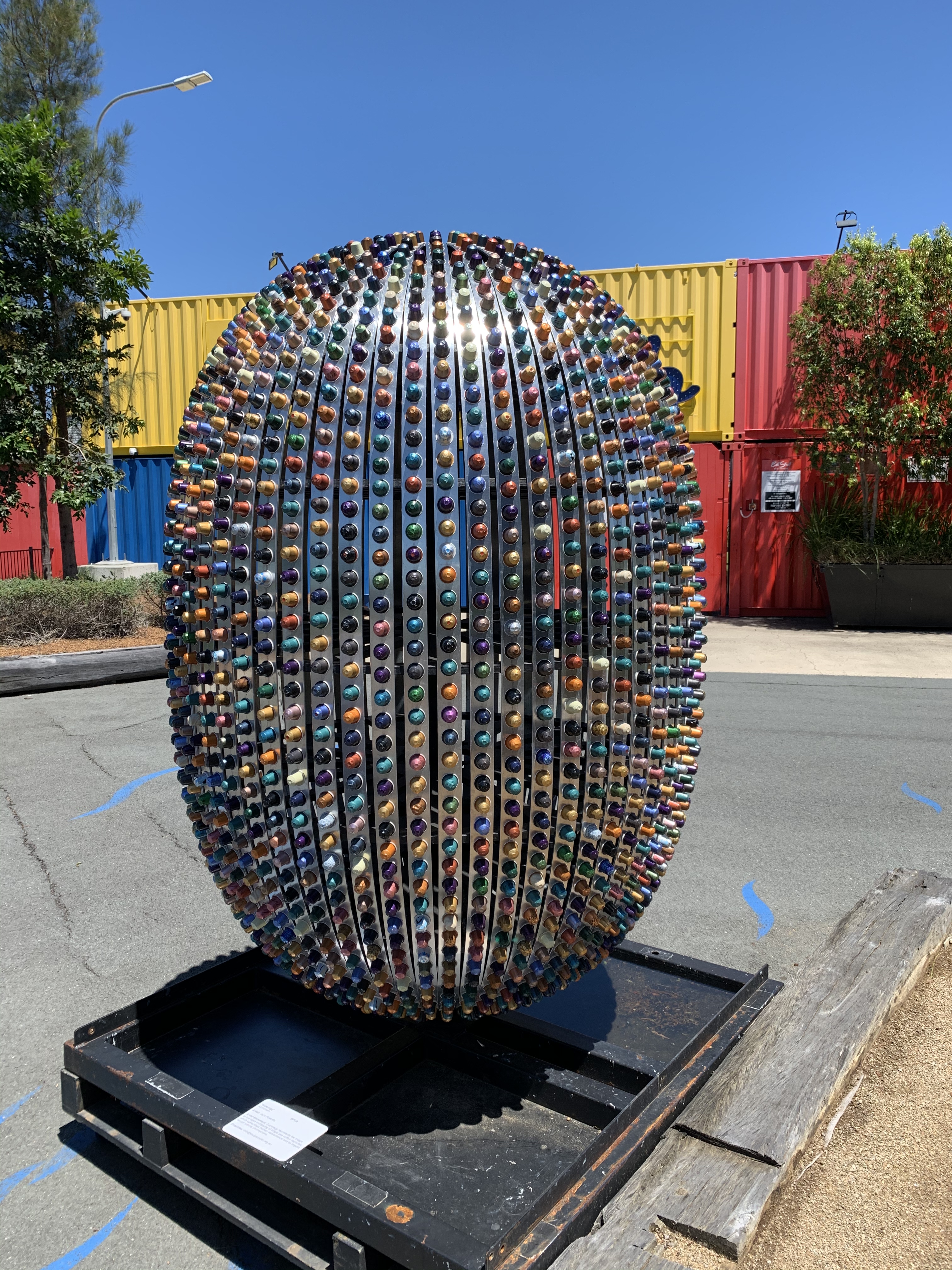
    Superegg

    A sculpture that very specifically speaks to the environment, Superegg is both visually stunning and a reminder of how humans continue to impact the planet. The little multi-coloured dots are single use coffee capsules symbolising, according to the artist, ‘human convenience and its impact on our natural environment’. From a distance, you wouldn’t immediately recognise these ‘dots’ as coffee pods. It’s only on closer inspection that the message of this sculpture becomes clear.

    2. Crack the Code, Aluminium, by Ros Haydon

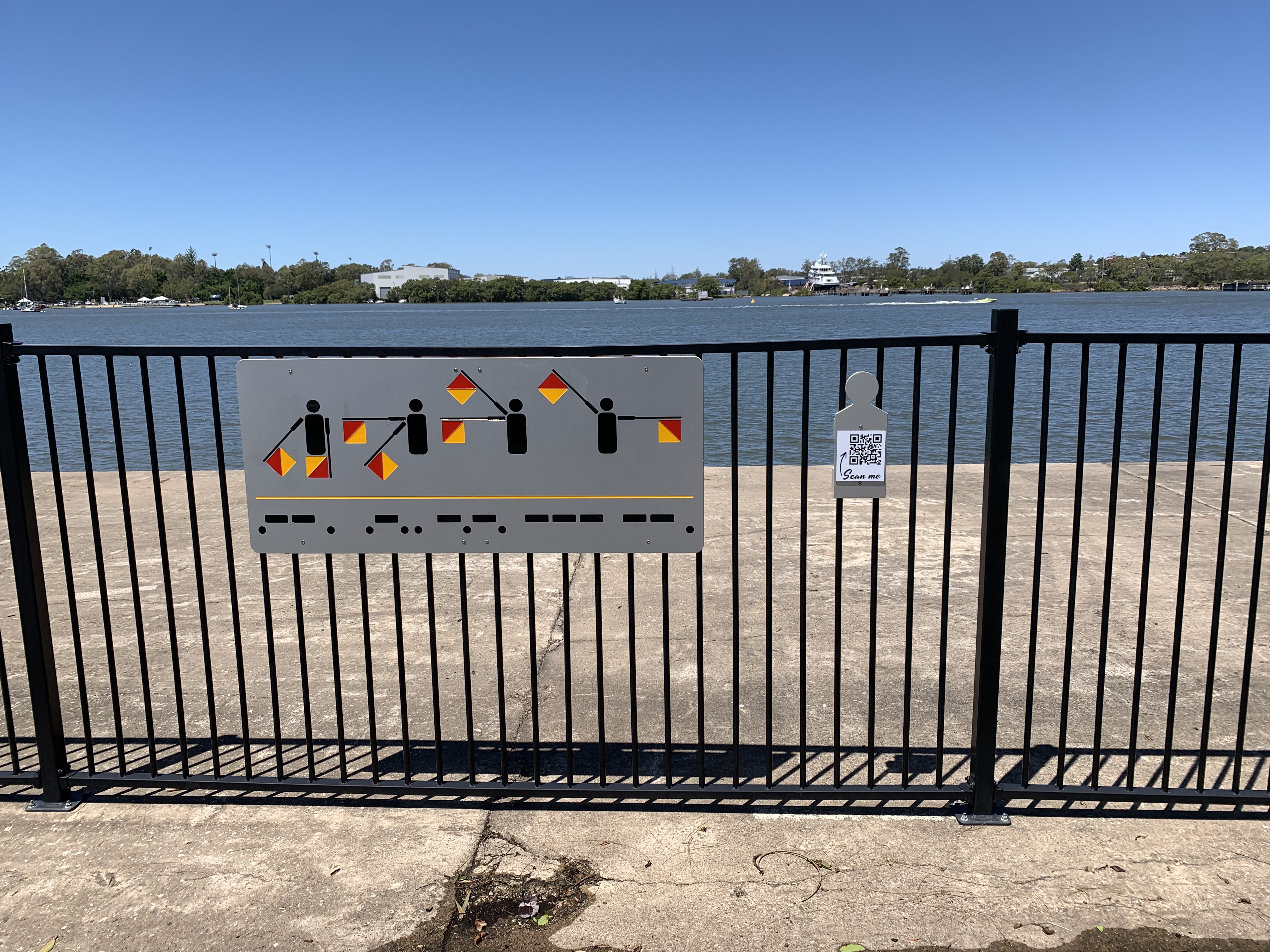
    Crack the Code

    This artwork highlights how communication is key, a lesson that many could learn. Despite how we communicate has changed over time, the fact we have to communicate remains essential. Accompanying this sculpture are information sheets teaching visitors how to read morse code and semaphore signals. By reading the sheets, you can both crack the hidden message of the sculpture and learn a new skill!

    3. Dingo Pups, Bronze, by Mela Cooke

    Dingo Pups

    I had to include this sculpture, because dogs. Also, it provides a window into the past as the artist statement reveals how dingoes and their pups were a common sight around the River. As it’s made from Bronze, it was visually stunning to see with so much detail.

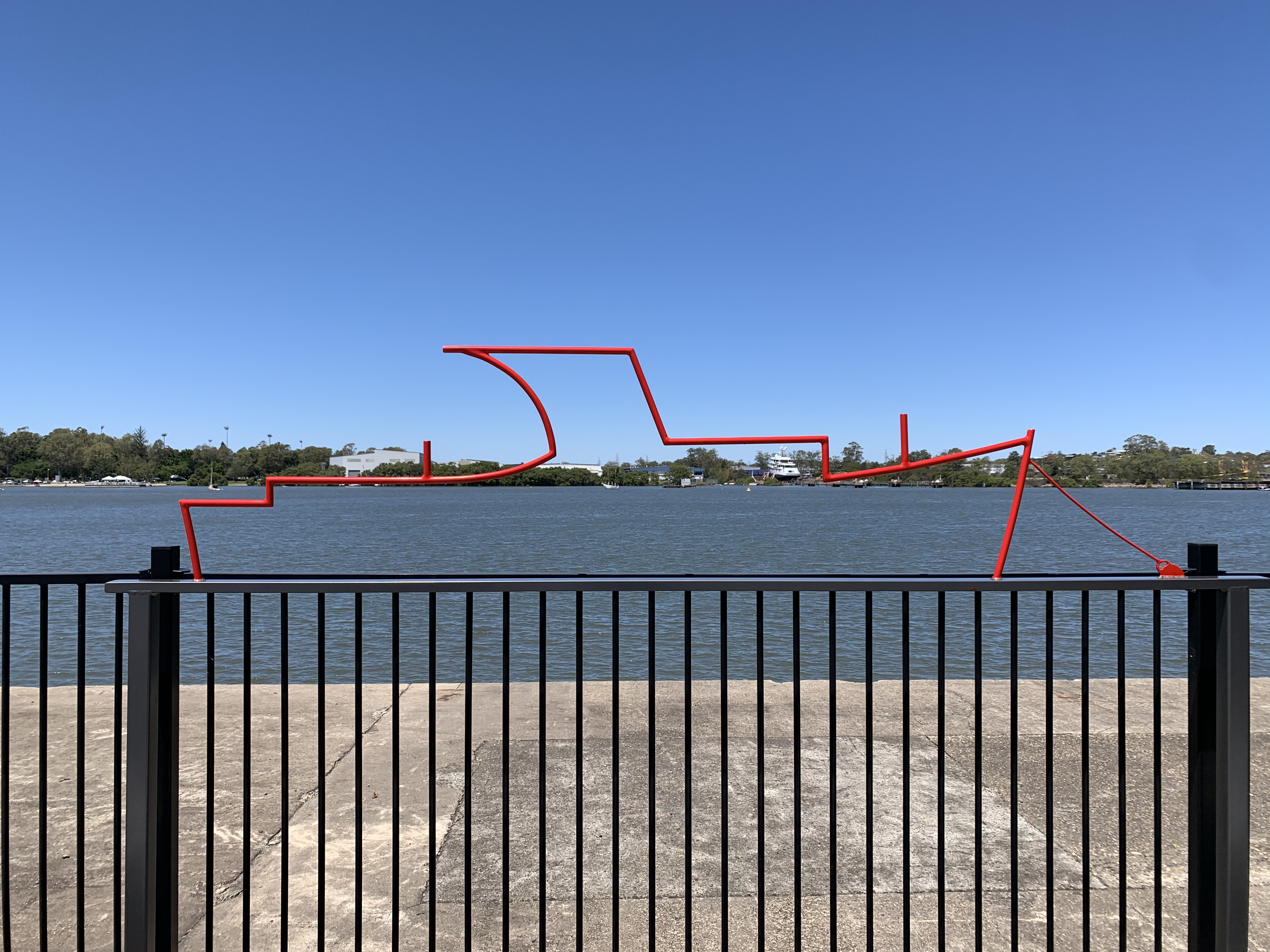
    4. The Line Boat, Aluminium, by Peter Denison

    The Line Boat

    I love this sculpture because of the line work and its simplicity. What you can see is the outline of an old line boat that was built in Bundaberg and moved to Brisbane to assist with transporting bow and stern lines from other ships to the shore. The red is a perfect contrast to the scenery you can see through the sculpture – blue river and greenery on the other side.

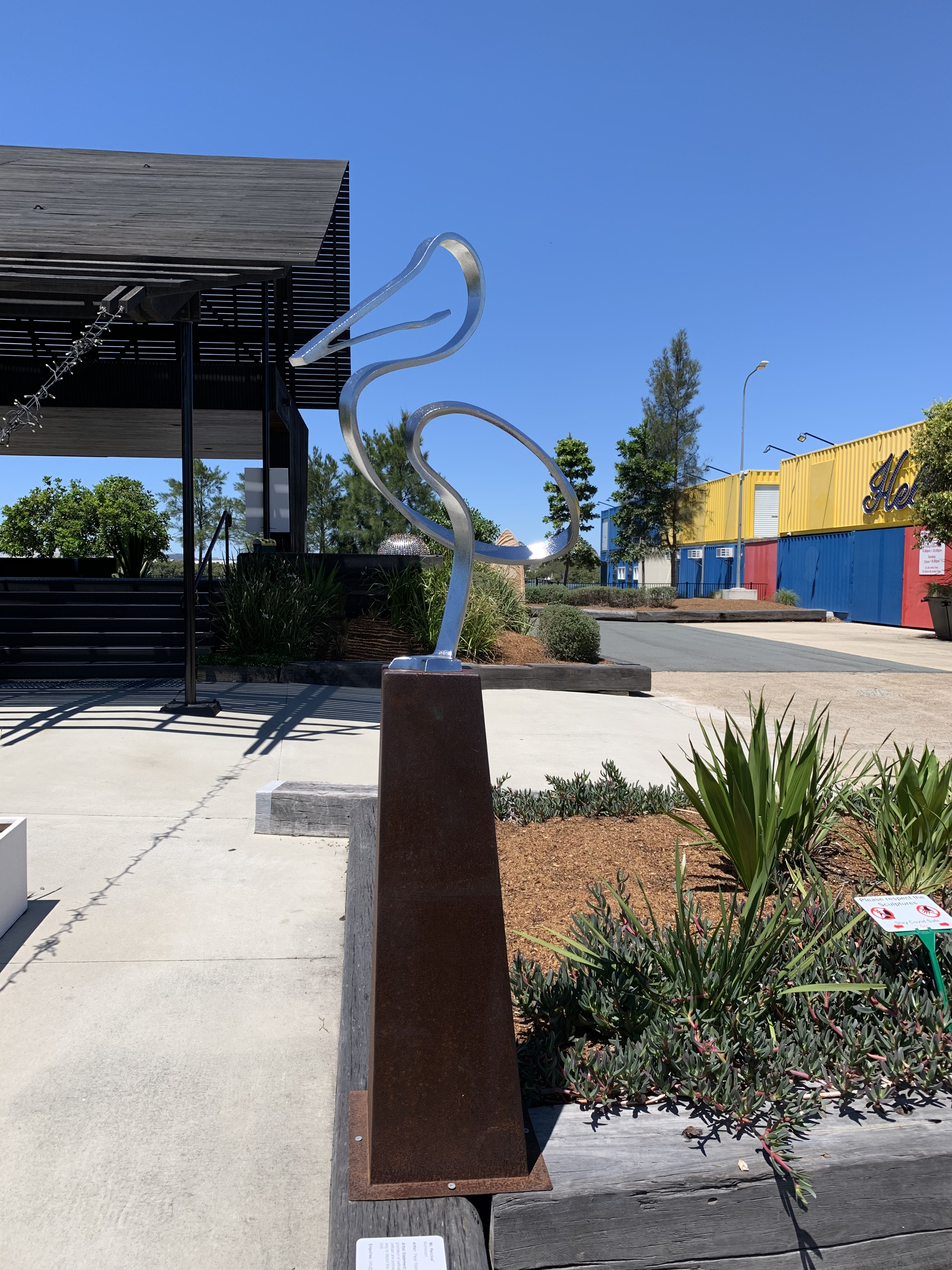
    5. Mr Percival, Aluminium, by Peter Steller

    Mr Percival

    Similar to the previous sculpture, this one was striking due to its simplicity. The outline of the pelican seems to be enjoying being perched up high, overlooking the parkland near the River.

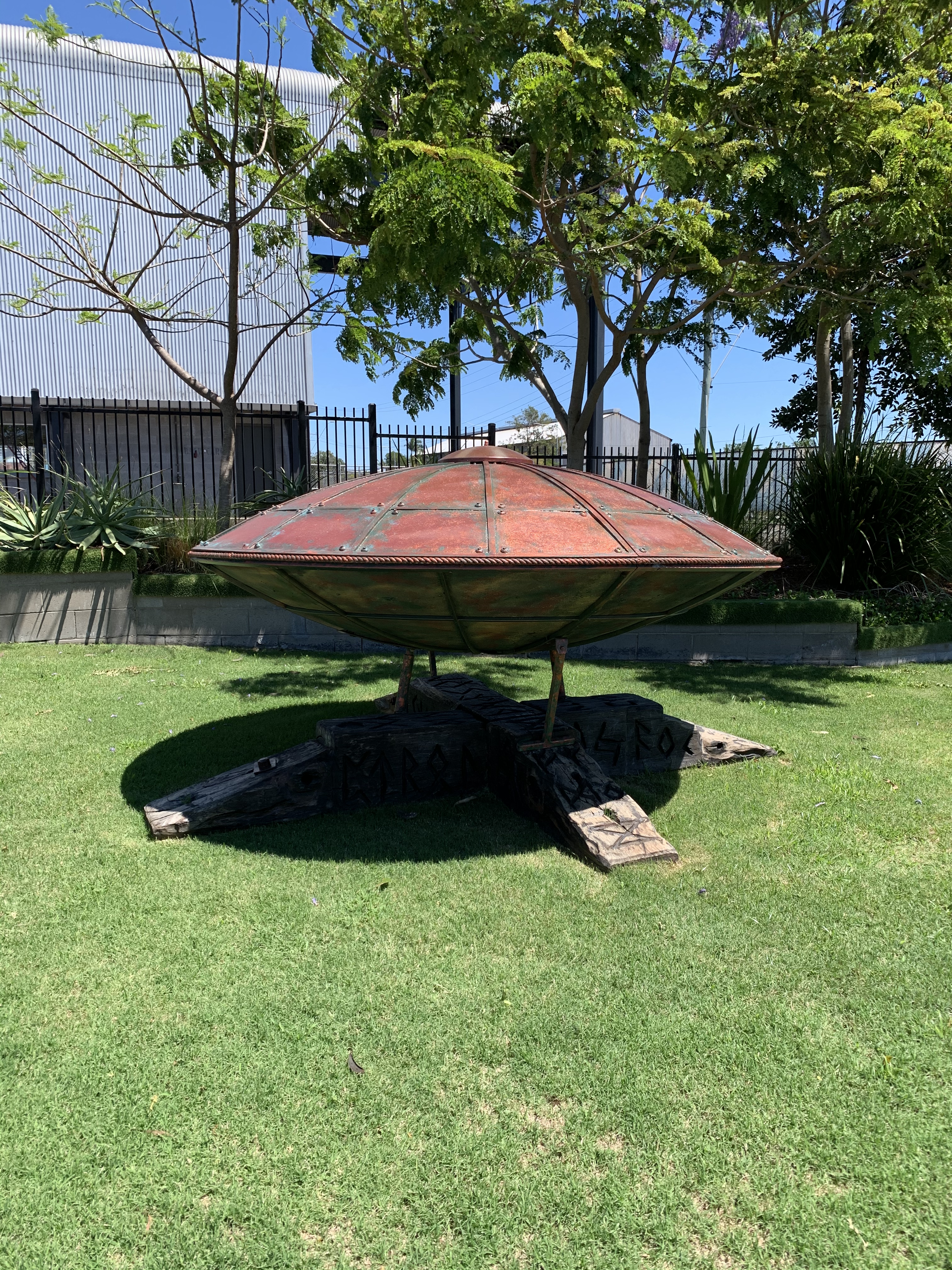
    6. A Ship Landed, Recycled Materials, by Hermann Schraut

    A Ship Landed

    Although the artist statement didn’t shed any light on this sculpture (stating the background of this sculpture is unclear), I did like how it was in the shape of a UFO. The artist does allude to this sculpture being representative of early Australian migration when many were arriving by boat and being sailed down the Brisbane River.

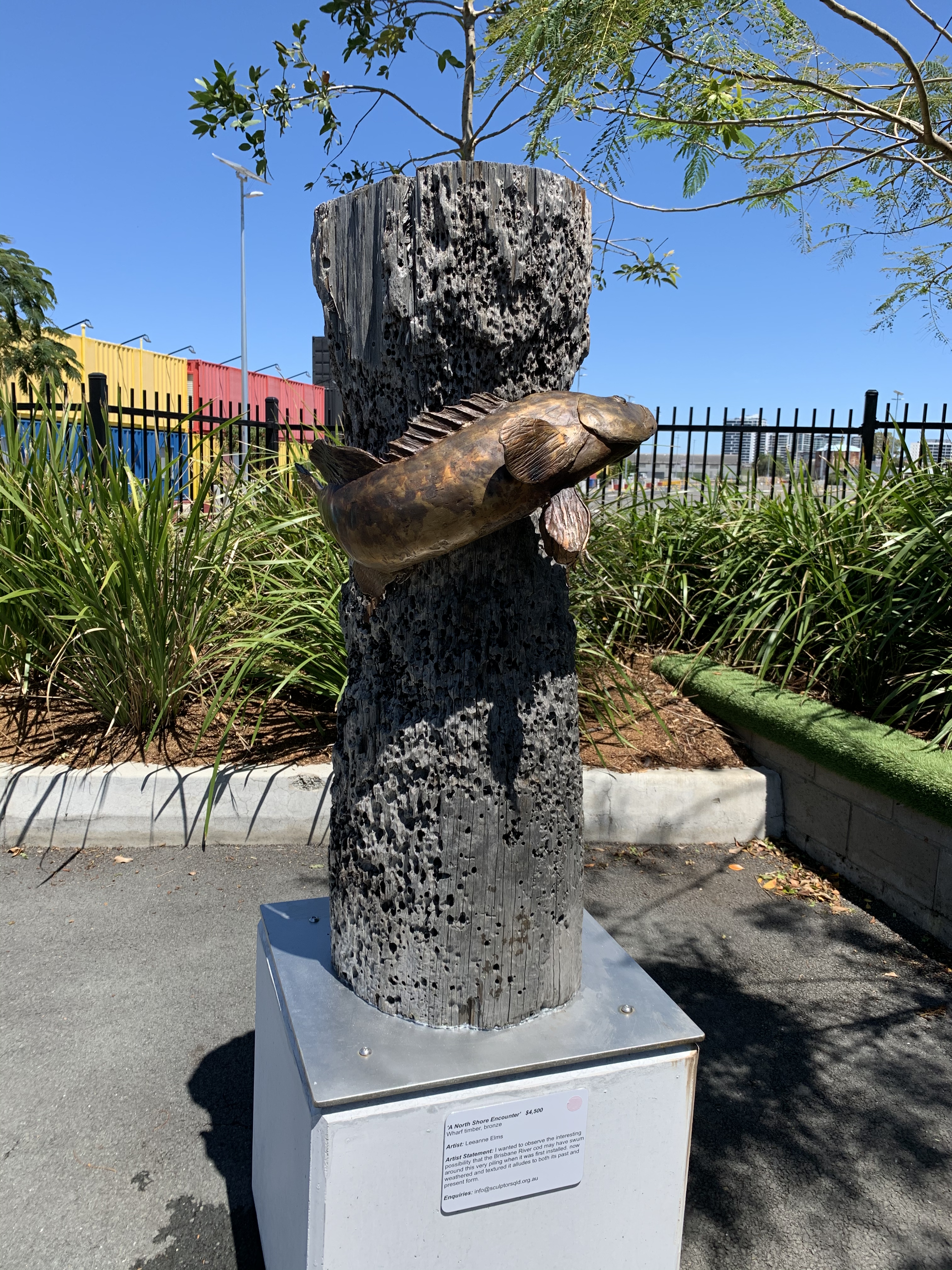
    7. A North Shore Encounter, Wharf Timber & Bronze, by Leeanne Elms

    A North Shore Encounter

    This sculpture combines heritage material, original wharf timber, with an insight into the past. Brisbane River is home to a particular type of cod, depicted in this sculpture as swimming around the piling. Although so much has changed in Brisbane, this cod has, and will hopefully, continue to be a part of our environment.

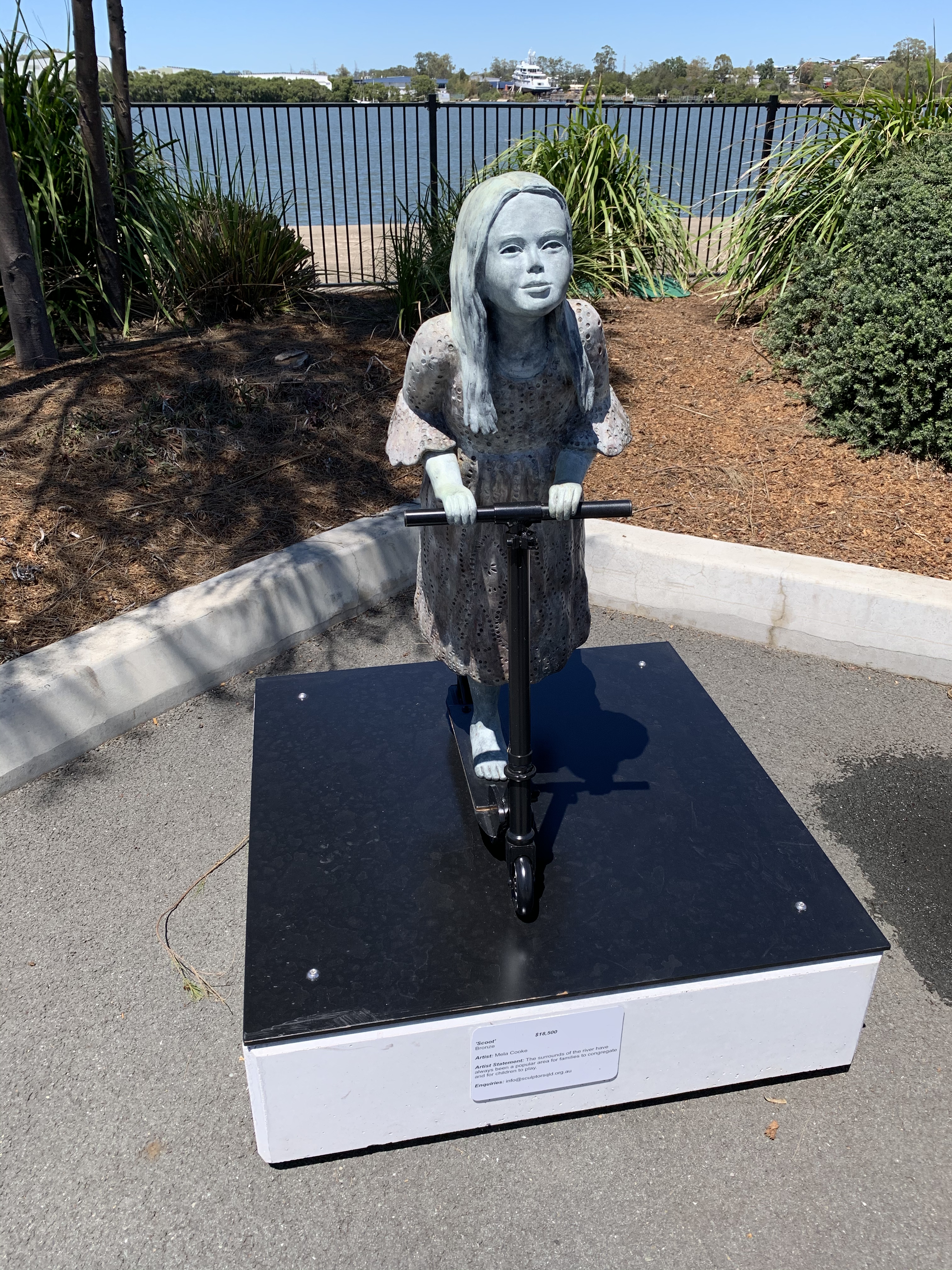
    8. Scoot, Bronze, by Mela Cooke

    Scoot

    Last, but certainly not least, is another bronze work by Mela Cooke. Similar to the dogs, there is so much detail in this sculpture depicting a young child riding a scooter. This sculpture represents how the surrounds of the Brisbane River are filled with parks and areas to enjoy activities such as scooting around.

    Practical Information

    Sculpture by the River is open until 6 December 2020. There is a guided tour scheduled for 2pm on November 15 accompanied by street entertainment from 11am to 3.30pm. For those wanting a bit more interaction, you can participate in the sculpture hunt where you acquire the materials to make a fish and contribute to the community sculpture. The entire exhibition is accessible. I also strongly recommend some sunscreen and a hat/umbrella. Entrance and parking are both free!

  • GLAM Blog Club: Play

    I am finally feeling ready to delve into some more blogging. When I saw the theme for this month’s GLAM Blog Club is ‘Play’, so many ideas ran through my mind. I settled on writing about something cheerful and reflecting on some experiences I have had in museums. When you Google definitions for the word play, my goodness a lot of different meanings appear. Everything from ‘something that is purely for enjoyment with no other objective’ to ‘to engage in an activity’. For this reason, I’m going to start by defining what the word play means to me in a museum context.

    For me, play in a museum context immediately conjures up images of interactives. Not just touch screen interactives, but activities/games/experiments/etc. Learning through play is not only something that children can benefit from, but also adults. I have quite a short attention span so reading copious amounts of text in a museum isn’t for me. If I can break up reading labels and thematic panels with some fun interactives, then why not! And I know I’m not alone. I’ve seen so many adults in museums with the biggest smiles on their faces as they try out interactives either by themselves or with a group. The power of play in a museum context should never be overlooked. Whether it be play to learn or play to break up learning experiences, both, to me, are equally important in a museum.

    The rest of this blog post will look at a few examples of play in a museum that I thought are or were done exceptionally well. If you have any experiences you would like to share, please leave a comment!

    I have blogged about these exhibitions before so if you want further information please click on the title that will link you through to the original blog post. Also, I’ve noticed that there are two examples from Melbourne and two examples from Chicago.

    Australian Centre for the Moving Image – Wonderland

    Where to even begin with this exhibition. From the moment I went down the escalator (or down the rabbit hole) to the moment I exited the gift shop, I felt as if I had been on an absolute playful adventure. The following quote from ACMI’s website about the exhibition is 100% true, ‘the more curious you are, the more you’ll discover’. Here is a brief summary.

    The exhibition perfectly encapsulated the awe and wonder experienced by Alice in Alice in Wonderland. It wasn’t just an exhibition of texts, costumes and images, it was a space to play. Before even entering the exhibition, you were handed an interactive map and could choose from a very large door or a very small door to enter the exhibition space. I’ve never crawled into an exhibition since.

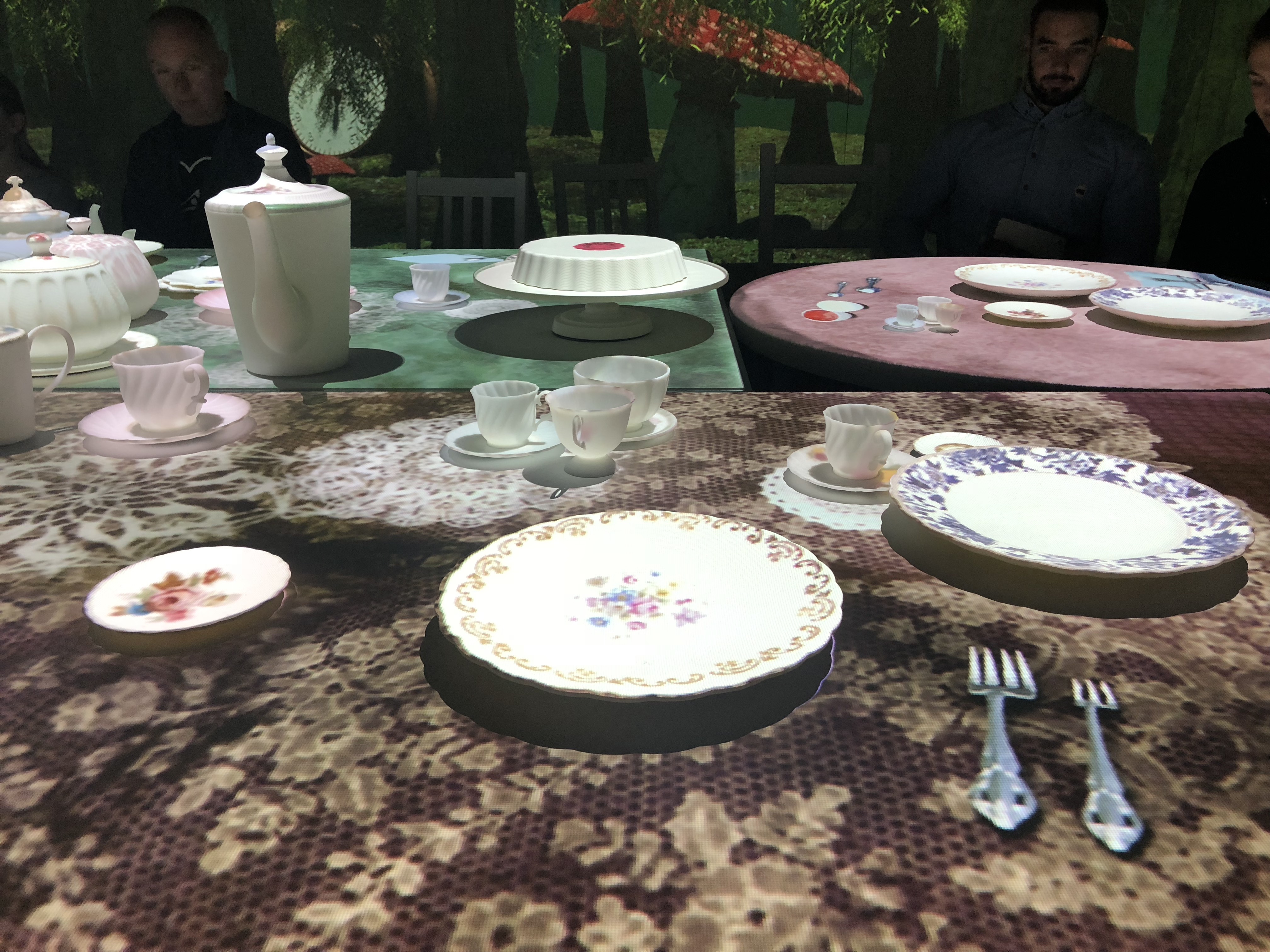
    Once inside, there were so many interactive elements. There are two highlights worth mentioning. The first was the Mad Hatter Tea Party. When you entered the room and took a seat at the table, it looked pretty uneventful with only white plates and cutlery in front of you. When the digital show started, however, you were literally taken on a journey through a history of representations of the tea party.

    IMG_7840
    Wonderland

    The second highlight was the design your own Queen of Hearts card on the back of your map using stickers and craft supplies. It felt like an activity that wasn’t targeted to one particular group, but could be enjoyed by all. This is supported by the fact that there was a mixture of adults and children in the room completely engaged. Once you had finished your card, you could have your face photographed and added to this huge interactive screen of little card people watering and painting the roses.

    IMG_8724
    Wonderland
    IMG_2309
    Wonderland

    To me, this exhibition is what I would consider a great example of a playful exhibition that incorporated learning through interactives for all age groups. Plus, I had a smile on my face from the moment I entered to the moment I left!

    Museum of Science and Industry – Chicago

    If you are looking to incoporate play into your museum experience, then a science museum is probably your best bet. The Museum of Science and Industry in Chicago has so many interactive stations. My favourite is called ‘mindball’. Aim of the game, relax to win. It’s you against someone in the ultimate game of relaxation. How it works is you put on a headband that tracks brain waves. Then, after pressing the start button, a little metal ball slowly begins moving towards the person who is the least relaxed.

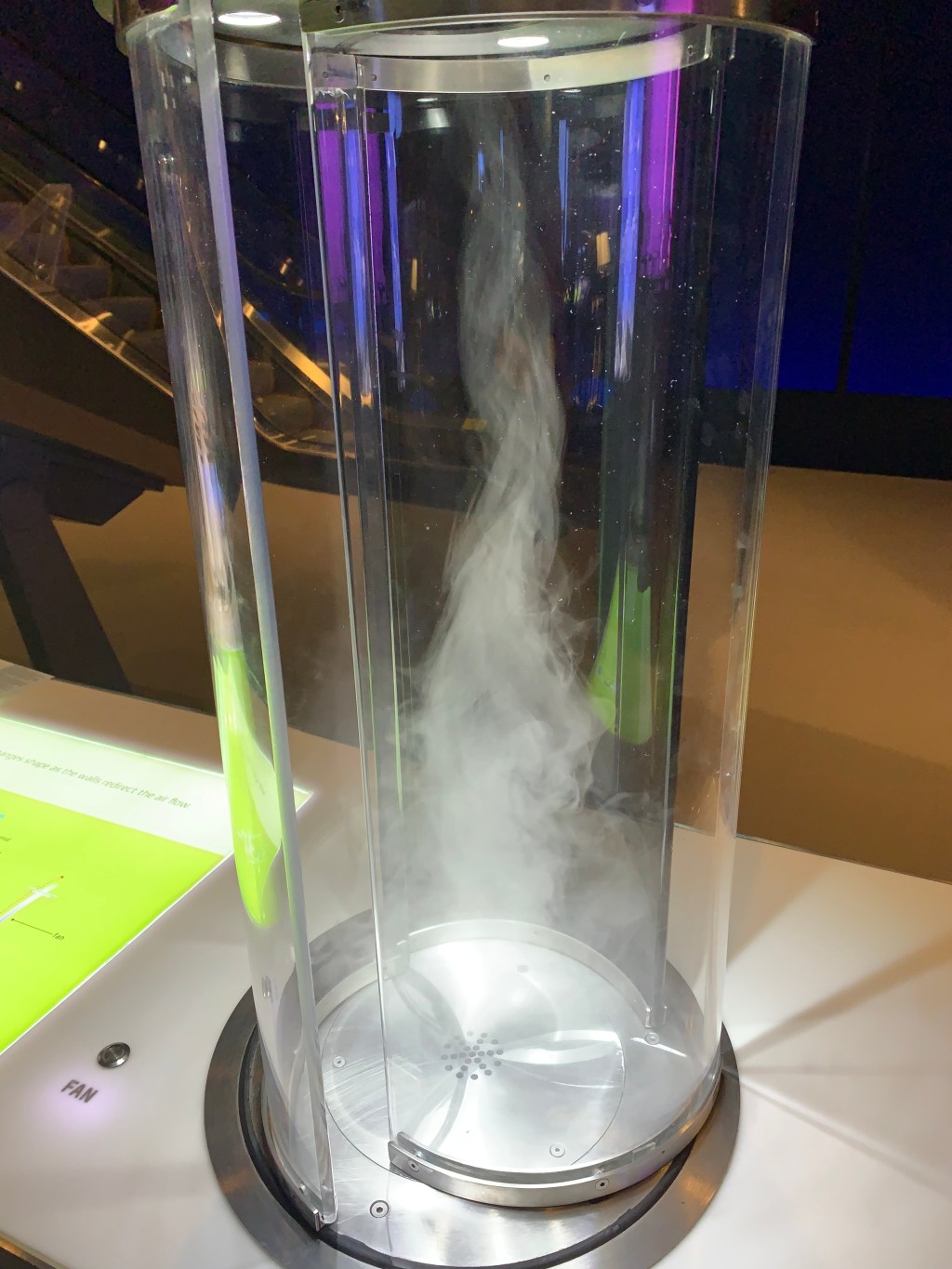
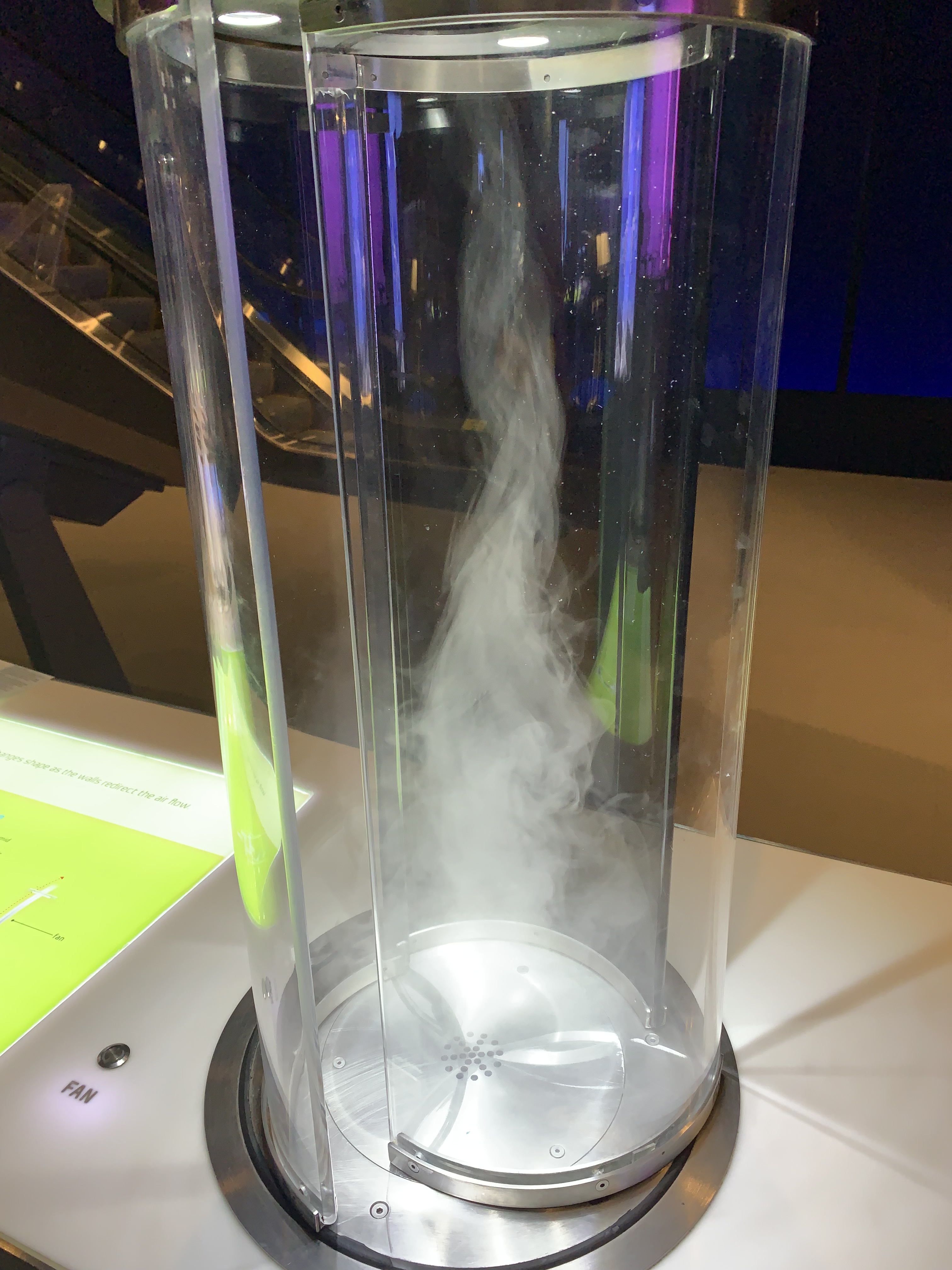
    The other interactive or playful element I want to mention is the ‘create your own mini tornado’ table. The first thing you’ll notice walking into the exhibition called Science Storms is the giant tornado. Next to this is a station where you can make your own miniature version using panels of plastic to shape and design your own tornado. Similar to the Wonderland activity, I saw an equal number of adults and children interact.

    img_6330
    Museum of Science and Industry

    Warhol and Wei Wei – National Gallery of Victoria

    Although this exhibition had a specific area with photobooths and heaps of cat-themed interactives, I want to focus on another playful element in the exhibition.

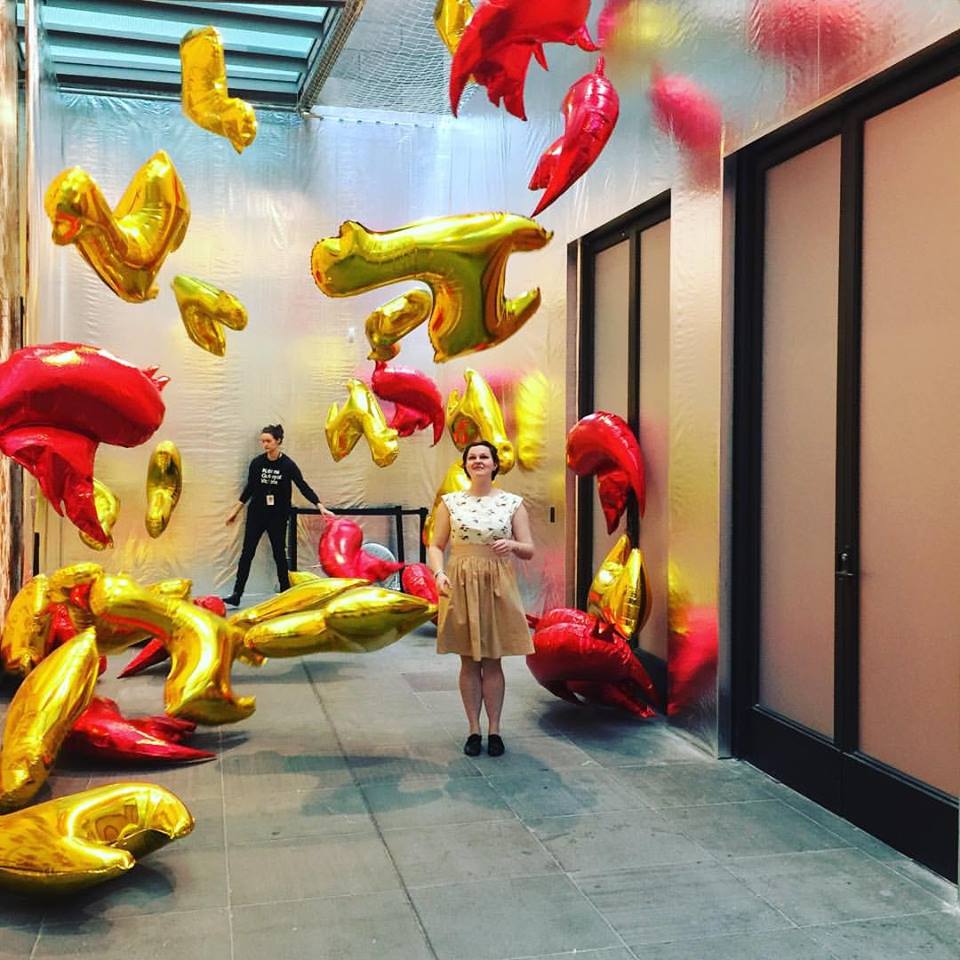
    There were quite a few rooms to this exhibition and about half-way through there was an installation by Wei Wei called ‘Twitter Birds and Caonimas”. Caonima is a fictitious Chinese animal – a breed of alpaca that is used on the internet to show disapporval about government censorhip. This artwork was definitely one you could interact and play with as you were encouraged to pick up the balloons and really become a part of the installation.

    12316067_10156284080110261_4619583757765258394_n
    Warhol and Wei Wei

    American Writers Museum – Chicago

    Finishing off the Melbourne, Chicago, Melbourne, Chicago pattern I have developed here, we have the American Writers Museum. Here, there are interactives in the main exhibition space allowing visitors to play games to guess authors, themes, and historical information. But, I want to focus on the specific interactive space that is separate.

    All the interactives in this area titled ‘Mind of a Writer’ teach visitors the skills that go into creating a story. Playful interactives include typewriters where you write one sentence to add to a pre-existing story, a buid a routine wall, and a dialogue generator. By the end of this exhibition, you leave more aware of literary processes and writing practices.

    img_5099
    American Writers Museum
    img_5123
    American Writers Museum

    Thanks GLAM Blog Club for providing another thought-provoking monthly theme. I am looking forward to reading the other entries for this month.

    Now that museums are slowly starting to re-open in Australia please remember to follow the procedures they have in place, treat staff with respect, and enjoy returning to these amazing institutions. Keep safe and healthy everyone!

  • Digital Exhibition: Museum of Broken Relationships

    During this time of widespread closures, the internet has provided both digital support and an alternative platform that has allowed museums to come to you. This is most definitely not something new, as museums have a long history of experimenting with their digital presence. The difference being that now, museums can’t open to the public. Digital can be a great option for continuing to foster visitor engagement . Although most definitely not the same as actually visiting these museums and experiencing what they have to offer, these digital displays are helping me feel connected to museums around the world. I’ve even found new and interesting museums/exhibitions to add to my ‘must visit’ list.

    If you are looking for a preliminary list of where you can take a digital tour, I recommend this article from Time Out that you can access here. There are quite a few other museums opening their digital doors, so if you are interested in visiting, a quick Google will display many other options. Also, Twitter has become a fantastic place for discussions around museums and their collections. In short, if you are like me and love visiting cultural institutions there are ways to continue your engagement.

    For me, one museum that continues to appear on my ‘must visit’ list is the Museum of Broken Relationships. This museum does appear on that Time Out list and I thought now is my chance to at least gauge some idea of the types of objects and stories on display. Enjoy my digital exhibition journey and I hope this inspires you to spend some time this weekend embarking on your own! All images in this post are screen shots from the museum’s website – there will be a link to the website at the end.

    Museum of Broken Relationships

    The Museum of Broken Relationships is a museum dedicated to relationships that end in heartbreak, exhibiting personal objects that have stories attached. The concept fascinates me, as it an amazing example of how objects can be used as a vehicle to display and unpack emotions. I will take you through some examples later in the blog but even something as seemingly dull as a plain black shoe can have this intense story of sorrow attached. Currently, the museum is only located in Zagreb, Croatia. However, they do have a great traveling exhibition program and have set-up displays in America, Australia and New Zealand (just to name a few).

    According to their website, there are two ways people can get involved – submit their story online or send a physical object to the museum. Apparently, it is rare for objects to be rejected. This leads me to have oh so many thoughts about how fast their collection is growing and where is it all being stored. Online, your story will not be accepted if it contains discriminatory or offensive content.

    Honestly, just reading their most frequently asked questions is leading me down a rabbit hole of museum thinking. For example, no object is off limits to donate as long as you (or someone else) can physically deliver it to them. Even then, if you live somewhere other than Croatia and wanted to donate a grand piano, for example, you can discuss this with them and see if it’s possible.

    Finally, the last thing I want to mention about this museum, is that there is a constant reminder flowing through their website that this collection and  museum is about the people who donate. They have their own words as the display labels and convey their own particular emotions through a selected object/s.

    Digital Experience

    I have visited quite a few other virtual museums where you can actually walk through an exhibition as if you were physically walking through the same space. For others, the focus is more on the objects they have in their collection that might be on display currently or are held behind the scenes in storage. The Museum of Broken Relationships falls into this latter category.

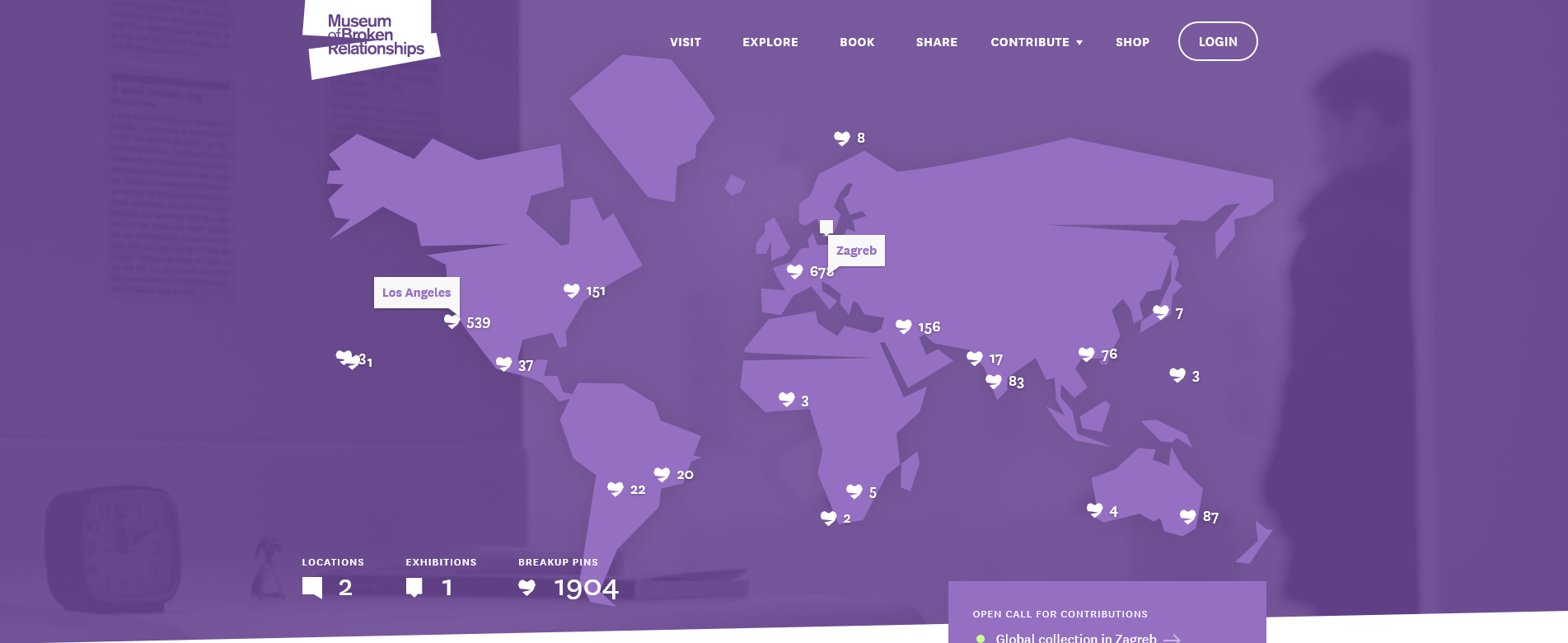
    When you first enter the Museum’s webpage, what you see is a map of the world where people can add ‘break-up pins’. Basically geographically isolating where they experienced a break-up. Scrolling further down you have top news stories. During this time, the Museum is encouraging people to share their lockdown stories and how they are currently trying to cope with heartbreak.

    Screenshot_2020-04-24 Brokenships(1)

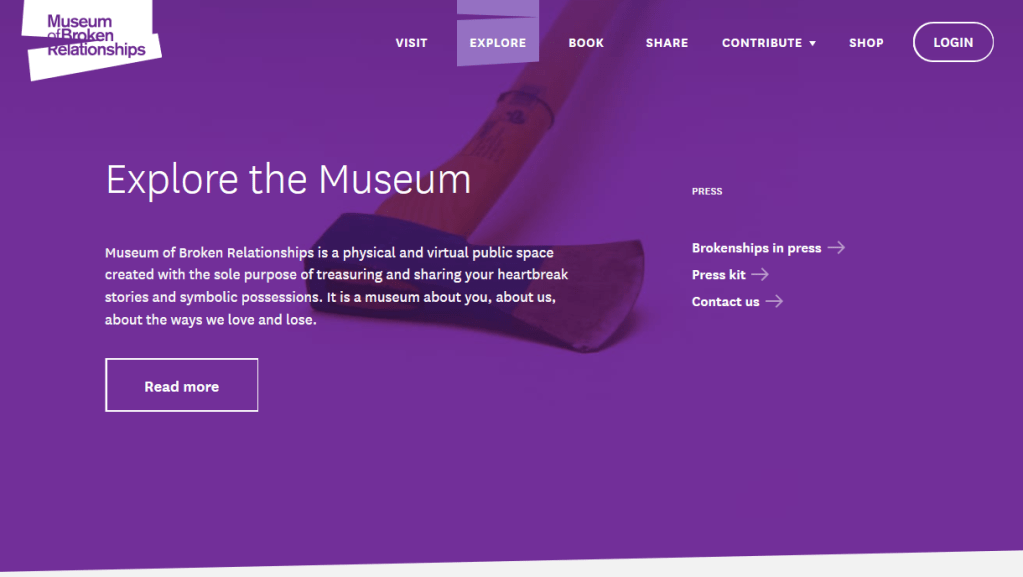
    If you click on ‘Explore’, at the top of the webpage on the main menu, you will see what’s in the screenshot captured below.

    Screenshot_2020-04-24 Brokenships

    Nestled under this are 41 objects with their associated object details and object label or story. Something that might annoy visitors is that the objects aren’t in a logical grid but dispersed on the page in a random assorted layout. What does work really well is having the focus of each object being its image. You can see the start of the story but it’s really the image that can lure people in to see and read more.

    Here are my top 3 objects on display – go to their website to discover more!

    1. The Toaster of Vindication – donated by someone from Denver Colorado

    For what is a pretty dull looking object, it sure has a title that made me click on the object to learn more. Some of the stories attached to the objects are lengthy and others are short, to a point. This toaster is accompanied by a short story of how sometimes you feel like doing something a little petty and if that means taking a toaster across country leaving someone temporarily without anything to toast bread with, then so be it.

    Screenshot_2020-04-24 The toaster of vindication

    2. A Hamburger Toy – donated by someone from Differdange, Luxembourg

    The story with this object is similar to the toaster in that it’s short. All it says is ‘his dog left more traces behind than he did’. There are layers of loss in the one object but also it is a reminder of what people leave behind.

    Screenshot_2020-04-24 A hamburger toy

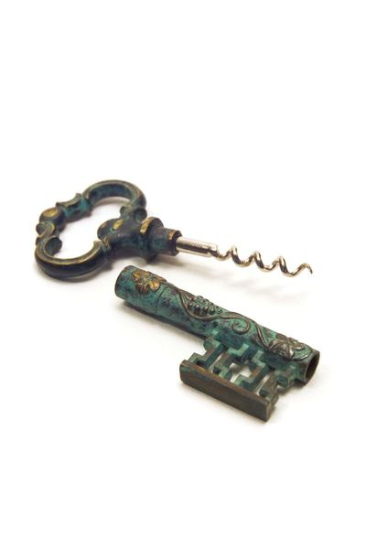
    3. A Key – Bottle Opener – donated by someone from Ljubljana, Slovenia

    Different to the other two objects, this one represents a love that was lost due to death not a break-up. This is one of the many gifts received during a relationship before their partner contracted and died from AIDS.

    Screenshot_2020-04-24 A key - bottle opener

    It is quite an emotional journey clicking through these objects as you can go from a funny revenge toaster to a photograph from the 1940s talking about the pain still felt after a relationship ended due to death. It has prompted me to think further about museums as not just comprising of physical objects, but also as places that house emotions – layers of emotions. Not just the emotions of those who have donated objects, but also those of staff, visitors and anyone else who might come into contact with the object or the story.

    Practical Information

    I hope you enjoyed a very short digital journey through the Museum of Broken Relationships. I purposefully kept my list of highlight objects short as you can log on and see the rest for yourself – click here to discover all 41 objects.

    Until museums can re-open I will be dedicating some time each week to a digital visit and expanding my list of what (and where) I want to see!

  • Atlanta: Martin Luther King Jr., Ponce City Markets and Buckhead

    We spent our final day in America exploring the city of Atlanta. Due to the current Covid-19 situation, most of the museums and heritage places were closed. I cannot wait to return to Atlanta and visit the World of Coca Cola and The National Center for Civil and Human Rights! Also on the itinerary will be a Stranger Things tour so I can see the sites featured on the television show.

    This time, since we only had one day, we decided to go on a general city tour that lasted six hours and covered so much ground. It provided us with an amazing overview of the city as well as its history. I really didn’t know a lot about Atlanta. It was just meant to be somewhere to fly into then almost immediately leave. I am so glad we had the chance to explore, because now I know when we return we need to spend a lot more time in the city than originally thought.

    I’m going to take you through the stops on our tour that are museum/heritage related. The tour can be divided in half: sites related to the Civil Rights Movement and driving around the different neighbourhoods of Atlanta. This post will cover the Martin Luther King Jr. National Historical Park, Ponce City Market and the heritage-listed mansions of Buckhead.

    Martin Luther King Jr. National Historical Park

    The first place we visited on the tour was the Martin Luther King Jr. National Historical Park. There are ten museums/heritage places/memorials to explore in this park including the Visitor Center, DREAM Gallery, BEHOLD Monument, “I Have a Dream” World Peace Rose Garden, Birth Home Block, Historic Fire Station, Historic Ebenezer Baptist Church, The King Center, Dr & Mrs King’s Tomb and Freedom Hall. We spent the majority of our time in the Visitor Center, Historic Ebenezer Baptist Church and The King Center.

    Visitor Center

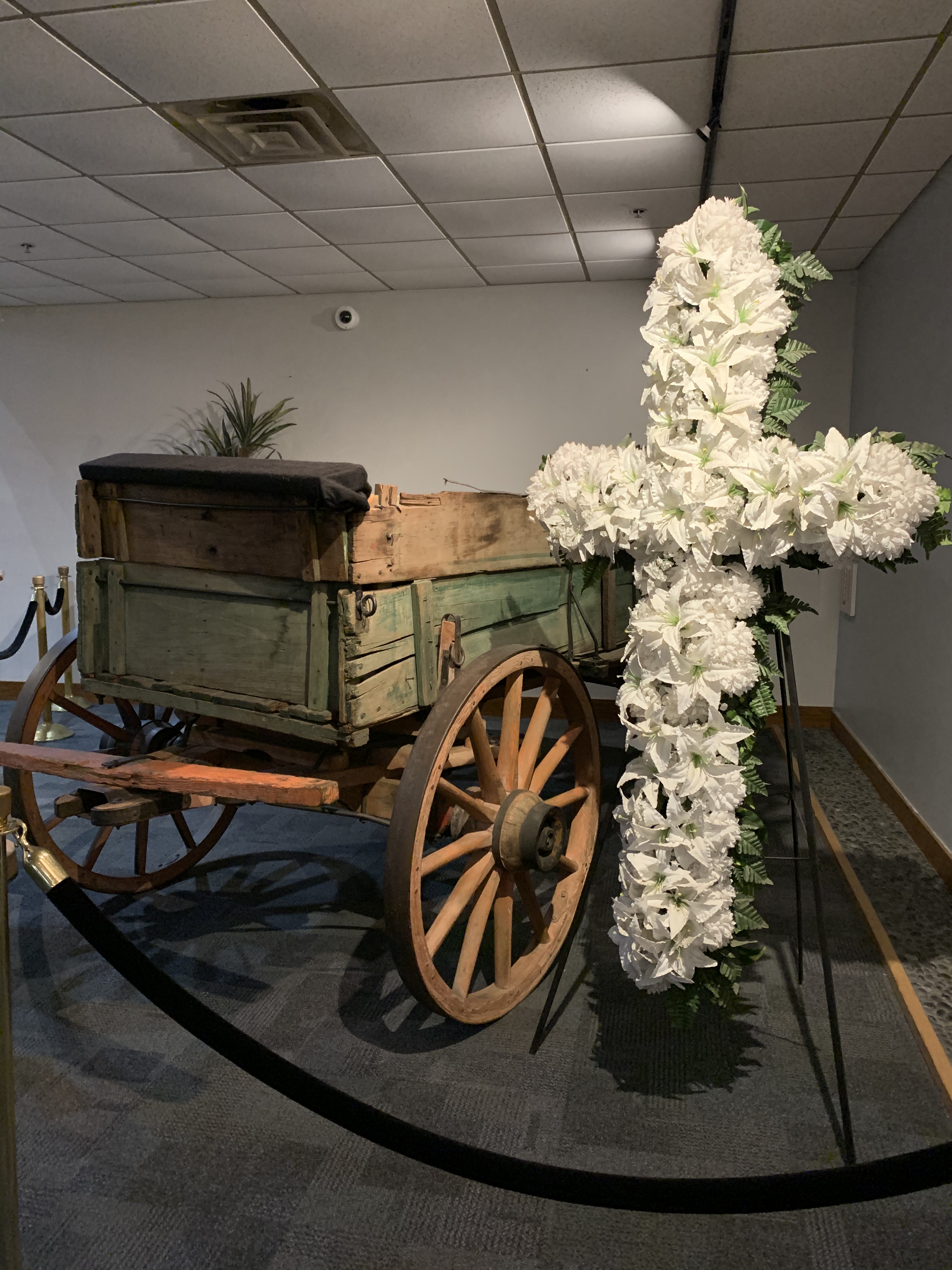
    This is a great place to start your visit to the National Park. Inside the Center is a museum which provides information on the life of Dr King and the Civil Rights Movement, as well as containing some incredible objects. The podium from the “I Have a Dream” speech is one of the first objects you see when you enter the exhibition space. On the opposite side of the museum is Dr King’s funeral wagon and the white flower cross that lay on top of his coffin.

    IMG_7268
    Martin Luther King Jnr Funeral Objects

    The rest of the space is divided into walled-off circular display areas that you can walk into and see photographs, thematic panels and relevant objects. I found this to be a really effective use of space and a very neat way of presenting the information. The displays follow Dr King’s life chronologically, starting with some context surrounding the Civil Rights Movement. Right in the middle of the museum is an exhibit titled “Freedom Road” which consists of multiple statues of individuals representing those who marched for civil rights.

    Historic Ebenezer Baptist Church

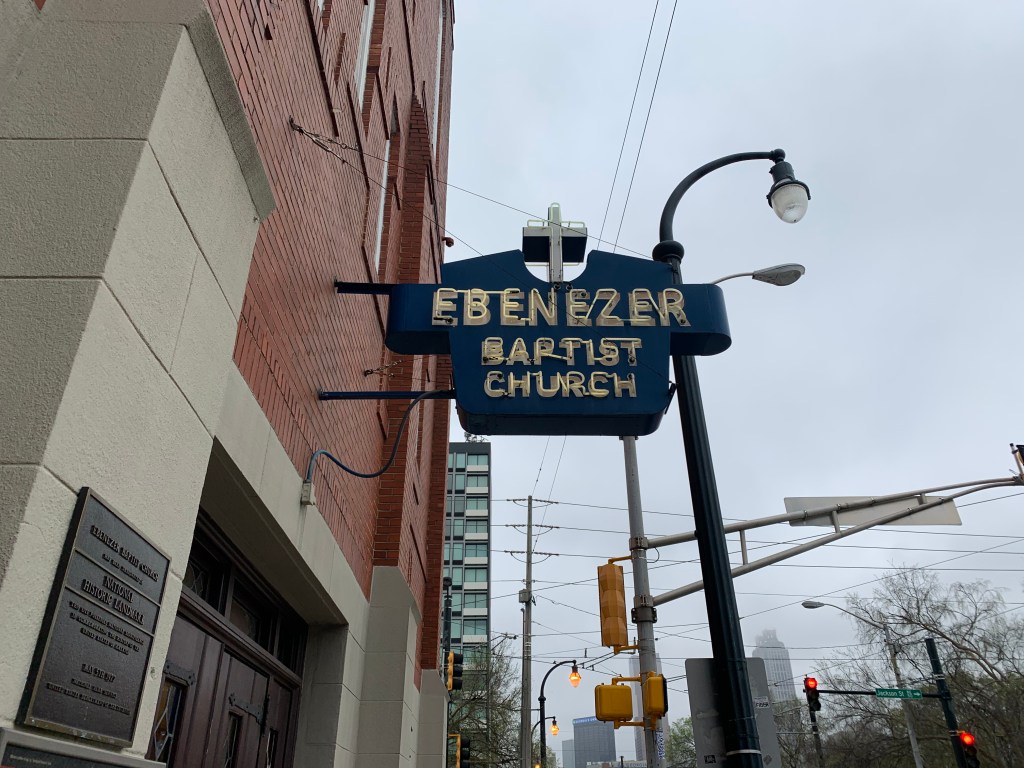
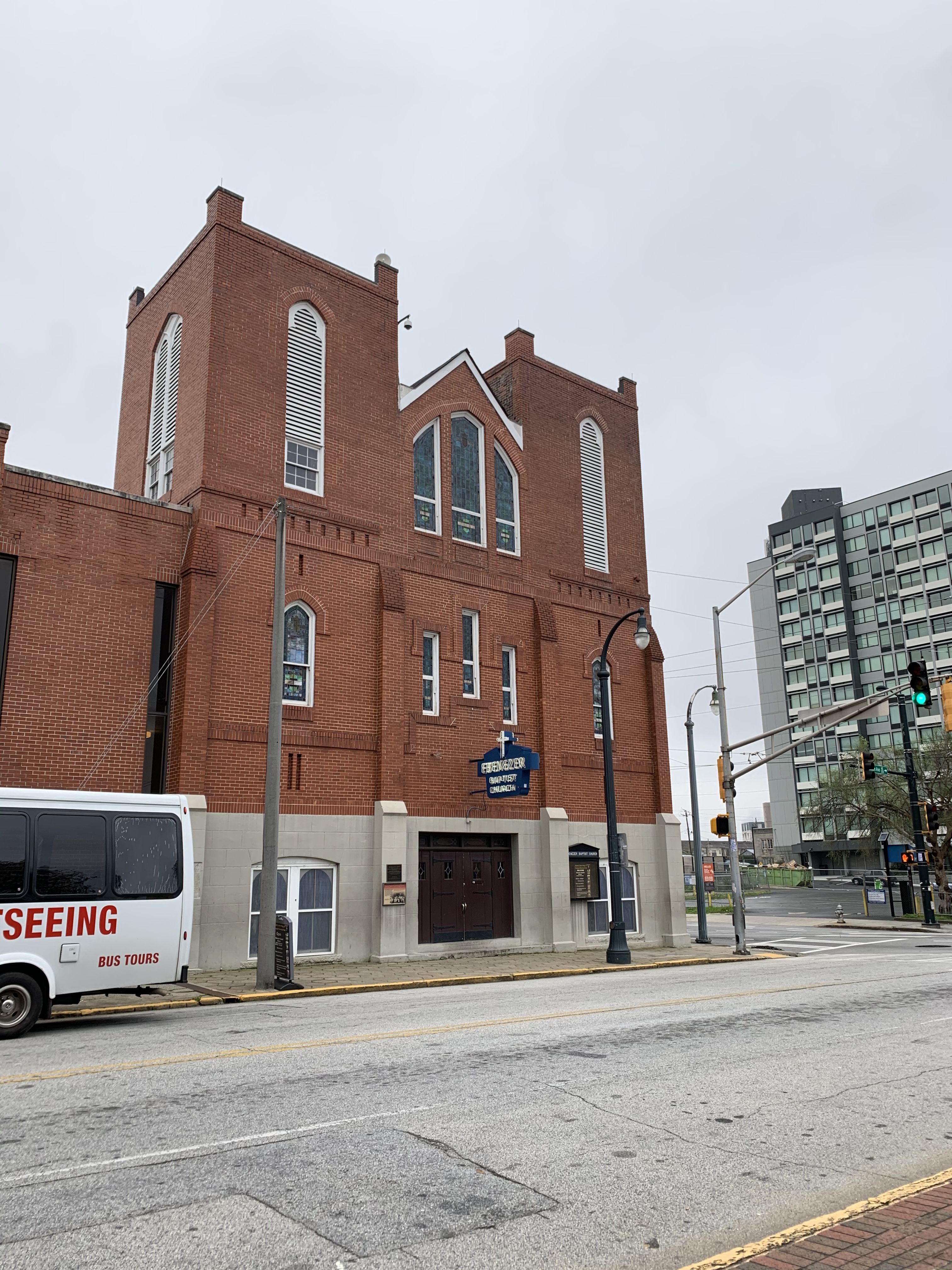
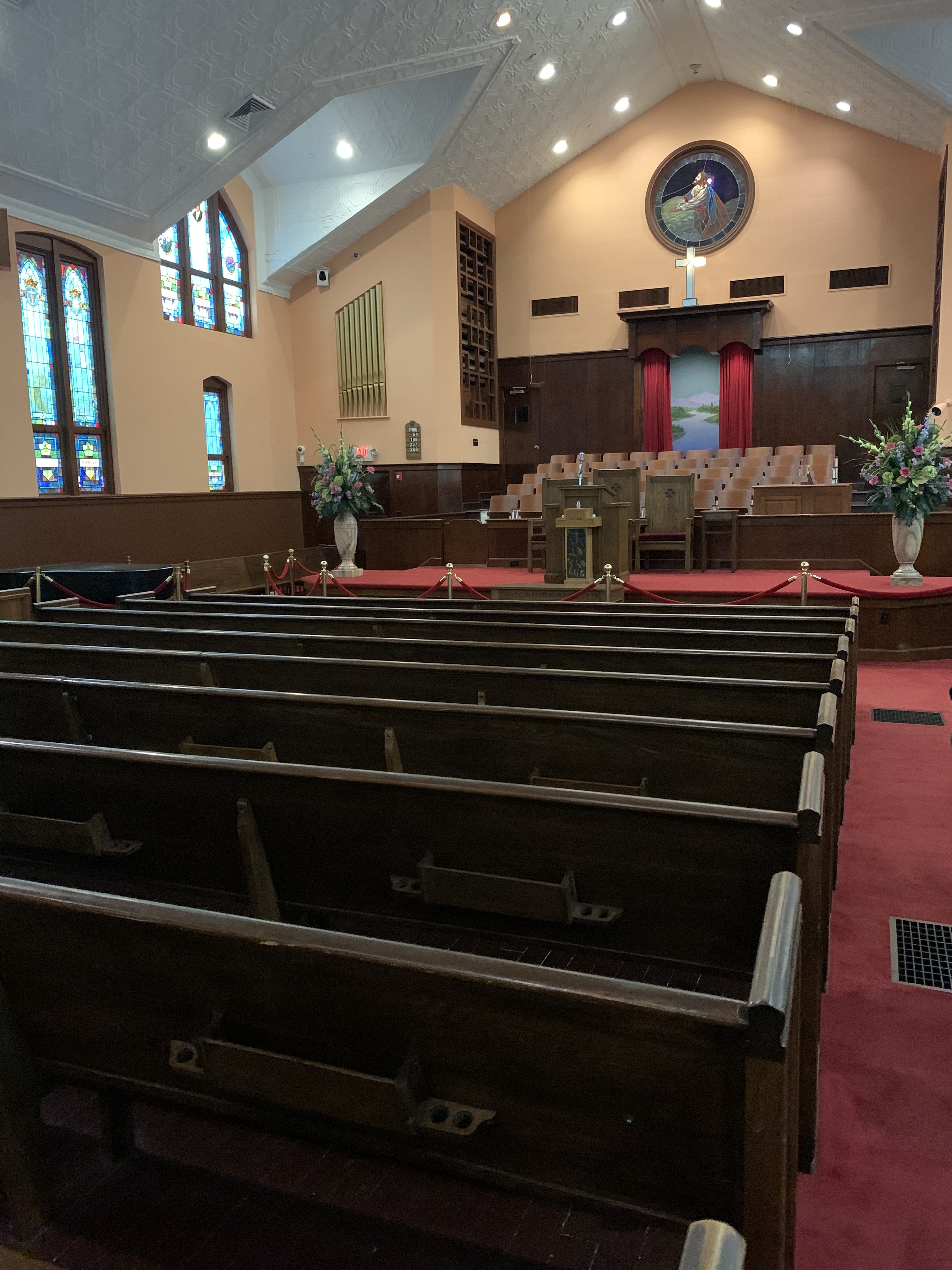
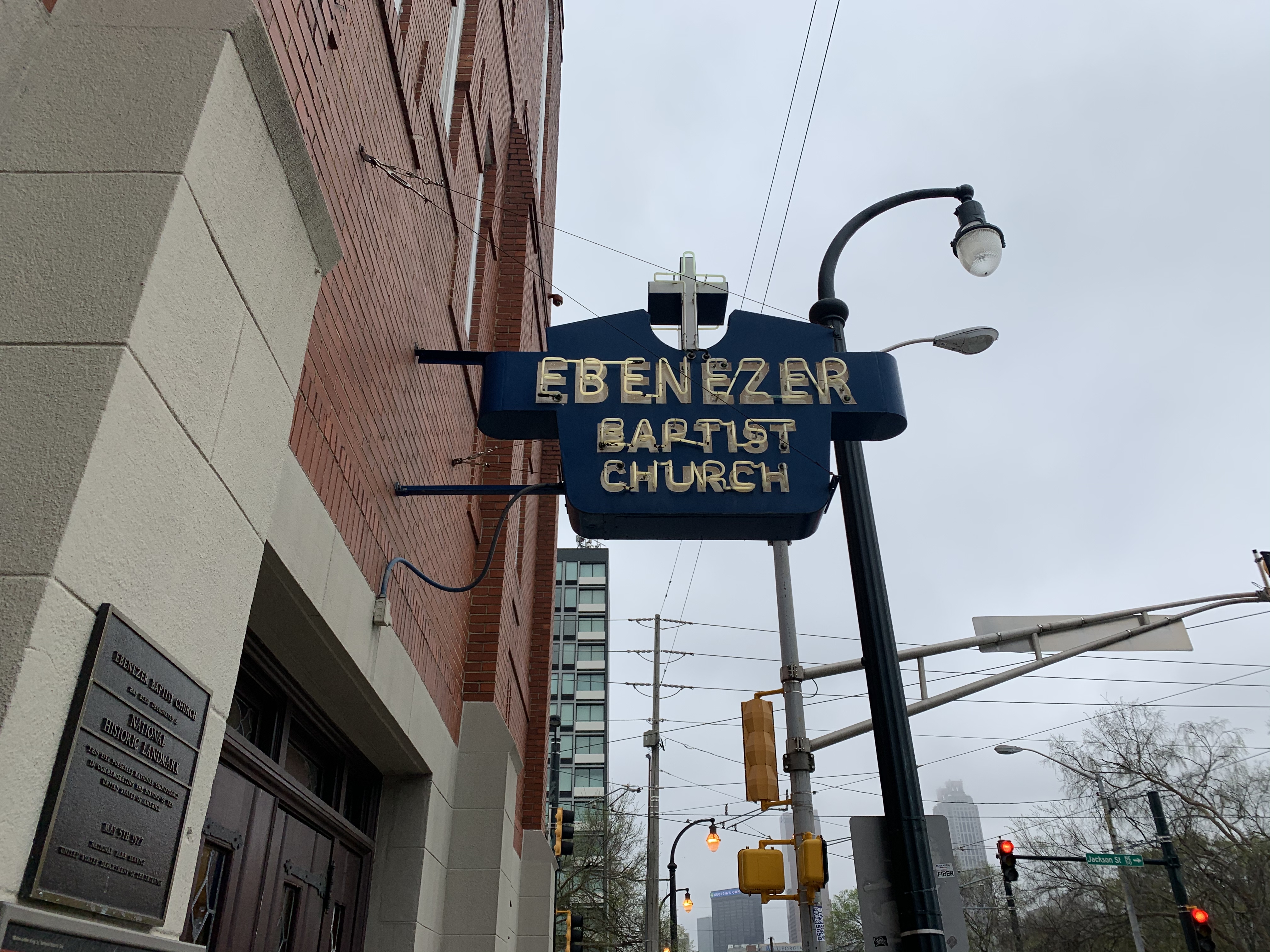
    Located just across the road from the Visitor Center is the Historic Ebenezer Baptist Church, where Dr King became a co-pastor with his father in 1960. It is also where his funeral was held in 1968. In 2001, the Church underwent two phases of restoration thanks to a Save America’s Treasures Grant. Phase 1 included updating and installing electricity, heating, air conditioning and fire suppression. There was also major repair work completed on the exterior of the Church including restoring the historic Ebenezer Baptist Church sign. Phase 2 focused on restoring the sanctuary and fellowship hall to how it looked in the 1960s. Today, you can visit the Church and hear Dr King’s sermons play on loop as you walk around.

    IMG_7252
    Historic Ebenezer Baptist Church
    IMG_7233
    Historic Ebenezer Baptist Church
    IMG_7237
    Historic Ebenezer Baptist Church

    The King Center

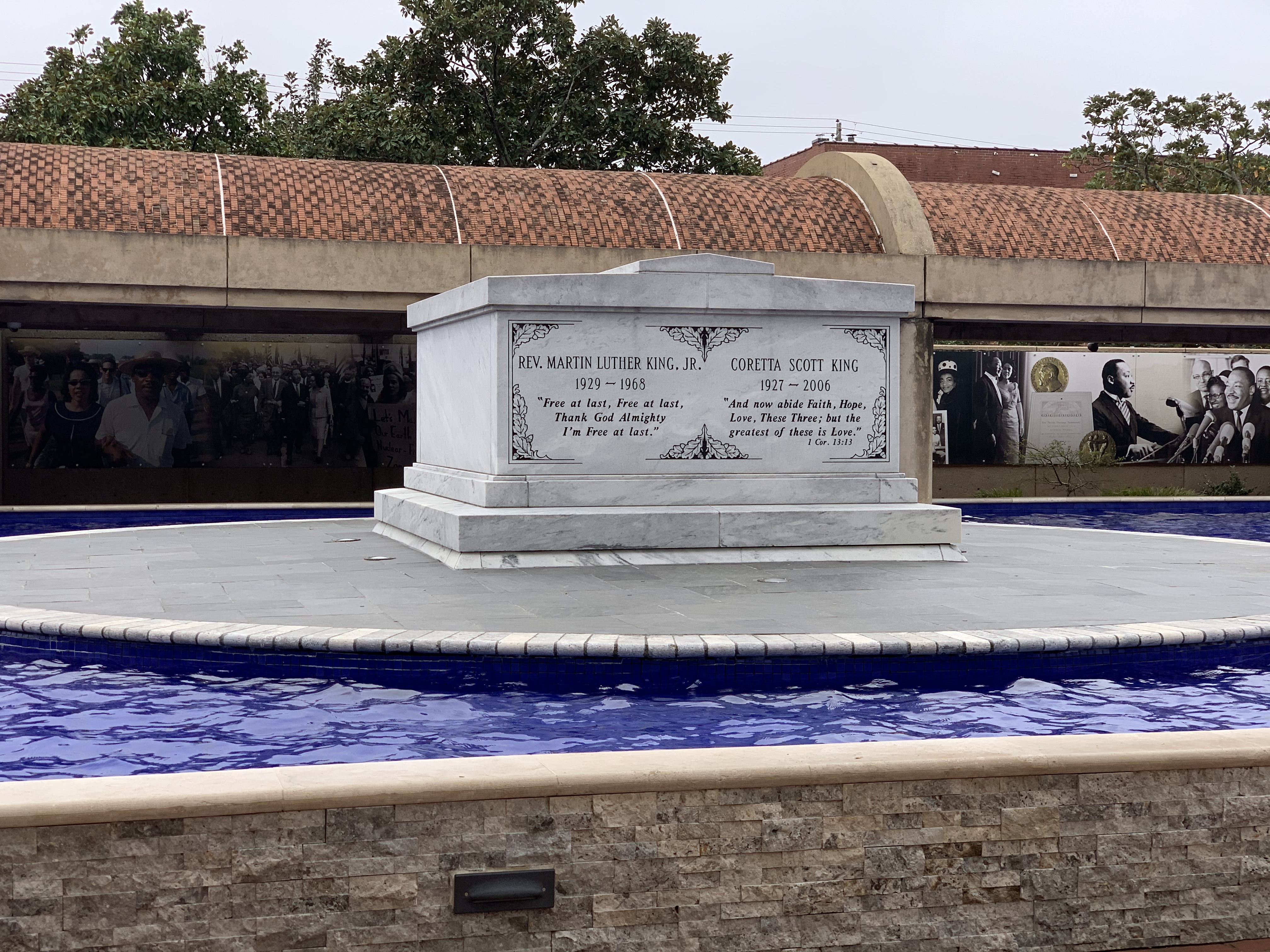
    Next to the Church is the King Center that contains a few exhibitions and the final resting place of Dr King and Coretta Scott King. One of the exhibitions divides the room in half to explore the life of Dr King on one side and Mrs King on the other. A highlight group of objects are the contents of Dr King’s suitcase from his stay at the Lorraine Hotel. The location where he would be assassinated. On the other side of the room, it was great to learn about Coretta Scott King and her dedication to continuing the action on civil rights after the death of Dr King.

    IMG_7205
    The King Center

    Their tombs are located outside the Center, resting on a concrete platform in a water feature you can see photographed below. Water flows down small steps and over the words from Dr King’s “I Have a Dream” speech – “We will not be satisfied until justice rolls down like water and righteousness like a mighty stream.”

    IMG_7215
    The King Center
    IMG_7217
    The King Center

    Ponce City Market

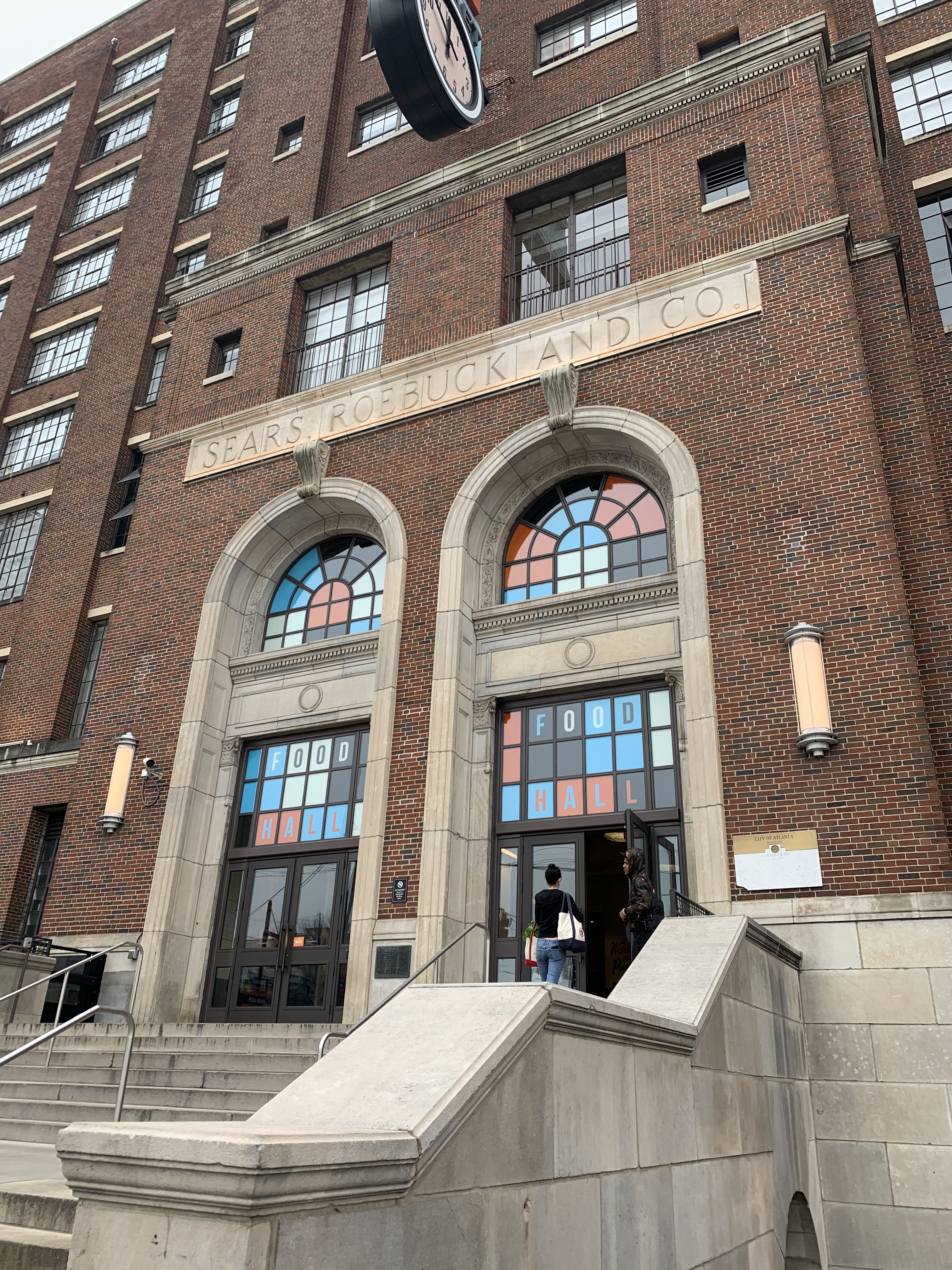
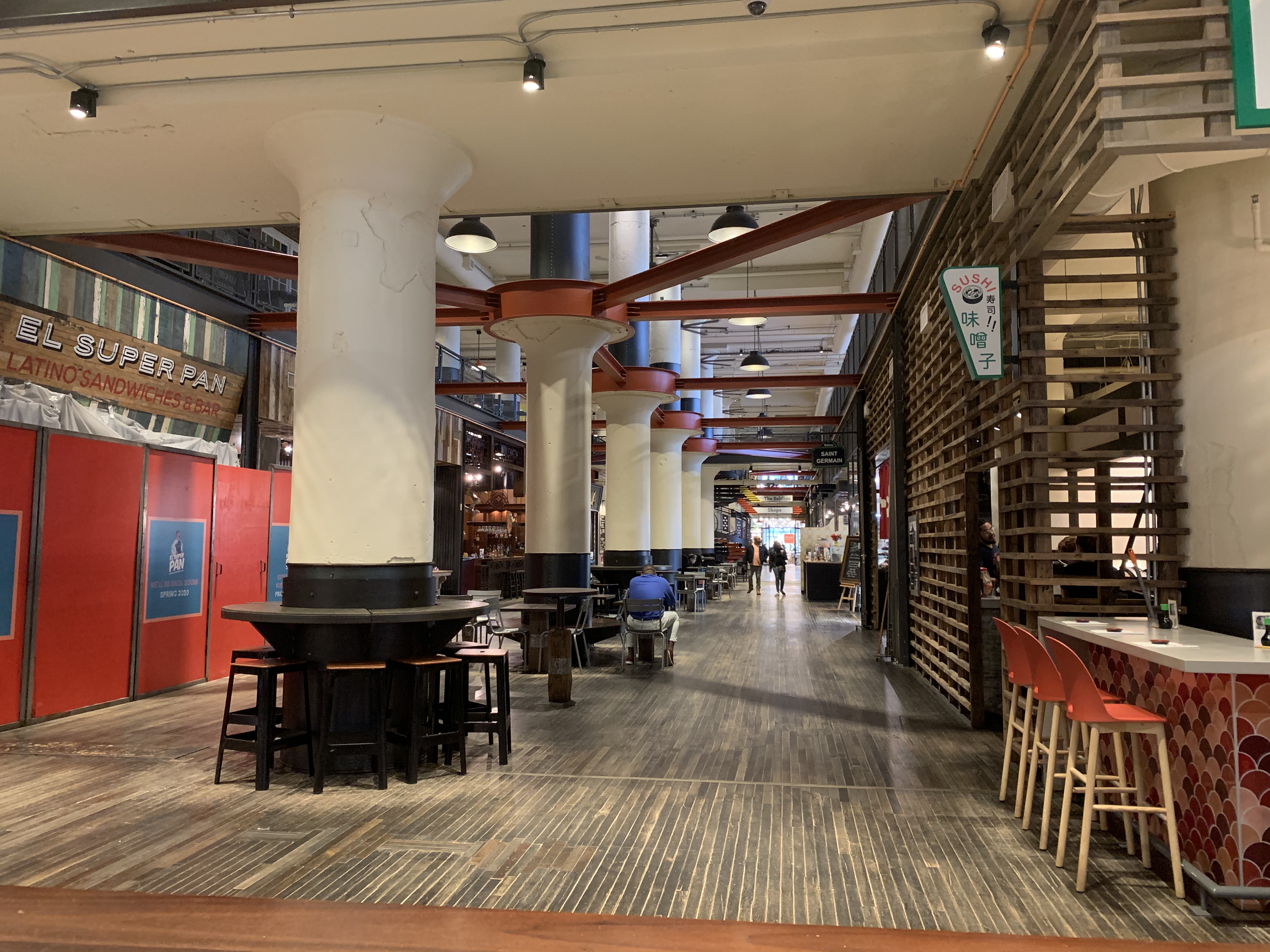
    After spending the morning learning all about the Civil Rights Movement in Atlanta, we drove to Ponce City Market for lunch. The Market opened in 2014 and was inscribed on the National Register of Historic Places in 2016.

    IMG_7333-1
    Ponce City Market

    From 1926 to 1979, the building served as a retail store, warehouse and regional office for Sears, Roebuck and Co. We had seen a similar building in Chicago and heard stories of how, in the warehouse, staff would wear roller skates to collect items for orders. This is back when you could purchase items from catalogues.

    From 1979 to 2010 the building served as City Hall East. It then closed until 2014 when the Market and private residences opened. There are many food and retail options inside with a mini golf course on the roof. I love seeing heritage re-purposed in this way. In 2014, it was labelled one of the 25 most ‘cool’ new tourist attractions in the world. An amazing way to adapt the use of the heritage building to give the place new life.

    IMG_7341
    Ponce City Market
    IMG_7336
    Ponce City Market
    IMG_7339
    Ponce City Market

    Buckhead

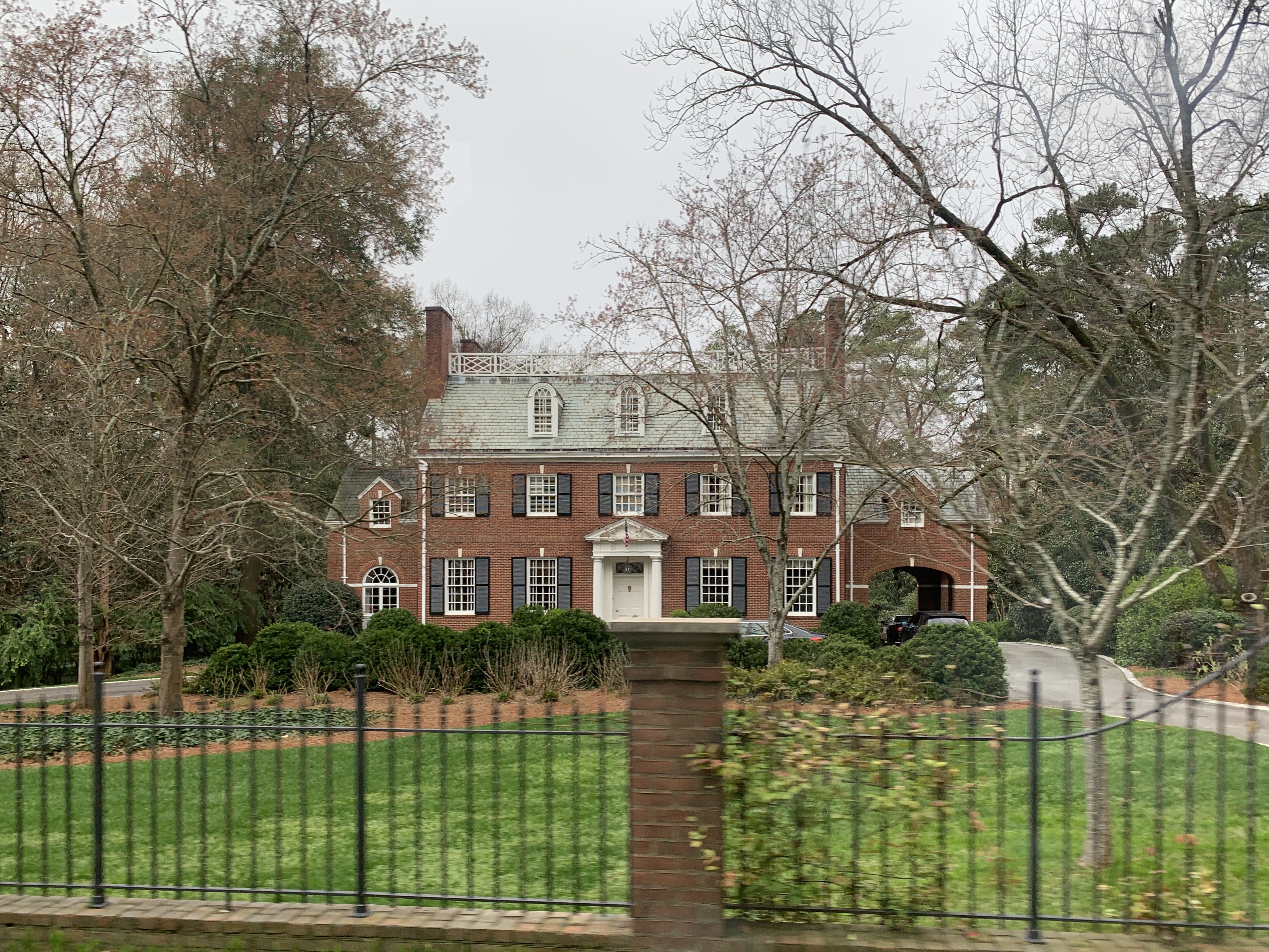
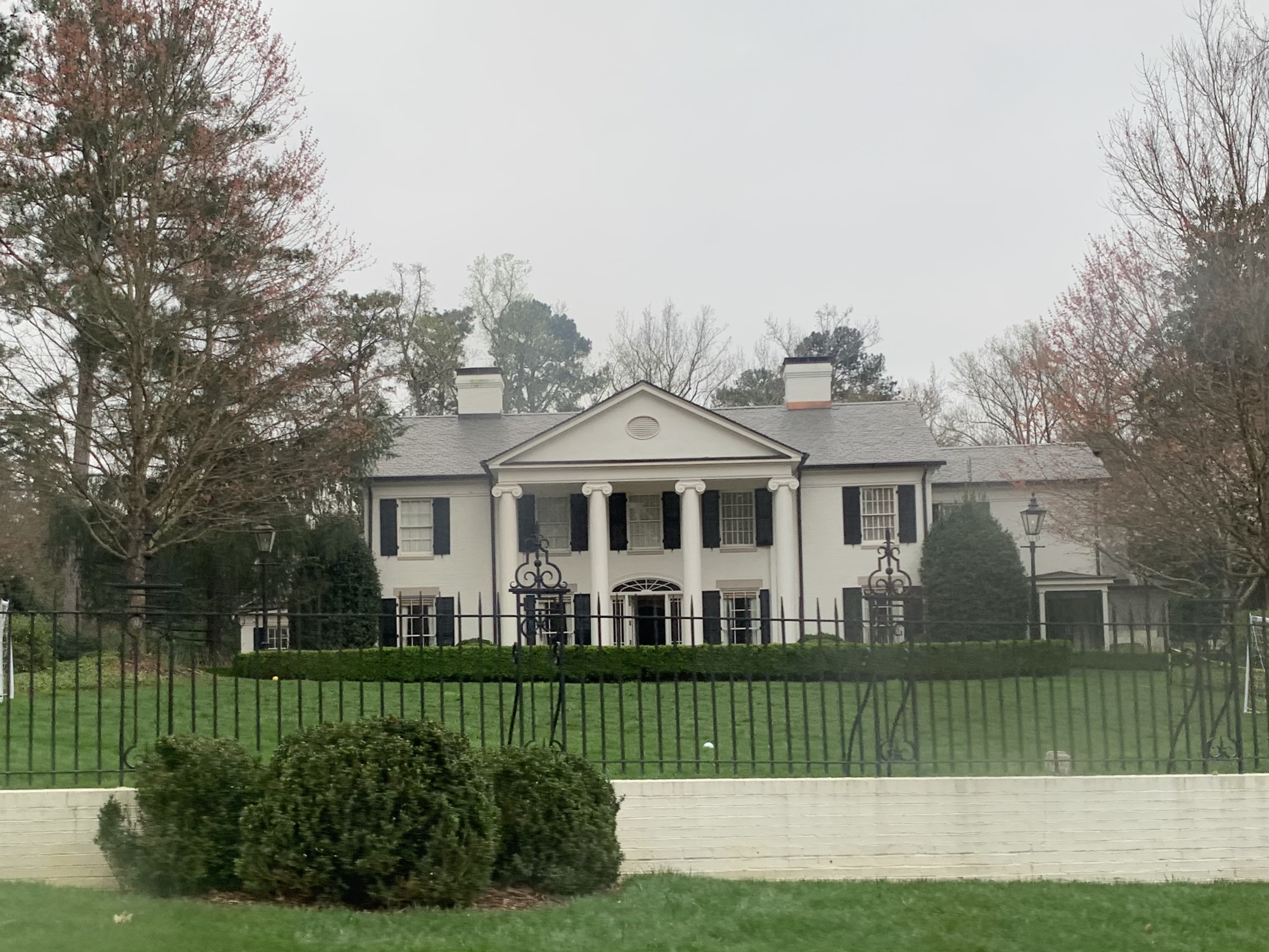
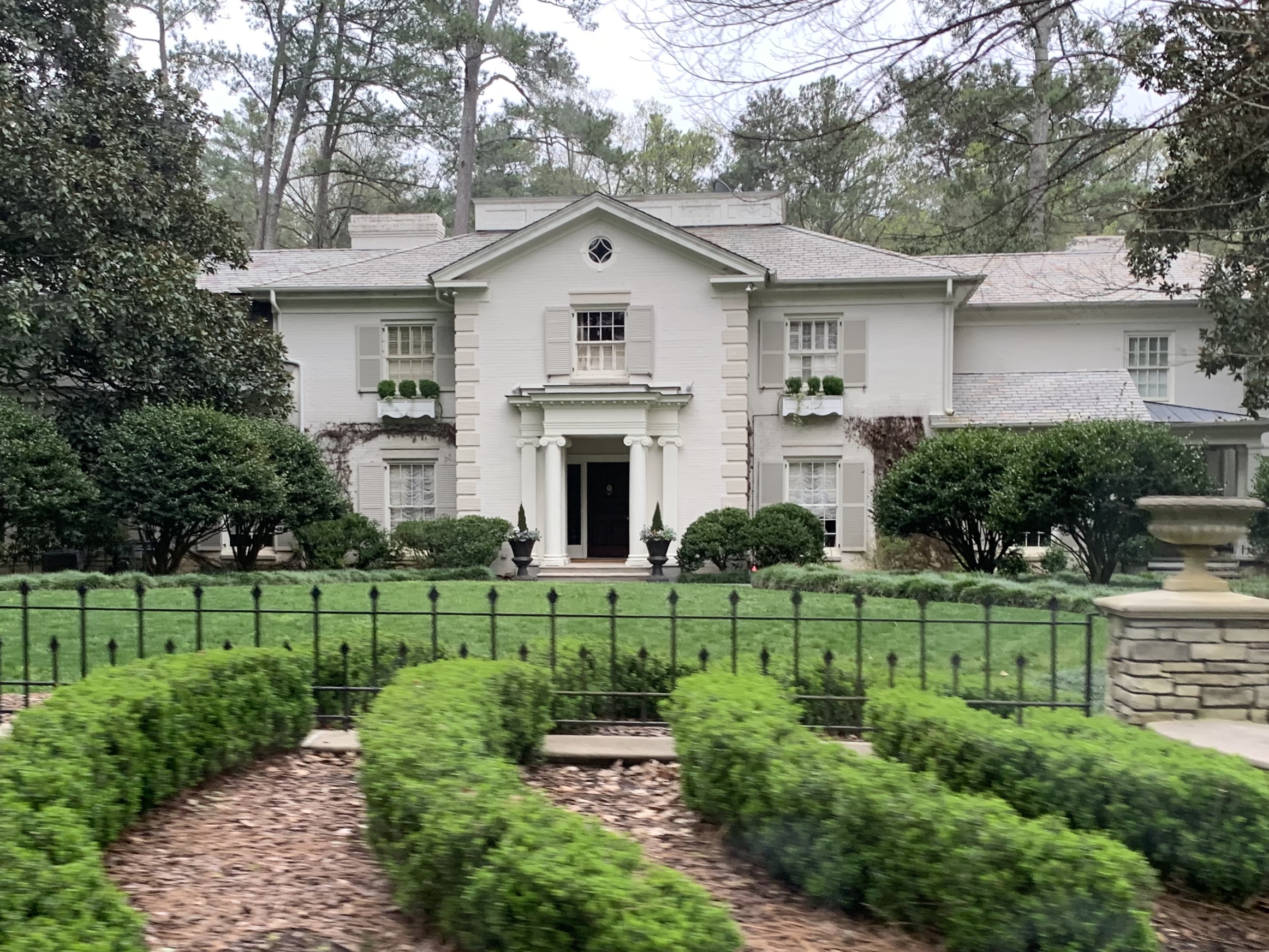
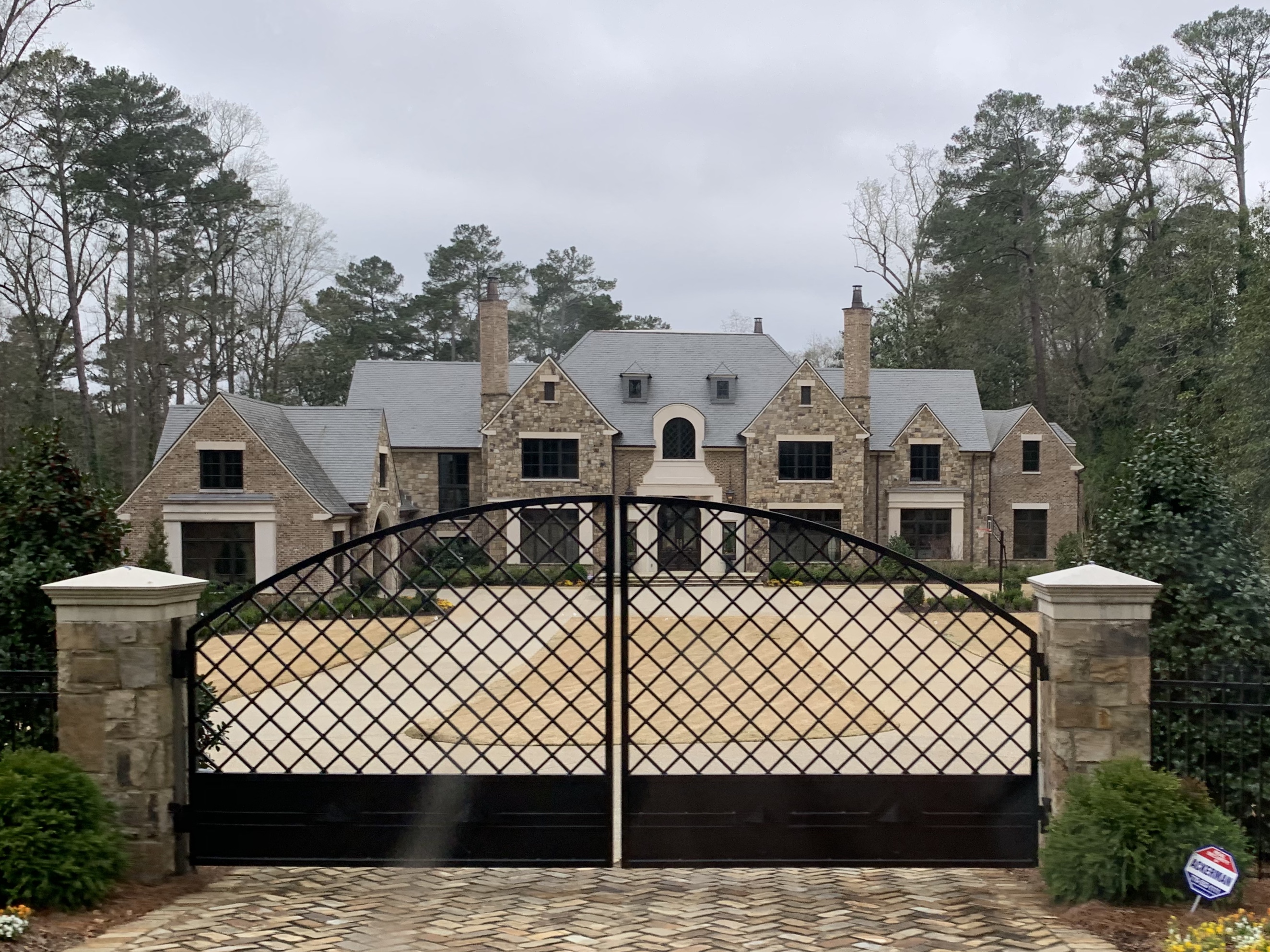
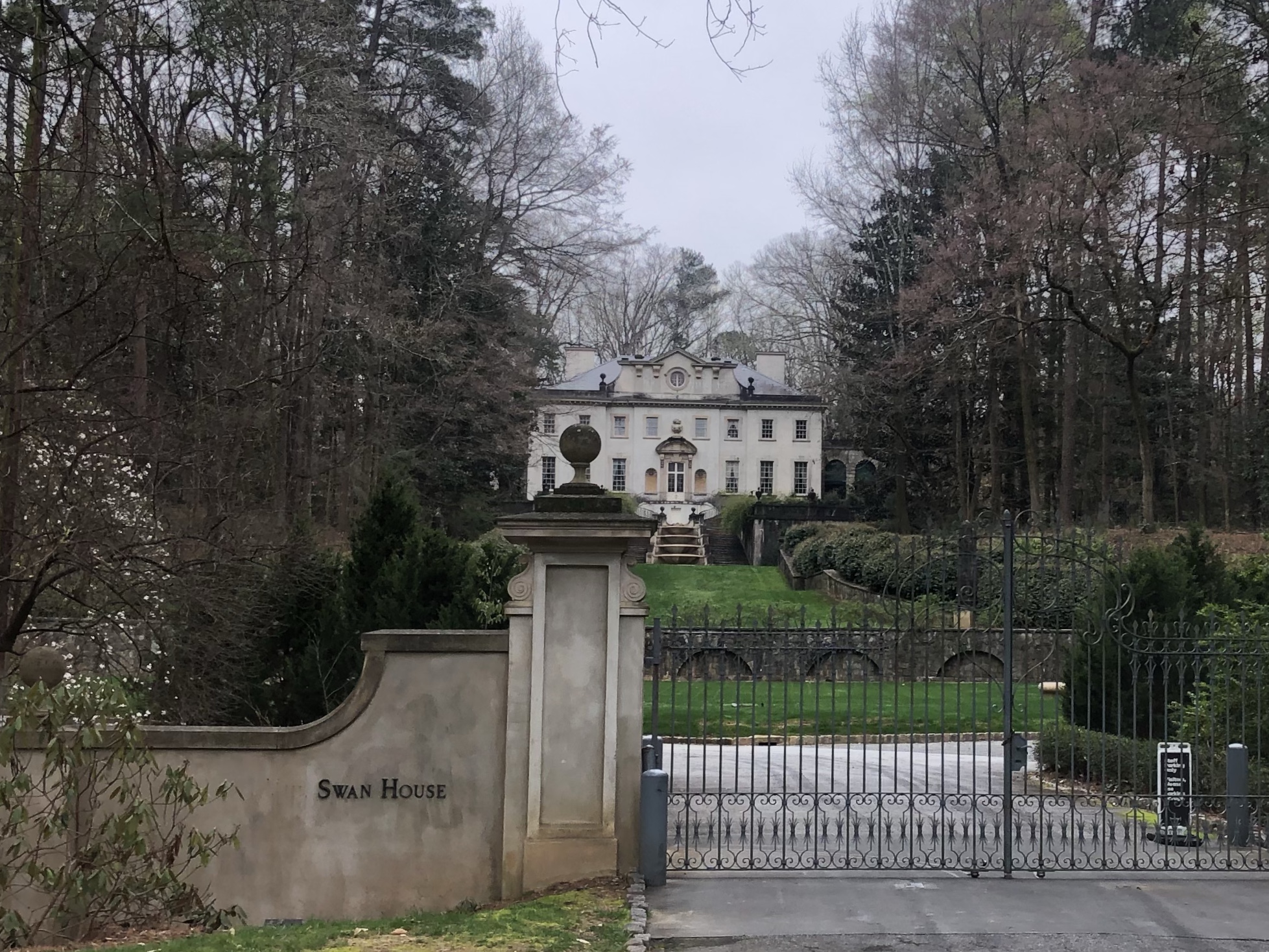
    At the end of the day, we drove around the suburb of Buckhead. Here you can see some of the most ornate and stereotypically southern mansions in Atlanta. The suburb has its own Heritage Society dedicated to historic preservation.

    Quite a few of the mansions in the suburb are heritage listed. If you are looking for more information, click here to see an overview of all the historic residences. I’m going to take you on a visual journey of just a handful of the mansions we saw.

    This is also where I’ll end my post on Atlanta. Like I said at the beginning, I cannot wait to return and explore more of the city.

    IMG_7437-1
    Buckhead
    IMG_7399-1
    Buckhead
    IMG_7404-1
    Buckhead
    IMG_7411
    Buckhead
    IMG_7426-1
    Buckhead
    IMG_7433
    Buckhead
    IMG_7579
    Buckhead

  • New Orleans: St. Louis Cemetery No. 1

    I’ve been back in Australia for a few days now in self-quarantine. This has provided an opportunity to write a couple of extra blog posts on New Orleans. First on the list is St. Louis Cemetery No. 1 located just on the outskirts of the French Quarter. It is the oldest cemetery that still exists in New Orleans and was inscribed on the National Register of Historic Places in 1975. The majority of information included in this post has been sourced from the nomination form for the Register that can be accessed by clicking here. It is definitely worth going through the document as you will find some amazing photographs of the Cemetery from the 1970s.

    This post will be divided into three parts – why such cemeteries exist in New Orleans, the history of St. Louis Cemetery No. 1 and our experience of visiting. I will mention this again, but please keep in mind that if you are wanting to visit this cemetery as a tourist, you need to be with a licensed tour guide. I will provide a link at the end which contains a list of licensed tour guides.

    Above Ground Cemeteries

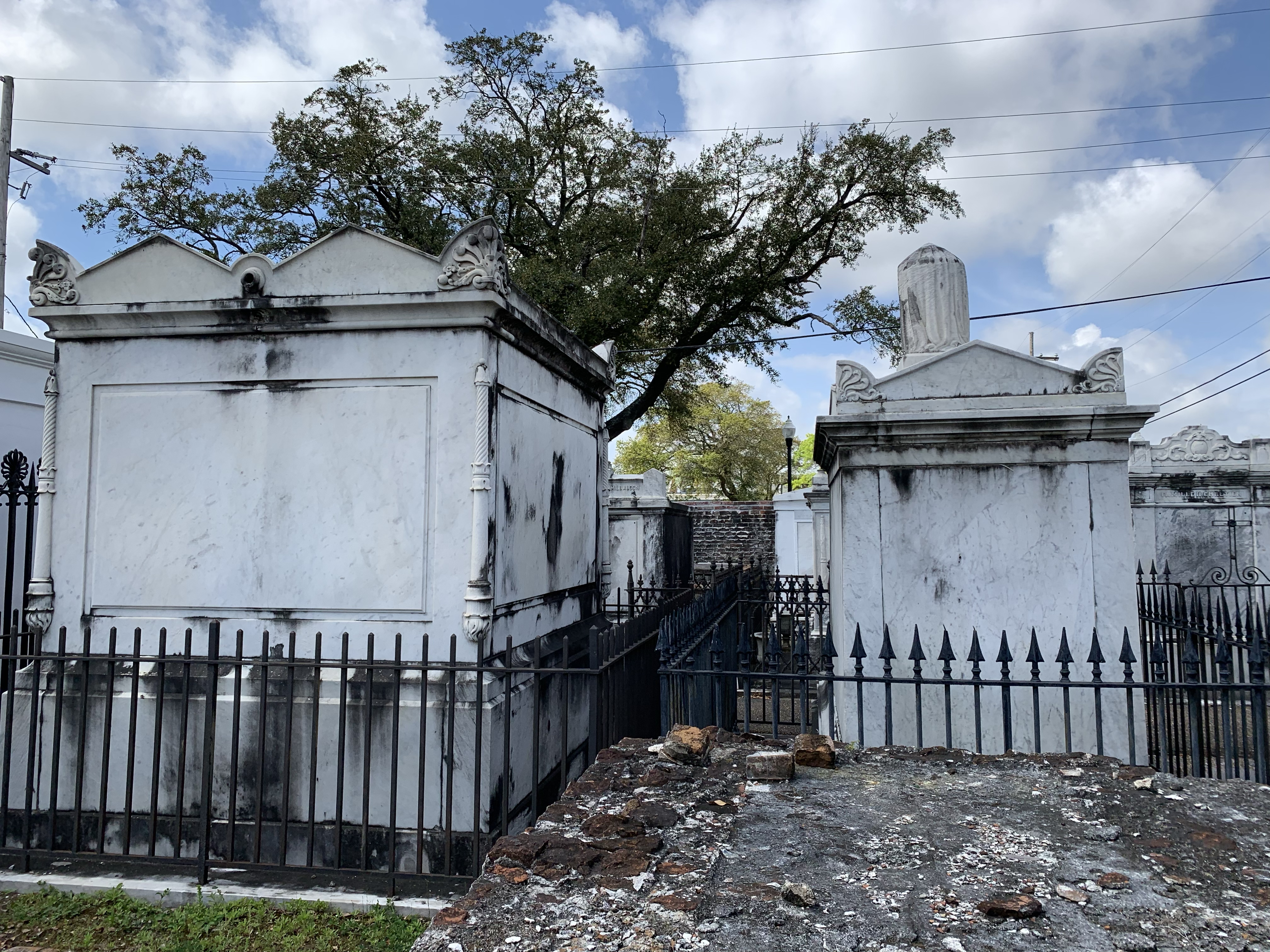
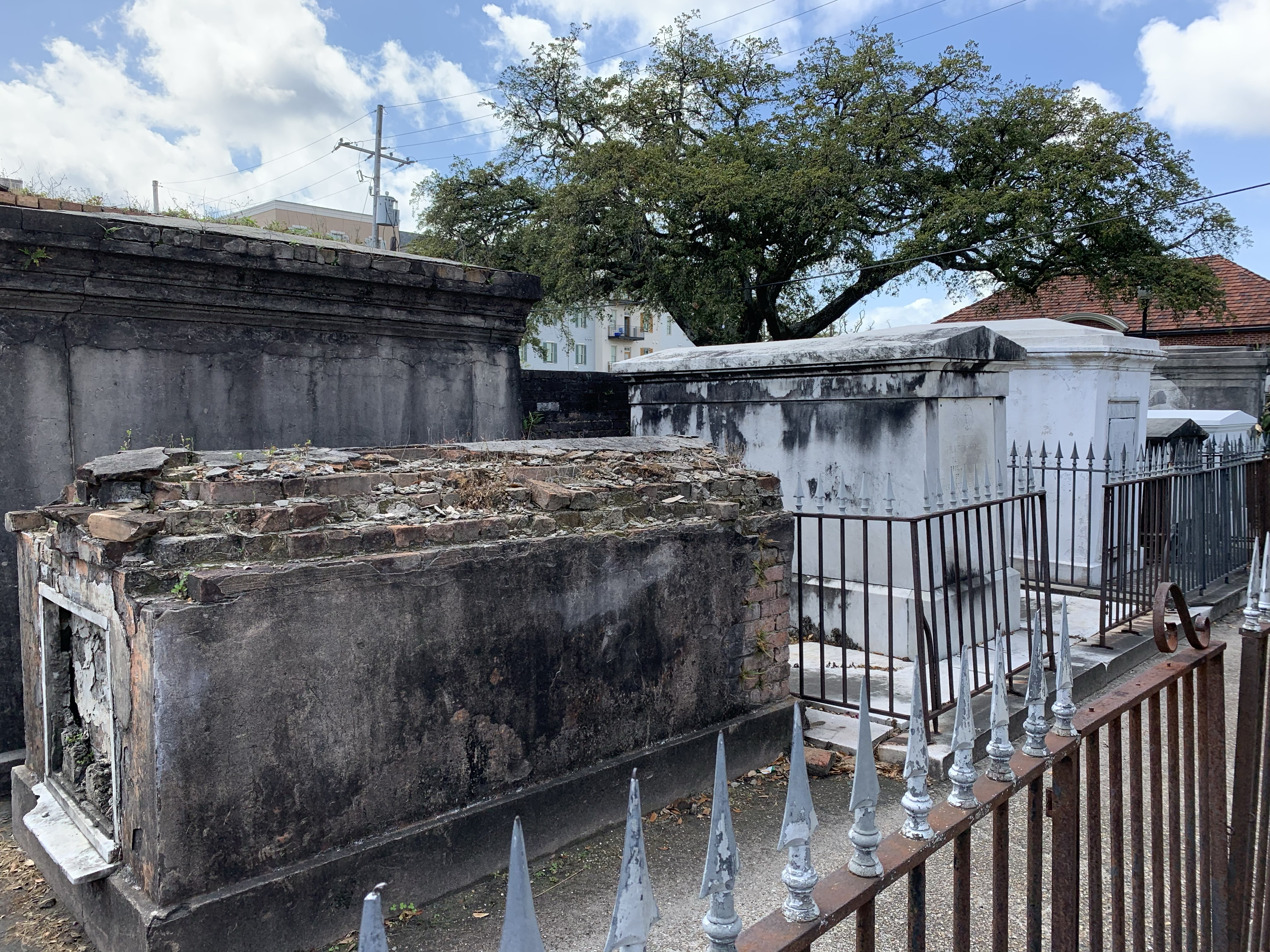
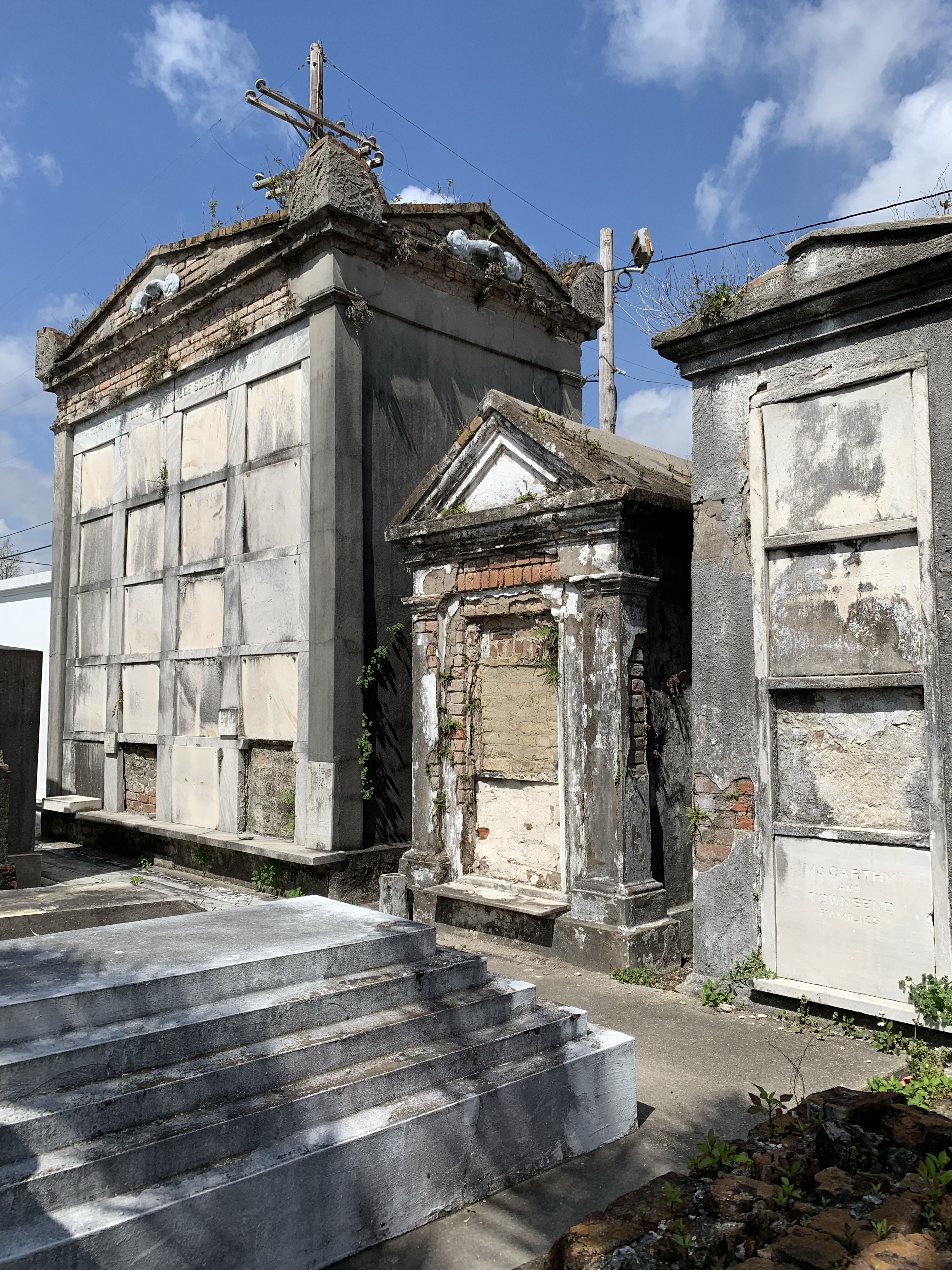
    Above ground cemeteries are not unique to New Orleans, however one could argue that it is the ones here that have become most well-known. These types of cemeteries have been built all over the world as a way to overcome challenges with burying the dead. Nicknamed ‘Cities of the Dead’, the grouping of large burial structures provides the illusion that you are walking down streets with houses on either side surrounded by iron fences.

    IMG_6577
    St. Louis Cemetery No. 1
    IMG_6581
    St. Louis Cemetery No. 1

    Early settlers in New Orleans found it particularly difficult to bury their dead. In the city the water table is high, meaning digging only a few feet down will result in a grave that fills with water. There are stories of bodies literally popping up all over New Orleans whenever there was heavy rain. Even today, in areas that don’t usually flood, if flooding occurs there might be some pretty unsettling sights. For this reason, the idea of burying the deceased above ground was the only viable option.

    Generally, these cemeteries include wall vaults for those who may not be able to afford a family vault, large community vaults and individual family vaults. After a year or two, the internal temperature of the vaults is high enough to cremate an individual. Their remains are pushed to the back of the vault and it can be used again.

    St. Louis Cemetery No. 1

    St. Louis Cemetery No. 1 opened in 1789 replacing the St. Peter Street Cemetery. The latter cemetery had reached full capacity after two fires and numerous epidemics that would spread through the city every summer. It was also decided that the new cemetery should not be so close to where people lived. St. Louis Cemetery No. 1 was only meant to be a temporary burial site. However, a Spanish royal decree was declared in 1789 allowing the site to become permanent.
    The Cemetery was originally exclusively for Catholic burials. Following the Louisiana Purchase in 1803 and the Haitian Revolution between 1791 and 1804, the demographics of the city changed. Protestants from the Northern states and refugees from Haiti arrived in New Orleans mixing Protestantism with Caribbean and West African religious beliefs. The Cemetery expanded to accommodate these groups including a space for Protestant burials and one for the burial of people of colour.

    As well as being inscribed on the National Register of Historic Places, St. Louis Cemetery No. 1 was also listed on the African American Heritage Trail in 2008.

    According to the significance statement (found in the Register nomination form), one of the primary reasons for acceptance on the Register is the Cemetery’s architecture. The Cemetery has a variety of brick tombs built in the early 19th century as well as elaborate marble tombs built later with accompanying statues. These are representative of local stonecutters’ artistic skills and abilities. Such tombs contain notable figures from New Orleans’ history including the first mayor of the city and, reportedly, Marie Laveau, the Voodoo Queen.

    IMG_6575
    St. Louis Cemetery No. 1
    IMG_6565
    St. Louis Cemetery No. 1
    IMG_6638
    Marie Laveau’s potential final resting place

    Our Experience

    Luckily, I read before visiting that it was necessary to be on a tour with a licensed tour guide (full list of tours here). Judging by how other groups were moving through the Cemetery, each tour roughly covers the same ground, but obviously might not distribute the same information.

    We focused mainly on the logistics of the Cemetery (how burial practices worked) then spent some time discussing the history of the Cemetery. In particular, we learnt about what would happen if someone couldn’t afford a vault, the more well-known people buried in the Cemetery and a little about the architecture. We only really touched on the different styles of tombs and some of the architects involved.

    One of the highlights on the tour was seeing the potential final resting place of Marie Laveau. I say potential because it isn’t actually 100% confirmed. It is, however, where her family vault is located. One thing our guide did mention was the high level of vandalism that occurs in the Cemetery due to a belief held that if someone marks her tomb with three X’s (XXX) they can have any wish they like. People mistaking other tombs for hers has led to the unnecessary vandalism of some tombs in the Cemetery. I can’t believe it has to be said, but don’t vandalise graves.

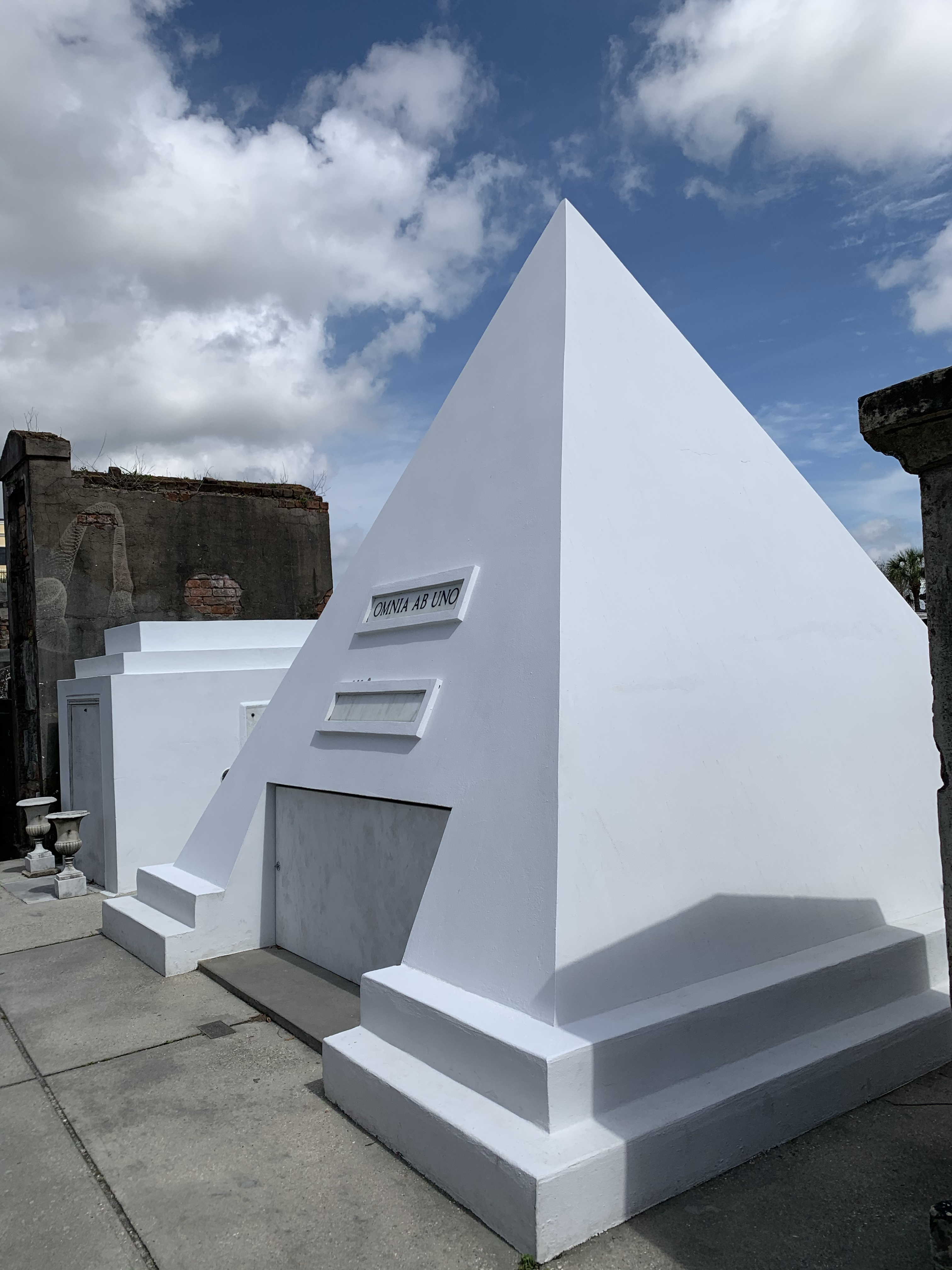
    Another highlight for me was having the opportunity to learn about burials in New Orleans and how rituals have changed over time. It would have been fine to wander around the Cemetery, but this allowed for a much more informative experience. And, of course, seeing Nicholas Cage’s vault (see the pyramid below) was something pretty bizarre.

    IMG_6601
    Nicholas Cage Vault

    I would strongly recommend a tour that spends the majority, if not all, the tour time in the Cemetery. This is because there is so much to see and learn, you wouldn’t want to rush things. Overall, we had about an hour in the Cemetery. I feel a lot was covered, but there was an opportunity to discover more.

    IMG_6567
    St. Louis Cemetery No. 1
    IMG_6550
    St. Louis Cemetery No. 1

    Visiting St. Louis Cemetery No. 1 is definitely something I’d recommend. It is an amazing cultural experience and a great opportunity to learn more about death rituals and practices, particularly in New Orleans.

  • New Orleans: Oak Alley Plantation and Whitney Plantation

    My original plan was to write a blog post comparing and contrasting our visits to Oak Alley Plantation and Whitney Plantation. However, after some reflection, I don’t think that’s going to be possible. Why? Because each offers its own story, its own interpretation, and its own perspective of the past. They are too different to compare and the contrast should be obvious once you’ve finished reading this post. If you are planning on visiting plantations while in New Orleans, I highly recommend you try and visit more than one. Most tour companies we researched offer tours that take visitors to two plantations in one day. They are uncomfortable, but they each add a chapter to the broader story that cannot be forgotten. In saying that, I do highly recommend visiting the Whitney Plantation – you will read why soon. 

    Instead of comparing/contrasting, I’m going to run through how we spent our time at the different plantations and what’s on offer. If you wanted to drive and not take a tour, you could have a pretty much identical experience to what I’ll write below.

    Oak Alley Plantation

    If you have ever seen any promotional material for plantations or an iconic image of a plantation, you were probably looking at Oak Alley. When you first drive past, all you can see is an alleyway lined with 300-year old oak trees leading to a small mansion. Oak Alley was originally the Bon Séjour plantation owned by Valcour Aime. In 1836, he exchanged this property for another with his brother-in-law Jacques Télesphore Roman. Under Roman, the mansion was built by enslaved people. It was lived in by various families until 1972 when it opened to the public. Both Oak Alley and Whitney were sugar cane plantations.

    IMG_6950
    Oak Alley Plantation
    IMG_6918
    Oak Alley Plantation

    There were 220 enslaved people who worked at the plantation during its years of operation. Beneath is a photograph showing just a handful of names that have been discovered in the records and inscribed on one of the walls in the reconstructed cabins (more on that later). In the same cabin there is further information on one of these enslaved people, Antoine. Antoine was an expert gardener and grafted the tree that would become the ‘paper shell’ pecan, aka the pecan we eat today.

    IMG_7012
    Oak Alley Plantation

    Our Visit

    After arriving at the plantation we were handed a ticket to tour the ‘big house’ – the name given to the plantation homes. We went straight to the house for a 30 minute tour of the inside. The tour goes into the history of the family, their ownership of enslaved people, and touches on some architecture. The history of slavery is not brushed aside, but it is also not the focus. A highlight during the tour is the artifacts room containing original documents, photographs and objects. In the middle of the room is a display case containing a brass wedding invitation from the family opposite a pair of cast iron shackles. This juxtaposition between the family and the enslaved people is powerful. When the tour finished, we walked through the alley of oaks and toured the two gardens either side of the house.

    After a short break, we visited the slavery exhibition which is on display in the reconstructed (not original) cabins. It is a self-guided tour through six cabins with some thematic panels and objects located outside and in between. The content focuses on a range of themes including ‘the expectations of house slaves’, ‘caring for the sick’, ‘field slaves’, and archaeological evidence (everything in inverted commas is the language used by the plantation). The rooms contain furniture that would have been similar to what was available. For example, you can see in the photograph of the Sick House that as well as furniture there are some medical bottles on display.

    IMG_6966
    Oak Alley Plantation – Slave Cabins
    IMG_6980
    Reconstructed Sick House

    The panels only delve so far into slavery and feel quite detached. It is also important to note that this exhibition is entirely optional. You could feasibly have someone visit the plantation, not see the exhibition, and therefore not learn about this history. We spent a couple of hours walking through the cabins then listened to a brief talk about slavery on the plantation.

    We ran out of time to visit the other sites including the Blacksmith shop and the Civil War Tent. They recommend at least 2 hours for your visit and I would say definitely allow this, if not more.

    Whitney Plantation

    The Whitney Plantation operated until 1867 and opened as a heritage place and Museum in 2014. It is the only plantation in Louisiana that exclusively focuses on the experience of enslaved people.

    As soon as we got off the bus we went straight to the visitor centre to join a tour. The only way to see the plantation is by going on a guided tour that lasts around 1 hour and 45 minutes. The tour begins by walking visitors through three separate memorials. The first is The Wall of Honour, a memorial dedicated to all enslaved people on the Whitney Plantation. It contains the names, origins, age and skills (where known) inscribed on large granite slabs. Next is the Allées Gwendolyn Midlo Hall Memorial dedicated to the 107, 000 enslaved people in Louisiana. It is named after the creator of the Louisiana Slave Database, Gwendolyn Midlo Hall, who researched and recorded the names of enslaved people. This memorial not only includes names, but quotes focusing on experiences, hardships faced, and resilience. The final memorial, The Field of Angels, is the most harrowing. It is dedicated to the 2, 200 enslaved children who died in the St John the Baptist Parish between the 1820s and 1860s. The statue is of an angel carrying a child to heaven.

    IMG_7108
    The Wall of Honour
    IMG_7131
    Allées Gwendolyn Midlo Hall Memorial
    IMG_7125
    Whitney Plantation

    We were then guided through the cabins. During this portion of the tour we learnt about how sugar cane was harvested, the major risks involved, punishments for enslaved people who tried to escape and their living conditions. Work days often lasted 20 hours in busy periods and 16 hours when things were quiet. Each enslaved person working would receive rations. Any dependents, including children, did not receive these rations. This means their food would need to be supplemented with crops that were often grown outside the cabins. I will include a photograph of some of the original cabins below. Each cabin held two families. The second photograph contains two statues made by artist Woodrow Nash as part of the ‘children of Whitney’ sculptural series.

    IMG_7146
    Whitney Plantation
    IMG_7155
    Woodrow Nash, ‘children of Whitney’

    Right at the end of the tour we saw the ‘big house’. There is some information on the family available including the fact they never really lived in the house. After a brief walk through one room, we went to the back of the house to learn about what happened after emancipation. Essentially, those who were enslaved could be arrested on the street for loitering and sent back to plantations to work for minimum wage.

    IMG_7164
    Whitney Plantation

    Final Thoughts & Practical Information

    As you can see, each plantation offers a very different experience. I said at the beginning that a visit to the Whitney Plantation is a very wise idea because of its focus on the experience of those enslaved. If you are wanting a truly educational experience rather than a tourist location, it cannot be missed.

    We visited both plantations on separate day tours. You can combine them in one tour offered through companies such as Cajun Encounters and Grayline. If you are going to drive there yourself, both have entrance fees and tickets can be purchased from their visitor centres. There are a lot of gravel paths to navigate at Whitney which may be difficult for wheelchairs. Not all historic structures are accessible. Oak Alley is accessible apart from the second floor of the ‘big house’. There are iPads available in the first floor media room that tour the second level of the home for those unable to take the stairs. Both plantations have very comprehensive websites that are worth reading through before your visit.

  • New Orleans: Pharmacy Museum

    If you are ever visiting New Orleans and have time to explore a museum in the French Quarter, I strongly recommend visiting the New Orleans Pharmacy Museum. Not only is it a museum, but also a heritage place – inscribed on the National Register of Historic Places. The building was originally the home of Louis J. Dufilho Jr., America’s first licensed pharmacist. Prior to 1804, to become a pharmacist involved a six month apprenticeship. You were then free to sell any of your own concoctions or medicines without any regulations enforced. In 1804, a board of reputable pharmacists was formed that administered a three-hour oral examination. Louis J. Dufilho Jr. was the first to pass this examination thereby allowing his pharmacy to be the first in America run on proven adequacy.

    img_6399
    Museum Entrance

    The Museum consists of two floors, both of which have some small exhibitions and an array of bottles, containers and equipment. I will say now that, to the best of my knowledge, the second floor of the Museum is not accessible. The first floor looks as if the pharmacy is still in operation with historical bottles lining the walls and glass display cases displaying a diversity of objects. Upstairs, there are a few exhibitions and some information on feeling unwell in the 19th Century.

    I will include a couple of photographs below so you can see just how many objects are on display in such a small space. I really want to focus on a few highlight objects (that I must admit were fun narrowing down). Although I could make some comments about the layout of the exhibitions, it is more a museum filled with curiosities, perfect for exploring on your own. There are, of course, thematic labels placed amongst the objects that help with establishing context. These labels are a little outdated looking, but do suit the overall aesthetics. The information that will accompany each highlight object has been sourced from these labels.

    img_6488
    Pharmacy Bottles
    img_6431
    Pharmacy Bottles
    img_6417
    Pharmacy Bottles

    1. Love Potions

    To no surprise, I have visited quite a few medical museums that contain similar objects to those on display here. For this reason, my favourite objects on display were the love potions as they are something a little different. Voodoo powders and potions were commonplace in pharmacies during the 19th Century. Those who were looking for love could order a love potion from the pharmacy by number, not by name, to avoid embarrassment. This numbering system inspired the song ‘Love Potion Number Nine’. The contents were not usually ingested. Rather, they were sewn into the lining of a jacket or distributed around the home.

    img_6448
    Love Potion

    2. Epidemic Illness Treatments

    New Orleans is a hot and humid city which means a lot of mosquitoes. In the past, this led to outbreaks of Yellow Fever as well as Malaria. Add Cholera to this list and you have a city in summer that was truly deadly. To give you an idea of just how deadly, approximately 5-10% of residents died each summer due to infectious diseases. In 1842, a charitable volunteer organisation was formed that provided home care for those during epidemics. Louis Dufilho Jr. was the official pharmacist in charge. For those who contracted Malaria, quinine was available that could actually cure a patient. Without access to this drug, patients were exposed to bleeding, purging and arsenic. The bottles photographed below all contain medicines that were administered during the 19th Century in an attempt to cure diseases that were classified as epidemics.

    img_6506
    Epidemics

    3. Prohibition Bottles

    During Prohibition, alcohol could still be prescribed for medicinal use. All bottles made for pharmacy use during this period were marked with the label ‘Federal Law Forbids Sale or Reuse of this Bottle’. This was to discourage people re-using the bottles and selling their own homemade alcohol.

    image
    Prohibition Bottles

    4. Calendula

    This bottle and object label is one of many in a cabinet that explores certain herbs and their medicinal properties. Calendula stood out to me as it is something I use on my skin to reduce inflammation. As you can see, the label for each bottle has both a mythical and medicinal history included. It is interesting to see the evolution of the herb and its use.

    img_6478
    Calendula

    5. Veterinary Tonics

    I have to include the veterinary tonics on this list. I don’t think I’ve ever seen these before in a medical history museum! My favourite is the worm powders for dogs and the ‘quick cure’ which you can imagine might not have done what it promised.

    img_6470
    Vet Bottles

    6. Weight Loss Supplements

    It was mildly horrifying seeing the ingredients in some of these medications and reading what they promise to achieve. For example, the pills at the front promise to stimulate the kidneys to assist with weight loss. It made me stop and reflect on what dangerous methods we implement today in order to try and lose weight.

    img_6458
    Weight Loss

    7. Children’s Treatments

    Thankfully there is a bottle that states no opium can be found in this treatment. If you are noticing that quite a few bottles don’t include ingredients on their label, they didn’t have to legally tell you what was in the medication until the early 20th Century.

    img_6452
    Children’s Treatments
    img_6454
    Children’s Treatments

    8. Kola Nut

    Right next to the soda fountain is a bottle of Kola Nut. This contains the dried fruit of the Cola nitida tree that is grown in tropical climates. It was first introduced to Coca-Cola in 1886.

    IMG_6443
    Koala Nut

    9. Scarifier

    This is about as terrifying as it sounds. This spring-loaded device contains numerous blades that would cut through the skin allowing for bloodletting. Some diseases were believed to occur due to an excess of blood in the body. Releasing the blood was thought to release the disease.

    img_6433
    Scarifier

    10. Perfumes

    These small containers once held perfumes that were made from Neroli, lavender and violet. Jasmine was also used by those who worked in the red light district of New Orleans.

    IMG_6423
    Perfumes

    11. Miniature Injection Travel Case

    This small travel case could be taken with a patient wherever they went and be used for quick drug administration. Next to the case is a packet of tablets that promised to assist the vaccination in working quickly.

    IMG_6419
    Mini Vaccination Kit

    12. Ointment Jars

    Last, but not least, these ointment jars were used for storing all sorts of ointments in the 19th Century. Ointments are anything that can be applied to the skin and were made using paraffin, lard and petrolatum.  The little jars are mostly made from porcelain so  would be very delicate.

    image-2
    Ointment Jars

    Practical Information

    The New Orleans Pharmacy Museum is open Tuesday to Saturday from 10am to 4pm. It is definitely worth checking their events calendar to make sure there are no large bookings that might result in the Museum being closed. Entrance is $5 for adults, $4 for students and seniors and free for children under 6. As I mentioned before, the second story of the house is not accessible. If you are looking for a step back into a medical past while in the French Quarter then look no further.
  • New Orleans: National World War II Museum

    No surprises here – the National World War II Museum covers American soldiers and the American homefront during World War II. The Museum is so large it is called a Museum Campus with 6 separate buildings addressing themes such as the the European and Pacific theatres of War and the homefront. There is literally so much to see and so many thematic panels I think it would be impossible to soak it all in during just one visit. We didn’t want to delve too deep into the content so focused more on the different exhibition layouts, i.e. how the information was presented.

    We started our visit with the 4D film experience ‘Beyond All Boundaries’ narrated by Tom Hanks. This was followed by a walk through the US Freedom Pavilion: The Boeing Center and Campaigns of Courage: European and Pacific Theaters. In total, we only spent about 2 hours in the Museum before deciding that was our limit. This post will provide a brief summary of the three experiences/exhibitions listed above.

    IMG_6159
    Museum Entrance

    Beyond All Boundaries

    This 4D film experience engages almost all the senses. It tells the story of America’s involvement in World War II including the major battles fought and how the War changed the fabric of American culture/society. Along with archival photographs and video, there are readings of firsthand accounts. Events such as D-Day, the defense of Rome and the dropping of the atomic bomb are all covered in order to piece together a bigger picture of the War. The experience lasts 45 minutes which verges on a little too long.

    I am so glad there are some warnings before entering the theatre. These basically inform visitors about the use of smoke machines and loud noises (including gun fire). I can imagine that this kind of sensory experience might be uncomfortable for a lot of people and I have to admit we did consider leaving half way through. I would recommend adding this experience to your ticket only if you are wanting an overview of the American World War II experience.

    US Freedom Pavilion: The Boeing Center

    The last building, The Boeing Center, contains all the large World War II aircraft. As you can see in the photographs below, there are ramps going all over the place allowing visitors to get up close to the planes and see all the details. We just stayed on the ground level and admired the planes from below. This is one of the most impressive buildings in the Campus and worth exploring.

    IMG_6128
    The Boeing Center
    IMG_6127
    The Boeing Center

    Campaigns of Courage: European and Pacific Theaters

    These two exhibitions are what I am wanting to focus on from an exhibition design perspective. Also, I will include a quick mention of some highlight objects. We moved through these exhibitions quite quickly as they were very crowded and it was near impossible to read the text. Instead, we observed how the material was being displayed.

    As you can see from the photographs below, each space in this exhibition has been designed to visually suit the different battles and themes. For example, the Guadalcanal section was filled with (fake) tropical trees to give the illusion you were walking into the jungle. When addressing the Battle of the Bulge, the exhibition space is filled with snow covered trees with digital snowflakes falling on the walls. Nestled amongst these props are the display cases, so beautifully and smoothly integrated. The major design elements contextualised the objects and information on display in a visually appealing way. This is particularly impressive as there was always going to be a risk that these kind of props wouldn’t suit the content and be too much of a gimmick in the space.

    IMG_6129
    Guadalcanal Section
    IMG_6155
    Battle of the Bulge

    When we did have the opportunity to see some of the objects, what stood out to me was how many letters to loved ones are on display. As I mentioned in the blog post yesterday, providing this human element through personal stories or firsthand accounts is so important when displaying trauma or a disaster. The most harrowing of these paper archives are the numerous Western Union notices sent home to families to inform them of any family member deaths. I found that the letters written home by soldiers are the most insightful objects on display. Mainly because despite all the horror and trauma, you can see their desire to connect with those back home and reassure everyone.

    IMG_6138
    Letters from Battle

    Another highlight object is this cloth bag (photographed below) containing medical implements. These belonged to a newly graduated high school student, Raymond Areaux, who was drafted into the Army in May 1942. As one of his past jobs involved working in a pharmacy, he joined the Army Medical Corps. During the day, members of the Medical Corps were taught how to treat those injured on the front line. This included how to immobilise and set broken bones and how to treat bullet wounds. It is clear that the tools on display have been used.

    IMG_6140
    Medical Instruments

    Other

    Before leaving the Campus, we visited The Higgins Hotel & Conference Center. This art-deco inspired hotel is the first in America to be curated by museum professionals and attached to a museum. The hotel lobby contains artifacts, artworks, photography and personal story plaques. We went into the bar area where the chairs are designed to look like parts of ships and the high tables like parts of a production line. I can’t comment on the rooms, but it would be very interesting to see if this strong theme continues through every room or is just isolated to the lobby.

    Practical Information

    The National World War II Museum is open daily from 9am to 5pm except for Mardi Gras, Thanksgiving, Christmas Eve and Christmas Day. The 4D experience runs from 10am to 4pm with each film starting on the hour. We did not include the USS Tang Submarine Experience, but it runs every 15, 35 and 55 minutes after the hour between 9.35am and 4.35pm. There is great accessibility with a whole section of the website dedicated to the various services available. You can read that by clicking here. There is an entry fee which you can find by clicking here.