• New Orleans: The Cabildo and The Presbytère

    Greetings from New Orleans! Today was our first full day in this incredibly vibrant city. We spent most of the day walking around the French Quarter admiring the architecture and stopping for beignets along the way. Also on the agenda was visiting the Cabildo and the Presbytère. On arriving in a new city, I always like to start with a city-specific history museum to gain a greater understanding of where I am. As both the Cabildo and the Presbytère provide this overview, I’ve decided to combine them in one post. They also both belong to the broader Louisiana State Museum group.

    The Presbytère

    The first thing you’ll probably notice when visiting these museums is that they occupy some pretty spectacular buildings. The Presbytère, built in 1791, matches the style of the Cabildo and housed businesses and a courthouse until 1834. In 1911, the building was acquired by the Louisiana State Museum.

    One of the most eye-opening exhibitions we visited is titled ‘Living with Hurricanes: Katrina & Beyond’. On display is a mix of photographs, survivor testimonies, objects found after Hurricane Katrina and a few panels for context. It reminded me a lot of the Quake City museum we visited in Christchurch. In summary, both address a natural disaster by displaying objects along with personal stories. These stories are central to the exhibition and shape the visitor experience.

    The exhibition begins with a few brief introductory panels explaining why New Orleans is susceptible to hurricanes. There is also a small section on Hurricane Betsy that hit in 1965 and was the first hurricane to result in over $1 billion in damages. After establishing this context, the exhibition focuses on Katrina following a chronology of events. The path through the exhibition is prescribed which, similar to Quake City, makes sense.

    There are four sections that are designed particularly well: hurricane Katrina footage, survivor testimonies, visual timeline of events and the aftermath.

    1. Hurricane Katrina Footage

    IMG_5887
    Hurricane Katrina

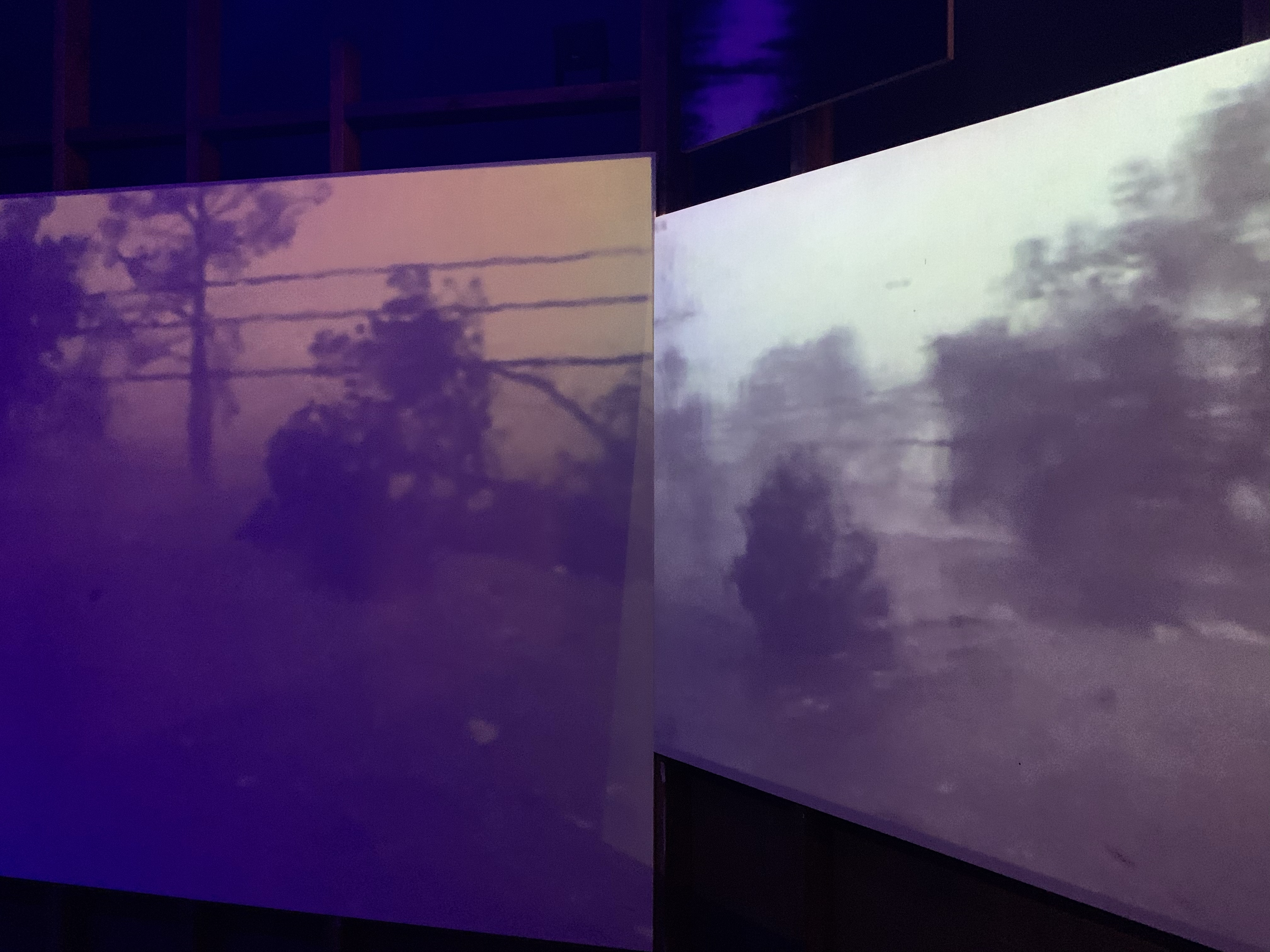
    In one of the first rooms you enter there are three large projector screens each showing footage of the hurricane. It is a very sensory experience including loud sounds and even some air blowing down from the ceiling. What this room achieves is setting the scene of the hurricane before then focusing on survivor testimonies. Although it is obviously extremely different to actually experiencing this kind of disaster, it does provide a basic understanding. This is especially helpful for those who may be unaware of what can happen during a hurricane.

    2. Survivor Testimonies

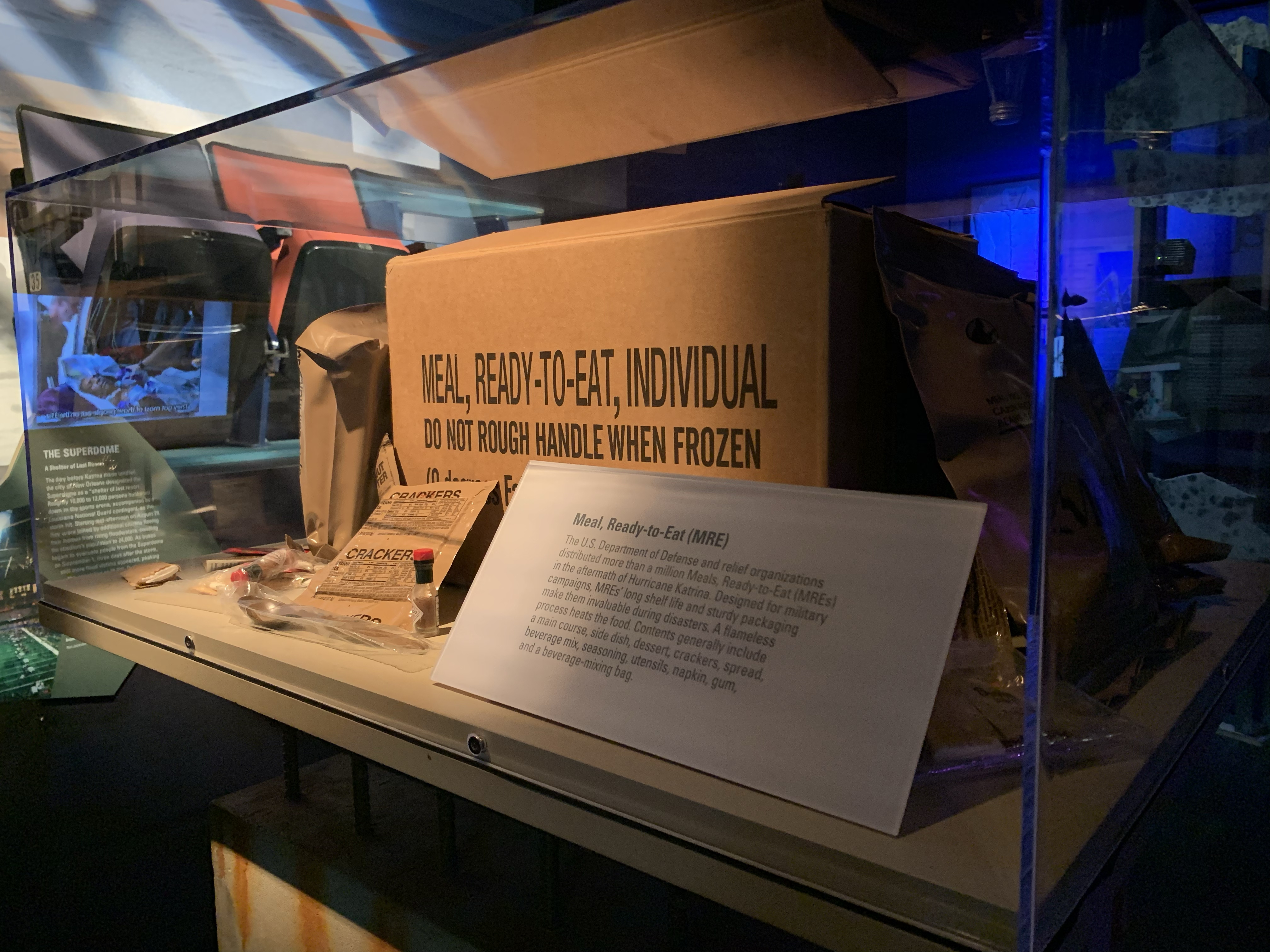
    We spent the most amount of time in the room which has survivor testimonies playing on loop. As each new testimony starts, a different object in the space is highlighted. For example, one of the objects is a ‘Meals, Ready-to-Eat’ kit filled with non-perishable food items and water. These kits were distributed to those after the hurricane. The accompanying audio includes information on the condition of the Superdome (where many fled to as their houses were destroyed) and the slow response to help those in need.

    IMG_5910
    Ready-to-Eat Kits

    Another object is the diary of Tommie Mabry who inscribed his experience of the hurricane on the walls of his apartment. The actual walls are on display so you can read Mabry’s response to the hurricane as it progressed.

    IMG_5905
    Tommie Mabry

    Having these survivor testimonies is an absolute necessity when curating an exhibition on a disaster. It is important to never lose sight of the fact that people both experienced and survived something so horrific. It is also a reminder of the impact that actions taken by governments, officials, etc., can have in the wake of a disaster.

    3. Visual Timeline of Events

    IMG_5913
    Visual Timeline

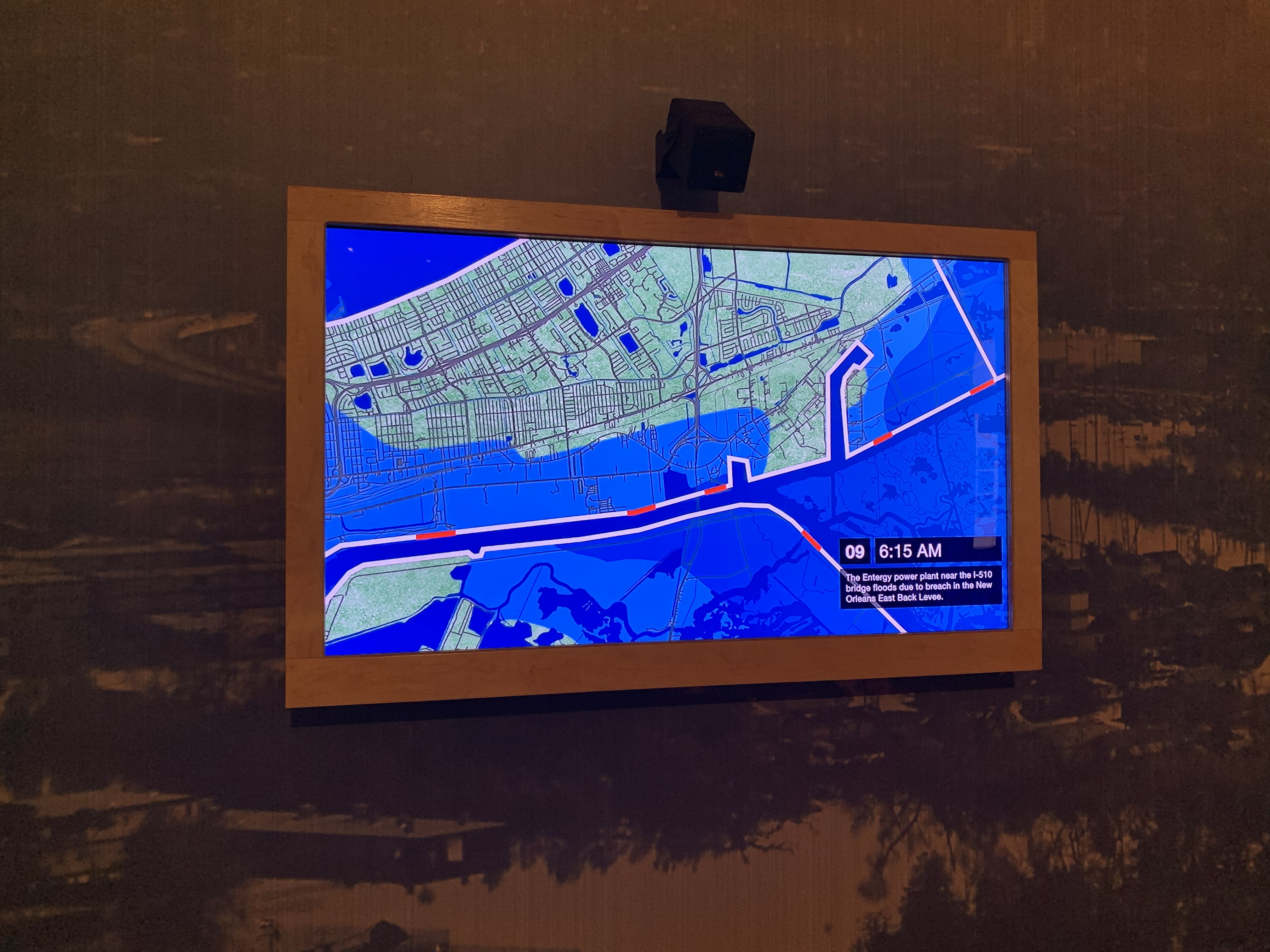
    After the survivor testimonies is a television displaying a map that shows the extent of the destruction evolving over time. There are some testimonies dispersed throughout the video. You can see how one weak flood wall meant the difference between a safe city and a disaster.

    4. Aftermath

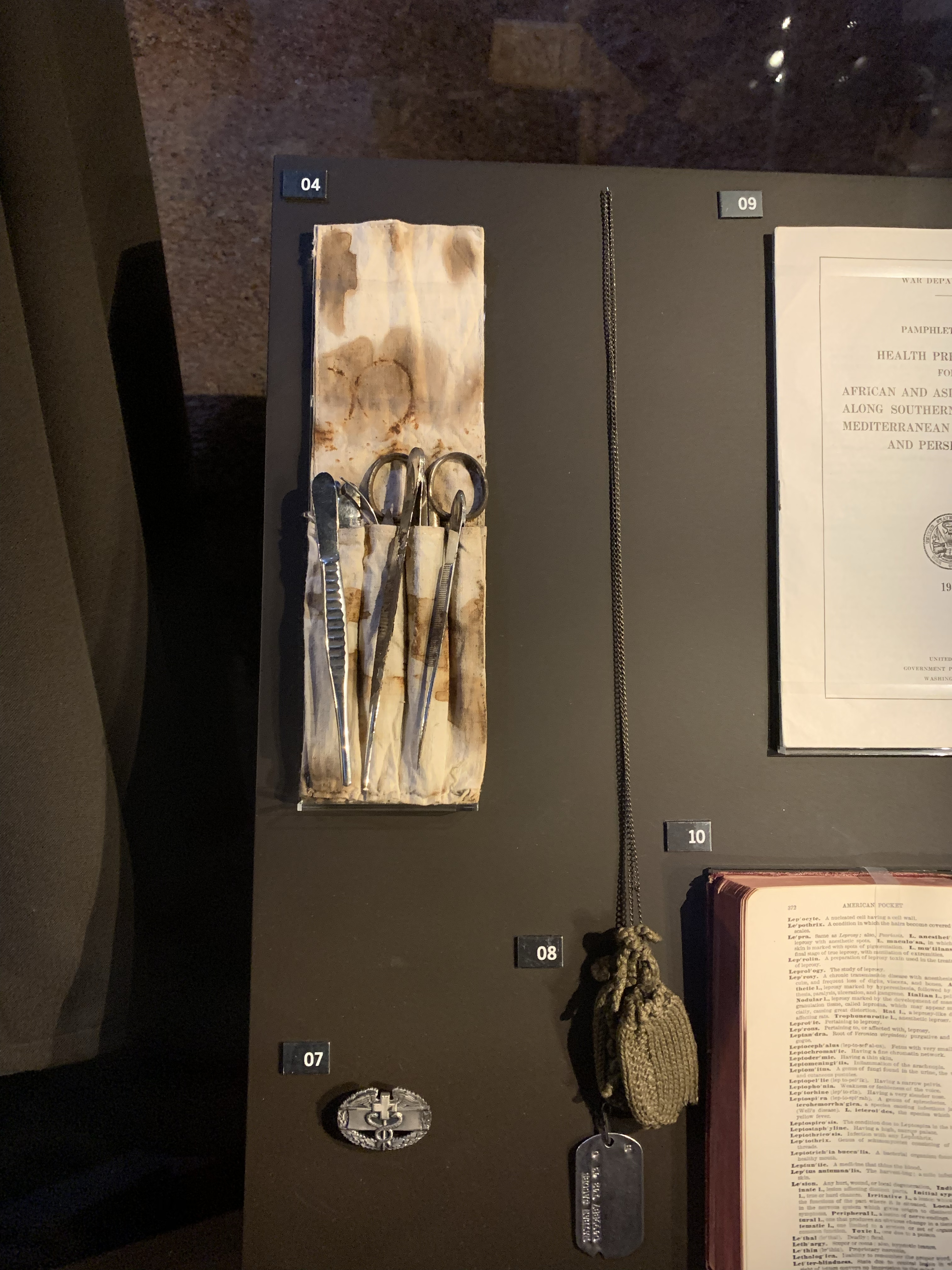
    This section of the exhibition again added something personal to the disaster displaying objects such as teddy bears and garage doors that were collected days after the hurricane. They are a reminder of both who and what was lost.

    IMG_5923
    Mould Aftermath

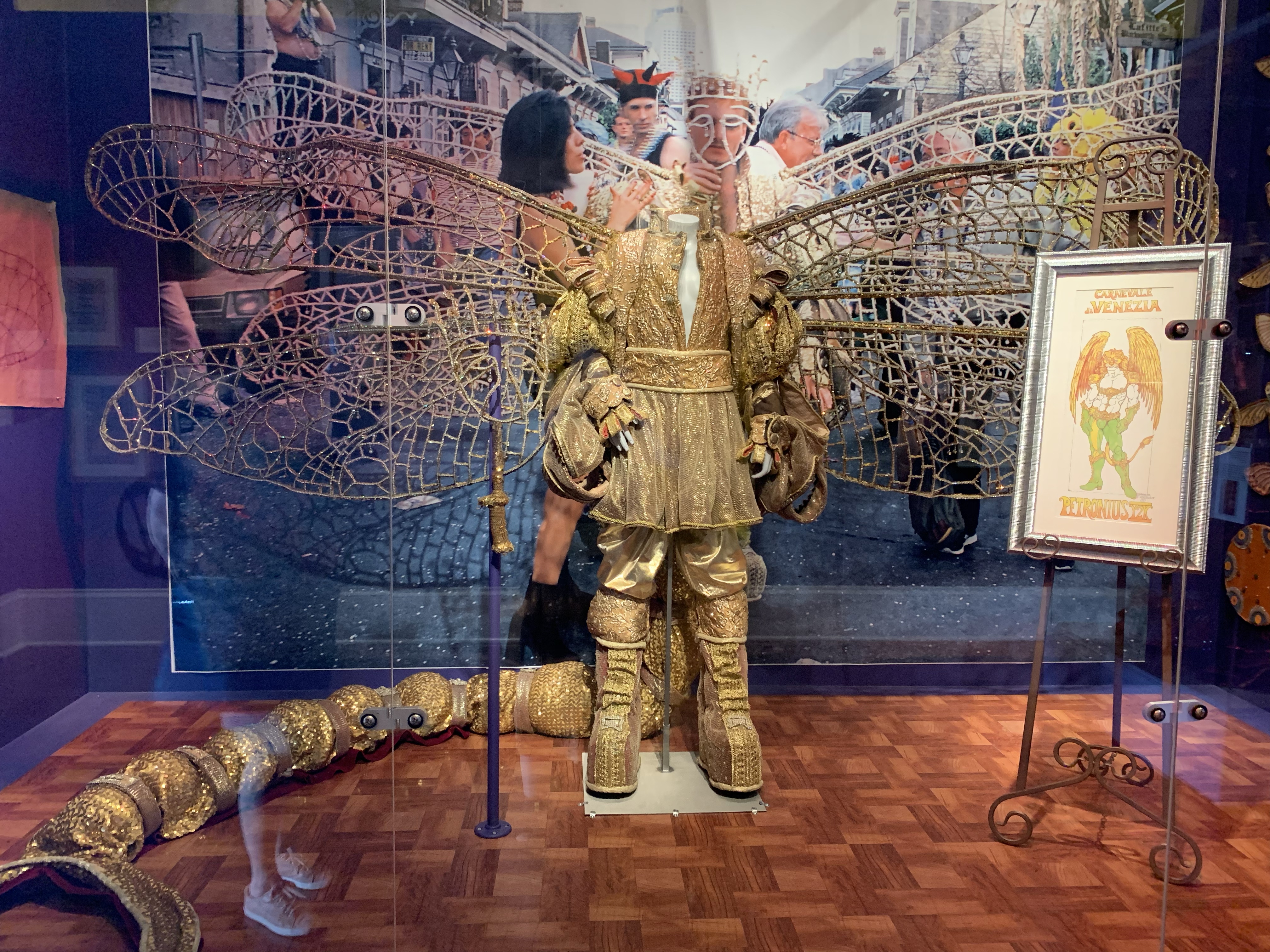
    As well as the hurricane exhibition, there is a permanent display on Mardi Gras. This is on the second level of the building and contains a bit of Mardi Gras history and some pretty amazing costumes. Here are a few to admire!

    IMG_5943
    Chinese Lanterns
    IMG_5947
    Weighing of the Heart
    IMG_5950
    Insect
    IMG_5945
    Wheel of Fortune

    The Cabildo

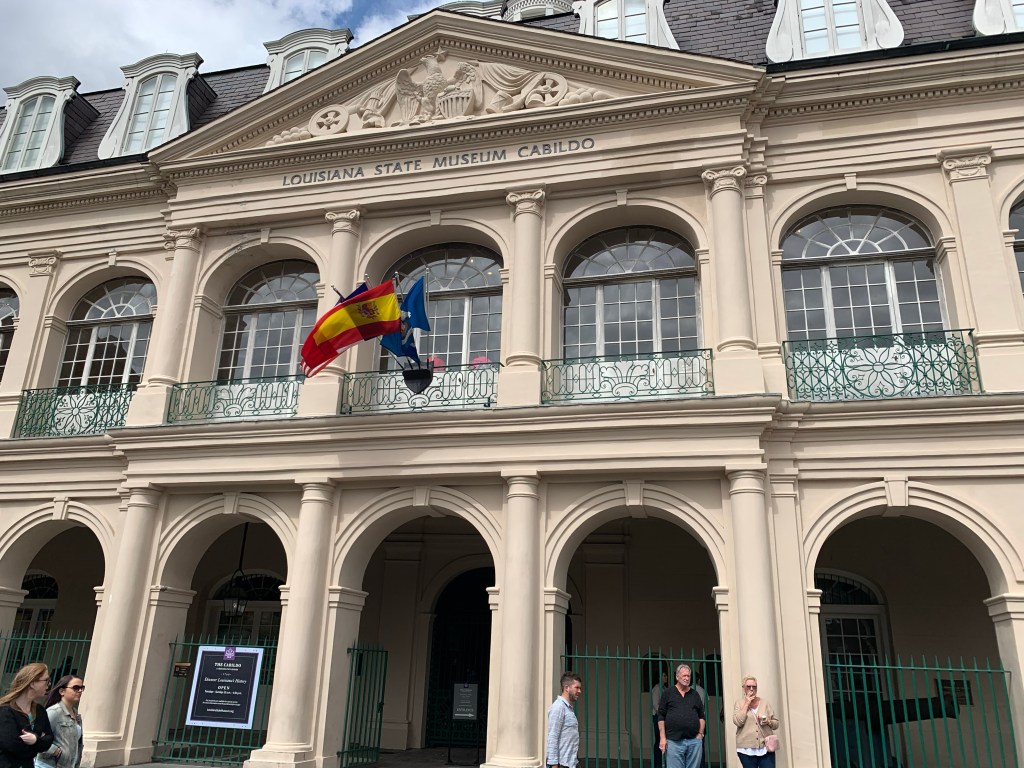
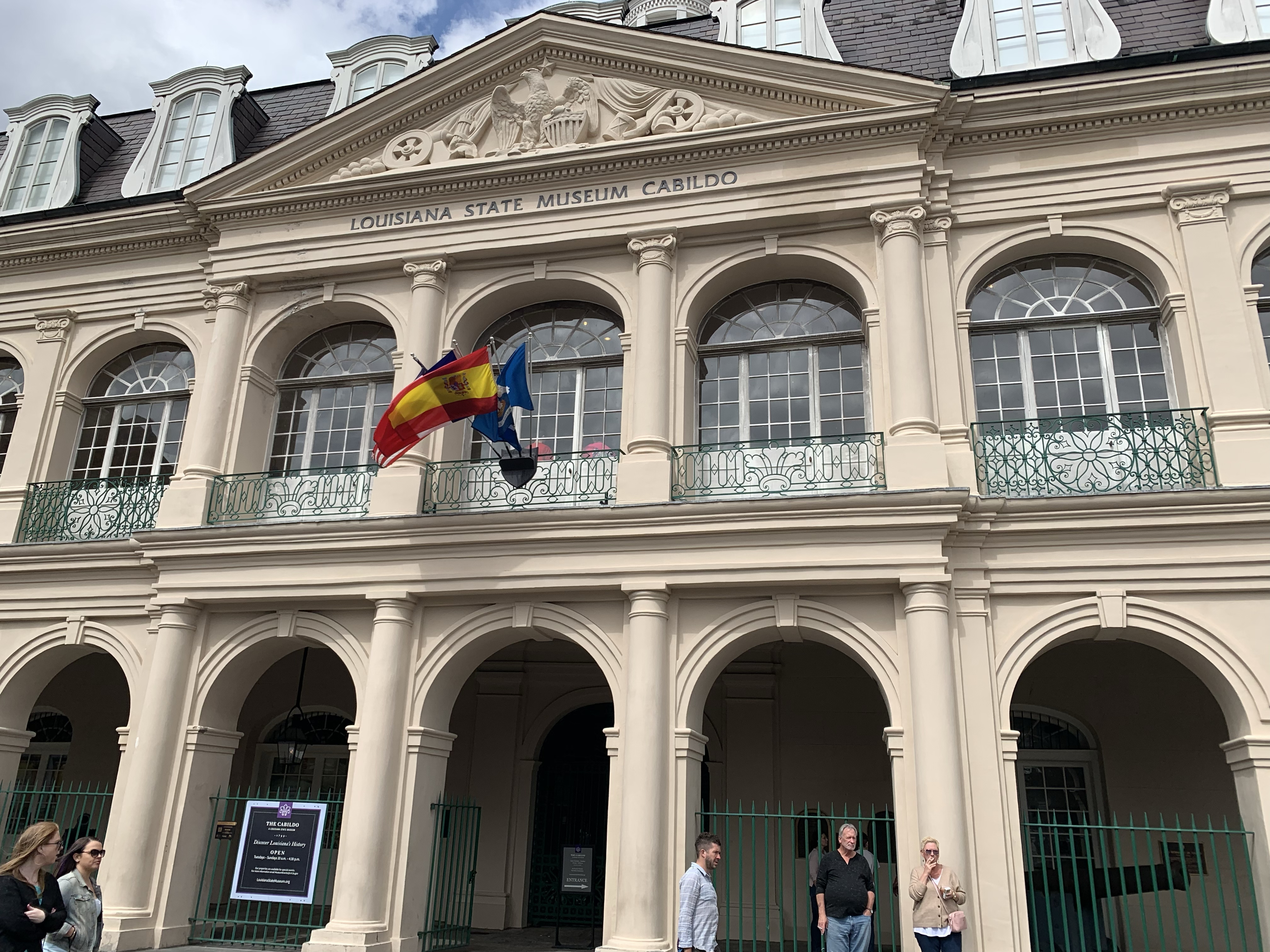
    The Cabildo was built under the Spanish rule over New Orleans and served as the New Orleans Government building until 1853 and the Louisiana State Supreme Court until 1908. It was in this building that the Plessy v. Ferguson decision originated. In 1908 it became part of the Louisiana State Museum.

    IMG_5982
    The Cabildo

    We didn’t spend too much time in this museum as visitor fatigue from the Presbytère was starting to set in. Currently on display is an exhibition titled ‘We Love You, New Orleans’. If you are looking for a brief overview of the city then this is a great place to start. There is also a collaborative element with visitors encouraged to write down what they love about New Orleans. I wish these postcards were on display and not placed inside a box. It would have been interesting to read the diversity of responses.

    The exhibition revolves around a number of themes including night life, Mardi Gras and the street cars. One particular object that was a highlight for me is the Rebecca dress. On display is the 10 000th dress designed and manufactured by Jolie Bensen Hamilton and Sarah Elizabeth Dewey Petitto. After Hurricane Katrina, Hamilton and Petitto returned to New Orleans from New York to try and help rebuild the city’s economy. They created this dress using seersucker material, normally reserved for men’s suits.

    IMG_5967
    Rebecca Dress

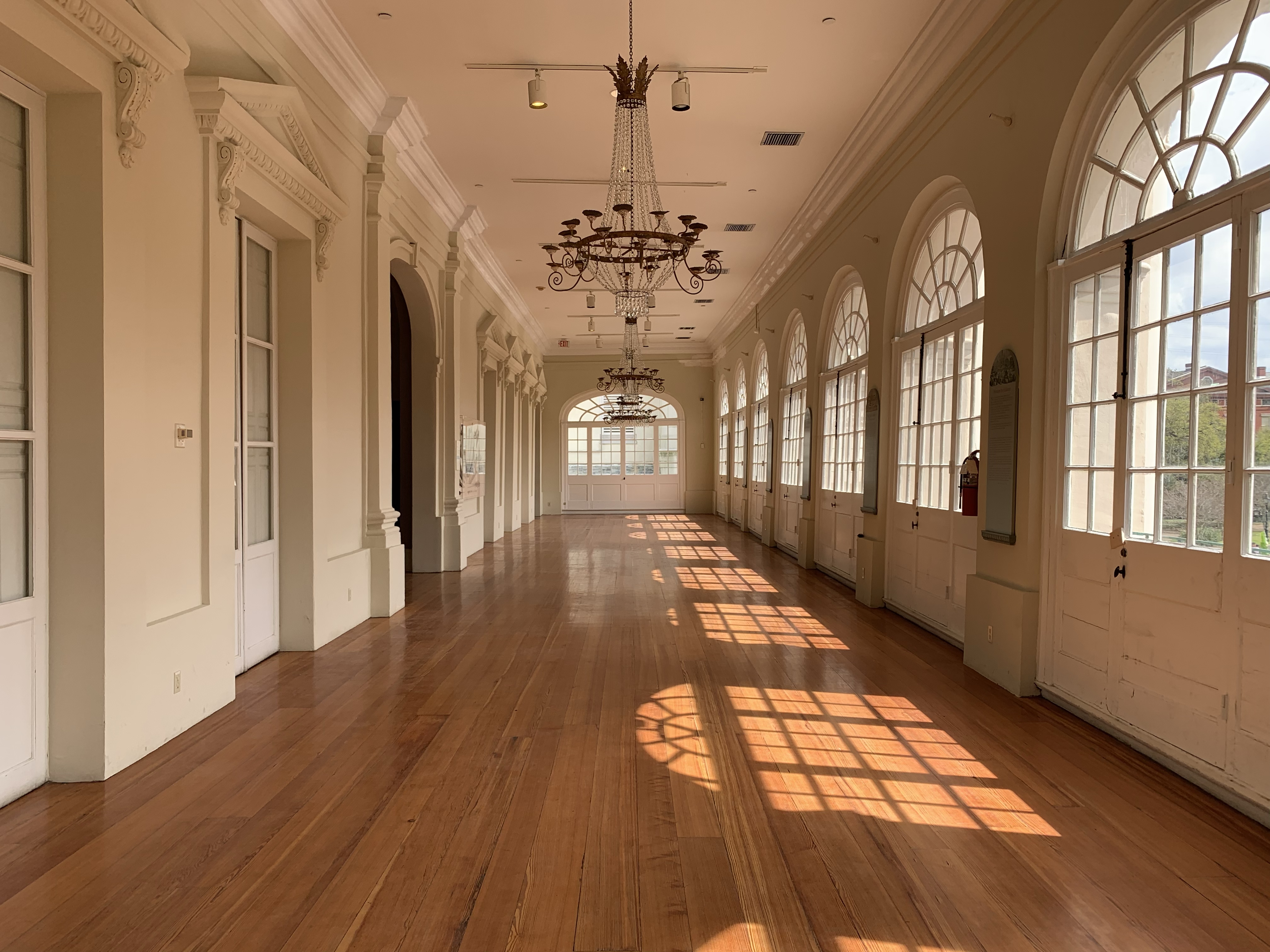
    After this exhibition, we definitely felt the visitor fatigue kick in. Rather than focusing on another exhibition, we just wandered around the building. Both the Cabildo and Presbytère have these amazing large empty rooms overlooking Jackson Square offering some beautiful views.

    IMG_5980
    Cabildo Hall

    I found our visit to be both relaxing yet informative and a great start to our time in New Orleans.

    Visitor Information

    Both museums are open Tuesday to Sunday from 10am to 4.30pm. They do not open on the day of Mardi Gras. There is an entrance fee of $7 for The Presbytère and $10 for the Cabildo. Both are accessible. If you only have time to visit one of these museums, I would recommend The Cabildo if you are after a more general history of New Orleans or The Presbytère if you are hoping to learn more about Hurricane Katrina/Mardi Gras in much more depth.

  • Brisbane: Queensland University of Technology (QUT) Art Museum

    Unfortunately today was this exhibition’s final day at the Queensland University of Technology Art Museum (QUT Art Museum). It will travel to Art Gallery of Ballarat in Victoria (28 March – 21 June 2020) and the Samstag Museum of Art in Adelaide (3 July – 11 September 2020). If you are near either of these galleries I strongly encourage you to go and see the exhibition and explore these enticing and thought-provoking paintings. I will share with you some of my favourite works, but first, I want to introduce you to the artist and talk a little about my first impressions of the exhibition.

    About the Artist and Artworks

    Anne Wallace is a Brisbane-based artist who began her studies at QUT. In the mid-1990s, Wallace was awarded a Samstag International Visual Art Scholarship to study a Master of Arts at the Slade School in London. After completing this degree, she spent some time in Paris furthering her career then returned to Brisbane where she currently resides.

    Wallace paints seemingly ‘conventional’ images on first glance. However, the more you look at the images and the more time you invest in her works, you start to see a certain twist. What looked seemingly ‘normal’ starts to look a bit off, a bit strange. These artworks all resonated with me. I think mainly because there is an element of darkness and complexity to the works that I can appreciate and, to me, this captures more of reality. Her links to pop culture as well are really interesting.

    First Impressions

    When we (me and a lovely friend) first walked into the Museum we were greeted by very loud sounds. A public program was running in the gallery space called ‘Melodic Rhythms: Marimba for Beginners’. If you don’t know what a Marimba is, it’s a percussion instrument that you hit (simplification). It was only running for an hour, and we made the decision to not delay our visit but to cope with the noise. It is fantastic to see such public programs in the gallery space, but I would recommend checking before you visit to see what’s on in case loud noises cause discomfort.

    I also remember thinking that the exhibition was huge. It spreads across all available galleries in the Museum and showcases 80 of Wallace’s works. Considering this is a free exhibition, I was so impressed with how many works from this artist could be gathered and displayed in the one exhibition. It provides visitors with a very comprehensive overview of the artist and her practice.

    Finally, it was great to encounter staff who were so helpful and welcoming. As soon as we entered, a staff member came out from behind the desk to greet us, let us know about the program, and quickly explained the layout of the exhibition. Having such staff, especially at an Art Museum that can feel quite overwhelming, is so important in setting the tone and atmosphere for the visit.

    Exhibition Overview and Highlights

    As I mentioned before, this exhibition spans all galleries within the Museum. When you first enter the space you can choose to start your visit with the rooms on the left or the rooms on the right. The rooms on the left do have the introductory panel at the front indicating this is where you start. However, it’s not that strict and you can easily read the panel then decide where to go next.

    Similar to a few other exhibitions I have reviewed, this exhibition does not have individual artwork labels but a floor plan where you can find all the information. I still believe that this works well for exhibitions showcasing artworks by one artist. You are already aware of who has created the work, so if you are looking for a title or some short explanation then you can look it up on the plan. It is also a very clear plan. Each artwork has a number that correlates to a number on the plan. This means very little scope for confusion.

    One thing that works particularly well is the absence of any sub-themes or room themes. It would be fascinating to learn, from a curatorial perspective, how the exhibition was curated. I am sure there would be some guiding themes influencing how the artworks are displayed. However, this isn’t made explicit. When I am told a theme, I get into that head space and look at artworks with the theme in the back of my mind trying to work out how they fit. In the exhibition, this distraction is absent, and I was free to look at each artwork with a lot more freedom.

    There are a couple of walls with no works on them that look slightly out of place, but overall there is good balance. Each larger piece has its own space and smaller artworks are grouped together in similar bundles. So many of the works need this space so visitors can take a closer look and not have their view of one work obstructed by another.

    My Favourite Artworks

    Selecting my favourites has proven to be a very tough choice. I wanted to go with 10 but that is slightly too many and 5 is just unfair. Instead, I’ve settled with 8 and even then struggled to narrow down my selection.

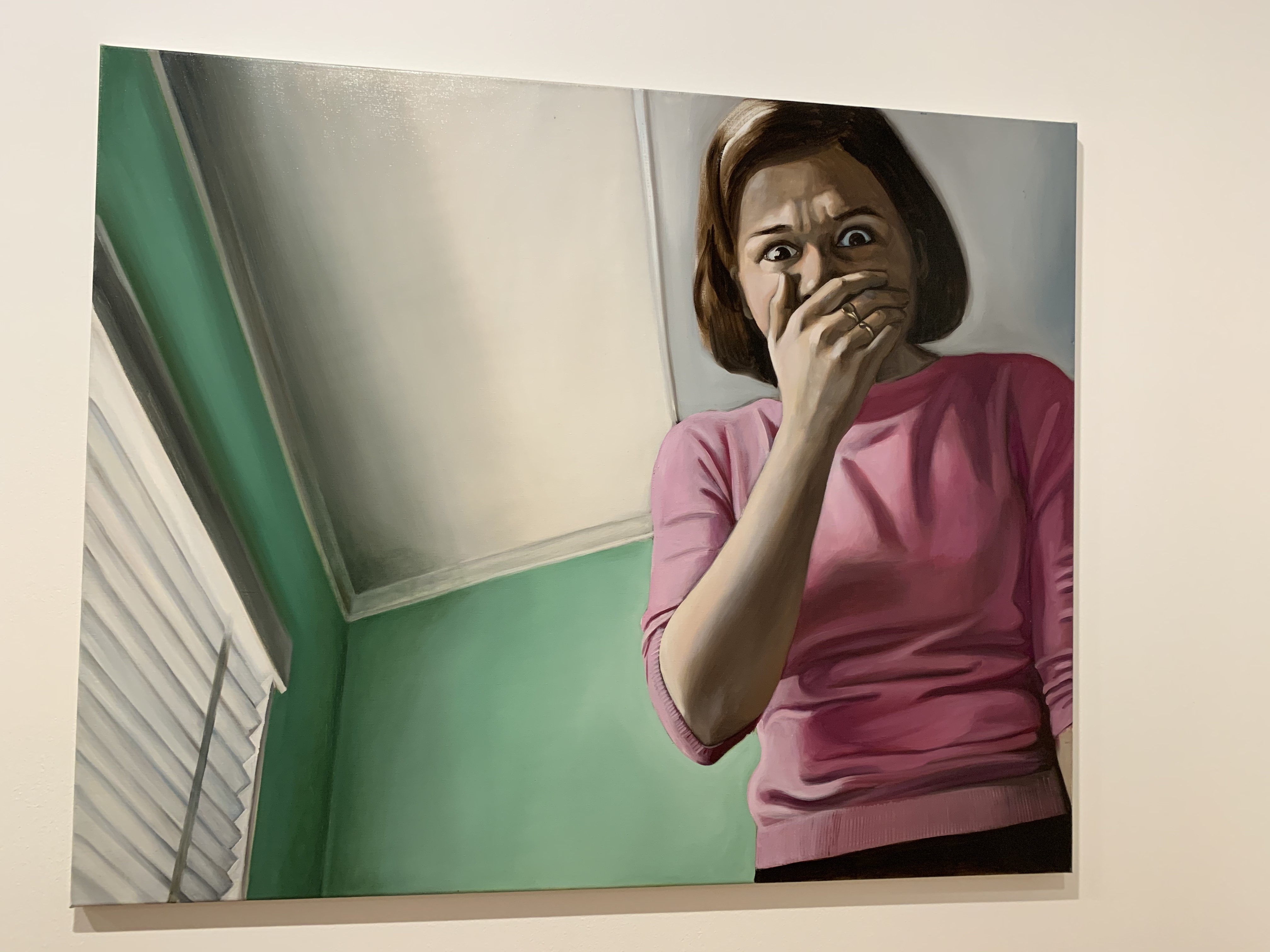
    • Stain, 2000, Oil on canvas
    IMG_8446
    Stain

    There is definitely a sinister feel to this painting. What is she looking at? What has happened? Why could she be looking with such shock? This painting is like picking up a book and starting to read halfway through. My mind was racing with possibilities.

    • Dreaming of a Song, 2005, Oil on canvas
    IMG_5830
    Dreaming of a Song

    So many paintings of Wallace make you feel as though you’re just getting a slight glimpse into someone’s life. They also make you feel like you are standing on the street looking in, perhaps in a sinister way.

    • She Is, 2001, Oil on canvas
    IMG_5631
    She Is

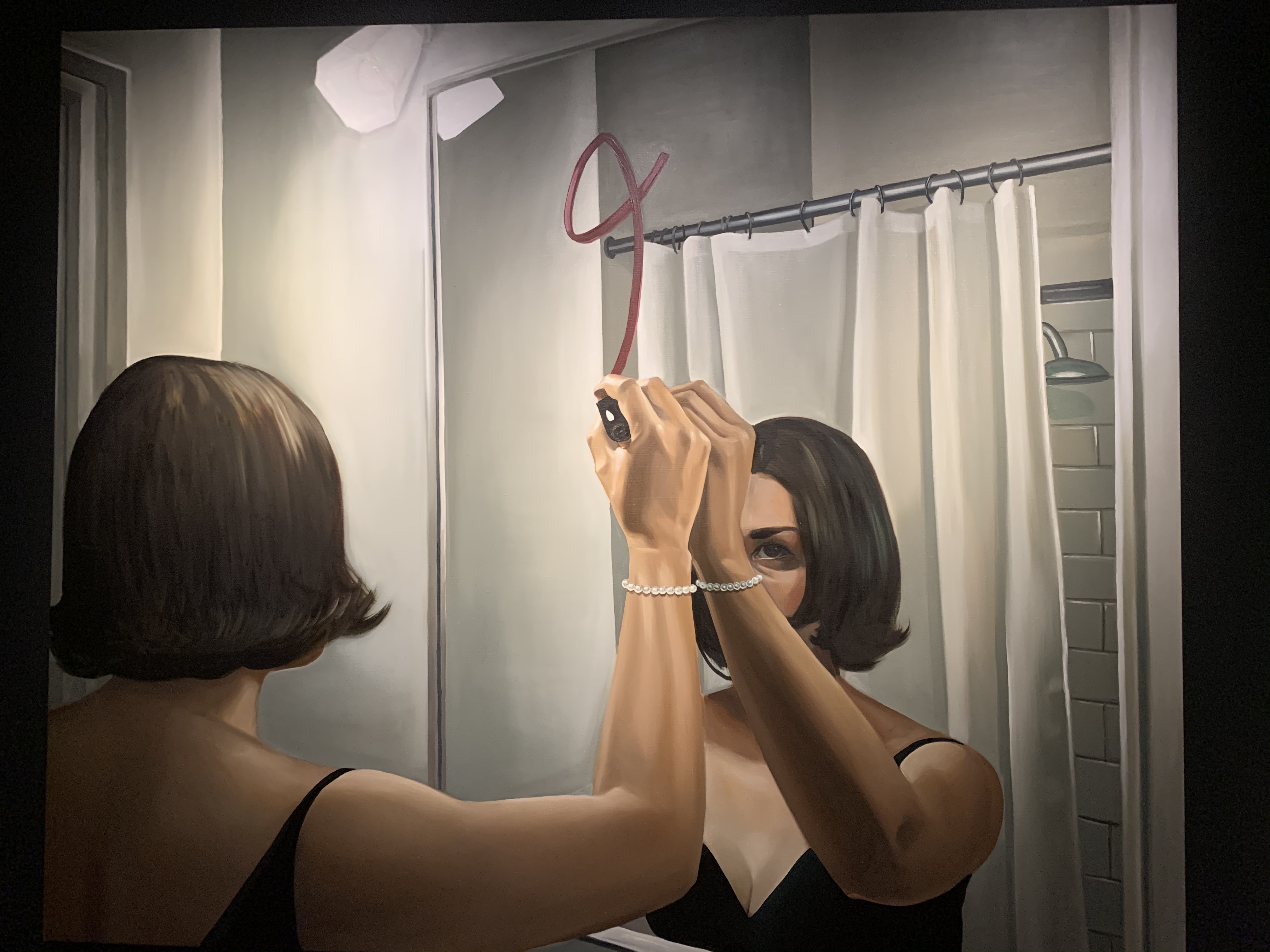
    I love the aesthetics of this piece and researched a bit more into the work post-exhibition. It is a commentary on identity and how we constantly question our own identity. The figure in the artwork has just written the letter ‘I’ in her mirror with lipstick.

    • Freshman, 2001, Oil on canvas
    IMG_1885
    Freshman

    Similar to the previous artwork, the aesthetic of this piece captured my attention.

    • Faith, 2007, Oil on canvas
    IMG_4773
    Faith

    This work makes me think of venturing into the unknown as stylishly as possible.

    • Flat of the LSD Dentist, 2019, Oil on canvas
    IMG_5245
    Flat of the LSD Dentist

    I love this work on so many levels. The light from one room draws your attention away from the darkness surrounding and you can’t help but think what is happening inside. After a bit more research, I discovered this is meant to be the flat of Dr Robert, a dentist who is believed to have introduced The Beatles to LSD.

    • Talking Cure, 2010, Oil on canvas
    IMG_1743
    Talking Cure

    This work is a commentary on the drive behind people’s desire to know motivations. The therapist is missing from this work leaving the female patient with the viewer. What are they trying to tell us and what are we projecting onto them?

    • Exemplar, 1993, Oil on canvas
    IMG_5628
    Exemplar

    This artwork is a morality tale of femininity (phrase taken from the artwork description). The central pregnant figure is displayed as the exemplar. However, the three girls in the forefront of the image are holding books and toys rebelling against this exemplar and choosing alternate paths. They are not blindly following the ideal and what society says is expected of them, they are becoming their own individuals. Due to its message and the artwork composition, this is my favourite artwork in the entire show.

    Final Thoughts

    If you missed seeing this show and cannot catch it at either of the other two galleries, I hope this overview has encouraged you to delve into the world of Anne Wallace for yourself. You can see more of her works here. Keep an eye on the QUT Art Museum as they have some amazing shows. They are open on the weekend (12-4pm Saturday and Sunday as well as 10am-5pm Tuesday to Friday), have free entrance and the Museum is accessible. I’m so grateful to have seen this exhibition and learn all about yet another amazing female Brisbane artist.


  • Museums I’d Love to Visit (New List)

    It has been quite some time since I last posted. Apart from re-visiting the exhibition ‘Water’ at the Gallery of Modern Art, I have been preparing for my upcoming trip to America. There are going to be so many museums and heritage places to write about! Until then, I am continuing my yearly tradition of writing something for Valentine’s Day. A couple of years ago I created my first list of museums I’d love to visit. Last year, I reviewed the list and discovered that between writing the post in 2017 and reviewing it in 2019, I had managed to visit them all except one, Museum of Broken Relationships. One day, I keep telling myself.

    Until then, why not create a new list! There are quite a few museums I’d absolutely love to visit but, for the purposes of this post, I’m only going to write about my top 5. As always, they are in no particular order. More like a stream of consciousness that’s unfolding as I’m typing. If you want to mention any that are on your list remember to leave a comment.

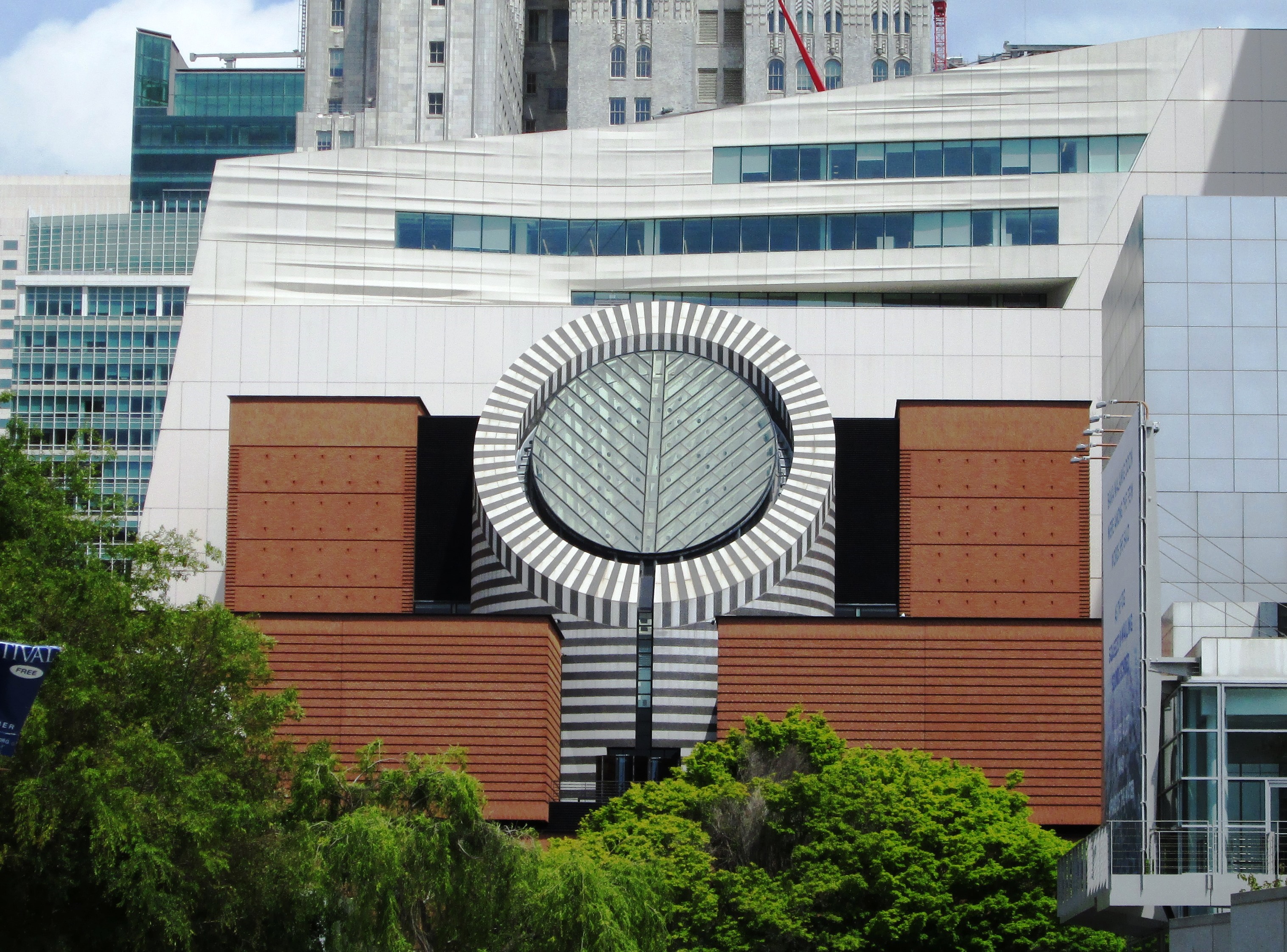
    1. San Francisco Museum of Modern Art (SFMOMA)

    2017_SFMOMA_from_Yerba_Buena_Gardens
    By Beyond My Ken – Own work, CC BY-SA 4.0, https://commons.wikimedia.org/w/index.php?curid=60388981

    A couple of years ago at the Australian Museums and Galleries Association conference I heard a talk presented by someone who had worked with SFMOMA. You can already tell that my memory is not my strong point. [Thank you to Laura Miles who reached out after I published this post and informed me that the speaker was Keir Winesmith].

    They were discussing their work which involved creating and installing interactives. One of their most significant projects was installing the interactive called ‘Self Composed’ at SFMOMA. Visitors are encouraged to interact with a scanner by placing items from their pockets, or even just their hands, onto the screen. Another camera is facing the visitor and basically an image of them appears only in the dark spaces created by the objects sitting on the screen. I’ve included an image below so you can see what I mean.

    SFMOMA-galleries-with-visitors_0551_April-29nd_-Henrik-Kam-2016-1024x683
    Photo: © Henrik Kam, https://www.sfmoma.org/read/on-collaboration-sfmoma-adobe-rethink-selfie/

    Ever since hearing about this, and other interactives at SFMOMA, I’ve really wanted to visit. I want to be able to experience this level of interactivity in an art gallery. Also, a great excuse to return to San Francisco and explore the city more!

    SFMOMA is open every day (except for Wednesday) from 10am to 5pm (9pm on Thursdays). Entrance is ticketed and you can pre-purchase your tickets online. I will include the website of each museum in this post so click here if you want to learn more about SFMOMA.

    2. Science Gallery, Melbourne

    I am very intrigued to visit this museum considering there is a focus on combining art with science. Only opening in its current form in 2020, the Science Gallery in Melbourne is part of the Global Science Gallery Network. What really makes me want to visit is the range of innovative and fascinating exhibitions they have either developed or are in the process of developing.

    Take, for example, their upcoming show MENTAL, a full spectrum look at mental health. This exhibition is being co-created and co-designed by young adults and aims to confront societal bias and stigma (all in a comfortable, safe place). This will be the first exhibition in their new Gallery that is set to open in early 2021. This museum is literally growing and evolving over time and I cannot wait to visit some time next year. Click here to find out more.

    3. Micropia, Amsterdam

    Micropia
    By Ciotu Cosmin – Own work, CC BY-SA 4.0, https://commons.wikimedia.org/w/index.php?curid=45334106

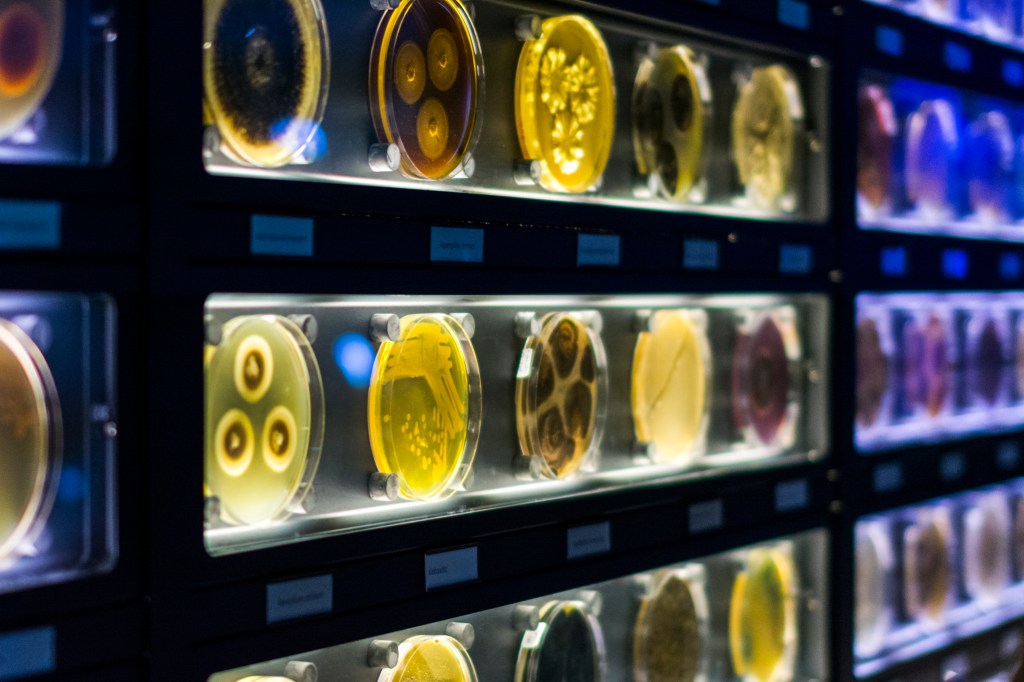
    I have only discovered this museum very recently….at the beginning of this year. It popped up on my Facebook feed and I thought, yes – that looks like a museum for me. Micropia is the only museum in the world dedicated to microbes. You know, the billions of things you have on you right now.

    This museum aims to close some of the gaps between science and what is known by the general public. After reading the following on their website, “one thing is sure: after visiting Micropia, you will never see yourself, or the world, in the same way again”, I was even more determined to add it to my list.

    Micropia is open Monday through Sunday from 9am to 6pm (Monday – Wednesday, Sunday) and to 8pm from Thursday – Saturday. Entry is ticketed. Discover more on their website here.

    4. The National WWII Museum, New Orleans

    The_National_WWII_Museum_New_Orleans_Dec_2015
    By ironypoisoning – https://www.flickr.com/photos/ironypoisoning/24306141735/, CC BY-SA 2.0, https://commons.wikimedia.org/w/index.php?curid=76493231

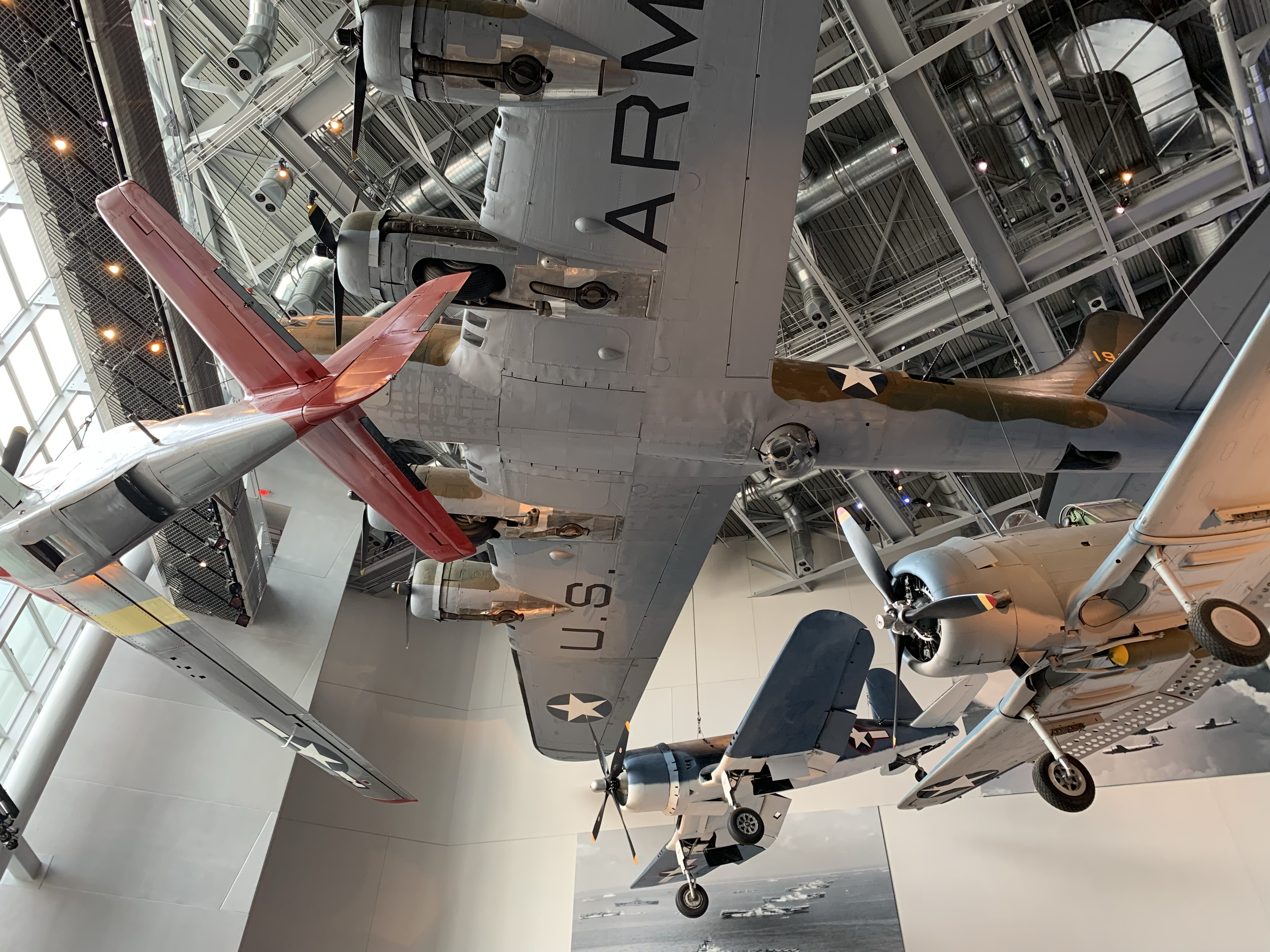
    I am cheating a little with this one because I will be visiting this museum next month. Still, I haven’t been before so that’s how I’m justifying adding it to the list. The National WWII Museum is located in New Orelans and is housed in four separate buildings. It’s probably going to take us all day just to walk around and see as much as possible. Especially considering the main building is part of what they call a “Museum Campus”. Who knows how quickly visitor fatigue is going to set in.

    I’m not usually someone who goes out of their way to visit a war museum, but I’m making an exception for this one. We read so much about it during my master’s course and I am really interested to see firstly how war is portrayed and secondly the exhibition design elements.

    They have a great section on their website regarding accessibility (click here to read more). Opening hours and tickets is too complex to simplify here so please follow the link to the main webpage which is here.

    5. Bauhaus Museum Weimar

    Neues_Bauhaus_Museum_Weimar_2019_02
    By Geolina163 – Own work, CC BY-SA 4.0, https://commons.wikimedia.org/w/index.php?curid=78451642

    Last year I wrote three entries to celebrate 100 years of Bauhaus. In the post on Weimar, I mentioned visiting their old Bauhaus Museum and really hoping to visit their new museum some time soon. Well, that feeling hasn’t faded.

    I am really hoping after my German course finishes this year to go to Germany next year and visit all the new Bauhaus museums and heritage places. It’ll be great to see more of Weimar’s collection on display!

    The Bauhaus Museum in Weimar is open every day (except Tuesday) from 9am to 6pm. Entry is ticketed. For more information click here.

    Final Thought

    Another year, another list. I hope that you have found some inspiration reading this and create your own list of ‘must-see’ museums or heritage places around the world!

  • Christchurch: Quake City

    Firstly, Happy New Year to everyone reading this post! It’s the start of both a new year and a new decade. I am really looking forward to 2020 and I’m hoping it will be a year of further growth and new experiences. There are some exciting things planned and plenty of museums and heritage places on the horizon.

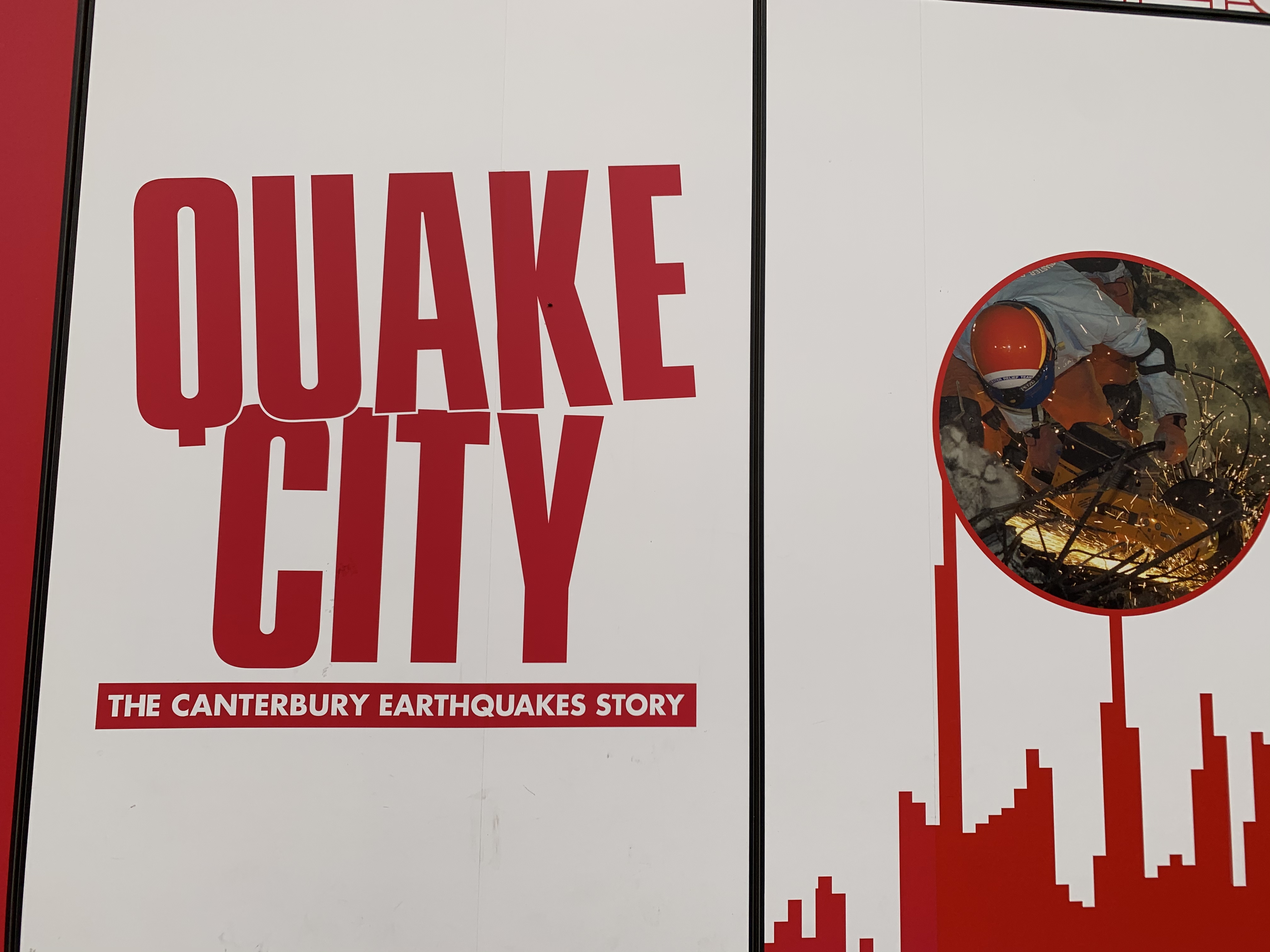
    My first post for 2020 is on Quake City, a museum attached to the Canterbury Museum that delves into the 2010 and 2011 earthquakes. For those unaware, Christchurch recently experienced two destructive earthquakes in September 2010 and February 2011. The earthquake in 2011 caused the most damage and basically reduced most of the city to rubble. Just walking around the streets today, it is beyond inspiring to see how the city has started to rebuild itself. What has really stood out to me is how arts and culture is being integrated almost every step of the way. For example, there are so many large public art murals painted on the sides of buildings throughout the city centre. Quake City explores each earthquake and the aftermath, including displays covering survivor stories, liquefaction and the Student Volunteer Army (to name only a few).

    IMG_4933
    Entrance Sign

    Layout

    There is a pretty set path that guides visitors chronologically through the 2010 earthquake, 2011 earthquake and, finally, the aftermath. To start, however, there is a short film explaining earthquakes from a Māori perspective. The god Rūaumoko (or Rūamoko), the son of Ranginui (the Sky) and his wife Papatūānuku (the Earth) is responsible for shaking the ground causing destruction. The film is short but informative and a very welcome perspective to include.

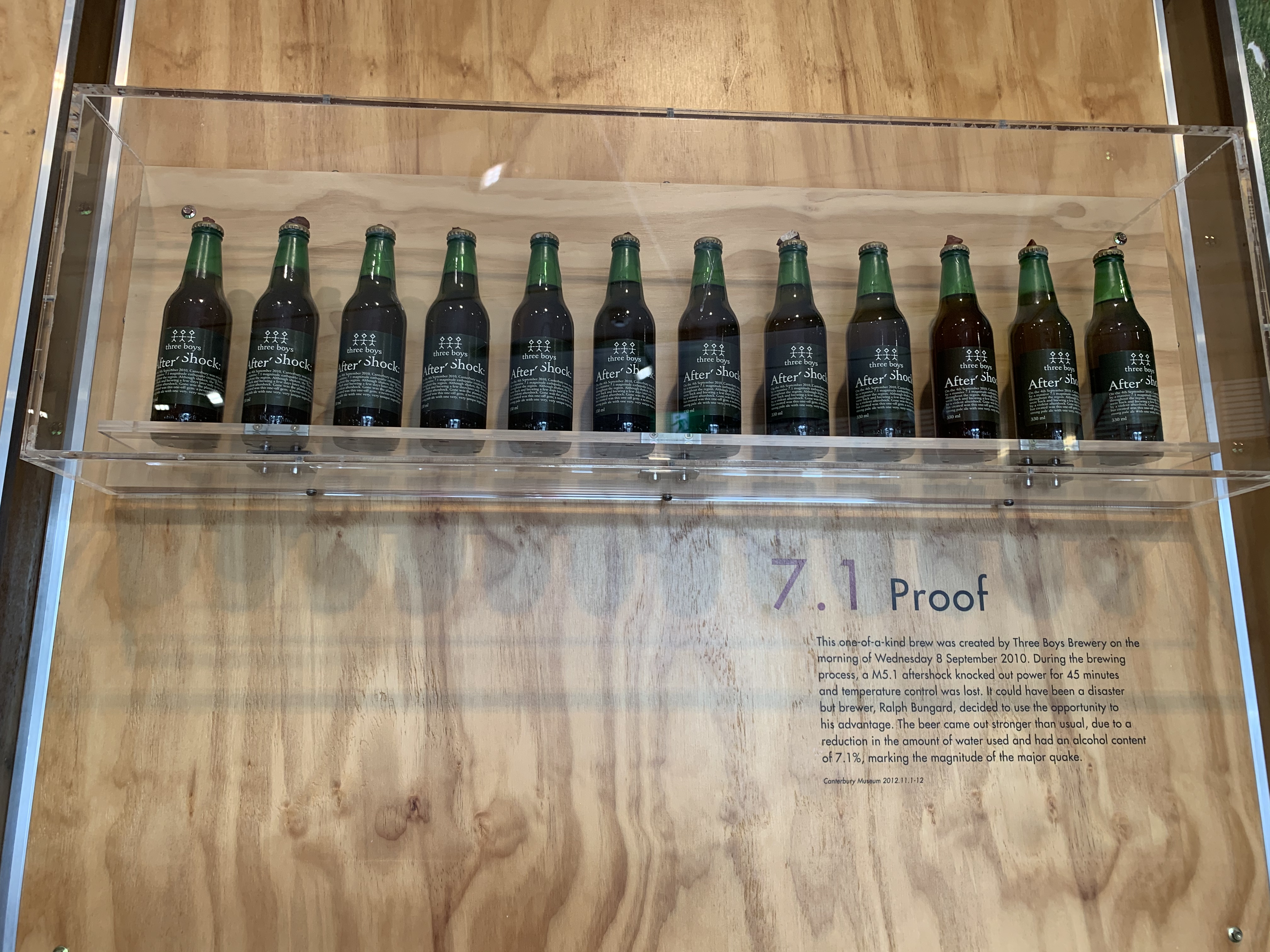
    Following this is some information on the 2010 earthquake that struck on 22 September at 4.35am. There is a great thematic panel exploring why Canterbury, in particular, experiences so many earthquakes that is definitely worth a read. It stopped me from having to think back to my high school geography days by clearly explaining what is an earthquake and why they occur. Canterbury is unfortunately positioned in an area that is a hotbed for earthquakes. An object highlight in this section are the After Shock beers brewed by the Three Boys Brewery in Christchurch. During a brewing session the earthquake hit and temperature control was lost. Rather than disposing of the batch, the brewery sold the beers.

    IMG_4945
    Brewed Beer

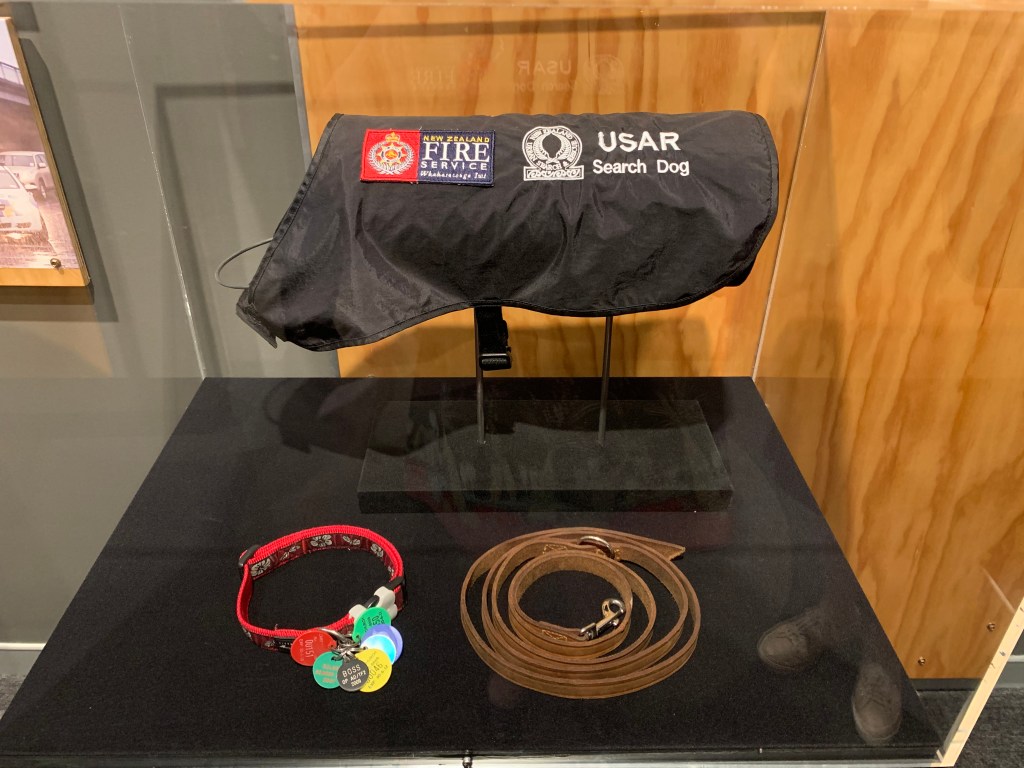
    By far the largest section of the Museum focuses on the 2011 earthquake. It covers themes such as rescue dogs (see feature image at the top for objects), survival stories, the Cathedral, rebuilding Christchurch and the future. If you don’t follow the exhibition on the designated path (it would be pretty hard not to) it doesn’t make much sense. For this reason, a prescribed path works well. Especially considering the final display is about looking into the future after reflecting on the past.

    Survivor Testimonies

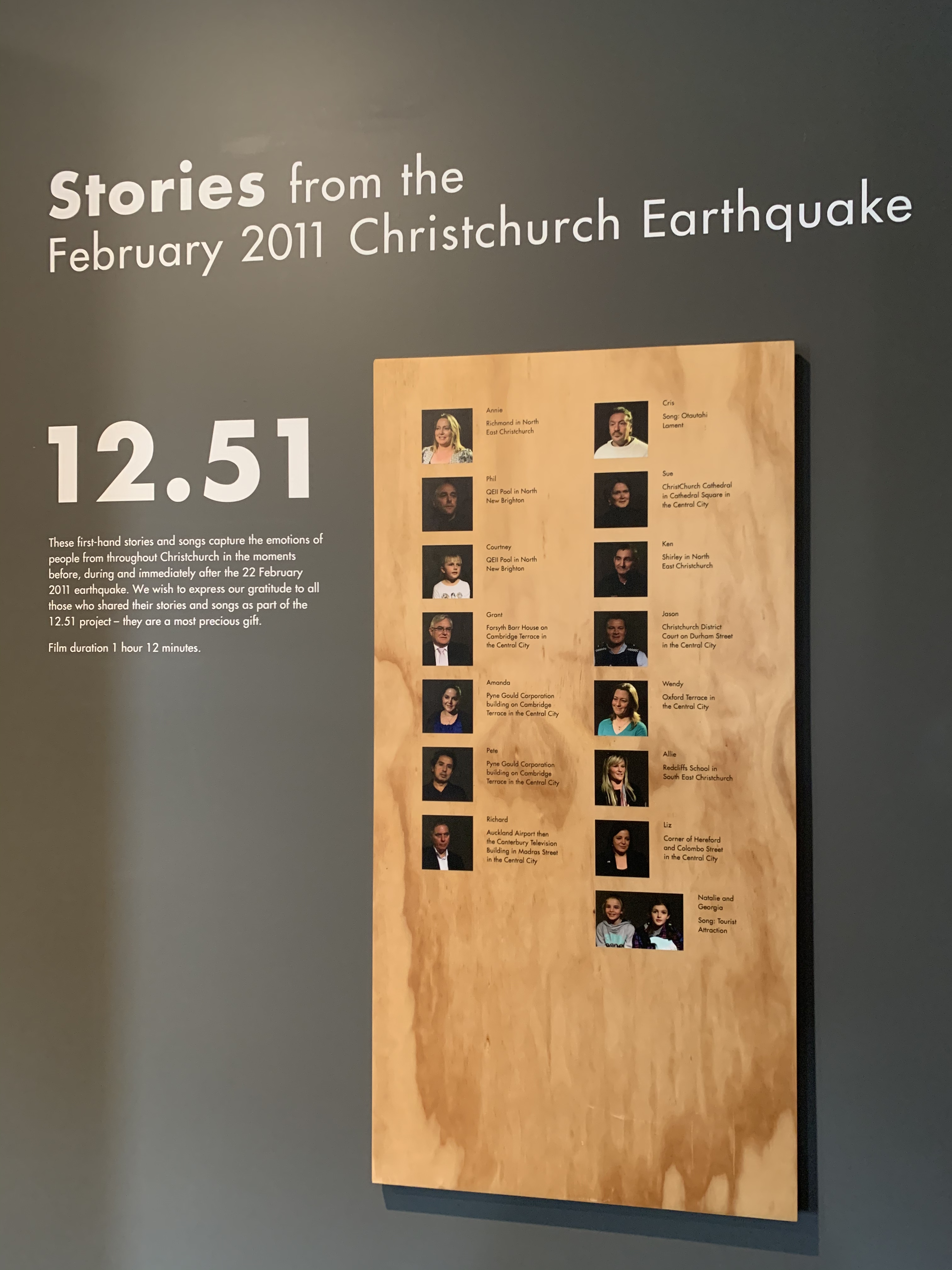
    We spent the most amount of time in the Museum watching survivor testimonies. Just after the section on the 2010 earthquake there is a small cinema-like area showing a film that runs for 1 hour and 12 minutes. In total, there are sixteen individuals interviewed. Three sing songs to communicate their memories and the other thirteen share stories of where they were on the day or what their role was when the 2011 earthquake hit. Each story is so personal and it is truly an emotional experience sitting and watching firsthand accounts from people who lived through this disaster.

    IMG_4958
    Survivor Testimonies

    Some of the interviewees were trapped in buildings for hours on end and talk about being rescued or working together in teams to rescue themselves. One of the hardest stories to listen to was from Pete who entered the Pyne Gould Corporation building on a resuce mission. Pete talks about the loss of life that occurred before his eyes, but also shares stories of resilience and hope with many emerging from the rubble unscathed.

    Another interviewee is Jason who was working at the District Court. When the earthquake hit, Jason had to organise the transfer of six accused persons from their cells as the basement where they were located started to flood. When they had emerged, Jason found a judge to hand out rulings on the banks of the Avon. Two were released on bail and four were sent to prison. There was also a story shared by Allie who worked at Redcliffs School and remembered seeing children walking out of their classrooms into thick red dust that covered their faces and clothing.

    This section of the Museum was a highlight for me as it provides firsthand accounts and a human connection to the tragedy that is difficult to achieve when just reading labels.

    Liquefaction

    The exhibition does a great job at explaining processes that occur both during and after an earthquake. I have vaguely heard of liquefaction and found the section covering what it is and why it happens very useful.

    Underneath the thematic panel is an interactive that allows visitors to see liquefaction in action. It’s a small sand pit where you can bury certain objects and place others on the surface. After pressing a button, the sandpit shakes and a type of liquefaction occurs revealing the buried objects and sinking the ones resting on top.

    IMG_4982
    Earthquake Interactive

    Dotted throughout the exhibition are quite a few helpful explanatory panels about different geological processes. These break up the exhibition and provide some necessary context.

    Rebuilding and the Future

    As I mentioned earlier, I was amazed by how far Christchurch has come since the 2011 earthquake and how much of the city has been rebuilt. This section not only displays what has been achieved, but provides an insight into the future.

    One particular thematic panel that stood out to me is on the Arts Centre of Christchurch. The previous day we had admired the Centre both when having breakfast at the Bunsen Cafe (located in the Centre) and when viewing the complex from the Botanic Gardens. The Centre consists of a group of Gothic Revival style heritage buildings that were formerly the main campus for The University of Canterbury. In order to restore these buildings, Christchurch undertook one of the largest heritage restoration projects in the world with an investment, so far, of just over $290 million dollar.

    Right at the end of the exhibition is a large touch screen where visitors can see planned future projects. For example, the building of a new Convention Centre and restaurants along the south of the Avon. I was very surprised that all the digital components of the exhibition were working (as so often many in an exhibition of this size don’t).

    Practical Information

    I would recommend this museum for anyone wanting to learn more about the 2010/2011 earthquakes and their lasting impact on Christchurch. It is very specifically about the earthquakes so if you’re looking for a more general history of Christchurch then the Canterbury Museum might be better suited. Keep in mind also that entry is quite expensive at $20 for one adult. It is located in central Christchurch and is accessible.

  • Christchurch: Canterbury Museum

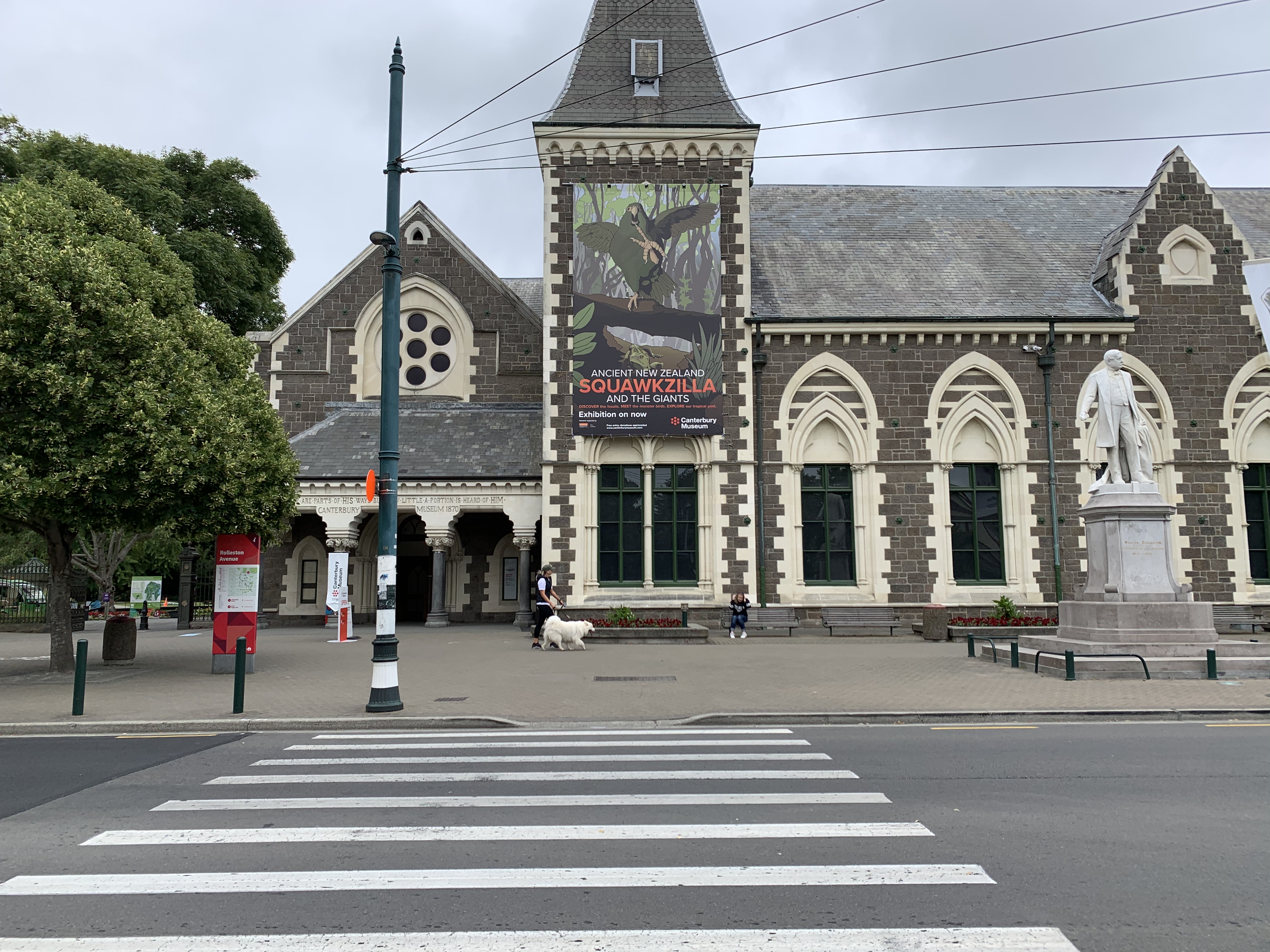
    Our first stop today was the Canterbury Museum located next to the Botanic Gardens. There are quite a few exhibition spaces within the Museum. You could spend the entire day here learning so much about Canterbury and its largest city, Christchurch.  I want to focus this review on three exhibitions: Slice of Life: The World Famous Dunedin Study, Squawkzilla and the Giants, and Christchurch Street. The first two are temporary exhibitions and the latter is a permanent display.

    IMG_4379
    Canterbury Museum

    Slice of Life: The World Famous Dunedin Study

    For me, this exhibition was intriguing right from the start. I had no idea about the Dunedin Study that started in 1975 and was overseen by Dr Patricia Buckfield and Phil Silva from Otago University. Together, they studied just over 1000 children looking to investigate any health issues. Due to the popularity of the experiment, the subjects were revisited every few years eventually becoming the most studied people in the world. All of this information is included in the introductory panel. Hence why I was pretty much hooked from the start and wanted to learn more.

    IMG_4391
    Slice of Life: The World Famous Dunedin Study
    IMG_4518
    Slice of Life: The World Famous Dunedin Study

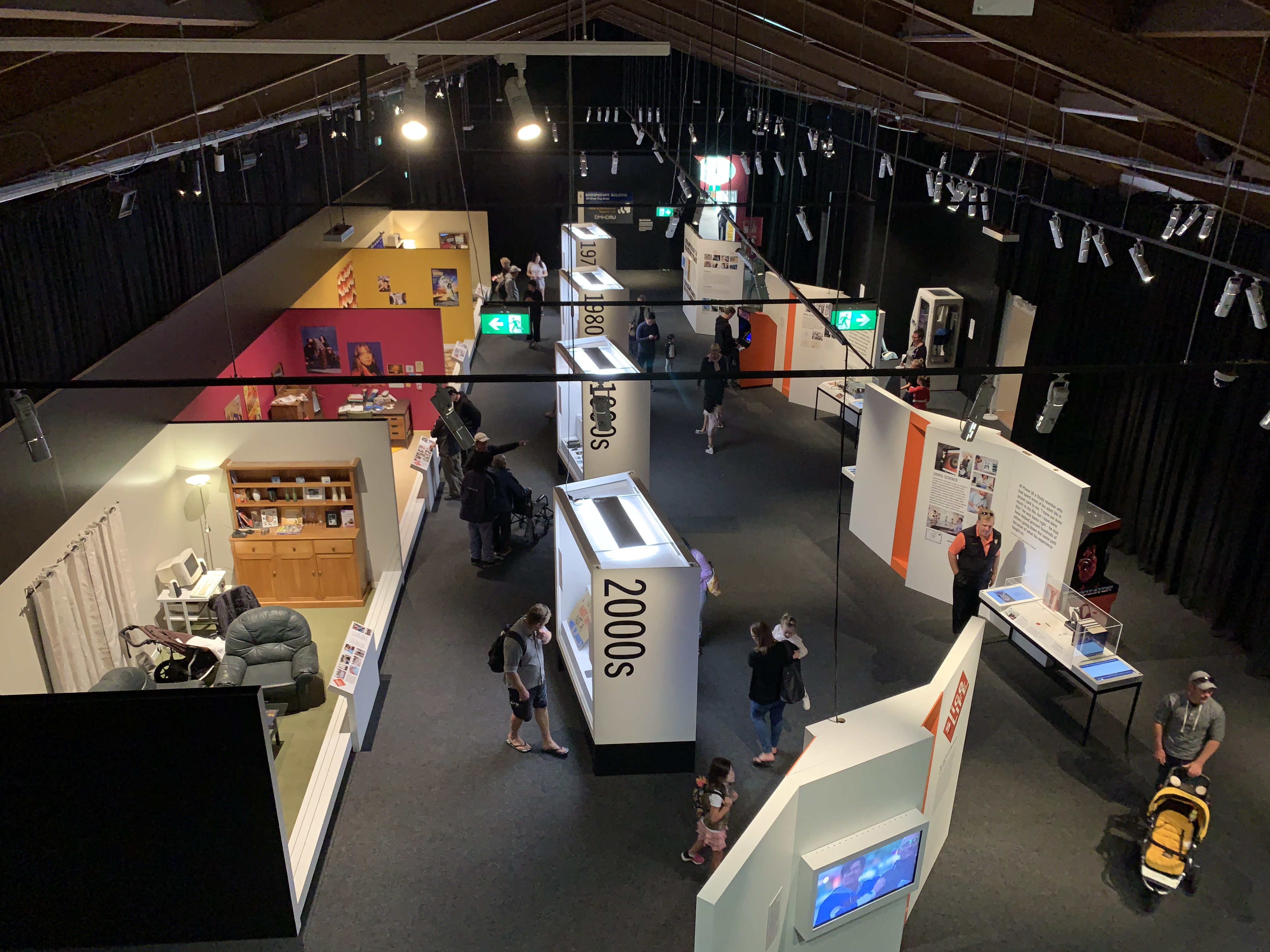
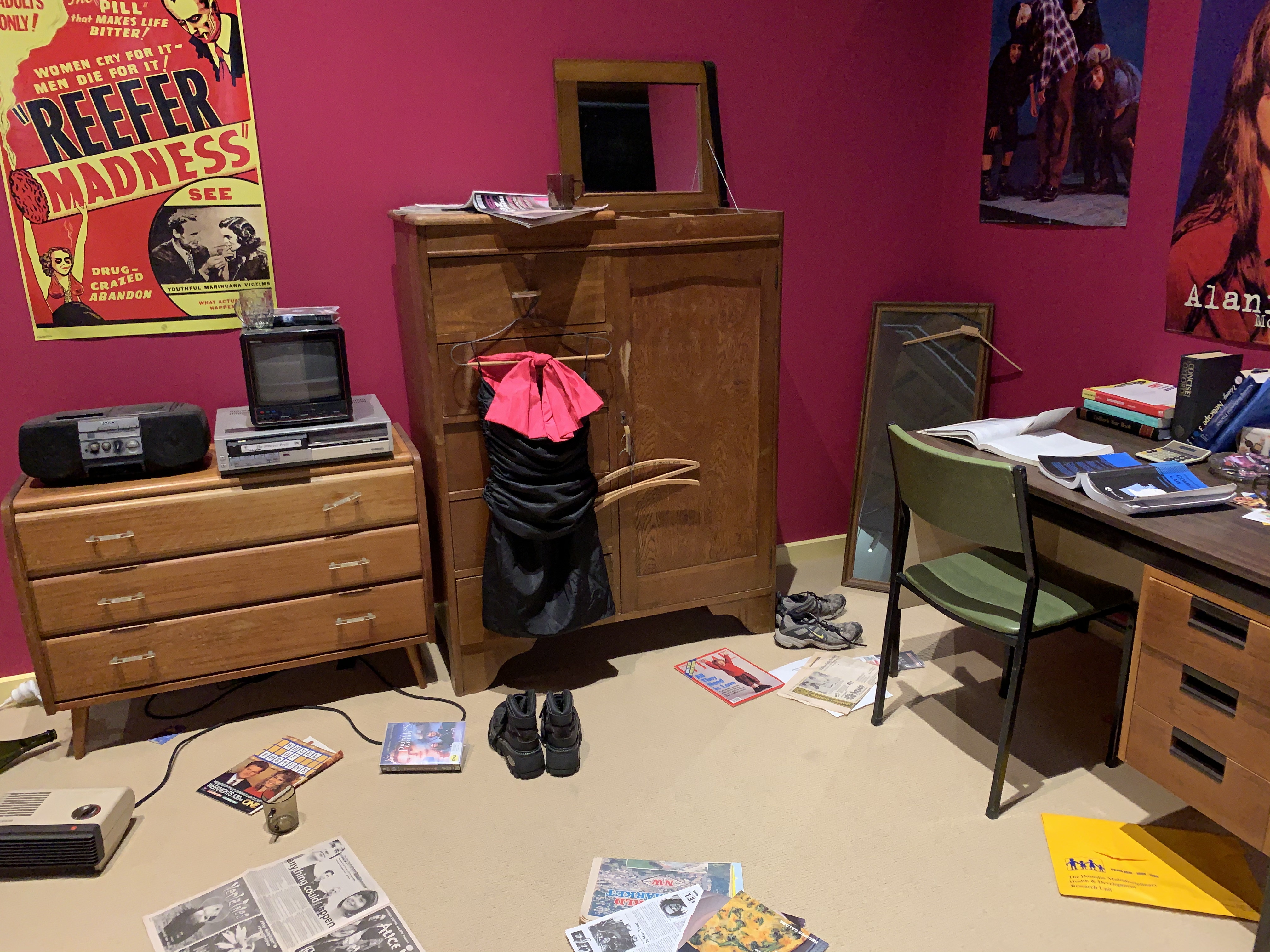
    The exhibition is very well spaced out and logically goes through each decade of the experiment (1970s – 2000s) displaying relevant objects and information. I particularly enjoyed the room layouts at the back of the exhibition that are an interesting way to present a timeline with some historical context. Rather than simply having a timeline of events during which the experiment took place, each decade is represented by a single room. In front of the room is a thematic panel outlining major events and defining moments. Here are the rooms with their decades underneath:

    IMG_4393
    1970s
    IMG_4400
    1980s
    IMG_4412
    1990s
    IMG_4418
    2000s

    The room for the 1980s, for example, has a panel beneath explaining how the subjects would have been moving through intermediate and secondary school potentially going through a rebellious stage experimenting with drugs/alcohol/etc. One thing I noticed during our visit was that people were standing in front of the rooms and connecting to what was on display. Some were pointing out what they found familiar and what they remembered having in their room.

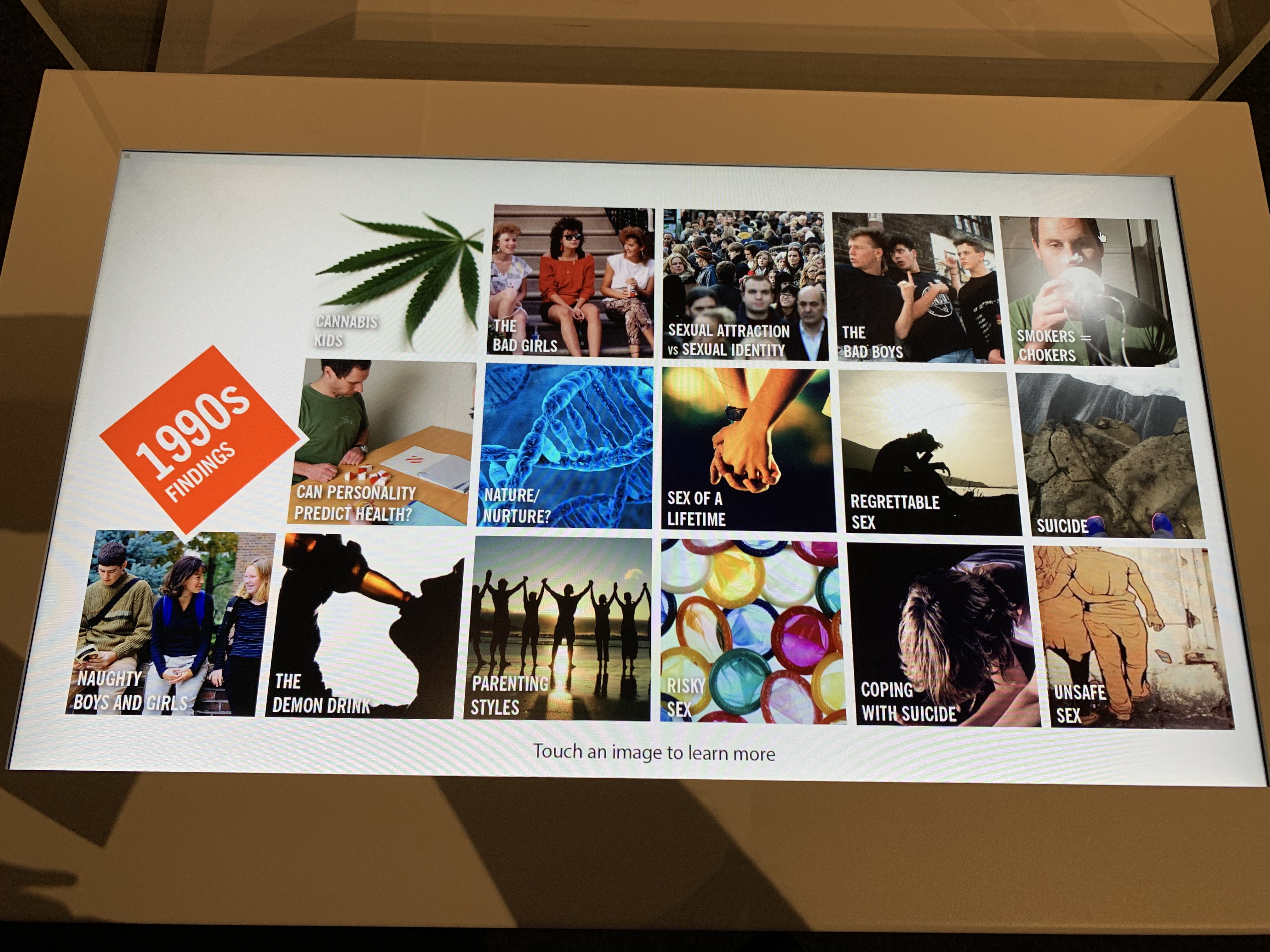
    In the middle of the exhibition space, there is more focus on what exactly the studies observed and some of the results. Next to each decade is a large iPad where you can explore different themes. The one from the 1990s delves into sex, smoking, sexual identity and drugs. When you click on a theme you can read comments made by the researchers who compiled their notes revealing any trends as well as outliers. A great effort is made during the entire exhibition to keep the participants anonymous to maintain privacy.

    IMG_4422
    Slice of Life: The World Famous Dunedin Study

    In this space, I found it particularly fascinating reading each year’s thematic panel. It is incredible to see that 90-99% of participants kept returning for more testing. The thematic panels have a great balance of images, quotes and informative text. The quotes and images of people engaged in the tests (with faces blurred) contextualizes the other written information and provides a much needed firsthand account.

    Everything from the subject matter to the layout and objects included makes this exhibition one that is genuinely fascinating and relaxing to walk around.

    Squawkzilla and the Giants

    For research purposes, I decided to try the children’s activity in this space. Right at the start of the exhibition, there is a Zealandia’s Top Fossil worksheet and a pencil (everything you need to complete the task). On the worksheet there are three questions and if you successfully answer the questions, you can present the worksheet to the information desk and receive a pack of collectible cards.

    IMG_4468
    Squawkzilla and the Giants

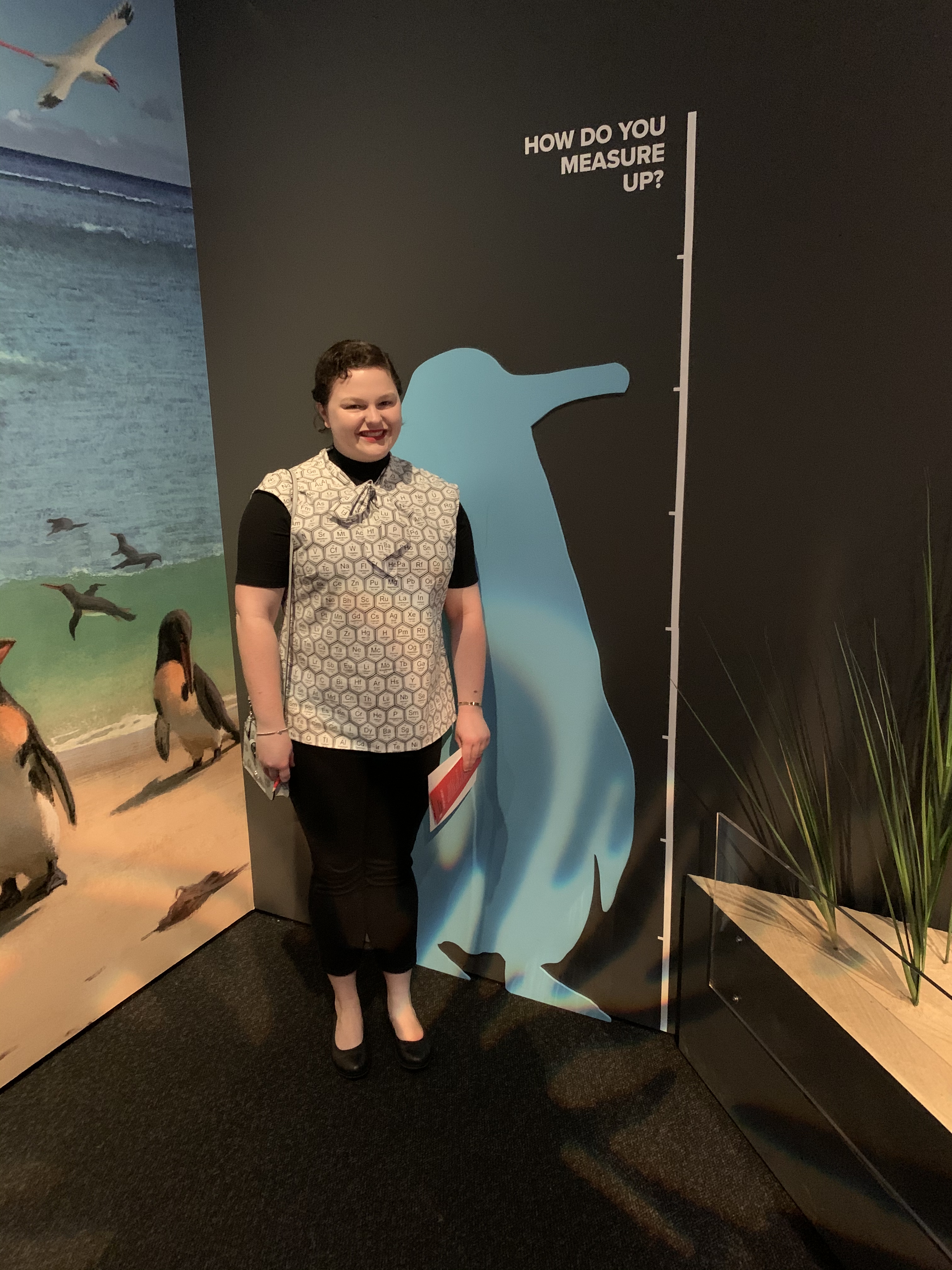
    The exhibition was actually quite nice to see through a child’s perspective as it contained many fun elements – large models and interactives. For example, seeing how you measure against a giant penguin.

    IMG_4477
    Squawkzilla and the Giants

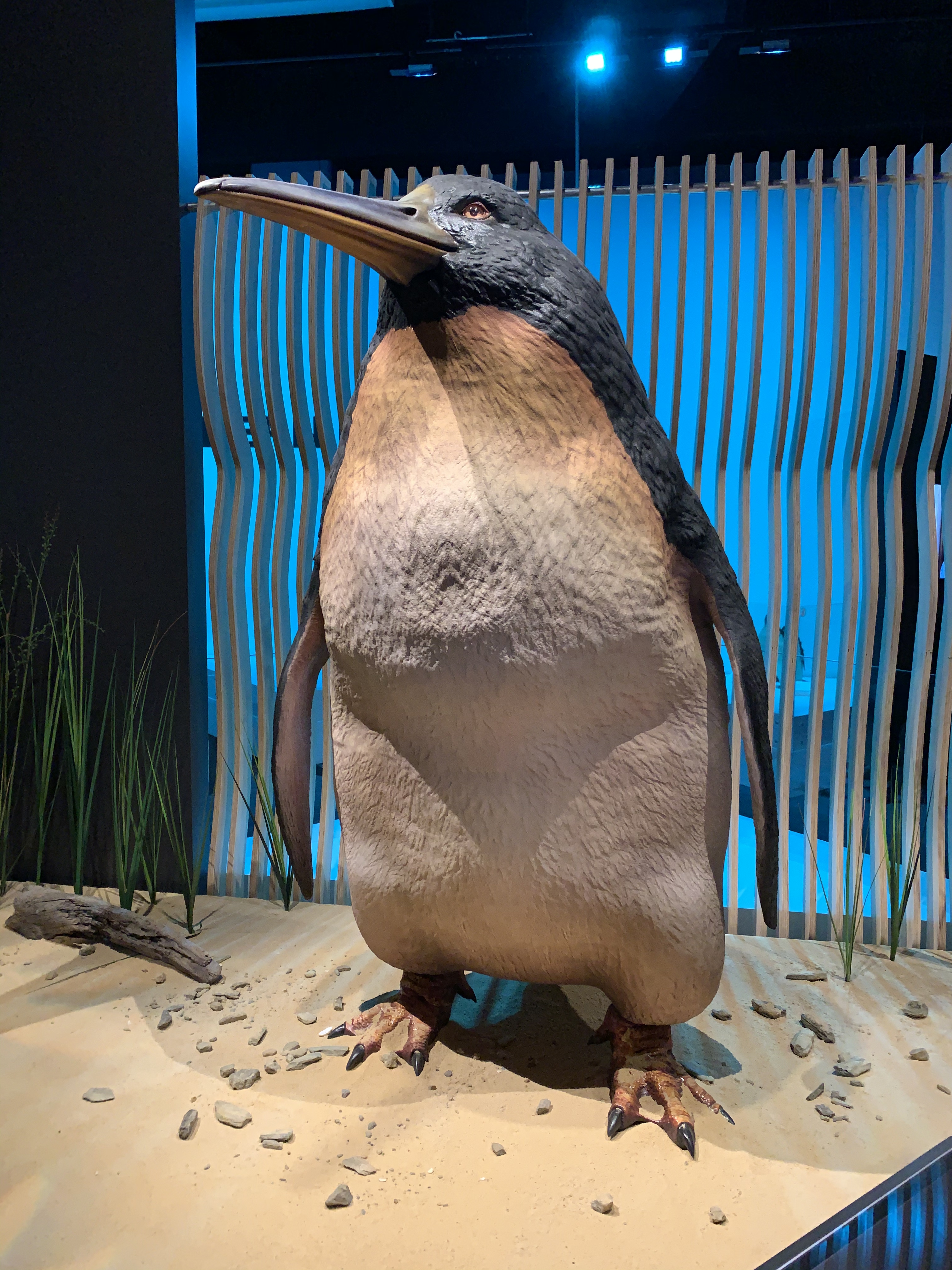
    One of the first things you see is five large models of ancient penguins. You have to find their names for the worksheet. In front of each penguin model is a display cabinet with genuine fossils of the corresponding penguin inside. The fossils in the exhibition were all collected from the upper Waipara River just north of Christchurch.

    IMG_4479
    Squawkzilla and the Giants
    IMG_4483
    Squawkzilla and the Giants

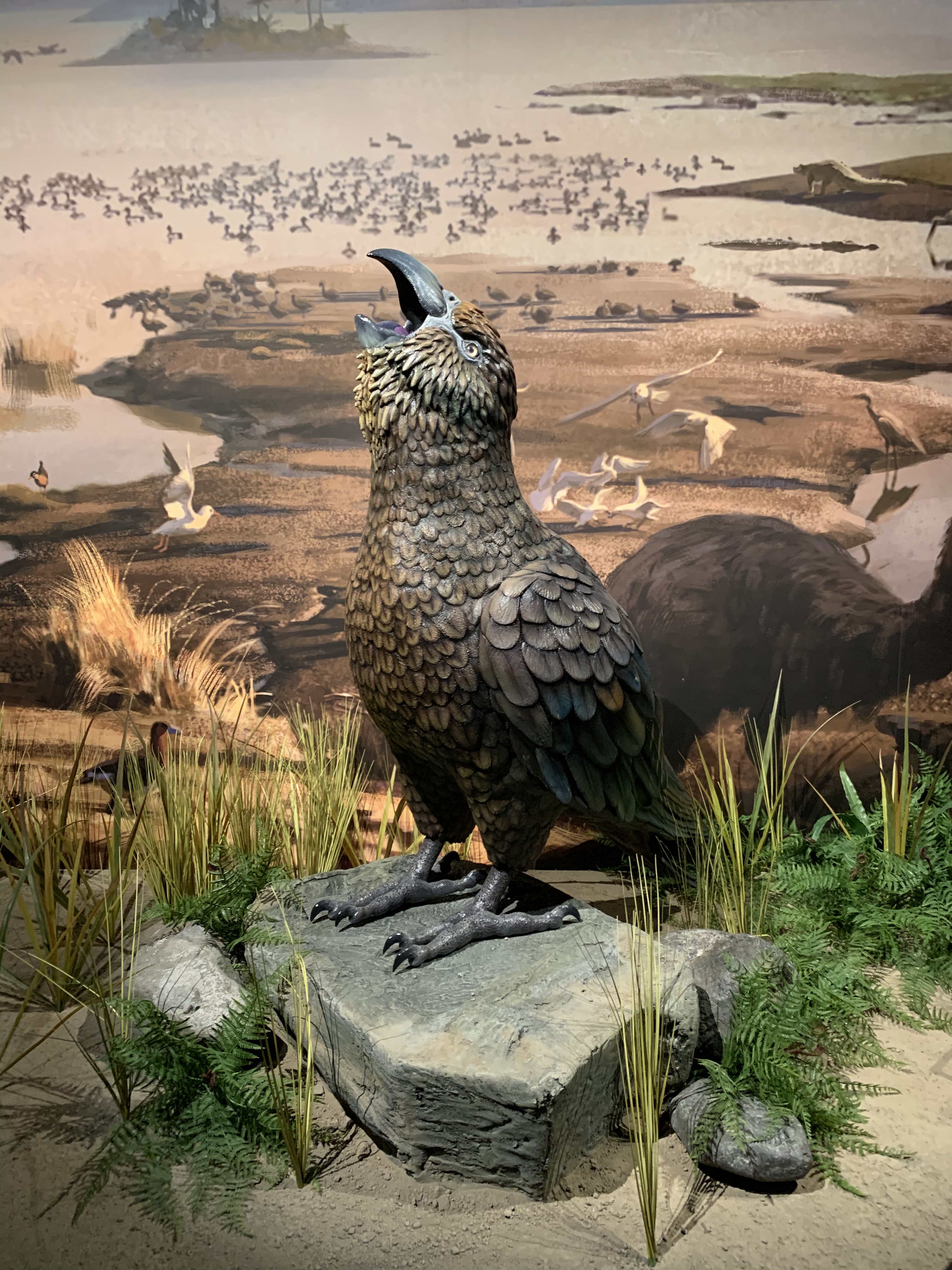
    The rest of the exhibition is quite structured in that there is a path to follow and no deviations. I didn’t mind because the exhibition is chronological working through the various time periods leading up to the Squawkzilla. Yes, the bird is scientifically called Squawkzilla. Fossils were discovered in 2009 and revealed a parrot around 1 m tall that didn’t frequently fly. Similar to the penguins, there is a model of the parrot. The use of models in this exhibition is a great way to bring the animals to life.

    IMG_4493
    Squawkzilla and the Giants

    As opposed to the other exhibition, Squawkzilla is more one of wonder and exploration. I am glad I opted for the children’s activity as it encouraged looking at the exhibition through childlike eyes.

    Christchurch Street

    The exit of Squawkzilla leads directly to Christchurch Street. This is a recreated street from 19th century Christchurch. There is a pharmacy, jewellery shop, shoemakers store and a metal shop amongst others. There is something about these recreated streets that really resonates with me. I think because they are immersive experiences.

    IMG_4436
    Christchurch Street

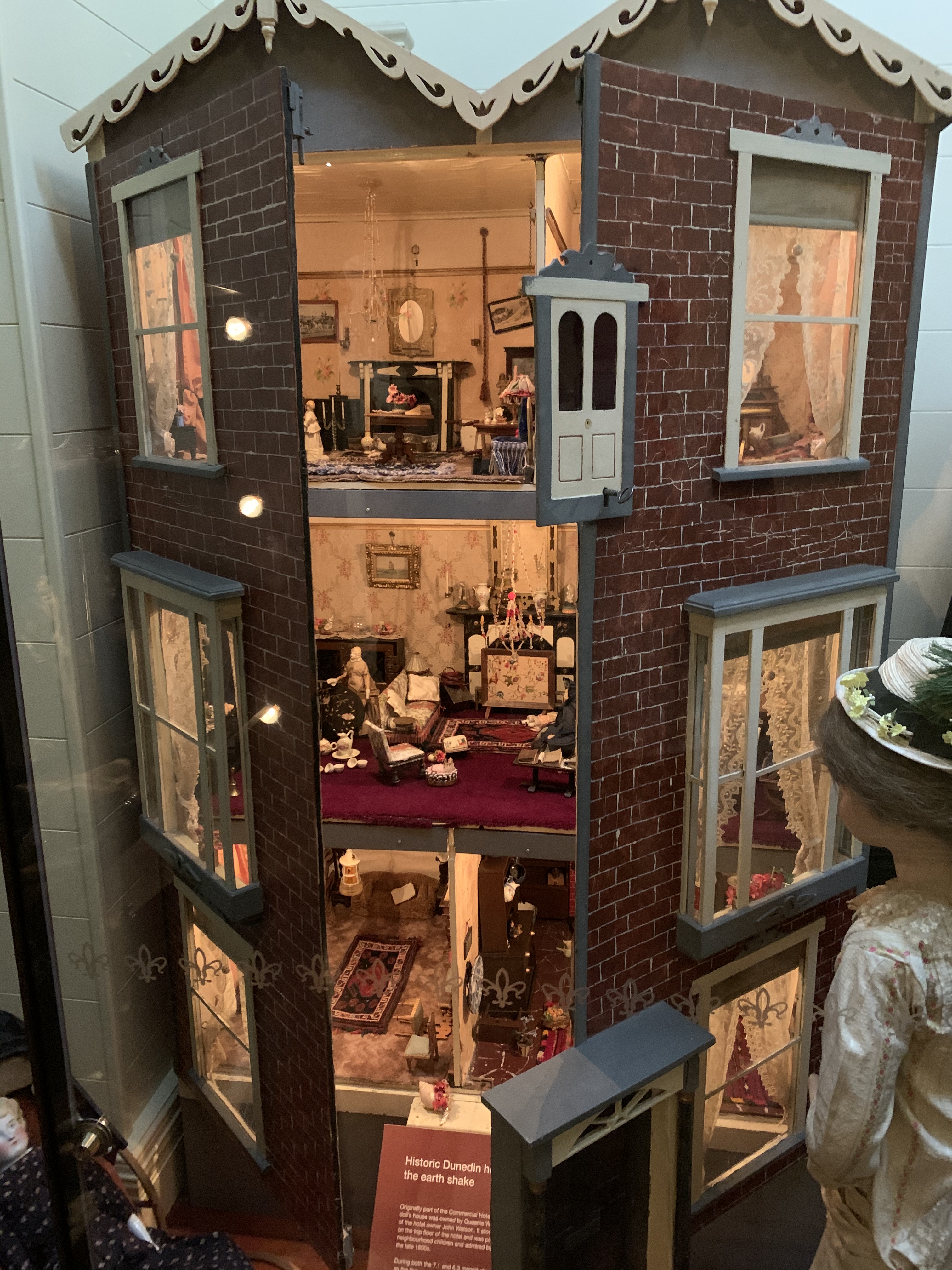
    My two favourite stores were the pharmacy and the toy shop. There is a magnificent doll’s house in the toy shop that I’ve included a photograph of below. The pharmacy is something that I will always find fascinating. Especially all the little bottles and containers.

    IMG_4440
    Christchurch Street
    IMG_4452
    Pharmacy

    Other Sections

    There are quite a few other sections most definitely worth exploring that I did not cover in this post. For example, a small dinosaur section and a great exhibition on native flora. I also have to mention the dioramas on the third level of the Museum in the taxidermy section. There are some very solid dioramas, especially one of shags nesting in a cliff on the coast of New Zealand.

    Practical Information

    The Canterbury Museum is open daily, except Christmas Day, from 9am to 5.30pm. It is accessible and there is a cafe on site (located on the upper level). Entrance is free which is quite amazing! There is a fee of $2 per person if you are wishing to visit ‘Discovery’ – a more hands-on area especially designed for children.

  • Christchurch: International Antarctic Centre

    The International Antarctic Centre isn’t strictly a museum, but does contain exhibitions and offers visitors a variety of experiences. These include the snow storm, penguin feeding/VIP experience, meeting huskies and the Hägglund Field Trip. My absolute favourite was meeting the huskies so there will be lots of photographs of adorable dogs in this post. I’m going to save the best for last and cover some of the other experiences first. 

    Exhibitions

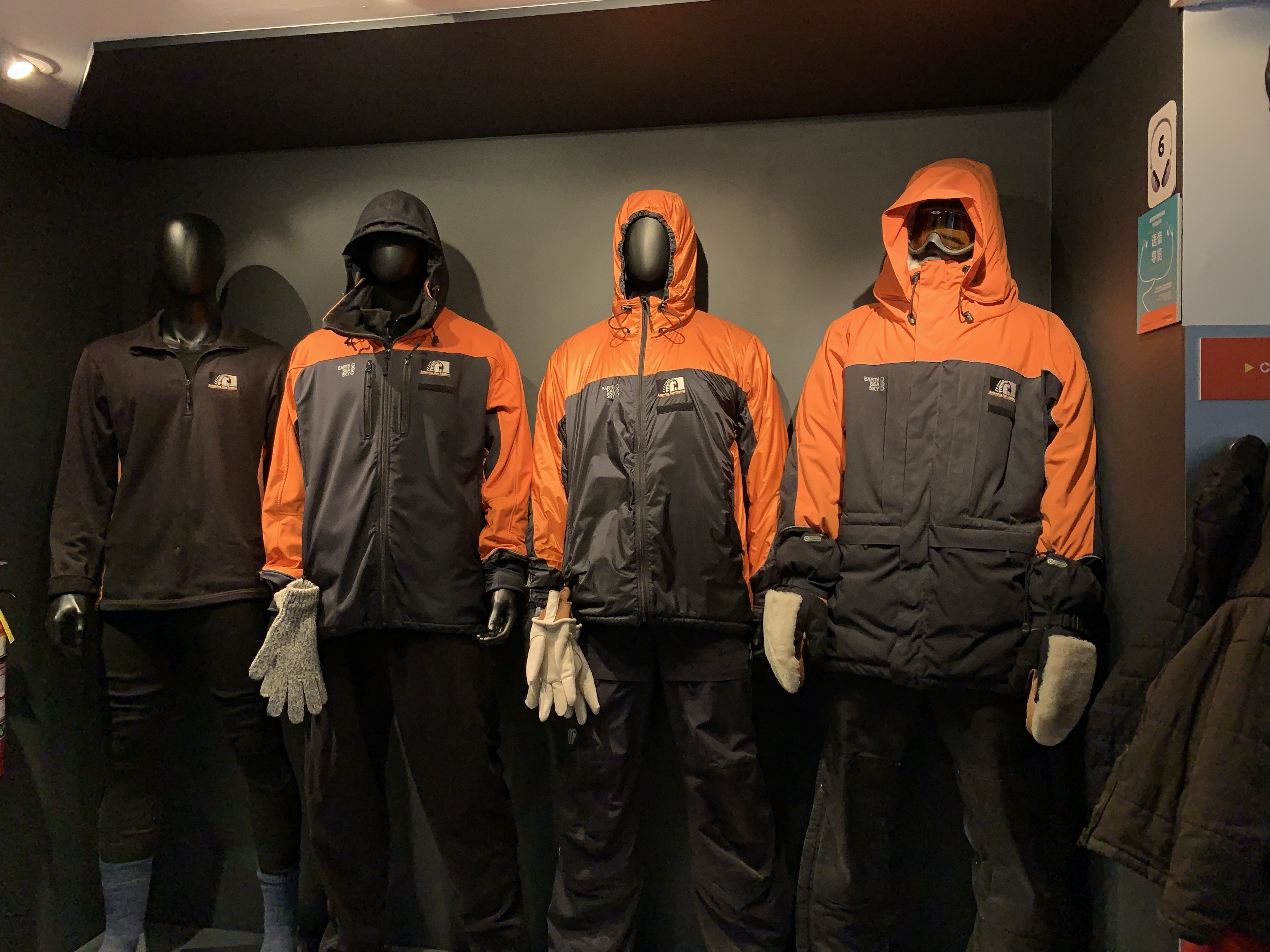
    The main exhibition space is the Antarctic Gallery located at the exit of the Centre. Personally, I think it might be more suited to the beginning so visitors can learn about Antarctica in more depth before all the experiences. However, I have to keep in mind that the Centre isn’t solely a museum and having this exhibition space is at least something. The exhibition is quite small and requires some upgrading. Some of the touch screens are broken and there are quite a few large labels peeling off the wall. There are a lot of interactive elements to the exhibition so it has great potential and could really be an informative and hands-on space. For example, you can walk around a base camp and try on Antarctic Extreme Cold Weather clothing.

    IMG_3777
    International Antarctic Centre
    IMG_3769
    International Antarctic Centre

    IMG_3788
    International Antarctic Centre

    The kid’s penguin labels are also quite fun, catering to really young visitors. The labels are on the floor and ask kids to work out shapes of animals and what food certain animals eat.

    IMG_3779
    Penguin Label

    One topic I was really hoping they would cover was climate change. There are bits and pieces throughout the exhibition, but the issue seems to be pushed aside. Considering it is such a perfect place to address the effects of climate change, I was quite disappointed.

    If you have zero knowledge about Antarctica and want to learn about some explorers and how it is divided today, you could spend some time in the exhibition reading through the labels. Right at the end of the exhibition there is a film by Mark Single that runs for 17 minutes showing the landscape of Antarctica. It is a perfect opportunity to rest your feet and see some beautiful sweeping shots of the continent. There is even some imagery of penguins, a personal highlight.

    Hägglund Field Trip

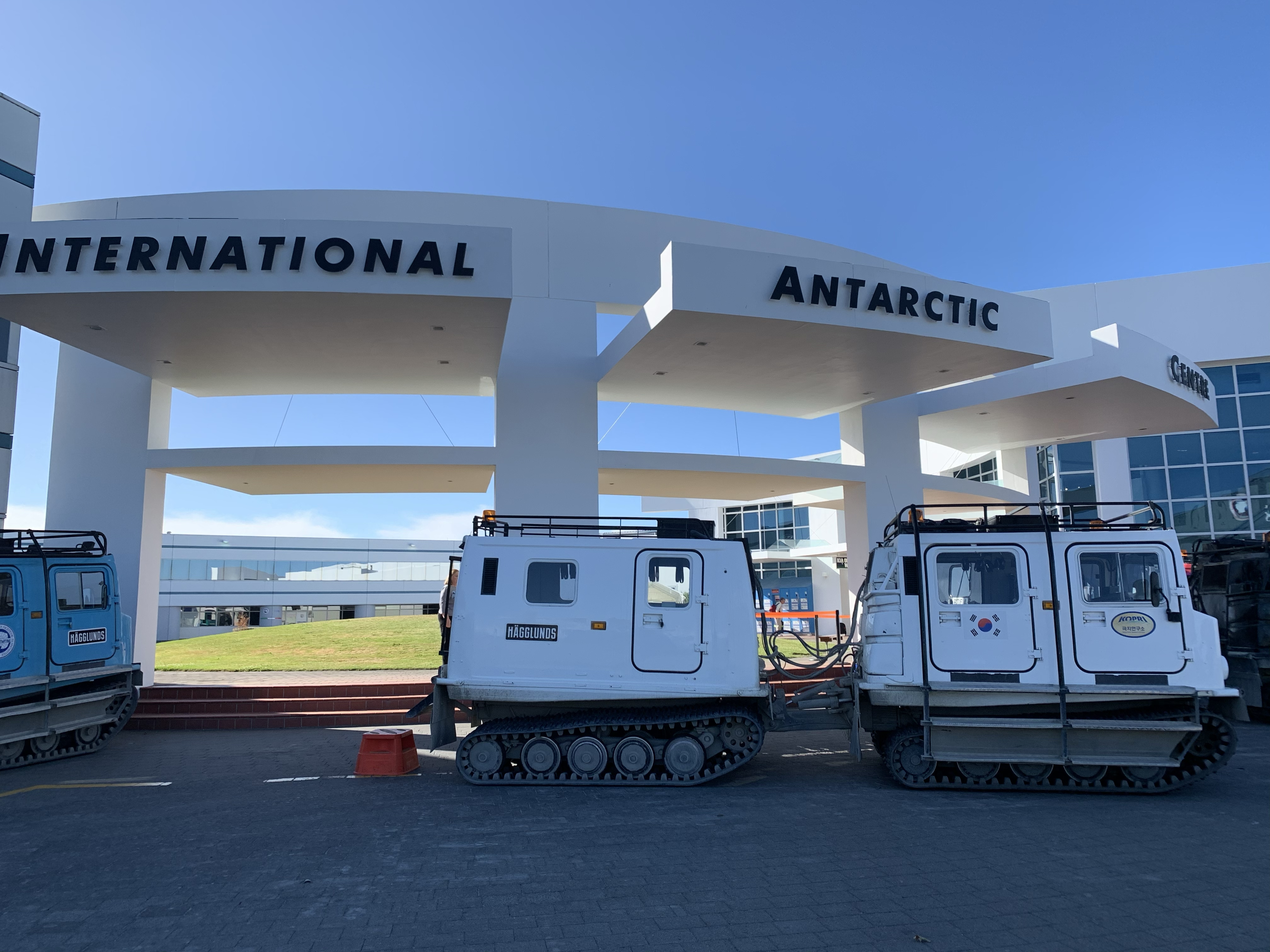
    The Hägglund Field Trip was one of our first experiences. The Hägglund is an all-terrain amphibious Antarctic vehicle. Rather than just drive around a car park in one, you actually get to experience this vehicle over multiple terrains on a purpose-built obstacle course.

    IMG_3728
    Hägglund Field Trip

    You learn pretty quickly that there is no suspension. The Hägglund goes up and down hills, over logs, through water and over gaps as wide as 2m. It is definitely a bumpy ride and provides you with a great insight into the terrain that has to be navigated in Antarctica. As well as how comfortable/uncomfortable it must be for those on the journey. We spent 10 minutes in total on the Hägglund and I would probably say my absolute limit would have been 15 minutes.

    Snow Storm

    We were really hoping to experience the snow storm. However, when we arrived the next one wasn’t scheduled for another 80 minutes. This was because penguin feeding was about to begin. Considering it was incredibly busy and not everyone would have wanted to see the penguin feeding, it was probably worth running the storm more frequently.

    IMG_3760
    Snow Storm

    Fortunately, we were still able to go inside the room set at -8 degrees celsius. I am someone who loves the cold so this was a pleasant temperature. Especially since we were wearing appropriate clothing. Inside there is a wind machine you can operate in between snow storms to have the same -18 degrees feeling.

    IMG_3791
    Hägglund Field Trip

    Penguin Feeding

    We tried to see the penguin feeding but it was just too crowded and the space for viewing is extremely limited. It didn’t help that a very tall group stood right at the front blocking basically everyone’s view. Although we couldn’t see anything, it was interesting to learn about the penguins they have in the Centre – rescue penguins – and all their little personalities. We left after a few minutes.

    Husky Experience

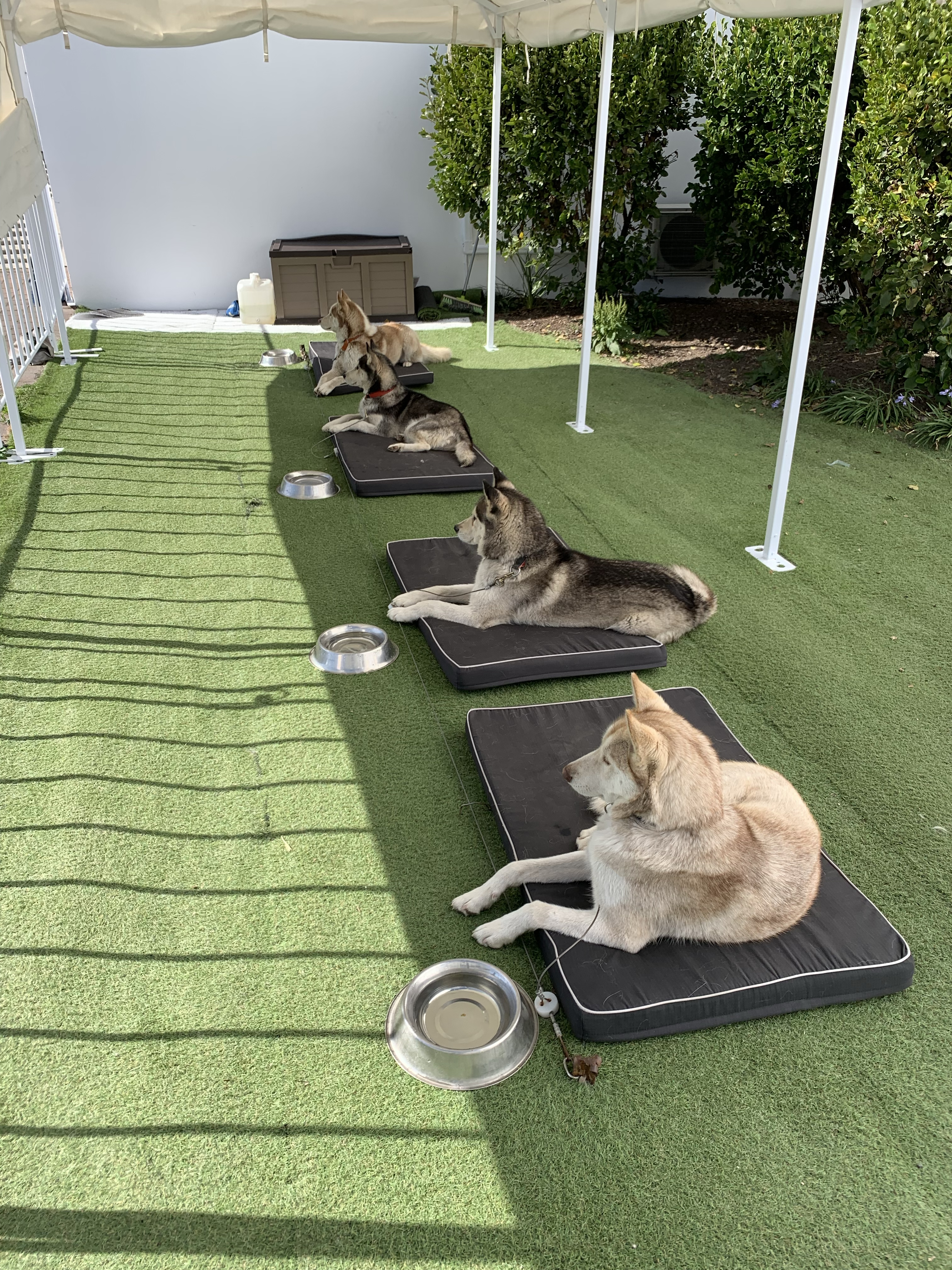
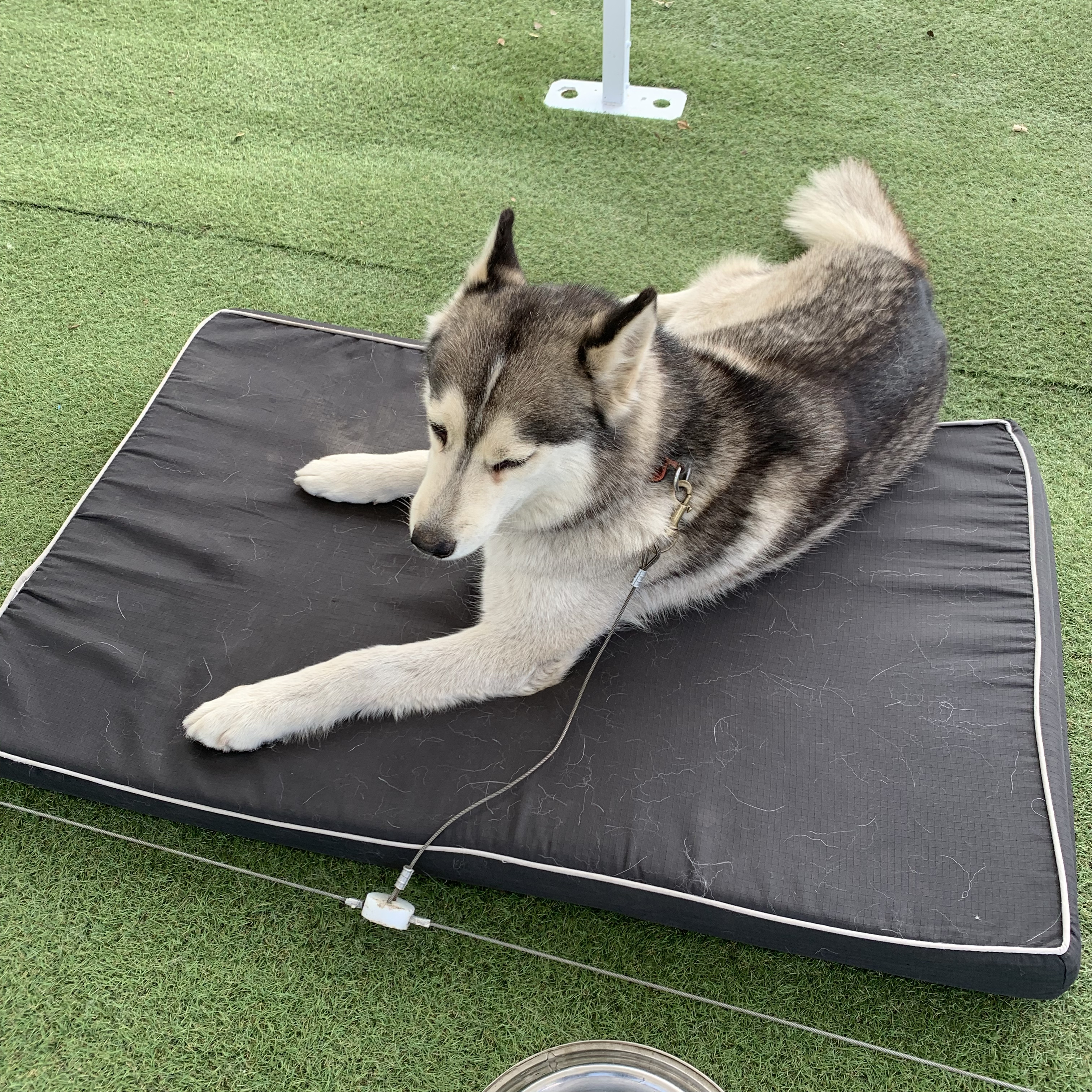
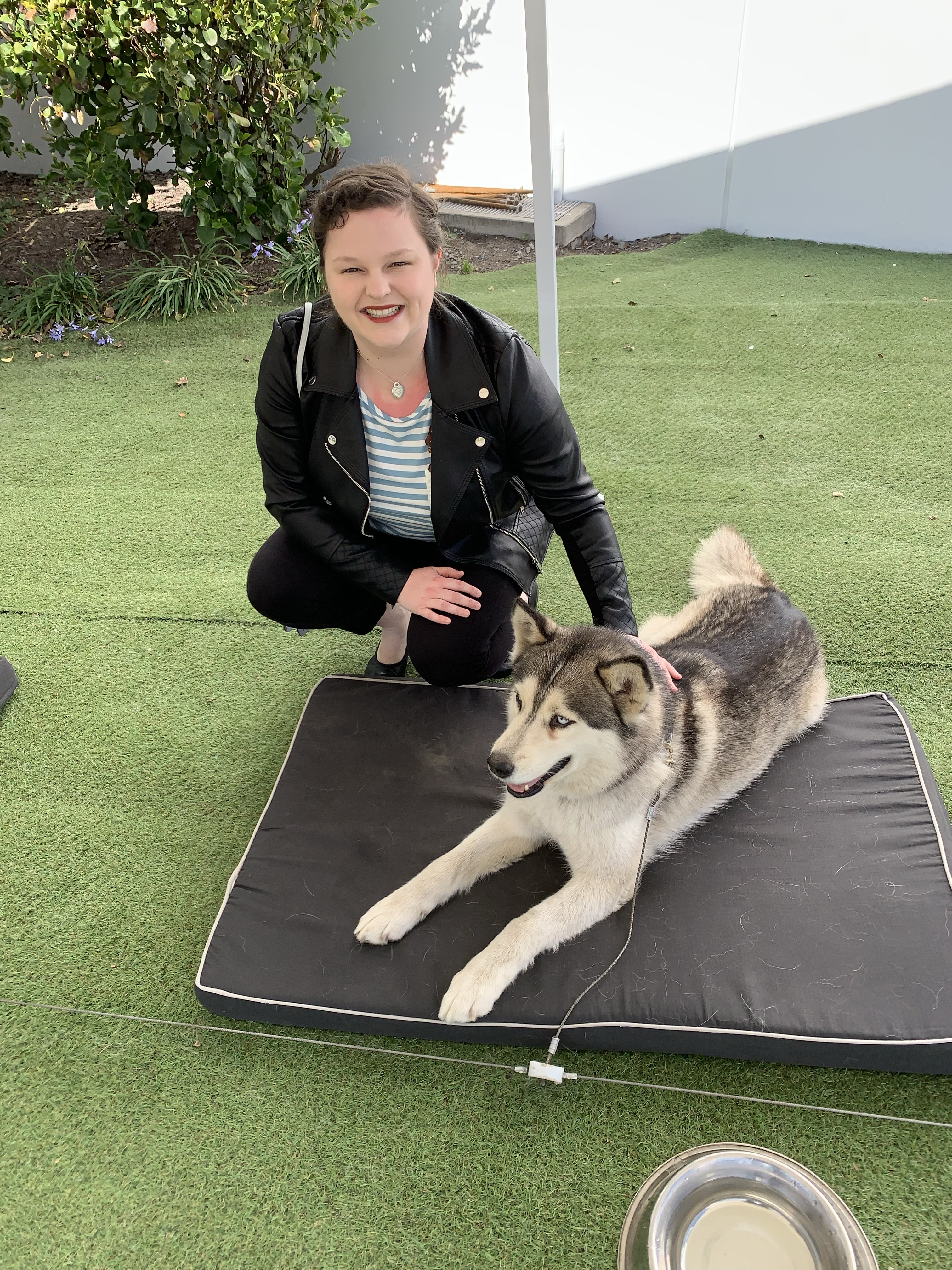
    The husky experience opens 9.30am-5pm daily with the huskies on break from 12.30pm – 1.30pm. If you are like me and love dogs, I would strongly recommend being there when it opens. We were the only two in the pen for 10 minutes so had quality cuddle time with the dogs. There were four in the pen, Shackleton, Mufasa, Max and Mukiro. All were good boys. Before entering the pen you hear a little about huskies and are shown a chart of where it is ok and not ok to pet. Basically a 101 on how to approach a dog that’s unfamiliar with you.

    I didn’t want to choose favourites, but Mufasa was so lively and wanted all the pets. Shackleton is a good lead sled dog but doesn’t like wearing the sled gear. Instead, he just runs alongside the sled. It’s the effort that counts Shackleton. Mukiro was also a bit of a lively cheeky character. Finally, Max just wanted to sleep. I felt that Max and I were on the same wavelength. Here are some photographs. In the first photograph at the back is Mufasa then Mukiro, Max and finally, at the front, Shackleton.

    IMG_3743
    Husky Experience
    IMG_3754
    Husky Experience
    IMG_3752
    Husky Experience
    IMG_3748
    Husky Experience

    The Centre has partnered with Husky Rescue NZ in order for these beautiful dogs to be available for pets.

    Practical Information

    I recommend the Centre if you are after some hands-on experiences and not one that is too in-depth or contemporary. The Centre is open from 9am to 5.30pm every day of the year. It is mostly accessible, however the Hägglund is not. The Centre is located directly opposite the airport with free luggage storage available.

  • Christchurch: Art Gallery Te Puna o Waiwhetū

    Greetings from Christchurch, New Zealand! We spent today exploring the city and visiting both the International Antarctic Centre and the Christchurch Art Gallery Te Puna o Waiwhetū. I am most excited to write about the Gallery. It is not only a spectacular building, but has an incredible array of works on display with the majority by New Zealand artists. Before sharing my favourite works, here are a few other highlights worth mentioning.

    IMG_3798
    Te Puna o Waiwhetū

    General Highlights

    1. Artwork Labels

    Finally, yes finally, an art gallery with easy to read labels that do not contain pretentious language. Apart from one exhibition, the labels are black font on a light-coloured background. Honestly, this was way too refreshing.

    Also, the labels are in English and Māori. It never ceases to amaze me how effortlessly galleries and museums in New Zealand integrate Māori language into their labels and exhibitions. It is so great to see and also presents a wonderful opportunity to learn some Māori words and phrases.

    2. Space to Relax

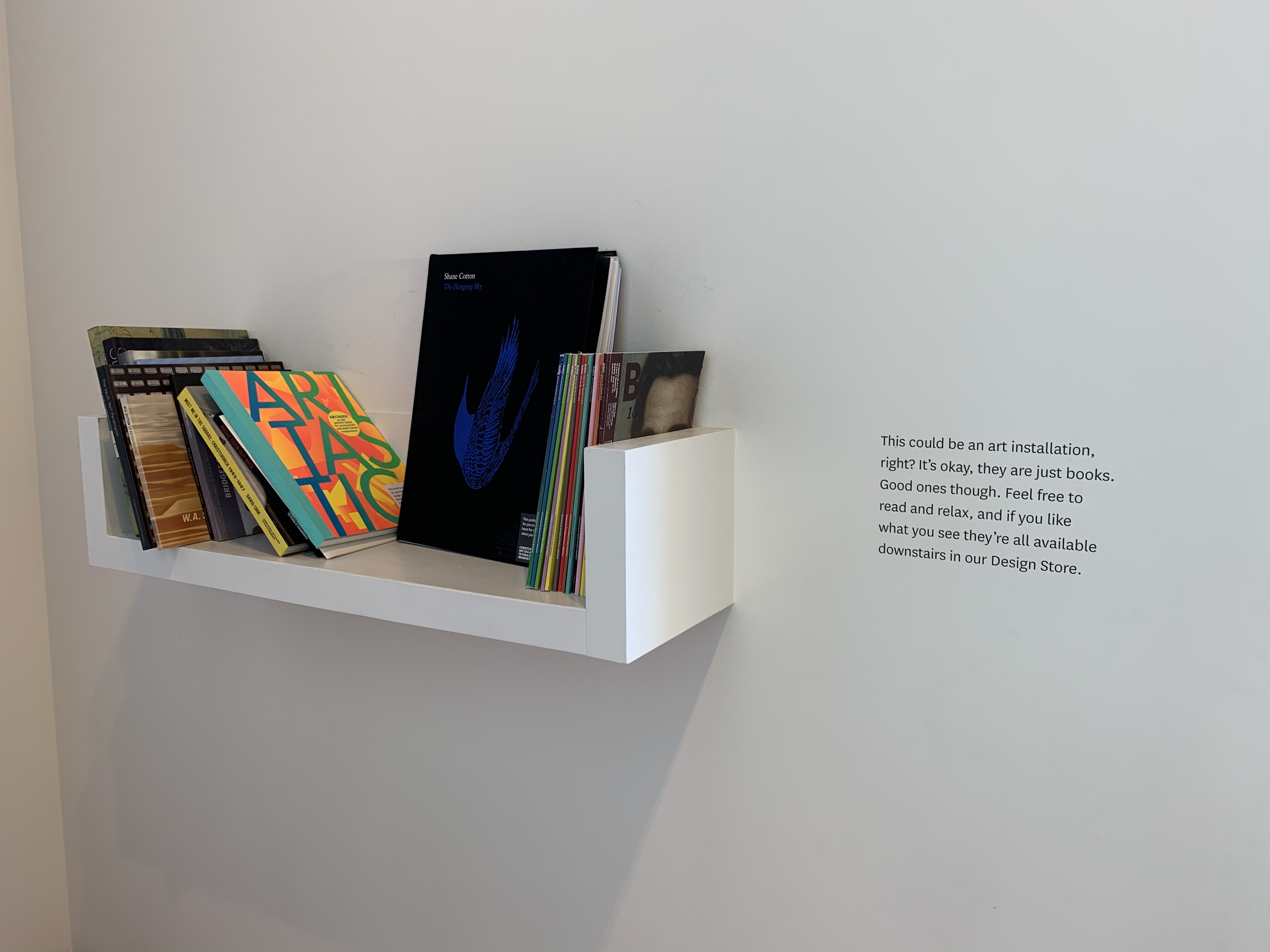
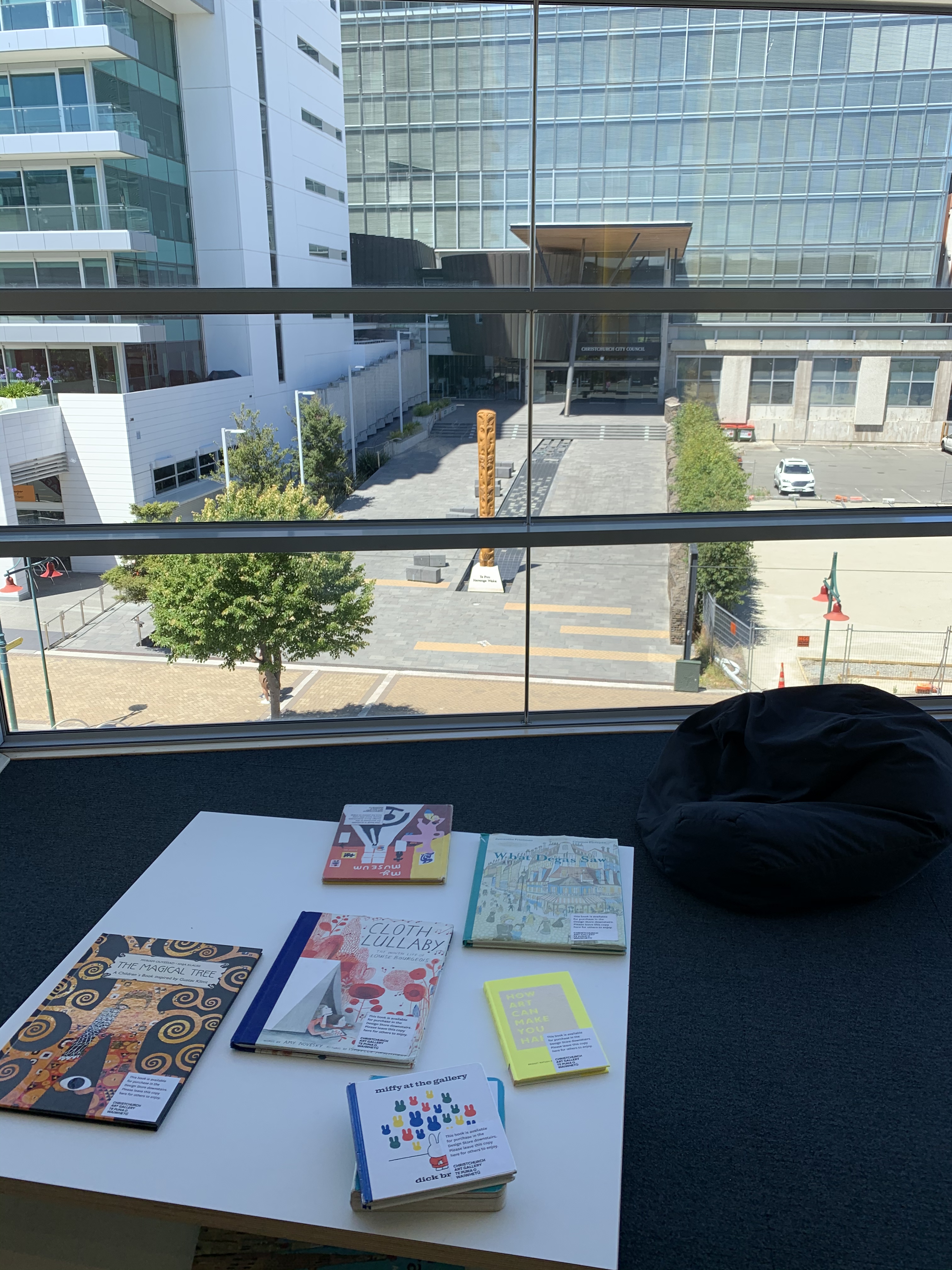
    Just off the side of the main gallery, on the upper level, is a relaxation area. Equipped with art books, lounge chairs and a couple of installations, this room overlooks the Christchurch City Council building. Although a lot of galleries have similar spaces, I just found this one to be particularly relaxing. I also enjoyed the sign next to the art books (see below).

    IMG_3864
    Art Books
    IMG_3865
    Seat with a View

    3. Cloakroom Set-up

    It’s a strange one, but the Gallery’s cloakroom has a great system in place. When you leave your bag/umbrella/jacket/etc, you get a silicone wristband to wear throughout your visit. Usually, when I get a token or something similar, I spend my entire visit double and triple checking it’s still with me. The wristband basically cancelled any concerns I had and means if you cloak your bag and don’t have pockets, you don’t have something annoying to carry around.
    IMG_3838
    Cloakroom

    4. Restaurant

    I have been unbelievably impressed with the places to eat here in Christchurch. There are so many options you are absolutely spoilt for choice. If you are visiting the Gallery, I highly recommend their restaurant, Universo. It has a good vibe and a great selection of food available.

    5. Gift Shop

    I love a gallery gift shop that contains lots of quirky little things to buy. I strongly recommend spending some time in this one. There is everything from interesting children’s picture books to beer from a local brewery.

    6. Entrance Space

    When you first enter the Gallery you are met by a very impressive entrance foyer with a grand staircase leading to the upper floor galleries. Suspended above the staircase is a colourful sculpture of chairs and tables lighting the way. It is a memorable way to introduce visitors to the space.

    IMG_3810
    Entrance

    Favourite Artworks

    There are so many artworks to choose from. I have managed to whittle my list down to eight from a potential twenty. There is obviously so much more to explore – all practical details (opening hours etc) will be included at the end of my post.

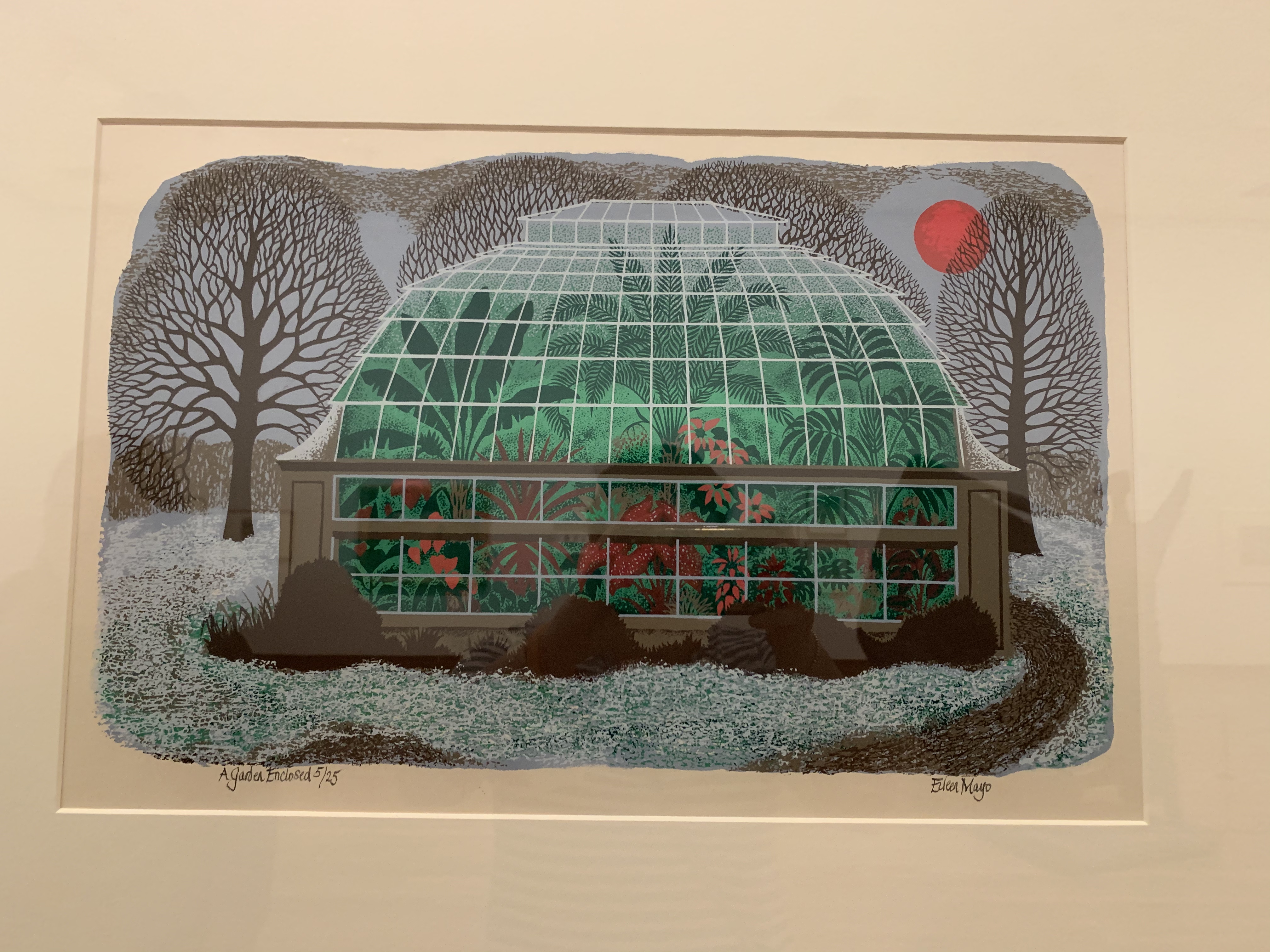
    1. Eileen Mayo – A Garden Enclosed

    This screen print by Eileen Mayo is so beautiful and balanced in its composition. What resonates with me most is the juxtaposition of a thriving greenhouse and what looks like a dead forest. I think of summer/spring shining through in a winter setting.

    IMG_3870
    Eileen Mayo – A Garden Enclosed

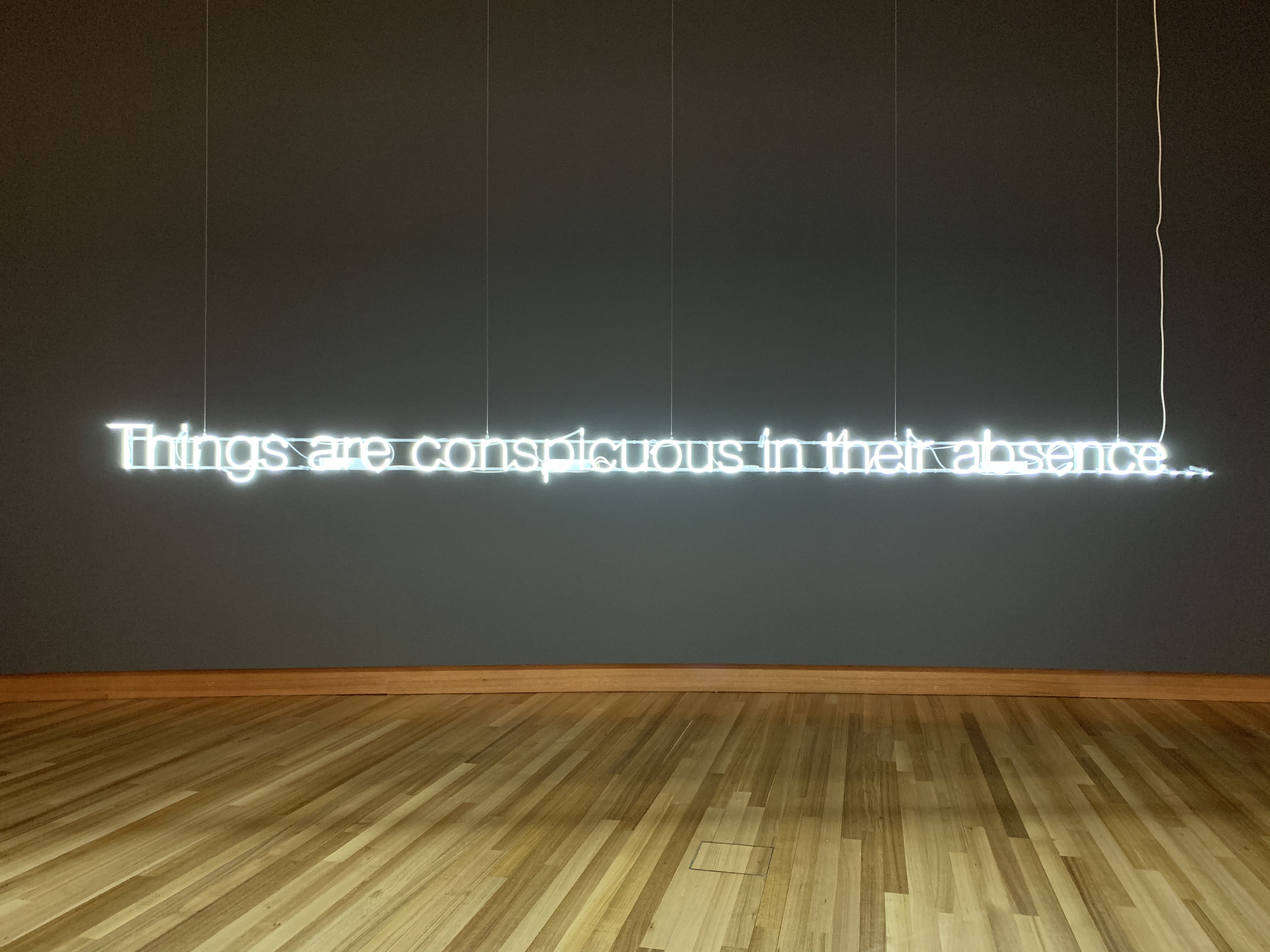
    2. Cerith Wyn Evans – Things are conspicuous in their absence

    The hanging neon sign reminds visitors that absence and silence can be a strong ever-present force. Inspiration for this artwork came from watching subtitled films. The artist soon realised that there was a gap between text and picture. This led to thoughts on loss and how the memory of loss is always in the present. In other words, when something is no longer, memory can grow stronger.

    IMG_3883
    Cerith Wyn Evans – Things are conspicuous in their absence

    3. Anila Quayyum Agha – Shimmering Mirage

    I love large-scale installations where an artwork completely surrounds you or you feel as though you’ve been transported to somewhere completely different. This artwork achieves that goal as you step inside a huge light installation in the exhibition Wheriko – Brilliant! The large steel cube was carved by Agha who was motivated by dispossessed people and welcoming spaces. During her son’s wedding, Agha received a phone call to say her mother had died and was buried within the day, in accordance with Islamic custom. The grief felt by Agha sparked thoughts on how dispossessed people must deal with trauma when they cannot be physically present for something, such as the death of a parent. This has been combined with Agha’s childhood memory of wanting to see sacred rooms in mosques that were reserved for men. The carvings she made of steel reflect the Islamic screens in these mosques and how light and dark play off each other. By creating this space that transcends all boundaries, Agha hopes to make all visitors feel they are welcome.

    IMG_3917
    Anila Quayyum Agha – Shimmering Mirage

    4. Ronnie van Hout – The Thing

    If you haven’t seen the 1982 cult classic, The Thing, please now take the opportunity. Inspired by the film, Hout created this sculpture of a solitary man sitting in the dark. Is he ‘The Thing’? Visitors are asked to turn on the light to properly see the man inside and view him in a state of contemplation.

    IMG_3897
    Ronnie van Hout – The Thing

    5. Hannah Beehre – The Hedge

    Projected onto the wall is a hedge with leaves falling down to the ground in response to sound. If you stamp your feet or talk in front of the work, more leaves fall. During the night, when no one is in the Gallery, the leaves return to where they started to fall again the next day.

    IMG_3886

    6. Sophie Bannan – Untitled

    This piece has so many layers. Bannan’s grandfather, Maurice Mahoney, designed many buildings in Christchurch during the 1960s. After the 2011 earthquakes, Bannan visited sites of devastation that had connections to her grandfather. Here, she collected clay and created the sculptures on display.

    IMG_3893
    Sophie Bannan – Untitled

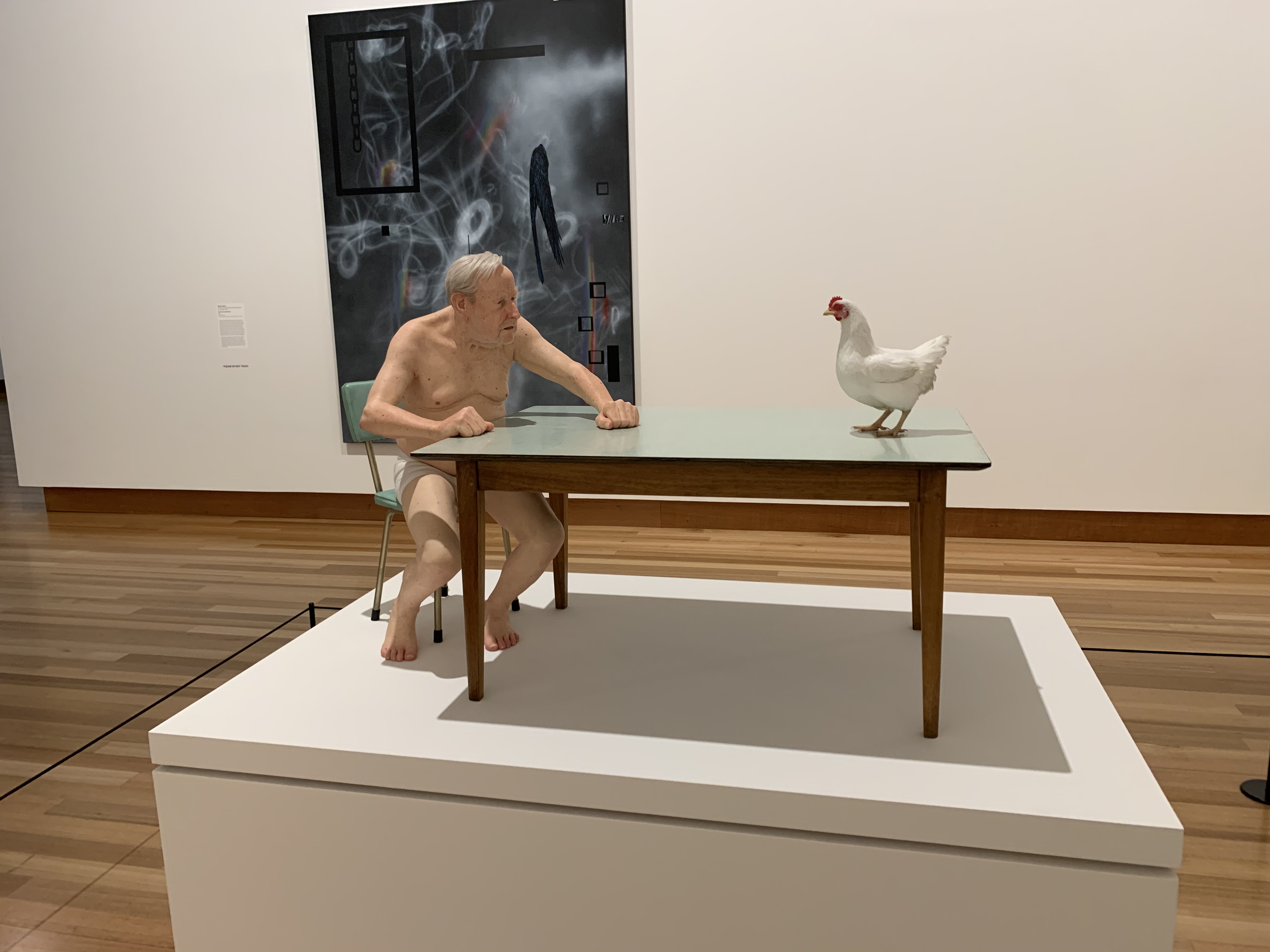
    7. Ron Mueck – chicken/man

    This artwork is entertaining and bizarre. It is a man staring at a chicken and the chicken is staring right back. I was just as confused seeing it as the old man is seeing the chicken.

    IMG_3879
    Ron Mueck – chicken/man

    8. Andrew Drummond – Device for Shadows and Reflection

    Combining science and art in his work, Drummond explores how light can react with moving objects. The constant moving cylinder throws light against the wall in different patterns depending on where it is in its rotation.

    IMG_3922
    Andrew Drummond – Device for Shadows and Reflection

    Practical Information

    Christchurch Art Gallery Te Puna o Waiwhetū is open daily from 10am to 5pm. On Wednesdays, it stays open until 9pm. Entry is free and the entire Gallery is accessible. It is located in central Christchurch.

  • Brisbane: Gallery of Modern Art (GOMA)

    I have been looking forward to this exhibition for quite some time. Especially considering it is an exhibition that opens discussions on climate change and the fragility of the environment, as well as commenting on our role and relationship to our surroundings. It could not have opened at a more poignant time, particularly in Australia where drought and fires have ravaged parts of the country. It was fascinating to see how artists have interacted with this vital element. Not only in a ‘traditional’ way, i.e. photographs and sculptures, but in a playful way as well. More on that later.

    IMG_2359
    GOMA: Water

    As soon as I heard about the exhibition, I wanted to buy a season pass so I could see it as many times as possible. Well, I wanted to walk over an Icelandic riverbed as many times as possible. In short, I am very glad I purchased the pass. The Icelandic riverbed was most definitely a highlight, but there are so many artworks I want to return to and see over the next few months. I might actually write a blog post in April when I see the exhibition for the final time and reflect on how my views/favourite sections have changed and why. Watch this space.

    General Comments

    I’m going to focus on a few specific artworks, but there are some general comments and observations that I want to include.

    • Use of space – the exhibition never felt crowded and although it was extremely busy it was not overwhelming.
    • Excellent grouping of artworks – each work speaks to the grand theme of water but is also grouped into a sub-theme, such as ‘deep’ and ‘riverbed’. These themes flow together really well and challenge visitors to think of water in all its different forms and layers.
    • Strategic artwork placement – one work in particular that comes to mind is the snowman. It is positioned in front of a large window overlooking the Brisbane River. This reminds visitors of what is outside (heat and humidity) and how out-of-place the snowman seems. This placement reinforces the aim of the work which I will discuss later.
    • Use of colour – the exhibition makes great use of wall colour. Depending on where you start your visit, you can move from somewhere deep and dark to the surface where there is much more light. The colours on the wall support and reflect this movement.

    I’m now going to delve into a few of the artworks you can see in ‘Water’ and how it is both a traditional and playful exhibition.

    1. Riverbed by Olafur Eliasson

    I was not at all prepared for the scale of this installation. When I read that an Icelandic riverbed was going to be in the exhibition, I thought a really small area with a few rocks and some water running through. As you can see from the photographs below, the riverbed actually takes up an entire room and is massive. This installation by Eliasson, a Danish-Icelandic artist, reminds visitors that water is extremely precious. The fact we don’t know if the small stream of water is reducing in size or growing, speaks to the rapidly changing environmental conditions we are faced with everyday. It is also quite a harrowing reminder of drought as the small flow of water could stop at any time.

    IMG_2466
    Riverbed by Olafur Eliasson
    IMG_2445
    Riverbed by Olafur Eliasson

    What is most incredible about this installation is the fact you can walk all over the riverbed and actually experience it all around you. As the interpretative label states, you do feel out of place. It is disorientating standing on an Icelandic riverbed inside a gallery in Brisbane. But, it is simultaneously so tranquil. It was (and might still be after a few more visits) my favourite section of the exhibition and what sparked my thoughts on water the most.

    2. Snowman by Peter Fischli and David Weiss

    This very out of context snowman in tropical Brisbane smiling at visitors making their way through the exhibition has to be my second favourite artwork in the exhibition. It is housed in an industrial freezer relying on electricity to keep it alive. If we can manipulate our environment by using technology and industry, then it shouldn’t seem so odd that a snowman can survive against all odds.

    IMG_2419
    Snowman by Peter Fischli and David Weiss

    3. RE FORMATION (Noogoon/St Helena Island) by Megan Cope

    This sculpture is one of continued presence of Indigenous Australians and adaptability. It is also one that speaks to an action – the hope of restoring reef systems across Quandamooka country. The cast-concrete oyster shells are arranged in a shell midden. These structures were created from discarded oyster shells and represent a healthy relationship between people and environment – nurturing and supportive. Colonisation destroyed the majority of these structures as they were burnt to make lime. This sculpture manages to combine the past with the present and the future very effectively.

    IMG_2363
    RE FORMATION (Noogoon/St Helena Island) by Megan Cope

    4. The Blue Fossil Entropic Stories III by Julian Charrière

    Just behind the Snowman is a large print depicting an iceberg. On top of the iceberg is a man with a blowtorch directing it at the ice. You can see there is a very direct link between the image and commentary on climate change. Specifically, a dramatic look at how cumulative impact can arise from individual action.

    IMG_2433
    The Blue Fossil Entropic Stories III by Julian Charrière

    5. Heritage by Cai Guo-Qiang

    This is such a stunning sculptural installation that you will want to spend some time slowly walking through if you visit. Mainly because there are so many animals surrounding the water that you can identify. There is balance and harmony, but also some underlying tensions. As predators and prey all stand around drinking the same water, how long before something goes wrong.

    IMG_2516
    Heritage by Cai Guo-Qiang
    IMG_2520
    Heritage by Cai Guo-Qiang

    I have only just scratched the surface of what’s on offer in the exhibition and the types of broader narratives present. As you can probably see by now, the exhibition is filled with interactive, playful installations that fully immerse the visitor. You become an active part of the exhibition not just a passive visitor reading labels. This is where I think the exhibition has really succeeded. You are constantly reminded that we need to be active not passive when managing this vital element and the environment.

    Practical Information

    I strongly recommend visiting the exhibition and experiencing this all for yourself. ‘Water’ is on at the Gallery of Modern Art (GOMA) in Brisbane until 26 April 2020. GOMA is open daily (excluding Christmas Day, Boxing Day and Good Friday) from 10am to 5pm. Tickets for the exhibition can be purchased here.

    Please note that while the galleries are accessible, Riverbed and The Fact of Matter are two installations that are not. For The Fact of Matter, there are also height restrictions and it is not recommended for visitors with any heart conditions or current injuries.

  • Brisbane: Spring Hill Reservoirs

    Last night I had the most incredible opportunity to attend a show by the Underground Opera Company in the Spring Hill Reservoirs. It truly was one of the best performances I have ever seen and the way it activated the heritage place was remarkable. The following blog post will be roughly divided into two sections. One on the Reservoirs, and the other on the Underground Opera Company. Weaved throughout will be my review of the evening. This will include reflections on re-purposing heritage places and why I think that process is of great value.

    Spring Hill Reservoirs

    IMG_1556
    Spring Hill Reservoirs

    To be perfectly honest, I have lived in Brisbane almost my entire life and had no idea the Reservoirs even existed. I must have seen the name pop up during Brisbane Open House, but I have never visited. The Spring Hill Reservoirs are two structures located behind Old Windmill Tower in Observatory Park. As a brief aside, the Old Windmill Tower is Queensland’s oldest structure, and Australia’s oldest still-standing windmill, dating back to the convict era with a very dark past. For more information on that particular heritage place, click here. No doubt there will be a blog post about the Windmill in the future.

    IMG_1557
    Old Windmill

    Back to the Reservoirs. The structures were built during the late 19th century (the first reservoir opened in 1871) and were designed to be water storage and distribution facilities for Brisbane. The opening of the Reservoirs was very significant to the development and growth of Brisbane. As they better managed Brisbane’s water supply, the price of water dropped therefore allowing the city to become more affordable.

    Between 1871 and the early 1880s, there was only one reservoir. This changed as there was a clear need for a second reservoir to support the expansion of Brisbane. These two structures were in full operation until September 1962 when the water main from Enoggera Dam collapsed. As with so many heritage structures, the discussion of ‘well, what do we do with it now’ took place. Would they become art galleries, bus exchanges, restaurants, or something entirely different?

    In 2014, the Underground Opera Company contributed $150 000 to temporarily transform one of the Reservoirs into a place for operatic performances. More on the company a bit later on. Needless to say, I’m glad the reservoir became a space where arts and culture in Brisbane can thrive.

    IMG_1563
    Underground Opera

    On October 21, 1992, the Reservoirs were inscribed on the Queensland Heritage Register, ticking 6 out of the 8 criteria.

    Criterion A – The place is important in demonstrating the evolution or pattern of Queensland’s History

    The Reservoirs are an important historic display of demographic growth in Brisbane as well as the desire to improve standards of living during the early period of self-government.

    Criterion B – The place demonstrates rare, uncommon or endangered aspects of Queensland’s cultural heritage.

    Not only were they the first Reservoirs to be built in Queensland, but they were not made from concrete. Instead they were built of brick with arched baffle walls.

    Criterion C – The place has potential to yield information that will contribute to an understanding of Queensland’s history.

    The structure of the Reservoirs has great potential to reveal any technical or archaeological evidence relevant to Queensland’s past.

    Criterion D – The place is important in demonstrating the principal characteristics of a particular class of cultural places. 

    The Reservoirs are a significant example of above ground reservoirs built all across Australia.

    Criterion E – The place is important because of its aesthetic significance.

    As well as the exterior of the Reservoirs being a fundamental part of the aesthetics of Windmill Hill, their interior is atmospheric and aesthetically beautiful.

    Criterion F – The place is important in demonstrating a high degree of creative or technical achievement at a particular period.

    The Reservoirs represent what was an innovative solution to the inadequate water supply of early Brisbane.

    I can definitely attest to the fact that the interior of the reservoir we went to was stunning and provided a near perfect acoustic space for the singing. I have  mentioned this in many blog posts before, but to reinforce my perspective and opinion, I think heritage places (not all but most) should evolve over time. Not only does this ensure for relevance, but can be another chapter in their story of significance. Seeing new ventures and creative thinking happening in heritage places, such as the Reservoirs, fills my heart with joy.

    IMG_1576
    Underground Opera
    IMG_1581
    Underground Opera

    Underground Opera Company

    To finish, I want to write a little about the opera company and hopefully encourage you to consider attending one of their shows. Not only do they perform in the reservoir (next year there is a Broadway show!), but they also have shows at the Capricorn Caves near Rockhampton and the Sunshine Castle at Bli Bli. Pretty much as soon as the show ended we booked tickets for the Christmas carols show coming in December. The particular show we saw was a highlights reel of famous opera songs with some Phantom of the Opera and Fiddler on the Roof thrown in. Even an operatic version of Wrecking Ball by Miley Cyrus. The explanations between each set of songs contextualised the experience and has made me really want to see the operas in full.

    According to their website, this company wants to engage people in a new space, not a ‘sterile theatre’. I really appreciate this sentiment as it’s a way of encouraging people to see the opera not in its traditional and could be seen as elitist setting. It would be very interesting to see if the audience who attends any of their shows has also gone to the opera at a performing arts centre.

    To summarise, what really stood out to me was the combination of activating a heritage space, engaging a potential new audience, and producing an experience that you certainly don’t have every day.

  • Brisbane: Lytton Quarantine Station

    Visiting Lytton Quarantine Station has been on my ‘must-do’ list for too long. Thankfully, this weekend was Brisbane Open House, an annual event that sees select buildings open to the public. It is also a wonderful opportunity for people to engage with Brisbane’s heritage through self-guided or guided tours. It will probably come as no surprise, but I am fascinated in the history of disease. I have been researching the Spanish Flu lately so to see a place that would have quarantined those who suffered from the disease was quite remarkable. Before delving into our visit, here is some more information on the Station.

    Lytton Quarantine Station

    Prior to the construction of Lytton Quarantine Station, there were human quarantine facilities at Dunwich and on Peel Island (a place that was also a lazaret or leper colony). Those arriving into Brisbane had to first go through a quarantine facility to lower the risk of spreading any infectious diseases. From 1913 to 1914, Lytton Quarantine Station was established, consisting of buildings such as an arrivals area, bath house, disinfecting block and a dining hall. I was quite surprised to learn that the facility operated until the late 1980s. In 1990, the area was declared a Historic National Park, along with the Fort Lytton Military Precinct.

    Out of the eight criteria for being inscribed on the Queensland Heritage Register, Lytton Quarantine Station meets seven: criterion A, B, C, D, E, G and H.

    Criterion A – The place is important in demonstrating the evolution or pattern of Queensland’s history.

    The history of the site, including the buildings, illustrates the evolution of attitudes towards the management of infectious diseases.

    Criterian B – The place demonstrates rare, uncommon or endangered aspects of Queensland’s cultural heritage.

    Although not every building has survived, those that have provide evidence of an early Australian quarantine station.

    Criterion C – The place has potential to yield information that will contribute to an understanding of Queensland’s history.

    I didn’t realise this during our visit, but the Quarantine Station had a cemetery onsite during its period of operation. Because of this, the site contains a substantial amount of archaeological information.

    Criterion D – The place is important in demonstrating the principal characteristics of a particular class of cultural places.

    The cultural place being a marine quarantine station. Lytton is characteristic of quarantine stations from this time including its isolated location, building material, grounds and services offered. It was the largest of three established by the Federal Government in Queensland (the others being at Thursday Island and Cape Pallarenda).

    Criterion E – The place is important because of its aesthetic significance.

    The site can illustrate the experience of the quarantine process almost from start to finish. We planned our visit following this path – starting at the arrival reception and working our way through the buildings logically.

    Criterion G – The place has a strong or special association with a particular community or cultural group for social, cultural or spiritual reasons.

    Considering this is the first place many immigrants experienced coming into Queensland, the site does have a strong association with many groups.

    Criterion H – The place has a special association with the life or work of a particular person, group or organisation of importance in Queensland’s history.

    Lytton Quarantine Station was designed by Dr JSC Elkington, someone who would later develop much of Queensland’s early 20th century public health infrastructure. Dr Elkington was also an expert on quarantine practice during the early 20th century.

    Our Experience

    I want to start by saying a huge thank you to all the wonderful volunteers who were working today. As we went into each building, there was someone super passionate waiting to answer any questions and give us a brief overview of the building. This really enhanced our experience and made the day even more enjoyable.

    As I said earlier, we wanted our visit to basically follow the path of someone newly arriving at the quarantine station. Here is where we visited.

    1. Reception House

    If you arrived in Queensland and authorities discovered someone was sick onboard your ship, there is no doubt that you were going to spend some time in quarantine. You were taken to this wharf pictured below and walked to the Reception House.

    IMG_0851
    Reception House

    Here, you were divided depending on your class (or class of passenger). Your details were noted and belongings taken to be sterilised. Your next stop was the bath house. I’ve also included a picture of some rules and regulations that people had to follow during their quarantine period.

    IMG_0847
    Reception House
    IMG_0843
    Reception House
    IMG_0837
    Reception House

    2. Bath House

    This is where you would shower and ensure that any bugs, dirt and debris was removed.

    IMG_0834
    Bath House
    IMG_0858
    Bath House

    3. Disinfecting Block

    While you were showering and getting ready, your belongings would be going through an autoclave (a device that uses steam to sterilize objects). The one pictured below is just over 100 years old.

    IMG_0872
    Disinfecting Block

    4. Boiler House

    The boiler house provided steam that generated enough electricity for the quarantine station. Steam was particularly important for the autoclave and for the bath house to heat the water.

    IMG_0864
    Boiler House

    5. Dining Hall

    Fortunately, the Dining Hall building has survived. Many others, such as the hospital and sleeping quarters, are no longer standing.

    IMG_0880
    Dining Hall

    For Brisbane Open House, the Dining Hall was transformed into the hospital, allowing for an insight into medical care during the Spanish Flu. This was pretty much my favourite part of the entire visit. Especially seeing old medical instruments not behind glass, but laid out on a table as if they were shortly going to be used. There was also someone in a early 20th century nurses uniform walking around which was quite atmospheric. On the other side of the room were some artifacts from the early 20th century including a coke bottle and tin of corned beef (see photograph below).

    IMG_0886
    Dining Hall
    IMG_0892
    Dining Hall
    IMG_0896
    Dining Hall
    IMG_0906
    Dining Hall
    IMG_0909
    Dining Hall
    IMG_0913
    Dining Hall

    Final Thoughts

    Our overall experience of the day was overwhelmingly positive. I had a couple of great opportunities to delve into some history of disease and treatment in the actual heritage buildings where quarantine procedures took place. Seeing this has most definitely added a new layer of understanding to my research.

    On their website, it does mention Fort Lytton (the military precinct) is open on Sundays and public holidays. I am not quite sure if this includes the quarantine buildings, so would definitely check before heading out. It is well worth visiting and seeing such an interesting part of Queensland’s history.