• Brisbane: Van Gogh Alive

    On Saturday, I visited the Van Gogh Alive immersive experience here in Brisbane. Although not strictly an art gallery, I decided it was worth a review considering its role as a digital art experience that focuses on immersion rather than displaying ‘authentic’ artworks. What I mean by this, is you won’t see an original Van Gogh painting on display. Before I run through what the experience entails, I will start with some context including how many of these experiences exist and their aims/goals.

    Van Gogh Immersive Experiences

    When researching for some context behind Van Gogh Alive, I came across a very informative article published on Artnet in June 2021. According to this article, there are at least five different immersive Van Gogh experiences currently touring the world. That is a lot of Van Gogh immersion! Here is a breakdown of the five companies currently touring.

    1. Beyond Van Gogh: The Immersive Experience

    This experience was created by Mathieu St-Arnaud, director of the Montreal-based Normal Studio. In this show, there are 300 images from Van Gogh’s artworks projected onto screens accompanied by music and quotes from the artist.

    2. Imagine Van Gogh: The Immersive Exhibition

    Created by Annabelle Mauger and Julien Baron, this experience claims to be so visceral that showing any videos on their website would not be able to capture the full experience. Unlike Beyond Van Gogh, this experience projects 200 of Van Gogh’s paintings from the final years of his life. There is also a pedagogical room designed with the assistance of art historian, Androulla Michael. In here, visitors can learn more about Van Gogh.

    3. Immersive Van Gogh

    Designed by film producer, Massimiliano Siccardi, this is a one-hour experience with over 100 projectors bringing to life Van Gogh’s greatest works. It is accompanied by some experimental electronic music and apparently was the experience featured in ‘Emily in Paris’ on Netflix.

    4. Van Gogh Alive

    This is the experience currently in Brisbane. It has been designed by Grande Experiences and focuses on Van Gogh’s works between 1880 and 1890. It projects more than 3000 images and is, like most of the others, accompanied by music.

    5. Van Gogh: The Immersive Experience

    Last, but not least, we have an experience co-produced by Exhibition Hub and Fever. Over 400 Van Gogh artworks are displayed in a light show and there are galleries/virtual reality offerings providing information about Van Gogh’s life and work.

    Van Gogh Alive

    I want to shift focus now to Van Gogh Alive – the immersive experience I visited. Before entering into the experience there are some information boards that provide context and more about the design of the show itself. According to these boards, the aim of the experience is to ‘create a dynamic, informative and visually spectacular immersive, shared environment to redefine how visitors of all ages, backgrounds and cultures interact with art.’ Such a bold aim. It wants you to interact with the art rather than view it on a wall, often from a distance.

    Van Gogh Alive was first introduced at the Art Science Museum in Singapore in 2011. Since then, it has been displayed in over 70 cities worldwide and has attracted around 8 million visitors. It is immersive, meaning you don’t just look at the artworks, but you are drawn into the world of the artworks through music, light shows, etc. The music, in particular, has been selected to mirror Van Gogh’s emotions at six various stages of his career: The Netherlands, Paris, Arles, Saint-Remy, Auvers-sur-Oise, and Self-Portraits.

    This particular experience depends on SENSORY4 technology. It is a system combining multichannel motion graphics, surround sound and high-definition projectors. In short, it can transform an exhibition space into something dynamic and immersive.

    My Visit

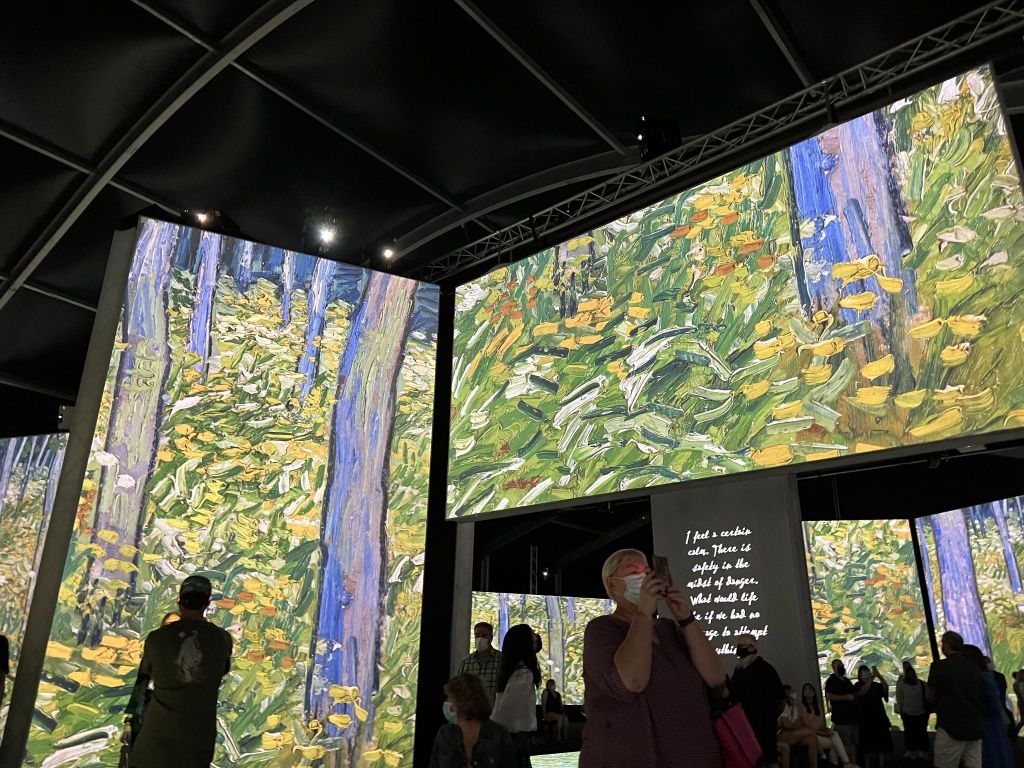
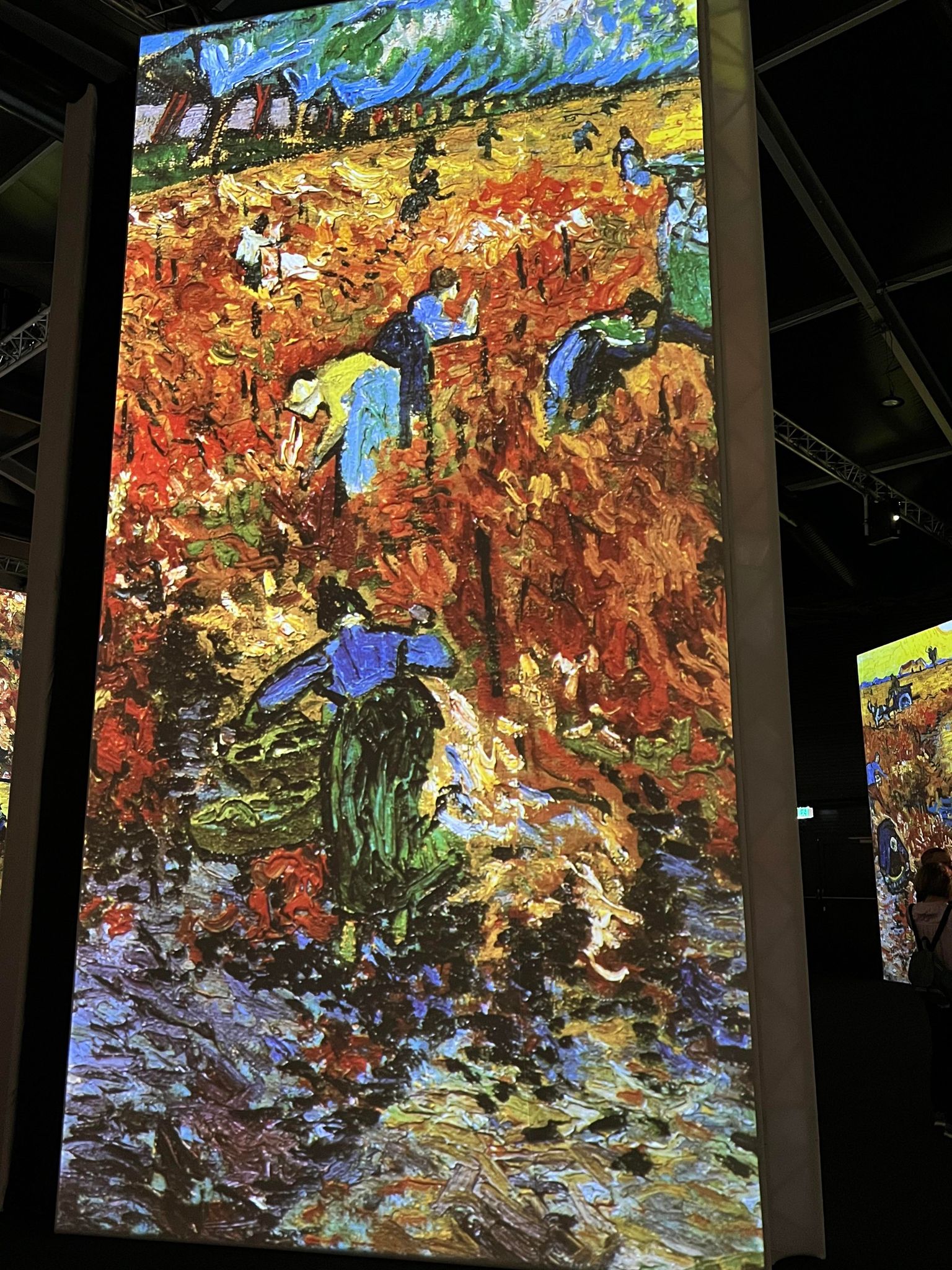
    I will start by saying that, overall, I really enjoyed the experience. There are a few reasons why. Firstly, sitting in the room with the projectors, listening to music, and watching the artworks being projected onto screens was not only a really relaxing moment but allowed me to see some of Van Gogh’s most famous works in a way I’ve never seen them before. The level of detail is absolutely fantastic – you can see every single brush stroke up-close which is really beautiful. We sat in this room for the full duration of the show, absolutely mesmerised.

    Van Gogh Experience
    Van Gogh Experience
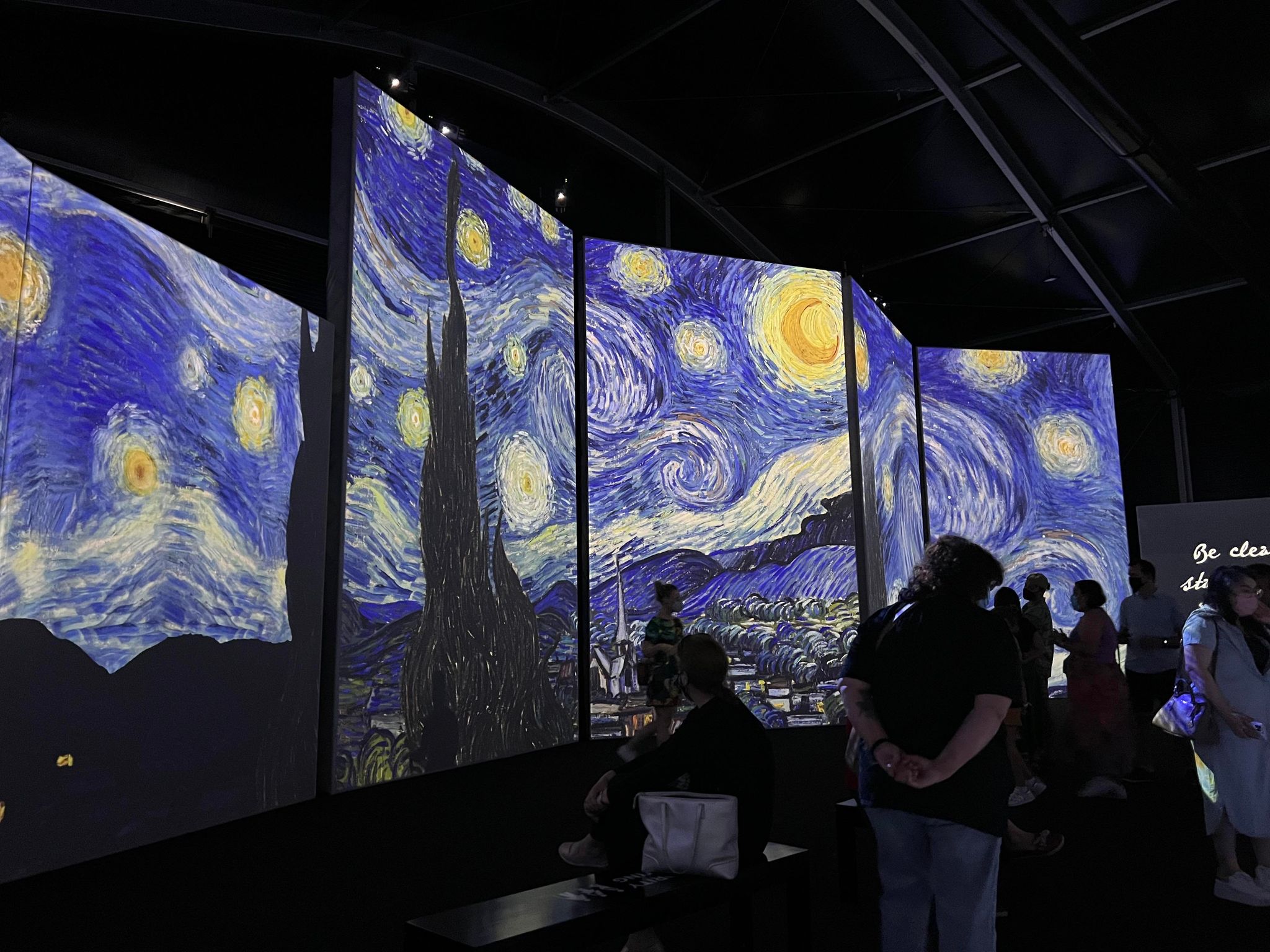
    Van Gogh Experience – Starry Night
    Van Gogh Experience

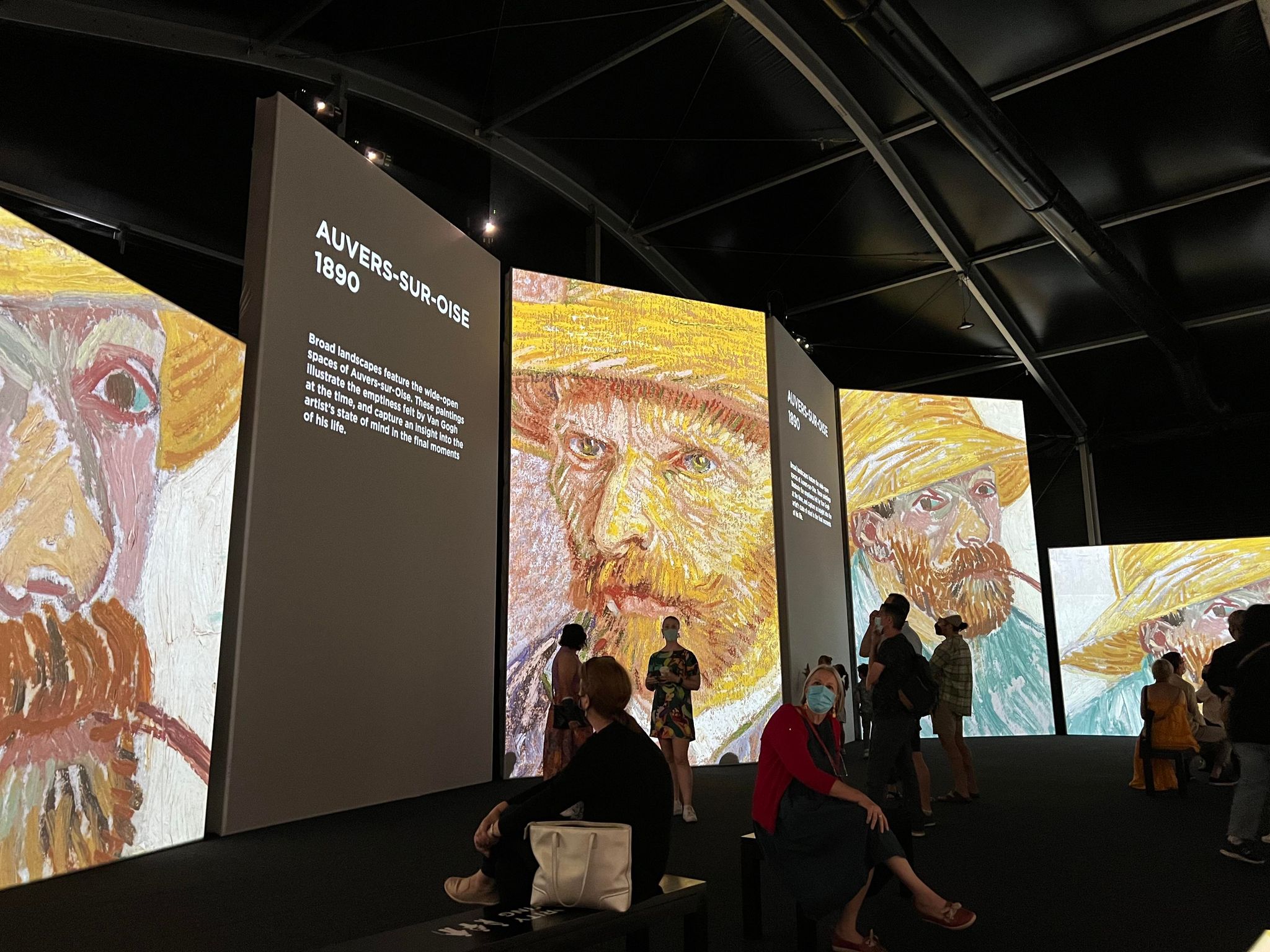
    Secondly, before projecting works from each of the six stages of Van Gogh’s career, very short thematic panels are displayed. This allows visitors to gain an overview of what was happening with Van Gogh at that stage and any important information that affected his artworks. This gives the experience a little bit of artist context that I was hoping to see.

    Van Gogh Experience

    Thirdly, I enjoyed the two rooms on either side of the projection room. One was based on The Starry Night and the other, Sunflowers. I’ll include pictures below so you can see exactly what they look like.

    Starry Night
    Sunflowers

    Last, but not least, I think the experience is a great way to introduce people to Van Gogh who may not normally want to visit a gallery. It doesn’t have that ‘art gallery’ vibe (if you know, you know) and it is a much more relaxed environment to enjoy the art and experience it in a new way.

    In saying all that, I feel I enjoyed it even more because I have seen some of Van Gogh’s works in galleries. I hope that this might encourage people to visit a gallery! I’ve read quite a few critiques of these kinds of shows and I don’t want to venture into that on this blog. Instead, I wanted to be honest and write about my individual experience which, for me, was truly positive.

    Logistical Information

    Van Gogh Alive is fully accessible. Tickets can be purchased from Ticketek here. It looks like the show will be heading to Canberra, Newcastle, Sydney, and Perth so if you’re in any of those locations, keep an eye out. Opening hours are: 10am – 9pm (Mon – Thurs), 10am – 10.30pm (Fri), 9am – 10.30pm (Sat) and am – 9pm (Sun). For more information click here.

  • The Untitled Drawing Club: Week 12

    Welcome to the final week of the Untitled Drawing Club! As this will be my last entry, at the end of the post I will be sharing all my artworks and how I’ve decided to store them. Before then, we have one more museum to visit – Nakamura Keith Haring Collection located in Yamanashi, Japan. There is plenty to be inspired by at this museum so I’m glad I had the opportunity to ‘virtually’ visit. Similar to other posts, I will start by sharing an overview of the museum, then move on to writing about the links provided by the Club and, finally, sharing my artwork.

    Nakamura Keith Haring Collection

    The name of this museum is a combination of Kazuo Nakamura, who established the collection and is its Director, and Keith Haring, an American artist. It is the only museum in the world dedicated to collecting and displaying the works of American artist, Keith Haring. If you don’t know who this is, I’ll share a few of his works later. In short, he was an artist who practiced in New York during the 1980s. The reason behind collecting his works in Japan is revealed on the museum’s website. Nakamura was drawn to Haring’s works due to their themes of peace, freedom, hopes and dreams.

    Nakamura originally graduated from the School and Faculty of Pharmaceutical Sciences, Kyoto University, in the late 1960s. After working on a few medication development projects including the drug Mevalotin (helps to lower blood pressure), he became the CEO of CMIC (a pharmaceutical Contract Research Organisation). In 2007, Nakamura changed directions slightly and opened the Nakamura Keith Haring Collection appointing himself as the Collection Director.

    There is a great timeline on their webiste that takes you back to 2007 and basically lists all the major awards and achievements that have been accumulated since then. There are so many awards and it is amazing to see how this museum extends beyond displaying artworks. For example, in 2008, the museum assisted with distributing condoms and pamphlets about HIV/AIDS at night clubs in Tokyo as part of the REAL-Living Together Club Campaign for World AIDS Day. Haring suffered from AIDS himself and was very vocal about increasing AIDS awareness in the 80s and fighting for research, support, etc. The museum has been involved with numerous campaigns and events on the topics of AIDS since then.

    I also want to mention 2016 because it seems as though the museum went through a time of expanding its reach to new audiences. For example, there was a four days of DJ nights event that had four local DJs play music up-late in the museum. Then, and my personal favourite, a Halloween workshop was held later in the year.

    Before moving on to the links provided by the Club, I want to briefly discuss the architecture of the building. It is supposed to reflect the times that Haring lived through – chaos and hope, dark and light. The museum underwent renovations in 2015, building an extension that will hold exhibitions displaying works of artists who have been inspired by Haring. One of the Club’s links takes you to the exterior of the museum where you can see for yourself the incredible architecture.

    Keith Haring’s Artworks

    Here are a few works by Haring that appear on the museum’s website under ‘Collection’. To see more, click here.

    Club Links

    The four links for this week’s club take you to some Google map views of two different exhibition spaces and the outside of the building.

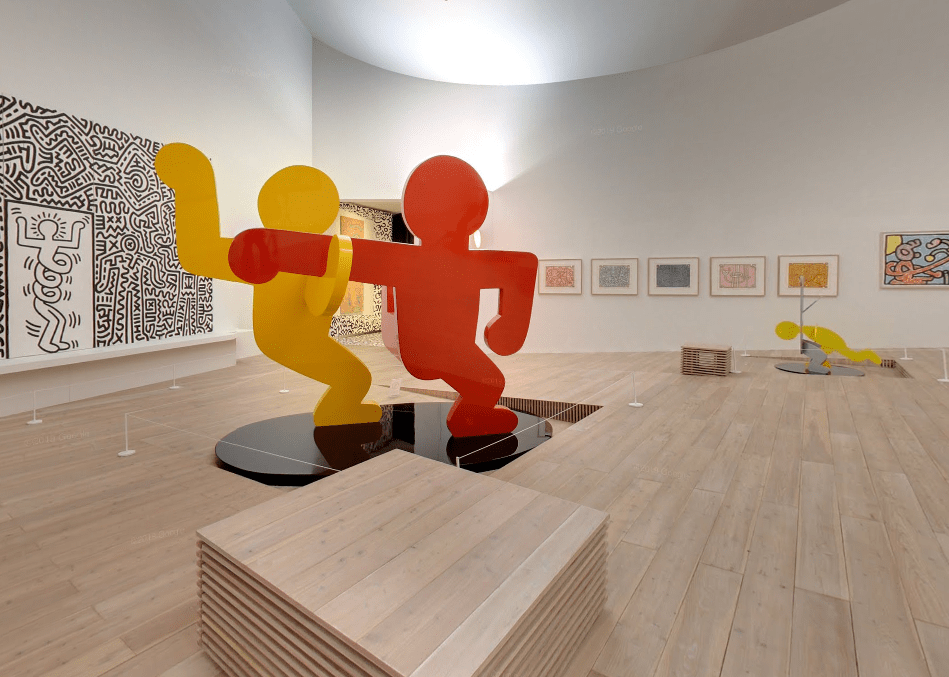
    When looking at the exhibitions, I was amazed at the physical space. That goal of playing with light and dark most definitely is reflected in the museum. The use of natural wood flooring and stark white walls is a Scandi-vibe that has a special place in my heart.

    I zoomed around the rooms looking at the artworks and drawing inspiration for my own artwork I’ll share shortly. The two elements that inspired me are pictured below – the wall with different shapes painted on and the red sculpture.

    My Artwork

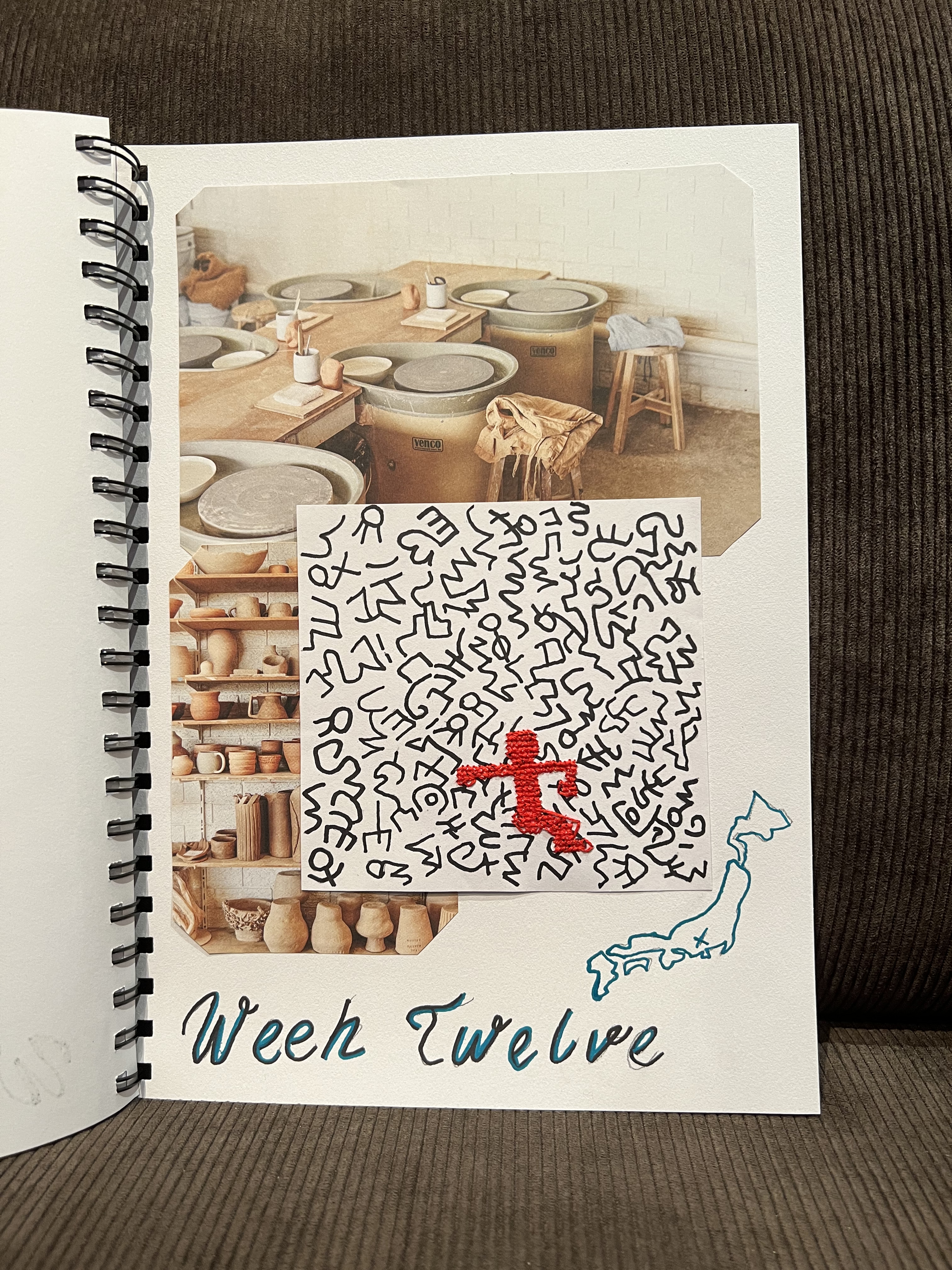
    I decided to draw my own wall of shapes and cross stitch the red sculpture – but a smaller version of the sculpture. I wanted it to reflect how all-consuming the wall looks in the exhibition space.

    Week 12 Drawing

    In terms of drawing, this one has been the most fun to create.

    So there we have it, the final Untitled Drawing Club! It has been so wonderful to have something to look forward to each Monday. Huge thanks to Alexis Winter for creating the club and providing the inspiration each week. To finish, here are all my works from Week 1 to Week 12. Enjoy!

  • The Untitled Drawing Club: Week 11

    I am going to start by saying that I had so much fun creating my artwork for this week’s Untitled Drawing Club. Moving away from Sweden, our second last location is the Museum of Old and New Art (MONA) located in Hobart, Tasmania. In the past I’ve had a wonderful guest blog on this location which I am linking to here. MONA is one of my favourite museums and I cannot wait to return one day. Until then, I took this week as an opportunity to delve deeper into one of the artworks on display that caught my attention when I last visited. A link to the Club and the artwork I created inspired by my virtual visit will be shared at the end of this post.

    MONA

    An overview of MONA was covered in the guest post but I did want to make special mention of their ‘about us’ section on their website. According to their website, anything written about MONA is likely to be out of date quickly as ‘we are constantly changing our mind about what MONA is’. They go on to provide a few different answers to ‘who we are’. Two of the possibilities they include is ‘purveyor of hot chippies’ and ‘somewhere people can come to say not sure about the art but the architecture is amazing’. You either love it or hate it. Either way, it is a museum that definitely generates a lot of discussion.

    To add something contemporary to this post, MONA has made the news recently as the first museum in Australia making the COVID-19 vaccine mandatory for all staff. This information influenced the final decision for my artwork.

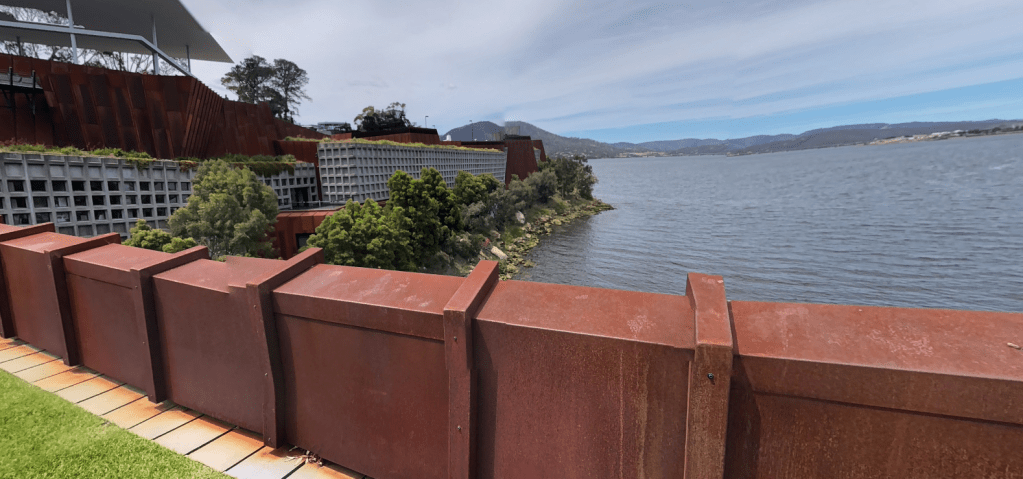
    This week, for the Club, we have four links to explore. Three of which are Google map/image links taking you to the exterior of the Museum and to a room filled with blank books. The final link is to another artist vlog by Alexis Winter. They all provide a nice overview of the space and the kinds of artworks on display. In the artist vlog there is also an insight into how visitors can engage with artworks using their mobile devices. I’m going to spend a bit of time talking about my favourite artwork that features in the vlog.

    Bit.Fall by Julius Popp

    This is an artwork that you can hear before you can see. I remember spending quite some time standing in front of it when I visited because it has this sort of hypnotic element to it. The artwork consists of a platform with nozzles that shoot out water creating a waterfall. With each release of water, the droplets spell out a word or phrase. I’ve included an image below so you can see what I mean.

    Visit to awesome MONA (Museum of Old and New Art)
    Image: https://toby-allandownunder.blogspot.com/2019/03/visit-to-awesome-mona-museum-of-old-and.html

    These are not random words but words that are being constantly sourced from live news feeds. Watching the word only appear for a second then dropping to the floor is commentary on the speed of which information is exchanged in today’s society. Not only the speed, but the amount of information we are constantly exposed to over a very short time period. It is amazing to think that sitting behind this artwork is a computer program reading streams of news on the internet then sending word patterns to the nozzles so that they can form the most popular words. It is truly incredible.

    If you don’t want to scroll the news on your phone then you can just watch Bit.Fall for a while and see the main news stories of the day summarised and dropping before your eyes.

    My Artwork

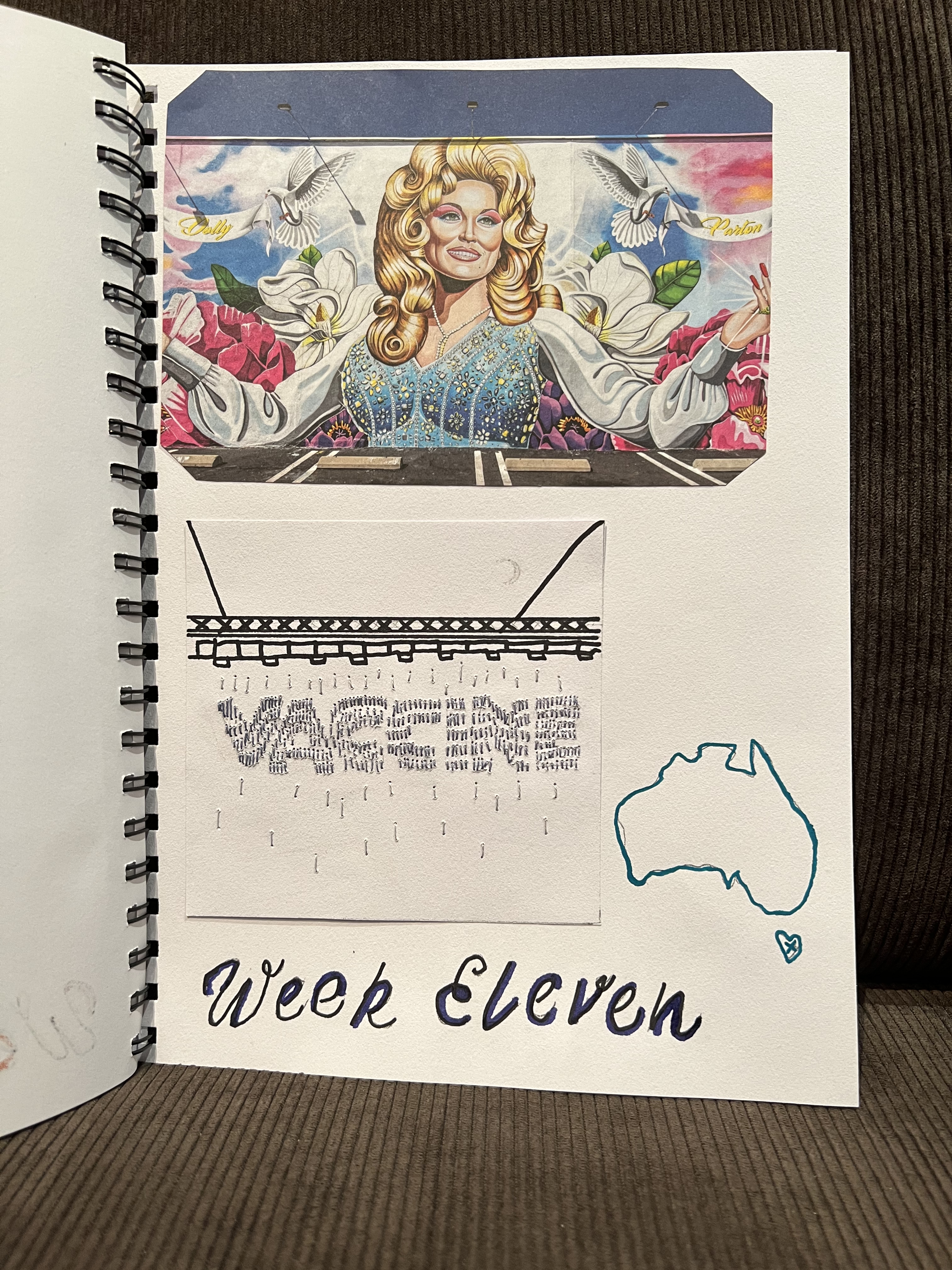
    I was really inspired by Bit.Fall for my artwork for this week. I have sketched the nozzles and overhanging platform then stitched the word ‘vaccine’. I chose this word for two reasons. Firstly, and most importantly, it is something I care about very deeply and wanted to use the Untitled Drawing Club as an opportunity to capture this moment in time. It is also a way I can express a small gratitude to those who have been involved in the development/production of the vaccine and to those working on the frontline. Both dedicated to the health and safety of everyone. Secondly, I stitched this word because of the vaccine mandate at MONA and I wanted this to be captured too.

    Week 11 Drawing

    No doubt this word has appeared on Bit.Fall more than a few times recently!

    With one more week to go I am starting to think about what I will do with all my artworks. I will hopefully be able to share next week the final outcome as they are currently just sitting in a stack on my desk. If you want to learn more about the Club or join, then click here. Otherwise, see you again next week.

  • The Untitled Drawing Club: Week 10

    This week marks our final week in Sweden for the Untitled Drawing Club. We are visiting Sandgrund Lars Lerin, the permanent art gallery of artist Lars Lerin. I’m going to divide this post into three sections: Lars Lerin profile, history of gallery, and the artist vlog by Alexis Winter. To finish, as always, I will be sharing the artwork I created inspired by my visit and a link to the Club. There is limited information available in English about Sandgrund. There is a page on their website, however, I have used Google translate for a lot of my research.

    Lars Lerin

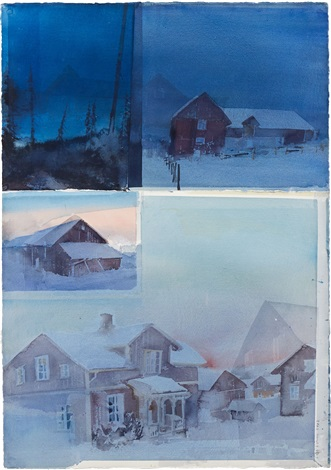
    If you are like me and have never heard of Lars Lerin, hopefully this short biography will help. Lerin is one of, if not the, best watercolour artists from the Nordic region. He studied his technique at the school of Gerlesborg between 1974 and 1975 then at the Department of Fine Arts in Valand between 1980 and 1984. His artworks really capture the cold beauty of Scandinavia. As well as being a watercolourist, Lerin is also an author. Since 1983, he has published over 50 books winning the August Prize in 2014 for his work ‘Naturlara’. On top of all this, he also has his own TV show and has exhibited his artworks in locations such as Finland, Norway, the United States, and Germany.

    Here are a few of his works so you can get a sense of what I mean when I say ‘cold beauty of Scandinavia’. All images have been sourced from artnet.

    I love Scandinavia and I really enjoy looking at watercolour works so this is a win/win situation for me.

    History of Sandgrund

    What is really fun about this gallery is it’s housed in a rebuilt restaurant, located in Karlstad, Sweden. Originally, the restaurant was built by Paul Jardeby and opened in 1960. The modernist architecture was combined with large panoramic windows that face out to the Klaralven river. I can’t imagine how beautiful it would have been to eat at this restaurant looking out over that view.

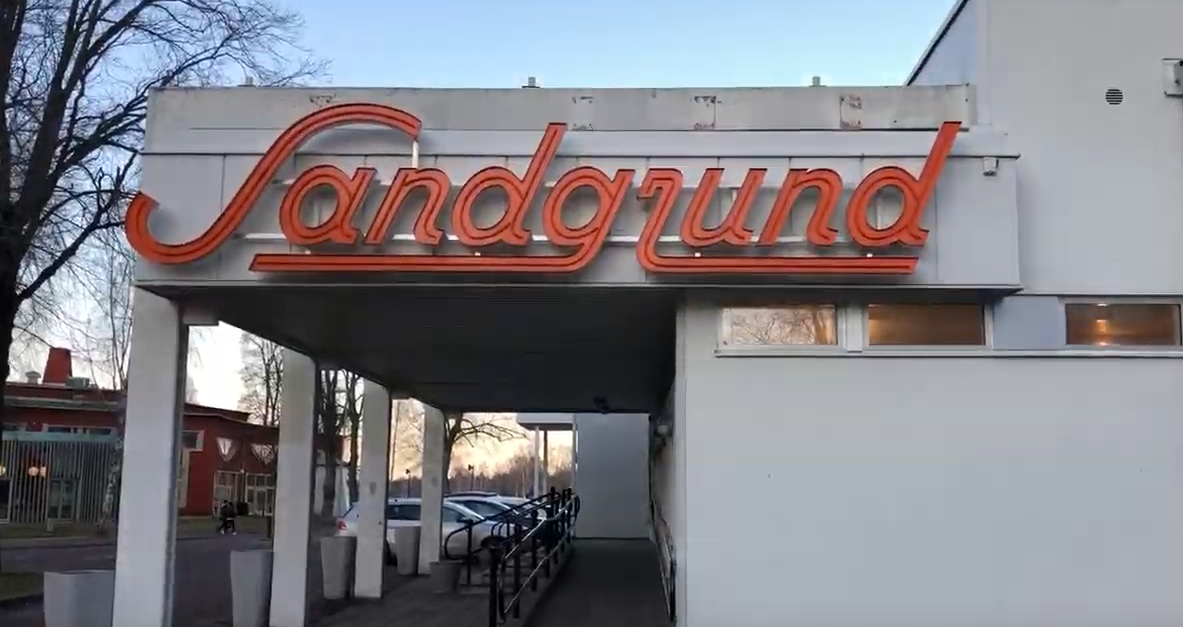
    During the 1970s the restaurant became, and I quote from Google translate, a ‘dance palace’ where bands would visit and play five days a week. I’m not quite sure what happened between the 1970s and 2011, but it was rebuilt and transformed into Lars Lerin’s permanent gallery, opening in 2011. This means that 2021 is the tenth anniversary of the gallery so it is quite a recent development. My absolute favourite thing about the gallery is captured by Winter in the artist vlog – the large neon sign at the entrance. It is so retro and fits in well with the modernist architecture.

    Screenshot taken from Alexis Winter’s Artist Vlog

    As well as displaying the works of Lerin, the gallery also welcomes temporary exhibitions from other artists.

    Artist Vlog

    This week we have one link for the Club, directing us to another artist vlog by Alexis Winter. Winter takes you on a tour of Sandgrund zooming in on some of the watercolour works. One of which consists of multiple little boxes each containing a different insect. This was the inspiration for my artwork.

    I really appreciate how Winter goes into some depth about the techniques on display. For example, near the beginning of the video, we see an artwork consisting of birds. Winter overlays a grid to show how this work has been created using a grid composition. Then, we move to an artwork consisting of flowers in the forest. Winter goes through how the use of colour makes viewers move their eyes around the entire work. These little bits of information add so much to viewing the works and give you an idea of what to look for when viewing other artworks in a gallery space.

    As with the other vlogs, if you watch right until the end you can see what inspired Winter to create some post-visit drawings. The vlogs are always relaxing to watch and give a great sense and overview of the location.

    My Artwork

    I was very inspired by seeing all the insects in their little boxes so decided to draw my own boxes and fill them with a few creepy crawlies. I had a lot of fun with this week’s work deciding which insects to include and how to best represent them in the space.

    Week 10 Drawing

    I cannot wait to see where we are headed next week, our second last week! If you want to learn more about the Club or join, click here. Otherwise, see you next week.

    Cover Photo: I99pema, CC BY-SA 4.0 https://creativecommons.org/licenses/by-sa/4.0, via Wikimedia Commons

  • The Untitled Drawing Club: Week 9

    We are returning to Sweden this week for The Untitled Drawing Club. I visited Fotografiska back in 2016 which seems like a lifetime ago. If you want to read my post from then, click here. I really enjoyed spending time in this museum. Everything from the location to the exhibitions was incredible. It was also one of the nicest museum cafes I’ve ever been to, overlooking a couple of Stockholm’s islands and the harbour. For the Club, we have two links to explore – an artist vlog and a Google maps tour of the exterior of the building. I most definitely found inspiration from the vlog for my artwork this week. Read on to see my artwork and to find a link to the Club.

    Fotografiska

    I couldn’t find a great deal of information online so, for this week, my overview will be brief. Instead, I’ll be spending a bit more time on the artworks higlighted by Winter in her artist vlog.

    In short, Fotografiska has four sites. One in Stockholm, New York, Tallinn (Estonia) and Berlin (opening in September 2022). According to their website, they are not a ‘traditional’ museum or gallery. What they mean by this is that they don’t have a permanent collection nor do they sell any of the artworks on display. They want to ‘inspire, entertain, and create impact’ sporting the motto: ‘Have fun. Stay late. Get deep. Spill your drink’ (quotes are from their website). As I was researching to see what else I could find, I read that Fotografiska also hopes to be a culturally safe space.

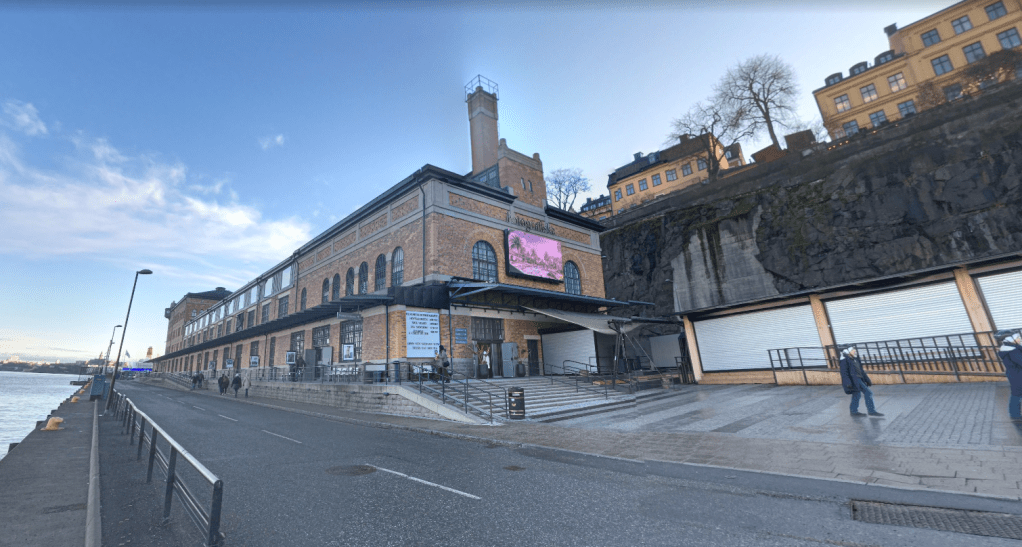
    Fotografiska

    After a bit more digging, I discovered some further information about the building itself. It is an absolutely striking heritage building in Stockholm built between 1906 and 1910 by Ferdinand Boberg. It served as the Customs House for Stockholm. When the time came to re-purpose this heritage building, it was going to transform into the ABBA Museum. However, that thought was abandoned due to some financial issues. Instead, it opened to the public as Fotografiska in 2010.

    One thing that is really memorable about this building is how the original wooden framework is still intact and as much on display as the artworks. It is such a stunning space to walk through and the view from the cafe is just beautiful. A very relaxing way to spend some time in Stockholm.

    Artworks

    The following artworks feature in Winter’s artist vlog. If you would like to see the vlog, click on the link to the Club at the end of this post.

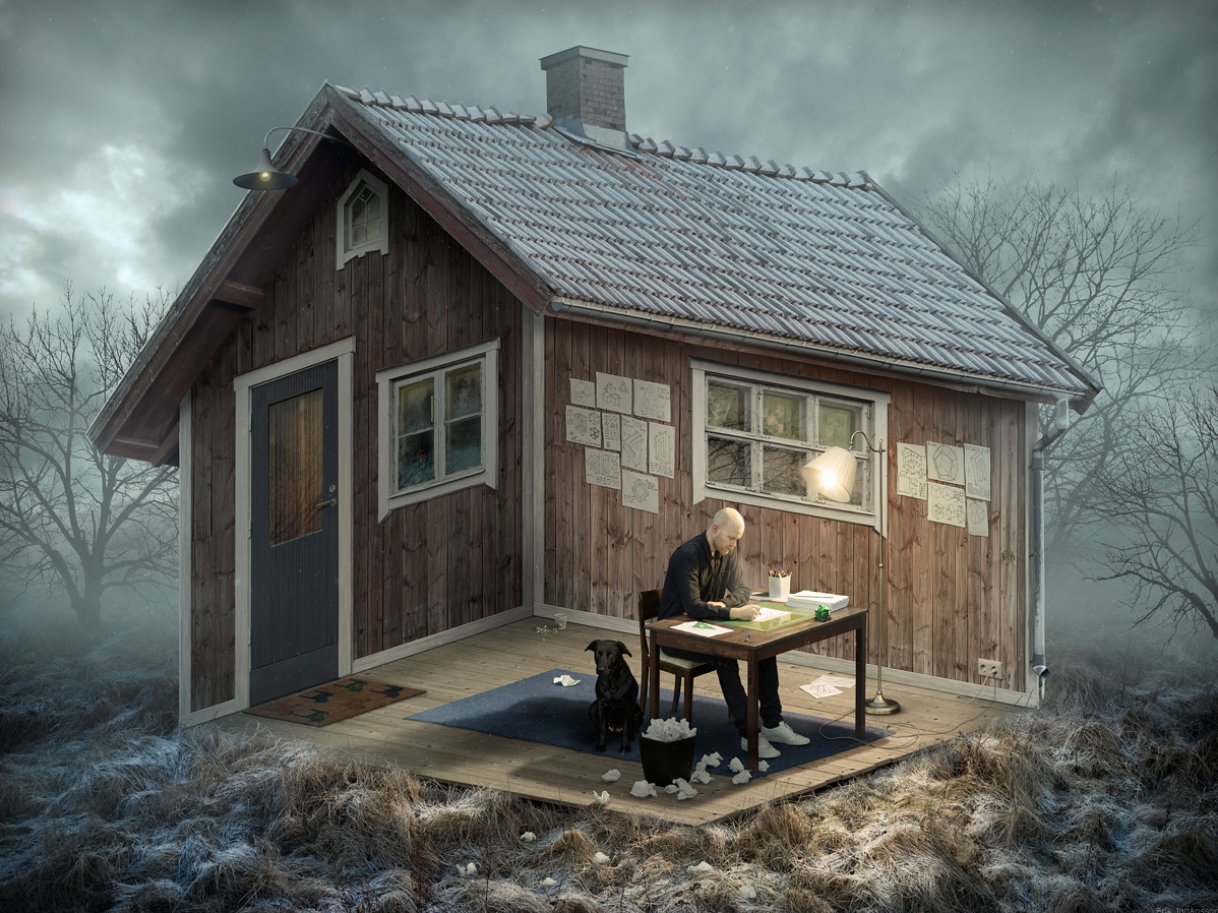
    Eric Johnason ‘The Architect’, 2015

    There are a couple of reasons why I like this photograph. Firstly, there is a dog. If you include a dog in your work there is a 100% chance I will like it. Secondly, it’s an interesting piece from a perspective point of view. It appears the architect is sitting both inside and outside his house, at the same time. If you look for an extended period of time, the work just gets more confusing – but in a good way.

    Image: https://www.erikjo.com/work/the-architect

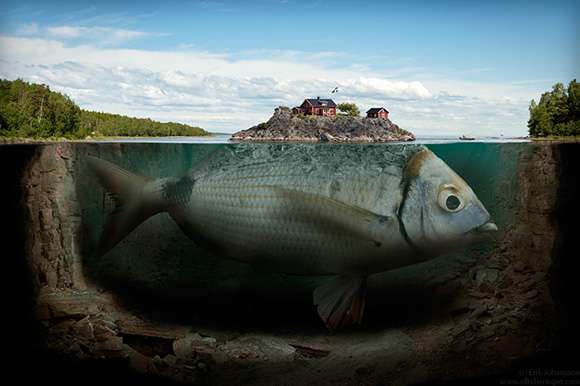
    Tisah Tucknott ‘Fishy Island’, 2009

    This is one of six photographs in a series that consist of fish with islands on their back. This work plays with the idea of a hybrid. Similar to the previous photograph, it becomes more confusing the more you stare.

    Image: https://www.trendhunter.com/trends/fishy-island

    Eric Johansson ‘Drained Memories’, 2018

    I don’t know why, but abandoned places and apocalyptic scenary appeals to me. In this photograph, you can see someone standing alone in the front corner. What they are looking at is some kind of abandoned scenery. If you look at the top of the cliffs, you can see remnants of structures including what looks like a diving platform. There is water pooling at the bottom of the cliffs and it seems that the rest of the water has drained away – so you can begin to see where the title comes from.

    Image: https://www.erikjo.com/drained-memories

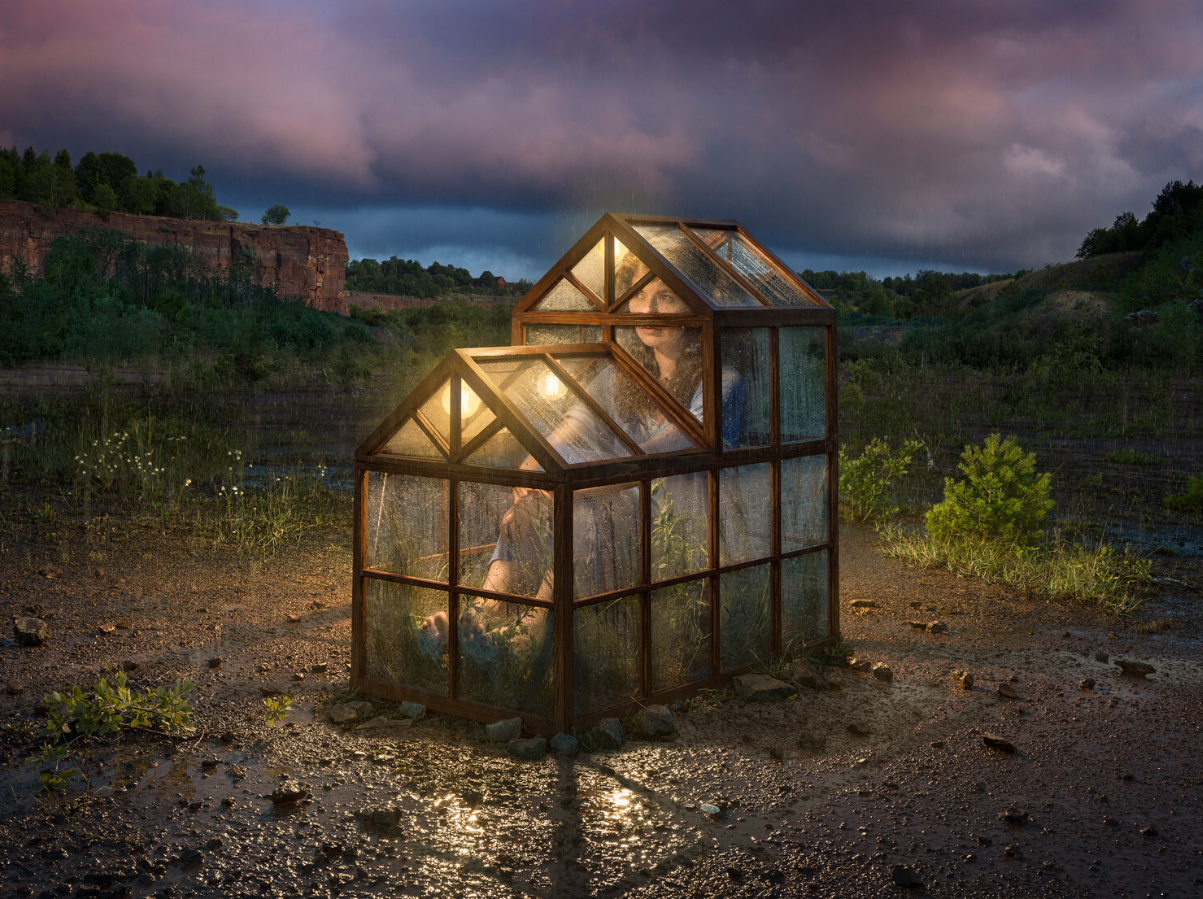
    Eric Johansson ‘Comfort Zone’, 2019

    This is, by far, my favourite photograph shared on the artist vlog. It looks like a fairytale with a giant woman sitting inside a greenhouse in the middle of this beautiful landscape. I wanted to discover more about this artwork so went onto Johansson’s website. Here he describes how he wanted to create a scene that was both comfortable yet also felt like a trap. This balance is depicted so perfectly in his work. The vlog definitely encouraged me to look further into Johansson’s photography.

    Image: https://www.erikjo.com/comfort-zone

    Alex Prager ‘The Extras’, 2019

    The final artwork I want to share is The Extras by Alex Prager. I love what Winter wrote about this work – ‘we are all the leads in our own film (life) and I think we all often forget…that we are extras in everyone else’s!’ Prager’s photography is hard to look away from as you are drawn into the melodrama of the situation. In this work you can spend time zooming in on everyone in the shot and imagining their story. Yet again, I wanted to learn more about the artist and went down a rabbit hole looking at Prager’s other works.

    Image: https://www.alexprager.com/part-iv-view-2019/zagjvrozxwsxm8vpx1fh8699ww6s7r

    My Artwork

    I had a pretty good idea of what I wanted to create after watching the artist vlog. I was inspired by both The Extras and Comfort Zone. However, in the end, Comfort Zone is what led me to create my drawing/cross stitch hybrid for this week. I find greenhouses and plants to be relaxing so I drew the outline of the greenhouse from Comfort Zone and filled it with plants. I’m all for having plants in my comfort zone!

    Week 9 Drawing

    As always, the Club provided a wonderful way to spend my Monday. If you want more information, or to join, click here. Otherwise, see you all back in Sweden next week!

  • The Untitled Drawing Club: Week 8

    I am so looking forward to spending the next 3 weeks in Sweden for The Untitled Drawing Club. Although I would like to physically travel to and stay in Sweden for the next 3 weeks, this will be close enough. To start, we are visiting Moderna Museet (the Museum of Modern Art), located on the island of Skeppsholmen in central Stockholm. The links for this week transport you to an artist vlog, a very colourful exhibition, and two artist studios/workshop spaces in the Museum. As always, a link to the Club and my artwork will be shared at the end of this post. Happy reading!

    Moderna Museet

    I am going to split this section into a brief overview of the Museum then focus on its collection.

    Brief Overview

    According to their website, the Moderna Museet is one of ‘Europe’s leading museums for modern and contemporary art’. It opened in 1958 after moving from the Nationalmuseum to where it’s located today, in a former navy drill hall. As well as the site in Stockholm, a second museum was established in 2009 in the city of Malmö.

    I mentioned in another post that if you are wanting to gain an overarching sense of a museum, a great place to start is with their mission statement, or statement of purpose. Not only does it tell you what to expect from the museum, but it encompasses the values of those who helped write the statement and their hopes for the future. For the Moderna Museet, their aim is to continue the Museum’s goal of working experimentally, actively seeking audience participation and creating an environment of interactivity. That is their vision in short.

    In order to really engage audiences and help them participate, the Moderna Museet takes ‘risks in the name of art’. I think what this means is up for interpretation. I read it as the Museum fulfilling its goal of being experimental and, at times, pushing the boundaries. This is achieved not only through contemporary art, but also historical artworks too. For this reason I automatically started comparing this museum to the Museum of Old and New Art in Tasmania.

    When expanding on their vision, I really like how they are aware of not only attracting new audiences but catering to repeat visitors. For those who wish to return again and again to the Museum, they want to offer something new. Whether that be through acquiring new artworks to the collection or welcoming a temporary exhibition that is unlike anything they’ve had before. It’s great to see this direct effort to balance the old with the new when it comes to visitation.

    Collection

    The Moderna Museet collects artworks from the early 20th century and photography from 1840 onward. After watching the artist vlog by Club founder, Alexis Winter, I wanted to learn more about the collection. I was amazed to learn that the Museum cares for over 130 000 artworks and 100 000 photographs! Roughly speaking, the three main collection focus areas include Swedish and Nordic art, French-oriented modernism and American art from the 1950s and 1960s. I would love to visit and see artworks from the latter category. More recently, this focus has been expanded to ensure that women artists (yay) are represented.

    Artworks in the collection include paintings, sculptures, installations, films, videos, drawings and prints. If you click the link here, you can watch a behind the scenes video with conservator, My Bundgaard, that shows just a small fraction of the collection. My favourite work in that video is the ‘Mud Muse’ by Robert Rauschenberg. It looks like something that shouldn’t be inside any museum but out in the open air.

    You can search the very extensive collection online here. If you’re not looking for something in particular, it’s nice to just scroll through a selection on the home page to see the diversity of artworks. One most definitely inspired my artwork that I will be sharing later. You can most definitely tell that the Museum is dedicated to not only growing the three categories I mentioned earlier, but constantly seeking new and innovative works.

    I want to make special mention of the forum for provenance and restitution. Along with other museums of art including the Nationalmuseum and Royal Academy of Fine Arts, the Moderna Museet sits on a panel to discuss anything related to provenance and restitution. They state that these subjects can be difficult to grapple with on your own, but by gathering together to discuss and provide guidance, it can make these topics more approachable. If that isn’t a template for what others can be doing in the industry then I don’t know what is.

    Links for the Club

    Similar to last week, we have four links to explore.

    Link 1

    It is great to have another artist vlog by Alexis Winter. I really enjoyed seeing some of the artworks on display from when Winter visited. Each artwork that features in the video has its title and artist included. At one stage there is a floppy disc and I felt this huge wave of nostalgia come over me. The vlog also provides an overview of the Museum space and a sense of how the artworks are curated.

    Link 2

    The second link is to an exhibition of brightly coloured cellophane(?) panels hanging from the ceiling. I question mark cellophane because I’m not 100% sure but it certainly looks like it. What is really cool about this exhibition is how it plays with the idea of colour. Depending on where you look, you might just see one colour or see through to another panel that completely transforms the colour.

    Links 3 & 4

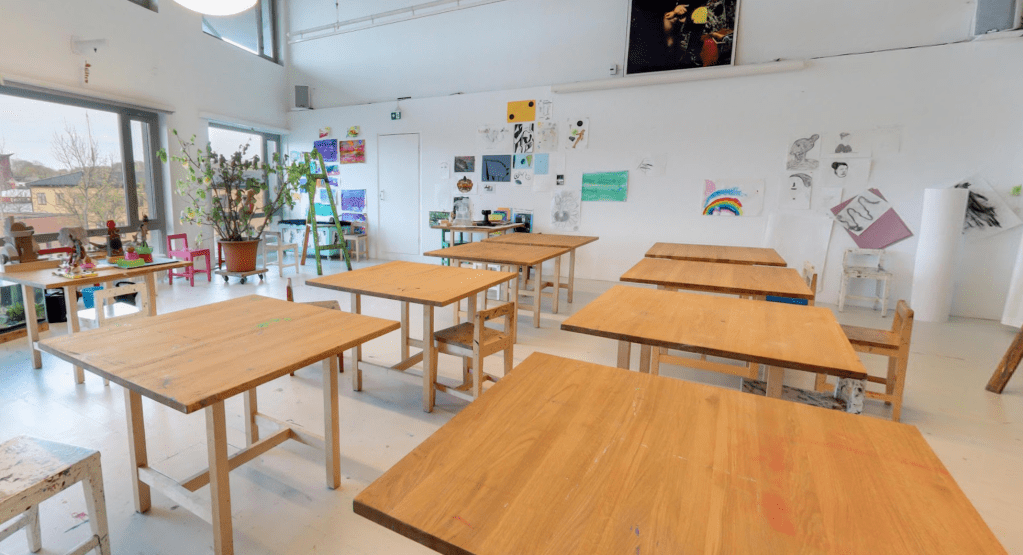
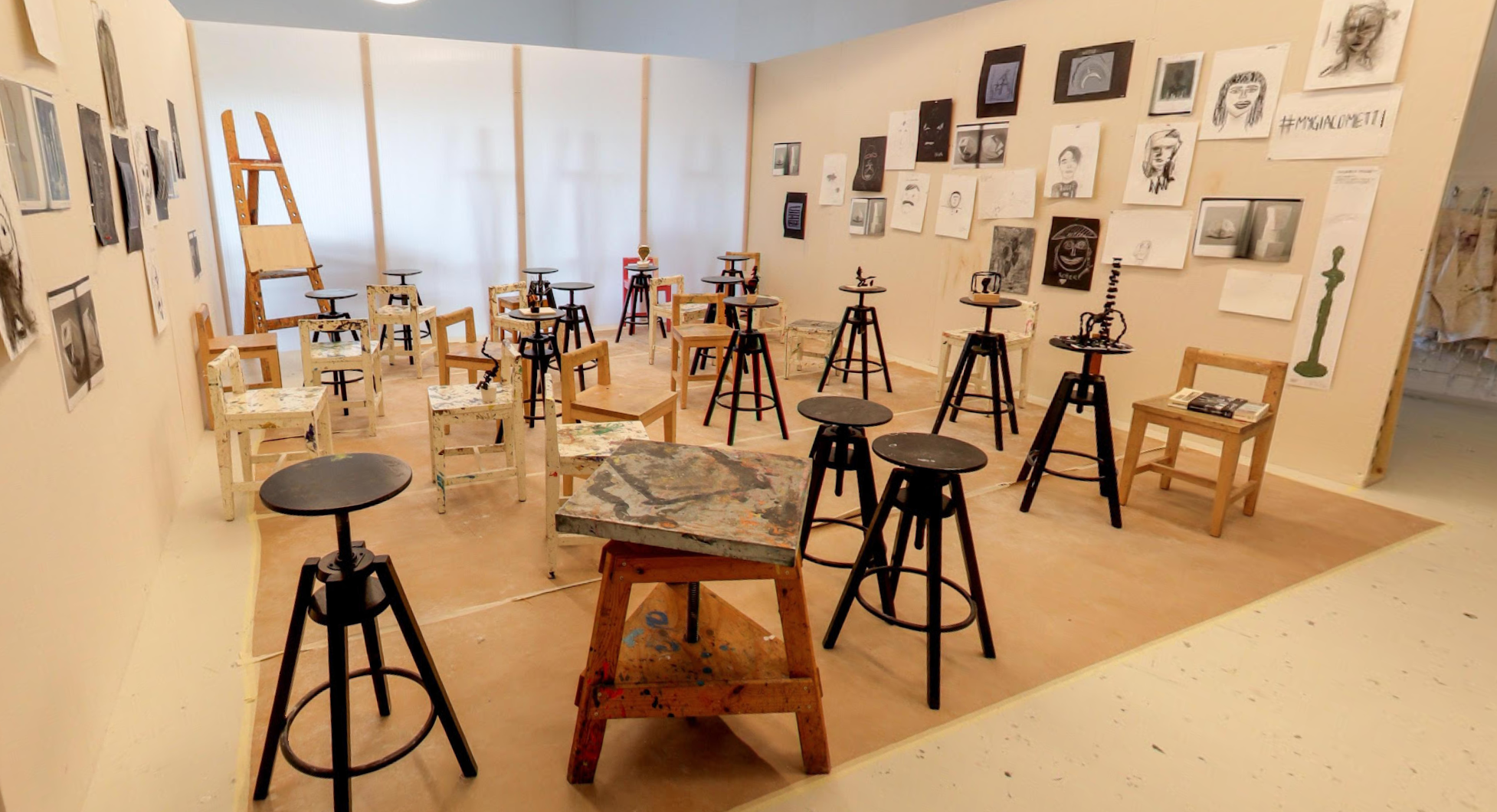
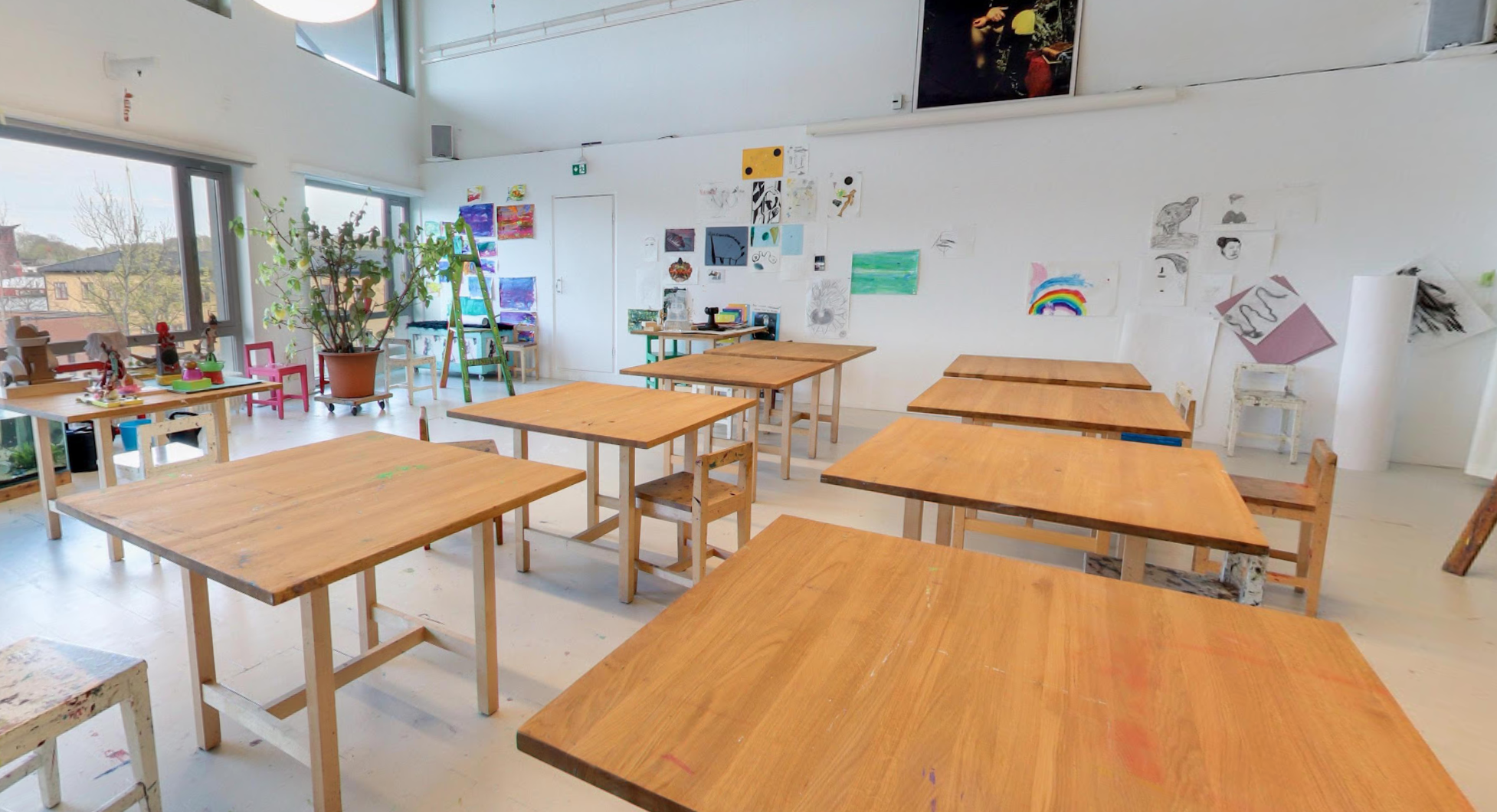
    The final two links are to what I believe are workshop spaces within the Museum. Both are bright open spaces where I can imagine some wonderful art is taught and created. It is great to see these spaces as, unless you are attending a workshop, they are often overlooked.

    My Artwork

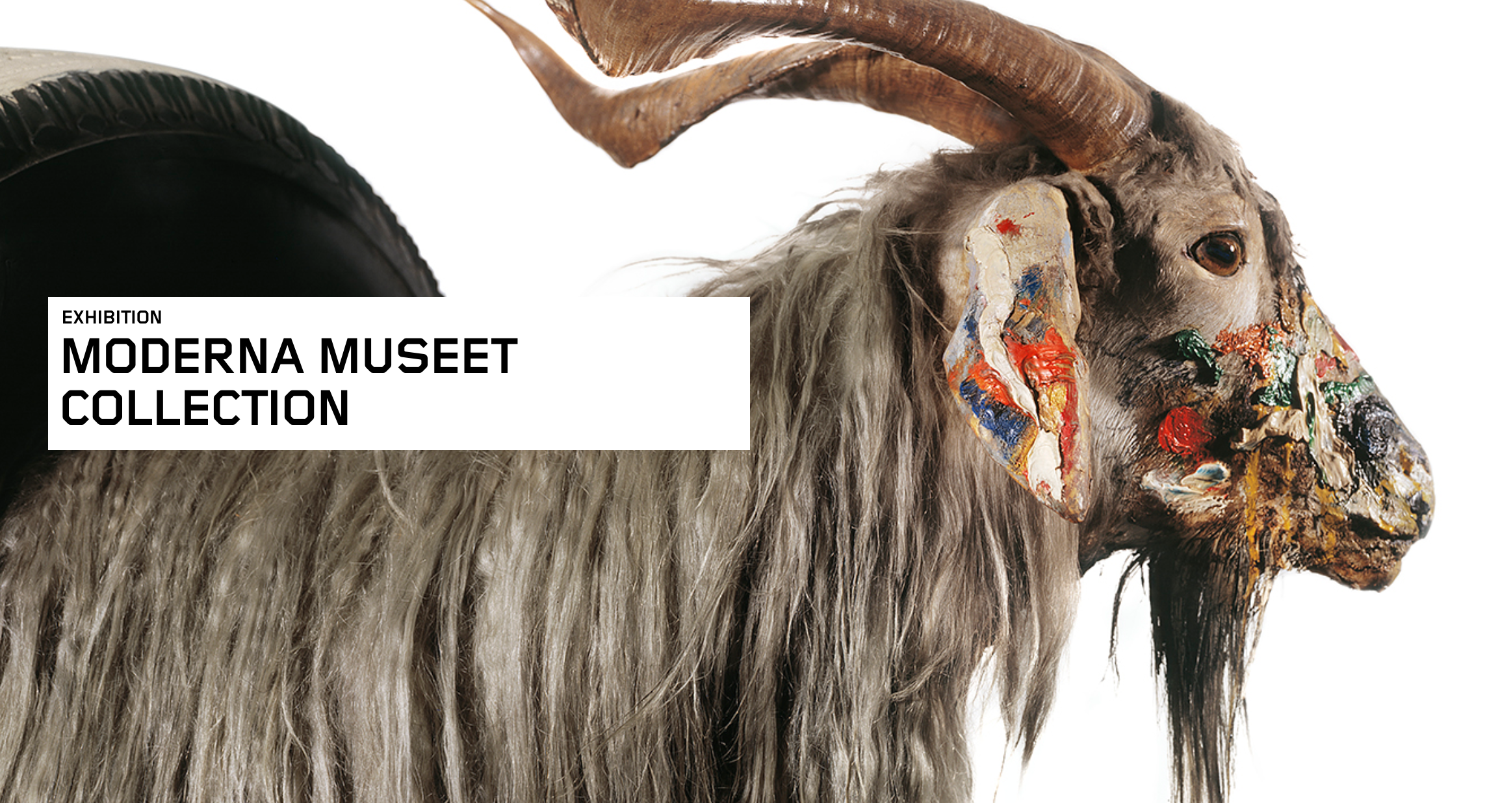
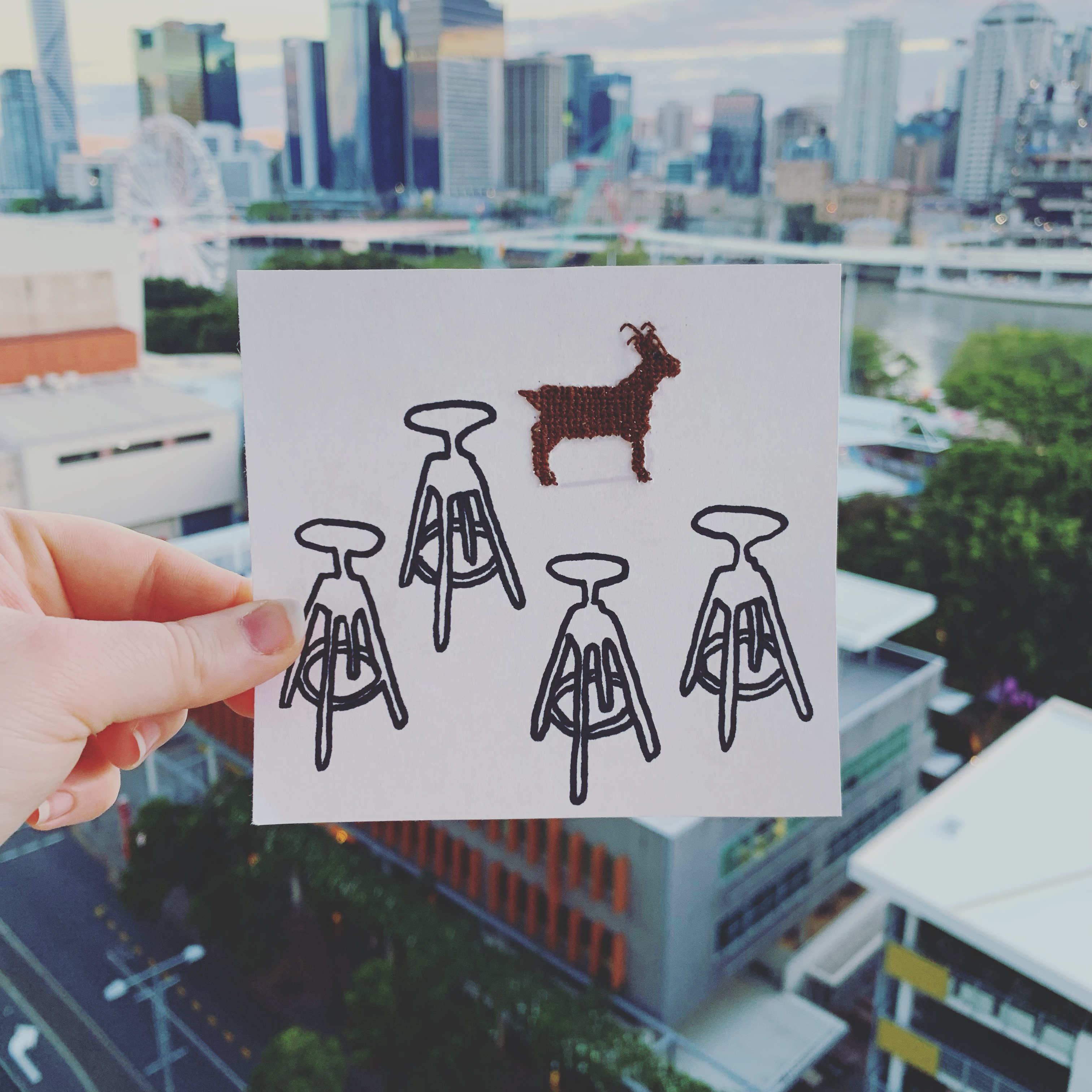
    I combined two elements of this week’s visit in order to create my artwork. I don’t know why, but the stools in one of the workshop spaces looked fun to draw. I then added a cross-stitch of a goat roaming around the workshop. If you’re wondering why I chose a goat, when I first visited the Museum’s webpage there was this striking image of a goat covered in paint. I thought why not place the goat in the workshop to explain why it has paint on its face.

    Robert Rauschenberg, Monogram, 1955–59 © Estate of Robert Rauschenberg / Bildupphovsrätt 2016, Stockholm/VAGA, NY.
    Week 8 Drawing

    If you want to join the Club or discover more information click here. Until next week, happy exploring!

  • Brooklyn Art Library Sketchbook

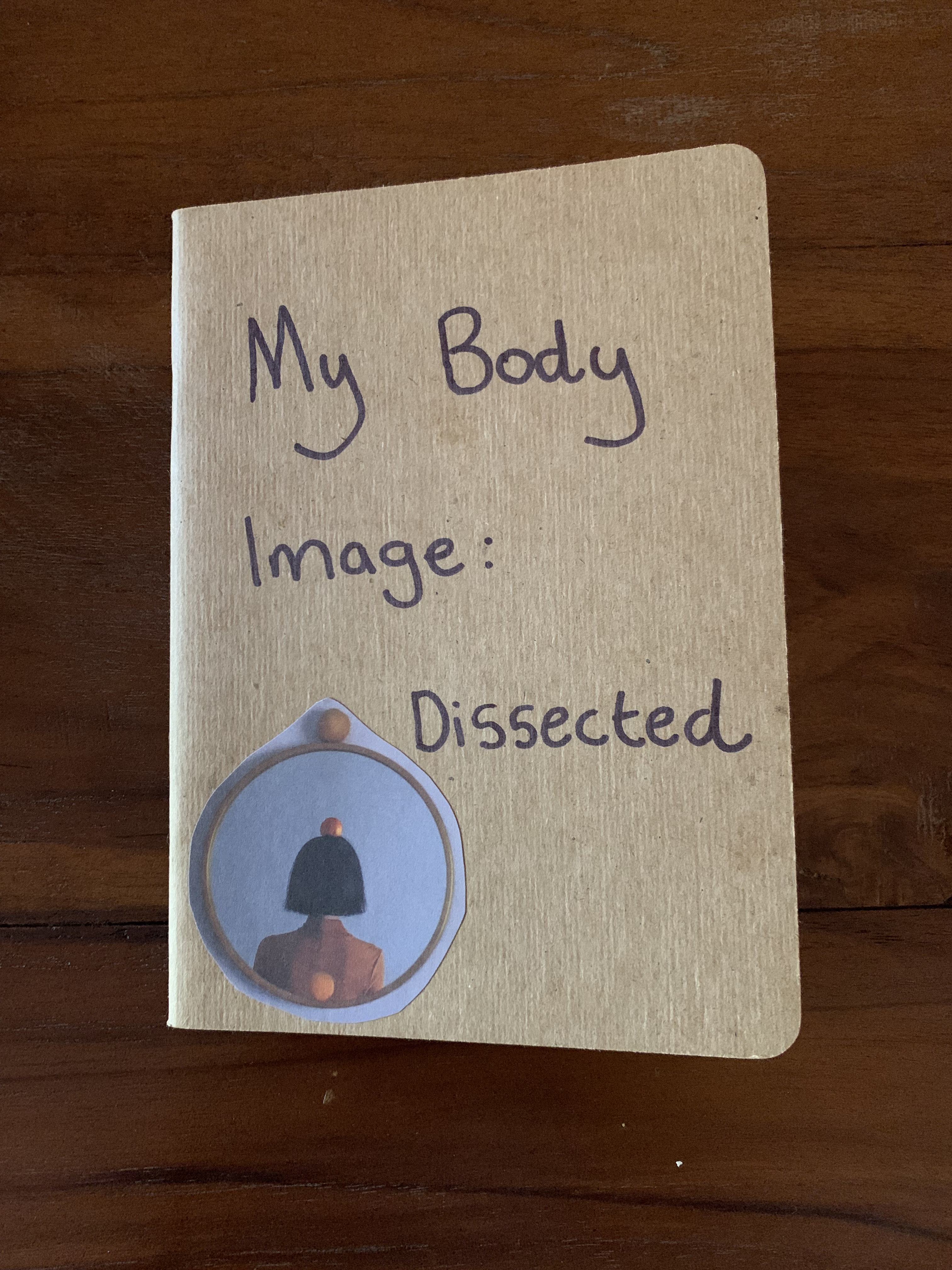
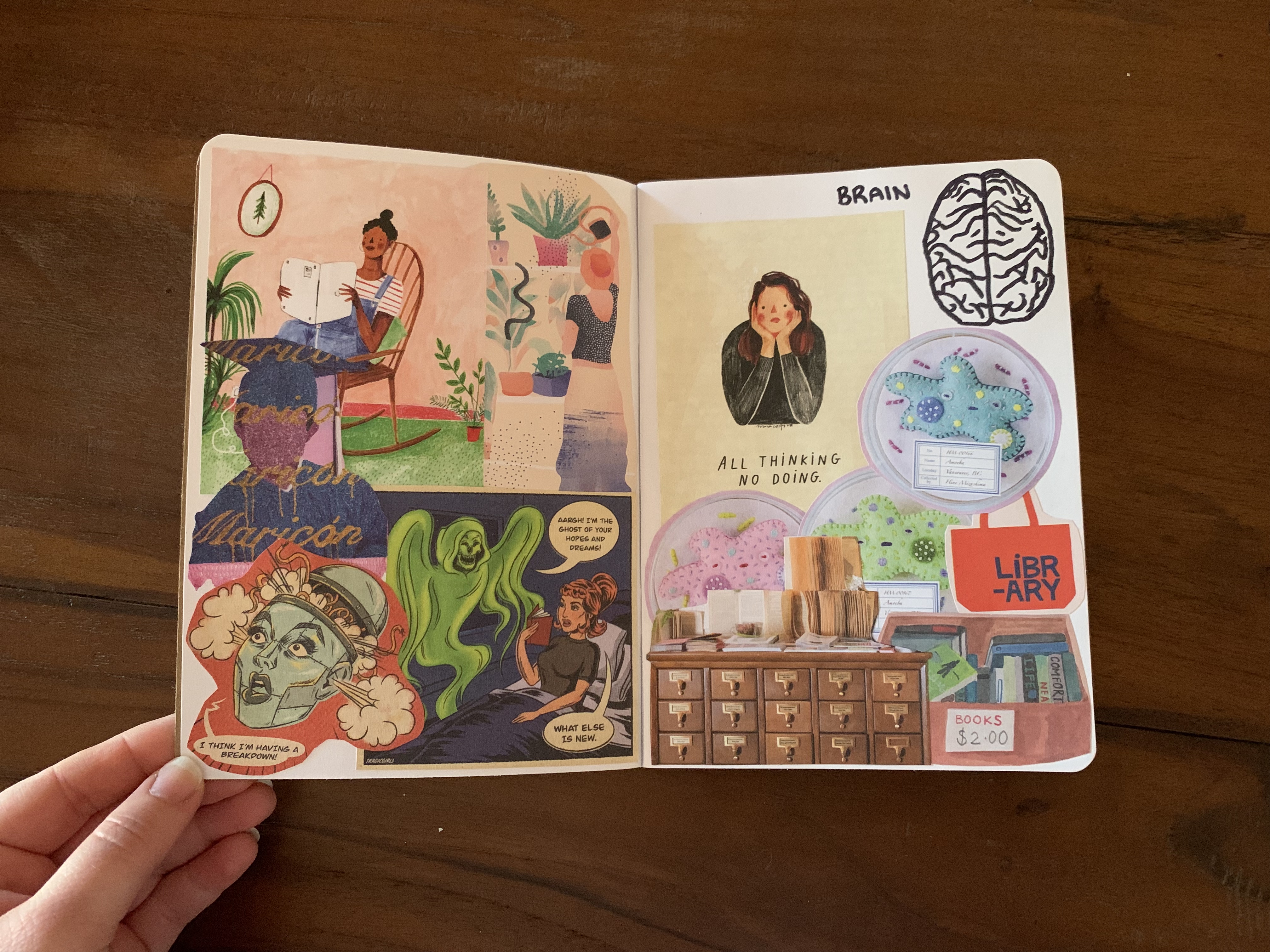
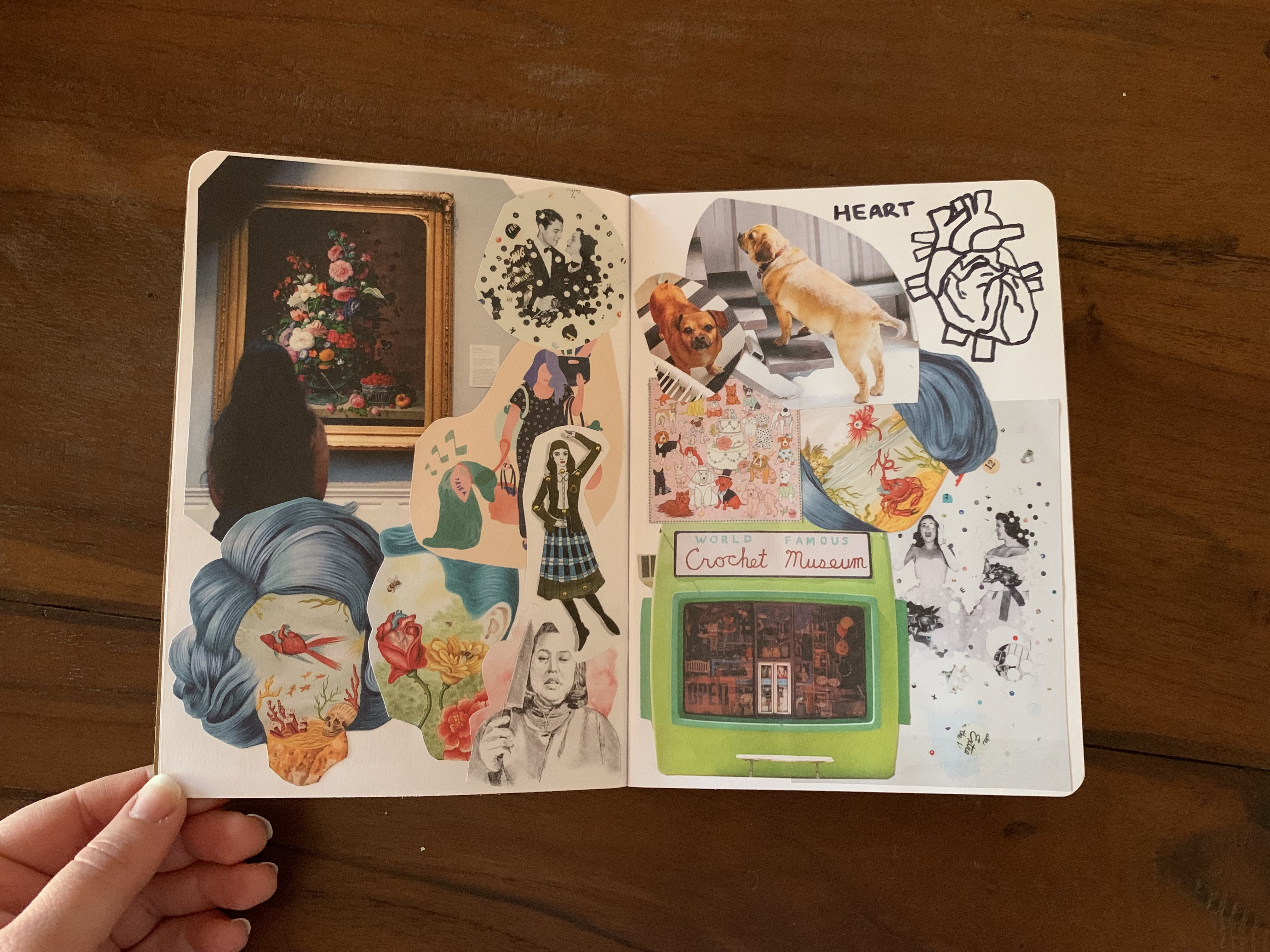
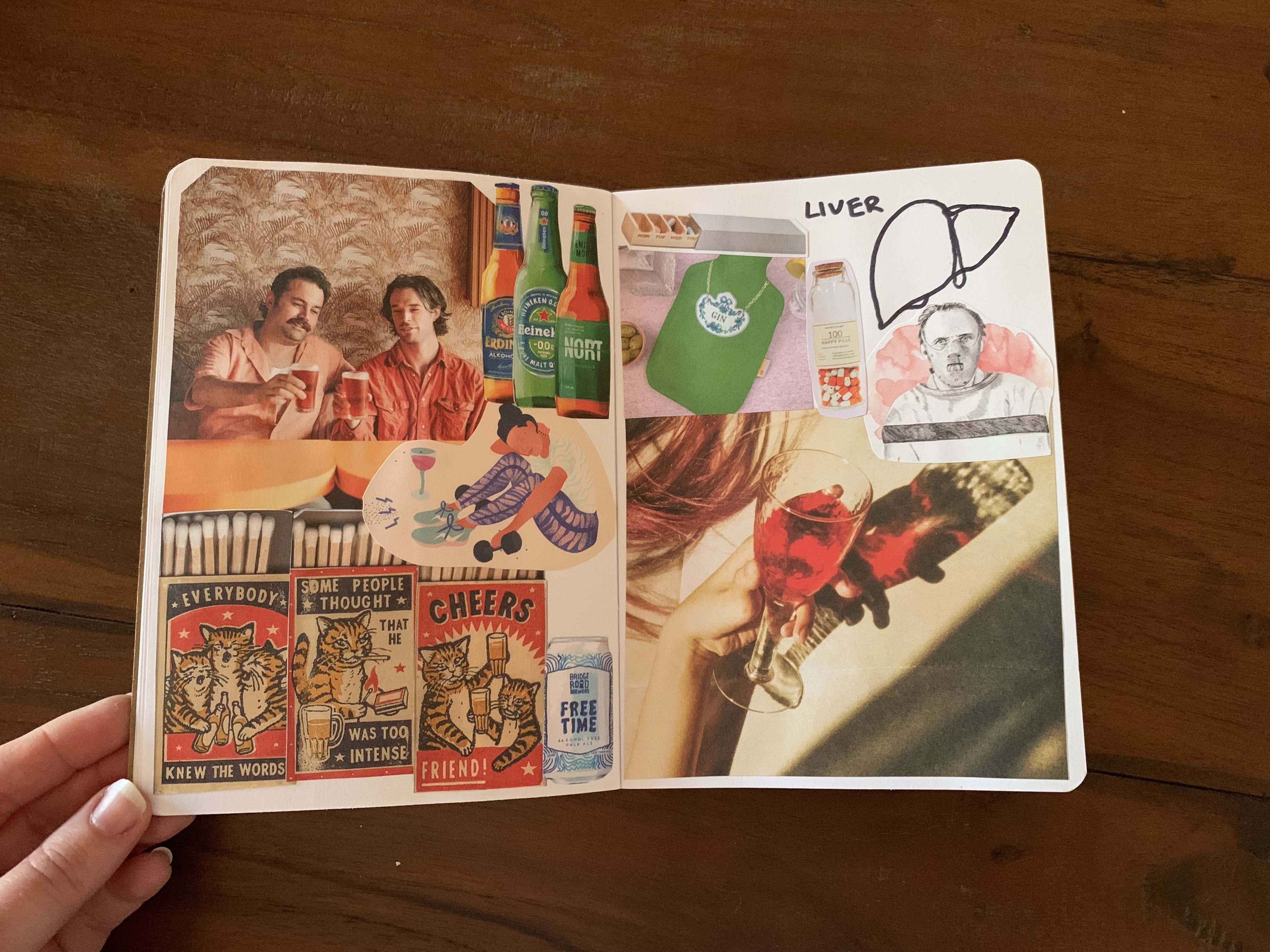
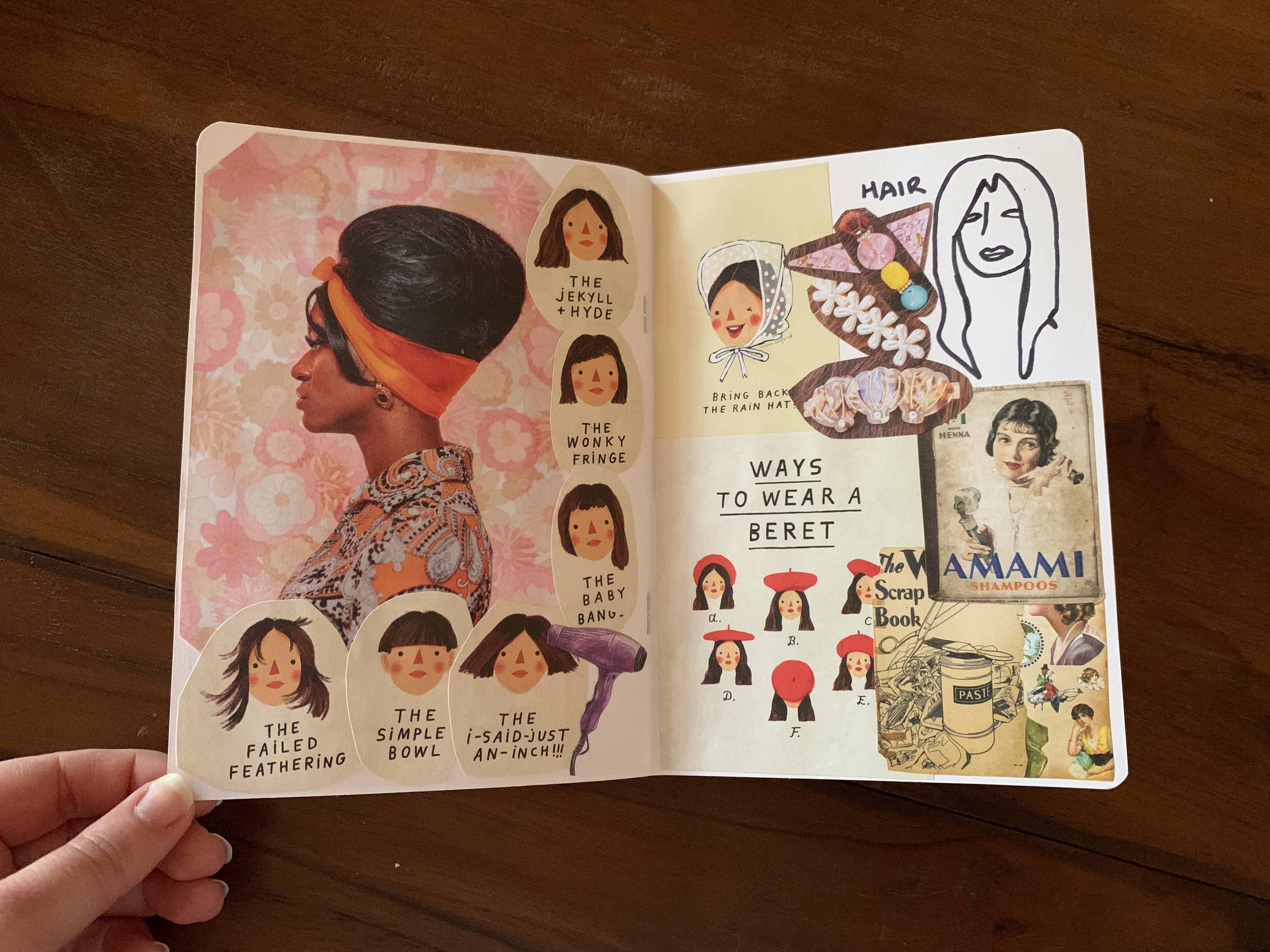
    If you’ve been following my Untitled Drawing Club posts, then you may remember I was so inspired by our virtual visit to the Brooklyn Art Library that I purchased a sketchbook. In this post, I am going to share with you my sketchbook! I finished it this morning and am so happy with the result. Hopefully, one day, I’ll be able to return to Brooklyn and see it on the other side of the world.

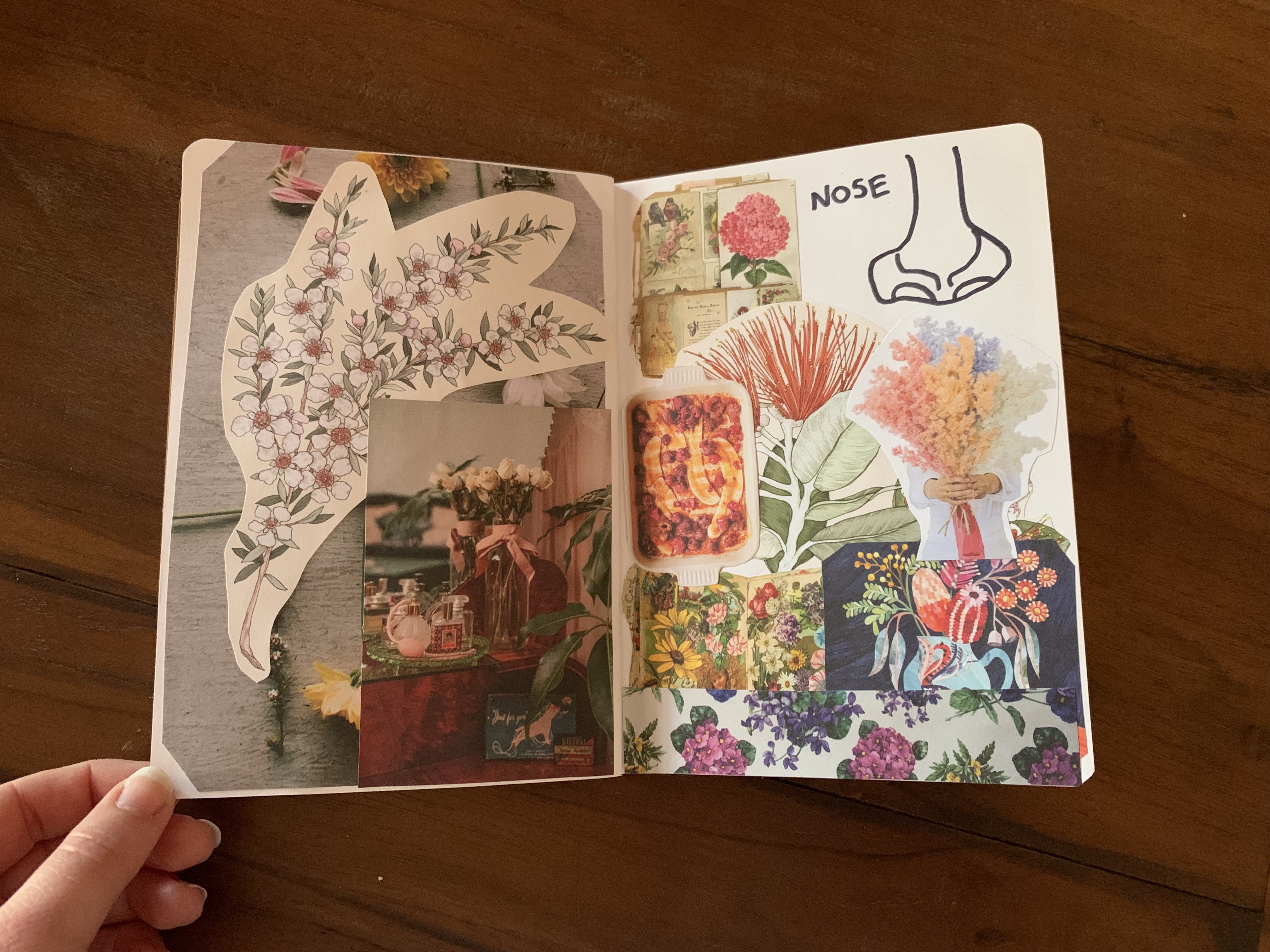
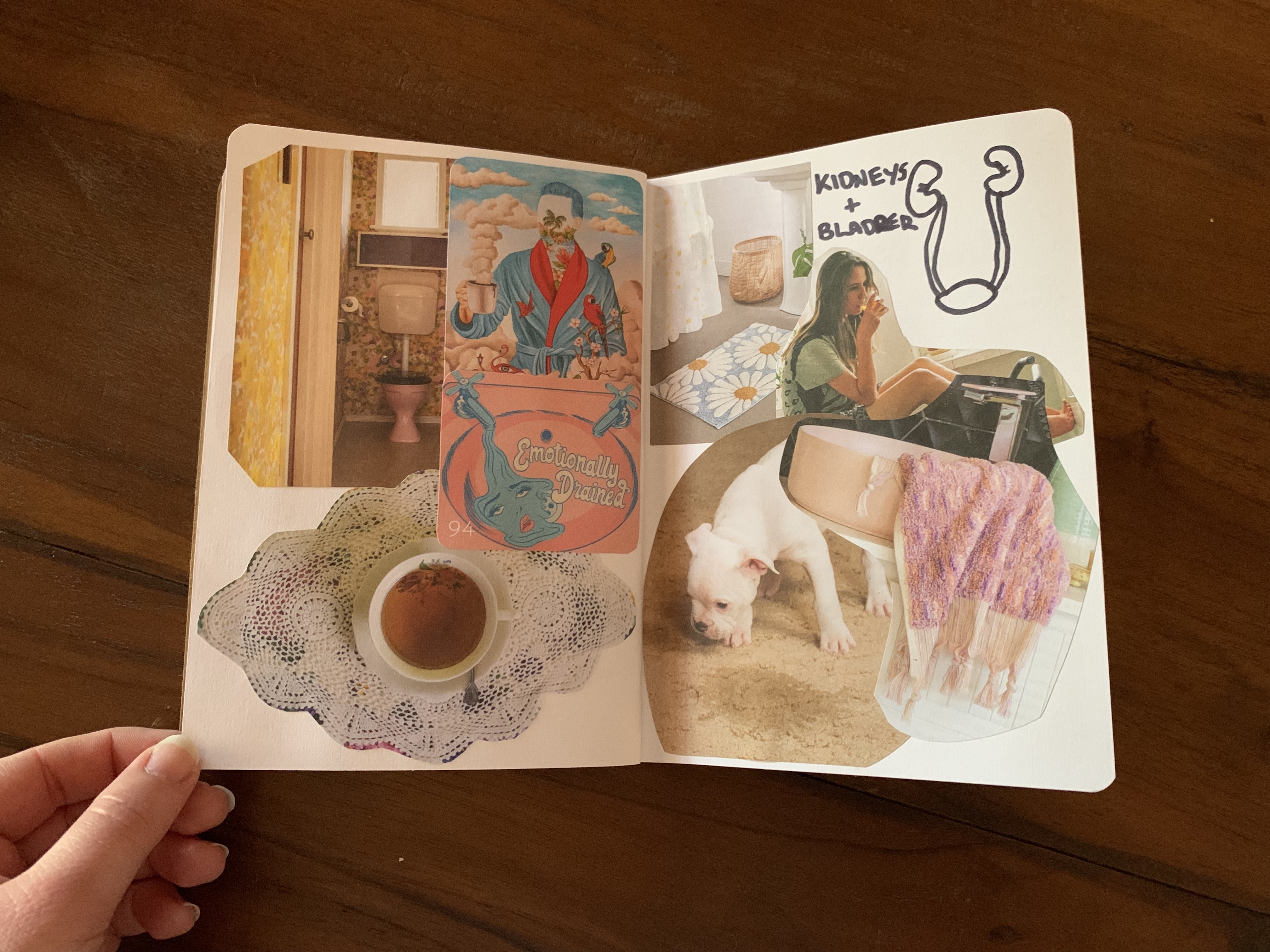
    Before I share, I want to provide you with a bit of context. The title of my work is ‘My Body Image: Dissected’. Basically, I selected 13 organs and dedicated two pages to each organ. In the top right hand corner I have drawn the organ then created a collage that, to me, represents that organ.

    I hope you enjoy looking through my work. Let me know if you have a favourite page. All images have been cut-out of frankie magazine.

  • The Untitled Drawing Club: Week 7

    We are returning to Australia this week for The Untitled Drawing Club to visit the Heide Museum of Modern Art. I must admit that I have never heard of this museum. It is located in Bulleen, on the land of the Wurundjeri people of the Kulin Nation, about 13 km from Melbourne’s CBD. I was excited to follow the links and discover more, especially when I saw the Museum is housed in a mid-century modern home. I love a good mid-century aesthetic. As always, I will be sharing the artwork I created, inspired by my visit, and a link to the Club at the end of this post.

    Link 1: The Heide Story

    This week the Club has four links available for people to follow. Behind link number 1 we have a brief history of the Museum. Considering I knew nothing about the Museum or its collection, this history was a great place to start.

    The story of Heide begins with John and Sunday Reed. In 1934, they purchased the land on which the Museum sits today and built their family home. It was known as ‘Heide I’ – inspired by the suburb of Heidelberg that is just over the river. The home was a French provincial-style weatherboard farmhouse that you can still visit today. The Reeds were clearly huge supporters of the arts, inviting artists such as Sidney Nolan, John Perceval and Danila Vassilieff into their home. Oh to be a fly on the wall for those discussions. Heide soon became a place of inspiration for artists who could meet, create and promote Australian modern art and literature.

    Fast forward to the 1950s when the Reeds established the Gallery of Contemporary Art. Later that decade they launched the Museum of Modern Art of Australia with their friend Georges Mora. Their art collection eventually outgrew their house so in 1963 they commissioned David McGlashan of McGlashan & Everist to build a gallery that could be lived in (aka Heide II). The result is so spectacular – an icon of modernist architecture and a place that I must see with my own eyes. In 1981 it opened as an art museum fulfilling the vision of the Reeds to open their own public museum.

    It has been the site of many significant exhibitions including the inaugural exhibition of ‘Ned Kelly Paintings’ by Sidney Nolan. But, it is also a museum that supports emerging artists harking back to the Reed’s vision of nurturing innovative contemporary art. There is also a sculpture park and heritage-listed gardens which you can explore via the fourth link provided by the Club.

    I could not leave this link before having a quick look at the Museum’s online collection. They really have an impressive array of contemporary and modern artworks including this wonderful piece by Charles Blackman titled ‘The Shadow’.

    Although there is no virtual tour, it is wonderful to see that they are running an exhibition of artworks by modern female artists including Cynthia Reed Nolan, Mary Boyd and Barbara Blackman. According to their website, this exhibition highlights the work of female artists who have been, for too long, overlooked and their cultural contributions sidelined.

    Links 2 & 3: YouTube Videos

    The first video available is an interview with Melbourne-artist Mirka Mora. In this very short video, she is discussing her paintings on the sunroom windows of the Heide farmhouse. They were painted back in 2010 and look like beautiful stained-glass windows.

    The second video is quite a long look at the house from an architectural perspective. Andrew Maynard and Kevin Hui take viewers on a tour of the house pointing out all the architectural features. If you have ever seen Grand Designs, it is that kind of vibe. If you are into architecture, then it’s a great way to spend half an hour. I watched because I love mid-century modern design and they do go into detail about the specific features of the house that speak to this era. If you are a fan of Patricia Piccinini’s work, then definitely watch because her exhibition is in the background of the entire tour.

    Link 4: Google Maps

    The final link provided by the Club takes you to the outside of the Museum where you can see the sculptures and gardens. Similar to TarraWarra Museum, it was a relaxing way to finish my virtual visit. It really does look a beautiful place to visit. I can imagine spending a weekend in Melbourne travelling to TarraWarra one day then Heide Museum the next. What a weekend that would be, absolutely filled with contemporary and modern Australian art in stunning surrounds. One day….

    My Artwork

    At first, I had no idea what to create. Nothing really jumped out at me, but I knew I wanted to capture the mid-century modern aesthetic I was seeing in all the links. I decided to focus on the living room/dining room space and add a new artwork to the wall.

    I’ve drawn the living room with a focus on the stairs – they are really nice stairs. Hanging on the wall, I’ve cross stitched a Piet Mondrian artwork and above, I’ve also cross stitched some gallery lights. I think this might be my favourite work so far. Looking back to week 1, I can definitely see I’ve improved!

    Week 7 Drawing

    If you are interested in learning more about the Club or want to join, then click here. I highly recommend looking into it and visiting some of the locations that have already been released.

  • The Untitled Drawing Club: Week 6

    This week marks the halfway point for The Untitled Drawing Club – six weeks in with six more to go. We are travelling to Finland, to visit the Helsinki Art Museum or HAM for short. Firstly, great acronym – made me very hungry reading it. Secondly, I am so excited to ‘digitally’ visit Finland and see their Art Museum. As soon as I opened the Google maps link, I knew exactly what artwork I was going to create. Read on to learn all about this Art Museum and to see the artwork inspired by my visit. Link to the Club will be shared at the end.

    HAM

    I would like to start by sharing the most random fact I know about Finland. It is the only country in the world with a sauna in one of their Burger King fast food restaurants. I felt it was necessary to share because sharing is caring. Let’s now turn to HAM. Although this museum is located right in the city centre of Helsinki, it has a much wider outreach that I will talk about later.

    When you want to learn more about a museum or gallery, a great place to start is to find their mission statement. For HAM, their mission is ‘making Helsinki more fun through art.’ What a seriously great purpose. Their collection consists of over 9 000 individual works of art that, according to their website, ‘belong to the people of Helsinki.’ I am immediately drawn to the fact that this museum already sounds so inclusive and transparent. These artworks, along with international and national exhibitions, are displayed in a gallery space known as the Tennis Palace.

    What I’m also drawn to is their language. It’s not usual art gallery language that can, at times, be alienating. Their vision is straight-forward – offer a distinct museum experience, work with audiences, reach new audiences and build international interest. The theme of inclusion really runs through everything they do. You can tell just how dedicated they are to the people of Helsinki and how they want to both establish and strengthen their relationship with visitors.

    It is also worth mentioning their values because I find them particularly interesting. They are courage, joy and presence. That theme I just mentioned is also present here as the Museum wants to produce joy and facilitate connections. They exist for the public and want to welcome everyone through their doors for a meaningful experience.

    Not only does HAM achieve its mission and implement its values within the four walls of the museum, but they reach almost every corner of Helsinki. There are just over 3 500 public works of art around the city with 480 accessible all hours of the day and night. Of the 3 500, 250 are part of HAM’s collection. Revealing again just how inclusive they aim to be, their website states ‘all residents of Helsinki have an equal right to live in a high-quality environment’ which is why they have ensured there are many accessible artworks. Reading about this museum has ticked one of their values – it literally filled me with joy.

    HAM’s History

    Very briefly, the history of HAM reaches back to 1885 when the City of Helsinki’s art collection acquired a Johan Ludvig Runeberg sculpture. After opening the Kluuvi Gallery in 1968 then the Art Museum Meilahti in 1976, the museum was eventually moved to the Tennis Palace which opened in 2015.

    You can explore the public art online, but the collection is not digitally available. If you would like to see some sculptures then click here. I recommend starting with a couple of sculpture trails. The rainbow Helsinki one is very interesting. If you’re looking to ponder some difficult questions, check out the ‘Questions of Life’ trail (photographed below). You can follow the trails and click on each sculpture for more information.

    Tennis Palace Exhibition Space

    The links provided by the Club send you to an outside view of the Museum, a vlog (video blog) made by the artist (and Club organiser), Alexis Winter, and a Google maps image of an exhibition room. The latter two give an overview of what awaits visitors once they step inside. The exhibition rooms look very spacious and industrial. The beautiful curve of the roof adds a nice architectural touch that allows the space to feel much larger and grander. I imagine that actually visiting this space is quite an experience.

    If you want to watch the artist vlog then click here. As well as HAM, the video also shows you Suomenlinna, an 18th century sea fortress. For the other links, you can access them via the Club’s page here.

    My Artwork

    When I clicked on the link to see the exterior of the Museum, I noticed two things. Firstly, the snow on the rooftops of buildings surrounding the Museum. I love winter so much and seeing snow was wonderful. Secondly, the seagull head at the entrance to the Museum. I had to look twice to make sure it was, in fact, the head of a seagull. I can confidently say I’ve never seen a seagull (real or not) in the snow. So, to capture this weird juxtaposition, I have drawn the seagull and cross-stitched some snowflakes.

    Week 6 Drawing

    I leave this week with yet another museum I must visit. For those of you wondering, the Burger King with the sauna is about an 11 minute walk (approximately) from the Museum. I’m not telling you how to plan your day, I’m just providing you with an option.

  • The Untitled Drawing Club: Week 5

    The Untitled Drawing Club has, for the second time, sent us to an international location. This week, we are travelling to the Brooklyn Art Library in New York. The name of this library did ring a bell. I remember, a few years ago, learning about their Sketchbook Project and thinking it was a really amazing idea. I was glad to have this opportunity to discover more about the Library and learn what inspired the Project. As always, my artwork and a link to the Club will be shared at the end of the post.

    The Brooklyn Art Library

    Located in Williamsburg, Brooklyn, the Brooklyn Art Library occupies a two-story brick building that blends into its surrounds. Stored inside are over 50 000 sketchbooks that have been donated to the Library by around 30 000 individuals. I purposefully didn’t use the word ‘artists’ because you don’t need to be an artist to submit a sketchbook to the collection. This project, the Sketchbook Project, has reached almost all corners of the world with 100 countries represented.

    https://upload.wikimedia.org/wikipedia/commons/6/68/Sign_Brooklyn_Art_Library.jpg
    Aloha Jon, CC BY-SA 4.0 https://creativecommons.org/licenses/by-sa/4.0, via Wikimedia Commons

    The Project began in 2006 and was the brainchild of Steven Peterman. One of the links for the Club sends you to a short YouTube video where you are introduced to the collection and to the Library by Peterman himself. The Library has quite literally become a time capsule, documenting the creative thoughts and processes of people from all over the world. The sentiment that Perman shares in this video is great – rather than focusing on individuals the project has shifted to community creation. By contributing a sketchbook, you are joining hundreds/thousands of people who have embarked on the same process with the same shared goal.

    To be involved, all you have to do is order a book online, create whatever art you like (ensuring the book remains thinner than an inch), then send it back. Putting my Curator cap on, I couldn’t help but think of how donation actually works. What kind of information is collected and how is the Library set up for users? Luckily, that was all answered in the video and on their website. When you donate your book they ask for some details including your name, title of work (if there is one), your location and any tags/biographical information you want to include. This helps people search for your book both onsite and online. You can elect for your sketchbook to be digitised and added to the online collection. Currently, there are about 25 000 sketchbooks searchable online.

    Just like any other library, once a book has been donated it receives a call number. What’s really cool is that you are notified if your book is ever ‘checked out’ and if you decide to have it digitised, you can see for yourself how many online views its received and also the number of mobile checkouts.

    The Library officially became a nonprofit organisation in 2020.

    https://upload.wikimedia.org/wikipedia/commons/a/a7/Exterior_Brooklyn_Art_Library.jpg
    Aloha Jon, CC BY-SA 4.0 https://creativecommons.org/licenses/by-sa/4.0, via Wikimedia Commons

    Browsing the Collection

    After reading a bit more about the Project I couldn’t wait to delve into the online collection and see what I could find. I can’t quite describe it, but there is something so personal about browsing through the sketchbooks, gaining an insight into someone’s thoughts and creativity. I could honestly spend hours on this website searching through the sketchbooks. No surprises here, but my first two search terms were ‘dog’ and ‘pathology’. All digitised images are protected by the Creative Commons Attribution-NonCommercial-ShareAlike license. For this reason, I’ll be posting a link to my favourite sketchbooks and no images.

    One of my absolute favourites is this one (click the link here) called ‘Histopathology’ by Jenna Hannum. It contains a combination of sketches, old histopathology index lists and some writing. The index lists have been lifted from the ‘Physicians Desk Reference to Pharmaceutical Specialities and Biologicals’ printed in 1947. You can zoom in on the individual pages and really see the detail up-close. The watercolour histopathology pages are stunning and I love how each disease represented is described in pretty accessible language.

    Another sketchbook completely broke my heart. Titled ‘memori JAN’ by Gea&Danny, this book (here) was created as a memorial to the contributor’s dog. It has been made to help cope with loss. On the back it says ‘R.I.P. my sweet companion’. I was moved to tears reading through the pages and seeing just how much love has gone into this project.

    If you have a spare moment in your day, or want to make time to relax and unwind, then I highly recommend browsing the collection. You can access it here. On the homepage, there is also a link to participate in the Project.

    Screenshot from the digital collection welcome page

    My Artwork

    I have to admit this is the most inspiring week so far. I was overwhelmed with options, so I decided to focus on the first thing that caught my eye – the building itself. I love a bright-coloured door so I’ve sketched the outside of the building and cross-stitched its yellow door.

    Week 5 Drawing

    I have also decided to become part of The Sketchbook Project. I ordered my book and will be waiting so patiently for it to arrive. It gives me some time to think of how I will fill the pages. It is actually quite exciting to think of all the possibilities.

    To conclude, this has been a really fantastic week that has inspired me to actually contribute something to a cultural institution! If you want to join the club then you can click here for further information. Otherwise, have a great time browsing the sketchbooks online.