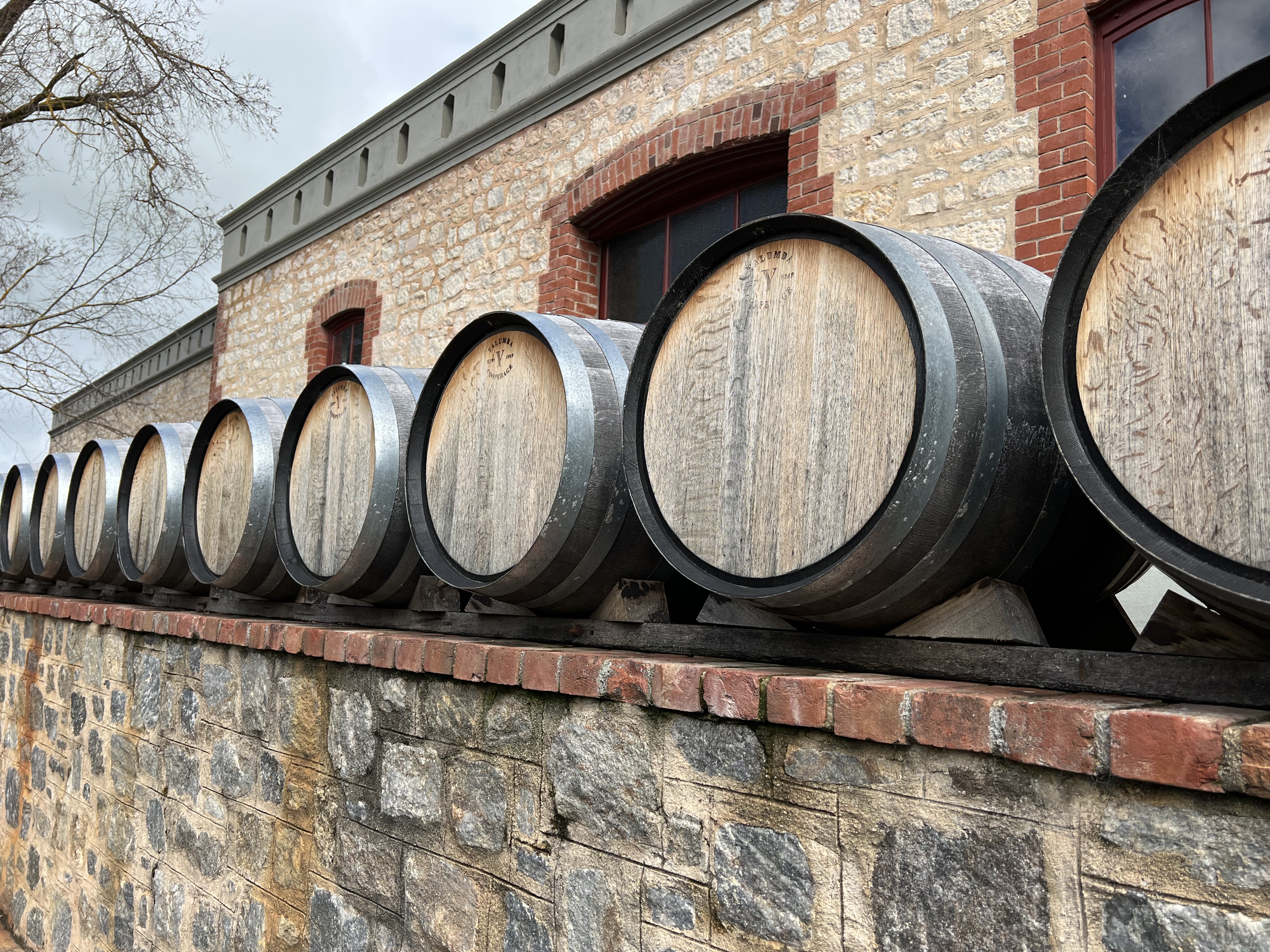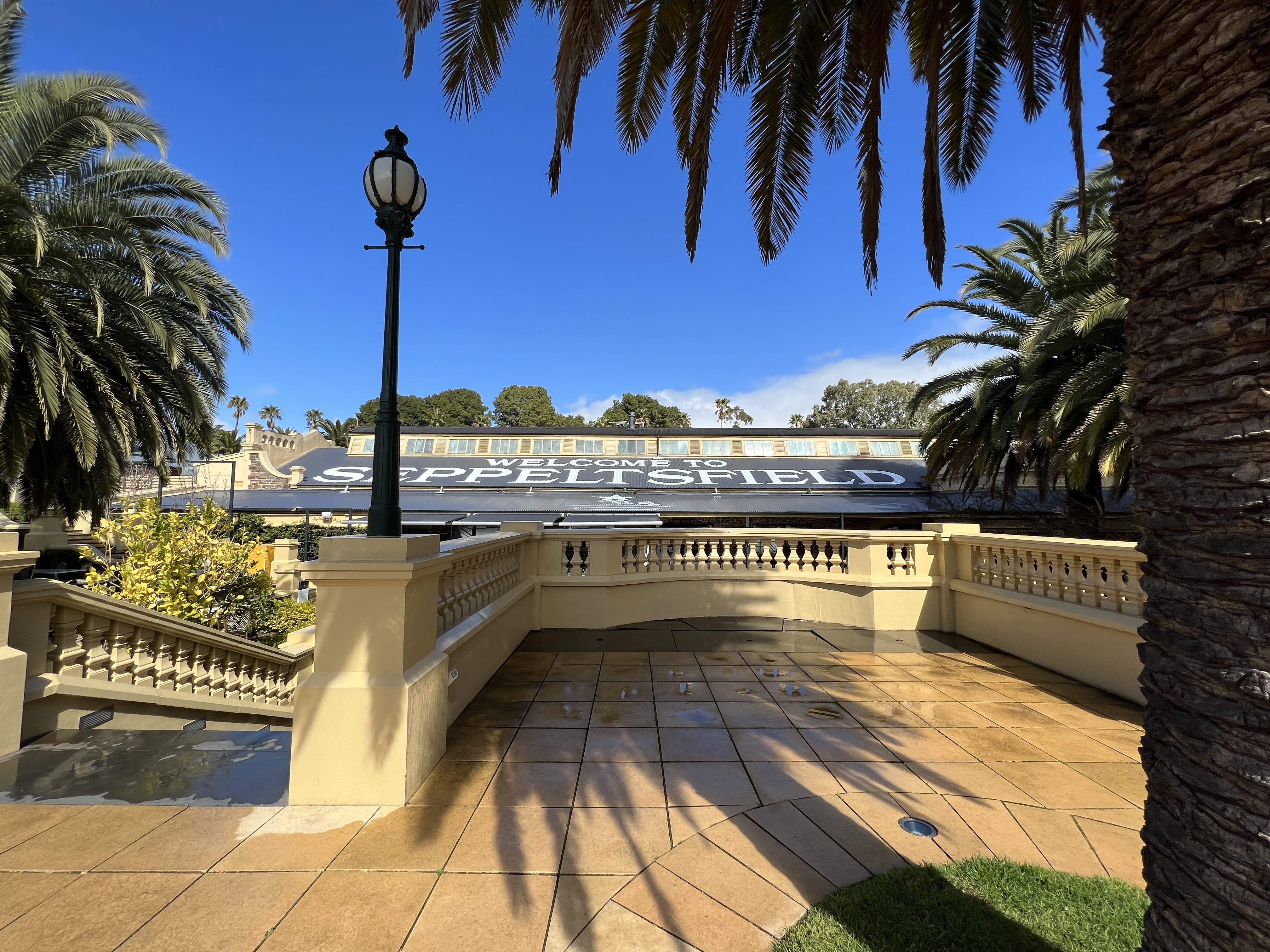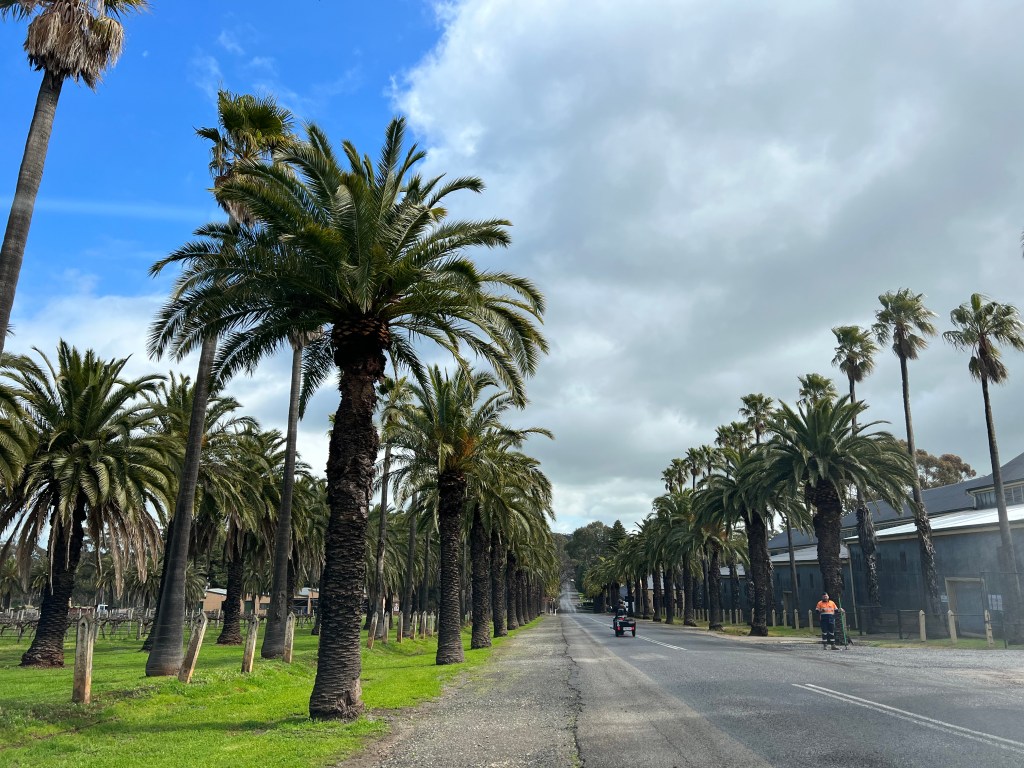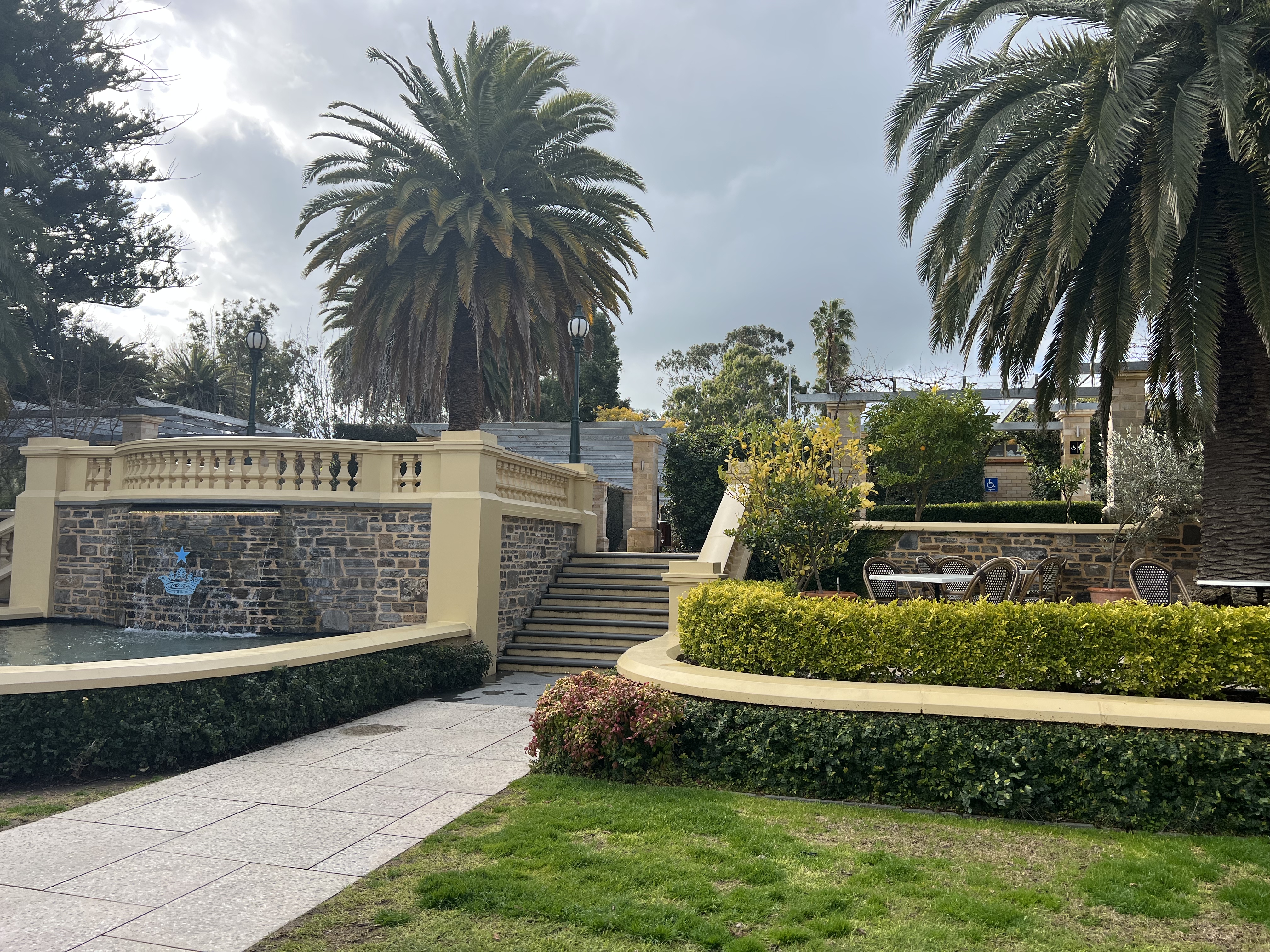
• Barossa: JamFactory at Seppeltsfield

    I am so excited to be in the Barossa this week enjoying the many wineries and delicious food on offer. While there is so much heritage here to write about, I wanted to create a post focusing on the JamFactory at Seppeltsfield (winery). It is a wonderful space that combines an art gallery with artist studios. This way, you can see artists at work from a variety of backgrounds using a diversity of mediums. I am going to write a little history about JamFactory and then go through our experience visiting the gallery.

    JamFactory

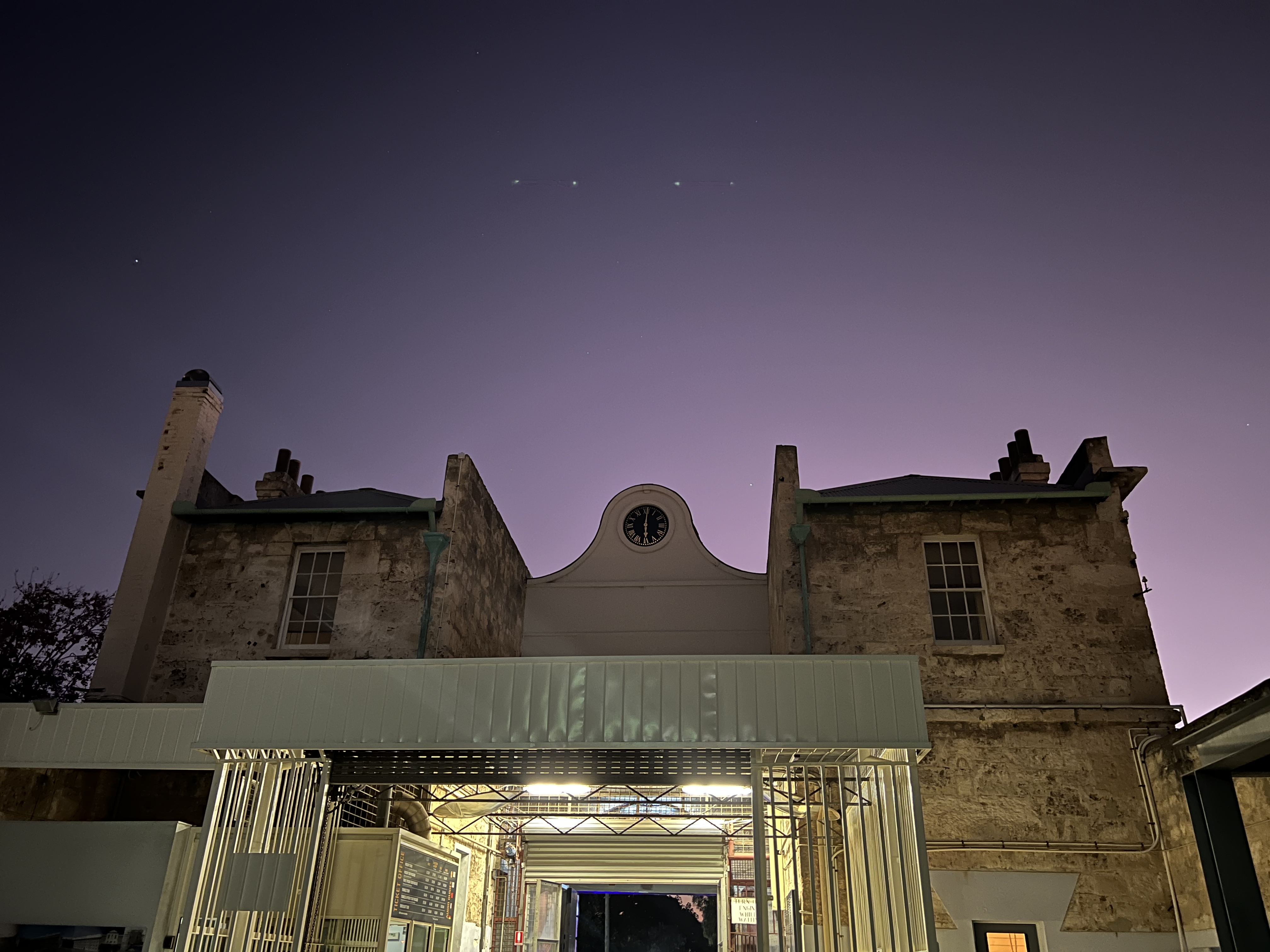
    JamFactory originated in Adelaide as a cultural organisation promoting design and craftmanship. In 2013, an extension was built at Seppeltsfield becoming the JamFactory’s first regional extension. It is so great to see these kinds of organisations and institutions having a regional hub and catering to more than just the cities. The gallery and artist studios are housed in the old stables building at Seppeltsfield that dates back to the 1850s. In some of my older blog posts, I have written extensively about how much I love heritage being re-purposed in a meaningful way. In this case, not only has the building been saved, but inside are some heritage features. Right at the entry are two large vinegar vats that were used in the past to combine water, wine, and alcohol. This mixture would then be added to a vinegar generator. They date back to approximately 1882.

    Jam Factory

    Just above the gallery space is a walkway connecting four separate workshop areas. When we visited, the glass and knife artisans were at work. The others, including millinery and leatherwork, had the day off after working all weekend. I would strongly recommend visiting on a weekend if you want to see all the artisans. If you jump online and have a look at their programs, there are also some public workshops available for a more hands-on experience.

    Winery

    Gallery

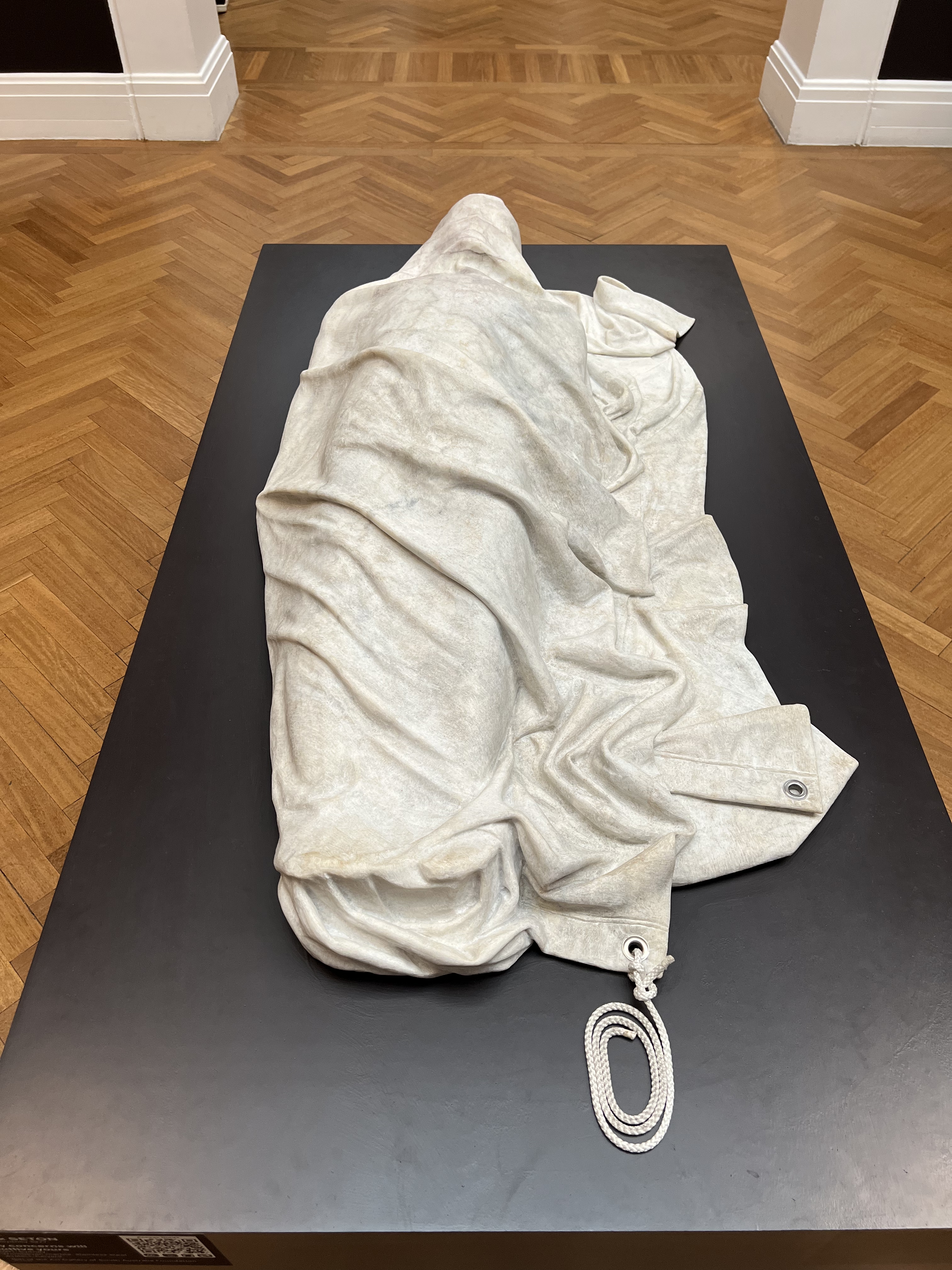
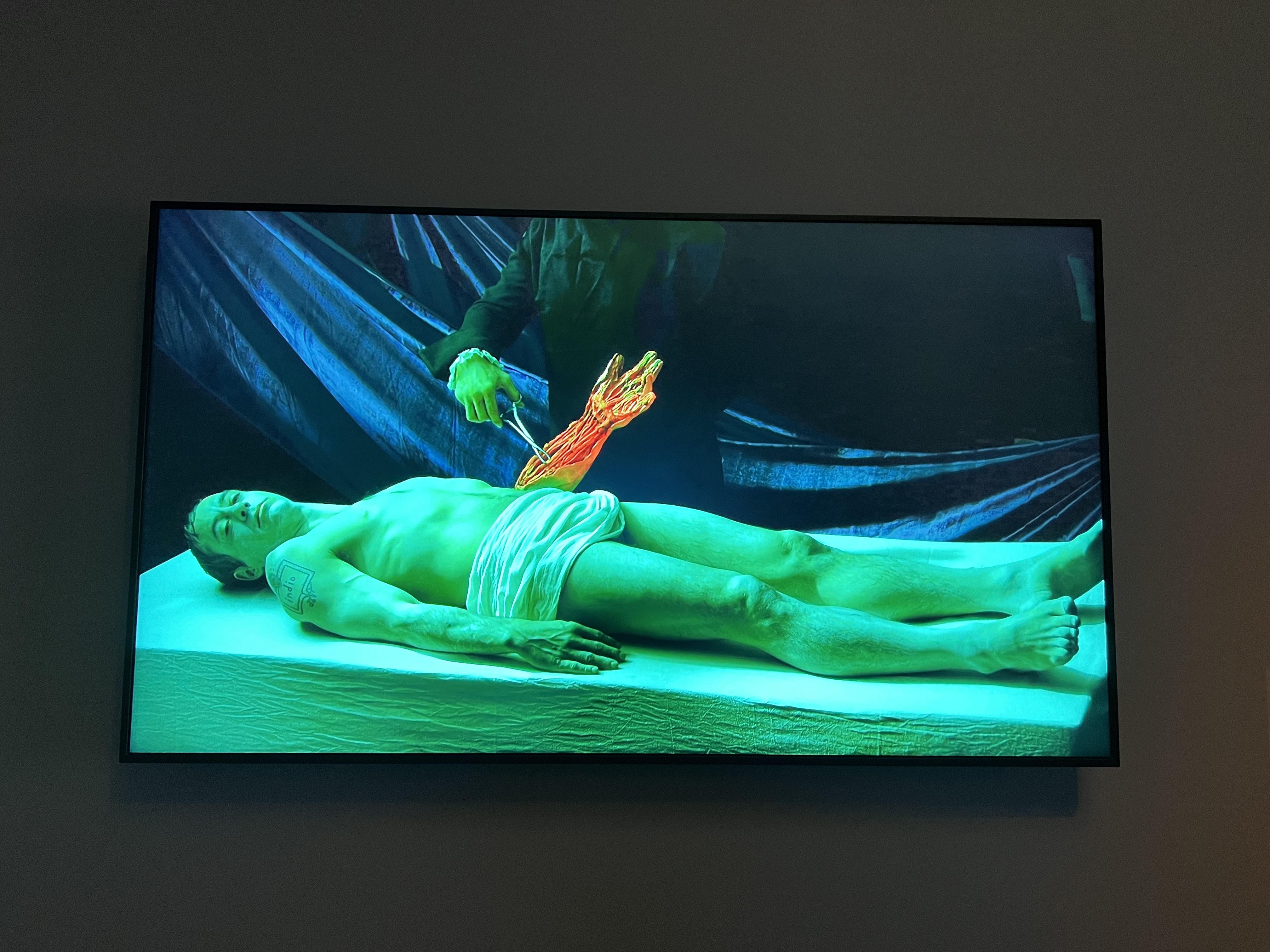
    Currently on display in the gallery is an exhibition titled ‘On the Third Day by Deborah Prior. Prior is an Adelaide-based artist who transforms recycled textiles into works that explore themes such as bodily agency, modes of production, and the social history of domestic work. This particular exhibition focuses on body fragility and how that operates within the equally fragile landscape of colonisation and the ongoing ecological crisis. Here are a couple of my favourite works from the show:

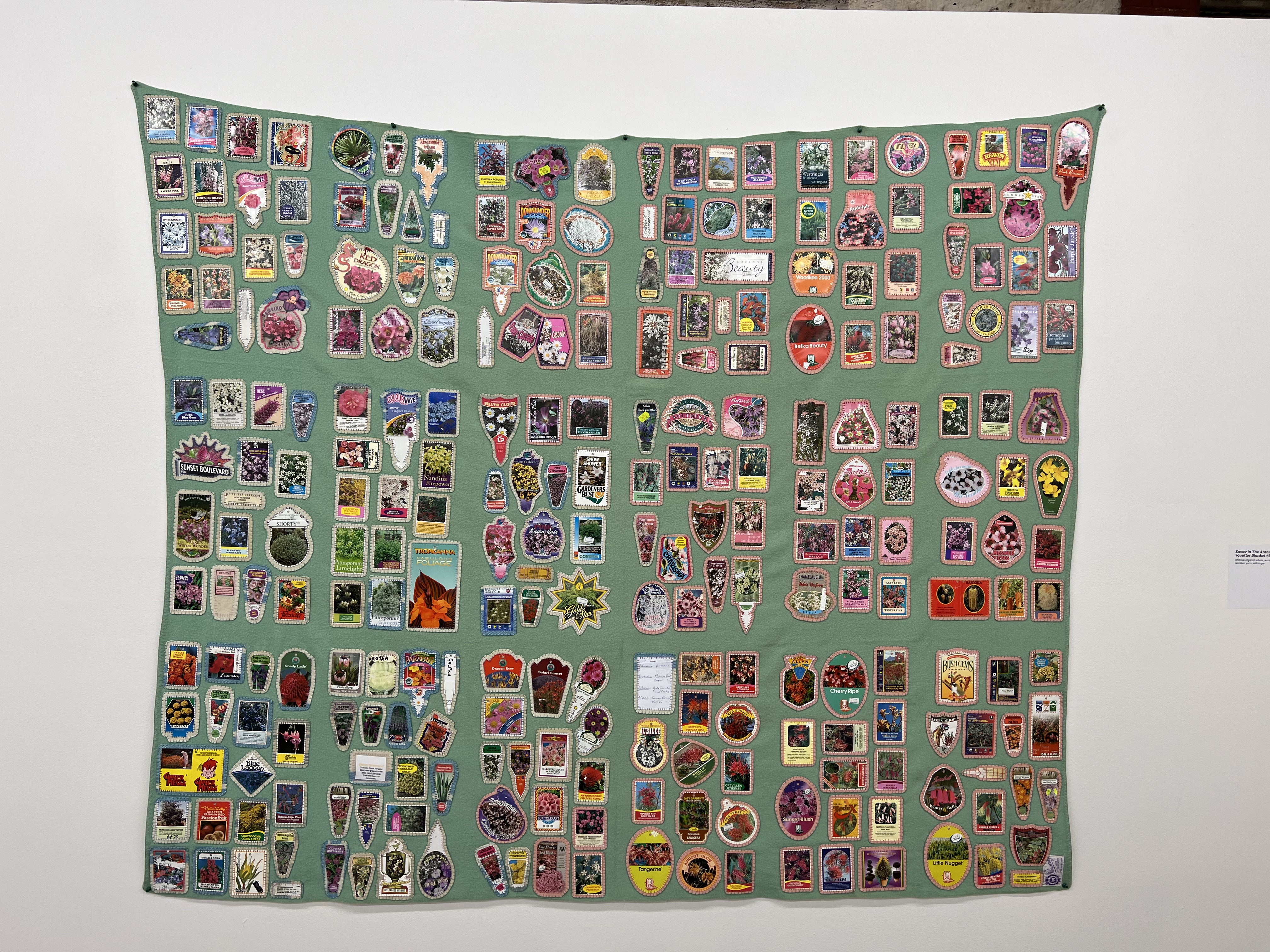
    Easter in the Anthropocene Squatter Blanket #1 and #2

    The first work that stood out to me when entering the space are these large blankets covered in plant care cards. These labels belonged to Prior’s grandmother, Joy, and have been stitched onto woolen blankets. It explores familial and colonial legacies and how they intertwine with the climate crisis. This is especially highlighted by the care labels requiring different types of soil, climate, and levels of sun (for example). Aesthetically, it is really appealing and led me to think more about how much care goes into our environment on a small scale versus what is being done on a large scale.

    Easter in the Anthropocene

    Grandmothers remember Acacia blossoms falling after the rain

    Apart from the title, this work has no further context or explanation. The way it spills off the wall and onto the floor is a beautiful way to represent the blossoms falling.

    Grandmothers remember Acacia blossoms falling after the rain

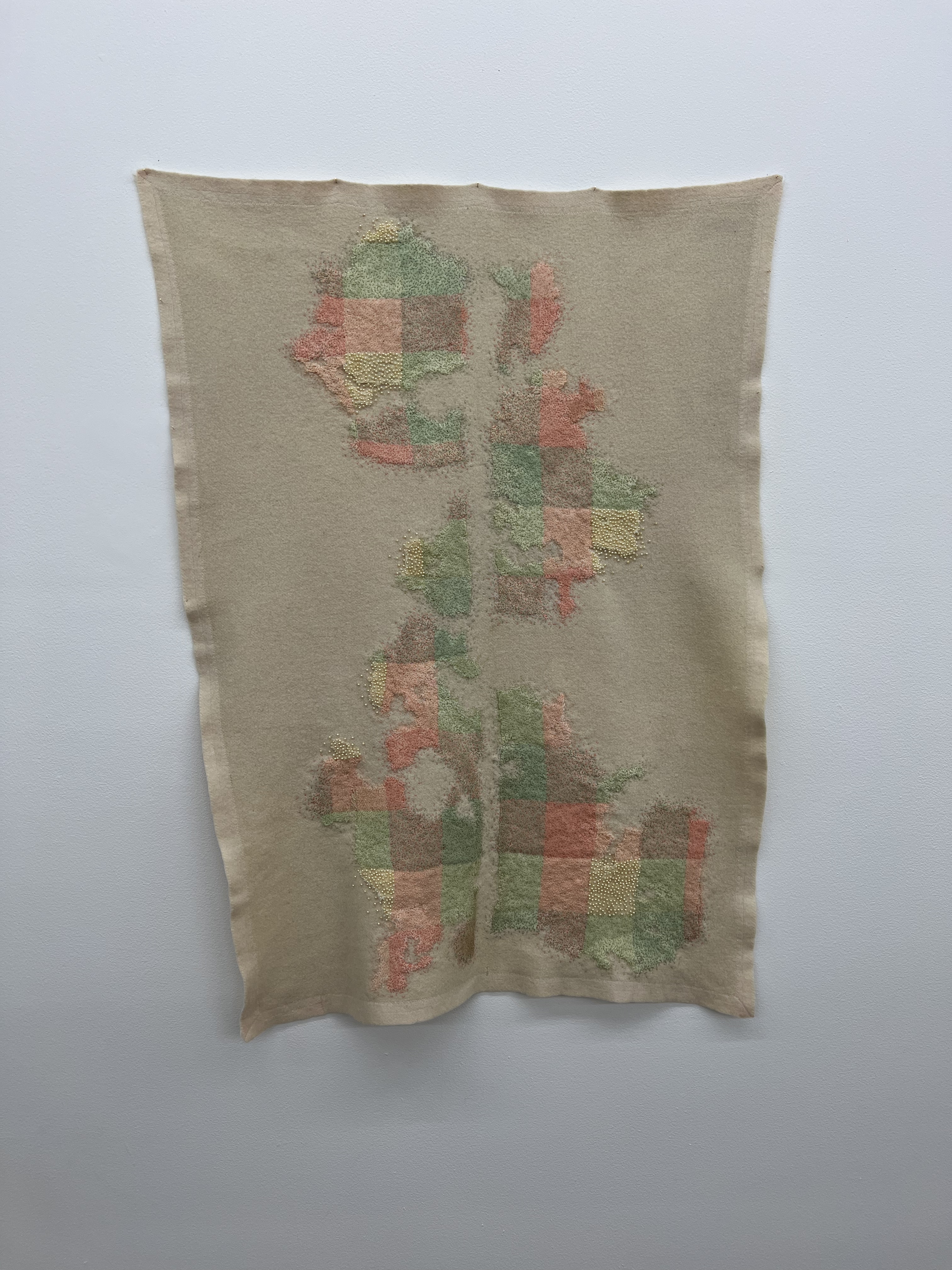
    Long Sleep in Ityamai-itpina (King Rodney Park)

    According to the story on the label, this blanket was rescued from a tree in Adelaide Park Lands. Due to its exposure to the elements, it had rapidly deteriorated. Prior salvaged pieces of the blanket and stitched them onto a baby blanket. Again, this work speaks to the environment and the fragility of the body when subjected to harsh elements.

    Long Sleep in Ityamai-itpina

    Artist Studios

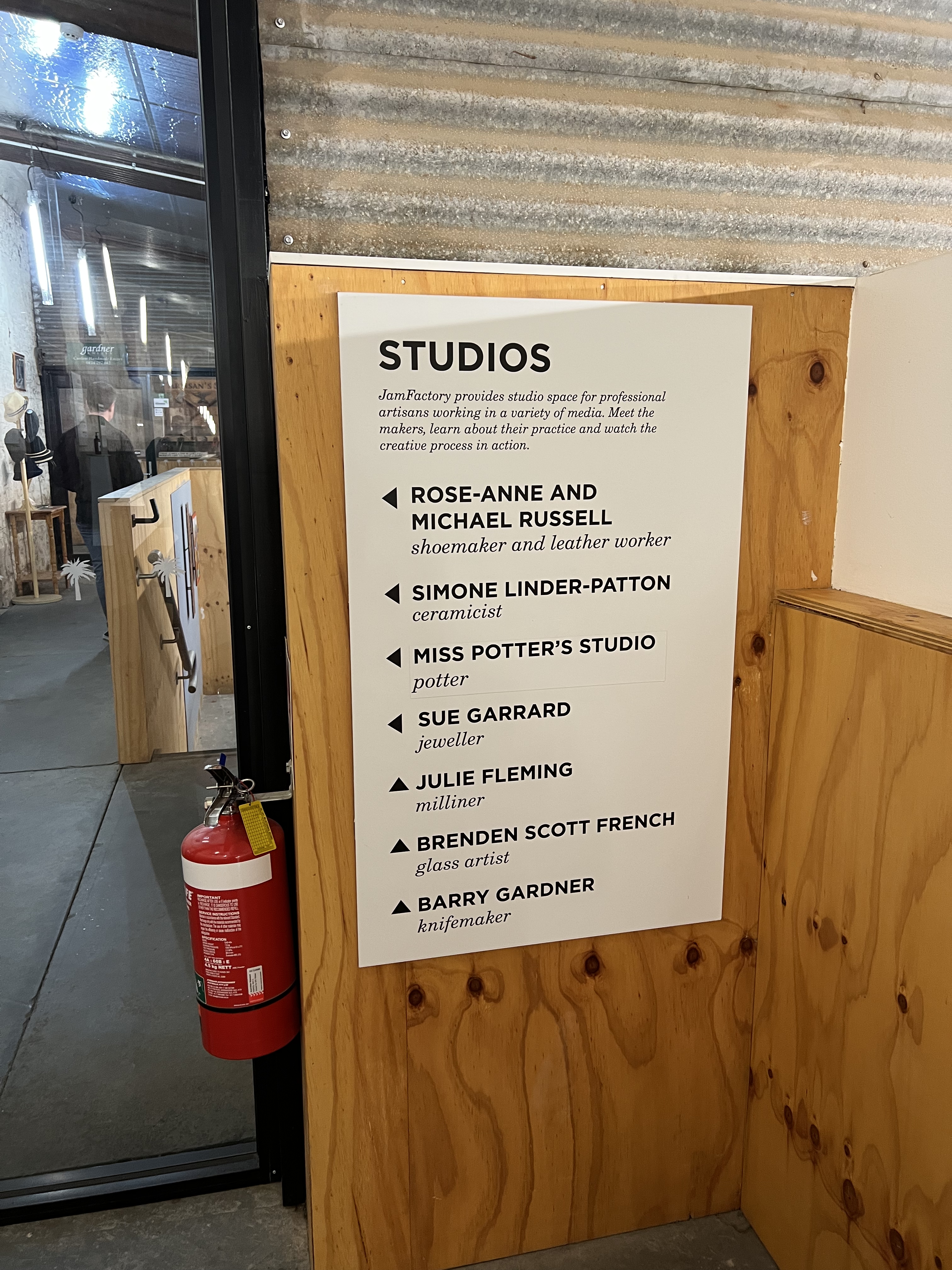
    I really enjoyed walking around the artist studios and seeing the glass artist, Brenden Scott French, and knifemaker, Barry Gardner, at work. The workshops are really interesting spaces to move around and I wish we could go back when the others are also at work. Combining the gallery with these studios makes the space feel more welcoming and inviting. A stark contrast to the galleries with inaccessible language on their labels. Here you can really see the creation of works and increase your understanding of artisan practices.

    Artist Studios
    Artist Studios
    Artist Studios

    Logistical Information

    If you are wanting to visit the JamFactory at Seppeltsfield it is open daily from 11am to 5pm. It is fully accessible.

  • AMaGA 2022 Conference Summary

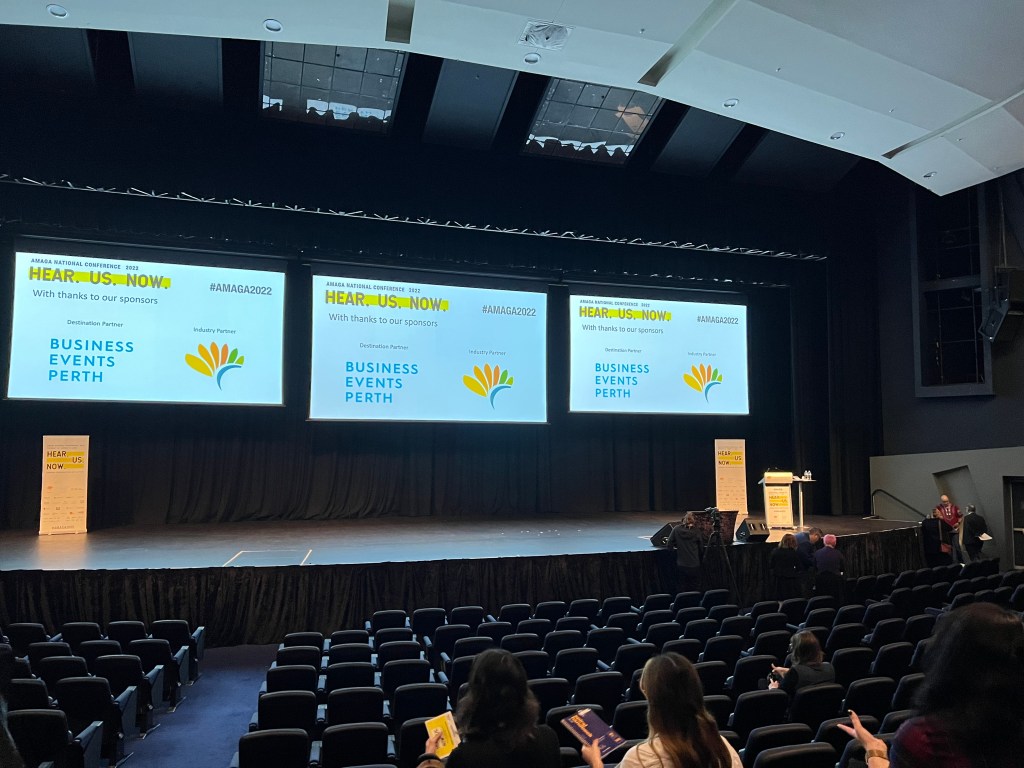
    Now that I’m back in Brisbane, I wanted to take some time and write a reflective piece on the AMaGA 2022 Conference. It would be an incredibly long post if I summarised the whole conference. Instead, I’ve decided to write about three presentations that fall under the conference theme – Hear. Us. Now. To start, I want to say thank you to the organizers and speakers and a special shout out to Marie Taylor for her wonderful Welcome to Country on the first day of the conference. It was so lovely catching up with people and meeting some in-person for the first time! In a strange way, I missed the in-person conference fatigue. That feeling of your brain being completely full – even days after you leave. It was really nice to experience that again. For those of you on Twitter, search the hashtag #AMaGA2022 and you will find so many further thoughts and reflections on the presentations and overall conference. So without further ado, here are some of my thoughts.

    Hear

    I want to stress that these presentations have been selected from the ones I attended. I obviously couldn’t go to every parallel session and listen to every talk at the conference. I am looking forward to watching what I missed online when I have some time up my sleeve. The following is the talk I want to highlight for the theme of ‘hear’.

    2am Conversations Turned Exhibitions by Natalie Carfora and Claudia von der Borch (MOD. at University of South Australia) & Science + Art = Social Change. A Radical New Gallery for Experimentation & Youth Culture by Dr Ryan Jefferies (Science Gallery Museum, Melbourne).

    So I’m already cheating here and including two presentations under the theme of ‘hear’. This is because I really couldn’t decide between the two and wanted to make special mention of both. Encouraging not only participation, but co-design is something I am extremely interested in and it was great to see so many talks that tackled these overarching issues. For this post, I am going to start with the former of the two presentations, 2am Conversations.

    This talk, in particular, really spoke to the theme of ‘hear’ in a literal sense. How do we know what exhibitions will best cater to our community if we don’t listen to those in our community? Really listening to your audience means you can develop exhibitions and content relevant to them. In my study this year I have researched a lot into audience participation and how can you ensure that participation is encouraged, respected, actively listened to, and, most importantly, accessible. The team at MOD. are doing fantastic work with their Open Space forums that encourage such a diversity of participants. What I really enjoyed about this model of participation is that it is unstructured but in a guided way. Carfora and von der Borch explained how during this forum people are provided with guiding questions and can join groups that speak to themes or issues they are passionate about. From here, the discussion is really controlled by the participants. The ideas they raise directly contribute to developing the MOD. exhibition program.

    2am Conversations Turned Exhibitions

    The second presentation, Science + Art, was another look at how to encourage participation and co-design. Dr Jefferies started by posing a question, ‘can a gallery give agency to young people to inspire social change?’ The answer is 100% yes. By empowering a group of young people (and paying them too) some really meaningful and inspirational co-design can occur. I cannot wait to visit the Science Gallery when I visited Melbourne in October.

    Science + Art

    Us

    A Place for Everyone: Cultural Institutions’ Role in Driving Diversity, Inclusion & Belonging by Zehra Ahmed (Australian Museum Trust) and Anna Yanatchkova (Sydney Opera House)

    When it comes to the theme of ‘us’ I could not look past the panel presentation by Ahmed and Yanatchkova. Both presented on how their institutions are looking to improve access from so many different angles. When we think of access, we tend to reduce it to just building access. But what happens when people step inside? How can we make museums more accessible in the broader sense of the word? I was really inspired by Ahmend’s work at the Australian Museum and the Museum’s commitment to creating a physically, mentally and emotionally accessible space. One particular example I want to mention is the new maps for the Museum that show sensory levels. For those requiring a low sensory experience (i.e. quiet space with low noise levels), appropriate spaces can be easily located on the map.

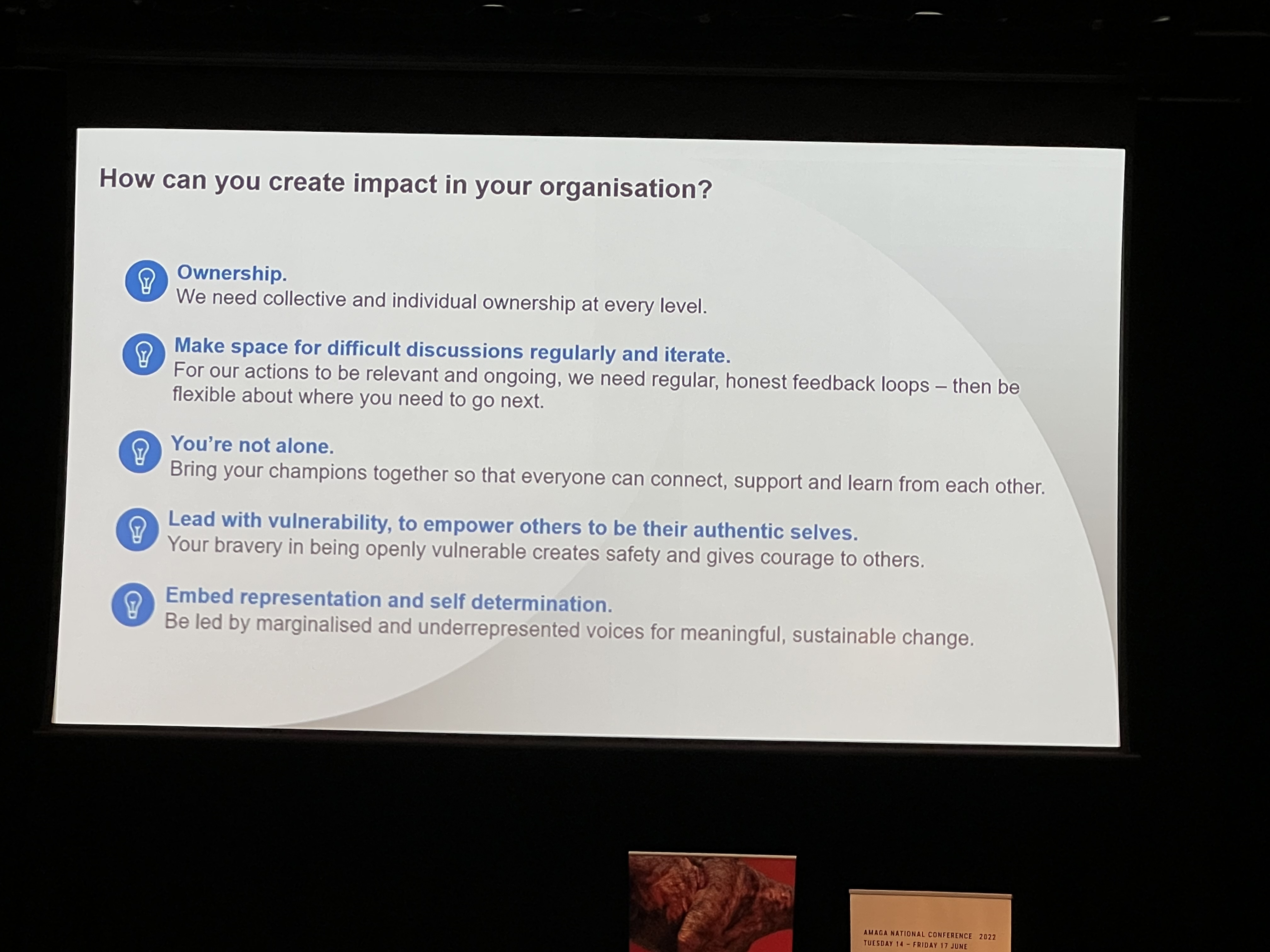
    Yanatchkova’s presentation covered similar themes and asked the audience to have one brave conversation with their institution regarding how to become more socially inclusive and equitable. I think what really stood out to me in this presentation was the slide on how to create impact (photograph below). This includes things like making space for difficult conversations and supporting everyone to connect and learn. That theme of support ran through so many presentations.

    A Place for Everyone

    Now

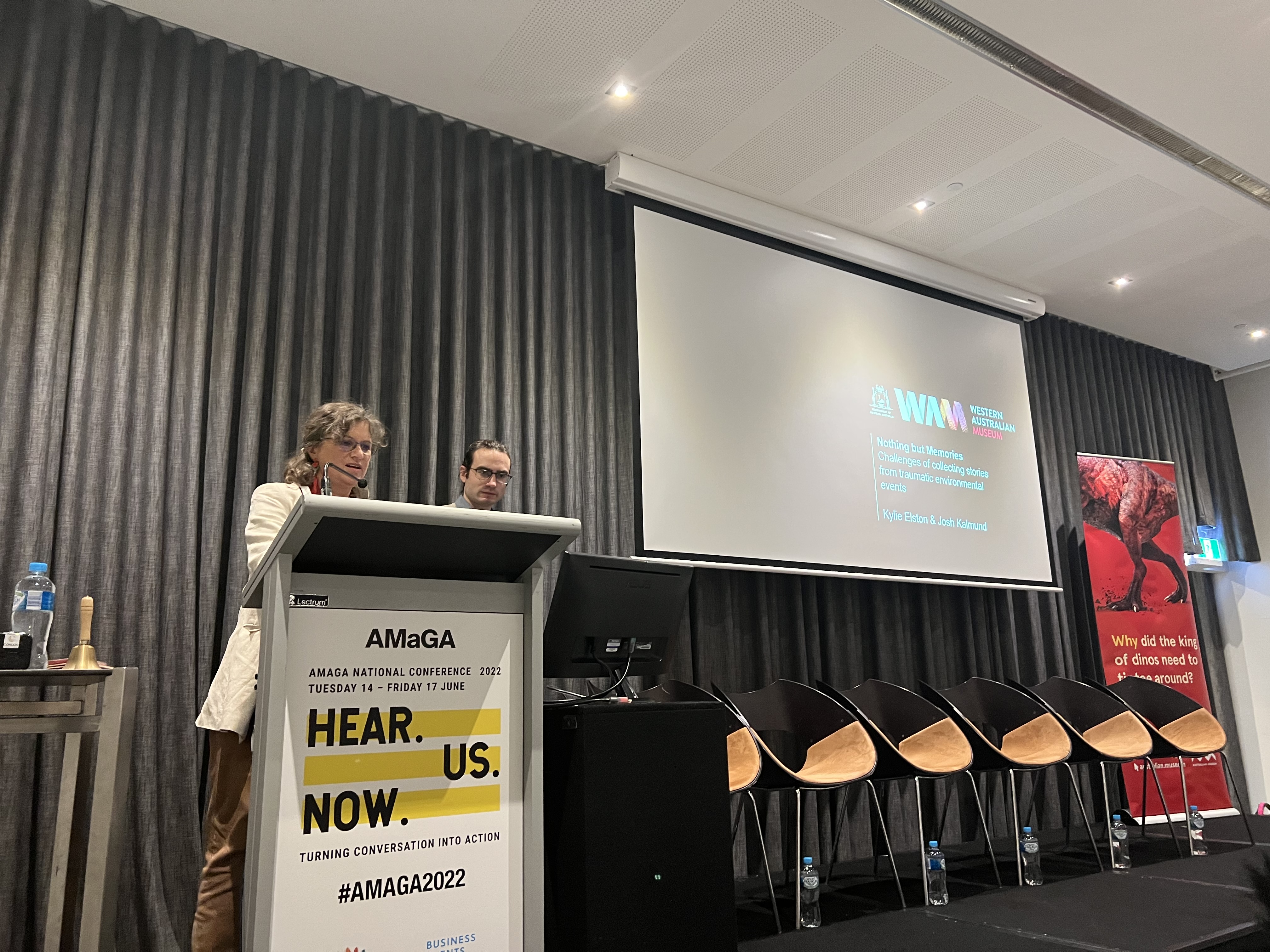
    Nothing but Memories: Challenges of Collecting Stories from Traumatic Environmental Events by Kylie Elston and Joshua Kalmund

    There were quite a few presentations to chose from for this theme but I settled on the one by Elston and Kalmund. I found the theme of ‘now’ most prevalent during the parallel sessions. The particular session this talk was in had a call to action for climate change, responding to a crisis and, in this case, collecting stories. This was a really important presentation reflecting on the challenges of collecting after a traumatic event. Elston and Kalmund spoke a lot about how crucial it is to work with locals and have a people-first approach to allow for agency and the building of relationships. In their Nothing but Memories project, Elston and Kalmund collected objects and oral history accounts from those who experienced the Wooroloo bushfires and Cyclone Seroja. Building that trust and being truly respectful were the core messages. Thank you to everyone who shared their experience for the project.

    Nothing but Memories

    Final Thoughts

    As you can probably tell, the conference dealt with some pretty intense issues and provided a platform for the beginnings of difficult conversations. I really enjoyed the parallel sessions and like I said earlier, cannot wait to watch the ones I wasn’t able to see.

    Before I finish, I did want to give a little shout out to the Emerging Professionals session. I could have included it in any of the three categories, but didn’t want to be too biased since I’m on the Committee. What I will say is that Arts Hub has an amazing article on the session that you can read by clicking on this link: https://www.artshub.com.au/news/career-advice/views-on-the-future-for-emerging-glam-professionals-2557893/

    I look forward to catching up with people in 2023 when the conference is in Newcastle. Until then, I have plenty of thoughts and ideas to delve into and a lot of reading to wrap my head around. Not only do I miss the conference fatigue, but I also miss the post-conference reflection and energising time too.

  • Fremantle: Fremantle Prison

    This is my second post on Fremantle Prison. If you want to read any history of the Prison, or the tours I did last weekend, then click here. This post is going to focus solely on the behind the scenes tour I went on yesterday evening as part of the Australian Museums and Galleries Association National Conference. I really hope to write a summary of the conference on Saturday/Sunday but we shall see. Back to the Prison. I absolutely had to write a post about the tour because it was so insightful covering the amazing work happening and their conservation strategy. I’m going to talk about a few highlight moments, but first, a brief introduction.

    Four Pillars of Heritage Management

    The aim of this excursion/offsite visit was to learn about the conservation practices and heritage management plan of the Prison. In short, they work with four pillars of heritage management: conservation, community, governance, and engagement. Conservation is quite clear – ensuring that the building and its objects will survive and teach future generations. Community refers to making Fremantle Prison a safe place that tells honest stories reflecting the truth of the building’s history. Governance is having a management plan (and I was so glad to hear they have an Aboriginal Heritage Management Plan too) and complying with all relevant legislation. Finally, engagement is creating a space for people to connect with the Prison and its past. This was all covered in the introduction of the tour before we were led through the Prison to visit different staff members and hear about their roles and perspectives on the Prison. A huge thank you to Emily Craig-Wadham, Olimpia Cullity, Luke Donegan, Courtenay Heldt, Daniel Holland, Eleanor Lambert, and Dr Oonagh Quigley. Apologies if I missed anyone, I just typed out the names in my program. Here are a few highlights from the tour.

    Artwork Conservation

    One of my favourite parts of the tour was hearing all about their strategy for conserving artworks. A lot of the artworks were created by prisoners and were not meant to be long-lasting. This means the materials used, and the surfaces painted on, are not ideal for long-term conservation. Hearing about how the artworks inside the Prison are being conserved was fascinating. For example, one artwork peeling off the wall is going to be gradually and gently removed before being placed on a more suitable surface. Literally taking the artwork off the wall and re-attaching it to another surface. What conservators can do will never cease to amaze me.

    Prison Chapel

    Improving Accessibility

    Heritage places are not always, but can be, complex spaces to manage from an accessibility perspective. One thing that was really clear in the presentations is how the Prison is aiming to improve accessibility. This includes mapping out a common tour path that is accessible and improving the ground, size of cell doorways, etc so that those with mobility issues can enjoy the same experience. So wonderful to see this work being integrated into broader conservation plans and really highlighted their commitment to engagement and community.

    Prison Cells

    Exploring New Areas

    We definitely visited many more areas of the Prison than what I saw on my tours. For example, I had not been to the Prison chapel and was really glad we spent some time there listening to a talk about the Prison artworks. We also got to go super behind the scenes and see some conservation work in action. Part of this included walking through the old prison morgue and Commissariat Store, which is undergoing some great conservation work. It was an amazing opportunity to see these areas of the Prison currently not open to the public.

    Excavation

    Object Storage

    I was excited to step into the visible storage rooms and see more of their collection. Objects we were shown included some convict shackles, prison shivs (made in the later years of the prison), and a printing press. An absolute highlight for me was the intact convict uniforms and a sleeve of a convict shirt. I said in my previous post that I do love convict history so I was particularly intrigued by the uniforms.

    Convict Clothing

    Archaeology in the Prison

    Last, but certainly not least, we had a wonderful talk about how archaeology is managed at the Prison. Often we think of archaeology as digging down and finding things in the ground. However, it can also be what is behind walls and in ceilings. It was great to learn about the Prison’s archaeology plan and how they are making their work accessible to the public through easy-to-follow guides. The Prison team really wants that transparency with the work they do which I think everyone on the tour appreciated.

    A huge thank you again to the passionate and enthusiastic team at the Prison who are doing incredible work managing this heritage place. It was such a beautiful evening in Fremantle and as we left the Prison we were treated to this stunning sunset. I think a very fitting image to end this post on.

    Sunset at Fremantle Prison
  • Perth: Wadjemup (Rottnest Island)

    Wadjemup, or Rottnest Island, is located off the coast of Perth and a short ferry ride from Fremantle. If you are taking the ferry from Perth you do have the opportunity to tour part of the Swan River which I highly recommend. Throughout this blog post I will be referring to the island as Wadjemup – a name given by the traditional owners, the Whadjuk Noongar people. The name ‘Rottnest’ was given to the island by Dutch navigators during the 17th century. It literally translates to Rats’ Nest Island which I’ll go into detail about later. Wadjemup is a complex space. It is marketed as an island getaway where you can snorkel, bike ride, stay in resorts, and meet the resident quokkas. On the other hand, it is also a place of tragedy. I am going to cover some of Wadjemup’s history, highlighting its Aboriginal past, the Wadjemup Museum, and then finish with some photos of the Island.

    Wadjemup’s History

    The majority of information used in this section has come from the following source: https://www.alwayswadjemup.com/. This is a very informative online exhibition curated by Vanessa Smart, a Nyoongar woman from Manjimup, and Samara King, a Karajarri woman from Broome.

    The name ‘Wadjemup’ roughly translates to ‘place across the water where the spirits are.’ Thousands of years ago, the Island was connected to the mainland and served as an important meeting place and ceremonial site. With rising sea levels, Wadjemup became separated. There are oral history accounts of this happening that have been passed down through the generations. When Wadjemup was separated, it is believed that the Whadjuk people did not continue to use the Island. However, it remained an extremely significant cultural place.

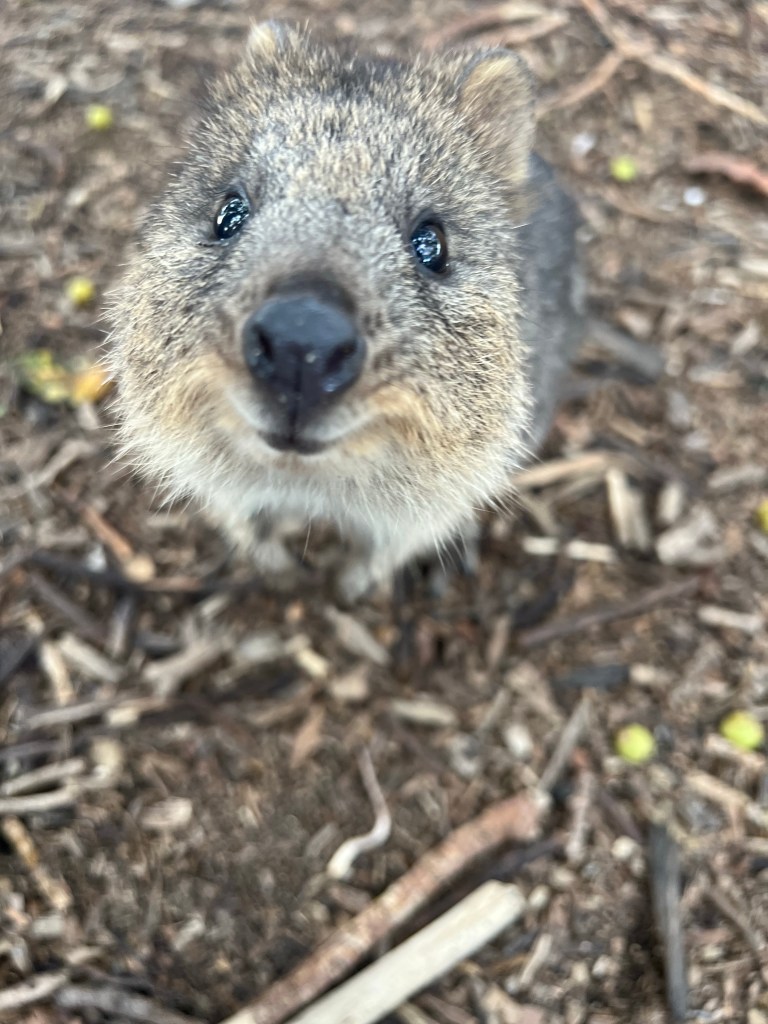
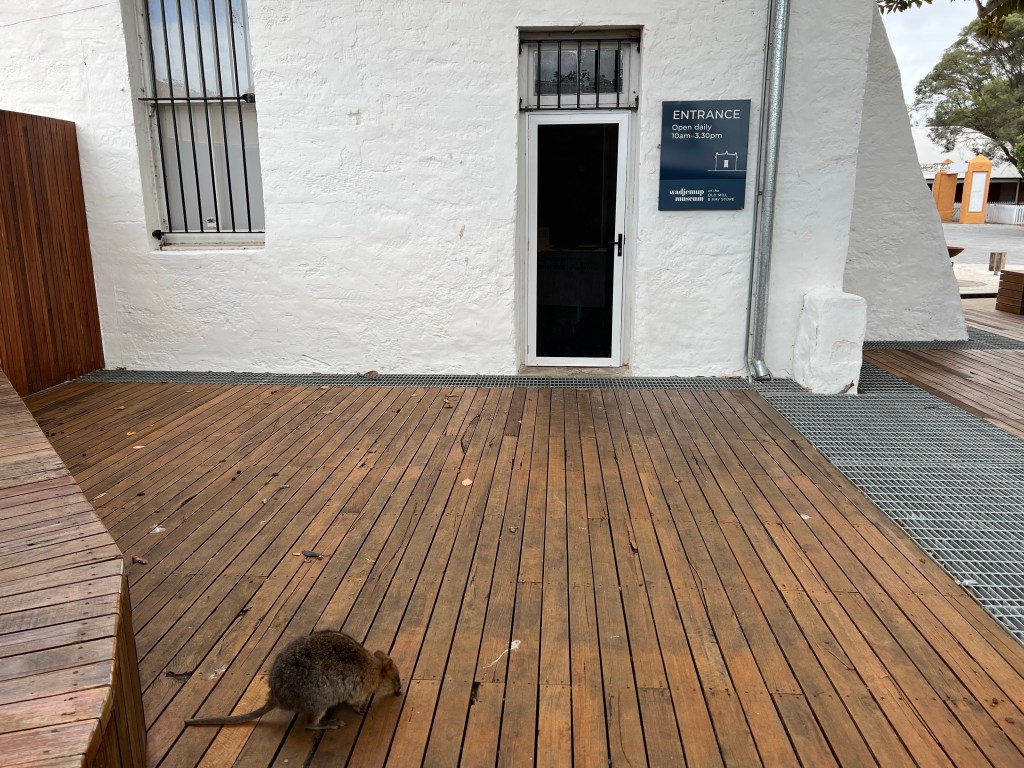
    In around 1658 Samuel Volkerson and his Dutch crew on the Waeckende Boey landed on the island in search of survivors from the Vergulde Draek shipwreck. A few decades later in 1696 William de Vlamingh and his crew landed only to see the island covered in quokkas. After mistaking them for rats, de Vlamingh gave the island the name ‘Rottnest’ or ‘Rats’ Nest’ in Dutch. I can kind of see the resemblance between quokkas and rats, however, quokkas are a lot bigger and look like a cross between a kangaroo and possum. Not to mention they are absolutely adorable and are only found in the wild on the Island.

    Quokka

    Jumping ahead now to the 1800s. Wadjemup was settled by Europeans in 1829 in the hope they could use the land for salt harvesting, farming, and fishing. They opened the town of Kingstown and had quite a bit of successive with the farming and fishing. There are some beautiful salt lakes to wander around when you visit.

    At the end of the 1830s, in 1838, colonists started sending Aboriginal prisoners from all over Western Australia to the Island. It formally became a prison in June 1839 operating until 1904. Then, between 1904 and 1931, the Island became a forced labour camp, an annexe of the Fremantle Prison. It is approximated that during this time around 4 000 Aboriginal men and boys were sent to the island. Part of their sentence included constructing buildings on the Island including the lighthouses and heritage cottages. Many of which survive to this day and are protected under the Aboriginal Heritage Act of 1972. The photograph below is of Wadjemup Lighthouse built in 1896 by prisoners. It’s pretty unique considering it stands in the middle of the Island and not on the coast. Between 1839 and 1904, 370 prisoners died from disease and a recorded 5 prisoners were executed. They were all buried on the island. In 1904 the Island turned into a forced labour camp. Ideas of turning Wadjemup into a recreational holiday destination started in 1907 and by 1911 many of the buildings constructed by prisoners turned into holiday accommodation. They just moved the prisoners who were still there to the other side of the Island.

    Wadjemup Lighthouse

    Today there is consultation happening between Aboriginal owners and those working to bring this history and their stories to visitors.

    Wadjemup Museum

    While visiting Wadjemup, I highly recommend starting your time on the Island with a visit to the Museum. Basically all the history I outlined above is on display in a compact, but informative way with some excellent objects. Its housed in a limestone building made by prisoners for storing, threshing, and milling the grain grown on the Island. It takes about 30 minutes to an hour to see the whole museum. If you’d rather be out and about to get your information then there are some incredible tours on offer. What I’m trying to say is there are multiple ways to make sure you are made aware of the history of Wadjemup and acknowledge its past and those contributing to its present and future.

    Wadjemup Museum

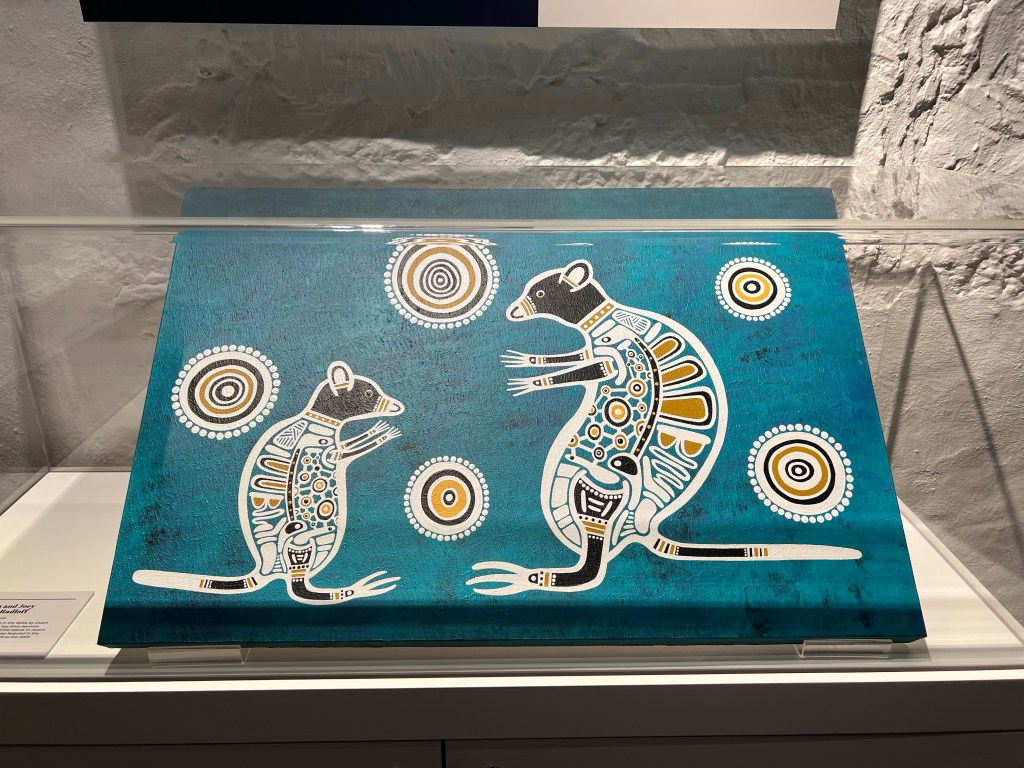
    The Museum begins with an Acknowledgement of Country and then works its way chronologically through the Island’s history. Not only covering what I’ve discussed but some other stories too. For example, I had no idea Wadjemup was an internment camp during World War One for Serbian, Croatian, and Albanian people in Western Australians. Then again during World War Two where Wadjemup held Italian Prisoners of War between 1944 and 1946. My favourite object on display is this artwork (photographed below) by Mark Radloff titled Quokka and Joey, created in 2009. I’ve also included a map showing German and Austrian camp sites from 1914 that was hand-drawn by an internee on the Island.

    Quokka and Joey by Mark Radloff
    Internee Map

    After following the chronology of the Island, you are then led into another room that contains an exhibition on the survivors of Wadejump. It is filled with the stories of those who survived the prison camp between 1900 and 1931. It’s a very powerful exhibition and you get to learn about its history from those who experienced it firsthand. As a warning, it does contain images that may cause distress as well as a warning for Aboriginal and Torres Strait Islander people as it contains images of people who have died.

    Photographs

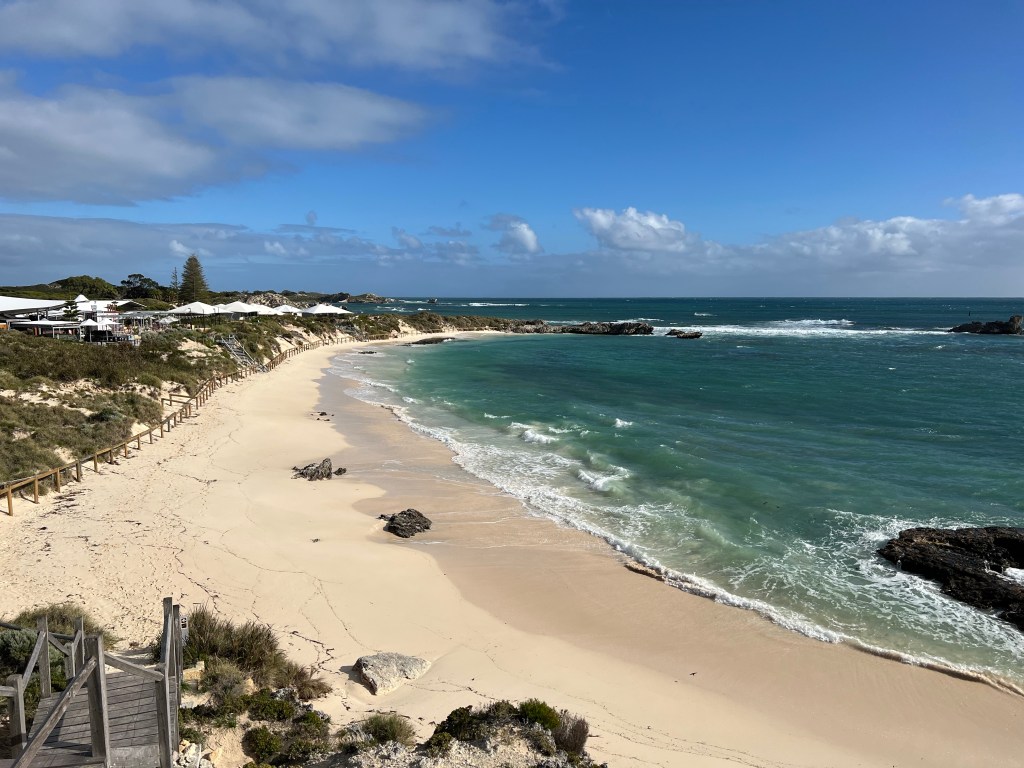
    Everyone who visits Wadjemup should become aware of its history. That way, when you are walking around admiring the stunning natural scenery and taking copious numbers of photographs of quokkas, you are doing so informed and ensuring its past is not forgotten. To finish, here are some photographs I took during my visit. I hope you have the opportunity to visit one day! There is heaps of information available online as to how to get to Wadjemup, where to stay, etc.

    Pinky Beach
    Bathurst Lighthouse
    Quokka
  • Fremantle: Fremantle Prison

    I am so excited to share with you one of the tours I went on today at the Fremantle Prison. I did two tours of the Prison and while one was great from a history-discovering perspective, the other was a stand-out. More on that later. Like with most heritage blog posts I’ve done over the years, I’m going to begin with an overview of the Prison’s history and then go into why it is heritage listed. Included in the latter will be what kinds of heritage listing it has – there are a few. Then, I will move into discussing the tours. Old prisons have always fascinated me. There are a number of reasons why. My interest in heritage, true crime and abandoned places all intertwine in this context. Prisons are also spaces that represent difficult histories and although grappling with that can be challenging, it is also important. How we look to display and interpret history always has room for improvement so I find these tours are fascinating from the perspective of storytelling. The two tours I went on today were quite different in tone and subject matter which I hope will make for an interesting read!

    History of the Prison

    I am going to keep this as brief as possible, only including some major events and historical information. Full disclosure, I used to work on Cockatoo Island in Sydney which is filled with convict history. For this reason, I do find myself particularly interested in the convict era and that has definitely influenced my perception of the Prison. Anyway, back to the history. First and foremost, it is on the land of the Noongar Indigenous people who have been living in Perth for at least 40 000-45 000 years (most likely a lot longer than that).

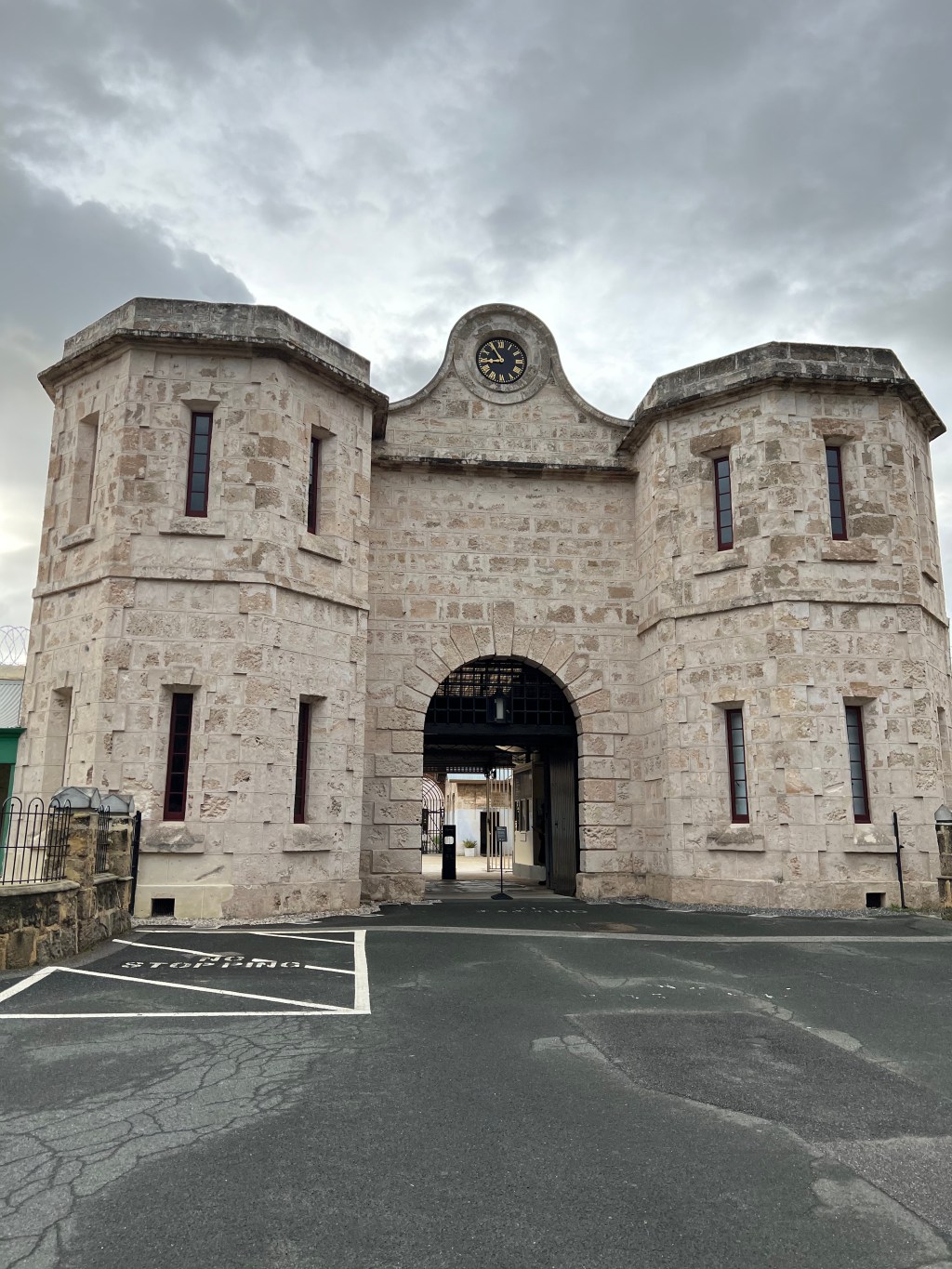
    Fremantle Prison was originally built as a convict barracks between 1852 and 1859. It operated as a prison until 1991 which is unbelievably recent. Over the years, the Prison housed convicts, colonial prisoners, prisoners of war, and maximum-security inmates. The convict history of Perth is so different to what I’ve been exposed to in Brisbane and Sydney. For example, Perth wanted convicts to help with building up the city and making it a more attractive place for people to settle. In 1850, they finally got their wish with the first convict transport arriving in Fremantle Harbour. Basically, it was used as a convict prison until 1867.

    Between 1867 and 1886 the Prison was used for imperial convicts and things were really quiet. Then came the gold rush in the 1890s and once again, the Prison became full. For the next almost 100 years the Prison served as the main, and sometimes only, prison in Western Australia. Conditions were grim. There was no plumbing, cells were tiny and it didn’t even have a dining/mess hall. In 1983 a Royal Commission into prison conditions recommended the Prison’s closure. This was also raised by prisoners themselves who protested against the conditions. In 1991 the prisoners were transferred to a new facility at Casuarina. It took just one year for the Prison to turn into a heritage tourism site and the first tour guides were some of the guards.

    Heritage Listing

    The Prison is state, national, and world heritage listed. Here is a bit of information on each listing.

    State:

    The Prison is state-listed on the State Register of Heritage Places for its exceptional cultural heritage significance. This includes the fact it is the largest and most intact convict prison left in Australia. The listing also mentions things such as, it is an important symbol of convict labour in Western Australia and serves as an example of imperial convict public works.

    National:

    After being state-listed, the Prison became listed on the National Heritage List on August 1, 2005. In order to be listed, the Prison had to meet some criteria. Under the National Heritage criteria for listing, Fremantle prison ticks five boxes: a, b, c, d, and g. A – it has value due to its importance in the course of Australia’s history, B – it possesses uncommon, rare or endangered aspects of Australia’s history, C – it has the potential to yield information to contribute to an understanding of history, D – it demonstrates the principal characteristics of a class of Australia’s cultural places and G – it has a special association with a particular community or cultural group.

    World:

    Last, but certainly not least, we have its world heritage listing. In July 2010 the Prison was added to the list along with ten other Australian convict sites (see photograph below). There is a fantastic overview of its listing and history on the Fremantle Prison’s website. Here is the link for those interested: https://fremantleprison.com.au/history-heritage/heritage/heritage-significance/world-heritage-list/.

    World Heritage Properties

    Visible Storage

    Massive sidenote before moving on to the tours. There is a small museum and gallery space in the entrance courtyard that is worth looking through if you have time. Inside the museum is a visible storage area where you can see conservators working on some of the objects. There are also shelves of objects waiting to be catalogued or restored. Creating that transparency between front-of-house and back-of-house roles in a museum is something I do love seeing. Rather than someone’s office, it is a workshop-like set-up. So one person isn’t working all day with visitors watching them. That would be intense.

    Collection Storage

    Behind Bars Tour

    I’m going to save the best tour until last. So to start, Behind Bars was the second tour I did during my visit. There is a convict history tour and true crime tour available. However, I was given the advice to go on this tour because you get to see more of the Prison and hear about a longer timespan of history. Ultimately, this was good advice because the tour covers a lot – basically the history from 1887 to 1991. Although just 1 hour and 15 minutes long, you do get to hear many stories and see how life was for prisoners. In one of the buildings, you can see recreations of cells from the convict era up to 1991. This helped me to visualise exactly how shocking the conditions had been. As a warning, they do guide you through the gallows on this tour so if you’re not ok with seeing that kind of content there is a warning and you can sit outside.

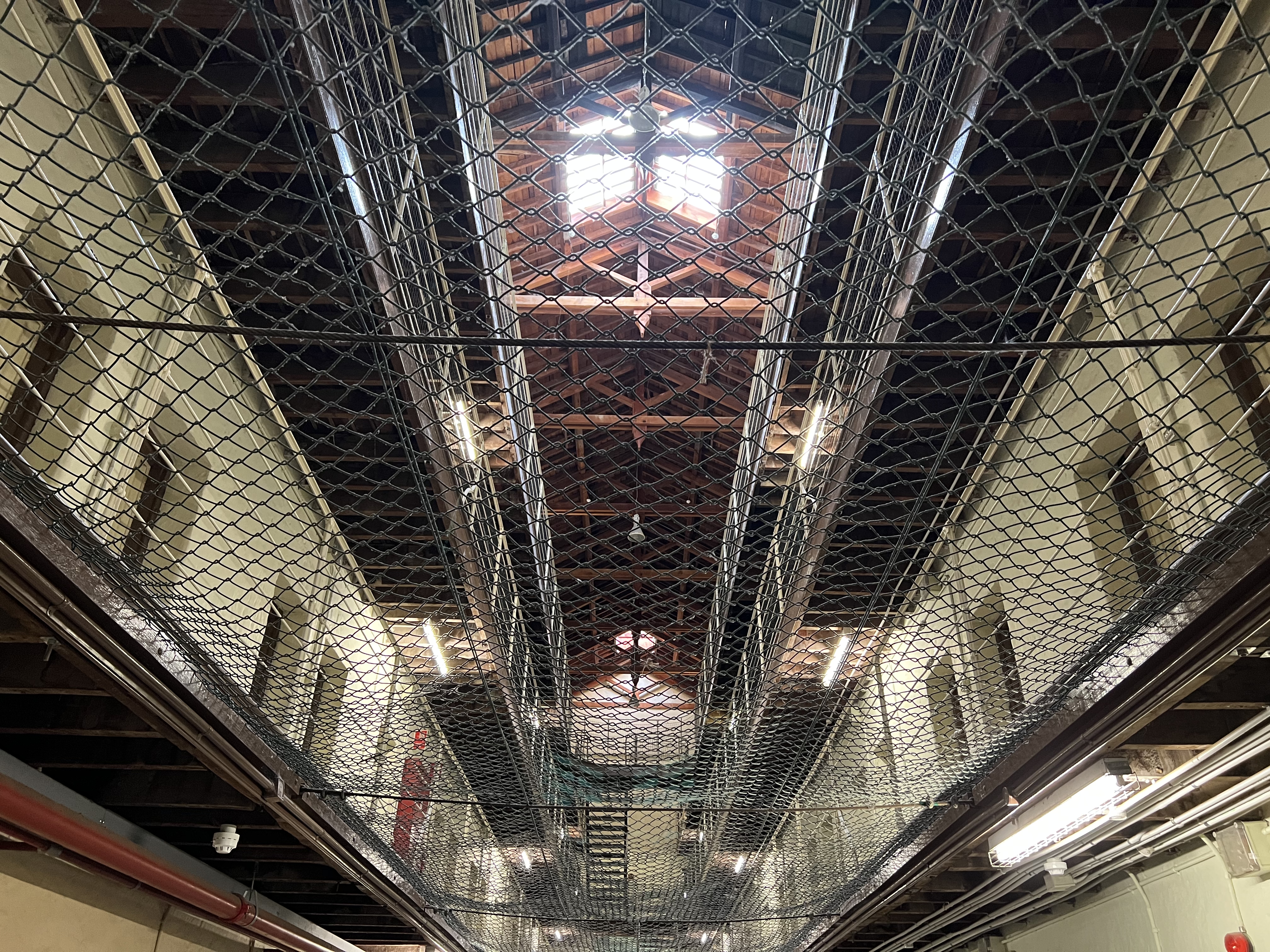
    Cell Block
    Officer’s Door
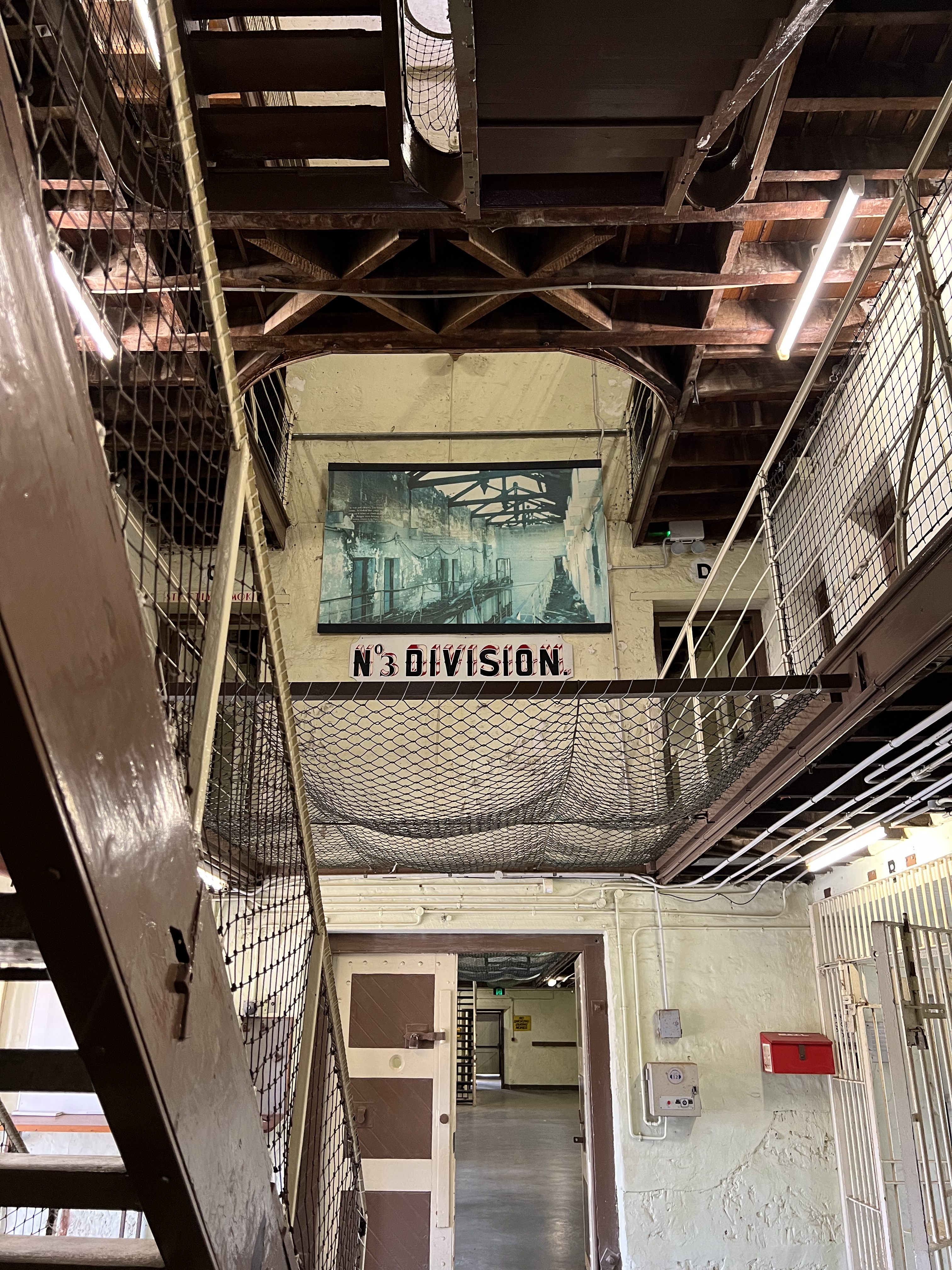
    3 Division

    Overall I found the tour informative and a great way to see the Prison. Like any short tour, there were times I wanted to hear more information, but we just didn’t have the time. I would love to see an Indigenous-led tour of the facility and that perspective highlighted for visitors.

    Tunnel Tour

    If you are looking for a more adventurous tour of the Prison then look no further. I would highly recommend pairing this with one of the Prison tours because this one does not actually go inside the Prison. Instead, you make your way about 20m underground to explore the tunnels built by convicts. When I read about this tour I knew I had to book a spot. I love exploring different spaces and going on unique tours. Warning – this is not for everyone. If you don’t like heights, boats or small spaces do not book this tour. I wasn’t sure how I’d go with heights, but it all ended up being ok.

    You start the tour with a brief introduction to the tunnels. They were built by convicts to provide the Prison, and later Fremantle, with a freshwater supply. Then, you get to pop on a hardhat and some epic gumboots and descend down into the tunnels. The sheer amount of paperwork that would have been required to start this tour is just amazing. Well done to them for making this a reality. Once you are 20m underground you are guided through the tunnels at first, by foot. The water almost came up to our knees it was so deep! But you get to see things like shells, tree roots, and pickaxe marks (yes the tunnels were all handmade with tiny pickaxes). Then, after a bit of a walk and talk, you are guided onto a replica convict punt boat to further enter the tunnels. Think gondola ride in a cave. Along the way there a few things pointed out like a plaque acknowledging the convicts who built the tunnels. It would have been incredibly hard work with some expected to work over 6 hours each day in knee-deep water.

    At the end of our boat ride, we climbed back up to ground level and heard a little bit more about the tunnels. After a while, the water’s salt content became too high so they closed down the supply. In total, it took about 5 years to build the entire network of tunnels.

    If this sounds like you would be interested, then 100% pre-book it through their website. All tours had sold out before the Prison had even opened on the day I visited. I highly recommend this as an interesting experience. Not one that really goes in-depth about the Prison’s history, but one that can run parallel to another tour and make your day truly memorable.

    It is a 2.5 hour tour and unlike the other prison tours, it is definitely not accessible. Make sure you read up about this tour before you book to make sure you are ok with the terms and conditions.

    Visitor Information

    Fremantle Prison is open 7 days a week between 9am and 5pm (open until 9pm on Wednesday and Friday nights). The tours do come with a fee so make sure you look into buying a tour package if you want to do multiple tours. There is a cafe onsite and heaps of parking but it is equally easy to get there from Perth via train. Below are the accessibility percentages for each tour (meaning how much of the tour is accessible):

    • Behind Bars Tour – 90%
    • True Crime Tour – 80%
    • Torchlight Tour – 70%
    • Convict Prison Tour – N/A
    • Tunnels Tour – N/A
  • Perth: Art Gallery of Western Australia

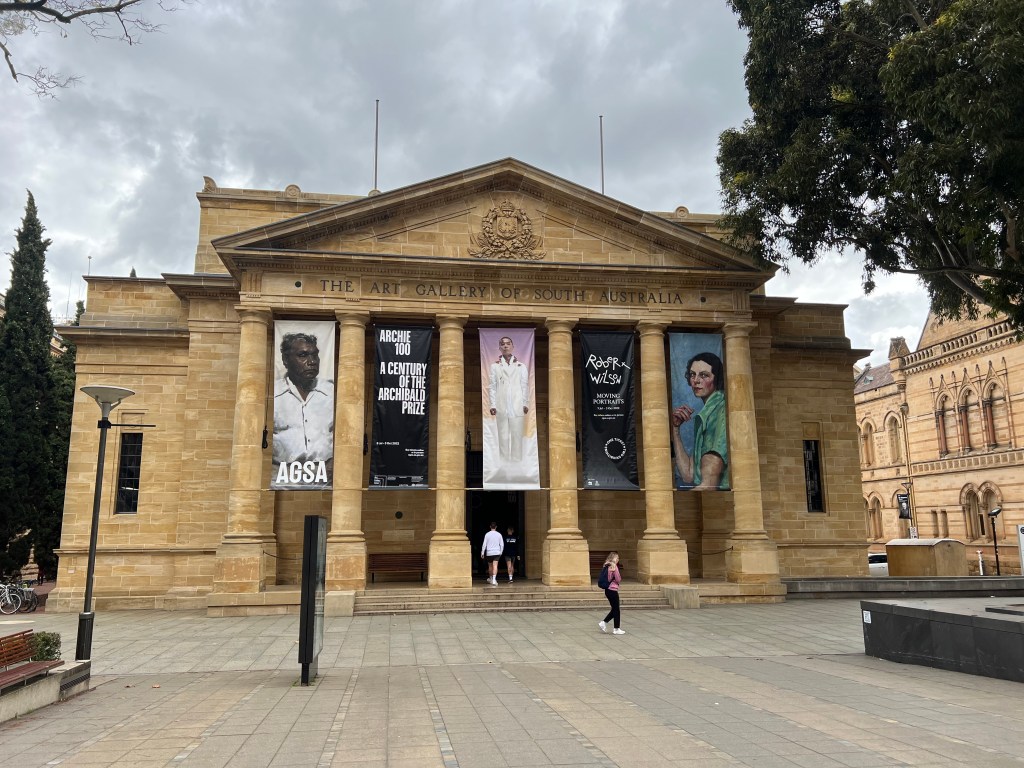
    As promised, here is the blog post on the Art Gallery of Western Australia! After my morning at the Museum, I wandered over to the Art Gallery (stopping to pat three dogs along the way) for a relaxing afternoon. Similar to Brisbane, I love how there is this cultural precinct where you can go and spend the day exploring the Museum and/or art galleries. Having this space is both very convenient but more importantly, creates this really nice hub in the city. Rather than go through some highlights from the Gallery, I really just want to focus on one particular piece. Before that, I want to share a brief history of the Gallery and also cover The West Australian Pulse 2022.

    History

    The Art Gallery of Western Australia was founded in 1895. In its first year, the Gallery acquired two artworks. I don’t know why, but I do love that part of the story. As one of the artworks was a contemporary work by George Pitt Morison, this started the Gallery’s commitment to collecting contemporary Australian art. Two years later, in 1897, the Gallery joined forces with the Museum and became the Western Australian Museum and Art Gallery. Where the WA Museum Boola Bardip is located today is where this first version of the Gallery stood. Fast forward another two years to 1899 when the Jubilee Building opened with both the Museum and Gallery inside. If you read my post on the WA Museum then you might remember the Jubilee Building was one of the restored heritage buildings now incorporated into the new museum space. The Museum and Gallery remained combined until 1959 when the Gallery said farewell to the dinosaurs and left to start its new life.

    The building you can visit today opened in 1979. It is an example of late Brutalist architecture. I usually don’t care for this style but it didn’t really bother me in this context. I did adore the concrete spiral staircase in the middle of the Gallery. I found it super fascinating to read that inspiration for the design came from the Museum of Anthropology in Mexico City. One of the best museums I have ever visited!

    As well as the more contemporary display space, the 1905 Perth Police Courts were restored in 1995 and transformed into an exhibition space. In 2019, the Gallery acknowledged the colonial history of this former Courthouse and jail and worked with Elders and senior members of the Whadjuk Noongar arts community to hold its first display of Aboriginal art. During my visit, The West Australian Pulse 2022 was on display.

    Art Gallery Western Australia Door

    The West Australian Pulse 2022

    I had never heard of this exhibition before so I wasn’t quite sure what to expect when visiting. The first thing I saw when I entered the space was an iPad where you could ‘vote for your favourite artwork’. As I made my way through the exhibition rooms I was totally transfixed by the works on display. Some tackle really intense issues such as mental health and identity. It wasn’t until I went to the iPad to vote for my favourite artwork that I saw these works were from Year 12 Visual Arts graduates from 32 schools across Western Australia. I should have read the introductory panel but I was glad I didn’t in the end. The sheer talent on display from high school students is just incredible. I struggled to pick a favourite.

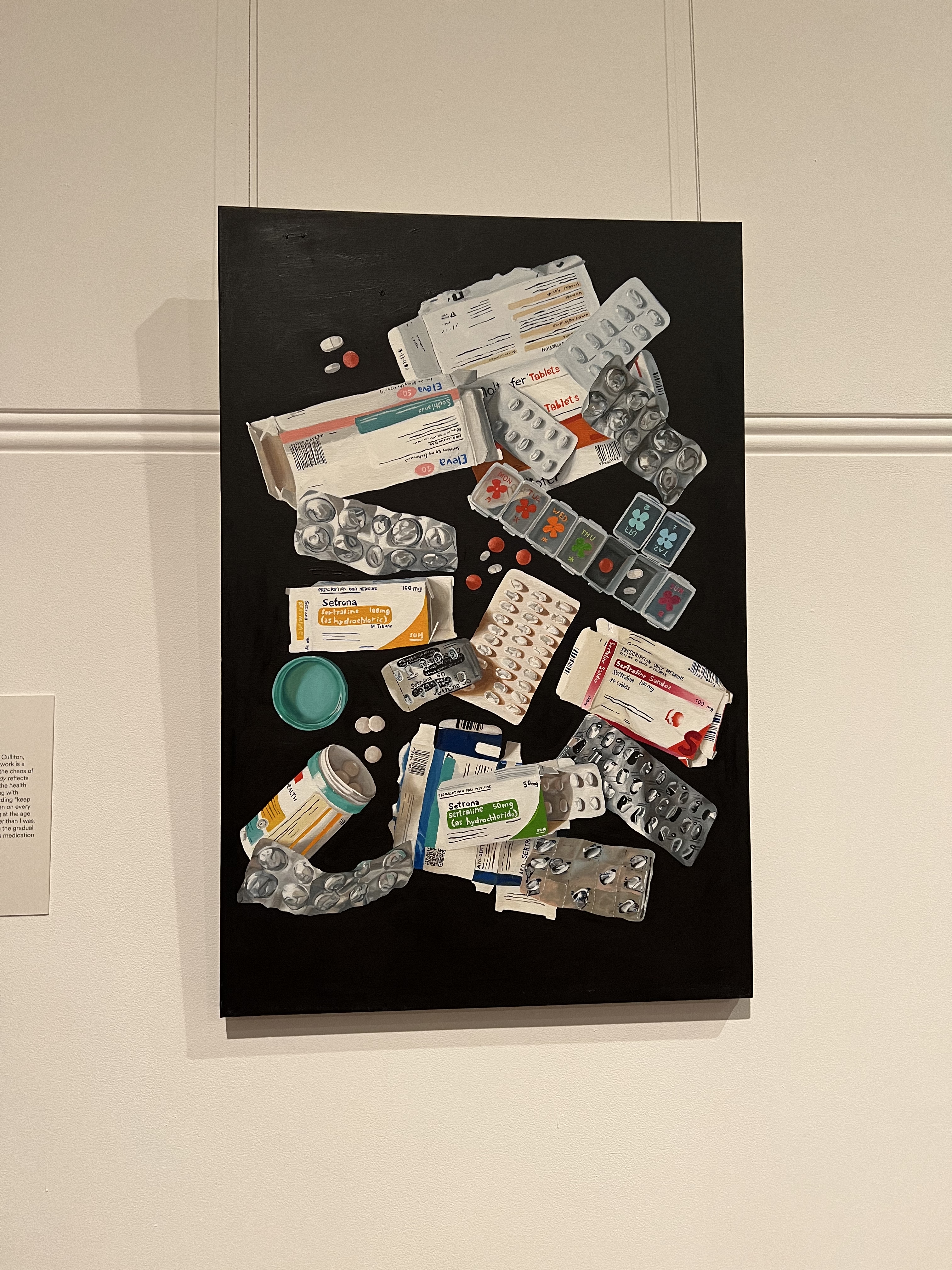
    In the end, I went with Candy by Finnity McHoull. It serves as a reflection on the healthcare system and how medication that states ‘keep out of reach of children is increasingly being prescribed to them. I want to directly quote the artist here from their artwork label, “the title of the artwork mirrors the gradual loss of childhood innocence as medication replaces candy.” Seriously powerful artwork.

    Candy

    Modern Relic X: In this Together

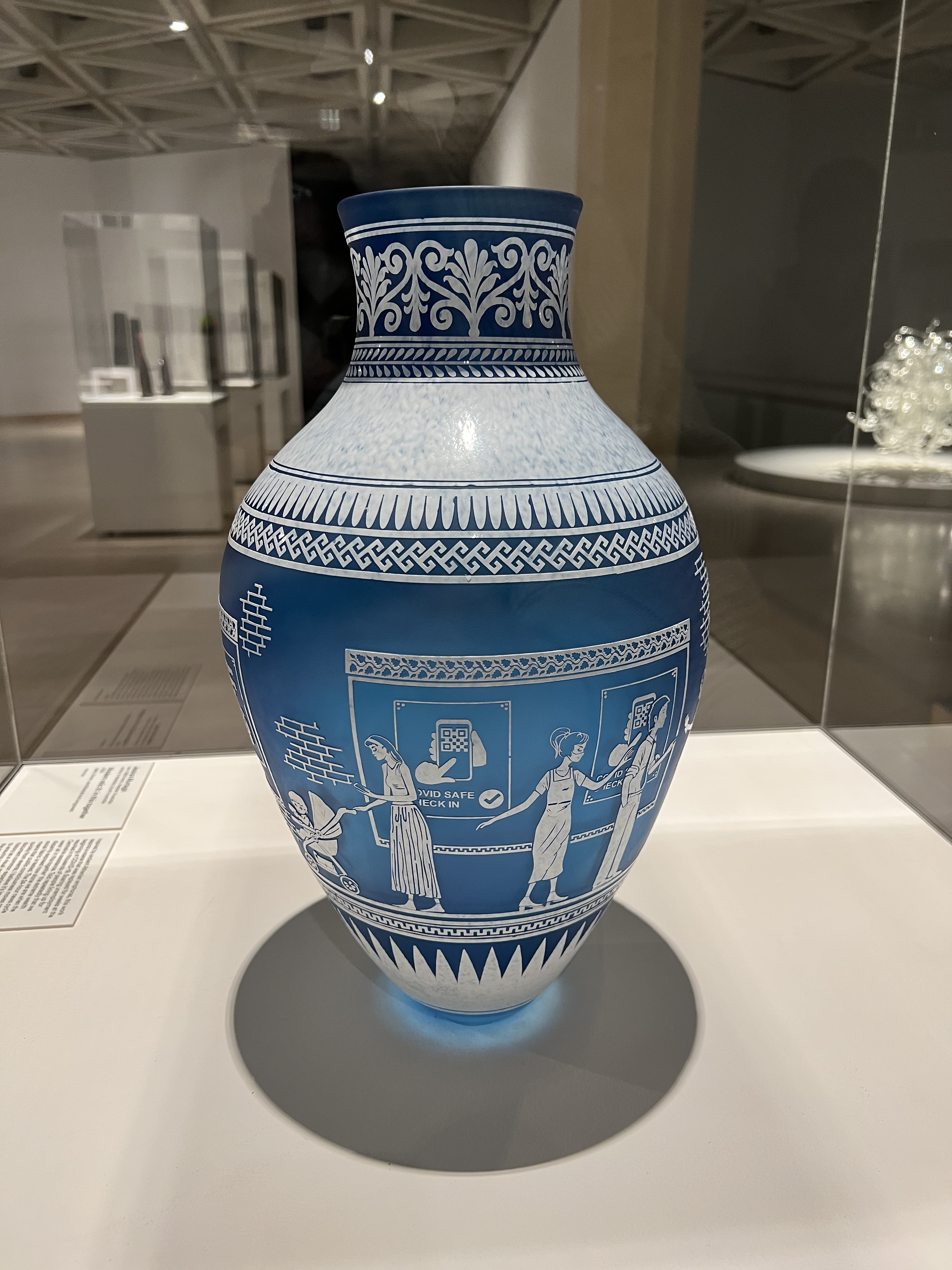
    As I was walking around the Gallery I saw an exhibition titled the Tom Malone Prize 2021. Within this exhibition is an artwork that is so close to being one of my favourite artworks I’ve ever seen. The exhibition contains works made from glass. The actual space is very easy to navigate with heaps of room between each artwork. Out of the corner of my eye, I saw this striking blue vase that looked like an ancient Greek vase. When I walked over, the imagery became more and more clear.

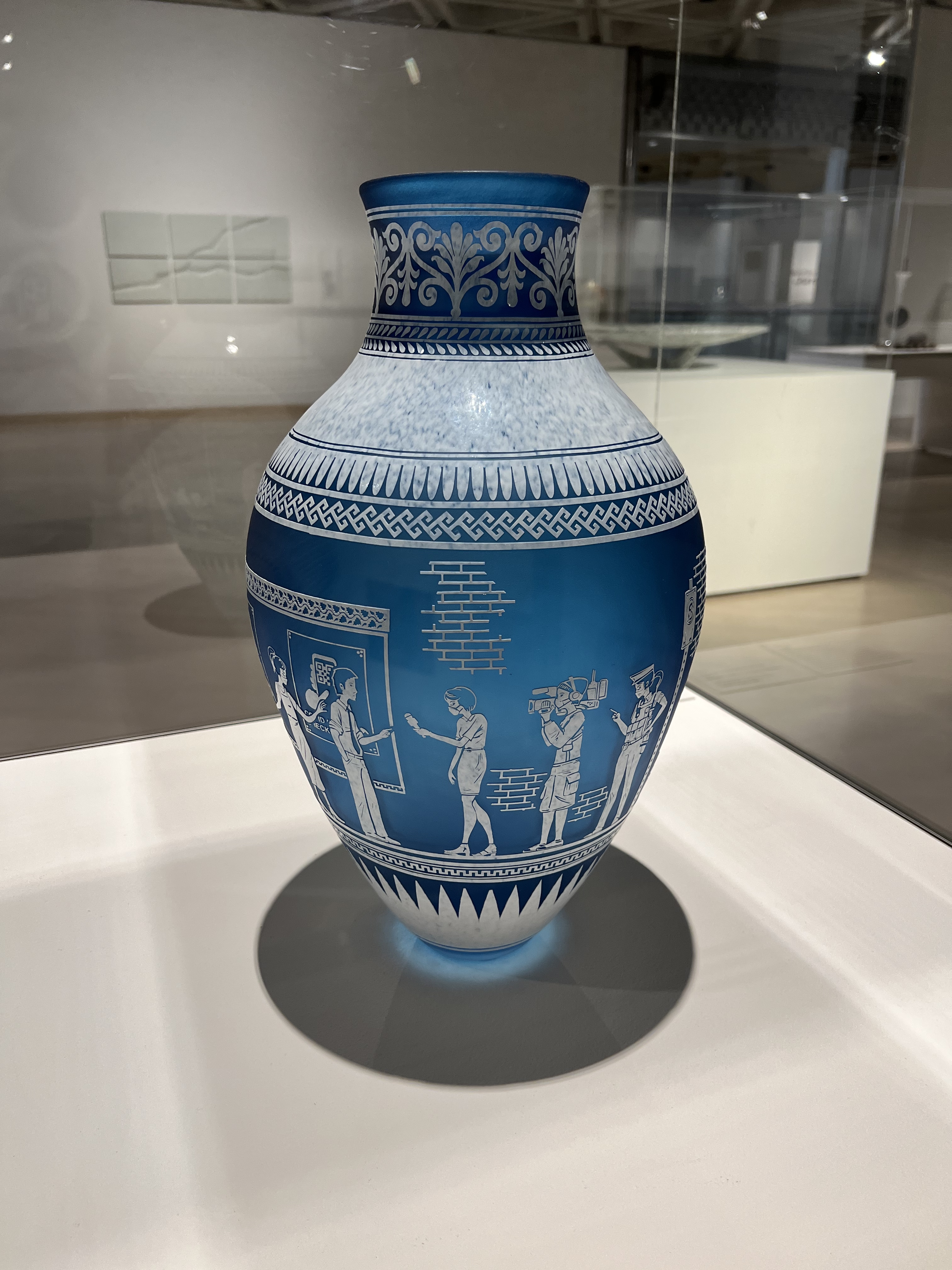
    The artist of this piece, Modern Relic X: In this Together, is Jessica Murtagh. According to the artist’s statement, the work is inspired by Athenian amphoras – in shape and design. The scene on the amphora relates to COVID-19 and is covered in imagery that we saw repeated each day. There are people lining up for Centrelink, ‘physical distance’ signs, news reporters interviewing people, and QR check-in codes. I’m going to include photographs of the amphora from all angles so you can see every bit of the imagery. The meaning behind this artwork is to document the shared experiences and events in history so that they are not forgotten. How it has been documented is truly stunning. There is something about this piece that really resonated with me. I think seeing the past two years of our lives so visually represented struck a chord. I hope that, in the future, this artwork is used when teaching about the pandemic and our responses to COVID-19.

    In this Together
    In this Together

    Visitor Information

    The Gallery is very close to the Museum so why not have a cultural day out. It is open from 10am to 5pm daily except Tuesdays. It is free but a small donation is encouraged. If you are there on a Friday around 1pm then make sure to join a guided tour run by one of their amazing volunteers!

  • Perth: WA Museum Boola Bardip

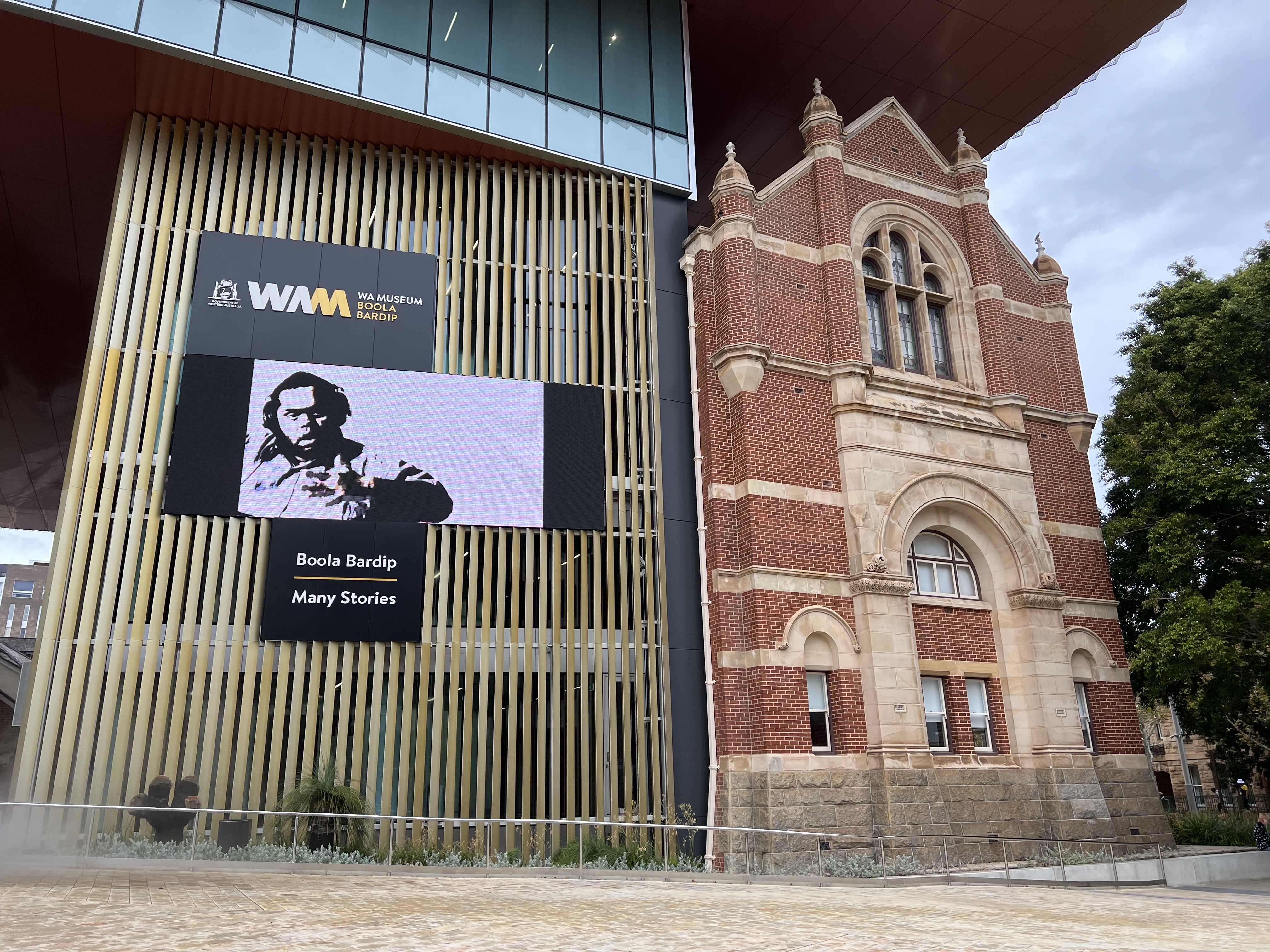
    Yesterday I visited both the WA Museum Boola Bardip and Art Gallery of Western Australia. They definitely deserve their own blog posts so I’m going to start with the Museum. The WA Museum Boola Bardip is one of six museums owned by the overarching Western Australia Museum network. The new building only opened in November 2020. I still remember watching the news during one of our lockdowns and seeing the grand opening. I didn’t really know what to expect from the Museum before visiting. All I knew was that I would be seeing dinosaurs and megafauna – and I was sold. The Museum houses that and so much more. It is massive – five levels of exhibitions! I spent a solid three hours walking around and could probably go back for another three hours before I leave. I managed to walk through all the exhibition spaces but only stopped to look at the objects/stories that caught my attention. The diversity of available, and inventive, interactives and exhibition display techniques is truly incredible. I can’t cover everything in this post, but I can hopefully cover enough to persuade you to visit. Here are my Top 15 (yes, I couldn’t narrow it down further) objects/interactives/other elements that I found, personally, particularly noteworthy. I will start the list at Level 3 then move down to the final highlight on the ground floor.

    1. Level 3 – Wild Life – Caution Sign

    Going to start with something a bit random here but it was the first thing I saw that made me really appreciate this museum. On entering the Wild Life permanent exhibition space, there is a little caution sign that states “visitors are advised that this gallery contains preserved animal specimens”. I’ve visited quite a few natural history museums in my life and I’ve never noticed a sign like this. I am used to seeing this when it comes to human remains, but it is really considerate to have something similar for animal specimens too. There are a couple of animal specimen photographs in this blog post so this is your FYI.

    Caution Sign

    2. Level 3 – Wild Life – Layout & Display

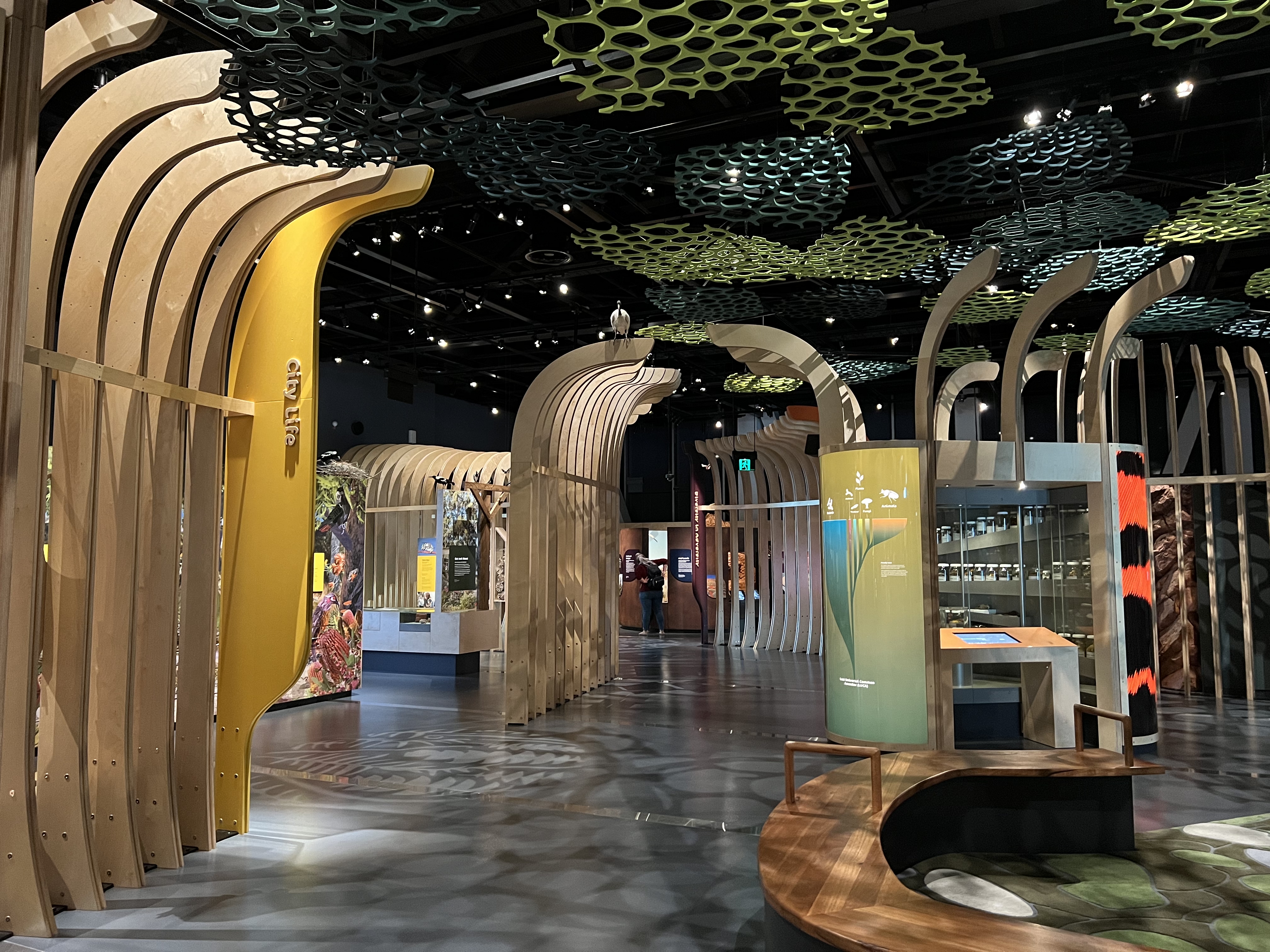
    A few of my ‘Top 15’ dot points will be from this particular exhibition because there was very little, if anything, I didn’t like about the Wild Life exhibition space. You can tell that a lot of thought and care has gone into its design. The space truly feels as though you are walking through nature while setting the tone of exploration and discovery. I love how each group of wildlife has its own little space that feels nice and contained. This is achieved through the pillars of wood you can see in the photographs that corner off separate areas and guide you through. There is a clear meaning behind everything and that just makes the space so easy to engage with and navigate. In terms of display, below is a photograph of a group of mushrooms. Integrating these clear glass display boxes into the woodwork of the exhibition really elevates the display and makes the mushrooms quite interesting to view.

    Exhibition Display Cases
    Exhibition Layout

    3. Level 3 – Wild Life – Touch the Numbat

    I am going to include a lot of interactives in this list so here is the first. Right next to a taxidermied numbat there is a ‘touch the numbat model’ interactive. COVID-19 does still exist (as well as all the fun winter germs we’re getting) so please remember to wash your hands or sanitise after touching a shared item. Other than that, touch models are a fantastic addition for those wanting a multi-sensory experience. They can also add so much in terms of accessibility so they’re great to see.

    Numbat Model

    4. Level 3 – Wild Life – Bat Portraits

    I honestly could have stayed on Level 3 all day – and I haven’t even mentioned the dinosaurs yet. But up next we have some bat portraits displayed next to bat skulls. What I love about this display is how the Museum has tried to glamorize the bats by having their images in these beautiful frames (photograph below). In total there are six bats. Next to each one is a short bio and the skull of the relevant bat. I just thought it was a really interesting way to display an animal that might not have a lot of fans.

    Bat Portraits

    5. Level 3 – Wild Life – Megalodan Tooth

    I don’t want to geek out too much but I have watched every shark week special on the Megalodon. Seeing a tooth from this giant shark was amazing and the Jaws-like replica also filled me with joy.

    Megalodon Tooth
    Megalodon

    6. Level 3 – Wild Life – Titanosauriform

    Dominating the space of Wild Life is the Titanosauriform model that is true to size. This, accompanied by a wall of dinosaur footprints, ticked all the boxes I had for a cool dinosaur exhibition. Who doesn’t love seeing dinosaurs in a museum? If you said me, I don’t love seeing dinosaurs in a museum, then just go to your nearest museum with dinosaurs and think about what you said.

    Titanosauriform

    7. Level 3 – Wild Life – Taxonomists at Work

    Nothing makes me feel more at home than seeing a wet specimen collection. Great interactive here teaching visitors all about how wet specimen collections are used and preserved. Then, behind the glass, are containers filled with all types of creatures and shells. The Museum has combined some open storage with educating visitors about this niche area.

    Taxonomists at Work

    8. Level 2 – Origins – Microplastics

    We are finally moving away from Level 3 down to the exhibition Origins on Level 2. Again, there is a lot to love about the layout and how seamlessly it feels to be guided around. The first highlight object for me in this exhibition is a tube filled with microplastics. Museums are not neutral and I appreciated seeing the Museum displaying the environmental impact of humans in a small but powerful way. It is next to all these incredibly ancient asteroids so really stands out as something to wander over and see.

    Microplastics

    9. Level 2 – Origins – Born of the Stars

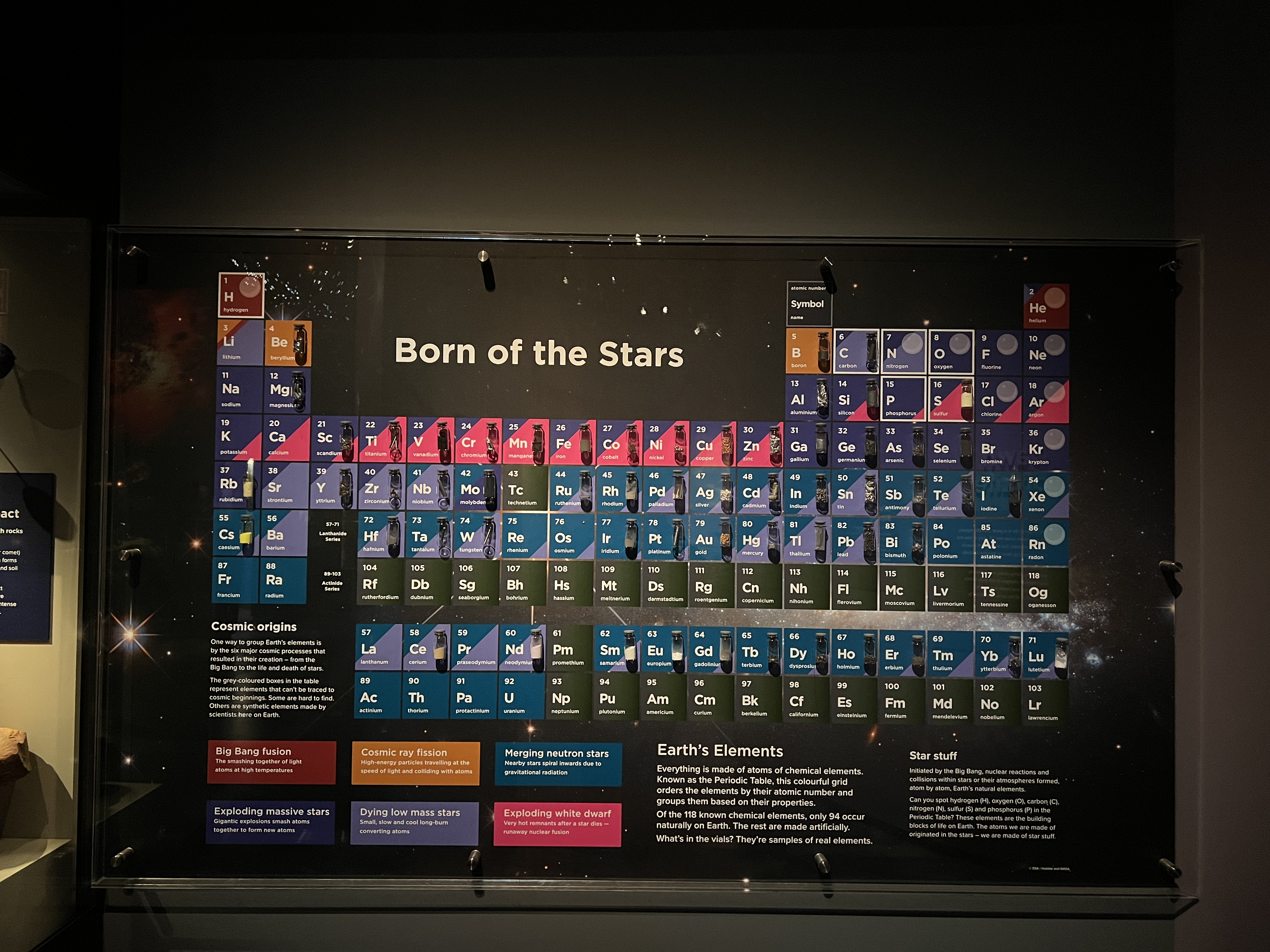
    Around the corner from the microplastics is a periodic table of elements. Not only does the table explain how the different elements are made, e.g. dying low mass stars and merging neutron stars, but it also has tiny bits of available elements on display. Really elevated the periodic table from didactic to exploratory.

    Periodic Table

    10. Level 2 – Origins – Minerals Room

    We are halfway through the list and I wanted to include this because it is aesthetically beautiful. The entrance to the minerals area has this gem-shaped walkway with close-up colourful images of minerals on the walls. Another design decision that really elevates the exhibition space!

    Minerals Room

    11. Level 1 – Reflections – Recipe Books

    Down now to Level 1 which has the exhibition Reflections. This exhibition is all about how different groups and identities have shaped Western Australia. Part of this story includes the sharing of food and traditions surrounding food. I thought it was a brilliant idea to have some cookbooks on display for people to actually borrow while they’re in the space and read. A mix of cuisines and a mix of old and new.

    Recipe Books

    12. Level 1 – Reflections – Barcode Scanner Interactive

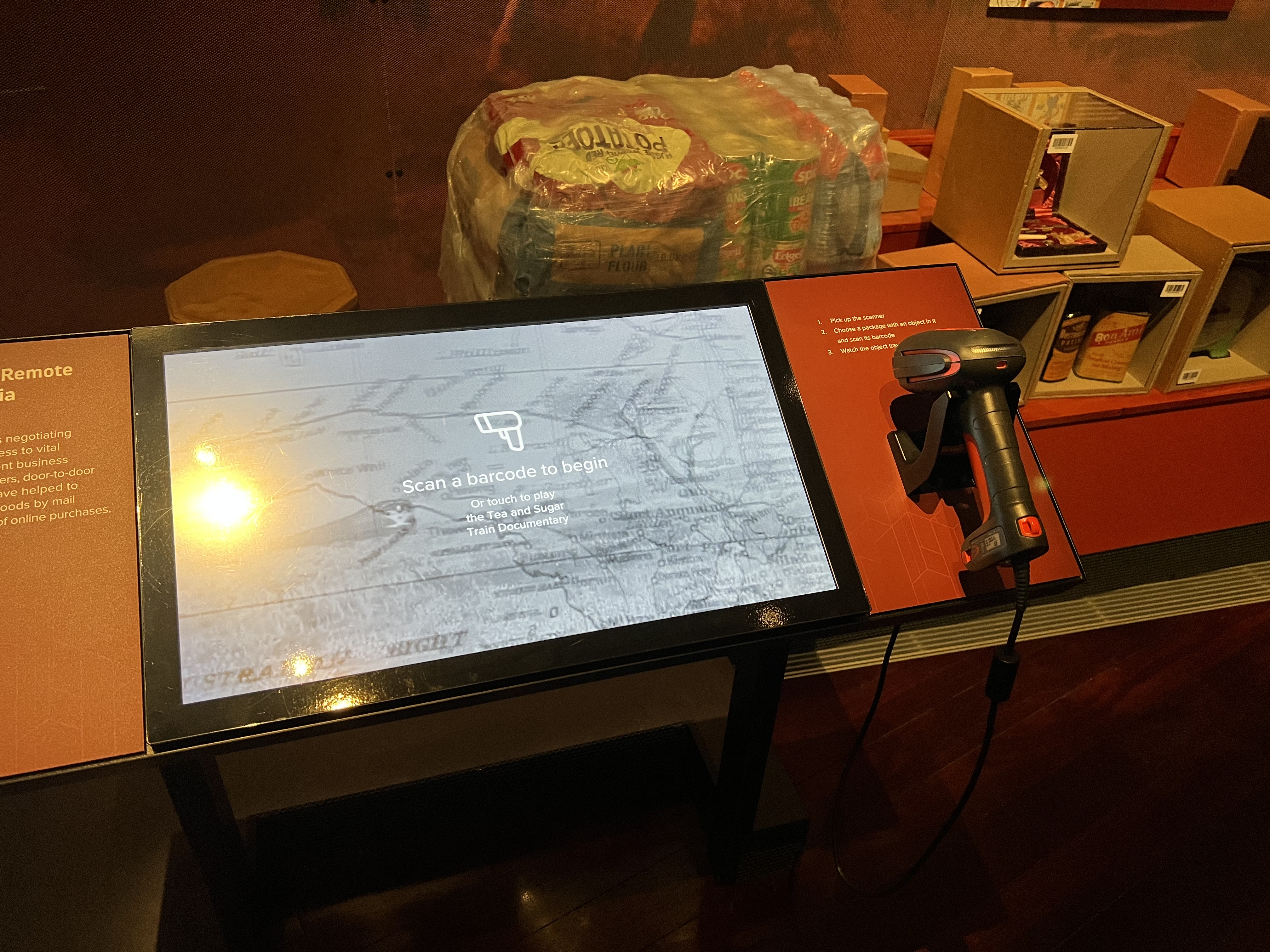
    I think this will be the last interactive I discuss but I really enjoyed playing with this one. On display are a few different food items that each have a barcode. By scanning the barcode, you are bringing the story of that particular food or ingredient to life on the interactive screen. Something so simple yet much more interactive than just touching a screen for more information.

    Barcode Scanner Interactive

    13. Level 1 – Reflections – Health & Medicine

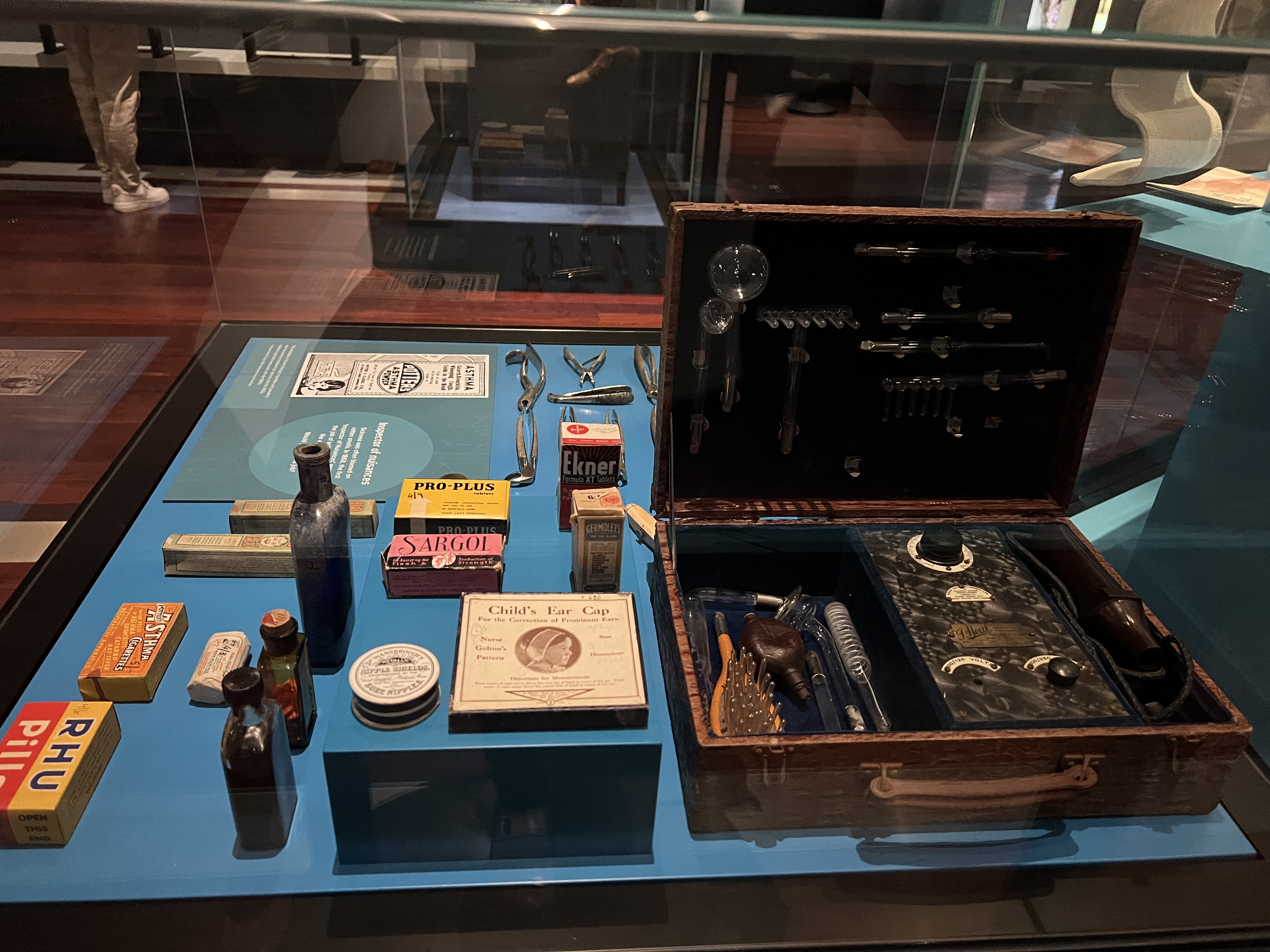
    Something truly terrifying to see – a neon slimmer kit that promised to do everything from increase hair growth to remove hemorrhoids. After a few lawsuits in America, the machine was discontinued. Absolutely for the best.

    Neon Slimmer Kit

    14. Ground Level – Ngalang Koort Boodja Wirn (Our Heart, Country, Spirit) – Textile Map

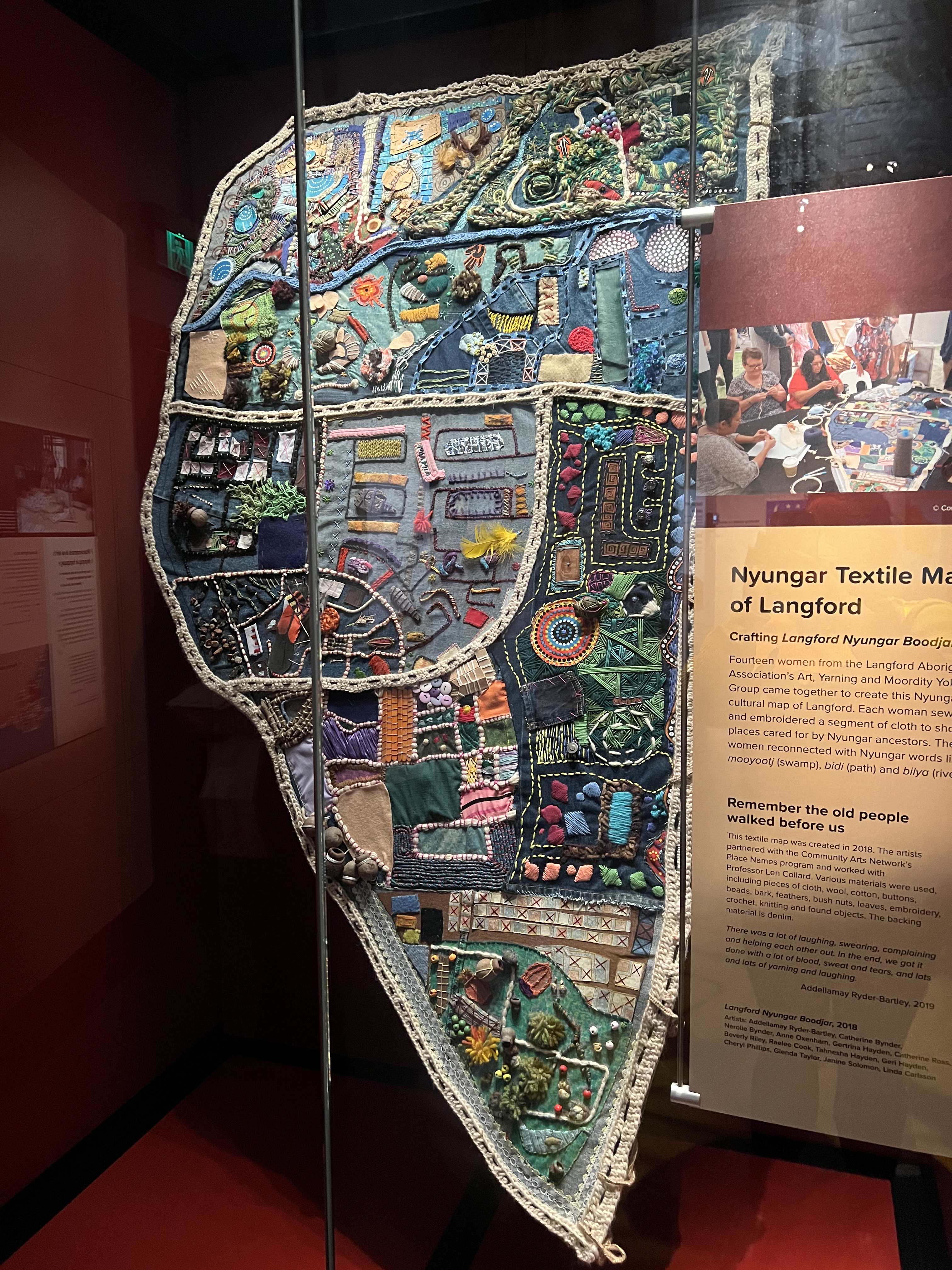
    I am skipping the Mezzanine Level and heading straight to the Ground Level. Before discussing this specific object, I will say that the integration of Indigenous knowledge is evident in almost every exhibition space I visited. Yes, there is a separate exhibition displaying the stories and objects of Aboriginal and Torres Strait Islander peoples of Western Australia. However, this is not confined to this space and actually runs throughout the whole museum. This textile map was created by fourteen women from the Langford Aboriginal Association’s Art, Yarning and Moordity Yoka Group in 2018. It is a Nyungar cultural map of Langford with each segment of cloth there to represent places cared for by their ancestors. It is such a wonderful object on display and you can truly feel the amount of care and love that went into its creation.

    Ngalang Koort Boodja Wirn

    15. Blending Old and New and the Gift Shop

    I didn’t want the gift shop to have its own number even though it is a really solid gift shop. I picked up a few things that I can’t wait to unwrap when I get home. So, included in this point is also the blending of old and new buildings. An amazing four heritage buildings have been restored and are included in the grounds of the Museum. These are the Old Gaol, Jubilee Building, original Art Gallery, and Hackett Hall. All except the last were built in the 19th century. How they are integrated with the new museum building is so wonderful to see and I’m glad this heritage has been saved!

    Old Building
    New Building

    Visitor Information

    I hope I have inspired you to visit the WA Museum Boola Bardip one day! It is within walking distance of the CBD and right next to Perth Central Train Station. Entrance is free and it is open daily between 9.30am and 5pm. The entire Museum is accessible.
  • Perth: Kings Park and Botanic Gardens

    This year the Australian Museums and Galleries Association national conference is being held in Perth. I had to take this opportunity to visit Western Australia and visit some amazing cultural heritage and institutions. I haven’t left my home state of Queensland for over two years so this is going to be an extra special trip. Yesterday was my first full day in Perth. To start, I went on a walking tour of the CBD and saw so many incredible heritage buildings and laneways filled with art. Although it rained a bit in the morning, the sun came out in the afternoon which encouraged me to head to Kings Park and Botanic Gardens. I love a good botanic garden and this one certainly ticked every box and then some. I’m going to start this post with a brief history of the Garden and then focus on three main areas: Banksia Garden, Conservation Garden, and Lotterywest Federation Walkway. Overall, it was a truly wonderful way to spend the afternoon in Perth!

    History & Aim

    Kings Park and Botanic Garden is located on Mount Eliza, extremely close to Perth’s CBD. It offers some pretty spectacular views of Perth – especially on a day that is nice and sunny. The land that the Park and Garden now occupy belongs to the Noongar Indigenous people whose history can be traced back at least 40 000 years. There is a lot of interpretive signage throughout the Garden that tells their story and their connections to the plants on display.

    The Garden officially opened on 4 October 1965, with the aim of cultivating and displaying the flora of Western Australia. There is a nursery in the Garden used for research trials and propagation of new flora. In the Garden, you can find around 3 000 species of native flora including the State’s emblem, the Kangaroo Paw. It’s also home to the State’s War Memorial and eternal flame that are situated at the entrance to the Garden. Also at the entrance, you will find the sculpture ‘Symbiotica’ created by Paul Johnson and Gail Mason in 2016. It is a stunning sculpture that stands 8m high and is meant to represent the relationship between plants and insects. It mostly consists of aluminium panels that have seed patterns laser cut onto the surface.

    View Towards Perth
    Kangaroo Paw
    Garden Shrub

    The layout of the park consists of lots of walkways, benches, and places to just stop and relax. The flora is grouped by regions in Western Australia or by taxonomic groupings. Regions represented include Wheatbelt, Goldfields, Stirling Ranges, Rottnest Island, and the Kimberley. One of my favourite areas was the Conservation Garden which I’ll talk about later.

    Banksia Garden

    I am going to start with my favourite area, the Banksia Garden. I stumbled across this while walking to the Federation Walkway and spent about half an hour just wandering through, reading all the signs. I’ll take this opportunity to say that the interpretive panels in the Garden are fantastic. Usually bright and colourful so you don’t miss them and many have original artworks from Western Australian artists. Speaking of artworks, there are also some beautiful acid-washed mosaic pavements by artist Philippa O’Brien in the Banksia Garden. Sitting on these pavements, you’ll find some benches which I only discovered through reading the website are made from salvaged banksia timber.

    Banksia Garden Mural

    Banksia are native to Australia. Out of the 76 species that exist, 62 are endemic to Western Australia. My favourite Banksia was the Menzies’ Banksia. It also had, in my opinion, the best interpretive panel in this area. Referred to as ‘the jewel of kings park’ the Menzies’ Banksia is the emblem for the Garden and an absolutely stunning flower. I’m going to include an image of the interpretive panel so you can see the artworks by Philippa Nikulinsky and truly appreciate the flower’s beauty. What caught my attention with this Banksia was the orange at the bottom and pink at the top. I was so glad to see one in full bloom!

    Banksia Sign
    Menzies’ Banksia

    Conservation Garden

    Another area I spent a lot of time exploring was the Conservation Garden. There are approximately 400 species of endangered plants here grouped according to their region. Again, there are great interpretive panels that, in this case, explain the conservation rating system for these plants and why they have been included in this garden. According to the sign, this area only contains Declared Rare Flora – that is plants which are considered critically endangered, endangered, or vulnerable. Amazing work is being done at the Garden using DNA analysis and tissue culture to help guide these plants away from extinction.

    Conservation Codes

    I had a few favourite plants in this area but I only took a photo of Hookpoint Poison. See below.

    Hookpoint Poison

    LotteryWest Federation Walkway

    Last, but not least, we have the LotteryWest Federation Walkway. This is a treetop walk with glass walls so you can see out through the side and over the Garden. You also get some great views of South Perth and the Swan River. I really enjoyed walking across this bridge and seeing the Garden from above. It’s always nice to see things from a different perspective and I think, for me, it made me very aware of just how large the Garden is and the diversity of plants and trees contained within.

    Swan River

    Visiting

    If you are heading to Perth then definitely visit the Garden. Take a picnic, and enjoy a sunny afternoon surrounded by nature. The Garden is open 24 hours a day and is easily accessed by a free ‘Blue CAT’ bus you can catch from Perth’s CBD.

    Entry to the Garden is free and it is quite accessible. Wheelchair access is available in most buildings and in BBQ and parkland precincts.
    Check their website before you visit as there are a lot of free events, festivals, etc!

  • MuseumNext Digital Learning Summit

    I’ve been looking for an opportunity to post about this conference but in light of ‘gestures to everything’ haven’t really found the time or headspace to do so. Now I’m at the start of an extremely busy but productive and (hopefully) fun week. I feel inspired to take a moment and reflect on this conference because there were some great themes discussed surrounding museums and digital education programs. I was especially excited for this conference for two main reasons. Firstly, some of my favourite presentations at previous MuseumNext conferences have been regarding education. Secondly, our Museum started developing a digital education program in 2021 to be rolled out in 2022 so I was interested in any tips and tricks. I am going to provide a recap of the three days using the notes I took during the conference in October last year. I tried to write down the main points from each talk and I’d like to share some of my highlights.

    Source: MuseumNext Digital Learning Summit Website

    Day One

    A main theme of the conference was collaboration. More specifically, collaboration between museum workers and teachers/schools in order to produce accessible and useful digital content. There were quite a few talks that emphasised this as a necessity. Although something quite obvious, it was still excellent to hear about how that collaboration has happened and what worked/didn’t work.

    The first presentation of the day by René van Blerk and Sarah Broekhoven from the Van Gogh Museum spoke to this theme. By developing a digital education plan that both improved access and increased awareness amongst teachers, the Museum was able to maintain its outreach during the pandemic and attract new audiences. They also raised another important theme of keeping things interactive where possible. Rather than programs that can be downloaded and watched, running live sessions where students can interact with the presenter and each other can often be more beneficial. The theme of accessibility was another significant one addressed and left me wondering how truly accessible are digital programs? Yes, they are online and can be reached by a far larger audience than those who can visit in-person, but how truly accessible are they? There are still barriers in place for schools and a few of the subsequent presentations touched on this issue. For example, there was a presentation on day three that discussed introducing a hybrid model of digital (ish) engagement sending resources and education objects to schools who weren’t able to dial in digitally.

    Later on in the day we heard from Sarah-Jane Harknett and Kate Noble from University of Cambridge Museums and Fitzwilliam Museum respectively. This talk was interesting in that it delved into teacher professional development rather than education programs. The presenters held a live digital session for teachers in order to learn what they wanted from a digital program. Ideas of cross-curricular opportunities, creative inspiration and working with experts were all put forward by teachers participating. It sounded like a fantastic opportunity to collaborate.

    To finish my recap of day one, I want to briefly mention two talks – one from Leena Svinhufvud at Design Museum Helsinki and the wonderfully titled ‘Digital is not the gateway drug you’re looking for’ by John Coburn and Rachel Briscoe at the wild Museum and Fast Familiar respectively. These talks offered two different ways to approach digital which I found quite refreshing. To digress slightly, what was great about this conference was the diversity of talks offering more than one best practice model for running a digital program. The emphasis on ‘who is your audience’ and ‘what do they want’ was overarching, meaning there was no right or wrong approach to integrating digital. For Svinhufvud, running a program for volunteers to digitally engage with objects and catalogue new material for an exhibition attracted a wide and interested audience. On the other hand, Coburn and Briscoe took a different approach centering people and not objects in their digital programs. Although they used objects to start conversations, the emphasis was on peer-to-peer discussions and not on the object itself.

    Day Two

    Day two continued with presentations containing a lot of the same themes raised in day one. The second talk by Angela May from the Birmingham Museum of Art focused on how digital can be used to reach beyond the physical confines of your museum in a pretty dependable and accessible way. Again, they spoke to the theme of collaboration, consulting with teachers to ensure the museum’s programs met needs and expectations.

    I also enjoyed the presentation by Stephanie Palade from the Museum of Contemporary Art which was a great how-to guide for initially setting up a digital program. Being aware of your parameters and actually drawing a distinction between onsite and digital programming was great advice. For the latter, rather than just replicating your onsite program online, it is advisable to have a digital-first strategy (or something similar) to distinguish what is needed for a digital audience/program and how this is different to an in-person audience.

    Building on from the previous day’s theme of interactive, we had threads of the theme participation running throughout the presentations. In particular, the talk by Caitlin McMillan from Connected Learning Centre looked at how to develop a digital program where students can take (to an extent) control and direct their own learning guided by different interests and research. By conducting student-led research into a particular historical individual buried in Westminster Abbey, students could gain ownership of their project while still engaging with a heritage place. Last but not least, we had some great presentations emphasising the need for allocating resources to building a quality digital space that can increase accessibility and continue operating for years to come.

    Day Three

    For the final day of the conference, I want to share the learnings from Bridget Hanna’s talk from Museums Victoria. Hanna spoke to five principles of co-creating something digitally meaningful. These were interconnectedness through deep listening, collaboration, learn + reflect, empower innovation, and share a story. I particularly liked the addition of the final principle as who doesn’t love to share or listen to an interesting story. These five principles are great to remember if embarking on something digital.

    The other talks from day three all linked back to the core themes of collaboration, accessibility, being interactive and participation. Keeping your audience, as well as your goals and vision, at the centre of a digital experience will mean a more successful program than simply copying and pasting something already available.

    Final Thoughts

    Overall, this was a very enjoyable conference with many ‘take-away’ learnings and ideas. It has been such a great opportunity to join MuseumNext conferences digitally and be exposed to a whole new international forum. Seeing how museums around the world are tackling common issues and shared goals/visions is always inspiring and a great way to keep up-to-date.

    Cover image: https://www.culture-connect.net/events/2021/10/18/museumnextdigitallearning

  • Brisbane: Museum of Brisbane

    Last night, I had the wonderful opportunity to visit the Museum of Brisbane’s (MoB) new exhibition, City in the Sun, with the South East Queensland Registrars Network. We were so fortunate to have a Curator-led tour through the exhibition presented by Miranda Hines. MoB is a wonderful museum in the heart of Brisbane, located in our City Hall. Rotating exhibitions tell the story of Brisbane from a diversity of perspectives. City in the Sun is one of the newest exhibitions held by the Museum and it will be the focus of this blog post.

    City in the Sun

    The aim of this exhibition is to ‘uncover and reimagine Queensland’s subtropical image.’ Queensland is often depicted as a gateway to the tropics, overflowing with pineapples, frangipanis, and mangoes. According to the exhibition’s introductory panel, the image of Brisbane, in particular, as a warm and humid tropical climate was first utilized in the early 20th century. This was by organizations such as the Queensland Government Tourist Bureau to promote the city to the world. Contemporary artworks and historical images work together in the exhibition to both challenge visitors and spark their imaginations.

    Combining the impact of migration, tourism, climate, environment and geographical location, visitors are encouraged to think about this image of Queensland and whether or not it continues to be suitable. Visitors are also asked to consider who is missing from these images – what depiction of Queensland is absent. This is something that the contemporary artists responded to in order to create their artworks and an image of Queensland that’s more reflective of our diversity.

    The mix of contemporary commissioned artworks and historical film/imagery strikes a nice balance as you feel you are walking into a timeline that’s not strictly chronological but invites exploration. The contemporary pieces are there to provide commentary on the historical imagery and serve new interpretations of the State and its broader portrayal.

    Before selecting a few of my favourite works, I want to start with a brief overview of the exhibition.

    Overview of Exhibition

    As soon as you enter the exhibition you are greeted by the introductory panel on a bright yellow wall. This wraps around to a giant screen showing a film about Brisbane released in 1954 called ‘Brisbane: City in the Sun’. If you have time, watch the entire film from start to finish. It is a fantastic time capsule of what the city looked like in the past!

    The rest of the exhibition is quite spaced out with one large central room and a smaller room at the back. There is no correct pathway through the exhibition. When I first entered the space I just walked over to anything that caught my eye. The first two objects I was immediately drawn to are as follows:

    1. Scott Redford, Proposal for Gold Coast Public Sculpture, Pink Poodle 1, 2017
    If you’ve read any of my blog posts before, you’d know that I absolutely adore the retro, mid-century aesthetic. For this reason, as soon as I saw the pink poodle sign I had to learn more. This artwork is in reference to the Pink Poodle Motel that once operated in Surfers Paradise. Unfortunately, the motel was demolished in 2004 with its neon sign the only thing remaining. The finished sculpture would, according to Redford, sit on the highway between the Gold Coast and Brisbane notifying drivers that they are leaving the sunny vibrant Gold Coast for the more urban feel of Brisbane.

    2. Easton Pearson, Skalli Dress and Belt, 2013

    I love pineapples almost as much as the mid-century aesthetic. A couple of years ago now MoB received a huge donation from Dr Paul Eliadis creating the Easton Pearson Archive. For those unaware, Pamela Easton and Lydia Pearson launched their fashion label in 1998 while living in Brisbane. Their brand is known to have a certain ‘Brisbane-ness’ element to it, meaning the prints and designs always felt a bit tropical and exotic. This is a stunning dress and it’s one of the first objects you see when you enter the space.

    Before moving on to some other objects, I want to take a moment to talk about the round room in the centre of the main space. Inside this room is an installation. The outside is wrapped in a collage of historical Queensland images. Nestled amongst the images are some labels asking questions such as ‘who are these images for?’ and ‘who’s missing?’ The latter is particularly important as it discusses the White Australia Policy and how that impacted on creating an image of Queensland that was, above all else, Anglo-European.

    Other Works

    1. Samuel Tupou, Day at the Beach, 2021

    This is a fantastic work by Tupou who plays with pixels and patterns to create works that come more into focus the further away you stand. This specific work is based on a tourist brochure from the 1950s romanticising the poolside/seaside life. It has then been overlayed with a pattern inspired by the architecture of the Story Bridge.

    2. Sebastian Moody, Sunshine Psychology, 2021

    The large colour-changing neon sign spelling the words ‘sunshine psychology’ dominates a wall of the exhibition. Its hypnotic effect is meant to reflect how marketing works on people – pretty colours, shiny object kind of vibe. It is a commentary on how Brisbane, and I paraphrase from the exhibition label, has a claimed monopoly over the sun.

    3. Tracey Moffatt, First Jobs series, 1975-1978

    When I first saw these four works I thought they were beautiful and so full of pastel-coloured goodness. Then, when I read the label, I loved them even more. These four artworks depict the first jobs that Tracey Moffatt and her friends had in 1970s suburban Brisbane. They are archival prints that have been hand-coloured. The use of bright ‘candy’ colours is supposed to idealise the otherwise mundaneness of the jobs and reflects looking at the world through the, less cynical, eyes of your younger self.

    Conclusion

    There are, of course, so many more artworks to explore in this exhibition. I haven’t even mentioned the installation which shows your body heat rising from your hands. I do hope that you have the chance to visit and explore. The exhibition is open from Tuesday to Sunday between 10am and 5pm. Entry is free and both the Museum and exhibition are accessible.