• Ryman Auditorium

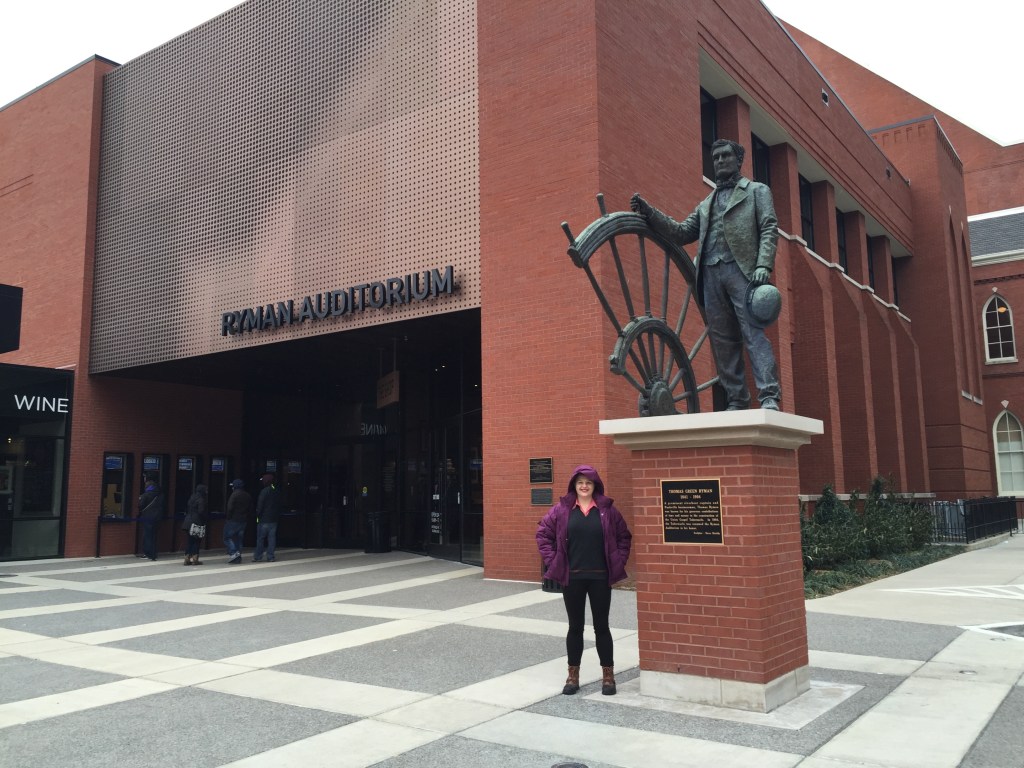
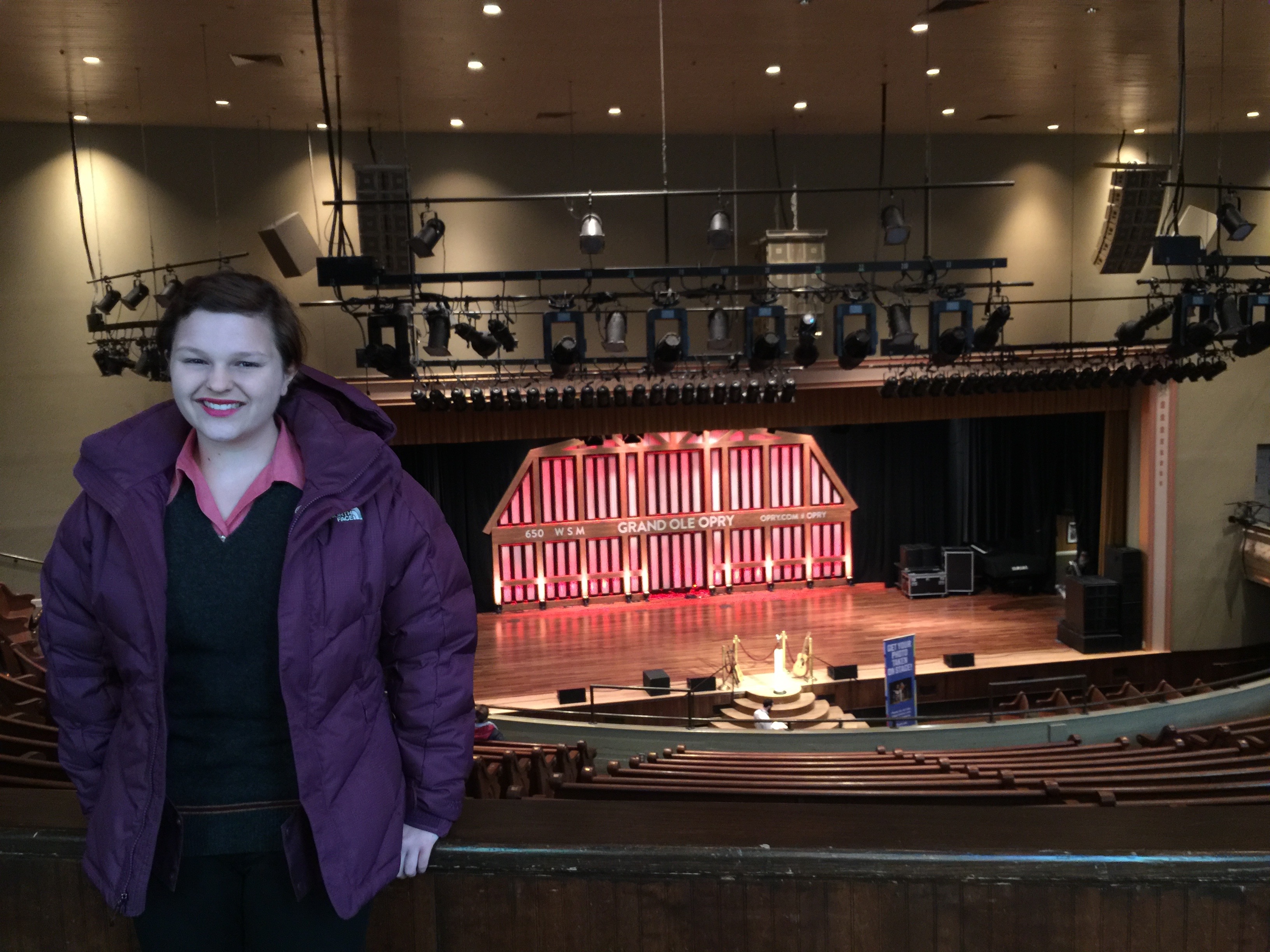
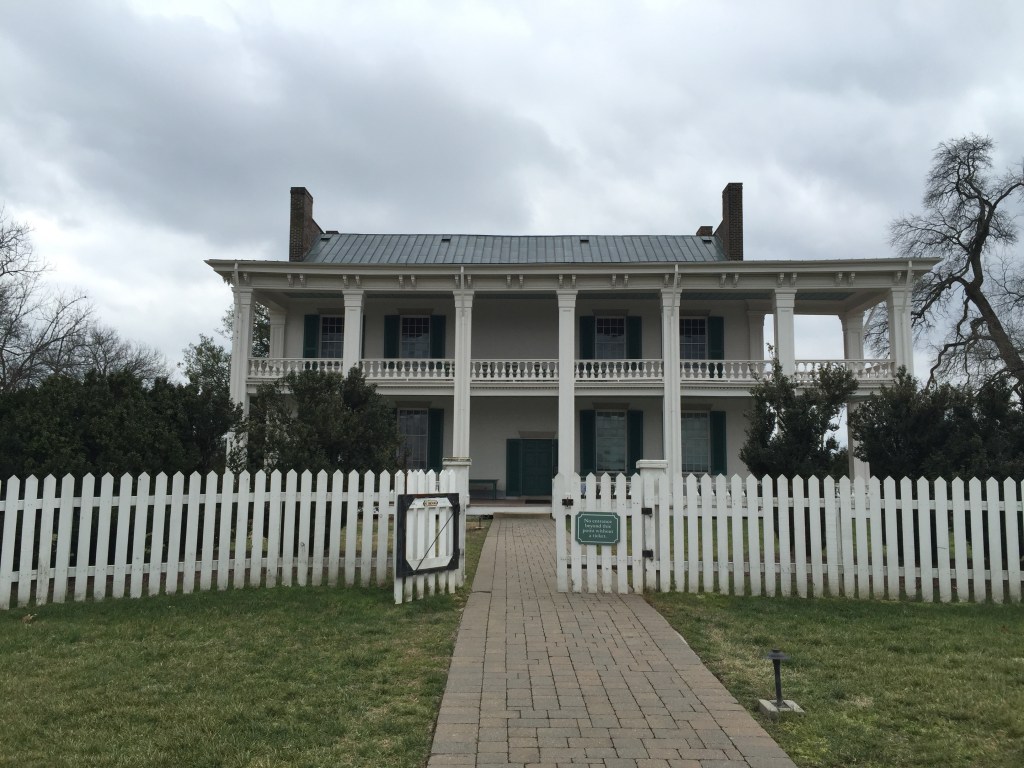
    Our first day in Nashville was filled with museums, snow, and amazing food. The first museum/heritage site on our itinerary was the Ryman Auditorium. Technically speaking it is a National Historic Landmark and has been since 2001.

    First a little history. Originally the Auditorium was the Union Gospel Tabernacle built in 1892 and funded by Mr Thomas Ryman. In 1906, Ryman died and the Tabernacle was re-named the Ryman Auditorium. It came under the ownership of Lula C. Naff until around the 1950s. From the 1940s until the 1970s it was the home of the Grand Ole Opry radio station. Between the 1970s and 1990s the building was uninhabited and eventually deteriorated. Finally, the building was renovated and restored to what it is today. That is oversimplifying what really is a fascinating history. For the sake of this post, it’s a start to get you interested.

    There are two tours you can take of the Auditorium – the self guided and the guided backstage. We opted for the self-guided. Both tours, however, begin with a short film that explains the history of the building. When it’s finished you are free to go forth and explore. It’s clear to see a lot of love and passion has gone in to restoring the Auditorium to its former glory. I loved the little display case explaining the conservation work that went on behind-the-scenes to uncover the original paint colour of the walls.

    IMG_4861
    Ryman Auditorium

    Right at the back of the first and second levels are display cases containing costumes worn by famous country music stars and some surprising objects. My personal favourite was a yellow and white Suffragette sash. In 1914 over 1 000 women delegates gathered in the Auditorium to further the suffrage cause hence why they have that particular object. Overall, it was great to see how restoration and conservation have worked together to save this piece of history.

    IMG_4866
    Ryman Auditorium

    Moving on to the second museum, the Country Music Hall of Fame and Museum. This museum is massive. There are two levels that trace the development of country music right from the beginning to now. The first exhibition we visited was on Sam Phillips, founder of Sun Records. Johnny Cash and Elvis Presley are just two of the big names who were signed to this label. The layout of the exhibition was easy to follow and there were interactive elements. For example, in the middle of the room is a sound booth where you can listen to famous songs released by Sun Records.

    I really enjoyed the permanent exhibition. The museum has a very impressive collection including 98% of all commercially released sound recordings prior to World War II and thousands of costumes. The museum’s archives are kept behind a glass wall and are in full view when you’re on the second level.

    Moving on to what exactly is on display. Basically the display cases trace the history of country music and the musicians who made this genre famous. There are some pretty spectacular costumes on display and too many guitars to count. The highlight object for me was on the first floor – Elvis’ gold-diamond-fishscale coated car. It’s a very nice car but something tells me it would not be roadworthy today.

    IMG_4941
    Ryman Auditorium

    What’s great about this museum is the amount of multimedia you have access to. Around every corner is a sound recording or movie. Considering it is a museum dedicated to country music I was hoping and expecting for this to be the case.

    It is a text heavy museum so trying to read everything will leave you quite fatigued. Your ticket is valid all day though so it might be wise to leave after one level for a break and come back to tackle the next. The text is worth reading if you have limited knowledge about country music (that’s me). If you’re not a big museum-text reader, you’ll still have a great time listening to the music and watching some classic vintage footage.

    Visit both museums to really get a sense of why Nashville is the Music City!
    IMG_4968
    Country Music Hall of Fame and Museum
  • Museums I Love

    Since today is Valentine’s Day I am going to share with you a ‘Top 5 Museums I Love’ list. Of course, this is entirely my personal opinion (just to make that clear!!). I hope to share another list soon with my top 5 heritage sites.

    5. Hunterian Museum, London/Wellcome Museum, London – http://www.hunterianmuseum.org/http://wellcomecollection.org/

    In fifth place is a tie between the Hunterian and Wellcome Museums in London. I could not decide on which I liked more so I’ve put them both in. Essentially, they are fantastic medical museums in the heart of London. The Hunterian displays the medical specimens of William Hunter, an 18th century anatomist and collector. The Wellcome also showcases the collection of an individual, Henry Wellcome, and contains an extensive education centre and frequently changing additional exhibitions. They both offer an excellent insight into 18th to 19th century mentalities surrounding health.

    4. National Museum of American History, Washington D.C. – http://americanhistory.si.edu/

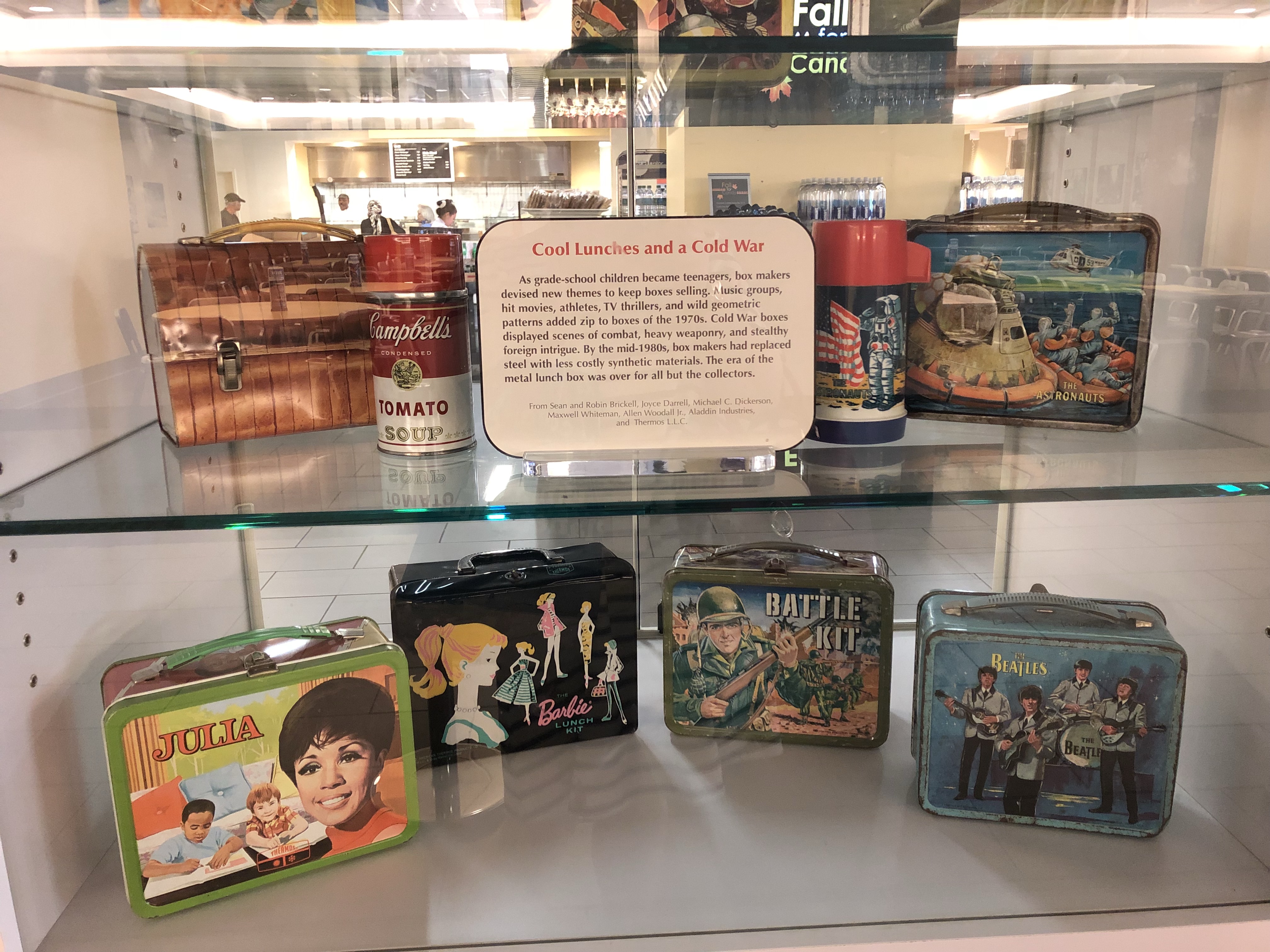
    Washington D.C. is the absolute epicentre of museums and memorials in America. The National Museum of American History offers a diverse slice of American history that is accessible to everyone. The best part is it’s completely free to wander around and has one of the most amazing gift shops. From Julia Child’s kitchen to the red ruby slippers of Oz you can experience a lot in the one building.

    img_1564
    National Museum of American History

    3. Viking Ship Museum, Roskilde (Denmark) – http://www.vikingeskibsmuseet.dk/en/

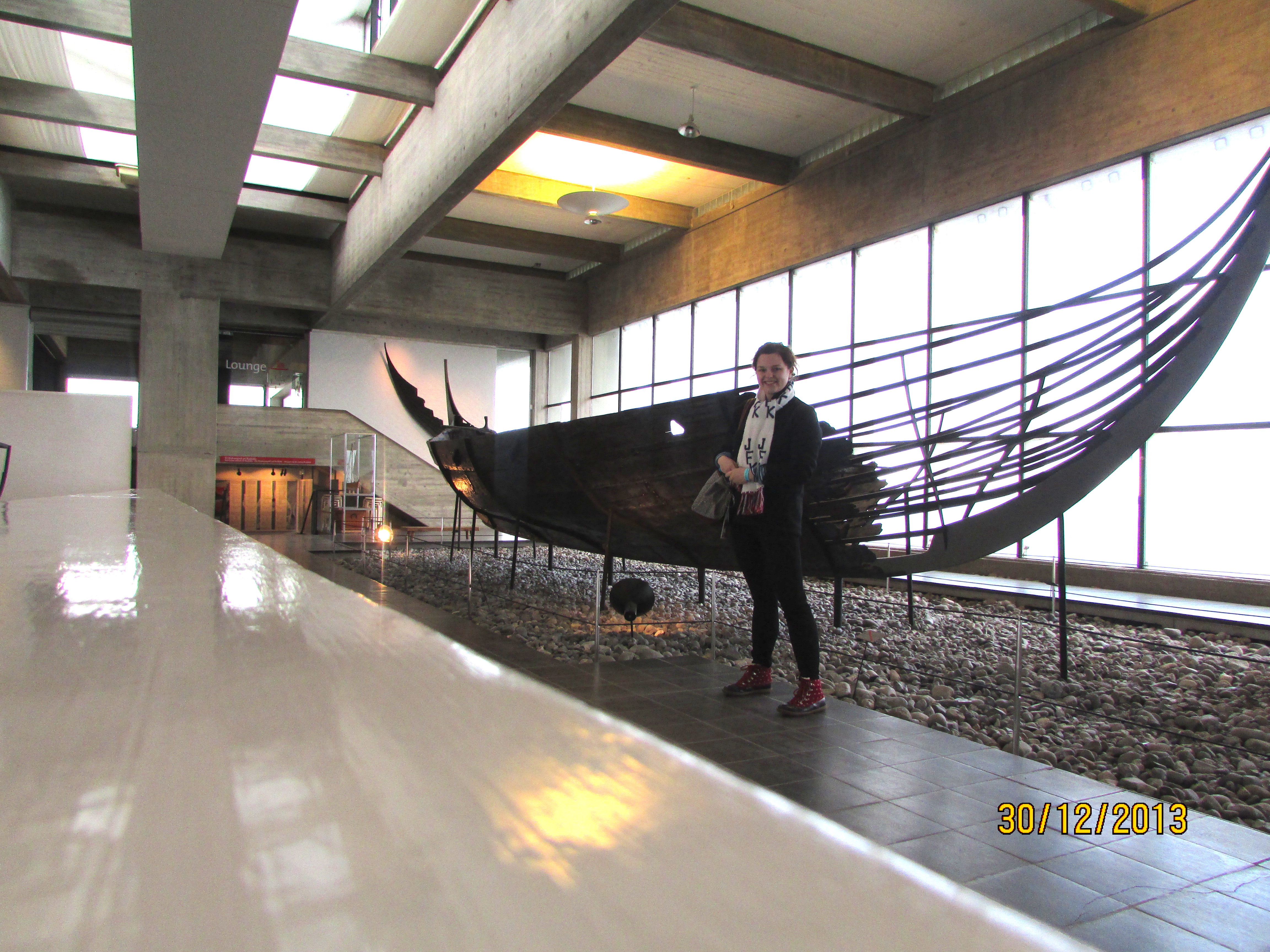
    In third place is the Viking Ship Museum in Roskilde Denmark. A bit of a hike from Copenhagen but well worth the journey. Inside you can find the remnants of actual Viking ships and a great permanent exhibition on the Vikings – explaining their way of life etc. What’s really cool about this museum is that it’s a living history museum. Right across the waterway you can find warehouses holding replica ships that will eventually sail.

    Me and Viking Ship
    Viking Ship Museum

    2. Pergamon Museum, Berlin – http://www.smb.museum/en/museums-and-institutions/pergamonmuseum/home.html

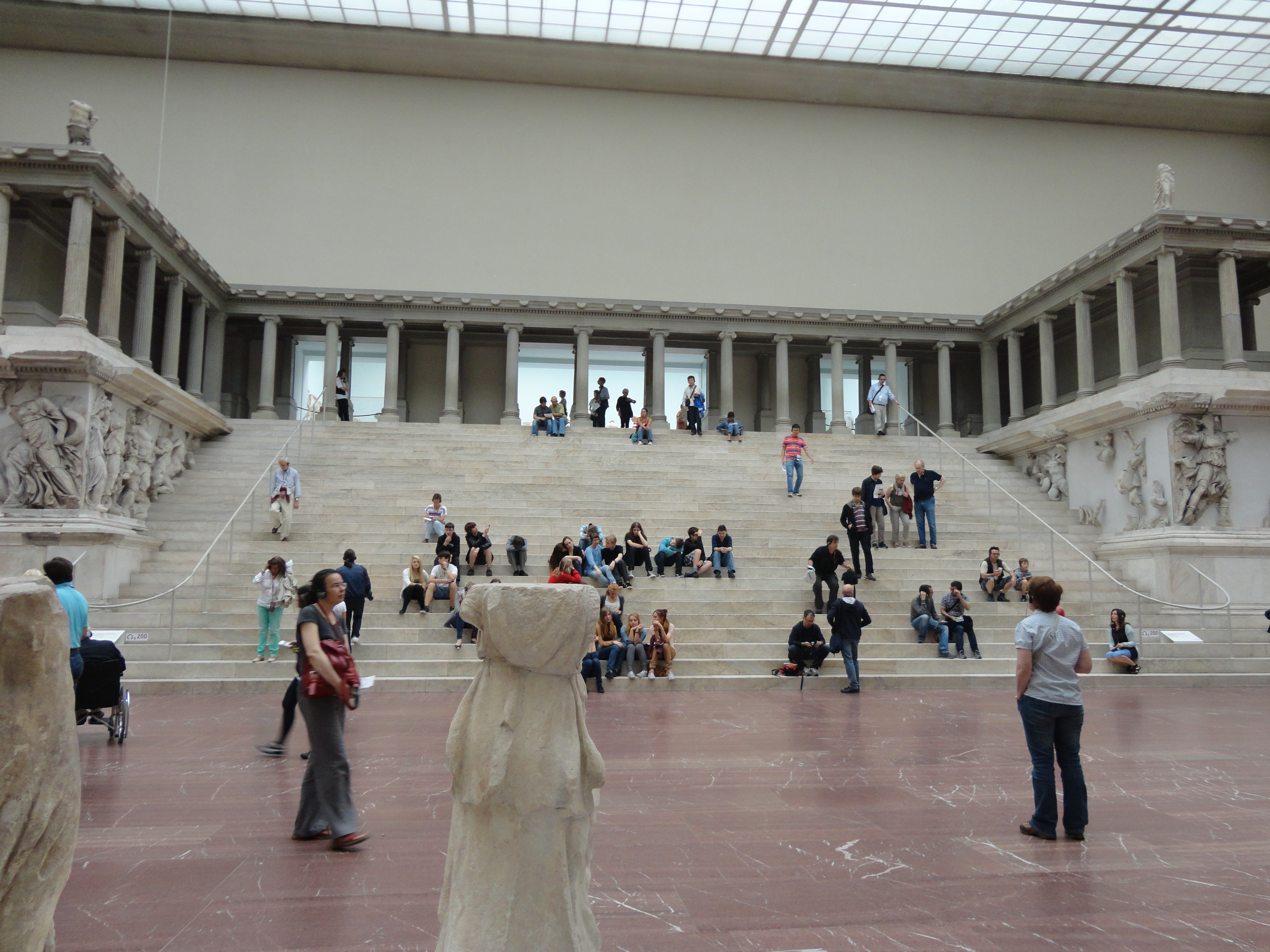
    If the phrase ‘Museum Island’ sounds like heaven to you then Berlin is the place to be. The shining star of the island is the Pergamon Museum containing the huge Pergamon Altar and a segment of the gates of Babylon. And that’s just the beginning. To quote a fantastic tour guide, “you cannot leave Berlin until you’ve visited the Pergamon”.

    Pergamon Alter 2
    Pergamon Museum

    1. National Museum of Anthropology (Museo Nacional de Antropología) – Mexico, City, Mexico – http://www.mna.inah.gob.mx/index.html

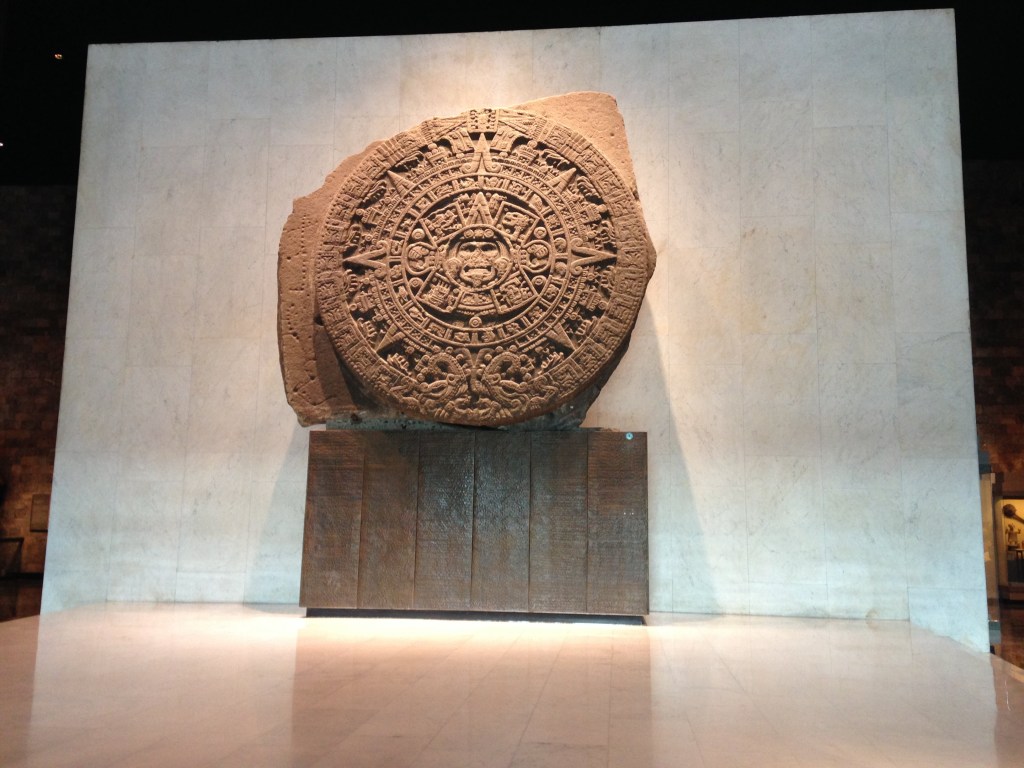
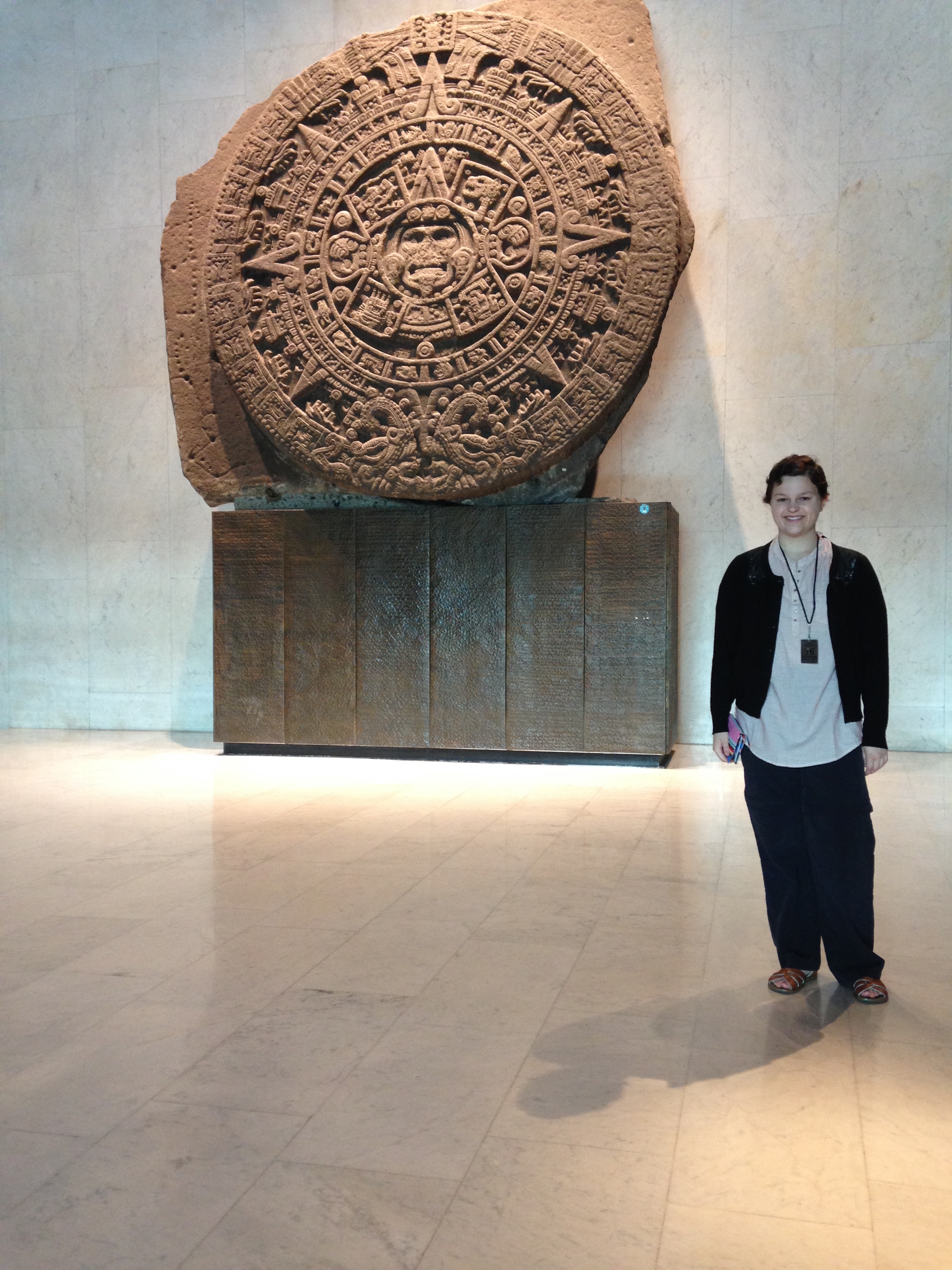
    In first place is the National Museum of Anthropology in Mexico. Everything about this museum is wonderful. From the physical architecture of the building to the thousands of objects on display you will not leave disappointed. The Aztec Calendar Stone is the most impressive object in the museum. Do not, however, miss the other rooms that are filled with information on the cultures of Mexico and the history of the country.

    IMG_2432
    Museo Nacional de Antropología
  • Vizcaya Museum and Gardens

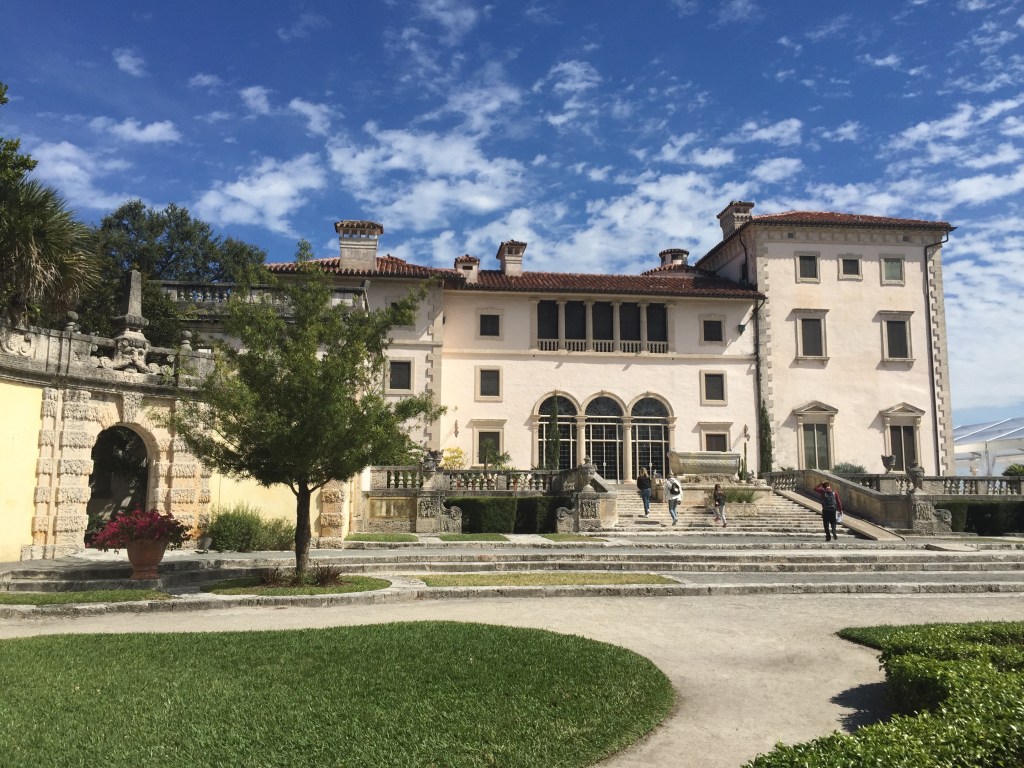
    Today we visited a very impressive living history museum called the Vizcaya Museum and Gardens. This museum transports you from Miami to Italy and even a little bit of Paris. It is a huge mansion built by James Deering in 1914 with construction finishing in 1916. The contents of the house were sourced by Deering and his friend Paul Chaflin from all over Europe. In one of the rooms there are even antiquities from Pompeii. If the house isn’t grand enough, the gardens are simply stunning. Fountains imported from Italy, hedge mazes, and a small garden theatre are just a few of the things on offer.

    Where to begin. Entering Vizcaya is an experience in itself. After walking through palm trees and mangroves you reach a small ticket office. If you have an hour and a bit I would definitely recommend the audio guide tour. It is great if you don’t want to rush through. After collecting the audio guide you walk a long pathway filled with marble statutes and fountains to the main entrance. Originally exposed to the elements, the entry is now enclosed in a glass case protecting the objects inside. There are around 32 stops on the audio guide that take you through the bedrooms, kitchen, courtyard, and living rooms of the house. The most interesting aspect of the house is how technologically-advanced it was for its time. There are vacuum cleaner ports on the floor, elevators, and even a dumbwaiter.

    IMG_4171
    Vizcaya Museum

    The furnishings of the house were as beautiful and grand as anything I’ve seen in Europe. What makes it more surprising is that it’s in Miami!

    IMG_4291
    Vizcaya Museum

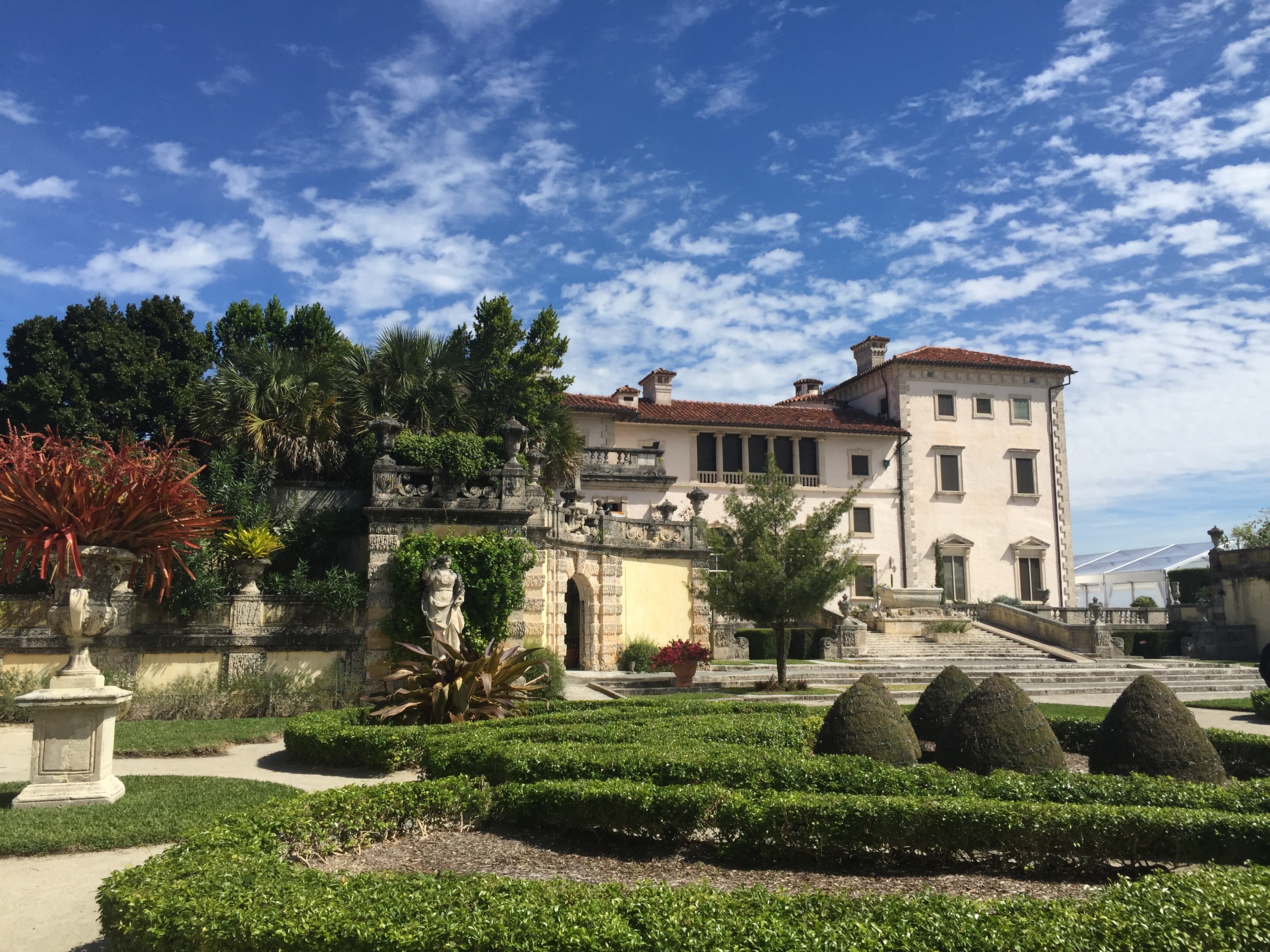
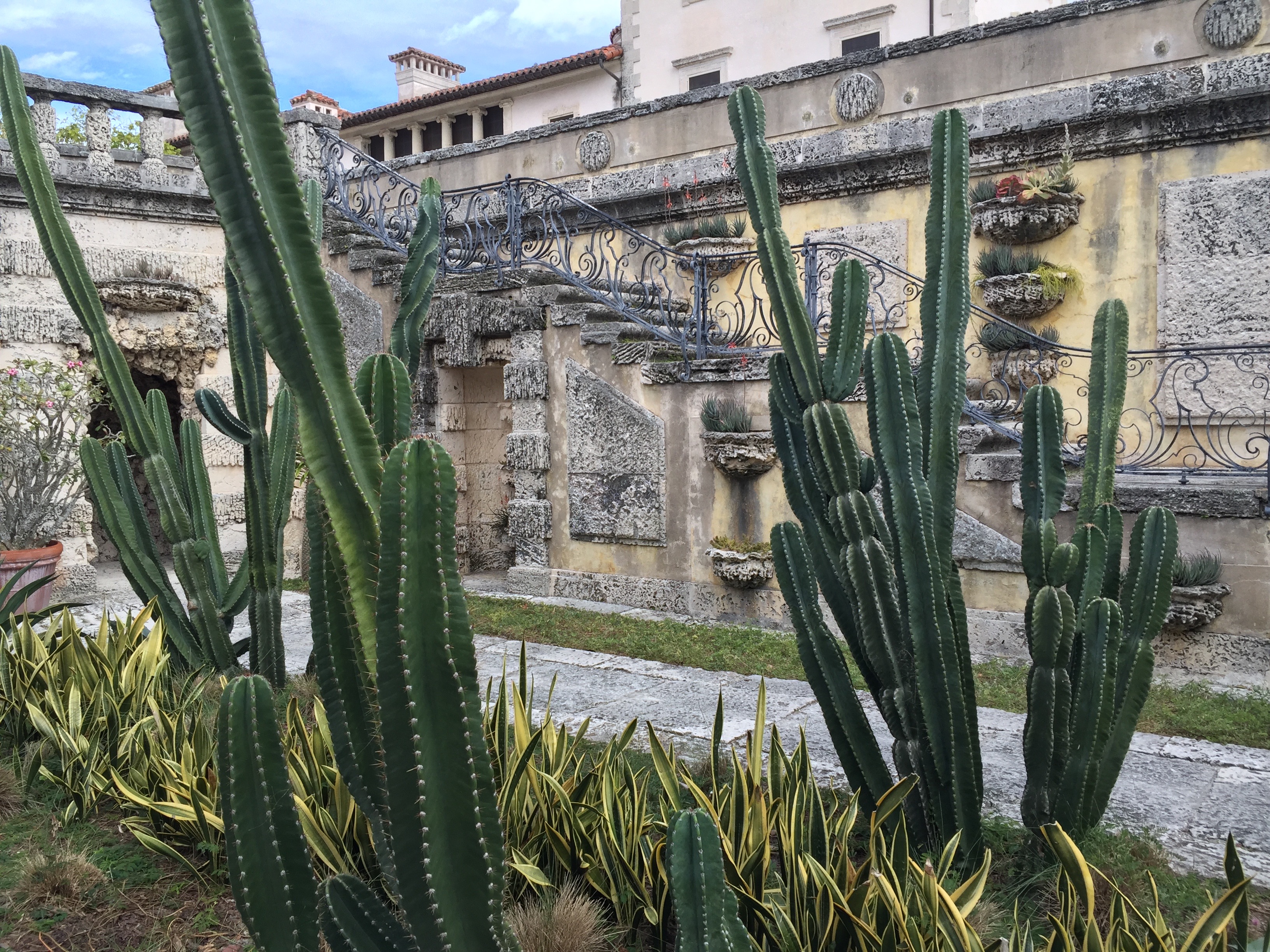
    After the one hour guided tour of the house we stepped outside into the gardens. They are jam-packed with small shell-covered caves, pergolas, marble statues, and fountains. It is an incredibly large garden to walk around so I recommend you take your time. Every aspect of it is worth seeing.

    IMG_4216
    Vizcaya Museum

    It is also worth noting that there are many methods of interpretation available. I’ve already mentioned the audio guide, however, there are labels in each of the rooms and guided tours that occur daily. The labels are text-heavy so I really recommend the audio guide tour!

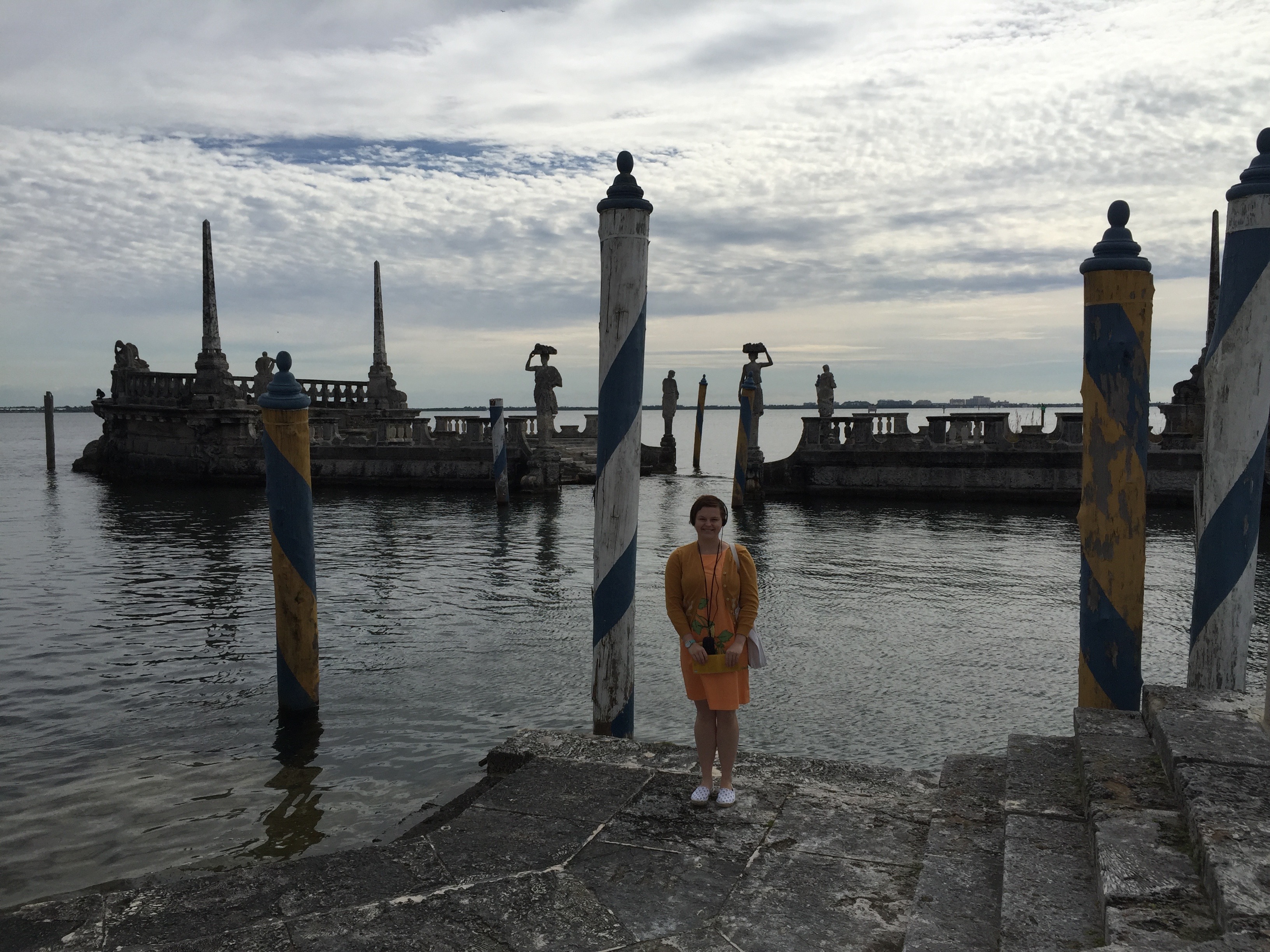
    The highlight of the entire museum for me was the front of the house on the bay and the gondola poles modeled on the ones in Venice. It is not difficult to see that Deering was an Italophile. It was a really lovely museum to escape to in Miami. Similar to Epcot and the World Showcase, I feel yet again like I have been transported to somewhere else in the world then beamed back. A lot of great preservation work was happening whilst we were there so I only hope the museum grows and preserves this unique piece of Italy in Miami.

    IMG_4230
    Vizcaya Museum
  • Wolfsonian Museum

    Right in the heart of the Art Deco district is the Wolfsonian Museum. It is an incredibly impressive structure. Originally, the building was utilized as a storehouse for the belongings of visitors who were leaving Miami in summer but returning the following winter. In 1986, the function of the building changed to become a museum. It’s mission was to “exhibit, document, and preserve the Mitchell Wolfson, Jr. Collection of Decorative and Propaganda Arts” (http://www.wolfsonian.org/about/museum-history). This mission continues to define the Wolfsonian. In 1997 the collection was donated to the Florida International University. These are just some fast facts to contextualize the museum.

    IMG_3635
    Wolfsonian

    First things first – the lobby and the elevator are very ornate. When you first enter the museum there is a stunning gold sculpture/mural on the back wall. This kind of decadence continues when you enter the lift that is mirrored on top with two stone lion head statues protruding from either side. The museum spreads over a few levels so you’ll get to see the lions a few times during your visit.

    IMG_3674
    Wolfsonian

    My favourite section outlined the history of Miami from Mangroves to Tourist Mecca. It’s pretty amazing to see photos of Miami back in the 1800s and compare them to what it looks like today. It is a very small display with one case in the middle and a chronological timeline on the back wall. The timeline is accompanied by photographs the most powerful being those of the aftermath of the 1926 hurricane. At the back of the exhibition is an iPad where you can geographically locate all the photographs on display on the map. You really get a sense of how rapidly Miami developed.

    The other highlight of the Wolfsonian was the exhibition Art and Design in the Modern Age. It was almost like a cabinet of curiosities, however, there were more thematic panels and object labels. The main purpose of this exhibition is to showcase highlights in the collection. You see everything from vacuum cleaners to Suffragette posters.

    Why this section particularly interested me was because there were objects from World Expositions. These included a deck of playing cards from the World’s Fair in St Louis USA and a beaded purse from the 1934 Chicago World Fair. The earliest object they had was from the 1851 Crystal Palace exhibition (my personal favourite).

    IMG_3677
    Wolfsonian

    Overall the museum was a very interesting find in Miami. Some of the exhibitions were more narrative-based than others but I quite enjoyed seeing the curiosities in the collection.

  • Art Deco in Miami

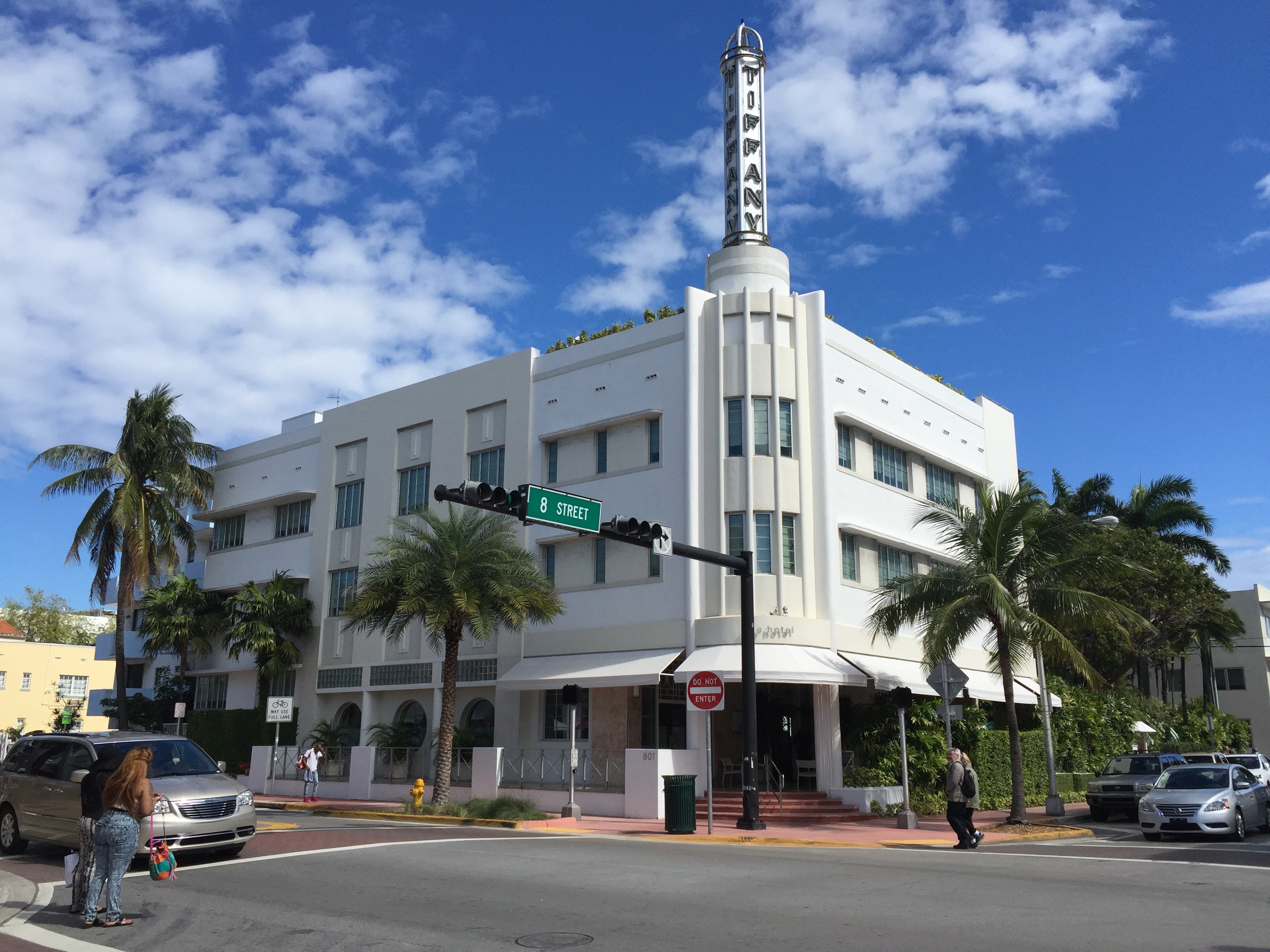
    If you love Art Deco architecture then Miami should be on your bucket list. Ocean Drive and Collins Avenue are saturated with some of the finest examples of Mediterranean Revival (1910s – 1920s), Art Deco (1920s – 1940s), and MiMo (1940s-1960s) style buildings. These buildings are still standing thanks to the efforts of the Miami Design Preservation League (MDPL). Whilst the society focuses on the tangible heritage, that is preserving the physical structures of the building, what they have also achieved is the continuance of intangible stories. Heritage interpretation in the form of guided tours and self-guided audio tours were readily available for individuals wishing to explore the gems of the beach.

    The history of the MDPL has been summarized into a timeline available on their website:

    http://www.mdpl.org/about-us/about-miami-design-preservation-league/a-brief-history/

    Highlights include the formation of the MDPL in 1976 by Barbara Capitman, Leonard Horowitz, and Lillian Barber. Their efforts identifying and preserving 1910-1960 architecture in Miami led to the development of the Art Deco Historic District. In 1979, the District was officially listed on the National Register of Historic Places, the first entry from Florida.

    We decided to explore the Art Deco district beginning at the Museum located in the Art Deco Welcome Center (1001 Ocean Drive, Miami Beach). It showcases Art Deco clothing, furniture, films, and ‘vacationing to Florida’ paraphernalia. The part of the museum I found most useful was the thematic panels explaining the difference in architectural styles. It equipped me with the knowledge for some proper building spotting.

    Following the museum we opted for the self-guided audio tour. Starting at the welcome center, the tour takes you on a one-hour journey of the District. What’s nice about this tour is that it really explores the history of the MDPL, its vision, and how this vision has developed over time. It was a mix of history and architecture so it covers a wide range of interests.

    IMG_3421
    Art Deco

    Highlights of the tour included learning about the transformation of Miami into a tourism hot spot. It is estimated around 2000 hotels were built in the three styles mentioned above to accommodate a plethora of winter vacationers in the early 20th century. Considering a large portion of the country is currently experiencing snowy weather, it is not difficult to see why a trip to Miami is a welcome break from the cold!

    IMG_3645
    Art Deco

    Right at the end of the tour is a little in memorium to Capitman and Horowitz. Horowitz summed up the Art Deco district nicely stating it brings the convenience of the 80s with the beauty of the 30s. The MDPL has done some fantastic work here in Miami restoring these buildings to their former glory.

    IMG_3594
    Art Deco

    Why is it so important to preserve this tangible heritage? Its a very loaded question and different individuals would have very different answers. For me, Miami could have easily turned into somewhere like the Gold Coast in Queensland. High rise buildings everywhere broaching on the beachfront. Instead, you walk down a street filled with the buildings of the past and you can imagine what Miami might have been like decades ago. When you start imagining you start asking questions and when you start asking questions you start looking for answers. There is something truly special about walking down Ocean Drive and seeing the Miami of old mixed with the Miami of new.

    Leslie 2
    Art Deco
  • Kennedy Space Center

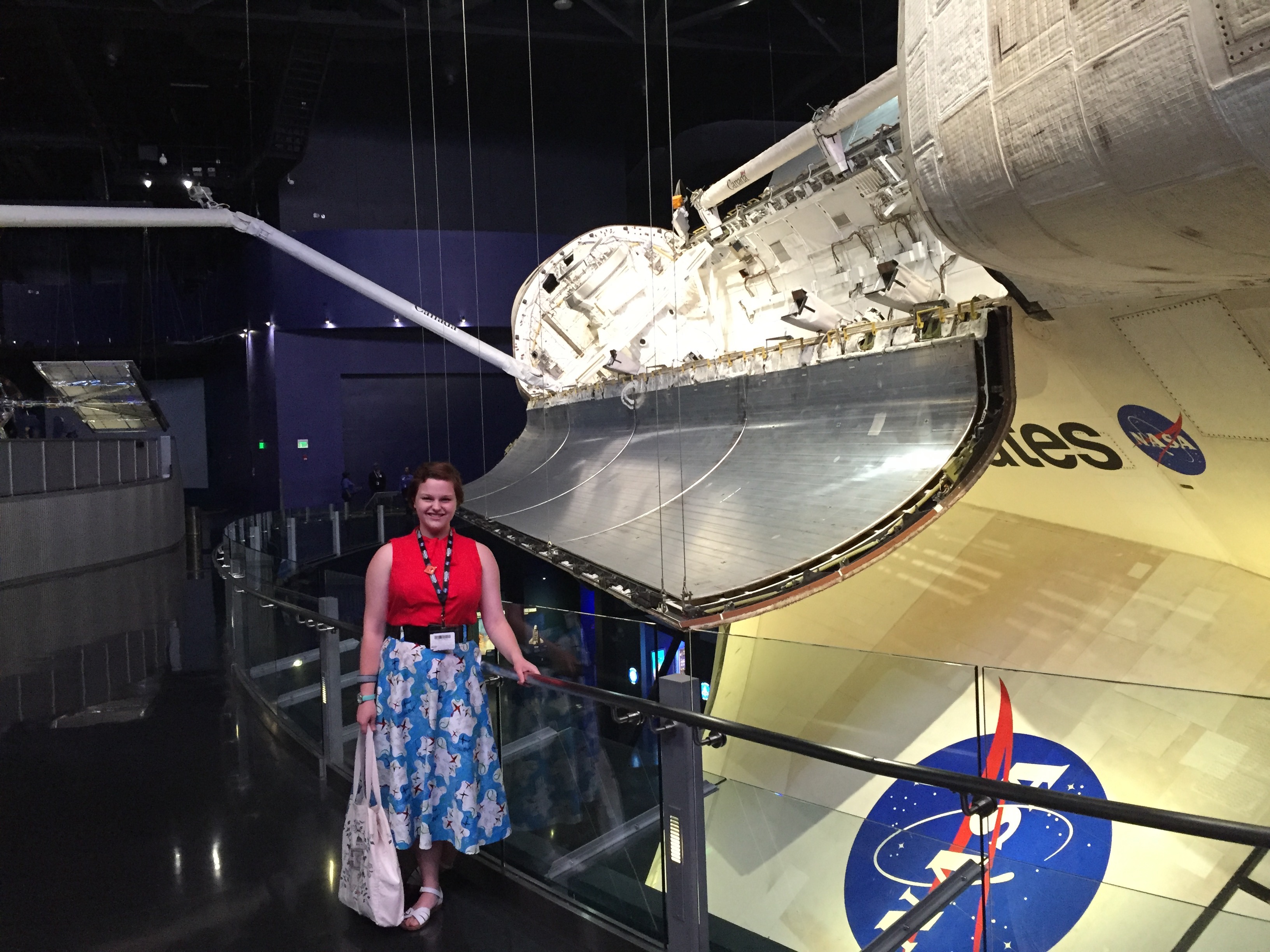
    I am so excited to share another review from Orlando! We decided quite last minute to visit the Kennedy Space Center located at Cape Canaveral. Basically the center consists of two sites: the visitor center (where the real Atlantis shuttle now lives) and the Apollo/Saturn V Center.

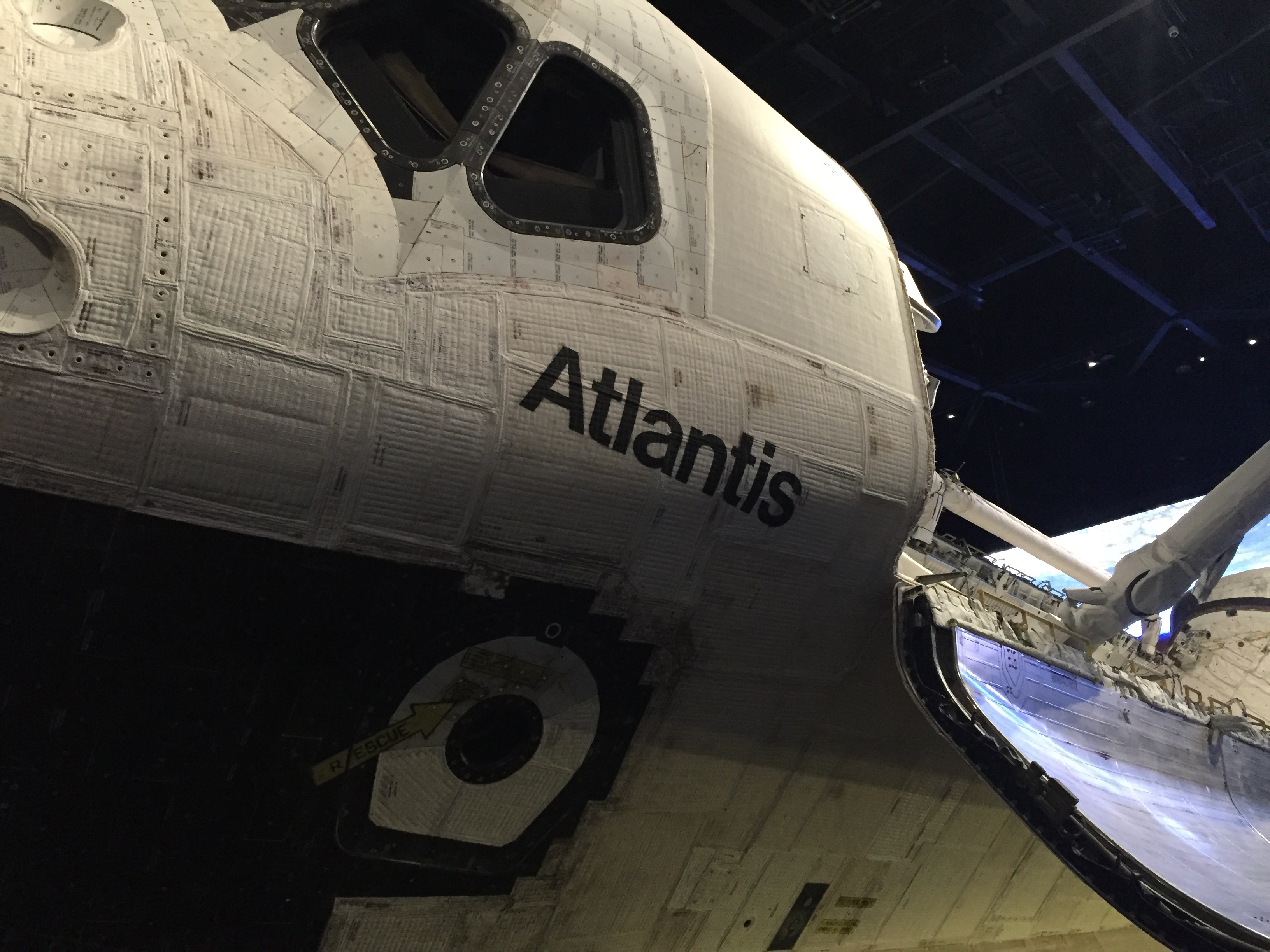
    You begin your visit at the visitor center. Unlike a lot of other reviews that recommend starting with the bus tour to the other site I’m going to say start with the Atlantis exhibition. Why? Well considering I like learning about space but I’m not totally obsessed with it, this place will get you in the right frame of mind. After seeing a short film on the Atlantis and a space shuttle launch the movie screen opens to reveal the shuttle itself. I don’t want to sound corny but I seriously could not help but gasp. It was truly beautiful. For the rest of the trip I wanted to learn everything and see everything.

    Atlantis Name
    Atlantis
    IMG_3276
    Atlantis

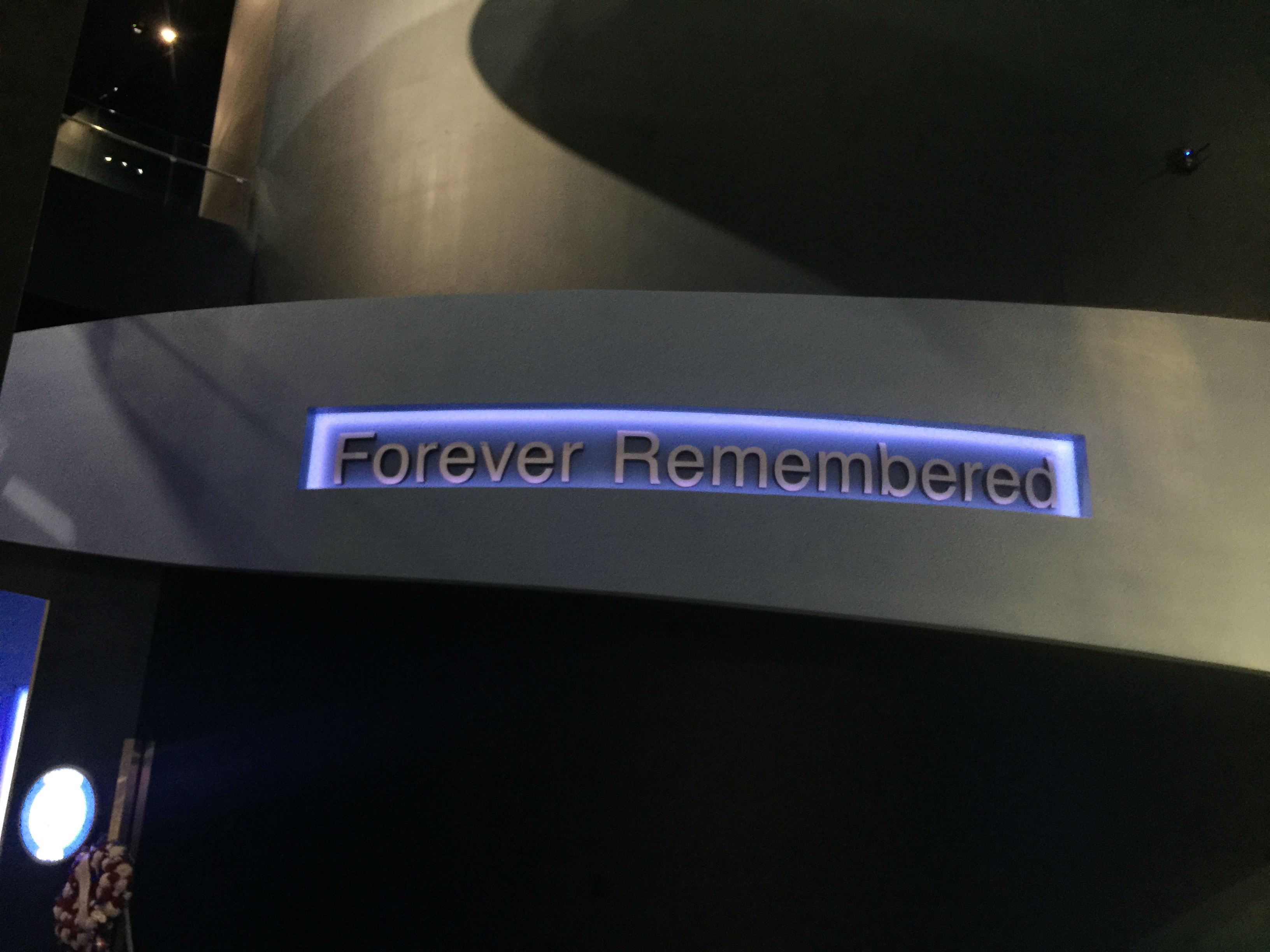
    As well as the shuttle, there is a little museum. What I’d like to highlight in this center is the Forever Remembered Memorial to the Challenger and Columbia Shuttle disasters. Before seeing pieces of both shuttles there is a walkway containing some glass cabinets. In each cabinet is the personal effects of one of the lost astronauts. I would have to say it’s one of the most appropriate memorials I have ever seen. It elicited all the right emotions and the space it created was powerful.

    IMG_3288
    Kennedy Space Center

    After the Atlantis we boarded the bus to the launching pads and Apollo/Saturn V Center. After a fantastic tour to the Vehicle Assembly Building and launch pads 39A/B we arrived at a large warehouse. What’s great about the entire center is that it really does cater to a wide audience. If you are a space fanatic there is plenty of information to sink your teeth into. If you’re like me and think it’s epic but have no clue about anything, you will learn something. The Saturn V Center achieves this by guiding visitors through a short film and an Apollo space shuttle launch. In the launch you can see the actual control room used in the 1960s!

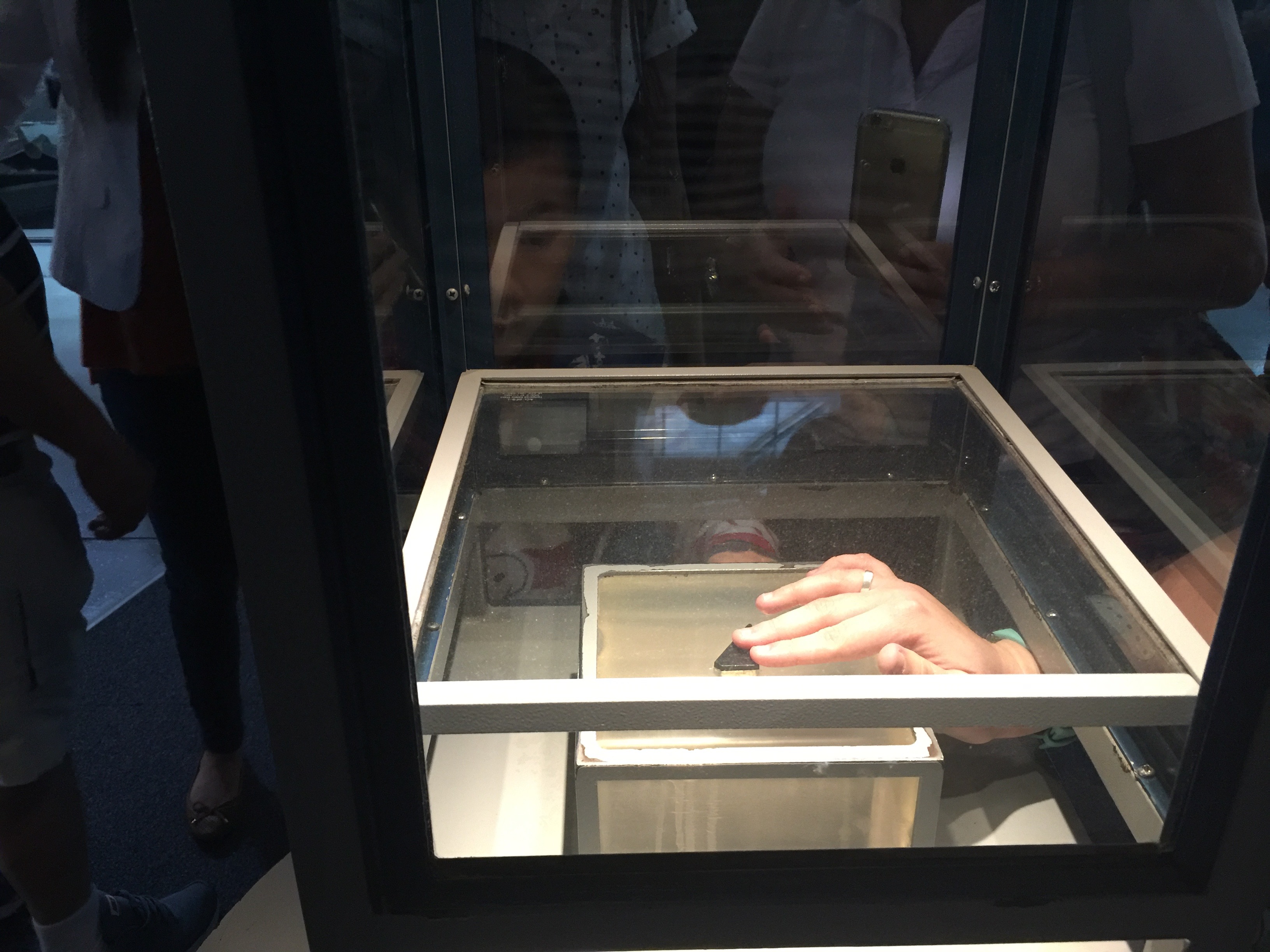
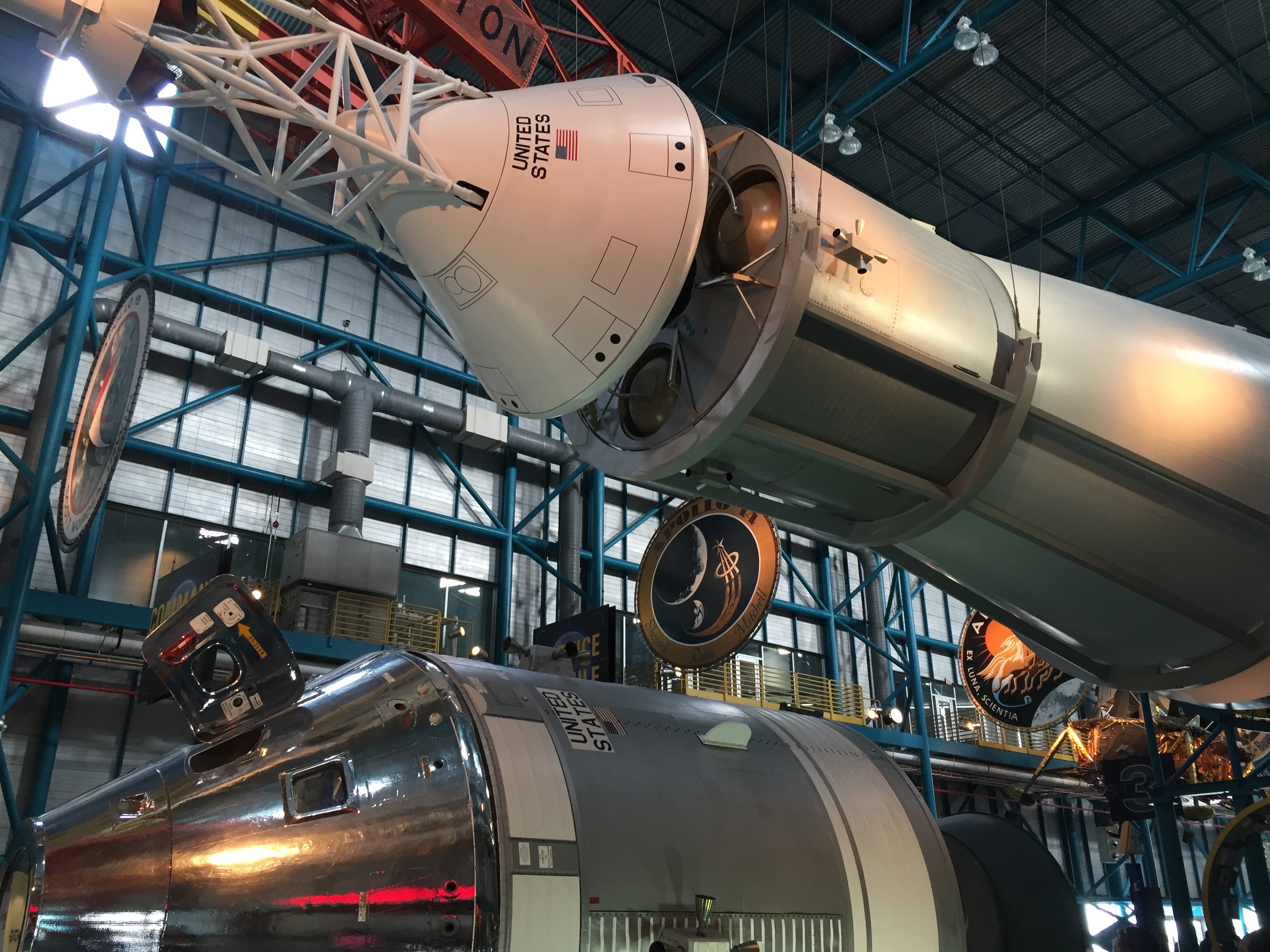
    You are then free to walk around Saturn V seeing the rocket stages all labelled and explained. The size of everything in this place will leave you stunned. Then, to top things off, you can touch a piece of the moon!

    IMG_3329
    Touch the Moon
    IMG_3348
    Kennedy Space Center

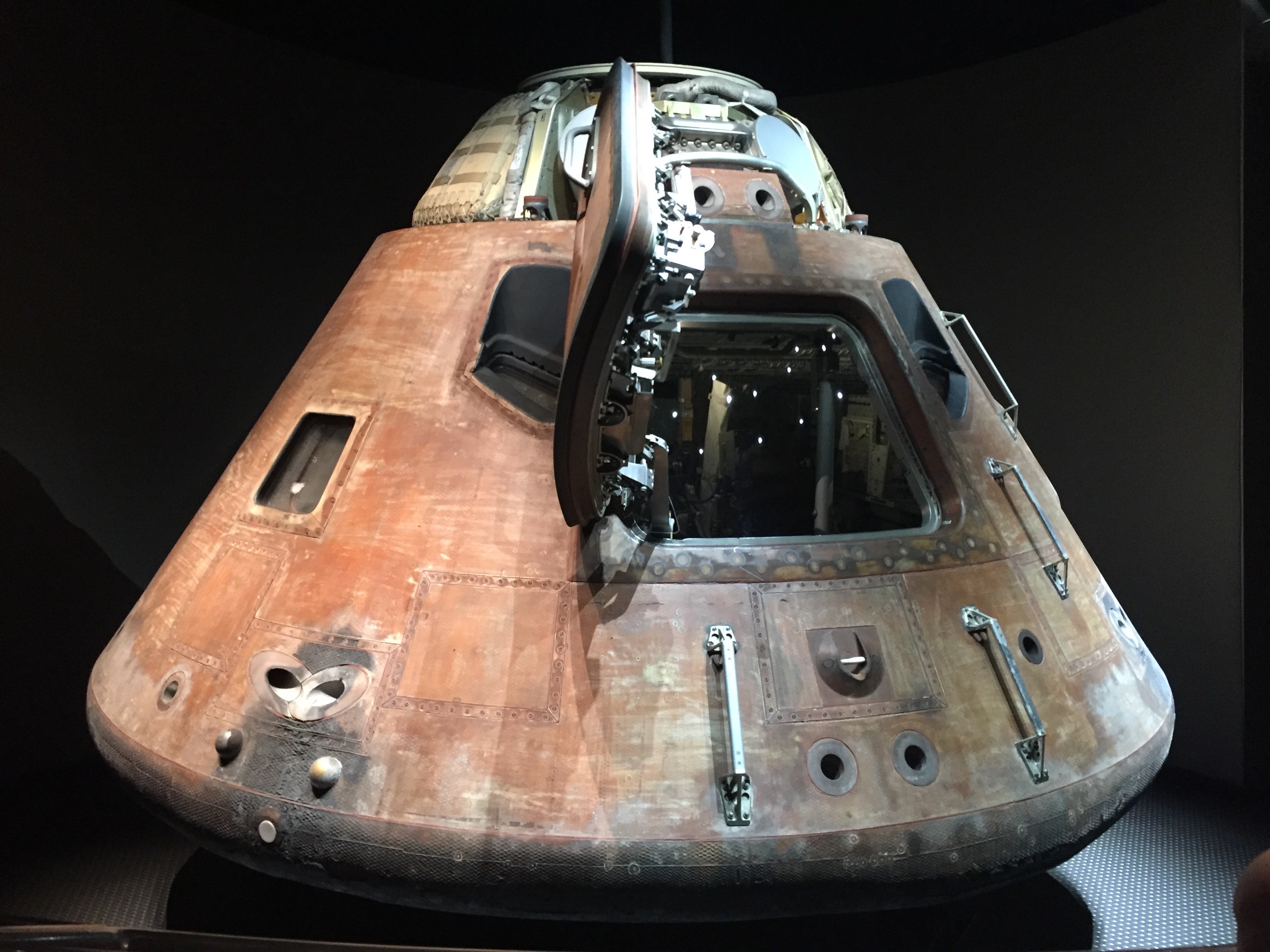
    In one of the rooms branching off the warehouse is a small traditional-looking museum with astronaut suits, the Apollo 14 capsule, and an array of personal objects belonging to the crews. The thematic labels are long but the object labels are short and informative enough for those of you who want to have a quick walk around.

    Apollo 13 Capsule
    Kennedy Space Center

    There is, of course, plenty more to do at both centers. Highlights for me were the memorial and seeing the control room. I visited knowing very little about space except it is far too big and that creeps me out a little. I left both centers wanting to learn more about the wonder that is space travel and with a new appreciation of our little planet.

  • Epcot

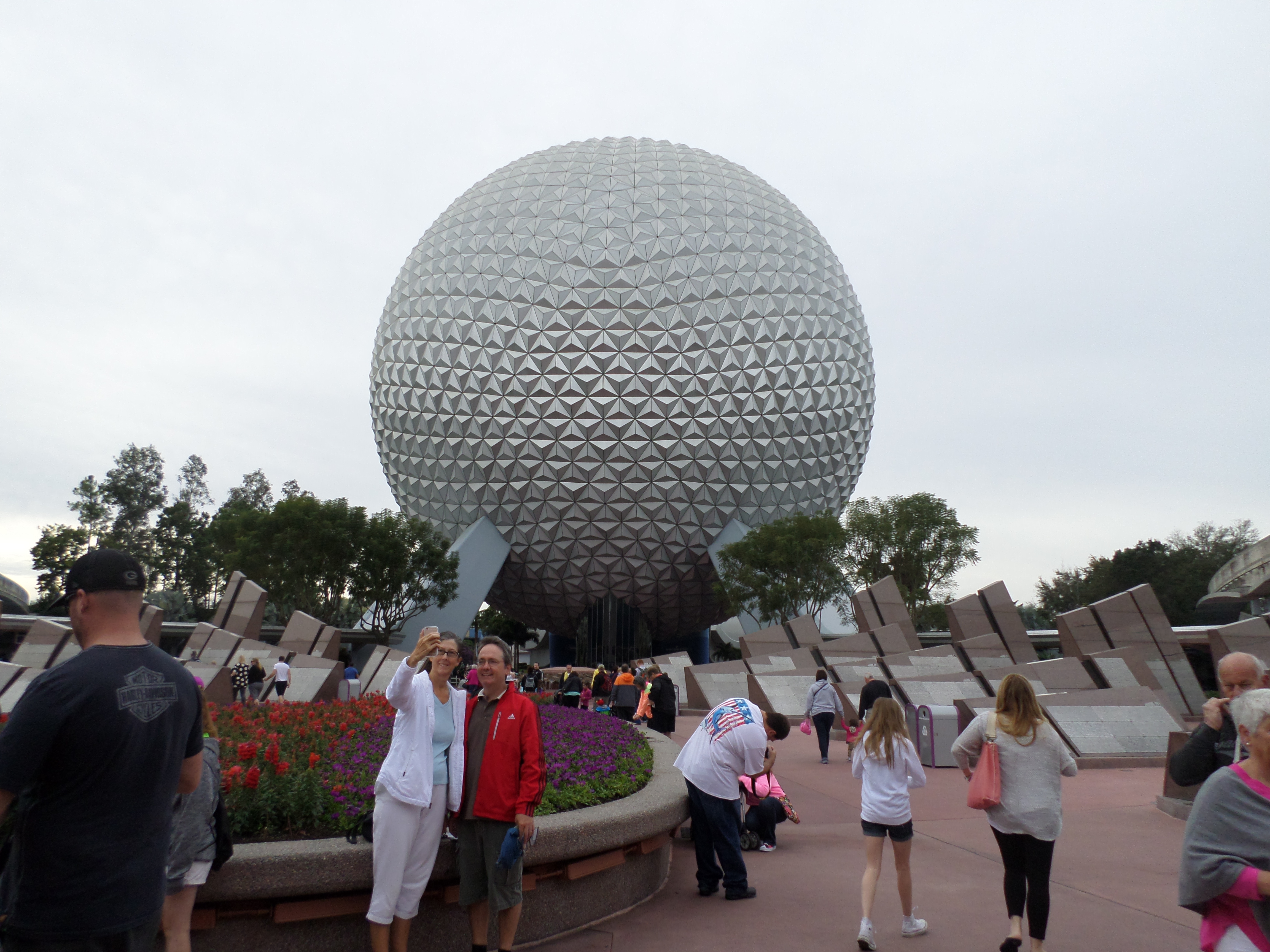
    Checking in from the happiest place on earth. This is my first review from Orlando and the focus will be on Epcot (Experimental Prototype Community Of Tomorrow). I said in my previous post I hope it filled the Expo ’88 void in my life and it did just that and beyond. Just to provide a little context of the place, Epcot was the second park opened by Disney in Florida on October 1, 1982. In its entirety it is about twice the size of the Magic Kingdom Park (my feet feel this pain). In Walt Disney’s own words regarding Epcot:

    “EPCOT will take its cue from the new ideas and new technologies that are now emerging from the creative centers of American industry. It will be a community of tomorrow that will never be completed, but will always be introducing, and testing, and demonstrating new materials and new systems. And EPCOT will always be a showcase to the world of the ingenuity and imagination of American free enterprise.” (https://www.youtube.com/watch?v=u9M3pKsrcc8)

    SAM_1769.JPG
    Epcot Ball

    This is a great summary of the original idea of the park and its first intended purpose. Epcot today continues to achieve this goal. From first stepping into the park, visitors can learn about innovations, space travel, and advances in technology. One of the rides we experienced was Mission: Space. It introduced participants to astronaut training and finished with a simulated space trip to Mars (attempting to rescue Matt Damon).

    It later became not just a showcase of America but of other countries around the world. I would like to petition for an Australian section if they can fit it in. If they need any ideas Tim Tam and Vegemite tastings as well as an Ugg Boot shop is a great place to start 😉

    The existing world showcases were very impressive with eleven nations represented: Mexico, Norway, Germany, China, Japan, Canada, Morocco, France, America, Italy, and America. We started with Mexico. I was thrilled to see inside a real-sized Aztec pyramid was a small museum before the main restaurant. A lot of pottery figures were on display with limited but insightful information regarding their historical context. There were also some traditional clothes and fragments from pyramids. In total there were only around four display cases and maybe two thematic panels but it was a good effort to include this history.

    IMG_2520.jpg
    Mexico

    The other most exciting showcase was Morocco. I previously mentioned the 1889 Exposition Universelle in Paris and the Street of Cairo. The streets of Morocco reminded me of the images I had seen of the exhibition. What’s interesting about the Street of Cairo was it continued to be a staple of world exhibitions, growing to include more restaurants and shops. I imagine what it grew into was very similar to what the worlds in Epcot look like today.

    IMG_2632.jpg
    Morocco

    The sensation of being completely immersed in a different culture then moving on to be completely immersed in another achieved a goal of disorientation. I mean this in a good sense. The disorientation that comes with arriving at a theme park in Florida and feeling as though you are sitting at a restaurant in Italy then eating a pastry in France.

    What I think this park achieved was exposing whoever walked through each section to a taste of a different culture. I wouldn’t expect an intellectual insight into the functioning of other nations but who goes to Disneyworld to tick that box? Instead, visit Epcot to be entertained. In other words, expect to learn, for example, exactly how Italian wine tastes not the history of the country.

    IMG_2597
    Wine
  • Over the past twenty days I have been interning at the Geoffrey Kaye Museum of Anaesthetic History. I would firstly like to thank everyone who I have met along the way, especially my supervisor Monica Cronin. It has been an amazing experience and I am so excited to share what I’ve been working on!

    To provide a bit of context, the Geoffrey Kaye Museum is located on St Kilda Road in Melbourne. It’s one of only a handful of anaesthetic museums around the world so we are very lucky to have it here in Australia. I find it a particularly fascinating museum because it combines medical and social history. So if you are like me and struggle to even pronounce what is written on some medications, it doesn’t matter. There is something in it for everyone.

    Geoffrey Kaye copy.jpg

    My role over the past twenty days has been to familiarize myself with the forty Foundation Fellows. These were the original members of the Faculty of Anaesthetists, Royal Australasian College of Surgeons. Many of them have fascinating stories and I frequently found myself comparing my life to theirs and feeling incredibly inadequate.

    To start the project, I digitized all forty ‘Exordium’, acceptance of nomination to the Faculty, forms. Once all forty had been completed I set my sights on digging into some research. For about 70% of them there was a lot of fantastic information available on the internet. War records especially shed so much light on the lives of these individuals. I was also able to access the archives of the College and scan what material I could find.

    After completing the research, my next task was to find photographs and objects in the collection for each Fellow. The final step was to write a biography on each Fellow including their basic information, a longer biography and their photographs/objects. As this was a lengthy process I completed, to the best of my ability, around eighteen of the biographies.

    That’s basically what I’ve been up to in the museum. Thrown in along the way was learning a bit of preventative conservation and how to properly scan slides and photographs. Overall, I gained an insight into the functioning of a small museum, I most definitely developed a range of skills across heaps of areas and I had way too much fun doing all of the above.

    Taking my personal favourite anaesthetist, Dr Mary Burnell, out of the picture, it is impossible to say who I enjoyed researching the most. Burnell was just the most amazing ahead-of-her-times kind of woman. She was the first female everything to do with anaesthetics and clearly loved her job. I also quite enjoyed researching Dr Lucy MacMahon whose career could be traced through the social pages of the newspapers in the 1920s and 1930s. If there was a party she didn’t attend during that period it simply did not exist.

    They all had their interesting points of information and little quirks I grew to appreciate. It is unbelievably fun poking your head into the past and listening in. The fact that this information will be available for the wider public to see makes it that much better.

    I can’t wait for everyone to meet the forty Foundation Fellows (especially Burnell). Some of them you will seriously want to thank for transforming how anaesthetics have been administered. I’m sure next time I have an operation all of this will be comforting to know.

    A huge thank you again to everyone at the Geoffrey Kaye Museum!

    If you’ve made it this far through the blog post you are clearly interested in this topic (and you should be). Why not explore further:

    http://anzca.online-exhibition.net/trailblazers/

  • National Gallery of Victoria: Warhol and Weiwei

    Melbourne has been incredible to say the least. Working five days a week surrounded by medical heritage has pretty much been heaven. I am going to save my comments on the internship for a blog post of its own.

    As for now, I’m going to say the National Gallery of Victoria (NGV) never truly disappoints. Sure a couple of exhibitions haven’t quite lived up to standards, but, I  always walk away feeling I haven’t wasted my time. The new Warhol & Weiwei exhibition is no exception. Opening only six days ago now, I visited with a friend last weekend to have a stickybeak.

    It is a huge exhibition spanning quite a few rooms. The only major issue I had was that I wasn’t quite sure why they were comparing these artists and since seeing the exhibition, yeah nothing. I couldn’t really see them operating together to unlock broader themes etc. Nonetheless, separately I thoroughly enjoyed seeing the work of Warhol and Weiwei.

    The pieces by Warhol included a few of his famous masterpieces as well as a few sculptures. Having seen the Warhol exhibition at GOMA in Queensland, the NGV had big shoes to fill. I think they filled them pretty well. The exhibition was lots of fun with each room very different to the other. The use of colour and texture, yes texture, separated the pieces thematically. I say texture because in one of the rooms there was a smaller room entirely covered in Lego.

    Favourite rooms included the flower room (pictured below) and the pop art room (I guess you’d call it that). I was so glad to see works featuring President Kennedy and Jacqueline Kennedy Onassis pop up a couple of times. A series of particular pictures/paintings that really caught my eye looked sort of boring from afar, but, the closer you got the more detail came out of them. They documented Kennedy’s assassination.

    IMG_2105
    Warhol and Weiwei
    12316067_10156284080110261_4619583757765258394_n
    Warhol and Weiwei

    Other than those two rooms, there was literally a room filled with giant bird and alpaca balloons. Love a good interactive installation. Speaking of interactive elements, on the other side of the exhibition are photobooths! Super fun photobooths. There is an entire exhibition space filled with cats which I guess caters to our obsession with internet cats and right at the back are these photobooths that fit thematically because you get to enjoy a bit of banter from a talking animated cat.

    In terms of gift shop, not bad. A lot on the pricey side but heaps of knick knacks including a magnet of Weiwei giving the finger to buildings around the world.

    It’s worth your time and definitely worth your money. I had a lot of fun in this exhibition!

  • University of Sydney: One Down, Two to Go!

    As of this morning, I have officially finished semester one of my masters degree! I am capitalizing on these few days of rest before jumping straight into my month-long internship down in Melbourne. I have three seasons of the Walking Dead to watch so some TV time is at the top of my to-do list. I am also hoping to see The Greats: Masterpieces from the National Galleries of Scotland at the Art Gallery NSW. I am planning on going tomorrow so I’ll have a review hopefully up by tomorrow night.

    For now, it seems like a great chance to essentially summarize my semester. It has been incredibly full on, but, worth every single moment. I didn’t think it was possible to be more interested in heritage and museums. Luckily, this course is proving me wrong! It’s kind of funny that at the beginning of the semester I was completely freaking out I wasn’t capable for this study. Phrases such as intangible heritage and new museology seemed like such foreign concepts. Now, they are old news and I cannot wait to see what is in store next year.

    I am also so excited to start this internship. Actually, so so so excited to start the internship. It’s going to be great gaining the practical experience of actually designing and installing an exhibition. I’ll be updating my blog quite frequently during this time 🙂

    In other news, I’ve been accepted into the Open Palace Program for 2016! Basically it’s like a heritage camp in the UK that takes you behind the scenes of the Royal Palaces and Stonehenge etc. It is going to be incredible and I am just counting down the days (241 days currently).

    I’ve also decided to shake things up a bit and do weekly/monthly (let’s be real) App reviews. I’m going to start with the Museum of Applied Arts and Sciences Powerhouse Museum Walks. First things first, it’s really easy to navigate. When you open the App you essentially have two choices – listen to a tour or find out more information about the Powerhouse Museum. I’m also giving the App points for having posters of the musical Jersey Boys in its cover image.

    Anyway, there are some really interesting tours on offer. They are all self-guided and include maps for orientation. There are five free tours and one paid. The free ones are the Harbour Bridge, Ultimo, The Rocks, Pyrmont and George Street. The one that is paid is a historical pub tour (so sad you have to pay). So far I’ve only taken the Ultimo tour because the area is literally next door to where I live and I’ve been lazy.

    Each stop has about 30 seconds of audio, which I personally think is both good and bad. It’s enough time to stop, say that’s nice, take a photo, and move on. On the other hand, I wanted more information at some of the places. With fourteen stops you’re looking at around a thirty minute tour. Ok so some great things about the tour.

    1. An actual human being is talking – not a robotic voice that just makes you want to fall asleep
    2. There are genuinely interesting sites on this tour – I frequently thought wow I walk past this everyday and had no idea it was….
    3. The map is very easy to use

    Some not so great things about the App:

    1. It’s quite hard finding how to get back to the tour list once you’ve started a tour
    2. There needs to be more tours!

    So on balance it is a pretty decent App to download. Sometimes you just want a quick shot of history and this tour delivers just that.

    I am going to rate this App 3.5 out of 5 stars. The 1.5 is lost because I’d like to see an option that provides more information on the sites and more tours!

    Snapshot of the App
    Snapshot of the App

    And there is my first review. Happy Audio Guiding!