As well as swimming at Waikiki Beach and enjoying the amazing food, I really wanted to visit a couple of museums and heritage places in Honolulu. The Bernice Pauahi Bishop Museum (aka Bishop Museum) is the State Museum of Natural and Cultural History. Primarily, I wanted to visit to learn a bit more about the history of Hawaii. In particular, how it became a state of America. This post is going to cover both a temporary exhibition currently on display titled Unreal: Hawai’i in Popular Imagination and highlights from the Bishop Museum’s permanent collection.
Unreal: Hawai’i in Popular Imagination
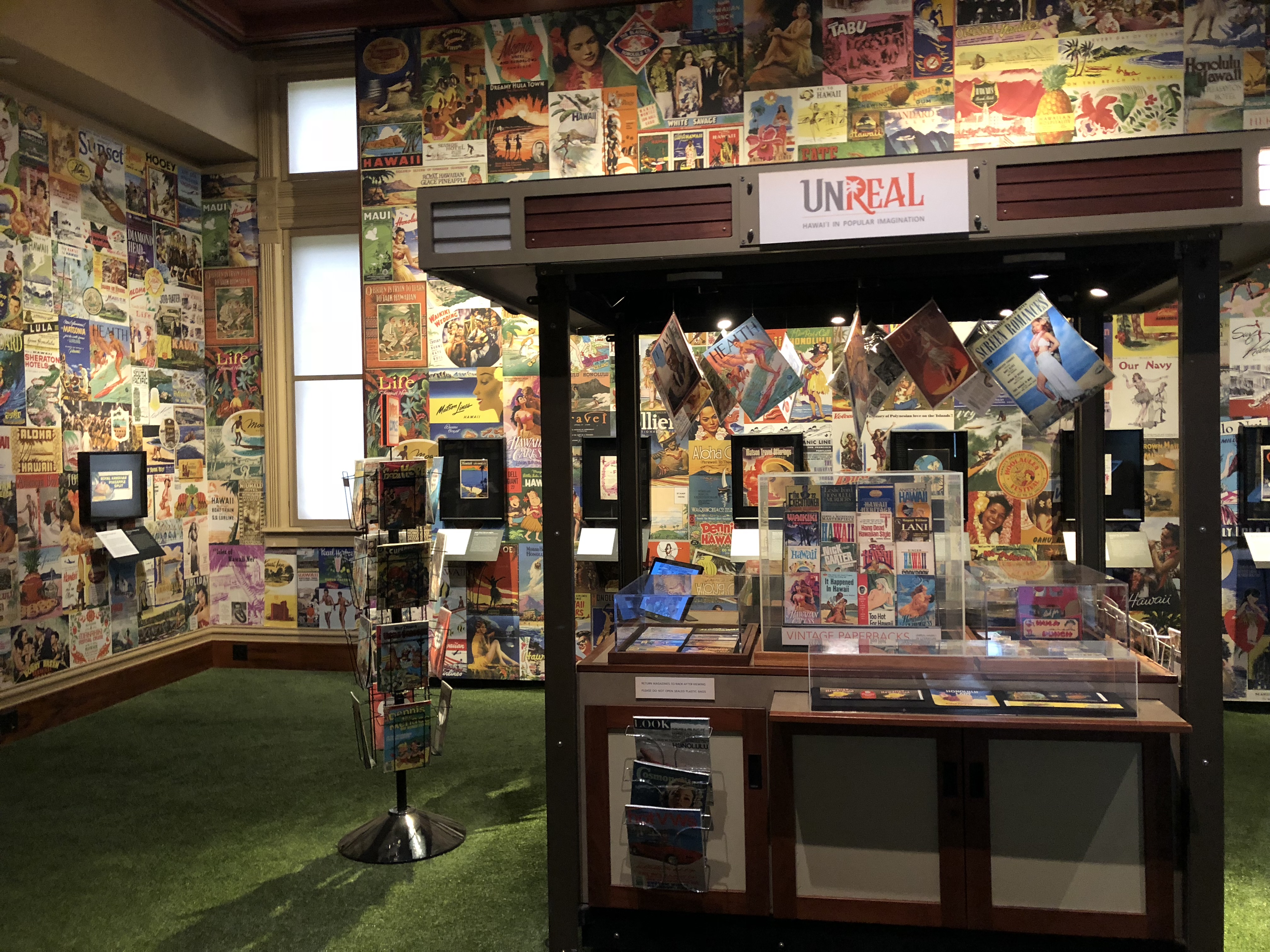
This sounded like a very intriguing exhibition, displaying how Hawai’i has been presented and ‘sold’ to the world. When you think of Hawai’i what comes to mind? Hula dancers, surfers and beaches have been used for decades to paint a picture of Hawai’i as a literal tropical paradise. The exhibition looked at how these images aren’t as harmless as they seem and integrated artworks produced by native Hawaiian artists to show alternative depictions.
There were quite a few objects on display including comic books, tourist brochures, magazines, hotel books and film footage of television shows/movies. The most striking part of the display was the use of old travel and movie posters as wallpaper. They complemented the exhibition and, surprisingly, didn’t distract from the objects on display.

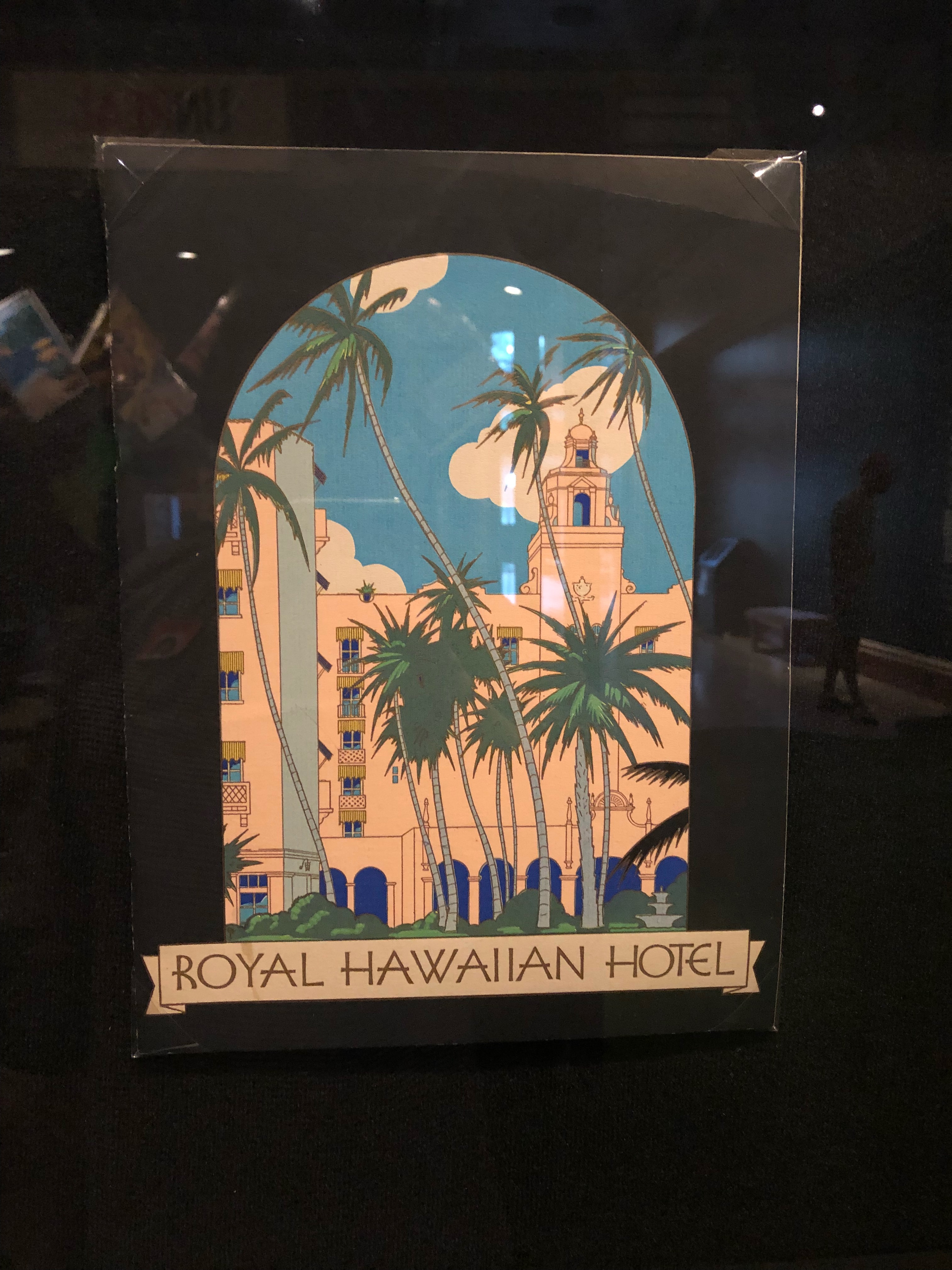
Each of the objects had a label divided in half – one side white and one side black. The exhibition didn’t really explain why, but, after reading both sides, it appeared that the white side was telling some facts about the object while the black side was more of a reflection on the object. Whoever wrote the remarks on the black side has a small place in my heart. The comments were just so real and not sugar-coated. The comments also contributed to a de-colonised look at the objects. For example, when writing on the Royal Hawaiian Hotel booklet from 1928, the writer stated that the hotel offered visitors the chance to ‘indulge in their fantasies of native life’ before returning to the familiar and comfortable.
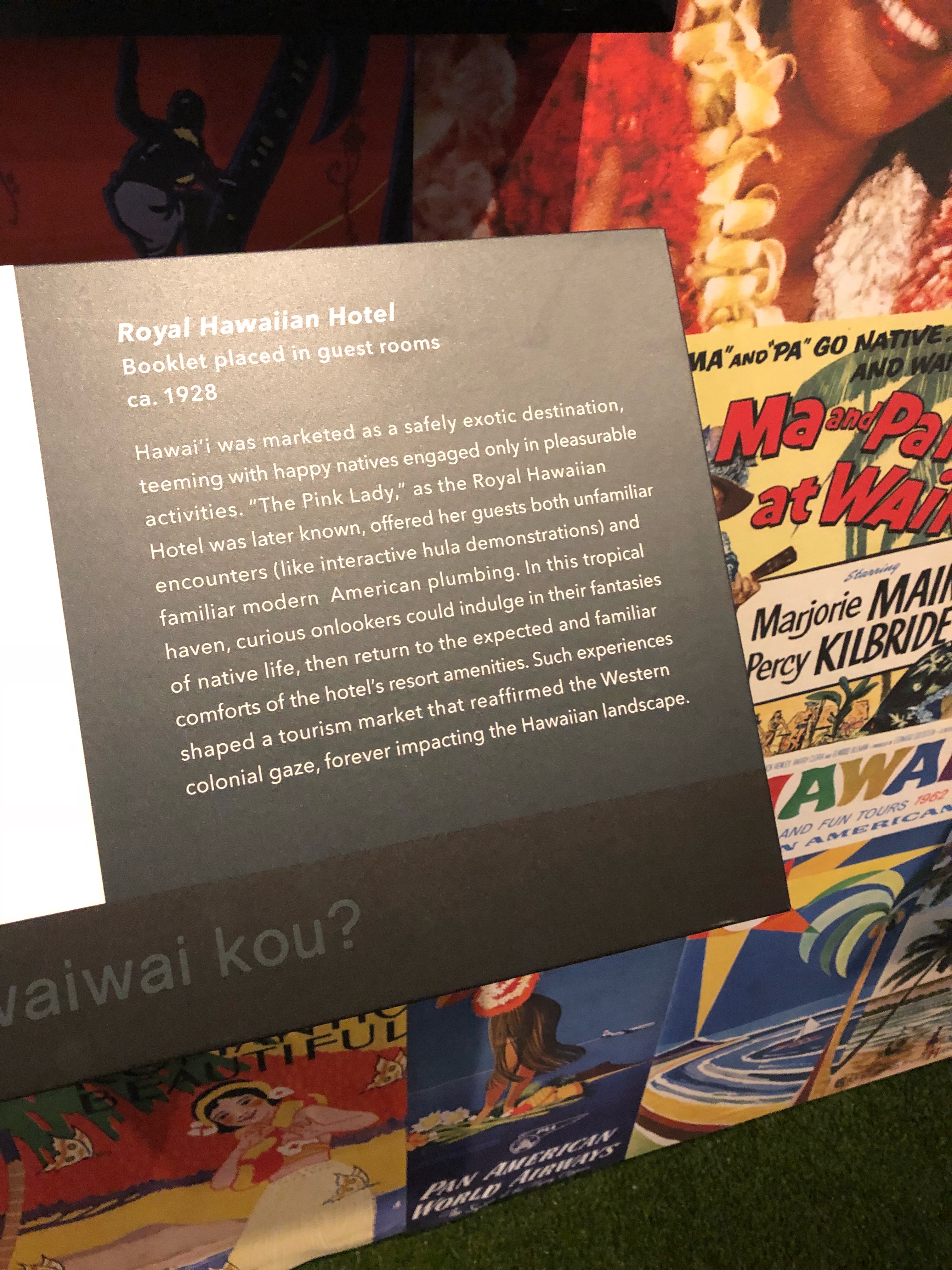

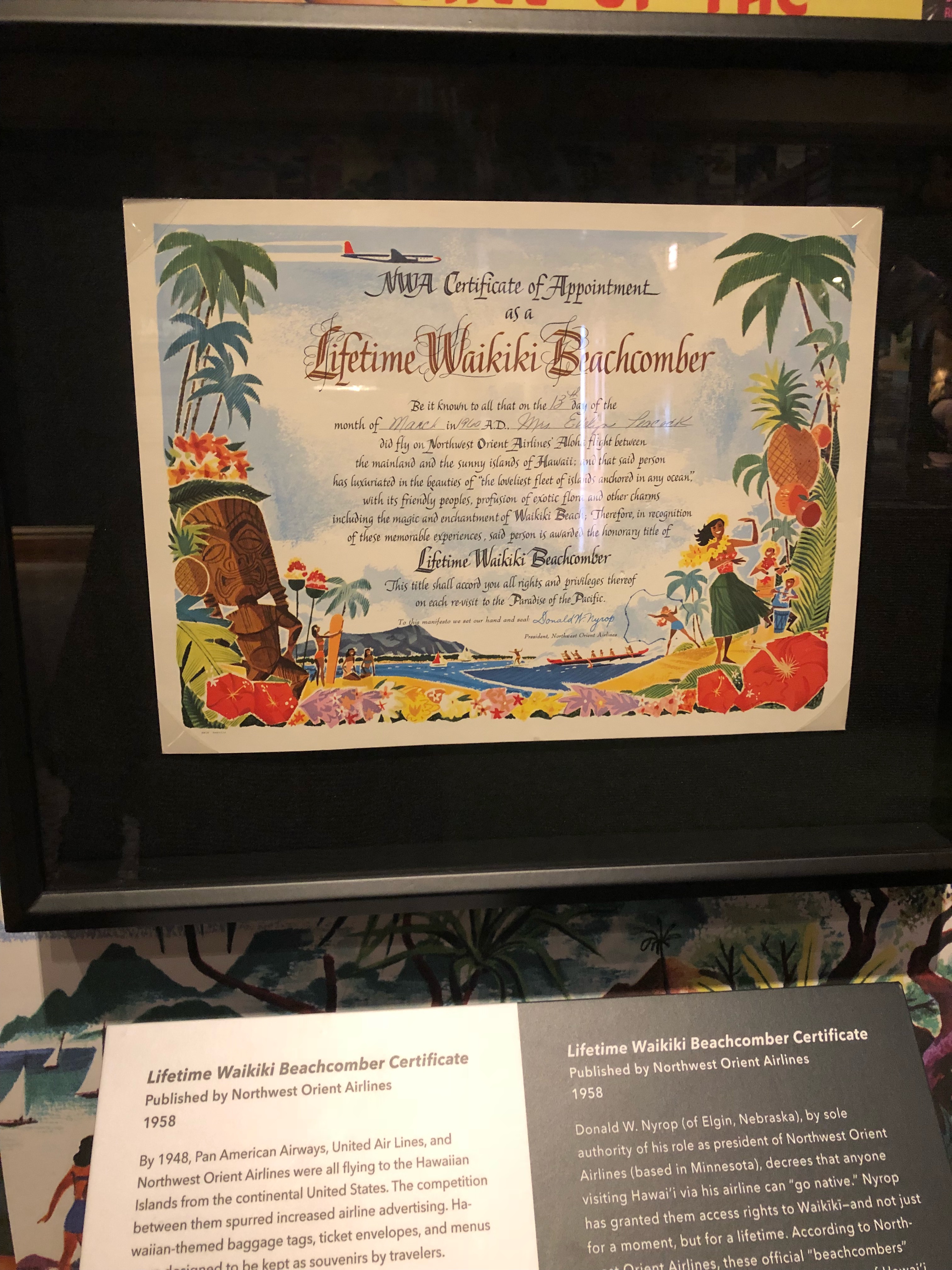
It got to the stage where all I wanted to read was this side of the label. Another great example was underneath an advertisement for the Royal Hawaiian Pineapple Split. The writer took the opportunity to explain how pineapple is not native to Hawai’i and an international obsession has led to the displacement of Hawaiian food identity. It gave the objects on display new meaning and I thank the museum for including this perspective alongside the traditional form of label.
Permanent Display
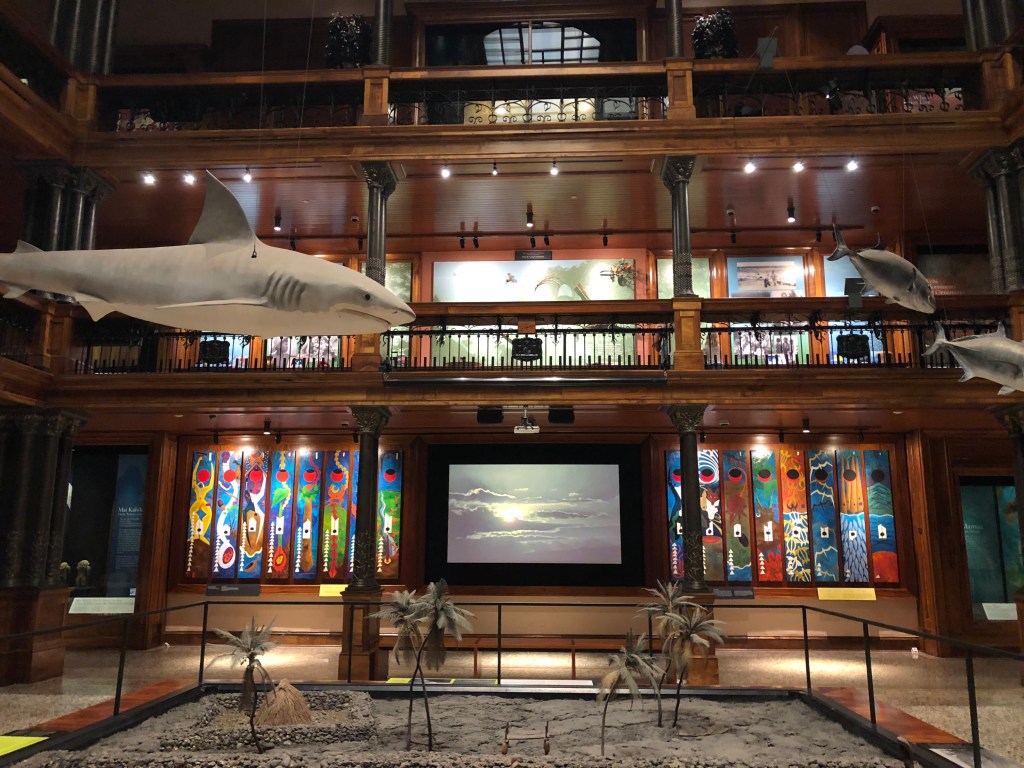
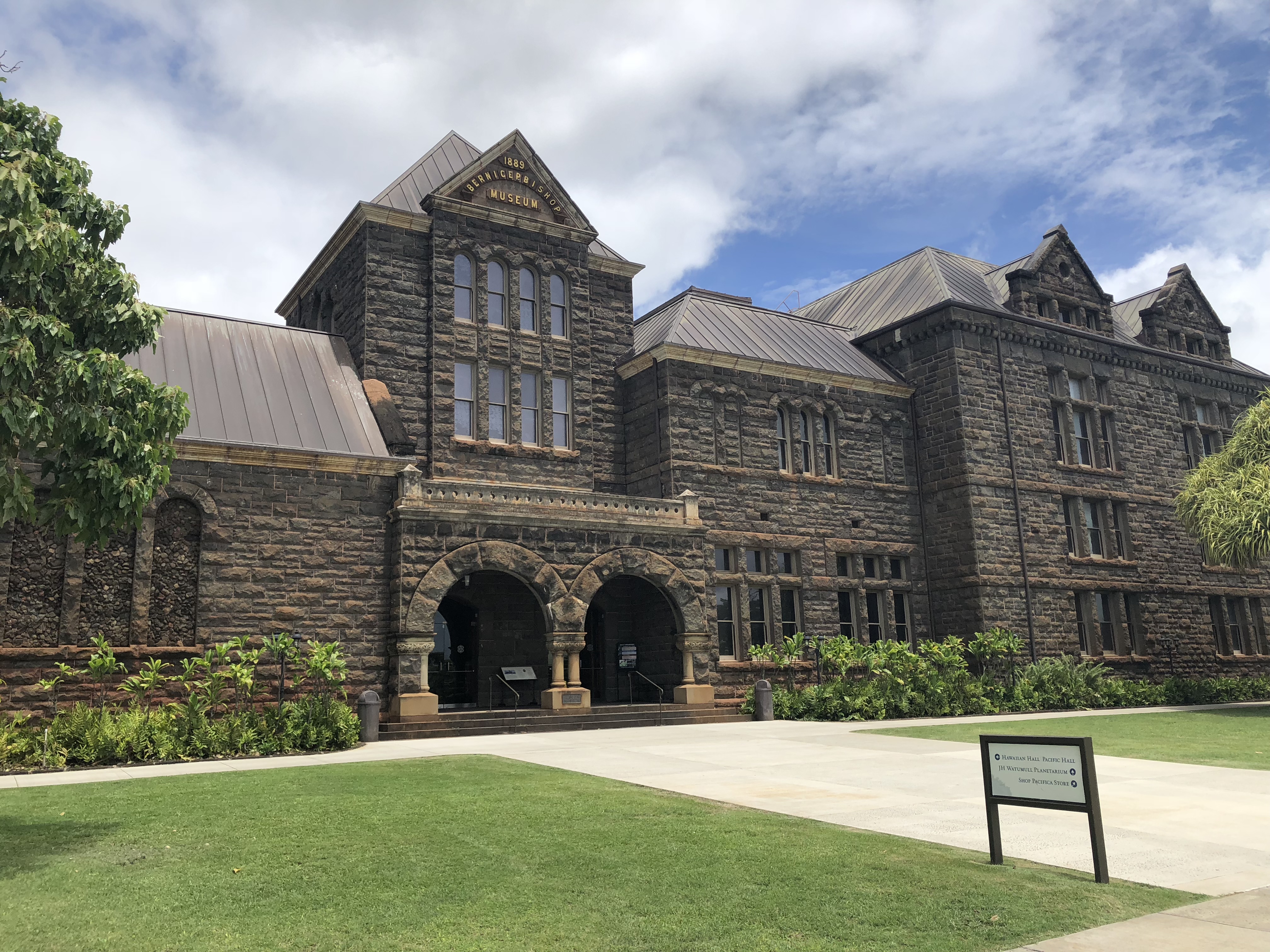
The permanent display is housed in such a spectacular building – now listed on the National Register of Historic Places. It was originally built in 1889 and served as a school hall. Eventually it became a museum that houses the largest collection of Polynesian objects.
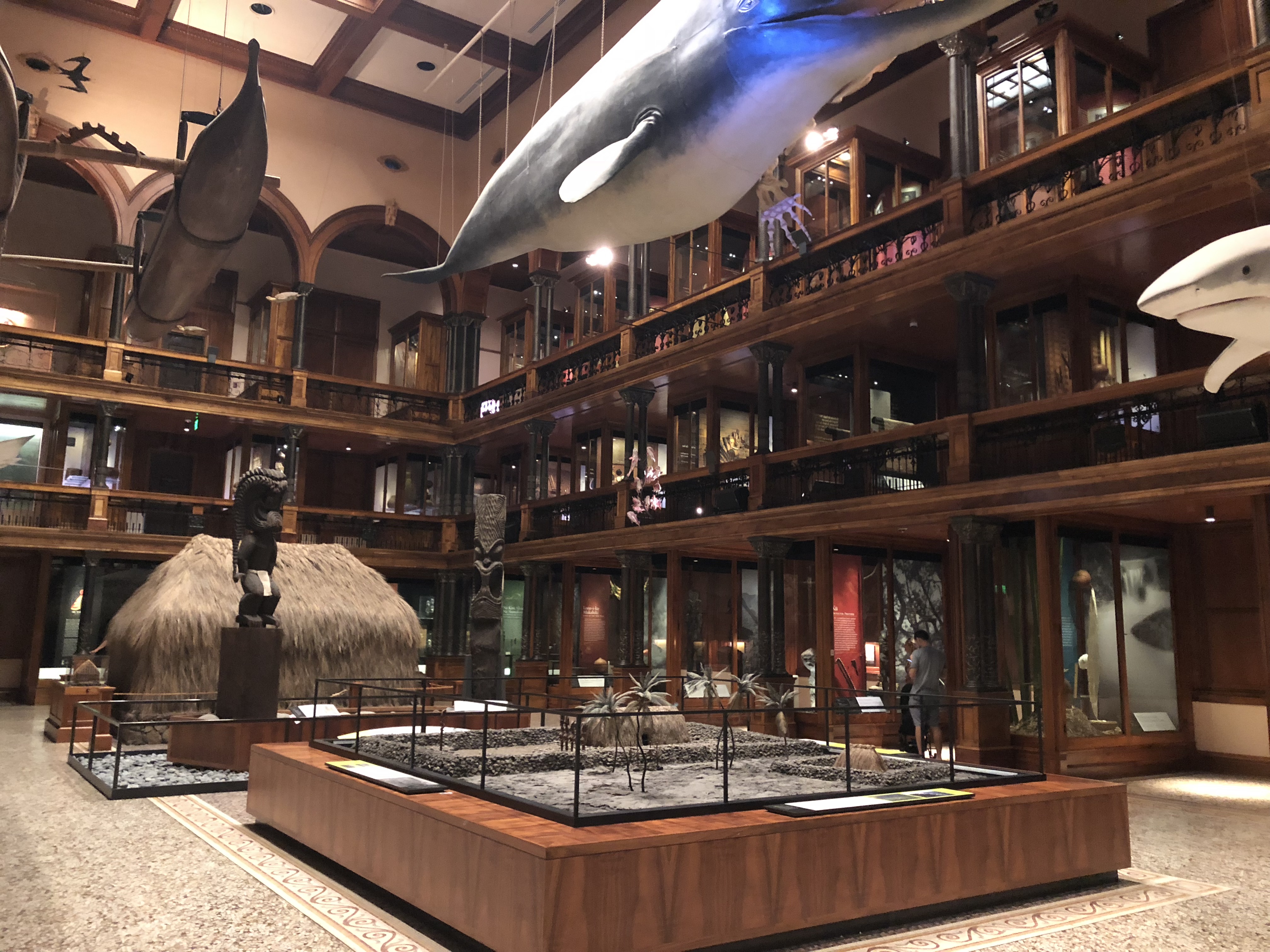
The permanent display spans three floors each representing a different realm. The first floor is Kai Ākea, realm of Hawaiian gods and legends in pre-contact Hawai’i. The second floor is Wao Kanaka, where people live and work. The final floor is Wao Lani, the realm inhabited by the gods displaying key moments in Hawaiian history.
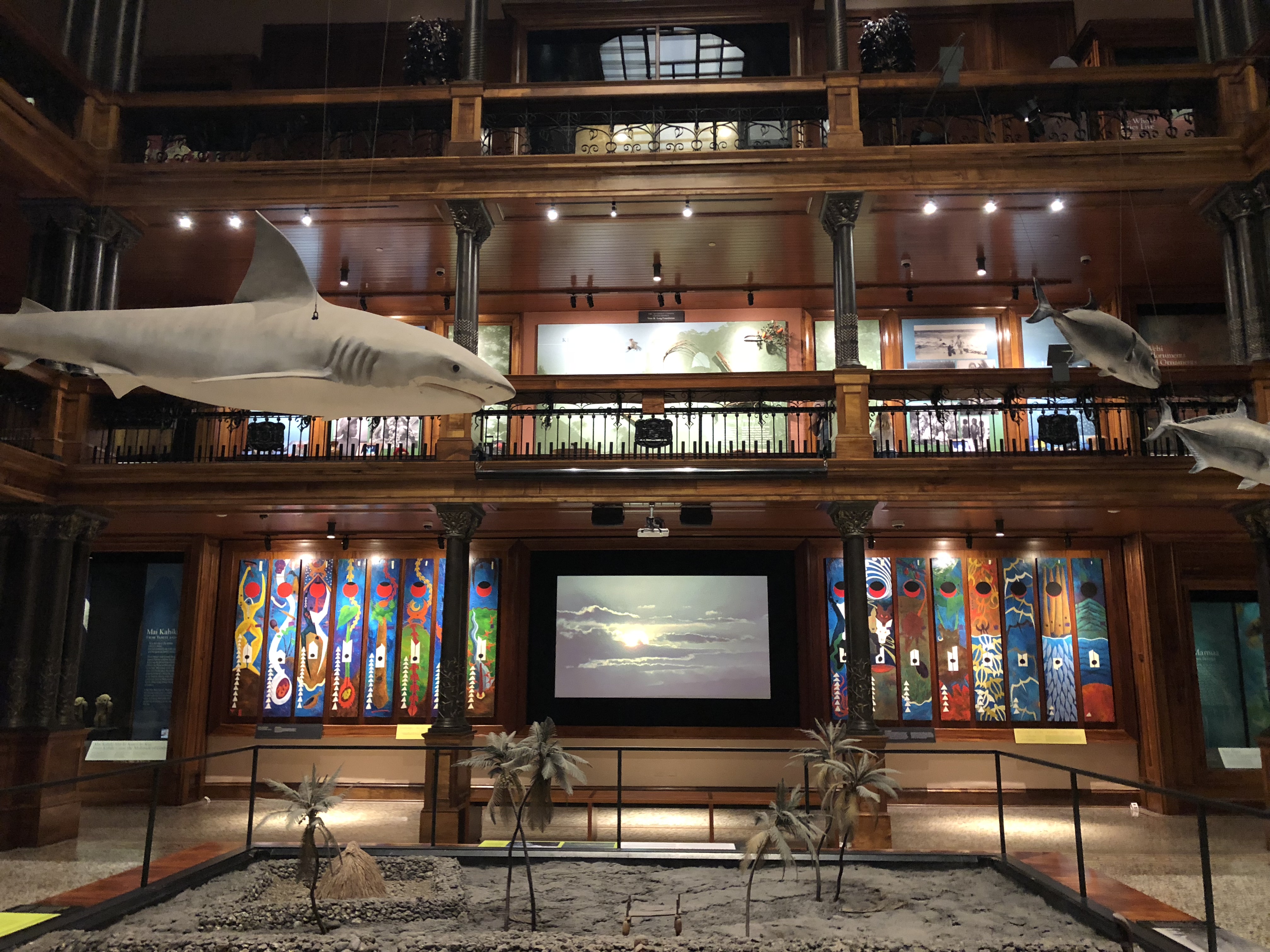
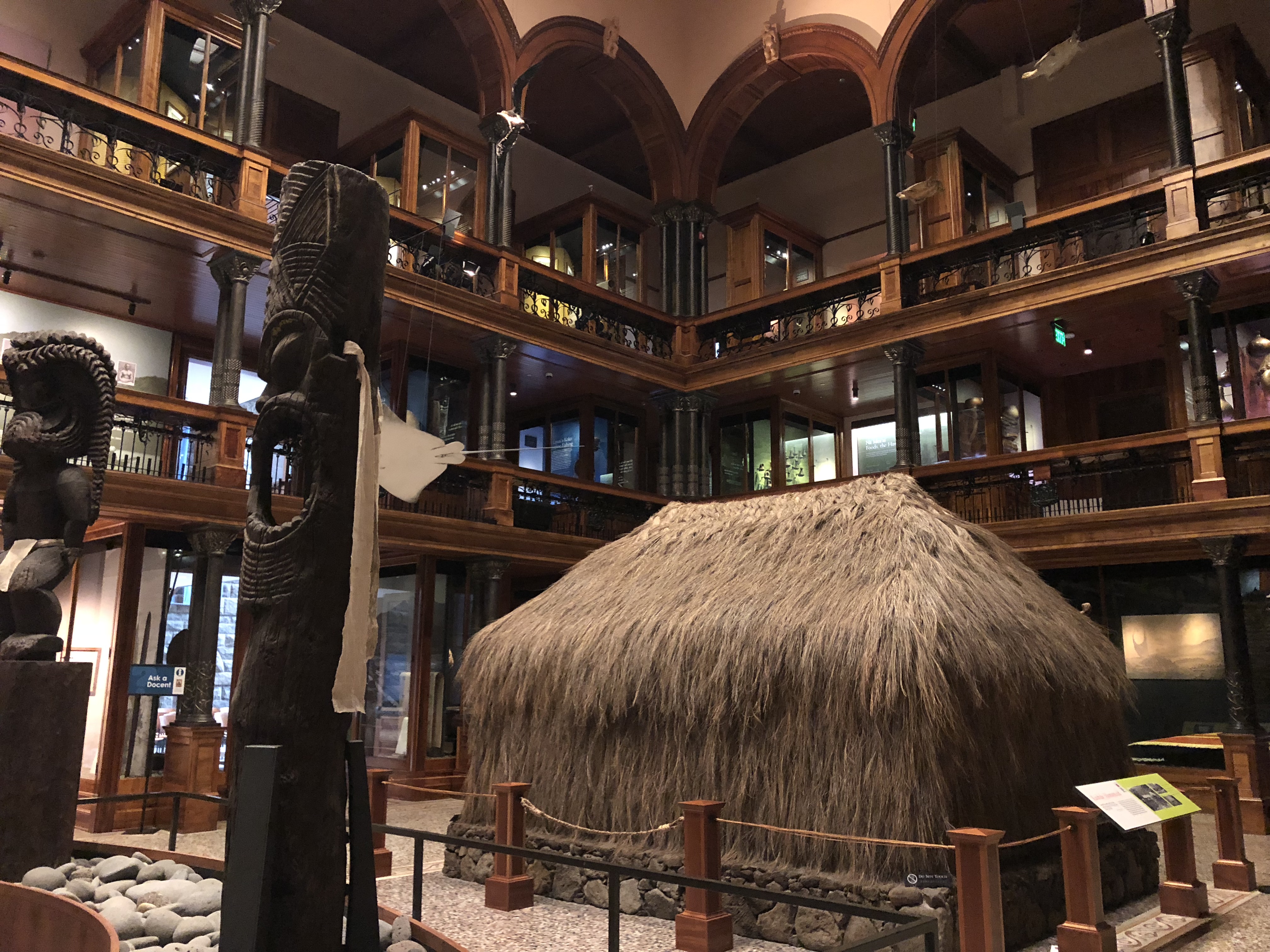

After exploring on our own, we decided to join a highlights tour. If you’ve been reading my other posts, you probably know by now I am a huge fan of the humble highlight tour. The following are some key objects that were discussed.
1. Medical Practice Objects
Before delving into these objects, it was so fantastic to see the constant integration of the Hawaiian native language in the entire display. Just something I picked up while we were walking around.
No surprises here that objects on medicine were amongst my favourites. I particularly liked the hot pumice stones that are still used today in traditional healing. As you can see from the image below, the displays were all vibrant and inviting without looking outdated. The use of quotes allowed for further contextualisation of the objects.
2. Tattoo Kit
This bone tattoo needle kit (number 4) is believed to be the oldest in existence. It was found on a shelf inside a cave along with a small dye cup that was still filled with black ink.

3. Floor Map
This stunning map is a feature on the floor of the Pacific Hall. It has been created using seven different types of wood and serves to geographically depict Polynesia.

4. Sperm Whale
I liked this object because of its significance in the museum. All of the hanging marine life models are meant to be of animals in the waters of Hawai’i. The sperm whale is not found in the waters surrounding the islands so why have it on display? Apparently they were going to remove it, however, there was protest as so many people fondly remember the model from school excursions and early visits. It is a great story showing the impact of an object and attachments people can make.

After the collection highlights tour we joined another tour that went through the Hawaiian Royal Room. I had zero knowledge of the Hawaiian Royal family. It was fascinating to hear stories about the rise of a unified Hawai’i and how it changed over time through different rulers. The final Queen, Queen Liliuokalani, was overthrown by businessmen and sugar planters leading to annexation by America. In just half an hour we were able to hear a succinct overview of this entire history.
I would highly recommend joining a tour to see this collection. While you can definitely make your own way around, we picked up so much more information from the tours. It has also helped us to understand way more about Hawai’i, it’s culture and history. A great way to enrich our trip!


 Curate Your Own Adventure
Leave a reply to Rebecca Lush Cancel reply