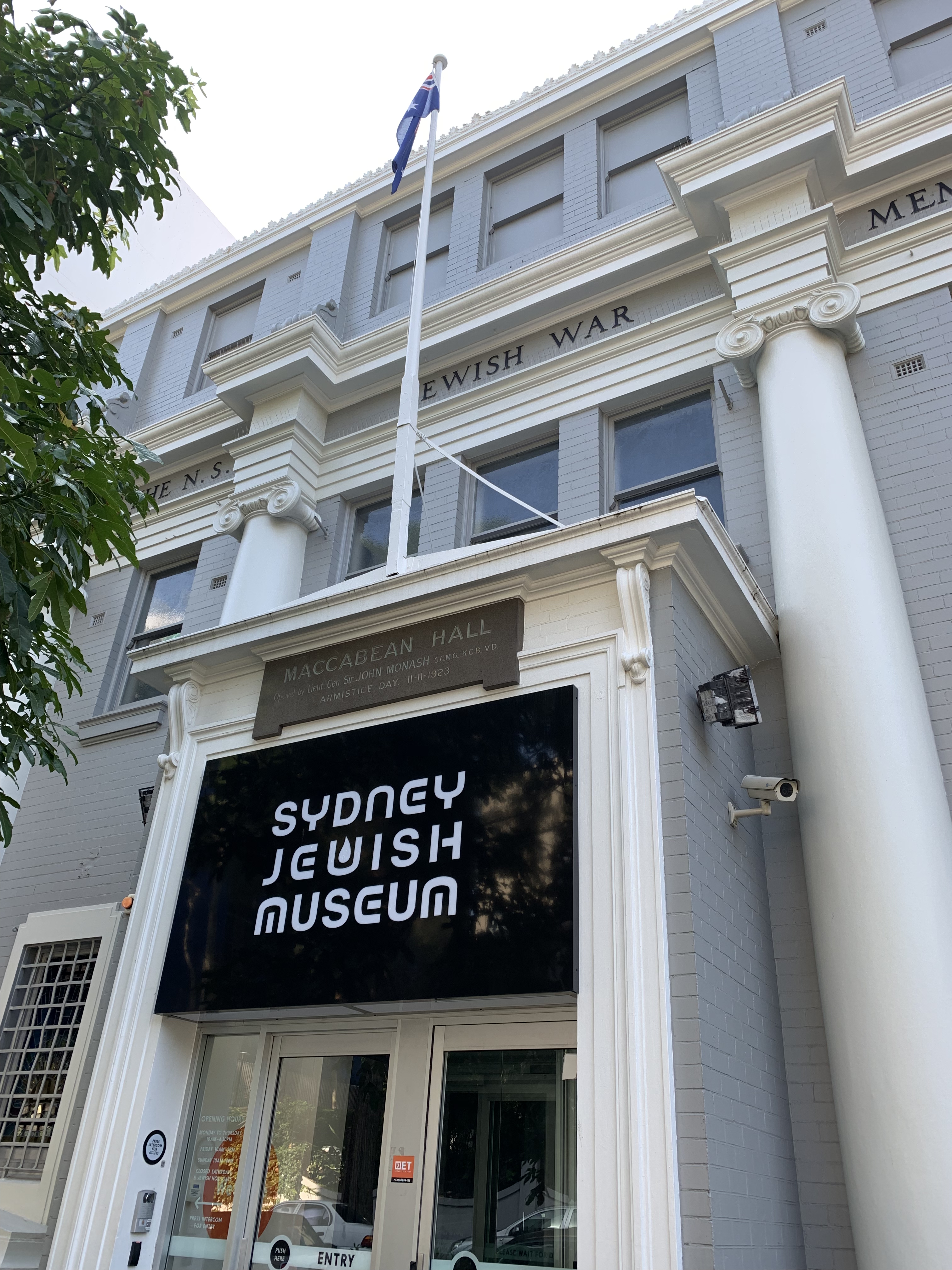
In October 2018 I wrote a review on the Sydney Jewish Museum and its newly renovated permanent display (link). I basically had the same thoughts and feelings after visiting this time so I don’t want to repeat myself. I did, however, listen to the audio guide. I wish it was accessible outside of the museum so I could revisit some of the testimonies and read the more in depth information provided. Inside the museum space, it worked really well and, although the interface was quite clunky, it was so enlightening to have survivor testimonies available in each display area.
I also must say that the front of house staff were exceptional and made sure we knew exactly how to download the app and how it worked. Thank you!
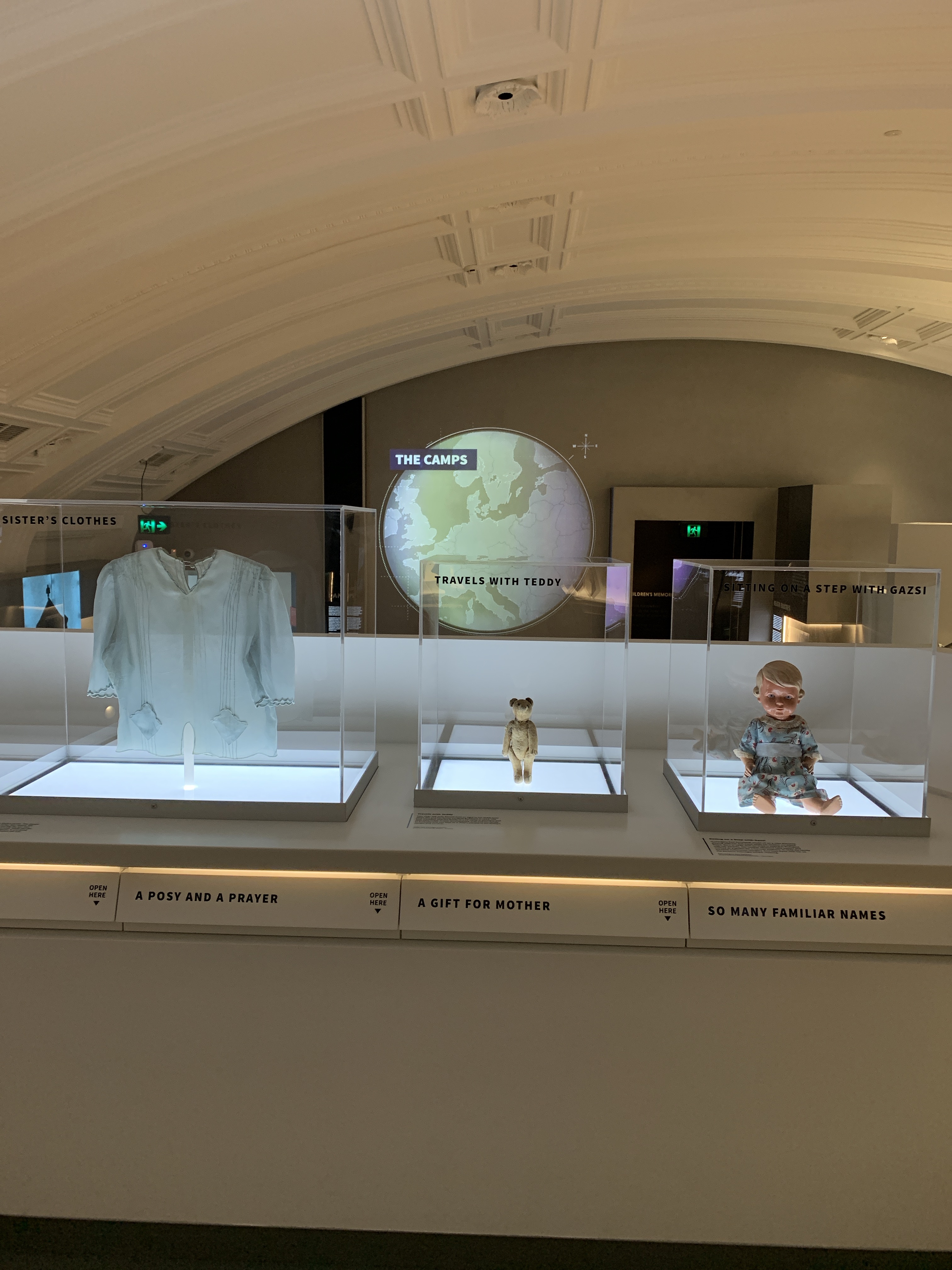
Before moving on, here are a couple more photographs of the permanent display.


For this post, I want to focus on the temporary exhibition The Fate of Things: Memory Objects and Art. The exhibition features artwork by Australian artists Anne Zahalka and Sylvia Griffin. Both are the children of Holocaust survivors. Essentially, these artists have utilised contemporary art to try and piece together their fragmented histories and make sense of their past.
The display is housed in a special temporary exhibition space. It is a bit difficult to find if you’re not familiar with the layout of the museum. Towards the end of the permanent display there is a door leading to the cafe. Walk through the door, through the cafe and you will find it down the corridor. Easy to miss but definitely worth finding!
Here are a few of my favourite artworks on display.
1. Inhabit by Sylvia Griffin – linen and human hair
This collection of dowry linen once belonged to Griffin’s mother. Embroidering her own hair around the monogram shows how delicately family and stories are interwoven. It also symbolises how, in Jewish graveside tradition, the monogram is being replicated (usually through stones placed on the grave, but, in this case, through stitching).

2. Little Memorials by Sylvia Griffin, linen and plaster
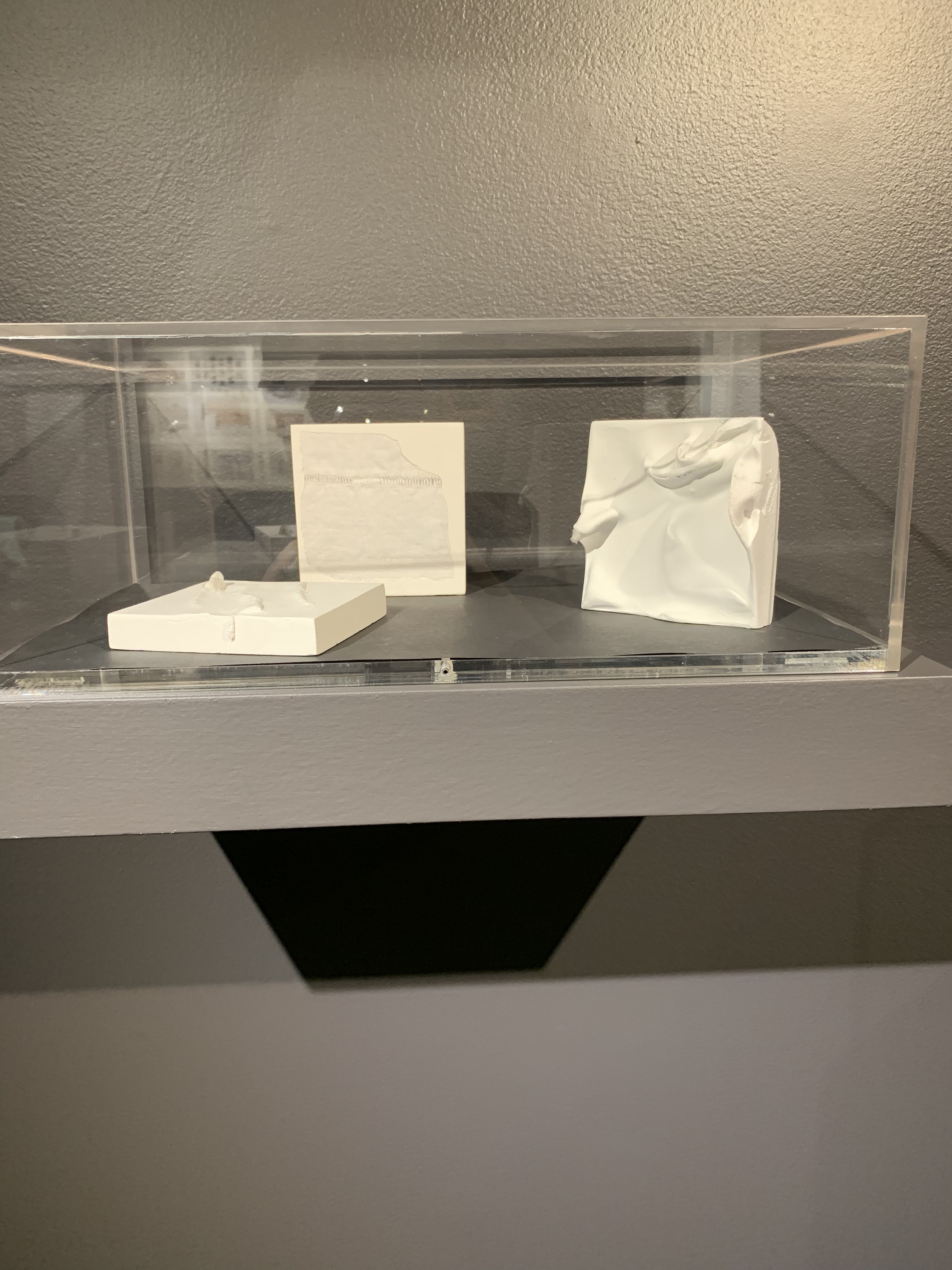
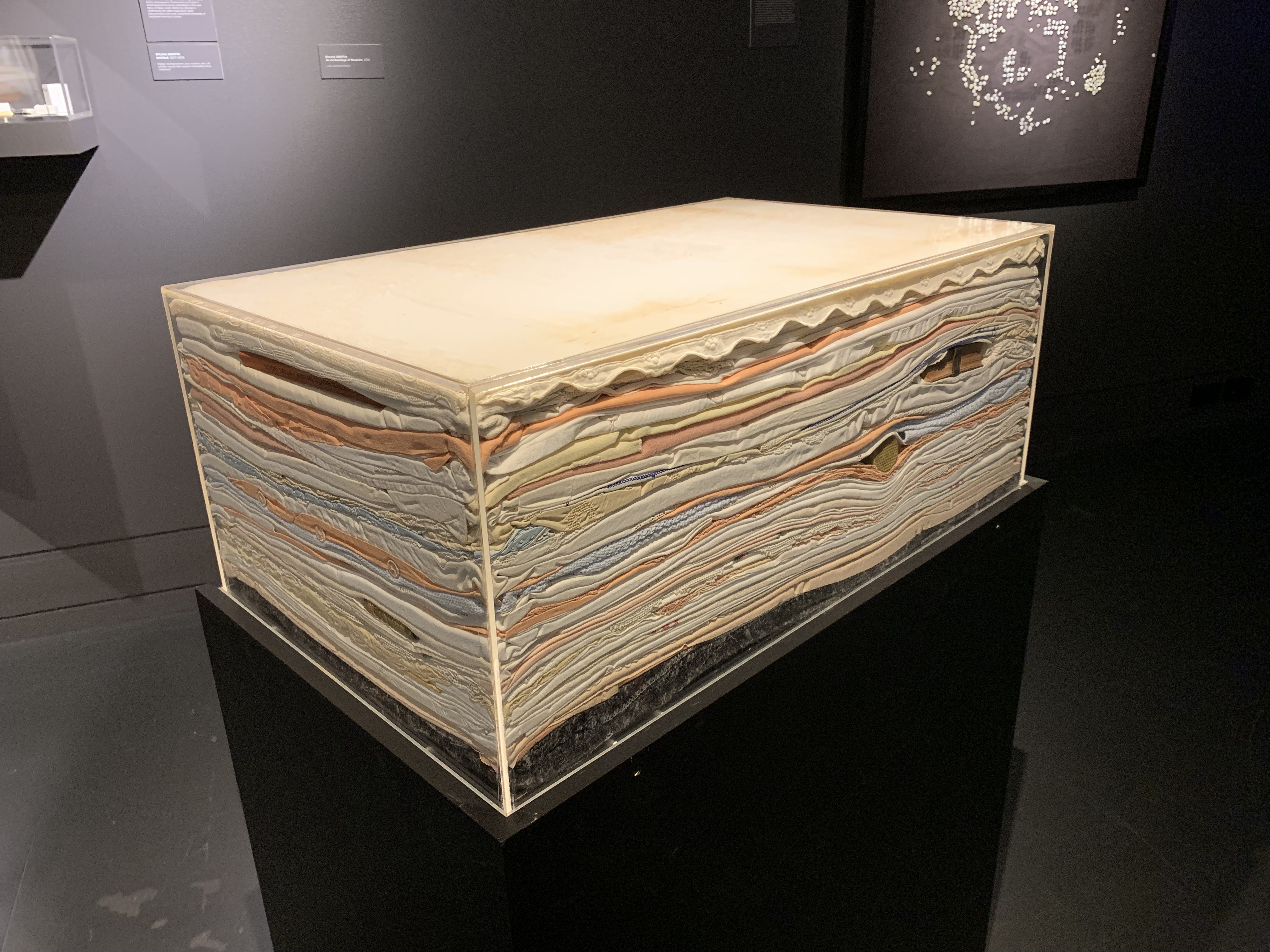
3. An Archaeology of Diaspora by Sylvia Griffin – linen and personal objects
I found it quite interesting that not every object label had an explanation. Instead, some of the artworks were grouped together on one label that explained them in relation to an overarching concept. An Archaeology of Diaspora, along with two other artworks, challenges the ‘materiality of traditional memorial culture’ and how these seemingly impersonal objects can shed light on someone’s personal memory. Between the layers of linen are small keepsakes, only partially visible.
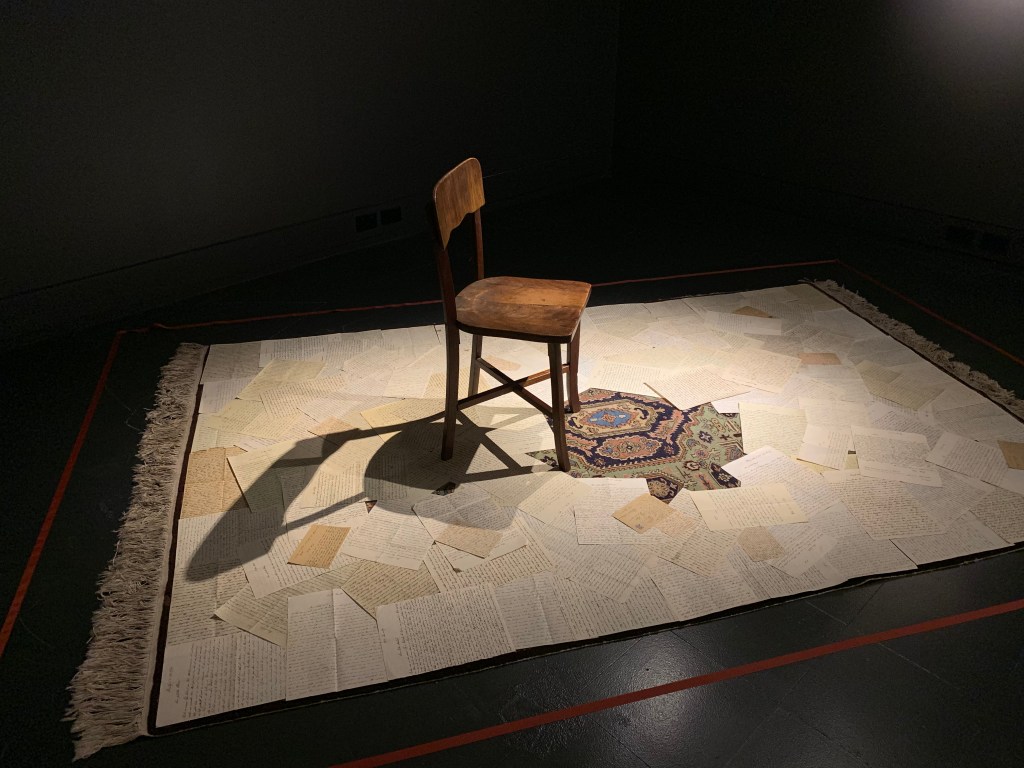
4. A thousand kisses across the sea by Anne Zahalka – Persian carpet, letters, chair and pins
Out of all the artworks on display, this, for me, had the most impact. When Zahalka’s mother passed away in May 2016, she was tasked with sorting through her belongings. Zahalka discovered fifty letters written by her grandmother to her mother. A handful have been pinned to a Persian carpet that belonged to her mother. A reminder of her family home in Vienna that she never had the opportunity to return to. During the War, her mother and aunt escaped to England and were separated from the rest of their family forever.
Each letter highlights love, loss and loneliness experienced by her grandmother without her daughters.

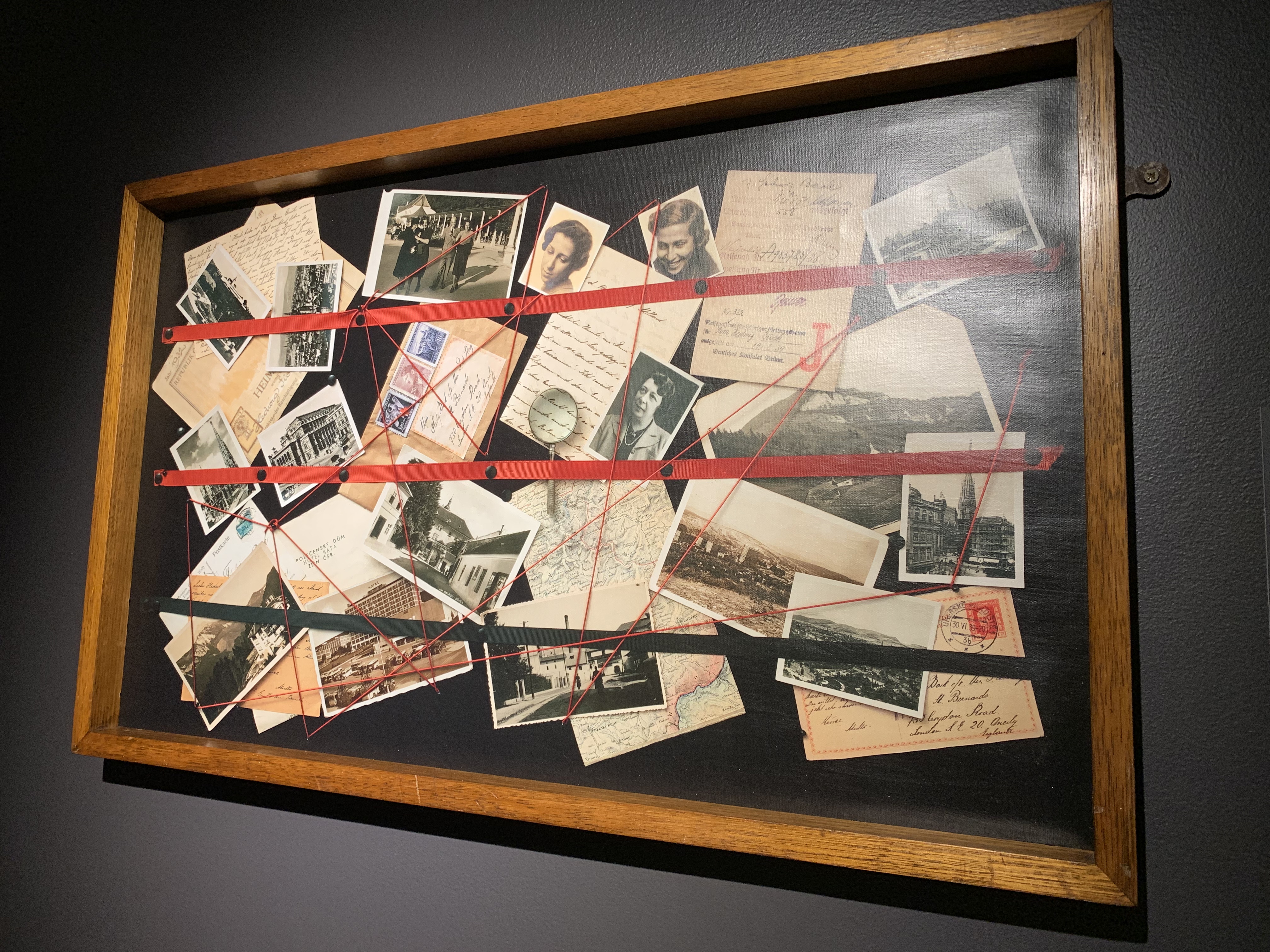
5. In exile by Anne Zahalka – pigment ink on canvas in frame
This artwork is a collection of postcards and photographs that document the Zahalka family’s first years in exile from Vienna following the Anschlüss. In the top centre of the board is the last photograph ever taken of her mother and aunt with her grandmother.
6. Heirloom by Anne Zahalka – wooden glass case, velvet and hair
This artwork was very revealing of the lasting impacts of the Holocaust on Zahalka’s mother. These strands of Anne’s hair were kept by her mother and stored in a plastic envelope. According to Zahalka, her mother was so happy she was born blonde and therefore had less chance of being identified as Jewish.

7. If these objects could speak by Anne Zahalka – photographs
A selection of images depicting table runners, recipe books, and memories of her mother.

8. Keepsakes by Sylvia Griffin – wax
The final artwork I have selected is a series of wax blocks each preserving something personal such as a family photograph, textile or embroidered monogram. This serves as commentary on how we seal and preserve material objects that, to us, are significant.

The Fate of Things: Memory Objects and Art is on display at Sydney Jewish Museum until 28 February 2019. I would like to thank the Sydney Jewish Museum for providing me with two free passes to see the exhibition.
 Curate Your Own Adventure
Leave a comment