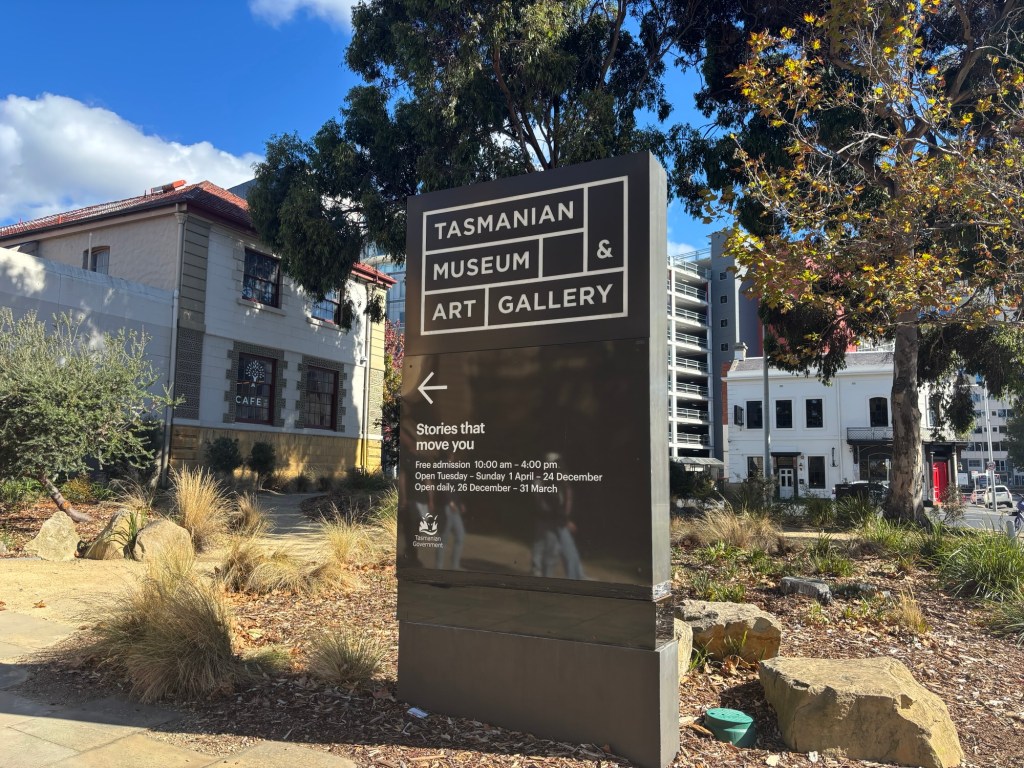
Over the Easter long weekend, I was down in Hobart enjoying a relaxing holiday. Initially, I had no plans to visit the Tasmanian Museum & Art Gallery. This is mostly because I have visited it in the past quite a few times. While searching for things to do, I saw that they had a new exhibition titled Restoring the Past. Historically, I have really enjoyed exhibitions that shine a light on behind-the-scenes museum work, especially conservation. Although a small exhibition consisting of one room and a few artworks, it offered an excellent insight into conservation work. I am going to start with an overview of the exhibition then share a few highlights.
Exhibition Overview
The exhibition begins with an introductory panel before opening into a medium-sized room containing two large portraits, some smaller objects, a few thematic panels, and a video. The focus for the exhibition is the portraits you can see in the photograph below. They were painted by Conway Hart and depict Thomas Chapman, former Tasmanian Treasurer and Premier, and Catherine Chapman. Both paintings have recently undergone conservation work in order to preserve and revitalize them.
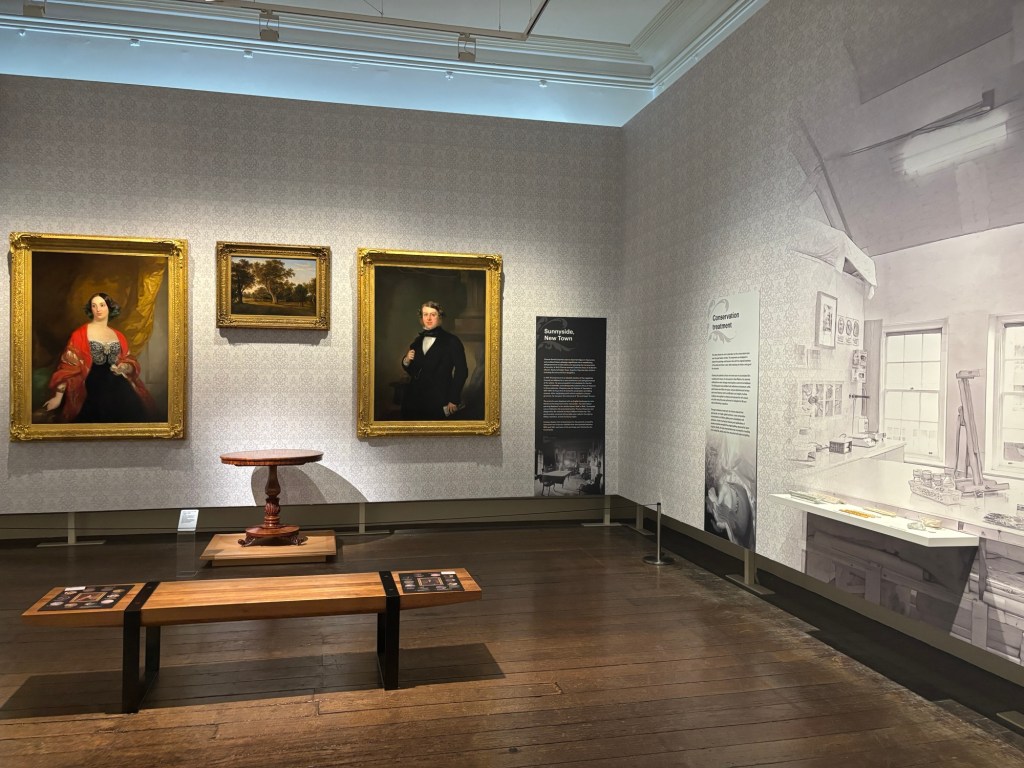
The exhibition contains three main sections/themes. Each have their own dedicated wall space so they are separated quite well.
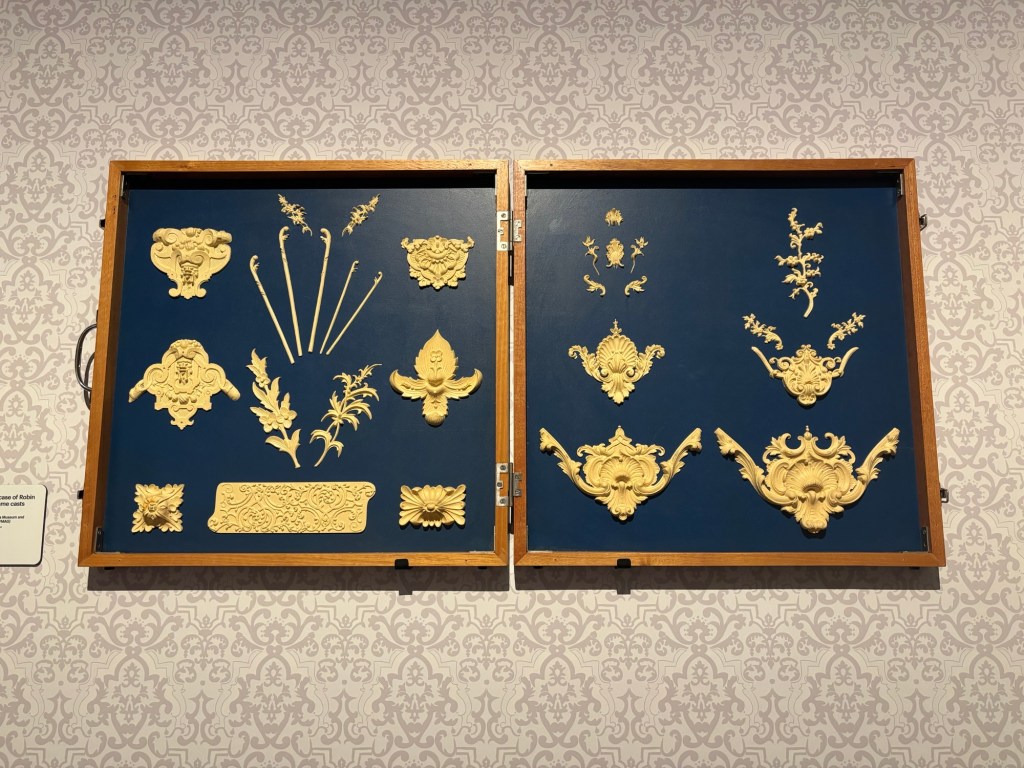
Theme 1: Frames by Robin Vaughan Hood. This section starts with a thematic panel exploring the story of why Hood emigrated to Tasmania and how he started his framing business. The reason it is included is because the frames of both portraits were designed and created by Hood. Next to the panel is a display case of frame casts designed by Hood. They are so beautiful and elaborate and provide an insight into his skill in frame making and what kind of decorations he could add to his frames.
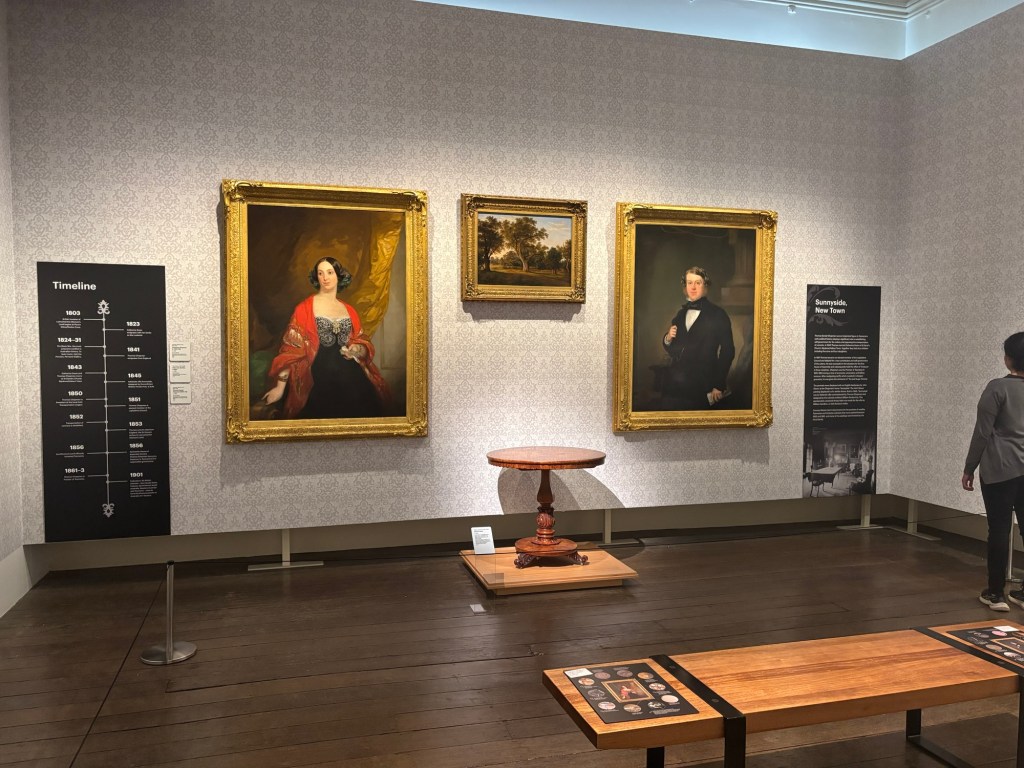
Theme 2: Chapman Family. The second wall highlights the Chapman family and begins with a timeline covering major events in their lives. Next to this is the portrait of Catherine Chapman, a table from the Chapman home, a small landscape painting from where they lived, the portrait of Thomas Chapman, and a thematic panel including more family information. You can see in the photograph below that this is such a well-balanced hang/display.
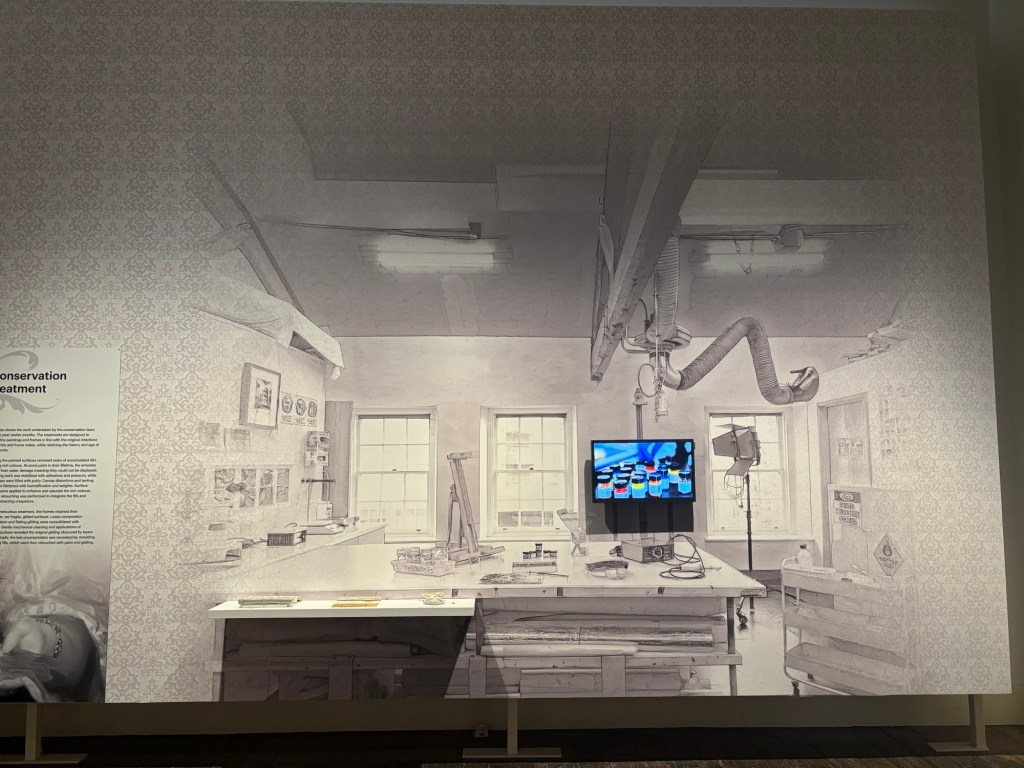
Theme 3: Conservation. Last, but not least, is the section on conservation work. There is a small thematic panel at one end and a video at the other showing the conservation process for these artworks. In the middle is a display shelf with items you can touch to feel the pattern of the frame molds. The entire wall in this section is covered in a watercolour black and white image of a conservation lab.
There is a bench in the centre of the room where you can sit and look at the portraits. That is the exhibition in its entirety. Small, but covers everything you need to know about the conservation of these artworks.
Highlights
1. Condition Before Treatment Cards
The biggest highlight for me are the two condition before treatment cards that can be found on the bench. I’ve included photographs below so you can see both their level of detail, and how they manage to present conservation information in a compact and visual way. They also encourage visitors to compare the cards to the real portraits and focus on specific areas.
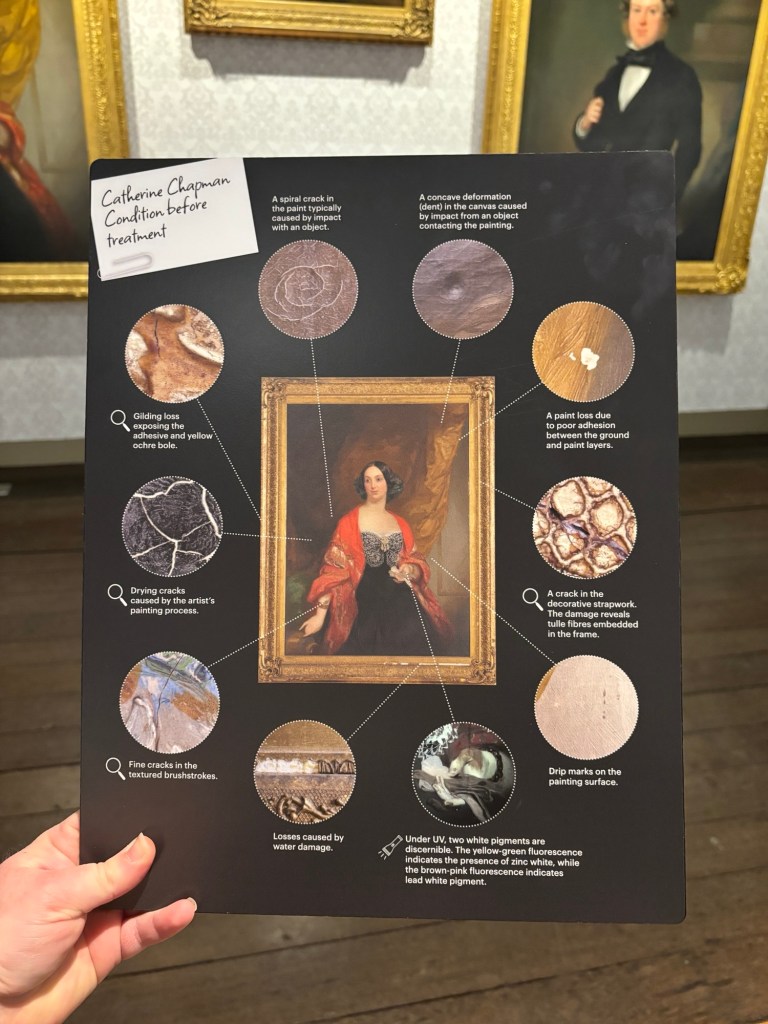
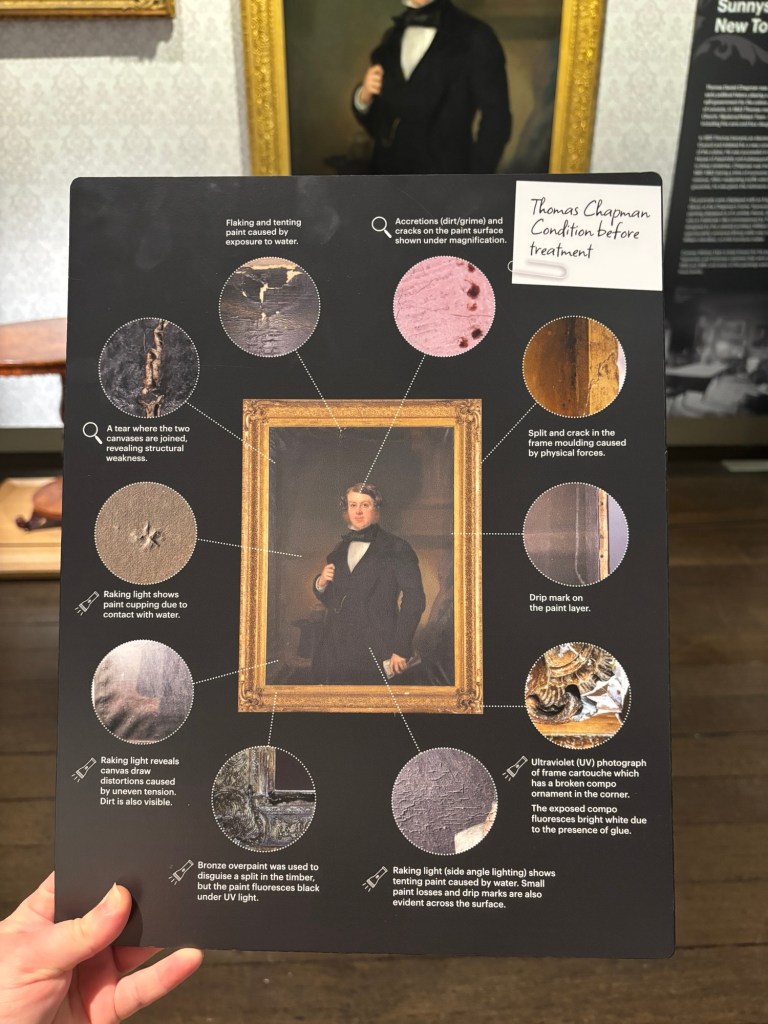
If you flip each sheet over, you can also read about the conservation work completed on the back of the painting and the frame. I have never seen this before and it is such a wonderful inclusion. The card for Catherine Chapman’s painting, for example, has dotted lines highlighting some handwritten inscriptions and a white gesso handprint possibly left by the frame maker. As you can’t see the back of the portraits when they are hanging on the wall, this allows visitors to appreciate some small details that would otherwise be missed.
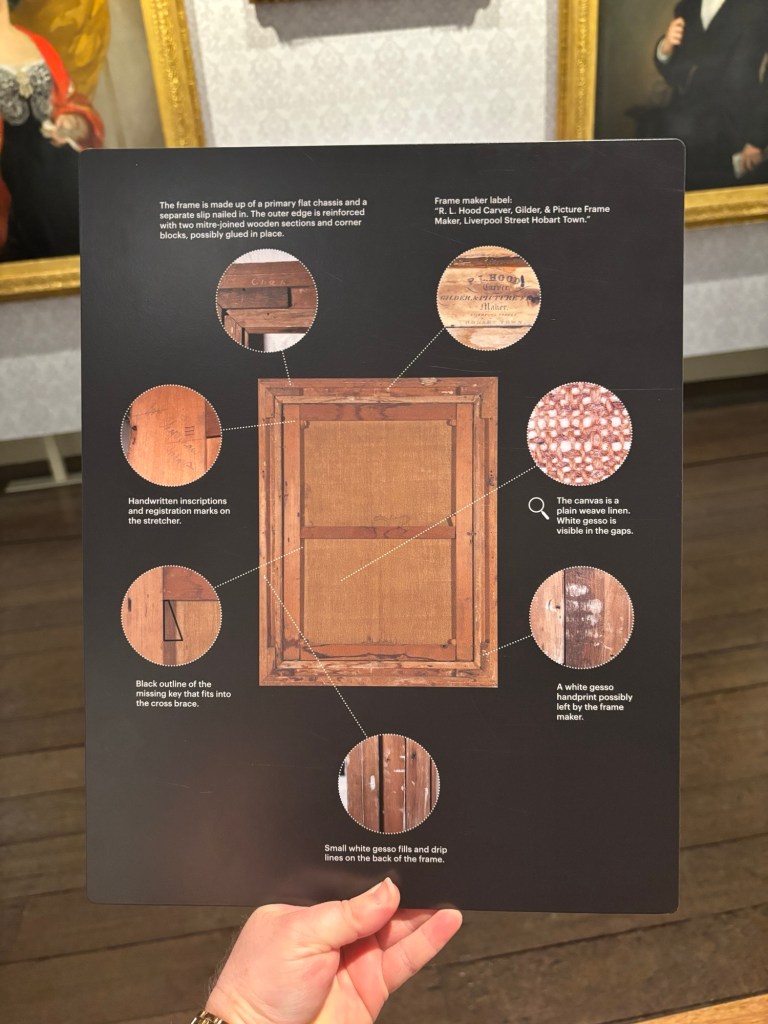
On both cards there are sections on how Ultraviolet photography can show hidden features such as glue used to re-attach a broken frame ornament. I learnt so much about artwork conservation just from reading these cards and learning about all the different components that can degrade and be destroyed over time.
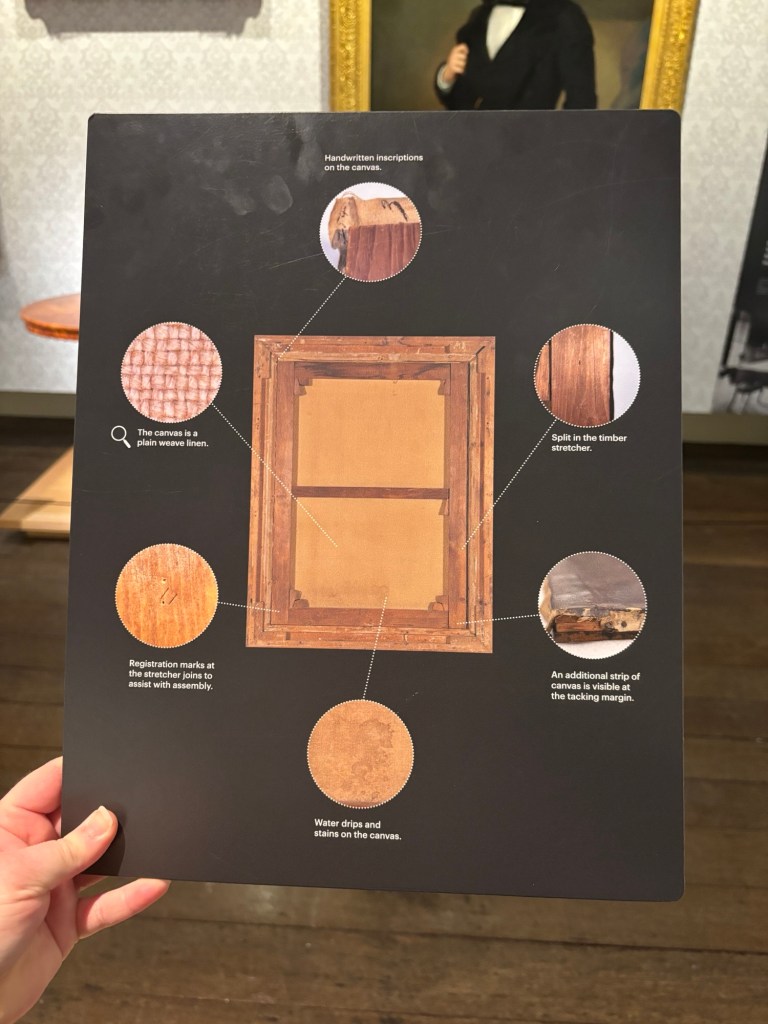
The one potential negative of these cards is that there is only one per painting. I was fortunate enough to be alone in the exhibition so I could be a bit selfish with them and look at both for a long time. I also took each card up to the portraits and looked at them side-by-side. I would have felt way too guilty doing this if another person was in the exhibition space.
2. Touch Display
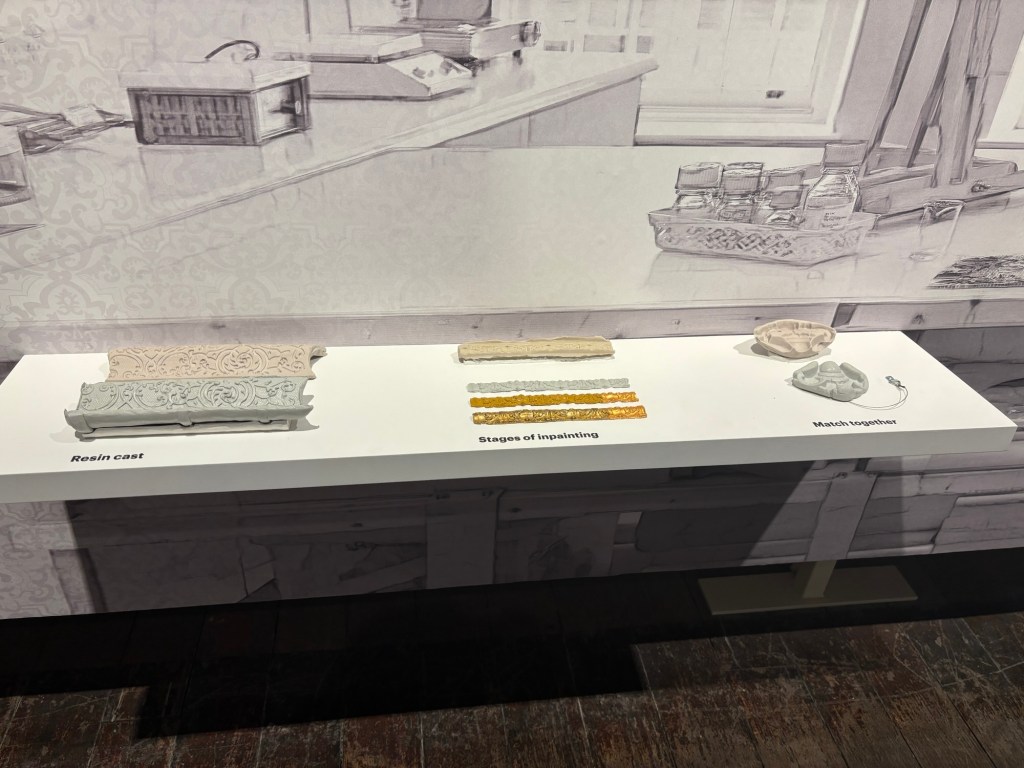
It is great to see that despite the size of the exhibition, there is still a multi-sensory experience included. Being able to touch the molds from the frames made the process of conserving them and their many intricate details so much more engaging. I spent some time tracing over each mold and really appreciating the level of work that has gone into the restoration.
3. Conservation Wallpaper
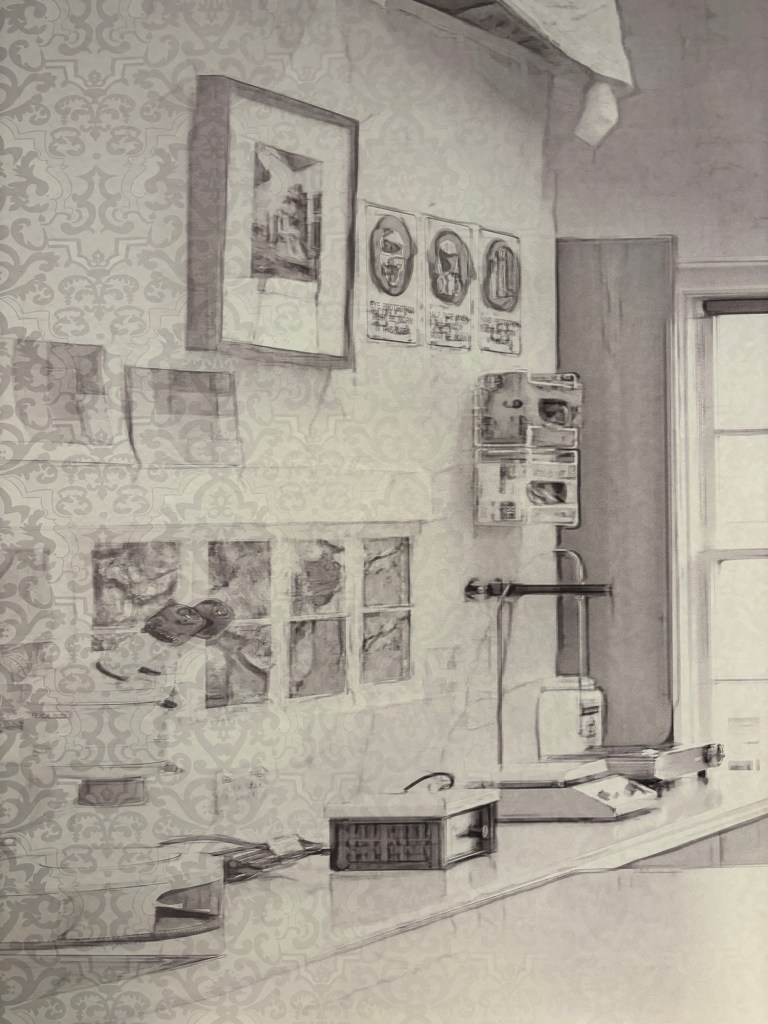
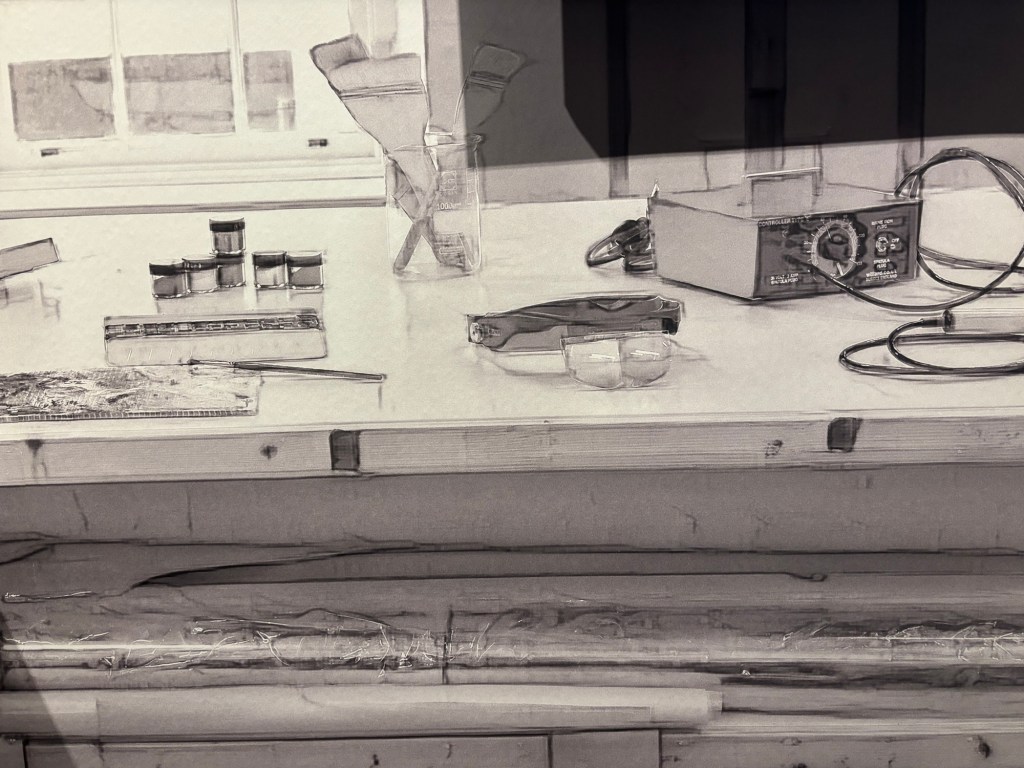
This one is a bit random, but I adored the watercolour wallpaper of the conservation lab. This exhibition design decision is excellent. It allows visitors an insight into what a standard conservation lab might look like including the chemicals, work benches, and fume hoods. For someone not familiar with behind-the-scenes work, this wallpaper takes you into the world of a conservator without being overwhelming or too dominating in the exhibition. The watercolour effect is beautiful and really softened the impact of the full-wall piece.
Conclusion
Although this is a short blog post, I really wanted to write about the condition before treatment cards. I hope to see something similar again as they really captured my attention and sustained my engagement. I don’t think I’ve spent that long looking at one singular artwork before. I’m glad that these types of exhibitions continue to bring me joy and I hope to see more conservation-focused exhibitions in the future.


Leave a Reply