
I have been in Adelaide this week for the Australasian Institute of Anatomical Sciences conference. It was a fantastic gathering filled with thought-provoking presentations and inspiring facility tours. Before heading home, I am spending a long weekend in the city to rest and recuperate, as well as visit museums and heritage places. There may also be a chocolate factory tour thrown in the mix. High on the list was West Terrace Cemetery on the outskirts of Adelaide CBD. Only a 1.1km walk from my accommodation. It is a massive cemetery and the first established post-colonisation in the state of South Australia. This post is going to cover the heritage listing of the cemetery, the engagement/interpretation activities on offer, and a concise explanation of the common grave symbols.

Heritage Listing
The West Terrace Cemetery was inscribed on the South Australian Heritage Places database in 1989. The main reason being, it dates back to the beginnings of colonisation and contains the graves of a number of significant political, religious, and social figures. The monuments inside the cemetery document various historical events and shed light on, for example, migration patterns. This information was sourced from its database entry.
While the entry is short, you can find the history of the cemetery elsewhere. Plans for the cemetery were part of the original 1837 design proposals for the city of Adelaide. Despite being upwind from the city centre, and therefore posing a perceived disturbance to people’s health and the city’s environment, plans were approved. The first registered burial, James Laffan, occurred in 1840. Important to note that 500 individuals had already been buried in the space unofficially. Since its opening, there have been a number of significant people buried here, including the first Australian female graduate, Julia Margaret Guerin, and musician/composer, Percy Grainger.

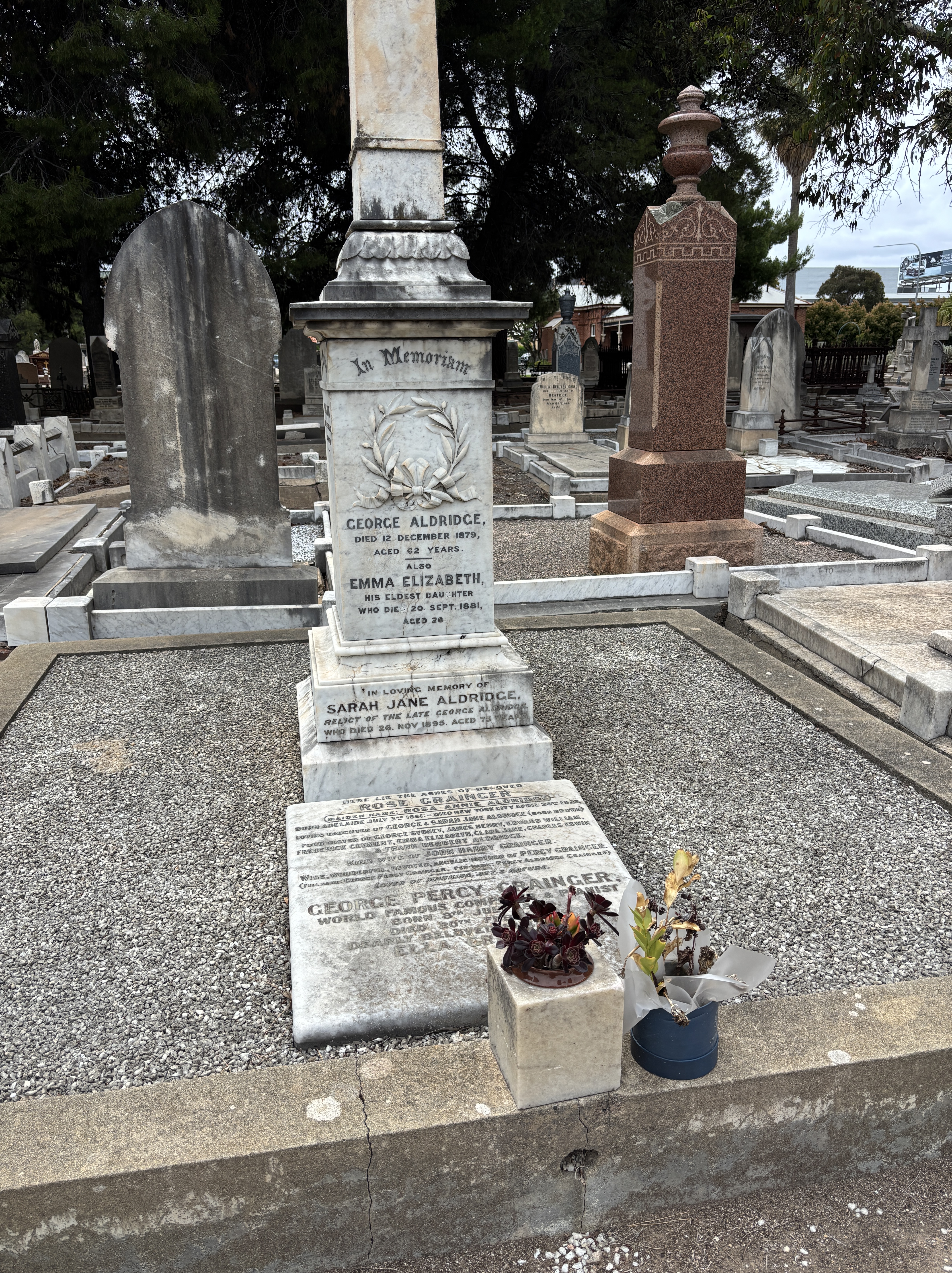
As with many cemeteries, it is divided by religious denomination. There is a specific section for Jewish, Catholic, Anglican, Quaker, and Islamic burials. As you walk around the cemetery, the different areas are clearly signposted. There is one section that has been reserved for those who served in the Australian Imperial Forces or AIF.
Within the grounds of the cemetery there is one chapel, the Smyth Memorial Chapel, built in the 1870s. Father John Smyth was an administrator of the Catholic Archdiocese of Adelaide hence the name. As this is one of the only mortuary chapels within a major cemetery in Australia, it is additionally inscribed on the South Australian Heritage Places database.

Engagement and Interpretation
Adelaide Cemetery Tours offer four different engagement experiences – self-guided tours, day tours, night tours, and private tours. Unfortunately, there were no day or night tours available for my visit. Instead, I elected to go on a self-guided tour. At the main cemetery entrance gate, you will find the Curator’s Cottage. On the side of the Cottage, there is a panel displaying five self-guided tour options:
- Stories of the Everyday
- Natural Heritage
- Beliefs, Attitudes & Customs
- Trailblazing Women
- Heritage Highlights

The tours range from 1 – 1.5 hours and between 1.2 – 3km. Despite the cemetery being extremely organised with pretty safe pathways, it is definitely not accessible.
I opted for the Heritage Highlights tour as it is the longest and I had plenty of time. After deciding which tour to take, you can scan a QR code and open it on your personal device. You will see a map of the cemetery with a number of stops highlighted. When you arrive at each stop, you select it on your map and read the accompanying information. It would be great to have an audio guide option that includes some more wayfinding guidance. The estimated time to complete the tour was 90 minutes and I completed it in just over 90 minutes. One of my weaknesses is map reading. I got lost a few times along the way. However, there are some very helpful signposts around that guide you along the right pathway.
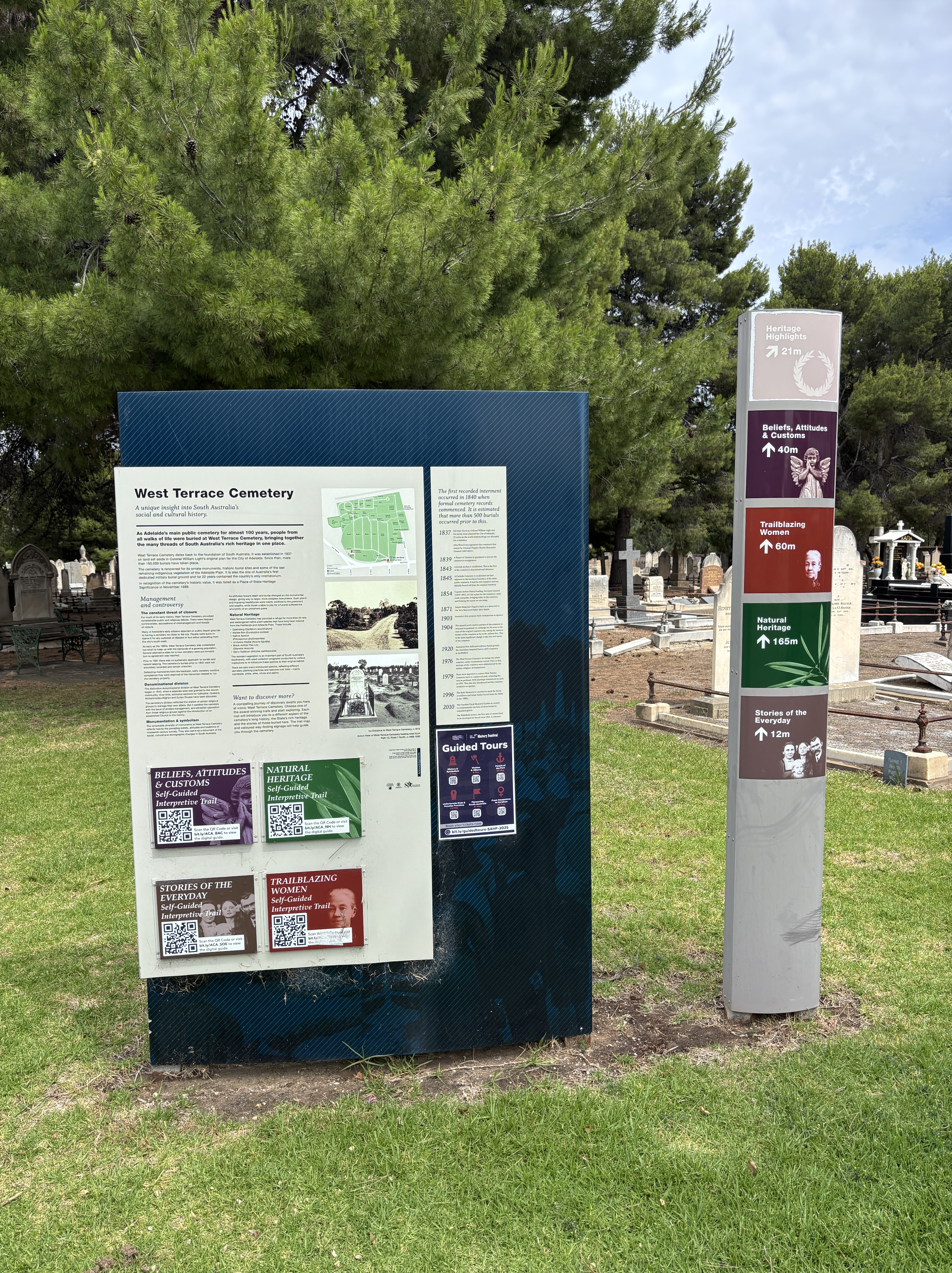
While the majority of the tour was fascinating, it was heavily colonial-focused and didn’t really stray into the Jewish or Islamic sections. I can imagine there are a few more tours on the horizon to fill these gaps and silences.
What is an absolute positive is that these tours do exist and can engage people outside of formalised tour groups. I was delighted by this level of organisation and care. I was also impressed with the upkeep of the cemetery and just how easy it was to move around and visit the different graves.
Grave Symbolism
To finish, I want to share a few of the common grave symbols I saw throughout my visit. There are, of course, hundreds more I am not mentioning. These are just the ones that stood out to me.
1. Angels
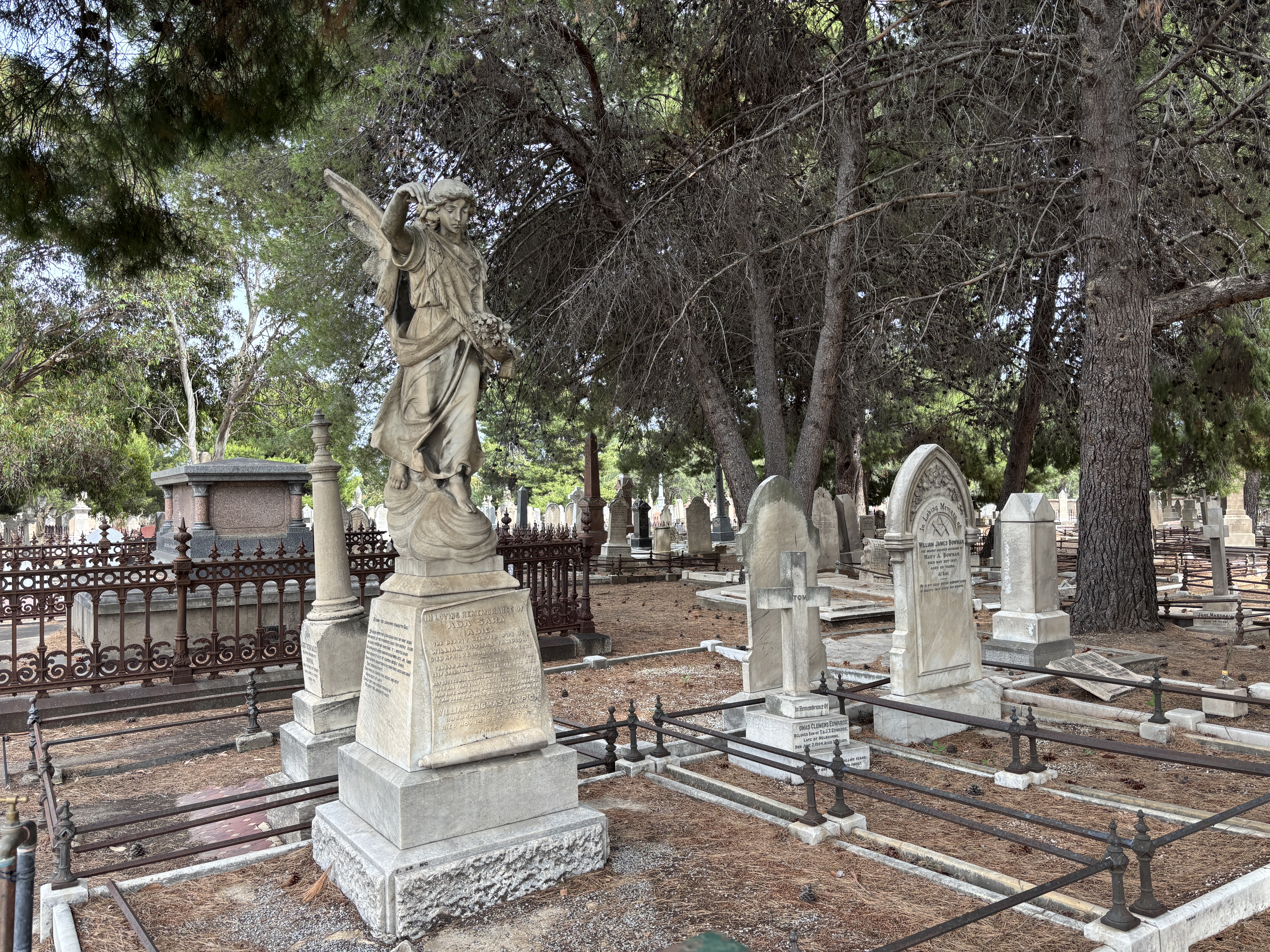
Angels are one of the most common symbols you will see in a historic cemetery. They can represent grief, hope, and empathy. The ones I saw in the cemetery are guardian angels – watching over the dead with their arm raised to the sky/heaven.
2. Covered/Uncovered Urn
On top of a number of graves is an urn that is either covered or uncovered. Covered or draped urns symbolise the separation between the living and the dead and can be traced back to covering the body after death or covering mirrors and clocks during mourning (Victorian era). Urns that are uncovered represent the body as a vessel and the immortality of the soul as it ascends to heaven.

3. Sheep
I saw one sheep and thought the individual must have been a farmer. However, this is a lamb and is used to represent innocence and purity. Rading the epitaph, everyone buried here was young and a life taken too soon.

4. Book
A few of the gravestones have books on them which could either represent the Bible or act as a book of life, documenting the good deeds of the individual.

5. Holding Hands
Last, but not least, is the motif of the holding hands. These can represent love, reunion in the afterlife and enduring bonds. Having hands clasped means that the hope is to be reunited with this person in the next phase of life.

As well as these symbols there are many different flowers and plants that all have their own specific meaning. If you are looking to explore a cemetery, I highly recommend purchasing a cemetery symbolism book to help guide you through the imagery. For example, Stories in Stone: A Field Guide to Cemetery Symbolism and Iconography by Douglas Keister.
Final Thoughts
This was a very relaxing way to spend a Saturday morning. I was able to engage with the cemetery more than I was prepared for, which was a great highlight. If you are able to walk around some uneven ground, I would encourage a visit to this cemetery for its historic and aesthetic significance.
 Curate Your Own Adventure
Leave a comment