
I have been reflecting on the museums I visited in September and creating a list of exhibitions/museums for blog posts. At the very top of my list is the Deutsches Medizinhistorisches Museum (German Medical History Museum) located in Ingolstadt, Germany. I was fortunate enough to visit this museum three times over the course of the International Association for Medical Museums and Collections conference. The majority of this post will focus on their temporary exhibition, Ansichtssache. Menschliche Präparate im Museum. I will try to write a very brief paragraph at the end about their other displays.
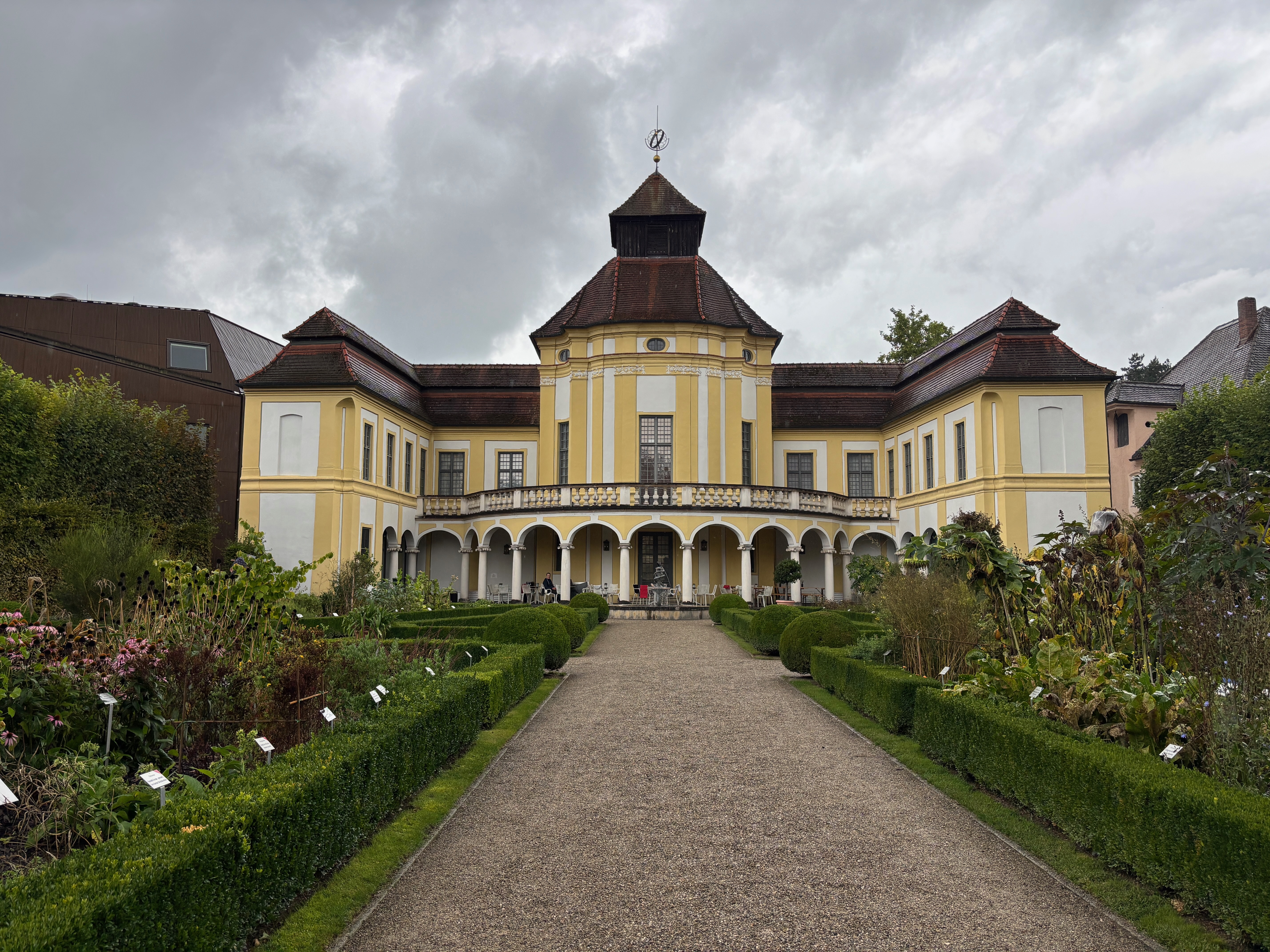
If you are wondering why Ingolstadt sounds familiar, you probably recognise it from Mary Shelley’s novel, Frankenstein. Shelley was inspired by Ingolstadt due to its connections to the Enlightenment-era. In the novel, Victor Frankenstein studies at the medical university (the university is now in Munich), and creates his famous monster. The building that was the medical university is now the medical history museum which is an excellent re-purposing of the space. The following will outline their current temporary exhibition which is located on the second floor of the building.
Ansichtssache. Menschliche Präparate im Museum
Roughly translated, this exhibition focuses on visitors’ opinions of displaying human specimens within a museum space. Considering my current role, working with a similar collection, I was incredibly interested in seeing how the specimens would be displayed and what kind of information would accompany them. The exhibition labels and panels are in German but there is an English translation guide available before entering the exhibition.

The exhibition covers nine topics and themes. I will note here that this is no age limit for visitors and no rules surrounding photography. I am more comfortable not taking and sharing images of human specimens so there will be none in this post.
Theme 1: Teaching Collection
When you first enter the space you see a single human specimen, a heart, on display in a dark room. On the walls surrounding the specimen are a series of questions such as ‘would I consent to it?’ and ‘is this real?’. I think this is a powerful way to start the exhibition as it not only ignites curiosity, but encourages a level of engagement with ethical questions. The other reason why I think it’s effective, is because if you are uncomfortable answering these questions, you can turn around and exit the space. If you want to proceed, you already have an idea of just how much self-reflection will be involved during your visit.

Around the corner is a metal display case with ninety anatomical and pathological human specimens on display from the Berlin Museum of Medical History of the Charité. A number of these specimens have corresponding audio guide numbers so you can hear more about what is on display. This is a very traditional type of display orientated towards medical teaching.
Theme 2: History
To the left of the metal cabinet is a small display focusing on anatomical history. It is a small but valuable inclusion, increasing historical awareness. There is a particularly interesting label on historical body donation and how voluntary donation was only established in the 20th century. Considering the exhibition floor space available, I am glad this theme has been included. The history of anatomy is integral to the context of displaying human specimens.
Theme 3: Biography
There are three highlight themes for me, and this is one of them. In this section, the research undertaken to discover the individual behind a specimen is on display. Not only is the physical human specimen on display, but images from the life of the individual, city plans of where they lived, and corresponding life documents. This is juxtaposed against other hearts which have no provenance information available. It sparks questions such as, should the stories of individuals be shared or should the specimens remain anonymous? By knowing who the individual was (or is), does this impact how we view the specimen? For me, attaching stories, when they are known, is critical. Researching into stories should be a priority so the specimens can be re-humanised, and their inherent dignity displayed. It is the intent that can be more important than the outcome. However, this needs to be transparent so visitors can see there is a level of care and research happening. Sharing personal details such as names is more difficult, but it is important to note that anonymous stories can still be shared.
Theme 4: Body Donation
The theme of body donation is something so personal. I was interested to see how this translated to display. In this section, there are a series of photographs from the Institute of Anatomy in Erlangen. Photographer Martin Eberle used photography to document the stages of body donation from arriving at the University to the final resting place of the memorial garden. It is one of the best depictions of body donation I have seen. The photographs really guide you through the stages and reflect on the importance of real human body donation in science and medicine. It is a balance of emotional and informative.
Theme 5: Preparation
Another highlight theme for me is the section on human specimen preparation. Alongside a wet/potted specimen and corrosion cast, is a digital screen where you can select different methods of preparation and watch them in practice.
Theme 6: Research
This theme could potentially be the most confronting for visitors as it displays and discusses a foetal specimen. It is delicately addressed through the sub-themes of ethics and art. For ethics, there are questions surrounding the role of anatomists and their work stemming from human specimens that are likely to have been taken with little to no consent. For art, Udo Andraschke and David von Bassewitz collaborated on a series of cartoon-like images and text to explore the idea of difficult collections and difficult conversations. The works are on display as both prints and in a book you can read through.
Theme 7: Alternatives
This theme asks the question, why use real human specimens when you can use alternatives? On display is a real tuberculosis specimen and a model of tuberculosis for visitors to compare. Are models truly able to capture a variety and diversity of lived human experiences and changes to organs through disease processes? Will digital replace the real? This is, of course, a discussion not confined to the walls of the museum. I believe that nothing can substitute reality, and rather than hide from ethics, the real can spark important and complex conversations that sit alongside traditional teaching.
Theme 8: To Exhibition or Not to Exhibit?
My third highlight theme is towards the end of the exhibition. It is a simple, yet effective way to consider if and how to display such human specimens. In the room are six display cases, all different, all containing a human specimen. One is completely clear, one has only the front visible, one has doors attached to open, one has a small viewing gap, one contains an empty specimen jar, and one is completely empty. Visually seeing the variances of display is what has the most impact. It helped me to think about different methods of display.
Theme 9: What Do You Think?
Before leaving the exhibition, you can share what you think. There is a digital and physical option to submit your answers. Do you think human specimens should be on display? Why, why not? I spent a lot of time with my German translator reading some of the answers. I am looking forward to reading any results that emerge from this exhibition.

Other Exhibitions
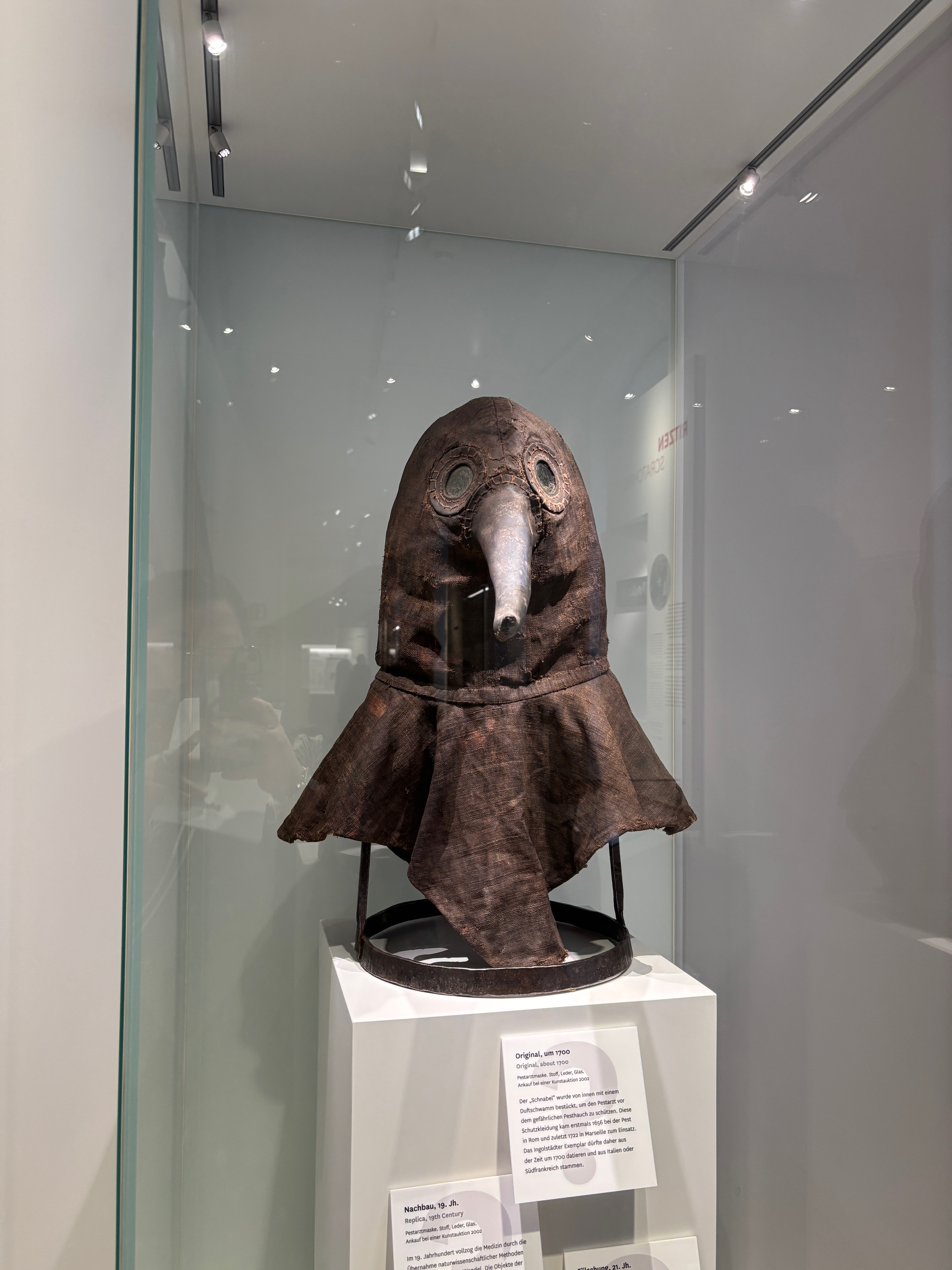
The rest of the museum is not to be missed. There are so many wonderful displays covering topics such as religion in medicine, memorialising doctors (should we?), and a range of pretty confronting past treatments. For me, an absolute highlight was seeing the Plague Doctor mask. Or, more accurately, a pretty perplexing object that is unlikely to have been worn during the plague. It has three labels, offering three different perspectives. An interesting way to display objects without clear information. Towards the end of the museum is a little section on Frankenstein and the Ingolstadt connection. There are some labels in English throughout the museum, but most are in German. I speak a fair bit of German so didn’t struggle too much but when in doubt, translators like Google Translate will give you the gist.
If you need some fresh air, there is a delightful medical garden (and outdoor cafe) to explore. Here you will find all kinds of medical herbs and plants. If you’re lucky, you might even have a photo opportunity with Frankenstein’s monster.

Conclusion
Ingolstadt is close to Munich and definitely worth the day trip. Even if it’s just to see this museum! It is a well-curated, thought-provoking museum that is addressing some incredibly complex and intriguing questions. The human specimen exhibition is on until mid-January 2026. I am really looking forward to following the outcomes from this exhibition and gaining more of an insight into visitors’ opinions on displaying these types of collections.
 Curate Your Own Adventure
Leave a comment