
Over the past couple of weeks I have been travelling through London, Ingolstadt and Munich. In Ingolstadt, I attended and presented at the International Association for Medical Museums and Collections. It was a fantastic conference filled with interesting papers. Before heading home, we are spending a few relaxing days in Munich. On our first full day, we visited the Deutsches Museum to see their health and medicine permanent exhibition. Despite visiting Munich in the past, I’ve never visited this museum. It is huge, covering everything under the general umbrella of technology and science. For example, there are objects and exhibitions relating to agriculture, space, chemistry, and mathematics.
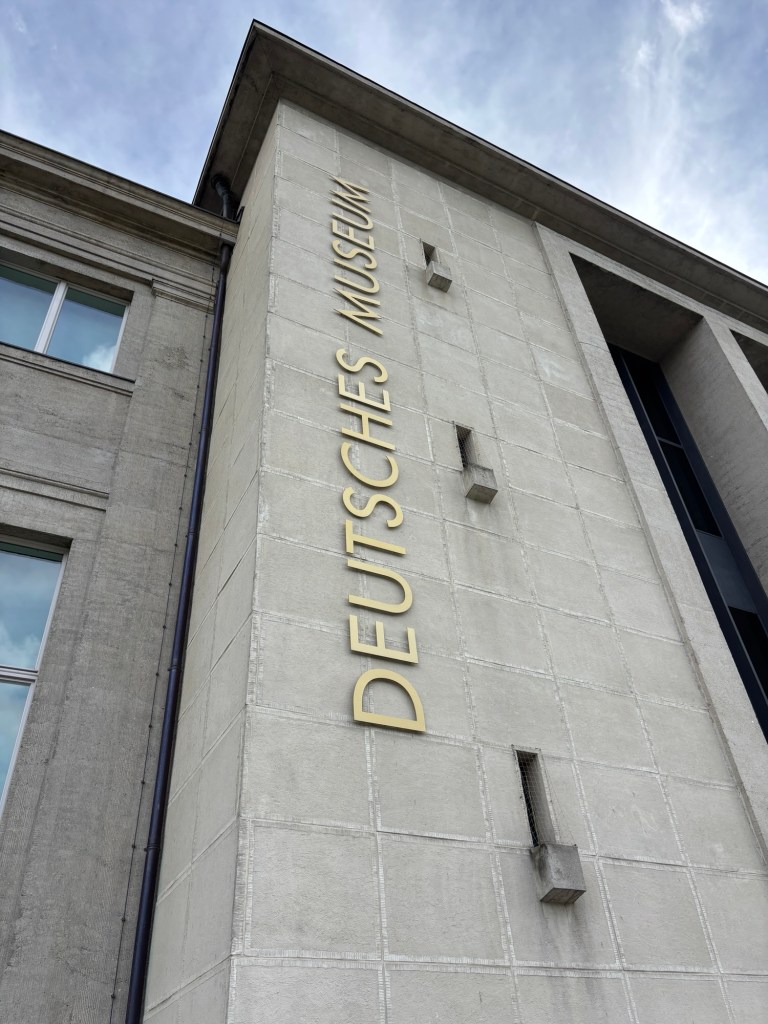
Due to its size, we decided to focus on the health and medicine exhibition, located on the third level. This is one of the best informative medicine displays I have seen. In order to explain why, I am going to focus on four themes: interactive elements, self-testing tools, significant objects, and diverse interpretation.
The exhibition is isolated to one large room that traces health from the head to the toe. To help orientate and guide, there are three large sculptures of a head (start), heart (middle), and foot (end). You are free to explore on your own and not follow one defined pathway.
Interactive Elements
The exhibition is filled with interactive elements, both physical and digital. It is such a hands on space. We spent over an hour engaging with as many interactives as possible.
I want to highlight one interactive we particularly enjoyed. Towards the centre of the exhibition is a large digital touchscreen with the outline of a human body. At first, I assumed it would be similar to other digital screens I’ve seen in health displays. That is, you can explore the different organs or parts of the body by clicking on the outline.
However, this is not the main goal of the interactive. Instead, you select an organ and work through a patient case study. We selected the lung and were presented with a case study of a female smoker who had a large mass in one of her lungs. You are guided through talking to the patient, diagnosis, and treatment. In our case study, we had the opportunity to analyse X-rays and CT scans then suggest a treatment plan. At the end, you can follow-up with the patient and see how their treatment is progressing.
It is an engaging interactive and a great way to inform visitors of the steps involved in diagnosing and treating various diseases.
Self-Testing Tools
Throughout the exhibition are a number of opportunities to test your skills and gain more of an insight into your own body. For example:
1. In the area dedicated to surgery, you can test your suturing skills and learn surgical stitching techniques;

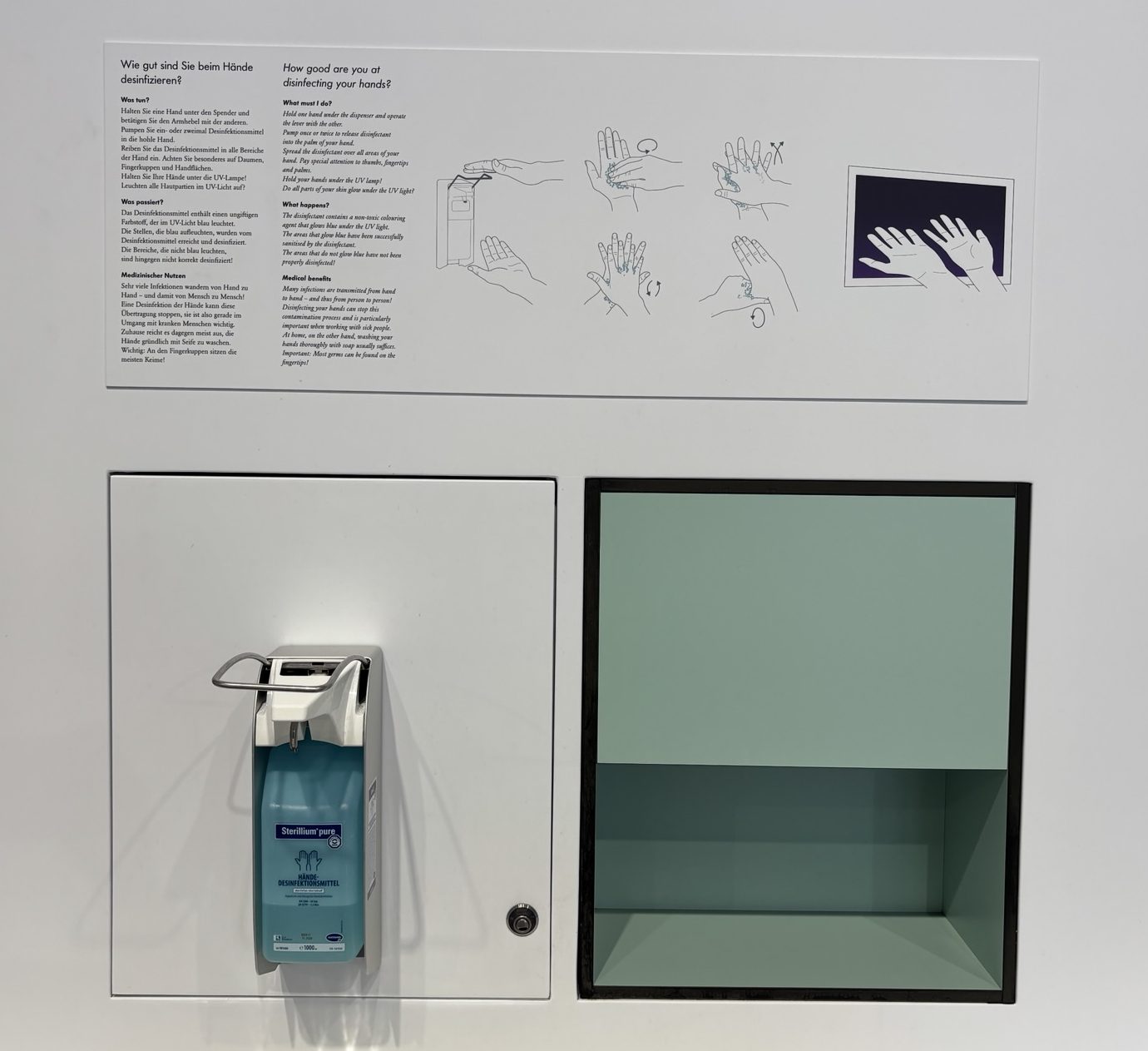
2. When learning about germs, you can place your hands under UV lights before applying hand sanitiser to see the difference it makes.
3. Right at the beginning is a pupil dilation test which shows you how your pupils respond to light.
Coming soon is a hearing test which would have been interesting to experience. These are all a great way to have visitors interested and invested in their own health while exploring the exhibition.
Significant Objects
There are a number of significant objects in this exhibition.
1. Louis Pasteur’s Microscope, 1830
This is one of the microscopes used by Pasteur in his work surrounding pasteurisation.

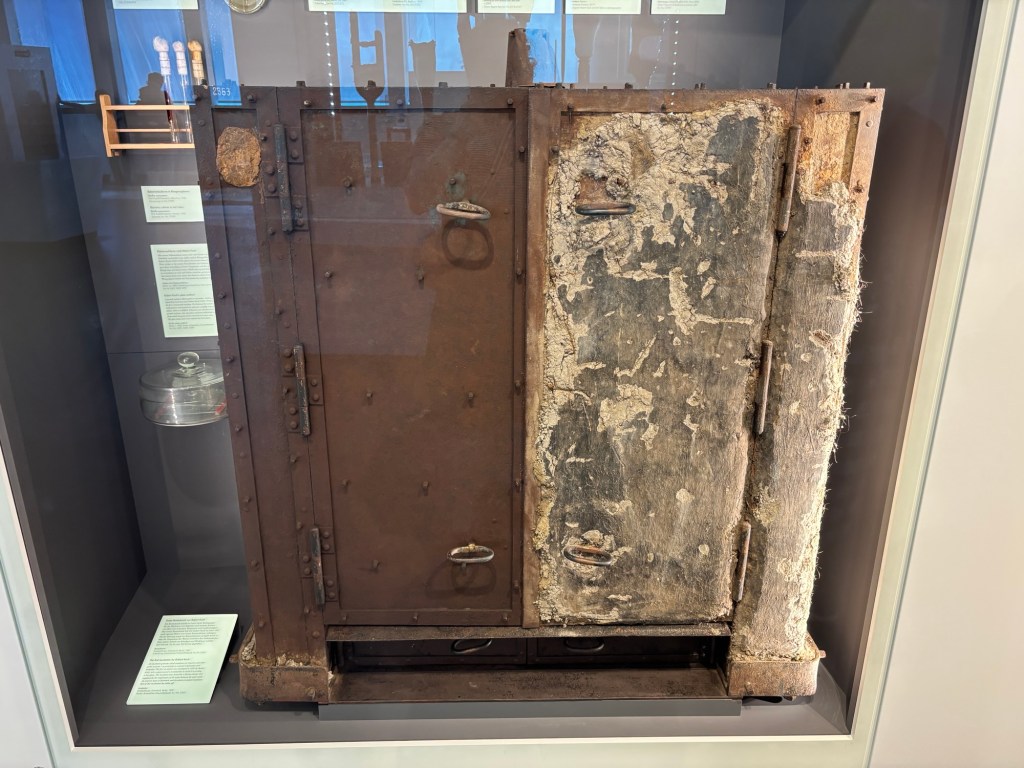
2. Robert Koch’s First Incubator, 1881
Koch built this incubator to support his work on bacteriology (specifically growing bacteria).
3. Miniature Ether Dome Display
The label had no creator information. It is a miniature diorama depicting the first use of Ether as an anaesthetic in 1846.

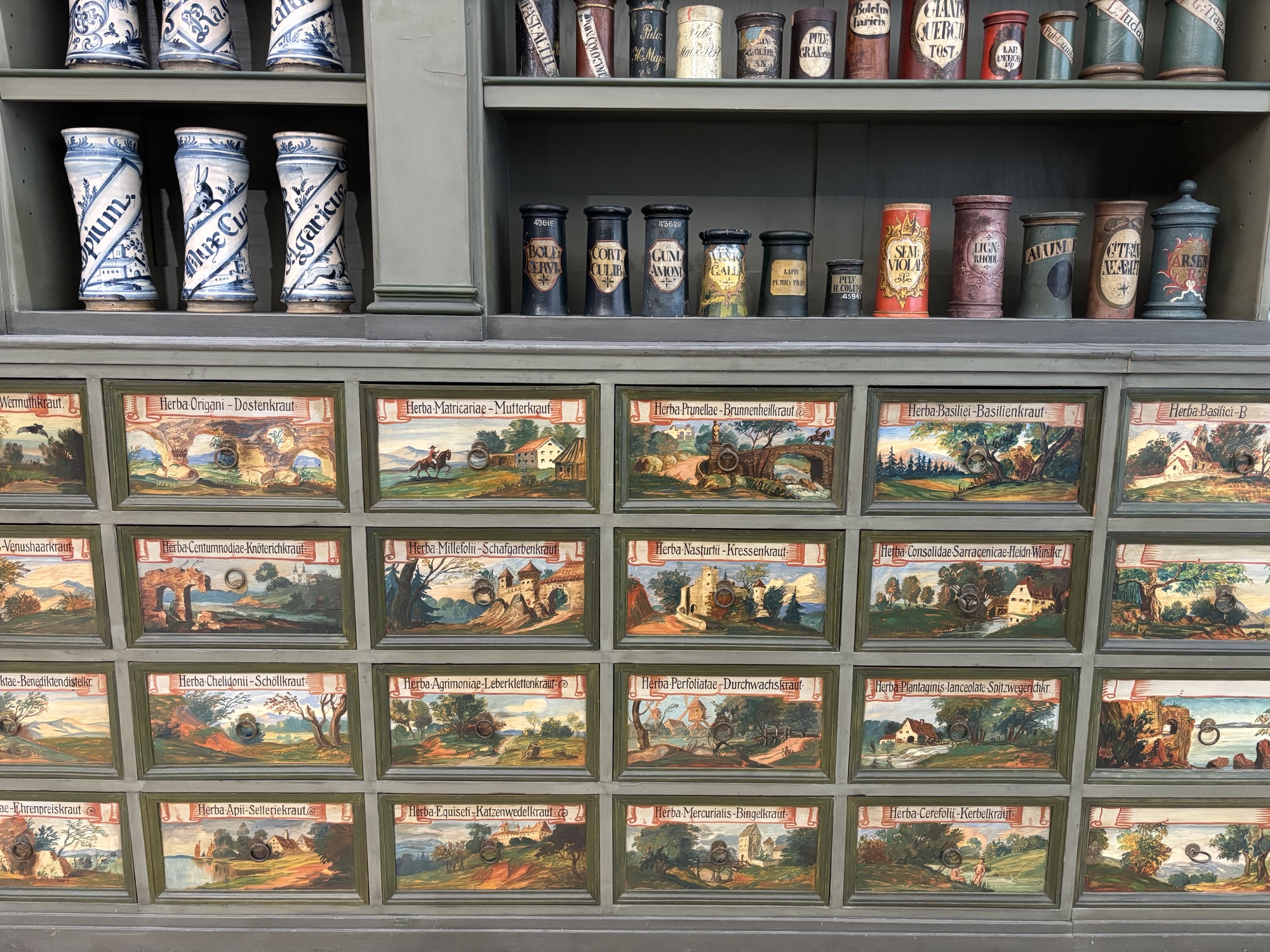
4. 18th Century Pharmacy
Rather than one object, the 18th century pharmacy is a collection of many. This pharmacy is absolutely stunning. It is a teaching example of a historical pharmacy containing over 100 original containers from the St Emmeram Monastery in Regensburg.
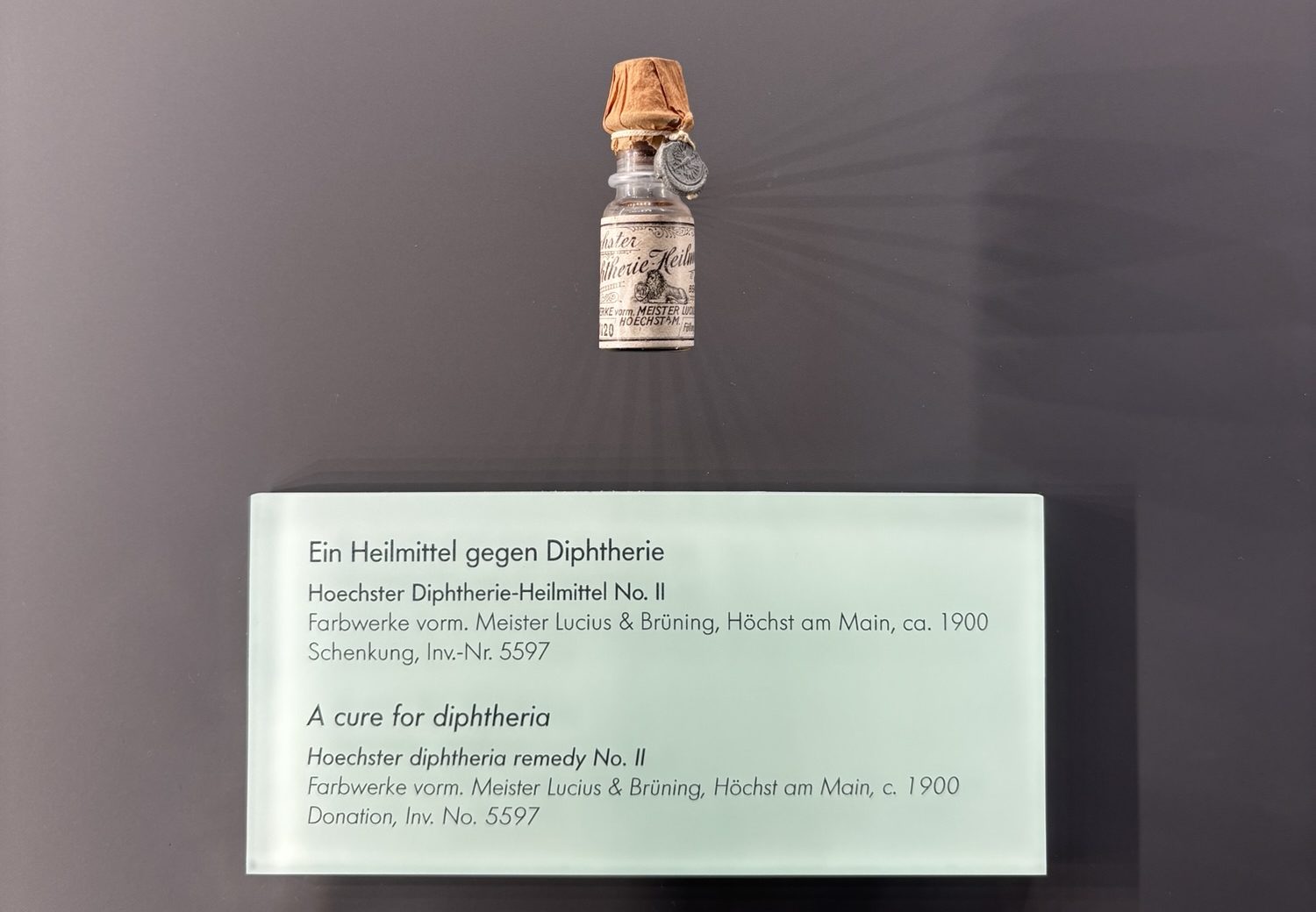
5. Diphtheria Vaccine, 1900
This tiny bottle held the vaccine for diphtheria, circa 1900s. It is one of the most beautiful vaccine bottles in the museum.
There are, of course, so many other objects to explore. Flowing on from this is the final theme of diverse object and display interpretation.
Diverse Interpretation
I thought there was a fantastic balance of visual and textual interpretation used throughout the exhibition. My favourite example is something so straight forward, but so effective. I think it’s because it relates to anaesthetics and I once worked with an anaesthetic collection. The below is a photograph showing the display of two intubation tubes. Rather than having the tubes laying flat, they are displayed alongside a visual of how they are inserted. This attention to detail makes such an impact.

Each main theme has some kind of visual that communicates a lot of complex information in an approachable way. For example, there is a visual focusing on how new drugs are created. Some visuals in the exhibition teach visitors basic first aid such as CPR.
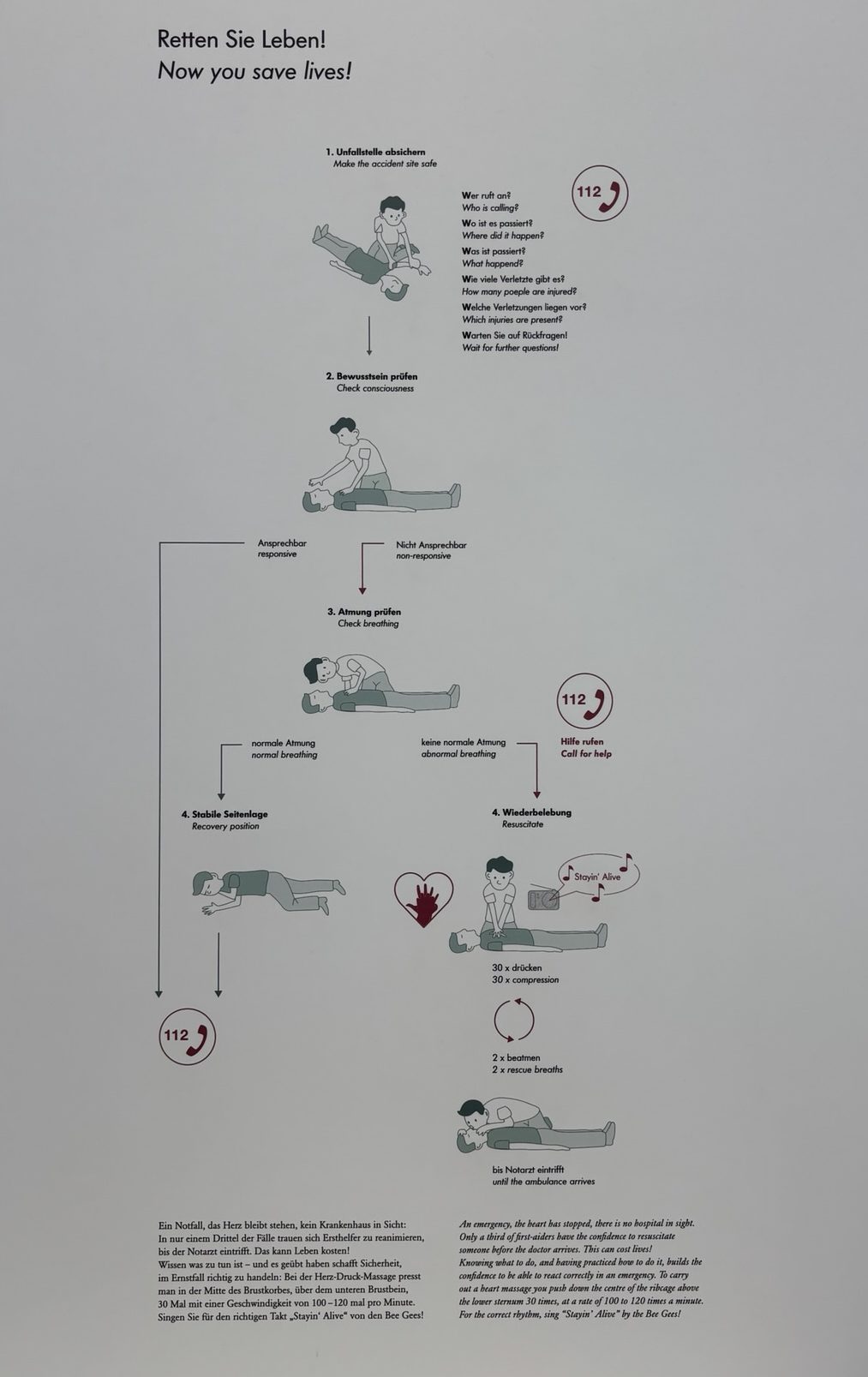
The mix of visual and textural interpretation is also balanced between physical and digital. For example, in the section on anaesthetics, there is no label stating what drugs are now used. Instead, you can interact with a digital game that teaches you about the many ingredients of anaesthesia.
What is Missing?
Exploring this exhibition did make me wonder where is the voice of the patient? Health and medicine exhibitions have a long way to go when it comes to including and highlighting the voice of the patient. Without it, these exhibitions seem didactic and a bit removed.
If the museum integrated stories from patients, in their own words, then this would have significantly enhanced the exhibition. It would transform it from one that shares medical knowledge to one that shares experiences of health.
Conclusion
Overall, this was an enjoyable exhibition and a great way to communicate information on health and medicine. Having individuals become active participants and test their skills throughout worked well. I would love to see the space play a role in community health where possible. For example, becoming a place where people can receive their flu vaccines.
The Deutsches Museum is open 9am – 5pm daily. There is an admission fee.
 Curate Your Own Adventure
Leave a comment