
I have thoroughly enjoyed visiting medical museums across Europe and the United Kingdom this past month. They have both inspired me and allowed me to acquire a medical museum tote bag collection that I hold near and dear. The final blog post from this trip will focus on the Wellcome Collection located in London.
Similar to the Hunterian, I first visited the Wellcome back in 2015. Also similar to the Hunterian, they have since renovated and refurbished their permanent exhibition space. I was excited to see the result. I did re-read my 2015 post on the Wellcome to remind myself of how the exhibition space looked, and how it might have changed. I will explore this further when writing about the highlights.
As no human specimens are on display, the Wellcome allows photography in their permanent exhibition space. The temporary exhibitions also allowed photography, but this could change depending on what’s on display. Always best to check.
Context: Museum
The Wellcome Collection is part of Wellcome, a global charitable foundation that, according to their website, funds ‘curiosity-driven research’. The foundation was founded in 1936 and is named after Sir Henry Wellcome, an early pharmacist who designed an array of new drugs. After his death in 1936, his wealth and objects were donated to the foundation.
Today, the foundation focuses on health and medicine research, especially issues such as climate change, infectious diseases, and mental health. They support a wide range of researchers and research projects and focus on long-term support, not short-term funding that is usually insufficient for major work.
For this post, I spent a bit of time on their website to really grasp their mission and what they want to achieve. I was impressed with how they present themselves and what they have available and accessible to the public. For example, they have a section in their policies library on ‘the colonial roots of our collections, and our response’. When you click on the link, you can read all about the history of the collection, its roots in colonialism, and what actions they are committed to in order to be transparent and transformative.
Context: Collection
When I first visited in 2015, I remember seeing quite a few human specimens in the permanent exhibition space. Today, there are none on display (or at least there were none when we visited). The majority are on loan to the Science Museum in London. For full transparency, they do have a list online of all the specimens in their collection.
Outside of specimens, the collection of the Wellcome is vast and diverse. They have artworks, books, manuscripts, and an array of historical medical objects. In order to fill the gaps and include more voices, they have also started collecting contemporary objects. A fantastic step forward! They integrate these collection areas in their exhibition spaces.
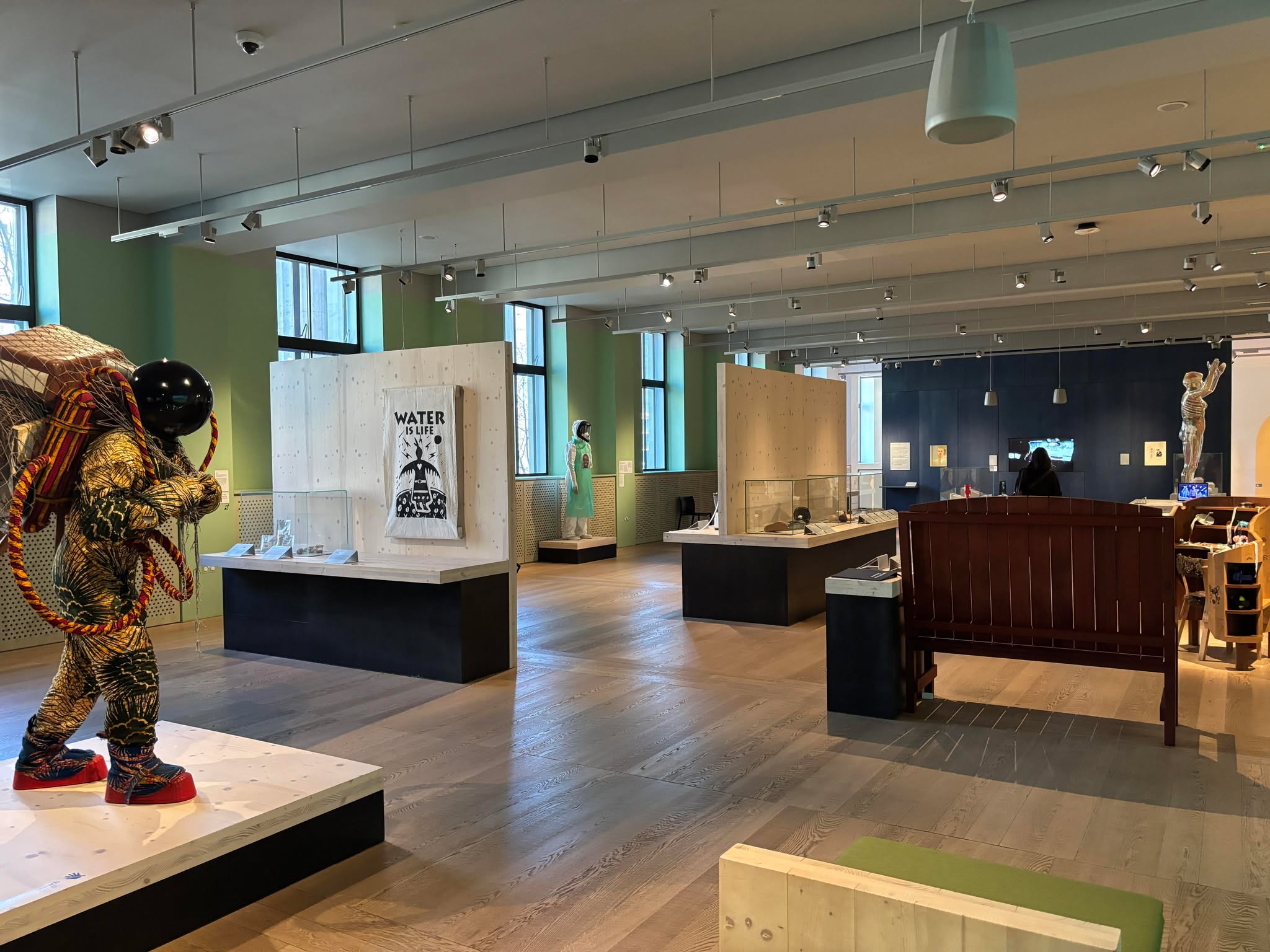
Context: Display and Layout
There are two levels of the Wellcome to explore. When you enter the building, you are on the ground level. To your right is a cafe and shop. I am not joking when I say you could feasibly spend an entire morning browsing the shop and getting breakfast/lunch at the cafe. They have the most delightful museum shop with a whole range of interesting and insightful medical-themed books for sale. On the opposite side is a temporary exhibition space. The current exhibition is Hard Graft: Work, Health and Rights.

On the second level is a permanent and two temporary exhibition spaces. ‘Being Human’ is their permanent exhibition, exploring trust, identity, and health. At the moment, they have one temporary exhibition titled ‘Zines Forever! DIY Publishing and Disability Justice’. Another exhibition exploring sign language is opening soon.
The permanent exhibition is on display in one large room allowing visitors to choose their own path. There is a mix in this exhibition of display cases, interactive elements, sculptures, and video. I want to briefly focus on the two main interactives in this space.
The first is The Transparent Woman, a training model created in 1980 for medical students. I’ve included a photograph below, but I’m sure you already have an idea of how it looks. You can press a range of buttons to have the corresponding organ or system light up in the model.

The second is a jukebox containing a range of songs from different parts of the world that relate to illness and health. There is a slider so you can flick through the songs and hear them all. As a warning, it does play quite loudly in the space if there are few other visitors. A really interesting and engaging way to display some of their contemporary collecting.

Highlight: Accessibility
One thing stands out above all else when you are visiting the Wellcome – their commitment to accessibility. Museums still have a long way to go with becoming accessible spaces, but it is great to see that many are really making efforts to be as inclusive as possible.
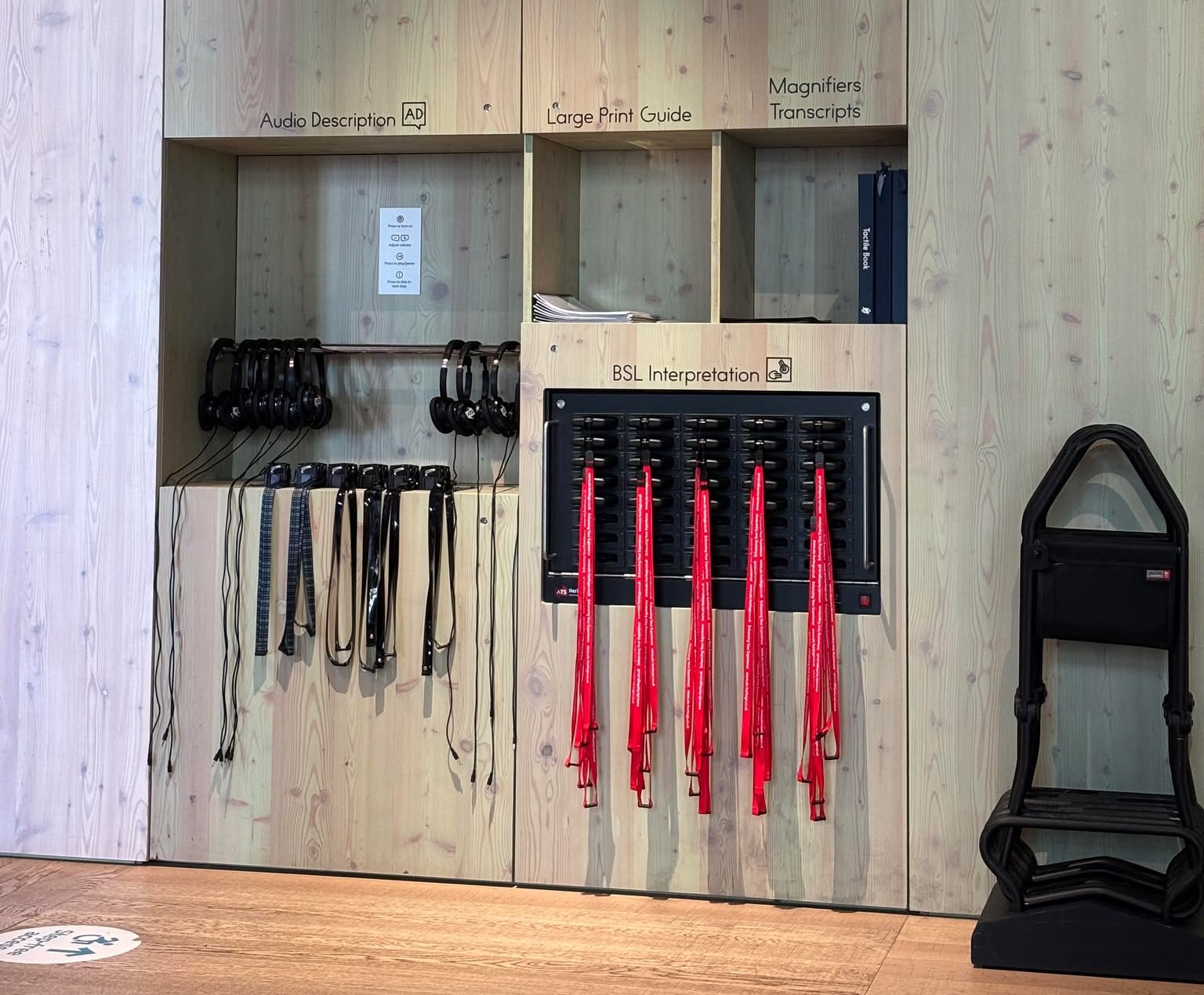
Take, for example, their permanent exhibition. I am going to share a photograph below that captures just how much thought, care, and consultation has gone into their planning. In this photograph you can see a sticker on the floor outlining the best route for someone to take with a wheelchair. Then there are audio description guides, large print guides, magnifiers, transcripts, BSL interpretation, and stools. What isn’t pictured is the braille on all the labels. Having everything in the same place makes it very clear where someone would need to go if they had any accessibility requirements. This is the most care I’ve seen in a museum and considering they are dedicated to inclusion and access, it is great to see they practice what they preach.
Highlight: Content and Themes Addressed
I was surprised, in the best way possible, to see the different themes on display. I think the surprise came from the fact that I remember a very traditional exhibition when I visited in 2015. Seeing how it has been transformed was fantastic. They address so many critical health issues, including topics such as climate change, that I haven’t seen in a medical museum before.
Below is a photograph of one of the thematic signs about minds and bodies. It challenges the term ‘normal’ and asks some interesting questions for visitors to consider as they walk around and view the objects.

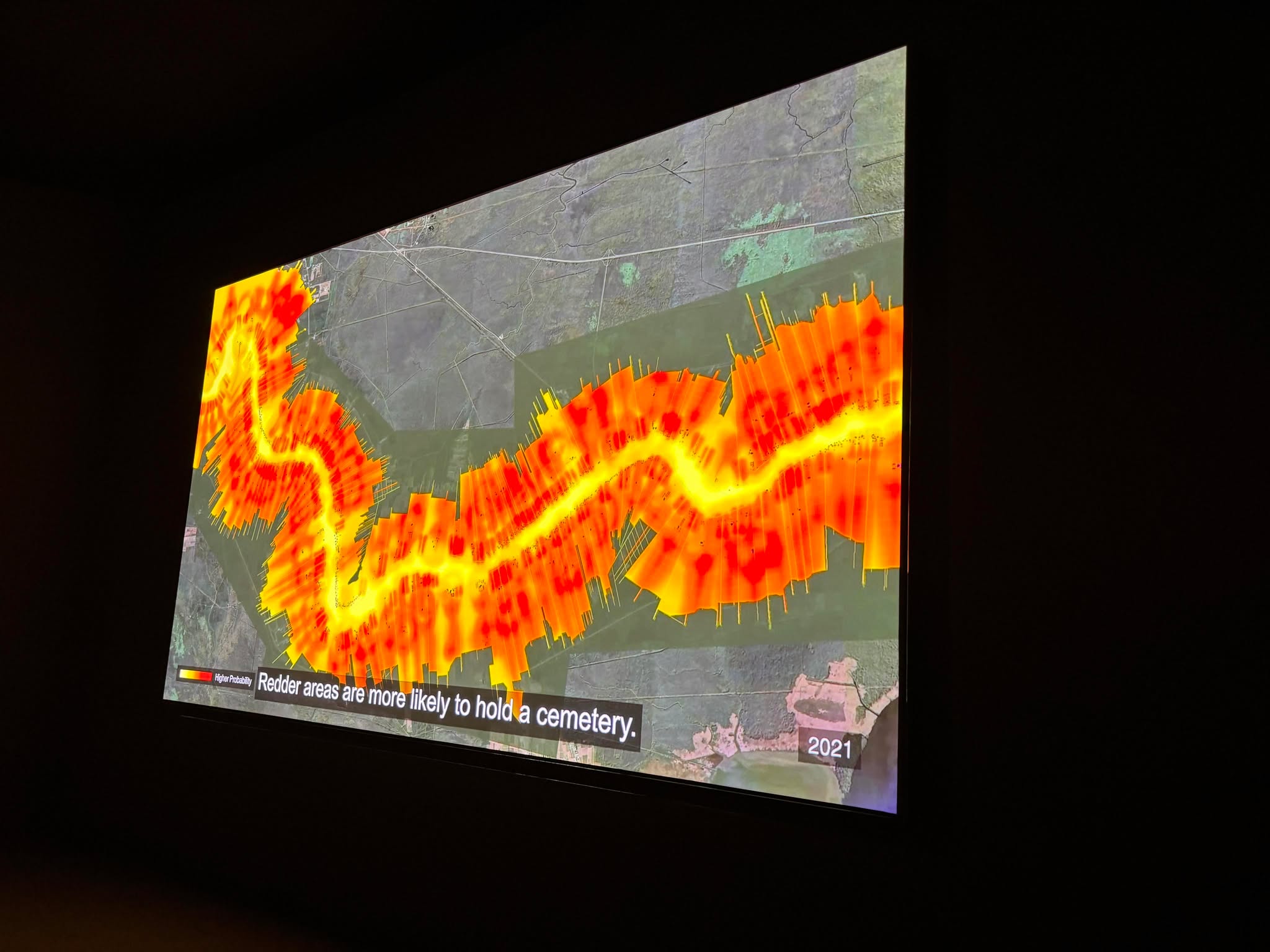
Outside of the permanent exhibition, I did want to mention the content covered in the Hard Graft temporary exhibition. This exhibition focuses on the stories of those who are underrepresented workers. For example, there is a section on slavery, sex work, and domestic labour. One work that stood out to me in this section was a 35-minute film on Forensic Architecture that posed the question ‘If toxic air is a monument to slavery, how do we take it down?’ It was an engaging film about polluted air in a majority-Black community in Lousiana. The toxins are threatening both the living and the burial grounds of their ancestors – a form of environmental racism. I watched the entire film from start to finish and was absolutely captivated by the importance of its message.
Conclusion
I am so glad I returned to the Wellcome to see their new exhibition space. There is some amazing curatorial and accessibility work coming out of this space. I may have also spent some time in the gift shop purchasing a couple of new medical history books!
 Curate Your Own Adventure
Leave a comment