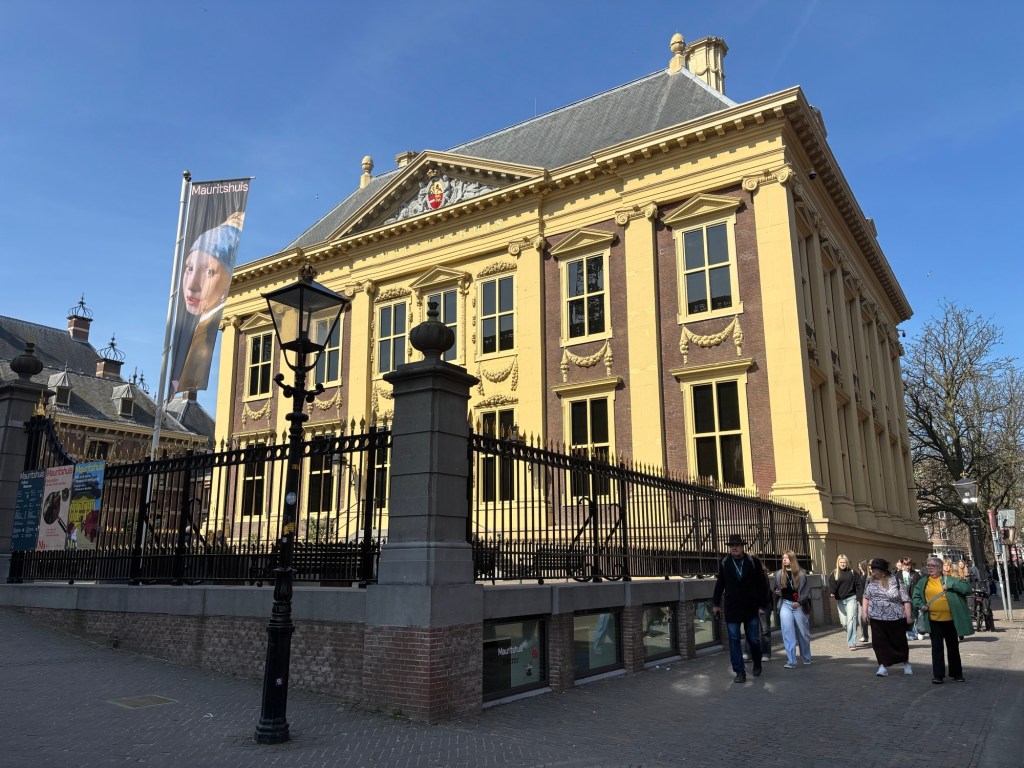
On our second last day in Amsterdam, we visited Den Haag or The Hague to see my favourite painting, The Anatomy Lesson of Dr. Nicolaes Tulp by Rembrandt. It is on display at Mauritshuis, a gallery in the city centre. Painted in 1632, this portrait of Amsterdam surgeons was commissioned when Rembrandt was only 25 years old. I’ll write more about it later.
This is going to be a short post highlighting a couple of paintings in this gallery. As always, here is some context to start.
Museum Context
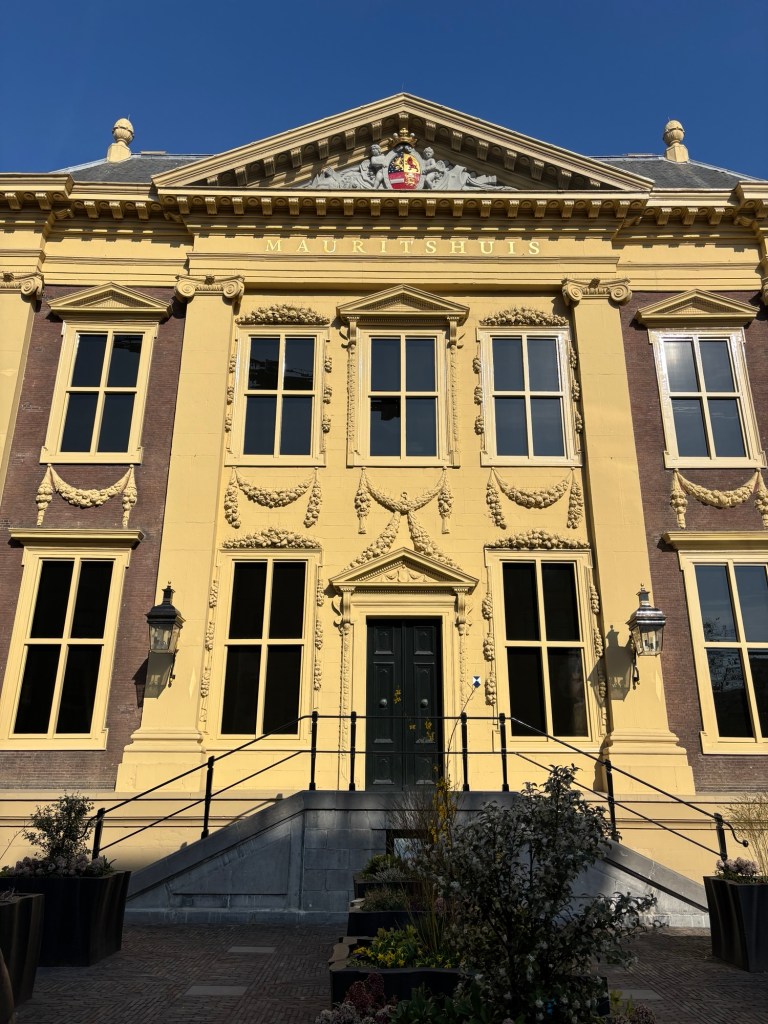
Today, the Mauritshuis is a small art gallery in The Hague. It was built in the 1600s for Count Johan Maurits of Nassau-Siegen. Hence the name, Mauritshuis. Similar to most extravagant buildings from this period, there is a strong link to slavery. Maurits’ income mostly came from trading in sugar and enslaved people. It recently came to light that he also privately traded enslaved people. It is important to know this history before stepping inside. It makes you a more informed and aware visitor.
In 1822, the building was transformed into a museum, housing some of the most significant Dutch paintings.
Although the mansion is large, it wasn’t large enough to keep up with growing visitor demands. In 1987, an extension was built allowing the shop, cafe, education rooms, and temporary exhibition space to move into a connected building. The mansion itself has a ticket desk on the ground floor and two floors of exhibitions.
The floors are quite small, only containing around six or seven rooms. However, each room is filled with paintings from Dutch masters such as Vermeer and Rembrandt. One room has a painting undergoing conservation treatment. It is set up so you can see the conservators at work.
Highlight 1: The Anatomy Lesson of Dr. Nicolaes Tulp by Rembrandt

To me, this is the absolute highlight of the museum. I’ve only seen this painting online and in art books so I was shocked to see it is massive. I was very much expecting an A3 size but it almost fills an entire wall. What stands out in this painting is the use of shadows and light. Something that made Rembrandt particularly famous.
My favourite individual in the painting has to be the confused looking man at the back. The face of so many memes. I also enjoyed seeing the details in the dissection. The red vessels add some much needed colour to the rest of the painting.

Highlight 2: Girl with a Pearl Earring by Johannes Vermeer
This has to be the treasure of the gallery. It is a stunning small portrait that captures so much expression. The pearl earring is almost lost in the shadow, but has just enough reflection to draw your attention. We visited as soon as the museum opened so luckily the crowd was quite sparse. We had lots of time to view and reflect on this artwork.

Highlight 3: Portrait of Jane Seymour by Hans Holbein II
Seeing an original Hans Holbein portrait was also a significant highlight for me. I love how the frame itself has little inserts with the same colours as the main painting.

Highlight 4: Vanitas Still Life by Pieter Claesz
My final highlight is this Memento Mori still life by Claesz. The skull is positioned on top of books, looking at a pocket watch. As these types of paintings were meant to remind viewers that death is inevitable and our time is not infinite, this seems fitting.

Highlight 5: Arm Candle Holders
The unattached arms holding candles in one of the main rooms added a sort of eerie atmosphere to the museum.

Conclusion
If you have never visited the Rijksmuseum before then that should be at the top of your list. However, if you have some spare time, or a particular interest in these highlights, add Mauritshuis to your itinerary.

 Curate Your Own Adventure
Leave a comment