
I finally have the time to write another blog post about our recent trip to America. The focus for this post will be the Charleston Museum – America’s first museum (according to them). The museum is a short walk from the city centre but also has a small car park if you are driving. It’s not a huge museum, but does have a good selection of objects to tell the story of Charleston. Rather than review the entire museum, I’ve settled on one exhibition I’m excited to share: Lovely and Lethal. I was immediately enthralled and spent almost our entire museum visit in this exhibition. As you’ll see throughout the post, the graphics are incredible and an interesting way to address some controversial and difficult topics. The aim of the exhibition is stated in the introductory panel, ‘are these pieces a la mode or just macabre? Discover the consequences of style.’ I’m going to go through each theme of the exhibition and share a highlight object.
Theme 1: Birds of a Feather
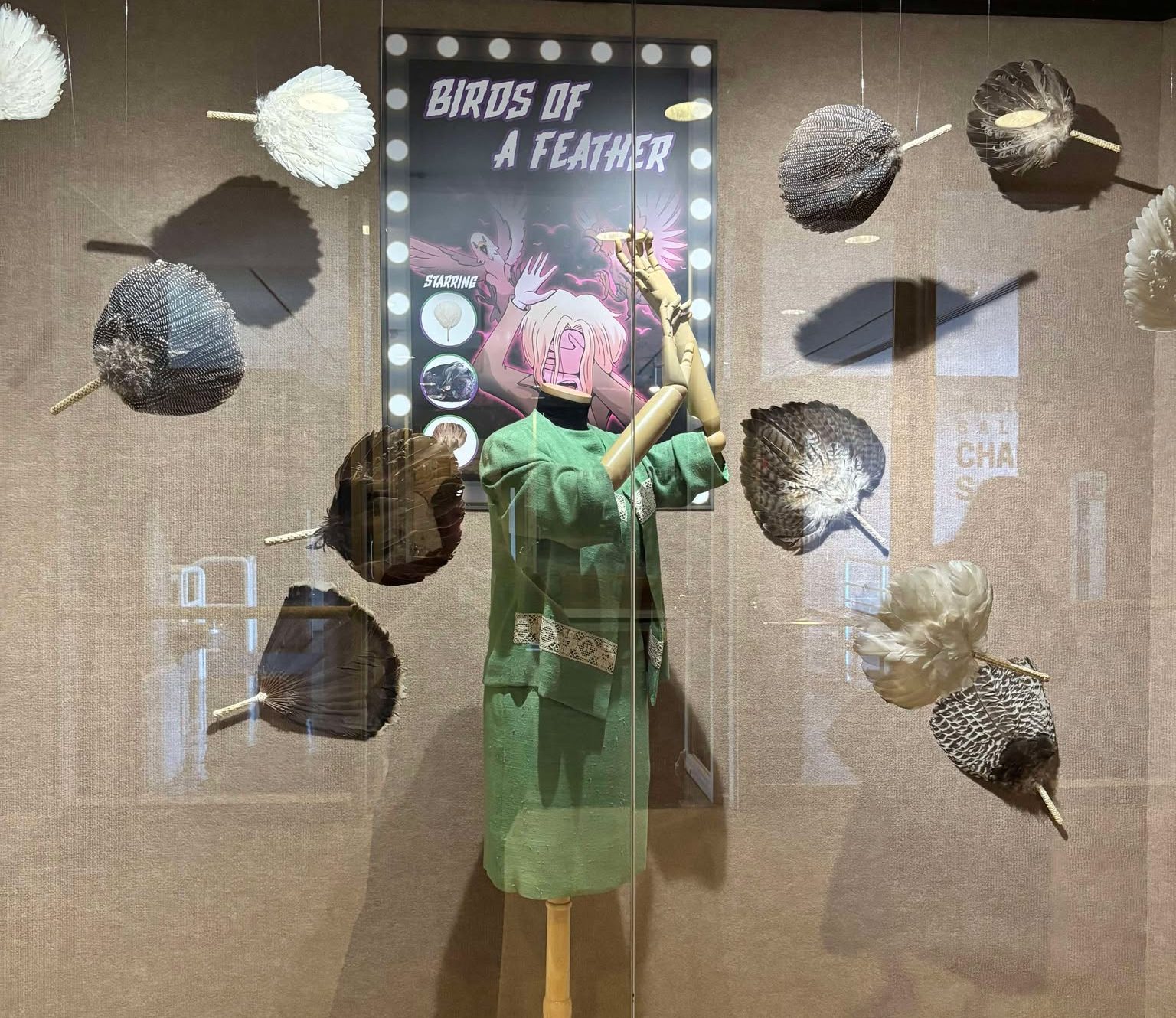
The first theme is titled Birds of a Feather and contains a selection of bird feather fans and hats. The display mimics a scene in Alfred Hitchcock’s The Birds when a flock of birds’ attack Annie Hayworth (played by Suzanne Pleshette). Here you will find the introductory panel that clearly lays out the three main exhibition themes: negative impacts of unregulated materials, workers in the fashion industry, and impact of fashion on the natural environment. As well as fashion objects from their collection, there are also a variety of taxidermy animals from their Natural History collection distributed throughout.
Each theme has a graphic-like poster, a thematic label, and individual labels if needed. For this theme, the bird feather objects have been selected as they represent all three themes. Many of these fans were treated with poisonous chemicals causing harm to both those who created them and those who used them. In addition, the demand for feathers directly caused the extinction of some species.
Theme 2: Arsenic and Old Lace

Following the exhibition to the left is the theme Arsenic and Old Lace. This theme focuses on Scheele’s Green invented in 1775. This shade was made so vibrant by the inclusion of arsenic. Those who worked with the dye and those who wore it experienced such symptoms as rashes, headaches and open sores. Eventually, exposure led to death. In front of you are a variety of Scheele Green objects to explore including some gloves, a bag, and a hat.

Theme 3: Pretty Poison

Pretty Poison expands on the theme of toxins by covering aniline dyes and radioactive poisoning. The thematic label also makes the point that this isn’t just a historical problem. In 2022, shops such as Shein were found to have excessive lead and phthalate in their clothing. Two highlight objects tell the story of how mourning the loss of a loved one might have also led to your death. Black mourning bonnets and veils created in the 19th century were a visual way to show you were in mourning. Many of these were dyed with an aniline dye, containing a high concentration of the chemical nitrobenzene. Unfortunately, this leads to cyanosis or lack of oxygen in the blood. At first, you would feel dizzy. Then, the lack of oxygenated blood causes gangrene or blackening of the extremities. Finally, it can cause death.
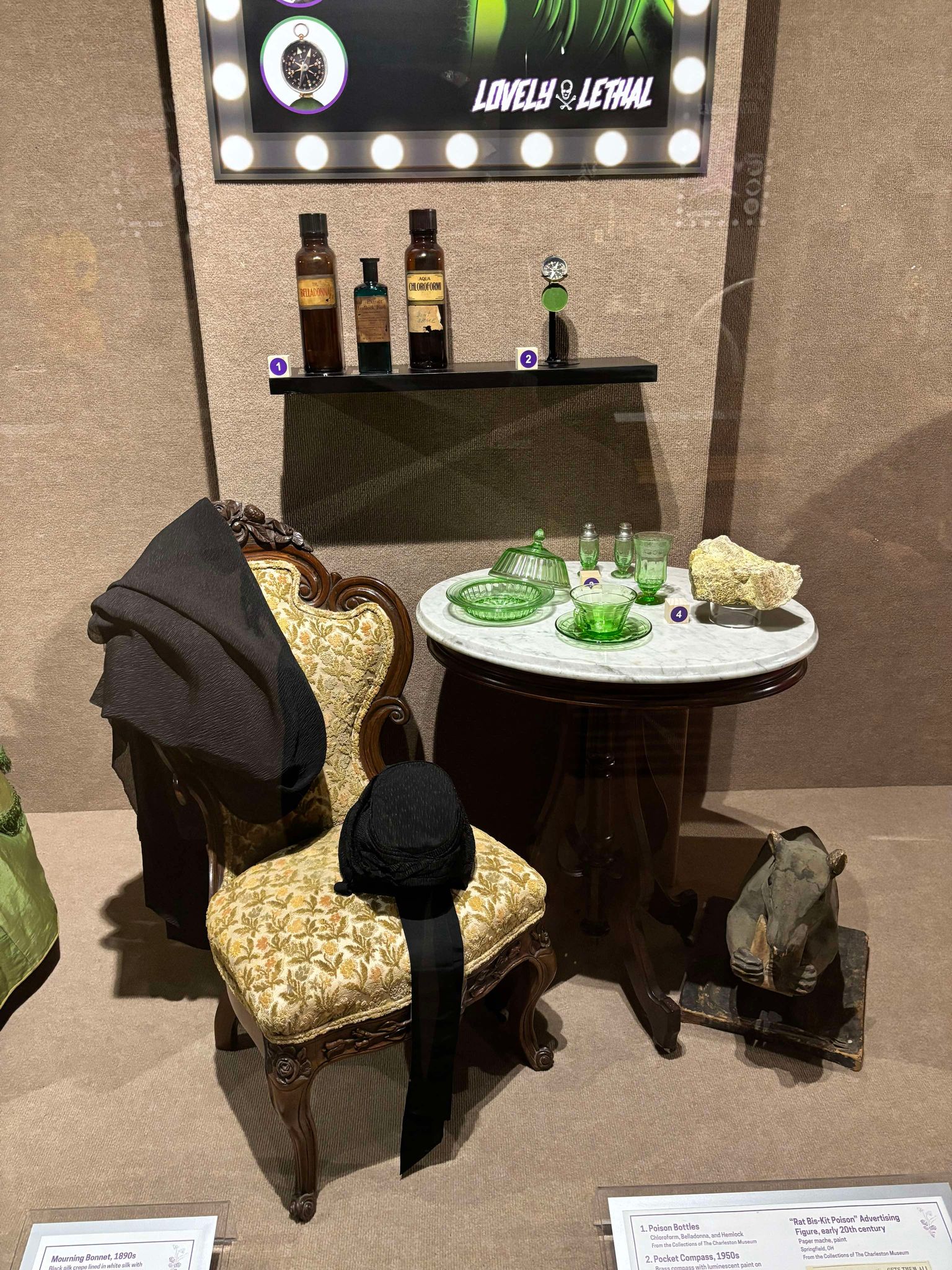
Theme 4: Bodies Bodies Bodies
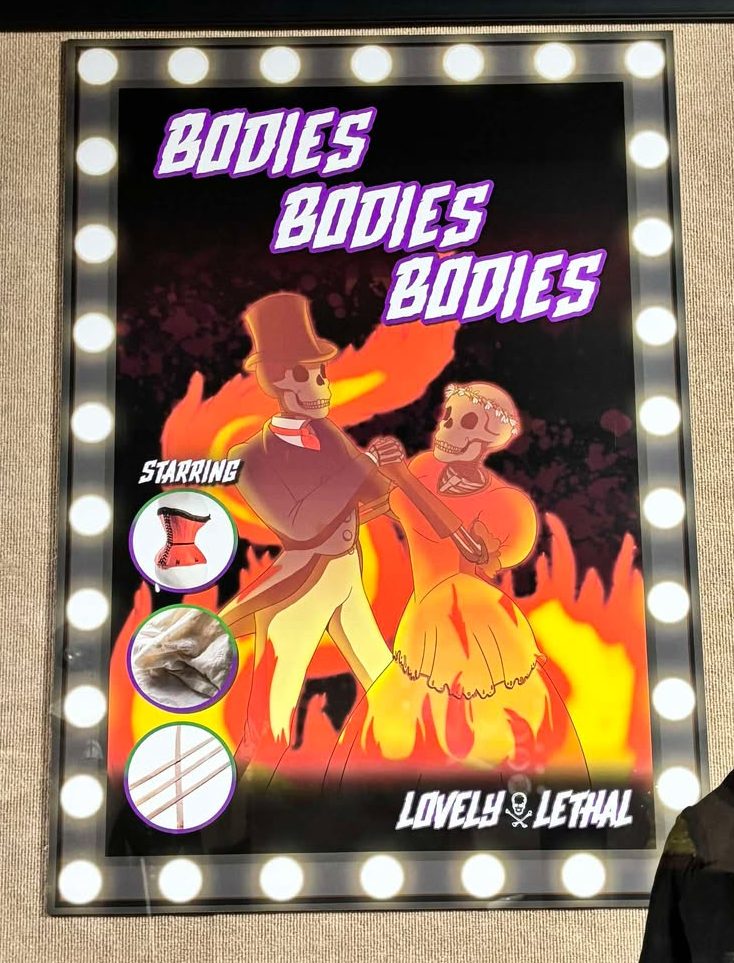
As well as being the name of a recently released fantastic horror film, this theme covers body modification and how we have compromised our health to fit a fashion and body ideal. A standout object in this section is the extreme red corset fitted over a skirt. Just looking at the corset is uncomfortable. There is also a stack of stiff starched collars that could literally choke their owners to death all for the sake of looking the part.

Theme 5: Murder at the Vanities

You can see by now that the theme names are very clever. This theme is all about cosmetics and the ingredients within them that are dangerous. This theme also very importantly raises the issue of race. For example, there is pressure for Black women to fit the standard ideal of straight hair. Using hair relaxants loaded with chemicals, such as formaldehyde, is incredibly dangerous and currently these products are under review. On the vanity is a mirror made from ivorine, or a plastic developed as a substitute for ivory. It was known to spontaneously combust.

Theme 6: Crimes of Fashion: Workplaces

We are now heading into the second major overarching theme – workers in the fashion industry. Crimes of Fashion: Workplaces, touches on the Triangle Shirtwaist Factory fire. I highly recommend listening to the Disaster Area Podcast episode if you would like to learn more. Basically, these shirtwaists were all the fashion in the early 1900s. In 1911, a horrific fire broke out in the factory killing 146 employees who were mostly young Italian and Jewish immigrants. When the fire started, they tried to escape through the emergency exits but found they were locked to prevent anyone stealing and running. A complete disaster ensued that eventually led to some law reform surrounding workplace conditions. This theme also covers the story of the 2013 Rana Plaza factory collapse in Bangladesh. Highlighting how many corners can be cut when creating a safe work environment for textile industry workers just goes to show how some things never change.

Crimes of Fashion: Materials
This is more a sub-theme that focuses on materials hazardous to a textile worker. For example, mercury was used to soften fur to make hats in the 18th and 19th centuries. Today, those who sandblast jeans to create distressed denim can suffer from silicosis, the same condition those working with stone benchtops are also at risk of developing. It can cause inflammation and scarring in the lungs. What chemicals are used in manufacturing also pose a threat to the environment. Fast fashion is increasing the need to burn clothing so just think of how many toxins are released through this process. I forgot to pick a highlight object for this section so you can tell I was getting a bit fatigued.
Theme 8: Shell and Crossbones

This theme is all about ivory and how it was used in the 18th and 19th centuries for accessories, jewellery, and sewing supplies (amongst other things). As the thematic label points out, despite laws trying to ban not only ivory but other animal products too, there is still a black market. In this section you can see entire elephant tusks that would have been on display as home decor.

Theme 9: Wild Kingdom
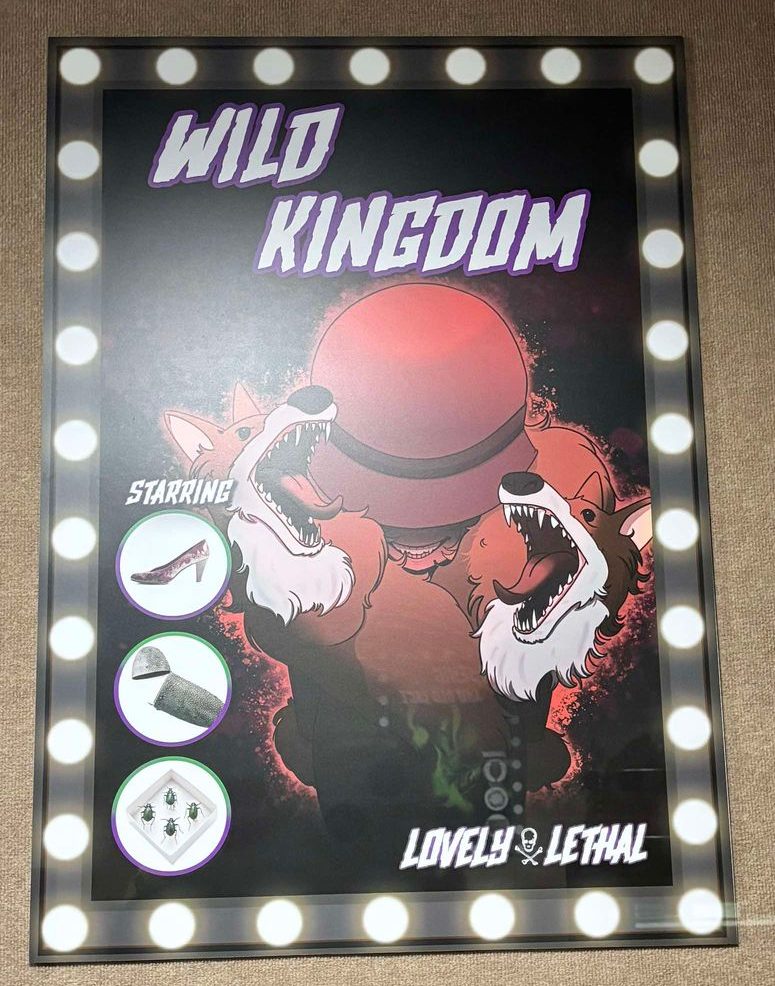
The second last theme, Wild Kingdom, highlights objects made from leather and fur. For a western audience, these items were usually the result of hunting. Then, animals were raised for the purpose of fur harvesting. The label does, however, point out that there are many First Nations and Indigenous peoples worldwide who sustainably continue to integrate fur, for example, into their clothing and cultural practice. In the image above, you can just see the edge of a leopard fur hat and collar.
Theme 10: Flock Together
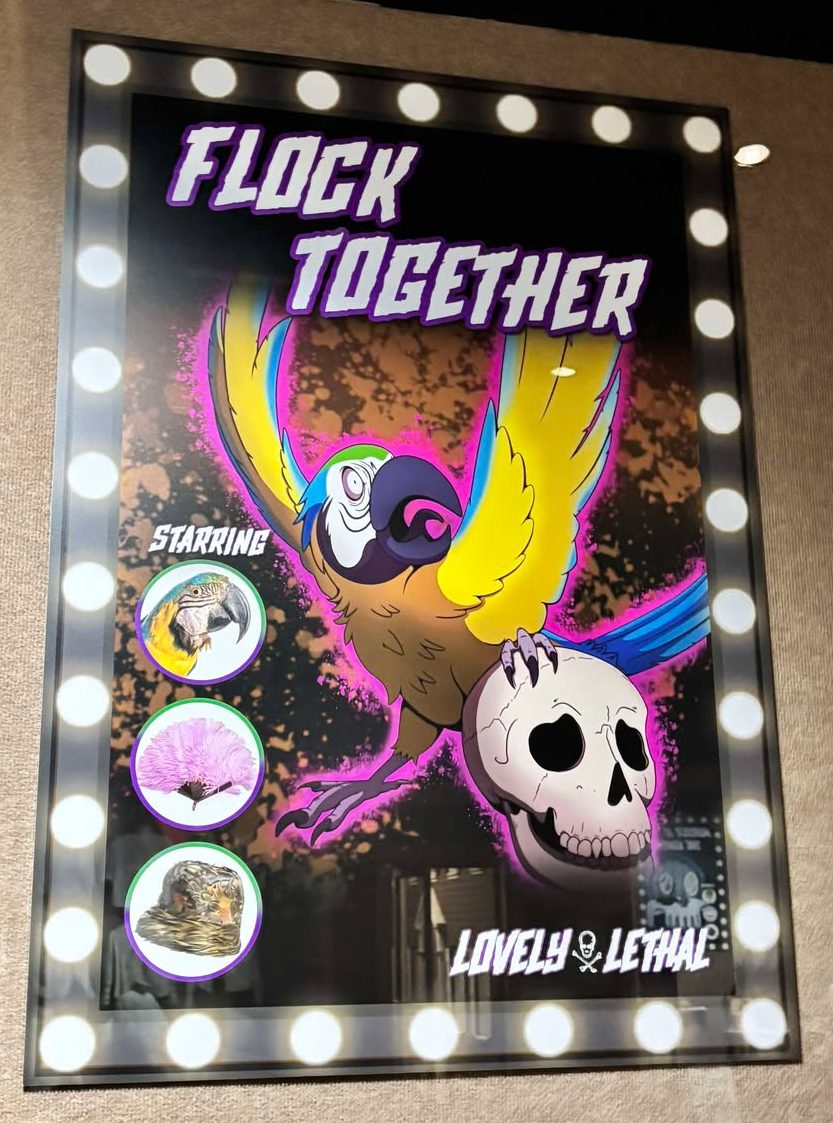
The final theme is Flock Together. This links back to that first theme and makes the exhibition feel complete. A highlight object here is the coat lined with ostrich feathers.

Logistical Information
Lovely and Lethal is on display until 20 April 2025. Entry is included in a general entry admission ticket. For more information, visit their website: https://www.charlestonmuseum.org/exhibits/current/66/lovely–lethal.
 Curate Your Own Adventure
Leave a comment