I’ve been in New York for a couple of days now and still cannot believe I’m here. We have packed so much into the last two days! I am only now getting a moment to pause and write. I won’t be covering every museum we visit in New York, as there will just be too many. Instead, I’m going to select a few highlights. So far, we have visited the Museum of Modern Art, the American Museum of Natural History, the New York Historical Society, and the Whitney Museum of American Art. I definitely want to review the new Gilder Center for Science Education and Innovation, so watch this space. In this post, I want to cover the New York Historical Society, which is right next door to the American Museum of Natural History. We’ve been to New York a few times before and this museum has never crossed our radar. We were so impressed with the exhibitions and felt the museum provided an overview of the city that has added much to our visit. I’m going to take you through a couple of exhibitions that are currently on display, starting with Real Clothes, Real Lives.
Real Clothes, Real Lives Overview
This exhibition is located on the top floor of the museum (level 4) and focuses on 200 years of women’s fashion. Each object on display is not a pristine example, but something that has been worn and even mended. Rather than being displayed chronologically, the objects are organised into categories. For example, there is a section on workwear and another on rites of passage. It is quite a large exhibition with a good mix of thematic panels and interesting object labels attached to oversized clipboards. The labels feature text and images, with some showing extra details such as the interior lining of a dress or the object being worn in context. I am purposefully not saying clothing because there are quite a few accessories also on display. There are two aspects of this exhibition I want to focus on: the excellent use of glass display cases and a couple of highlight objects.
Excellent Use of Glass Display Cases
On a number of glass display cases are little extra segments of information that assist with viewing the objects. My favourite example is when you first enter the exhibition space there is a black and white work dress from the 1860s. Printed on the glass is a small circle with a close-up of the mourning print on the dress. This is a great way to display extra information without adding length to the label. None of these glass case labels distract from the object and, in my experience, cut down on visitor fatigue. As soon as I got tired from reading the labels, I switched to focusing on the glass labels and their snippets of information.

Another great use of glass display cases is in the first half of the exhibition. In its own glass case is a work bodice circa 1860 that was mended in the 1880s. It is a rare example of clothing from that time that allowed for greater mobility at work. In order to see the details, you have to press a button that temporarily lights up the object. A tick for conservation but also added a sense of exploration to the object.

Highlight Objects
Where to even begin. There are some wonderful objects on display that really contextualise women’s history more broadly. Because of who I am, I was really drawn to the objects associated with grief. In particular, the black mourning bonnets made from silk crepe. It was interesting to read about mourning wear and how after World War I mourning rituals were mostly discarded due to the death toll from the War.

The other highlight I noted is a yellow housedress from the 1930s. Known as ‘invisible’ dresses, these cotton housedresses were not featured in catalogues or magazines. They were worn by hard-working women during a time of great economic hardship. The history this dress represents is why I selected it as a highlight.

My final highlight is a black housedress and apron from the 1950s. The object label shows this exact dress for sale in a 1950s magazine so you can see how it was advertised. Next to the dress is a curler cap with some hair rollers inside that were used, according to the label, to achieve that ‘bouffant hairdo’.

Tiffany Lamps
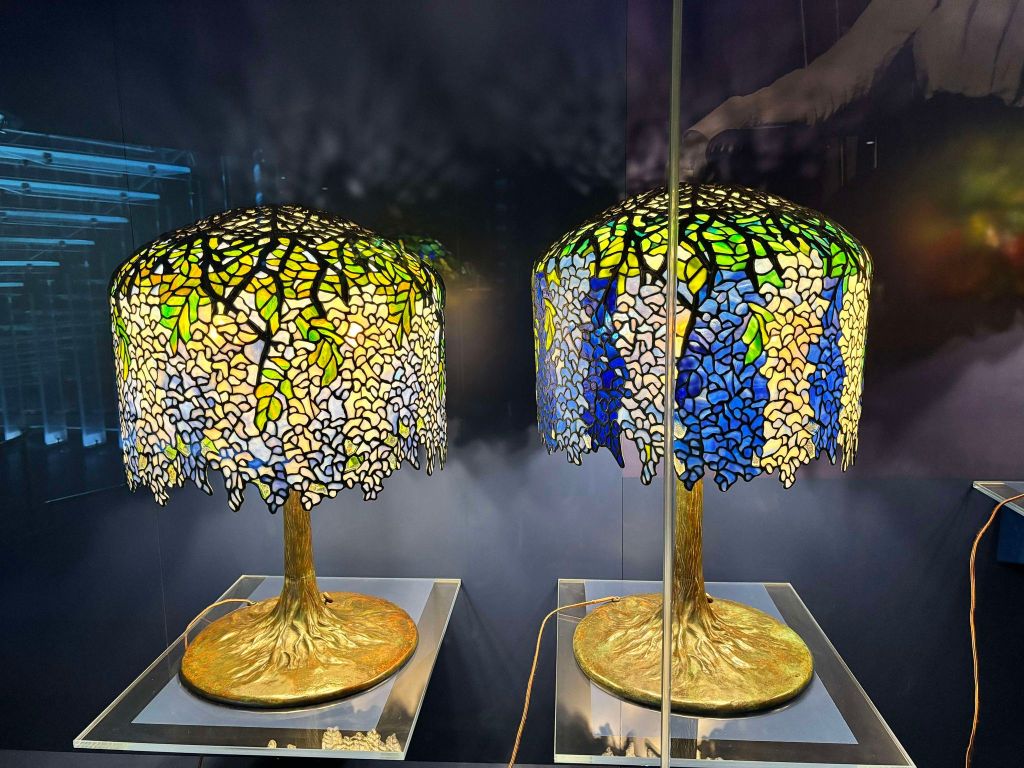
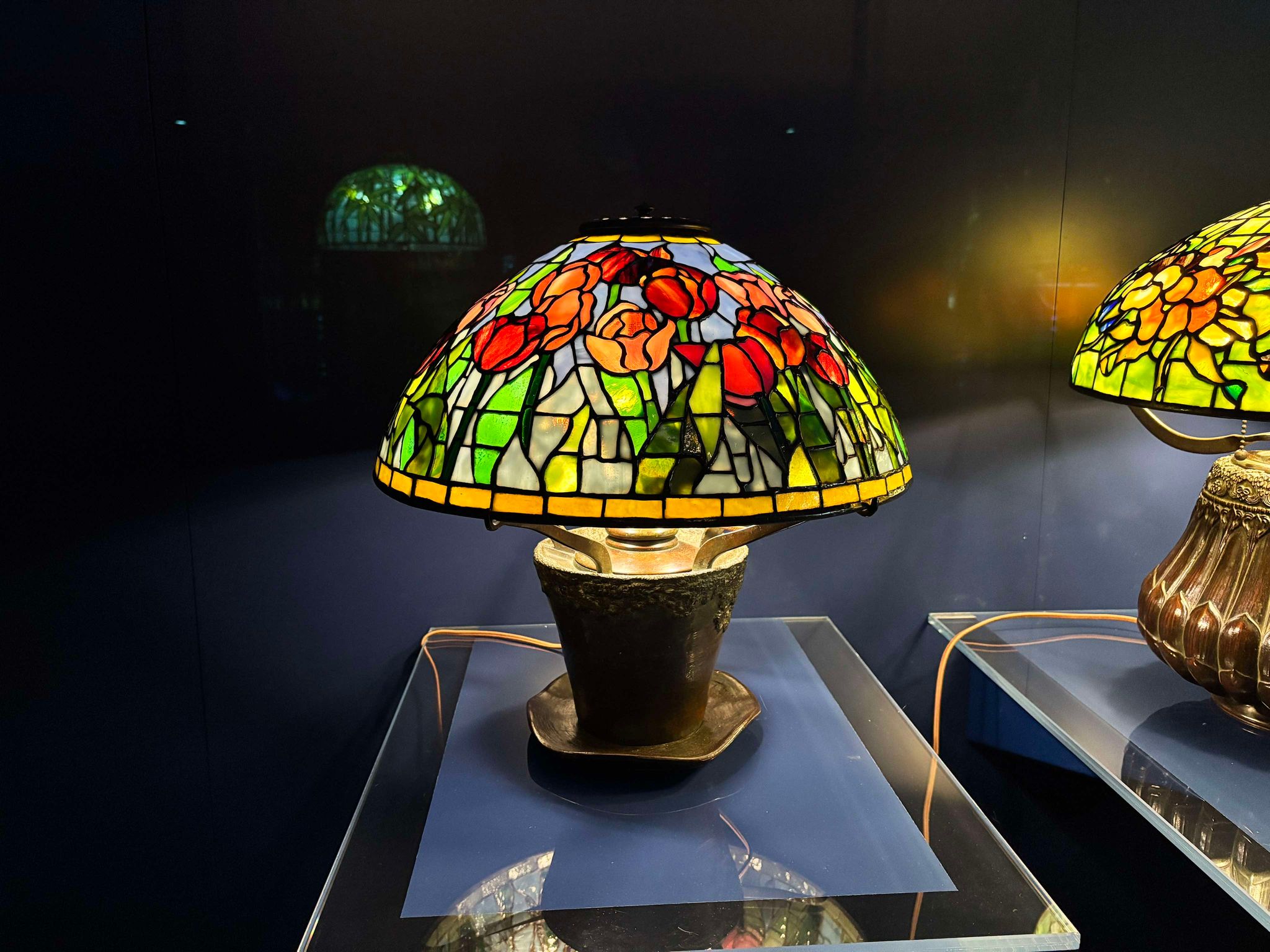
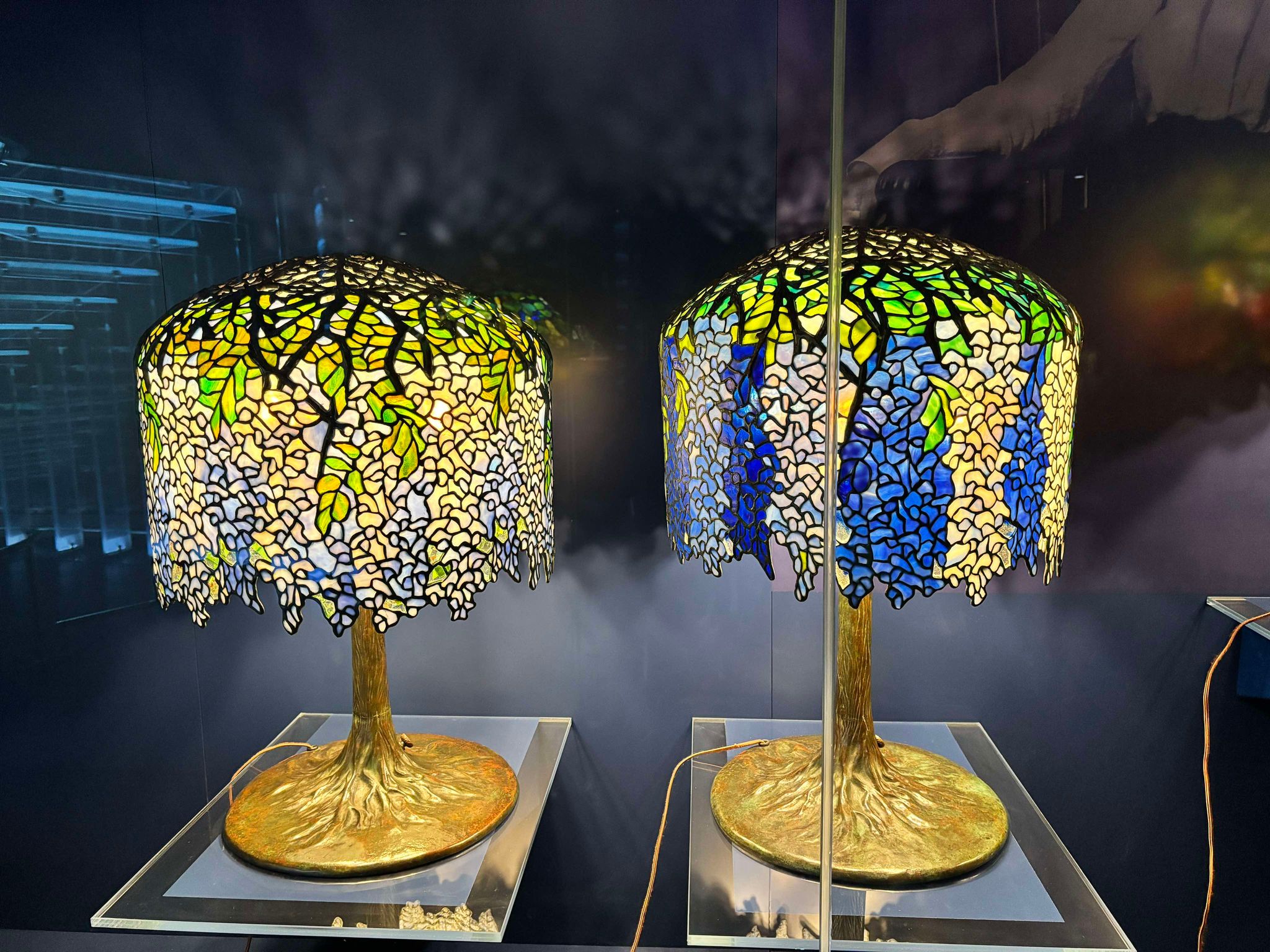
After leaving the fashion exhibition, we went to see a collection of over 100 Tiffany lamps. Photographs cannot capture how beautiful this exhibition is and how the use of light draws your eyes to the details in the lamps. As we were walking around, a volunteer guide pointed out some must-see lamps. One of which is a lamp I forgot to photograph so I will describe. Basically, the lamp shows the ripening of fruit throughout the year, through the different seasons. I would have completely missed this detail. The guide also shared with us that the lamps were not designed by Louis Tiffany, but by designer Clara Driscoll. Tiffany approved the final designs. This was only discovered recently through letters Driscoll wrote to her family.

The following lamps were my favourite.

Logistical Information
This is truly just the tip of the iceberg of what to see in the museum. On the same floor as these exhibitions, there is a large exhibition on Presidents with a replica Oval Office. Add to that another floor of exhibitions – there is plenty to see and do here.
The New York Historical Society is open Tuesday to Sunday from 11am to 5pm (8pm on Fridays). It is paid admission with pay-as-you-wish on Fridays between 5pm and 8pm. For more information, see their webpage: https://www.nyhistory.org/visit.
 Curate Your Own Adventure
Leave a comment